



















Our team of editors and experts thoughtfully chooses each product. If you decide to buy through one of our links, we may earn a commission. Learn more. Want to know how we test products? Click here for more details.
Sour beers aren’t your usual pint. The first sip delivers a tangy punch that might catch you off guard, but that’s what makes them so refreshing and addictive. They have a knack for waking up your taste buds with a crisp, lip-puckering zing that no other beer style can quite match.
What makes them even more exciting is the variety. Some burst with bright fruit flavours like raspberry or mango, while others lean into funky, earthy notes thanks to wild yeast and centuries-old brewing traditions. Rooted in Belgian customs but reimagined by today’s craft breweries, sour beers have become the perfect blend of history, creativity, and flavour.
Whether you’re a seasoned fan or just curious to see what the fuss is about, this list offers you 14 of the best sour beers worth enjoying right now. From classic lambics to bold, contemporary twists, there’s something here for every type of beer lover.
Sierra Nevada Wild Little Thing | Image: Sierra Nevada
1. Sierra Nevada Wild Little Thing
Style: Fruited Sour Ale
Origin: USA
ABV: 5.5%
Sierra Nevada might be best known for their hop-forward pale ales, but Wild Little Thing shows they can shift in a completely different direction. Filled with guava, hibiscus, and strawberry, it’s a fruit-forward sour that’s lively, tangy, and refreshing without becoming face-puckering. Think of it as a gateway sour — bold enough to excite, yet approachable enough for everyone to enjoy.
What makes this one so enjoyable is its drinkability. Some sours can feel heavy or overly acidic, but Wild Little Thing stays light, crisp, and easy to sip. That balance makes it ideal for backyard barbecues, poolside afternoons, or whenever you want something fun with a little extra zing.
And here’s the kicker — it’s affordable and widely available, so you don’t have to hunt down specialty shops just to get your hands on it. If you’re new to sours, this is a fun, accessible starting point.
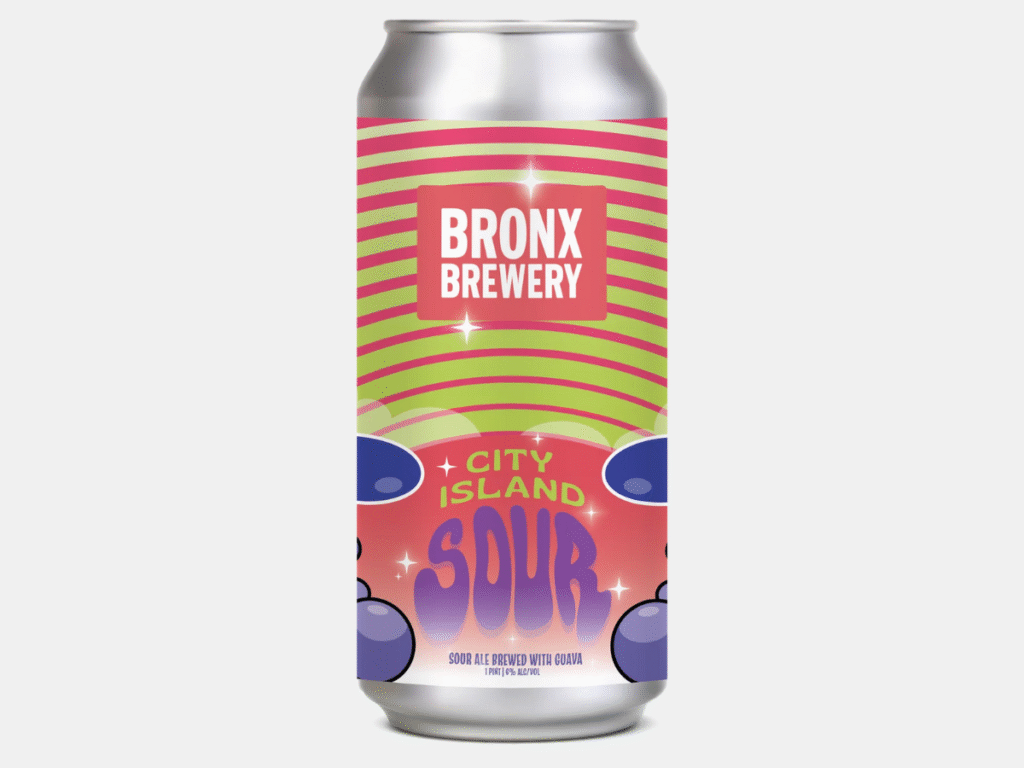
Bronx Brewery City Island Sour |Image: Bronx Brewery
2. Bronx Brewery City Island Sour
Style: Fruited Sour Ale
Origin: USA
ABV: 4.5%
Bronx Brewery delivers the tang with their City Island Sour, a beer inspired by the relaxed, coastal atmosphere of New York’s City Island. Full of bright citrus and tropical fruit notes, it achieves that perfect sweet-and-sour balance that makes every sip stand out. It’s tart, refreshing, and just juicy enough to keep you coming back for more.
What makes this sour stand out is its sessionability. At 4.5% ABV, it’s light and easy to sip, making it a natural choice for warm-weather gatherings or casual weekends. It’s the kind of beer that feels at home at a summer picnic, on the beach, or even just relaxing on a balcony after work.
Dogfish Head has never been shy about pushing boundaries, and SeaQuench Ale stands out as one of their most inventive brews yet. A mix of kölsch, gose, and Berliner weisse styles, it combines lime, black limes, and sea salt into a tart, citrusy beer that’s as invigorating as a dip in the ocean. Crisp, bright, and briny, it’s a sour that’s perfect for hot days.
What makes SeaQuench unique is its versatility. It’s light enough to enjoy on the beach but complex enough to complement seafood, tacos, or anything with a bit of spice. That zesty lime-and-salt mix keeps you reaching for another can, and it’s no surprise this beer has gained a cult following among sour enthusiasts.
It’s playful, unique, and truly drinkable — the kind of beer that makes you remember why Dogfish Head is considered one of the most innovative breweries in the scene.
Two Roads Brewing Lushee Lime | Image: Two Roads Brewing
4. Two Roads Brewing Lushee Lime
Style: Fruited Sour Ale
Origin: USA
ABV: 4.8%
Zesty, crisp, and packed with citrus punch, Lushee Lime is exactly what you’d expect from its name. Bursting with bright lime flavour over a tart, refreshing base, it’s the sour that feels like a splash of sunshine in every sip.
The appeal of this beer lies in its simple approach — it doesn’t overcomplicate things. Instead, it offers a crisp, clean sour with just the right balance of tang and refreshment. Perfect for summer barbecues, beach days, or whenever you’re craving something light with a lively kick.
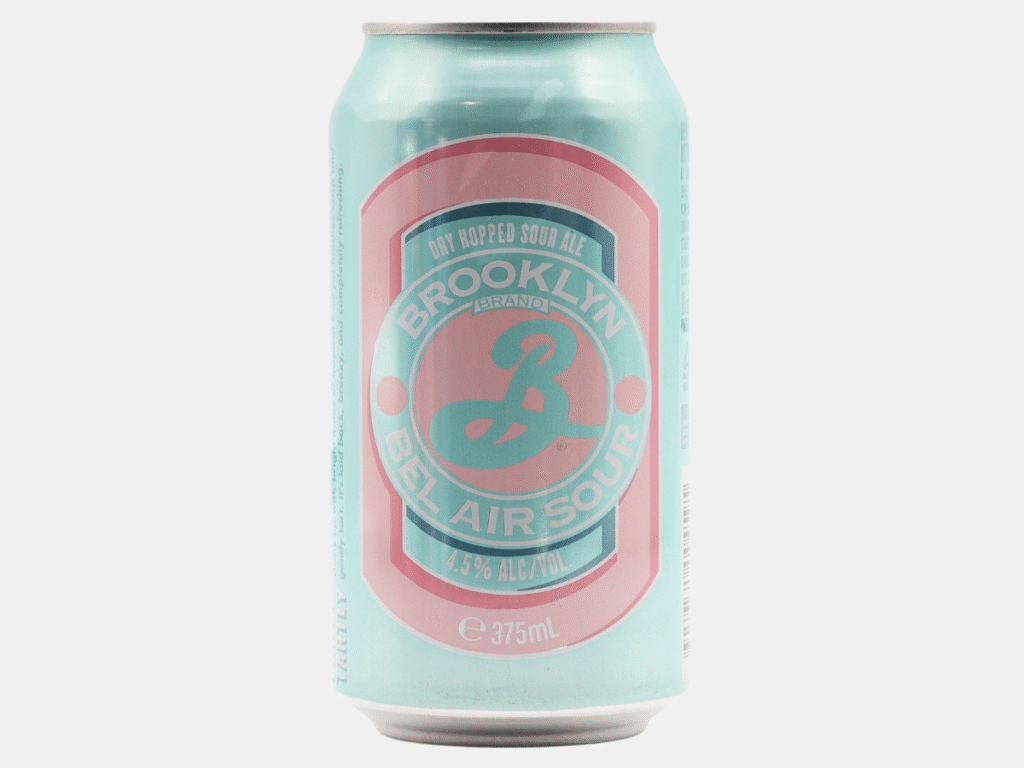
Bright, tropical, and perfectly tart, Bel Air Sour has become a favourite for those wanting to explore sour beers without feeling overwhelmed. It pours a golden, lively colour, with juicy hints of pineapple, mango, and citrus that make it instantly welcoming.
What makes this sour unique is its balance. The tartness is present, but it is softened by fruit-forward sweetness, making it crisp and refreshing rather than overly puckering. That balance makes it an ideal “intro sour” — one you can hand to a friend who claims they don’t like sour beer and probably win them over.
Easy to find, affordable, and endlessly drinkable, Bel Air Sour is a fridge-friendly choice that works well for both casual weeknights and summer parties. It’s fun, approachable, and exactly the kind of beer that keeps sour enthusiasts coming back for more.
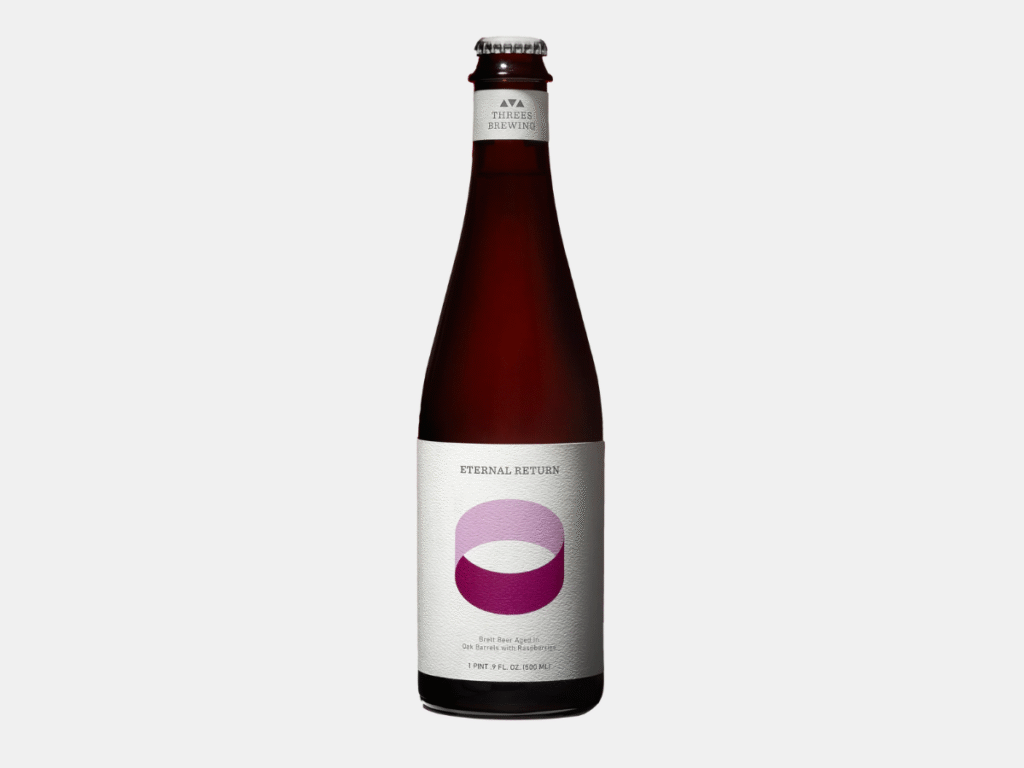
Tart raspberries take centre stage in Eternal Return, one of the standout sours from Brooklyn’s Threes Brewing. With its deep red pour and vibrant berry aroma, it’s a beer that looks as good as it tastes. The flavour delivers a burst of juicy raspberry balanced by a crisp, tart backbone that keeps things refreshing rather than overly sweet.
A key aspect of Eternal Return’s appeal is its limited seasonal, small-batch production. Each release feels unique, with craftsmanship evident in its intricate flavours. It’s the type of beer to savour slowly, allowing each sip to reveal nuanced layers of fruit and acidity.
For sour fans, Eternal Return Raspberry is both approachable and memorable — juicy enough to please fruit beer lovers, yet complex enough to satisfy serious sour drinkers. It’s proof that a simple fruit like a raspberry, in the right brewer’s hands, can create something truly remarkable.
Pouring a striking deep purple with a fresh berry aroma, this sour from Brisbane’s Aether Brewing highlights the best of blackberry. The first sip offers a tart, lip-smacking edge, quickly balanced by juicy sweetness. Bold yet approachable, it’s a beer suited for both casual drinkers and seasoned sour fans.
The blackberry adds depth and richness without feeling heavy, while the crisp acidity keeps it refreshing. Whether you’re sipping it on a sunny afternoon or pairing it with dessert, this sour demonstrates that blackberry deserves more recognition in the brewing world.
Sippin’ Pretty is one of Odell’s most popular brews, and it’s easy to see why. Brewed with açai, guava, and elderberry, it pours a stunning rosy-pink colour and delivers fruity aromas that prepare the palate for a tart, refreshing sip. It’s lively, bright, and fun without being overly sour, making it accessible for nearly everyone.
The blend of exotic fruits gives this beer a distinctive character. Açai adds a subtle earthiness, guava brings tropical sweetness, and elderberry provides depth — all balanced by a crisp, tangy finish. Each sip feels layered, like a fruit salad with a sparkling twist.
It’s the kind of beer that looks as good as it tastes. Perfect for summer afternoons, picnics, or whenever you want something fruity and refreshing, Sippin’ Pretty is an instant crowd-pleaser that truly lives up to its name.
EvilTwin Brewing Even More Daily Servings Sour | Image: EvilTwin Brewing
9. EvilTwin Brewing Even More Daily Servings Sour
Style: Fruited Sour Ale
Origin: USA (New York)
ABV: 6.0%
Straight from New York, Evil Twin Brewing has built its reputation for bold, experimental beers, and Even More Daily Servings is a perfect example. Brewed with an almost excessive amount of fruit purée, this sour pours thick and vibrant — often more like a smoothie than a typical beer. Expect explosive waves of berries and tropical fruit with a tart, refreshing edge that keeps things lively.
The acidity gives it that puckering sour kick, while the natural sweetness of the fruit rounds out the flavour, making each sip bold but balanced. It’s juicy, tangy, and layered, the kind of beer that surprises you in the best way.
This feels like it was designed to create a dramatic scene — vibrant, playful, and ready to break the rules. It’s a true New York sour: bold, inventive, and full of character, showing that beer can be as adventurous as the city it comes from.
Take a classic Belgian-style tripel, introduce some Brettanomyces yeast, and you end up with one of the boldest sours on the market. Victory Brewing’s Sour Monkey is tart, fruity, and funky, yet still maintains the smooth drinkability that made their Golden Monkey a fan favourite. At 9.5% ABV, it’s no lightweight, but the layers of flavour make that strength almost dangerously easy to overlook.
This beer stands out with its vibrant lemon and citrus flavours complemented by a dry, champagne-like finish. The Brett character introduces an earthy, slightly wild note, transforming a classic tripel into a bold, adventurous brew full of character. Complex, refreshing, and intense, it keeps your palate engaged from the first sip to the last.
This is the kind of sour you sip slowly, allowing each taste to unveil a bit more depth. Bold and playful at the same time, Sour Monkey shows that even established breweries can take risks — and absolutely succeed.

Few beers deliver refreshment quite like Crush Cucumber Sour. The crisp cucumber flavour cuts through with a cooling effect, while the tart citrusy base keeps things lively and bright. It’s light, invigorating, and instantly makes you think of warm days with a cold drink in hand.
Instead rather than piling on complex layers, this sour keeps things clean and simple — and that’s its strength. The cucumber gives it a spa-like freshness, making it a perfect choice for afternoons by the pool, easy sipping at a BBQ, or whenever you’re after a beer that’s as refreshing as it is unique.
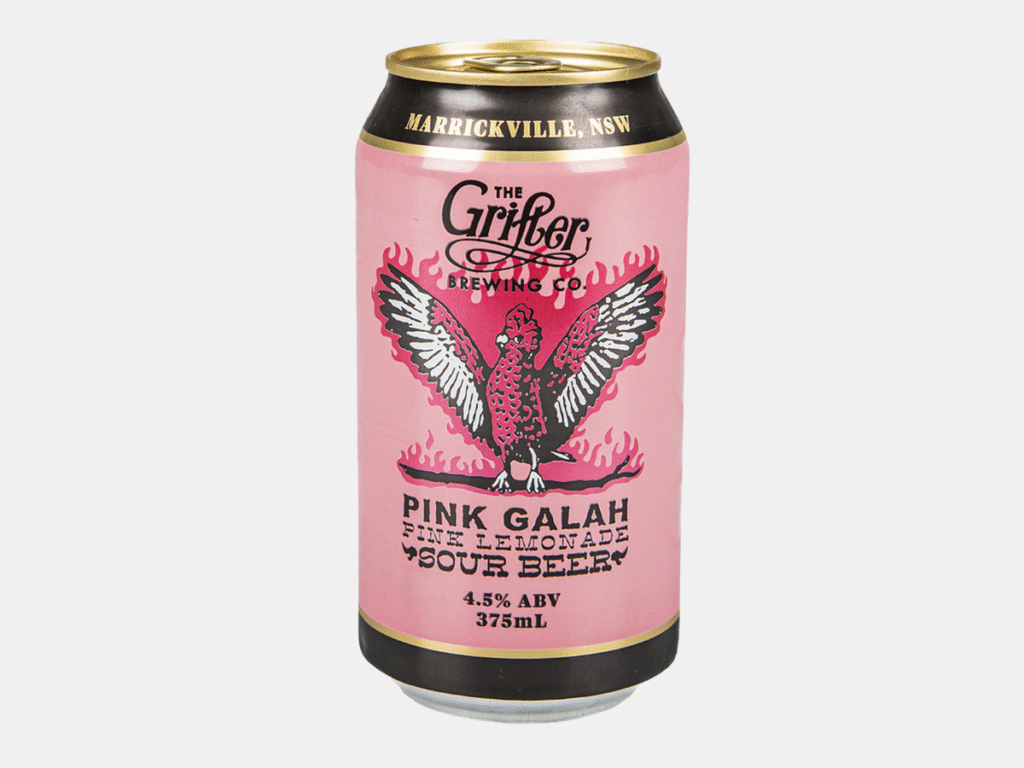
The Grifter Brew Co. – Pink Galah | Image: The Grifter Brew Co.
12. The Grifter Brew Co. – Pink Galah
Style: Fruited Sour Ale
Origin: Australia
ABV: 4.6%
Pink Galah immediately captures attention with its vibrant blush-pink pour, a colour that sets the stage for the tropical fruit flavours inside. Brewed with guava and dragonfruit, it’s bright, juicy, and tangy, offering a refreshing sip that feels both playful and unique.
The true appeal lies in the balance. The fruit offers a natural sweetness, while the sour base provides just enough tartness to keep it crisp and lively. It’s approachable and fun, yet still engaging enough to satisfy sour fans who crave more than just a fruit bomb.
Light-bodied and easy to drink, Pink Galah is a beer made for sunny afternoons, social gatherings, or simply adding a splash of colour to your fridge. It’s a tropical sour that manages to be both stylish and sessional — a winning combination.
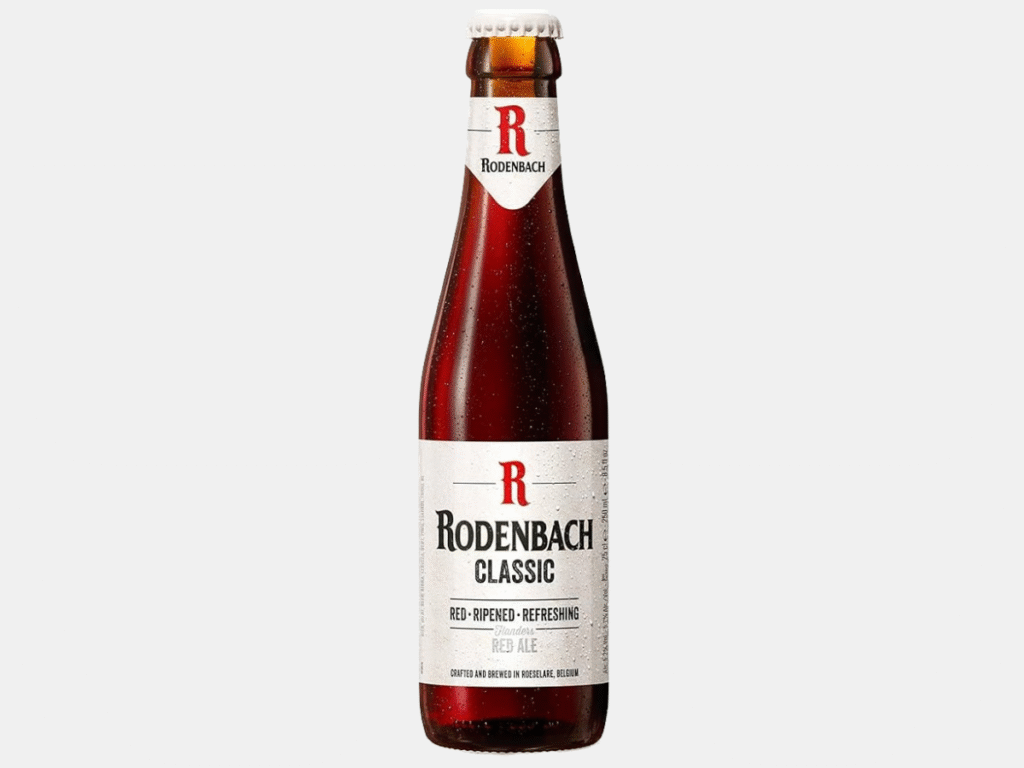
When it comes to sour beer heritage, Rodenbach’s Grand Cru is a top contender. This Belgian classic combines young beer with oak-aged reserve to produce a deep ruby-red pour full of aromas of dark fruit, oak, and a hint of balsamic sharpness. On the palate, tart cherries and currants are complemented by soft caramel and vanilla notes from the barrel, creating a flavour that is both complex and beautifully balanced.
Grand Cru is a beer crafted for slowing down and appreciating the craft. It’s rich and layered, with a wine-like elegance that appeals to both beer enthusiasts and wine lovers. Whether paired with food or enjoyed on its own, it represents the gold standard of Belgian sours and is a must-try for anyone wanting to experience the roots of the style.
DESTIHL Wild Sour Series Blackberry Gose | Image: DESTIHL
14. DESTIHL Wild Sour Series Blackberry Gose
Style: Fruited Gose
Origin: USA
ABV: 5.2%
Bright, juicy, and perfectly balanced with a touch of tartness, DESTIHL’s Blackberry Gose stands out in their Wild Sour Series. It pours a deep ruby-purple and floods the palate with fresh blackberry flavour, complemented by the traditional gose notes of salt and coriander. The result is a beer that’s crisp, mildly tangy, and layered with complexity while remaining easy to drink.
What makes this Gose so enjoyable is its versatility. The fruit adds a bold sweetness, the salt provides a savoury edge, and the sour backbone ties everything together. Perfect for warm days, casual gatherings, or anyone seeking a fruity sour with a twist, Blackberry Gose is a vibrant way to finish this list of must-try sours.
If you’ve ever taken a sip of a sour beer and thought, “Whoa, that tastes nothing like the lagers or IPAs I’m used to,” you’re not wrong. Sour beers occupy their own category in brewing, crafted to be tart, funky, and refreshingly different. The magic comes from the fermentation process—brewers use wild yeasts, like Brettanomyces, and bacteria such as Lactobacillus or Pediococcus to produce those lip-smacking, puckery flavours. Think of it as the beer world’s answer to kombucha or natural wine.
What makes sours so exciting is their versatility. You’ll find everything from light, fruity goses with a pinch of salt to complex barrel-aged lambics that can taste almost like fine wine. Brewers often add fruit such as raspberries, cherries, or peaches to boost that tangy flavour, which explains why many sours taste like a boozy fruit smoothie with an edge.
The best part? Sour beers aren’t just trendy; they have a rich history. Belgian monks experimented with souring techniques centuries ago, and many modern brewers are building on those traditions while adding their own creative spins. So, the next time you open a sour, remember you’re enjoying a beer style that’s both ancient and innovative.
How Are Sour Beers Made?
Sour beers are made with a twist on traditional brewing, using wild yeasts (like Brettanomyces) and bacteria (such as Lactobacillus and Pediococcus) instead of relying only on standard brewer’s yeast. These microorganisms turn sugars into lactic acid, giving the beer its distinctive tang. Depending on the brewer’s method, the beer might be kettle-soured in just a few weeks for a quick, bright tartness, or it may be aged for months or even years in oak barrels, where it gradually develops layers of funk, depth, and wine-like character. Many brewers also experiment by adding fruits—such as raspberries, cherries, peaches, or tropical blends—which both enhance the acidity and develop striking flavour profiles. This balance between science, patience, and creativity is what makes sour beers one of the most exciting styles in the craft beer scene today.
What Makes Sour Beers So Sour?
The distinctive tang of sour beers comes from intentionally introducing acid-producing bacteria and wild yeasts during fermentation, which lowers the pH and creates that sharp, mouth-puckering flavour. Lactobacillus and Pediococcus are the main contributors, producing lactic acid, while Brettanomyces yeast can add funky, earthy notes that deepen the overall profile. Some brewers also incorporate fruit, which not only introduces natural sugars for the bacteria to feed on but also enhances the tartness with their own acidity. The final result is a beer that goes beyond the mellow balance of traditional ales and lagers, leaning into bold, zesty, and sometimes funky territory that keeps each sip both refreshing and complex
Elias Albay is the Founder and Director of Many Men Magazine, a Toronto-based digital publication dedicated to promoting modern masculinity through style, culture, and self-improvement. What started as a personal turning point became a purposeful platform. — born from Elias’ desire to create something meaningful after completing his studies and finding no career path that truly matched his ambitions. With a background in Civil Engineering from York University and experience in Commercial Flight Operations at CAE, he applied skills, and resilience from both fields to forge a new path.
Our team of editors and experts thoughtfully chooses each product. If you decide to buy through one of our links, we may earn a commission. Learn more. Want to know how we test products? Click here for more details.
First, welcome to Many Men Magazine’s very first CES. We’re excited to have you here as we step into one of the biggest weeks on the tech calendar, exploring the ideas, products, and innovations shaping the year ahead. This marks an important moment for us, and we’re glad you’re joining us as we take a closer look at what stood out at CES 2025.
The beginning of a new year might mean a slowdown for many, but in the tech industry, January is when things speed up. CES 2025 has officially opened its doors, gathering brands and ideas that will shape the months ahead. After years focused on bigger screens and gaming hardware, this year felt like a turning point, with artificial intelligence moving from a headline feature to the foundation of modern technology.
Electric vehicles, smart homes, laptops, smartphones, televisions, and personal devices all relied heavily on intelligence that promises to be more helpful than flashy, which is why AI quietly worked its way into almost every category. The pace of innovation was exciting, sometimes overwhelming, and impossible to ignore. If this year’s show is anything to go by, technology is steadily progressing towards a future where it anticipates our needs instead of just reacting to them.
Here’s everything we’ve seen and heard that’s worth your attention — the ideas, products, and moments that really impressed us at CES 2025.
Best Tech From CES Overview:
CES 2025 offered a wealth of new ideas, covering everything from everyday technology to ambitious concepts designed to reshape entire categories. Among all the announcements, a few products stood out for balancing innovation, practicality, and impact effectively. Below are the releases that impressed us most so far, with more updates expected as the show continues.
The first thing that caught our attention at CES 2025 was Honda’s vision of what lies ahead. Amid a sea of concepts and prototypes, the Honda 0 Series stood out immediately—not because it was the loudest or most flashy, but because it felt intentional. With this new lineup, Honda outlined the next phase of its drive toward a more sustainable automotive future, previewing a generation of electric vehicles scheduled to debut in 2026 that appear more like science fiction than traditional road cars.
At the show, Honda revealed two concepts that outline the future of the 0 Series. The 0 Saloon is the flagship model, built around the brand’s new “thin, light, and wise” philosophy. The first two are easy to spot in its low-slung profile and minimalist design, while “wise’ reflects what’s happening beneath the surface. Honda is heavily investing in its own software and AI systems, employing advanced sensors and automated driving assistance to support decision-making and reduce driver workload—without entirely removing the human element.
Sharing the same design language but aimed at a very different audience, the 0 Space-Hub reimagines what an electric people mover could be. Rather than focusing on performance or status, it prioritizes space, comfort, and flexibility, with a rear seating layout that feels closer to a premium lounge than a traditional family vehicle. It’s important to remember these are still concepts, and production models may evolve significantly, but Honda has confirmed one key detail: the 0 Saloon is expected to arrive in 2026, with pricing and availability still to be revealed.
Inspired by the proportions of a floor lamp, its stand-and-pole design feels natural rather than technical, allowing it to serve as a projector, Bluetooth speaker, and LED mood lamp without appearing gadget-like. It’s designed to suit various occasions—movie nights, background visuals, or music sessions—by shifting the atmosphere instead of dominating it.
Under its minimalist exterior, the PF600U offers a full HD 1080p image suitable for screens between 30-120 inches and brightness of 300 ANSI lumens. It is supported by LG’s webOS for seamless streaming without the need for extra devices. Stereo speakers with passive radiators deliver a fuller, more immersive sound than expected from such a compact device, while the built-in mood lighting provides flexibility with multiple colour and brightness options. A tilting head and automatic screen adjustment enhance its versatility, making the PF600U feel less like a fixed installation and more like a flexible companion—adapting to how you use your space, not the other way around.
The HW-QS700F stood out at CES 2025 for its versatile design that fits almost any space, whether sitting neatly on a TV console or mounted flat against the wall beneath a screen. A built-in gyroscope automatically detects the soundbar’s orientation and adjusts the audio output accordingly, ensuring consistent performance regardless of room size or placement. It’s a small but clever feature that takes much of the guesswork out of setup.
In terms of sound quality, the QS700F aims to provide depth and accuracy without overwhelming a room. Its support for Samsung’s Eclipsa 3D audio standard adds a layered, immersive experience to music and movies, creating a sense of space similar to more complex systems. Paired with clear dialogue and a controlled bass, this soundbar focuses on balance rather than raw power, offering a subtle yet enhanced listening experience suitable for everyday use without requiring audiophile-level attention.
Alienware’s decision to bring back the Area-51 name at CES 2025 felt deliberate—and a tad cheeky. In an event dominated by sleeker, quieter, more “responsible” tech, Alienware embraced its extraterrestrial roots and reminded everyone that high-end gaming hardware can still be bold. The revival includes desktops and laptops, clearly targeting gamers who prioritize power over subtlety.
The new Area-51 laptops, available in 16-inch and 18-inch sizes, are built with serious performance in mind. They’re set to feature next-generation NVIDIA GeForce laptop GPUs, paired with Intel Ultra 7 or Ultra 9 processors and up to 64GB of dual-channel DDR5 memory. High-refresh 300Hz displays at 1600p highlight the intent—these machines are designed for smooth, high-frame-rate gaming, where you blame yourself for missing the shot, not the hardware. Alienware expects them to arrive in the coming months, and they look every bit the desktop replacements they claim to be.
Then there’s the Area-51 desktop, which everyone is excited about, where restraint is completely abandoned. Built around next-gen desktop-class NVIDIA GPUs and high-core-count Intel Ultra processors, it’s designed to run modern games at max settings while still handling heavy creative workloads. With extensive cooling, upgrade-friendly internals, and up to 64GB of DDR5 RAM, this thing is a monster—and it knows it. If you’ve ever wanted a PC that laughs at system requirements, this is definitely in that category.
Along with the Area-51, the brand teased a refreshed Aurora desktop, delivering similar performance in a smaller chassis. With these two options, Alienware caters to both ends of the high-performance spectrum—whether you need a gaming command center for long sessions or a more discreet setup that fits under your desk, with optional RGB lighting.
If that wasn’t enough, you might want to check out Razer’s new Blade 16, which Razer revealed during CES 2025 to demonstrate how far it’s willing to push the limits in gaming laptops. The new Blade 16 is the thinnest gaming laptop the brand has ever made, combining a sleek, almost MacBook-like design with serious performance goals. It’s designed to show that high-end gaming hardware doesn’t have to look or feel bulky, even when it’s built to handle demanding workloads.
Inside, the Blade 16 pairs NVIDIA’s next-generation 50-series laptop GPUs with AMD Ryzen 9 processors, delivering the kind of power that can easily handle modern games and creative applications. To maintain control, Razer has redesigned its cooling system with an ultra-slim dual-fan setup aimed at reducing heat and noise during intensive use. It remains largely a performance machine—so lap gaming isn’t recommended—but it should operate cooler and quieter than previous Blades. The new Blade 16 is expected to arrive in Q1 2025, with pricing still to be confirmed, and it looks to be one of the most attractive premium gaming laptops of the year.
Speaking about gaming, the Legion Go S feels like Lenovo’s direct response to feedback from the first Legion Go—and that’s a good thing. While the original impressed with raw capability, it was never the most portable handheld around. The Go S streamlines everything, slimming down the design and shifting the focus firmly toward comfort and everyday usability. It’s the kind of refinement you hope to see in a second attempt, rather than a ground-up rethink.
The Go S features an 8-inch display, drops the detachable controllers and kickstand, and is noticeably lighter than its predecessor at 730 grams, down from 850 grams, which Lenovo opted for a more traditional handheld approach. That weight reduction alone makes a real difference during longer play sessions. Even more interesting is Lenovo’s decision to offer the device in both Windows and SteamOS configurations, giving players the freedom to choose between PC flexibility and a more console-like experience.
The Windows version launches first in January, with the SteamOS variant following in May, making it one of the more immediately relevant handhelds shown at CES 2025. Taken together, the Legion Go S feels less like an experiment and more like a considered response to how people actually want to play on the go—lighter, simpler, and much easier to live with than before.
Among the many wireless earbuds showcased at CES 2025, the Technics EAH-AZ100 quietly stood out for the quality of its engineering rather than just noise cancellation. They are noticeably more refined than previous models—smaller, lighter, and sleeker in design—making them easier to wear and more comfortable for everyday use. However, the true story is the sound. Technics’ new driver technology offers a wider, more open soundstage with impressive clarity and control, giving music with a level of detail that feels closer to studio calibration than typical consumer headphones. What more can anyone ask for?
The 116UX Trichroma LED is the brand’s largest ULED X television yet, designed for viewers who desire a true big-screen experience without resorting to a projector, making it Hisense’s biggest statement at CES 2025. At this size, Hisense emphasizes control as much as scale, utilizing a dense Trichroma mini-LED backlight to keep highlights vivid and shadows well-balanced, even in brighter rooms where large displays often struggle.
Driven by Hisense’s latest processing engine, the panel delivers extremely high brightness alongside a remarkably wide colour range, giving films and live sports a vivid but balanced look rather than an overcooked one, which separates 116UX from the rest in how it handles colour and light. Add support for premium HDR formats and a surprisingly slim, clean-edged design, and the 116UX feels less like a novelty and more like a serious alternative to dedicated home cinema setups—one designed to be lived with, not just admired.
LG once again set the benchmark for premium televisions at CES 2025, and the G5 OLED clearly showed why the brand remains a leader in the category. This time, LG moved away from micro-lens-array technology, choosing instead a newly developed OLED panel that provides significantly higher brightness without compromising contrast. The result is one of the most impressive OLED images we’ve seen—vivid, punchy highlights combined with the deep blacks that OLED excels at.
That performance is supported by LG’s Brightness Booster Ultimate, which enhances luminance at the pixel level, and intelligent ambient light compensation that actively adjusts the image based on your room’s lighting. Whether you’re watching during the day or in a darkened room, the G5 maintains balanced clarity without washing out details. Powered by LG’s Alpha 11 AI Processor Gen2, the TV also uses advanced upscaling and picture optimisation in real time, ensuring older content appears as polished as modern productions. With over 8.3 million self-lit pixels, colour accuracy and contrast remain consistently precise.
Beyond picture quality, the G5 is designed to handle everything you throw at it. Film lovers get Dolby Vision, Dolby Atmos, and FILMMAKER MODE for a more authentic cinematic experience, while gamers enjoy a 165Hz refresh rate, ultra-low response time, and support for NVIDIA G-Sync and AMD FreeSync Premium, making it one of the best TVs of the year if you ask us.
Samsung’s Frame Pro advances the concept of a TV as art more than ever before. The main upgrade is its transition to a Neo QLED display, utilizing the same Mini LED technology found in Samsung’s premium models to produce brighter highlights and improved contrast, making both artwork and everyday viewing appear more realistic. Equally important is the Wireless One Connect box, which enables the Frame Pro to be mounted neatly on the wall without visible cables, enhancing the illusion that it’s a framed piece rather than a conventional television. It’s a careful evolution that makes the Frame Pro feel less like a compromise between style and performance, and more like a natural feature in a thoughtfully designed home.
Hisense Saturn Wireless Home Theatre | Image: Hisense
Hisense Saturn Wireless Home Theatre
Brand: Hisense
Model: Saturn Wireless Home Theatre
Category: Home Audio
Revealed at: CES 2025
Hisense’s Saturn Wireless Home Theatre is designed for the reality of modern, large TVs. Instead of assuming everyone wants a traditional receiver-and-speaker setup, Saturn offers a cleaner, wireless-first approach, providing immersive sound tailored for very large screens. With support for Dolby Atmos and DTS:X, the system aims to deliver a layered, room-filling experience using a compact soundbar, four wireless satellites, and a standalone subwoofer—without making setup complicated.
The more interesting aspect is how Saturn works with compatible Hisense TVs instead of replacing them. Using the brand’s Hi-Concerto Technology, the system combines output from the TV’s built-in speakers with the Saturn array, dynamically shaping the sound to fit the room. Hisense says it can “analyse your room’s acoustics and automatically adjust the audio output,” pushing sound through the satellites and subwoofer to deliver what it calls “robust, room-filling audio.” The result is a home theatre setup that emphasizes scale and immersion while remaining accessible for everyday living rooms.
The Valerion VisionMaster Max debuts at CES 2025 with serious momentum behind it, having already made waves as one of the most successful Kickstarter projects of last year—well-deserved recognition. This 4K RGB triple-laser projector is designed to mimic a cinema experience at home, combining high brightness, deep contrast, and support for premium formats like HDR10+, Dolby Vision, and IMAX Enhanced. A notable feature is its interchangeable lenses, typically found in professional home theater systems, enabling users to modify image size and throw distance without sacrificing quality. Even with its standard lens, the VisionMaster Max delivers a crisp, high-contrast image with rich blacks and vibrant colors, making it feel more like a complete home cinema system than a single box—ambitious, flexible, and confidently targeting the big screen.
There was a lot going on with Hisense, and this one definitely grabbed our attention at CES 2025. The Laser TV ambitions with the L9Q Trichroma, the most advanced version of its L9 Series so far, are impressive. Available in screen sizes from 100 inches up to a massive 150 inches, the L9Q is clearly aimed at people who want true cinema scale at home without the hassle of a traditional projector setup. Beyond size, the real improvement is in picture performance, with Hisense focusing strongly on colour accuracy and brightness—areas where Laser TVs have historically found it tough to convince mainstream buyers.
This features Hisense’s core upgrade, the TriChroma triple-laser light engine, which greatly expands the colour range while increasing brightness to levels suitable for typical living rooms. With coverage that extends beyond standard colour spaces and contrast tuned for deeper blacks, the L9Q offers an image that feels vibrant without appearing artificial. Paired with Ambient Light Rejection screens designed for those large sizes, the system is built to perform well even in rooms that aren’t fully darkened.
Where the L9Q truly impressed us was in its design, featuring a Black Walnut décor panel, subtle ambient lighting accents, and brushed metal detailing. It feels much more premium than previous Hisense models—closer to high-end audio-visual furniture rather than typical consumer electronics. Hisense describes it as “the largest and most flexible Laser TV on the market,” and while those claims are always open to debate, there’s no denying the L9Q makes a strong case as a statement piece for modern home theatre setups.
This is probably what we have been looking at for CES 2025, with Segway Xafari Electric Bike showcasing a surprisingly broad lineup of personal transport tech, but the Xafari electric bike quickly emerged as one of the most interesting reveals. Designed with off-road capability in mind, the Xafari leans more toward adventure than daily commuting, pairing a rugged aluminium frame with a powerful electric drive system that prioritises torque and rapid acceleration. It’s built for riders who want something more aggressive than a typical city e-bike, even if that ambition comes with some trade-offs.
Power originates from a high-output direct-drive motor, providing punchy acceleration that easily handles hills and loose terrain. This performance is balanced by a large dual-battery setup, which adds significant weight but also offers impressive range—enough for long rides without frequent recharging. Depending on how it’s ridden, Segway claims the Xafari can cover well over 100 kilometres, though pushing it at full speed will understandably reduce that distance.
At launch, the Xafari occupies an unusual niche as an unclassified e-bike, meaning it isn’t designed for public road use. Segway has confirmed that a road-legal, Class-2 compliant version is planned for later in the year, expanding its appeal beyond private land and trails. The Xafari is available for pre-order now, with deliveries expected in early 2025, and it forms part of a broader Segway mobility initiative that also includes more accessible e-bikes and updated electric scooters.
As the smart ring category continues to mature, the Circular Ring 2 debuted at CES 2025 as one of the more quietly confident entries. While bigger brands like the Samsung Galaxy Ring are still establishing themselves in this space, Circular is advancing health tracking by integrating ECG monitoring and atrial fibrillation detection directly into a ring form factor—something few competitors have achieved convincingly so far. Even more noteworthy is that Circular states this functionality has already received FDA clearance, a significant milestone that lends the Ring 2 substantial credibility beyond just lifestyle tracking.
The Ring 2 collects health data from your finger and sends it to a companion app that prioritises simplicity over complexity, featuring an AI assistant to help users interpret their readings and trends. Sleep tracking is also included, providing insights into sleep stages, duration, heart rate variability, and wake times—perhaps not the most detailed available, but more than enough for daily awareness.
While much of the wearables space has taken a back seat in recent years, Halliday used CES 2025 to make a convincing case for smart glasses done differently. Rather than leaning into bulky hardware or novelty features, the brand focused on proactive AI assistance delivered through a discreet near-eye display that sits just within your line of sight. The result feels less like a sci-fi experiment and more like a practical extension of everyday computing—subtle, lightweight, and designed to be worn for hours without fatigue.
The standout feature is Halliday’s near-eye display module, known as DigiWindow, which appears as a small floating screen in the upper corner of the lens and remains visible even in bright outdoor conditions. It’s designed to surface useful information at a glance, from live navigation and real-time translation across dozens of languages to summaries, note-taking, and quick answers to complex questions. All of this is powered by an integrated AI assistant working quietly in the background, positioning Halliday’s glasses as a hands-free companion rather than another screen competing for your attention.
Now, for those of you who didn’t know but were big fans of turntables, Victrola’s Wave turntable caught our attention this year with a refreshingly modern take on vinyl that keeps things simple without feeling stripped back. It’s designed to make building a hi-fi setup easy, blending the tactile joy of records with flexible wireless connectivity, including Bluetooth with higher-quality streaming support. The standout feature is Auracast, which lets you broadcast your vinyl to compatible speakers or headphones throughout the home, turning record listening into a shared experience rather than a one-person affair.
Liberlive CI Stringless Smart Guitar | Image: Liberlive
Liberlive CI Stringless Smart Guitar
Brand: Librelive
Model: CI Stringless Smart Guitar
Category: Musical Instruments
The Liberlive CI resembles a guitar in shape but breaks nearly every traditional rule. There are no strings to tune or break, and no steep learning curve to play a clear chord. Instead, touch-sensitive surfaces manage notes and expression, making it easy to use while still allowing for creativity. Inside, it functions as more than just a single instrument, with built-in rhythm tracks, bass support, and an onboard sound engine that enables layering and performing without external gear. The accompanying app offers chord customization and learning features, while the integrated speaker provides surprisingly natural tones. It’s not trying to replace a traditional guitar—it’s offering a different approach that makes playing, experimenting, and performing fun and straightforward.
Now, this is where things start to get interesting with the OmniStudio X, HP’s all-in-one that competes with Apple’s iMac. It was designed for creatives and professionals who want serious performance in a clean, cable-free setup. Available in 27-inch and 31.5-inch sizes, it comes fully equipped with built-in speakers, microphones, and a 5MP IR camera for video calls and content creation straight out of the box—no extra accessories required.
Powered by Intel Core Ultra 7 processors and supported by a dedicated 47 TOPS NPU, it’s designed to handle AI-assisted workflows with ease, including Copilot-style productivity tools that help organise files and streamline daily tasks. The result is an all-in-one that doesn’t just look good on a desk—it works hard behind the scenes, offering a credible alternative to the iMac for anyone whose workload demands more than surface-level performance, and we can’t wait to test this ourselves.
Samsung Galaxy Book 5 Pro 16-inch | Image: Samsung
Samsung Galaxy Book 5 Pro 16-Inch
Brand: Samsung
Model: Galaxy Book 5 Pro (16-inch)
Category: Laptops
Revealed at: CES 2025
Samsung has clearly raised its game with the Galaxy Book 5 Pro 16-inch, addressing many of the issues that have held back its laptop lineup in the past. This model focuses heavily on AI-powered productivity, featuring tools such as AI Select, Photo Remaster, Storage Share, and Second Screen better to connect the laptop to the broader Galaxy ecosystem. The goal from this was to make things alot easier to switch between phone, tablet, and PC without hassle, transforming the Book 5 Pro into a valid extension of Samsung’s mobile ecosystem rather than just a standalone device.
Performance is built around the Intel Core Ultra Series 2 processors, combined with NPUs capable of reaching up to 47 TOPS, providing the laptop enough headroom for AI-assisted workflows and forward-looking productivity tools. Samsung claims battery life of up to 25 hours, positioning the Book 5 Pro as a device that can reliably last through lengthy workdays without frequently searching for a charger. This practical focus makes the laptop seem more dependable for real-world use, not just for spec-sheet comparisons.
Samsung has applied its expertise from mobile to equip the laptop with a Dynamic AMOLED 2X panel featuring 3K resolution and a 120Hz refresh rate, which is where the display of the Book 5 Pro excels. The result is a screen that feels sharp, fluid, and colour-rich—perfect for creative work, media consumption, and everything in between. Overall, the Galaxy Book 5 Pro 16-inch feels like Samsung’s most confident laptop yet: a polished, AI-ready productivity device that finally highlights the brand’s strengths.
The DEEBOT X8 PRO OMNI marks a significant step forward for Ecovacs, establishing itself as the company’s most advanced all-in-one cleaning robot so far. At the heart of the upgrade is its new OZMO Roller mopping system, which continually cleans the mop while in use. Instead of dragging a dirty pad across your floors, the X8 Pro refreshes the roller in real time, helping to achieve cleaner, streak-free results from start to finish—an approach that makes a noticeable difference in everyday cleaning.
Developed in collaboration with appliance specialist Tineco, the roller applies increased pressure and faster rotation to better lift stubborn spills and dried-on messes. Combined with powerful vacuum suction and Ecovacs’ latest ZeroTangle 2.0 tech to prevent hair wrap, the X8 PRO OMNI is designed to handle everything from pet fur to sticky kitchen floors without constant intervention.
As with previous OMNI models, the experience is completed by a fully automated base that handles emptying, cleaning, and recharging on its own. The outcome is a robot vacuum that truly deserves its “hands-off” reputation—one that not only maintains your floors but also actively reduces how much you need to think about cleaning.
Here’s another robot vacuum, and trust us, you definitely want to check out this one called Roborock’s Saros Z70, which takes robot vacuums into truly new territory by adding something no mainstream model has managed before: a robotic arm. Yup, thats right, you heard it here first. Dubbed OmniGrip, this five-axis, articulated arm is designed to handle small yet pesky household items—like socks, tissues, light towels, or sandals—so the robot can clear its own path instead of working around clutter. Roborock says the arm can manage objects weighing up to 300 grams, which may not sound like much, but in day-to-day living, it covers a surprising amount of mess that usually stops robot vacuums in their tracks.
The Saros Z70 continues to offer the brand’s trusted strengths in navigation, vacuuming, and mopping, leveraging advanced mapping to confidently move around a home and adapt its cleaning approach as needed. The addition of OmniGrip simply enhances its usefulness, transforming the robot from a passive cleaner into one that can actively handle small, time-consuming tasks most people don’t typically notice until they become an obstacle.
Roborock describes the Saros Z70 as the “world’s first mass-produced robot vacuum cleaner equipped with an OmniGrip intelligent and foldable robotic arm.” While that’s a mouthful, the idea behind it is refreshingly simple. If it arrives as promised by June 2025, it could mark a meaningful shift in what people expect from home robots—not just cleaning floors, but tidying them too. Pricing hasn’t been confirmed yet, but alongside this launch, Roborock also hinted at a broader push into intelligent home appliances, signalling that this arm might be the beginning.
At CES 2025, Acer gave its sustainability-focused lineup a significant refresh with the Aspire Vero 16, demonstrating that eco-conscious design can still be practical and well executed. The new model boosts its use of recycled and bio-based materials across the chassis—including oyster shell–derived compounds—while Acer states that over 70 percent of the exterior now consists of recycled or renewable sources. It’s a clear progression of the Vero philosophy, emphasising environmental considerations without turning the laptop into a niche product.
It’s powered by Intel Core Ultra 200H-series processors, with configurations offering up to 32GB of memory and 2TB of storage, making it more than capable for everyday productivity and multitasking. The spacious 16-inch display provides rich colour coverage and a wide aspect ratio, while new AI-assisted features introduce subtle workflow enhancements. The Aspire Vero 16 feels less like a statement piece and more like a practical option for anyone seeking a capable laptop with a lighter environmental impact.
In my opinion, this is going to be one of the most popular smart home products to hit the market—and for good reason. The Ultraloq Bolt Mission feels genuinely useful for almost everyone, and it clearly points toward the future of smart homes. As the world’s first smart deadbolt to use ultra-wideband (UWB) technology, it can accurately detect your location within inches, enabling true hands-free auto-unlock as you approach your door—similar to a modern car key. That innovation alone earned it recognition at CES 2025, but Ultraloq didn’t stop there. The lock also supports NFC tap-to-open, fingerprint access, keypad entry, voice control, app unlocking, and even a traditional key for peace of mind. With up to a year of battery life, the Bolt Mission isn’t just futuristic—it’s practical, seamless, and offers a strong glimpse into the future of smart home security.
Here’s another brand pushing the same forward-thinking concept that’s beginning to shape smart homes, where security reduces friction instead of adding to it. Lockin’s Veno 7 Pro is designed around touchless palm vein recognition, letting the door unlock just by raising your hand near the sensor, without keys, codes, or physical contact. The system scans the unique vein pattern inside your palm, providing a level of accuracy that feels both advanced and comforting.
A wide 180-degree camera watches your doorstep, while AI-driven alerts help distinguish between visitors and delivered packages, acting as a complete front-door system rather than just a lock. Two-way audio replaces the need for a separate doorbell, and features like automatic locking and party mode make managing guests easier. With optional solar power support available, the Veno 7 Pro fits well into the growing trend of smarter, more convenient, and energy-efficient homes.
The Swipptt Instant Power System is one of those rare charging ideas that feels instantly obvious once you see it. Instead of waiting around for a power bank to do its job, you simply slide your phone—case and all—into Swipptt’s compact hub, which looks a bit like a modern toaster, and within seconds it swaps the battery in your case for a fully charged one. Pretty interesting, right? The hub can hold multiple spare batteries at once, so there’s always a fresh cell ready when you need it, removing cables, downtime, and the usual charging anxiety altogether. It’s a smart, almost effortless way to stay powered that prioritises speed and convenience over flashy extras, and it feels like a glimpse of how everyday charging could work in the future.
This is one of those gadgets that everyone ends up gathering around—friends, family, kids, and anyone even vaguely interested in the night sky. The Dwarflab Dwarf 3 feels designed for shared moments, whether that’s a backyard get-together or a camping trip far from city lights, and it’s exactly the kind of product we’re eager to try. Small enough to toss into a backpack, it removes the usual intimidation of telescopes and replaces it with something inviting, compact, and genuinely fun to use.
Despite its size, the Dwarf 3 features a 35mm telephoto lens with a periscope-style design that gathers more light than the previous model. A larger Sony sensor and built-in filters help produce crisp, detailed images. Its true strength lies in its smart features. AI-driven processing improves images, automatically tracks celestial objects, and even stitches together large panoramas or time lapses. Paired with an intuitive app offering guided astronomy tools and one-tap controls, the Dwarf 3 makes star exploration accessible and rewarding, even for complete beginners.
Only Belkin would consider a power bank that also addresses one of the biggest frustrations with modern smartphones. The Stage PowerGrip is a 10,000mAh magnetic battery that attaches directly to your phone, providing extra power and making it easier to hold your device comfortably. The result is a setup reminiscent of an old-school point-and-shoot camera, giving your hands a substantial grip when taking photos or recording videos.
That added ergonomics matter more than ever as phone cameras continue to improve, while phone bodies remain thin and awkward for long shooting sessions. The PowerGrip makes extended filming far less tiring and adds genuine usefulness beyond just charging. It also reflects personality, launching in six colours from neutral blacks and greys to pastel blue, yellow, and purple. Belkin has confirmed a US launch in May 2025, with international availability expected later in the year, making this one of the more practical and creatively minded accessories to keep an eye on.
It’s worth taking a moment to understand what CES is and why it holds so much weight in the tech world. The Consumer Electronics Show, better known as CES, is the world’s largest annual technology showcase and takes place every January in Las Vegas. It’s where global tech giants, ambitious startups, and industry leaders gather to unveil the products, ideas, and concepts that will shape the year ahead, often well before they reach store shelves.
What makes CES so important isn’t just its size but also its influence. This is where trends start, directions are explored, and entire industries begin to change. From smart homes and mobility to personal devices and emerging technologies, CES offers an early glimpse of what’s coming next and why it will soon shape how we live, work, and interact with technology.
When is CES 2025?
CES 2025 runs from Wednesday, 8 January through Saturday, 11 January 2025, offering four full days of announcements, showcases, and hands-on reveals. Throughout the week, brands unveil their biggest ideas for the year ahead, with each day building momentum as new products and concepts are introduced.
Who is at CES 2025?
CES 2025 brings together a wide mix of global brands, innovators, and industry leaders across technology, automotive, health, mobility, and smart living. From well-known names to emerging companies, these firms leverage CES to showcase their upcoming projects and their visions for the future. Here are just a few of the brands that made their mark at this year’s event.
Elias Albay is the Founder and Director of Many Men Magazine, a Toronto-based digital publication dedicated to promoting modern masculinity through style, culture, and self-improvement. What started as a personal turning point became a purposeful platform. — born from Elias’ desire to create something meaningful after completing his studies and finding no career path that truly matched his ambitions. With a background in Civil Engineering from York University and experience in Commercial Flight Operations at CAE, he applied skills, and resilience from both fields to forge a new path.