Our team of editors and experts thoughtfully chooses each product. If you decide to buy through one of our links, we may earn a commission. Learn more. Want to know how we test products? Click here for more details.
BMW will end BMW Z4 production in March 2026, marking the close of more than two decades of roadster history.
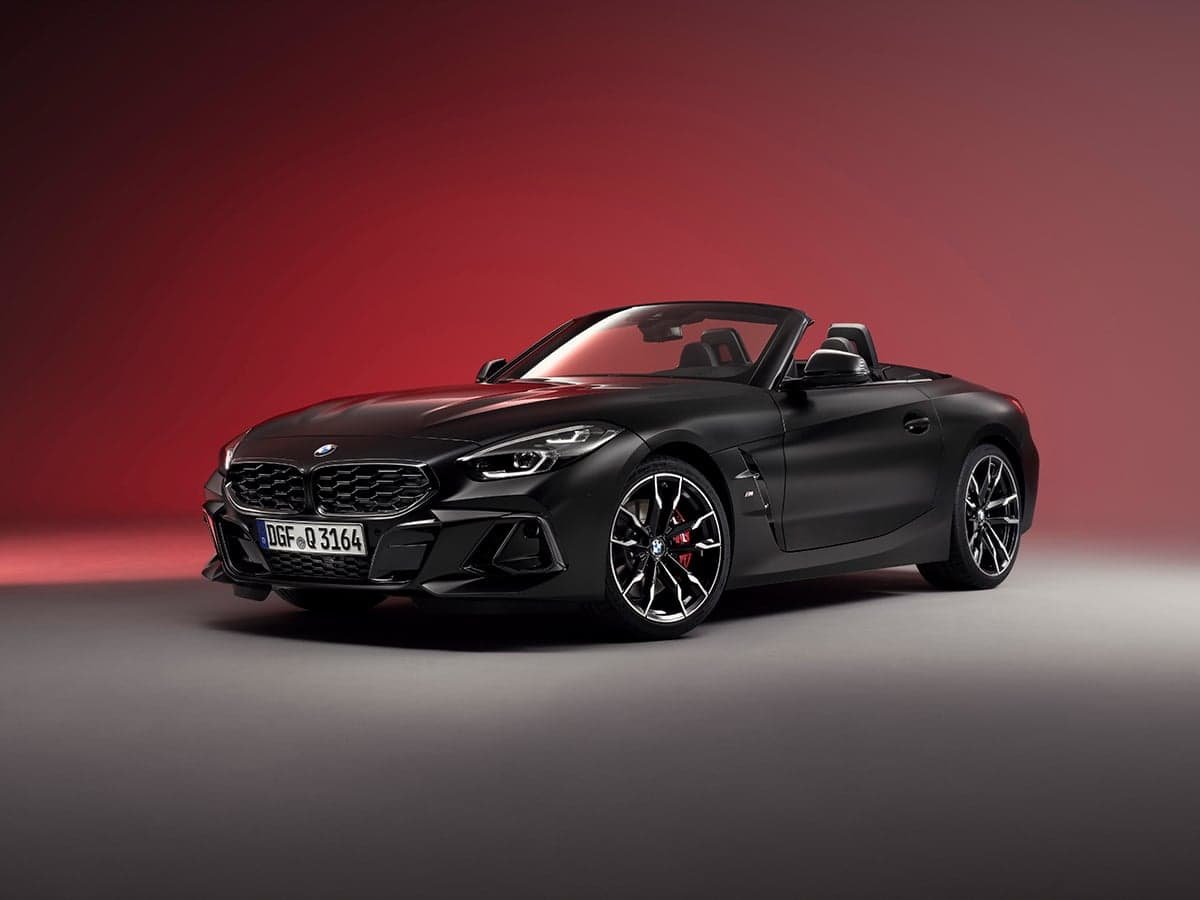
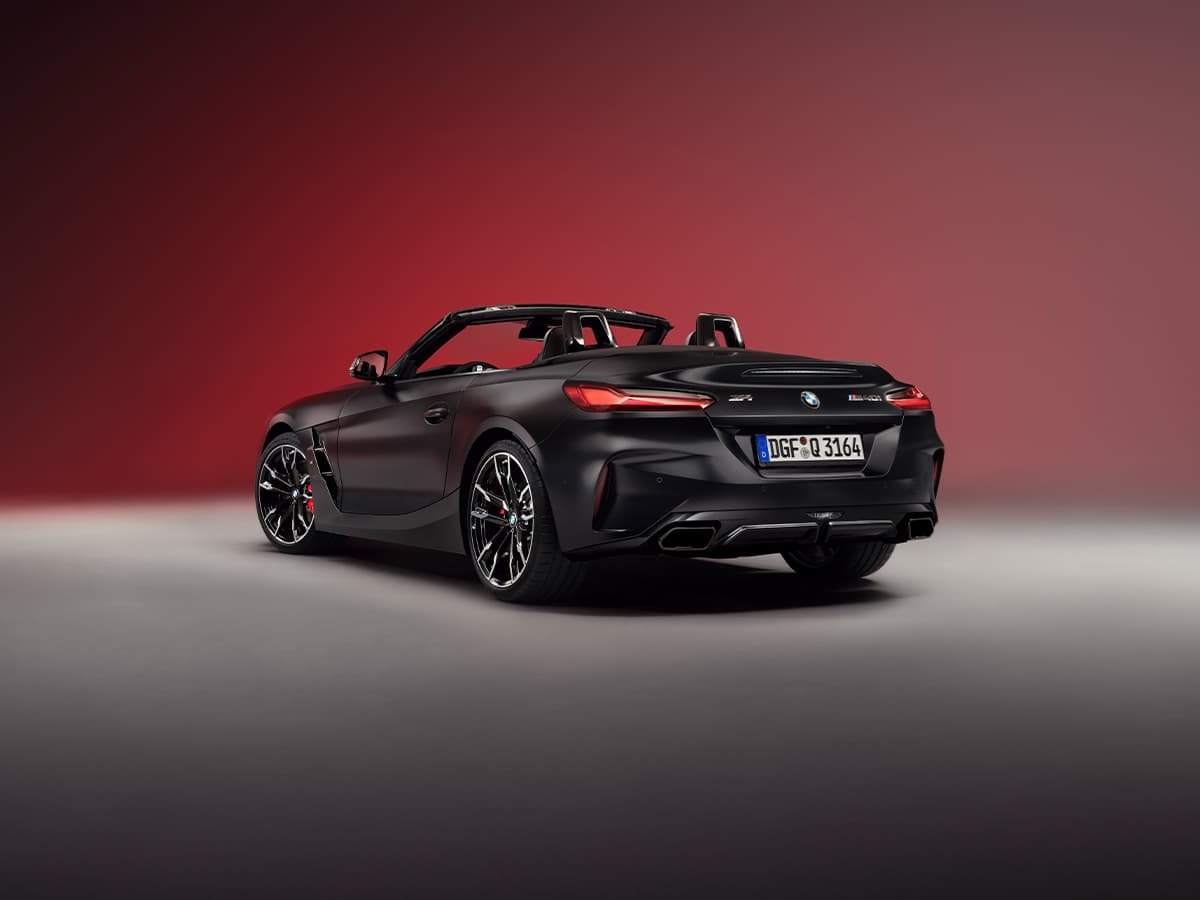
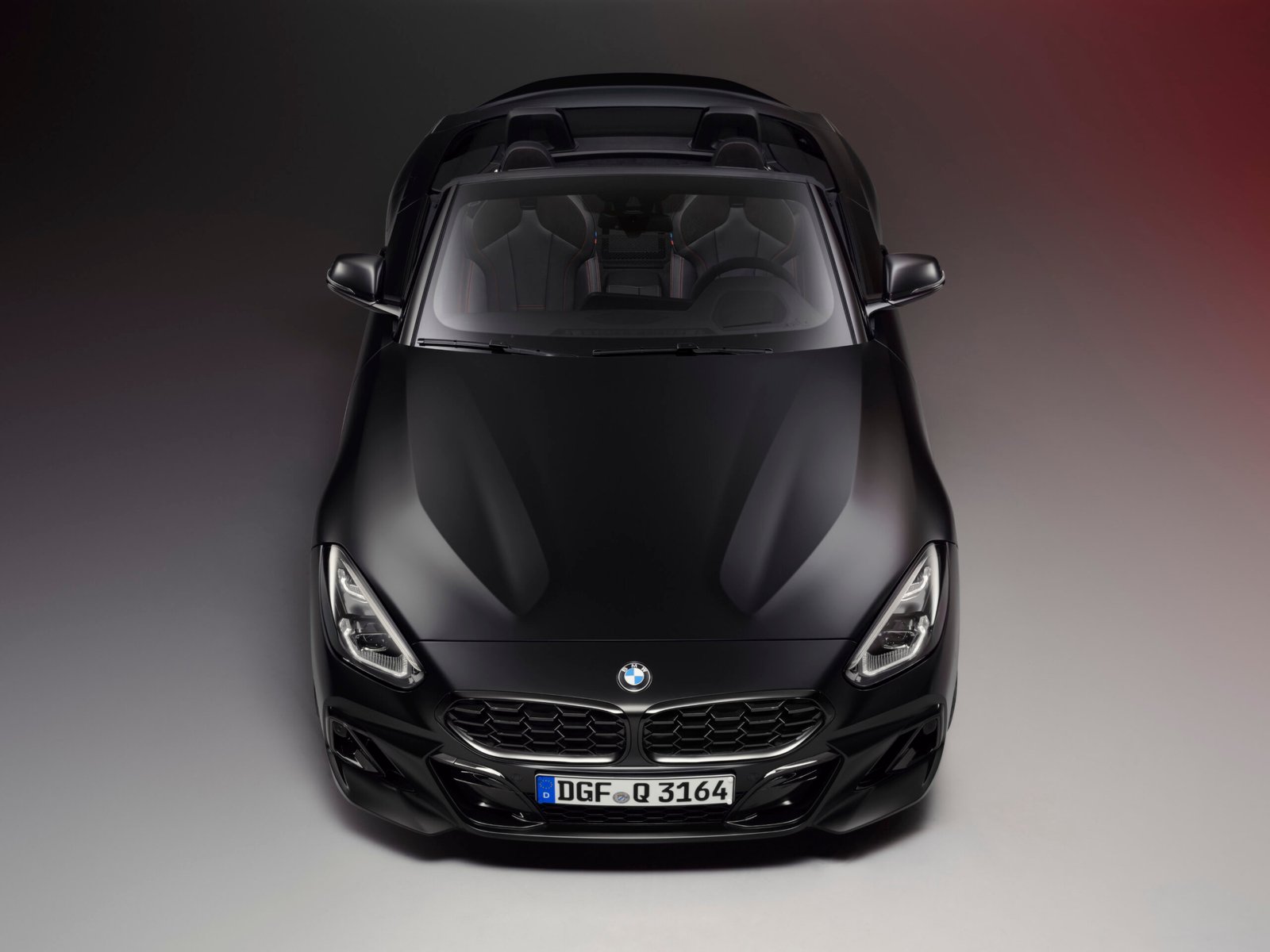
A limited Final Edition features exclusive styling details including Frozen finishes, Shadowline trim, and red-accented performance cues.
Overseas markets offer three engine options, led by the six-cylinder M40i with 250 kW (340 HP).
As open-top combustion sports cars fade away, BMW suggests the Z4’s upcoming model could become a future collectible.
It’s sad to see a sports car disappear all of suddenly, while some quietly fade away, pushed aside by changing tastes, stricter regulations, and a market that now favours height and practicality over wind in your hair. Yet every so often, a nameplate has enough history to deserve a proper goodbye. The BMW Z4 is one of those cars.
And yes, this one hurts a bit. After years of championing the classic front-engine, rear-drive roadster design, BMW is getting ready to turn the page. Its departure comes shortly after the farewell tour for its platform cousin, the Toyota Supra, marking the end of a partnership that helped keep affordable performance alive for nearly a decade. Two cars, one shared foundation, both now nearing their final run.
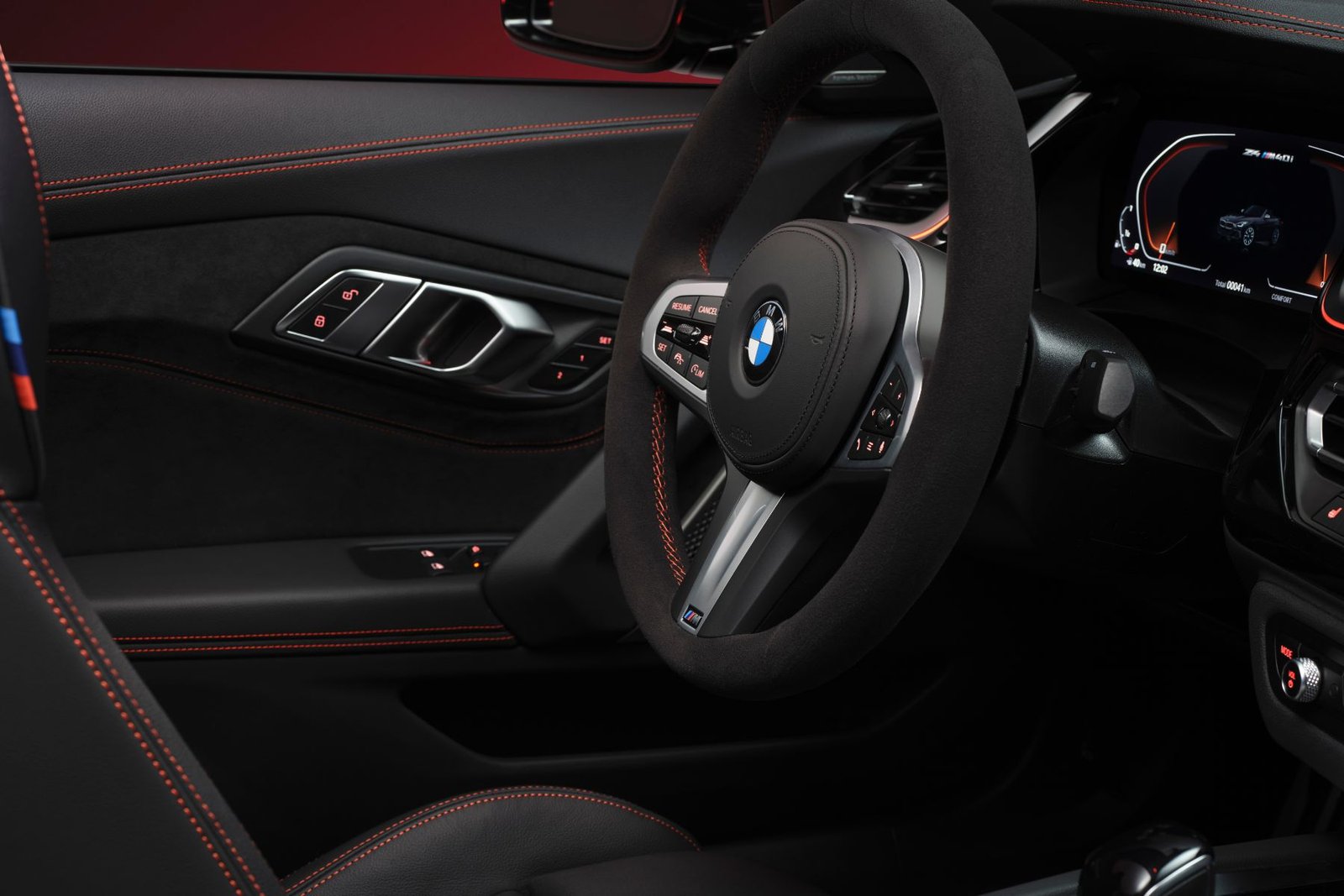
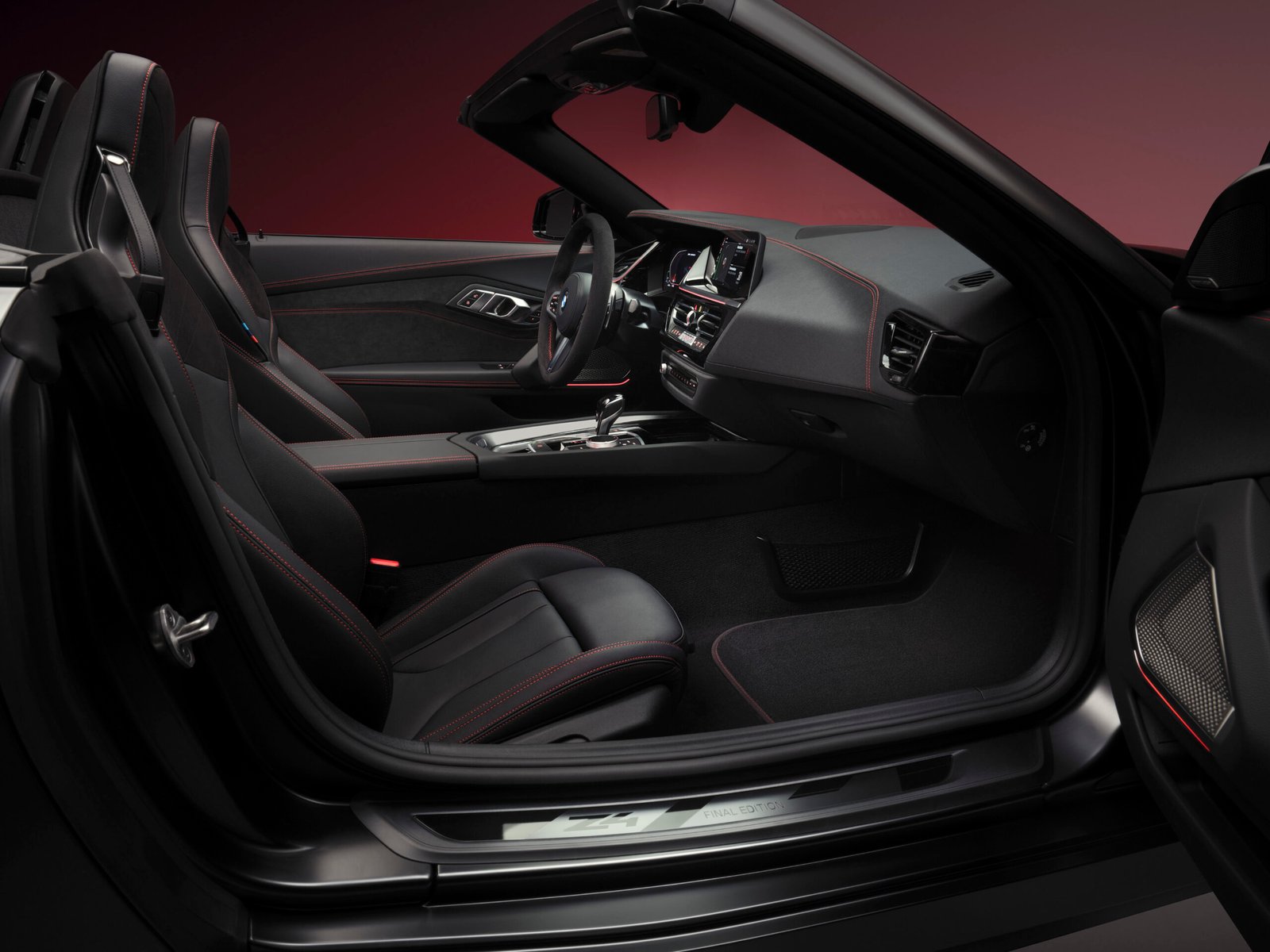
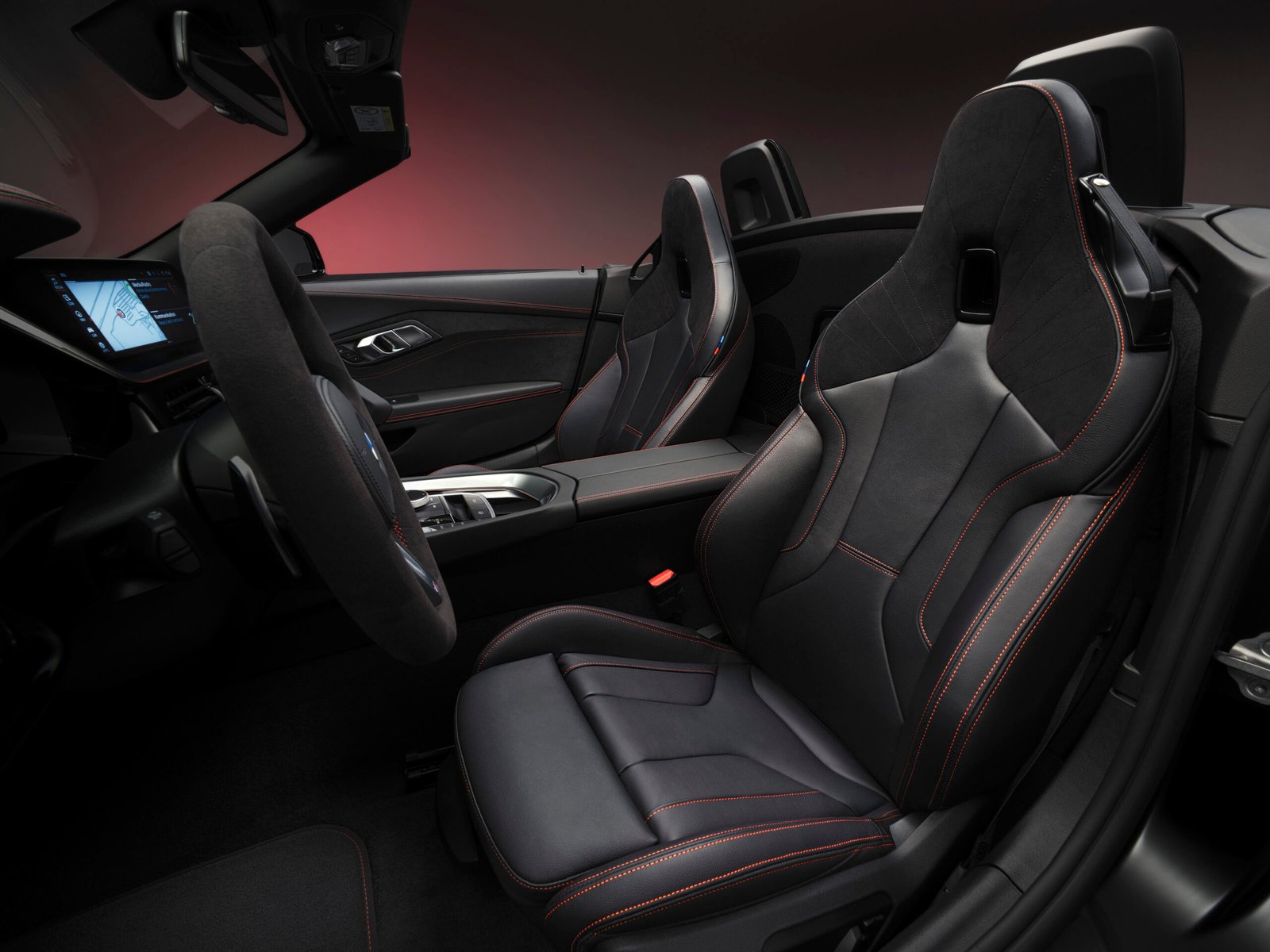
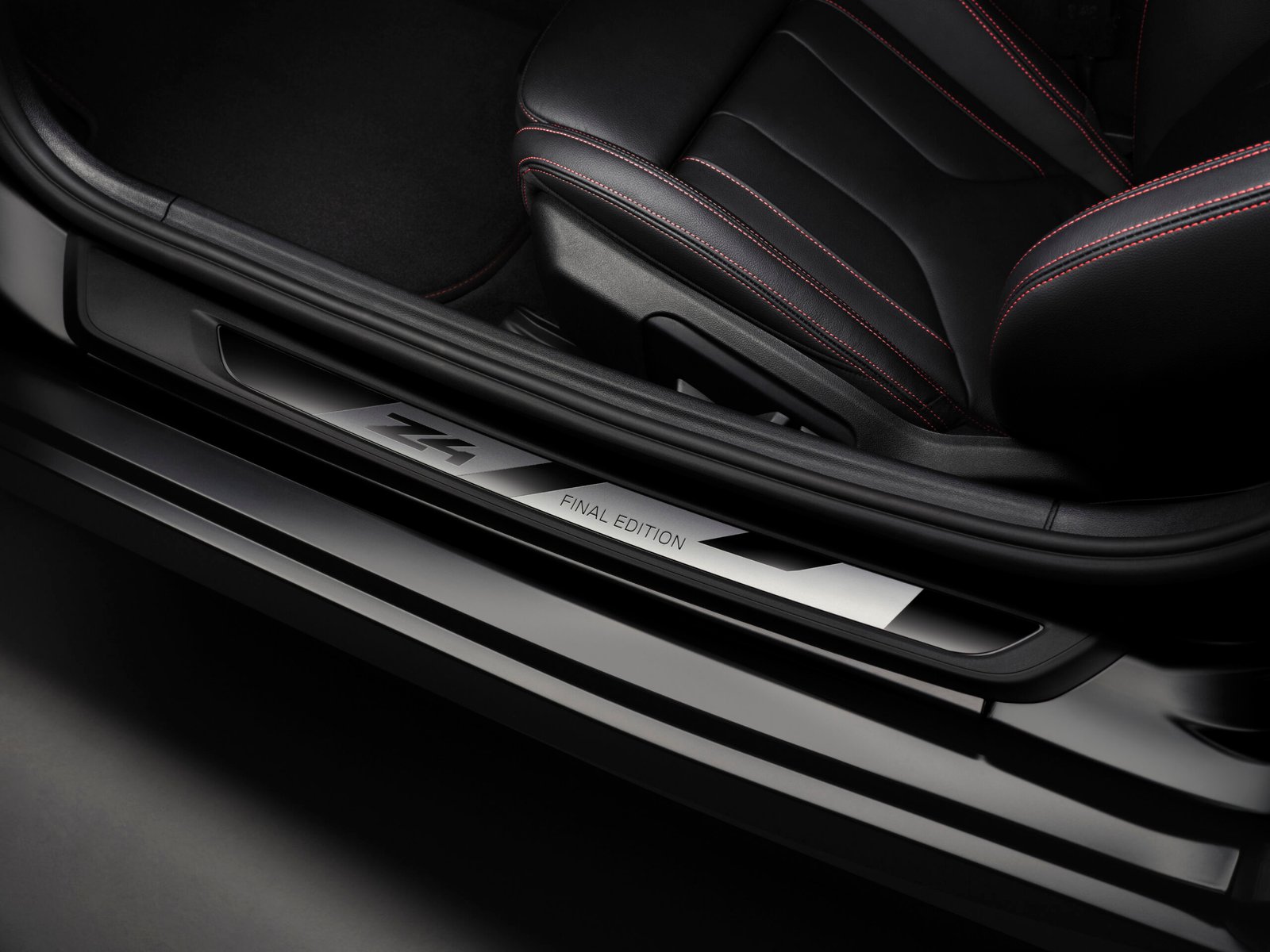
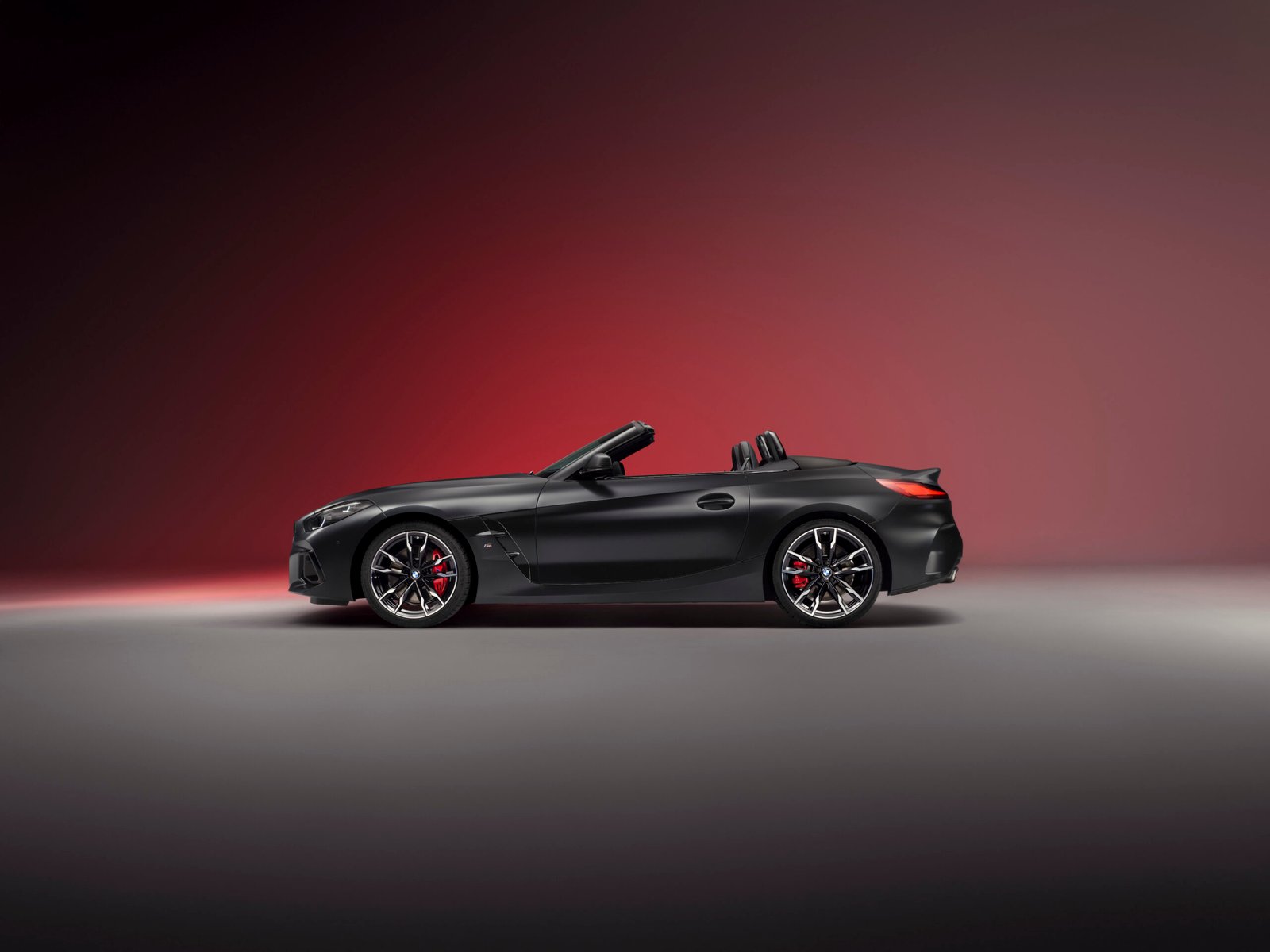
But if the Z4 must leave, it will at least do so with a fiesta. The limited Final Edition features distinctive details—think Frozen paint, darkened trim, and flashes of red inside—to make its farewell memorable. Production is set for March 2026, giving fans a last chance to secure one of the Z4S before it becomes a memory story and a used-market legend.
2026 BMW Z4 Final Edition | Image: BMW
Whenever a performance model nears the end of its life, it often becomes a classic in the future. BMW has already considered that the Z4 farewell could turn into one of those cars people look back on, and it’s easy to see why. A rear-wheel-drive roadster with a folding roof and a combustion engine feels like it’s from another world, giving it a final run and an extra dose of gravity.
The M40i still features the inline-six that fans adore, but the Final Edition takes a different approach. BMW has not issued a final statement about the changes yet, but it’s clear where it’s headed, as stricter emission standards, limited development options, and the need for even celebrated engines to comply with new rulebook.
For international market buyers, there will be three powertrain options to choose from:
BMW Z4 sDrive20i – 145 kW (197 HP)
BMW Z4 sDrive30i – 190 kW (258 HP)
BMW Z4 M40i – 250 kW (340 HP)
If you are familiar with the older versions, then you’ll notice that these figures don’t match what the car once had. The previous models offered a bit more performance from the same fundamentals it once had. The Final Edition doesn’t focus much on beating or rewriting benchmarks; it’s about giving the Z4 the respect and memorable exit it deserves.
The exact details of the car differ from country to country and are still being finalized. BMW is expected to confirm that variations in equipment, pricing, and availability are part of that process, leaving a bit of suspense for potential buyers marking their calendars.
In North America, the BMW Z4 is available with your choice between the sDrive20i, offering 145 kW (197 hp) at a starting price of USD $56,100, and the step-up version, the M40i, which offers 285 kW (387 hp) with a starting price of USD $68,400 and the ability to accelerate from 0–100 km/h in around 4.1 seconds.
2026 BMW Z4 Final Edition | Image: BMW
2026 BMW Z4 Final Edition | Image: BMW
2026 BMW Z4 Final Edition | Image: BMW
2026 BMW Z4 Final Edition | Image: BMW
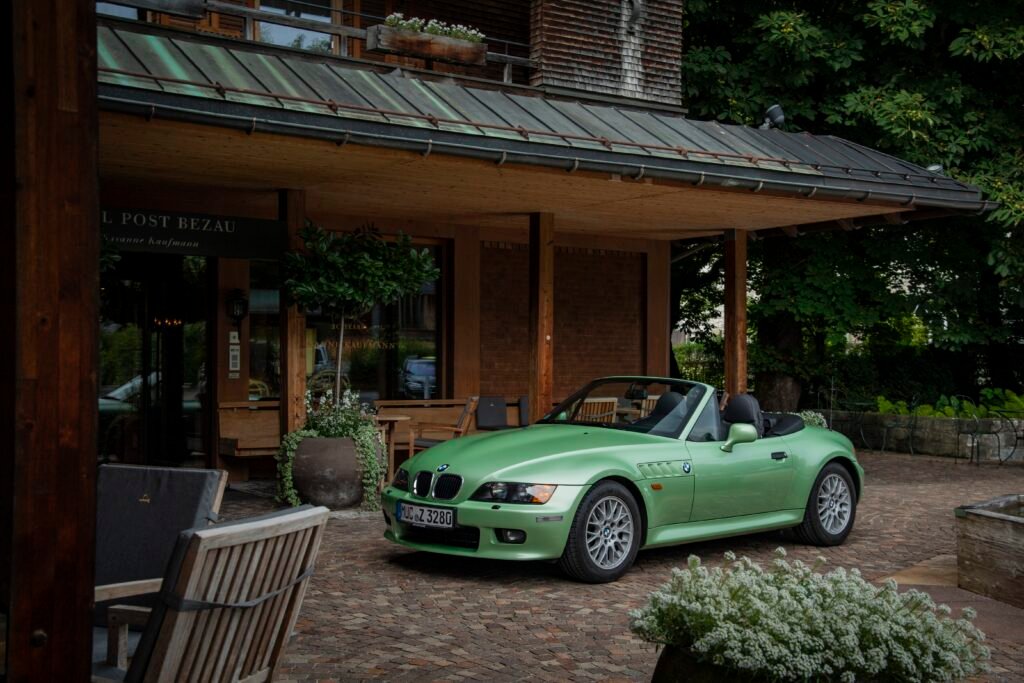
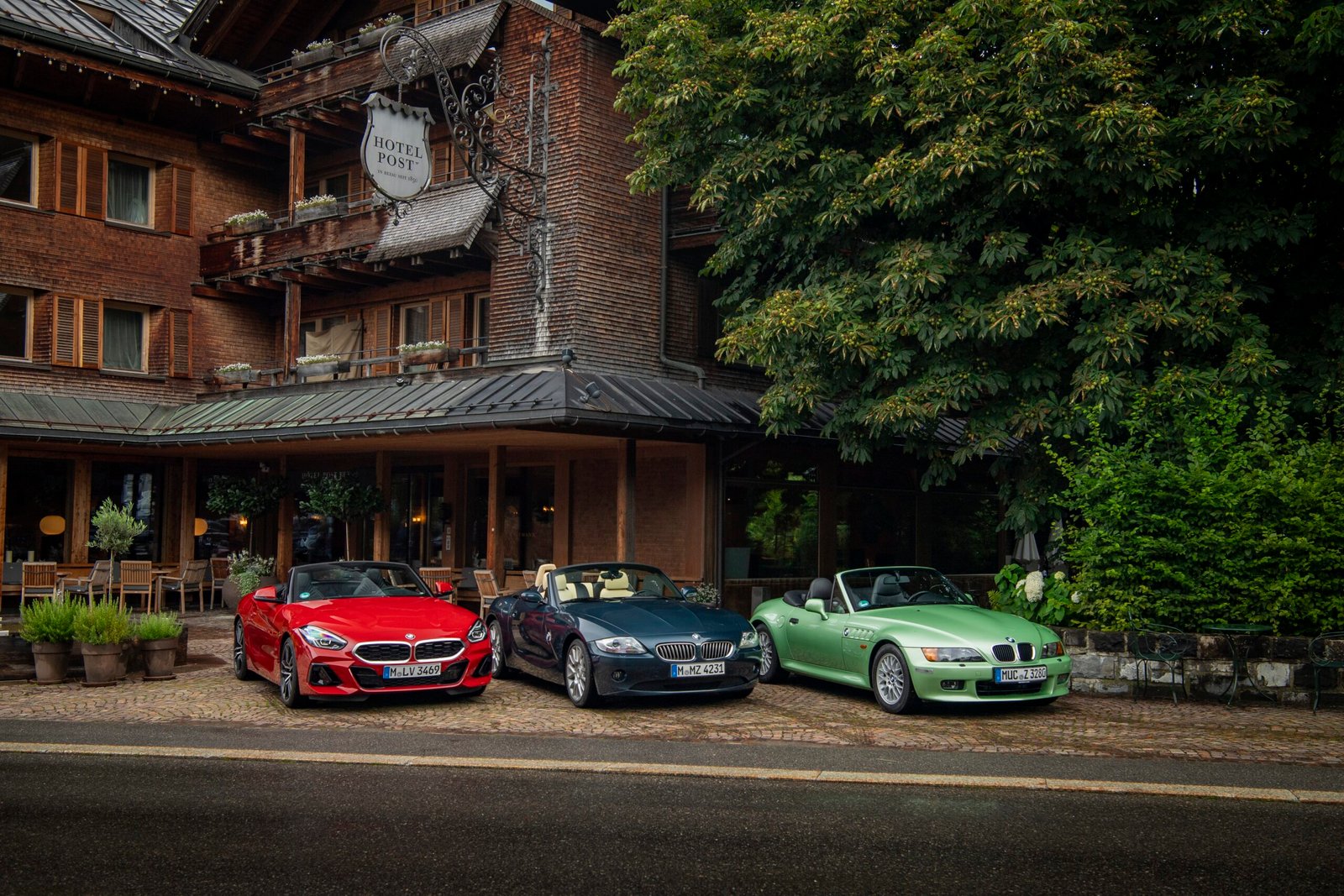
The story of the Z4 actually runs deeper than many remember. When it first launched in 2002, it replaced the BMW Z3 and carried BMW’s modern roadster identity into a new generation. What started as a slightly rebellious, design-focused two-seater matured over time into something more refined and capable, yet remained true to the simple promise of rear-wheel drive and open skies.
Now, with production almost finished, the Z4 finds itself parked alongside some very notable names in BMW history. Cars like the BMW 507 and the BMW Z8 didn’t need massive production numbers to become icons; they earned their place by capturing the moment. The same opportunity lies ahead for this Final Edition.
That is why some fans hoped BMW might offer a bit more with the farewell gifts. The special paint, dark exterior accents, red brake hardware, upgraded seats, and Alcantara steering wheel definitely help the car stand out. They look right, feel right, and match the mood. However, the fact that many of those features require you to spend a little more than some expected is part of BMW’s generosity.
2026 BMW Z4 Final Edition | Image: BMW
2026 BMW Z4 Final Edition | Image: BMW
Even so, the enhancements shouldn’t be ignored. They gave the Z4 a sharper look in its final year and provided future owners with visual clues to distinguish the older versions from the final edition. Years from now, those differences will play a significant role in conversations, at auctions, and among collectors.
The M versions of the Z4 could have featured modern hardware, power, grip, and incredible speed — it would have been spectacular to have, and definitely impossible to get your hands on one of those. Instead, the Z4 left the stage quieter but with more refined flair, and it could remind us down the road how enjoyable and straightforward a roadster can be.
Elias Albay is the Founder and Director of Many Men Magazine, a Toronto-based digital publication dedicated to promoting modern masculinity through style, culture, and self-improvement. What started as a personal turning point became a purposeful platform. — born from Elias’ desire to create something meaningful after completing his studies and finding no career path that truly matched his ambitions. With a background in Civil Engineering from York University and experience in Commercial Flight Operations at CAE, he applied skills, and resilience from both fields to forge a new path.
Our team of editors and experts thoughtfully chooses each product. If you decide to buy through one of our links, we may earn a commission. Learn more. Want to know how we test products? Click here for more details.
The first Monday in May once again transformed Manhattan into the world’s most glamorous runway, as the 2025 Met Gala took centre stage with its bold theme, Superfine: Tailoring Black Style. This year’s event honoured the cultural and artistic impact of the Black community, with designers creating pieces that told powerful stories rooted in history and style. On the red carpet, icons like Ozwald Boateng, Fear of God, and Louis Vuitton showcased masterful tailoring, while houses from Ralph Lauren to Tiffany & Co. reminded everyone why they lead the luxury conversation.
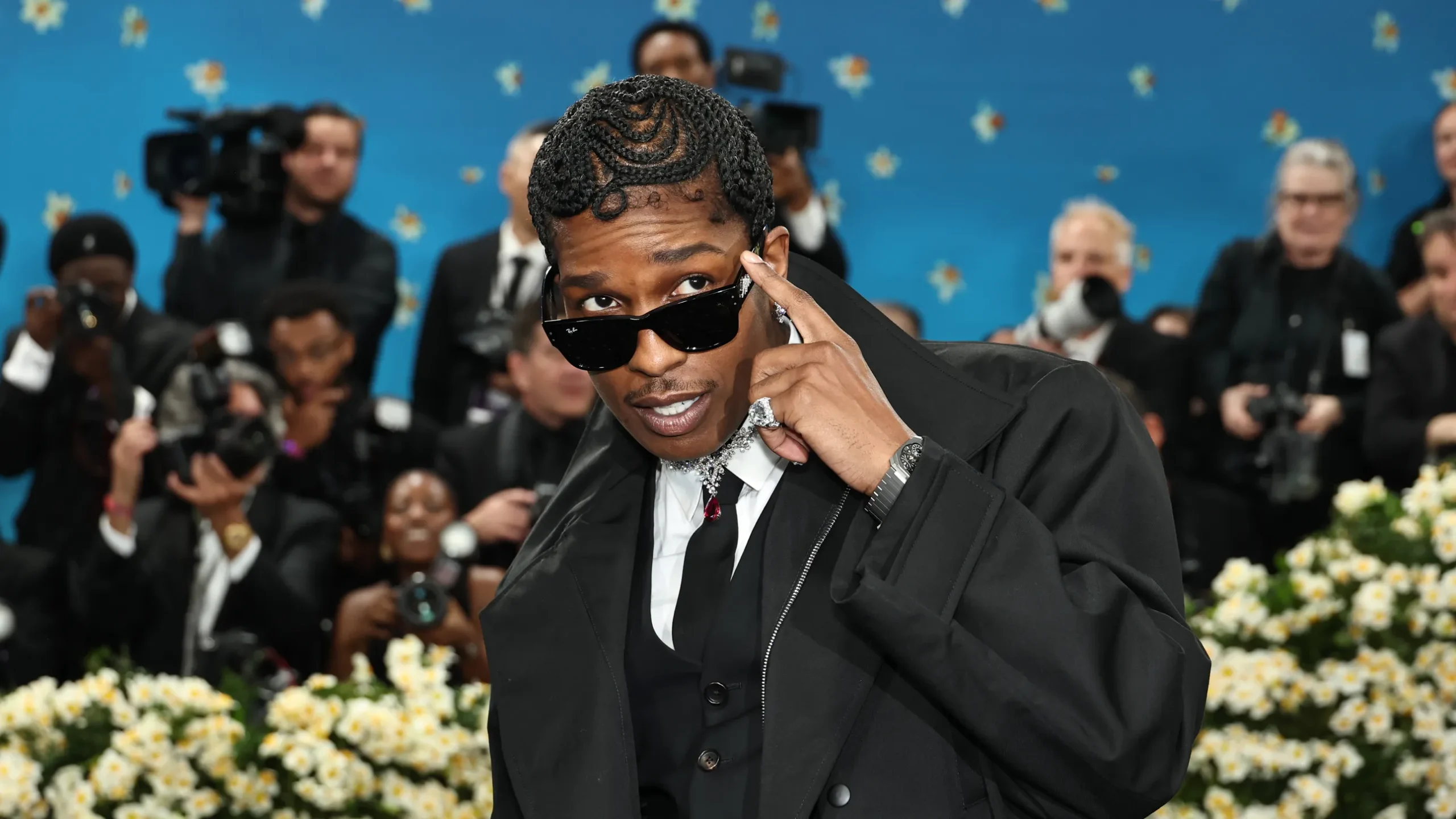
Yet, for those who know where to look, the real treasures weren’t just in the suits and gowns — they were quietly ticking on the wrists of the night’s biggest stars. The 2025 Met Gala showcased a watch lineup that could make any collector’s heart race. Usher flashed a striking Jaeger-LeCoultre, Jalen Hurts chose the understated elegance of a Breitling Navitimer, and A$AP Rocky, co-hosting alongside Pharrell Williams, Colman Domingo, and Lewis Hamilton, sported Bvlgari’s ultra-thin Octo Finissima Ultra. Pusha T illuminated the room with a “Rainbow” Rolex Daytona, while Henry Golding featured Cartier’s latest creation, the Tank à Guichet. This wasn’t just a celebration of fashion — it was a masterclass in how the perfect watch can define a moment.
Best Watches from Met Gala 2025
While the gowns and tailoring had the fashion world buzzing, our focus was on the wrists. This year’s Met Gala showcased a watch lineup that combined timeless craftsmanship with bold design, featuring everything from ultra-thin marvels to jewel-encrusted showstoppers. Each timepiece brought its own flair to the red carpet, proving that in 2025, the standout Met Gala moments weren’t just worn — they were ticking with style.
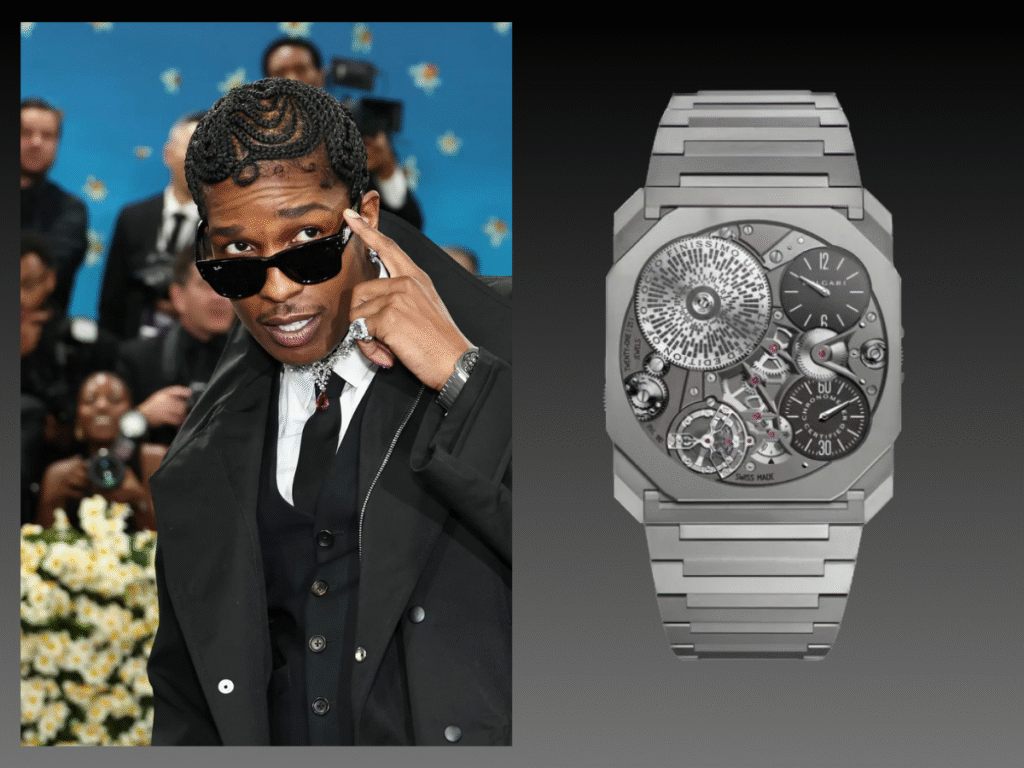
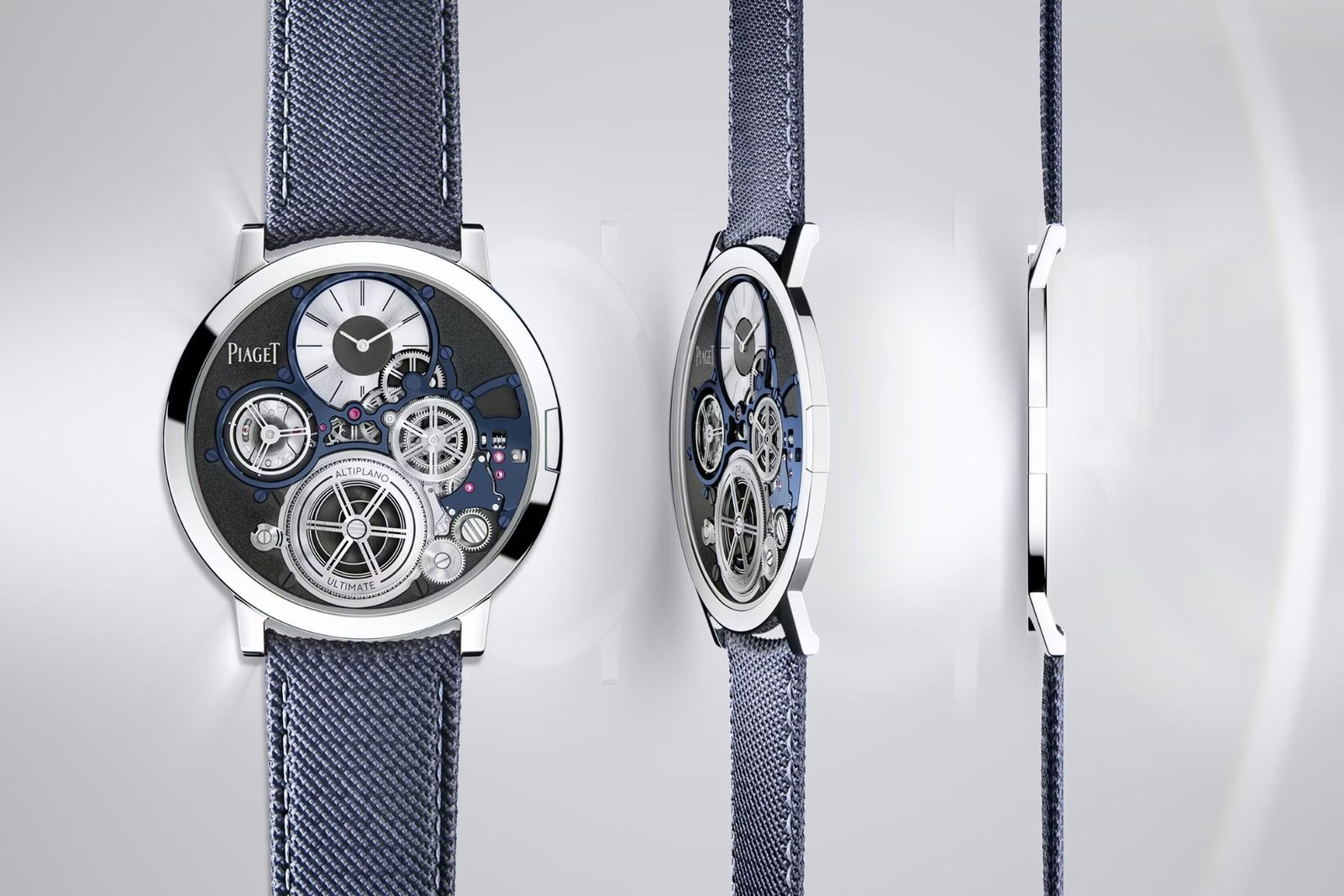
When you’re co-hosting the Met Gala alongside Rihanna — who had the world buzzing with her latest baby news — every detail matters. A$AP Rocky ensured his wrist game was as headline-worthy as the event itself, wearing the world’s thinnest watch, the Bulgari Octo Finissimo Ultra COSC. At just 1.8mm thick, it’s an engineering record-breaker that’s as much a conversation starter as it is a timekeeper. Limited to only 20 pieces and certified by COSC for accuracy, it’s a watch that quietly says, “I know exactly what I’m wearing.”
Made from titanium, the case combines lightness with strength, creating a watch that feels airy despite its bold, architectural design. The sandblasted surface reflects light beautifully, and the mechanical skeleton dial showcases the BVL180 calibre — an incredibly slim movement that still offers a 50-hour power reserve. It’s a perfect blend of technical innovation with minimalist style.
In a night filled with glittering jewels and larger-than-life fashion statements, Rocky’s Octo Finissimo Ultra COSC was the ultimate understated statement. It didn’t need to shout for attention, but for those who understand horology, it was impossible to overlook. Titanium, ultra-thin mastery, and a design that combines cutting-edge engineering with red carpet sophistication — it was the ideal pick for a man who knows how to let the details do the talking.
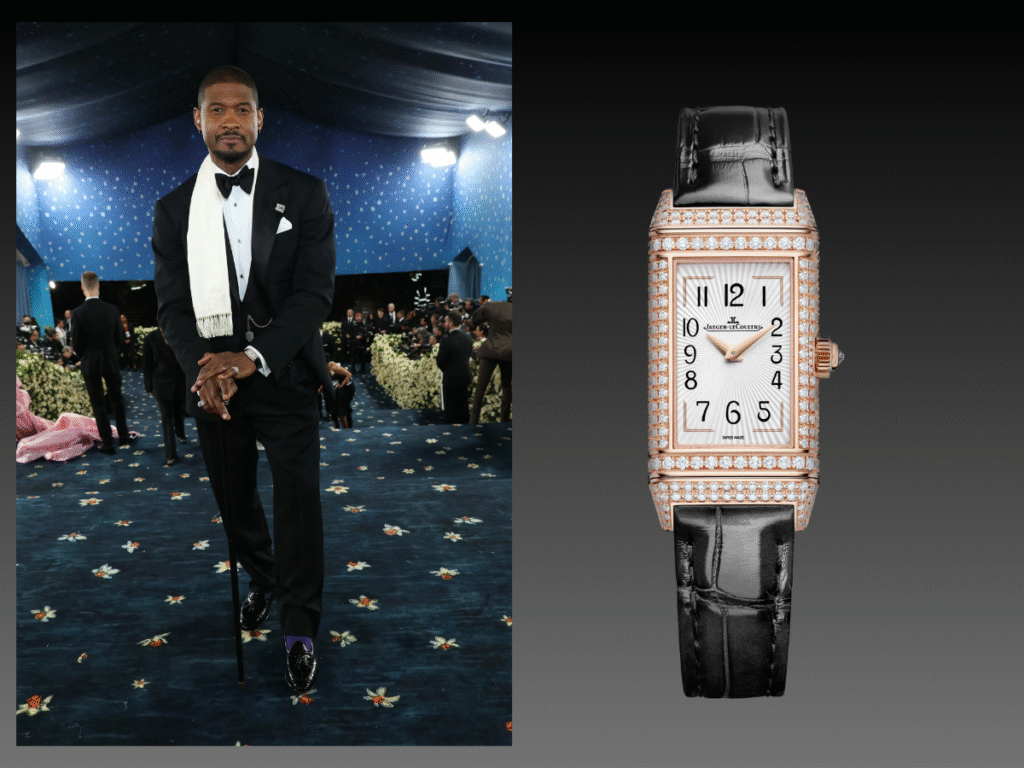
Usher’s Jaeger-LeCoultre Reverso One Duetto | Image: Getty Images – Kevin Mazur
Usher – Jaeger LeCoultre Reverso One Duetto
Brand: Jaeger-LeCoultre
Model: Reverso One Duetto
Reference: Q336247J
Dimensions: 40 x 20 mm
Thickness: 9.09 mm
Material: Pink Gold 18K
Dial Colour: Recto – Silvered Grey / Verso – Black
Calibre: Jaeger-LeCoultre Calibre 844
Power Reserve: 50 Hours
Water Resistant: 3 Bar ( 30 metres, 100 feet)
Price: USD $51,500
Fresh off his unforgettable 2024 Super Bowl halftime show, Usher kept the spotlight firmly on his wrist at the 2025 Met Gala. He chose the Jaeger-LeCoultre Reverso One Duetto, a watch that embodies timeless elegance and the duality of modern style. The Reverso, with its signature swivelling case, has always been a canvas for creativity, but the One Duetto takes it a step further — offering two distinct personalities in one slim and refined design. For a performer who thrives on versatility, it was the perfect red carpet companion.
Usher’s version came in warm 18K pink gold, measuring 40 x 20 mm with a graceful 9.09 mm thickness. The watch featured a silvered grey dial on the front, pared back and refined, while the back revealed a bold black dial for a moodier, after-dark look. Inside beats Jaeger-LeCoultre’s Calibre 844, a hand-wound movement delivering a 50-hour power reserve — a testament to the brand’s watchmaking mastery. Even with its elegance, the Reverso maintains a practical edge with water resistance up to 30 metres, balancing beauty with functionality.
On a night filled with larger-than-life fashion statements, Usher’s choice was subtle, sophisticated, and quietly confident. Priced at USD $51,500, the Reverso One Duetto isn’t just a watch — it’s a piece of jewellery in its own right, blending high jewellery and fine horology seamlessly. Like Usher himself, it exudes charm and depth, demonstrating that true style isn’t about loudness but about presence.
Colman Domingo’s Omega Speedmaster Moonwatch Professional in Moonshine Gold | Images: Getty Images – Gilbert Carrasquillo
Colman Domingo – Omega Speedmaster Moonwatch Professional in Moonshine Gold
Brand: Omega
Model: Speedmaster Moonwatch Professional
Reference: 310.60.42.50.99.002
Diameter: 42
Thickness: 13.18 mm
Material: 18K Moonshine™ Gold
Dial Colour: Yellow
Calibre: Omega 3861
Power Reserve: 50 Hours
Water Resistant: 5 Bar ( 50 metres, 165 feet)
Price: USD $47,200
Colman Domingo has never been one to blend into the background, and at the 2025 Met Gala, he made sure his wrist commanded as much attention as his tailored outfit. His choice? The Omega Speedmaster Moonwatch Professional in Moonshine Gold — a watch that’s as rich in history as it is in glamour.
Moonshine Gold is Omega’s exclusive 18K alloy, crafted to shine more softly and subtly than traditional yellow gold. On the Met Gala red carpet, it caught the light beautifully, complementing the sun-brushed green dial and the black ceramic bezel engraved with the Speedmaster’s iconic tachymeter scale. It was bold yet understated, elegant without appearing overdone.
Beneath that golden case lies Omega’s Calibre 3861, a manually-wound Master Chronometer movement that resists magnetism, offers a 50-hour power reserve, and brings modern reliability to the Speedmaster’s lunar heritage. It’s the kind of calibre that proves this watch isn’t just for display — it’s built to perform.
For Domingo, the Moonshine Gold Speedmaster was more than just a stylish accessory; it was a symbol of power and sophistication. During a night dedicated to culture, storytelling, and influence, his choice of this iconic chronograph served as the perfect finishing touch — a golden reminder that some watches aren’t just worn, they’re experienced.
Pusha T – Rolex Rainbow Cosmograph Daytona Pink Gold
Brand: Rolex
Model: Rainbow Rolex Cosmograph Daytona
Reference: 116595RBOW-0001
Diameter: 40 mm
Thickness: 12.5 mm
Material: Rose Gold
Dial Colour: Black
Calibre: Rolex 4130
Power Reserve: 72 Hours
Water Resistant: 10 Bar ( 100 metres, 330 feet)
Price: Varies
If rare and extravagant is your thing, Pusha T’s wrist at the 2025 Met Gala was one to remember. The rapper arrived with the Rolex Cosmograph Daytona “Rainbow” in pink gold — a watch so bold it almost demands its own spotlight. Made in 18K Everose gold, the case was encrusted with diamonds and topped with a bezel of baguette-cut sapphires that shift through every colour of the spectrum. Add white diamonds on the lugs and crown guards, and you’ve got a timepiece that blurs the line between high jewellery and serious watchmaking.
Rolex doesn’t cut corners when it comes to creating timepieces like this. According to Christie’s, which listed a Rainbow Daytona at auction in 2024, the brand takes meticulous care to hand-select and match every single stone, ensuring each sapphire in the bezel is the exact shade it should be. It’s a process that reflects Rolex’s obsession with detail, and part of what makes the Rainbow Daytona one of the most coveted gem-set watches in the world.
First introduced in 2012, the Daytona Rainbow has since gained cult status, becoming one of Rolex’s most impressive and sought-after creations. Underneath the sparkle is the Rolex Calibre 4130, an automatic chronograph movement known for its exceptional reliability and a 72-hour power reserve. Even in its most flamboyant form, the Daytona still reflects the heritage of a racing chronograph.
For Pusha T, wearing the Rainbow Daytona to fashion’s biggest night was more than just a flex — it was a statement. It said that watches, like music, can be bold, rare, and unforgettable. And in a sea of diamonds and couture, his Rainbow Rolex still managed to steal the spotlight.
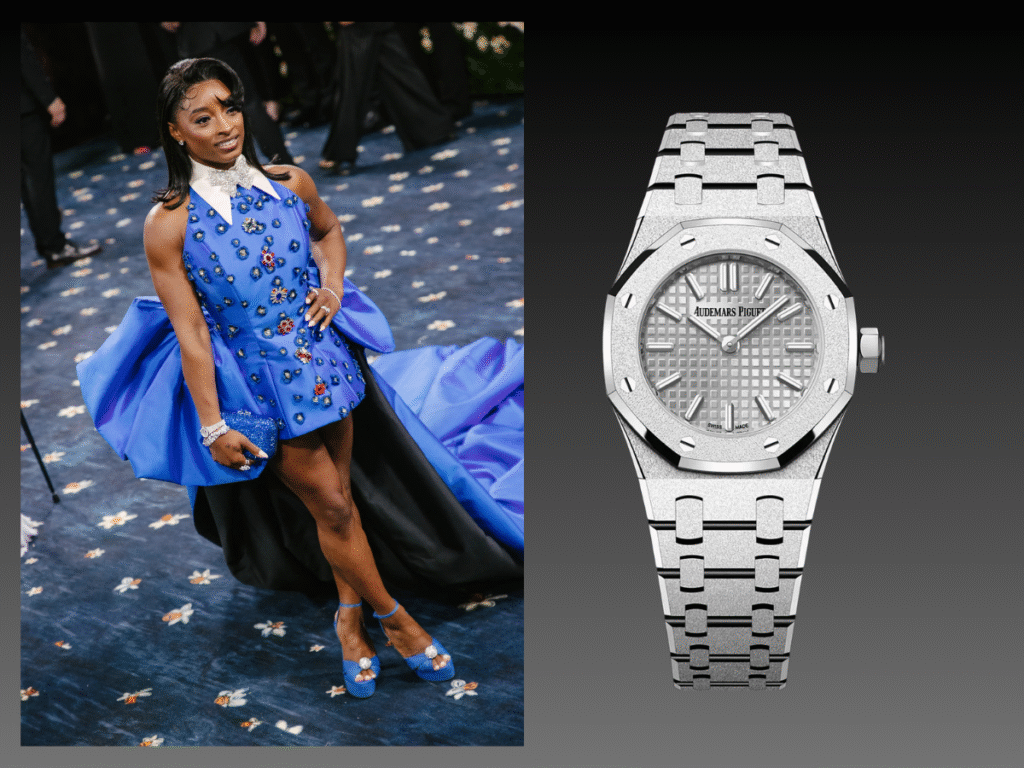
Simone Biles’s Audemars Piguet Mini Frosted Royal Oak In White Gold | Image: Getty Images – Lexie Moreland
Simone Biles – Audemars Piguet Mini Frosted Royal Oak In White Gold
Brand: Audemars Piguet
Model: Royal Oak
Reference: 67630BC.GG.1312BC.01-B
Diameter: 23 mm
Thickness: 6.6 mm
Material: 18K White Gold
Dial Colour: White Gold Toned
Calibre: 2730
Power Reserve: Quartz
Water Resistant: 5 Bar ( 50 metres, 165 feet)
Price: USD $38,000
Simone Biles may be the most decorated gymnast in history, but at the 2025 Met Gala, she showed that her elegance is just as commanding as her athleticism. On her wrist was the Audemars Piguet Mini Frosted Royal Oak in white gold — a stunning reinterpretation of one of watchmaking’s most iconic designs. With its petite 23 mm case, the Mini Royal Oak captures the bold lines of the original in a refined and delicate way. The frosted finish, created using a centuries-old Florentine technique, gave the white gold an icy sparkle under the lights, making the watch feel as much a piece of jewellery as a timepiece.
Powered by a quartz movement, the Mini Frosted Royal Oak emphasizes artistry over mechanical complexity. Its octagonal bezel and shimmering bracelet add subtle glamour to Biles’ red carpet look, a perfect match for a woman who combines strength with elegance. Small in size but impactful, her choice of watch reminds us that sometimes the most refined packages hold the boldest statements.
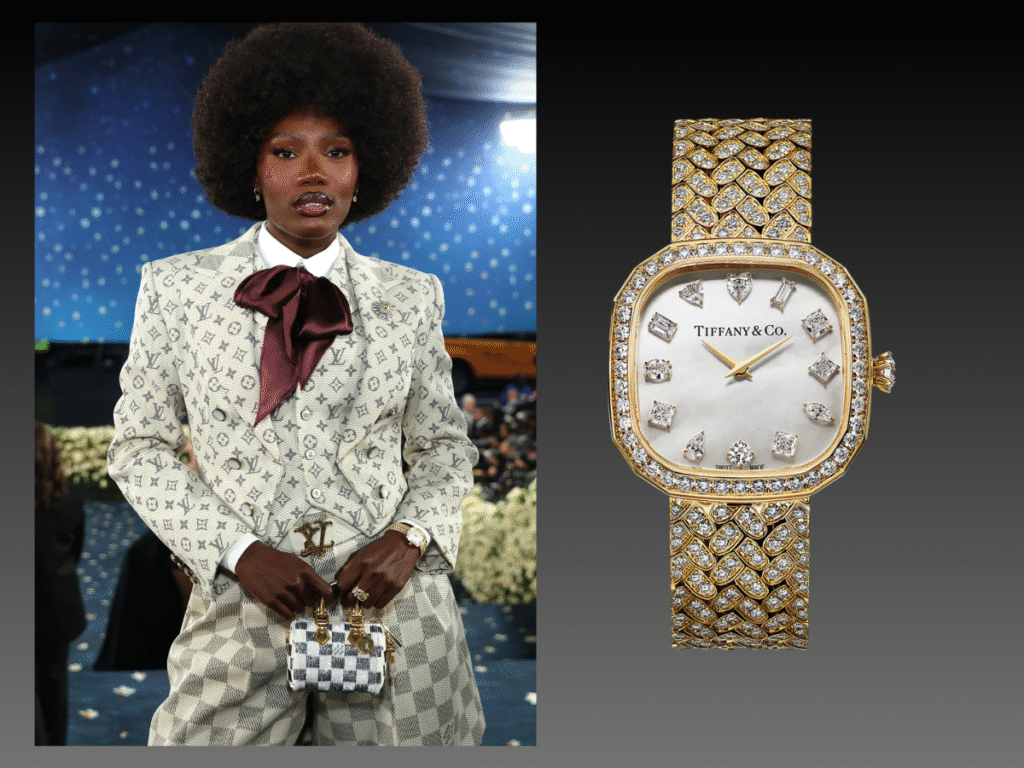
Doechii’s Tiffany Eternity Watch In Yellow Gold With Diamonds & Mother-Of-Pearl Dial | Image: Getty Images – Kevin Mazur
Doechii – Tiffany & CO. Eternity Watch In Yellow Gold With Diamonds & Mother-Of-Pearl Dial
Brand: Tiffany & CO.
Model: Eternity
Reference: 75589522
Material: 18K Yellow Gold
Dial Colour: Mother Of Pearl Dial
Power Reserve: Quartz
Water Resistant: 5 Bar ( 50 metres, 165 feet)
Price: USD $150,000
Rapper and style chameleon Doechii brought a bold sparkle to the Met Gala, and her choice of wristwear ensured it didn’t go unnoticed. She arrived wearing the Tiffany Eternity Watch in yellow gold, a piece that balances high jewellery flair with the elegance of fine watchmaking. Set with brilliant diamonds around the bezel and bracelet, the watch shimmered with every movement, while its luminous mother-of-pearl dial added a softer, romantic touch. Small in size but rich in detail, it was the kind of watch that could stand out alongside gowns and jewels, yet still felt effortlessly wearable.
Powered by a quartz movement, the Eternity Watch focuses less on horological complexity and more on timeless design. Crafted in radiant yellow gold and adorned with diamonds, it captured the spirit of extravagance at the Met Gala while paying homage to Tiffany’s legacy as a jeweller to the stars. On Doechii’s wrist, it became more than just an accessory — it was a statement of daring glamour, radiant confidence, and unapologetic luxury.
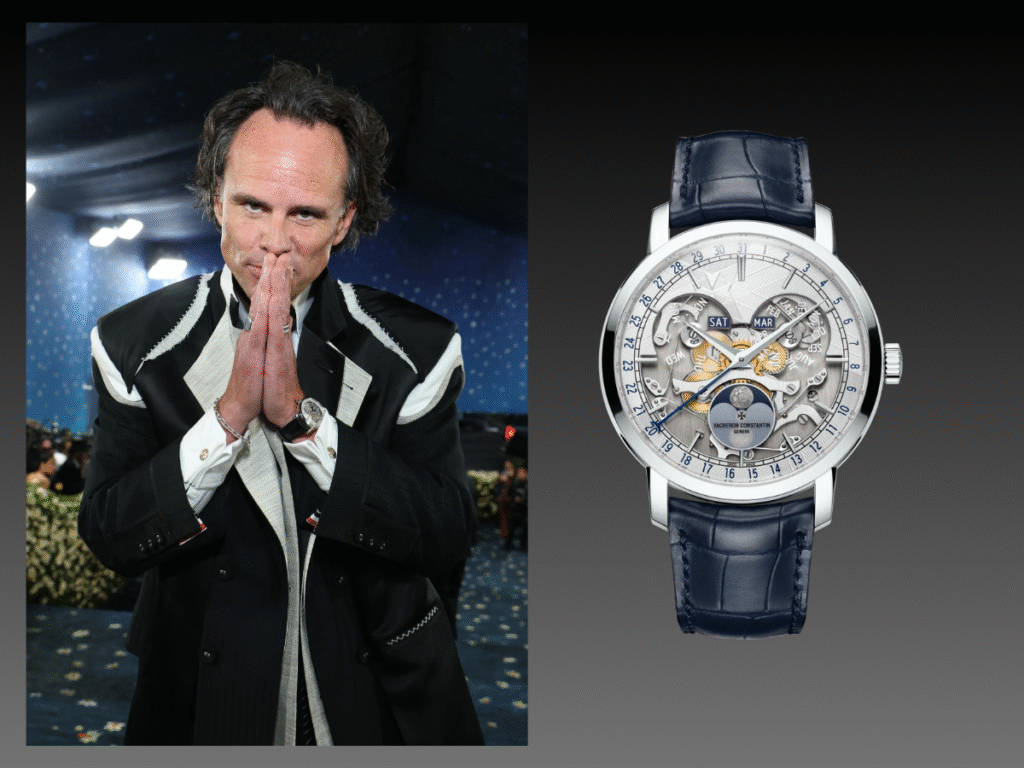
Walton Goggin’s Vacheron Constantin Traditionelle Complete Calendar Openface | Image: Getty Images – Kevin Mazur
Walton Goggin – Vacheron Constantin Traditionelle Complete Calendar Openface
Brand: Vacheron Constantin
Model: Traditionelle Complete Calendar Openface
Reference: 4020T/000P-H038
Diameter: 41 mm
Thickness: 11.05 mm
Material: Platinum
Dial Colour: Silver-Toned Openface Dial
Power Reserve: Self-Winding
Water Resistant: 3 Bar ( 30 metres, 100 feet)
Price: USD $72,500 (Limited Edition – 350 Pieces)
Walton Goggins has built his career on portraying layered, memorable characters, so it’s no surprise that his watch choice at the 2025 Met Gala reflected the same depth. On his wrist was the Vacheron Constantin Traditionnelle Complete Calendar Openface (Ref. 4020T/000P-H038), a platinum timepiece limited to just 350 pieces worldwide. Measuring 41 mm across and only 11.05 mm thick, it had proportions that feel sleek and elegant, but what truly drew attention was the silver-toned openface dial — a design that allows you to see into the heart of the movement while still offering a clear display of the full calendar and moonphase.
This isn’t a watch that demands attention. Instead, it draws you in gradually, much like Goggins himself commands a scene. The self-winding movement underneath the dial powers not only the complications but also the story the watch shares: one of balance, craftsmanship, and understated excellence. Even with water resistance up to 30 metres, it’s not about practicality — it’s about showcasing a piece of horology that connects centuries of tradition with a distinctly modern touch.
With a price tag of USD $72,500, the Traditionnelle Complete Calendar Openface is as exclusive as it sounds, and that’s precisely why it suits Goggins so well. On a night where flash and sparkle took centre stage, his choice was deliberate, thoughtful, and refined. It wasn’t about being the loudest in the room — it was about wearing something that, like him, reveals its brilliance the closer you look.
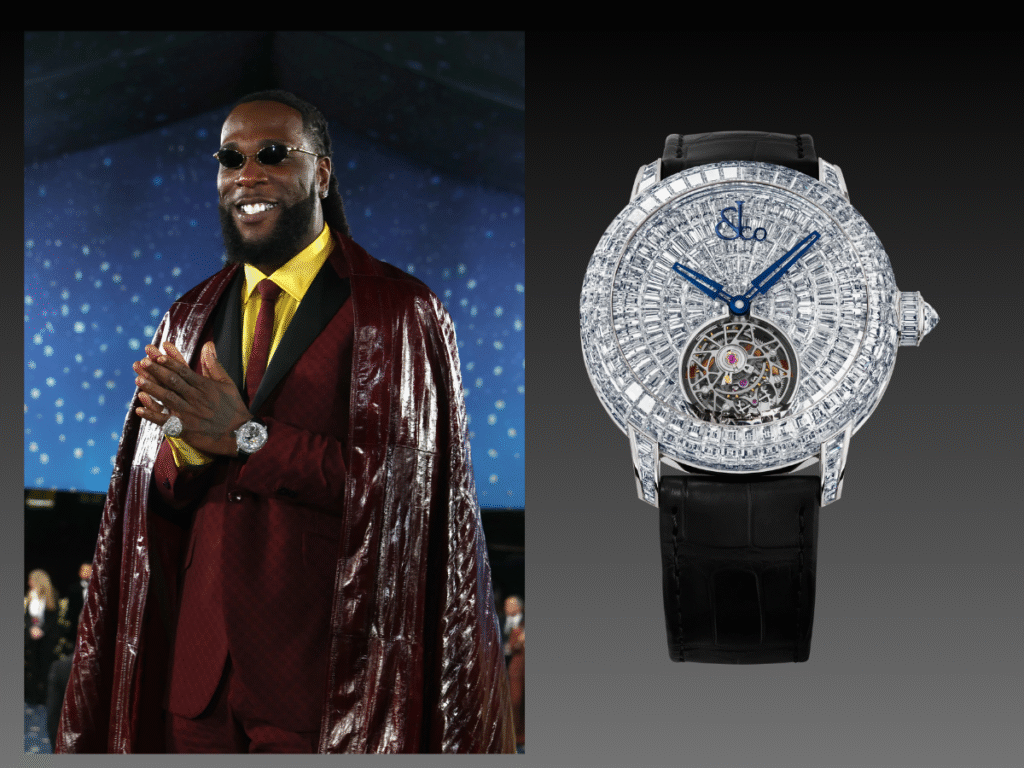
Burna Boy’s Jacob & Co. Caviar Tourbillon | Image: Getty Images – Kevin Mazur
Burna Boy – Jacob & Co. Caviar Tourbillon
Brand: Jacob & Co.
Model: Caviar Tourbillon
Reference: CV310.30.BA.AA.A
Diameter: 44 mm
Thickness: 15.85 mm
Material: 18K White Gold
Dial Colour: 18K White Gold
Caliber: JCAA43
Power Reserve: 42 Hours
Water Resistant: 3 Bar ( 30 metres, 100 feet)
Price: Upon Request (Limited Edition – 18 Pieces)
When Burna Boy takes the stage — or in this case, the Met Gala red carpet — you can count on him to bring energy, extravagance, and a bit of fire. His choice of wristwear was no different. The Nigerian superstar wore the Jacob & Co. Caviar Tourbillon, a timepiece that’s less of a watch and more of a high jewellery masterpiece. Known for crafting some of the boldest designs in modern watchmaking, Jacob & Co. transformed the Caviar into a full spectacle, and Burna Boy wore it as if it was made just for him.
The watch’s case is adorned with an array of baguette-cut precious stones, meticulously arranged in a stunning mosaic that sparkles with every flash of the camera. At its centre sits a flying tourbillon, a complication as technically remarkable as it is visually captivating, surrounded by the kind of gem-setting only a select few watchmakers worldwide can achieve. This isn’t a timepiece you wear to blend in — it’s one you choose when you want your wrist to shine as brightly as your presence.
For Burna Boy, the Caviar Tourbillon was the perfect reflection of his personality: bold, unapologetic, and impossible to ignore. On a night where luxury and artistry collided, his Jacob & Co. creation was pure spectacle, cementing his reputation as a man who doesn’t just follow the beat — he sets it.
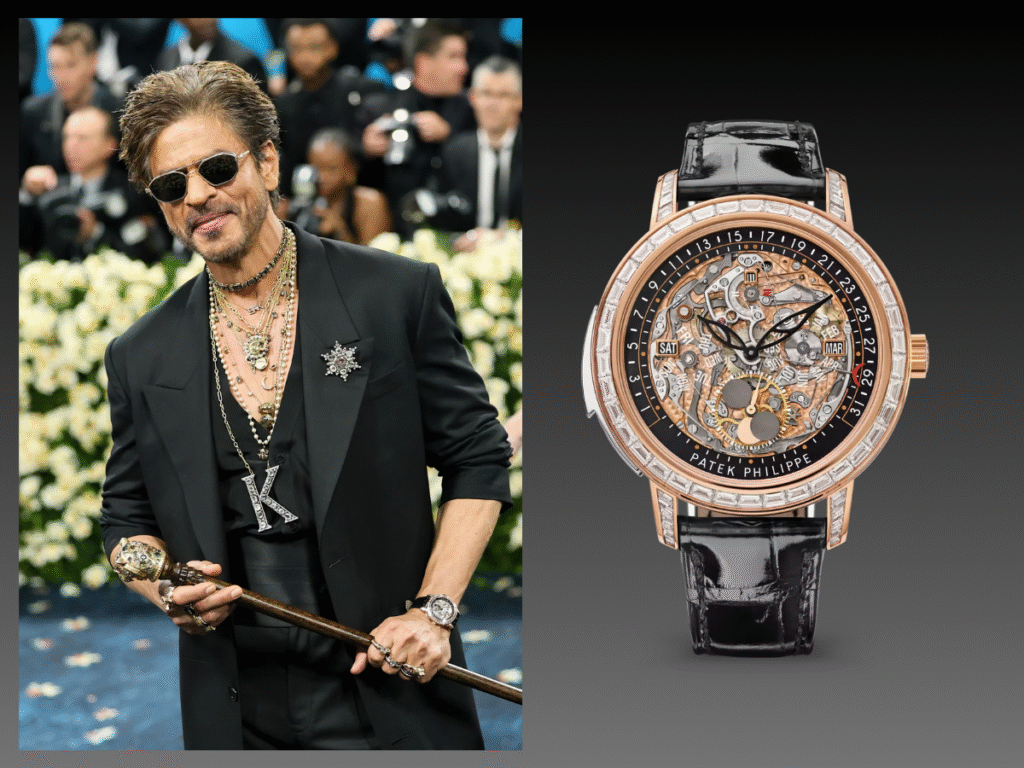
Shah Rukh Khan Wearing A Patek Philippe Minute Repeater Perpetual Calendar | Image: Getty Images
Shah Rukh Khan – Patek Philippe Minute Repeater Perpetual Calendar
Brand: Patek Philippe
Model: Minute Repeater Perpetual Calendar
Reference: Ref. 5304/301R
Diameter: 43 mm
Thickness: 13.3 mm
Material: Rose Gold
Dial Colour: White gold skeletonized leaf-shaped hands – black varnished
Caliber: R 27 PS QR LU
Power Reserve: 48 Hours
Water Resistant: Not Water Resistance
Price: Upon Request
When you’re Shah Rukh Khan, the Baadshah of Bollywood, your very presence commands a room, and at the 2025 Met Gala, he didn’t need a classic tuxedo to leave an impression. His wrist told the story instead, carrying a Patek Philippe Minute Repeater Perpetual Calendar — one of the most prestigious and technically advanced watches in existence. A masterpiece that combines the chiming elegance of a minute repeater with the timeless practicality of a perpetual calendar, it was a choice that exuded refinement and mastery.
With the Caliber R 27 PS QR LU, an in-house movement that combines complexity with elegance, featuring a 48-hour power reserve. Crafted in precious metal with a dial that balances intricate detail and restraint, the watch is as technically impressive as it is visually understated. On a night marked by bold fashion and louder statements, Shah Rukh’s Patek was pure authority on the wrist — a reminder that true luxury doesn’t need to shout. It simply resonates.
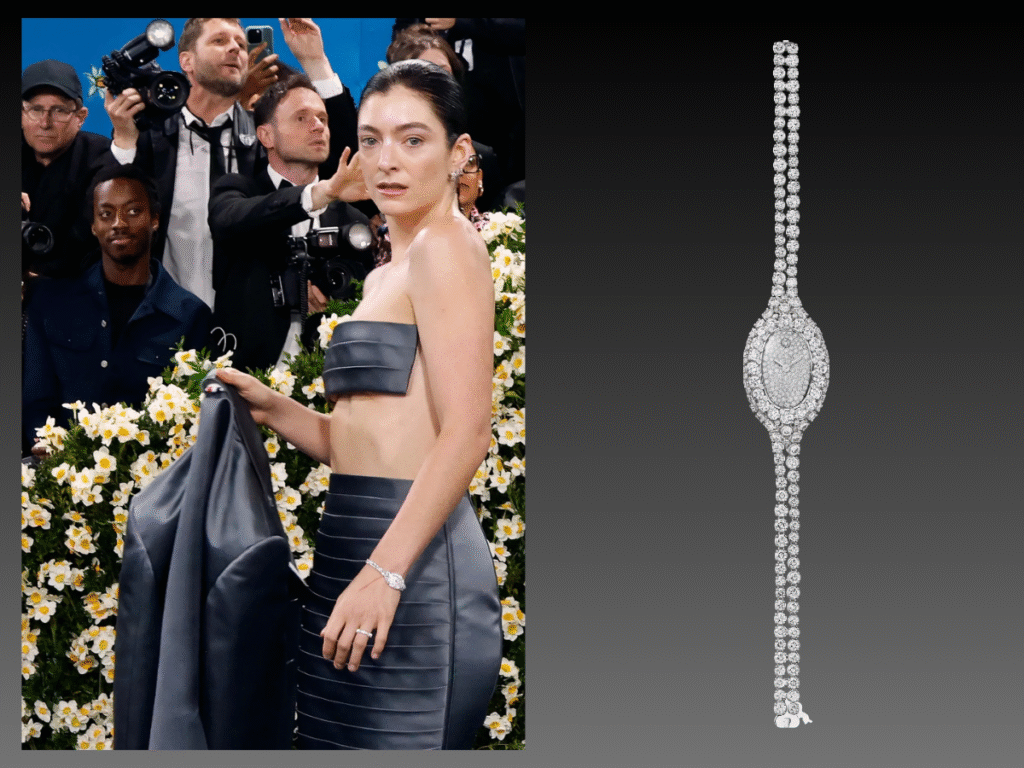
Lorde’s Cartier Baignoire Watch | Image: Getty Images – Taylor Hill
Lorde – Cartier Baignoire
Brand: Cartier
Model: Baignoire Jewellery
Reference: CRHPI01528
Dimensions: 24.8 x 17.1 mm
Thickness: 8.3 mm
Material: White Gold
Dial Colour: White Gold With 131 brilliant-cut diamonds totalling
Caliber: Quartz
Power Reserve: 48 Hours
Water Resistant: 3 Bar (30 metres, 100 feet)
Price: EUR €197,000 – USD $230,000
Lorde has always embraced a style that’s quietly rebellious — refined yet unique, with her own edge. At the 2025 Met Gala, she stayed true to her style with the Cartier Baignoire in white gold, a watch that perfectly reflects her aesthetic. Originally introduced in the 1910s, the Baignoire has long been a symbol of subtle elegance, characterized by its elongated oval case that feels both timeless and unconventional.
This particular version was crafted in 18K white gold, adorned with 131 brilliant-cut diamonds across the case, giving the timepiece a jewellery-like brilliance that sparkled under the red carpet lights. Its minimalist dial design kept the focus on the oval silhouette and shimmering stones, while Cartier’s signature cabochon crown added the perfect finishing touch. Powered by a quartz movement, the watch emphasises style and elegance over mechanical complexity, making it as practical as it is beautiful. On Lorde’s wrist, the Baignoire wasn’t just a watch; it was a quiet statement that true style resides in timeless simplicity.
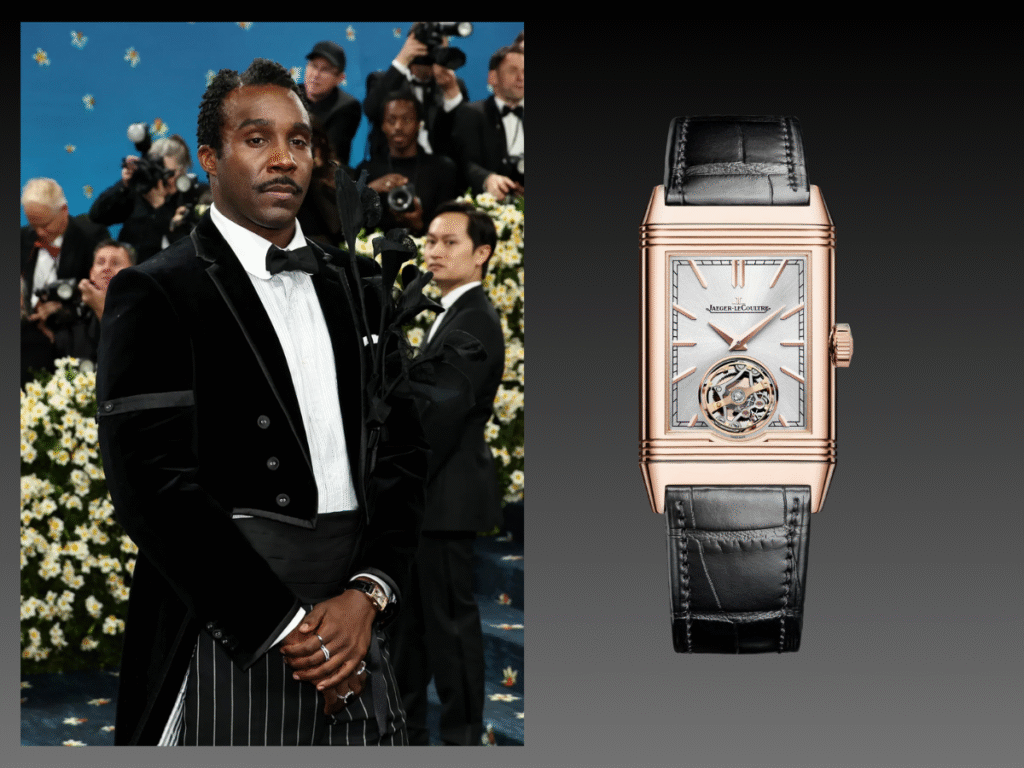
Dial Colour: Recto dial – Silvered grey / Verso dial – Black
Calibre: Calibre 847
Power Reserve: 38 Hours
Water Resistant: 3 Bar (30 metres, 100 feet)
Price: USD $139,000
Tramell Tillman brought refined confidence at the 2025 Met Gala, and his wristwear was as refined as his overall presence. He wore the Jaeger-LeCoultre Reverso Tribute Duoface Tourbillon, encased in a 45.5 x 27.4 mm rose gold case that embodied all the Art Deco charm of the Reverso while elevating it into haute horlogerie territory. The swivelling case uncovered two distinct personalities — a silvered grey recto dial on one side, elegant and understated, and a black verso dial on the other, darker and more contemporary. It was a timepiece that felt perfectly in harmony with the evening, blending heritage with bold self-expression.
The flying tourbillon, visible on both dials, seemed to float effortlessly within the ultra-thin case—a remarkable feat of watchmaking that reflected the light as sharply as the cameras at the Met Gala. Adding to its appeal, this model is no longer part of Jaeger-LeCoultre’s current collection, making it an even rarer and more meaningful choice for the red carpet. For Tillman, the Reverso wasn’t just a watch — it was a declaration of artistry and quiet strength, the kind of piece that rewards those who take a closer look.
Stormzy’s Patek Philippe Nautilus | Image: Getty Image – Matt Crossick
Stormzy – Patek Philippe Nautilus
Brand: Patek Philippe
Model: Nautilus
Reference: 5711/110P-001
Diameter: 40 mm
Thickness: 8.3 mm
Material: Platinum Diamonds
Dial Colour: Grey Dial
Calibre: 324 S C 324 S C
Power Reserve: 45 Hours
Water Resistant: 10 Bar (100 metres, 330 feet)
Price: Starting USD $500,000
Stormzy has built his reputation on presence — commanding, bold, and effortlessly cool — and his wrist at the 2025 Met Gala radiated that same energy. The British rapper wore the Patek Philippe Nautilus 5711/110P-001, one of the most sought-after watches of the past decade, and one that’s as much a cultural symbol as it is a piece of haute horlogerie. Made in platinum, the 40 mm case shimmered under the Met Gala lights, but what truly set this Nautilus apart was the bezel, set with 32 flawless baguette-cut diamonds that added an extra flash of brilliance to the iconic design.
The dial features Patek’s signature horizontally embossed pattern in a rich grey, adding depth and texture to the watch’s sporty yet luxurious character. Inside ticks the automatic Calibre 26-330 S C, providing a 35 to 45-hour power reserve — proof that beneath its jewel-set exterior, this Nautilus remains a serious mechanical timepiece.
On a night focused on tailoring and cultural identity, Stormzy’s choice was perfectly suited. The Nautilus 5711/110P-001 is rare, commanding, and immediately recognizable — much like the man himself.
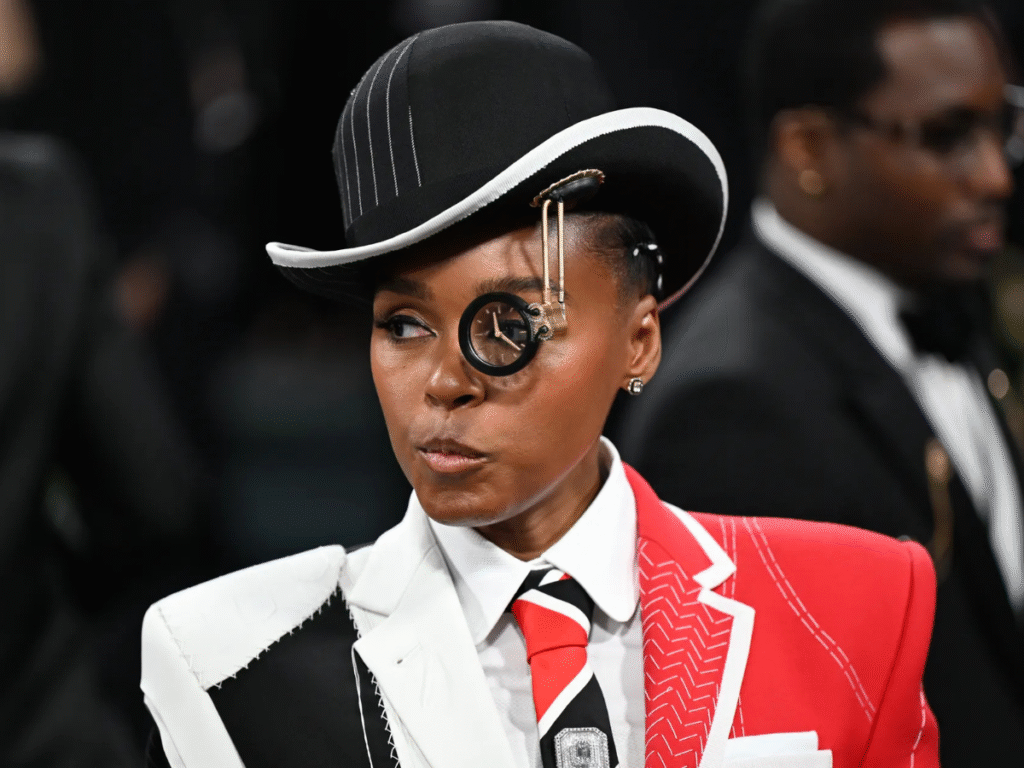
Janelle Monáe has never been afraid to break rules, and at the 2025 Met Gala she showed everyone why she’s one of fashion’s true originals. Instead of choosing a traditional wristwatch, she went with a completely different option — a watch monocle. It was a playful, avant-garde twist that blurred the line between accessory and statement piece, fitting perfectly with Monáe’s reputation for bending genres and expectations, both in music and style.
The monocle itself exuded all the drama you’d expect, swinging elegantly like jewellery while still functioning as a watch. Among a sea of haute couture gowns and sparkling jewels, her choice stood out as one of the most unconventional horological statements of the night. It wasn’t about accuracy or practicality — it was about personality. For Monáe, the watch monocle was more than just an accessory; it was performance art, a reminder that the Met Gala is as much about storytelling as it is about fashion.
Chris Rock’s Vintage Fred Leighton Watch Brooch | Image: Getty Images – John Shearer
Chris Rock – Vintage Fred Leighton Watch Brooch
Chris Rock skipped the tie and let his accessories do the talking — his choice was a 1920s platinum and diamond lapel watch from Fred Leighton, adding both time and elegance to the 2025 Met Gala. Among a sea of high-tech tourbillons and jewel-encrusted wrist candy, Rock’s vintage brooch served as a reminder that style doesn’t always need to sit on the wrist to make a statement.
With its delicate platinum case, diamond accents, and old-world charm, the piece brought the glamour of the Jazz Age onto the modern red carpet. It was subtle yet distinctive, a nod to history that blended seamlessly with Rock’s sharp persona. Instead of competing with the boldest looks of the night, the Fred Leighton brooch carved out its own space — a unique mix of refinement and character that drew attention for all the right reasons.
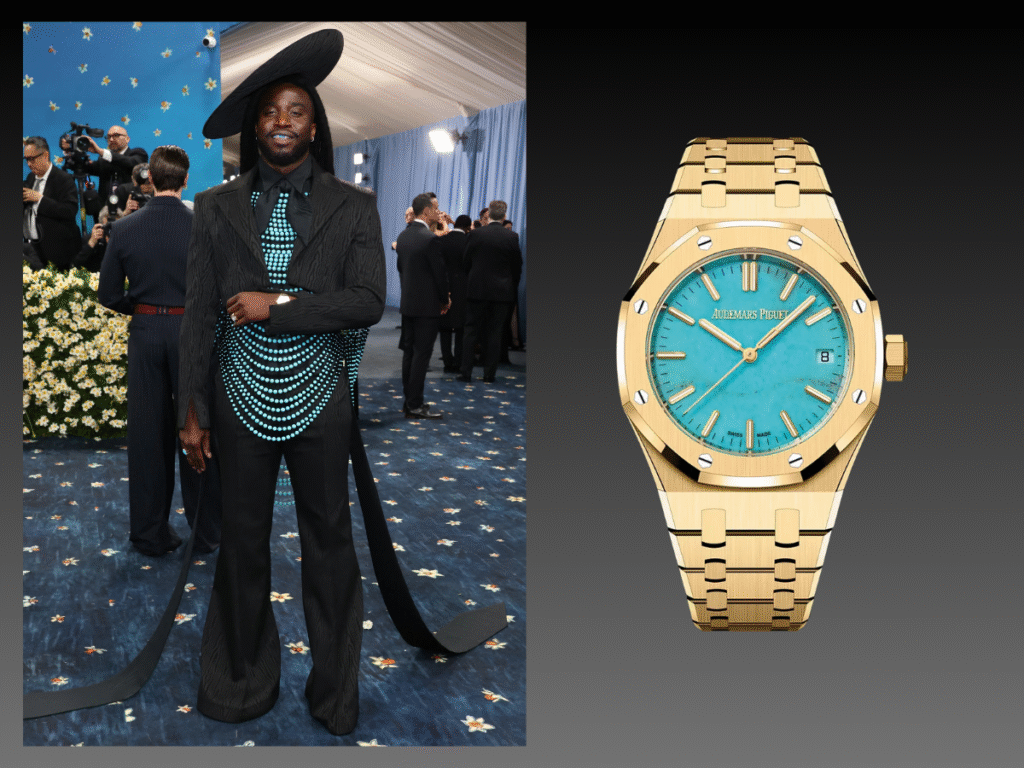
Shaboozey’s Audemars Piguet Royal Oak Selfwinding | Image: Getty Image – John Shearer
Shaboozey – Audemars Piguet Royal Oak Self-Winding
Brand: Audemars Piguet
Model: Royal Oak
Reference: 15550BA.OO.1356BA.01
Diameter: 37 mm
Thickness: 9.3 mm
Material: 18-Carat Yellow Gold
Dial Colour: Turquoise dial
Calibre: Calibre 5900
Power Reserve: 60 Hours
Water Resistant: 5 Bar (50 metres, 165 feet)
Price: USD $69,900
Shaboozey has been redefining music with his country-rap fusion, and at the 2025 Met Gala, he demonstrated he can shift style just as easily. On his wrist was an Audemars Piguet Royal Oak Selfwinding, a watch that’s as much a cultural icon as it is a design marvel. Made from 18-carat yellow gold, its polished edges and brushed surfaces glistened under the lights, while the instantly recognizable octagonal bezel and integrated bracelet completed the look with architectural precision.
What truly made this piece stand out was its turquoise dial — a rare and vivid twist on the Royal Oak’s famous “Grande Tapisserie” pattern. The cool blue-green stone contrasted beautifully with the warmth of the gold case, creating a combination that felt both luxurious and daring. It was a watch that could easily hold its own against the Met Gala’s parade of gems and gowns, but with an edge that was distinctly Shaboozey.
The watch runs on Audemars Piguet’s latest selfwinding calibre 5900, offering a 60-hour power reserve to match its timeless appeal. On a night filled with bold statements, his Royal Oak wasn’t loud or flashy — it was confident, precise, and stylish in a way only true icons can be. For Shaboozey, it was the perfect metaphor: classic roots, modern edge, and built to last.
Maluma’s Jacob & Co. Emerald Billionaire III | Image: Getty Images – Michael Buckner
Maluma – Jacob & Co. Emerald Billionaire III
Brand: Jacob & Co.
Model: Emerald Billionaire III
Reference: BL115.30.AB.UA.A30AB
Dimensions: 54 x 40 mm
Thickness: 11 mm
Material: 18K White Gold
Dial Colour: 18K white Gold
Calibre: Skeleton, JCAM39
Power Reserve: 72 Hours
Water Resistant: 3 Bar (30 metres, 100 feet)
Price: USD $5,000,000
Maluma knows how to command attention, but at the 2025 Met Gala, it wasn’t just his charisma doing the work. On his wrist, he wore one of the most outrageous watches ever made — the Jacob & Co. Emerald Billionaire III, with a jaw-dropping $5 million price tag. This wasn’t just a timepiece; it was a statement of wealth, taste, and boldness.
The watch is a striking green masterpiece. The case features 76 natural, no-heat emeralds cut in an emerald shape, alongside a single white rose-cut ruby, while the inner ring shines with another 76 emeralds. Look more closely, and even the movement bridges are decorated with 57 white baguette-cut emeralds, turning the mechanics of time into a dazzling display.
Then there’s the bracelet, an art piece in its own right, shimmering under the gala lights with 504 emerald-cut stones. Altogether, the Emerald Billionaire III features 714 natural, no-heat emeralds totaling 147.65 carats. It’s the kind of detail that doesn’t just whisper luxury — it shouts it across the red carpet.
Of course, beneath the mountain of gems, Jacob & Co. still excels in horology. The skeletonised tourbillon movement ensures it’s not just a jewel, but a serious watch. For Maluma, it was the ultimate Met Gala flex: a timepiece that combined extravagance and craftsmanship so smoothly, it became the night’s most unforgettable accessory.
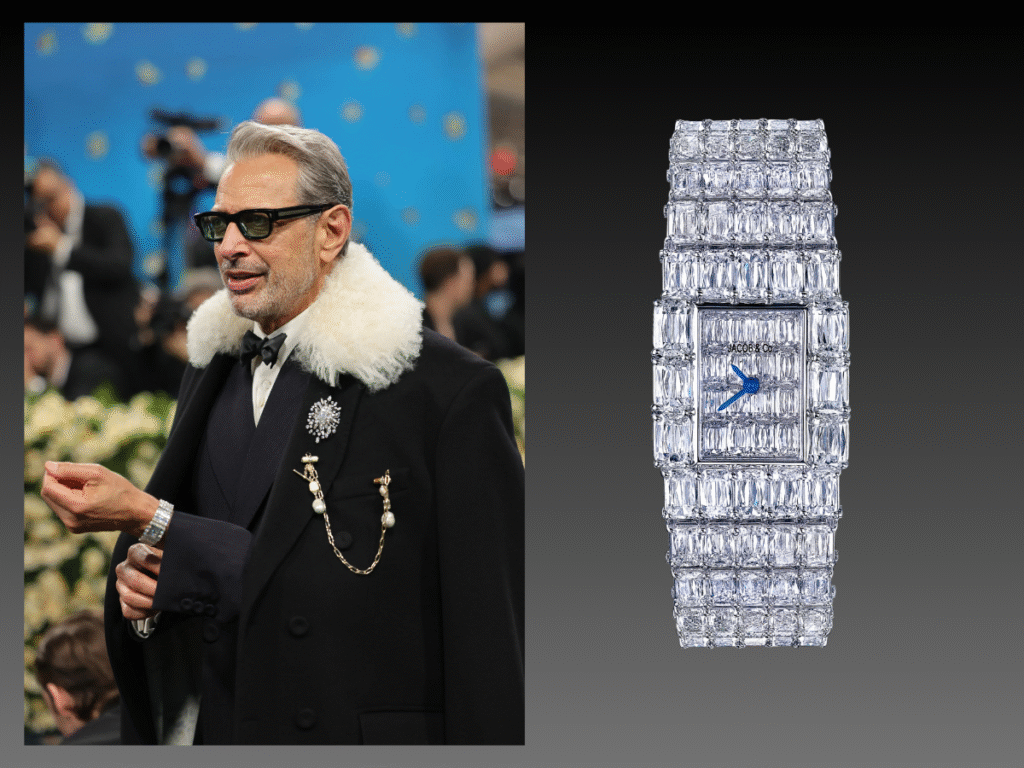
Jeff Goldblum’s Jacob & Co. Ashoka Boutique timepiece | Image: Getty Images – Savion Washington
Jeff Goldblum – Jacob & Co. Ashoka Boutique Timepiece
Brand: Jacob & Co.
Model: The Slender Ashoka Boutique Watch
Reference: 92251191
Thickness: 17 mm
Material: 18K White Gold
Dial Colour: 18K white Gold
Calibre: JCGQ01 Quartz
Power Reserve: 2 Years
Water Resistant: 3 Bar (30 metres, 100 feet)
Price: USD $1,200,000
Leave it to Jeff Goldblum to bring a touch of eccentric elegance to the Met Gala. Instead of choosing the usual brands in the watch world, he wore the Jacob & Co. Ashoka Boutique Timepiece, a piece as unconventional and magnetic as the man himself. With its bold design and sparkling diamonds, it was obvious from the moment he stepped onto the carpet that this was no ordinary watch.
The case and bracelet feature 146 Ashoka-cut white diamonds, E-F colour, IF-VS clarity, totaling approximately 60.19 carats, while the dial itself is adorned with 16 additional Ashoka-cut diamonds (about 3.10 carats). In total, there are 162 Ashoka-cut diamonds weighing around 63.29 carats—a remarkable display of gem-setting artistry that transforms the watch into a wearable masterpiece.
Beyond the sparkle, this boutique marvel carries a price tag of $1.2 million and delivers a surprising technical punch. Thanks to its high-efficiency quartz movement, the watch features an impressive two-year power reserve, demonstrating that beauty and practicality can, in fact, coexist in haute horlogerie.
For Jeff, it was the ideal choice: daring, theatrical, and bursting with personality. Just like his signature style, the Ashoka Boutique Timepiece doesn’t whisper elegance—it announces it across the red carpet, ensuring all eyes remain fixed on the wrist of the night’s most eclectic gentleman.
Philadelphia Eagles quarterback Jalen Hurts made a strong case for why athletes often have some of the best watch game. At the Met Gala, he elevated his style with the Breitling Navitimer B01 Chronograph 43, a timepiece that immediately caught the eye with its striking ice blue dial. The colour choice was unexpected yet refreshing, softening the Navitimer’s aviation-inspired tool-watch look with a touch of modern elegance. It was a perfect match with Hurts’ appearance, demonstrating that confidence isn’t just about what you wear — it’s how you wear it.
The Navitimer is more than just a stylish watch. Its 43 mm stainless steel case and iconic circular slide rule bezel honour Breitling’s aviation heritage, while the polished finish makes it suitable for formal occasions. Inside beats the Breitling Manufacture Caliber 01, an automatic movement with a 70-hour power reserve and COSC-certified precision. The chronograph sub-dials add both functionality and depth to the baby blue background, a detail that watch enthusiasts and newcomers alike couldn’t overlook.
Priced at approximately USD $10,300, the Navitimer B01 Chronograph 43 embodies Jalen Hurts—dependable under pressure, built for performance, and stylish enough to attract attention when needed. On the Met Gala stage, it was more than just an accessory; it was a statement piece that showed Hurts excels both on the gridiron and in the world of high fashion.
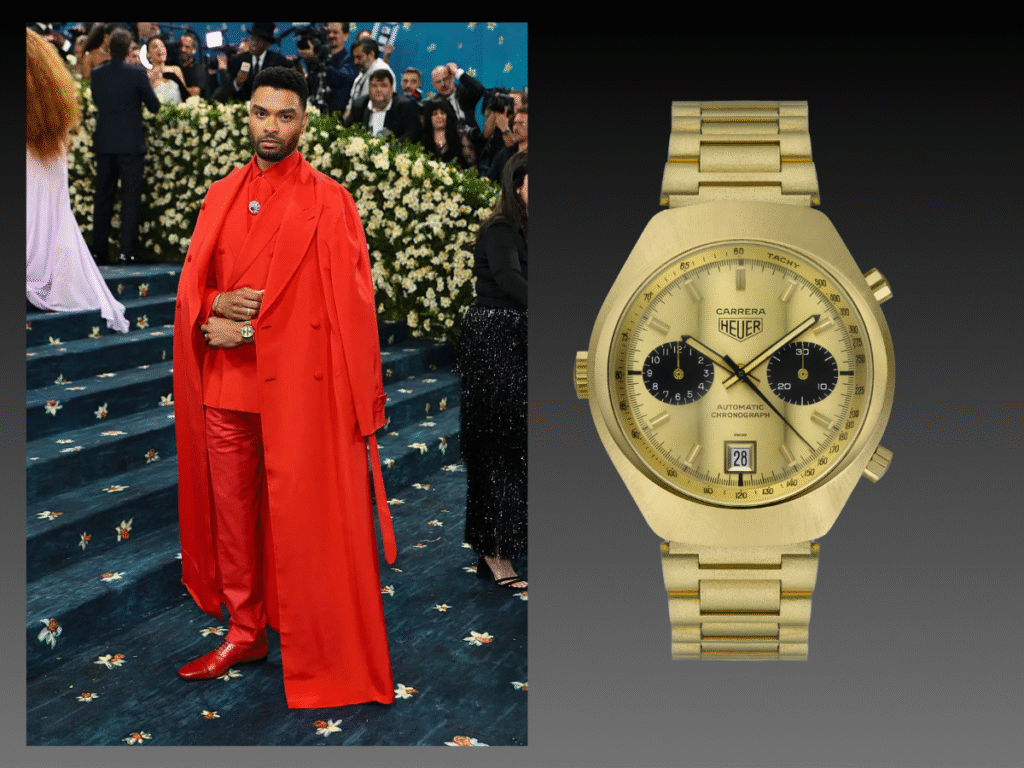
When Regé-Jean Page stepped onto the Met Gala carpet, he didn’t need a diamond-dripping statement piece—his vintage Heuer Carrera did all the talking. With its 39 mm case in 16K gold-plated stainless steel and a warm champagne dial, the watch radiated an elegance that was subtle yet commanding. Most recently, the Carrera has been back in the cultural spotlight thanks to Ryan Gosling wearing one in his role as Ken in the Barbie movie, a nod that has introduced this motorsport classic to a new generation of fans.
For Page, the choice felt like a masterstroke. Originally designed for the racetrack, the Carrera’s slim profile and timeless proportions translate effortlessly to black-tie sophistication. Its understated design didn’t compete with his outfit—it elevated it, demonstrating that a watch doesn’t need flash to make a statement. At the Met Gala, under the glow of the cameras, this vintage Carrera reminded everyone why it remains one of the most iconic creations in Heuer’s history.
Pharrell Williams’s Richard Mille RM 74-02 | Image: Getty Images – Michael Loccisano
Pharrell Williams – Richard Mille RM 74-02
Brand: Richard Mille
Model: RM 74-02
Dimensions: 52.63 x 34.40 mm
Thickness: 13 mm
Material: Gold Carbon TPT & 3N red gold.
Dial Colour: skeleton
Calibre: CRMT5
Power Reserve: 50 Hours
Water Resistant: 5 Bar (50 metres, 330 feet)
Price: Starting USD $600,00
Pharrell Williams never just blends into a crowd—he sets the tone, and his watch at the Met Gala proved it once more. On his wrist was the Richard Mille RM 74-02, a timepiece as bold and inventive as Pharrell himself. Crafted in red gold with layers of Carbon TPT, the watch radiates warmth and a futuristic edge all at once, perfectly reflecting the musician’s signature mix of luxury and avant-garde style.
What makes the RM 74-02 so captivating is its core: the in-house Caliber CRMT5, a self-winding tourbillon movement engineered for accuracy and strength. Despite its lightweight build, the watch offers impressive performance with a 50-hour power reserve. The skeletonized design lets you see every moving part in action, giving the impression that Pharrell’s creativity reaches even to the gears and bridges of his watch.
With a price tag around USD $600,000, the Richard Mille RM 74-02 isn’t just a watch—it’s wearable art. Pharrell wore it as only he can, not simply as an accessory but as part of his identity: daring, futuristic, and entirely unafraid to push boundaries. Just as he’s redefined music and fashion, his choice of watch reflects a vision that’s always one step ahead of the curve.
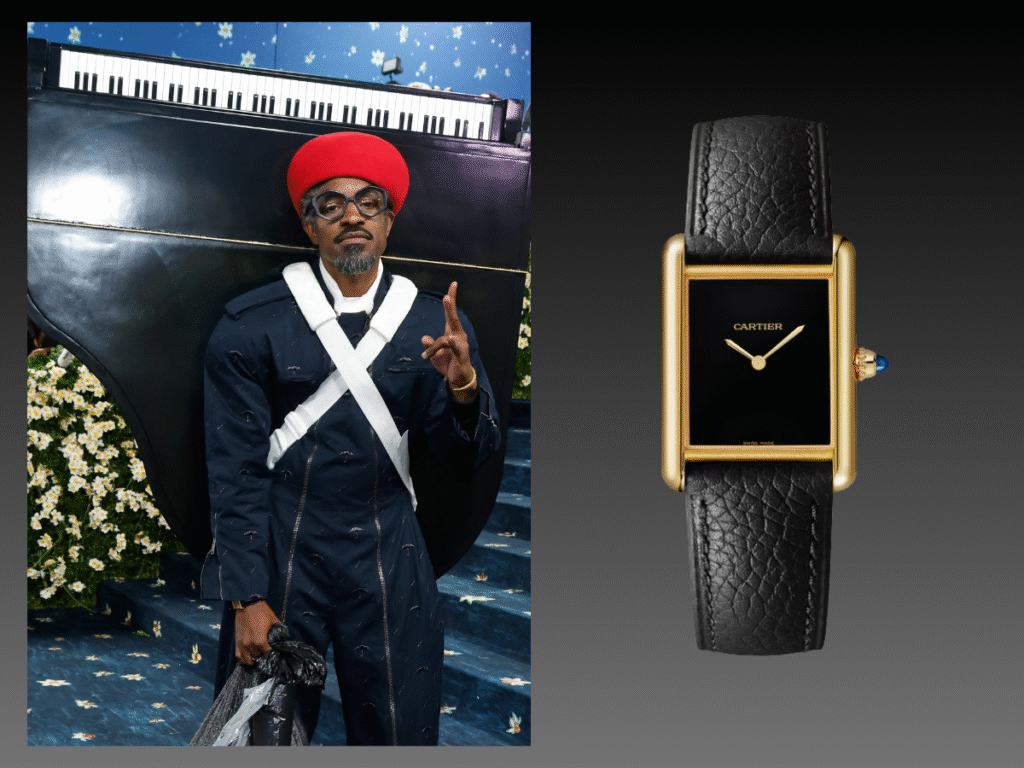
Andre 3000’s Cartier Tank Louis Cartier | Image: Getty Images – Taylor Hill
Andree 3000 – Cartier Tank Louis Cartier
Brand: Cartier
Model: Tank Louis Cartier
Reference: WGTA0091
Dimensions: 33.7 mm x 25.5 mm
Thickness: 13 mm
Material: Yellow Gold
Dial Colour: Black lacquer dial
Calibre: Manual Winding
Water Resistant: 3 Bar (30 metres, 100 feet)
Price: USD $13,500
André 3000 has always been the kind of artist who moves to his own rhythm, and his watch choice at the Met Gala was no exception. On his wrist sat the Cartier Tank Louis Cartier, a piece that’s been redefining elegance since its debut in 1922. With its clean lines, rectangular case, and minimalist sophistication, the Tank isn’t just a watch—it’s a statement, one that reflects André’s unique ability to blend timeless style with modern individuality.
Crafted in 18k yellow gold, the Tank Louis Cartier captures the timeless Parisian spirit that has made it a favourite among cultural icons from Andy Warhol to Muhammad Ali. The watch features a manual-winding mechanical movement, highlighting Cartier’s commitment to traditional watchmaking. Its minimalist dial and slim profile let it slip effortlessly under a cuff, yet with André’s eclectic style, it looked perfectly at home even in a more daring outfit.
The Tank Louis Cartier is a watch for those who value heritage and craftsmanship, and André 3000 wearing it at the Met Gala felt like a perfect pairing. Just as he keeps surprising fans with innovative reinventions, this watch—nearly a century old in design—still appears remarkably fresh on the red carpet.
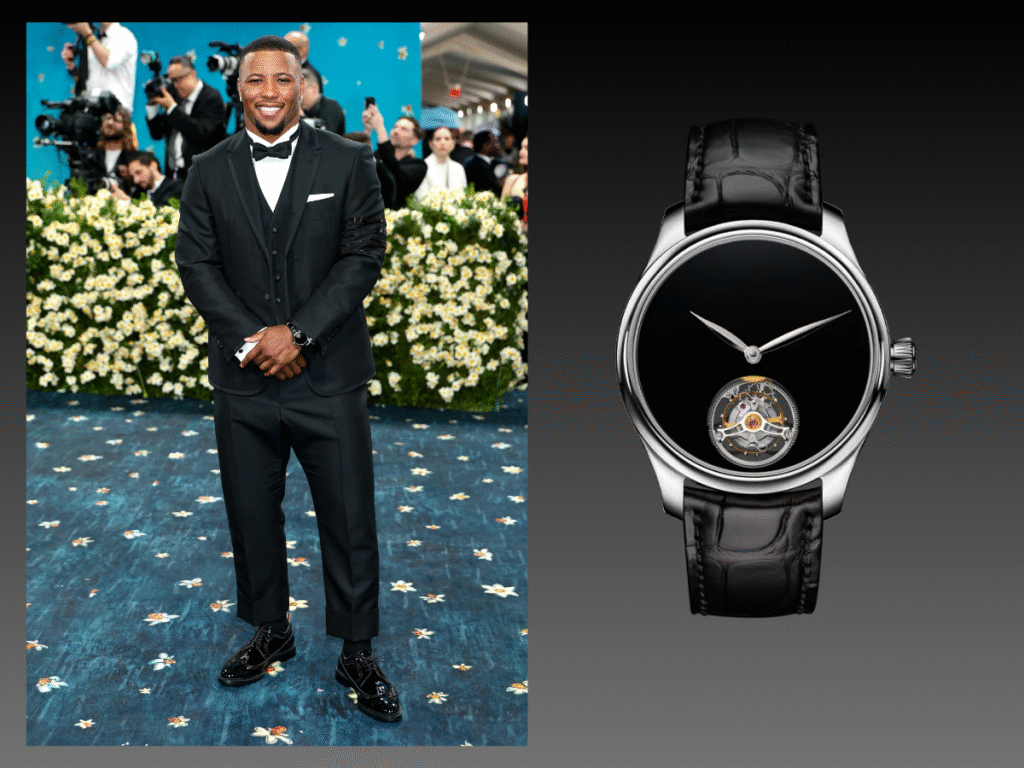
On the Met Gala carpet, Saquon Barkley demonstrated that sometimes the boldest statements are made through silence. His wrist featured the H. Moser & Cie Endeavour Tourbillon Concept Vantablack, a watch that eliminates distractions and focuses on the essentials: absolute darkness and mechanical excellence. With its Vantablack dial—absorbing 99.965% of light—it creates the illusion of a black hole on the wrist, making the flying tourbillon at 6 o’clock seem as if it’s floating in space. It’s a piece that doesn’t scream for attention but naturally draws it.
Housed in a 40 mm stainless steel case, the watch embodies Moser’s philosophy of minimalism at its most compelling. No indices, no logos, no superfluous details—just pure lines framing a dial that absorbs light entirely. Against Barkley’s Met Gala ensemble, it exuded an aura of quiet confidence, a reminder that elegance isn’t about excess but about precision and restraint.
The HMC 805 automatic calibre, complete with a flying tourbillon and a sturdy 72-hour power reserve. It’s a movement crafted for both performance and aesthetics, with its micro-rotor visible through the sapphire caseback. This mix of minimalistic design and intricate mechanics makes the watch a masterpiece of contrasts—fitting for an athlete like Barkley, who combines strength with finesse.
Priced at USD $85,500, the Endeavour Tourbillon Concept Vantablack is a symbol of refinement in a world often fixated on showiness. In a room filled with diamond-encrusted displays and gemstone-rich timepieces, Barkley’s choice stood out because it was subtle. It whispered luxury instead of shouting it, reaffirming that true style is about presence, not volume.
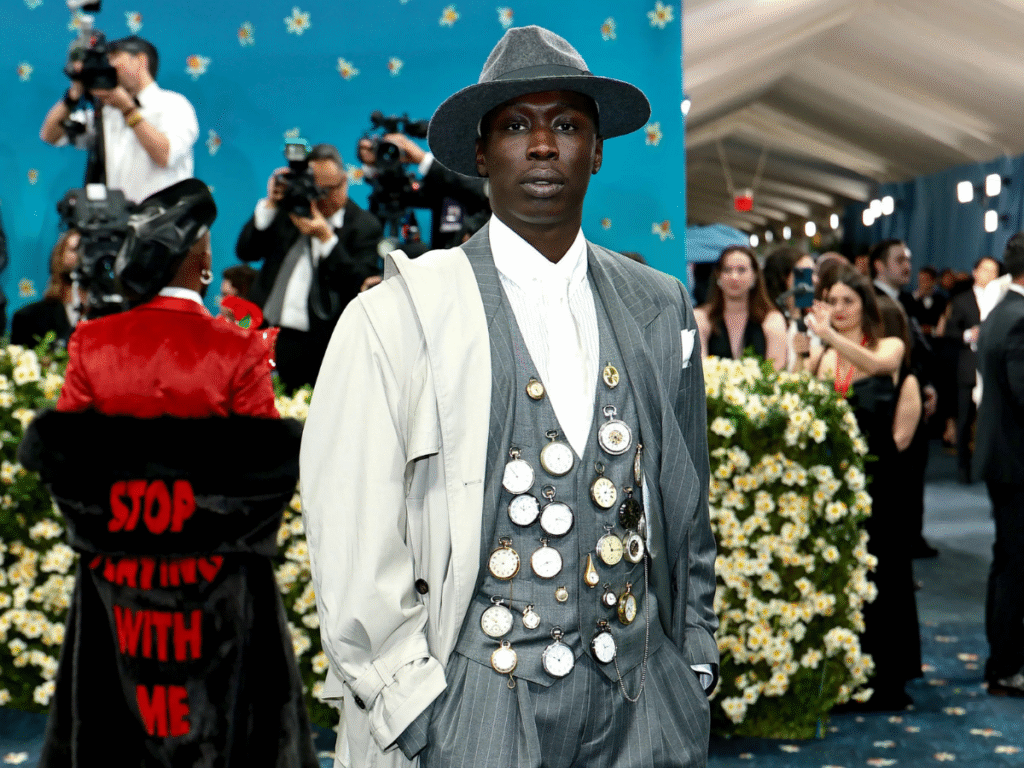
Khaby Lame caught attention at the Met Gala with an unexpected choice: a variety of vintage pocket watches instead of the usual wristwear. While most stars showcased diamonds, chronographs, and sparkling wristwatches, his pocket watch display felt notably nostalgic, paying homage to horology’s earliest expressions of style. Each timepiece embodied the spirit of a bygone era—engraved cases, polished chains, and intricate movements that reflected a time when carrying a watch was as much about personal expression as it was about telling the time.
By carrying more than one, Lame elevated the accessory from a simple relic of the past to a striking statement piece. His pocket watches weren’t just about punctuality—they were about storytelling, heritage, and personality. In a world obsessed with the latest releases, his choice reminded everyone that sometimes the most stylish move is to look back to the roots of craftsmanship and bring history into the present with effortless flair.
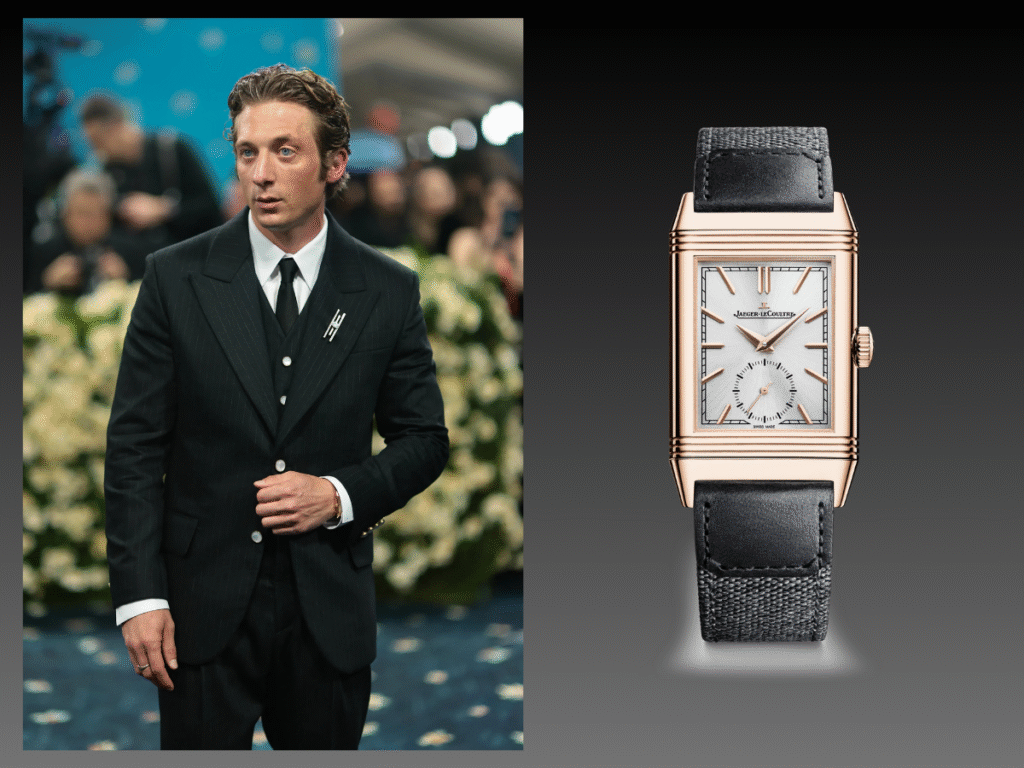
Jeremy Allen White’s Reverso Tribute Monoface Small Seconds | Image: Getty Images – Dimitrios Kambouris
Jeremy Allen White – Reverso Tribute Monoface Small Seconds
Brand: Jaeger-LeCoultre
Model: Reverso Tribute Monoface Small Seconds
Reference: Q7132521
Dimensions: 45.6 x 27.4 mm
Thickness: 7.56 mm
Material: Rose Gold
Dial Colour: Silvered grey
Calibre: Calibre 822
Power Reserve: 42 Hours
Water Resistant: 3 Bar (30 metres, 100 feet)
Price: USD $23,800
Jeremy Allen White, fresh off his award-winning performance in The Bear, kept his style sharp and timeless at the Met Gala with a Jaeger-LeCoultre Reverso Tribute Monoface Small Seconds on his wrist. The Reverso is a piece that thrives on understatement, and Jeremy wore it with the same quiet confidence that defines his on-screen presence. Its rectangular Art Deco case, sleek and slim, perfectly complemented his refined red-carpet look without demanding attention.
Powered by a manual-winding movement, the watch features a small seconds counter at 6 o’clock, adding just the right amount of character to its clean dial. At 45.6 x 27.4 mm in stainless steel, it sits comfortably on the wrist, making it as practical as it is elegant. The Reverso’s renowned swivelling case, originally designed for polo players to flip over and protect the crystal, added a subtle layer of intrigue to White’s ensemble. It was a thoughtful choice—much like the actor himself—classic, refined, and impossible to ignore once noticed.
Tyler Perry’s Richard Mille RM-47 | Image: Getty Images – Savion Washington
Tyler Perry – Richard Mille RM-47
Brand: Richard Mille
Model: RM-47
Dimensions: 42.70 x 50 mm
Thickness: 12.5 mm
Material: Black Ceramic & Yellow Gold
Dial Colour: Miniature Painting
Calibre: Calibre RM47
Power Reserve: 72 Hours
Water Resistant: 3 Bar (30 metres, 100 feet)
Price: USD $1,200,000
Tyler Perry arrived at the Met Gala with more than a stylish outfit—he brought symbolism to his wrist. The filmmaker wore the Richard Mille RM 47 Tourbillon, a piece that honours the samurai spirit. At its centre is a hand-engraved 3N yellow gold samurai warrior, crafted as a protector of the movement, embodying values of honour, strength, and discipline. On a night dedicated to artistry and expression, this detail felt especially fitting for Perry’s commanding presence.
The watch itself is a true achievement in haute horlogerie. Limited to only 75 pieces worldwide, it features a 42 mm case crafted from black TZP ceramic and 3N yellow gold, combining boldness with sophistication. Inside, the manual-winding calibre RM47 drives a 72-hour power reserve, ensuring that its beauty is matched by performance. The meticulous hand-engraving and finishing make each piece unique, elevating it far beyond a simple timepiece.
With a staggering price tag of $1.2 million, the RM 47 is as much a statement of exclusivity as it is of craftsmanship. For Perry, this wasn’t about flaunting wealth but showcasing a timepiece that carries heritage and storytelling within its design. In many ways, it mirrored his own career—a blend of artistry, power, and timeless influence.
Henry Golding – Cartier Tank à Guichets | Image: Getty Images – Michael Loccisano
Henry Golding – Cartier Tank à Guichets
Brand: Cartier
Model: Tank à Guichets
Reference: WGTA0234
Dimensions: 37.6 x 24.8 mm
Thickness: 7.56 mm
Material: Yellow Gold
Dial Colour: White discs With Green arabic numerals & minute track
Calibre: 9755 MC
Power Reserve: 72 Hours
Water Resistant: No Water Resistant
Price: USD $60,000
Henry Golding added quiet sophistication to the Met Gala, choosing one of Cartier’s most refined creations: the Tank à Guichets. Unlike the more common Tanks with open dials, this rare piece removes ornamentation in favour of minimalism, displaying the time solely through two apertures—jumping hours and a wandering minutes display. It’s a design inspired by Cartier’s 1920s Art Deco experiments, and it perfectly complemented Golding’s polished and understated style for the evening.
The model is in yellow gold with dimensions of 37.6 x 24.8 mm, making it elegant and discreet on the wrist. The dial is especially eye-catching—white discs with green Arabic numerals and a matching minute track—a fresh modern twist on a classic design. Inside beats Cartier’s calibre 9755 MC, providing a solid 72-hour power reserve, although water resistance is not included (this is a watch meant for soirées, not swimming).
At a price of USD $60,000, the Tank à Guichets remains one of Cartier’s most elusive creations, cherished by true collectors for its rarity and architectural design. By wearing it, Golding conveyed that timepieces don’t always need to shout; sometimes, they whisper brilliance with a golden voice.
The Met Gala, officially called the Costume Institute Benefit, has been a key part of fashion culture since it first took place in 1948. Widely recognized as “fashion’s biggest night out,” it functions both as a glamorous fundraising event for the Metropolitan Museum of Art’s Costume Institute and as a platform where style, art, and celebrities come together. Each year, the gala attracts an exclusive list of designers, actors, musicians, athletes, and cultural icons, all gathering in New York City for an evening of high fashion and spectacle.
Famous for its stunning red carpet moments, the Met Gala has become a display of bold gowns, tailored suits, and innovative designs that often challenge traditional boundaries. Each event follows a unique theme connected to the Costume Institute’s annual exhibition, encouraging attendees and designers to interpret ideas ranging from punk rebellion to religious symbols to the spirit of camp. At its heart, the night is not just about fashion spectacle—it’s a celebration of creativity and a crucial fundraiser that helps the Costume Institute stay vibrant.
When Is The Met Gala 2025?
The Met Gala takes place every year on the first Monday of May, and in 2025, the celebrated event will be held on Monday, May 5th. This eagerly awaited evening not only inaugurates the Metropolitan Museum of Art’s annual Costume Institute display but also sets the tone for the fashion season, attracting celebrities, designers, and cultural icons to New York City for an evening of glamour, creativity, and memorable red carpet moments.
What is the Met Gala Theme for 2025?
The 2025 Met Gala will feature the theme “Superfine: Tailoring Black Style,” which explores the cultural and sartorial history of Black dandyism. Inspired by Monica L. Miller’s book Slaves to Fashion, the Costume Institute’s spring exhibition will demonstrate how clothing has long served as a means of self-expression, resistance, and artistry within the Black diaspora. Arranged into 12 defining traits—such as Heritage, Presence, Cool, and Cosmopolitanism—the theme underscores the elegance, individuality, and political power woven into fashion over the centuries.
This year’s dress code, “Tailored For You,” complements the theme by encouraging guests to explore the power of menswear through a personal perspective. Anticipate seeing custom suits, sharp silhouettes, bold accessories, and unexpected twists on classic tailoring as designers and celebrities reinterpret dandyism for the red carpet. With its blend of historical depth and creative freedom, the 2025 Met Gala promises to be one of the most thought-provoking and visually stunning fashion celebrations yet.
Elias Albay is the Founder and Director of Many Men Magazine, a Toronto-based digital publication dedicated to promoting modern masculinity through style, culture, and self-improvement. What started as a personal turning point became a purposeful platform. — born from Elias’ desire to create something meaningful after completing his studies and finding no career path that truly matched his ambitions. With a background in Civil Engineering from York University and experience in Commercial Flight Operations at CAE, he applied skills, and resilience from both fields to forge a new path.