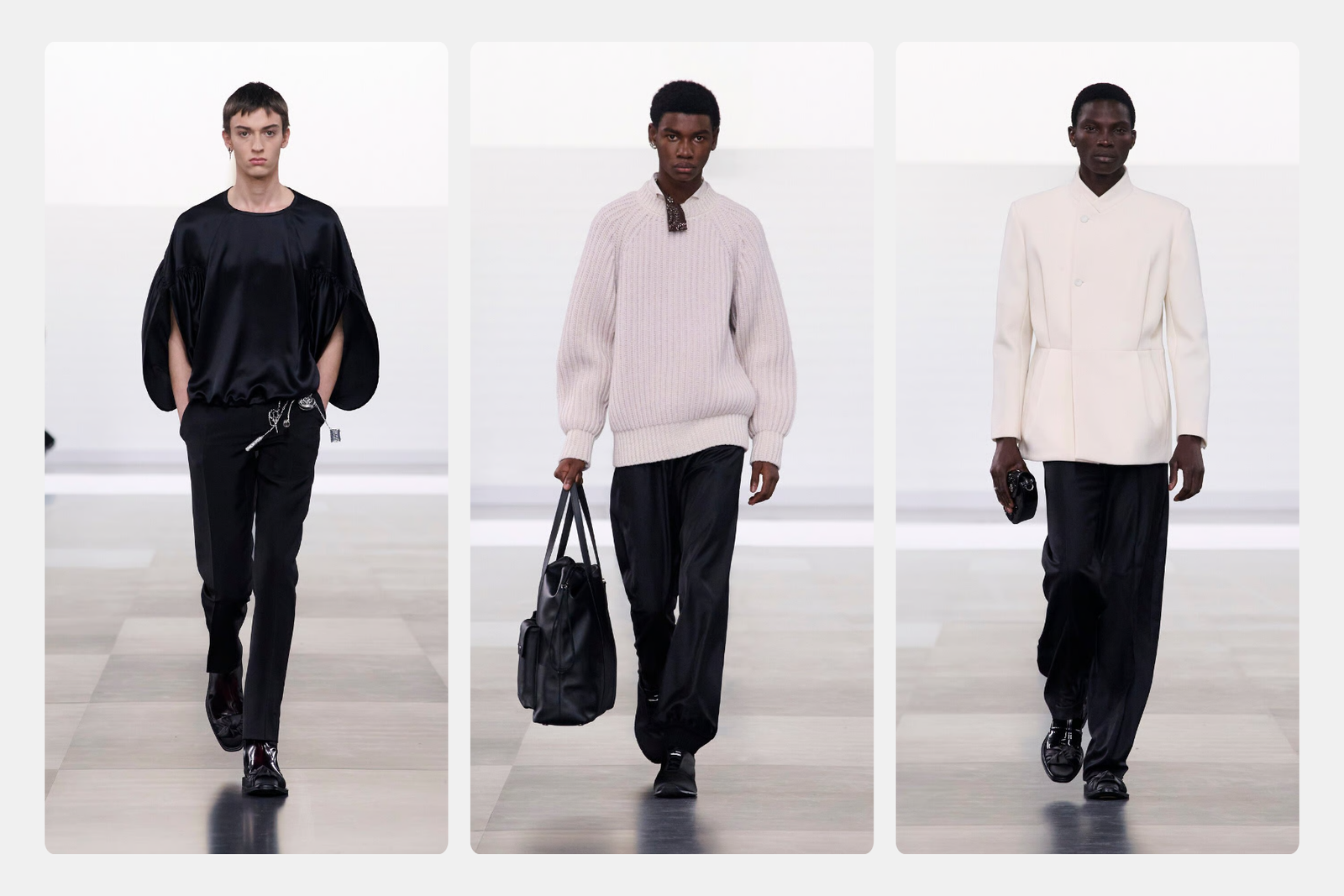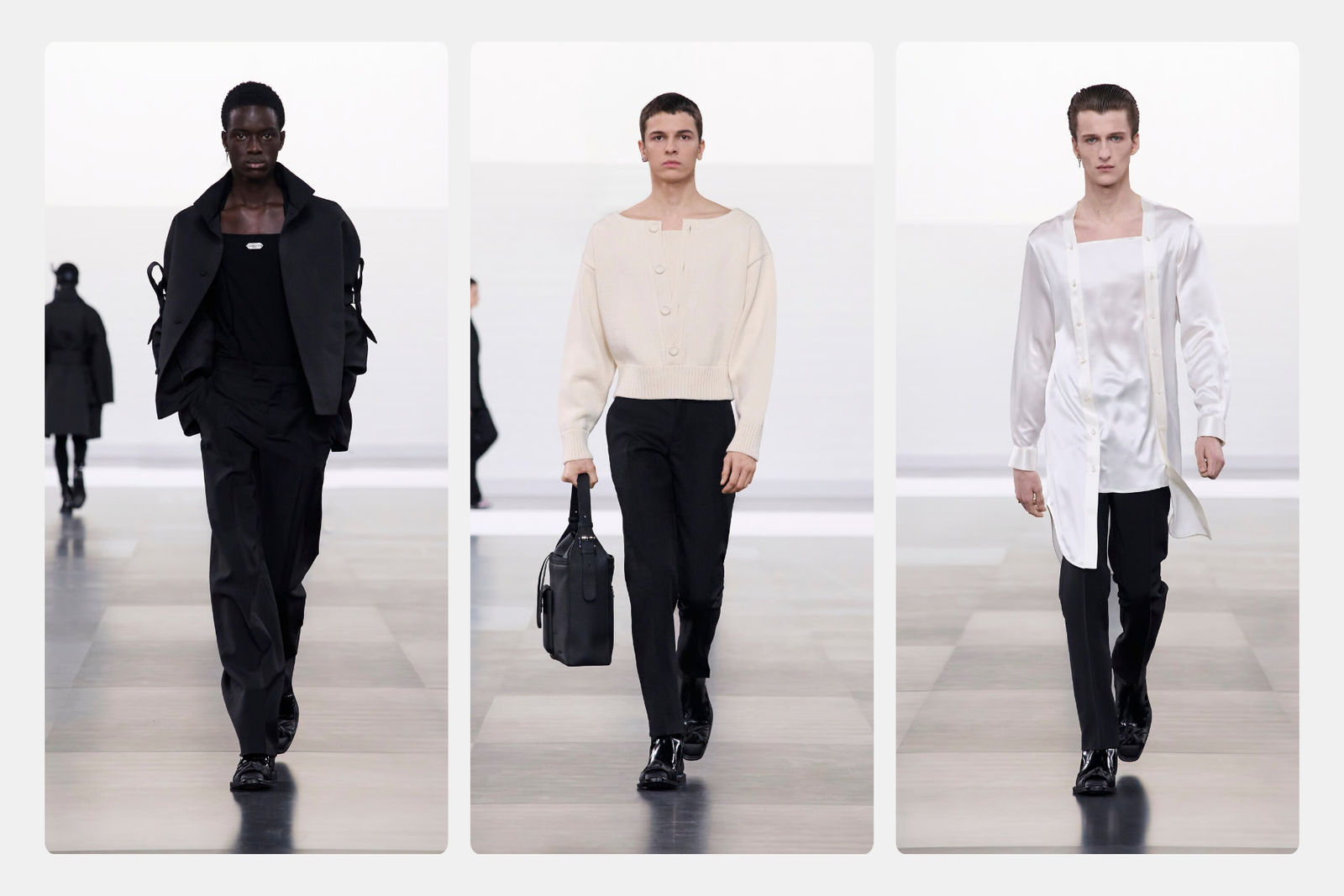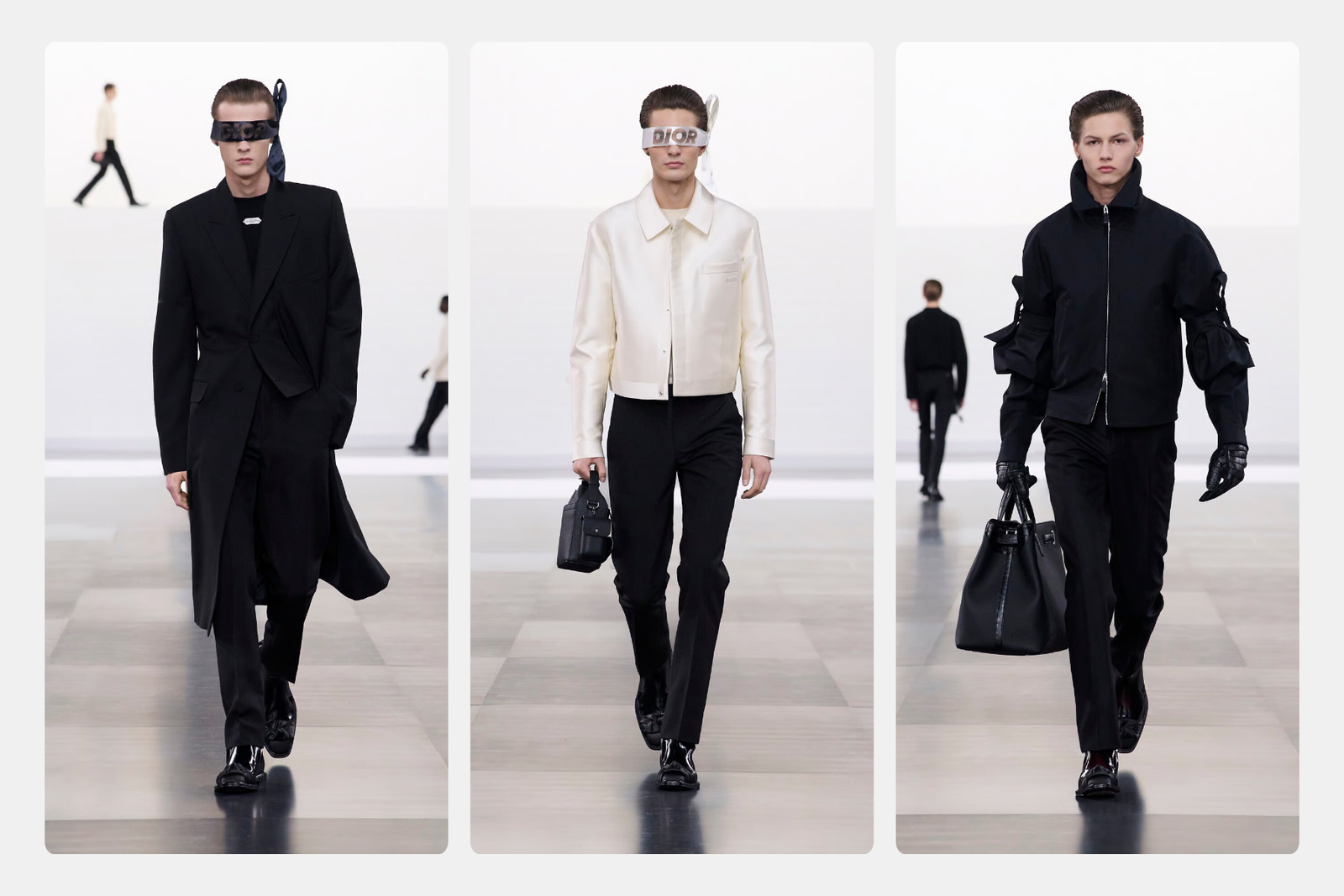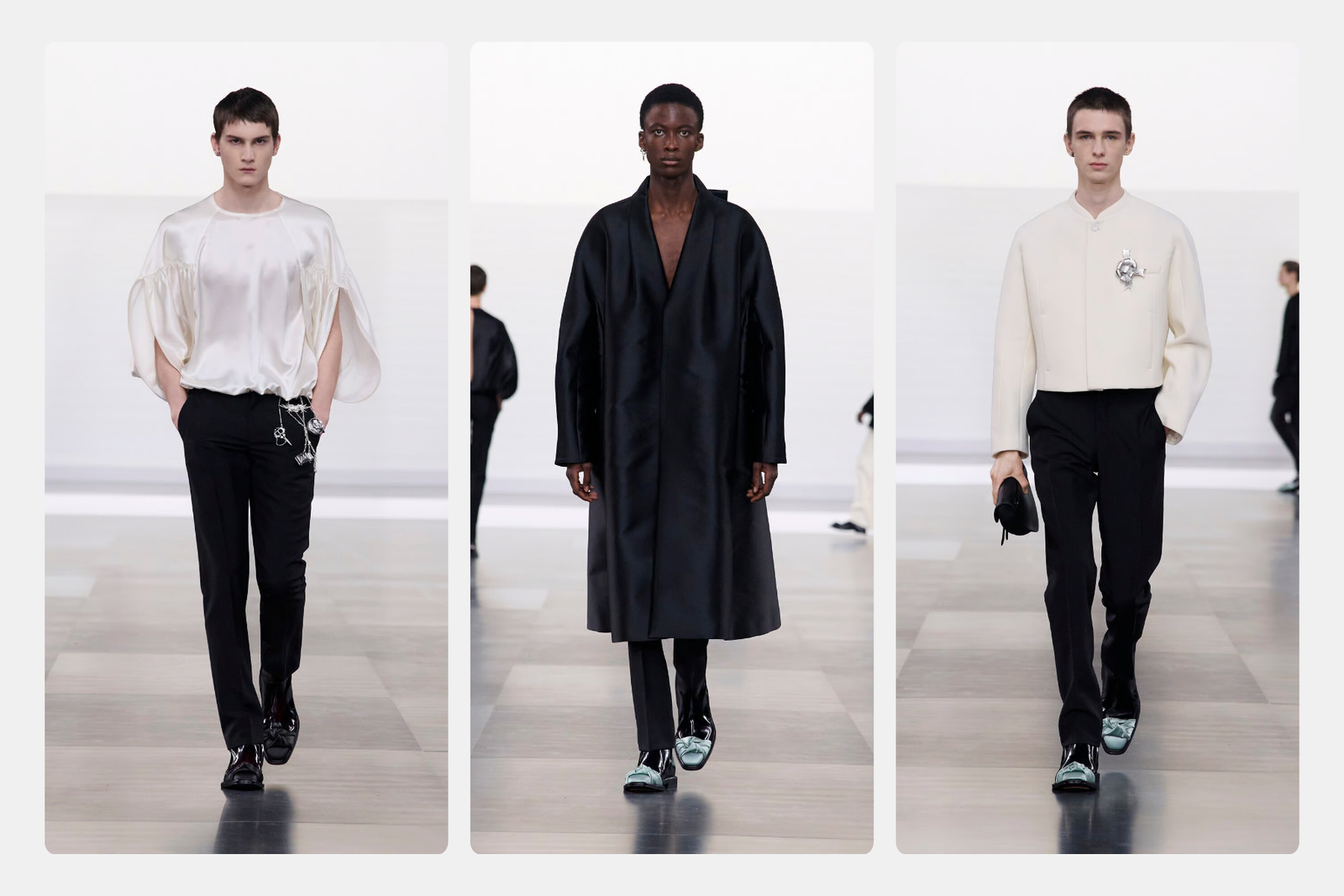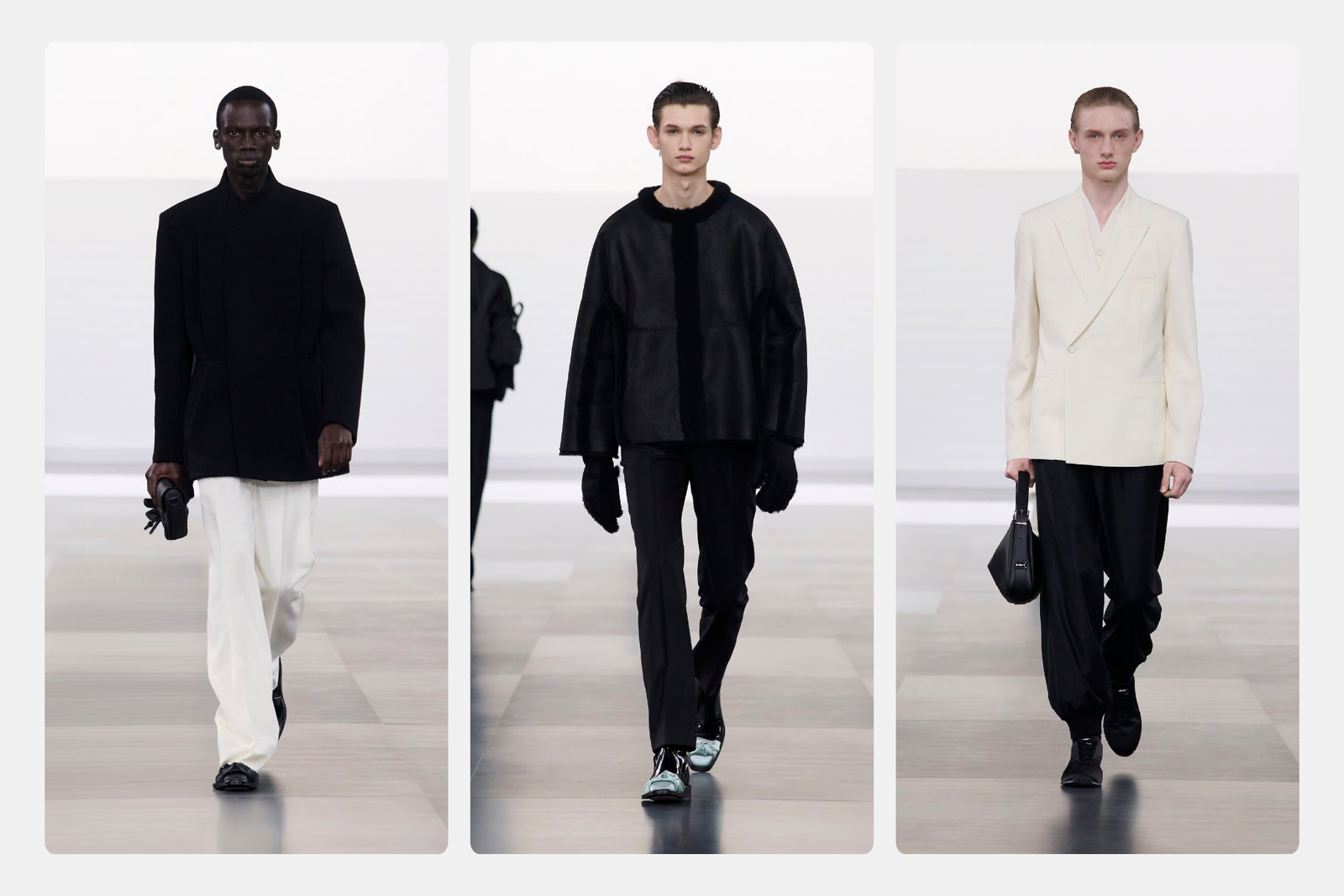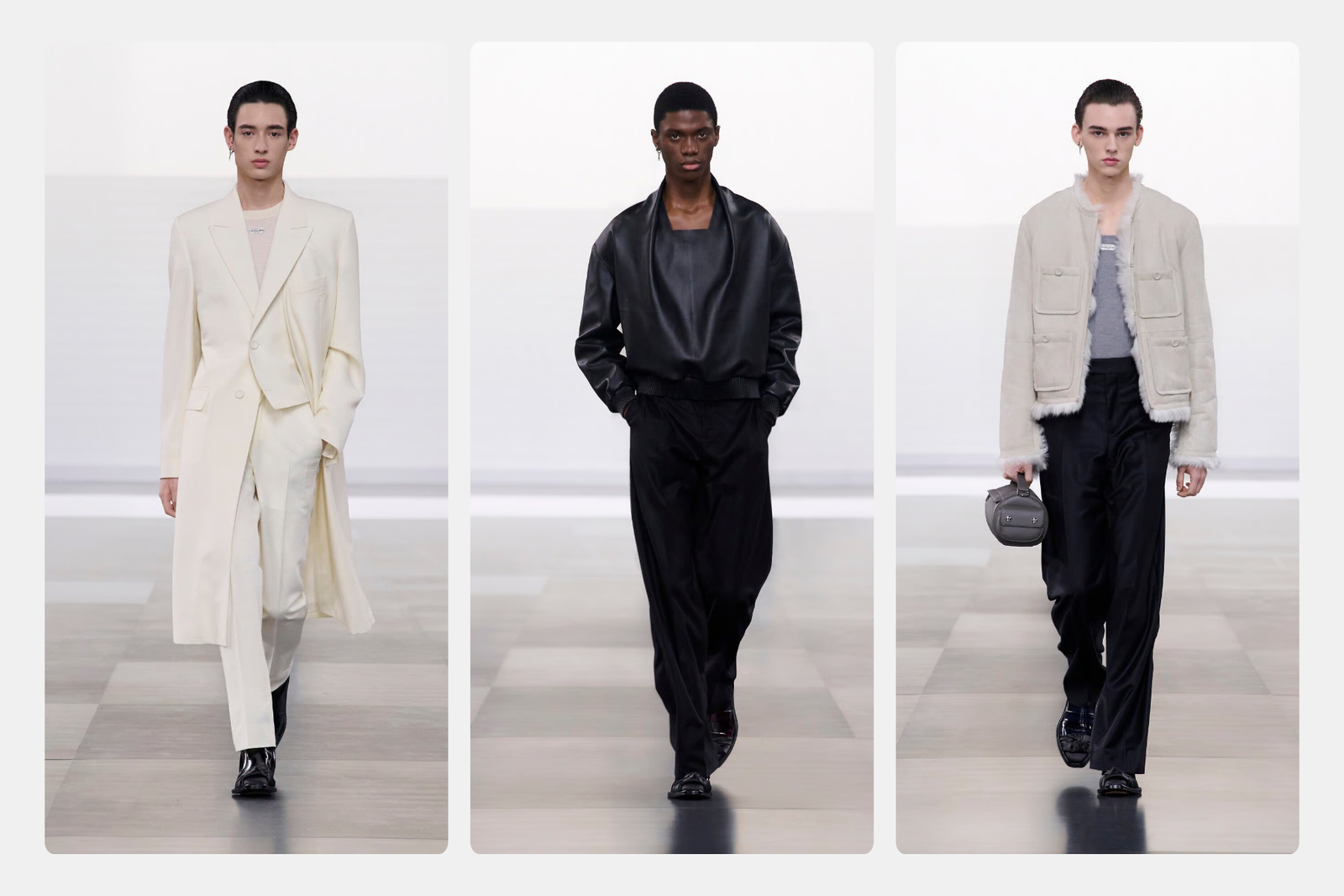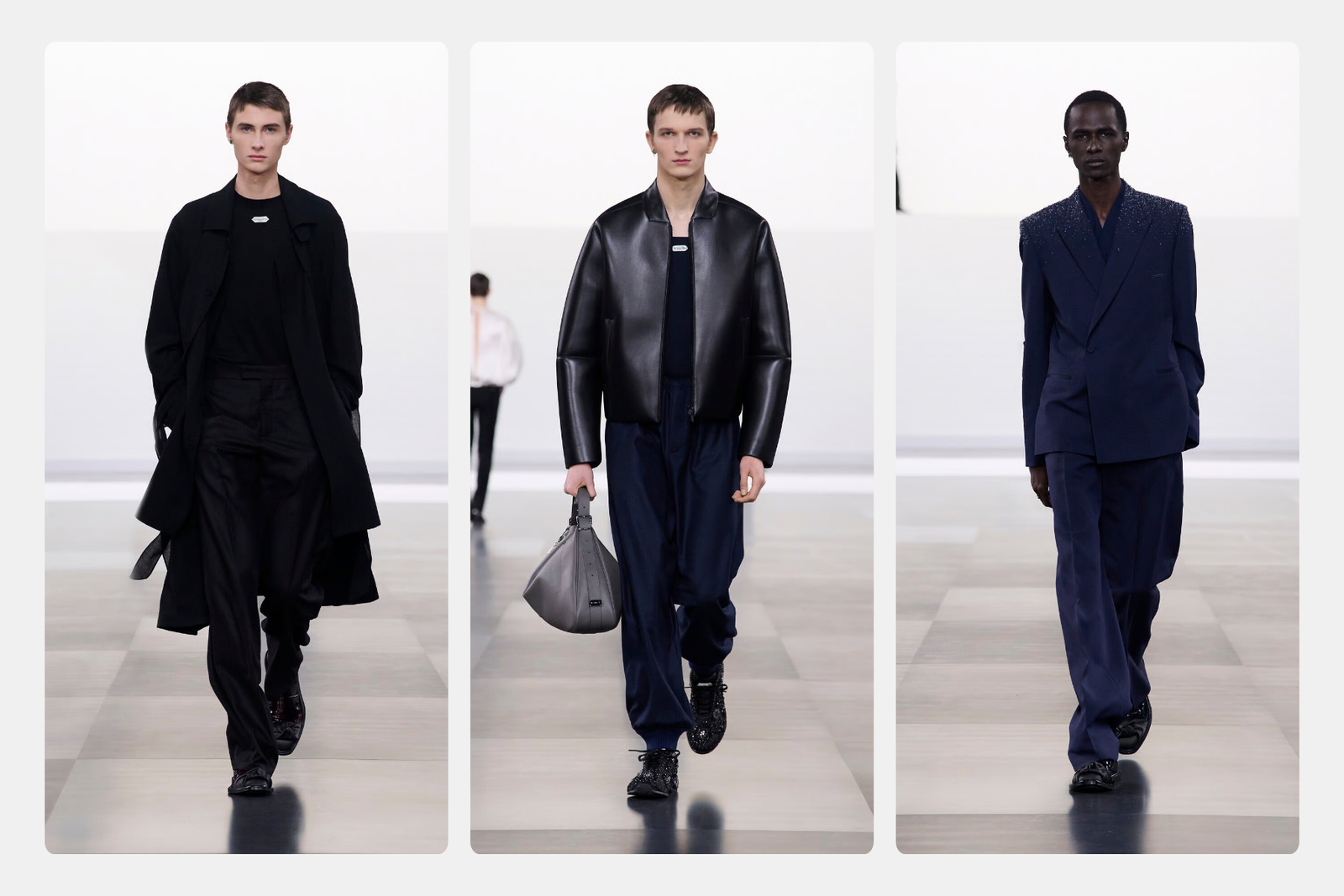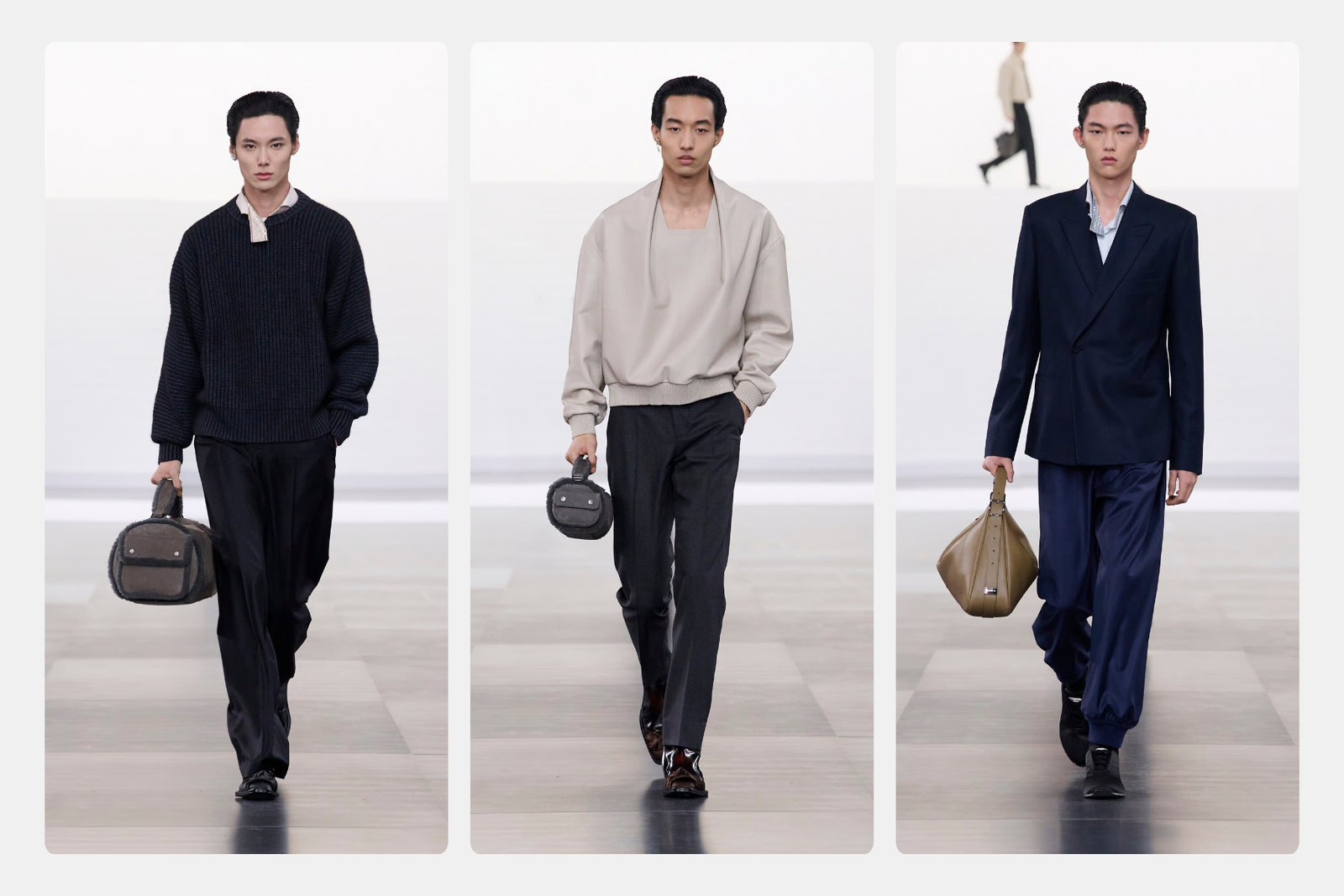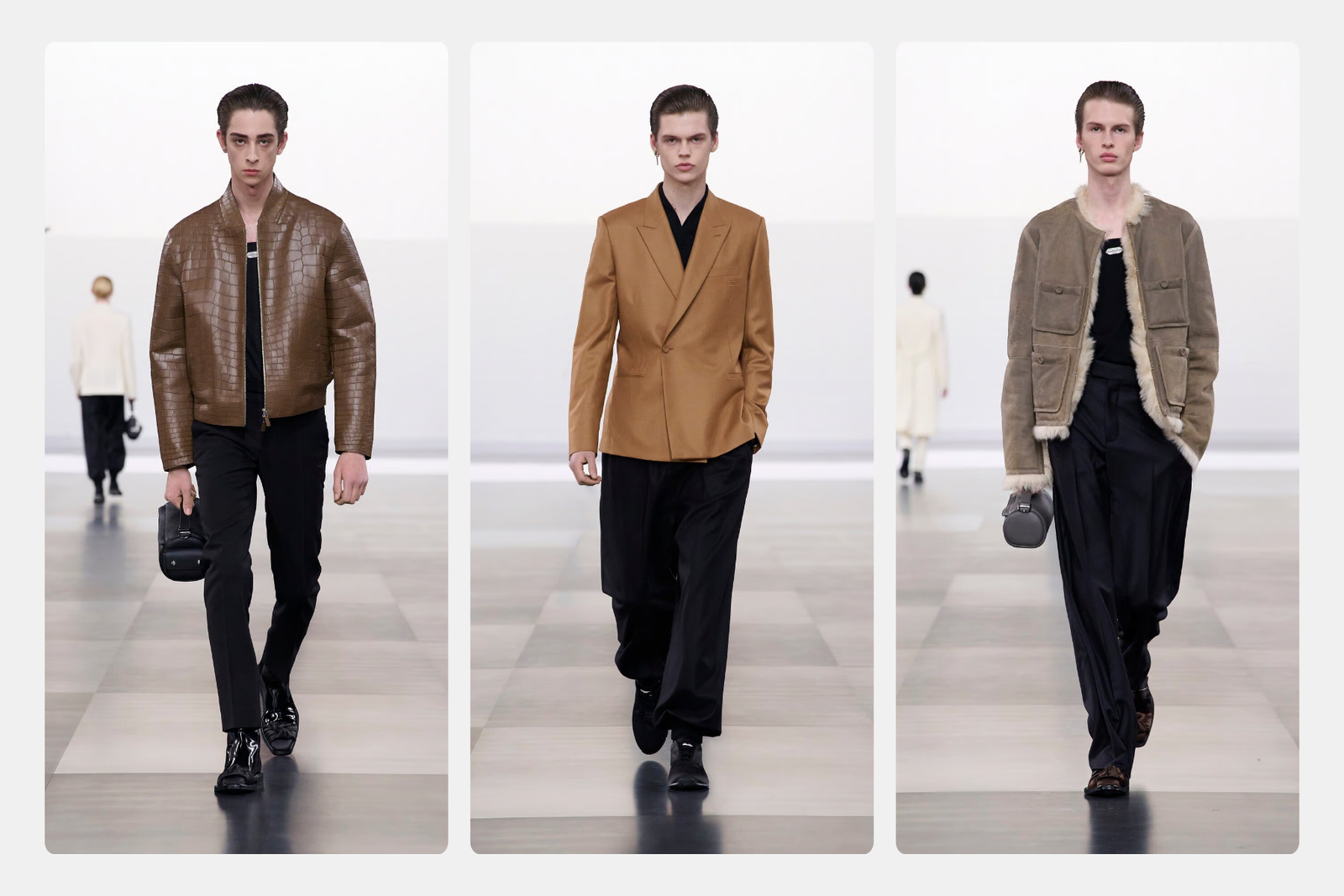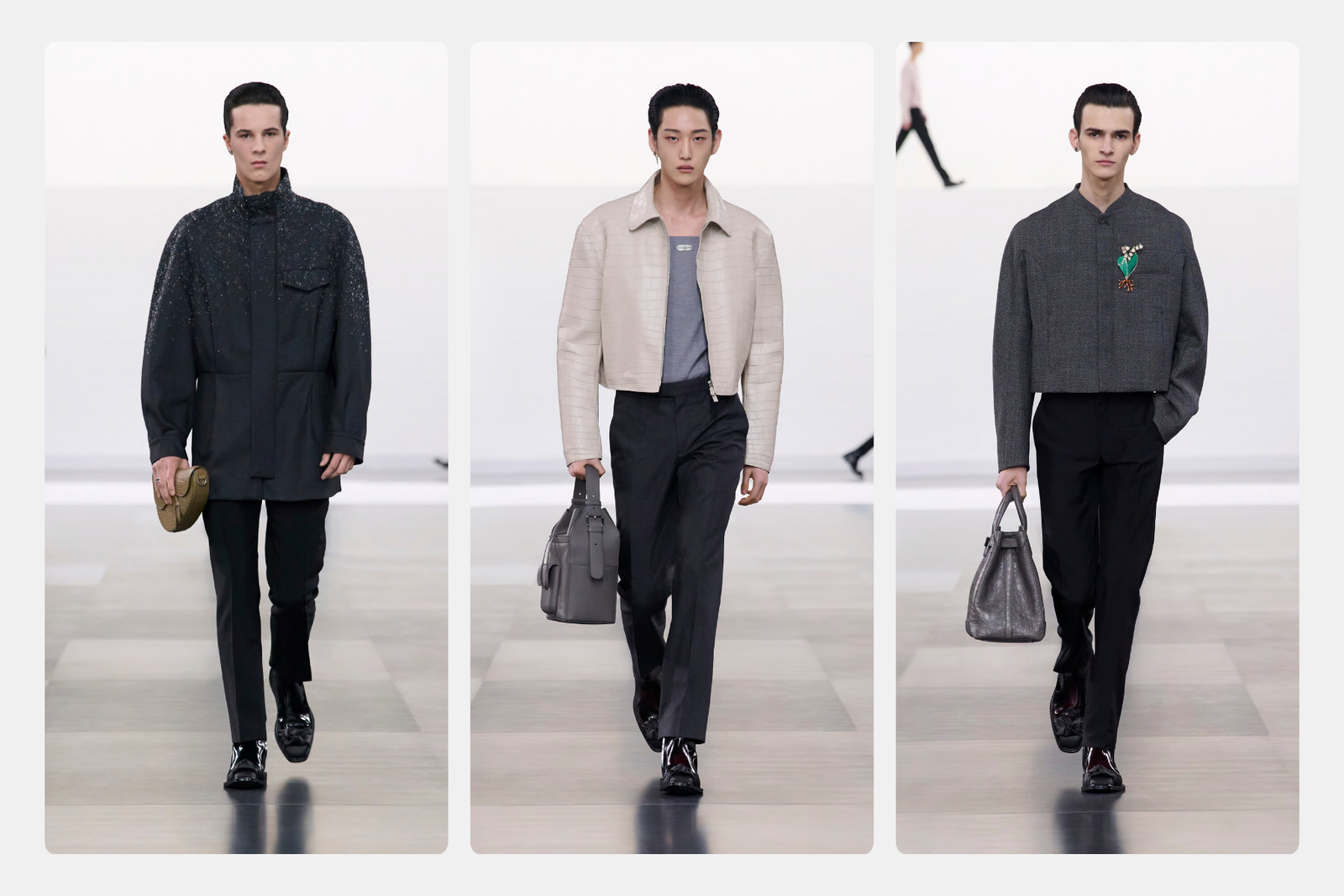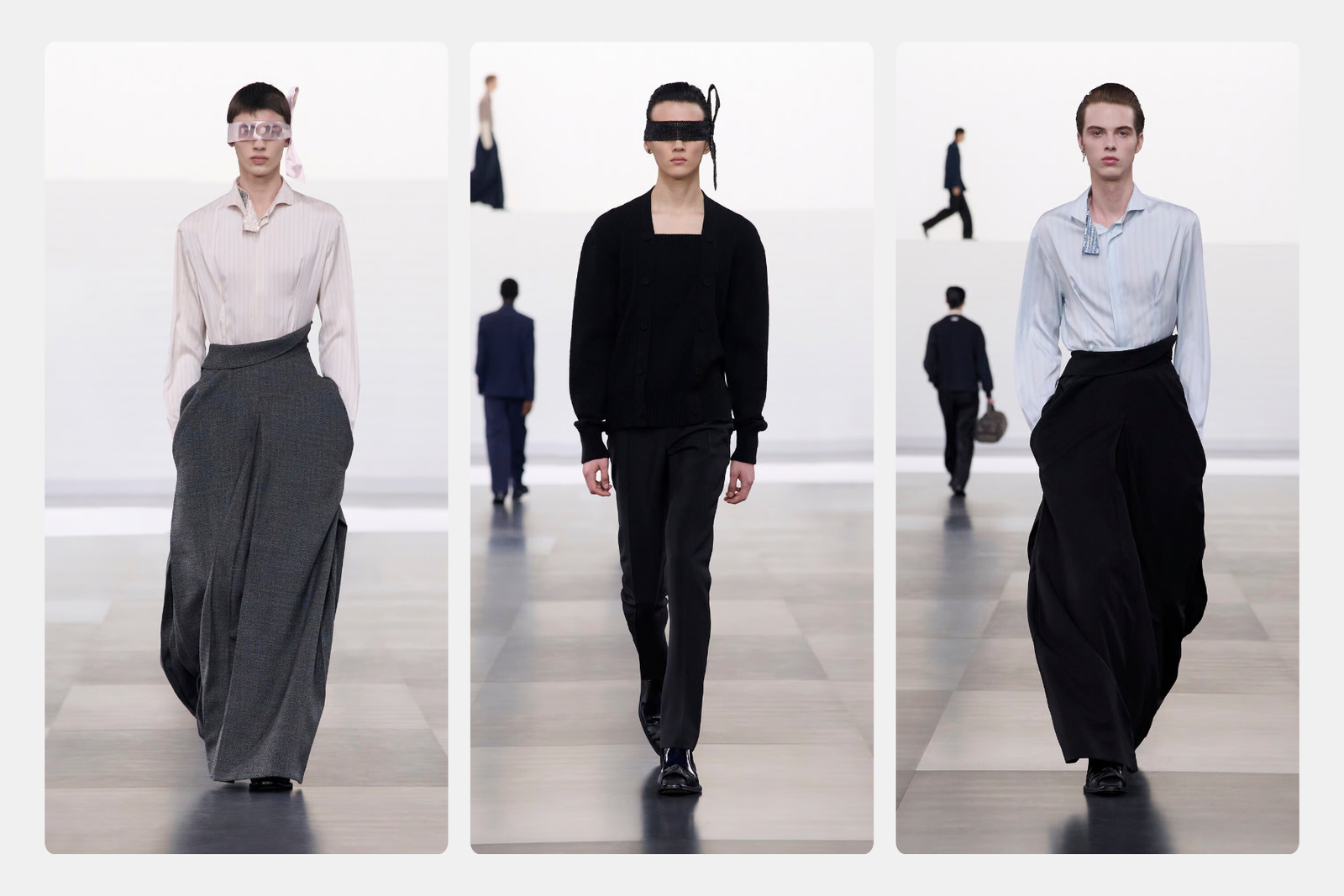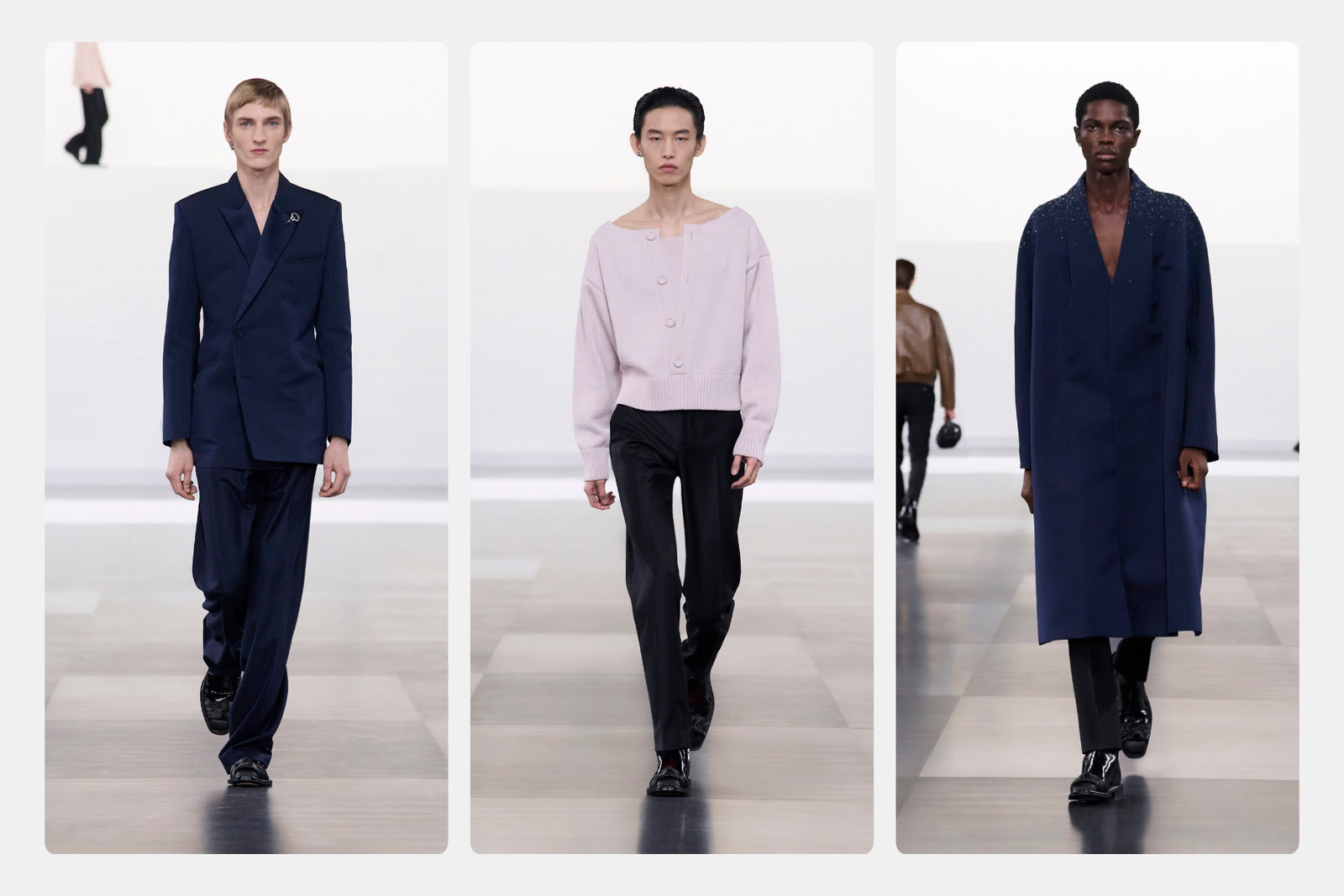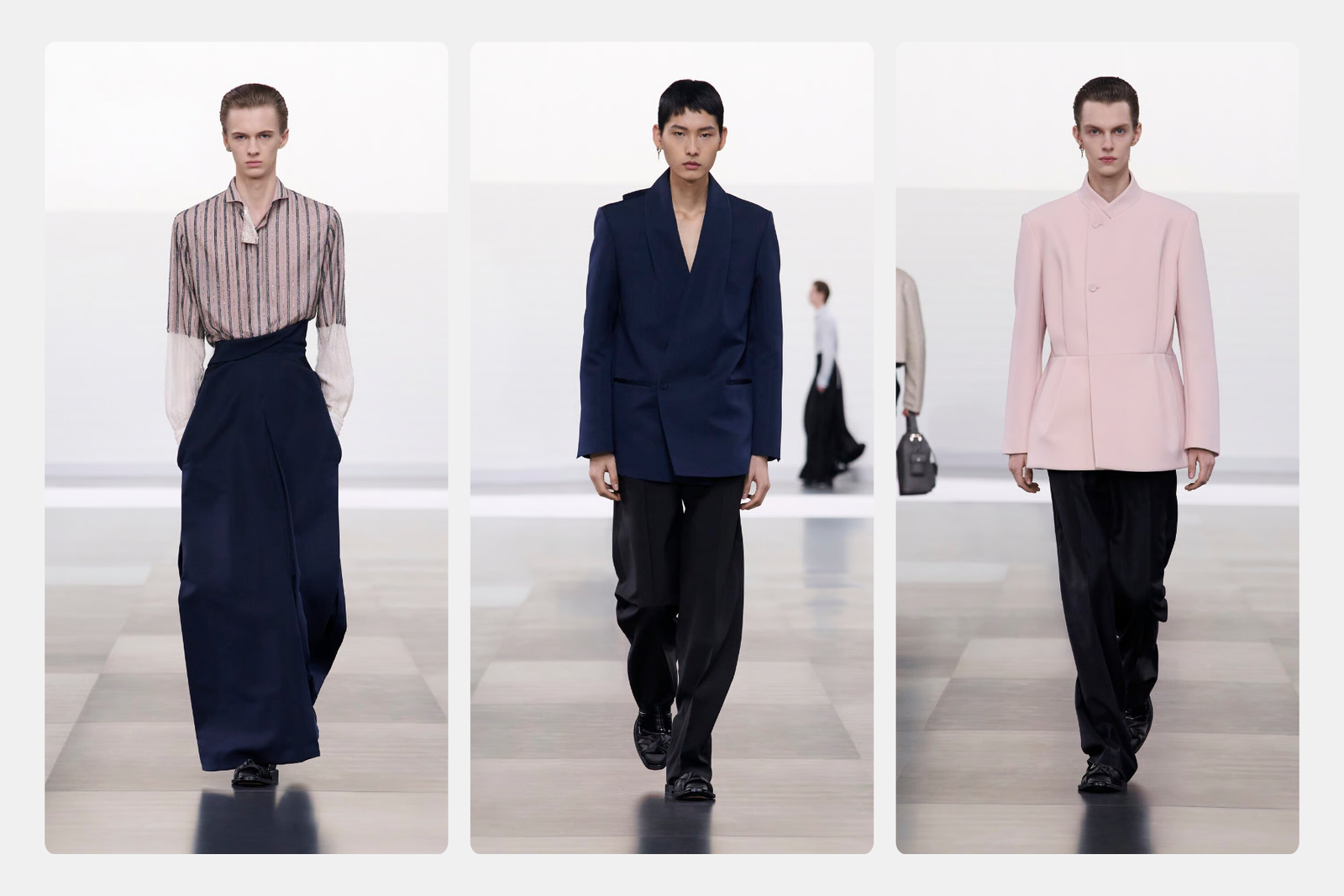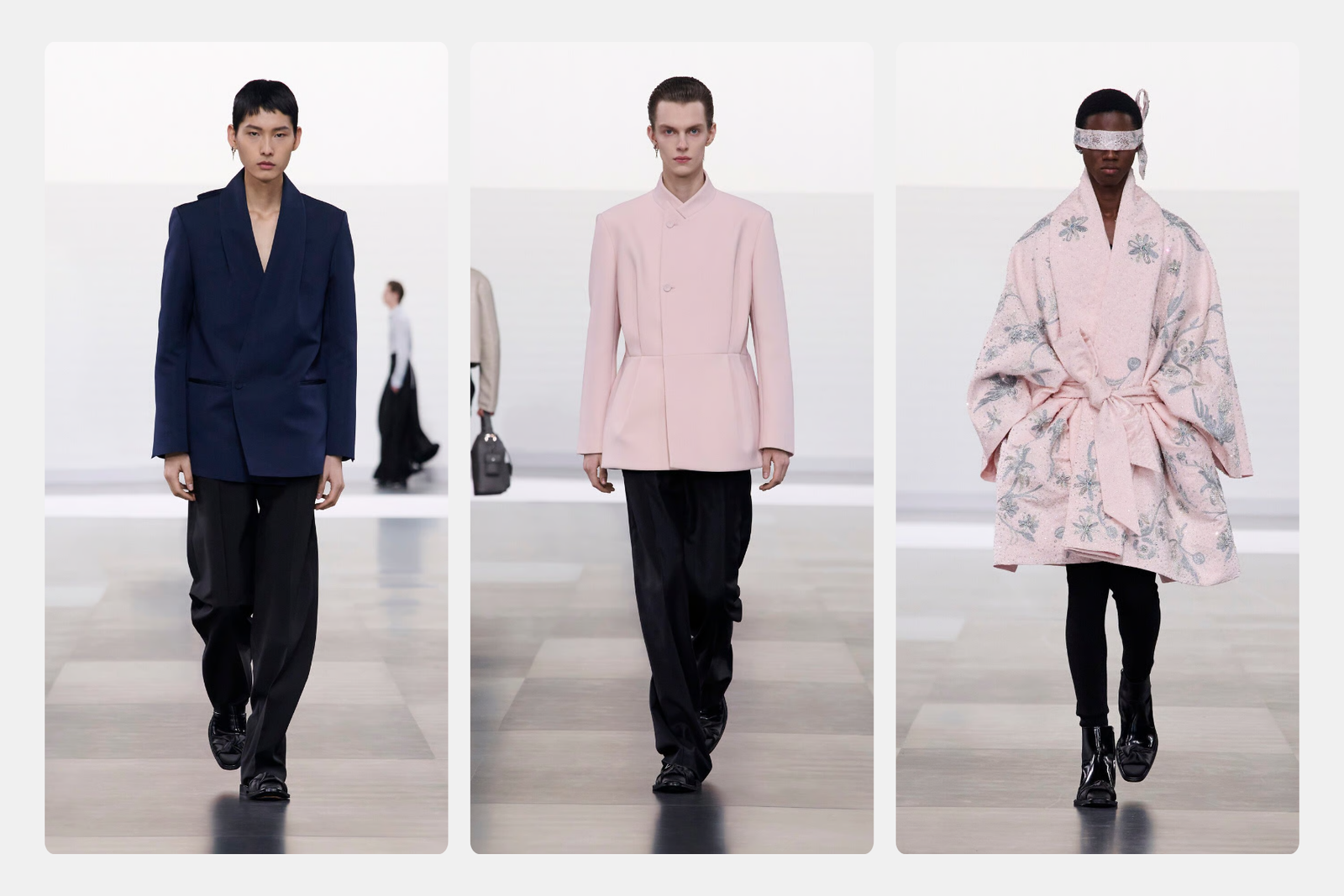








- Dior Men’s Winter Collection 2025–2026 was presented at Paris Fashion Week under Kim Jones’s direction.
- The show was held at the École Militaire in Paris and showcased a mix of men’s couture and ready-to-wear designs.
- The collection is based on Christian Dior’s Ligne H silhouette first launched in Autumn–Winter 1954.
- Archive references are reinterpreted with precise tailoring, balanced volume, and a distinctly modern menswear perspective.
Paris Fashion Week has always shown a strong personality, but this season brought a different type of energy. Instead of pushing harder for novelty, the mood shifted towards reflection, restraint, and a renewed respect for the foundations of fashion. After years of constant experimentation and visual noise, the industry seemed ready to slow down — and that change was felt most clearly at Dior. For Kim Jones, the answer wasn’t reinvention for its own sake, but refinement: a controlled palette, a disciplined silhouette, and a clear dialogue with the past.
Unveiled at the École Militaire in Paris, Dior Men’s Winter 2025–2026 collection draws inspiration from Christian Dior’s Ligne H from Autumn–Winter 1954 as its starting point. Jones captures the bold, architectural style of that period and interprets it into a distinctly masculine form, moving away from ambiguity and towards structure, clarity, and purpose. Instead of embracing gender fluidity or theatrical flair, the collection exudes confidence in its direction, demonstrating that revisiting the past — when done intentionally — can be one of the most contemporary strategies fashion can adopt.
The idea of metamorphosis quietly weaves through the collection, influencing how Dior approaches menswear across generations rather than tying it to a single moment in time. Ligne H becomes the natural reference point for that discussion, offering a way to trace how structure and masculinity have changed while maintaining their core discipline. For Jones, the archive isn’t something to imitate, but something to reflect on — a framework that allows the past to inform the present with clarity.
As he put it, “Mr Dior’s Ligne H was in our heads even before going into the archive this season. It has elements that are graphic and angular, which felt eminently transferrable into the men’s world.” Those qualities influenced the direction of a collection focused on restraint and purpose.
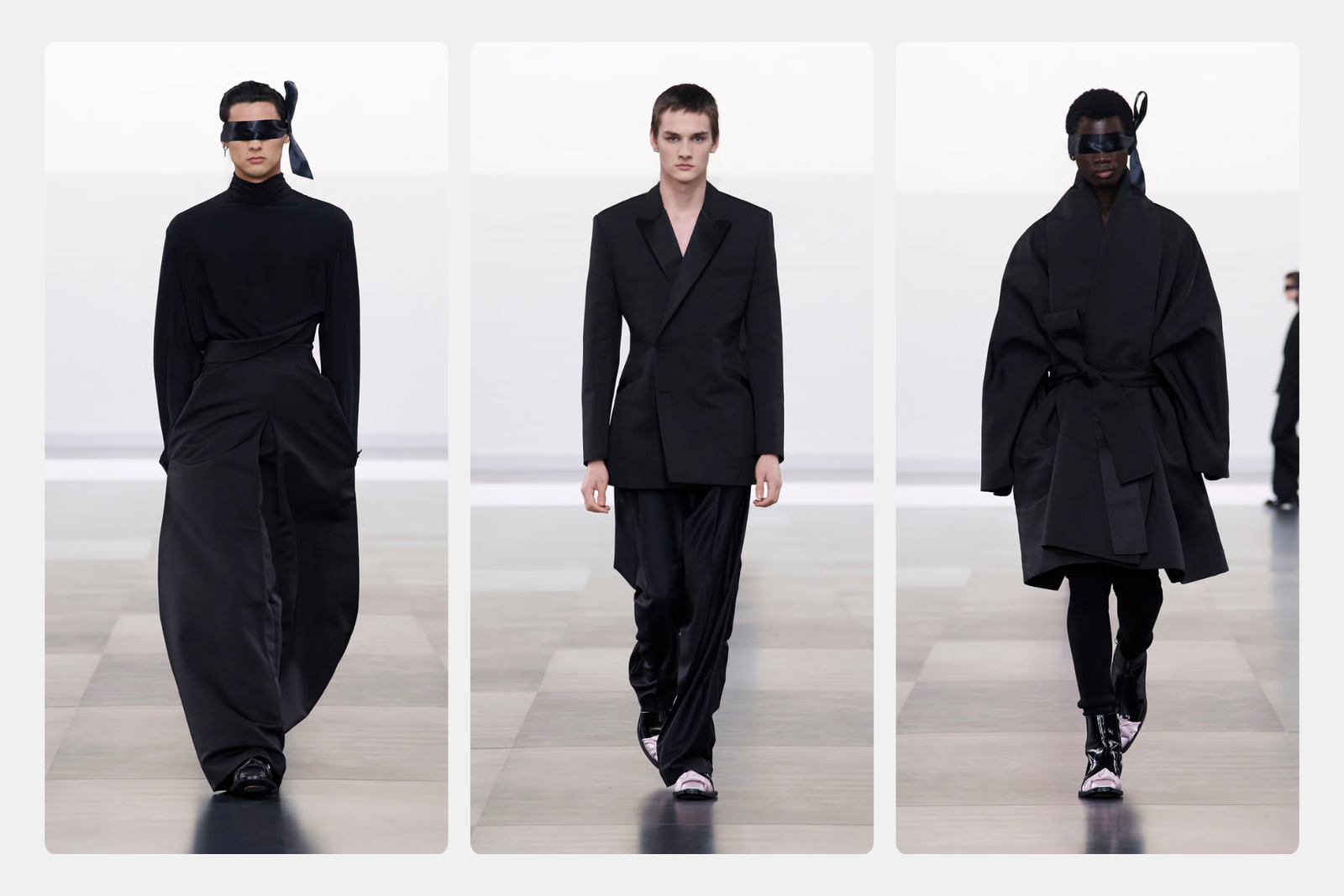
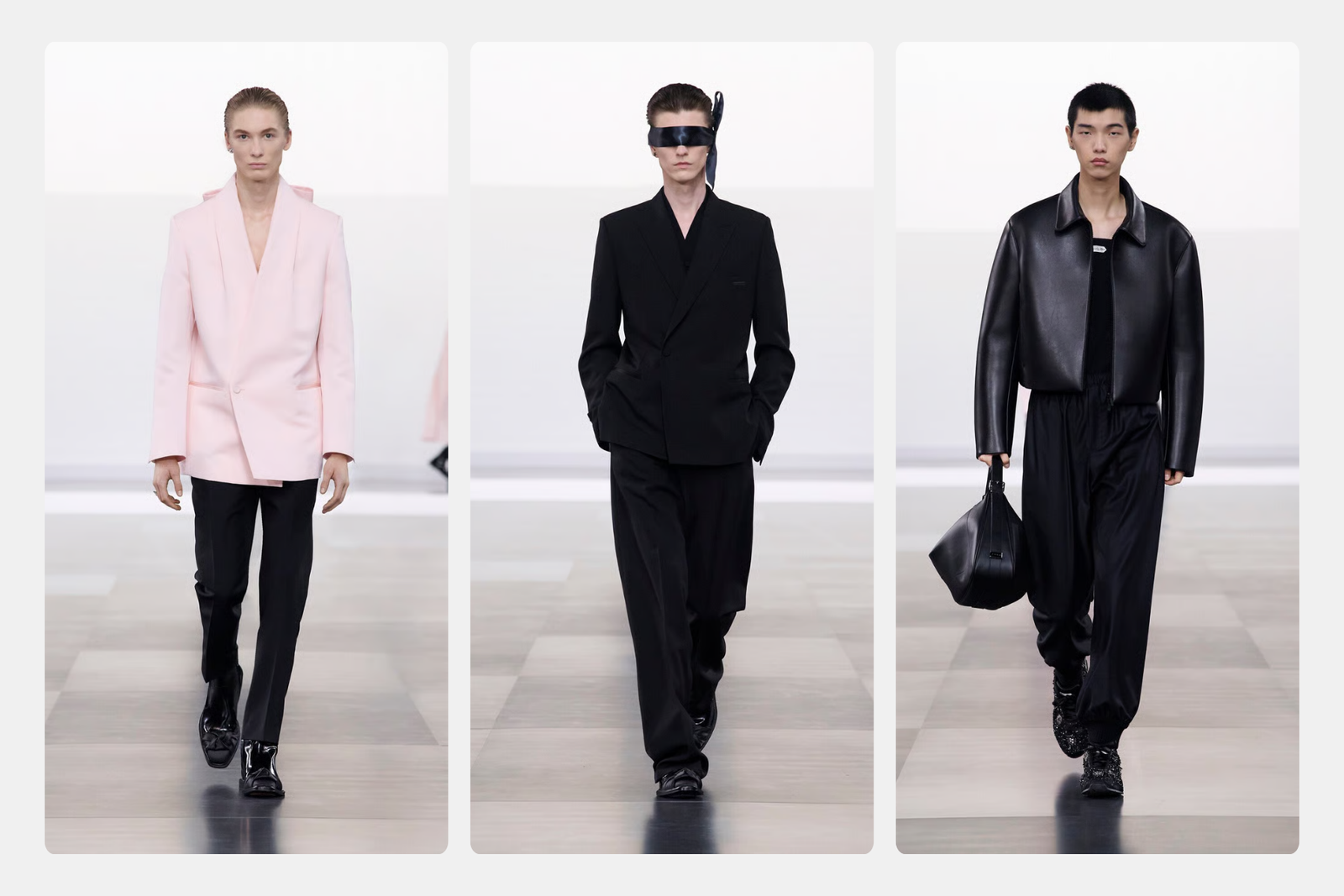
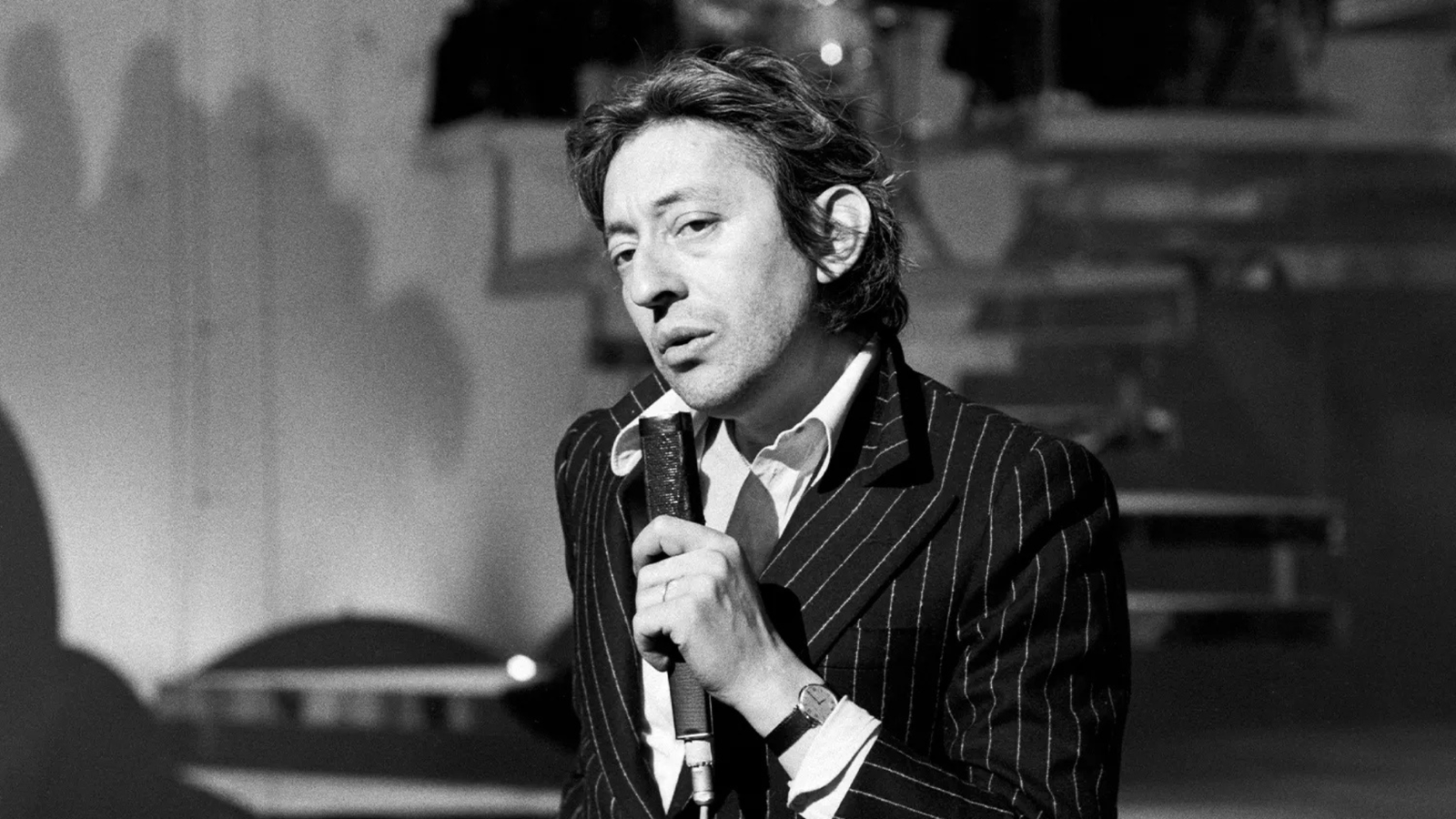
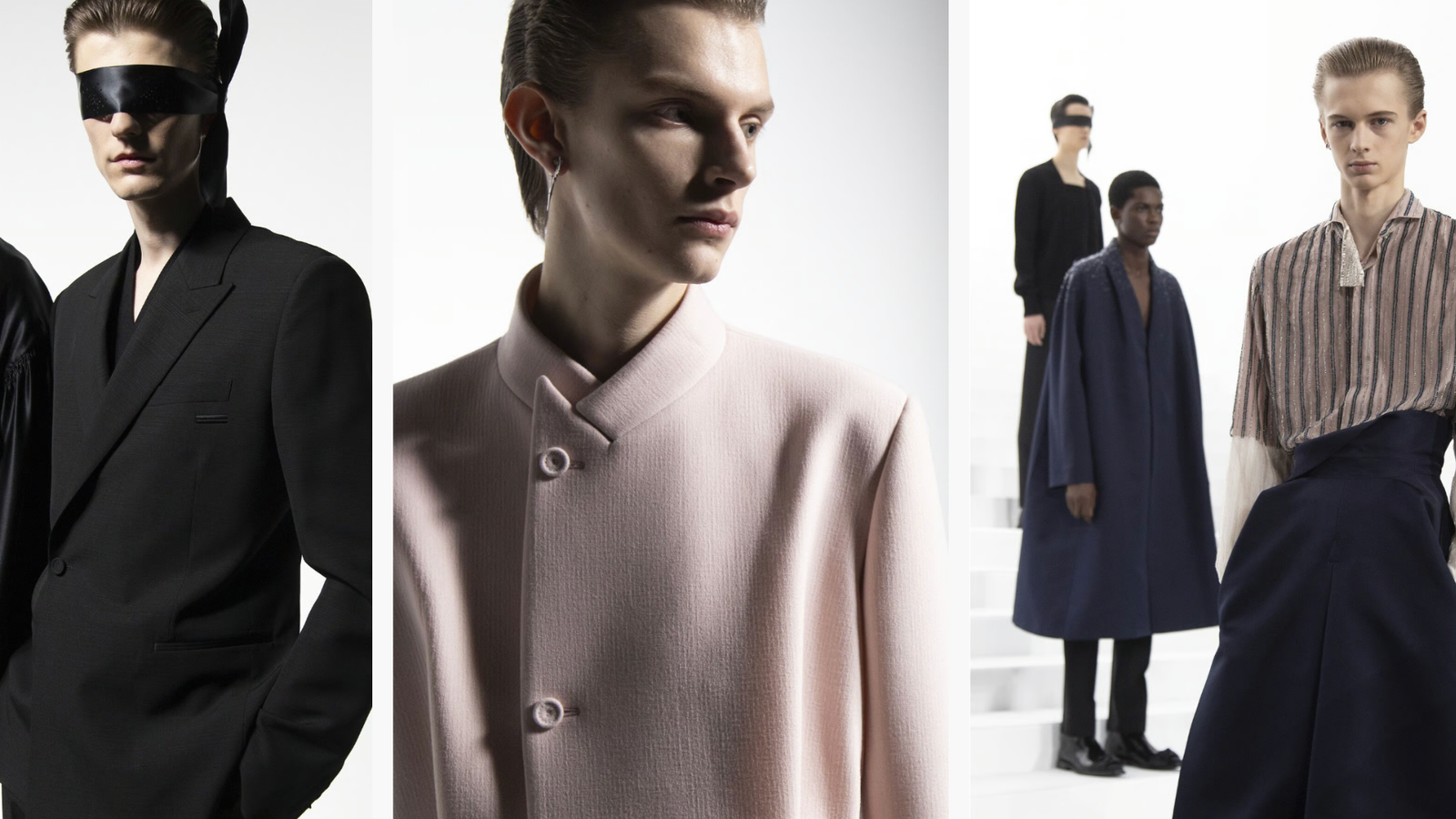
That same sense of continuity carries through to the way the collection is presented on the runway, where men’s couture and ready-to-wear exist side by side without hierarchy or separation. The distinction between the two seems almost unnecessary, as craftsmanship and everyday dressing are treated as part of the same conversation. Traditional overcoats emerge as key pieces, especially those in pinstripe and herringbone, with their rigid silhouettes projecting a controlled, confident masculinity. There’s a quiet certainty in that stiffness, one that prefers form and precision over excess.
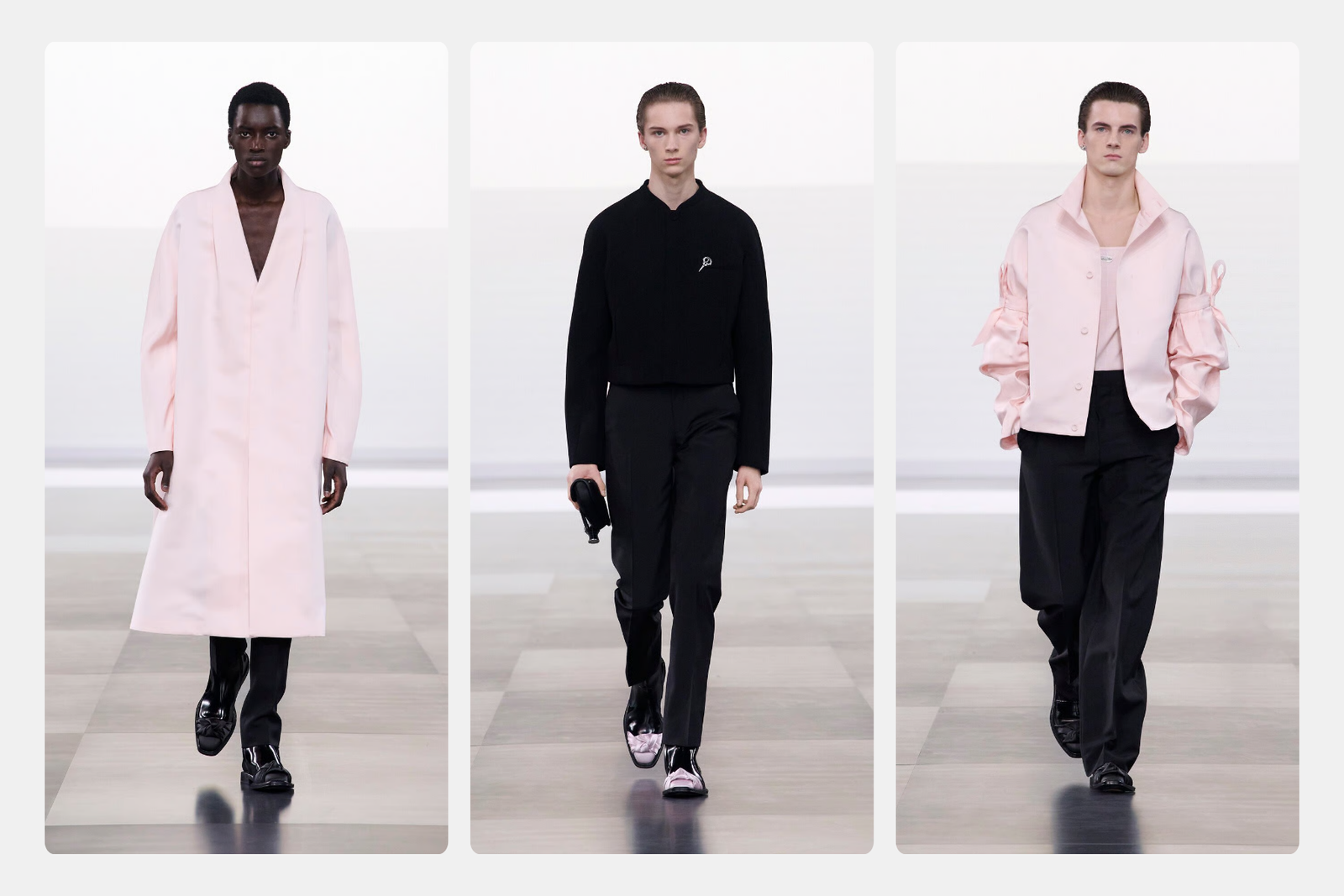
Jones’ long-standing dialogue with Dior’s womenswear archive continues here, but always with restraint. The belted, full-shaped Opera coat — from the post-war Ligne H womenswear collection — is subtly reworked, maintaining its volume while naturally fitting into the male wardrobe. Instead of feeling like a gesture or provocation, the transformation appears measured and thoughtful, highlighting that heritage can be modernised without spectacle. By keeping things pared back, Dior lets the strength of the silhouette speak for itself.
In many ways, the Winter 2025–2026 collection feels like a deliberate pause — a moment when Dior steps back from superficial reinvention and instead examines the foundations of menswear. The references span across centuries, tracing the gradual shift from the ornate excess of the eighteenth century to the cleaner, more utilitarian forms that define modern dress. Rather than leaning into nostalgia, the collection uses history as a framework to better understand where menswear stands today.
Kim Jones articulates that intent clearly. “We believed it was time to focus on Mr Dior again. We wanted to go back to the roots and concentrate on the quintessence of the house,” he continued. “There is a sense of fashion history, particularly the history of menswear, running through this collection. The shift from something quite ornate and extravagant in the eighteenth century to something more linear and utilitarian in the nineteenth, with the beginnings of modern menswear. Yet, while a lot refers to the history of fashion, this is not historical fashion. Ultimately, in this collection, we wanted to say something about now.”
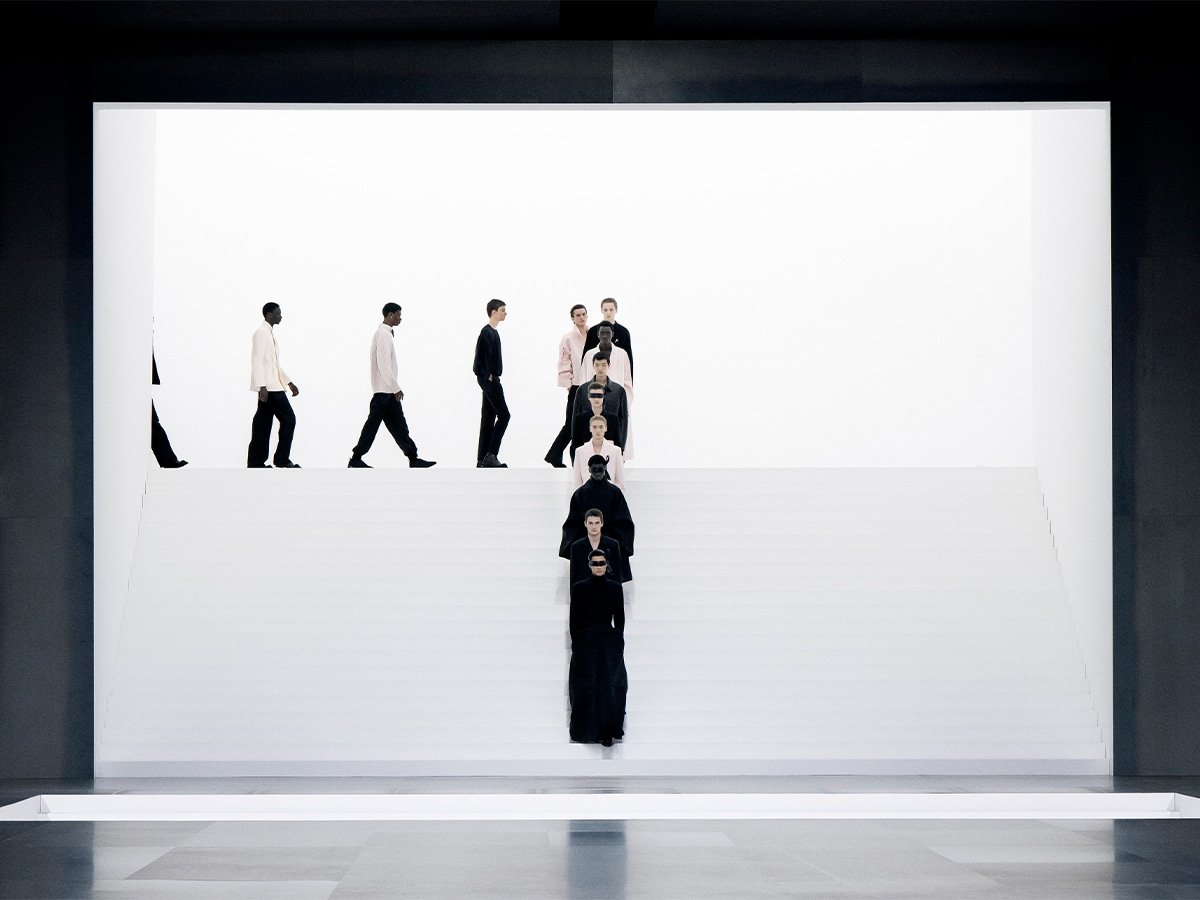
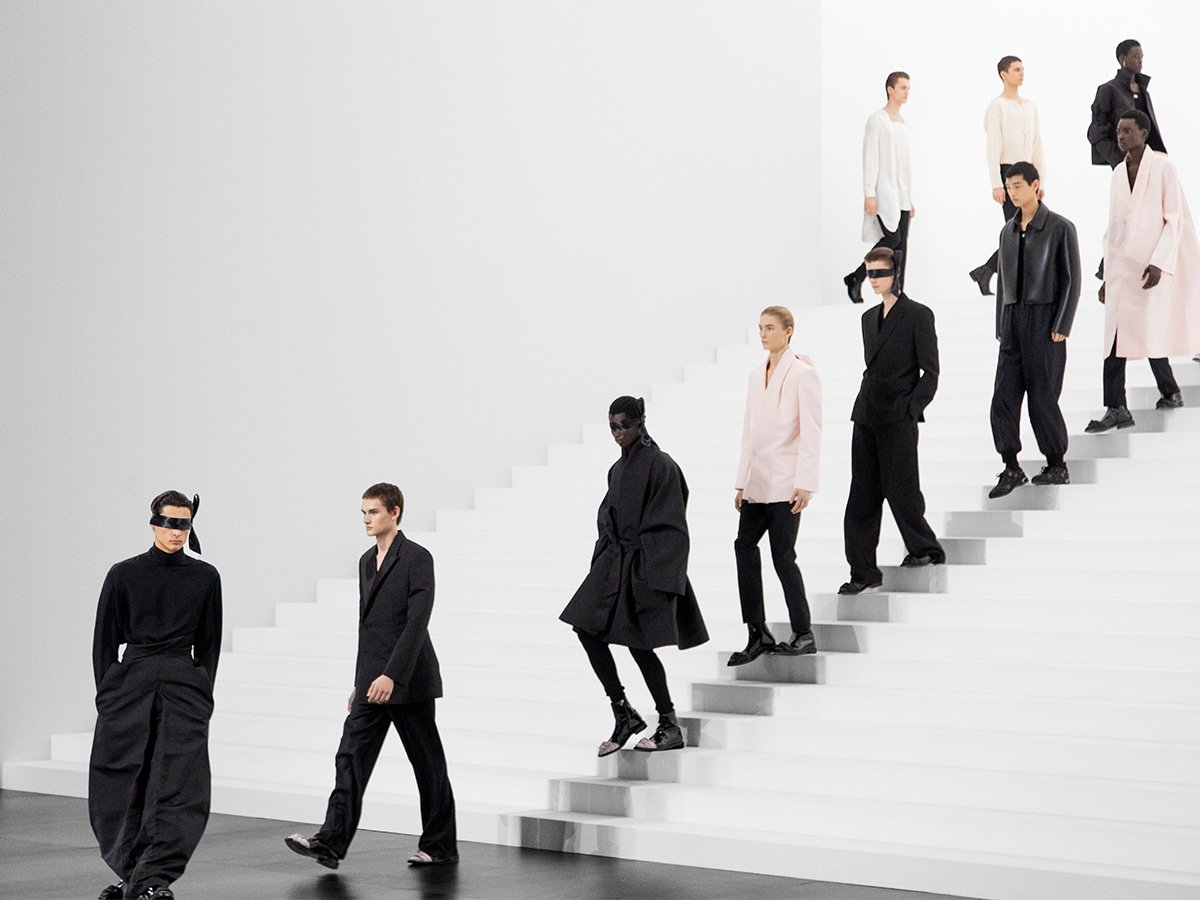
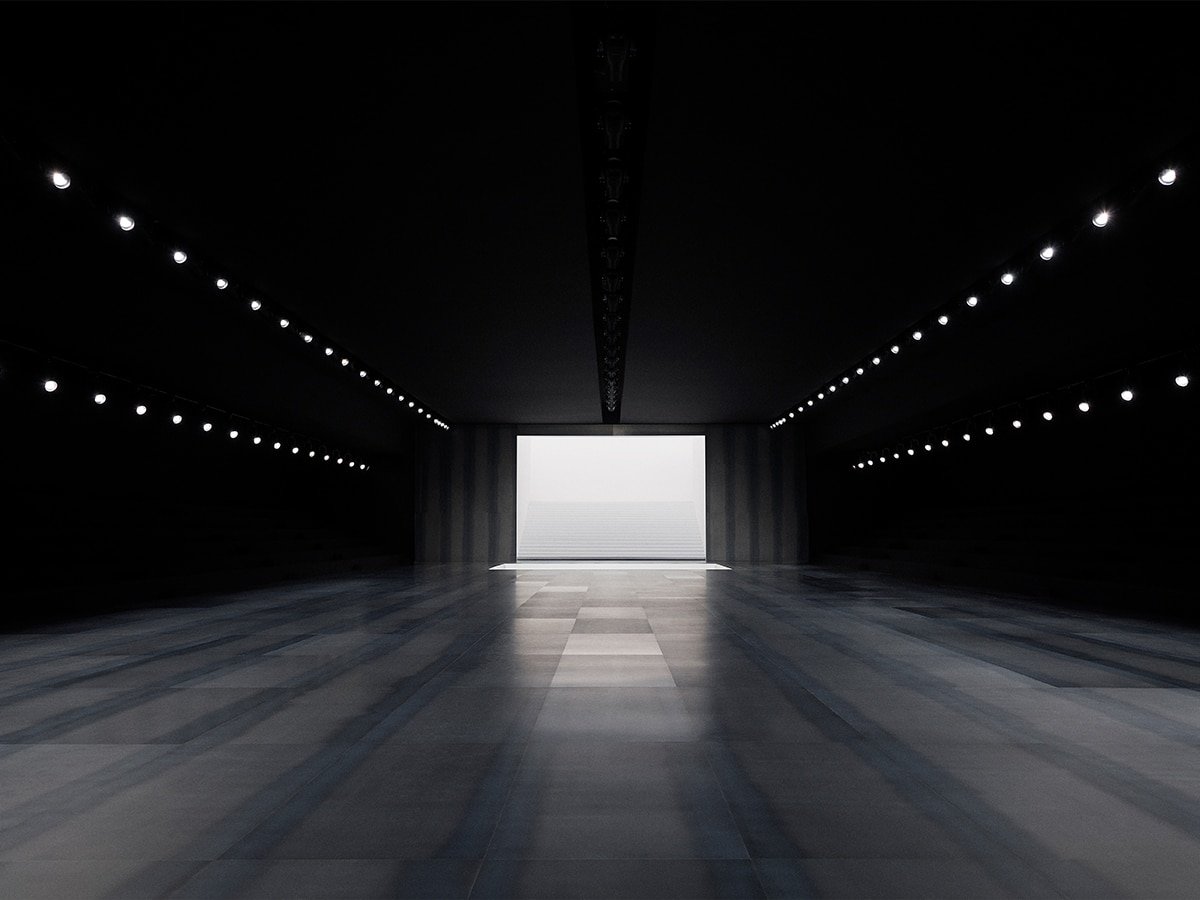
That balance between past and present shapes the collection’s view of modern masculinity. Throughout the runway show, the setting itself echoed that duality: a glowing white staircase descending onto a stark, minimalist black floor. The figure of Casanova hovered as a quiet reference point, embodying a fusion of masculine and feminine influences. Instead of excess or performance, it suggested confidence, elegance, and self-awareness — a modern ‘ladies’ man’ informed equally by women’s haute couture and men’s ready-to-wear.
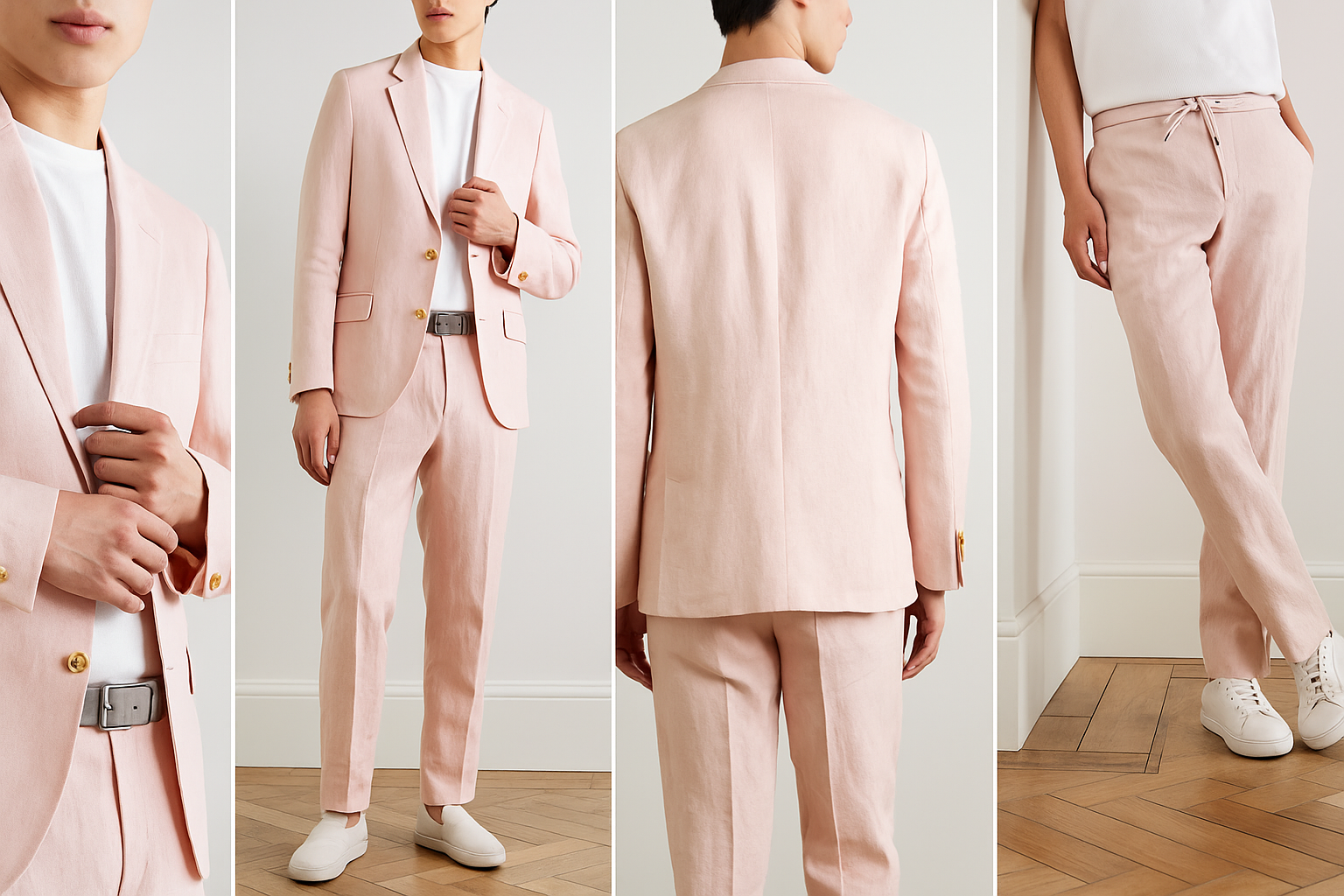
Softer details are essential in balancing the collection’s sharper lines. Satin bows recur throughout, softening the overall tailoring, while detailed glass-bead embroidery—originally inspired by Monsieur Dior’s Spring–Summer 1948 Pondichéry haute couture look—adds lightness and texture. This embroidery reappears on the pink robe that concludes the show, serving as a subtle focal point rather than an embellishment, with its influence also evident in the jewelry, where craftsmanship reflects the same delicate precision.
Accessories and footwear continue that dialogue between structure and refinement. Leather goods arrive with purposeful, masculine hardware, paired with classic men’s dress shoes and the highly polished Dior Palmarés boots. The footwear offering concludes with a special-order hybrid trainer, hand-stitched and finished with archival shoe embroidery from 1961—a small but telling detail. Taken as a whole, the collection reinforces a simple truth: when it comes to reinterpreting the past with care and restraint, Kim Jones’s eye for detail remains unmatched. While this season’s approach feels more focused than recent outings, the spirit of cross-pollination — between eras, disciplines, and identities — is still very much intact.