Our team of editors and experts thoughtfully chooses each product. If you decide to buy through one of our links, we may earn a commission. Learn more. Want to know how we test products? Click here for more details.
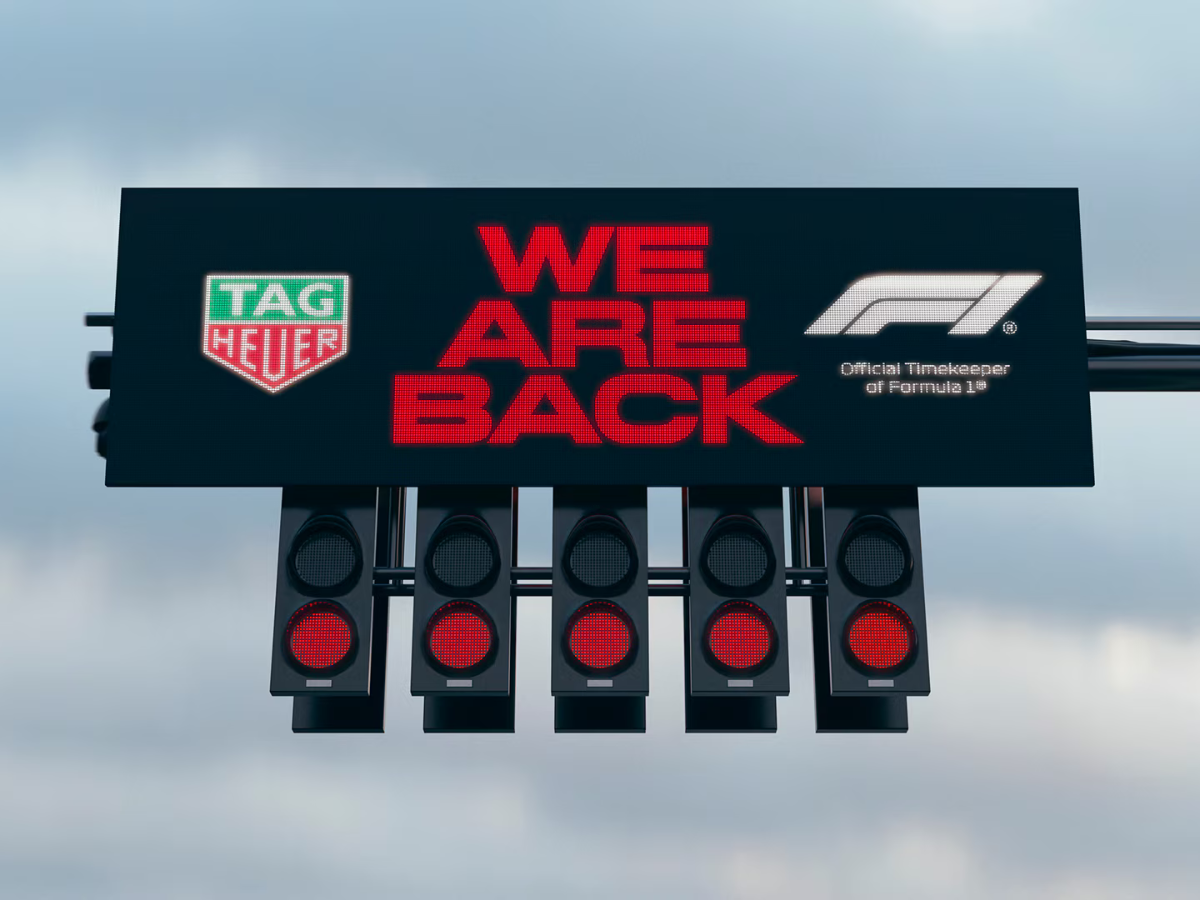
TAG Heuer has officially returned as Formula 1’s Official Timekeeper, marking a new chapter in a partnership that spans more than 55 years.
The Swiss watchmaker’s Formula 1 legacy includes 239 race wins, 613 podium finishes, 11 Constructors’ Championships, and 15 Drivers’ Championships through its partnerships with leading teams.
TAG Heuer’s connection to Formula 1 dates back to the 1970s, when Jack Heuer helped establish one of the first partnerships between a luxury watch brand and a Formula 1 team.
The return comes as Formula 1 celebrates its 75th anniversary, with TAG Heuer rejoining the sport as part of LVMH’s landmark 10-year partnership.
Get ready, motorsport fans — TAG Heuer is back where it belongs, stepping up as the Official Timekeeper for Formula 1. After 55 years in the history books, the Swiss watchmaker is reclaiming its role at the heart of F1. It all started when TAG Heuer first appeared on the hood of Jo Siffert’s Lotus 49B, and now, the true king of the track is back in action.
It’s been over twenty years since TAG Heuer made the surprising decision to step back from timekeeping, but the sport’s worst-kept secret is finally out. Just a few months ago, TAG Heuer’s parent company, LVMH, signed an extraordinary 10-year sponsorship deal with F1, shaking up the motorsport world by ending Rolex’s long reign. The partnership not only signals a major shift in sponsorships but also brings TAG Heuer back into the fold, alongside other LVMH brands such as Louis Vuitton and Moët Hennessy. While it was obvious TAG Heuer’s return was imminent, the official announcement on January 1st confirmed the news.
So, buckle up — this legendary partnership is about to take excitement to a whole new level on the F1 track.
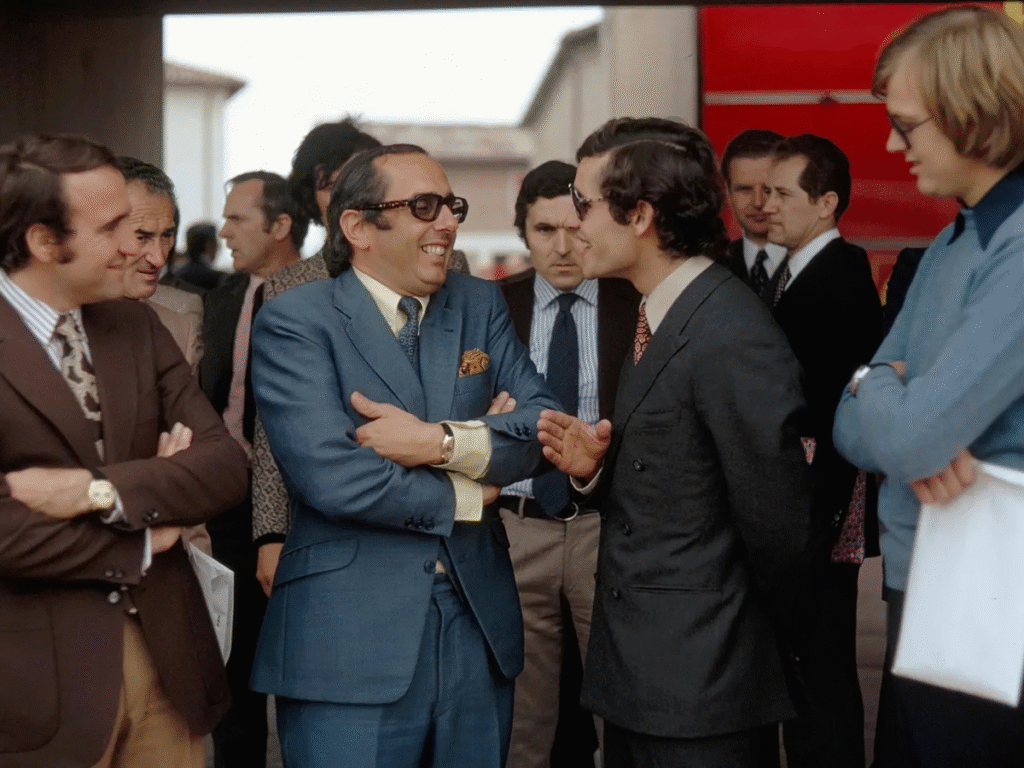
Jack Heuer, in the middle, pictured here with the Ferrari team in the 1970s | Image: TAG Heuer
TAG Heuer Reclaims Its Place in Formula 1
You have to look back at TAG Heuer’s story with Formula 1, which started way before sponsorship deals and digital timing boards became part of the modern Grand Prix as we know it today. The Swiss watchmaker first entered the paddock through its association with Jo Siffert and Lotus, becoming one of the earliest luxury brands to establish its presence in the sport.
Decades later, that relationship has stretched across racing, championship battles, and some of Formula 1’s most memorable eras. Throughout Formula 1’s history, TAG Heuer remained a familiar sight around the circuit. From the thunder of naturally aspirated engines to today’s highly sophisticated machines, the brand has been there for many of the moments that helped shape the championship and the drivers who defined it forever.
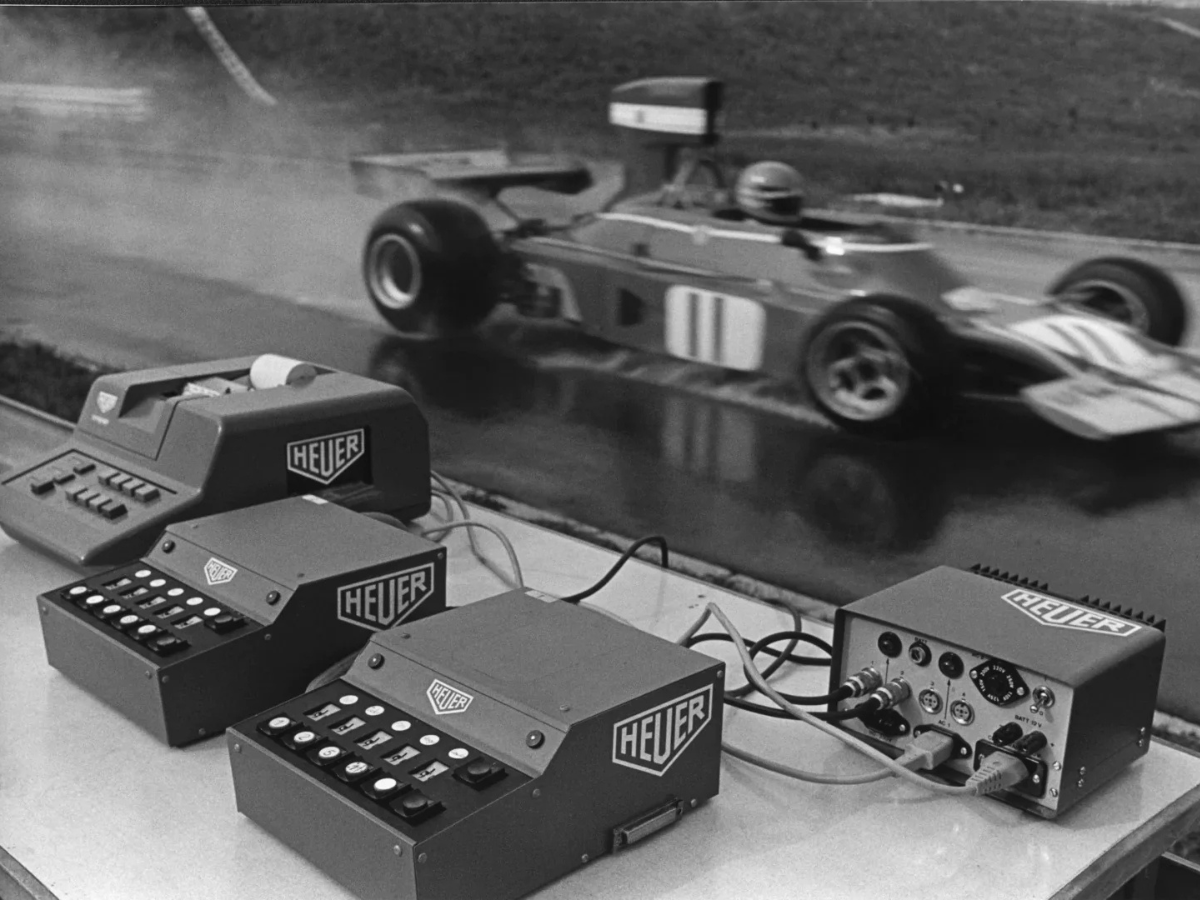
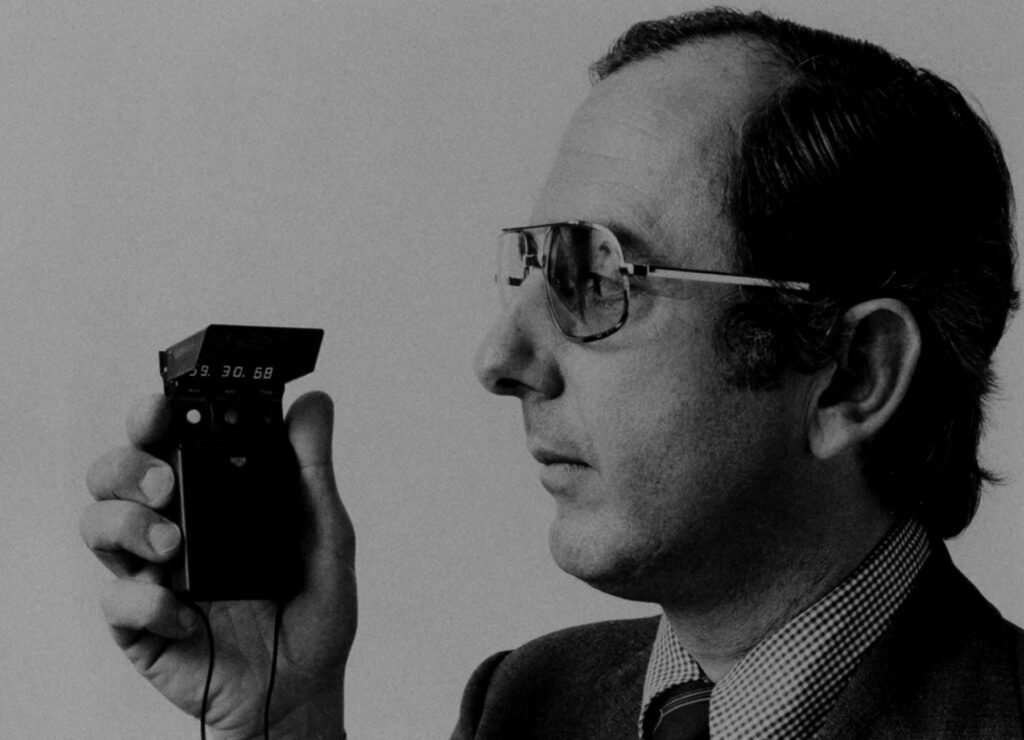
The pioneering Le Mans Centigraph, developed by Heuer in 1971 was the first timing system capable of displaying times to precision of 1/1000th of a Second | Image: TAG Heuer
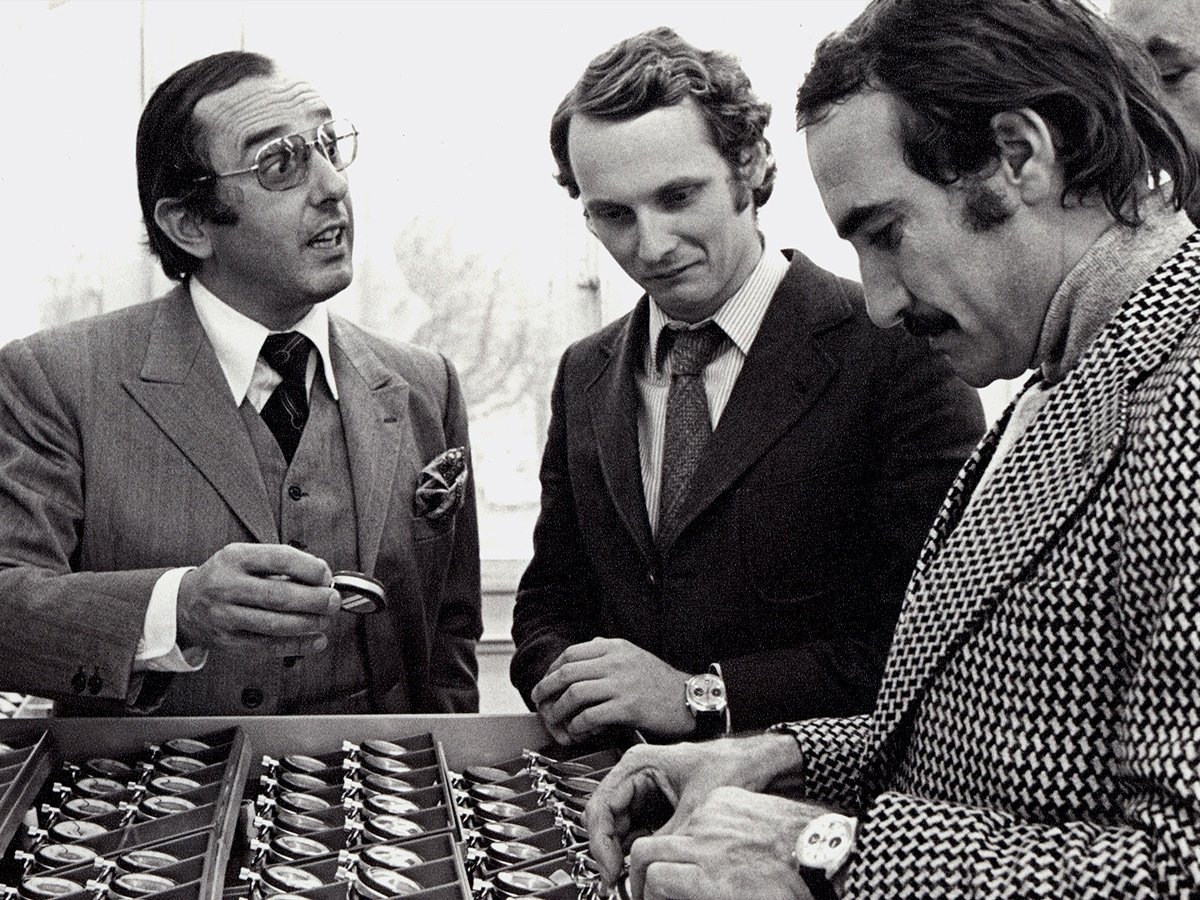
Jack Heuer (L), Niki Lauda (Centre) and Clay Regazzoni (R) visiting the Heuer workshops in Biel in the 1970s | Image: TAG Heuer
TAG Heuer is back as Formula 1’s Official Timekeeper for the 2025 season, picking up where a long partnership left off. With that, Formula 1 is starting a new chapter with LVMH, TAG Heuer’s return fits a sport that honours both tradition and progress.
TAG Heuer CEO Frédéric Arnault shared his thoughts on the announcement:
Formula 1 and TAG Heuer share a passion for performance, precision, and pushing the limits. We are thrilled to be back in the heart of the action, where every second counts, and to bring our legacy of timing excellence to a new generation of fans.
For many fans, TAG Heuer’s relationship with Formula 1 is about more than just logos or sponsorships—it’s the name tied to winning teams, drivers, and the best moments in motorsport history that fans will remember, as it brings back memories that last well over fifty years.
As a new season begins, TAG Heuer once again finds itself at the centre of a sport where tiny differences can change everything. In Formula 1, races, championships, and careers can be decided in a moment, making the watchmaker’s return feel like a perfect reunion between two names whose histories have long been connected.
Jack Heuer Holding Microsplit | Image: TAG Heuer
A Legacy Measured in Seconds
TAG Heuer’s connection to Formula 1 goes far beyond its role as the sport’s official timekeeper. As Formula 1 celebrates the 75th anniversary of its first Drivers’ Championship in 2025, few brands are better placed to be part of that milestone. Over the decades, TAG Heuer has become woven into the fabric of the sport, from watch collections inspired by famous circuits and races to its logo appearing on some of Formula 1’s most iconic cars. For many fans, TAG Heuer and Formula 1 have become almost inseparable, thanks in large part to Jack Heuer’s vision.
Back in the 1970s, Jack Heuer helped change the relationship between motorsport and watchmaking by creating what is widely regarded as the first partnership between a luxury watch brand and a Formula 1 team, Ferrari. The collaboration led to the development of the Le Mans Centigraph, a timing device designed to monitor the performance of Ferrari’s drivers and cars at the team’s dedicated testing facility. What began as an innovative partnership soon evolved into one of motorsport’s most enduring success stories.
As Formula 1 has grown, so has TAG Heuer’s role in the sport. The brand has worked with top teams like Ferrari, McLaren, and Oracle Red Bull Racing, and has been part of many victories and championship celebrations.
Though its partnerships in Formula 1, TAG Heuer has been part of 239 race wins, 613 podium finishes, 9,471 championship points, 11 Constructors’ Championships, and 15 Drivers’ Championships. Not many brands can match this record, so TAG Heuer’s return as Formula 1’s Official Timekeeper feels like a natural step in a relationship that has influenced both racing and watchmaking for generations.
With so much history between them, TAG Heuer’s return as Formula 1’s Official Timekeeper feels more like the next step than a brand new beginning. Over the years, few brands have been as closely tied to the sport, so this reunion is especially meaningful as Formula 1 marks its 75th anniversary. From working with championship teams to being present at some of the sport’s most memorable moments, TAG Heuer has always been part of the story.
Welcoming the watchmaker back to the sport, Formula 1 President and CEO Stefano Domenicali said:
I am delighted to welcome TAG Heuer as the official timekeeper of Formula 1 as they start the next stage of their long history in our sport. With their focus on innovation, accuracy, and excellence, they are a natural partner, and I am excited to see how our intertwining heritage can tell new stories for the future as we celebrate our 75th year.
Elias Albay is the Founder and Director of Many Men Magazine, a Toronto-based digital publication dedicated to promoting modern masculinity through style, culture, and self-improvement. What started as a personal turning point became a purposeful platform. — born from Elias’ desire to create something meaningful after completing his studies and finding no career path that truly matched his ambitions. With a background in Civil Engineering from York University and experience in Commercial Flight Operations at CAE, he applied skills, and resilience from both fields to forge a new path.
Our team of editors and experts thoughtfully chooses each product. If you decide to buy through one of our links, we may earn a commission. Learn more. Want to know how we test products? Click here for more details
When it comes to timeless luxury, few brands evoke the same level of prestige and sophistication as Chanel. Founded by the legendary Coco Chanel in 1910, the brand revolutionized fashion, introducing elegant designs synonymous with style, class, and success. While Chanel’s influence began with women’s fashion, it wasn’t until 1955 that the brand ventured into the world of men’s fragrances, creating scents that would define a new standard of masculinity and refinement.
A captivating fragrance can leave a memorable impression, acting as an invisible signature that remains long after you depart. Chanel’s colognes exemplify this idea. With fragrance ambassador Timothée Chalamet representing the brand’s youthful yet sophisticated allure, these scents have established themselves as symbols of contemporary success. Whether you’re looking to boost your confidence before an important meeting or leave a trail of sophistication wherever you go, these eight Chanel fragrances are the perfect companions for the modern man who aspires to greatness. From fresh and invigorating to deep and magnetic, each fragrance tells a story of refinement, ambition, and the timeless legacy of Chanel. So, let’s explore the scents that every successful man should know—and perhaps discover your next signature scent along the way.
The Best Chanel Colognes, According To Many Men Magazine
Chanel Allure Homme Sport Eau de Toilette | Image: Chanel
1. Chanel Allure Homme Sport Eau De Toilette
Scent: Italian mandarin, cedar accord, tonka bean, white musk
Reference: 123630
Price: USD $135
Introduced in 2004, Chanel Allure Homme Sport Eau de Toilette is the fragrance for the modern man who doesn’t just sit back and let life happen—he takes the reins with style, elegance, and a touch of adventure. Summer might be a little while away, but why wait to embrace those beachside dreams? Just spray on Allure Homme Sport, and you’ll be instantly transported to your dream coast—a Mediterranean yacht or a sunny private beach.
This scent perfectly balances light, crisp citrus and profound, captivating musk. From the moment you spritz it on, the vibrant Italian mandarin gives you a refreshing, energizing start, like stepping out into the morning sun. As the fragrance evolves, the heart of cedar-wood adds a touch of woodsy sophistication, grounding the scent with earthy charm. Finally, the tonka bean and white musk provide a smooth, sensual finish that sticks around long after you’ve left the room.
Chanel Bleu De Chanel Eau de Toilette is the fragrance for a man who knows how to make an entrance. Launched in 2010, it’s like that friend who gets you into the club, providing an extra 10% confidence boost whenever you need it. The fragrance opens with a fresh citrus accord, delivering a burst of energy, but then deepens with ambery cedar, adding an intriguing, woody warmth. As it develops, the scent is enhanced by tonka bean and vanilla, creating a heightened sense of sensuality that lingers in the air.
At the base, New Caledonian sandalwood adds deeper richness, leaving a captivating trail that draws people in. Its legendary status stems from its versatility—wear it to work, and it won’t overwhelm the office, yet it will make those after-hour drinks feel even more celebratory. Whether you’re preparing for a presentation or getting ready for a date night, Bleu De Chanel strikes the perfect balance of boldness and elegance, ensuring you leave a lasting impression.
Chanel Platinum Égoïste is a fragrance for the man who knows exactly who he is and isn’t afraid to show it. Released in 1993, this scent opens with a fougère-green accord, featuring the freshness of lavender and rosemary, heightened by a touch of petitgrain from Paraguay. It immediately delivers a crisp, invigorating sensation, making it an ideal fragrance to start your day with a burst of energy and confidence.
As the fragrance unfolds, its heart blossoms with a robust blend of clary sage and geranium, adding a sophisticated, herbal complexity that enhances the freshness. These notes give the fragrance a sense of balance, providing depth without overwhelming the senses. The scent then moves to a pure base, where the lingering warmth of ambery wood creates a smooth, sensual finish that remains subtly present throughout the day.
What makes Platinum Égoïste truly special is its versatility. This fragrance is perfect for everyday use, whether you’re heading to work, out for a casual lunch, or meeting friends for drinks in the evening. It strikes the perfect balance between freshness, depth, and warmth, ensuring you leave a lasting impression wherever you go without ever being overpowering.
Chanel Allure Homme Édition Blanche | Image: Chanel
4. Chanel Allure Homme Édition Blanche Eau De Parfum
Scent: Lemon, New Caledonian sandalwood, Haitian vetiver, vanilla from Madagascar
Reference: 127460
Price: USD $165
Chanel Allure Homme Édition Blanche Eau de Parfum is a fragrance that masterfully blends the elements of hot and cold, creating a scent experience that’s both fresh and warm. This fragrance opens with powerful lemon notes that invigorate the senses, instantly giving you a refreshing burst of citrus. But just as quickly, it evolves into something deeper, with the warmth of New Caledonian sandalwood bringing a smooth, creamy depth to the composition.
Similar to Allure Homme Sport, but with softer notes that make it cozy in cold weather too, Édition Blanche is like the morning latte of Chanel fragrances. Encapsulated in a rich vanilla, it’s balanced out by an array of spices and citrus, creating a fragrance that’s both comforting and refreshing. The earthy richness of Haitian vetiver adds an elegant woody touch, while the vanilla from Madagascar gives the scent a sensual, sweet warmth that lingers.
Perfect for those seeking a fragrance that’s as versatile as it is unique, Allure Homme Édition Blanche works wonderfully for both daytime and evening occasions. Whether stepping into a meeting or enjoying a cozy night in, this fragrance provides that extra boost of warmth—ideal for days when you want to be extra nice to yourself.
Scent: Lemon, New Caledonian sandalwood, Haitian vetiver, vanilla from Madagascar
Reference: 125430
Price: USD $143
Since its creation in 1921, Chanel No.5 has exuded the very essence of femininity. The abstract, mysterious scent—alive with countless subtle facets—radiates an extravagant floral richness. N°5 was the world’s first abstract fragrance, and it has remained an icon in the perfume industry ever since. In 1986, Jacques Polge reinterpreted his predecessor Ernest Beaux’s composition to create a fuller, more voluminous version of the now and forever fragrance: Eau de Parfum. This version draws inspiration from the original Parfum, maintaining its timeless appeal while enhancing its complexity.
The fragrance opens with a burst of bright citrus top notes, imparting a fresh, energetic feel. As it evolves, the heart unveils a stunning floral bouquet centered around May rose and jasmine, infusing the fragrance with classic elegance. The aldehydes contribute to its unique presence, offering an ethereal, almost airy quality, while the smooth touch of bourbon vanilla adds a rich, sensual warmth that lingers long after you’ve left the room.
Chanel No.5 is the perfect fragrance for those who want to make a statement without saying a word. Whether you’re at a glamorous event or simply treating yourself to a touch of luxury, this iconic fragrance adds an extra layer of confidence and grace to any occasion. It’s not just a fragrance; it’s a piece of history, effortlessly evoking elegance and charm.
Scent: Lemon, New Caledonian sandalwood, Haitian vetiver, vanilla from Madagascar
Reference: 122380
Price: USD $540
Gabrielle Chanel was born on August 19, 1883, under the sign of Leo. Mademoiselle fully embodied her zodiac symbol: proud and passionate, instinctive and daring. Majestic, indomitable, and wild, the lion became a personal emblem, serving as the inspiration for this powerful fragrance dedicated to Gabrielle Chanel herself. Le Lion de Chanel is a scent for the bold, confident man who commands attention with a regal presence. It features ambery, leathery notes of labdanum and patchouli, which form the backbone of the fragrance, creating a deep, sophisticated aroma that exudes power and elegance. The brightness of bergamot, lemon, and vanilla softens the intense richness, resulting in a warm, carnal, and refined scent that feels both sensual and luxurious.
Le Lion de Chanel is perfect for the man who wishes to make a lasting impression. Whether attending a grand event or embracing personal strength, this fragrance embodies the essence of timeless luxury, providing a captivating blend of warmth and sophistication. A true statement fragrance, it lingers on the skin, leaving a bold, unforgettable trail wherever you go.
Scent: Cedar, New Caledonian sandalwood, aromatic-woody accord
Reference: 107180
Price: USD $200
Chanel Bleu De Chanel Parfum is the best offering in the Bleu family, designed to fully showcase the robust nature of this iconic fragrance. An invigorating freshness opens, immediately refreshing the senses, while the fragrance slowly develops into something deeper. The warmth of cedar and New Caledonian sandalwood adds an intense, aromatic-woody richness that sweeps throughout, creating a captivating trail that lingers on the skin.
What makes this parfum version so exceptional is the intensity it brings compared to the other Bleu variations. The aromatic-woody accord gives it an added depth and complexity that is both bold and refined. This is a fragrance for the modern man who seeks strength and sophistication, capturing the essence of both power and elegance in one bottle.
Perfect for any occasion, Bleu De Chanel Parfum offers unmatched versatility. Whether you’re attending a formal event or simply out for a casual evening, this parfum leaves a lasting impression, ensuring you stand out with a magnetic presence. Refined, powerful, and undeniably the best of the Bleu line, it’s the epitome of luxury and confidence in a fragrance.
1957 Les Exclusifs De Chanel | Image: Chanel
8. 1957 Les Exclusifs De Chanel
Scent: White musk, bergamot, iris, neroli, cedar, powdery accents, honey
Reference: 122360
Price: USD $540
The 1957 Les Exclusifs de Chanel is a fragrance that embodies the timeless elegance and sophistication of the House of Chanel. A sensual accord of white musk forms the base of this fragrance, delicately fashioned with the floral notes of bergamot, iris, and neroli. These bright, airy florals add an elegant, almost ethereal touch, while the woody cedar notes ground the fragrance with a soothing and refined depth. Powdery accents enhance the fragrance, giving it a soft, delicate feel.
A hint of honey adds a touch of warmth and sweetness to the composition, making the fragrance feel inviting without ever being overpowering. This luminous scent is a statement to the style and legacy of the House of Chanel—sophisticated, refined, and undeniably timeless. Whether you’re attending a formal gathering or simply enjoying a quiet moment, it provides a subtle yet unforgettable presence.
This fragrance is part of the exclusive Les Exclusifs de Chanel collection, which is perfect for those who appreciate understated luxury and seek a scent that exudes quiet confidence. It’s the ideal scent for those who value elegance and wish to make a lasting impression with a fragrance as timeless as the brand.
With its intricate layers and harmonious composition, this scent is more than just a fragrance—it’s an experience. Each spritz envelops you in a delicate balance of warmth, elegance, and freshness, making it the perfect companion for those who seek a scent as refined and enduring as Chanel itself.
At Many Men Magazine, when curating our fragrance lists, we rely on trusted sources like Fragrantica, the leading online fragrance database, and the Fragrantica perfume forum for genuine reviews and user experiences. We evaluate each fragrance by examining expert opinions and customer feedback, ensuring that our recommendations reflect the best scents in the market. By utilizing Fragrantica’s vast community and comprehensive reviews, we provide you with insights from both industry professionals and fragrance enthusiasts, making sure our fragrance lists are as reliable and well-informed as possible. We also cross-reference multiple sources to ensure that each fragrance on our list meets high standards of quality, longevity, and appeal. Whether you’re new to the world of fragrances or a seasoned collector, our carefully curated selections help you make confident decisions based on real-world reviews. Ultimately, our goal is to deliver fragrance recommendations that are both authentic and relevant to your personal taste and lifestyle.
Elias Albay is the Founder and Director of Many Men Magazine, a Toronto-based digital publication dedicated to promoting modern masculinity through style, culture, and self-improvement. What started as a personal turning point became a purposeful platform. — born from Elias’ desire to create something meaningful after completing his studies and finding no career path that truly matched his ambitions. With a background in Civil Engineering from York University and experience in Commercial Flight Operations at CAE, he applied skills, and resilience from both fields to forge a new path.