








YouTube has evolved from a basic video-sharing platform into a global money-making powerhouse, where creators earn millions through ads, sponsorships, merchandise, and enterprises built around their channels. By 2025, the highest-paid YouTubers aren’t merely influencers — they’re full-fledged entrepreneurs managing media empires. From MrBeast’s astonishing stunts and giveaways to Ryan’s World’s family-friendly toy universe, and from IShowSpeed’s energetic live streams to Ms. Rachel’s toddler singalongs, these creators demonstrate that there’s no single route to success. What they all have in common, however, is the ability to transform views into fortunes — and today, we’re breaking down the top 10 wealthiest YouTubers in the world right now.
- Most Subscribers: MrBeast
- Most Views: Ryan’s World
- Most Viral Live Streamer: IShowSpeed
- Most Drama-to-Dollars Pivot: Jake Paul
Now that we’ve reviewed our overview, let’s take a look at the complete list.
- Subscribers: 443 Million
- Views: 96.9 Billion
- Estimated Monthly Earnings: $666K – $11M
- Yearly Estimated Earnings: $9.2M – $147M
- Content: Wild challenges, jaw-dropping giveaways, philanthropy, & high-production stunts
MrBeast (real name James Stephen Donaldson) isn’t just taking part in the YouTube scene — he’s transforming it. Jimmy Donaldson has a talent for turning the wildest ideas into spectacles that captivate audiences worldwide. Recall when he created a real-life version of Squid Game with a multi-million-dollar set and hundreds of contestants? That’s the scope he works on. From planting millions of trees to giving away private islands, his videos blend entertainment with philanthropy. Although his production costs reach into the millions, the returns are huge — billions of views, international brand deals, and successful ventures like Feastables. At this point, you can’t help but wonder if this guy ever sleeps or if he’s always planning his next internet-shattering stunt.
- Subscribers: 26.1 Million
- Views: 18.6 Billion
- Estimated Monthly Earnings: $42K – $678K
- Estimated Annual Earnings: $673K – $11M
- Content: Scripted moral stories & short films with life lessons
Not every YouTube empire is built on stunts and giveaways — some flourish on stories that tug at the heart. With carefully scripted mini-dramas that always conclude with a moral twist, Dhar Mann has carved out a niche that resonates with millions. His videos feel like modern fables, addressing everyday struggles — from bullying and kindness to ambition and betrayal — all wrapped up in under 10 minutes. Supported by a full production crew and Hollywood-style sets, he’s transformed life lessons into binge-worthy content that racks up billions of views. The formula is straightforward but effective: make you cry, make you think, and maybe even shift your perspective. And that’s why Dhar Mann’s channel continues to attract audiences (and earnings) at a remarkable pace.
- Subscribers: 20.9 Million
- Views: 7.8 Billion total
- Estimated Monthly Earnings: $1.5K – $24K
- Estimated Annual Earnings: $42K – $668K
- Content: Vlogs, stunts, boxing hype, lifestyle, promotional content
He’s no longer just a YouTuber — Jake Paul has turned his channel into a hype machine that fuels a high-stakes public persona. Whether he’s broadcasting behind-the-scenes training, dropping music tracks, or teasing the buildup to a fight, each upload feels like part of a larger story. Between his run-ins and diss tracks, the real money comes from the boxing ring — his Netflix bout with Mike Tyson and other pay-per-view events have earned him millions beyond what ads ever could. His content keeps his audience hooked into the drama, so when it’s time to fight, the eyes — and wallets — follow.
- Subscribers: 5.43 Million (18.9 Million For Good Mythical Morning)
- Views: 1.1 Billion (10.1 Billion For Good Mythical Morning)
- Estimated Monthly Earnings: $1.5K – $24K
- Yearly Estimated Earnings: $11K – $183K
- Content: Comedy talk / variety, quirky experiments, food & taste tests, sketch segments, daily show format
They didn’t just accidentally become famous on YouTube — Rhett & Link created an entire entertainment ecosystem around two childhood best friends who love experimenting for fun. Their flagship show, Good Mythical Morning, feels like your quirkiest, most entertaining morning chat show — except it features people who genuinely seem like your mates playing silly games over coffee.
Over time, the duo grew into entire content worlds with sketch comedy, food experiments through Mythical Kitchen, podcasts, merchandise, and more. Their secret weapon? Consistency. They treat their audience like a habit — you tune in every weekday expecting something odd, hilarious, or unexpectedly touching. With billions of views and a media brand that surpasses most channels, Rhett & Link aren’t just creators — they’re legacy builders of the YouTube “show” format.
- Subscribers: 39.9 Million
- Views: 62.1 Billion
- Estimated Monthly Earnings: 63K – $1M
- Yearly Estimated Earnings: $877K – $14M
- Content: Toy unboxings, kid-friendly skits, DIY & educational playback
He started as a kid buzzing with excitement over toys—opening them up, sharing his honest reactions, and letting that energy shine through on camera. Over time, Ryan’s World grew beyond simple toy reviews into a comprehensive family brand, incorporating science experiments, imaginative adventures, and stories that captivate young viewers. What began in his bedroom expanded into a media empire: daily uploads, licensing agreements, merchandise shelves, and even a theatrical film adaptation. The brand’s secret isn’t just cuteness or clever editing—it’s consistency, earning the trust of parents, and creating a sense that every video is part of a larger universe centered around Ryan and his family’s playful imagination.
- Subscribers: 37.8 Million
- Views: 22.8 Billion
- Estimated Monthly Earnings: $17K – $270K
- Yearly Estimated Earnings: $249K – $4M
- Content: Gaming “Let’s Plays,” horror indie games, comedic sketches, occasional experiments & interactive series
If Markiplier were a blockbuster movie, he’d be the cult classic that keeps selling out midnight screenings. He burst onto YouTube with exaggerated reactions to horror games like Five Nights at Freddy’s, turning what might be niche gameplay into theatrical showmanship. Over time, he added comedic sketches, interactive storylines, and community challenges—always with that signature energy you feel through the screen. His audience isn’t just watching; they’re along for every jump scare, weird experiment, or parody bit. Behind the scenes, he’s diversified smartly: merchandise lines (like CLOAK), voice acting, small film projects, and collaborations ensure he isn’t just a gamer on YouTube — he’s a multi-platform creator whose brand extends beyond the screen.
- Subscribers: 70 Million
- Views: 14.4 Billion
- Estimated Monthly Earnings: $119K – $1.9M
- Yearly Estimated Earnings: $1.7M – $27M
- Content: Science experiments, engineering stunts, educational tech gadgets, viral pranks & challenges
Before most people had ever heard of “viral engineering videos,” there was a NASA engineer named Mark Rober — and now he’s turned that mind into a YouTube juggernaut. His content walks this tightrope between jaw-dropping spectacle and genuine science education: whether it’s launching pumpkins from 70 stories up, designing glitter bombs to catch package thieves, or building mechanical contraptions that feel like childhood dreams come alive.
The best part? Even when things go wrong, the process remains entertaining and enlightening — you learn, gasp, and laugh. Behind the scenes, Rober isn’t just earning from YouTube ads; he’s also built CrunchLabs, a STEM toy subscription service that transforms viewers into lifelong learners. From designing rovers at NASA to redefining what science content can be, Mark Rober shows that curiosity — when combined with creativity and high production — can be tremendously profitable.
- Subscribers: 17.1 Million
- Views: 12.7 Billion
- Estimated Monthly Earnings: $103K – $1.7M
- Yearly Estimated Earnings: $1.2M – $19M
- Content: Educational toddler learning, songs, early language development
She didn’t start on YouTube to chase fame — she entered the platform to fill a gap she knew all too well. Ms. Rachel (Rachel Accurso) created Songs for Littles after helping her own toddler overcome early speech delays, and gradually turned it into a worldwide preschool phenomenon. Her videos resemble tiny classrooms — singalongs, word games, repetition, and gentle encouragement — all grounded in early childhood research. What seems like soft lullaby education to parents results in remarkable engagement: billions of views, licensing deals, and even a Netflix debut. By 2025, Ms. Rachel isn’t just an educational creator — she’s building a gentle empire where learning and lullabies coexist on the same scroll.
- Subscribers: 19.9 Million
- Views: 9.3 Billion
- Estimated Monthly Earnings: $26K – $410K
- Yearly Estimated Earnings: $353K – $5.7M
- Content: Challenges, mystery / escape-room style storytelling, family adventures, DIY, “Game Master” series
She doesn’t just post videos — she shares mysteries, puzzles, and adventures that make viewers feel like part of the show. Rebecca Zamolo built her brand by blending real-world challenges with immersive storytelling: escape rooms, detective quests, “Game Master” arcs that span weeks, and high-stakes stunts mixed with family moments. Her uploads feel like you’re joining a treasure hunt — you don’t just watch, you investigate. With nearly 20 million subscribers and over nine billion views, her ad revenue alone is impressive, but she has more: merchandise, app tie-ins, and behind-the-scenes exclusive content. And just when you think she’s finished, she hints at the next clue in the story. In her world, every video is a game — and her audience can’t wait to play.
- Subscribers: 44.7 Million
- Views: 5.7 Billion
- Estimated Monthly Earnings: $56K – $896K
- Yearly Estimated Earnings: $644K – $10M
- Content: High-energy live streams, gaming, IRL reactions, stunts, rap / music experiments
Darren “IShowSpeed” Watkins Jr. is the embodiment of unpredictable entertainment — he doesn’t just stream games, he performs them. With electric energy that courses through the screen, Speed turns every moment into a spectacle — whether he’s yelling over virtual goals, doing public IRL stunts, or literally rapping in between streams. He’s built a huge following by blurring the line between content creator and live performer. While ad revenue supports the basics, the real firepower in his earnings comes from donations, sponsorships, brand deals, and merchandise — all riding the wave of his viral stunts. In 2025, Speed’s not just a streamer — he’s a lightning rod for drama, clicks, and big paychecks.
Earnings on YouTube aren’t fixed — they fluctuate depending on a video’s CPM (cost per thousand views), which varies based on factors like ad type, audience location, and overall demand. Additionally, creators typically receive about 55% of the ad revenue, with YouTube retaining the remaining 45%. This means the type of content you produce is just as important as the number of views you get — some niches have higher CPMs, and those creators can earn more even with fewer subscribers.
To compile this list, we examined data from Social Blade, a YouTube-certified analytics platform that estimates subscriber growth, views, and potential earnings. We also included insights from Forbes, which regularly tracks creator net worth and off-platform ventures. While this ranking mainly focuses on YouTube income, it’s important to note that many of today’s biggest stars earn tens of millions more through side businesses, brand deals, and merchandise. In other words, the ad revenue figures only tell part of the story — but they provide a clear picture of who’s currently making the most money on YouTube.
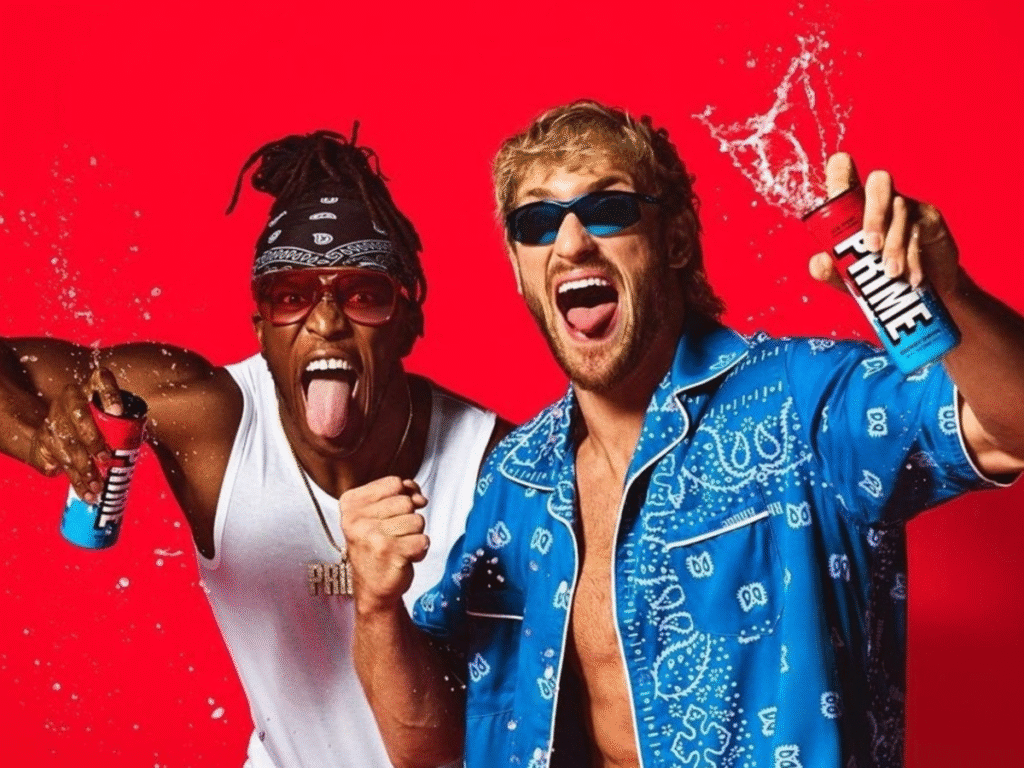
Many of today’s top YouTubers no longer rely solely on ad revenue. They’ve expanded into merchandise lines, apps, global licensing deals, live tours, and even professional sports careers. From Logan Paul building an empire with PRIME and WWE, to Dude Perfect turning trick shots into stadium shows, and family channels like Vlad and Niki launching their own toys and mobile games — these creators demonstrate that YouTube is often just the starting point. Below, we’ve highlighted more of the platform’s top figures and their estimated net worths:
- Logan Paul (~$150 Million): Once seen as just another YouTuber chasing views, he’s now one of the biggest crossover success stories of the digital age. From pulling off viral boxing events that bring in millions to stepping into the WWE ring, Logan Paul knows how to keep the spotlight on him. His biggest money maker, though, is PRIME Energy Drink, co-founded with KSI, which has become a global sensation and is sold in major retailers. Along with his Impulsive podcast and investments, Logan has transformed his channel into just one part of a much larger empire.
- Dude Perfect (~$100 Million): Few groups have captured the true joy of fun like Dude Perfect. Starting with trick-shot videos in their college backyard, they’ve grown into a family-friendly brand with arena tours, branded gear, books, and plans for a sports and entertainment complex. Their ability to stay fresh and relevant has made them one of the most successful YouTube collectives.
- PrestonPlayz (~$25 Million): Gaming may be crowded on YouTube, but PrestonPlayz has carved out his own niche with energetic Minecraft adventures, challenge content, and pranks that kids love. His success isn’t limited to just one channel — with multiple spin-offs, server ventures, and a busy merch line, he’s grown his brand into something much larger than a single gamer recording in front of a screen. It’s proof that smart diversification is the key to lasting success online.
- T-Series (~$500 Million as a company): With over 265 million subscribers, T-Series is not just a YouTube channel — it’s a major Bollywood powerhouse globally. The company uses its channel as a hub for distributing music videos, film soundtracks, and trailers, garnering billions of views every month. Its strength lies in its scale: continuous uploads, extensive international reach, and deep ties to India’s entertainment industry. While it may lack the personality-driven charm of other channels, its sheer dominance in metrics and ad revenue makes it a class of its own.
- Like Nastya (~$100 Million): What started as toy-unboxing clips has become a global children’s entertainment brand. Like Nastya’s colourful videos—featuring skits, family adventures, and education—are now dubbed in multiple languages, reaching kids worldwide. Beyond YouTube, her toys, apps, and licensing have made her one of the richest child influencers, resembling a modern children’s TV network rather than just a YouTube channel.
- 김프로 (KIMPRO) (~$120 Million): In South Korea, few digital personalities match Kimpro’s reach. Blending humour, lifestyle content, and cultural commentary, his videos reflect the essence of modern Korean entertainment while resonating with international audiences as well. With over 100 million followers across his platforms, he has secured numerous brand endorsements, sponsorships, and partnerships that have made him a household name. His ability to bridge cultures has established him as one of the most financially successful creators in Asia.
- Vlad and Niki (~$88 Million): Colourful backdrops, toy adventures, and imagination fuel this children’s channel run by two brothers and their family. With billions of views, they’ve expanded into apps, toys, clothes, and licensing, making them one of the biggest children’s brands on YouTube. Parents find them safe, entertaining, and repayable, keeping Vlad and Niki popular worldwide.
Who is the highest-paid YouTuber in 2025?
That spot belongs to MrBeast (Jimmy Donaldson), whose combination of viral challenges, philanthropy, and high-budget productions keeps him well ahead of the competition. His ad revenue is huge, but much of his wealth also comes from side ventures like Feastables and MrBeast Burger, as well as sponsorships and brand deals. Overall, he earns tens of millions each year.
How do YouTubers make money besides ads?
Most creators don’t solely depend on YouTube’s ad revenue. Prominent figures make money through sponsorships, merchandise sales, channel memberships, live tours, licensing, and even ventures outside the platform. For instance, Ryan’s World offers toy lines in major stores, while Logan Paul and Jake Paul have turned their influence into energy drinks and boxing careers.
Can anyone become a successful YouTuber?
Yes — but it’s not easy. Success typically relies on consistency, niche targeting, and building a loyal community. While not everyone will achieve multi-millionaire status, creators who produce engaging content and diversify income streams have the best chance at long-term success.