














Motors

Airspeeder MK4 Unveiled: The World’s Fastest Crewed Flying Car Has Taken Flight

Reading Time: 5 minutes

Share via

Our team of editors and experts thoughtfully chooses each product. If you decide to buy through one of our links, we may earn a commission. Learn more. Want to know how we test products? Click here for more details.

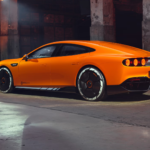
Get ready because the future of transportation has just received a serious adrenaline boost! Alauda Aeronautics has unveiled the Airspeeder MK4, the world’s fastest crewed flying car—and it’s every bit as exhilarating as it sounds. Produced in Adelaide, South Australia, at the world’s first dedicated eVTOL (electric Vertical Take-Off and Landing) flying car factory, this groundbreaking machine is designed for one purpose: racing. And it does so with jaw-dropping speed.

How fast, you ask? The Airspeeder MK4 accelerates from 0 to 360 km/h (225 mph) in just 30 seconds, showcasing its agility along with its power. However, this isn’t just a flashy display of technology—it’s a significant step into a future where flying cars are no longer just a sci-fi fantasy.

Airspeeder MK4 | Image: Alauda Aeronautics

The MK4 features a cutting-edge 1,000 kW hydrogen-electric propulsion system, making it not only incredibly fast but also eco-friendly. Powered by green hydrogen fuel, it blends speed with sustainability, providing safe, long-distance flights with a range of up to 300 km (188 miles). Imagine such a powerful machine flying at low altitudes, gliding through the air with unmatched precision.

Matt Pearson, CEO of Alauda Aeronautics, is confident the Airspeeder MK4 is a game-changer:

We, and the world, are ready for crewed flying car racing. Now is the time for the world’s most progressive, innovative, and ambitious automotive brands, OEM manufacturers, and motorsport teams to be part of a truly revolutionary new motorsport.

In Shortly, Alauda isn’t just constructing a racing vehicle—they’re laying the foundation for an entirely new motorsport. The Airspeeder Racing Championship is set to debut in 2024, and it’s already capturing attention with its promise of thrilling, blade-to-blade aerial battles.

Airspeeder MK4 | Image: Alauda Aeronautics

The Airspeeder MK4 builds on the success of its predecessor, the remotely piloted MK3, which completed over 350 test flights and two demonstration races in 2022. Now, with a crewed version ready to take to the skies, Alauda is taking the next significant step toward its ultimate goal: making flying cars a reality for everyone.

However, this isn’t solely about racing. Alauda’s engineering team, featuring experts from Airbus, Boeing, Ferrari, and McLaren, envisions a future where flying cars are as commonplace as private jets. Pearson regards this as the natural evolution of transportation, predicting a world where personal flying vehicles surpass taxis and transform urban mobility.

What sets the MK4 apart isn’t just its blistering speed or sleek design—it’s the mission behind it. Alauda is using the Airspeeder Racing Championship as a testing ground for sustainable propulsion systems, aiming to create cleaner, more efficient technologies that could one day transform how we all travel.

The potential is immense, and the excitement is genuine. Alauda is challenging automotive brands, tech firms, and motorsport enthusiasts to embrace this daring new frontier. With a substantial international fanbase and interest from the world’s top pilots, the Airspeeder MK4 is set to redefine how we perceive racing—and transportation as a whole.

For now, the Airspeeder MK4 is a remarkable racing vehicle, but its influence could be significant. Alauda Aeronautics is paving the way for a future where flying cars are no longer merely the stuff of Hollywood blockbusters. The skies are opening up, and the MK4 is leading the way.

Airspeeder MK4 | Image: Alauda Aeronautics

About the Author
Previous Post
Nintendo Switch 2 Is Coming in 2025—And It’s a Game-Changer
Next Post
TOYOTA GAZOO Racing at Tokyo Auto Salon 2025

Related Articles

Polaroid Introduces the Analogue ‘Flip’ Camera for the Summer Season

Reading Time: 4 minutes

Our team of editors and experts thoughtfully chooses each product. If you decide to buy through one of our links, we may earn a commission. Learn more. Want to know how we test products? Click here for more details.

  • Launches on 13 May with pricing set at USD $219, with early access available for Polaroid members.
  • Features a four-lens system with sonar autofocus, exposure alerts, and a powerful built-in flash to help every shot counts.
  • Designed for everyday use, supporting up to 15 film packs per charge, with a tripod mount, snap-on lens filter support, a rechargeable battery, and a neck strap included.

If you’ve ever missed the feeling of simply pointing a camera, pressing a button, and waiting for a photo to develop in your hands, Polaroid’s latest release will feel instantly familiar. The Analogue ‘Flip’ captures the spirit of the 1970s and 1980s, when instant photography wasn’t about perfection or filters, but about capturing moments as they were. It brings back that sense of anticipation—the kind where you actually cared about the photo because you only had one shot to get it right.

Available on 13th May and priced at USD $219, it is designed for a more relaxed pace, just in time for summer, returning to its roots by simplifying photography to its essentials. There’s no need to rush and take multiple shots of the same scene. It encourages you to pause, line things up, and commit—something that’s becoming increasingly rare in a world full of endless camera rolls and instant previews.

Using i-Type and 600 film, the Flip produces physical prints just moments after you press the shutter. Each film pack limits the number of photos you can take, and that’s very much intentional. You start paying more attention to the light, the angle, and the people in front of you. You don’t just take photos—you choose them. And that’s the quiet charm of the Flip: it reminds you that sometimes, the best photos happen when you slow down enough to notice the moment before it passes.

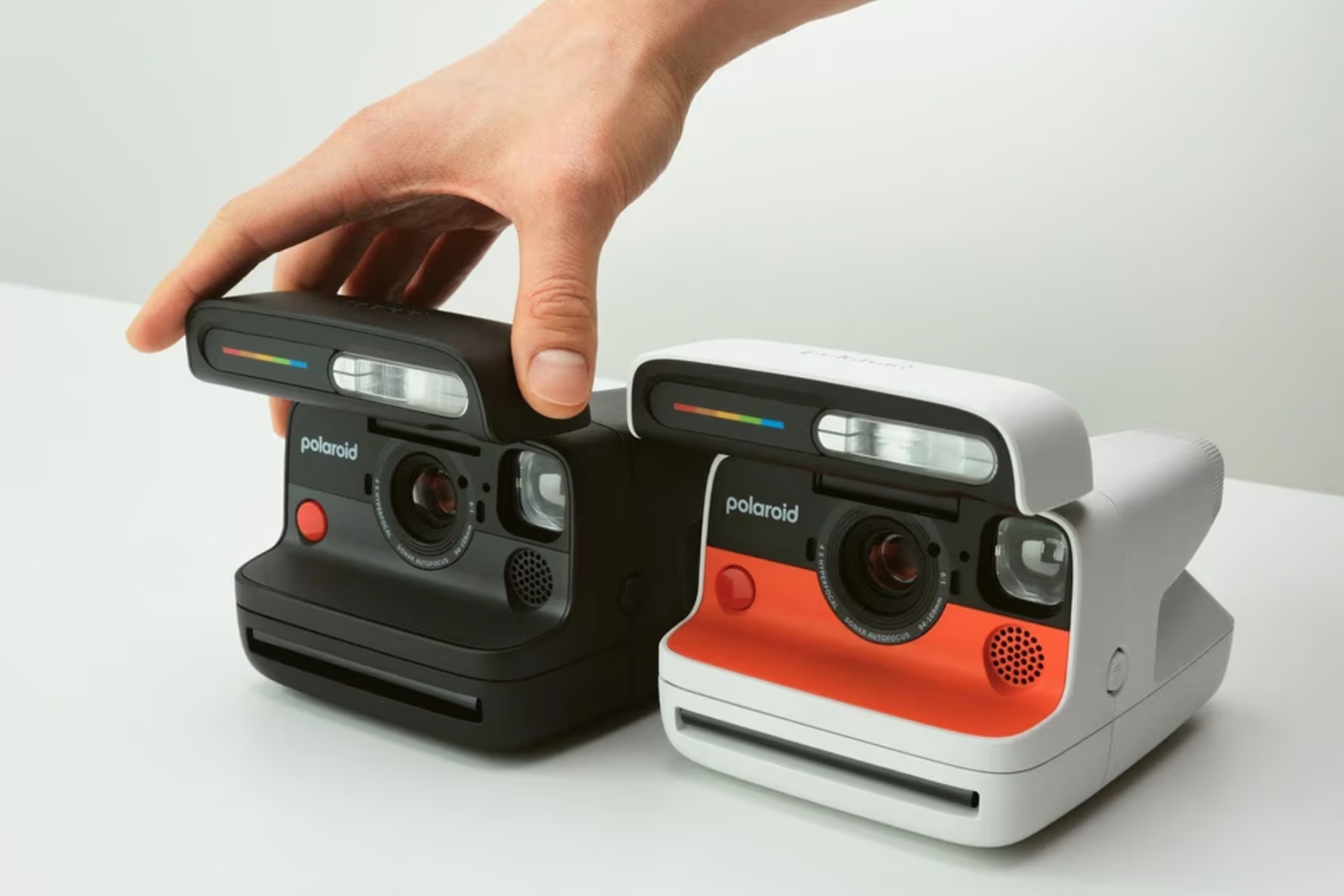
Polaroid Flip | Image: Polaroid

Behind the Flip’s retro exterior, there’s a surprisingly thoughtful design aimed at making every shot count. Polaroid has outfitted the camera with a four-lens system built to consistently produce sharp images, automatically adjusting to find the right focus “sweet spot” based on the distance to your subject. It all happens quietly in the background, allowing you to stay focused on the moment rather than the mechanics.

The camera also monitors exposure for you. Subtle alerts notify you if a shot might be under- or overexposed before you press the shutter, helping you avoid wasted frames. Focus is controlled using sonar-based autofocus, which measures distance instead of relying solely on light—allowing it to lock onto your subject even in low-light conditions.

That system works hand-in-hand with a powerful built-in flash, giving the Flip enough confidence to handle evening scenes and indoor settings without feeling out of its depth. It’s a thoughtful balance of analogue charm and modern support, ensuring the few photos you take are worth keeping.

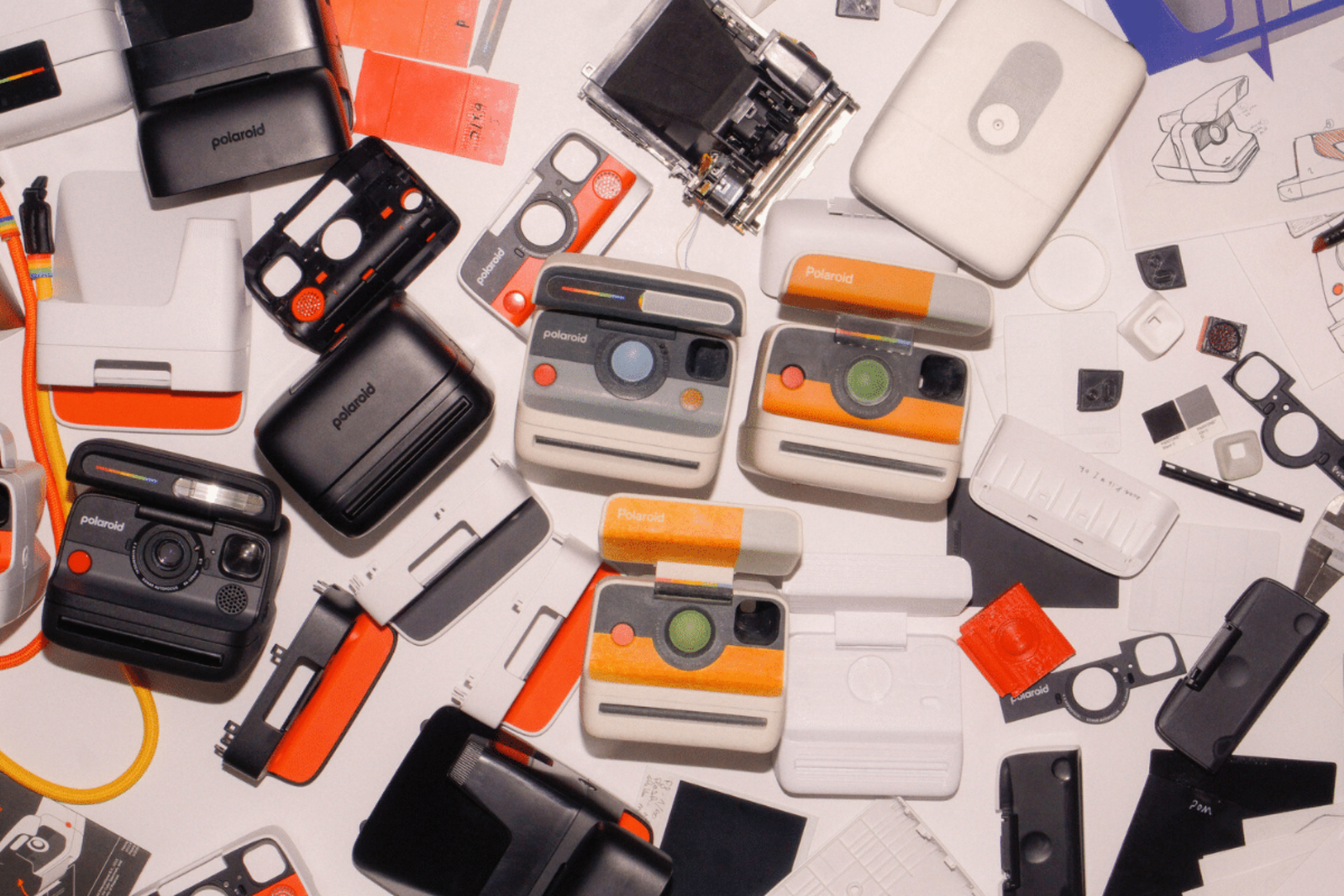
Polaroid Flip | Image: Polaroid

When you’re shooting through the viewfinder, the Flip provides gentle guidance without interfering. The camera will alert you if a shot is likely to be underexposed, overexposed, or if your subject is too close to the lens—small prompts that can save you from wasting that last frame in the pack, which is interesting to consider as feedback.

If you want a bit more control, the Flip also works with the Polaroid app. From there, you can adjust settings, change how the camera operates, or even trigger the shutter remotely. It’s a handy feature for group shots, selfies, or moments when you want to be in the shot yourself—proof that while the Flip favours analogue thinking, it’s not afraid to adopt some modern conveniences when they actually make sense.

As mentioned earlier, the Analogue ‘Flip’ is scheduled to launch on 13 May with a price of USD $219. Polaroid members may have the opportunity to purchase one a little earlier through Polaroid’s own store. The camera is designed to be easy to use. A single charge is expected to last through up to 15 film packs. It includes a built-in tripod mount for more considered shots and a snap-on lens filter for quick creative adjustments. With a rechargeable battery and an included neck strap, the Flip feels purpose-built for outdoor use, passing around, and using without overthinking it.

About the Author

Related Articles

arrow_drop_up