

























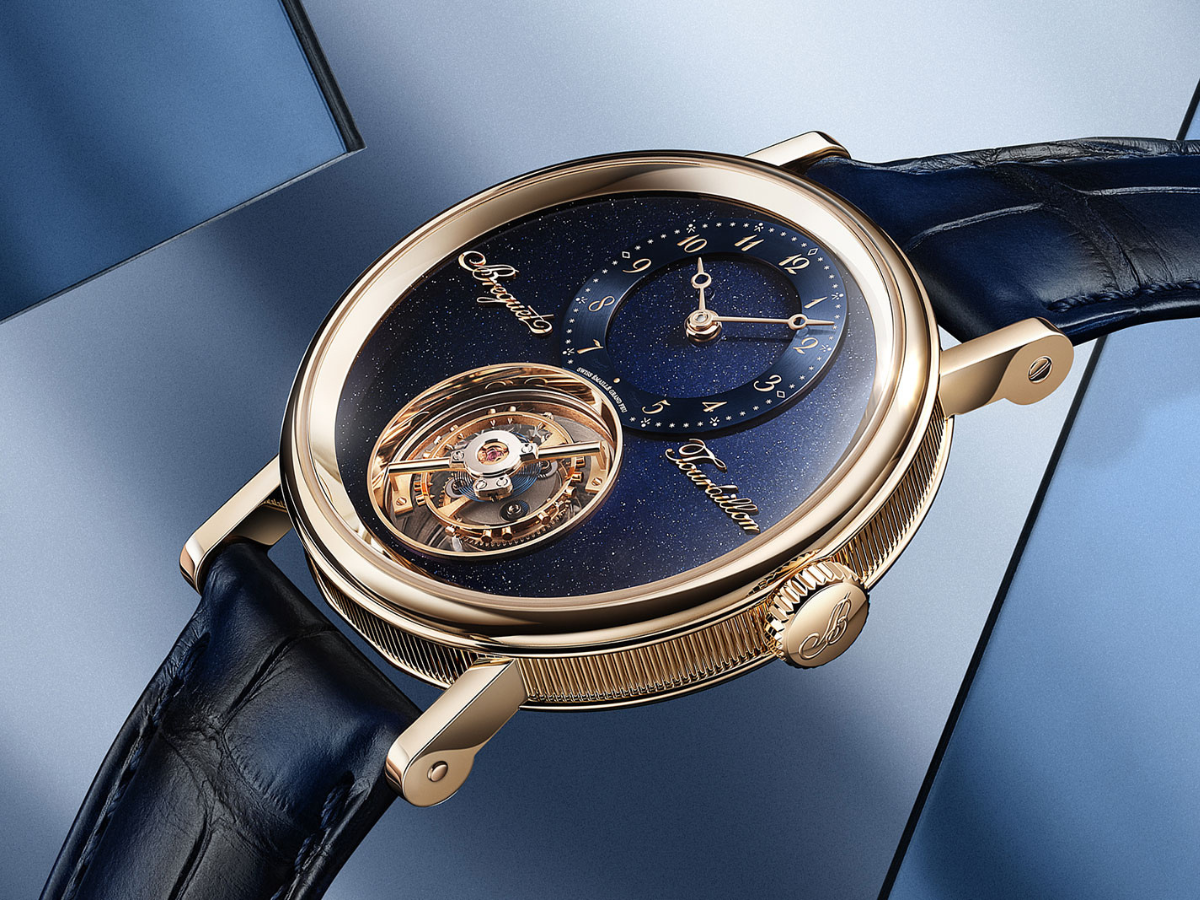

- Breguet continues its 250th-anniversary celebrations with the unveiling of the Classique Tourbillon Sidéral 7255, a highlight in the maison’s commemorative collection.
- This model marks a historic milestone as the first Breguet creation to feature a flying tourbillon, an evolution of the complication that enhances its weightless, celestial aesthetic.
- Launched on 26 June 2025, the timepiece intentionally mirrors the date Abraham-Louis Breguet secured the tourbillon patent in 1801, creating a symbolic bridge across centuries.
- Limited to just 50 pieces, this the Classique Tourbillon Sidéral 7255 stands as one of the first creations in Breguet featuring a “flying tourbillon”.
Marking a moment that feels both cosmic and deeply historical, the Classique Tourbillon Sidéral 7255 arrives as Breguet approaches its 250th anniversary — a milestone tied back to the maison’s founding in 1775. Rather than simply revisiting its heritage, Breguet uses this occasion to unveil a timepiece that pushes its legacy: the brand’s first-ever flying tourbillon, a mechanism long associated with its identity yet never before realized in this form. Years of quiet development have shaped this new construction, giving the tourbillon an almost weightless presence, as if it were suspended in orbit.
The release date adds another layer of significance. Presented on 26 June 2025, the Sidéral 7255 arrives exactly 224 years after Abraham-Louis Breguet patented the original tourbillon, a moment that reshaped the future of mechanical watchmaking. By choosing this date, the maison doesn’t just honour its founder — it extends his work into a new chapter, blending innovation with reverence in a way only Breguet can achieve.
This isn’t your ordinary dial; Breguet introduces something entirely new to the brand’s collection. For the first time, Breguet uses aventurine enamel, a material chosen for its celestial sparkle and its connection to the astronomical studies that once fascinated Abraham-Louis Breguet. Its deep blue surface glows with a star-like brilliance, creating a cosmic backdrop for the newly liberated tourbillon. Together, the airborne mechanism and the night-sky enamel transform this timepiece into more than just a commemorative piece — it becomes a poetic bridge between centuries of horological mastery and the future Breguet continues to shape.
The name “Sidéral” is no poetic coincidence. In astronomical terms, it refers to measurements guided not by the sun but by the fixed constellations — a nod to timekeeping rooted in the stars rather than the day’s light. Breguet intentionally embraces that celestial meaning, weaving the idea of cosmic precision throughout the Sidéral 7255. It’s a reminder that long before Abraham-Louis Breguet reshaped horology, humanity looked to the heavens to define the passing of time, trusting the constancy of the night sky.
That astronomical thread persists through the tourbillon itself. While the complication is now celebrated for its mechanical elegance, its roots intersect with scientific thought from centuries earlier. In the 17th century, Blaise Pascal expanded on the word “tourbillon,” describing it as a rotating material system — a concept he connected to the motion of planets. That philosophical link has never truly faded. Even today, the tourbillon maintains a subtle connection to celestial mechanics, evolving in shape but still echoing the rotational harmony observed above us.
Which brings us to the highlight of this anniversary timepiece: the flying tourbillon. Unlike the traditional design supported by an upper bridge, this version is mounted without visible anchoring from above, creating the illusion that the mechanism is floating freely within its cage. On the Sidéral 7255, it hovers over the dial with a purposeful lightness — a mechanical constellation of its own, rotating in space as if unaffected by gravity. It’s a stunning visual, and a fitting tribute to both the astronomical origins of the tourbillon and Breguet’s unwavering pursuit of refinement.

The flying tourbillon inside the Sidéral 7255 isn’t just visually striking — its construction represents a meaningful shift for the maison. Breguet chose to eliminate the traditional upper pivot entirely, building the mechanism so that all its stability comes from the base. This foundation is formed from sapphire glass treated with an anti-reflective coating, allowing the point of interaction between the gears and the carriage to nearly disappear. That architectural decision creates the uncanny illusion that the tourbillon is drifting freely above the dial, untouched by physical support — a sensation that instantly sets this timepiece apart. For Breguet, this is more than a refinement; it’s a moment of evolution, something CEO Gregory Kissling acknowledges as a first in the brand’s long lineage.
“It is, quite simply, the very first time in Breguet’s history that a flying tourbillon is being introduced. A beautiful way to celebrate its 224th anniversary,” Kissling said. “And the tourbillon model we chose to reinterpret is no ordinary one: among the tourbillon movements in Breguet’s archives, it is the one used in the very first Breguet tourbillon wristwatch, unveiled in 1990 under reference 3350.
“Invented by Abraham-Louis Breguet in 1801, the tourbillon remains one of the most complex complications in watchmaking. Its mastery embodies the technical excellence to which the House of Breguet has remained faithful for more than two centuries,” the Breguet CEO continued. “The Classique Tourbillon Sidéral 7255 thus pays homage to that iconic timepiece and to the master’s invention. I would even go so far as to say that this creation is an ode to the tourbillon itself, where time indication is almost secondary…”
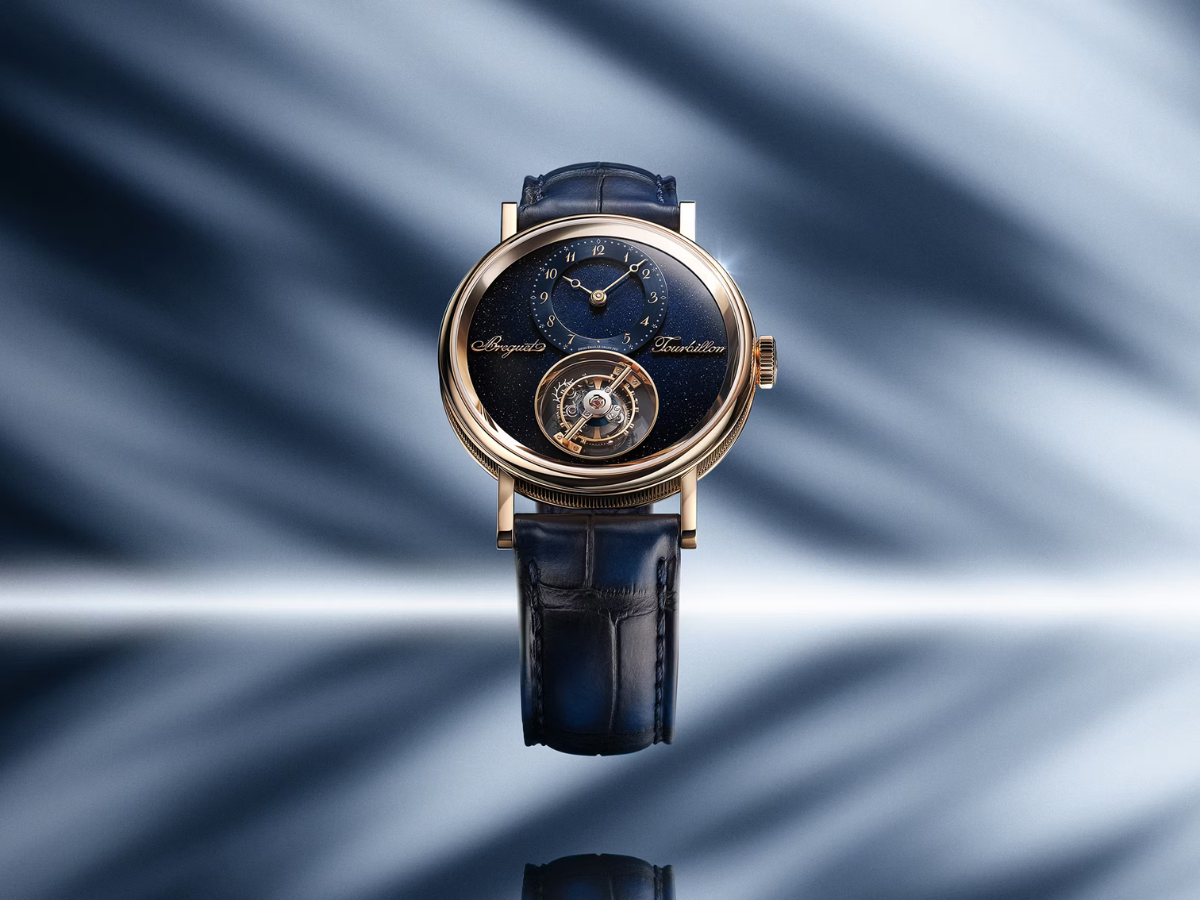
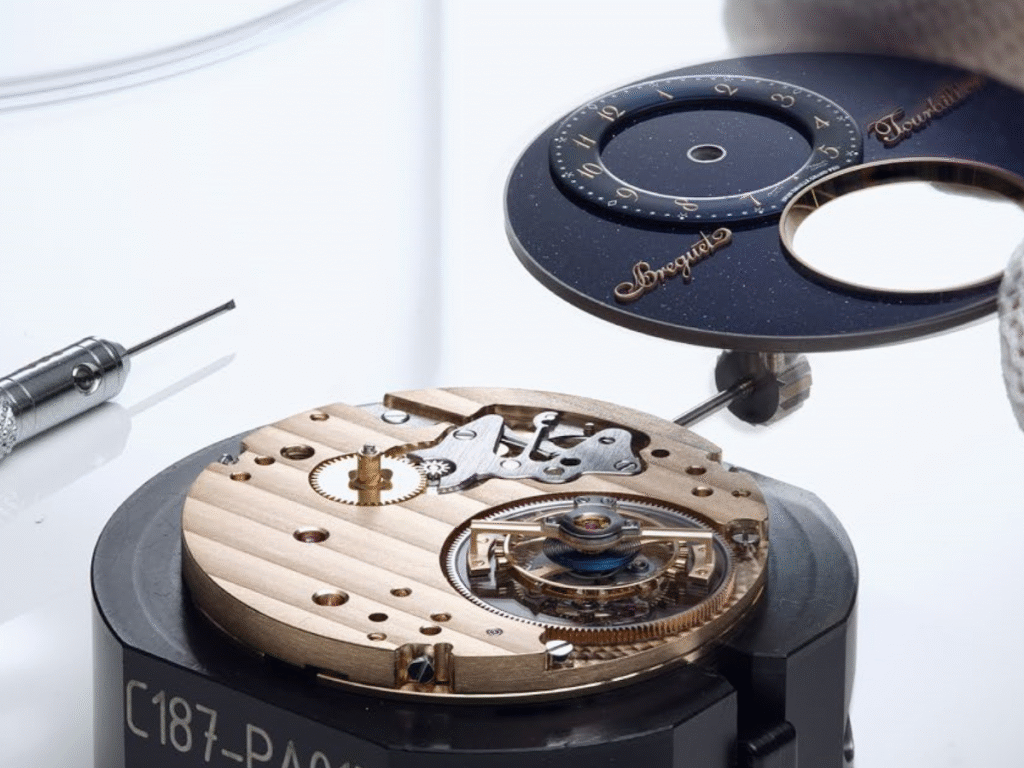
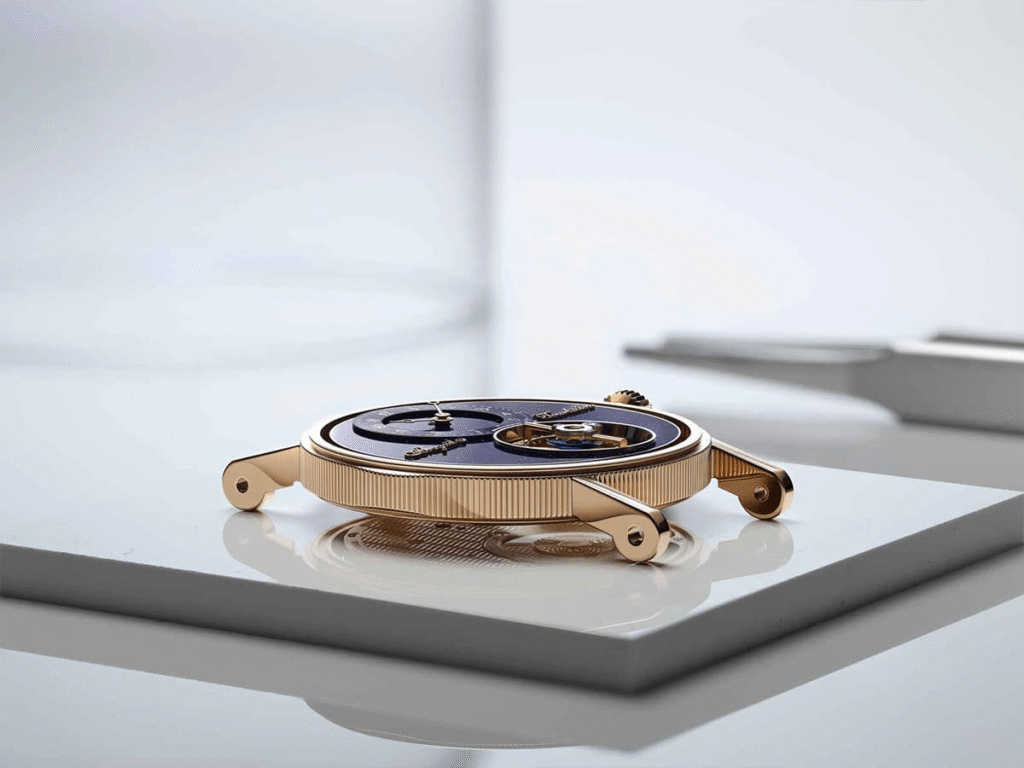
The spirit of Abraham-Louis Breguet continues to resonate through every modern creation bearing his name, and the Sidéral 7255 might be the clearest example yet. More than 200 years after the original tourbillon patent, the maison is still refining his quest for accuracy and resilience. The “mysterious” flying tourbillon shown here wasn’t something Breguet hurried into—it’s the result of meticulous development over many years, pushed until the floating effect reached the level of perfection the brand demands.
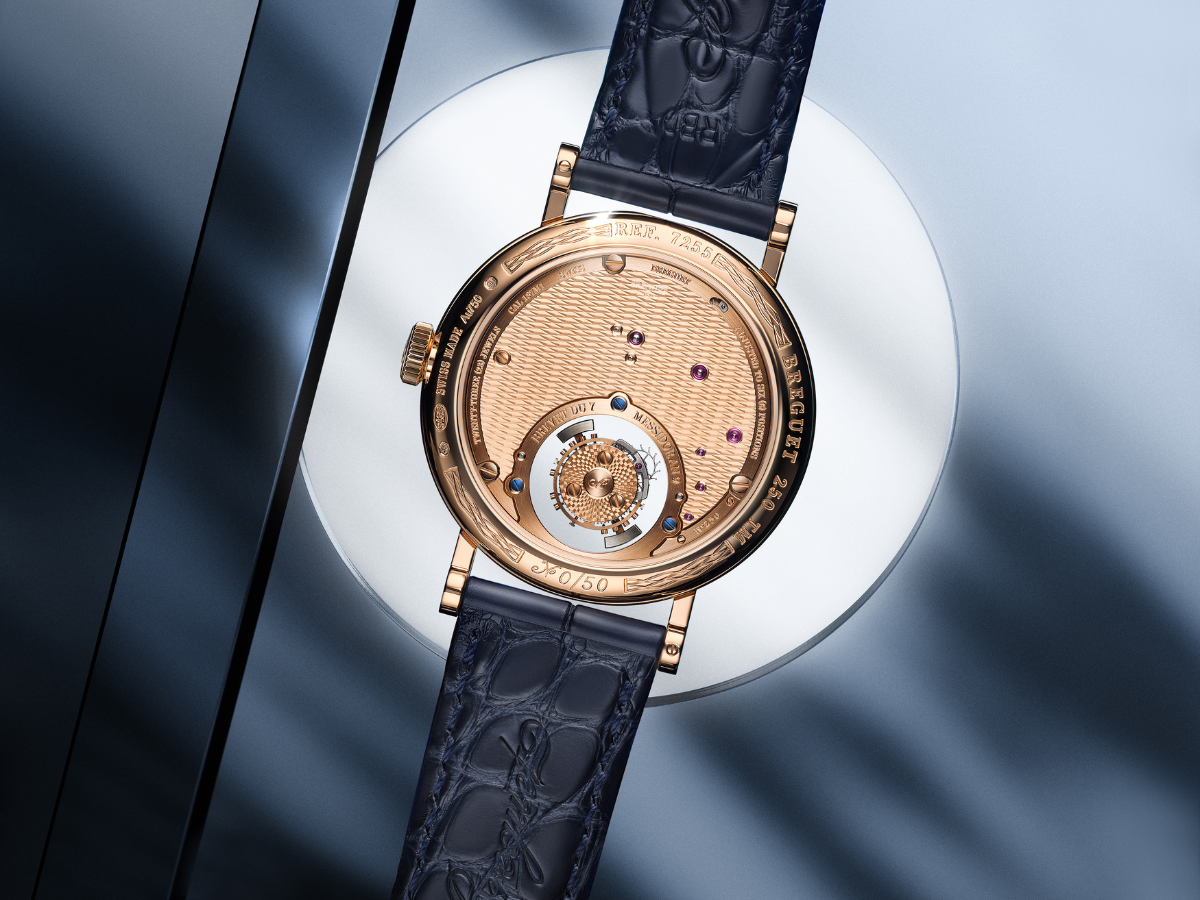
What surrounds that airborne mechanism is equally extraordinary. The Sidéral 7255 is crafted from a selection of materials chosen not only for beauty but also for significance: 18K Breguet gold components, a hand-guilloché caseback, and that captivating aventurine enamel dial whose celestial shimmer links the entire design to astronomy. Every element works in harmony, giving the timepiece both visual poetry and technical credibility.
Exclusivity defines the story. With only 50 examples to be produced and a price around USD $226,000, this isn’t just a watch — it’s a statement piece for those who appreciate its craftsmanship. Some creations are hard to put into words, much like the night sky the dial hints at. The Sidéral 7255 fits that description. If you come across one… don’t forget your favourite magazine editor.
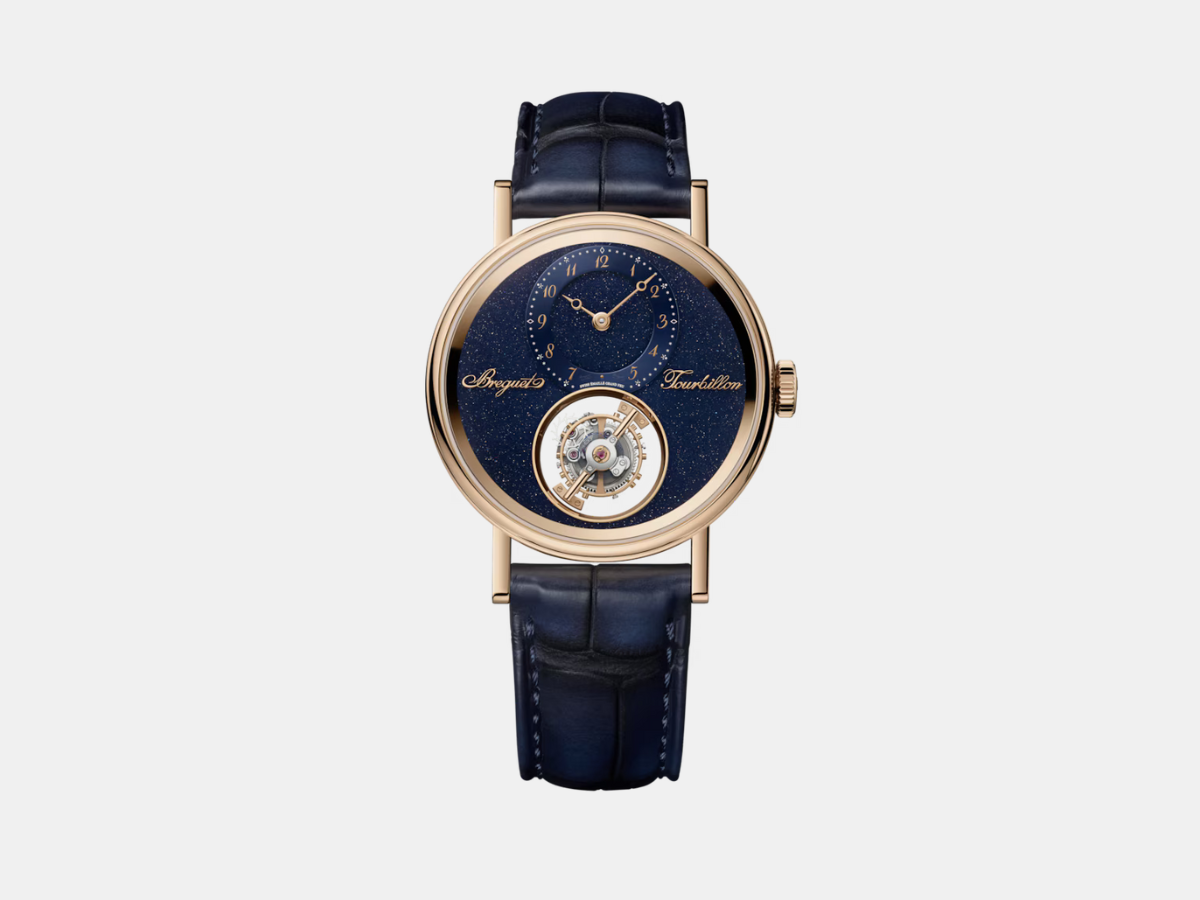
- Brand: Breguet
- Model: Classique Tourbillon Sidéral 7255
- Reference: 7255BH/2Y/9VU
- Diameter: 38 mm
- Thickness: 10.2 mm
- Material: 18K Breguet gold
- Dial Colour: Blue – Grand Feu Enamel Aventurine
- Calibre: 187M1
- Power Reserve: 50 Hours
- Water Resistance: 3 Bar (30 metres, 100 feet )
- Price: USD $226,000 (Limited Edition – 50 Pieces)