





















Our team of editors and experts thoughtfully chooses each product. If you decide to buy through one of our links, we may earn a commission. Learn more. Want to know how we test products? Click here for more details.
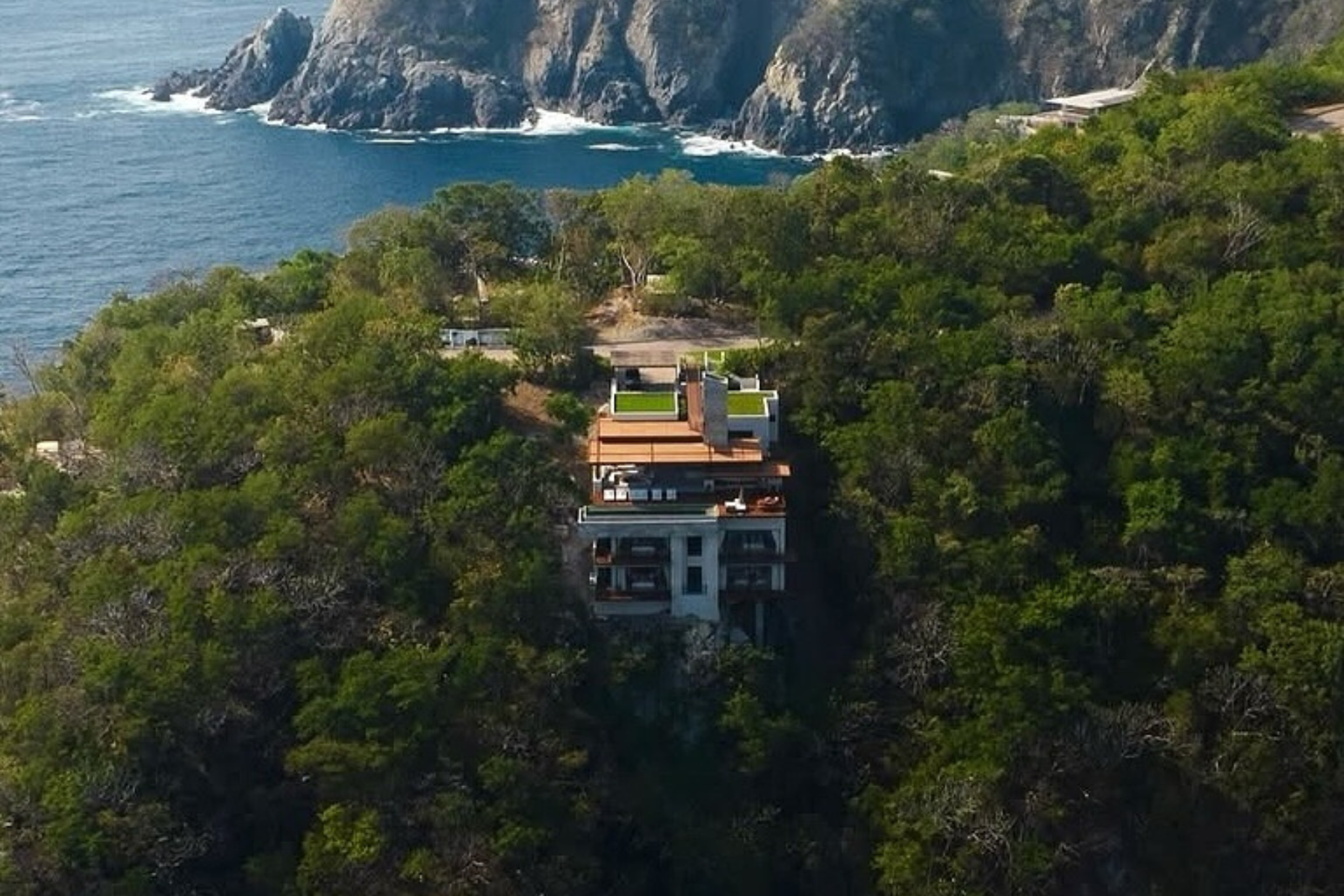
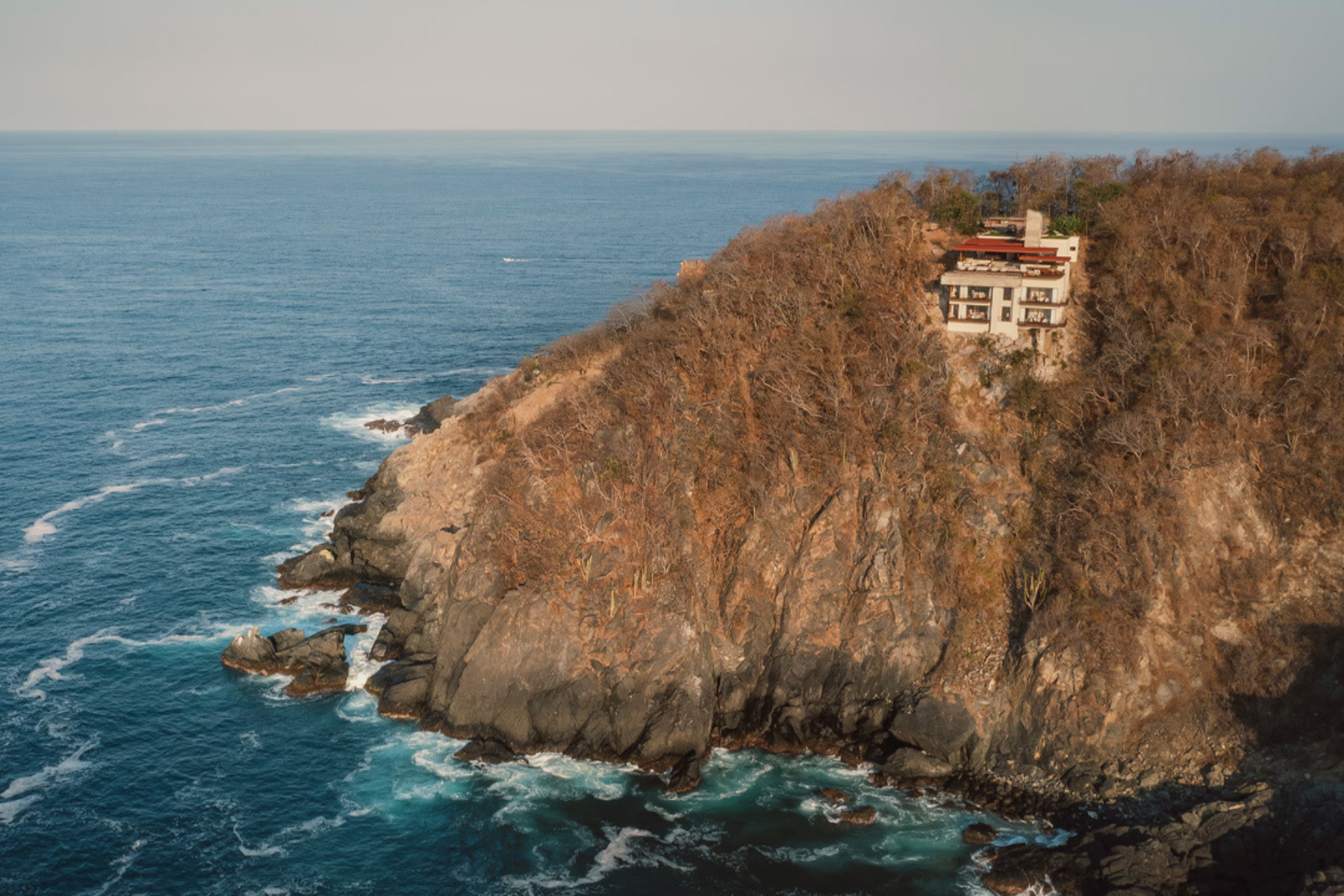
Casa Puente is a $4.5 million oceanfront villa built directly into the cliffs of Zihuatanejo, providing stunning, uninterrupted views of the Pacific.
Designed by Zozaya Arquitectos, the villa combines Mexican modernism with a Brutalist influence and features natural materials throughout.
Five bedrooms, six full bathrooms, a chef’s kitchen, a heated pool, and over 10,000 square feet of living space.
Situated in an exclusive community with access to a beach club, wellness facilities, sports courts, and a private helipad.
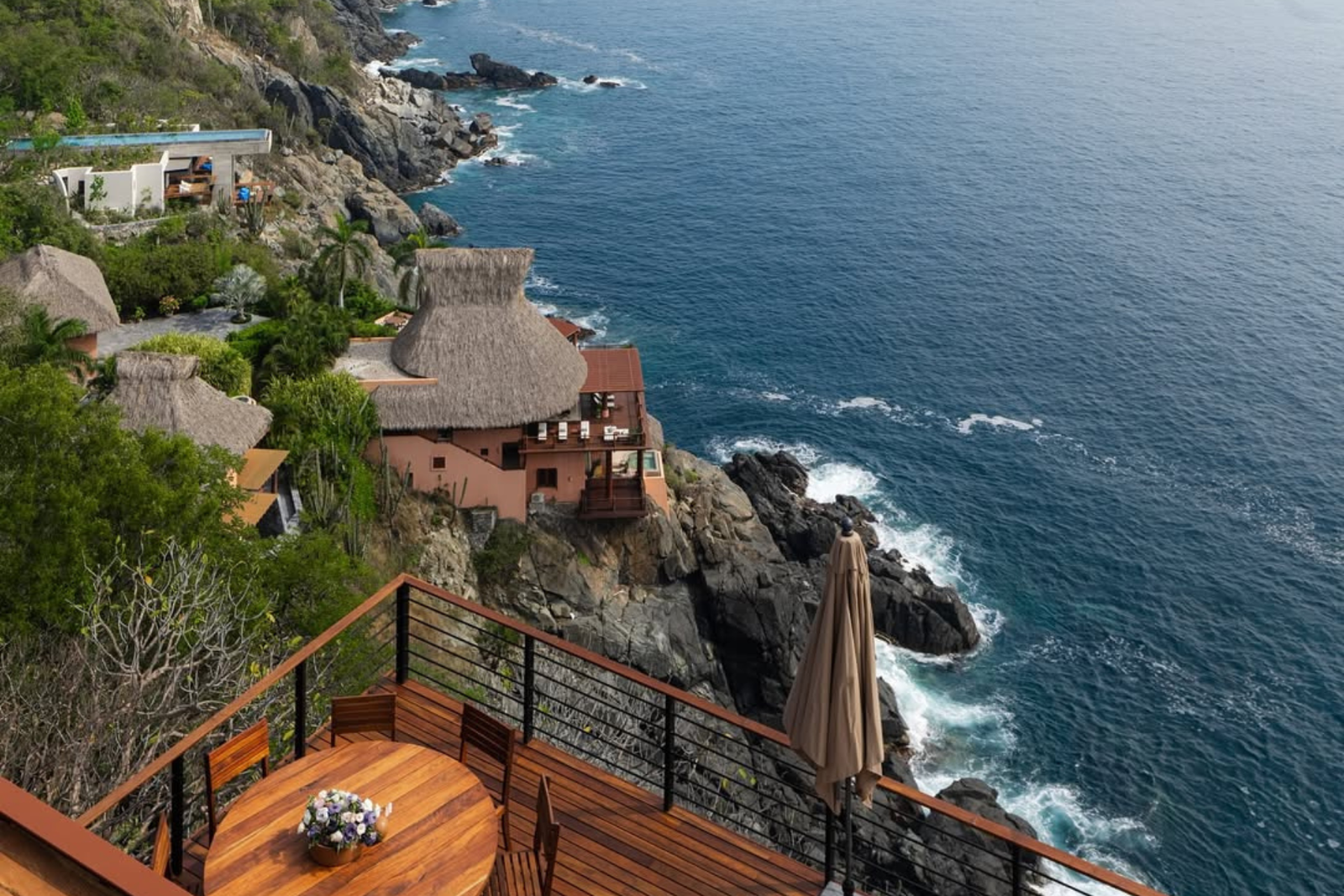
High above Mexico’s Pacific coast, Casa Puente doesn’t feel like a house you simply arrive at—it feels like one you gradually discover. Priced at $4.5 million and carved directly into the cliffs of Zihuatanejo, this oceanfront villa maintains a deliberately low profile from the road. There’s no grand driveway or architectural hint of what’s inside. Just a simple carport cut into the terrain, quietly hiding the fact that a 10,392-square-foot residence is perched above the ocean.
Casa Puente Villa in Zihuatanejo, Mexico, designed by Zozaya Arquitectos | Image: Zozaya Arquitectos
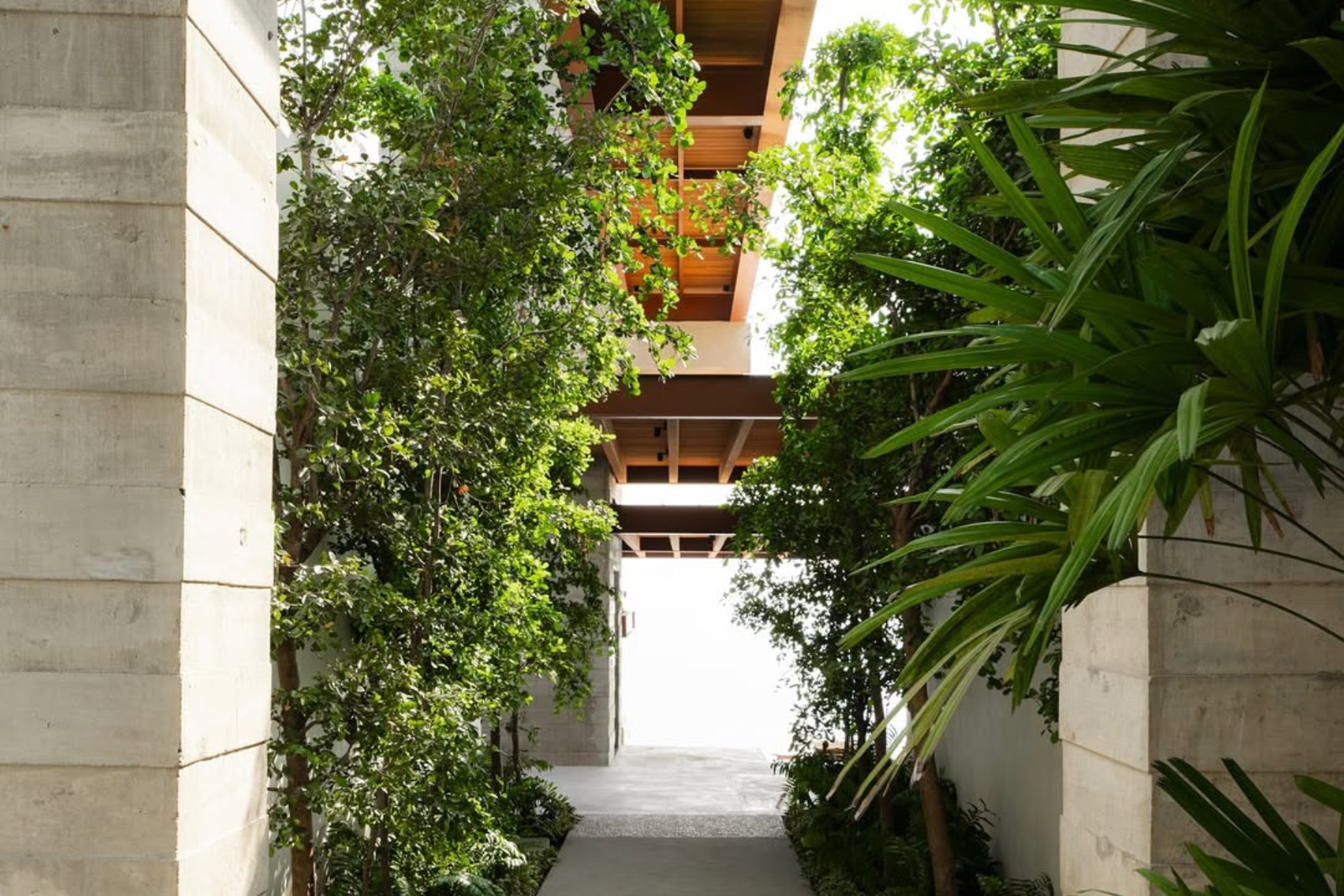
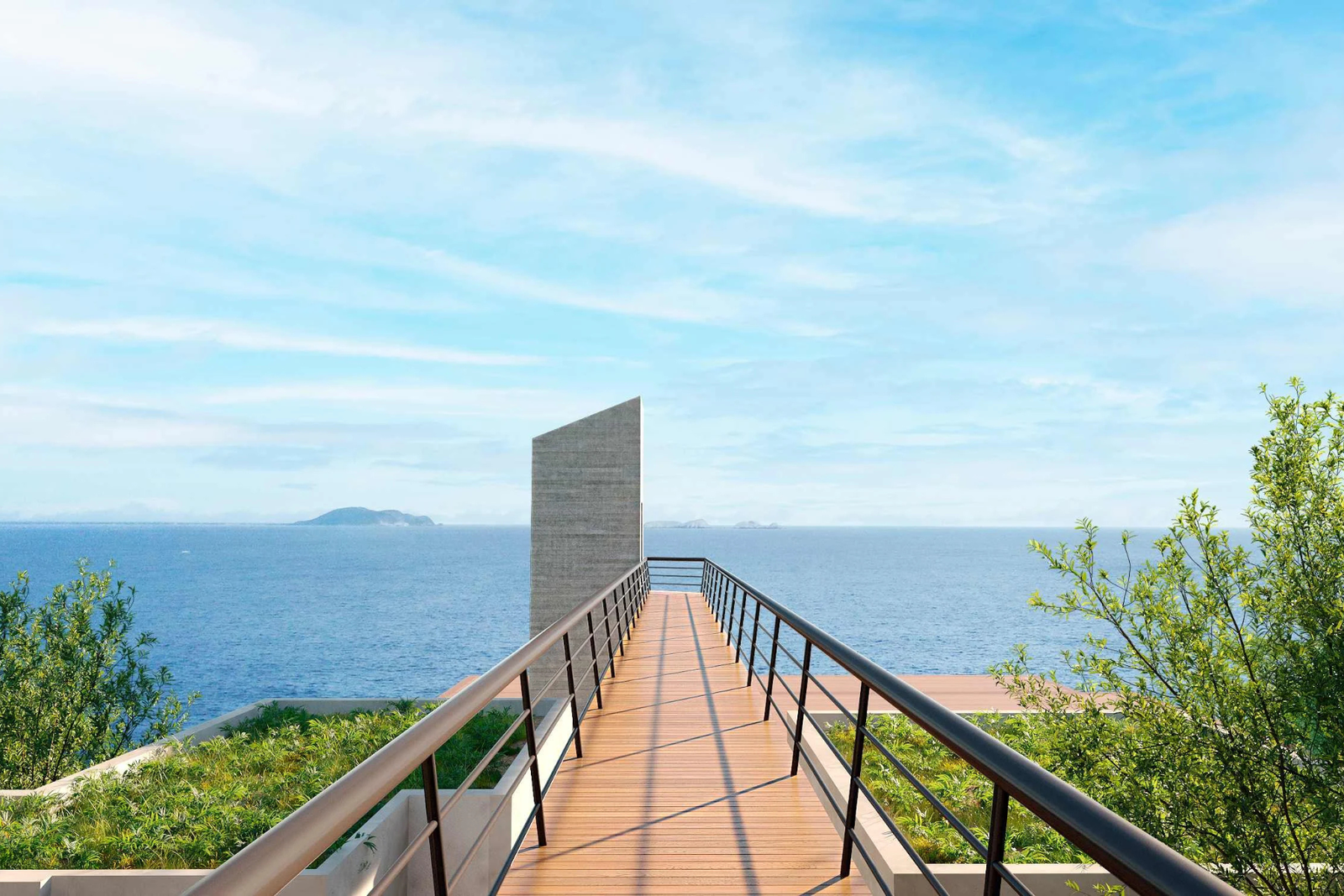
Once you walk forward and the home’s namesake comes into view: a long, narrow bridge stretching over open air, making it an unforgettable reveal. Casa Puente—literally “the bridge”—isn’t just a poetic name; it’s the defining moment of the entire experience. Stepping onto the bridge feels like leaving solid ground behind, with the cliffside dropping away beneath you and the Pacific opening up ahead. It’s calm, dramatic, and intentional all at once.
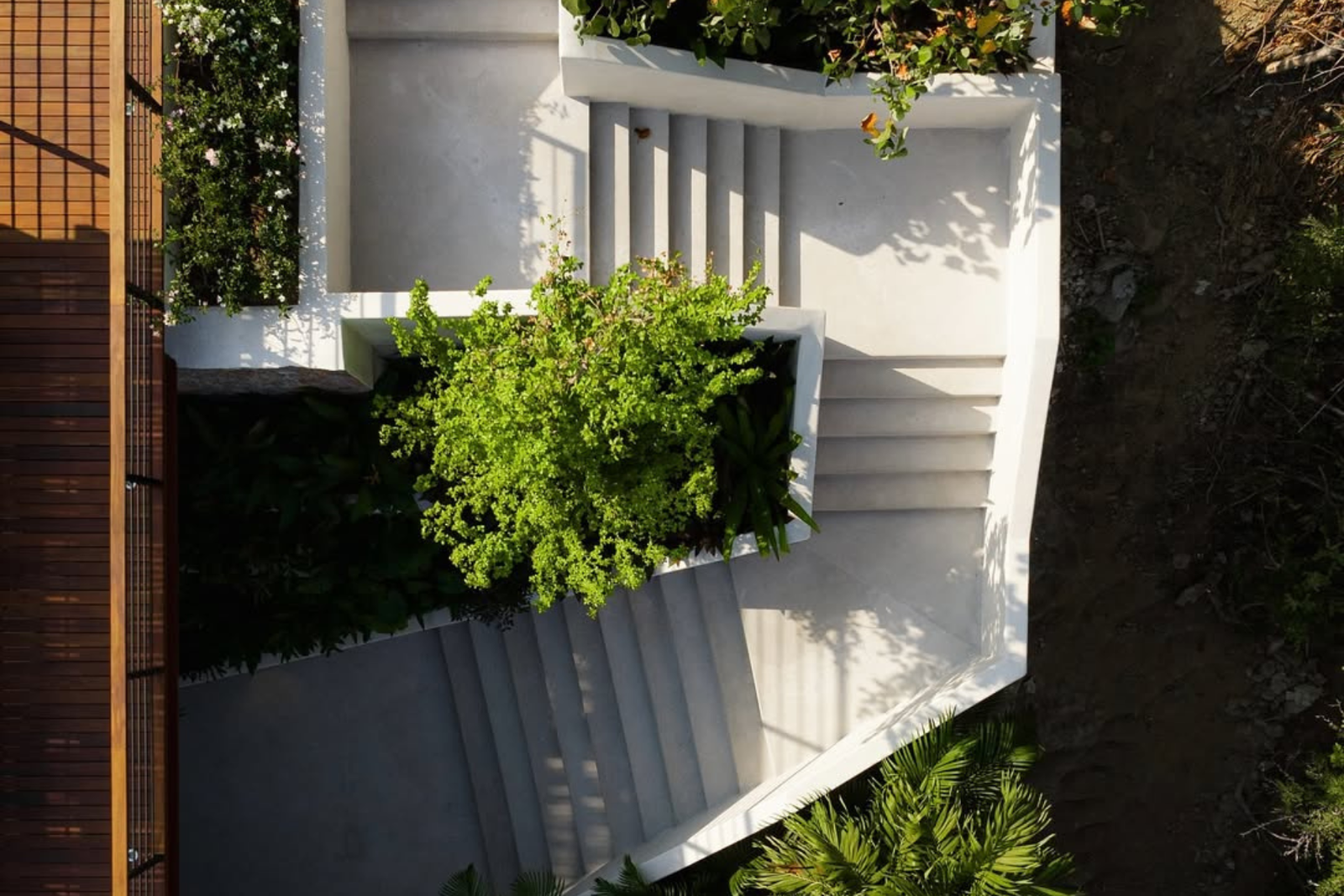
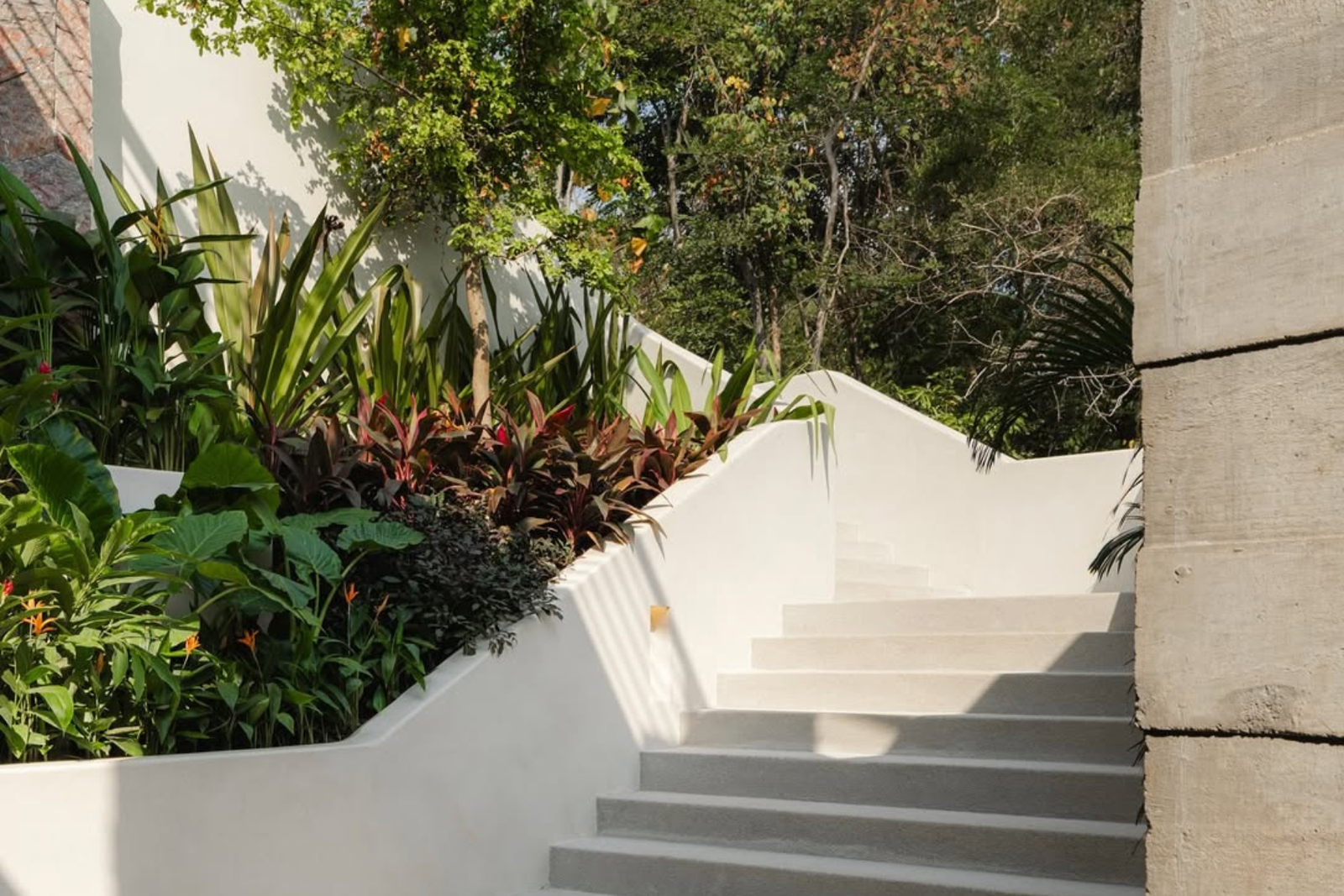
At the end of the bridge, a concrete-encased elevator built directly into the cliff takes over, lowering you through the home as it cascades toward the sea. For those who prefer to stay grounded, an exterior stairway zigzags down the rock face, offering a slower, more tactile descent with ocean views at every turn. Either route reinforces the same experience that the home offers, and it’s meant to be experienced gradually and not rushed.
Casa Puente Villa in Zihuatanejo, Mexico, designed by Zozaya Arquitectos | Image: Zozaya Arquitectos
Designed by Zozaya Arquitectos, Casa Puente showcases the studio’s thoughtful approach to combining bold forms with natural surroundings. A lush garden courtyard appears near the base of the stairs, framed by an 18-foot native stone wall that provides privacy and a calming environment. The architecture embraces Mexican modernism with a Brutalist touch—strong concrete shapes softened by warm materials and carefully balanced proportions that feel steady rather than overwhelming.
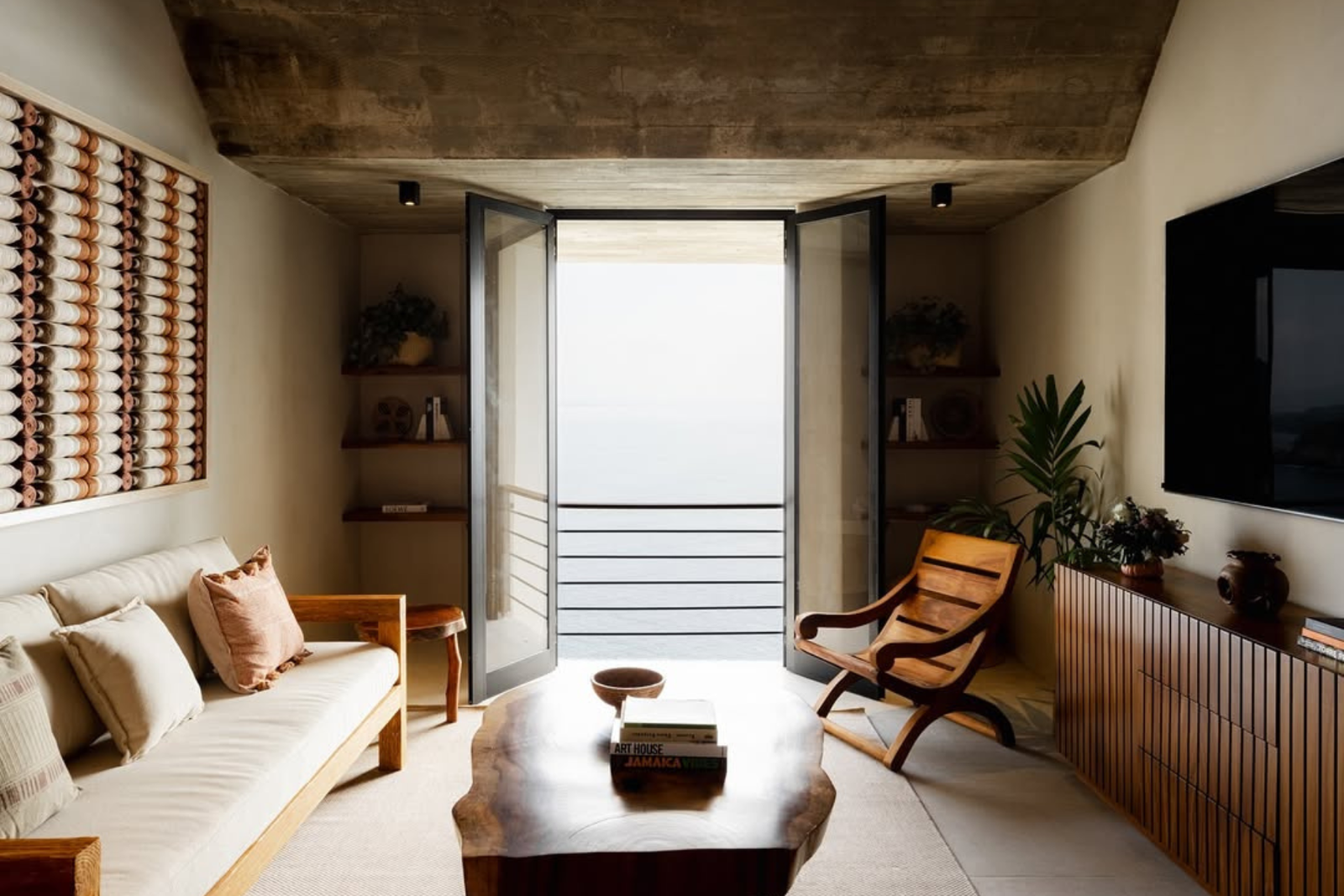
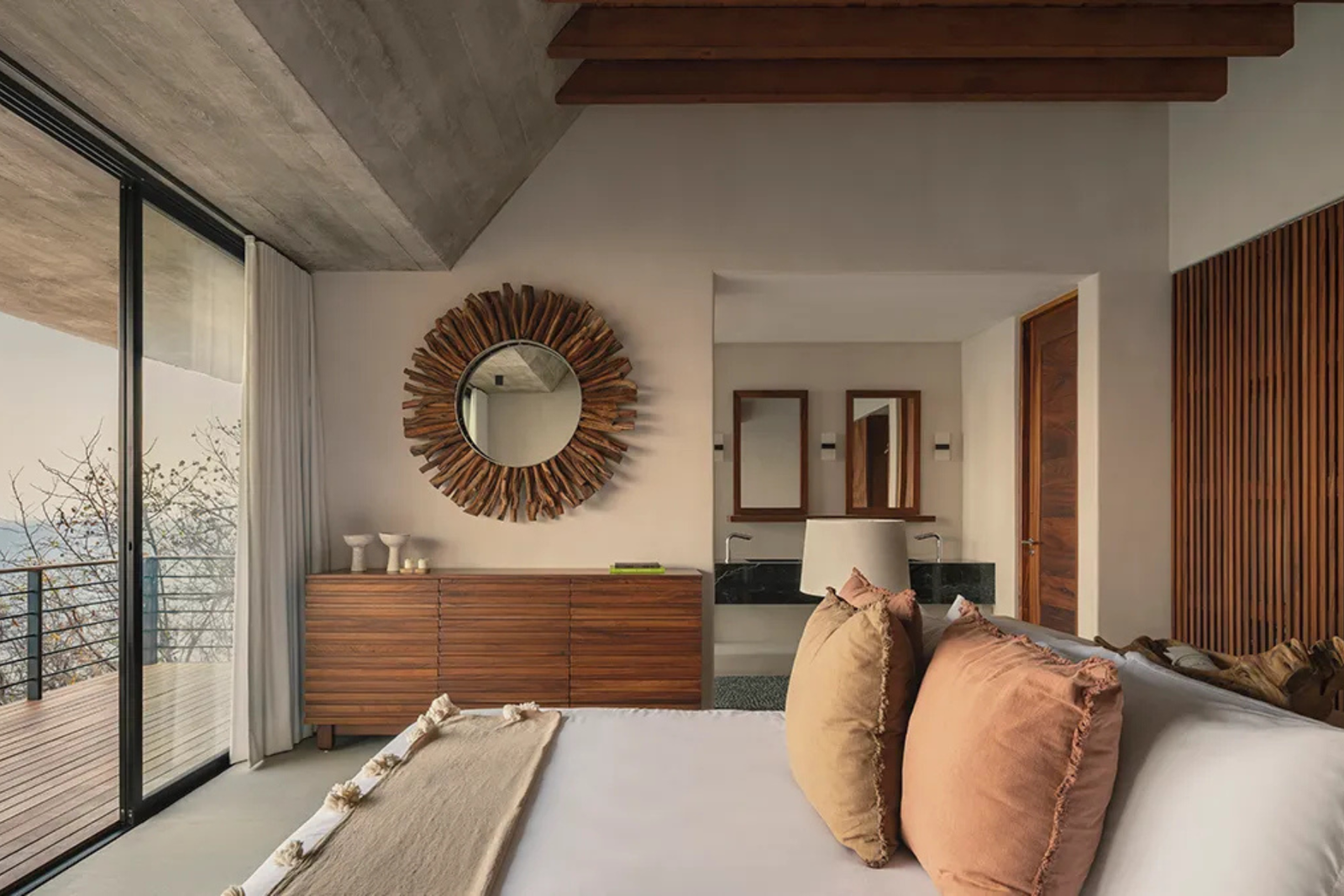
Natural finishes run throughout the villa; Ipe wood decking brings warmth underfoot, while textured Chukum stucco walls, a traditional technique rooted in ancient Mayan construction, add depth and character to the interiors. Every material feels purposeful, chosen to weather gracefully alongside the coastal environment rather than fight against it.
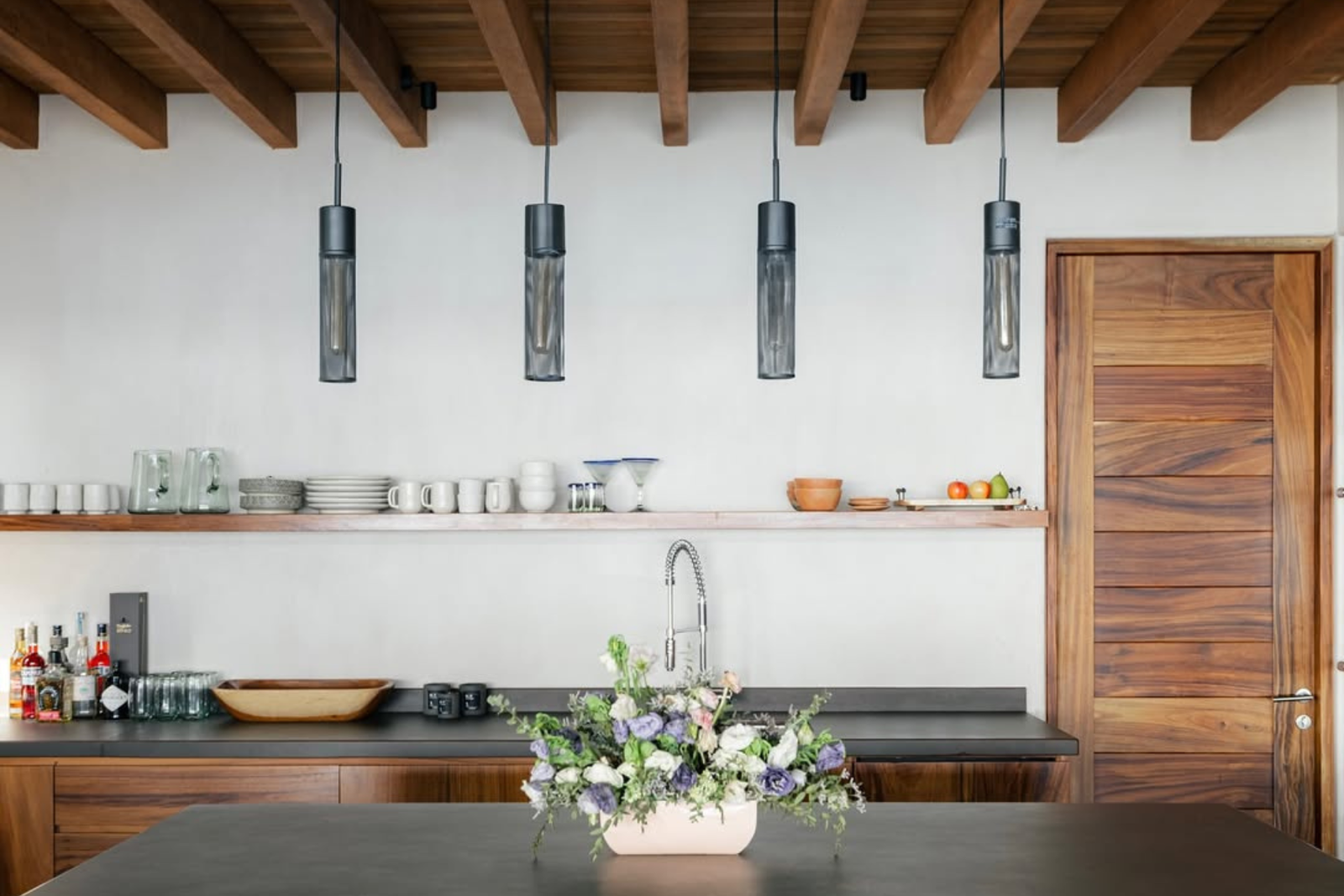
The home features five bedrooms, six full bathrooms, and an additional half bath, distributed across multiple levels to maintain privacy and a relaxed feel. The top floor is where daily life naturally happens. A beautifully finished chef’s kitchen anchors the space, flowing into the dining and living areas seamlessly. Wood paneling adds warmth, while wide openings keep the ocean front and centre—never out of sight, never overstated.
Casa Puente Villa in Zihuatanejo, Mexico, designed by Zozaya Arquitectos | Image: Zozaya Arquitectos
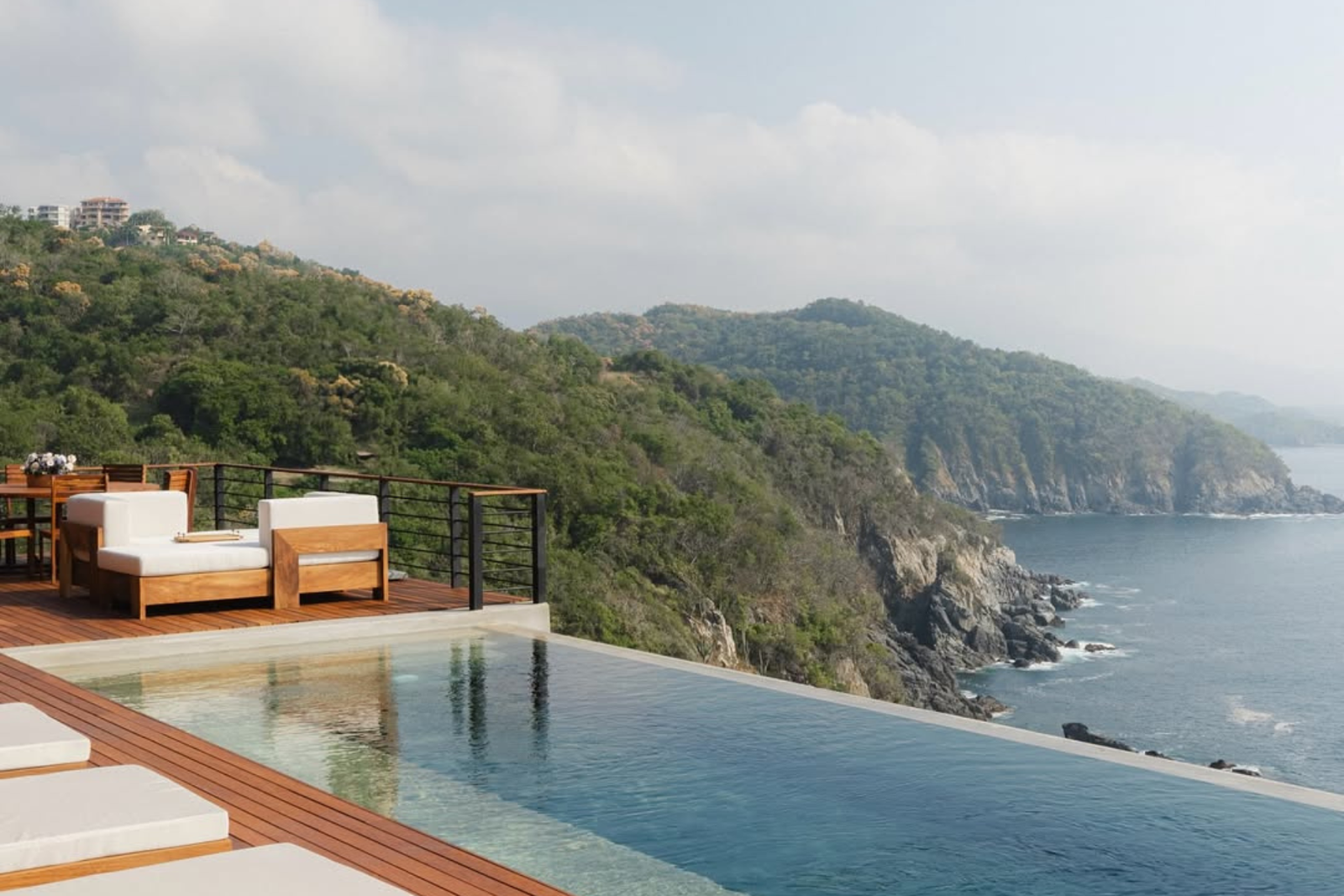
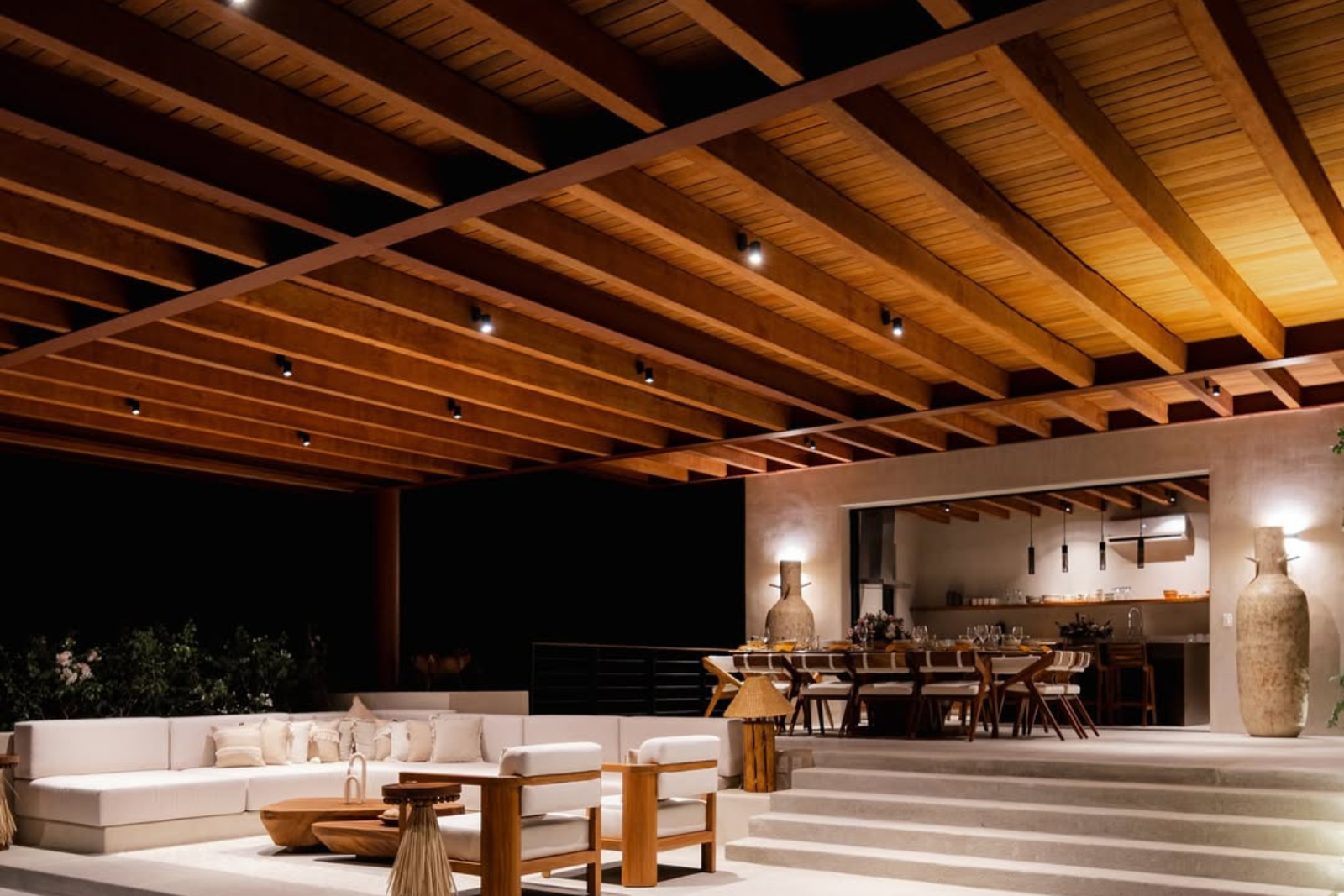
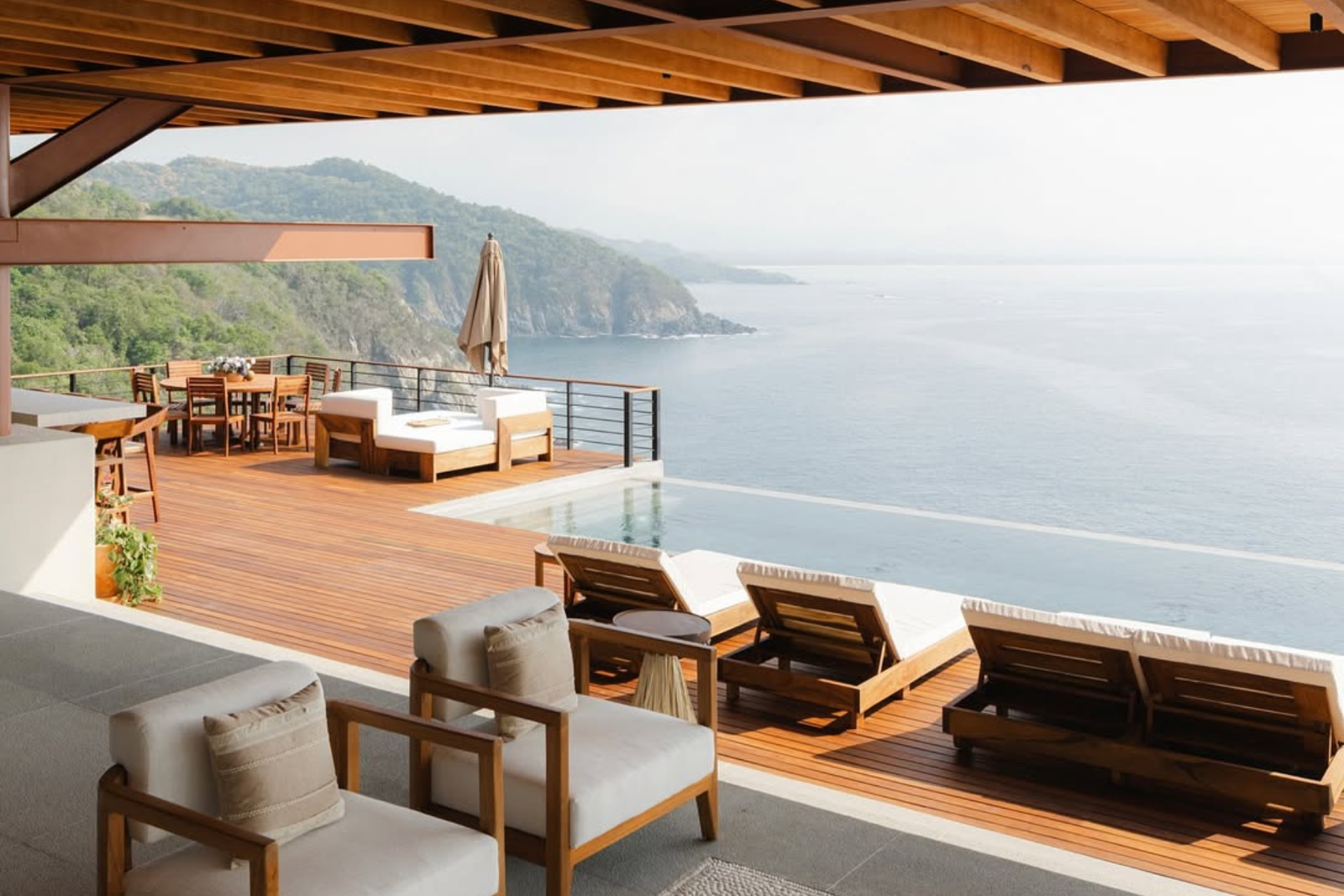
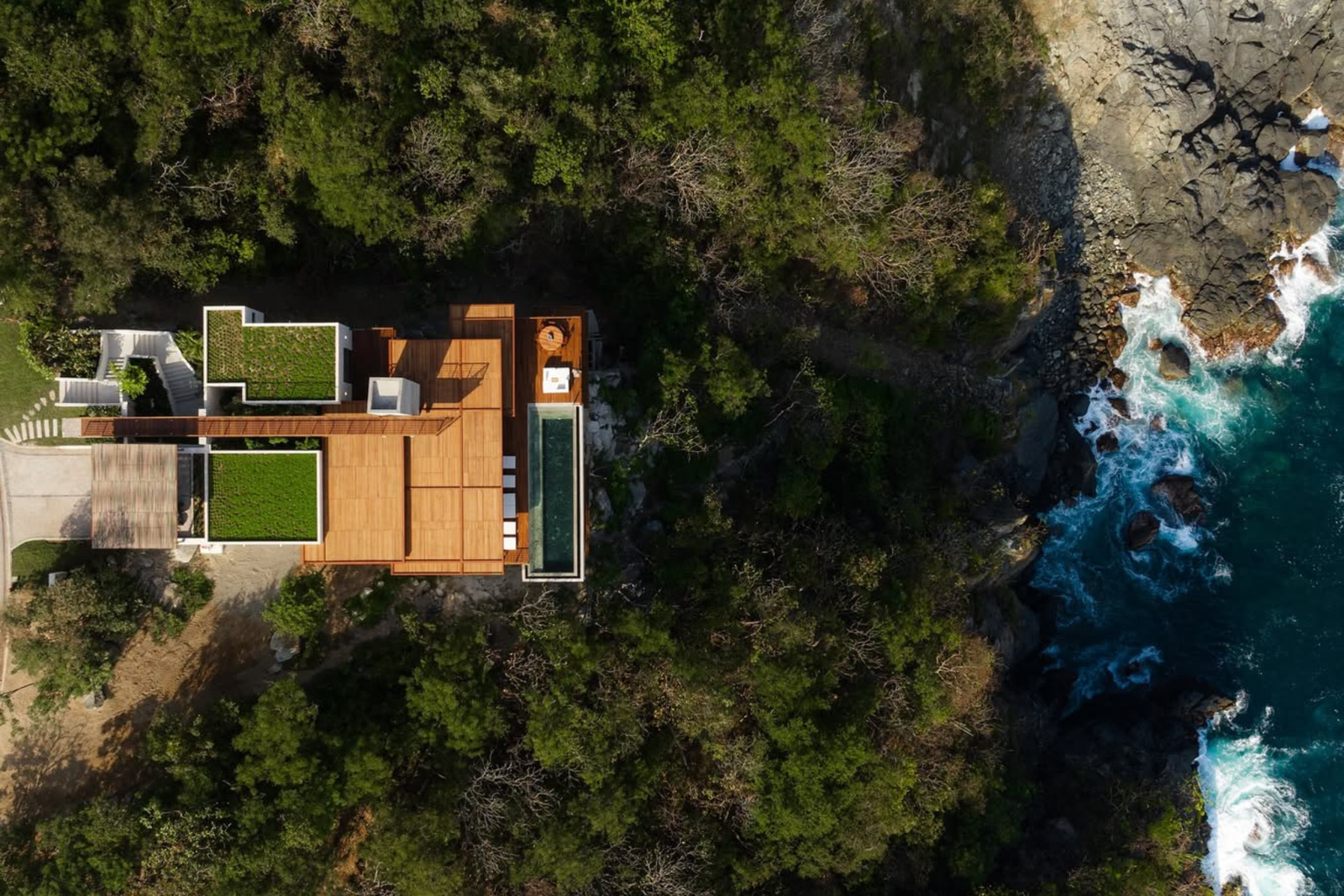
A few steps down, the mood shifts to complete relaxation. A covered terrace offers a perfect spot for outdoor meals and laid-back evenings, featuring a built-in bar and grilling area. Just beyond, the heated pool, bordered with hand-cut native black stone tiles, extends toward the horizon. Lounge chairs encircle the deck, ideally placed for long afternoons, peaceful mornings, and sunsets that almost seem surreal.
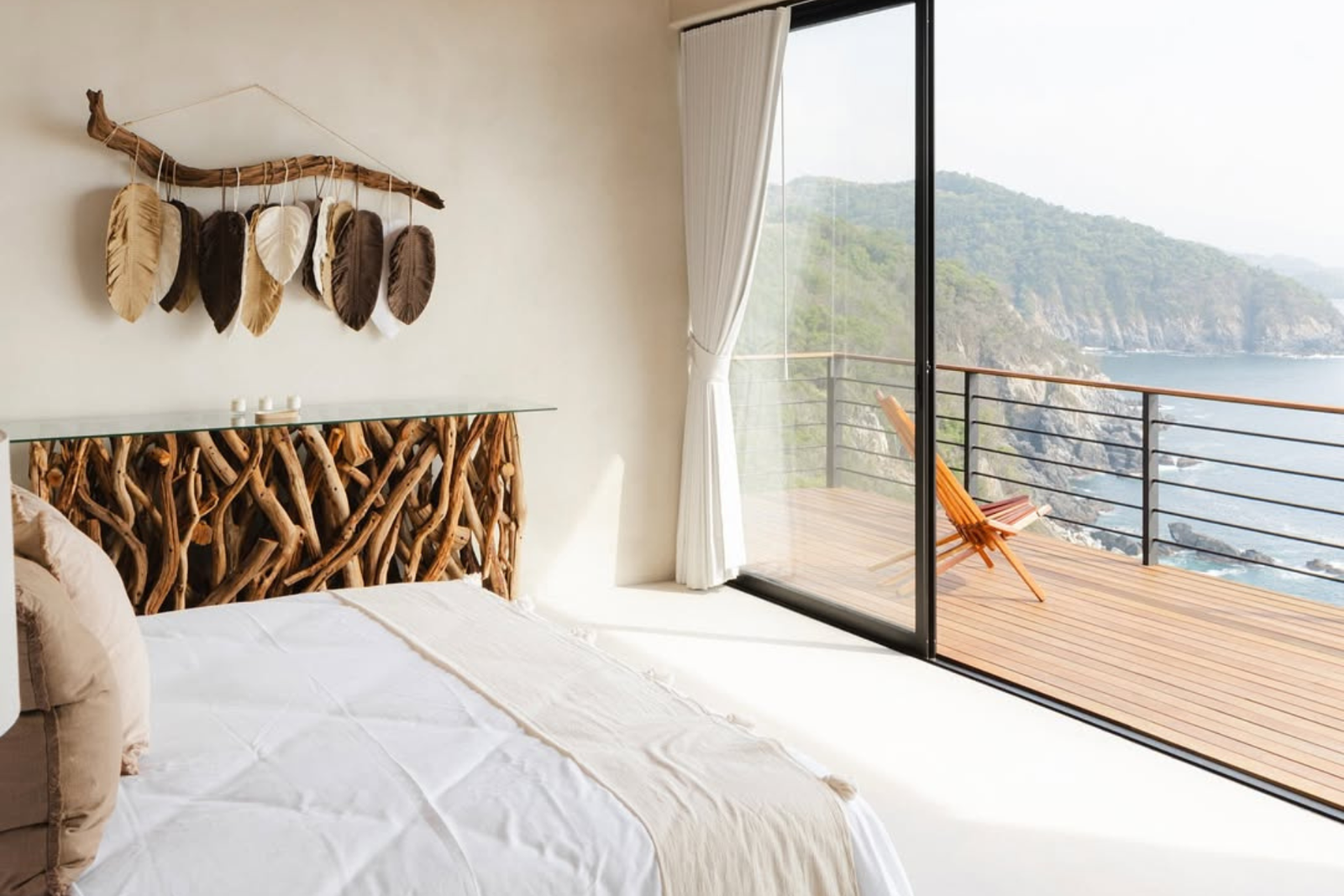
Bedrooms flow down the cliff, each with an en suite for relaxation and privacy. Floor-to-ceiling windows, private balconies, and louvered wood panels let in natural light and ocean breezes, while also offering full control over privacy and shading. The layout is intuitive and comfortable—crafted for everyday living rather than decorative perfection.
Practical details are seamlessly integrated into the design, ensuring the flow remains smooth. There’s an interior laundry room, a dedicated maids’ room, and service spaces that support daily life discreetly. A home office on the middle level is strategically placed for concentration while maintaining a view. The lowest level features a versatile room—currently used as a gym—that offers additional flexibility.
Casa Puente Villa in Zihuatanejo, Mexico, designed by Zozaya Arquitectos | Image: Zozaya Arquitectos
Casa Puente is integrated into a carefully designed coastal community, enhancing the overall experience beyond just the residence. Residents have access to a private beach club, unique dining options, wellness studios, padel and tennis courts, and a private helipad for easy travel along the Pacific coast. This environment offers exclusivity without a sense of isolation.
What makes Casa Puente truly memorable isn’t just the cliffside location or its architecture—it’s how all the details come together. The bridge, the materials, the layout, the pacing. Nothing feels rushed or overdone. From the first step onto the bridge to the final view of the ocean, Casa Puente quietly and confidently tells its story—and that’s exactly what makes it so captivating.
Elias Albay is the Founder and Director of Many Men Magazine, a Toronto-based digital publication dedicated to promoting modern masculinity through style, culture, and self-improvement. What started as a personal turning point became a purposeful platform. — born from Elias’ desire to create something meaningful after completing his studies and finding no career path that truly matched his ambitions. With a background in Civil Engineering from York University and experience in Commercial Flight Operations at CAE, he applied skills, and resilience from both fields to forge a new path.
Our team of editors and experts carefully selects each product. If you choose to purchase through one of our links, we may earn a commission. Learn more. Do you want to know how we test products? Click here for more details.
You’re sitting in a cozy restaurant when the waiter casually mentions that your pasta will be topped with truffles. “What exactly are truffles again?” you ask, only half-remembering the answer. With a quick smile, he tells you they’re a rare type of mushroom before rushing off to the next table. When your plate finally arrives, you catch a whiff of something intensely earthy and rich—and there they are: delicate shavings of truffle, ready to steal the show.
If you’ve got a keen palate, it doesn’t take long to fall under their spell. Truffles unravel layers of deep, savoury flavour with every bite. But chances are, you’re still brimming with questions: What’s the difference between black and white truffles? Are they mushrooms? Why do they cost a fortune? And… do they look like that? Don’t worry—you’re not alone. Let’s dig into everything you need to know about these underground treasures.
What Are Truffles?
First things first: we’re referring to the savoury kind of truffle here, not the fancy chocolate treats you find at dessert counters. Culinary truffles are a type of underground fungus that grows near the roots of certain trees—mainly oak and hazelnut—in chalky, mineral-rich soils. They appear in select parts of the world like France, Italy, New Zealand, China, North Africa, the Middle East, and even areas of the Pacific Northwest.
Their rarity, combined with their unmistakable aroma and taste, makes them so prized in kitchens around the globe.
Are Truffles Really Mushrooms?
Truffles and mushrooms are definitely related—they’re both fungi—but they lead very different lives. Unlike mushrooms, which emerge above ground where they can be easily spotted, truffles prefer to remain hidden, growing quietly beneath the soil and attached to the roots of certain trees. Their secretive lifestyle contributes to what makes them so rare and desirable.
When it comes to flavour, truffles are in a league of their own. While mushrooms typically have a mild, earthy taste, truffles offer a much deeper, richer, and more complex experience. Their intense aroma and savoury, almost nutty flavours distinguish them from everyday mushrooms, making them a true delicacy in the culinary world.
How Are Truffles Grown | Image: Supplied
How Are Truffles Grown?
If you believe that running a vineyard sounds challenging, truffle farming is an even greater gamble. The process begins with injecting tree seedlings—typically oak or hazelnut—with special truffle spores. Farmers then plant the trees, ensuring they are spaced correctly, and wait. And wait. And wait some more. It can take three to four years for any truffles to appear—and even then, success is not guaranteed.
As the trees grow, truffles form a bond with their roots, exchanging nutrients in a perfect symbiotic relationship. When the time finally arrives for harvesting, trained dogs (and sometimes pigs) sniff out the precious fungi hiding underground—a tradition known as truffle hunting. It’s enjoyable if you discover a bounty, but if the climate or soil conditions aren’t ideal, farmers can end up with nothing but dirt-stained boots.
How Big is the Truffle Industry Worldwide?
Believe it or not, the truffle industry isn’t just big—it’s massive. Every year, the global truffle market is estimated to be worth over $5 billion, and it’s only getting larger. Demand for these underground gems has exploded in recent decades, thanks to a growing appetite for luxury dining experiences. Whether shaved over pasta in a Michelin-starred restaurant or infused into gourmet oils and salts, truffles have become the ultimate symbol of culinary sophistication.
The industry is driven by wild-harvested and cultivated truffles, with countries like France, Italy, Spain, and increasingly Australia and the United States at the forefront. Rare varieties, such as the white truffle from Alba or black Périgord truffles, can command thousands of dollars per kilogram, particularly during peak season. With such high profits at stake, it’s no surprise that farmers, chefs, and investors are joining the action.
The market isn’t just about selling whole truffles anymore. Truffle-infused products—such as oils, butter, cheeses, and even hot sauces—have carved out a booming niche of their own. These products make truffles more accessible to everyday food lovers while maintaining the luxury feel. As more people develop a taste for that unmistakable earthy aroma, the future of the truffle industry looks as rich and tempting as the delicacy itself.
What is Truffle? | Image: Food Network
What Do Truffles Look Like?
At first glance, truffles aren’t exactly what you’d call glamorous. Some people joke that they look like tiny lumps of dirt—or even, dare we say, little balls of poop. Rough, knobby, and often dark brown or black, truffles don’t win beauty contests. But trust us, what they lack in looks, they more than compensate for flavour and aroma.
Different types of truffles have slightly varying appearances. Black truffles, such as the renowned Périgord variety, possess a dark, warty exterior that reveals a marbled white interior when sliced. White truffles, especially those from Alba, are lighter in hue, often beige or cream-coloured, with a smoother, slightly veiny texture. Regardless of the type, their rugged, earthy exterior conceals the gourmet magic within. While they may not seem impressive at first glance, once they reach your plate—and your nose—you’ll understand why they’re worth their weight in gold.
Truffles | Image: Luxurious Magazine
What Do Truffles Taste Like?
Describing the taste of truffles is like explaining magic—words can only convey so much. Truffles have an intense, earthy flavor that is rich, musky, and slightly nutty, with hints of garlic, wild herbs, and even a touch of sweetness. They engage your senses all at once, making dishes deeper, more luxurious, and incredibly memorable.
Black truffles provide a more substantial, almost chocolatey earthiness with savoury undertones. In contrast, white truffles are more delicate yet remarkably more aromatic, delivering a powerful, garlicky punch that can fill an entire room. In either case, truffles are not just about taste—they also encompass aroma. Their scent is so distinctive that it significantly influences the overall flavour experience. In summary, truffles could become your new obsession if you appreciate bold, rich, intricate flavours embodying wildness and luxury.
And if you’re already dreaming about your next truffle-infused meal, stick around—we’ll also be diving into some of the best restaurants in France where you can experience truffles at their absolute finest.
10 Restaurants To Try Truffles In France
Ready to take your love for truffles from plate to palate in the most unforgettable way? France, with its rich culinary heritage and deep-rooted passion for truffles, is one of the best places on Earth to experience these luxurious delicacies at their finest. From cozy countryside inns to prestigious Michelin-starred kitchens, there’s no shortage of venues where truffles are treated like the culinary treasure they truly are.
Whether you’re dreaming of decadent truffle pasta, perfectly roasted chicken with truffle jus, or a simple, elegant truffle omelet, these restaurants know how to let this underground gem shine. Some are rustic and charming, while others are globally acclaimed with Michelin stars—but all deliver unforgettable truffle experiences. Here are ten must-visit restaurants in France where truffles aren’t just an ingredient—they’re the stars of the show.
If you want to kick off your truffle adventure in serious style, Monsieur Lancaster in Paris is the place to be. Tucked inside the elegant Hôtel Lancaster, just steps from the Champs-Élysées, this cozy yet luxurious spot knows how to treat truffles right. Think creamy truffle risotto, tender meats crowned with truffle shavings, and rich, buttery starters that set the tone from the very first bite. With its plush seating, golden lighting, and effortlessly chic Parisian vibe, Monsieur Lancaster serves up truffles with a touch of pure class.
If you’re serious about truffles, La Truffière in Paris is basically a pilgrimage spot. Hidden away in a charming 17th-century building in the Latin Quarter, this cozy Michelin-starred restaurant feels like stepping into a secret world where truffles dominate the menu. Expect dishes such as truffle-stuffed poultry, silky truffle sauces, and seasonal creations that allow the earthy aroma to steal the spotlight. With its rustic stone walls, low ceilings, and flickering candlelight, La Truffière offers the perfect blend of old-world charm and high-end French dining.
Tucked away on a quiet street in Paris, Pleine Terre is a hidden gem that elevates truffle dishes to new heights. This elegant yet unpretentious spot embraces creative French cuisine, and when truffle season arrives, the menu transforms into a full-blown celebration. You’ll find dishes like truffle-infused foie gras, delicate truffle pastas, and inventive mains where every bite feels like pure luxury. With its sleek, minimalist vibe and warm, attentive service, Pleine Terre offers a truffle experience that is both refined and refreshingly down-to-earth.
If you’re craving Italian flair alongside your French truffles, Tosca in Paris is ready to deliver. This elegant restaurant seamlessly blends the best of Italy and France, featuring truffle dishes that are bold, rich, and completely irresistible. Imagine handmade pastas coated in creamy truffle sauces, perfectly roasted meats topped with truffle shavings, and seasonal specialties that allow the ingredients to shine. Set in a stylish, contemporary space with just the right touch of glamour, Tosca offers a truffle experience that’s indulgent without ever feeling excessive.
If you believe there’s no such thing as too much truffle, Truffes Folies 7ème is your dream come true. This cozy Parisian spot celebrates truffles in every form—whether it’s creamy truffle burrata, rich truffle pasta, or even truffle ice cream if you’re feeling adventurous. The vibe here is relaxed and welcoming, making it the perfect place to dive headfirst into your truffle obsession without any fuss. Bonus: you can even pick up truffle products to take home and keep the magic going long after your meal.
For a truffle experience that feels a bit more haute couture, Restaurant Auguste – Gaël Orieux in Paris is a must-visit. This Michelin-starred gem blends refined French cuisine with creative touches that make every dish feel like a work of art. During truffle season, expect masterpieces such as truffle-infused sauces, delicately poached meats, and perfectly balanced plates that allow the earthy richness of truffles to shine. The intimate, elegant setting only enhances the magic, making it an unforgettable stop for serious food lovers.
If you enjoy your truffle experience with a side of cool, modern vibes, NE/SO is calling your name. This trendy Parisian spot, led by the talented chef Guillaume Sanchez, focuses on pushing culinary boundaries—and yes, truffles receive the star treatment they deserve. Expect creative dishes where truffles appear unexpectedly, from inventive small plates to daring flavour combinations that somehow just work. With its edgy, minimalist decor and bold energy, NE/SO is the place to go if you’re craving truffles in a fresh, youthful, and a little rebellious setting.
If you’re seeking a truffle experience that combines sustainability with deliciousness, La Table de Colette should be on your radar. This charming Parisian restaurant emphasizes eco-friendly fine dining without compromising on flavor or luxury. During truffle season, you’ll discover elegant, vegetable-forward dishes that allow the truffles to add just the right touch of indulgence. With its cozy, welcoming atmosphere and thoughtful sourcing approach, La Table de Colette shows that you can enjoy all the decadence of truffles—and still feel good about it.
Nestled in the fashionable Saint-Germain-des-Prés neighbourhood, Colvert offers a relaxed yet refined atmosphere to the Paris dining scene—and their truffle dishes are magical. Here, traditional French comfort food receives an elevated twist, with truffles frequently taking center stage on the menu. Imagine buttery mashed potatoes, decadent truffle omelets, and seasonal specials that exude warmth and luxury. With its stylish decor and easygoing ambiance, Colvert is the ideal place to savour truffles without fuss- just pure, delightful indulgence.
Elias Albay is the Founder and Director of Many Men Magazine, a Toronto-based digital publication dedicated to promoting modern masculinity through style, culture, and self-improvement. What started as a personal turning point became a purposeful platform. — born from Elias’ desire to create something meaningful after completing his studies and finding no career path that truly matched his ambitions. With a background in Civil Engineering from York University and experience in Commercial Flight Operations at CAE, he applied skills, and resilience from both fields to forge a new path.