Our team of editors and experts thoughtfully chooses each product. If you decide to buy through one of our links, we may earn a commission. Learn more. Want to know how we test products? Click here for more details.
Some problems feel permanent. Slow internet, polluted cities, homelessness, dirty energy, and endless bureaucracy — problems so widespread they’re often accepted as the cost of modern life. But a few countries chose a different path. Instead of just managing these issues, they restructured the systems behind them and stuck with the solutions long enough to see results. The countries listed below didn’t rely on quick fixes or slogans; they committed to practical ideas, long-term planning, and consistent efforts — and quietly demonstrated that many “unsolvable” problems aren’t actually impossible.
1. South Korea – Fast Internet That’s Actually Affordable
Capital: Seoul
Currency: South Korean Won (KRW)
Official Language: Korean
Population: 51 Million
Fast internet is regarded as basic infrastructure here, not a luxury. South Korea provides some of the most affordable high-speed internet in the world, supported by a nationwide network of advanced fibre-optic lines that reach nearly every part of the country. Streaming, gaming, remote work, large downloads — everything runs smoothly and quickly. The result is a nation where buffering feels outdated and digital access is taken for granted. By investing early and treating connectivity as essential, South Korea addressed a problem many other places still complain about: slow, expensive internet that hampers progress.
2. Costa Rica – A Country Powered by Renewable Energy
Capital: San José
Currency: Costa Rican Colón (CRC)
Official Language: Spanish
Population: 5.2 Million
Running a country on clean energy seems idealistic — until you see it actually work. Costa Rica generates nearly all of its electricity from renewable sources, heavily relying on hydroelectric power, supported by wind and solar. This isn’t a short-term experiment or a marketing headline; it has been the norm for years. By committing early to renewables and maintaining those efforts, Costa Rica proved that a modern nation can operate without constant dependence on fossil fuels. The lights stay on, the grid remains stable, and the environment suffers less — a problem many nations still debate, quietly solved here.
3. Finland – Ending Homelessness by Giving People Homes First
Capital: Helsinki
Currency: Euro (EUR)
Official Language: Finnish & Swedish
Population: 5.6 Million
Most countries try to address homelessness by tackling everything around it first — addiction, employment, and mental health first — and housing is dealt with later. Finland reversed that approach. Using a Housing First strategy, individuals receive a permanent, stable home before any other support is provided. No conditions, no need to prove oneself first. Once someone has a secure home with a lock and a place to sleep, everything else becomes easier to manage. The result? Finland has nearly eliminated homelessness, not through grand speeches or temporary shelters, but by directly addressing the root cause. It’s a rare example of a system that works because it views housing as a foundation, not a reward.
4. Rwanda – Banning Plastic Bags to Clean Up an Entire Country
Capital: Kigali
Currency: Rwandan Franc (RWF)
Official Language: Kinyarwanda, English, & French
Population: 13 Million
Plastic waste was everywhere — on streets, in drains, and in rivers. Rwanda decided to tackle it at the source. By banning plastic bags across the country, the nation significantly cut down litter and pollution, changing how people use and dispose of everyday items. The shift wasn’t superficial; it transformed cities and public spaces, helping Rwanda become one of the cleanest and least-wasteful countries in Africa. What once seemed unrealistic proved straightforward in practice: eliminate the problem entirely, and the benefits follow.
5. United Arab Emirates – Making Solar Power Cheap at Scale
Capital: Abu Dhabi
Currency: UAE Dirham (AED)
Official Language: Arabic
Population: 10 Million
Clean energy is often talked about as costly and impractical. The UAE took a different approach. By investing heavily and early, it developed some of the most affordable large-scale solar plants globally, driving costs down to historic lows. Instead of viewing renewables as a distant goal, they became practical immediately. The result is clean energy that is widely accessible, dependable, and economically viable — proof that solar power doesn’t need to be a luxury option, but a fundamental part of a modern nation’s infrastructure.
6. Norway – Making Electric Cars the Obvious Choice
Capital: Oslo
Currency: Norwegian Krone (NOK)
Official Language: Norwegian
Population: 5.5 Million
Switching to electric vehicles seems challenging until incentives actually work. Norway didn’t depend on speeches or vague targets — it built a system that favors EVs. Major tax credits, lower tolls, free or reduced-price parking, and a dense, dependable charging network eliminated the usual obstacles. Meanwhile, strict emissions rules made sticking with petrol less attractive. The outcome is clear: over 90% of new vehicles sold are electric. Norway didn’t force people to switch — it made the better choice the easiest one, and the change happened naturally.
7. Singapore – Turning Polluted Rivers into Living Waterways
Capital: Singapore
Currency: Singapore Dollar (SGD)
Official Language: English, Malay, Mandarin, & Tamil
Population: 5.9 Million
What were once polluted, foul-smelling rivers running through the city are now clean, vibrant waterways people genuinely want to be around. Singapore didn’t fix this overnight. It took decades of strict environmental controls, long-term planning, and persistent enforcement to restore its rivers and reservoirs. Industry was regulated, waste systems were rebuilt, and waterways were treated as valuable assets rather than afterthoughts. Today, these rivers support recreation, wildlife, and everyday life — proof that environmental damage isn’t permanent if a country is committed to the long term.
8. Estonia – A Government That Runs Online
Capital: Tallinn
Currency: Euro (EUR)
Official Language: Estonian
Population: 1.3 Million
Paperwork used to mean queues, stamps, and wasted afternoons. Estonia decided to remove that hassle entirely. By creating a fully digital government, citizens can manage almost every public service online — from taxes and prescriptions to business registration and voting — often in just minutes. Secure digital IDs replaced endless forms, and efficiency became the norm. The outcome is a system that saves time, cuts bureaucracy, and treats citizens like adults. What many countries still promise as a future upgrade, Estonia quietly made routine.
General FAQ’s
Are These Solutions Actually Scalable For Other Countries?
In many cases, yes. Most of these successes didn’t originate from perfect conditions, but from long-term commitment, clear rules, and consistent execution. The ideas themselves are transferable — it’s the follow-through that’s often lacking.
Did These Countries Solve These Problems Overnight?
No. Most of these changes took years, sometimes decades, to fully take effect. What sets these countries apart is consistency — they stayed the course even when results weren’t immediate.
Why Haven’t More Countries Done The Same?
Because real solutions often require patience, upfront investment, and decisions that don’t lead to immediate wins, many governments operate on short cycles where quick results are valued more than long-term outcomes. These countries accepted slower progress in exchange for lasting change — and that choice made all the difference.
Elias Albay is the Founder and Director of Many Men Magazine, a Toronto-based digital publication dedicated to promoting modern masculinity through style, culture, and self-improvement. What started as a personal turning point became a purposeful platform. — born from Elias’ desire to create something meaningful after completing his studies and finding no career path that truly matched his ambitions. With a background in Civil Engineering from York University and experience in Commercial Flight Operations at CAE, he applied skills, and resilience from both fields to forge a new path.
Our team of editors and experts thoughtfully chooses each product. If you decide to buy through one of our links, we may earn a commission. Learn more. Want to know how we test products? Click here for more details.
There’s something undeniably powerful about a man in a sharp suit — but pair it with the right watch, and you’ve just unlocked a whole new level of elegance. Enter the dress watch: sleek, understated, and effortlessly refined. It doesn’t scream for attention; it whispers class, confidence, and timeless sophistication. Unlike sports or tool watches, dress watches aren’t built for extremes — they’re built to complement your best moments. Slim profiles, clean dials, and leather straps are the hallmarks, designed to slip quietly under a cuff while still saying everything that needs to be said.
A great dress watch adds polish to a formal outfit, elevates your presence in the boardroom, and brings quiet confidence to any upscale occasion. It’s not just about function — it’s about first impressions, subtle status, and expressing personal taste without showing off. In this guide, we’ve leaned into the timeless appeal of classic dress watch styles — think refined design, minimal complications, and heritage craftsmanship — but we’ve also tossed in a few curveballs for those who like a twist. You’ll find something here for every kind of wearer, with options that range from entry-level elegance to investment-worthy icons, all tailored to different tastes, wrists, and budgets.
What Is A Dress Watch?
A dress watch is the wrist-wear equivalent of a tailored tux — refined, minimal, and designed to make you look sharp without making a fuss. At its core, a dress watch is all about simplicity and elegance. It’s typically slim enough to slide under a shirt cuff, features a clean and uncluttered dial, and often comes paired with a leather strap or polished bracelet. No rotating bezels, no rugged features — just pure class. Traditionally, these watches stick to smaller case sizes (usually between 36mm and 40mm), use precious metals or polished steel, and lean toward Roman numerals or minimalist indices. They’re built to blend in, not stand out — but that subtlety is exactly what makes them so powerful. It’s the timepiece you turn to when the invitation calls for black-tie attire, or when you want to quietly flex at a client dinner. While the definition has evolved over time, the core essence of a dress watch remains unchanged: it’s the ultimate mark of understated sophistication.
This one doesn’t stick around for long — and for good reason. The Zenith Elite Classic has been flying off shelves since its release, and it’s easy to see why. With its clean lines, ultra-slim 18K rose gold case, and sunray-patterned silver dial, it nails the “quiet luxury” look without even trying. At 40.5 mm, it’s modern in size but traditional in spirit, powered by Zenith’s in-house Elite 670 movement with a solid 50-hour power reserve. Paired with a brown leather strap, it’s a gold-standard choice for anyone who wants refined elegance with just enough wrist presence to get noticed.
Patek Philippe Golden Ellipse | Image: Patek Philippe
2. Patek Philippe Golden Ellipse
Brand: Patek Philippe
Model: Golden Ellipse
Reference: 5738R
Diameter: 34.5 mm x 39.5 mm
Thickness: 5.9 mm
Material: 18K Rose Gold
Dial Colour: Sunburst Black
Calibre: 240 (Ultra-thin automatic, micro-rotor)
Power Reserve: 48 Hours
Water Resistance: 3 bar (30 meters, 100 feet)
Price: USD $39,000
Sometimes a round or square case just doesn’t cut it, and that’s where the Golden Ellipse struts in with its perfectly odd charm. Inspired by the golden ratio (yes, that golden ratio), its oval silhouette is mathematically satisfying and effortlessly cool. It’s razor-thin too — just 5.9 mm thick — which means it slides under a cuff smoother than a champagne toast at a black-tie gala. The black sunburst dial and that 18K rose gold case exude pure class. And inside, the ultra-thin calibre 240 with its micro-rotor quietly gets the job done like a seasoned butler. This isn’t a watch that tries to impress — it already knows it’s different, and that’s exactly why it works.
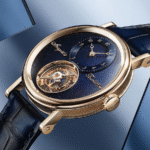
Not all dress watches have to stick to black, white, or silver — sometimes, a deep navy blue can provide all the heavy lifting with just a touch more personality. This De Ville Prestige strikes that balance perfectly. The domed PVD blue dial emits a rich, refined glow that shifts beautifully under the light, adding depth without demanding attention. Paired with Omega’s 18K Sedna™ gold case, it introduces warmth and contrast in all the right ways. It’s powered by the Co-Axial Master Chronometer calibre 8802, so you’re not just getting good looks — you’re receiving top-tier performance, too. Think of it as a dress watch with a twist — still elegant, still formal, just a bit more interesting.
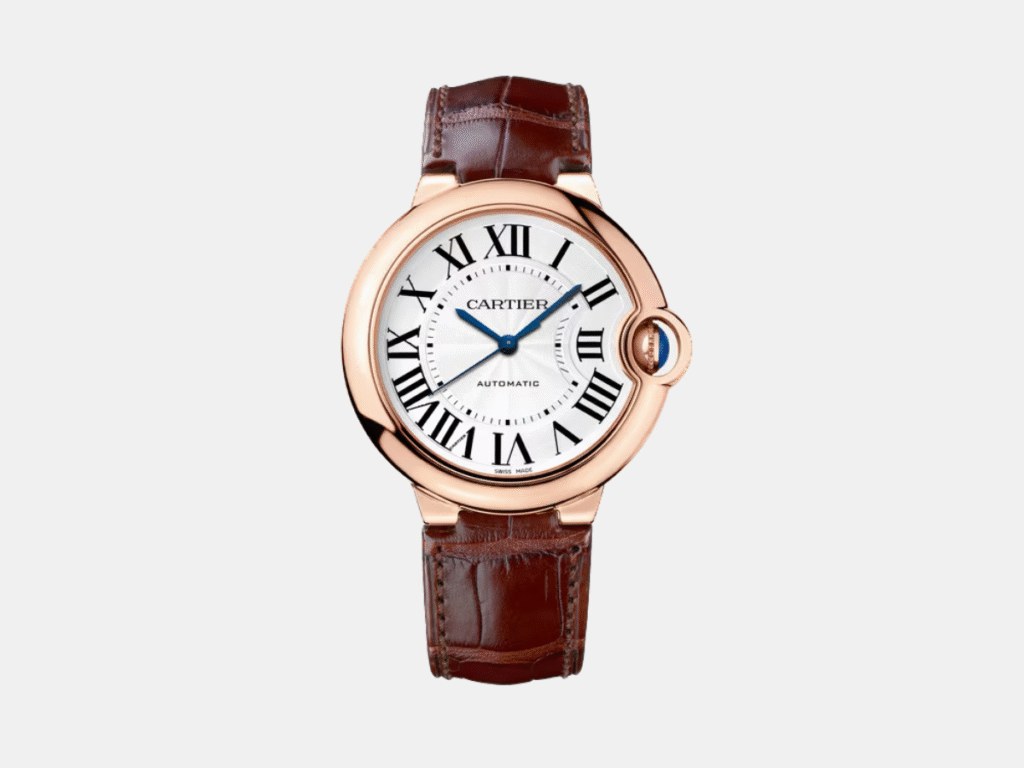
This one has an irresistibly smooth quality — like a perfectly crafted Old Fashioned or a freshly tailored dinner jacket. The Ballon Bleu may be round, but it stands out as anything but ordinary. Its rounded case flows like liquid gold, and that crown guard? Cartier added a blue cabochon just to stand out playfully among other watches. Roman numerals elegantly adorn the silver guilloché dial, while the blue steel hands maintain a classy appearance without being overdone. With a size just over 36mm, it fits comfortably under a cuff as if it was made for that very purpose. If you’re looking for a dress watch that subtly exudes sophistication with a French accent, this one is destined for your wrist.
Dial Colour: Front: Black Sunray; Reverse: Skeletonized with Opaline Accents
Calibre: Jaeger-LeCoultre Calibre 860
Power Reserve: 52 Hours
Water Resistance: 3 bar (30 metres, 100 feet)
Price: $38,800 USD
This isn’t just a watch — it’s a conversation starter, a mechanical marvel, and a style statement all rolled into one. The Reverso Tribute Chronograph pays homage to its 1930s polo origins with a modern twist. Flip the case, and you’re greeted with a skeletonized chronograph dial that showcases the intricate Calibre 860 movement, complete with a retrograde 30-minute counter. Flip it back, and you have a sleek, black sunray dial that exudes understated elegance. It’s like having two watches in one — perfect for those who appreciate both form and function.
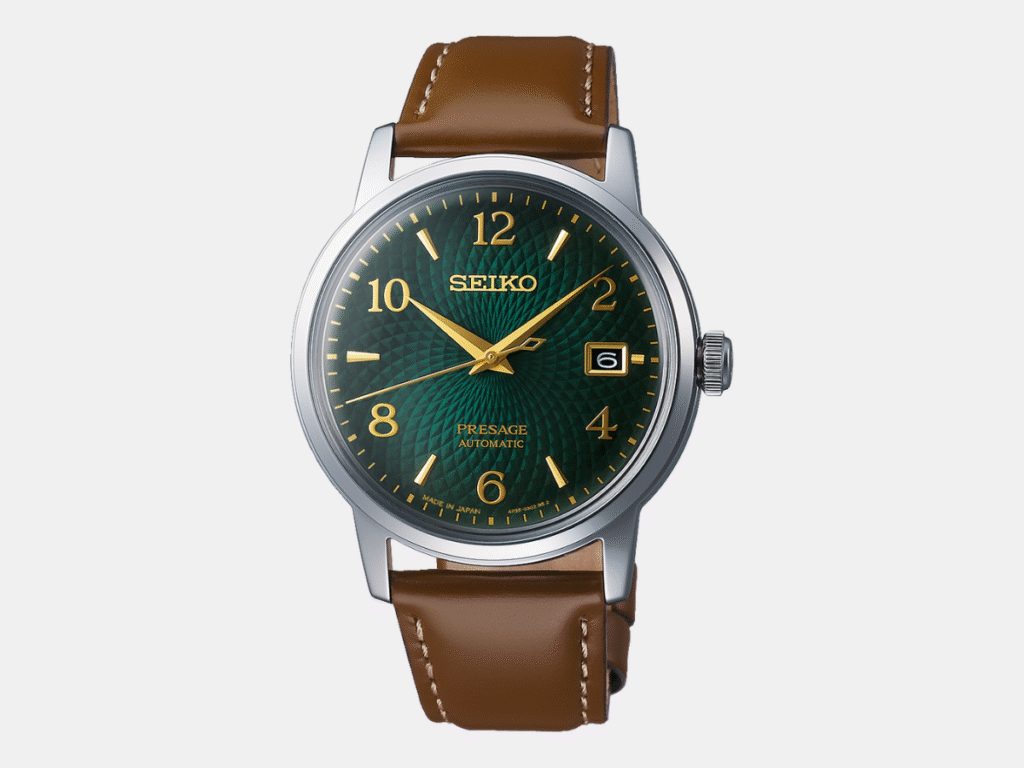
If you’re looking for a strong entry into the world of dress watches without breaking the bank, the SRPE45 is a certified crowd-pleaser. Priced at around $425, this Seiko offers a ton of charm for the cost. Inspired by the Mojito cocktail, the green textured dial is playful yet polished — perfect for everything from date nights to dinner parties. The vintage-style numerals and pressed pattern give it a distinctive flair, while the automatic 4R35 movement and exhibition caseback demonstrate it’s got mechanical soul, too. Pair it with a crisp shirt and leather shoes, and you’re off to a very stylish start.
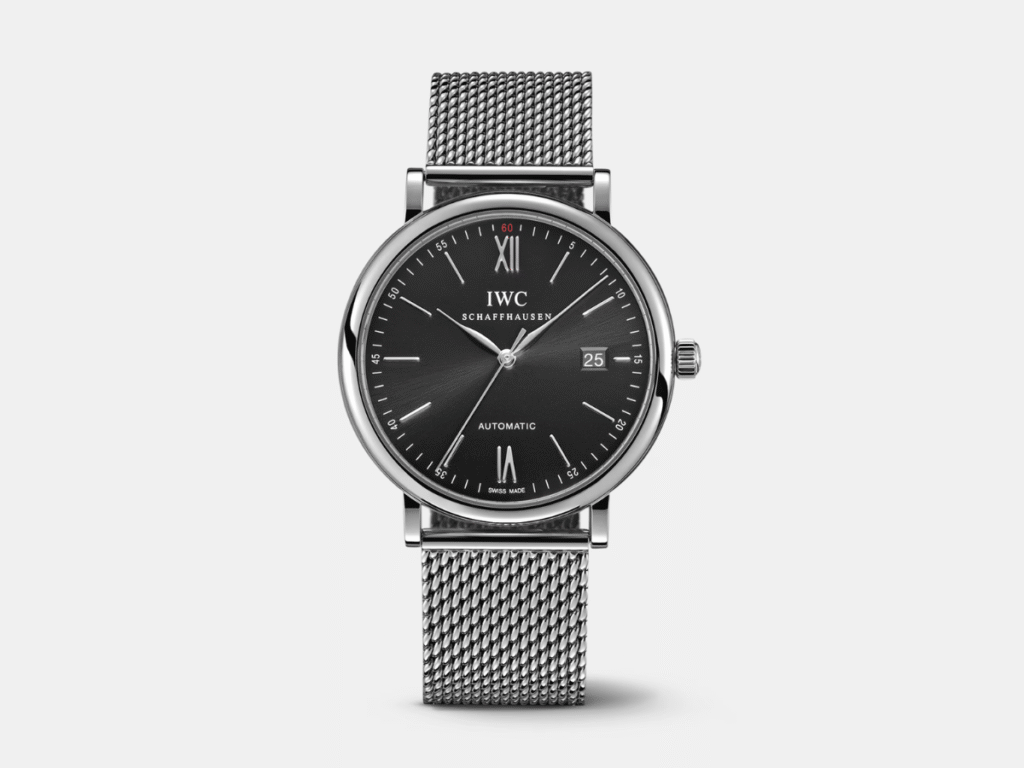
If you prefer your dress watch with a little extra shine — and a bit more durability — this stainless steel Portofino might just be your perfect match. For those who lean toward bracelets over leather straps, this one delivers all the elegance of a classic dress watch, with the added versatility of a full metal look. The 40 mm case is sleek and minimalist, paired with a Milanese mesh bracelet that gives off low-key vintage energy. The black dial keeps things clean and refined, while the automatic Calibre 35111 does its job quietly and reliably behind the scenes. Whether you’re buttoned up or keeping it relaxed, this IWC handles both with equal grace — a smooth operator for any occasion.
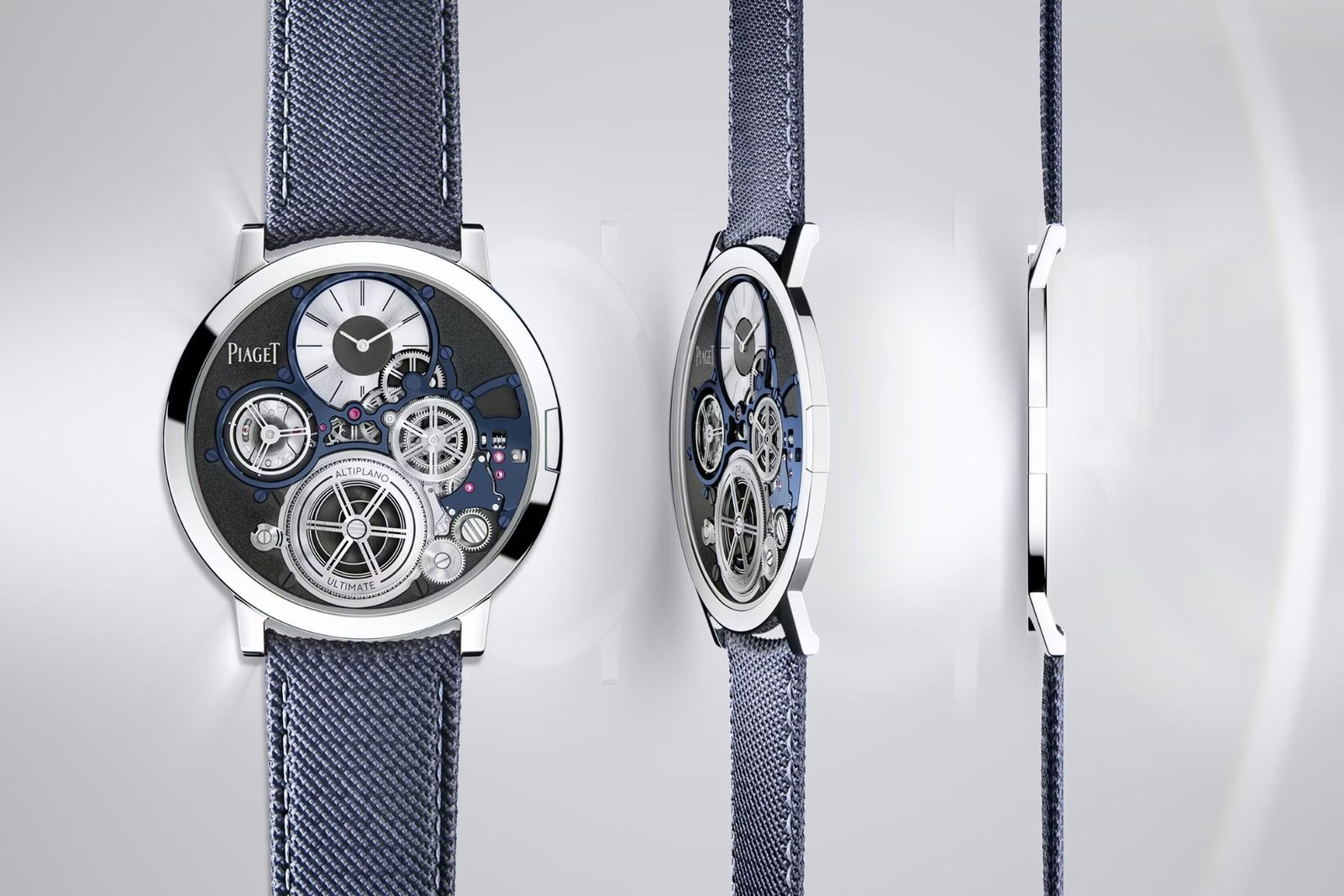
If you thought the Patek Philippe Golden Ellipse was slim, wait until you meet the Altiplano Origin — this timepiece measures just 6 mm thick. That’s thinner than a credit card and just as refined. Limited to only 300 pieces worldwide, this Piaget is all about pure elegance with a modern edge. The deep blue lacquer dial feels cool and composed against the warmth of the 38 mm rose gold case, while the manual-winding 430P movement ticks away with whisper-quiet precision. It’s minimal, it’s rare, and it’s proof that sometimes, less truly is much more — especially when you’re wearing it in gold.
There’s something undeniably refined about slipping on a watch made from solid gold, and the Tissot Goldrun makes that experience surprisingly accessible. Its 18K yellow gold case and sub-7mm thickness make it look like a sleek, minimalist, and quietly luxurious vintage classic. The silver dial is clean and fuss-free, and the quartz movement keeps things reliably low-maintenance. It’s an incredible value for a solid gold Swiss-made timepiece at just over two grand. Pure class, without the five-figure commitment.
Material: 18K White Gold with 2.90 ct Diamond Bezel
Dial Colour: Matte Black with White Roman Numerals
Calibre: L.U.C 97.01-L1 (Automatic with 22K Gold Micro-Rotor)
Power Reserve: 65 hours
Water Resistance: 3 bar (30 meters, 100 feet)
Price: USD $50,600
Who says diamonds are just for women? The Chopard L.U.C Heritage Grand Cru proves that a well-dressed man can pull off a bit of sparkle, especially when wrapped around a tonneau-shaped 18K white gold case and set with 2.90 carats of baguette-cut brilliance. The matte black dial with crisp Roman numerals keeps things grounded and timeless, while inside, the ultra-thin L.U.C 97.01-L1 movement hums away with a gold micro-rotor and a 65-hour power reserve. It’s refined, bold, and quietly extravagant — a dress watch for the gentleman who doesn’t mind turning heads.
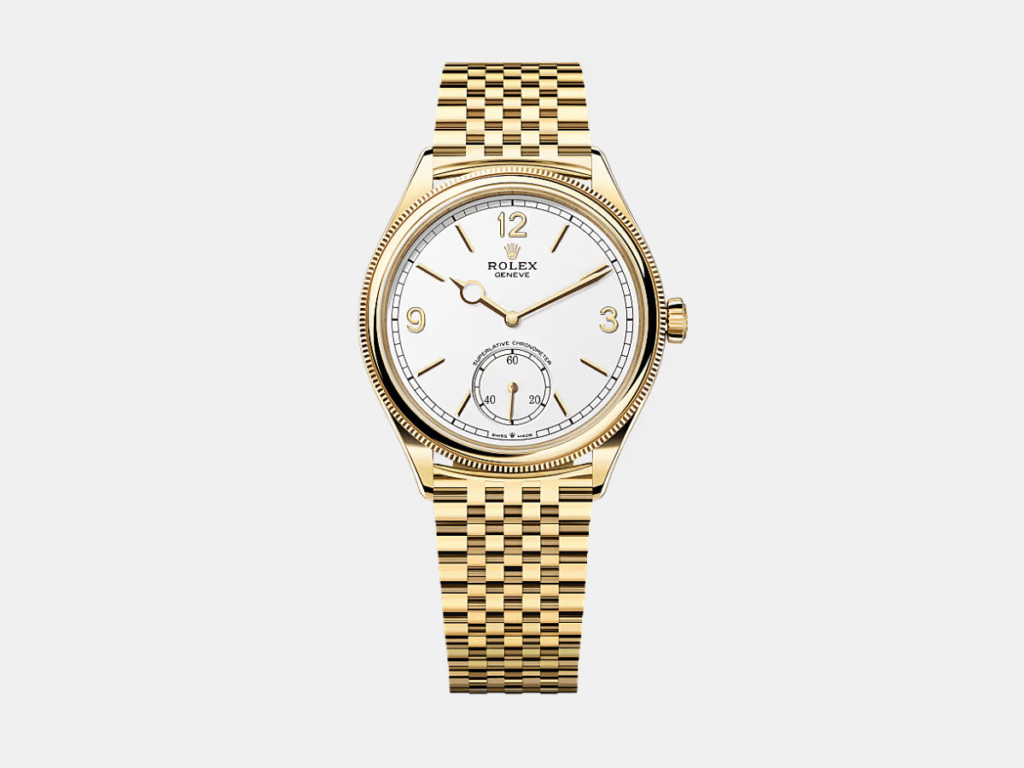
Rolex didn’t just dip a toe into the world of dress watches with the 1908 — it stepped in wearing a velvet slipper. This piece doesn’t scream Rolex; it hums it softly in a pitch-perfect baritone. With its 39 mm yellow gold case, clean white dial, and elegant small seconds subdial, the 1908 feels more like a quiet nod to the past than a flashy flex. But don’t mistake subtlety for simplicity — the in-house Calibre 7140 is a technical marvel, visible through a rare-for-Rolex sapphire caseback. Paired with a brown alligator leather strap and finished with just the right amount of vintage charm, this is a Rolex for the man who understands the room, not just how to enter it.
Patek Philippe Calatrava 6119R | Image: Patek Philippe
12. Patek Philippe Calatrava
Brand: Patek Philippe
Model: Calatrava
Reference: 6119R-001
Diameter: 39 mm
Thickness: 8.1 mm
Material: 18K Rose Gold
Dial Colour: Silvery Grained
Calibre: 30-255 PS (Manual Winding)
Power Reserve: 65 Hours
Water Resistance: 3 Bar (30 metres, 100 feet)
Price: USD $34,000
Patek’s Calatrava 6119R-001 doesn’t try to reinvent the wheel — it perfects it. The rose gold case and hobnail bezel are pure tradition, but inside, the 30-255 PS calibre is a modern marvel. Just 2.55 mm thick, the movement is ultra-slim yet delivers a robust 65-hour power reserve — a subtle flex if there ever was one. The silvery grained dial and dauphine hands maintain a timeless quality, while the see-through caseback allows you to admire the hand-finished mechanics that make this piece a quiet masterpiece. If you’re building a collection that emphasizes refinement, this Calatrava is the cornerstone.
If you’re after a dress watch that whispers sophistication rather than shouting status, the Breguet Classique 5157 is your understated hero. Its 38 mm white gold case is remarkably slim at just 5.4 mm, making it a perfect fit under any cuff. The silvered gold dial, adorned with hand-guilloché patterns, testifies to Breguet’s commitment to craftsmanship. Blued steel Breguet hands glide over Roman numerals, exuding timeless elegance. Powered by the ultra-thin calibre 502.3, this watch offers a 45-hour power reserve and showcases its intricate movement through a sapphire caseback. Paired with a black alligator strap, the Classique 5157 is a masterclass in refined watchmaking.
Vacheron Constantin Patrimony | Image: Vacheron Constantin
14. Vacheron Constantin Patrimony
Brand: Vacheron Constantin
Model: Patrimony
Reference: 81180/000G-9117
Diameter: 40 mm
Thickness: 6.79 mm
Material: 18K White Gold
Dial Colour: Silver-Toned Opaline
Calibre: 1400 (Manual Winding)
Power Reserve: 40 hours
Water Resistance: 3Bar (30 metres, 100 feet)
Price: USD $22,100
The Patrimony doesn’t beg for attention — it earns it in silence. With its ultra-slim 6.79 mm white gold case and gently curved silver opaline dial, this watch is all about restraint done right. There’s no drama here, no distractions — just clean baton markers, slender hands, and an abundance of quiet confidence. Inside, the hand-wound Calibre 1400 (Hallmark of Geneva certified, of course) ensures everything runs with precision and poise. It’s the kind of watch that slips under a cuff effortlessly but still leaves a lasting impression — like a tailored tux with no flashy lining. Pure Vacheron. Pure class.
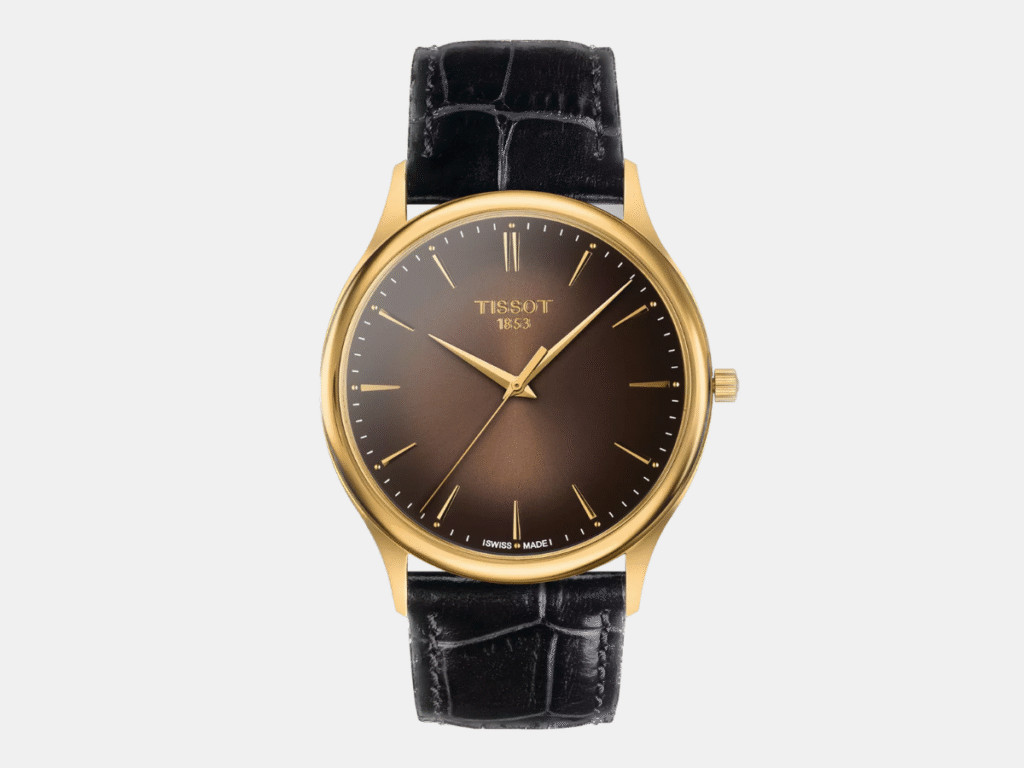
The Tissot Excellence 18K Gold is a masterclass in understated luxury. Its ultra-thin 5.5 mm profile and 39.5 mm case provide a comfortable fit for any wrist, while the 18K yellow gold case exudes timeless elegance. The champagne sunburst dial adds a touch of warmth, complemented by slender gold hands and indices. Powered by the reliable ETA 901.001 quartz movement, it ensures precise timekeeping with minimal maintenance.
Frederique Constant Classic Index Automatic | Image Frederique Constant
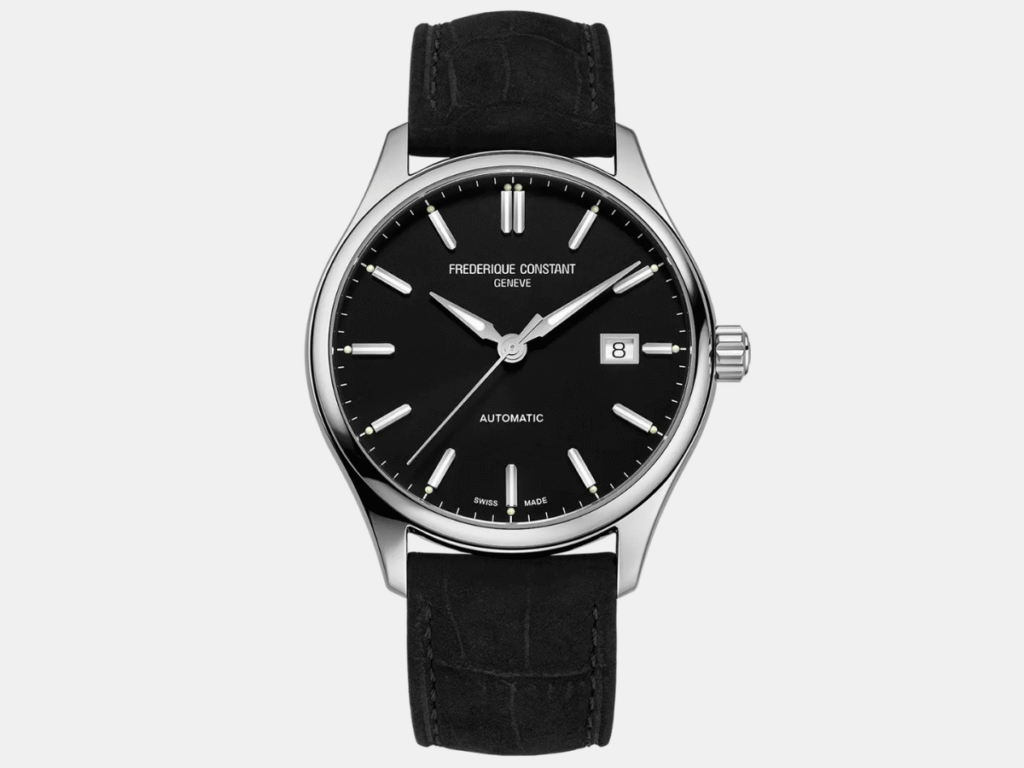
16. Frederique Constant Classic Index Automatic
Brand: Frederique Constant
Model: Classics Index Automatic
Reference: FC-303NB5B6
Diameter: 40 mm
Thickness: 11 mm
Material: Stainless Steel
Dial Colour: Black
Calibre: FC-303
Power Reserve: 38 Hours
Water Resistance: 5 bar ( 50 metres, 165 feet )
Price: USD $1,195
We debated long and hard between this and Frederique Constant’s more upscale Manufacture line, but when it comes to value-packed elegance, the Classics Index Automatic is hard to beat. If you’re after a dress watch that delivers timeless style without the hefty price tag, this one’s a serious contender. The 40 mm stainless steel case frames a sleek black dial with silver-tone hands and indices, keeping things clean, sharp, and versatile. It is powered by the trusty FC-303 automatic movement, and at just over a grand, it proves that you don’t need deep pockets to wear something that looks like you do.
Vacheron Constantin Traditionnelle | Image: Vacheron Constantin
17. Vacheron Constantin Traditionnelle
Brand: Vacheron Constantin
Model: Traditionnelle Manual-Winding
Reference: 82172/000R-H008
Diameter: 38 mm
Thickness: 7.77 mm
Material: 18K 5N Rose Gold
Dial Colour: Sunburst Green
Calibre: 4400 AS (Manual Winding)
Power Reserve: 65 Hours
Water Resistance: 3 bar (30 metres, 100 feet)
Price: $23,700 USD
Who says a dress watch has to play it safe? The Traditionnelle Manual-Winding breaks the mold with its captivating sunburst green dial, a bold yet elegant statement that sets it apart. Encased in 18K rose gold, its 38 mm frame and slim 7.77 mm profile exude classic sophistication. The in-house Calibre 4400 AS, visible through the sapphire case back, offers a 65-hour power reserve, marrying form and function seamlessly. Paired with a matching green alligator leather strap, this timepiece is a refreshing take on traditional elegance.
Chopard L.U.C Heritage Grand CRU 18K Rose Gold | Image: Chopard
18. Chopard L.U.C Heritage Grand CRU 18K Rose Gold
Brand: Chopard
Model: L.U.C Heritage Grand Cru
Reference: 162296-5001
Dimensions: 38.8 x 38.5 mm
Thickness: 7.74 mm
Material: 18K Ethical Rose Gold
Dial Colour: White Lacquered (Porcelain-Type Finish)
Calibre: L.U.C 97.01-L (Automatic with 22K Gold Micro-Rotor)
Power Reserve: Approximately 65 hours
Water Resistance: 30 meters (3 bar)
Price: $28,900 USD
Chopard describes this watch as a fine wine — and honestly, they’re not wrong. The L.U.C Heritage Grand Cru is a rare pour of craftsmanship, elegance, and horological prestige. Crafted from 18K ethical rose gold and shaped like a refined barrel, this ultra-thin timepiece draws direct inspiration from Louis-Ulysse Chopard’s pocket watches. But what makes it truly special is what’s inside: the L.U.C 97.01-L, one of the few automatic tonneau-shaped movements to match its case perfectly. Certified by the COSC and bearing the Geneva Seal, it’s a chronometer of the highest order. Add in Chopard’s Twin technology and a 65-hour power reserve, and you’ve got a watch made for the modern-day epicurean — the kind of gentleman who appreciates a great vintage, whether it’s in a glass or on his wrist.
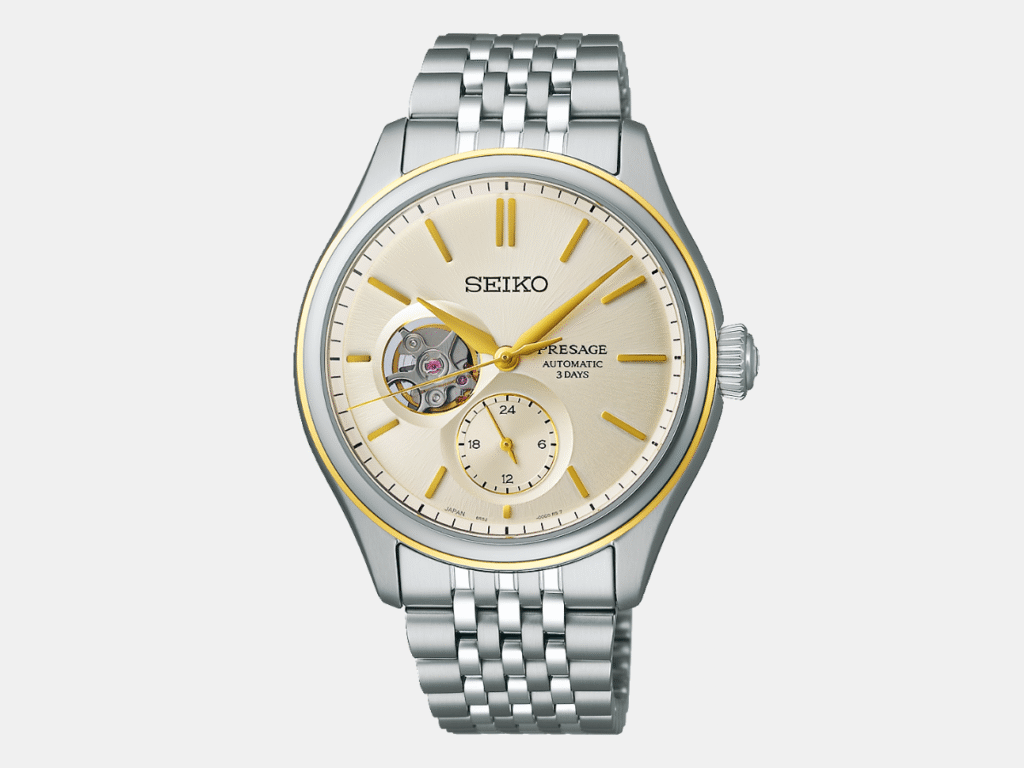
The SPB480J1 proves that Seiko can create an affordable dress watch that feels like a piece of art. Its creamy “Shiro-Iro” dial is inspired by traditional Japanese silk — soft in tone, rich in texture, and full of quiet character. The gold accents pop just enough to catch the eye without overshadowing the design, while the open-heart display offers a peek at the 6R5J movement in action. With a 72-hour power reserve, a curved sapphire crystal, and 100 meters of water resistance, it’s not just pretty — it’s practical, too. For under $1,200, this represents refined simplicity at its best, with just the right amount of flair.
The Globemaster should be on your radar if you want to maintain a classic, clean, and undeniably elegant style. With its 18K yellow gold case and signature “pie pan” dial — a throwback to the original 1952 Constellation — this watch achieves that vintage-inspired formal look without feeling dated. The opaline silver dial paired with the fluted bezel imparts an old-school charm, while the Co-Axial Master Chronometer movement inside ensures it ticks with modern-day precision. Add in the brown leather strap and that Observatory medallion on the caseback, and you have a timepiece that’s as refined as it is quietly powerful.
Now this version of the 1908 means business — same slim case, same gorgeous dial, but with the added flex of a full 18K yellow gold bracelet. It still rocks that vintage charm with its small seconds and crisp, minimalist dial, but the bracelet adds a dose of bold confidence that takes it into boss-level territory. If the leather-strap 1908 is your tailored tux, this one’s the tux with the gold cufflinks — sharp, polished, and not afraid to stand out.
Patek Philippe Calatrava – White Gold| Image: Patek Philippe
22. Patek Philippe Calatrava – White Gold
Brand: Patek Philippe
Model: Calatrava
Reference: 6119G-001
Diameter: 39 mm
Thickness: 8.08 mm
Material: 18K White Gold
Dial Colour: Charcoal Gray With Vertical Satin Finish
Calibre: 30-255 PS (Manual Winding)
Power Reserve: 65 Hours
Water Resistance: 3 Bar (30 metres, 100 feet)
Price: USD $34,000
The Calatrava 6119G-001 is Patek Philippe’s way of saying, “Classic doesn’t mean boring.” The charcoal gray dial, with its vertical satin finish, offers a modern twist on timeless elegance. Encased in 18K white gold, the 39 mm case features a hobnail-patterned bezel that adds a touch of sophistication. Inside, the manually wound Calibre 30-255 PS ensures precise timekeeping with a 65-hour power reserve. Paired with a black alligator leather strap, this watch stands as a testament to Patek Philippe’s commitment to craftsmanship and style.
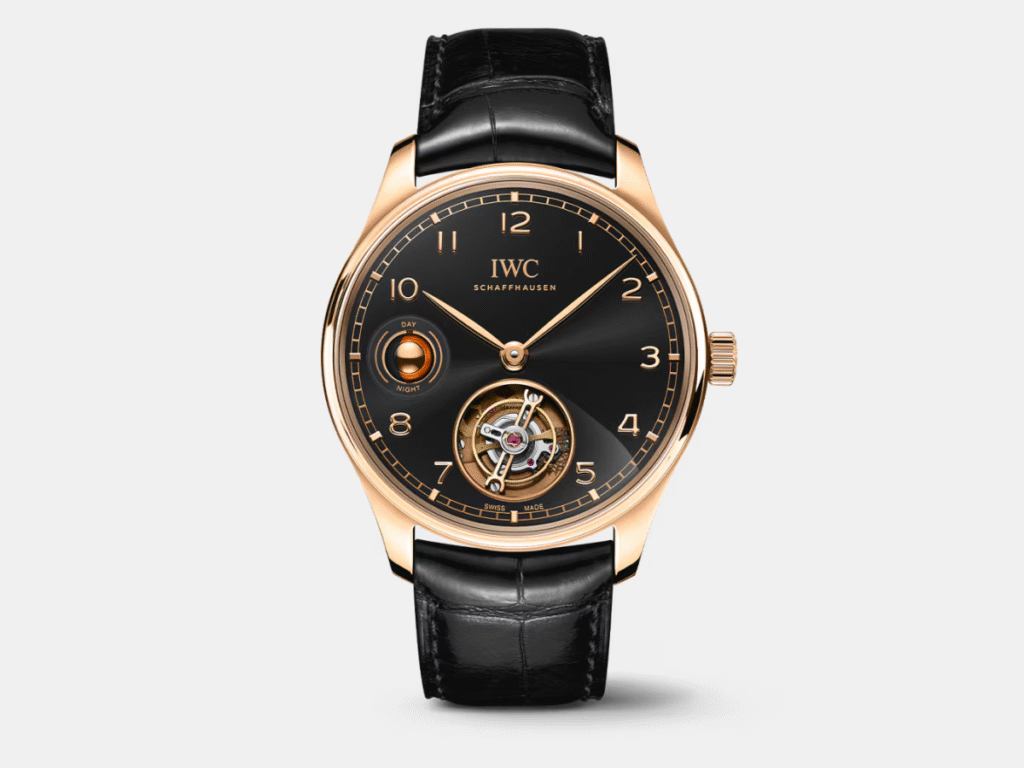
IWC Schaffhausen Portugieser Hand-Wound Tourbillon Day & Night | Image: IWC Schaffhausen
23. IWC Schaffhausen Portugieser Tourbillon Day & Night
Brand: IWC Schaffhausen
Model: Portugieser Hand-Wound Tourbillon Day & Night
Reference: IW545901
Diameter: 42.4 mm
Thickness: 10.8 mm
Material: 18K Armor Gold
Dial Colour: Obsidian Lacquered
Calibre: 81925 (Manual Winding)
Power Reserve: 84 Hours
Water Resistance: 6 Bar (60 metres, 200 feet)
Price: USD $80,900
There are dress watches, and then there are mechanical showcases — the IW545901 is proudly the latter. Housed in IWC’s rich Armor Gold, this 42.4 mm piece doesn’t shy away from the spotlight. The obsidian-lacquered dial sets the stage for a mesmerizing flying tourbillon at 6 o’clock, while the rotating globe at 9 tells you whether you’re running on sun or moon. The hand-wound Calibre 81925 delivers 84 hours of power, reminding you that beneath the beauty, this watch means business. It’s bold, technical, and impeccably refined — a dress watch with drama, for the man who appreciates a little theatre on the wrist.
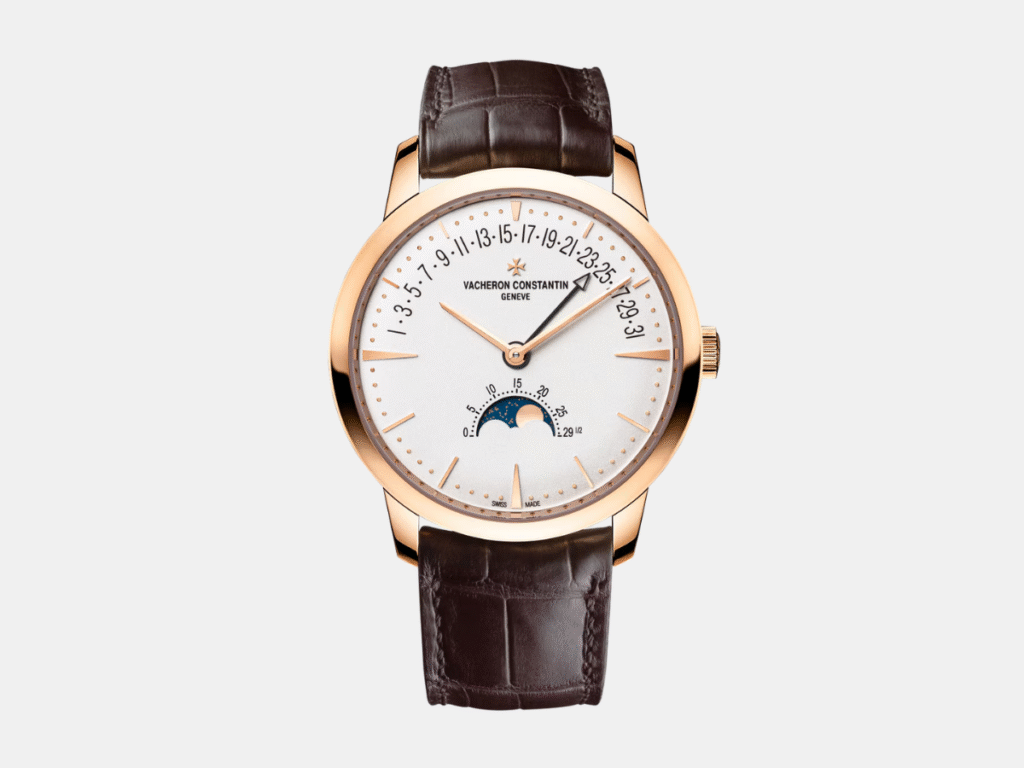
Vacheron Constantin Patrimony Retrograde Day-Date | Image: Vacheron Constantin
24. Vacheron Constantin Patrimony Retrograde Day-Date
Brand: Vacheron Constantin
Model: Patrimony Moon Phase Retrograde Date
Reference: 4010U/000R-B329
Diameter: 42.5 mm
Thickness: 9.7 mm
Material: 18K 5N Pink Gold
Dial Colour: Silver-Toned Opaline
Calibre: 2460 R31L/1 (Self-Winding)
Power Reserve: 40 Hours
Water Resistance: 3 Bar (30 metres, 100 feet)
Price: USD $43,800
The Patrimony Retrograde Day-Date isn’t just about telling time — it’s about showcasing it with flair. From its sweeping retrograde indicators to the polished 18K pink gold case, every element is designed to transform a simple glance at your wrist into a moment of appreciation. The dial’s clean silver-toned finish is beautifully complemented by the arcing day and date displays, which return to zero with mechanical grace. It’s powered by the self-winding Calibre 2460 R31L/1, visible through the sapphire caseback, and finished to Vacheron’s exacting standards. Sophisticated without being showy, this is one of those pieces that conveys more the less it tries — a quiet complication for a man of calm confidence.
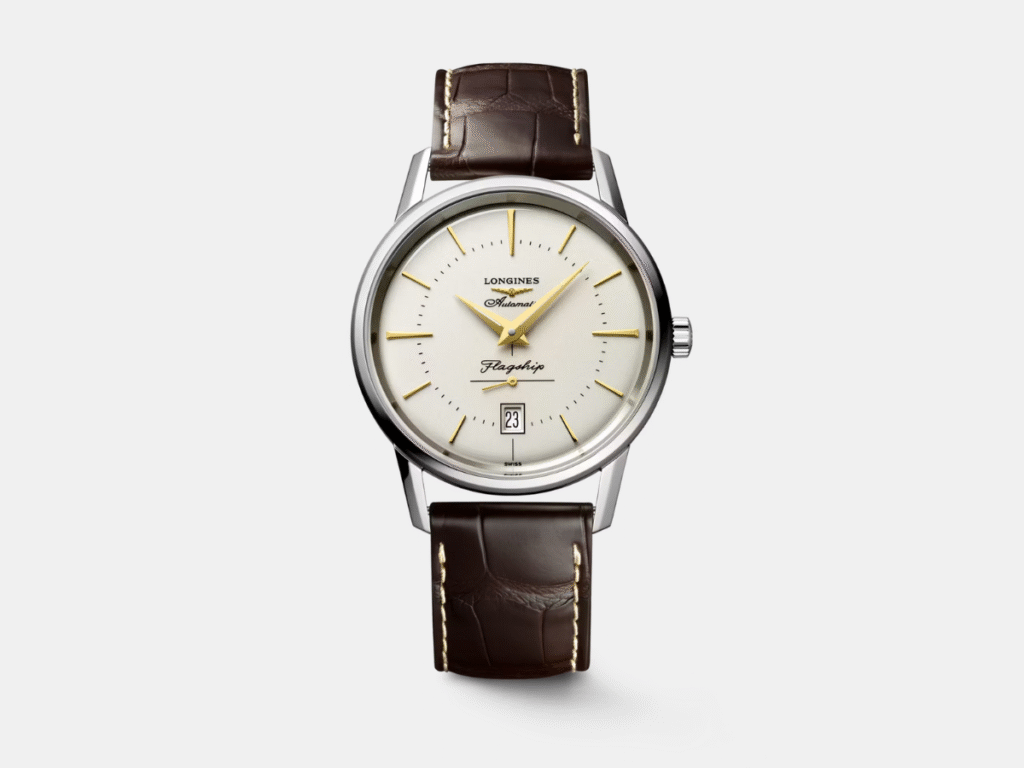
The Longines Flagship Heritage is one of those watches that proves you don’t need to shout to be noticed. With its 38.5 mm case and clean silver dial accented by gilt markers and dauphine hands, this watch oozes vintage charm without feeling dated. The small seconds at 6 o’clock and domed crystal nod to mid-century design, while the reliable L615 movement ensures modern-day performance. Paired with a brown leather strap, it’s the piece that elevates your wrist game without making too much noise — a perfect gentleman’s everyday dress watch.
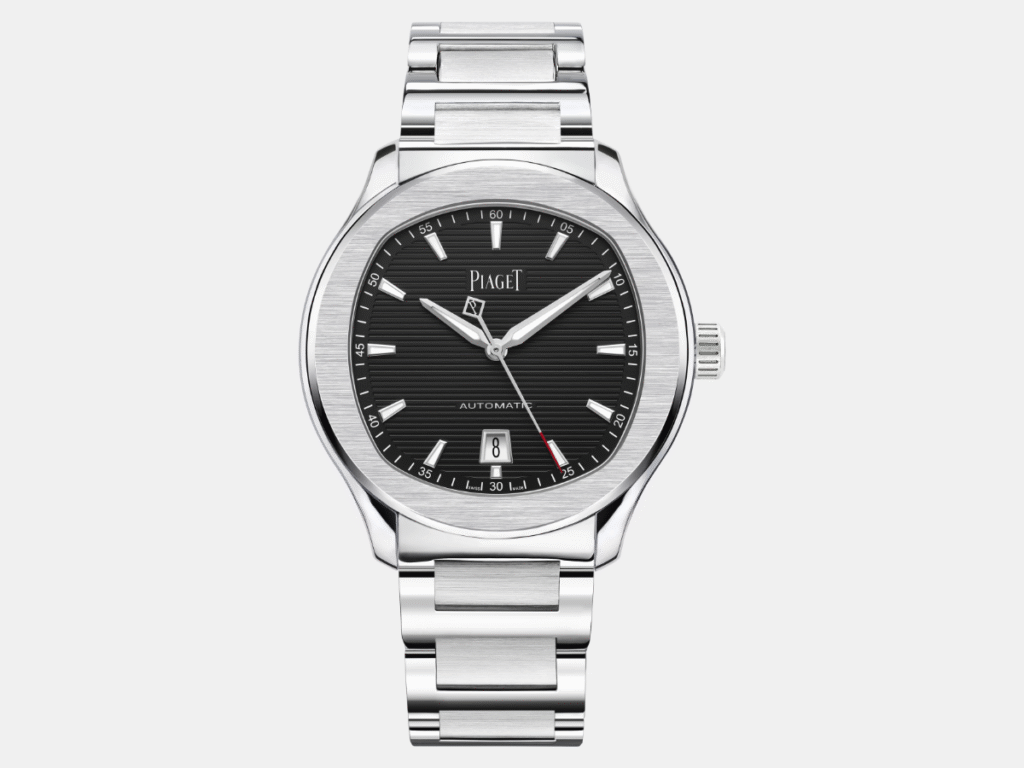
Dial Colour: Black with Horizontal Guilloché Pattern
Calibre: 1110P (Automatic)
Power Reserve: 50 Hours
Water Resistance: 10 Bar (100 metres, 330 feet)
Price: USD $14,500
The Piaget Polo Date is a masterclass in blending sporty elegance with refined craftsmanship. Its 42 mm stainless steel case houses a black dial adorned with a horizontal guilloché pattern, exuding modern yet timeless appeal. The watch is powered by the in-house 1110P automatic movement, offering a 50-hour power reserve. With water resistance of up to 100 meters and a comfortable stainless steel bracelet, it’s a versatile timepiece suitable for both formal occasions and everyday wear.
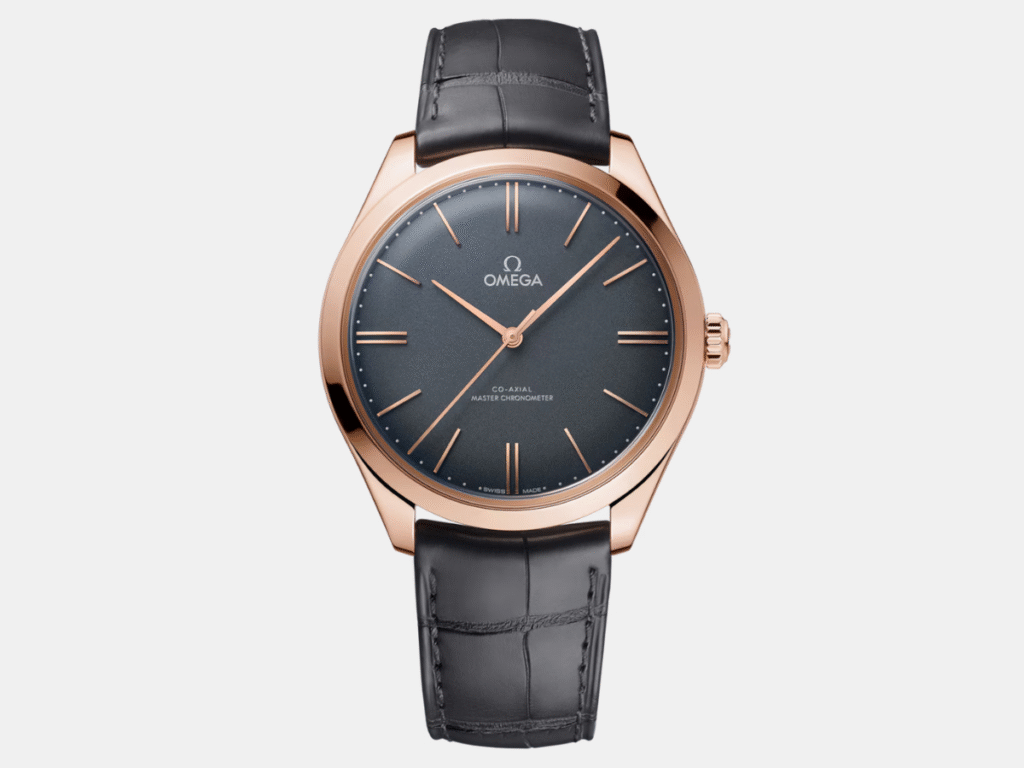
The De Ville Trésor is Omega’s answer to the question: “What happens when you dress a chronometer in a tuxedo?” The 40 mm case, crafted from Omega’s proprietary Sedna™ gold, houses a domed grey enamel dial achieved through the Grand Feu technique, offering a depth and richness that are hard to match. Inside, the manually wound Calibre 8929 boasts Master Chronometer certification, ensuring top-tier precision and magnetic resistance. With a 72-hour power reserve and a sleek profile, this watch is as much about performance as it is about elegance. Paired with a grey leather strap, it’s a timepiece that doesn’t just tell time—it tells a story.
How ‘Many Men Magazine’ Chooses The Best Dress Watches
At Many Men Magazine, our selection of dress watches goes far beyond surface-level appeal. We carefully evaluate each timepiece based on quality, movement, craftsmanship, pricing, and long-term value to ensure it offers more than just a pretty face. From refined quartz pieces to haute horology masterpieces, we take into account real-world user feedback, collector opinions, and insights from respected industry sources like HODINKEE, Time+Tide, and Fratello. This approach enables us to develop a comprehensive understanding of what makes a truly exceptional dress watch — from construction and finishing to heritage and design. With our deep industry knowledge and keen editorial eye, we’ve curated this list to meet the needs of both first-time buyers and seasoned collectors who understand that a great dress watch doesn’t just complete an outfit — it defines it.
Dress Watches FAQ’s
Should I Go For Quartz Or Mechanical?
If you’re after absolute precision with low maintenance, quartz is a solid choice. However, if you appreciate the art of watchmaking — gears, springs, and all — a mechanical (manual or automatic) dress watch is where the soul resides. Neither option is wrong; it simply depends on your vibe.
Are Dress Watches Only For Formal Occasions?
Nope. While they’re designed for elegance, the modern dress watch is surprisingly versatile. Worn with a casual blazer or a crisp tee and trousers, it can add a touch of sophistication to your everyday outfit. It’s not about the rules — it’s about how you wear it.
Can I Wear A Dress Watch Every Day?
Technically, yes — especially if you choose one with decent water resistance and a durable case. However, dress watches shine brightest in settings that require a touch of extra class: suits, dinners, events, and important meetings. If your daily routine involves a lot of rugged activity, you might want to reserve it for the finer moments.
Elias Albay is the Founder and Director of Many Men Magazine, a Toronto-based digital publication dedicated to promoting modern masculinity through style, culture, and self-improvement. What started as a personal turning point became a purposeful platform. — born from Elias’ desire to create something meaningful after completing his studies and finding no career path that truly matched his ambitions. With a background in Civil Engineering from York University and experience in Commercial Flight Operations at CAE, he applied skills, and resilience from both fields to forge a new path.