



















Health & Fitness

The Rock’s Diet & Workout Plan

Reading Time: 9 minutes

Share via

Our team of editors and experts thoughtfully chooses each product. If you decide to buy through one of our links, we may earn a commission. Learn more. Want to know how we test products? Click here for more details.

Training like The Rock isn’t a casual choice — it’s a way of life you must fully commit to. Long before he ruled the box office, Dwayne Johnson was developing that work ethic as a college athlete and later as a WWE superstar. That foundation grew into a routine based on early mornings, tough workouts, strict nutrition, and an almost stubborn level of consistency. His physique isn’t luck or just genetics; it’s the result of showing up every single day and pushing himself well beyond where most people stop.

What makes his approach even more interesting is the balance between discipline and those legendary cheat days. One minute he’s pushing through intense cardio and heavy lifts, and the next he’s clearing entire platters of sushi or taking down stacks of pancakes that could feed a family. It’s a reminder that he earns those moments through consistent effort the rest of the week. And while following his plan is definitely possible, it requires dedication, time, and a grocery budget ready for its own workout.

This formula is what’s kept him shredded through Baywatch, Fast Five, Hercules, and pretty much every movie where his sleeves didn’t stand a chance — so the real question is, are you ready to take this on? Let’s dive in and see what you’re made of.
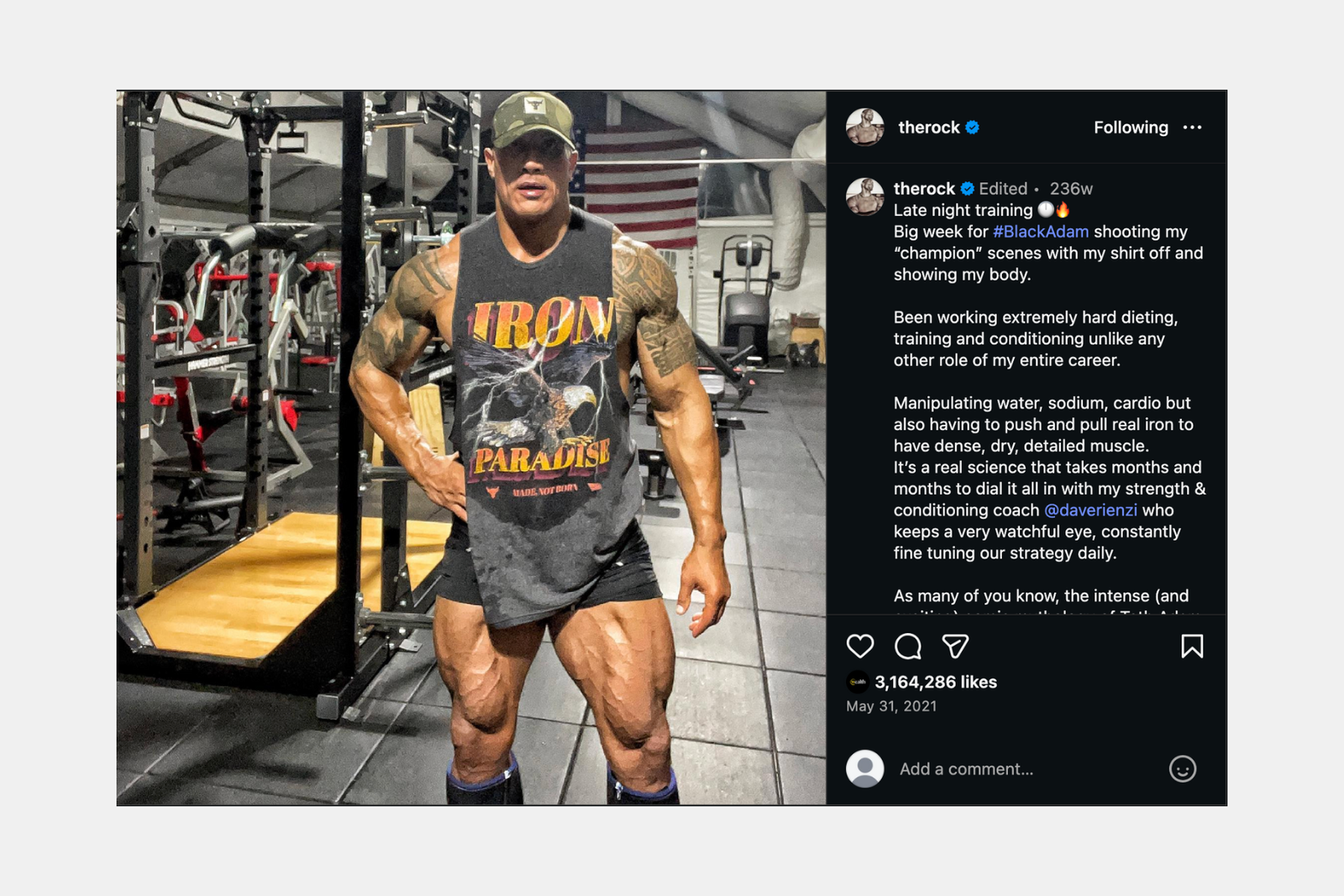
The Rock Post-Workout for Black Adam | Image: Instagram – @therock

The Rock’s Diet Plan

if there’s one thing people should know about The Rock’s eating habits, it’s that subtlety is not part of the routine. He approaches food the same way he approaches training — full throttle. When he was preparing for Black Adam, his entire nutrition plan went into overdrive. This wasn’t just eating for size; it was eating for superhero-level definition. His meals were stacked with lean protein, complex carbs, and vegetables, divided across the day in portions big enough to make most people tap out. It was intense, calculated, and completely dialled in.

His nutrition took on a whole new spotlight during his prep for Black Adam, when he revealed just how much science and discipline went into getting camera-ready. He explained that this role demanded more from him than anything he’d done before, and you could see it in every update he posted. “Been working extremely hard dieting, training and conditioning unlike any other role of my entire career” he wrote.

He talked about adjusting everything from water and sodium intake to cardio and heavy lifting, all under the watchful eye of his longtime coach Dave Rienzi, who fine-tuned every detail along the way. It wasn’t just about dieting — it was a comprehensive transformation plan. Even outside of movie prep, The Rock continues to eat on a scale that feels larger than life. He typically has five structured meals a day, built around steak, fish, eggs, oats, rice, and greens — the essentials, but in quantities only he can make look normal.

And then come the cheat meals, the ones that take over the internet. Towering pancake stacks, sushi spreads that look like they’re feeding a party of twelve, cookies that could double as serving plates — they’re legendary for a reason. He earns them through days upon days of strict discipline. So yes, The Rock eats big — but every bite has intention behind it. That’s the real backbone of the physique you see on-screen: massive effort, massive appetite, and a mindset that never does anything halfway.

Five-Meal Diet Plan

When he’s not packing on muscle for a particular role, The Rock sticks to a consistent five-meal routine that keeps him fuelled, lean, and prepared for whatever the day has in store. It’s not as intense as his Black Adam preparation, but it’s still a substantial amount of food, centred around high-quality protein, slow-digesting carbs, and plenty of greens. This is his “everyday engine” — the foundation that sustains his size without pushing him into superhero territory.

On a typical day, The Rock’s go-to meals look something like this:

Meal #1

  • 10 oz Steak
  • 2 Cups Oatmeal
  • 3 Egg Whites & 1 Whole Egg
  • 1 Glass Fruit Juice

Meal #2

  • 2 Servings Chicken
  • 2 Bell Peppers
  • 3 Cups Mushrooms
  • 3 Cups Broccoli
  • 1 Protein Shake

Meal #3

  • 8 oz Salmon
  • 8 Asparagus Tips
  • 2 Whole Eggs
  • 2 Cups Rice Medley
  • 3 Cups Broccoli

Meal #4

  • 10 oz Steak
  • 3 Baked Potatoes
  • 8 Asparagus Tips
  • 1 Glass Orange Juice

Meal #5

  • 20 grams Casein Protein
  • 10 Egg Whites
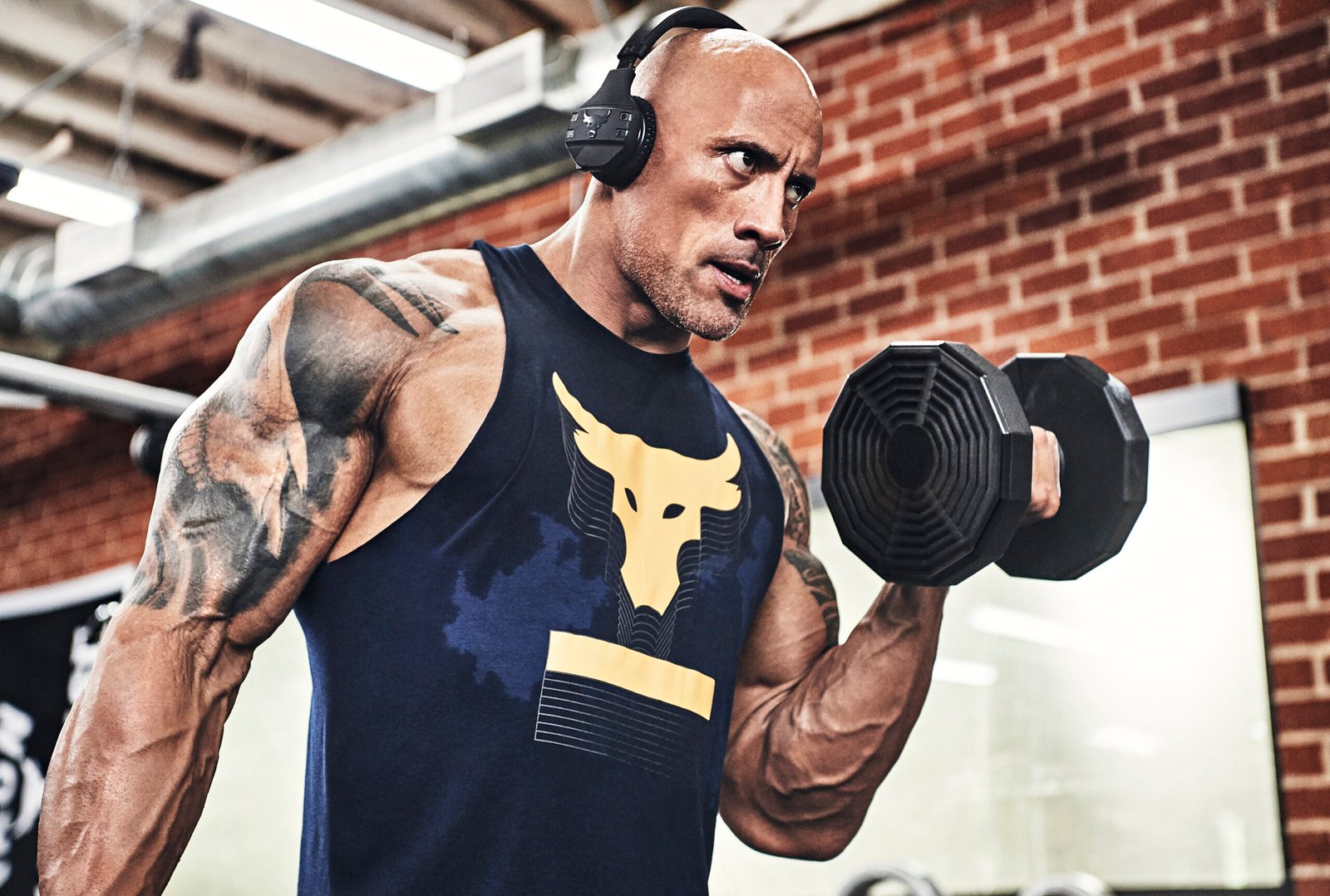
The Rock’s Diet & Workout Plan | Image: Under Armour

Seven-Meal Diet Plan

When The Rock gears up for a major role, his diet shifts from intense to nearly unbelievable. That’s when he switches to his seven-meal plan — a full-scale fueling system designed to build muscle and keep his energy sky-high through brutal training sessions.

In these phases, both the meals and the portions go way up. Here’s what his seven-meal days usually look like:

Meal #1

  • 10 oz cod
  • 2 whole eggs
  • 2 cups of oatmeal

Meal #2

  • 8 oz cod
  • 12 oz sweet potato
  • 1 cup veggies

Meal #3

  • 8 oz chicken
  • 2 cups white rice
  • 1 cup veggies

Meal #4

  • 8 oz cod
  • 2 cups rice
  • 1 cup veggies
  • 1 tbsp fish oil—122

Meal #5

  • 8 oz steak
  • 12 oz baked potato
  • spinach salad

Meal #6

  • 10 oz cod
  • 2 cups rice
  • salad

Meal #7

  • 30 grams casein protein
  • 10 egg-white omelet
  • 1 cup veggies (onions, peppers, mushrooms)
  • 1 tbsp omega-3 fish oil

The Workout Plan

Ready to channel your inner Baywatch hero and train like The Rock? Brace yourself — his workout plan isn’t meant for casual lifters. This routine hits harder than a lifeguard chasing down a runaway jet ski. If you’re expecting something light and breezy, think again. The Rock trains with the intensity of someone preparing to save the world before breakfast, and if you stick with it, you’ll feel like you’ve stepped right into your own action-movie montage.

While his exact routine shifts depending on the role he’s working on, one thing never changes: the workload is intense. He begins his mornings with 30 to 50 minutes of cardio on the elliptical—no shortcuts, no excuses. Breakfast follows, usually a protein-packed meal designed to fuel what comes next. Then he heads to the gym for what he famously calls “clangin’ and bangin’,” which means heavy lifting and high volume. He trains six days a week, focusing on a different muscle group each session, often with his signature playlist blaring through his headphones. Day seven? That’s reserved for rest, recovery, and outrageously large cheat meals, often including ice cream the way nature intended.

But here’s the important reality check — The Rock is 6’5″, genetically gifted, and built like industrial machinery. You don’t need (and probably shouldn’t try) to copy every move he makes. Train smart, build gradually, and adjust the intensity to suit your body. The goal is progress, not a pulled hamstring.

So, what can you expect from a Rock-inspired routine? Kettlebells, barbells, dumbbells, sweat, pain, and the kind of muscle burn that reminds you you’re doing something right. Sore legs, heavy arms, and a sense of victory with every rep. It’s tough, but the payoff? Absolutely worth it. Alright — let’s jump in.

Day 1 – Legs

  • Run on Treadmill: 30-50 minutes
  • Barbell Walking Lunge: 4 sets – 25 reps
  • Leg Press: 4 sets – 25 reps
  • Leg Extensions: 3 sets – 20 reps
  • Barbell Squat: 4 sets – 12 reps
  • Hack Squat: 4 sets – 12 reps
  • Single Leg Hack Squat: 4 sets – 12 reps
  • Romanian Deadlift: 4 sets – 10 reps
  • Seated Leg Curl: 3 sets – 20 reps
  • Thigh Abductor: 4 sets – 12 reps

Day 2 – Back

  • Run on Treadmill: 30-50 minutes
  • Wide-Grip Lat Pulldown: 4 sets – 12 reps
  • Bent Over Barbell Row: 4 sets – 12 reps
  • One-Arm Dumbbell Row: 4 sets – 12 reps
  • Barbell Deadlift: 3 sets – 10 reps
  • Pull-ups: 3 sets, to failure
  • Dumbbell Shrug: 4 sets – 12 reps
  • Inverted Row: 3 sets, to failure
  • Hyperextensions: 4 sets – 12 reps

Day 3 – Shoulders

  • Run on Treadmill: 30-50 minutes
  • Dumbbell Shoulder Press: 4 sets – 12 reps
  • Standing Military Press: 4 sets – 12 reps
  • Front Dumbbell Raise: 4 sets – 12 reps
  • Side Lateral Raise: 4 sets – 12 reps
  • Reverse Machine Flyes: 4 Sets – 15 Reps
  • Dumbbell Shrug: 4 sets – 12 reps
  • Inverted Row: 3 sets, to failure
  • Seated Bent-Over Rear Delt Raise: 4 sets – 12 reps

Day 4 – Arms/ABS

  • Run on Treadmill: 30-50 minutes
  • Dumbbell Bicep Curl: 4 sets – 15 reps
  • Hammer Curls: 4 sets – 15 reps
  • Spider Curls : 4 sets, To Failure
  • Triceps Pushdown: 4 sets – 15 reps
  • Overhead Triceps: 3 Sets – 15 Reps
  • Hanging Leg Raise: 4 sets – 20 reps
  • Rope Crunch: 4 sets – 20 reps
  • Russian Twist: 4 sets – 20 reps

Day 5 – Legs

  • Run on Treadmill: 30-50 minutes
  • Barbell Walking Lunge: 4 sets – 25 reps
  • Leg Press: 4 sets – 25 reps
  • Leg Extensions: 3 sets – 20 reps
  • Barbell Squat: 4 sets – 12 reps
  • Hack Squat: 4 sets – 12 reps
  • Single Leg Hack Squat: 4 sets – 12 reps
  • Romanian Deadlift: 4 sets – 10 reps
  • Seated Leg Curl: 3 sets – 20 reps
  • Thigh Abductor: 4 sets – 12 reps

Day 6 – Chest

  • Run on Treadmill: 30-50 minutes
  • Barbell Bench Press: 4 sets – 12 reps
  • Incline Dumbbell Press: 4 sets – 12 reps
  • Dumbbell Bench Press: 4 sets – 12 reps
  • Flat Bench Cable Flyes: 4 sets, to failure
  • Incline Hammer Curls: 4 sets – 12 reps
  • Dips – Chest Version: 4 sets, to failure

Day 7 – Rest

Diet & Nutrition
About the Author
Previous Post
L’Heure Élevée – Watch News #2
Next Post
10 Best PS5 Games You Must Play in 2025

Related Articles

Making Friends as an Adult is Hard—Here’s How to Make It Easier

Reading Time: 12 minutes

Our team of editors and experts thoughtfully chooses each product. If you decide to buy through one of our links, we may earn a commission. Learn more. Want to know how we test products? Click here for more details.

Making friends as an adult can feel oddly complicated. As kids, all it took was a shared love of dinosaurs or trading snacks at lunch. Now? It’s calendar coordination, awkward small talk, and wondering if you’re being too eager or not enough. Add in work, family obligations, and the comfort of your own couch, and suddenly your social circle starts to shrink faster than your free time.

But here’s the thing—most people feel the same way. Adult life tends to place friendships on the back burner, even though meaningful connections remain just as important. The difference now is that making friends requires intention—and a little creativity.

This guide is here to help you navigate the maze. From turning acquaintances into genuine friends to finding people who understand you, we’re breaking down what truly works in forming adult friendships.

12 Ways To Make New Friends As Adult

Making friends as an adult might feel like a mystery, but it doesn’t have to be. You might want to expand your circle, build deeper connections, or just have someone to grab tacos with on a Tuesday night. These 12 practical (and doable) tips will help you build real friendships—without the awkwardness or overthinking. Let’s break it down.

1. Say Yes More Often

It’s tempting to decline that invite because you’re tired, not in the mood, or uncertain about who’ll be there. However, saying “yes” more often opens the door to unexpected connections. That casual work happy hour or trivia night at the bar could be where you meet someone who becomes part of your core crew.

No need to overcommit—just aim to show up occasionally. Making friends doesn’t happen when you’re always in your comfort zone (or your sweatpants). Growth and friendships often start with a simple “sure, I’ll come.”

2. Reconnect with Old Acquaintances

You don’t always have to start from scratch—sometimes, the next great friendship is someone already in your contact list. Reach out to that old classmate, former coworker, or gym buddy you haven’t spoken to. A simple message like “Hey, I was just thinking about that wild road trip we took back in college—how have you been?” can reignite a connection faster than expected. There’s already a layer of familiarity, and that shared past can make picking things up surprisingly easy.

3. Turn Hobbies Into Hangouts

Engaging in something you genuinely enjoy is already rewarding—but it becomes even better when it serves as a gateway to friendship. Whether it’s joining a local hiking group, participating in a weekend cooking class, or being part of a casual sports league, these shared-interest environments naturally foster conversation without the awkward pressure of small talk. You already have something in common, which makes it easy to connect. Plus, when you’re immersed in a hobby you love, you present your best self—and that’s the version of you that people want to discover.

4. Be a Regular Somewhere

Familiarity breeds connection. Becoming a “regular” at your local coffee shop, yoga class, or even your neighbourhood bar creates organic opportunities for small talk and fosters rapport with others who also frequent those places.

Over time, a simple “Hey, you again!” can turn into full conversations and eventually hangouts. It’s a subtle, low-pressure way to expand your social circle—no extra planning needed.

5. Host Something Low-Key

You don’t need to be the next great party planner to bring people together. Hosting something small—like a game night, movie screening, or potluck dinner—creates a space where connections can blossom naturally.

Even better? Invite people from different areas of your life. Sometimes, your old coworker and your gym buddy connect better than you expect. You might end the night with a stronger group of friends and leftover snacks.

6. Take the First Step

It might feel intimidating, but taking the initiative can be a game-changer. Ask a coworker if they want to grab lunch, message someone you had a great chat with at an event, or follow up with a “We should hang out sometime” that actually leads to plans. Most adults are just as hesitant as you are, but someone has to make the move—and chances are, they’ll be relieved you did. Friendships don’t just happen; they’re built one brave step at a time.

7. Use Apps and Online Communities

Yes, it might feel a little strange at first—but using apps to find friends is totally normal in today’s world. Platforms like Bumble BFF, Meetup, and even hobby-based Facebook groups are designed for exactly this purpose: helping like-minded people connect. You can filter by interests, location, and vibe, making it easier to find potential friends who actually fit your lifestyle.

Think of it as online dating—but for friendship, without the awkward “So… are we a thing now?” moment. It’s convenient, low-pressure, and a fantastic option if your offline world lacks opportunities to meet new people.

8. Be Curious and Ask Questions

A little curiosity goes a long way. When you ask genuine, thoughtful questions—beyond the usual “What do you do?”—you invite people to open up and feel seen. Try asking what they’re into lately, which book they just finished, or how they spend their weekends. These kinds of questions show that you’re not just making conversation—you’re making an effort.

Plus, when you focus on learning about the other person, it relieves the pressure on you. You don’t have to come up with witty one-liners or dominate the conversation. Just listen, react, and be present. Connection often starts with being genuinely interested.

9. Say Goodbye to the “Too Busy” Mindset

Everyone’s busy—jobs, errands, responsibilities—but if you keep waiting for the “perfect time” to connect, it might never come. The key is to treat friendship like any other priority. Even a quick coffee, a walk around the block, or a 15-minute check-in can make a significant difference. It’s not about finding loads of free time; it’s about being intentional with the time you have.

10. Be Consistent, Not Just Friendly

Making a great first impression is easy, but friendships aren’t built on one-off chats. If you only show up once and disappear, people won’t feel the connection has room to grow. Check in every so often, follow up on conversations, and make plans when you can. You don’t need to be in constant contact—just consistent enough that people know you’re genuinely interested. That steady presence is what turns casual acquaintances into actual friends.

11. Join a Class or Take a Course

Learning something new is one of the most natural ways to meet people. Whether it’s a cooking class, a language course, or a dance workshop, you’ll find yourself surrounded by others who are just as eager (or nervous) as you are. The shared experience creates an instant bond—plus, it gives you something to laugh about when the soufflé collapses or your salsa footwork goes sideways. It’s socializing with a side of skill-building.

12. Be Patient—But Keep Showing Up

Friendships don’t always spark instantly. Some take time, a few awkward hangouts, and a couple of “Are we friend-zoning each other?” moments before they find their rhythm. Don’t get discouraged if things don’t click right away. The key is to keep showing up—emotionally and physically. Continue to put yourself in spaces where connections can happen, stay open to different personalities, and trust that the right people will stick. Like anything meaningful in life, friendship takes time—and it’s worth the wait.

Why Don’t We Have Good Friends Anymore as We Get Older?

As we get older, the friendship landscape changes—sometimes without us even realizing it. In your 20s and 30s, life shifts into overdrive. Careers take off, people move for work or relationships, and schedules start filling up with meetings, errands, and commitments. The carefree hangouts that once felt effortless now require planning, coordinating, and occasionally, rescheduling three times before they actually happen.

Another big reason? Priorities change. When you’re balancing a full-time job, family life, or personal goals, friendships can unintentionally slip into the background. It’s not that the need for connection disappears—it’s just that adulting is time-consuming, and friendships start competing with a dozen other responsibilities.

There’s also the social side of things. Making friends as an adult can feel awkward, even intimidating. It’s hard to put yourself out there without feeling like you’re trying too hard—or worse, worrying if it’s “too late” to build new connections. And let’s be honest: when everyone seems like they’ve already got their crew, jumping in can feel like crashing a private party.

But here’s the reality: most adults feel the same way. A lot of people are craving deeper connections—they’re just unsure how to go about it. The good news? It’s never too late. Friendships in adulthood might take a little more intention, but they can be just as meaningful—if not more—than the ones we made back in school.

Why Does Making New Friends as an Adult Feel So Hard?

Making new friends as an adult isn’t just hard—it can feel downright weird. Gone are the days when friendships formed naturally in school hallways, on playgrounds, or during group projects. Back then, proximity and routine did the heavy lifting. These days, our lives are filled with structure, responsibilities, and tight schedules, leaving little room for spontaneous connection. And when you meet someone cool, there’s a strange dance of trying not to come off too strong—because adult friendships seem to come with invisible rules that no one really talks about.

There’s also the perception that everyone already has their circle. You might see people posting group photos or going on weekend getaways and assume they’ve got it all figured out socially. That feeling can make you second-guess putting yourself out there. But the truth is, many adults feel lonely or wish they had more close friends—they’re just not saying it out loud. Combine that silence with the pressure to appear “put together,” and it’s no wonder so many people quietly struggle to make new connections.

At the heart of it all, the desire for real friendship never fades—it just becomes harder to prioritize and act upon. But hard doesn’t mean impossible. It just means we have to be a little more intentional, a little more open, and a lot more accepting of the idea that it might take time. Once you realize that most people are in the same boat, reaching out feels a lot less intimidating—and a lot more worthwhile.

General FAQ’s

Why Is It So Hard To Make Friends After 30?

By the time you reach your 30s, most people are managing careers, relationships, families, and personal goals. Free time diminishes, routines become established, and individuals often invest their energy in existing relationships—resulting in fewer opportunities for new ones to develop organically.

How Do I Make Friends Without Feeling Awkward?

Start small. Focus on being curious, asking questions, and showing genuine interest. You don’t need to be the most charming person in the room—just be approachable and consistent. Most people appreciate the effort more than you realize.

Are Other Adults Struggling To Make Friends Too?

Absolutely. Many adults feel isolated or wish they had more meaningful friendships. You’re not alone in this, and chances are, the person you’re nervous to talk to is hoping for the same connection.

Where Can I Meet New People Outside Of Work?

Consider joining hobby-based groups, classes, community events, or volunteering. Apps like Bumble BFF and Meetup are also excellent options. Regular places such as gyms, dog parks, or cafés can become social hubs if you attend consistently.

How Long Does It Take To Build A Real Friendship?

There’s no fixed timeline. Some connections click instantly, while others may take weeks or even months of regular interaction to feel natural. The key is to show up consistently, be authentic, and allow the relationship to evolve without rushing it.

About the Author

Related Articles

arrow_drop_up