



















Grooming & Fragrance

Everything You Need to Know About Hairline Tattoos

Share via

Our team of editors and experts thoughtfully chooses each product. If you decide to buy through one of our links, we may earn a commission. Learn more. Want to know how we test products? Click here for more details.

It usually starts small — a little more forehead than usual, your barber subtly adjusting your fade higher each visit, or that sinking feeling when your selfie angles mysteriously seem higher. Hair loss sneaks in like a bad habit. One day, you’re sporting a sharp lineup; the next, you’re googling “best hats for receding hairlines.”

But before you go for a full buzzcut or spend thousands on a transplant, there’s a modern option that’s been gaining serious popularity in the grooming scene: hairline tattoos — also called scalp micropigmentation (SMP). Sound intense? Maybe. But trust us, this isn’t your cousin’s regrettable neck tattoo.

Hairline tattoos focus on precision and illusion. Tiny pigment deposits are applied on your scalp to resemble real hair follicles, giving the appearance of a fuller, sharper hairline — no surgery, no downtime, no daily upkeep. It’s like having a permanent, barber-fresh fade…minus the small talk.

In this guide, we’re covering everything you need to know: what SMP actually is, how it works, who it’s for, how long it lasts, and what the process looks like from beginning to end. If your hairline’s been playing hide-and-seek lately, this might be the comeback it needs.
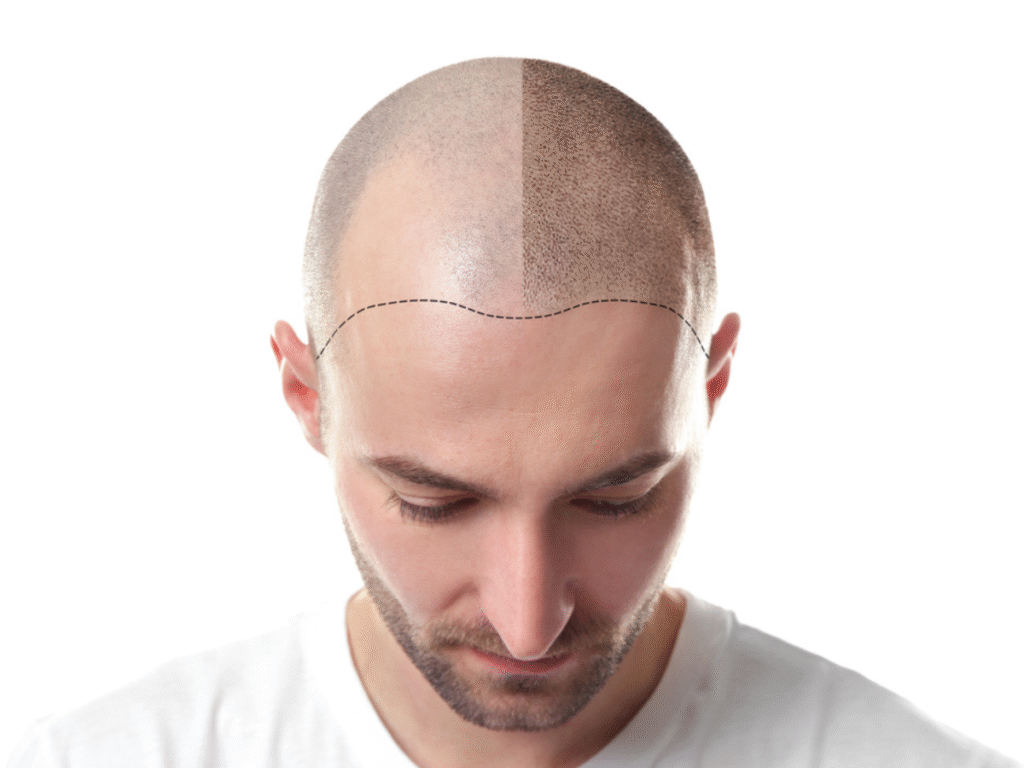
What Is a Hairline Tattoo?

Let’s clear something up — a hairline tattoo isn’t about getting barbed wire or script inked across your forehead. What we’re really talking about is something much more refined: scalp micropigmentation, or SMP for short. It’s a non-surgical treatment where a trained specialist uses microneedles to deposit tiny dots of pigment into your scalp. These dots are designed to mimic real hair follicles, creating the illusion of a fuller, sharper hairline. Think of it as hyper-detailed dotwork — only instead of a canvas, the art happens right where your hairline used to be.

The magic is in the realism. When done properly, SMP resembles natural stubble or a clean, freshly buzzed head. It can rebuild a receding hairline, fill in thinning areas, or simply enhance what’s already present. Whether you have a widow’s peak advancing or your corners are beginning to retreat like a bad haircut, a hairline tattoo provides the appearance of density and definition — without surgery, creams, or questionable powders.

Now, let’s talk about pain — because we know you’re wondering. The idea of tattooing your scalp might sound intense, but most guys say it’s not nearly as bad as it sounds. The sensation is more like a series of light taps or a rubber band snapping, not some medieval torture device. It’s tolerable, especially when you remember the end result: a clean, confident look that doesn’t wash off, fade overnight, or require constant maintenance. Just one more tool in the modern grooming kit — and a very effective one at that.
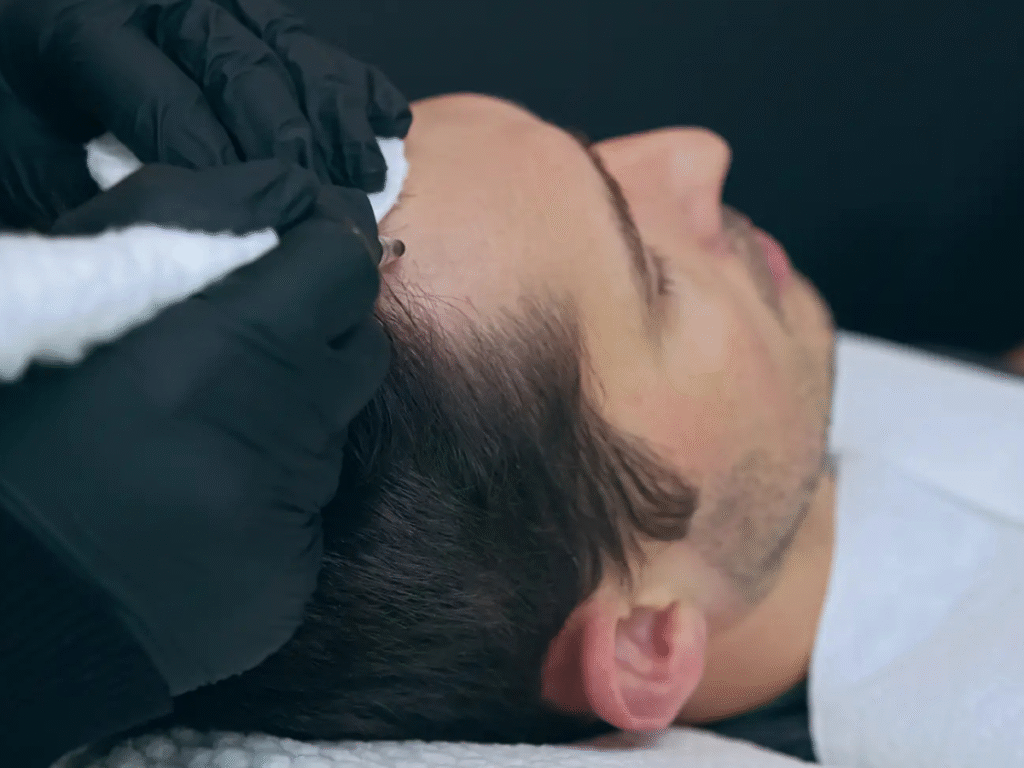
How does it work?

Getting a hairline tattoo isn’t a quick buzz and go — it’s a carefully planned, multi-session process designed to deliver the most natural and personalised result possible. It begins with a consultation and ends with you walking out with a sharper, more confident look. No plugs, no pills, and definitely no combovers.

What to Expect During the Process:

  • The process starts with a thorough consultation, where a trained practitioner assesses your scalp, discusses your goals, and works with you to create a natural-looking hairline that suits your facial structure and current hair pattern.
  • The first treatment session focuses on establishing a solid foundation. Using micro-needles, the technician deposits the initial layer of pigment in small, precise spots to outline the hairline and start creating the illusion of hair density.
  • The second session builds on this foundation by adding more pigment for greater depth, texture, and a more natural-looking finish. This stage improves the natural appearance of the hairline, carefully blending the pigment with your existing hair or skin tone.
  • In some cases, a third session might be recommended, especially for clients who want a darker finish, more density, or further refinements to enhance the overall look.
  • After the final session, it’s common to notice temporary darkness in the pigment or mild scabbing. As the scalp heals, the excess pigment gradually diminishes, revealing a softer and more natural appearance.
  • Once fully healed, the treatment offers a durable, low-maintenance hairline that requires no daily styling or upkeep — providing a consistently fresh, barber-like finish with minimal effort.

If you’re seeking something permanent, sharp, and effortlessly stylish, a hairline tattoo might be just what you’ve been searching for. It’s subtle, clever, and designed to suit your lifestyle.
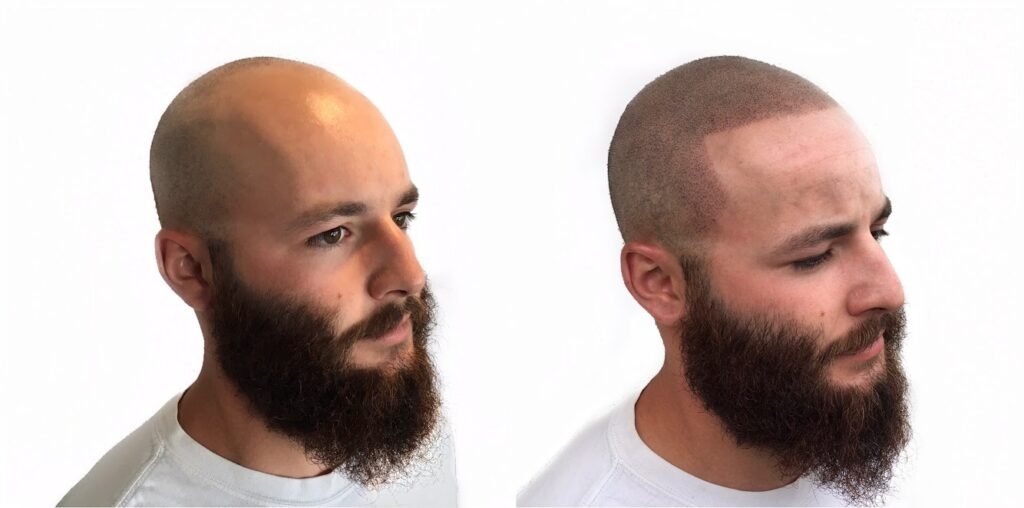
Who Is It For?

Hairline tattoos are ideal for men who want a sharp, low-maintenance look without surgery or gimmicks. Here’s who it’s perfect for:

  • Receding hairlines
  • Thinning or patchy spots
  • Buzz-cut styles
  • Post-transplant
  • Tired of hair loss products
  • Low-maintenance grooming

How Long It Lasts

One of the main benefits of scalp micropigmentation is its durability. A typical hairline tattoo can last between 4 to 6 years before requiring a touch-up, making it one of the most low-maintenance grooming choices. The pigment is intended to fade gradually over time, not all at once, so your hairline remains natural-looking — never patchy or overly intense.

How long it lasts depends on factors like sun exposure, skin type, and how well you care for your scalp. Oily skin, excessive sweating, or skipping aftercare can cause faster fading, while staying properly hydrated and protecting from the sun can help maintain the look longer. When the time comes, a quick refresh session is all it takes to restore that sharp, defined hairline — no fuss, no downtime.

Cost Breakdown

Let’s talk numbers. Hairline tattoos — or scalp micropigmentation — aren’t exactly cheap, but when you compare them to the cost of endless hair loss treatments or surgical transplants, they start to make a lot more sense.

On average, SMP can cost between $1,500 and $4,000, depending on factors such as your location, the technician’s experience, the size of the treatment area, and how many sessions you require. Smaller touch-ups or partial work (like just the temples) will be priced on the lower end, while full scalp treatments or more intensive density blending can reach the higher range.

Here’s a rough overview:

  • Small areas (like corners or a mild recession) – $1,000 to $2,000
  • Full hairline restoration – $2,000 to $3,000
  • Top of scalp or full crown work – $3,000 to $4,000+
  • Touch-up (after 3–5 years) – Typically $500 to $1,000.

Keep in mind — this isn’t just a one-time aesthetic upgrade. It’s a long-term investment in how you look, feel, and carry yourself. No daily maintenance, no recurring product costs, no awkward “in-between” phases. Just one upfront cost for years of peace of mind.

Fade Less, Flex More

Hairline tattoos aren’t just about appearance — they’re about owning your image and regaining control without surgery, snake oil, or high-maintenance routines. Scalp micropigmentation provides a sharp, natural-looking hairline that stays in place, doesn’t fade unevenly, or require a drawer full of styling products. It’s a wake-up-and-go kind of confidence — and honestly, who doesn’t want that?

From your initial consultation to that final mirror check, the process is simple and tailored to your features, goals, and lifestyle. Unlike trends that fade away, a well-executed hairline tattoo remains timeless — because a sharp hairline never goes out of style. Whether you’re aiming to rewind the clock, improve your self-image, or stay ahead of trends, SMP is a modern grooming choice that truly provides results.

So if your hairline’s been messing around, maybe it’s time to stop hunting for quick fixes and start making bold statements. Fade less. Flex more. Your future self will thank you.

General FAQ’S

Does a Hairline Tattoo Look Real?

Yes — when performed by a skilled practitioner, a hairline tattoo (scalp micropigmentation) can appear extremely realistic. The technique uses microdots of pigment to imitate the look of natural hair follicles. The final result resembles a freshly buzzed haircut or a naturally dense hairline. People won’t realize it’s a tattoo unless you tell them — even barbers are often impressed by how seamlessly it blends.

Is the Procedure Painful?

It’s not entirely pain-free, but most clients report minimal discomfort. Imagine it as a series of light pricks or a rubber band snapping against your scalp — mildly irritating yet very tolerable. The good news is that it’s much less intense than a traditional tattoo, and there’s no cutting, stitching, or significant recovery time involved.

How Long Does the Treatment Take?

Scalp micropigmentation usually takes 2 to 4 sessions, depending on your desired look and coverage needs. Each session generally lasts 2 to 3 hours, with about 7 to 14 days between sessions to allow your scalp to heal and the pigment to settle. By the final session, your hairline will appear fuller, sharper, and fully refined.

Will the Pigment Fade or Change Color Over Time?

The pigment is formulated to fade gradually and naturally over 4 to 6 years. It won’t turn green, blue, or become blotchy like traditional tattoo ink sometimes does. Instead, the colour softens evenly. To keep your hairline looking fresh, a simple touch-up every few years generally suffices.

Can I Still Grow My Hair Out After Getting SMP?

Yes, but it depends on your hair goals. SMP looks best when combined with short or buzzed hairstyles, as it creates the illusion of hair density at the scalp. If you grow your hair out too long, especially in areas with little natural hair, it may disrupt the visual harmony. Many men opt to keep their hair cropped close to maintain a clean, consistent appearance.


About the Author
Previous Post
How Much Prize Money the NBA Champion Oklahoma City Thunder Take Home Behind Their Glory?
Next Post
Which Tom Ford Cologne Is Right for You? A Complete Breakdown

Related Articles

Inside Australia’s Ultimate Hybrid Ute, the KIA Tasman Hybrid

Reading Time: 14 minutes

Our team of editors and experts thoughtfully chooses each product. If you decide to buy through one of our links, we may earn a commission. Learn more. Want to know how we test products? Click here for more details.

  • Pricing for the KIA Tasman begins at AUD $42,990 (approximately USD $29,600) for the base S 4×2 model, with the range reaching up to AUD $74,990 (around USD $51,700) for the off-road-oriented X-Pro 4×4.
  • Pre-orders for the Tasman are now available, with the first vehicles expected to arrive in showrooms starting in July.
  • The Dual Cab Chassis version is set to arrive roughly a month after the initial release.
  • A single cab chassis version has also been confirmed, with availability scheduled for later in 2025.
  • Together, the staged rollout highlights Kia’s long-term plan to develop a comprehensive ute platform rather than a single model.

The Tasman’s journey started with a high-profile global debut late last year, where the ute was first shown to the public at a major international motor show, before being fully unveiled for Australian audiences more recently. That moment marked an important milestone for KIA, as the Tasman represents the brand’s first serious step into the lifestyle ute category, a space long dominated locally by familiar names like the Ford Ranger and Toyota HiLux. Rather than easing into the segment cautiously, KIA has been clear that it sees Australia as a key growth market and views the Tasman as a foundational product rather than a side project.

Explaining the vision behind the project, KIA president and CEO Ho Sung Song said that the Tasman was designed with a specific purpose. “Kia’s first-ever pickup truck was created from the ground up to change the market and respond to the rising popularity of lifestyle-oriented trucks with advanced features,” he stated. Song also described the Tasman as a model that intentionally avoids following existing formulas, noting that it “follows its own path – not the competition,” while blending traditional pickup strengths with capability, practicality, and features meant to challenge conventional expectations in the segment.

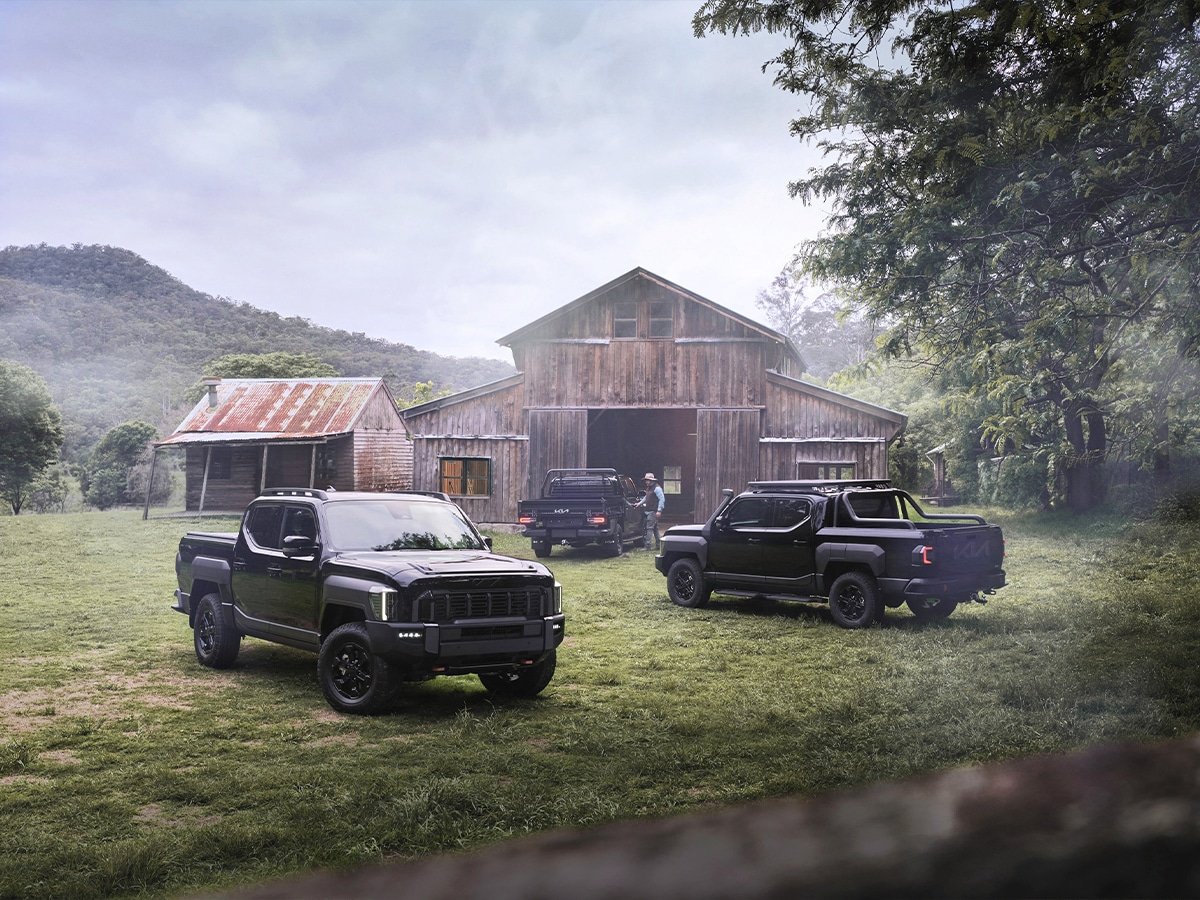
If KIA’s goal was to move away from traditional ute styling, the Tasman has certainly achieved it. Since its debut, the pickup’s exterior design has sparked strong reactions online, with its squared-off proportions, bold detailing, and confident stance drawing both curiosity and debate. The discussion has only grown with the Tasman now available in a desert camo finish, which can only mean it’s going to be a rugged, purpose-built vehicle designed to stand out.

2026 Kia Tasman | Image: Kia Australia

What Powers the Kia Tasman?

At launch, the KIA Tasman uses a familiar and proven setup, with Australian-spec models powered by a 2.2-litre turbo-diesel engine that has already earned a strong reputation for durability and daily usability. Delivering 154kW of power and 440Nm of torque through an eight-speed automatic transmission, the Tasman doesn’t focus on headline figures but instead focusing on consistent performance and real-world capability.

Kia Tasman Key Specifications:

  • 2.2-litre turbo-diesel engine producing 154kW & 440Nm of torque
  • Braked towing capacity of up to 3,500kg, with support for lighter unbraked loads
  • Payload ratings exceeding 1,000kg across most variants
  • Integrated Trailer Brake Control and a dedicated Towing Mode to assist under heavy load
  • Gross Vehicle Mass of 3,250kg and Gross Combination Mass of 6,200kg

Now, those figures place the Tasman slightly behind higher-output versions of the Ford Ranger and Toyota HiLux in terms of peak power and torque. However, KIA has clearly prioritised balanced performance over raw numbers, tuning the drivetrain for predictability and control rather than aggressive delivery, which better suits towing, long-distance driving, and daily work duties.

2026 Kia Tasman | Image: Kia Australia

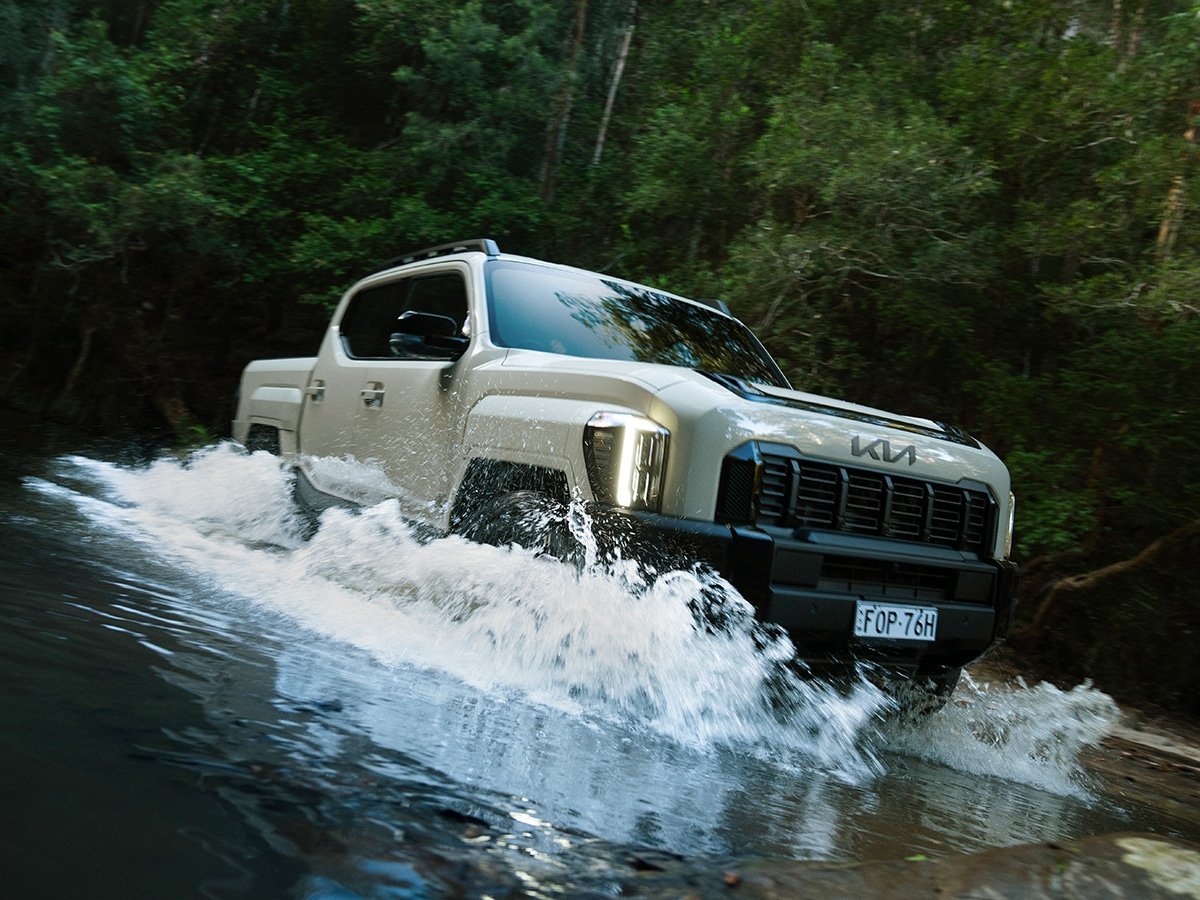
Where the Tasman begins to stand out is in its off-road engineering. By mounting the air intake high inside the front fender, Kia has enabled all variants to handle water crossings of up to 800mm at low speeds, a feature that makes it comparable to established segment leaders. Supporting this are waterproof electrical connectors used in key interior areas, reinforcing the Tasman’s status as a ute built for demanding environments rather than occasional off-road adventures.

Drive modes further influence how the Tasman performs across various conditions, with Eco, Smart, and Sport available throughout the range, while the off-road-oriented X-Pro variant gains an extra Rock mode. That version also benefits from a rear electronic locking differential and KIA’s X-Trek system, which acts as a low-speed off-road cruise control, helping the vehicle maintain steady progress over rough terrain. Paired with a payload capacity of over one tonne, the Tasman presents a strong case as a credible alternative to the Ranger and HiLux, especially for buyers looking for practical capability and modern engineering.

2026 Kia Tasman | Image: Kia Australia

Kia Tasman Exterior Design

From its first public appearance, the KIA Tasman made it clear that playing it safe was never part of the plan. While the overall proportions still match what buyers expect from a modern ute—an upright stance, a bold grille, and a purposeful silhouette—the finer details tell a different story. The front-end design, in particular, departs from typical segment norms, featuring a unique lighting layout and face design that show Kia’s intention to challenge longstanding conventions in the pickup market.

The brand’s signature tiger-nose grille has been redesigned with a new pattern, paired with vertically stacked daytime running lights that give the Tasman a strong and instantly recognizable presence. Boxy surfaces and robust detailing run through the rest of the body, reinforcing its rugged character while adopting a more architectural design language. It’s a look that has sparked debate from the start, but one that starts to make more sense when seen through the lens of KIA’s broader design approach and its goal to carve out a clear point of difference.

Created especially for explorers, adventurers and people who like to get things done, the Kia Tasman is designed to serve as a dependable companion in every situation,” — Karim Habib, Executive Vice President and Head of Kia Global Design, explains.

Practically, that purpose is seen in the Tasman’s size and usability. The dual-cab model measures 5,410mm long, 1,930mm wide, and has a 3,270mm wheelbase, while the load bed provides ample space and a cargo volume over 1,100 litres, ensuring the ute offers real-world functionality along with its bold look.

Kia Tasman Interior | Image: Kia Australia

Kia Tasman Interior Design

Step inside the Kia Tasman and the tone shifts noticeably, with the cabin adopting a more refined and approachable style compared to the bold exterior. The layout combines familiar Kia design cues with new elements created specifically for the Tasman, resulting in an interior that feels modern without being overstyled. A wide steering wheel anchors the driving position, while distinctive honeycomb-style air vents and a layered digital layout create a tech-forward atmosphere that still prioritises clarity and ease of use. The dashboard is dominated by an expansive screen setup that stretches across the cabin, reinforcing the Tasman’s focus on both driver engagement and shared usability.

Kia Tasman Interior Highlights:

  • Dual 12.3-inch digital displays paired with a 5-inch climate control screen
  • Wireless Apple CarPlay and Android Auto included as standard
  • Kia Connect system with over-the-air updates & remote vehicle functions
  • Segment-first folding centre console table available on X-Line & X-Pro variants
  • Rear seats that slide & recline, with additional under-seat storage
Kia Tasman Interior | Image: Kia Australia

Practicality plays a major role in interior design, with thoughtful storage solutions integrated throughout the cabin. Dual wireless charging pads, hidden storage compartments, and a clever mini table made for outdoor use highlight Kia’s focus on everyday practicality. Rear passengers are well cared for, with spacious legroom that places the Tasman towards the higher end of the segment, while sustainability is also featured through the use of recycled materials in areas such as the carpeting. Interior colour options range from simple black-and-grey combinations to richer tones like espresso brown-and-deep green, with higher-spec models offering more expressive two-tone finishes.

Technology and equipment complete the cabin experience, with smartphone integration supported alongside an optional premium audio system for those seeking a more immersive sound setup. Off-road-focused features such as a ground-view camera system boost confidence when navigating uneven terrain, while market-specific equipment improves everyday usability through details like corner steps, an illuminated load bed, and available power outlets and cargo solutions. Overall, the Tasman’s interior feels designed not just to impress at first glance but to remain functional and comfortable through workdays, long drives, and outdoor adventures alike.

2026 Kia Tasman | Image: Kia Australia

Kia Tasman Pricing & Availability 

Now, if you ask us about the Kia Tasman, there’s no better place for it than Australia, which is at the centre of Kia’s ambitions for the Tasman. That focus is reflected in how the ute has been engineered, specified, and priced for local buyers. Developed with direct input from Australian engineers, the Tasman has been shaped to meet local conditions and expectations, from worksite demands to weekend adventures. Kia aims to compete with segment leaders like the Toyota HiLux and Ford Ranger on value, versatility, and features.

The Tasman lineup is designed to cover a wide range of buyer needs, starting with the entry-level S 4×2 and extending to the off-road-oriented X-Pro 4×4, which is positioned at the top of the lineup. This diverse selection allows buyers to choose between work-centric configurations, lifestyle-focused trims, and more rugged versions without being forced into unnecessary upgrades.

Below is the full breakdown of the Kia Tasman range and pricing:

  • S Trim from AUD$42,990 – USD $29,600 plus on-roads:
    • S 4×2 – AUD $42,990 – USD $29,600
      • S 4×2 (Payload <1,000kg) – AUD $42,990 – USD $29,600
      • S 4×2 (Body-Coloured Fender Flares) – AUD $42,990 – USD $29,600
      • S 4×2 (Flares + Payload <1,000kg) – AUD $42,990 – USD $29,600
    • S 4×4 – AUD $49,990 – USD 34,500
      • S 4×4 (Body-Coloured Fender Flares) – AUD $49,990 – USD 34,500
      • S 4×4 (Payload <1,000kg) – $49,990 – USD 34,500
      • S 4×4 (Flares + Payload <1,000kg) – $49,990 – USD 34,500
  • SX Trim from AUD $54,490 – USD $37,500 plus on-roads
    • SX 4×4 – $54,490 – USD $37,500
      • SX 4×4 (Body-Coloured Fender Flares) – AUD $54,490 / USD $37,500
      • SX 4×4 (Payload <1,000kg) – AUD $54,490 / USD $37,500
      • SX 4×4 (Flares + Payload <1,000kg) – AUD $54,490 / USD $37,500
  • SX+ Trim from AUD$62,390 – USD $43,000 plus on-roads
    • SX+ 4×4 – AUD $62,390 / USD $43,000
      • SX+ 4×4 (Body-Coloured Fender Flares) – AUD $62,390 / USD $43,000
      • SX+ 4×4 (Payload <1,000kg) – AUD $62,390 / USD $43,000
      • SX+ 4×4 (Flares + Payload <1,000kg) – AUD $62,390 / USD $43,000
  • X-Line Trim from AUD $67,990 – USD $46,900 plus on-roads
    • X-Line 4×4 – AUD $67,990 / USD $46,900
      • X-Line 4×4 (Body-Coloured Fender Flares) – AUD $67,990 / USD $46,900
      • X-Line 4×4 (Payload <1,000kg) – AUD $67,990 / USD $46,900
      • X-Line 4×4 (Flares + Payload <1,000kg) – AUD $67,990 / USD $46,900
  • X-Pro Trim from AUD$74,990 – USD $51,700 plus on-roads
    • X-Pro 4×4 – AUD $74,990 / USD $51,700
      • X-Pro 4×4 (Body-Coloured Fender Flares) – AUD $74,990 / USD $51,700
      • X-Pro 4×4 (Payload <1,000kg) – AUD $74,990 / USD $51,700
      • X-Pro 4×4 (Flares + Payload <1,000kg) – AUD $74,990 / USD $51,700

Together, this wide-ranging lineup allows the Tasman to appeal to a broad mix of buyers, from those needing a straightforward work ute to drivers looking for a more refined lifestyle vehicle with added off-road capability. The flexibility in configuration, combined with consistent pricing across visual and payload variations, makes it easier for buyers to focus on how they plan to use the vehicle rather than navigating complex option structures.

With availability now expanding across the range, KIA is positioning the Tasman as a long-term competitor rather than a short-lived entry, using strong local development and clear trim differentiation to build momentum in a segment where loyalty runs deep. As electrified variants continue to be discussed within the industry, the current diesel lineup lays the groundwork for a broader Tasman family in the years ahead.

Complete List of Specifications for the Kia Tasman

All Models Have Shared Features:

The KIA Tasman is built as a well-rounded ute, combining reliable mechanics with modern technology and useful features throughout the lineup. Its turbo-diesel engine, strong towing ability, off-road equipment, interior tech, and adaptable body styles show Kia’s aim to compete strongly in one of Australia’s toughest vehicle segments.

  • 2.2-litre 4-cylinder turbo diesel engine
  • 154kW power / 440Nm torque
  • 8-speed automatic transmission
  • Payload ratings over 1,000kg
  • Braked towing capacity: 3,500kg
  • Unbraked towing: 750kg
  • Integrated Trailer Brake Controller (ITBC)
  • Towing Mode (TBC) + Trailer Sway Control
  • Rear under-seat storage (45L)
  • Integrated panoramic display (12.3” + 5” + 12.3”)
  • Wireless Apple CarPlay and Android Auto
  • Kia Connect with OTA updates
  • Dual-zone climate control
  • LED interior lights
  • 6-speaker audio system

S Trim:

  • 17” black steel wheels
  • Full-size spare wheel
  • Front and rear parking sensors (Pick-Up only)
  • Rear View Camera (Pick-Up only)
  • Smart Cruise Control
  • Drive Mode Select
  • LED Headlights (MFR Type)
  • Daytime Running Lights
  • Smart Key with Push Button Start
  • Rear Bumper Steps (Pick-Up only)
  • Tailgate with Lift Assistance (Pick-Up only)
  • Cloth seats

SX Trim:

  • 17” alloy wheels
  • Terrain Modes: Snow, Sand, Mud
  • Safety Power Windows (1st row)
  • Built-in Satellite Navigation
  • Highway Driving Assist 2
  • Nav-Based Smart Cruise Control
  • Electric folding side mirrors

SX+ Trim

  • 18” alloy wheels
  • Cloth/artificial leather seats
  • LED fog lights
  • Light Ambient Mood Lighting
  • 2nd row air vents
  • Bedliner
  • Two 240V power outlets (tub & centre console)
  • Single wireless charging pad

X-Line Trim (adds to SX+):

  • Column-type shifter (E-SBW)
  • Paddle shifters
  • Privacy glass
  • Bridge-type roof rails
  • Rear fender flare storage*
  • Double wireless phone charger
  • 2nd row centre armrest
  • Surround View Monitor
  • Blind-spot View Monitor
  • Parking Collision Avoidance Assist
  • RSPA (Remote Smart Parking Assist)
  • LED projection headlights
  • Heated front seats
  • Artificial leather seats
  • Powered driver seat (8-way)
  • Slide and recline 2nd row seats

X-Pro Trim (adds to X-Line)

  • 17” black alloy wheels with all-terrain tyres
  • Electronic locking differential (on/off switch)
  • X-Trek Mode
  • Extra Terrain Mode: Rock
  • Ground View Monitor
  • Harmon Kardon premium sound system
  • Fuel tank undercover protection
  • Heated steering wheel
  • Full Ambient Mood Lighting
  • Heated rear seats
  • Ventilated front seats
  • Powered passenger seat (8-way)
  • Integrated Memory System (seating)
  • Sunroof
  • Off-Road Page (steering, angles, oil levels, etc)
2026 Kia Tasman | Image: Kia Australia

Kia
About the Author

Related Articles

arrow_drop_up