Our team of editors and experts thoughtfully chooses each product. If you decide to buy through one of our links, we may earn a commission. Learn more. Want to know how we test products? Click here for more details.
The Oklahoma City Thunder earned an estimated USD $12.4 million from the NBA’s Player Playoff Pool after winning the 2025 NBA Championship.
Each Thunder player is expected to receive roughly USD $828,000, rewarding the team’s historic title-winning season.
NBA MVP Shai Gilgeous-Alexander led Oklahoma City’s Finals run after averaging standout performances throughout the postseason.
The NBA’s 2025 Player Playoff Pool was valued at USD $34.7 million, with payouts based on regular-season results and playoff success.
Oklahoma City’s championship bonus surpassed postseason payouts available in both the NFL and MLB, making it one of the most lucrative team rewards in North American sports.
Winning an NBA Championship is every player’s dream, but holding the Larry O’Brien Trophy means more than just bragging rights. After beating the Indiana Pacers to win the 2025 NBA title, the Oklahoma City Thunder not only celebrated the franchise’s biggest success since moving to Oklahoma City but also earned a large reward prize. Each player is expected to receive about USD $828,000, bringing the total payout from the NBA’s Player Playoff Pool to around USD $12.4 million. This is a well-deserved reward for a team that spent the season showing it belonged among the league’s best and delivered when it counted most.
Unlike some major sports leagues, which award a set prize for winning the championship, the NBA shares postseason earnings through its Player Playoff Pool. For the 2025 season, the pool was worth about USD $34.7 million and was mostly funded by playoff ticket sales. The money is divided based on both regular-season performance and playoff results, so every playoff team gets a share, but the teams that go the farthest get the biggest payouts. For the Thunder, their championship win meant one of the largest postseason rewards in professional basketball.
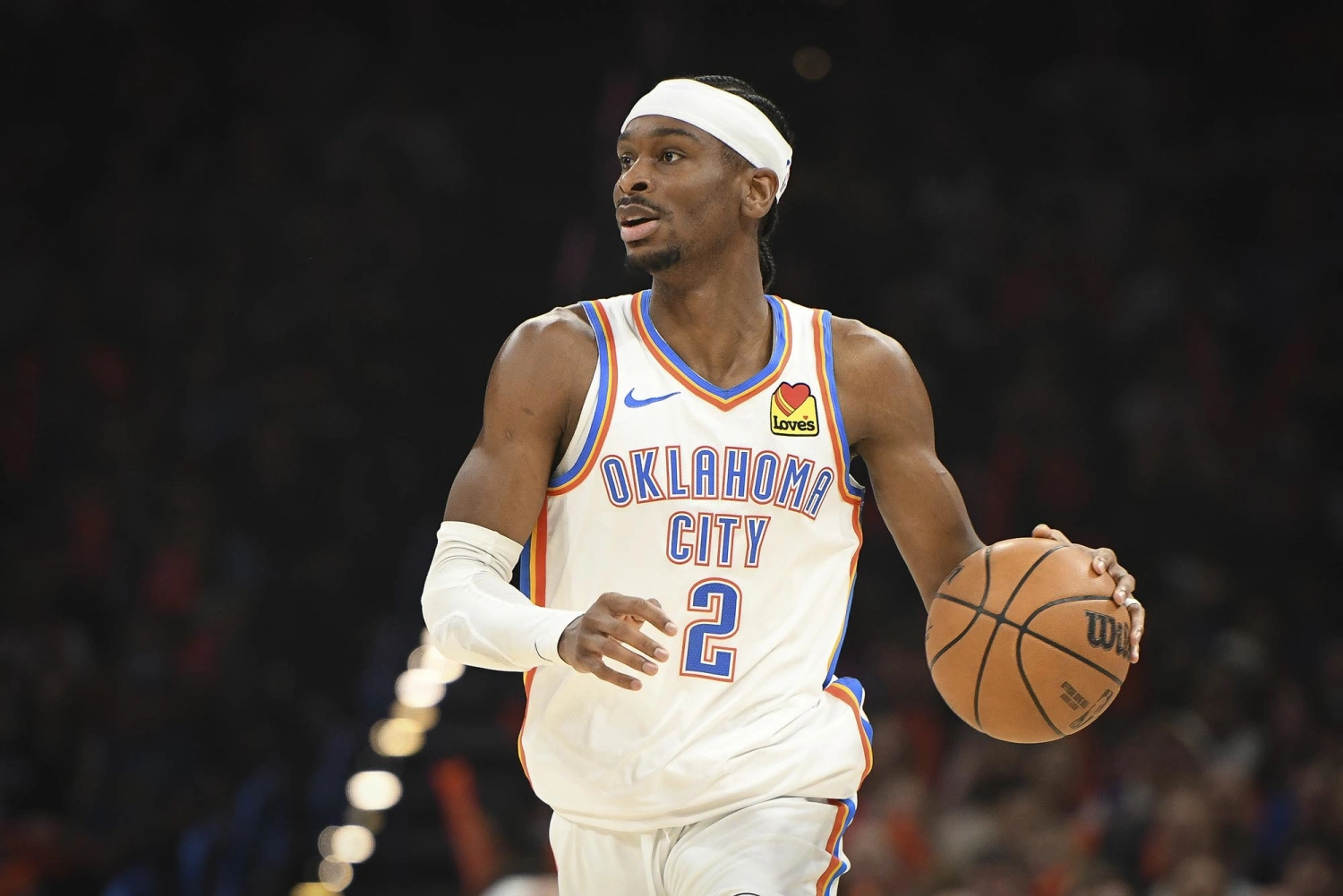
Shai Gilgeous-Alexander was named the NBA’s Most Valuable Player in 2025 after leading the Oklahoma City Thunder to the league’s best regular season. | Image: Getty Images – Kyle Phillips
During their dominant run through the Western Conference Finals, NBA MVP Shai Gilgeous-Alexander reminded everyone exactly why the Thunder are the real deal. Dropping 34 points, seven rebounds, and eight assists in the 124–94 victory that secured their spot in the Finals, the 26-year-old Canadian kept the team grounded in the moment. “This is a step in the right direction, but we have a lot more work to do to get to our ultimate goal, so let’s buckle up and get ready,” he told reporters after the game. Even with the win, his focus was clear: “That’s all that I’m focused on. This isn’t the end of our road.”
To get a better picture, here’s a breakdown of how the NBA’s Player Playoff Pool was distributed during the 2025 season:
Playoff Earnings
NBA Champion: $4,775,940
First Round: $6,439,658 ($402,479 per player)
Conference Semifinals: $3,831,216 ($478,902 per player)
Conference Finals: $3,165,594 ($791,398 per player)
Losing Team in the NBA Finals: $3,164,731
Regular Season Bonuses
Best Overall Record: $777,840
Best Record in Conference: $1,361,206 ($680,603 each)
Second-Best Record in Conference: $1,094,078 ($547,039 each)
Third-Best Record in Conference: $816,729($408,364 each)
Fourth-Best Record in Conference: $641,862 ($320,931 each)
Fifth-Best Record in Conference: $534,822 ($267,411 each)
Sixth-Best Record in Conference: $364,782 ($182,391 each)
Teams that dominate during the regular season earn an early advantage before the playoffs even tip off. The Thunder’s stellar run gave them the largest cut available, securing their full share of the $12.4 million pot. For comparison, teams eliminated in the second round receive a standard payout, while those reaching the conference finals or the NBA Finals itself earn significantly more. Play-in tournament teams, however, don’t see a cent of the pool—another incentive to push for a higher seed.
It’s not just the payday that’s special—it’s the journey. Gilgeous-Alexander joined an elite company this year, becoming one of only a few players in the past two decades—alongside Steph Curry, LeBron James, and Kobe Bryant—to reach the NBA Finals in the same season as winning MVP. “These guys really make me feel like I’m a kid playing AAU basketball again,” he said after clinching the Western Conference title. “It’s just fun. That’s what makes us really good. We have so much fun being out there together.”
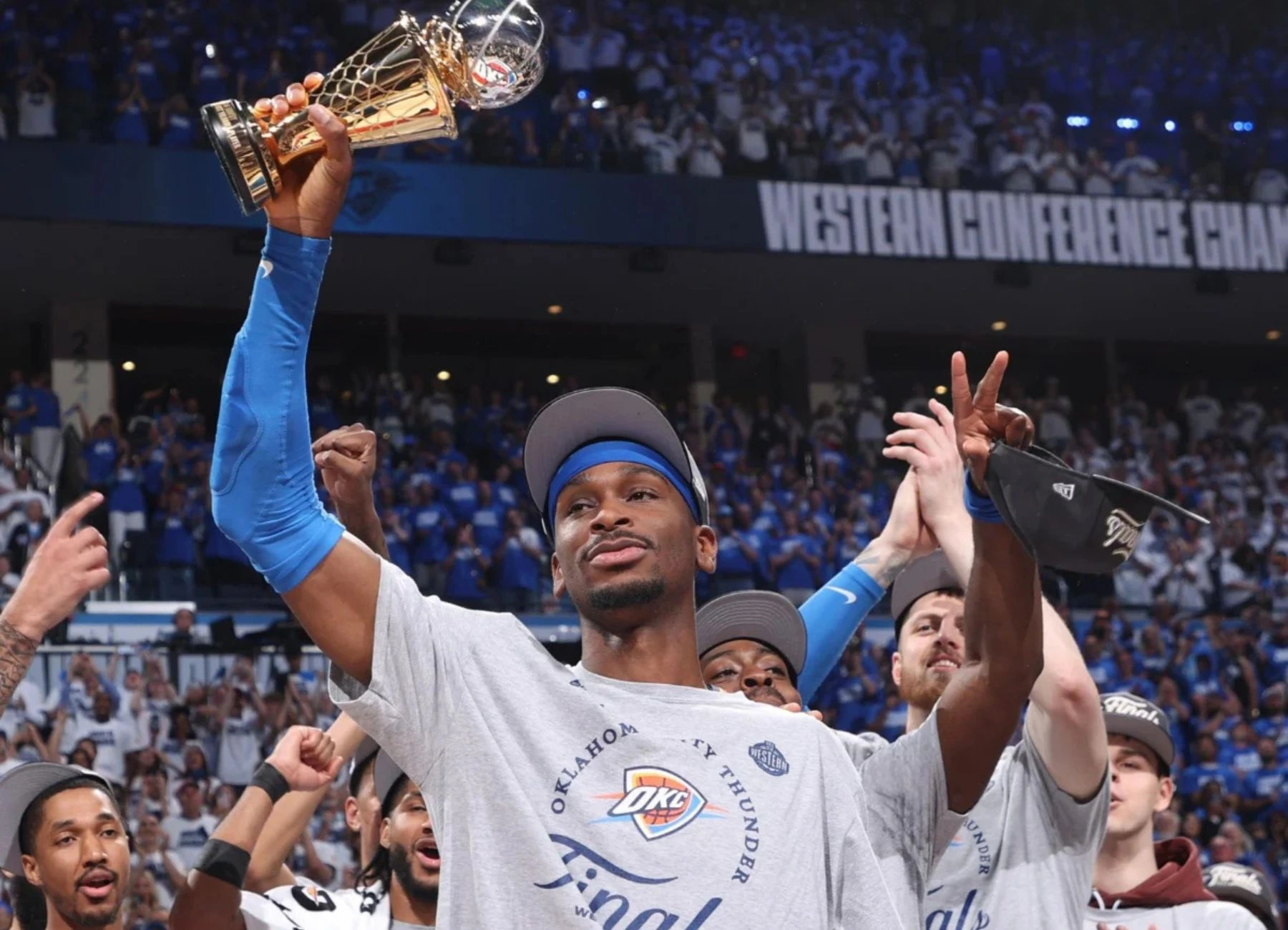
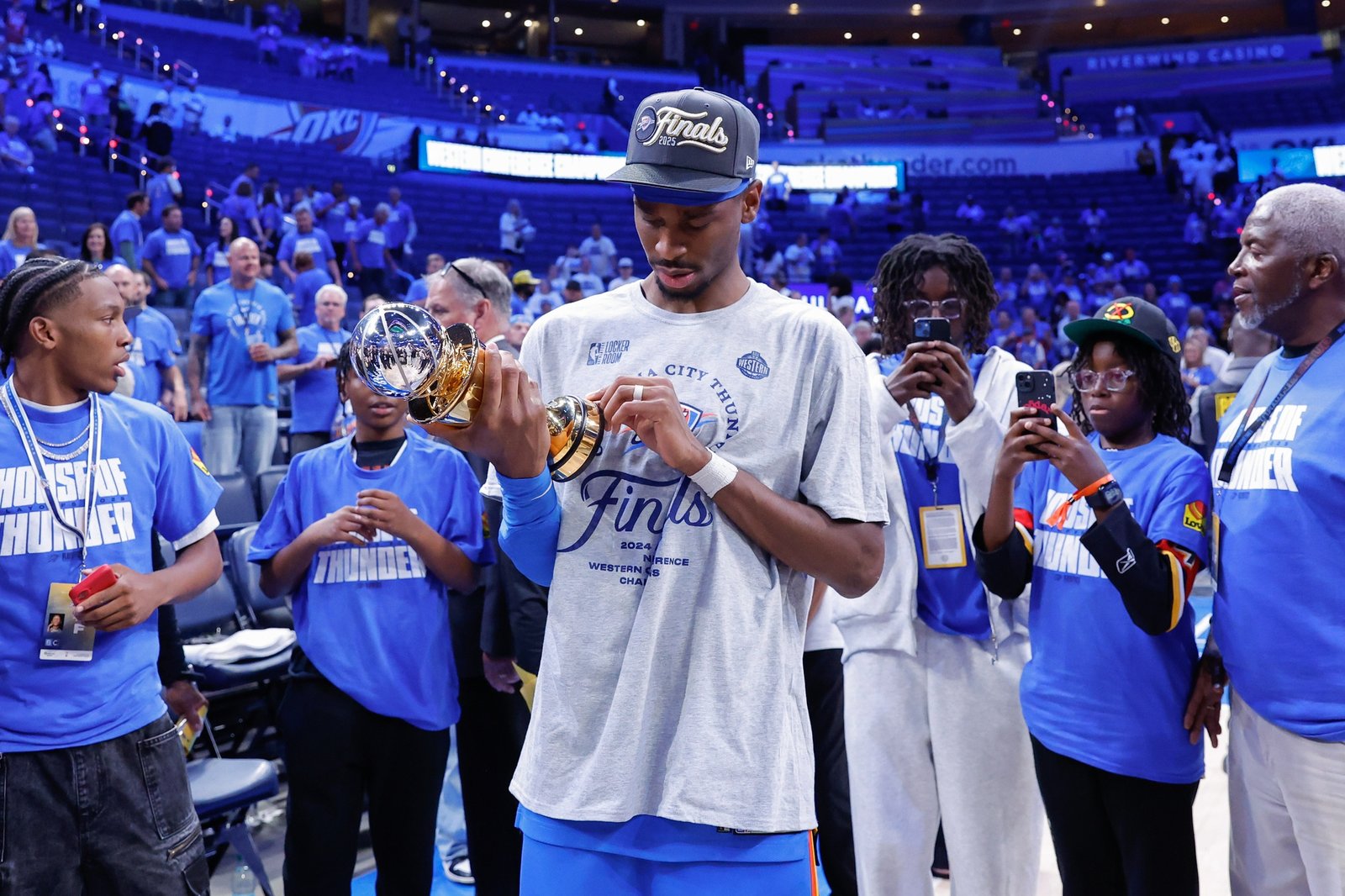
Shai Gilgeous-Alexander celebrates with the Western Conference Finals MVP trophy after leading the Oklahoma City Thunder to the 2025 NBA Finals. | Image: Getty Images – Alonzo Adams
That $828,000 payout means different things depending on a player’s salary. For superstars like Gilgeous-Alexander, who is reportedly about to sign a record-breaking USD $380 million contract, the championship bonus is just a small addition. But for role players and up-and-coming talents like Branden Carlson ($496,519), Jaylin Williams ($2 million), and Dillon Jones ($2.6 million), that extra money really matters. It’s a well-deserved reward for players who put in the effort through 82 regular-season games, lots of practices, and a tough postseason.
When it comes to playoff bonuses, the NBA stands out among other leagues. The NFL’s top bonus is about $357,000 per player, and MLB playoff payouts are around $477,000. These amounts are much lower than what NBA players can earn. The bonus money is awarded per round, so the farther a team goes, the bigger the payout. Winning may not make a huge difference for superstars, but for most players, it’s a valuable reward for a season of hard work.
The championship bonus is more than just money — it’s a sign of recognition. It celebrates teamwork, consistency, and resilience during a season where every play counts. The Thunder’s $12.4 million reward shows not only their talent but also their discipline and chemistry as a young team that never gave up. Winning the trophy is the main goal, but getting a big cheque along with it is a nice bonus.
Elias Albay is the Founder and Director of Many Men Magazine, a Toronto-based digital publication dedicated to promoting modern masculinity through style, culture, and self-improvement. What started as a personal turning point became a purposeful platform. — born from Elias’ desire to create something meaningful after completing his studies and finding no career path that truly matched his ambitions. With a background in Civil Engineering from York University and experience in Commercial Flight Operations at CAE, he applied skills, and resilience from both fields to forge a new path.
Our team of editors and experts thoughtfully chooses each product. If you decide to buy through one of our links, we may earn a commission. Learn more. Want to know how we test products? Click here for more details.
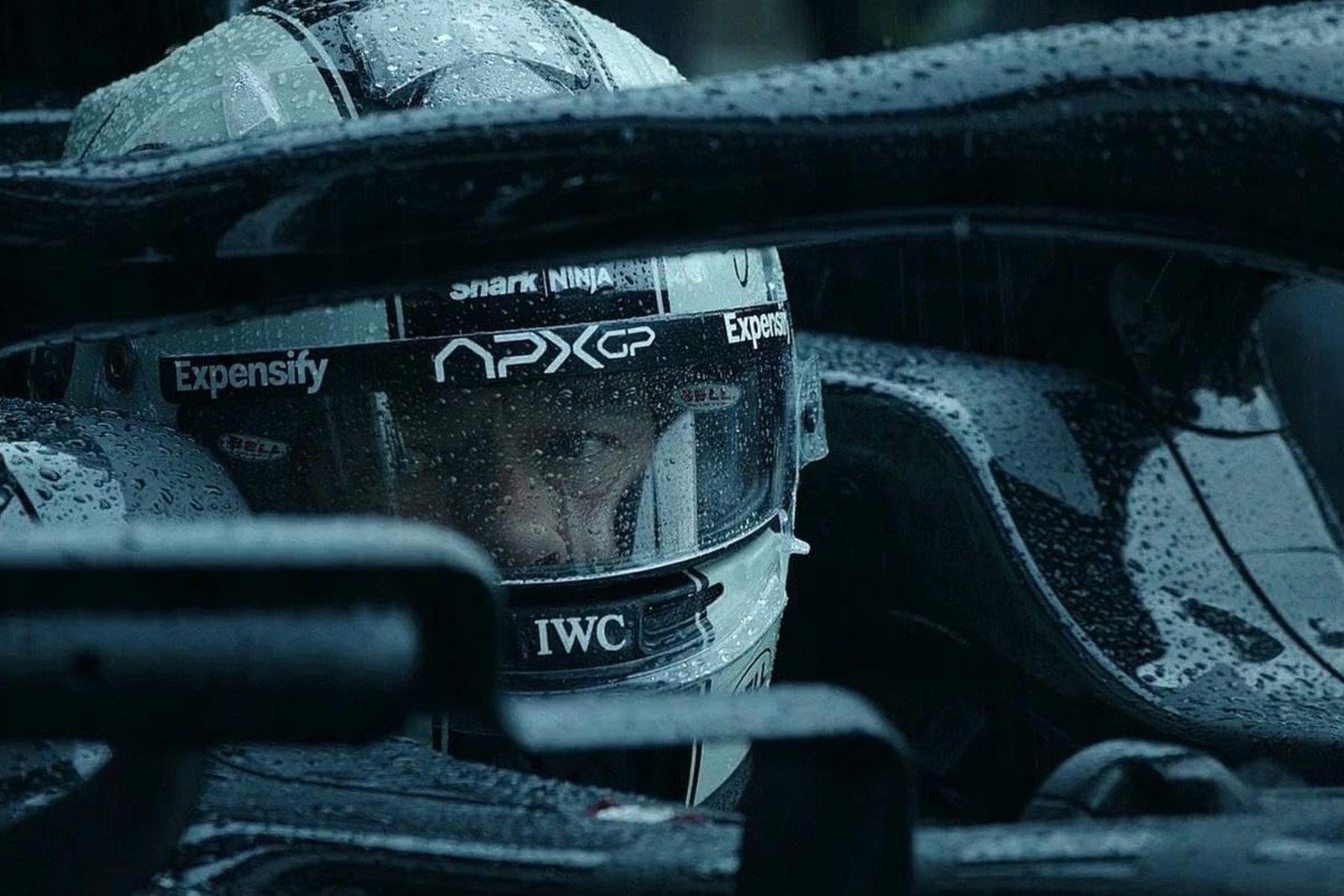
If ‘F1: The Movie’ left you with an impact like it did with us and thrill, you’re probably not the only one. Between the engines, wheel-to-wheel battles, and life inside the paddock, it’s the kind of film that makes you want to dive deeper into the world of motorsport. The credits may have rolled on Brad Pitt’s journey with APXGP, but many other racing stories are waiting to be discovered.
Racing has always been a natural fit for the big screen. The sport has produced unforgettable rivalries, remarkable comebacks, larger-than-life personalities, and moments that seem too dramatic to be real. Some of the films on this list focus on Formula 1’s biggest names, while others take viewers into endurance racing, historic championships, and the teams working tirelessly behind the scenes.
So, if you’re still here and looking for something to watch next, we’ve got you covered. From award-winning documentaries to some of the finest racing films ever made, these 14 picks will keep the engines running long after the chequered flag falls.
Before we get into the full list, here are a few of our favourites. From Formula 1 legends and intense rivalries to classic endurance races, these films and documentaries are memorable for their stories, standout personalities, and the way they showcase what makes motorsport exciting.
Way before there was Lewis Hamilton, Max Verstappen, or the global phenomenon Formula 1 has become today, there was Ayrton Senna. One of the greatest drivers to ever sit behind the wheel, the Brazilian legend remains one of the sport’s most fascinating figures, and a perfect introduction to his history. The documentary tells the story of his time in Formula 1, from his early days as a young driver with big dreams to becoming a three-time World Champion, along with his well-known rivalry with Alain Prost, which produced one of the most memorable moments in F1 History.
The Director Asif Kapadia tells the entire story using archive footage, race broadcasts, radio communications, and recordings from Senna’s life, allowing viewers to experience events as they unfolded rather than through retrospective interviews, which sets it apart from most sports documentaries being told these days. This approach lets viewers experience the events as they happened, instead of relying on interviews looking back. The result is a close and engaging look at a driver whose determination, talent, and perfectionism made him a global icon.
Of course, Senna’s story cant be remembered just for his triumphs, but also for his tragic death. His death at the 1994 San Marino Grand Prix remains one of the saddest moments in Formula 1 history, a tragedy that shocked everyone worldwide in the sporting world. Yet his legacy extends far beyond the championships he won. The lessons learned from that weekend led to major safety improvements across Formula 1, changes that have helped protect generations of drivers who followed.
2. Ford vs Ferrari
Genre: Action, Biography, Drama
Director: James Mangold
Starring: Matt Damon, Christian Bale, Jon Bernthal
Not every great racing film takes place on a Formula 1 circuit. Some of the most memorable battles in motorsport history happened elsewhere, and ‘Ford v Ferrari’ tells one of the best. Based on a true story, the film follows Ford’s attempt to beat Ferrari at the famous 24 Hours of Le Mans after negotiations between the two companies fell apart. Matt Damon stars as Carroll Shelby, while Christian Bale plays Ken Miles, the talented and often stubborn driver chosen to help turn Ford’s ambitious project into a race-winning machine.
The racing scenes are thrilling, the cars sound amazing, and Bale shines in almost every scene. What makes ‘Ford v Ferrari’ special is the relationship between Shelby and Miles. Their friendship, arguments, and shared drive add depth to the story beyond the racing. Even if you don’t know much about long-distance racing, it’s easy to care about their struggle against the odds. For anyone looking for another motorsport film after ‘F1: The Movie’, this one should be near the top of the list.
3. The 24 Hour War
Genre: Documentary, History, Sport
Director: Adam Carolla, Nate Adams
Starring: Henry Ford III, Mario Andretti, Dan Gurney
If you liked ‘Ford v Ferrari’, you’ll probably enjoy ‘The 24 Hour War’ next. This documentary tells the true story of one of racing’s biggest rivalries, when Ford and Ferrari faced off to see who was best at the 24 Hours of Le Mans. What started as a failed business deal quickly became a personal quest for Ford, who was dead set on beating Ferrari on the track after getting rejected at the negotiating table.
The film focuses on the people behind the rivalry and the immense effort required to build a car capable of challenging Ferrari and competing against it. Through archival footage, interviews, and personal stories, viewers get a closer look at the drivers, engineers, and even leaders who were part of the battle that changed motorsport history. It’s amazing to see how much determination, effort, and money went into a race that lasted only 24 hours.
4. Rush
Genre: Action, Biography, Drama
Director: Ron Howard
Starring: Chris Hemsworth, Daniel Brühl, Olivia Wilde
Based on real events, the film follows the intense rivalry between James Hunt and Niki Lauda during the 1976 Formula 1 season. Hunt lived life at full speed on and off the track, while Lauda raced with careful planning and attention to detail. They couldn’t have been more different, which made their rivalry all the more interesting to watch.
The film does a fantastic job showing how dangerous Formula 1 was in the 1970s, when drivers took risks that would be unthinkable today. Chris Hemsworth brings charm to the role of Hunt, while Daniel Brühl is excellent as Lauda, giving one of the best performances in any racing film. The racing scenes are thrilling, but the fight between these two characters keeps you interested. More than ten years after its release, Rush is still one of the best Formula 1 movies ever made and a must-watch for any motorsport fan.
Few rivalries in Formula 1 history are as legendary as the one between James Hunt and Niki Lauda. Hunt vs. Lauda: F1’s Greatest Racing Rivals’ takes a closer look at the battle that defined the 1976 Formula 1 season, using archive footage, race broadcasts, and interviews to tell the story as it happened. Long before social media and Netflix followed drivers around the paddock, Hunt and Lauda were captivating fans with a championship fight that remains one of the most dramatic the sport has ever seen.
The long seasons featured a fight between two drivers with very different personalities. Hunt was known for his easygoing lifestyle and natural talent, while Lauda raced with careful focus and steady preparation. The film also looks back at Lauda’s terrible crash at the Nürburgring, an accident that almost cost him his life. What happened next is one of Formula 1’s most incredible stories: Lauda came back to racing just weeks later, even though he was still healing from serious injuries.
Even though they were fierce competitors on the track, Hunt and Lauda had a genuine friendship off it; they battled for wins, championships, and pole positions, but their respect for one another grew over time. With behind-the-scenes footage and personal stories, ‘Hunt vs. Lauda’ gives viewers a closer look at two of Formula 1’s most memorable drivers and the rivalry which shaped a generation of racing fans.
6. Truth in 24
Genre: Documentary, Sport
Director: Keith Cossrow, Bennett Viseltear
Starring: Jason Statham (Narrator), Tom Kristensen, Allan McNish
Narrated by Jason Statham, ‘Truth in 24’ drops you right into the middle of the 24 Hours of Le Mans, one of the toughest races in the world. The documentary follows Audi as it takes on Peugeot in a race that pushes both people and machines to their limits. Unlike Formula 1, where races are over in a couple of hours, Le Mans runs through the day, into the night, and back into the following afternoon. That means every lap brings something new to deal with, whether it’s changing weather, mechanical problems, or simply staying focused after hours behind the wheel.
One of the things that makes ‘Truth in 24’ so enjoyable is that it shows just how much work goes on away from the driver’s seat. The drivers may get most of the attention, but hundreds of people work behind the scenes to keep the cars on track. Engineers search for solutions, mechanics scramble to fix problems, and team managers make split-second decisions that could decide the outcome of the race. Everyone is running on little sleep, the pressure never lets up, and one mistake can undo months of preparation.
By the end of the documentary, you’ll have a whole new level of respect for endurance racing, because winning Le Mans isn’t just about being the fastest; it’s about surviving, adapting, and staying in control when everything goes sideways. This documentary captures what it means to race when everybody gets involved, and it’s another great motorsport film to start with.
7. Winning: The Racing Life of Paul Newman
Genre: Documentary, Biography, Sport
Director: Adam Carolla, Nate Adams
Starring: Paul Newman, Patrick Dempsey, Robert Redford, Arthur Newman
Most people know Paul Newman as one of Hollywood’s greatest actors, but behind the cameras, he had another passion in his life, and that’s racing. ‘Winning: The Racing Life of Paul Newman’ dives into his other side of the world of how Paul Newman began as an interest that eventually turned him into a commitment to motorsport, as he spends decades competing, improving, and earning the respect of others throughout the racing world.
This documentary combines archive footage, interviews, and personal stories that capture a man who loved racing just as much as acting. If there was one man who succeeded in sports, it would be Paul Newman, whose fame meant very little once the helmet went on, making this film all the more fascinating when people never knew.
8. Williams
Genre: Documentary, Biography, Sport
Director: Morgan Matthews
Starring: Frank Williams, Claire Williams, Jonathan Williams
When people think about Formula 1, it’s usually the drivers who get most of the attention. Williams tells a different story. The documentary follows Sir Frank Williams, the man who started Williams Racing and turned it into one of the most respected teams in the sport. From modest beginnings to World Championships, the film shows what it took to build a Formula 1 team in an environment where success was never guaranteed, and failure was always around the corner.
One of the film’s most emotional moments centres on the car accident that left Frank Williams paralyzed. For many people, it would have been the end of the road. Instead, Frank and those closest to him refused to let it define him for the rest of his life. As he adapted to life in a wheelchair, his family stepped up and helped keep the team moving forward. Their support, along with Frank’s determination, became a major part of the Williams story. You don’t need to be a Formula 1 fan to appreciate it, but if you are, you’ll walk away with an even greater respect for one of the sport’s most important names.
9. Weekend of a Champion
Genre: Documentary, Sport
Director: Frank Simon
Starring: Jackie Stewart, Roman Polanski
Release Date: 1972 (Restored Edition Released in 2013)
Filmed during the 1971 Monaco Grand Prix weekend, ‘Weekend of a Champion’ offers a rare behind-the-scenes look at Formula 1, when cameras rarely followed drivers around the paddock. The documentary follows three-time World Champion Jackie Stewart and filmmaker Roman Polanski as they experience one of the year’s most famous races. Although the original film was completed in the early 1970s, it remained unseen for many years before being restored and shown to audiences again.
There are no dramatic recreations or polished media appearances. Instead, viewers spend time with Stewart as he prepares for one of the season’s biggest races, walks the Monaco circuit, meets fans, talks openly about racing, and goes through the daily routines of a Formula 1 driver. Today, this kind of access feels normal because of shows like Drive to Survive, but in the early 1970s it was almost unknown.
The 2013 restored version adds more to the story with a conversation filmed many years later between Stewart and Polanski. Looking back at the original documentary, they discuss how Formula 1 has changed over time and Stewart’s work to make the sport safer, which was much more dangerous then. More than 50 years after its debut, ‘Weekend of a Champion’ remains a fascinating glimpse into the past and one of the most personal Formula 1 documentaries ever made.
10. McLaren
Genre: Documentary, Biography, Sport
Director: Roger Donaldson
Starring: Bruce McLaren, Dwayne Cameron, Simon Prast
Before McLaren became one of the most successful names in Formula 1, it was the dream of a young New Zealander with a passion for building and racing cars. McLaren tells the remarkable story of Bruce McLaren, the driver, engineer, and founder who transformed a small racing operation into a name that would eventually become one of the biggest forces in motorsports.
Even if you’re familiar with the McLaren name, there’s a good chance you’ll learn something new here, with archive footage, interviews, and dramatic recreations to bring Bruce McLaren’s journey to life. The film shows just how much determination and hard work went into creating the McLaren legacy. If you’re a die-hard fan of the McLaren Team and Formula One, this should be part of your watchlist.
If you finish The 24 Hour War and want to know more about Ferrari’s story, ‘Ferrari: Race to Immortality’ is a great next step. The documentary takes you to the 1950s, when Enzo Ferrari was laying the groundwork for what would become a legendary name in motorsport. Instead of focusing only on Ferrari, the film follows drivers Peter Collins and Mike Hawthorn, giving you a real sense of what it was like to race during one of the sport’s most dangerous times. Every race back then was risky, and the documentary does a great job showing the courage it took just to get to the starting line.
Ferrari is still the main focus, but the documentary also shows what Formula 1 was like in the 1950s and introduces the big personalities who shaped the sport. You get to see Enzo Ferrari up close, a tough and determined leader whose style would probably surprise people today. Using old footage, photos, and dramatic scenes, ‘Ferrari: Race to Immortality’ brings to life a time when speed mattered more than safety, and drivers relied on skill, courage, and determination.
12. 1: Life on the Limit
Genre: Documentary, Sport
Director: Paul Crowder
Starring: Michael Fassbender (Narrator), Michael Schumacher, Niki Lauda, Jackie Stewart
Formula 1 has always been about speed, but ‘1: Life on the Limit’ reminds viewers of the price many drivers paid in the pursuit of it. The documentary takes a look at some of the most dangerous decades in Formula 1 history, when fatalities were tragically common, and drivers accepted risks that would be difficult to imagine today. Through archive footage and interviews with some of the sport’s biggest names, the film explores how Formula 1 evolved from a dangerous spectacle into the far safer championship we know today.
What makes the documentary so powerful is its focus on the people behind the helmets. Drivers such as Jackie Stewart, Niki Lauda, Emerson Fittipaldi, and others share their experiences from an era when simply making it to the end of a season was never guaranteed. Along the way, the film examines the relentless push for improved safety and the individuals who fought to make the sport safer despite resistance from within the paddock. Emotional, informative, and often eye-opening, ‘1: Life on the Limit’ is essential viewing for anyone who wants to understand how Formula 1 became what it is today.
Hollywood legend Steve McQueen wasn’t just an actor who enjoyed racing on the side; motorsport was one of his great passions. ‘Steve McQueen: The Man & Le Mans’ tells the fascinating story behind the production of Le Mans (1971), a film that became a personal obsession for McQueen and pushed him to his limits. More than a behind-the-scenes documentary, it’s a look at a man determined to create the most authentic racing film ever put on screen, regardless of the challenges standing in his way.
Using old footage, interviews, and never-before-seen material from the production, the documentary shows just how hard it was to make Le Mans. Budgets spiralled out of control, filming was repeatedly delayed, relationships grew tense, and the pressure kept growing as McQueen aimed for total realism. The result is a picture of a man determined to show the true experience of racing, no matter the cost.
14. Truth in 24 II: Every Second Counts
Genre: Documentary, Sport
Director: Keith Cossrow, Bennett Viseltear
Starring: Jason Statham (Narrator), Allan McNish, Tom Kristensen
Jason Statham returns as the narrator for ‘Truth in 24 II: Every Second Counts’, which takes us back into the world of endurance racing and follows Audi’s quest for victory at the 2011 24 Hours of Le Mans. Although it shares the same name as the original documentary, this film isn’t a typical sequel. Instead, it focuses on a new group of drivers—Marcel Fässler, André Lotterer, and Benoît Tréluyer—offering a fresh look at one of motorsport’s toughest events. Despite the new faces, the same pressure, intensity, and unpredictability that made the first film so compelling remain.
Like the first film, this documentary highlights how demanding endurance racing can be. Drivers push through exhaustion, teams work nonstop, and every choice matters because even a small mistake can ruin the race. ‘Truth in 24 II’ stands out by showing that winning at Le Mans is not about glamour or big moments. It comes down to preparation, teamwork, resilience, and the determination to keep going when you’re completely worn out. If you liked the original, this follow-up offers another interesting look at the people who take on these incredible challenges to win.
Elias Albay is the Founder and Director of Many Men Magazine, a Toronto-based digital publication dedicated to promoting modern masculinity through style, culture, and self-improvement. What started as a personal turning point became a purposeful platform. — born from Elias’ desire to create something meaningful after completing his studies and finding no career path that truly matched his ambitions. With a background in Civil Engineering from York University and experience in Commercial Flight Operations at CAE, he applied skills, and resilience from both fields to forge a new path.