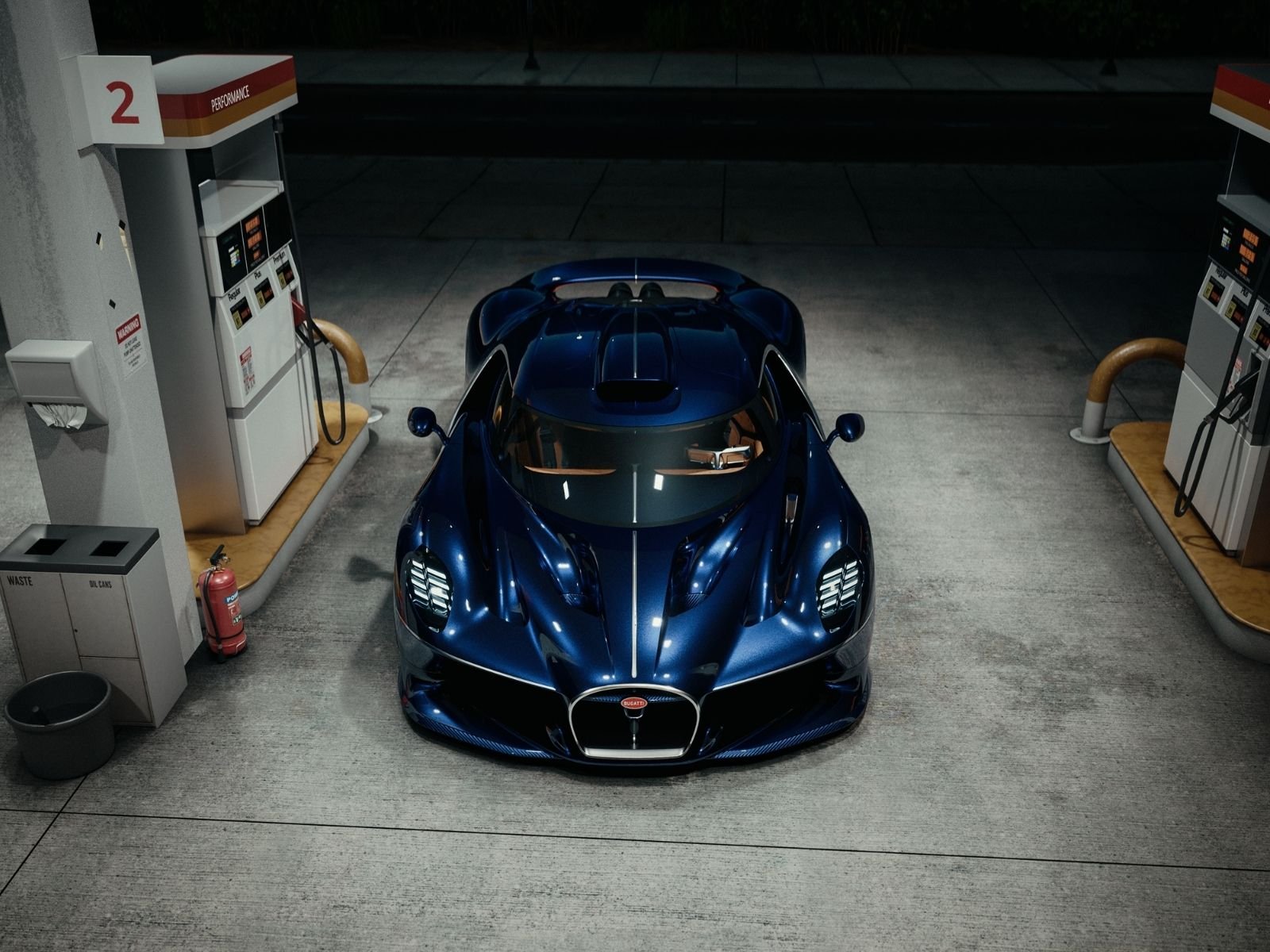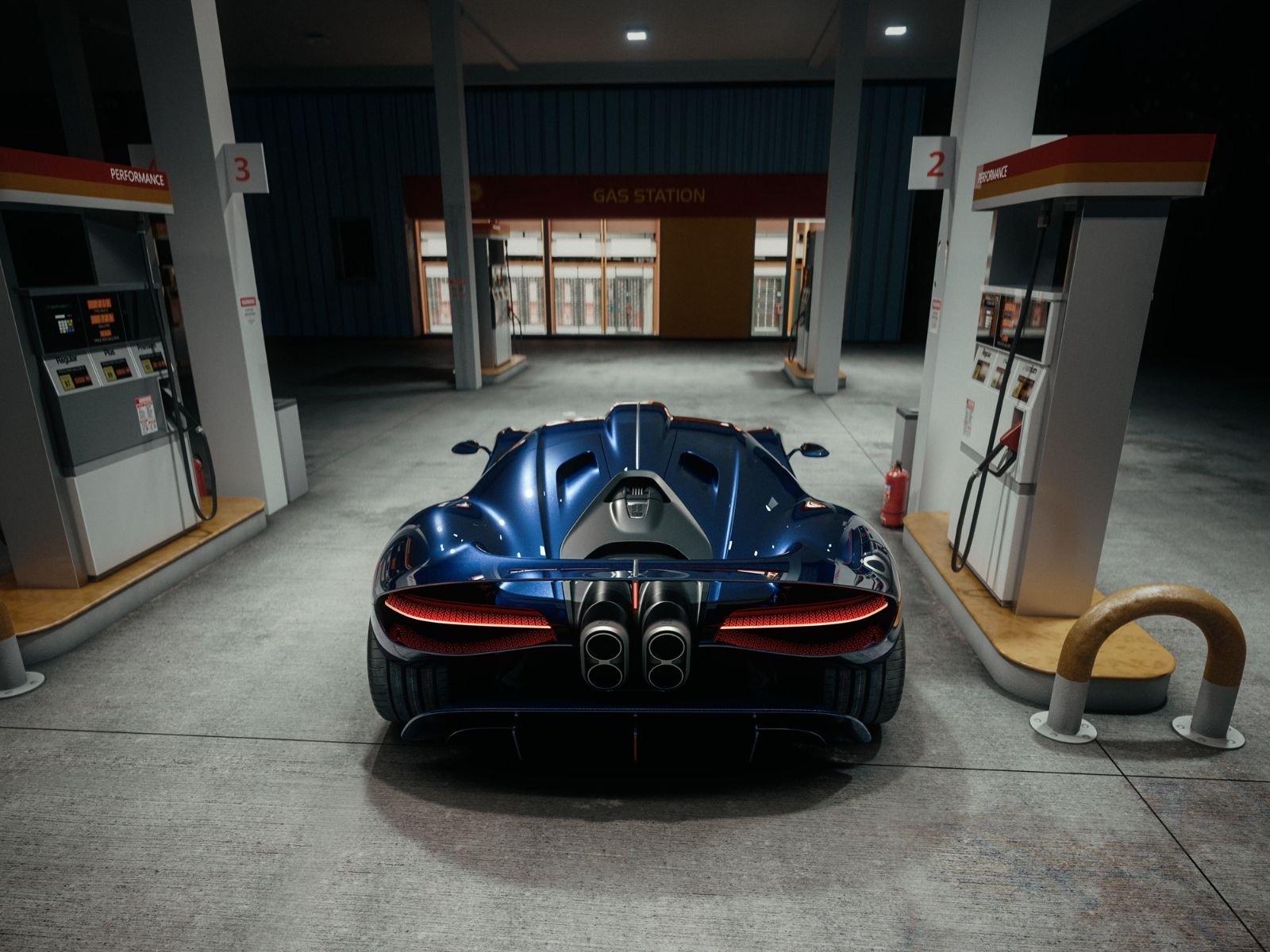








Bugatti has taken one of the most extreme cars it has ever created and done something unexpected with it. Instead of chasing more downforce, quicker lap times, or another headline-grabbing performance figure, the French marque has stripped the Bolide back to its extraordinary proportions and used them as the foundation for a one-off creation: the Bugatti Destrier.
The Destrier is the third one-of-one creation to emerge from Bugatti’s Programme Solitaire, following the Brouillard and F.K.P. Hommage. But unlike those commissions, shaped by emotive stories and Bugatti’s history, the Destrier began with a more instinctive design question: what would happen if the Bolide’s extraordinary engineering package were freed from the wings, vents, and aerodynamic additions demanded by the racetrack?
The result is a car standing just one metre tall, making it the lowest-silhouetted Bugatti ever created. Its name is equally deliberate. A “destrier” was the finest and strongest type of horse associated with medieval knights, an idea Bugatti has carried through the car’s stance, materials and some of its smallest details.

Underneath that completely reimagined body sits some very familiar—and very serious—hardware. The Destrier is built around the Bolide’s carbon-fibre monocoque, while behind the cabin sits the complete Bolide W16 powertrain — Bugatti’s quad-turbocharged 8.0-litre engine producing 1,600 PS.
Yet that’s almost a footnote in this particular story. Bugatti isn’t presenting the Destrier as another exercise in outright speed. Instead, the company has taken one of its most extreme engineering foundations and let proportion, craftsmanship, and design become the headline.
The difference becomes particularly obvious in its stance. The Destrier rides on 20-inch front and 21-inch rear wheels, up from the Bolide’s 18-inch setup. Combined with that metre-high silhouette, the wheels appear enormous while the cabin crouches between the front wings, creating what Bugatti likens to the posture of a powerful horse ready to pounce.
Advertisement · Continue Reading Below
- Engine: 8.0-litre quad-turbocharged W16
- Power: 1,600 PS
- Chassis: Bolide carbon-fibre monocoque
- Height: 1 metre
- Front Wheels: 20-inch
- Rear Wheels: 21-inch
- Exterior Colour: Sapphire Celeste
- Exterior Carbon: Blue-tinted carbon fibre on front splitter and rear diffuser
- Interior: Ambre Voyageur leather and nubuck with 3D-knitted textile
- Interior Detailing: Copper yarn, contrasting stitching and hammered brightwork
- Production: One-off (1/1)
- Programme: Bugatti Programme Solitaire
The concept also has a historical precedent. Bugatti’s Type 57 chassis once underpinned both the streamlined Type 57G and Type 57C “Tank” racers—which won Le Mans outright in 1937 and 1939—and the Type 57SC Atlantic. Competition car and rolling sculpture emerged from the same fundamental platform. Bugatti sees the Bolide and Destrier as a modern continuation of that philosophy — one chassis, two completely different expressions.
The connection has even been permanently incorporated into the car. Above the windscreen sits a hand-laser-engraved dedication plate depicting both the Type 57G Tank and Type 57SC Atlantic—a small reminder that transforming racing engineering into something beautiful isn’t an entirely new idea at Bugatti.
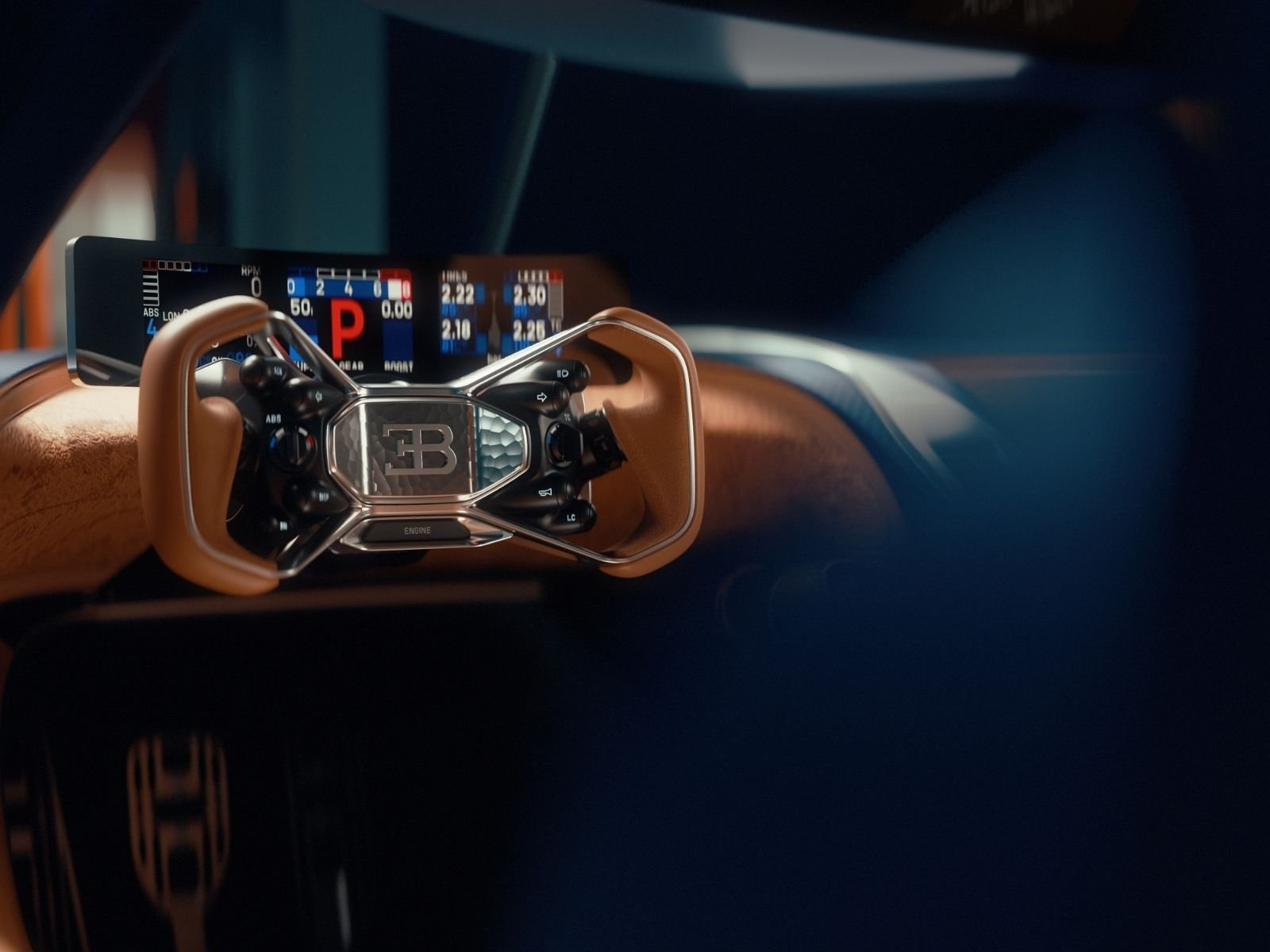
Rather than simply dressing a Bolide in different bodywork, Bugatti has developed a fresh design language around the Destrier. The marque’s familiar C-line has been altered to pause just before the front wheel arch, briefly exposing the bodywork before continuing towards the horseshoe grille. That grille itself is wider than the Bolide’s, creating a front end defined more by restraint than outright aggression.
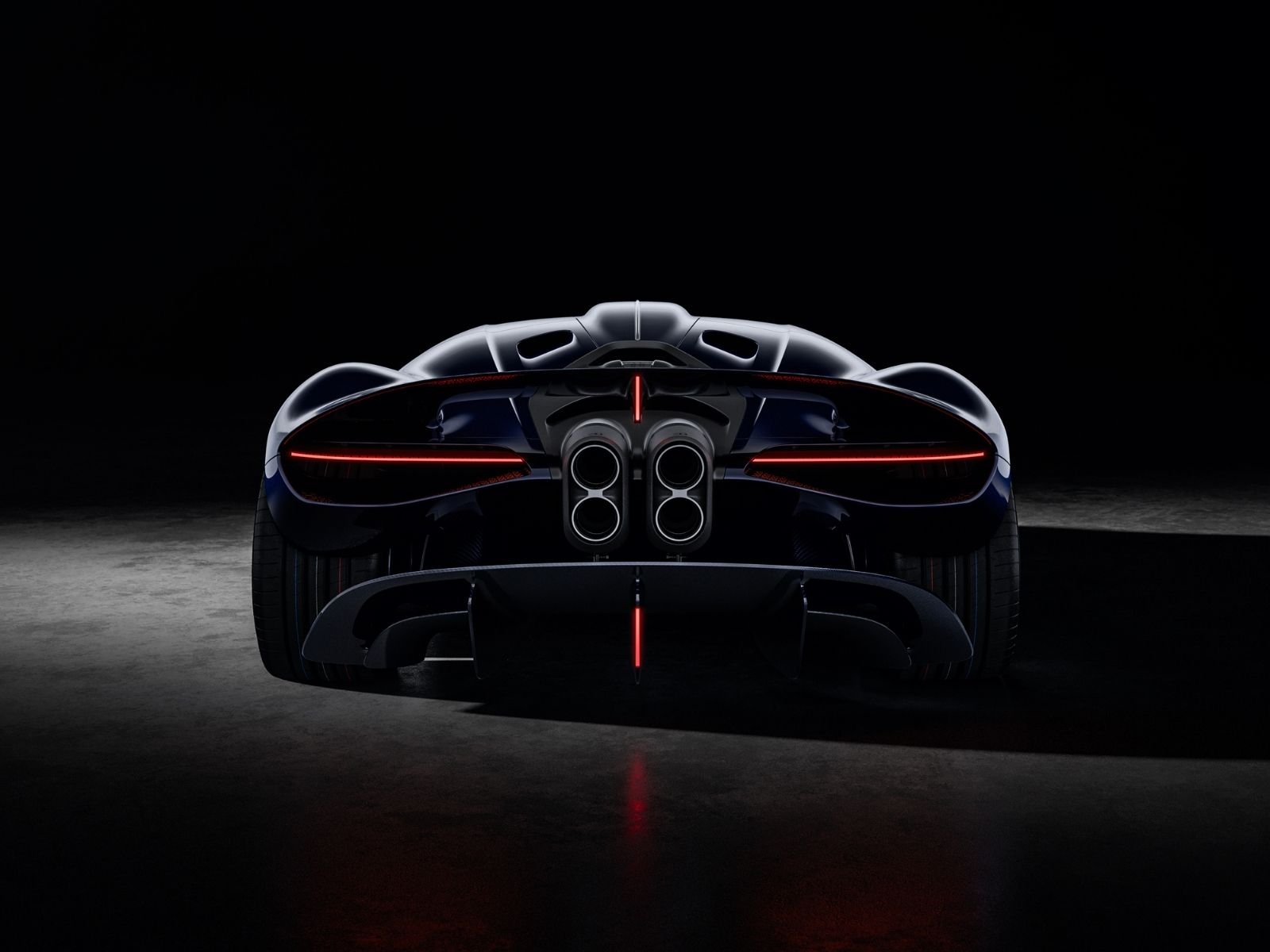
Things become more dramatic towards the rear. The body pinches sharply inward behind the doors, forming an unusually narrow waist before swelling back out over the rear wheels. Instead of the Bolide’s enormous aerodynamic hardware, an elegant blended rear wing takes inspiration from the one-off Chiron Profilée.
As Bugatti Director of Design Frank Heyl says, “Destrier is not a car you understand with your head, it is a car you feel with your heart. The Bolide gave us the most extreme proportions we have ever created, and by freeing them from the Bolide’s relentless pursuit of downforce, we let them speak as pure sculpture.”
Heyl goes on to draw a direct parallel with the Type 57, describing the Bolide and Destrier as two different masterpieces born from one platform. He believes the Destrier could still be appearing on concours lawns 50 years from now.
The exterior colour plays an important role in that transformation. Called Sapphire Celeste, the bespoke multi-layer finish was created exclusively for this car and its owner. Diamond-inspired sparkle within the paint adds depth to the body, while polished aluminum brightwork provides contrast against the blue. Even the limited exposed carbon fibre—found on the front splitter and rear diffuser—has been tinted specifically to complement Sapphire Celeste. The colour also has a subtle piece of Bugatti history.
Type 57SC Atlantic chassis 57591, better known as the “Pope” Atlantic, originally wore blue before its current owner repainted it black.
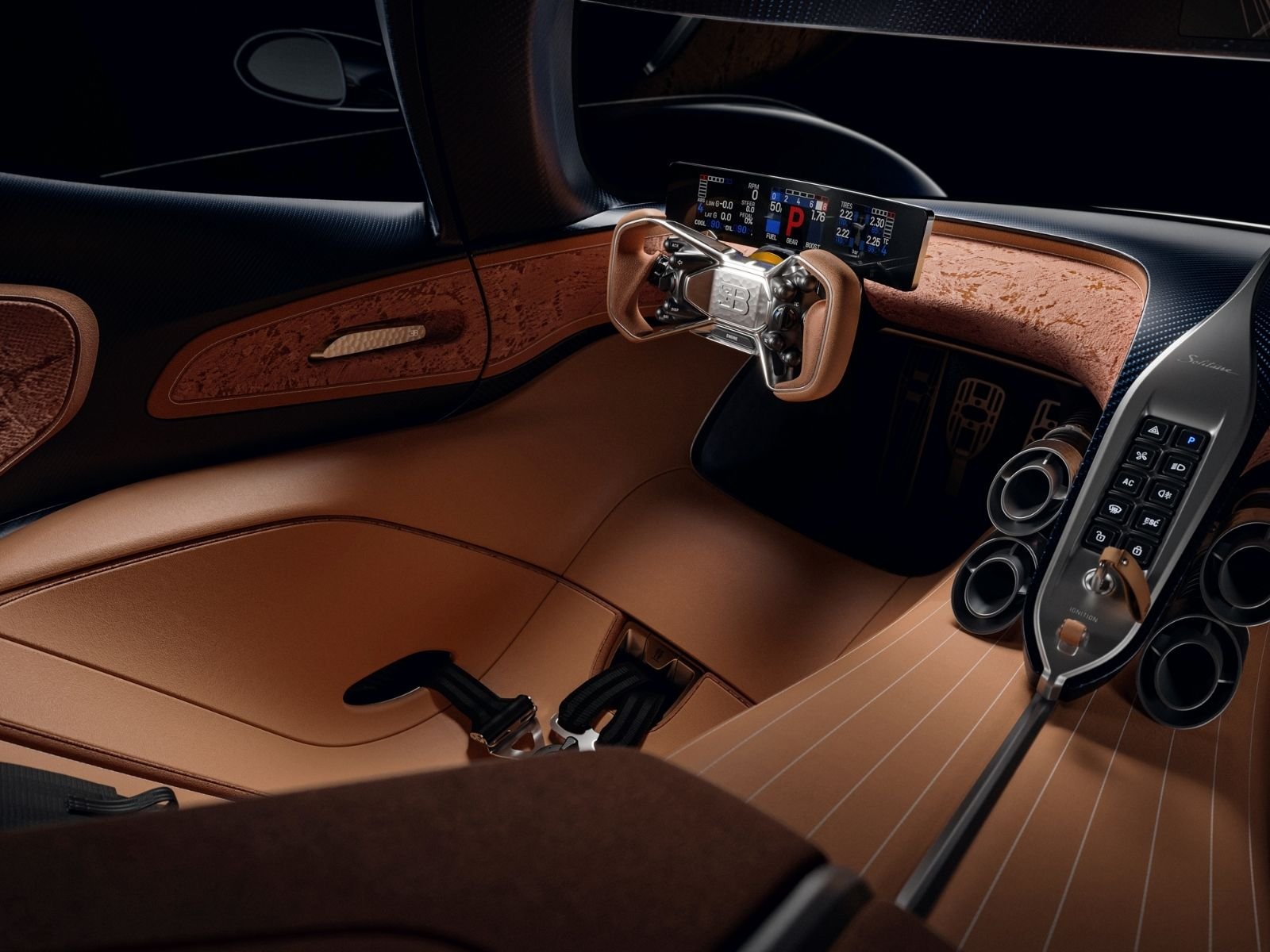
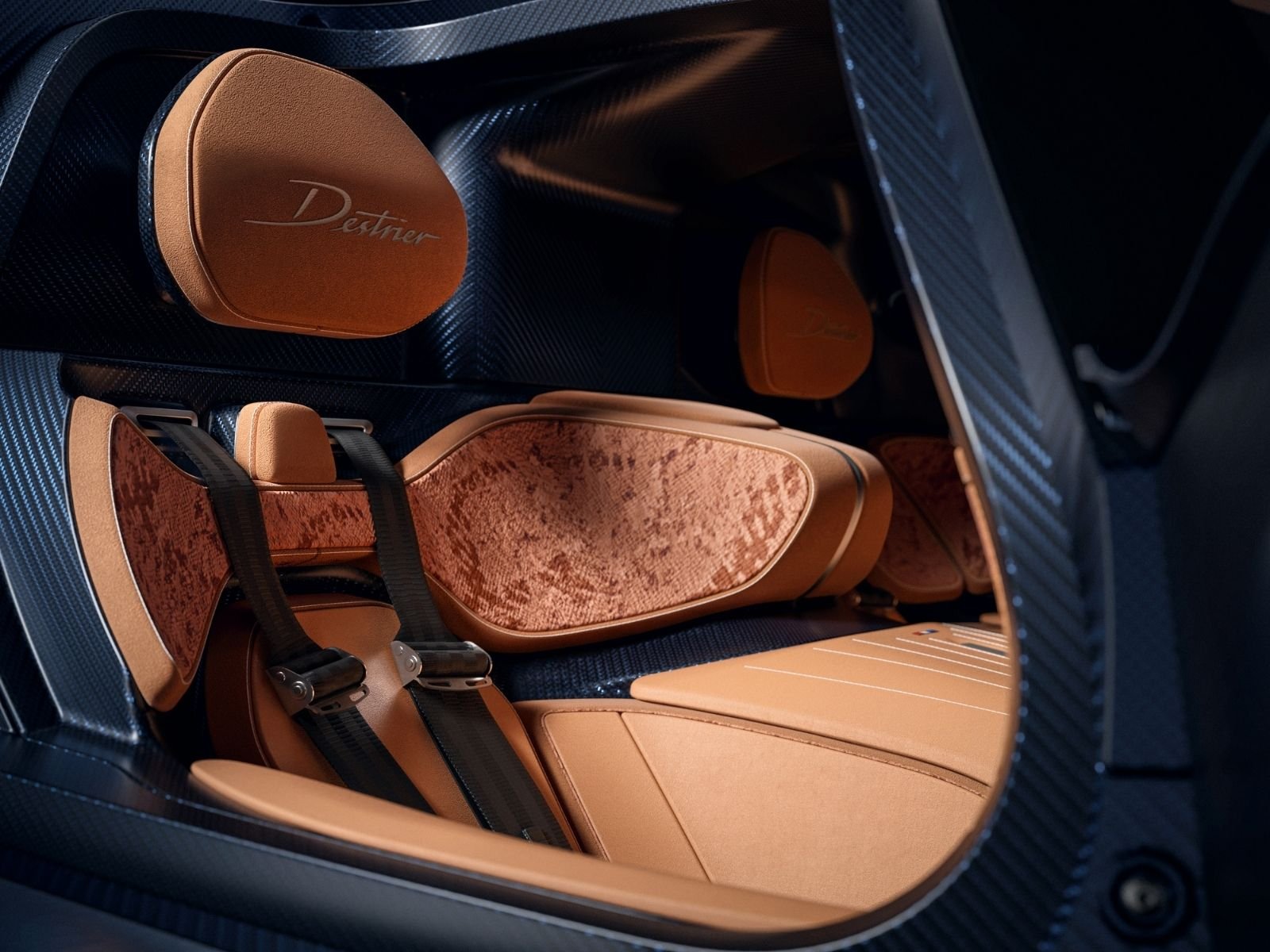
If the exterior moves away from the Bolide’s aerodynamic obsession, the interior takes an even bigger step away from motorsport. Rather than retaining the stripped-back atmosphere of the track car, Bugatti has transformed the Destrier’s cabin into something inspired by the quiet warmth of a tailor’s atelier, with every material individually selected and every surface created around its single owner.
Three principal materials shape the cabin — leather and nubuck finished in the warm Ambre Voyageur brown, alongside an advanced 3D-knitted textile inspired by techniques used in haute couture and performance sportswear. Fine copper yarns run through the knitted material to create subtle highlights, forming a circular “halo-line” around the cabin, while contrasting stitching follows the geometry of individual components and continues through the headrests and centre console.
Advertisement · Continue Reading Below
Sabine Consolini, Bugatti’s Head of Colour and Trim, explains, “Every material in Destrier was chosen the way a tailor selects cloth. ‘Ambre Voyageur’ leather and nubuck bring a warm, human counterpoint to the depth of ‘Sapphire Celeste’, while the 3D-knitted textile – threaded with fine copper yarns – wraps the cabin in a single, seamless halo. Nothing shouts. Every surface is measured, tactile, and made for one person alone.”
That attention continues into the smaller details. Hammered brightwork appears across the door opener, air vents, steering-wheel hub and entry plate, echoing the finish found in the engine bay and subtly referencing the hand-beaten armour of medieval knights. A small French flag acknowledges Bugatti’s origins, while modern parametric patterns appear in the head- and taillights. Even the oil filler cap carries the Destrier emblem alongside its most important designation — “1/1.”
Look closely at the Destrier’s oil filler cap, and you’ll find the detail that matters most: alongside its unique emblem sits the designation “1/1.” That’s the essence of Bugatti’s Programme Solitaire. The Destrier isn’t the beginning of another limited-production Bolide derivative, but a singular creation shaped around one owner, from its Sapphire Celeste exterior to the bespoke materials and detailing inside.
Beneath all that craftsmanship remains the Bolide’s complete 1,600 PS, quad-turbocharged 8.0-litre W16 powertrain, yet Bugatti deliberately treats that extraordinary figure almost as a secondary detail. The Bolide showed what this engineering could achieve when aerodynamics and outright performance came first; the Destrier shows what happens when proportion, craftsmanship and individuality take priority. There will inevitably be faster and newer Bugattis, but with its one-off body and 1/1 designation, no future model can replicate one thing: there will only ever be one Destrier.