



















Our team of editors and experts thoughtfully chooses each product. If you decide to buy through one of our links, we may earn a commission. Learn more. Want to know how we test products? Click here for more details.
When you think of Hamilton, one thing comes to mind: the Khaki Field. It’s been the cornerstone of the brand for years. With its military roots and clear sense of purpose, the Khaki Field has always prioritised function — from its clean dial and easy readability to its durable case. It has been respected ever since, and you can wear it without a second thought. More importantly, it’s the kind of watch that offers mechanical credibility without draining your savings, a tradition that continues today.
Moving forward today, Hamilton is taking its familiar formula in a new direction. Instead of simply refining the classic, the brand is entering the digital space through a collaboration with Call of Duty: Black Ops 7. To mark the launch of the upcoming game, Hamilton has introduced a special Khaki Field Auto designed for the game’s characters. It’s an interesting move—one that connects Hamilton’s real-world military roots to a modern, digital battlefield. In a way, it feels like a natural evolution if you think about it. The Khaki Field was designed for action, and now it’s finding its place on a whole new battlefield.
Let’s take a closer look.
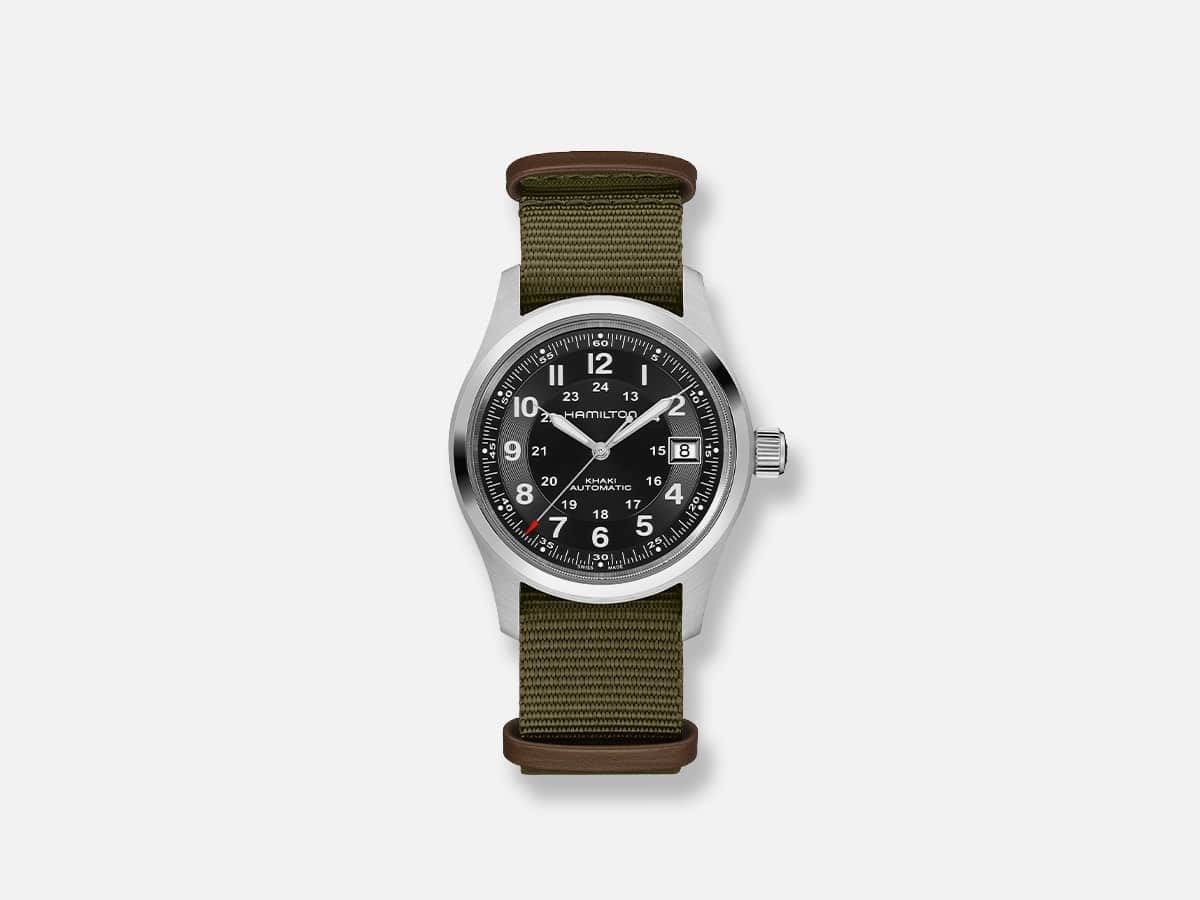
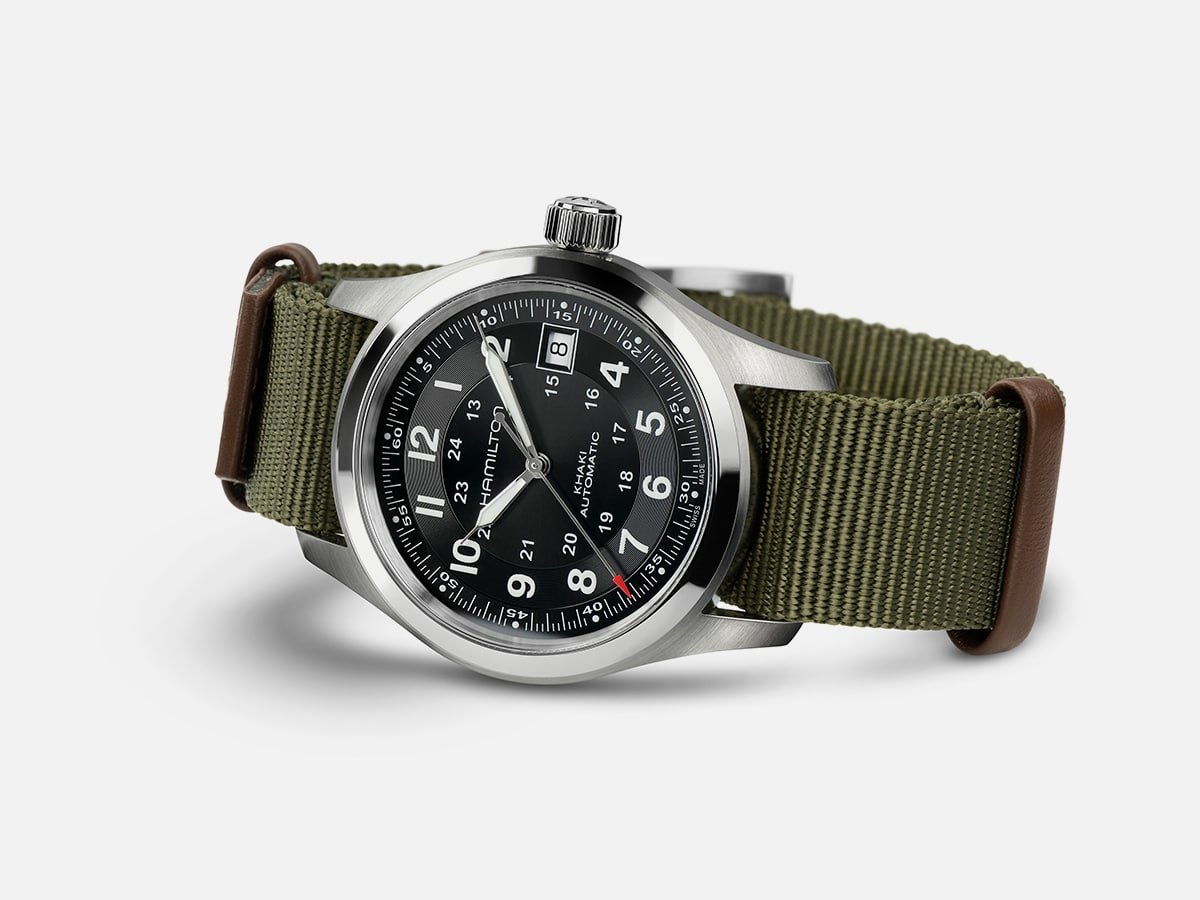
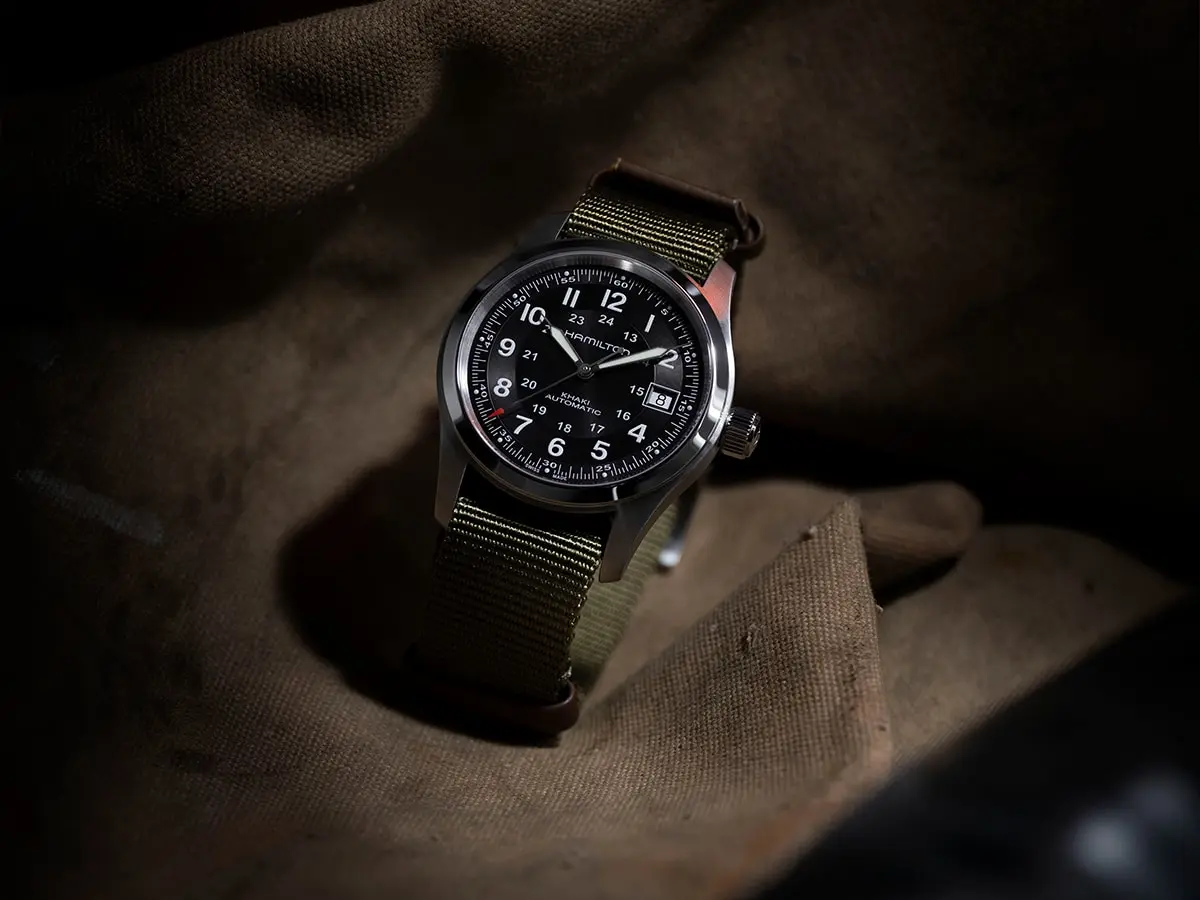
Hamilton Khaki Field Auto Call of Duty Special Edition Ref.H70475930 | Image: Hamilton
Hamilton Khaki Field Auto Call of Duty Special Edition
Brand: Hamilton
Model: Khaki Field Auto Call of Duty Special Edition
Reference: H70475930
Diameter: 38mm
Thickness: 10.9mm
Case Material: Stainless Steel
Calibre: Calibre H-10 Automatic Movement
Power Reserve: 80 Hours
Water-Resistance: 10 Bar (100 metres, 330 feet)
Price: USD $975 (Limited Edition – 5,000 Pieces)
Right way, you’ll notice the new Hamilton Khaki Field Auto Call of Duty Special Edition looks very similar to the standard 38mm model — and that’s a good thing for maintaining the same proportions and preserving that classic field-watch feel on the wrist. The stainless steel case is paired with a black dial that appears slightly darker to evoke a Black Ops setting, and with Super-LumiNova on the hands, it stays easy to read in low light — fitting both the watch’s military heritage and the game’s atmosphere.
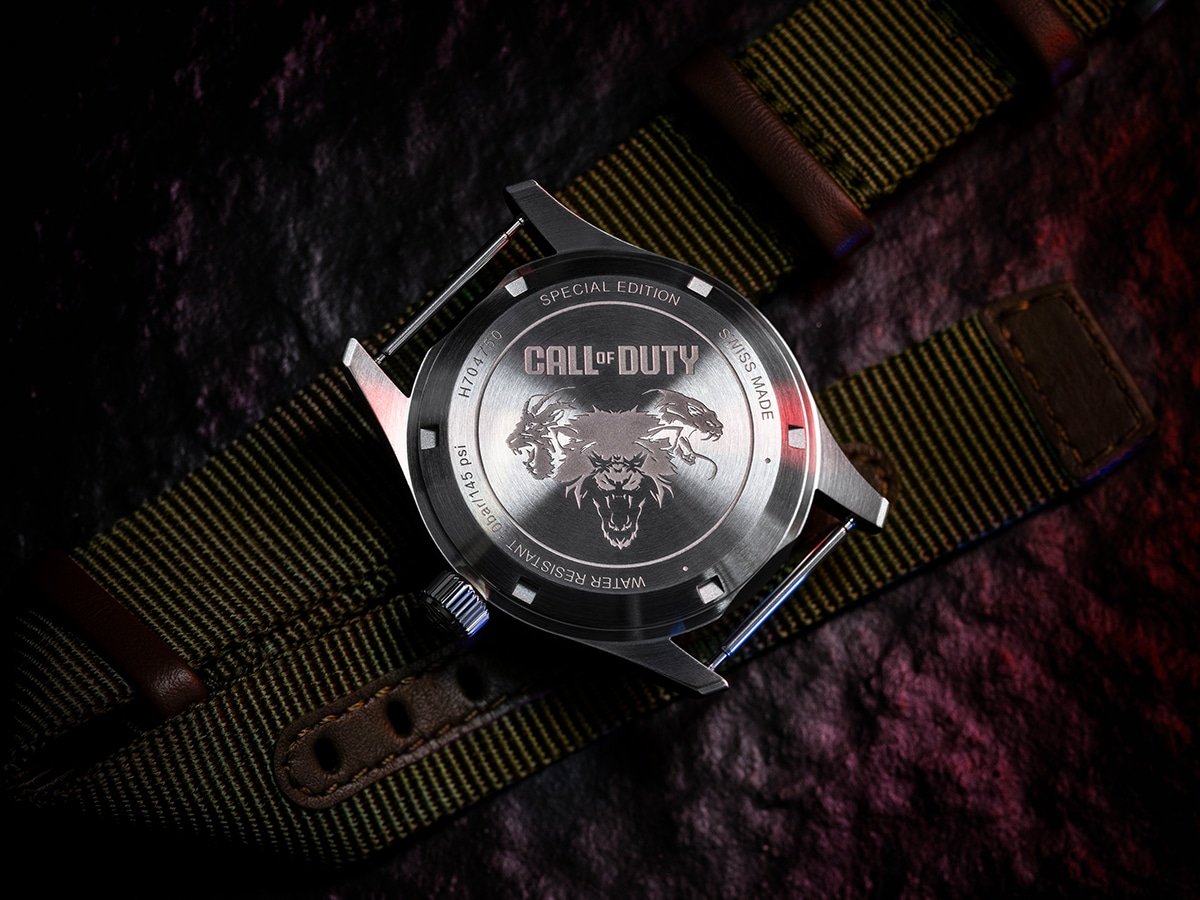
The khaki-green NATO strap grounds Hamilton’s tactical aesthetic. It’s simple, practical, and comfortable — exactly what you’d expect from the Khaki line. Inside, the watch features the H-10 automatic movement, providing straightforward three-hand timekeeping, a date window, and an impressive 80-hour power reserve. Flip it over, and you’ll see a custom Call of Duty engraving on the caseback, giving this piece a reimagined classic feel and more detail — a genuine crossover between Hamilton’s field heritage and a modern digital battlefield.
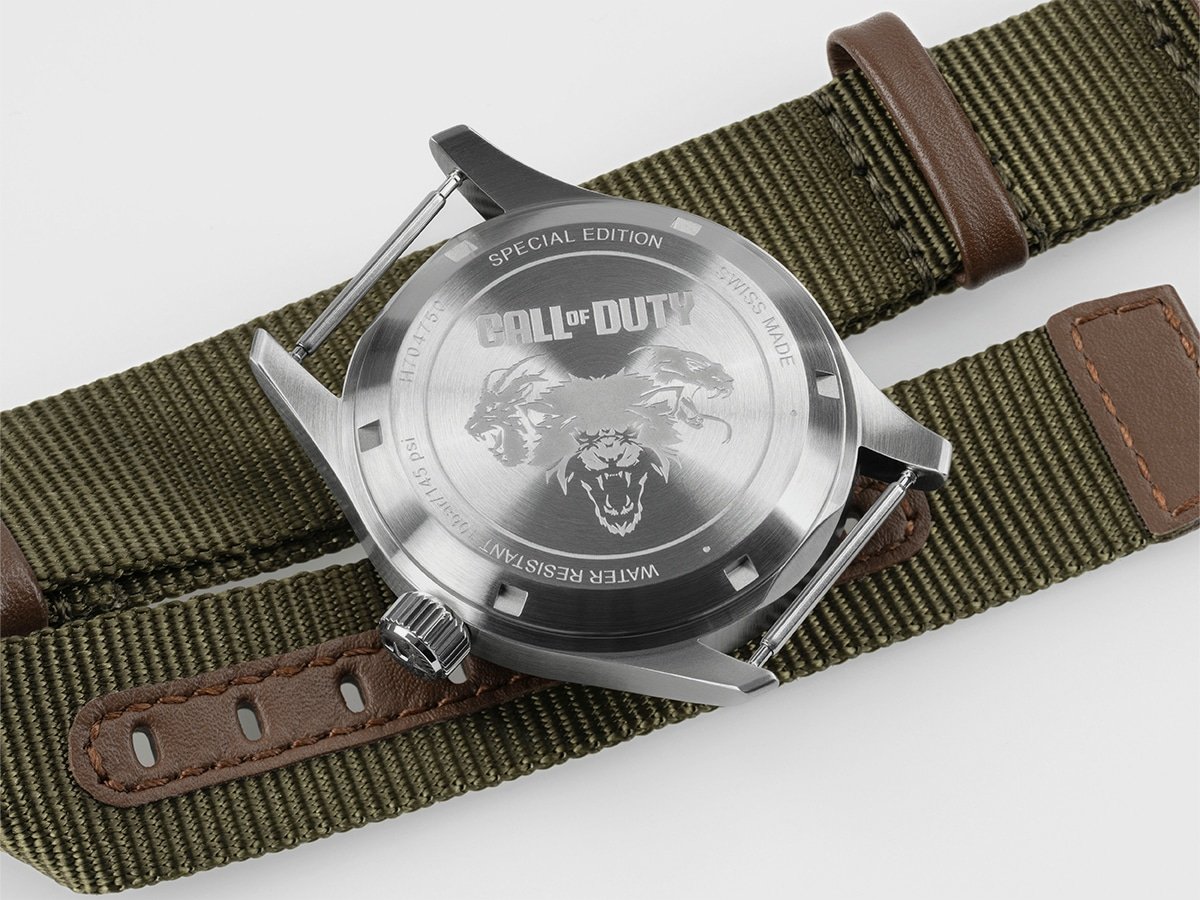
Hamilton Khaki Field Auto Call of Duty Special Edition | Image: Hamilton
Hamilton x Call of Duty: Black Ops 7
Black Ops 7 is poised to be one of the biggest gaming franchises this year, developed by Treyarch and Raven Software. The story is set in 2036, amid ongoing conflict and rising tensions worldwide. David Mason returns to lead an elite JSOC team on a covert mission in the Mediterranean city of Avalon. It’s a serious, high-pressure environment, where a straightforward, military-inspired watch like the Khaki Field fits well.
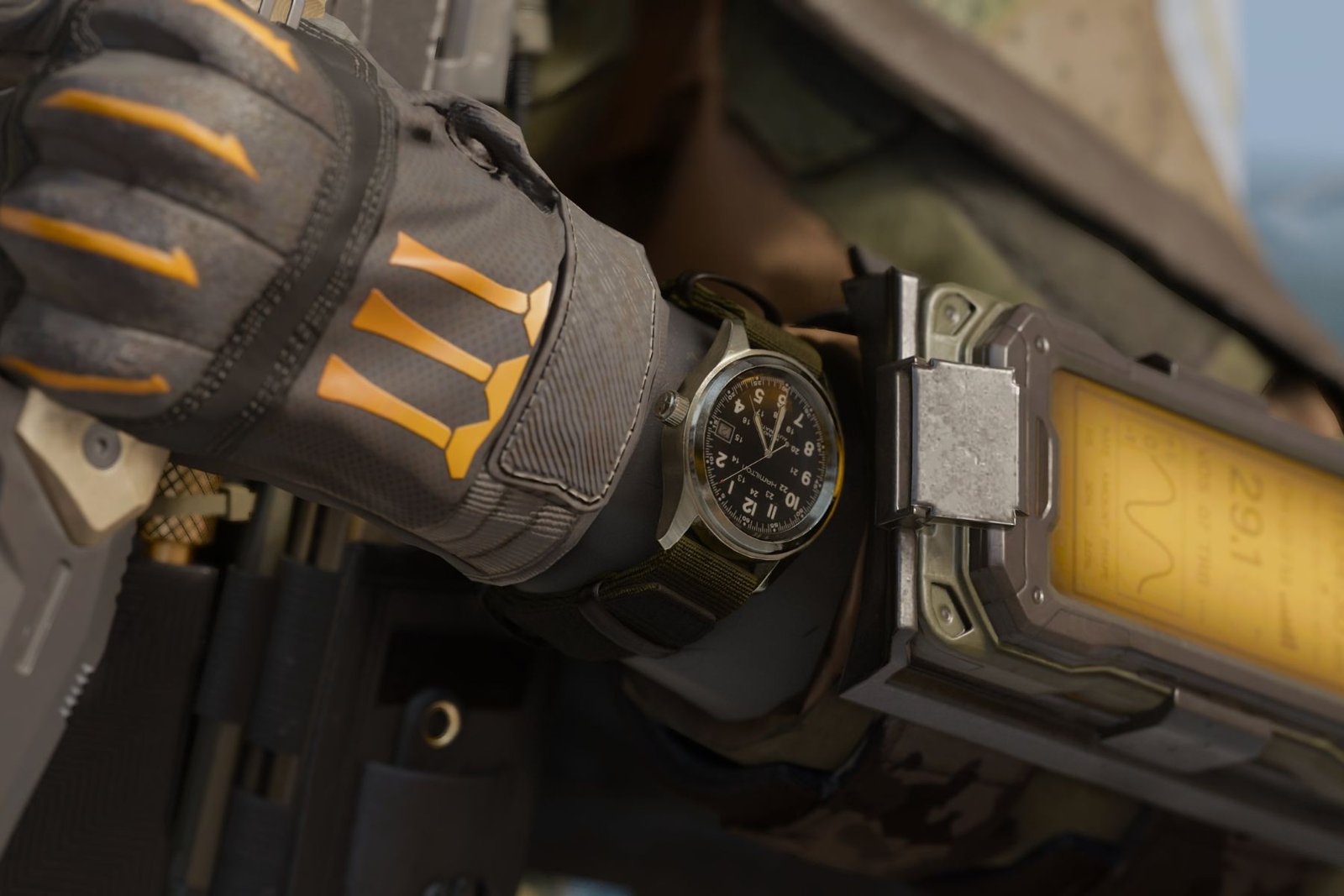
The Hamilton Khaki Field Auto appears on the wrist of lead character Axel Vermaak. This isn’t Hamilton’s first venture into the gaming world, having previously collaborated on the Far Cry Khaki Field Titanium Auto in 2021 and more recently released a special American Classic Boulton edition linked to Hideo Kojima’s Death Stranding 2. Still, this newest partnership feels like its boldest move yet, placing the Khaki Field front and centre in one of the largest gaming franchises globally.
“As the watchmaker of game makers, Hamilton brings its legacy of design, technical precision and creative collaboration to the forefront of interactive storytelling,” the brand said in a press release. “By working closely with game developers, the brand continues to blur the line between physical craftsmanship and digital experience, infusing the world of gaming with real-world detail and narrative impact.”
Hamilton states that the Khaki Field Auto has been fully integrated into the game, and from what we know, it’s more than just a brief appearance. The watch is designed to feel like it naturally belongs on Axel Vermaak’s wrist. It becomes part of the character’s appearance and story, making the crossover feel more authentic. Rather than inserting a real-world brand into a digital space, it seems like a natural fit, a field watch stepping into a different kind of battlefield.
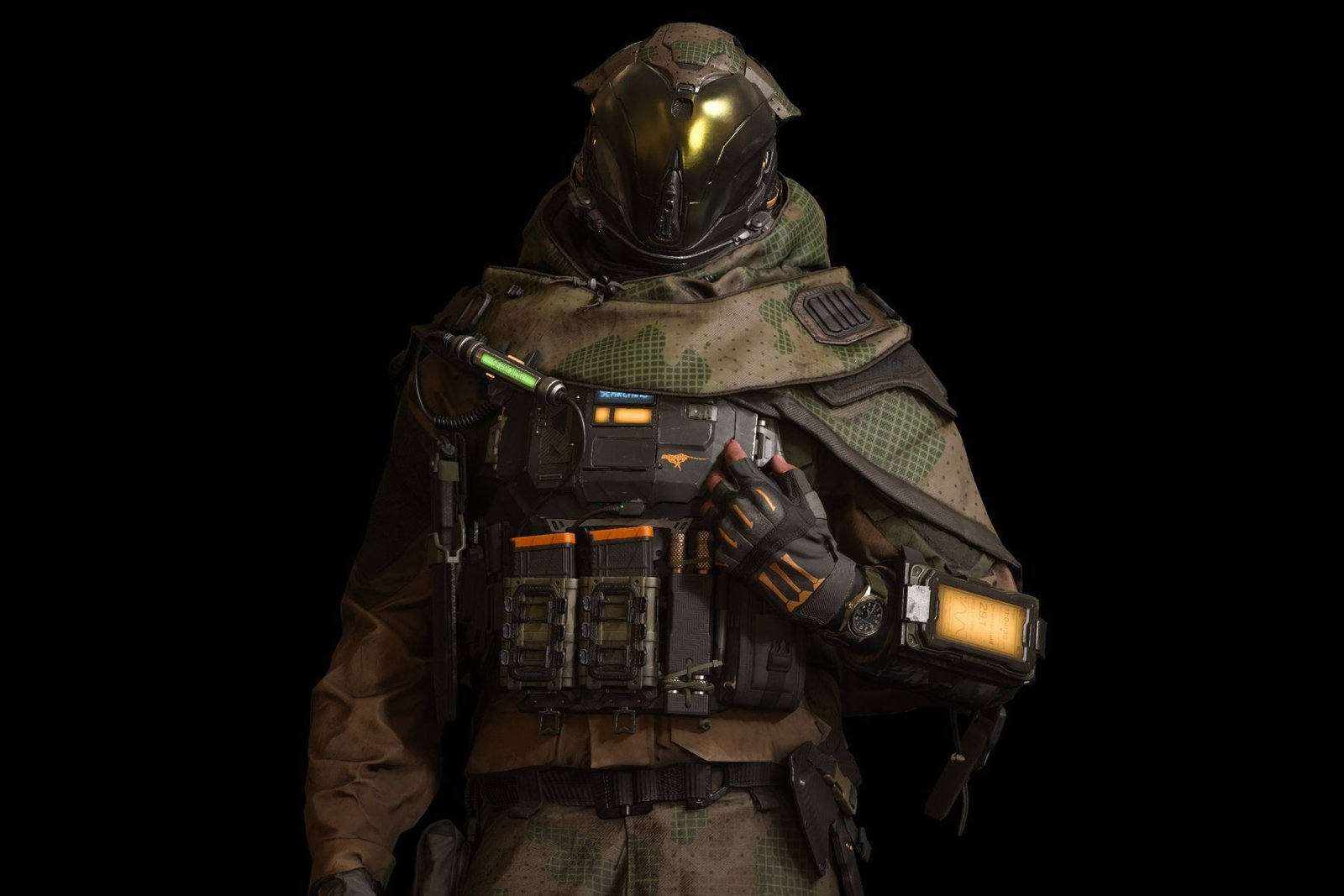
Hamilton Khaki Field Auto Call of Duty Special Edition | Image: Hamilton
Price & Availability
The Khaki Field Auto Call of Duty Special Edition launches on 11 November 2025 and will be available through Hamilton boutiques and selected authorised retailers. It is limited to 5,000 pieces worldwide and priced at USD $975, only a small step up from the regular 38mm Khaki Field Auto. For a limited collaboration tied to one of gaming’s biggest franchises, the watch features a khaki green NATO strap and arrives in special Black Ops 7 packaging, offering a stylish finish for fans of the franchise.
Elias Albay is the Founder and Director of Many Men Magazine, a Toronto-based digital publication dedicated to promoting modern masculinity through style, culture, and self-improvement. What started as a personal turning point became a purposeful platform. — born from Elias’ desire to create something meaningful after completing his studies and finding no career path that truly matched his ambitions. With a background in Civil Engineering from York University and experience in Commercial Flight Operations at CAE, he applied skills, and resilience from both fields to forge a new path.
Our team of editors and experts carefully selects each product. If you choose to purchase through one of our links, we may earn a commission. Learn more. Do you want to know how we test products? Click here for more details.
It’s very challenging to see another competitor brand show up and compete in the smartphone market, especially when every smartphone starts to look like a clone of the last. Nothing has made a bold move. This UK-based brand didn’t just show up with another glass-and-metal rectangle — it brought attitude. With a transparent back, blinking lights, and a minimalist design philosophy, the Nothing Phone (2) set out to prove that new ideas still have a place in tech. And against all odds, it caught people’s attention.
The company hasn’t been standing still either. While the Phone (2) still maintains its position, Nothing is already preparing for what’s next. The Nothing Phone (3a) and the Nothing Phone (3a) Pro are just around the corner, promising refined designs and new features. However, before we dive into what’s coming, it’s worth taking a closer look at the device that helped get them here — and determining if the Phone (2) still holds its own a year and a half later.
Highlights:
Transparent backplate and Glyph Interface
Long battery life, sharp OLED display, and Wi-Fi 6.
Custom widgets and pop-ups highlight Nothing’s innovative spirit despite some experimental aspects.
The Nothing Phone (3a) and Phone (3) Pro will be Dropped Eventually.
Nothing Phone ( 2 ) | Image: Nothing Tech
If there’s one thing the Phone (2) nails, it’s making a statement. It’s a sizable phone at 6.7 inches, no doubt about it, but the Glyph Interface, the Nothing OS widgets, and the smooth feel in the hand help it stand out among a sea of safe choices. That said, while the custom software features — like pop-up app windows — sound cutting-edge, in day-to-day use they can sometimes feel more like experiments than necessities. Still, credit where it’s due: few brands are even making the effort.
Living with the Phone (2) is generally a smooth ride, but it has its flaws. It handles the basics really well: battery life is reliable, the display is stunning, and audio quality is impressive during streaming or gaming. However, if you’re expecting flawless performance throughout, the Phone (2) may fall short in some areas. It’s nearly there — exceptionally close — yet, at times, the aspirations seem slightly ahead of the actual performance.
Performance is more than good enough for the majority. The Snapdragon 8+ Gen 1 effectively handles tasks, with apps launching swiftly and multitasking flowing smoothly. However, when Nothing embraces its more unconventional concepts, it can occasionally feel off-balance. Certain features seem to be evolving towards their potential. Nevertheless, if you’re interested in owning a distinctive device — one that stands out from typical brand offerings — this phone offers considerable appeal.
Bottom line? The Nothing Phone (2) shows that design still matters, and that mid-range phones can be exciting. While it has its flaws, it stands out as more captivating than 90% of current options. With the upcoming release of the Phone (3a) and 3a Pro, it appears that Nothing is learning, tweaking, and preparing for an even bigger impact. If you want something innovative — and don’t mind some initial challenges — the Nothing Phone (2) remains a wise choice.
When it comes to looks, the Nothing Phone (2) doesn’t hold back. It’s available in two clean colour options: White and Dark Grey. Both finishes beautifully showcase the transparent back, but honestly, the White version feels the most “Nothing” — bold, futuristic, and proudly unique. The Dark Grey, on the other hand, offers the phone a more understated, stealthy vibe if you prefer something less flashy.
The materials are premium across the board. You’re getting Gorilla Glass front and back, with an aluminum frame sandwiched between. This setup is usually only found on proper flagships, and it gives the Phone (2) a solid, confident feel in the hand. Even after a few months of use, it holds up really well against fingerprints and minor scuffs, which is impressive given how exposed the design looks.
The finish is where the Nothing Phone (2) truly showcases its personality. The transparent back isn’t just a gimmick — you can actually see the design elements beneath it, from the wireless charging coil to the modular Glyph Interface. It feels deliberate, sharp, and refreshing. While other brands pursue glossy backs or fake leather textures, Nothing proves that showing the raw components of your phone can actually look better — and way more interesting, in my opinion.
Nothing Phone ( 2 ) | Image: Supplied
Nothing Phone 2 Features That Actually Matter
The Nothing Phone (2) isn’t just about bold looks — it backs this up with features that genuinely make a difference day-to-day. First, let’s talk about the battery life. With a 4,700mAh battery, you can easily get through a full day of heavy use. Even with the screen set to 120Hz, it remains efficient, providing you with around 6–7 hours of screen-on time. Plus, fast wired charging takes you to 50% in about 25 minutes, while wireless charging and reverse wireless charging complete a hassle-free setup.
The dual 50MP camera system keeps things refreshingly simple. Shots in good lighting look sharp and vibrant, and the ultra-wide lens stays impressively consistent with the main sensor. Low-light photos are fine — they won’t top a Pixel or an iPhone Pro, but for social media, everyday snaps, and travel pics, the Phone (2) holds its ground comfortably without trying to overpromise.
Durability is where Nothing covers the essentials without overhyping it. The IP54 rating means the Phone (2) withstands dust and splashes. It’s safe from rain, sweat, and spills, but don’t dunk it underwater. It offers practical protection without extra weight or bulk. Unlocking your phone feels seamless. The under-display fingerprint sensor is quick and reliable, while Face Unlock provides a convenient backup. It’s fast enough to feel invisible but remember that Face Unlock is software-based — suitable for convenience, not secure transactions like payments.
Audio quality? Surprisingly solid. The stereo speakers are clear, balanced, and loud enough to handle movies, podcasts, and quick Spotify sessions without distortion. While it may not replace a high-quality Bluetooth speaker, it is more than good enough for everyday listening. Wireless audio also improves with support for high-quality codecs like aptX and LDAC, making it a great choice for anyone who enjoys music on the go.
Of course, the Glyph Interface may initially seem gimmicky, but it becomes more valuable over time. From call and notification alerts to charging indicators and visual timers, it turns the phone back into an information hub. It adds personality, whether you keep it simple or go all-in with customizations.
Nothing Phone ( 2 ) | Image: Nothing Tech
Living with Nothing OS 2.5 The Good and the Rough Edges
The Nothing OS 2.5 software experience is clean, lightweight, and smooth most of the time, but it isn’t perfect either. Some features, like the floating pop-up app windows, feel a little underdeveloped — great ideas on paper that don’t always translate well in real-world use. The custom widgets, while visually sharp and aligned with the brand’s aesthetic, sometimes lack deeper functionality compared to what you’d find on more mature platforms like Pixel’s At a Glance or Samsung’s One UI widgets.
Updates have been fairly steady, which is a huge positive for a young brand like Nothing. However, early users and real-world testers have noted that major updates occasionally bring minor bugs along for the ride — such as random app crashes, slight input lag, or glitchy animations that can disrupt the otherwise smooth experience. While these issues are not massive, if you’re coming from a Pixel or Galaxy, where the software polish is nearly flawless, you’ll notice the difference.
Another factor to consider is third-party accessory support. Because Nothing is still a smaller player, you won’t find the same wide variety of cases, screen protectors, or third-party add-ons that you’re used to seeing with bigger brands. If you enjoy switching cases frequently or need rugged accessories for extra protection, your options will be more limited. It’s not a dealbreaker by any means — and to be fair, Nothing’s official accessories are solid — but it’s something to keep in mind if personalization or protection are top priorities for you.
At the end of the day, Nothing OS 2.5 shows a lot of promise and continues to improve, but it’s not quite as reliable as the software offerings from brands that have been refining Android for a decade or more. It’s fresh, fast, and unique — which can be invigorating — but it comes with a few minor trade-offs that you’ll want to consider before diving in.
Is the Nothing Phone 2 the Right Choice for You?
The Nothing Phone (2) isn’t trying to be the fastest or flashiest phone on the market — and that’s exactly what makes it stand out. It’s a bold blend of design, personality, and smart everyday features that diverge from the same old formula everyone else follows. Sure, there are a few trade-offs — the camera struggles a bit at night, the software has minor rough edges, and the Glyph lights may not appeal to everyone. But for a starting price of around USD $699, you’re getting a phone that feels fresh, looks different, and still nails the basics like battery life, performance, and build quality. It serves as a reminder that a smartphone can retain character without sacrificing practicality — and if that sounds like your kind of phone, this one is well worth a serious look.
Elias Albay is the Founder and Director of Many Men Magazine, a Toronto-based digital publication dedicated to promoting modern masculinity through style, culture, and self-improvement. What started as a personal turning point became a purposeful platform. — born from Elias’ desire to create something meaningful after completing his studies and finding no career path that truly matched his ambitions. With a background in Civil Engineering from York University and experience in Commercial Flight Operations at CAE, he applied skills, and resilience from both fields to forge a new path.