




Gaming

LEGO Pokémon Sets Are Finally Here — Prices, Release Dates & Pre-Orders

Reading Time: 4 minutes

Share via

Our team of editors and experts thoughtfully chooses each product. If you decide to buy through one of our links, we may earn a commission. Learn more. Want to know how we test products? Click here for more details.

  • LEGO and Pokémon officially team up for the first time to release collectible display sets, which will launch on February 27, 2026.
  • The collection features Eevee (#72151), Pikachu and a Poké Ball (#72152), and a large centrepiece set with Venusaur, Charizard, and Blastoise (#72153).
  • Pre-orders are now live, with prices starting at USD $59.99

Pokémon fans have spent years wondering what an official LEGO collaboration might look like, and now it is finally here. After plenty of rumours, fan ideas, and wish lists online, LEGO and Pokémon have announced the first LEGO Pokémon sets. These sets bring some of the franchise’s most famous creatures into brick form for the first time. Launching in February 2026, the collection features sets for Eevee, Pikachu and Poké Ball, and a larger set with Venusaur, Charizard, and Blastoise.

This has become one of the year’s biggest toy announcements, especially for longtime Pokémon fans who have collected cards, played the games, watched the anime, or built LEGO sets. Pre-orders are now available on LEGO’s official website. The collection is mainly aimed at adult collectors, not younger builders.

LEGO says this first lineup is focused on display-style builds rather than traditional playsets, but more Pokémon sets may be released in the future. Prices start at USD $59.99 for the Eevee Pokémon (#72151) set. The Pikachu and Poké Ball (#72152) set costs USD $199.99, and the largest set, featuring Venusaur, Charizard, and Blastoise (#72153), costs USD $649.99.

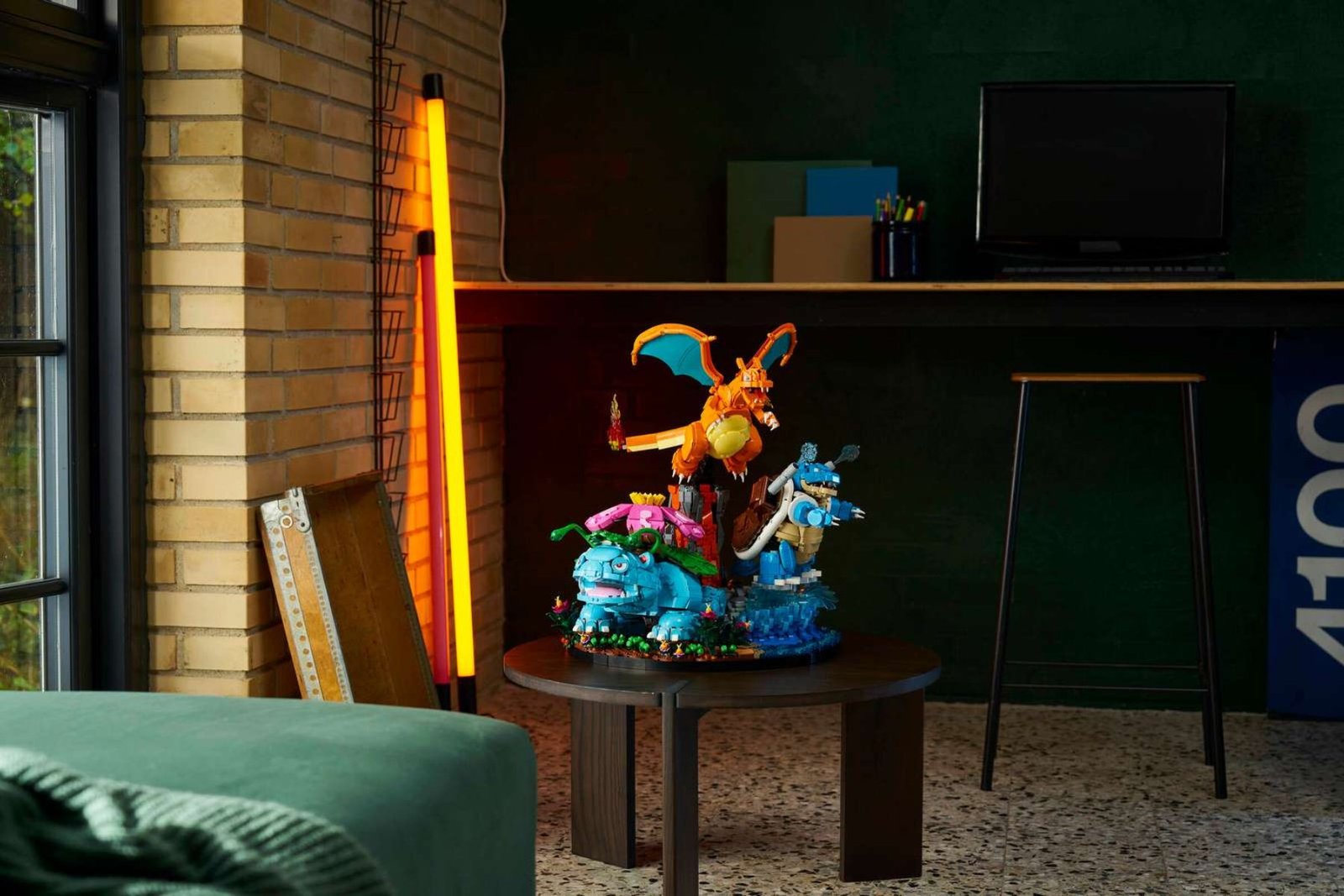
Venusaur, Charizard & Blastoise Pokémon (#72153) | Supplied/LEGO

LEGO says the current lineup is designed mainly for display rather than traditional play, but the company has suggested that more Pokémon sets might be released later.

Here are the prices for the Pokémon LEGO sets:

You can pre-order the LEGO Pokémon sets now, and they are expected to start shipping on February 27, 2026.

Starting with the Pokémon Eevee set feels like the easiest way to begin the collection and probably the safest choice for casual buyers or first-time LEGO Pokémon collectors. Compared to the bigger builds, Eevee stays smaller and easier to handle while still showing plenty of personality through its face, big ears, and detailed fur. Its small size also makes it much easier to display without taking up an entire desk or shelf. There is also a good chance this will become one of the more popular gift options simply because Eevee is one of the most well-known and loved Pokémon in the series.

Then there is the Pikachu and Poké Ball set, which already seems like the release most collectors will want to get first. LEGO making the Poké Ball only available with the Pikachu build is a smart choice, even though many fans probably would have bought the Poké Ball on its own as a display piece. With more than 2,000 pieces, the set is clearly meant for serious collectors and experienced builders rather than casual fans. Still, pairing Pikachu with one of the most famous objects in gaming makes this set feel like the collaboration’s main symbol.

The Pokémon Venusaur, Charizard, and Blastoise set goes even further by bringing together three of the series’ most famous starter evolutions in one large display build. Instead of focusing on just one Pokémon, LEGO made the set around all three characters along with themed environments inspired by the jungle, volcano, and coastal areas. The figures have movable parts for posing, although this clearly feels more like a display piece for collectors than a regular playset. At the same time, it’s easy to imagine fans wishing LEGO had also released Venusaur, Charizard, and Blastoise as separate builds for collectors who want to create their own Pokémon displays over time.

For anyone interested in securing a set before launch, pre-orders are available now directly on LEGO’s official website, with shipping expected on February 27, 2026.


Pikachu and Poké Ball Pokémon (#72152) | Image: Supplied/LEGO
Eevee Pokémon (#72151) | Image: Supplied/LEGO
Venusaur, Charizard & Blastoise Pokémon (#72153) | Image: Supplied/LEGO

LEGOPokémon
About the Author

Related Articles

Samsung Odyssey G8
Tech

Samsung Unleashes the World’s First 6K Odyssey Gaming Monitor

Reading Time: 7 minutes

Our team of editors and experts thoughtfully chooses each product. If you decide to buy through one of our links, we may earn a commission.Learn more. Want to know how we test products? Click here for more details.

Samsung clearly isn’t interested in slowing down when it comes to gaming monitors. After recently digging into Samsung’s wider 2026 Odyssey gaming monitor lineup — where glasses-free 6K 3D and a frankly ridiculous 1,040Hz refresh rate stole most of the attention — Samsung is back with another display milestone worth looking at a little closer.

Leading the latest launch is the 32-inch Odyssey G8 G80HS, which Samsung calls the industry’s first 6K gaming monitor. But it isn’t arriving alone. Samsung has also launched a 27-inch 5K Odyssey G8, new 27- and 32-inch Odyssey OLED G8 models, and a 32-inch Odyssey OLED G7, giving gamers several very different ways into the company’s latest generation of high-end displays. The new models became available to order globally from May 20, 2026.

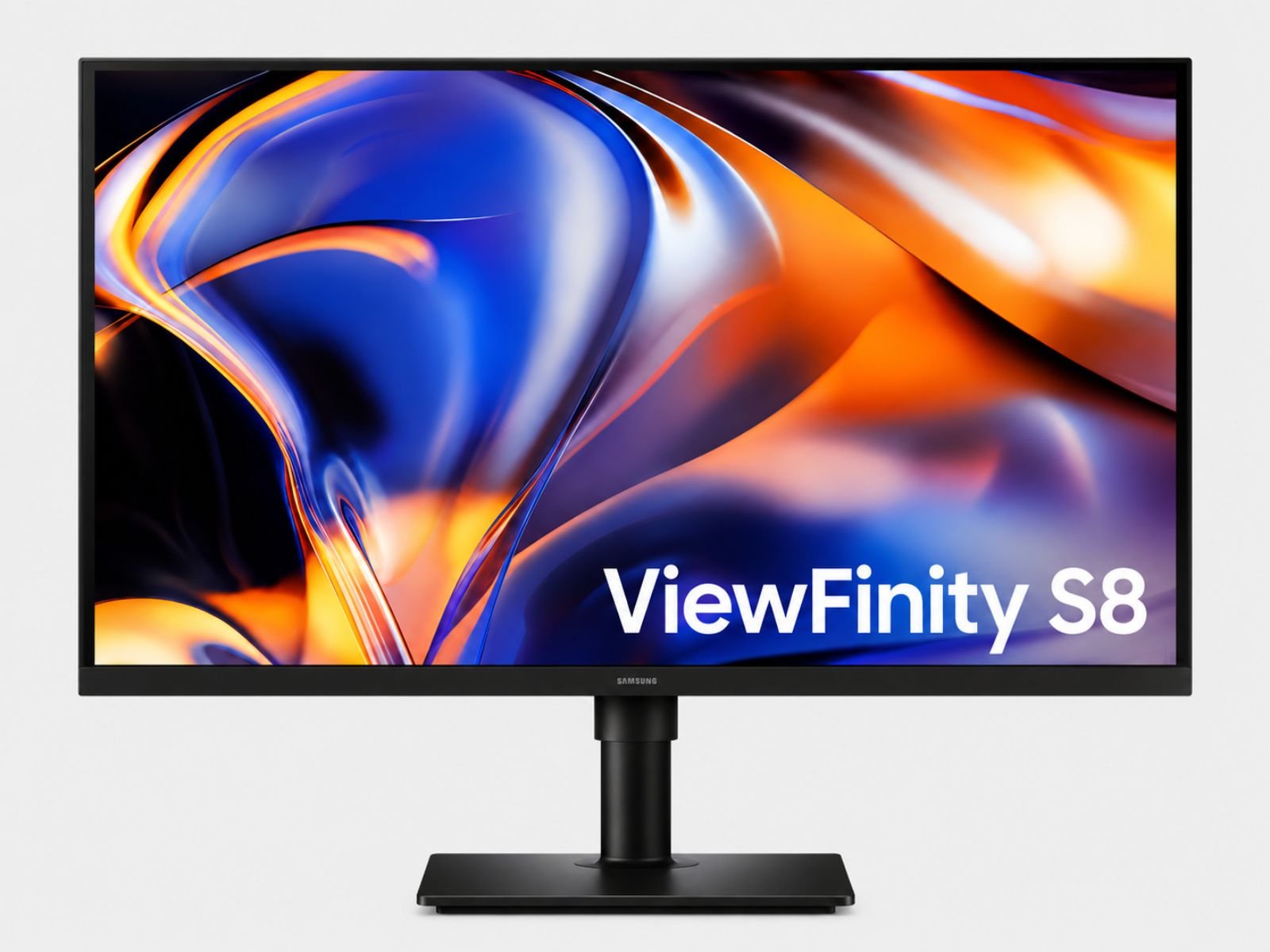
Samsung 27-Inch ViewFinity S8.jpg
Samsung 27-Inch ViewFinity S8 | Image: Samsung Newsroom

The headline attraction is undoubtedly the 32-inch Odyssey G8 G80HS. Samsung has pushed beyond the familiar 4K ceiling with a 6,144 × 3,456 resolution, giving the display far more pixels to work with and extra screen space that can be as useful for multitasking as it is for gaming. Samsung positions it as the industry’s first 6K gaming monitor, making this more than another incremental Odyssey refresh.

And Samsung hasn’t sacrificed refresh rate to get there. The G80HS can deliver its full 6K resolution at 165Hz, while Dual Mode lets you drop to 3K and double the refresh rate to 330Hz. That gives the monitor two distinct personalities: maximum detail when you want to disappear into a visually rich single-player game, or considerably more speed when responsiveness matters.

Of course, driving modern games at 6K and high frame rates will demand serious PC hardware. That’s where Dual Mode becomes particularly useful. Rather than forcing players to choose between a high-resolution monitor and a high-refresh-rate one, Samsung is trying to squeeze both experiences into the same display.

Not everyone needs to jump to 6K, and Samsung has another option just below it. The 27-inch Odyssey G8 G80HF runs at 5K resolution and 180Hz, giving you plenty of pixel density on a smaller panel while still maintaining a refresh rate well beyond the traditional 60Hz or 120Hz experience.

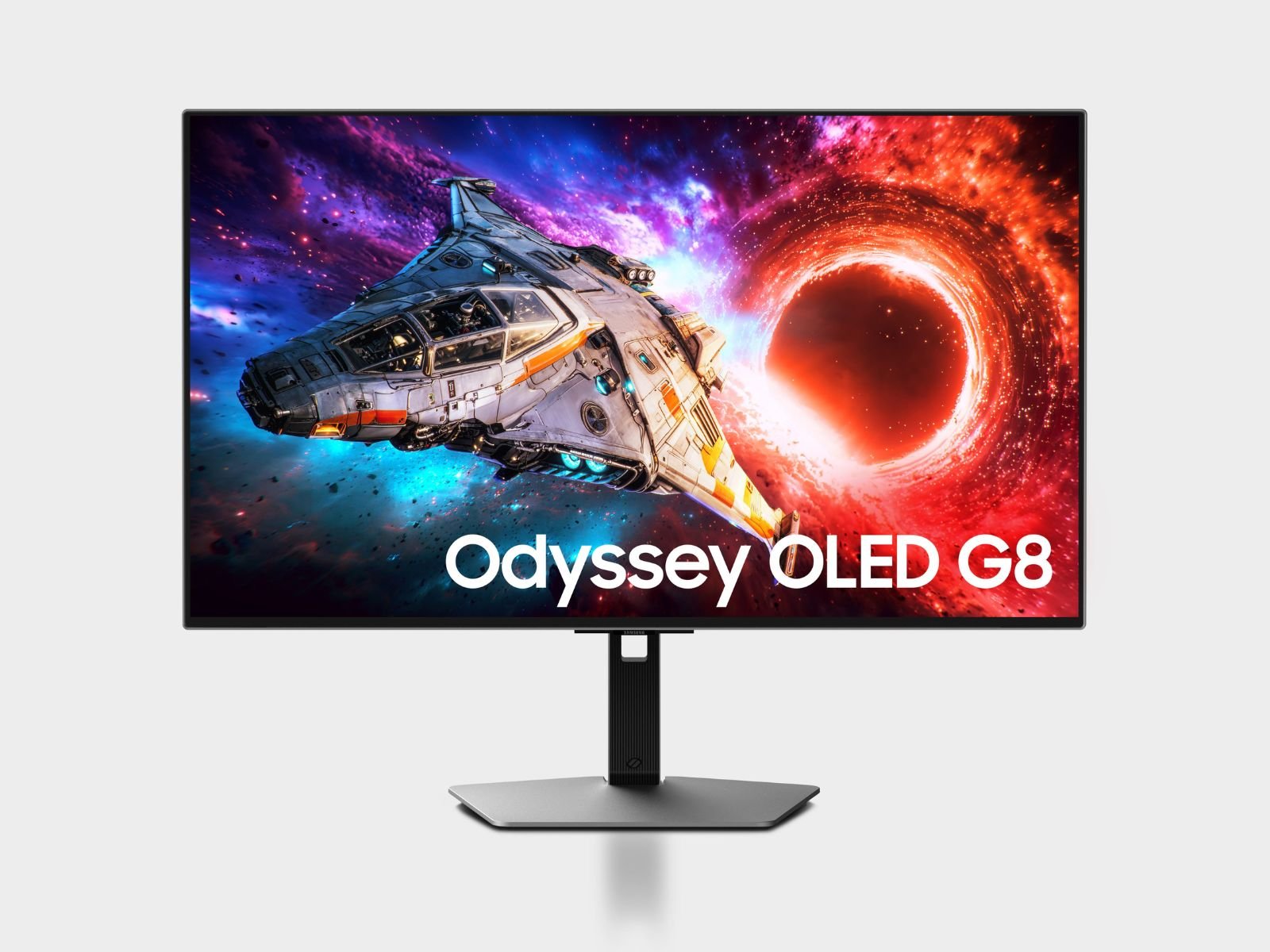
Samsung Odyssey OLED G8
Samsung Odyssey OLED G8 | Image: Samsung Newsroom

Once again, Dual Mode is where things get interesting. Switch the G80HF down to QHD, and the refresh rate doubles to 360Hz, making it a much more compelling option for players who bounce between cinematic games and competitive shooters.

It also gives Samsung a nice middle ground in the lineup. The 6K G80HS remains the showcase piece, while the smaller 5K model offers a slightly different balance of resolution, screen size, and speed without abandoning the new G8 family’s high-resolution focus.

If pure resolution doesn’t get you excited, Samsung is taking a different approach with the Odyssey OLED G8 G80SH. Available in 27-inch and 32-inch sizes, it keeps a familiar 4K resolution but pairs it with an OLED panel and a fast 240Hz refresh rate. For gamers who care more about deep blacks, punchy contrast and fast motion than jumping from 4K to 6K, this could actually be the more tempting G8.

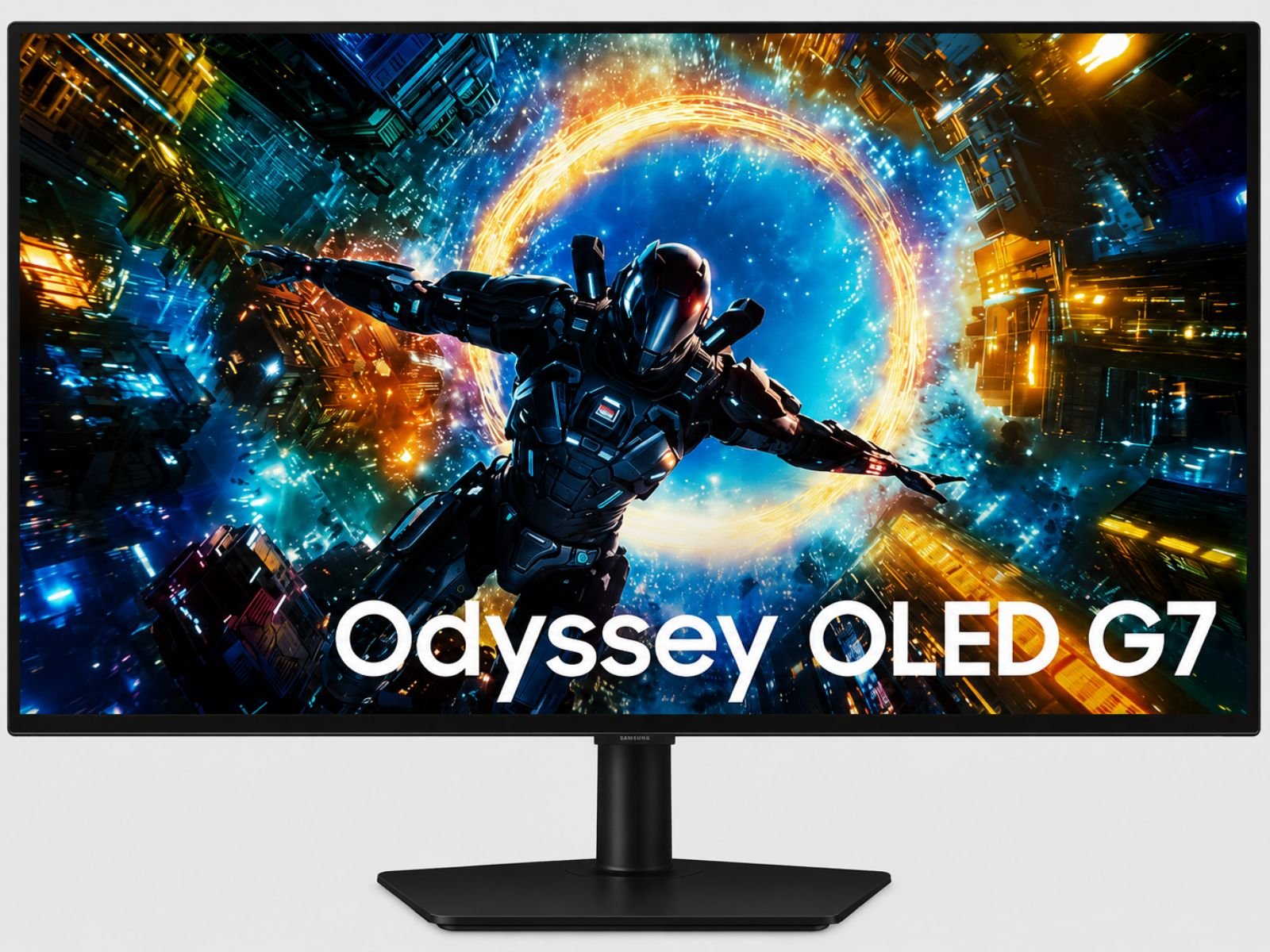
Samsung Odyssey OLED G7
Samsung Odyssey OLED G7 | Image: Samsung Newsroom

Samsung is also introducing its new QD-OLED Penta Tandem technology, which the company says improves brightness, efficiency and durability. Glare Free technology helps cut down reflections without sacrificing OLED picture quality, while USB-C can deliver up to 98W of charging — handy if you’re trying to keep a laptop-and-monitor setup relatively clean. The 32-inch model goes a step further with VESA DisplayHDR True Black 500 certification, promising the deep blacks and vibrant colours you’d expect from a premium OLED display.

Across the new Odyssey G8 lineup, Samsung includes DisplayPort 2.1, AMD FreeSync Premium, NVIDIA G-Sync Compatible and HDR10+ Gaming. HDR10+ Gaming dynamically optimizes brightness and contrast in real time, while FreeSync and G-Sync compatibility help keep gameplay smooth and minimize tearing when frame rates fluctuate.

Then there’s the 32-inch Odyssey OLED G7 G73SH, which brings some of that OLED goodness further down the Odyssey family. It combines 4K resolution with a 165Hz refresh rate, alongside a rapid 0.03ms response time. Samsung hasn’t forgotten Dual Mode here either: switch down to FHD and the monitor can push all the way to 330Hz, giving competitive players considerably more speed when they don’t need the full 4K experience.

That’s what makes these two OLED options interesting alongside the headline-grabbing 6K G8. Samsung isn’t betting everything on resolution. The OLED G8 delivers 4K at 240Hz with the more premium QD-OLED treatment, while the OLED G7 pairs 4K at 165Hz with the option of 330Hz at FHD. Throw the 6K and 5K G8 models into the equation, and Samsung’s new Odyssey range starts to look less like a simple upgrade and more like a lineup built around letting gamers decide exactly where they want to prioritize resolution, refresh rate, or OLED picture quality.

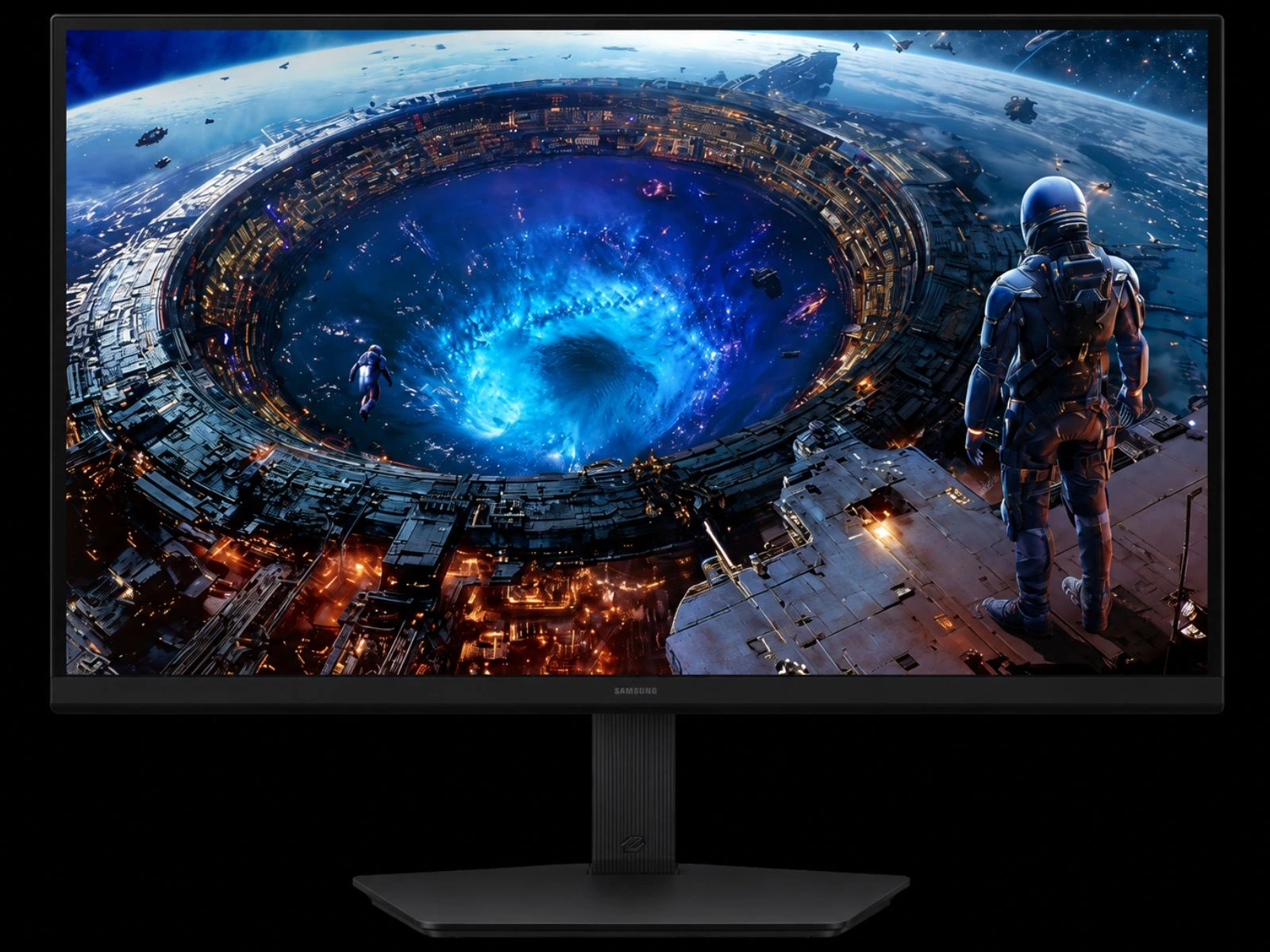
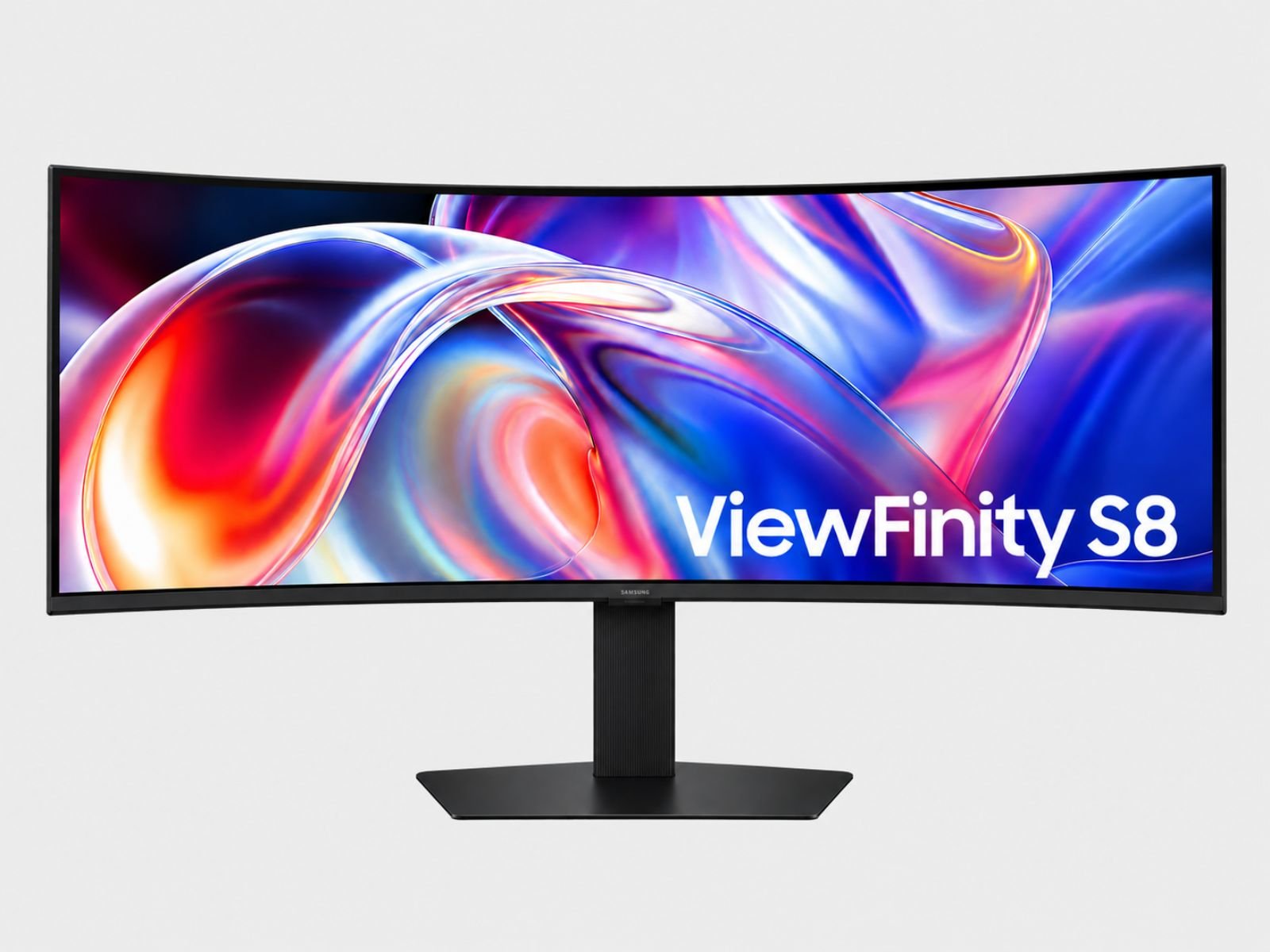
Samsung 40-Inch ViewFinity S8
Samsung 40-Inch ViewFinity S8 | Image Samsung Newsroom

The 6K G80HS is unquestionably the star, but Samsung’s latest Odyssey launch makes more sense when you look at the whole family. There’s the 32-inch G80HS delivering 6K at 165Hz or 3K at 330Hz, the 27-inch G80HF offering 5K at 180Hz or QHD at 360Hz, the 240Hz Odyssey OLED G8 in 27- and 32-inch sizes, and the 32-inch OLED G7 bringing 4K at 165Hz with the option to jump to 330Hz at FHD. Samsung also has plenty of reason to keep pushing — according to IDC figures the company cites, it holds an 18.9% revenue share of the global gaming monitor market and a 26% share of the OLED gaming monitor market.

The new Odyssey models became available to order in the U.S. on May 19, 2026, with the flagship 32-inch G80HS priced at USD $1,599.99. The 27-inch G80HF comes in at $949.99, while the 32-inch and 27-inch OLED G8 models are $1,299.99 and $1,099.99, respectively. The 32-inch OLED G7 is also $1,099.99. For most gamers, 4K certainly isn’t going anywhere, but Samsung’s new lineup gives us a good glimpse of what’s next — whether that’s 5K and 6K resolution, seriously fast OLED panels, or monitors that can switch between outright detail and outright speed.

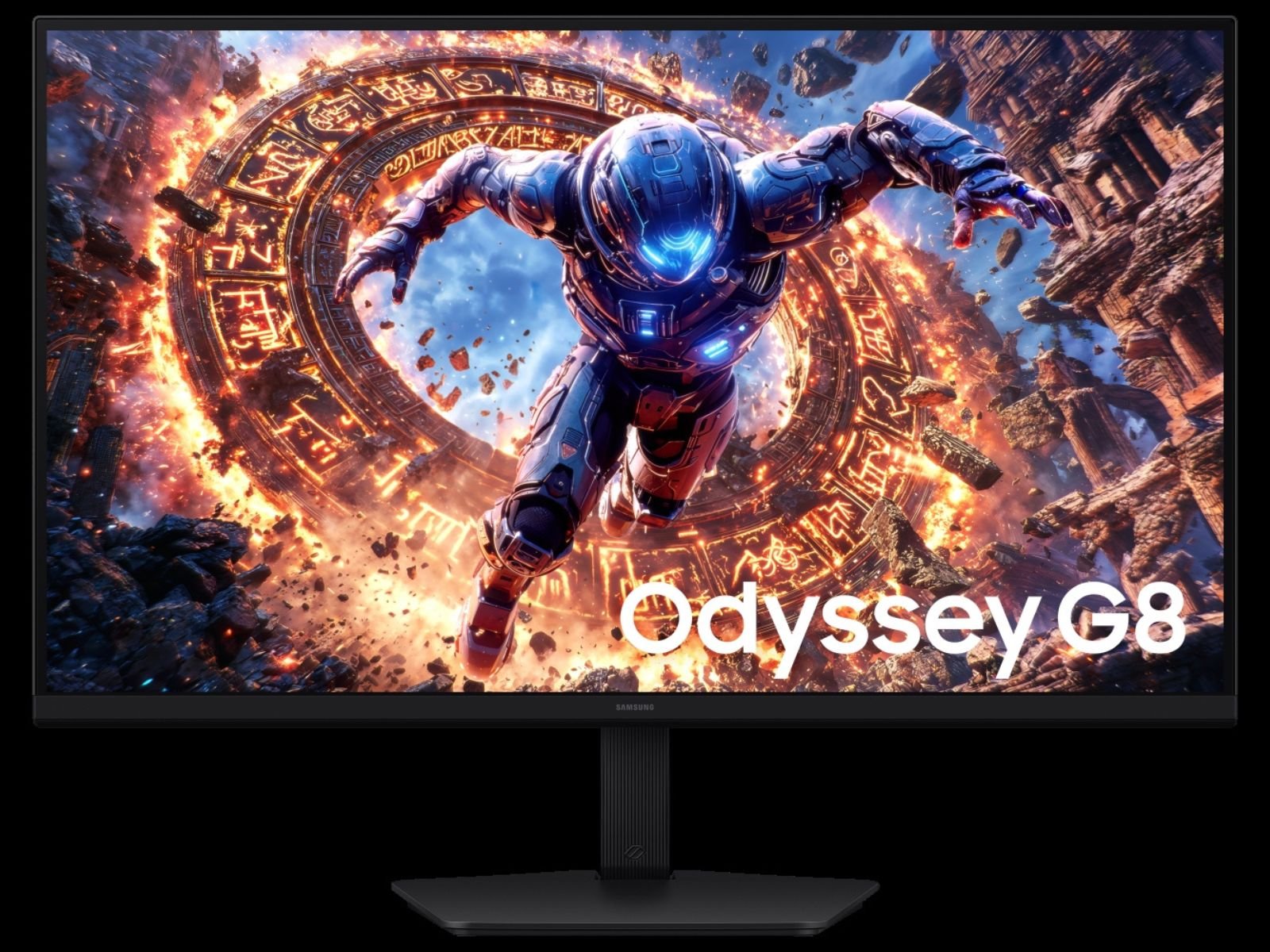
Samsung Odyssey G8
Samsung Odyssey G8 | Image: Samsung Newsroom

Samsung 2026 Odyssey Gaming Monitor Specs

Odyssey G8 (G80HS):

  • Size: 32-inch
  • Panel: IPS
  • Resolution: 6K
  • Pixel Density: 224 PPI
  • Refresh Rate: Up to 165Hz at 6K
  • Dual Mode: Up to 330Hz at 3K
  • Adaptive Sync: AMD FreeSync Premium, NVIDIA G-Sync Compatible
  • HDR: HDR10+ Gaming
  • Connectivity: DisplayPort 2.1
  • Price: USD $1,599.99

Odyssey G8 (G80HF):

  • Size: 27-inch
  • Panel: IPS
  • Resolution: 5K
  • Pixel Density: 218 PPI
  • Refresh Rate: Up to 180Hz at 5K
  • Dual Mode: Up to 360Hz at QHD
  • Adaptive Sync: AMD FreeSync Premium, NVIDIA G-Sync Compatible
  • HDR: HDR10+ Gaming
  • Connectivity: DisplayPort 2.1
  • Price: USD $949.99

Odyssey OLED G8 (G80SH):

  • Sizes: 27-inch / 32-inch
  • Panel: QD-OLED with Penta Tandem technology
  • Resolution: 4K
  • Refresh Rate: Up to 240Hz
  • Response Time: 0.03ms (GtG)
  • HDR: HDR10+ Gaming / VESA DisplayHDR True Black 500 (32-inch)
  • Adaptive Sync: AMD FreeSync Premium, NVIDIA G-Sync Compatible
  • Connectivity: DisplayPort 2.1, USB-C with up to 98W charging
  • Price: 27-inch — USD $1,099.99
  • Price: 32-inch — USD $1,299.99

Odyssey OLED G7 (G73SH):

  • Size: 32-inch
  • Panel: OLED
  • Resolution: 4K
  • Refresh Rate: Up to 165Hz at 4K
  • Dual Mode: Up to 330Hz at FHD
  • Response Time: 0.03ms
  • Price: USD $1,099.99

SamsungMonitors
About the Author
arrow_drop_up