





Movies & Tv Shows

‘The Odyssey’ — Everything You Need to Know: Cast, Release Date & More

Share via

Our team of editors and experts thoughtfully chooses each product. If you decide to buy through one of our links, we may earn a commission. Learn more. Want to know how we test products? Click here for more details.

Christopher Nolan has travelled through dreams, space, time, and the very edge of human obsession, but now the legendary filmmaker is setting his sights on one of the greatest stories ever told. The Odyssey, inspired by Homer’s ancient Greek epic, is already shaping up to be one of the most anticipated films of modern cinema. With a star-studded cast, massive production scale, and Nolan’s signature approach to storytelling, the upcoming epic is generating serious excitement long before its release hits theatres.

For centuries, The Odyssey has influenced literature, film, and popular culture with its tale of survival, temptation, war, and the long journey home. Now, Christopher Nolan is bringing the legendary story to the big screen in a way only he can. From the cast lineup and filming locations to the release date and early details surrounding the production, here’s everything you need to know about The Odyssey before the film finally arrives.

‘The Odyssey’ Official Trailer

The Odyssey follows Odysseus, the King of Ithaca, as he tries to return home after the Trojan War. The fighting is over, but his troubles are just beginning. What should have been a simple sea voyage becomes years of disaster, loss, and a struggle to survive. Along the way, Odysseus faces violent storms, shipwrecks, mythical creatures, and angry gods who want to keep him from ever seeing his wife, Penelope, and his son, Telemachus, again.

The first trailer already reveals the story’s emotional side. It opens with the aftermath of war, showing burned land, abandoned armour, and tired soldiers walking through the ruins of victory. Throughout the scenes, Odysseus reflects on the cost of the war, saying, “After years of war, no one could stand between my men and home. Not even me.” This powerful moment quickly shifts the focus from glory to the wounds left by years of fighting.

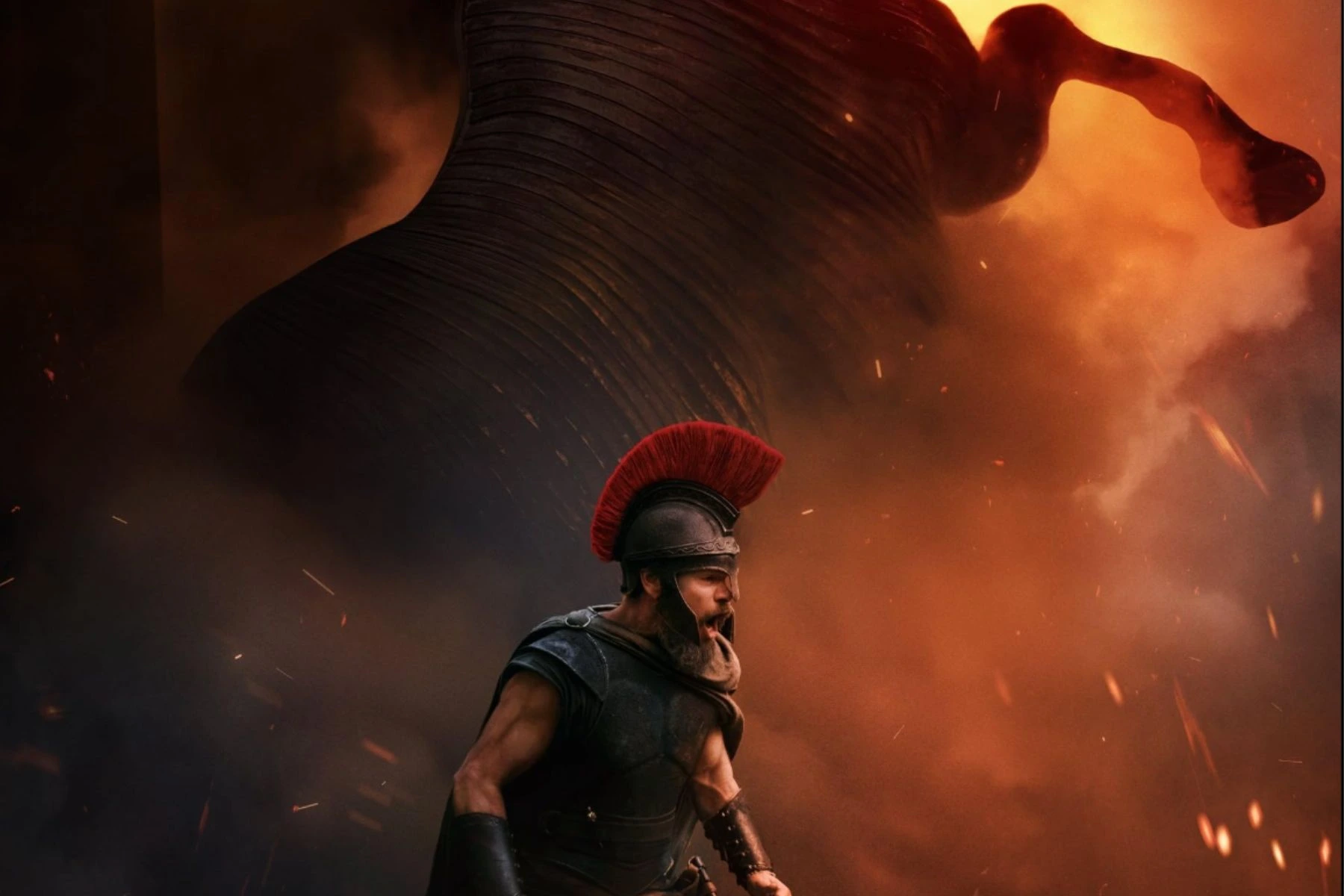
As the trailer goes on, the scale of the journey becomes clear. Huge waves crash against ships lost at sea, dark shapes emerge from the mist, and a giant figure believed to be the Cyclops briefly fills the screen. The trailer also slows for a quiet moment between Odysseus and Penelope. “Promise me you’ll come back,” she says. His answer says everything about what lies ahead: “What if I can’t?” That one line means more than any battle scene in the trailer.

Written by Homer centuries ago, The Odyssey remains one of the greatest adventure stories ever told, and Christopher Nolan seems poised to bring a darker, more realistic version to the big screen. Rather than explaining every detail, the trailer focuses on tension, emotion, and the sense of being lost in a world ruled by forces beyond human control. If the final film captures that same feeling, audiences might be seeing one of Nolan’s most ambitious projects yet.
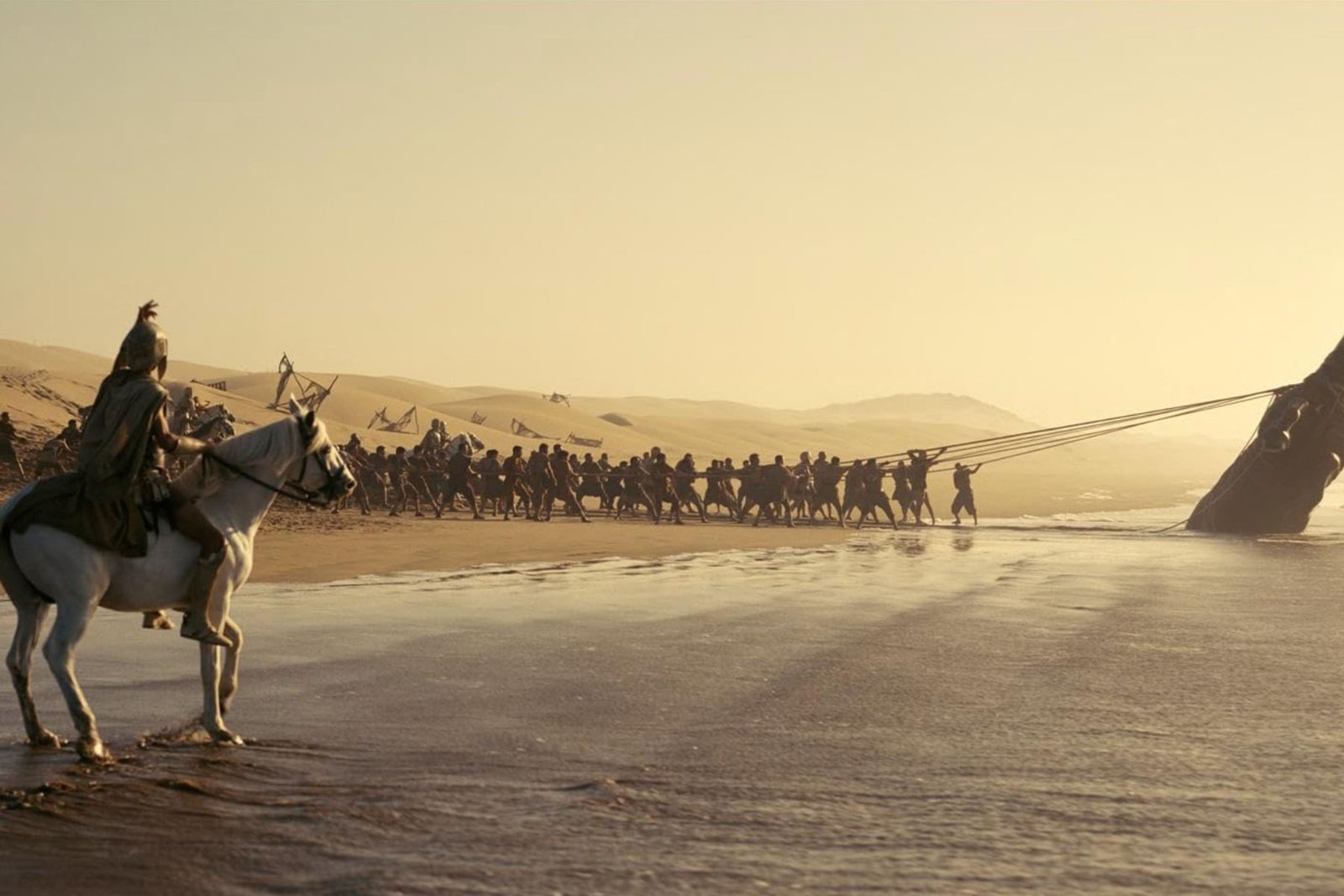
‘The Odyssey’ | Image: Universal Pictures

‘The Odyssey’ Filming Locations & Production Details

Christopher Nolan is filming ‘The Odyssey’ in the same style that made films like Dunkirk and Oppenheimer feel so massive on screen. Instead of building the entire world in CGI, the production relies heavily on real locations, practical sets, physical stunt work, and large-scale effects. That decision already gives the film a rougher, more believable look than many modern fantasy blockbusters.

One of the biggest talking points about the production is the camera technology itself. ‘The Odyssey’ is reportedly the first major narrative feature shot entirely on IMAX 70mm film, using newly developed cameras created specifically for the project. These updated IMAX cameras are said to be lighter and quieter than previous versions, making them easier to use during difficult outdoor shoots and large action sequences. Nolan also chose not to switch between formats during filming, meaning the entire movie is captured in large-format photography from start to finish.
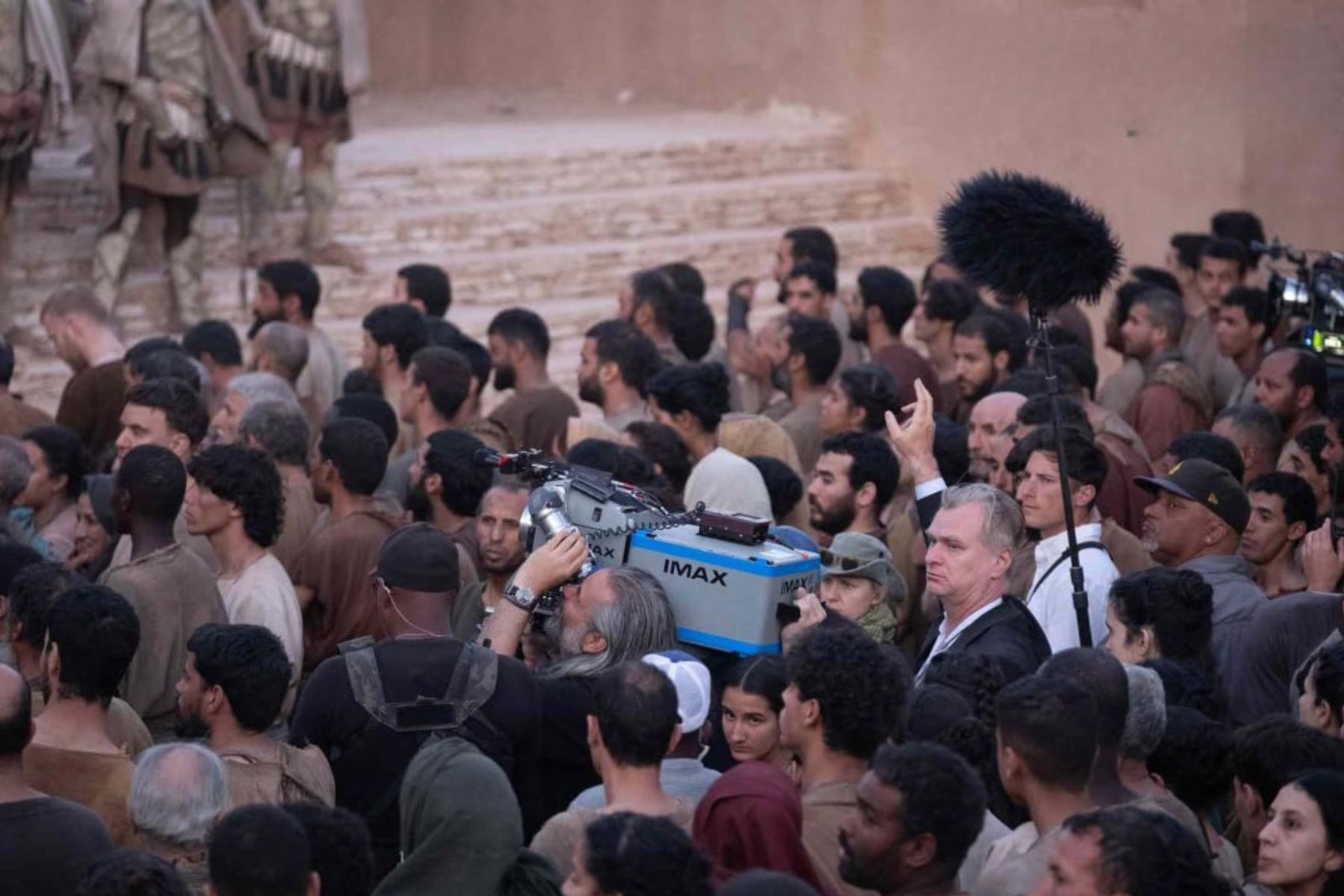
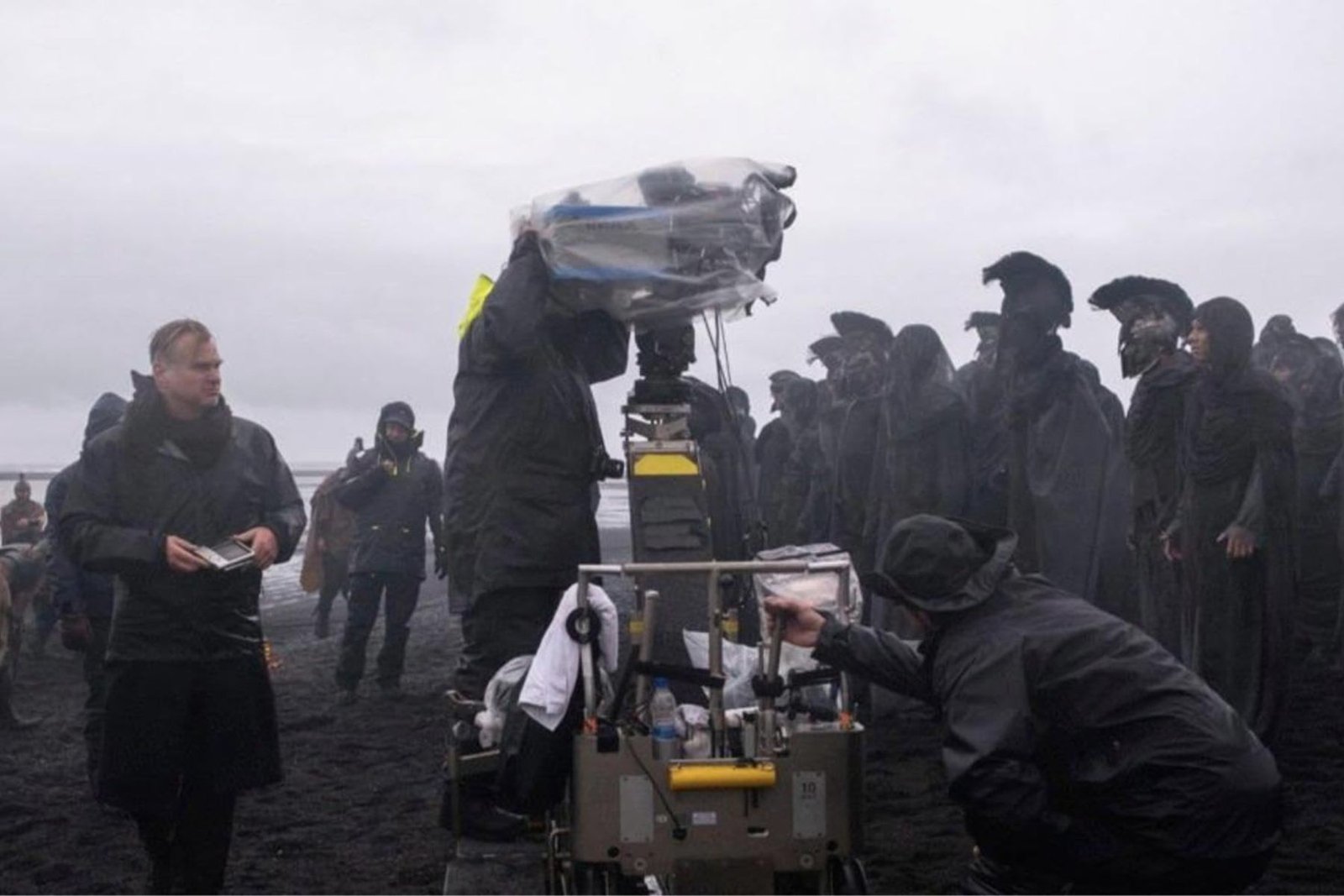
Christopher Nolan filming ‘The Odyssey’ using IMAX 70mm | Image: Universal Pictures

That choice changes how viewers will see the film in theatres. IMAX 70mm shows a much taller picture than normal formats, revealing far more detail and scale in each shot. You see more ocean around the ships, more sky above the characters, and more of the surroundings around them. For a story about being alone, surviving, and the power of nature, that extra space in the image helps make Odysseus feel small in the harsh world he is trying to live in.

Filming reportedly took place across several countries between February and August 2025, including Morocco, Greece, Italy, Iceland, and Scotland. Each location appears to have been chosen to show a different part of Odysseus’ journey, from rough coastlines and open seas to rocky terrain and ancient ruins. Rather than relying solely on studio sets, Nolan seems intent on placing the cast in real locations, which should make the film feel even more authentic in theatres.

Reports claim the film used more than 2 million feet of IMAX film stock during production, and the budget is estimated at around US$250 million. If those reports are accurate, ‘The Odyssey’ would be the most expensive film Nolan has directed to date. Given the locations, practical effects, and large-format filming, it is easy to see how ambitious this project is.

For audiences planning to watch the film in cinemas, Nolan clearly wants IMAX to be the definitive experience. His films have always been built around the theatrical experience, but ‘The Odyssey’ appears designed specifically for giant screens from the very beginning. The size of the image, the detail in the landscapes, and the scale of the ocean sequences are all expected to be experienced differently in IMAX, making it feel less like a regular movie screening and more like an event.
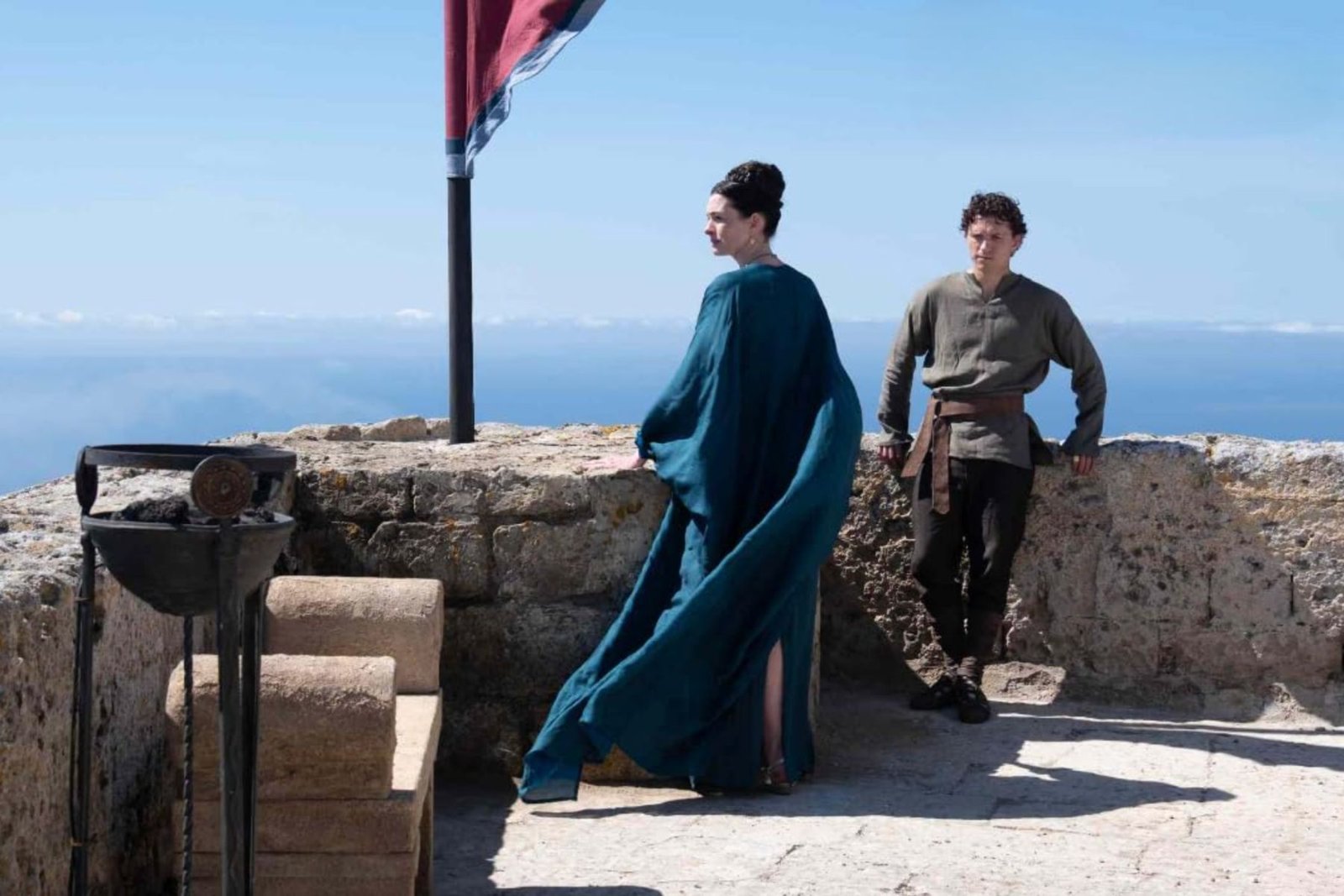
Penelope, played by Anne Hathaway, & Telemachus, played by Tom Holland in ‘The Odyssey’ | Universal Pictures

Why Everyone Is Talking About ‘The Odyssey’

When Christopher Nolan announced The Odyssey, the internet went into full meltdown mode. A massive Greek myth directed by the man behind Interstellar, Dunkirk, and Oppenheimer already sounds like a huge event on paper, but the more details that keep surfacing, the bigger the film feels. Nolan described The Odyssey as “bedrock storytelling,” explaining that it encompasses everything from war and monsters to survival and homecoming. For many fans, it feels like the type of project he has been slowly building toward for years.

The way the movie is being filmed has only added more attention to it. Nolan reportedly shot over 2 million feet of film while taking the cast to difficult real-world locations rather than relying heavily on studio environments. Speaking about the production, Nolan explained, “We got them out there on the real waves, in the real places.” He went on to describe the experience as “vast and terrifying and wonderful,” especially as weather and ocean conditions constantly changed during filming. That rough and unpredictable environment seems to be a huge part of the film’s identity.

Matt Damon also gave fans a clearer idea of what to expect while discussing his experience working on the film. Damon called The Odyssey “exactly what you want of a summer movie” and said it “should feel mythic.” He also explained that Nolan’s sets place actors directly in the chaos rather than surround them with green screens and unfinished visuals. “Chris doesn’t hide the ball,” Damon said, pointing to Nolan’s hands-on approach during filming. If the scene called for danger, exhaustion, or brutal conditions, the cast reportedly felt every bit of it while shooting.

That is a major reason people keep talking about The Odyssey. In a time where many blockbuster films feel polished to perfection before actors even step onto a set, Nolan seems to be doing the complete opposite. Real locations, real water, practical effects, giant IMAX cameras, and one of the most legendary stories ever written, all coming together under one director, is enough to make this feel far bigger than a normal studio release. Right now, The Odyssey feels less like another movie and more like one of those rare cinema events people will remember for years.
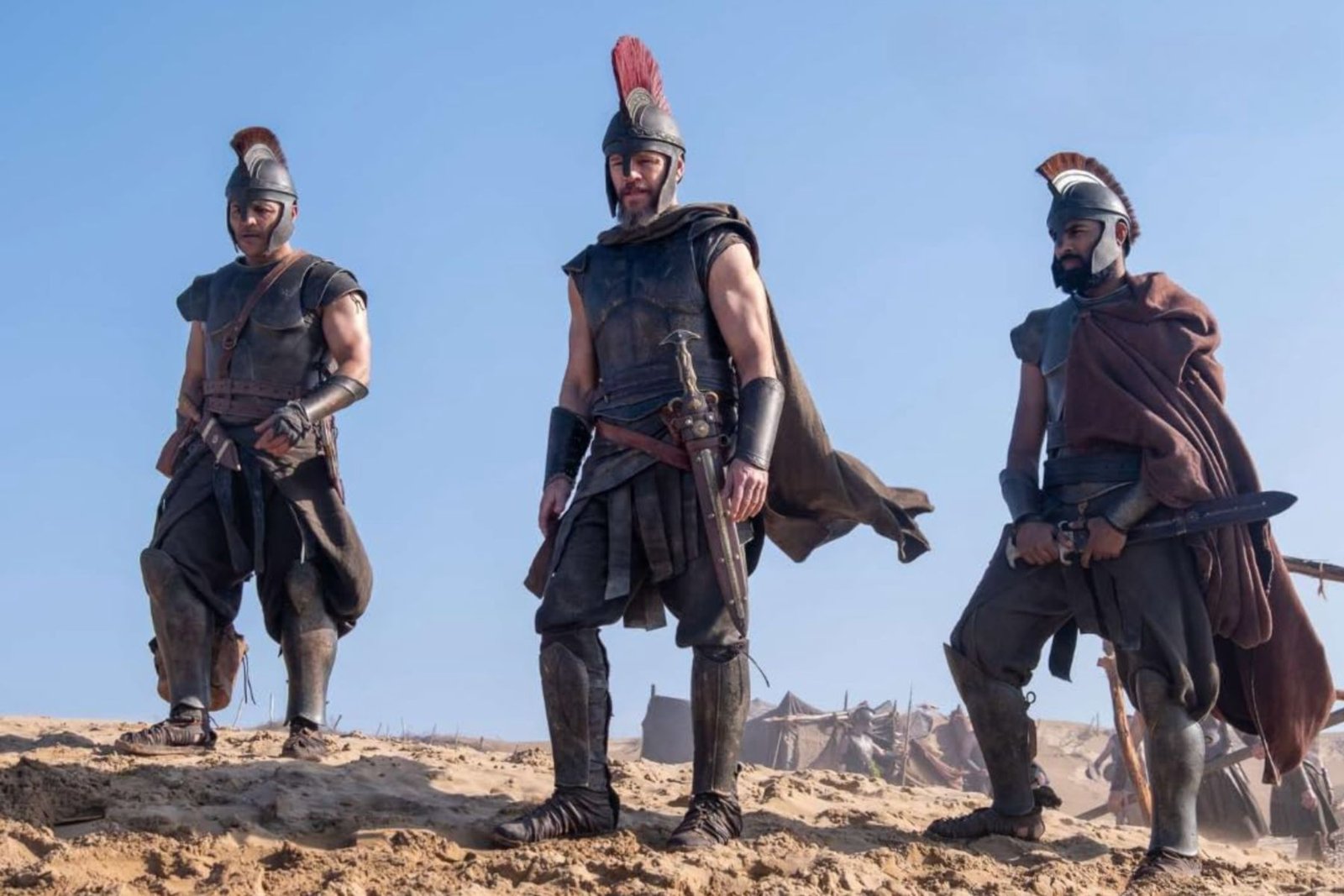
Odysseus, played by Matt Damon, in ‘The Odyssey’ | Image: Universal Pictures

‘The Odyssey’ Cast

Christopher Nolan has brought together one of the largest groups of actors in his career for ‘The Odyssey’, combining familiar partners with some of Hollywood’s top stars. Although some character details are still hidden, the cast already looks huge and is one of the strongest for a major film in recent years.

Here’s every confirmed cast member for The Odyssey so far:

  • Odysseus — played by Matt Damon
  • Telemachus — played by Tom Holland
  • Athena — played by Zendaya
  • Penelope — played by Anne Hathaway
  • Hermes — played by Robert Pattinson
  • Clytemnestra — played by Lupita Nyong’o
  • Circe — played by Charlize Theron
  • Antinous — played by Jon Bernthal
  • Agamemnon — played by Benny Safdie
  • Aeolus — played by John Leguizamo
  • Persephone — played by Mia Goth
  • Tiresias — played by Elliot Page

Leading the film is Matt Damon, who stars as Odysseus, working again with Christopher Nolan after Interstellar and Oppenheimer. From the trailer and early clips, Damon’s Odysseus looks much more tired and worn out than the usual heroic image. The emotional struggle of the journey seems to be a big part of the film.

Part of the excitement about the cast comes from watching these actors enter a world full of Greek myths, dangerous sea trips, gods, monsters, and tough survival. Nolan’s films are known for putting actors in physically hard situations, and ‘The Odyssey’ seems to be one of his most challenging projects so far. With real locations, practical effects, and big IMAX filming, many fans expect performances that feel more real and down-to-earth than typical fantasy movies.

‘The Odyssey’ | Image: Universal Pictures

The Creative Team Behind ‘The Odyssey’

Behind the camera, ‘The Odyssey’ brings together many of Christopher Nolan’s longtime collaborators, making the project feel even more like a complete Nolan production. Over the years, Nolan has built a creative team that helped shape films like Dunkirk, Interstellar, and Oppenheimer, and much of that same crew has returned for ‘The Odyssey’.

  • Director and Writer — Christopher Nolan
  • Producer — Emma Thomas via Syncopy
  • Cinematography — Hoyte van Hoytema
  • Music — Ludwig Göransson
  • Editing — Jennifer Lame
  • Studio — Universal Pictures

Hoyte van Hoytema returning as director of photography is a big deal. His work on Interstellar, Dunkirk, and Oppenheimer helped create the distinctive visual style for which Nolan’s films are famous, and with ‘The Odyssey’ being filmed entirely on IMAX 70mm film, expectations are very high. Ludwig Göransson also returns after receiving widespread praise for his music on Oppenheimer, so audiences can likely expect another soundtrack that feels intense, emotional, and powerful in a full theatre.

If you loved the tension and big scale of Dunkirk, or the way Oppenheimer trusted audiences to stay focused on the story without always explaining everything, ‘The Odyssey’ already seems ready to show that same confidence. With Nolan leading the project along with the team that helped create some of his biggest films, excitement for this movie keeps growing with every new detail.

‘The Odyssey’ Release Date

Christopher Nolan’s ‘The Odyssey’ will come to theatres on July 17, 2026, right in the middle of the summer blockbuster season. Given the size of the production, the huge IMAX 70mm format, and the excitement already building around the film, it is expected to be one of the biggest movie events of 2026. Nolan is known for making must-see movies in theatres, and with ‘The Odyssey’, it seems audiences will once again get a film made especially for the biggest screen.
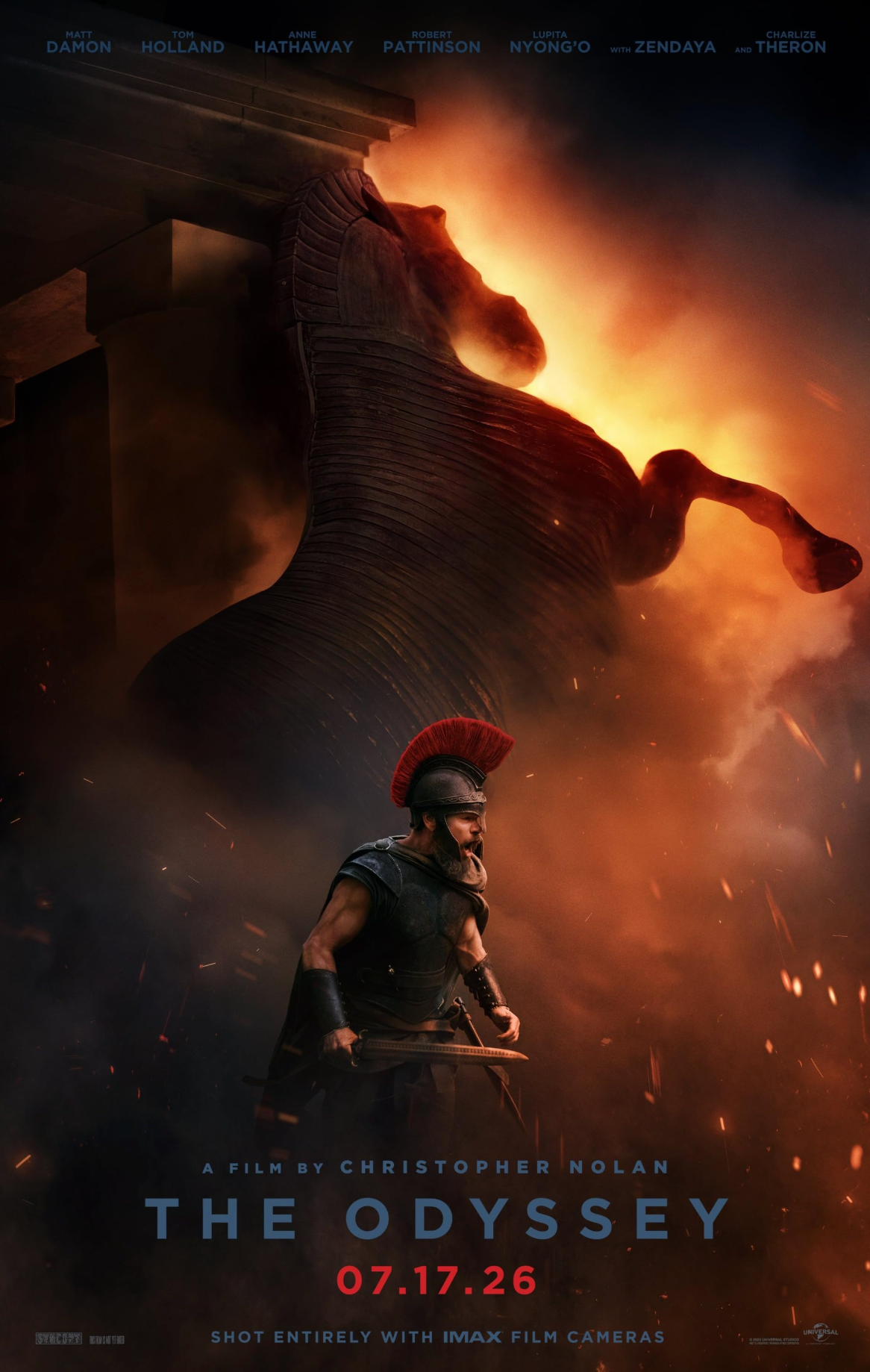
‘The Odyssey’ | Image: Universal Pictures

Action MoviesTrailers
About the Author
Fashion

10 Ways Serge Gainsbourg Still Inspires the Way Men Dress Today

Reading Time: 13 minutes

Our team of editors and experts thoughtfully chooses each product. If you decide to buy through one of our links, we may earn a commission. Learn more. Want to know how we test products? Click here for more details.

There are style icons, and then there is Serge Gainsbourg — a man who never followed fashion but somehow shaped it for generations. His influence wasn’t from perfect tailoring or carefully chosen outfits, but from the way he wore his clothes with a kind of effortless confidence that couldn’t be taught. Everything he wore felt lived-in, unapologetic, and unmistakably his. At a time when pop culture was loud and polished, Gainsbourg made imperfection look irresistible.

The striped sailor sweaters, worn denim, louche suits, trench coats, jazz shoes, and military shirts — none of it has aged. Instead, these pieces have become foundational elements in modern menswear, reappearing on runways and in everyday closets as a new generation relearns what he mastered decades ago: personality matters more than perfection. Gainsbourg didn’t just wear clothes; he used them as an extension of his mood, his music, and his refusal to conform.

This is why, even long after his era, men continue to look up to him for inspiration. Gainsbourg showed us that great style isn’t about following trends but about adopting a look so natural that it becomes part of your identity. His wardrobe was simple, but the way he wore it was extraordinary — a reminder that true elegance comes from attitude, not price tags.

Here are 10 style lessons from Serge Gainsbourg that still inspire the way men dress today, and why his signature moves remain iconic classics.

Unbutton Your Shirt – Serge Gainsbourg | Image: Getty Images – Keystone-France

Style Lesson #1

Unbutton Your Shirt

If there’s one rule Serge Gainsbourg lived by, it’s that a shirt should never feel stiff or over-structured. He treated buttons like suggestions, not obligations. Leaving the top two — sometimes three — undone became part of his signature style. It wasn’t about showing skin; it was about signaling ease, confidence, and a refusal to dress for anyone but himself. The result was a look that felt relaxed, sensual, and quietly rebellious all at once.

Most men hesitate to unbutton beyond the first clasp, worried it might look too casual. Gainsbourg proved the opposite — that a slightly undone shirt can make you look more comfortable in your own skin. It softens tailored outfits, adds personality to simple ones, and instantly shifts your style from “try-hard” to “effortlessly cool.” His lesson still holds today: don’t be afraid to open things up a little. A few undone buttons can do more for your style than a perfectly pressed collar ever will.

Style Lesson #2

The British Trench Coat Move

The British Trench Coat Move – Serge Gainsbourg | Image: Getty Images – INA

Gainsbourg had a way of wearing a trench coat that felt unmistakably his — a mix of British tailoring and Parisian nonchalance. While most men see the trench as a polished, nearly formal outer layer, he approached it with relaxed confidence. The coat wasn’t meant to look perfect; it was meant to move with him. He’d throw it on over a wrinkled shirt, let the belt hang loose, the collar slightly lifted, the fabric catching in the breeze as if it were part of his stride.

The lesson isn’t about choosing the most expensive trench but about wearing it with personality rather than perfection. Let it hang naturally, avoid tightening the belt too much, and don’t mind a little rumpling. A trench looks best when it feels lived-in, not shiny. Gainsbourg knew that outerwear reflects attitude — and when you wear a trench with relaxed confidence, it transforms from just a coat into a statement piece.

What makes this move so timeless is its versatility. A trench coat worn the Gainsbourg way works in spring, autumn, day or night, dressed up or down. It adds a cinematic touch to a simple outfit and gives even the cleanest tailoring a hint of rebellion. It’s a small style shift — but once you try it, you’ll see why it’s one of his most enduring signatures.

Invest in a Strong Paletot Coat – Serge Gainsbourg | Image: Getty Images – Yves LE ROUX

Style Lesson #3

Invest in a Strong Paletot Coat

Of all the outerwear Serge Gainsbourg wore, the paletot coat was one of his subtle power moves. Double-breasted, slightly oversized, and beautifully structured, it conveyed an elegance that never felt forced. Gainsbourg leaned toward pieces with soft shoulders and a relaxed drape — coats that moved with him rather than sitting stiffly on his frame. It allowed him to find that perfect balance between polished and casual, looking sharp without ever seeming to try too hard.

It’s timeless, masculine, and capable of elevating almost everything beneath it, from casual denim to tailored suits. Its structure commands presence, while the gentle drape adds attitude — a combination that feels effortlessly cinematic. The key lesson is to own at least one coat that makes you feel like the star of your own film, and that’s how Gainsbourg understood that some pieces don’t just finish an outfit; they change how you move through the world.

Style Lesson #4

Let White Jazz Shoes Do the Talking

Let White Jazz Shoes Do the Talking – Serge Gainsbourg | Image: Getty Images – Sergio Gaudenti

Gainsbourg did something few men would even try — he made white jazz shoes look effortlessly cool. Slim, bright, and a bit quirky, they shouldn’t have worked, yet on him they became a quiet trademark. He paired them with denim, soft tailoring, rumpled shirts, and even the occasional suit, allowing the shoes to add a subtle flash of personality without overwhelming the outfit. You don’t need bold pieces to stand out; you need one unexpected detail that feels unique for you. Whether it’s a jazz shoe, vintage boot, or an offbeat accessory, just make sure it gives you that look of character and confidence. His footwear calls on rebellion instead of shouting for attention, and sometimes the smallest choices speak the loudest.

Suit Up With Real Elegance – Serge Gainsbourg | Image: Getty Images – INA

Style Lesson #5

Suit Up With Real Elegance

Many men still struggle to suit up properly, but Gainsbourg took a straightforward approach to his suit style. He wore suits the way most men wear T-shirts — naturally, comfortably, and with no stiffness. His jackets had soft shoulders, his trousers fell effortlessly, and nothing ever looked overly structured or carefully planned. He preferred pinstripes, navy wool, and muted tones, letting the cut and drape speak more than the fabric itself. While he wasn’t afraid of double-breasted jackets, he wore them with the same relaxed attitude — a slightly undone shirt, a casual slouch, a cigarette hanging lazily from his fingers — should I say more than this?

That’s the real elegance men can learn from today. A suit shouldn’t feel like a costume or something reserved for special occasions, but more of an extension of you—easy, fluid, and expressive. The real talk happens when tailoring becomes your second nature, rather than focusing on perfection and instead embracing comfort, movement, and personality. Gainsbourg proved that crisp lines or strict rules don’t create elegance; it’s created by the man inside the suit. Wear yours with that same quiet confidence, and suddenly the outfit transforms.

One of Gainsbourg’s greatest tricks was knowing how to let a suit breathe. He’d loosen a button, skip the tie, or pair formal tailoring with shoes that weren’t traditionally “proper.” That contrast — refined clothing worn with rebellious ease — is what made his style unforgettable, which showed how elegance doesn’t have to be rigid, but can move and breathe without overthinking it.

This brings us to this lesson: a suit isn’t meant to be intimidating but to empower. That’s why the majority of Gainsbourg’s tailoring never really shouted for attention, yet it always commanded presence. He understood that a well-cut suit gives a man quiet authority, even when everything else about him looks deliberately relaxed. That blend of softness and strength is what makes his elegance so timeless — and so worth borrowing today.

Build Your Knitwear Wardrobe Around a Classic Sailor Sweater – Serge Gainsbourg | Image: Getty Images – INA

Style Lesson #6

Build Your Knitwear Wardrobe Around a Classic Sailor Sweater

Long before “quiet luxury” became a thing, Gainsbourg was already embodying it with one of his most iconic staples — the classic Breton sailor sweater. Striped, slightly loose, and worn with the confident ease that defined him, it became one of his most recognizable uniforms. He paired it effortlessly with denim, soft tailoring, trench coats, or simply a cigarette and a mischievous attitude. The beauty of the sailor sweater lies in its simplicity: clean, confident, and a true classic of French fashion.

You don’t see this often nowadays, but build your knitwear around a single timeless piece that instantly elevates everything you wear. A good sailor sweater adds personality to casual outfits, provides structure to more tailored looks, and introduces a touch of European cool to whatever you layer it over. It’s versatile, seasonless, and quietly stylish, and could become your signature without you even realizing it — exactly why it became Gainsbourg’s.

Style Lesson #7

How to Modernize the Denim-and-Black-Suit Mix

How to Modernize the Denim-and-Black-Suit Mix – Serge Gainsbourg | Image: Getty Images – Jean Paul Guilloteau

Gainsbourg had a talent for breaking rules in ways that somehow looked better than the rules themselves. One of his most underrated moves was pairing crisp black tailoring with relaxed, worn-in denim — a combination that shouldn’t work on paper but absolutely does in practice. The secret lies in the contrast: a structured jacket with soft jeans; sharp colours with a lived-in texture, and Gainsbourg created a balance between refinement and rebellion that feels more natural than being polished.

Modernizing this mix is a lot easier than it seems. Start with a black blazer that isn’t too stiff — something with soft shoulders and a bit of movement, a jacket that looks just as good open as it does buttoned. The key is to pair it with clean, mid-wash denim that’s slightly worn-in. No rips, and don’t overthink it. Let the contrast breathe. The black suit jacket adds sophistication; the jeans bring attitude, and together you get a look that feels relaxed, confident, and quietly intentional.

The Revival of the Pinstripe – Serge Gainsbourg | Image: Getty Images – KeyStone

Style Lesson #8

The Revival of the Pinstripe

Before pinstripes became a runway staple again, Serge Gainsbourg was already reimagining them in his own rebellious way. He loved a pinstripe suit — not the power-dressing, boardroom type, but the softer, slightly disheveled version that felt more like a second skin than a formal uniform. His pinstripes slouched, moved, and breathed with him. He’d wear them with open collars, undone ties, unpolished boots — taking something traditionally strict and giving it personality. Gainsbourg showed that pinstripes don’t have to look corporate; they can look poetic, rebellious, even intimate.

Today, the pinstripe is back, but wearing it well still relies on that lesson. Choose a suit with a relaxed drape, softer shoulders, and a stripe that appears refined rather than loud. Skip the rigid styling and let the suit breathe — unbutton a few buttons, loosen the structure, or pair it with knitwear or denim to push the look. The aim isn’t to resemble a banker; it’s to appear as a man who knows that elegance doesn’t have to be uptight. That’s why the look continues to feel so modern.

Style Lesson #9

Own Unconventional Shades

Own Unconventional Shades – Serge Gainsbourg | Image: Getty Images – Jean-Louis URLI

Shades can be among the most expressive pieces a man wears, especially when the frames aren’t the typical, understated kind. Serge Gainsbourg was drawn to lenses that had character—slightly oversized shapes, soft tints, and styles that added mood rather than just blocking the sun. The goal isn’t to look eccentric; it’s to pick a pair that subtly changes your entire presence, something that feels personal and quietly distinctive. A rounded frame, a smoky tint, or a silhouette just different enough from the mainstream can give your outfit a sense of individuality without trying too hard. The right unconventional shades become part of your identity, not just an accessory, and that’s what makes them worth having.

Turn a Classic US Army Shirt Into a Fashion Statement – Serge Gainsbourg | Image: Getty Images – Bertrand LAFORET

Style Lesson #10

Turn a Classic US Army Shirt Into a Fashion Statement

Before the military-inspired style became a fixture in modern menswear, the US Army shirt was already quietly iconic, thanks to the way Serge Gainsbourg wore it. What might have seemed utilitarian or rugged became unexpectedly chic when he incorporated it into his wardrobe with that soft, Parisian nonchalance. He regarded the piece as a versatile layer — sometimes buttoned, sometimes open, always relaxed — pairing it with tailored trousers, washed denim, or a sharp jacket to create a balance of masculinity and ease that felt entirely his own.

One of his most memorable looks was the Army shirt left generously unbuttoned, paired with high-waisted white trousers, a style that radiated the kind of louche confidence only he could exude. It echoed the spirit of ‘60s cinema — perhaps a nod to David Hemmings in Blow-Up — but Gainsbourg’s take was much more carefree, complete with a Gitanes cigarette as the final touch.

Fashion Advice
About the Author
arrow_drop_up