Our team of editors and experts thoughtfully chooses each product. If you decide to buy through one of our links, we may earn a commission. Learn more. Want to know how we test products? Click here for more details.
Peaky Blinders was never meant to end quietly, and fans of the Shelby empire know these stories don’t just fade away. The show grew from a gripping crime drama into a modern classic with its own style and lasting legacy. That energy is pushing the story forward, starting with the new film The Immortal Man, which will connect past events to what’s to come and set the stage for a larger continuation.
The next chapter is coming together carefully, with Steven Knight back to lead the way. This time, the story will expand into a new Netflix sequel series, produced with the BBC. The plan goes beyond just one season, aiming for several, each with six tightly written episodes. It looks like the show may move past Tommy Shelby’s main story, but it will keep the mood, tension, and style that made Peaky Blinders unique.
It seems the new phase will not just continue the story, but change it, with familiar faces returning and new characters taking the lead. The world will feel both familiar and bigger. Since the late 2025 announcement, more details have emerged, and even though much remains secret, the direction is clear: this is a careful evolution, not just a sequel. If the original was about gaining power, the next part is about what’s left and what comes back, promising a “hell of a ride.”
The Next Chapter of Peaky Blinders: What We Know So Far?
Right now, the full story is still under wraps, but we’re starting to see signs of a shift in both time and perspective. Steven Knight says the new series will move into the 1950s, picking up after The Immortal Man and returning to Birmingham, though it won’t be the same city we remember. This time, Birmingham is rebuilding after World War II, rising from the Blitz’s aftermath, and entering a new era driven by ambition, industry, and opportunity. Knight has also suggested that a new generation will step up, with the next wave of Shelbys taking charge. He describes the journey ahead as intense, unpredictable, and, in his words, a real “hell of a ride.”
This new setting changes everything. It’s not only about continuing the story but also about seeing a city and its people reinvent themselves. Official details say Birmingham’s rebuilding will be a key part of the plot, with major development projects turning the city into both a place of opportunity and a war zone. Power won’t just be passed down quietly anymore; it will be fought for in bigger, riskier, and more dangerous ways. The Shelby name will still be at the centre, but the relationships around it are likely to shift, with new alliances, rivalries, and ambitions shaping the story.
People working on the show say this upcoming chapter will maintain the big scale that made the original series special. The BBC has already called it another ambitious, large-scale continuation and is confident the writing will bring back the tension and drama fans love. At the same time, they promise it won’t simply repeat what worked before. Instead, it will build on it, making Peaky Blinders broader, heavier, and more unpredictable. The stakes will be higher, the setting bigger, and the story will have a new identity while still honouring everything that came before.
Duke, played by Barry Keoghan in Peaky Blinders: ‘The Immortal Man’ | Image: Netflix
Cast & Returning Characters
When it comes to the cast, this is where things start to get a bit more uncertain—and a lot more interesting. Official confirmations are still limited, but Steven Knight has already given one key detail away. Speaking about the future of Duke, one of the newer and more intriguing additions to the story, Knight confirmed that the character will carry forward into the next chapter, stating clearly, “Yes, we are.” That alone suggests that Duke is set to play a much bigger role in what comes next, potentially stepping into a position of real influence within the evolving Shelby world.
That said, things become less clear when it comes to who will actually play him. When asked directly about Barry Keoghan returning to the role, Knight remained cautious, simply saying, “I can’t comment.” With the story moving forward by more than a decade, the timeline opens the door for a different version of the character, possibly older, which means casting decisions could still go either way. It’s one of those situations where the character matters more than the actor—for now.
spoiler alert. Read on only if you’ve seen the movie.
Most of the original Shelby family is no longer part of the story. Key characters like Tommy, Arthur, Ada, John, and Polly are gone, Finn has been left out, and Lizzie, Esme, and Linda are missing from the current plot. With so many main characters gone, the story is now focused on what comes next. This gives a new generation a chance to shape what the Shelby name means in this era. For now, Steven Knight is keeping those details secret, which makes it even more interesting to see who will step up and how the story will change without the original cast.
Thomas Shelby, played by Cillian Murphy in Peaky Blinders: ‘The Immortal Man’ | Image: Netflix
Thomas Shelby, played by Cillian Murphy, and Kaulo Chiriklo, played by Rebecca Ferguson, in Peaky Blinders: ‘The Immortal Man’ | Image: Netflix
Is There A Release Date?
As of now, there’s still no confirmed release date for the sequel series, even though ‘Peaky Blinders: The Immortal Man’ has officially landed on Netflix as of March 20. With the film now out, it sets the stage for what comes next, but the series itself is expected to take a bit more time to arrive, especially with multiple seasons already planned behind the scenes.
In the meantime, if you haven’t already, it’s worth checking out the trailer we’ve included at the start of this article to get a feel for the film’s tone and direction. It offers a strong hint of where the story is heading. And while we wait for more updates on the series, the full Peaky Blinders catalogue, along with the newly released film, is available on Netflix—making this the perfect time to dive back into that world before the next chapter begins.
Cillian Murphy as Thomas Shelby in Peaky Blinders: ‘The Immortal Man’ | Image: Netflix
Elias Albay is the Founder and Director of Many Men Magazine, a Toronto-based digital publication dedicated to promoting modern masculinity through style, culture, and self-improvement. What started as a personal turning point became a purposeful platform. — born from Elias’ desire to create something meaningful after completing his studies and finding no career path that truly matched his ambitions. With a background in Civil Engineering from York University and experience in Commercial Flight Operations at CAE, he applied skills, and resilience from both fields to forge a new path.
Our team of editors and experts thoughtfully chooses each product. If you decide to buy through one of our links, we may earn a commission. Learn more. Want to know how we test products? Click here for more details.
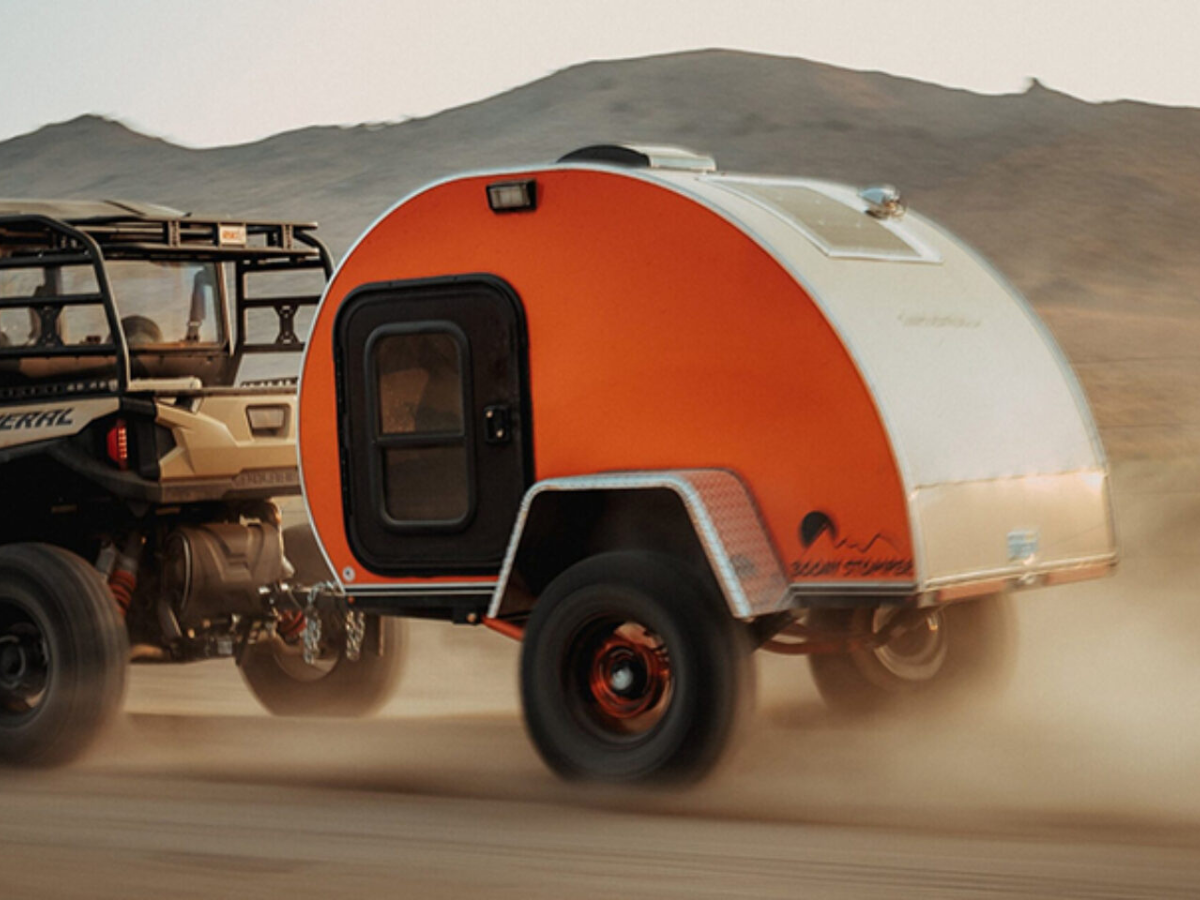
If the call of the wild is louder than your inbox, you’re in the right place. Whether you’re planning to disappear into the backcountry for a weekend—or a month—off-road camper trailers offer the freedom to roam far from paved roads while still enjoying the comforts of home. Built tough for rugged terrain and unpredictable weather, these trailers are designed for modern explorers who don’t mind getting a little dirt on the tires.
And with summer just around the corner, there’s no better time to plan your next off-grid escape. However, not all trailers are created equal. Some are compact and lightweight for easy towing, while others are luxurious rigs that bring the glamping experience deep into the wilderness. So, whether you’re a solo overlander, a couple chasing sunsets, or a family craving off-grid adventures, there’s a model out there that fits your vibe.
In this guide, we break down the 12 best off-road camper trailers you can buy right now—trailers designed to handle the bumps, mud, and everything in between. From clever teardrop builds to high-end adventure tanks, here’s what you need to know before hitching up and heading off-grid.
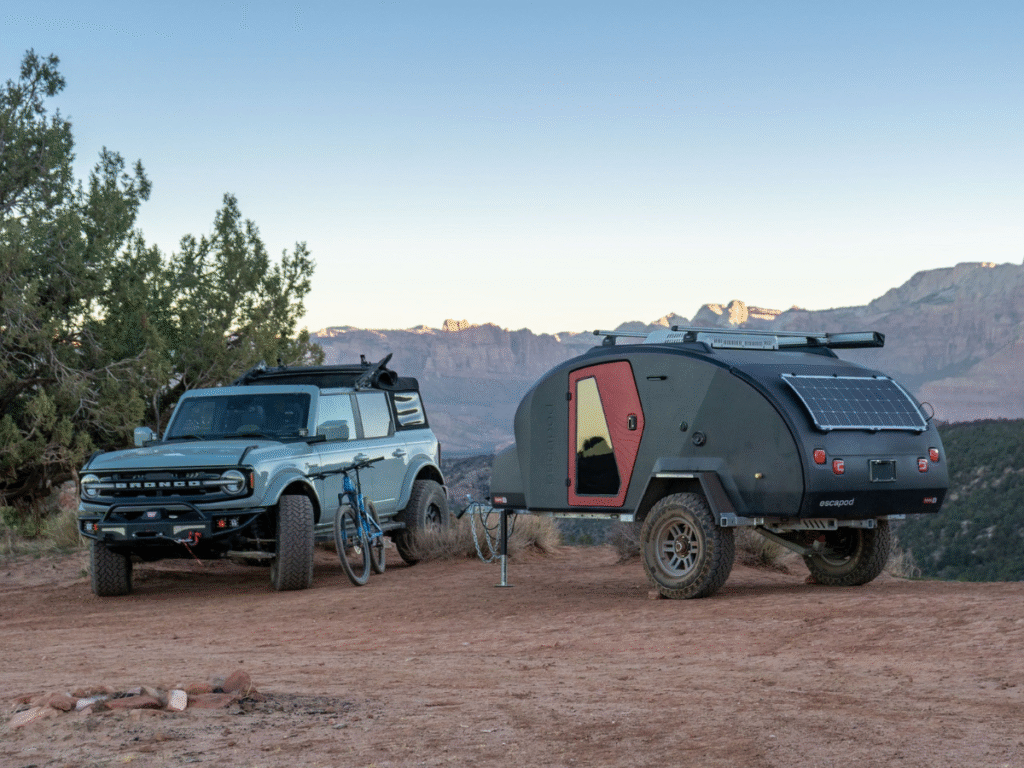
Escaped TOPO2 | Image: Escaped
1. Escapod TOPO2 Voyager
If a teardrop trailer and a space pod had a baby, the Escapod TOPO2 Voyager would be it. This off-road-ready rig features a sleek, single-piece fiberglass body that is tough enough for the backcountry and stylish enough for bragging rights. Weighing under 2,000 lbs, it is lightweight but doesn’t skimp on features—think queen-size memory foam mattress, full insulation, a 21-gallon water tank, Aqua-Hot heating, solar setup, and a Freeride Suspension System that soaks up rough trails like a champ. It’s designed for adventurers who wish to disappear into the wild without sacrificing comfort (or aesthetics). While the price tag is premium, its durability and design make it a solid choice for those who take their off-grid escapes seriously.
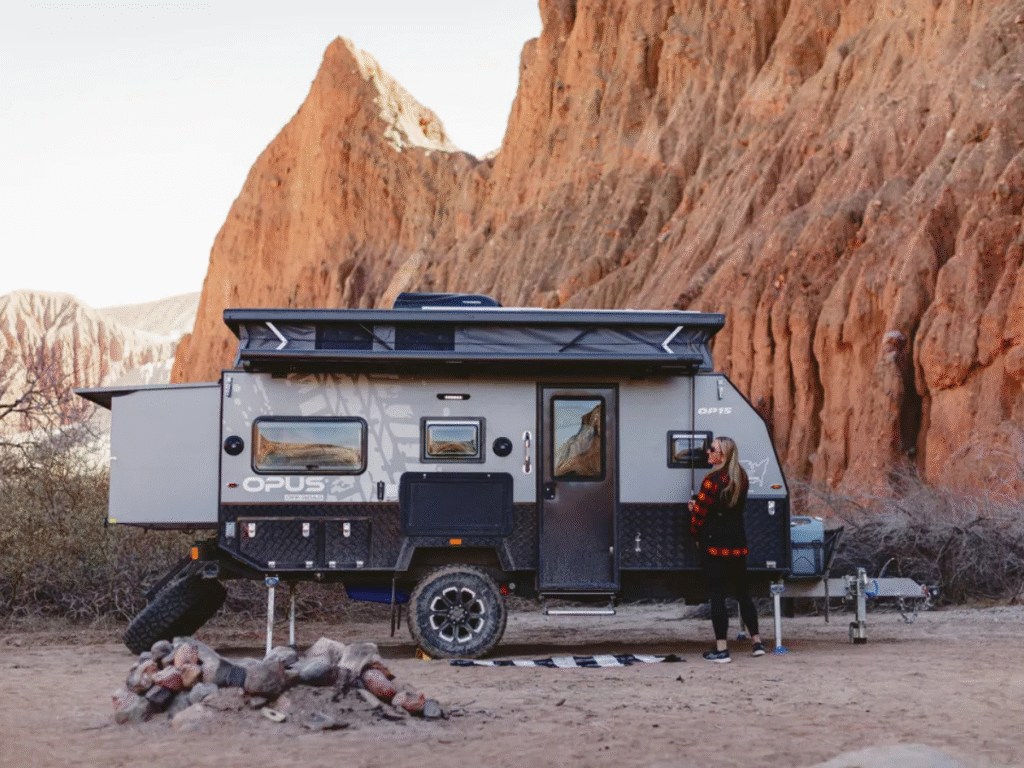
The Opus OP15 is a beast on the trail and a beauty at basecamp. With a galvanized steel chassis, all-terrain suspension, and a pop-up roof that expands your living space, this hybrid caravan is built for serious off-roaders who still wish for a bit of luxury. Inside, you’ll find a king-size bed, twin bunks, a bamboo wardrobe, and surprisingly spacious vibes. Outside? A sleek stainless steel slide-out kitchen featuring a four-burner stove and fridge/freezer setup that’s perfect for a campfire feast. It’s rugged, well-equipped for off-grid living, and ready for wherever your 4×4 can take you—just be prepared to pay for the full package.
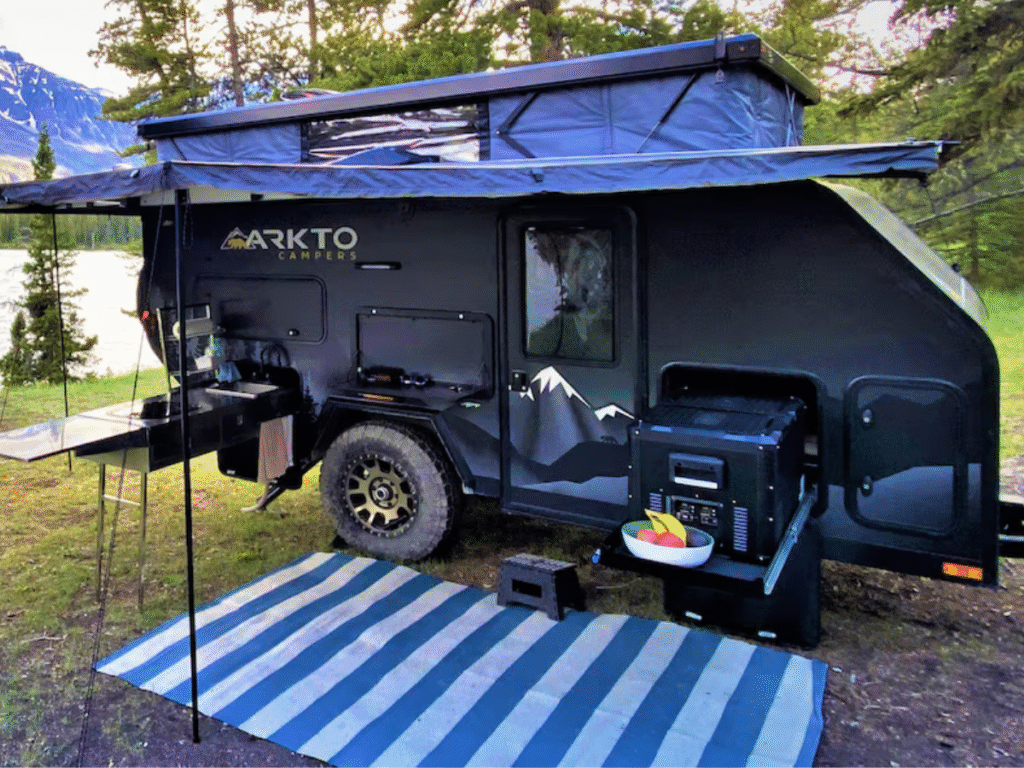
The Arkto G12 is a durable, Canadian-made trailer designed for serious off-road travel with a sleek, modern edge. Its no-wood composite construction and galvanized steel chassis ensure it’s ready for rough terrain and severe weather. Inside, it comfortably accommodates four people with 6’8″ of headroom and plenty of clever storage. The outdoor slide-out kitchen features a dual-burner stove, stainless steel sink, and a 75L dual-zone fridge/freezer—perfect for camp chefs. If you’re going fully off-grid, the optional Stay Longer Package adds a powerful 945Ah battery and up to 1,600W of solar, allowing you to stay powered for weeks in the wild.
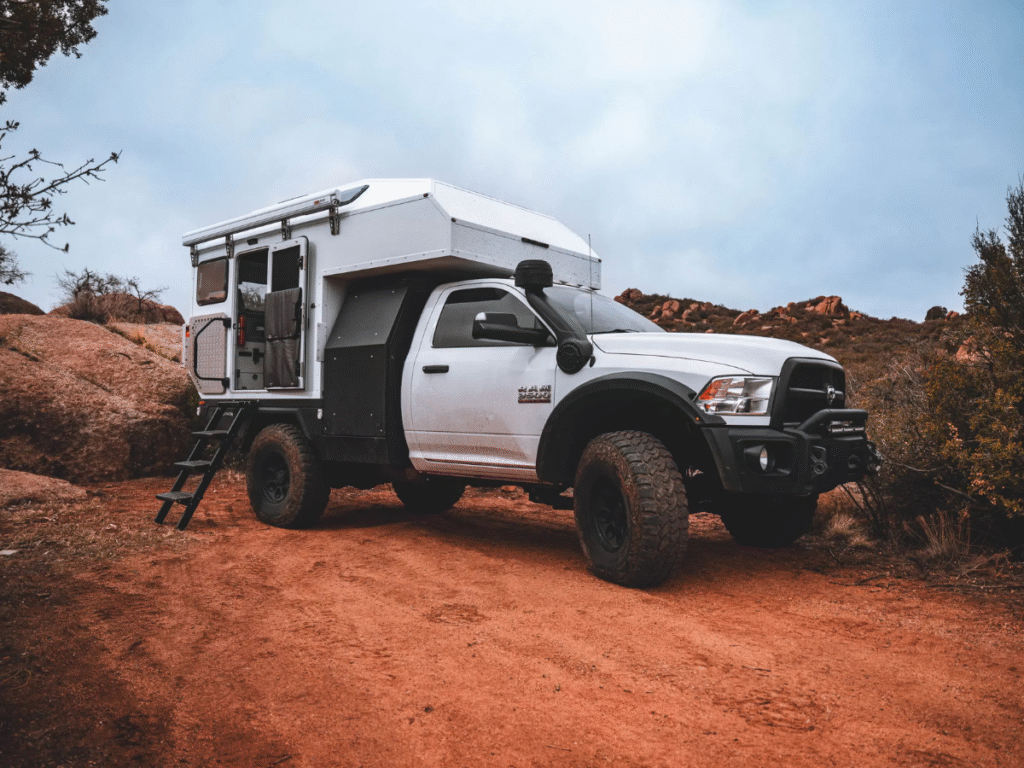
Designed for serious overlanders seeking comfort without bulk, this ultra-light flatbed camper merges smart engineering with real-world durability. Its honeycomb composite shell is both strong and lightweight, making it perfect for navigating rough trails without adding excess weight to your rig. Inside, you will find a king-size bed, a compact kitchen featuring a two-burner stove and a 90L fridge/freezer, along with smart storage solutions such as under-bed drawers and a hanging closet. It also includes a 30-gallon water tank, a Truma heater and water heater, and a 400W solar system equipped with a 105Ah lithium battery—everything you need for life off the grid without sacrificing the essentials.
Weight: 1,200 lbs – 545 kg
Price: USD $82,000
Black Series HQ12 | Image: Black Series
5. Black Series HQ12
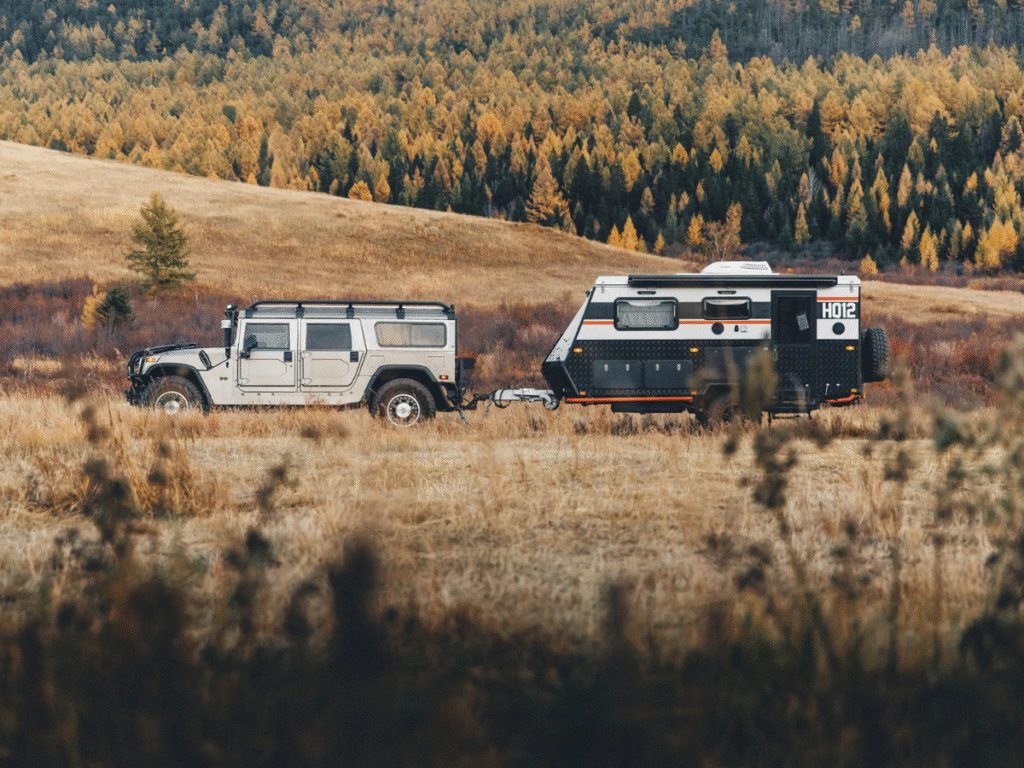
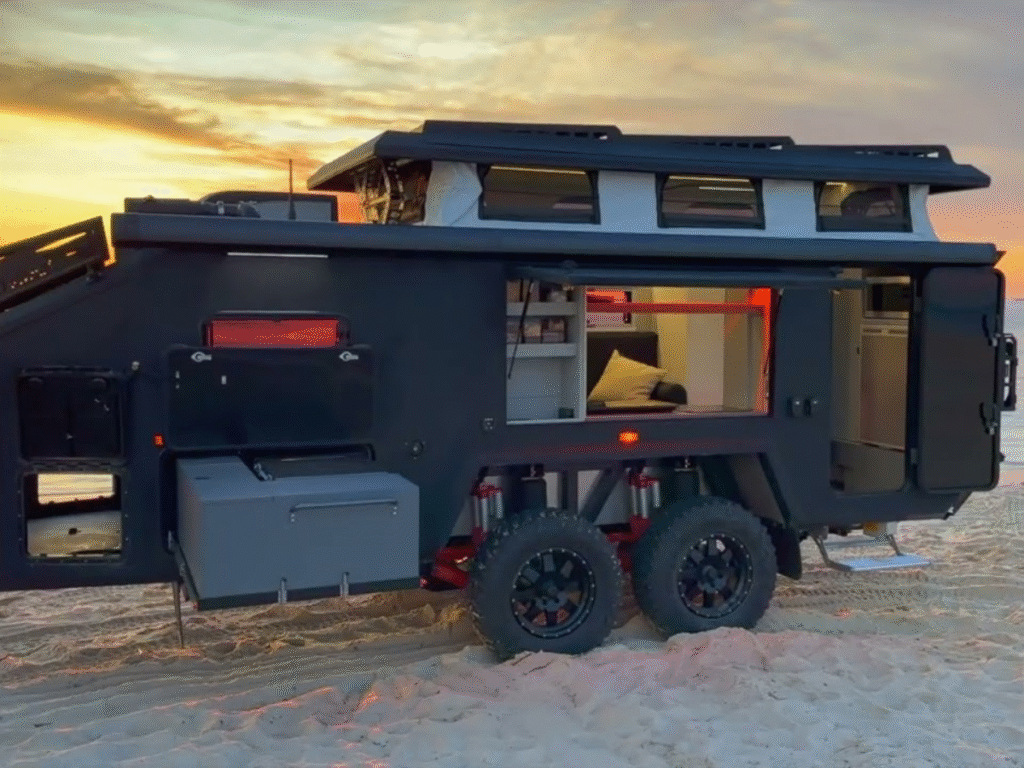
Born in Australia and designed for the outback, the HQ12 brings serious off-road credibility to North America. This compact beast is built on a rugged steel chassis with diamond-plated armour and independent suspension, made to conquer tough terrain. But step inside, and it’s all cozy vibes—a queen bed, a convertible dinette, and a legit wet bath with a porcelain toilet and fibreglass shower. The kitchen? Fully loaded with a three-burner stove, fridge, microwave, and stainless sink. Off-grid perks like four solar panels, dual 100Ah batteries, and a 2,000W inverter make it easy to disappear into the wild without missing your morning coffee.
Weight: 3,962 lbs – 1792 kg
Price: From $43,899
6. Mammoth Overland
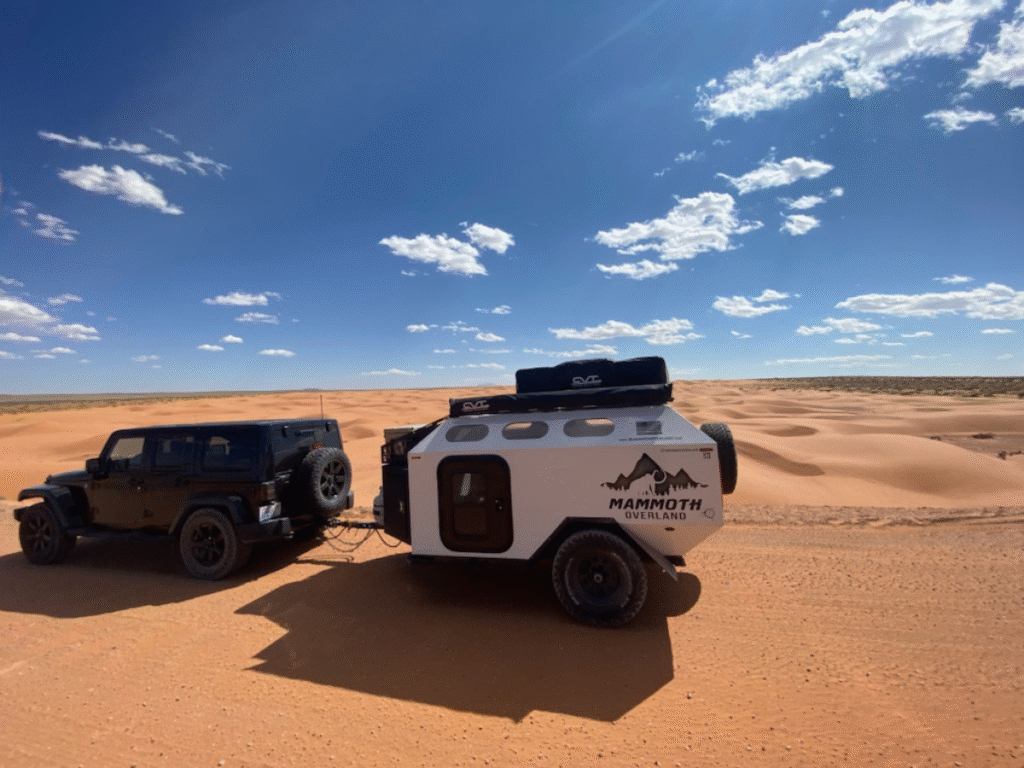
Built by aerospace engineers in Washington, the Mammoth Overland HV is a tough little unit with brains behind the brawn. Its double-walled aluminum shell and Timbren HD suspension prepare it for rocky trails and remote escapes, while the lightweight design ensures smooth and easy towing. Inside, there’s space for up to three adults, thanks to a clever fold-down bunk that’s perfect for a kid—or a four-legged co-pilot. The swing-out kitchen is trail chef–approved, featuring a two-burner propane stove, a sink, and a fridge setup. Want to rinse off? You have hot water and an outdoor shower available. It’s modular, customizable, and if winter camping is your thing, Mammoth’s WLY model is purpose-built for snow-heavy adventures, equipped with extra insulation and cold-weather readiness.
Weight: 1,650 lbs – 748 kg
Price: From USD $31,800
HIVE EX-X | Image: Hive Campers
7. HIVE EX-X
If you’re the kind of camper who goes where the maps get blurry, the Hive EX-X is your kind of trailer. This off-road-ready beast rides on a galvanized steel frame with Cruisemaster CRS2 suspension, meaning it can take a beating and keep on rolling. The interior is simple but solid—think cozy queen mattress, warm lighting, and enough smart storage to keep your gear tidy, not tossed. Outside, the kitchen setup is fully dialed in with a fridge, sink, stove, and a 270-degree awning that turns your campsite into a legit basecamp. With 200Ah lithium batteries, a 200W solar panel, and a 42-gallon water tank, it’s more than ready for extended off-grid stays. And yes—it even comes with a propane water heater, side shower, and portable toilet, because roughing it doesn’t have to mean suffering.
Ever dreamt of a camper that doubles as a boat? The American Dream Trailer makes that whimsical idea a reality. Inspired by a 1961 classic, this retro-styled teardrop trailer features a detachable fiberglass rowboat as its roof, secured with five latches. When you’re ready to hit the water, simply unclip the boat, and a secondary roof keeps your gear dry on land. Inside, it comfortably sleeps two and includes a rear galley for cooking and storage. With a lightweight design of just 650 lbs, it’s easily towable by most vehicles. Plus, with customization options like two-tone paint jobs and vintage-style windows, it’s as stylish as it is functional.
Patriot Campers ST5 Super Tourer | Image: Patriot Campers
9. Patriot Campers ST5 Super Tourer
One of our favourite picks here at Many Men Magazine, the ST5 Supertourer is an off-road powerhouse offering serious capability and luxury. It handles rough terrain like a champion, built on a lightweight Regulate chassis with Trinamic suspension and 250mm of travel. Inside is a U-shaped lounge that converts into a queen bed, a slick wet-dry bathroom, and optional bunks. Outside, the L-shaped kitchen is a dream setup featuring a dual induction cooktop, 95L fridge, hot/cold sink, and a slide-out pantry. With 800W of solar, a 3000W inverter, and 460Ah lithium batteries, it’s designed for long, off-grid escapes. It’s definitely a premium rig—but if you desire the best, this one’s hard to beat.
If you’re looking for an off-road trailer that’s as rugged as your sense of adventure but still cozy enough to crash in after a long day on the trail, the TetonX is calling your name. Built tough with a powder-coated steel chassis, Nomad air suspension, and a Cruisemaster hitch, it’s ready to bounce over rocks and ruts without breaking a sweat. Pop the roof and you’ve got 6’6″ of standing room, a queen bed, optional bunks, and a dinette that transforms into extra sleeping space—yes, it can sleep up to seven if you’re feeling social. The dual slide-out kitchen setup is straight-up campsite luxury, complete with a two-burner stove, sink, and fridge/freezer. Add in a 30-gallon water tank, Truma furnace, and a Victron lithium battery system, and you’ve got everything you need for living large off-grid.
This one’s a showstopper—and yes, it’s another favorite among the crew here at Many Men Magazine. The Bruder EXP-7 defines overland luxury, purpose-built in Australia to tackle the wildest terrain on the planet with style to match. With a military-grade chassis, air suspension, and a shell that laughs at rough roads, it’s as capable as it is comfortable. Inside, you’ll find a queen bed, climate control, induction cooking, plush seating, a full bathroom, and more technology than some apartments. It’s self-sufficient too—equipped with solar energy, lithium power, water purification, and optional satellite connectivity. And just when you thought Bruder had peaked, they’ve announced the EXP-10, set to release later this year as their next-level flagship. If the EXP-7 isn’t already your dream trailer, the EXP-10 just might seal the deal.
Don’t let the name fool you—there’s nothing sneaky about how capable this trailer is. The Smuggler is a tough little unit built to tackle the wild with confidence, thanks to its lightweight aluminum frame and coil-over suspension that laughs in the face of rocky trails. Inside, there’s just enough room for your gear and gadgets, while outside, the kitchen setup is the real MVP—three-burner stove, stainless sink, hot water, and all the rugged charm you’d want from a trailer designed for getting way off the grid. It’s small, scrappy, and ready to stir up some backcountry trouble—in the best way possible.
What Kind Of Vehicle Do I Need to Tow An Off-Road Camper Trailer?
It depends on the trailer’s weight and your vehicle’s towing capacity. Many compact off-road trailers can be towed by SUVs or midsize trucks, while larger models like the Bruder EXP-7 or Patriot ST5 may require a full-size truck with significant pulling power. Always check your vehicle’s tow rating before hitching up.
Can I Take These Trailers Completely Off-Grid?
Absolutely—most of the trailers on this list are designed for exactly that. With features like solar panels, lithium battery banks, water storage, and rugged suspension systems, they’re meant to travel far off the beaten path and keep you comfortable while doing so.
Are Off-Road Camper Trailers Four-Season Capable?
Some are, but not all. Trailers like the Escapod TOPO2 or Arkto G12 are designed with insulation and heating systems that prepare them for winter conditions. Others are more suitable for spring-through-fall use. Always verify if the trailer is rated for four-season travel if you plan to explore in the cold.
How Much Maintenance Do Off-Road Trailers Need?
Like any adventure gear, regular maintenance is essential. Inspect your tires, suspension, seals, and brakes before and after every trip. Keep the water system clean and winterized if necessary. The more rugged the trailer, the more it benefits from a little post-adventure TLC.
Is It Worth Buying New, or Should I Look at Used or Refurbished Models?
Buying new gives you peace of mind, warranty coverage, and the latest technology, but opting for used can save you thousands—especially if you’re fine with a bit of wear and tear. Brands like Black Series and Taxa Outdoors retain their value well, and some manufacturers even offer certified pre-owned units.
Elias Albay is the Founder and Director of Many Men Magazine, a Toronto-based digital publication dedicated to promoting modern masculinity through style, culture, and self-improvement. What started as a personal turning point became a purposeful platform. — born from Elias’ desire to create something meaningful after completing his studies and finding no career path that truly matched his ambitions. With a background in Civil Engineering from York University and experience in Commercial Flight Operations at CAE, he applied skills, and resilience from both fields to forge a new path.