




Surface Pro and Surface Laptop
Technology

Microsoft’s Next Surface Pro and Surface Laptop Bring More Performance, Flexibility & More Expensive

Reading Time: 11 minutes

Share via

Our team of editors and experts thoughtfully chooses each product. If you decide to buy through one of our links, we may earn a commission. Learn more. Want to know how we test products? Click here for more details.

  • Microsoft has unveiled its latest Surface Pro and Surface Laptop models, with U.S. availability beginning June 16, 2026.
  • The new 13-inch Surface Pro, 13.8-inch Surface Laptop and 15-inch Surface Laptop are powered by Qualcomm’s Snapdragon X2 processors.
  • The wider Surface Pro range starts at USD$849.99, while the new 13-inch Snapdragon X2 model starts at USD$1,499.
  • The Surface Laptop family starts at USD$949.99, while the new X2 models cost USD$1,599 for the 13.8-inch version and USD$1,699 for the 15-inch model.
  • The outgoing 13-inch Surface Pro 11th Edition and 13.8-inch Surface Laptop 7th Edition originally launched in the U.S. at USD$999, while the 15-inch Surface Laptop started at USD$1,299

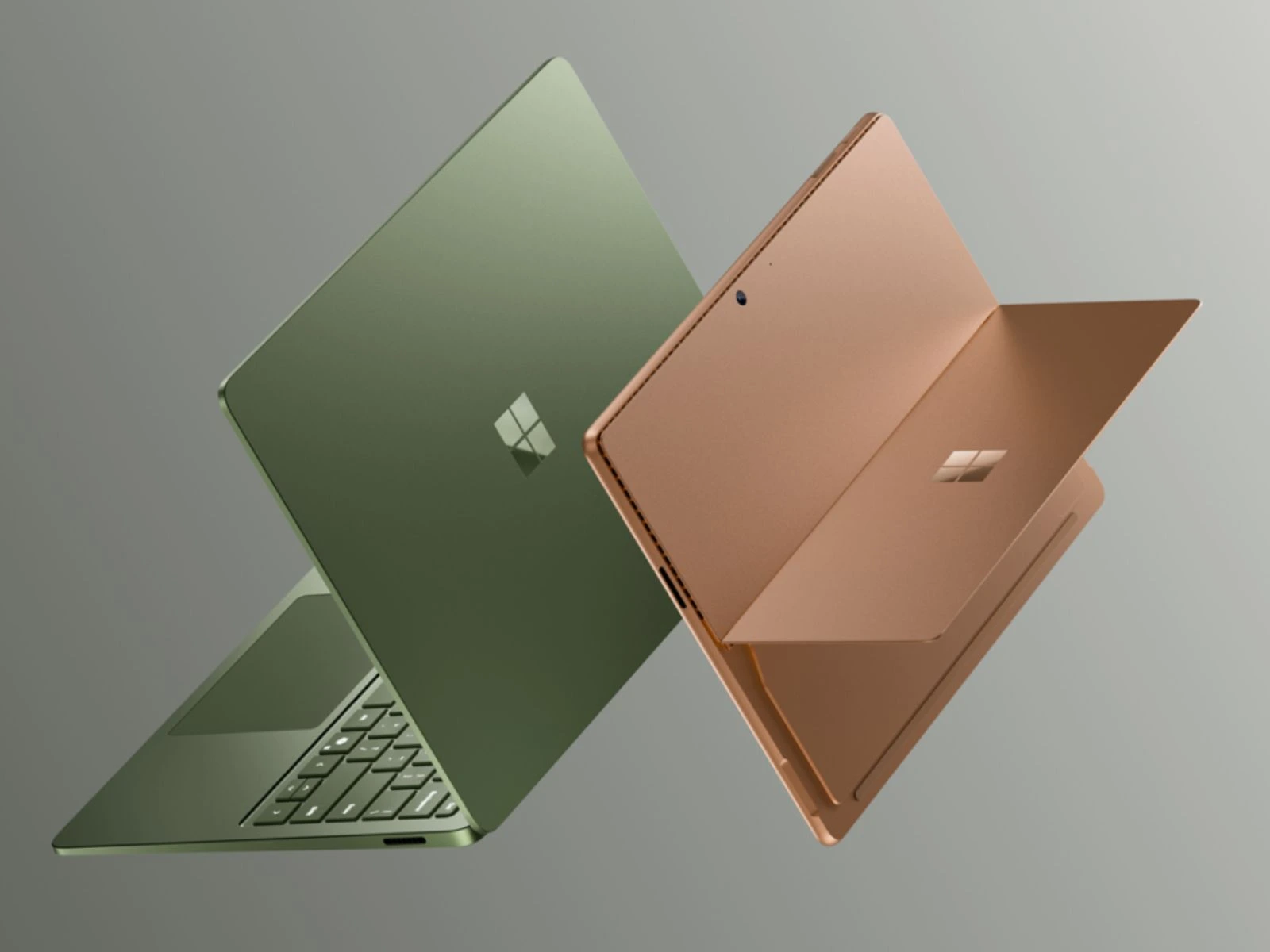
Microsoft has refreshed its premium Surface line, introducing a new 13-inch Surface Pro alongside 13.8-inch and 15-inch Surface Laptop models powered by Qualcomm’s Snapdragon X2 processors.

The familiar designs remain, but Microsoft has added faster graphics, longer claimed battery life, sharper displays, upgraded 1440p cameras and a new Jade colour for the smaller Surface Laptop. The goal is fairly straightforward — more performance without sacrificing the flexibility and portability that define the Surface range.

Naturally, none of those upgrades come cheap.

The wider Surface Pro family starts at USD$849.99, while the Surface Laptop range begins at USD$949.99, but those prices apply to the smaller 8GB Snapdragon X Plus models. Stepping up to the new X2 generation costs USD$1,499 for the 13-inch Surface Pro, USD$1,599 for the 13.8-inch Surface Laptop and USD$1,699 for the 15-inch model—and higher memory or storage configurations push those prices considerably further.
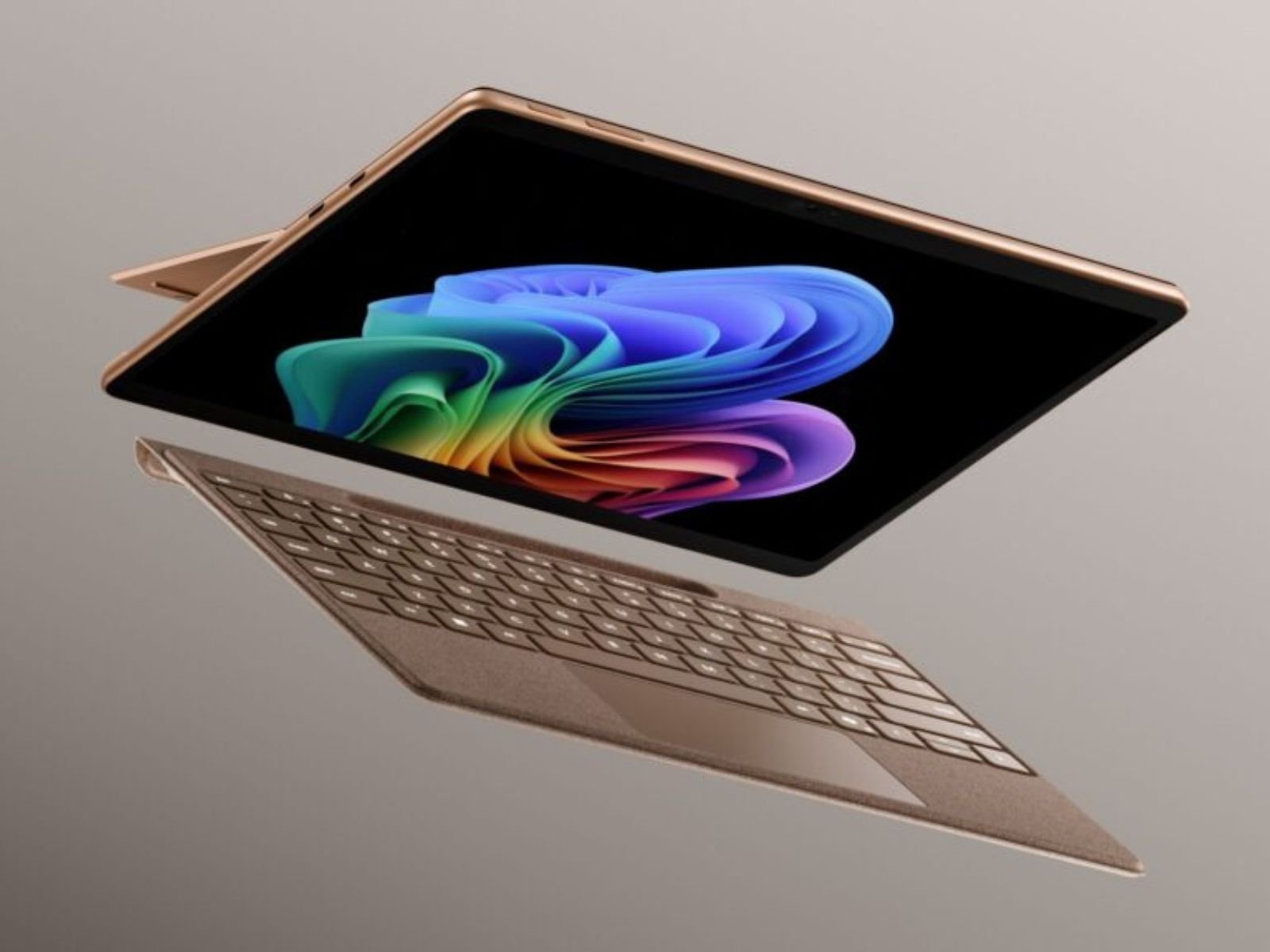
Surface Pro
Surface Pro | Image: Microsoft

Microsoft Surface Pro and Surface Laptop Specs

Before diving into what has changed, it helps to see how Microsoft’s increasingly crowded Surface range fits together. The smaller 12-inch Surface Pro and 13-inch Surface Laptop remain the more affordable Snapdragon X Plus options, while the new 13-inch Surface Pro and larger Surface Laptops introduce Snapdragon X2 performance, sharper displays and considerably higher prices. Here is a quick breakdown of the key specifications and pricing for all five models.

Surface Pro 12-inch

  • Processor: 8-core Snapdragon X Plus
  • Display: 12-inch PixelSense LCD touchscreen, 2196 × 1464, up to 90Hz
  • Battery life: Up to 16 hours of local video playback
  • Colours: Platinum, Violet & Ocean
  • Price: USD $849.99

Surface Pro 13-inch

  • Processor: Snapdragon X2 Plus or Snapdragon X2 Elite
  • Display: 13-inch PixelSense HDR OLED or LCD touchscreen, 2880 × 1920, up to 120Hz
  • Battery life: Up to 15.5 hours of local video playback
  • Graphics: Up to 53% faster graphics performance than the previous generation
  • Colours: Platinum, Black & Dune
  • Price: USD $1,499

Surface Laptop 13-inch

  • Processor: 8-core Snapdragon X Plus
  • Display: 13-inch PixelSense LCD touchscreen, 1920 × 1280, 60Hz
  • Battery life: Up to 23 hours of local video playback
  • Colours: Platinum, Violet & Ocean
  • Price: USD $949.99

Surface Laptop 13.8-inch

  • Processor: Snapdragon X2 Plus or Snapdragon X2 Elite
  • Display: 13.8-inch PixelSense HDR LCD touchscreen, 2304 × 1536, up to 120Hz
  • Battery life: Up to 20 hours of local video playback
  • Graphics: Up to 58% faster graphics performance than the previous generation
  • Colours: Platinum, Black, Dune & Jade
  • Price: USD $1,599

Surface Laptop 15-inch

  • Processor: Snapdragon X2 Plus or Snapdragon X2 Elite
  • Display: 15-inch PixelSense HDR LCD touchscreen, 3270 × 2180, up to 120Hz
  • Battery life: Up to 19 hours of local video playback
  • Graphics: Up to 58% faster graphics performance than the previous generation
  • Colours: Platinum and Black
  • Price: USD $1,699
Microsoft Surface Pro 13-Inch
Microsoft Surface Pro 13-Inch | Image: Mircrosoft

Snapdragon X2 Brings More Power & On-Device AI

The most important upgrade inside the new 13-inch Surface Pro and larger Surface Laptop models is Qualcomm’s Snapdragon X2 platform. Buyers can choose between a 10-core Snapdragon X2 Plus for everyday productivity and a 12-core Snapdragon X2 Elite intended for more demanding creative workloads, including photo editing, video production and 3D rendering. Both chips use Qualcomm’s third-generation Oryon CPU architecture and include an upgraded Adreno GPU.

Microsoft claims the new Surface Pro offers up to 53% faster graphics performance than the previous generation, along with as much as 15.5 hours of local video playback. The 13.8-inch and 15-inch Surface Laptops promise graphics improvements of up to 58%, while their claimed battery figures reach 20 hours and 19 hours, respectively. Those results come from Microsoft’s controlled testing, so real-world endurance will depend heavily on brightness, applications, connectivity and workload.

That combination of additional power and longer claimed battery life is designed for heavier browser sessions, video calls, creative applications and full working days away from a charger. The Surface Laptops provide the more traditional desktop-style experience, while the Surface Pro packages much of the same performance into a tablet-first design that can move between touch, pen and keyboard input. It remains the more adaptable option, although the Flex Keyboard is still an additional purchase.

The Snapdragon X2 platform also brings a Qualcomm Hexagon NPU capable of up to 80 trillion operations per second, giving Microsoft more headroom for Copilot+ features, camera effects, local image processing and future agentic AI tools. Running supported tasks directly on the device can improve responsiveness and reduce the need to send information to the cloud, but the impressive 80-TOPS figure will only become genuinely useful if Windows applications make proper use of it. More AI power is here; now the software needs to give people a convincing reason to care.
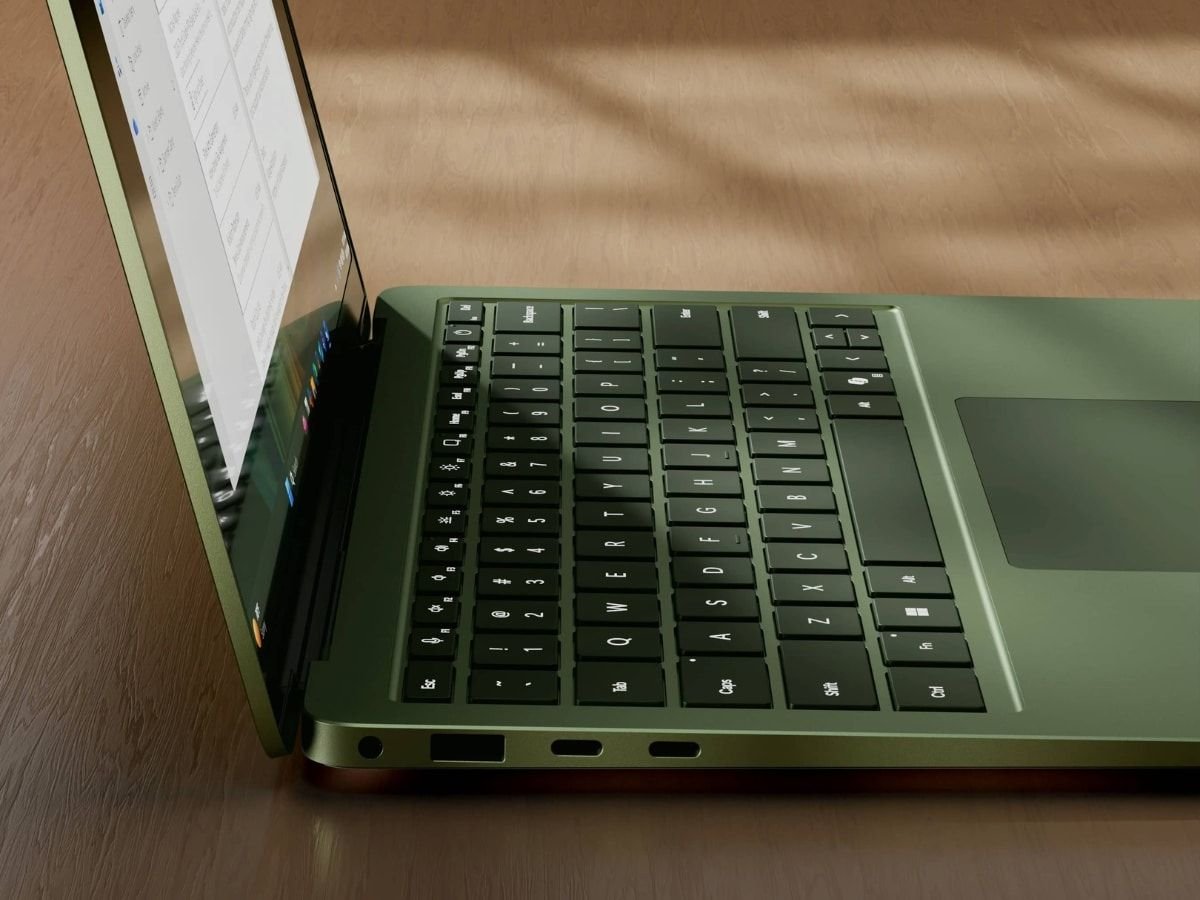
Microsoft Surface Laptop
Microsoft Surface Laptop | Image: Microsoft

What Else Is New?

The new processors are only part of the story, because Microsoft has also reorganized the Surface range and added several smaller upgrades across its premium models.

The new devices replace the Surface Pro 11th Edition and Surface Laptop 7th Edition introduced in 2024 with the original Snapdragon X platform. At launch, the 13-inch Surface Pro and 13.8-inch Surface Laptop both started at USD$999, while the 15-inch Laptop began at USD$1,299. Choosing the Surface Pro with a Snapdragon X Elite processor and OLED display raised the price to USD$1,499. Microsoft has now made the differences between its models clearer, keeping the cheaper 12-inch Surface Pro and 13-inch Surface Laptop with 8-core Snapdragon X Plus chips, while saving the Snapdragon X2 power for the 13-inch Pro and the 13.8-inch and 15-inch Laptops.

The 13-inch Surface Pro keeps its optional OLED display and adds a 1440p ultrawide front camera for clearer video and better framing. Both Surface Laptop sizes have PixelSense HDR LCD touchscreens, but the 15-inch gets a bigger upgrade, increasing from 201 to 262 pixels per inch for sharper text and finer detail. The 13.8-inch Laptop also comes in a new Jade colour, and haptic feedback now works on the Laptop’s touchpad and Surface Slim Pen to make gestures and on-screen actions feel more accurate.

Microsoft is also adding Affinity’s professional design, photography, and publishing software to the Start menu, while some parts of the case use 100% recycled aluminum alloy. A new Surface Repair Tool can recognize the device, check parts like the battery, display, and camera, and give step-by-step instructions for repairs that qualify. The more affordable X Plus models still appeal to buyers who want the Surface design without paying for the full X2 features, although “affordable” is becoming a bigger challenge in Microsoft’s current lineup.
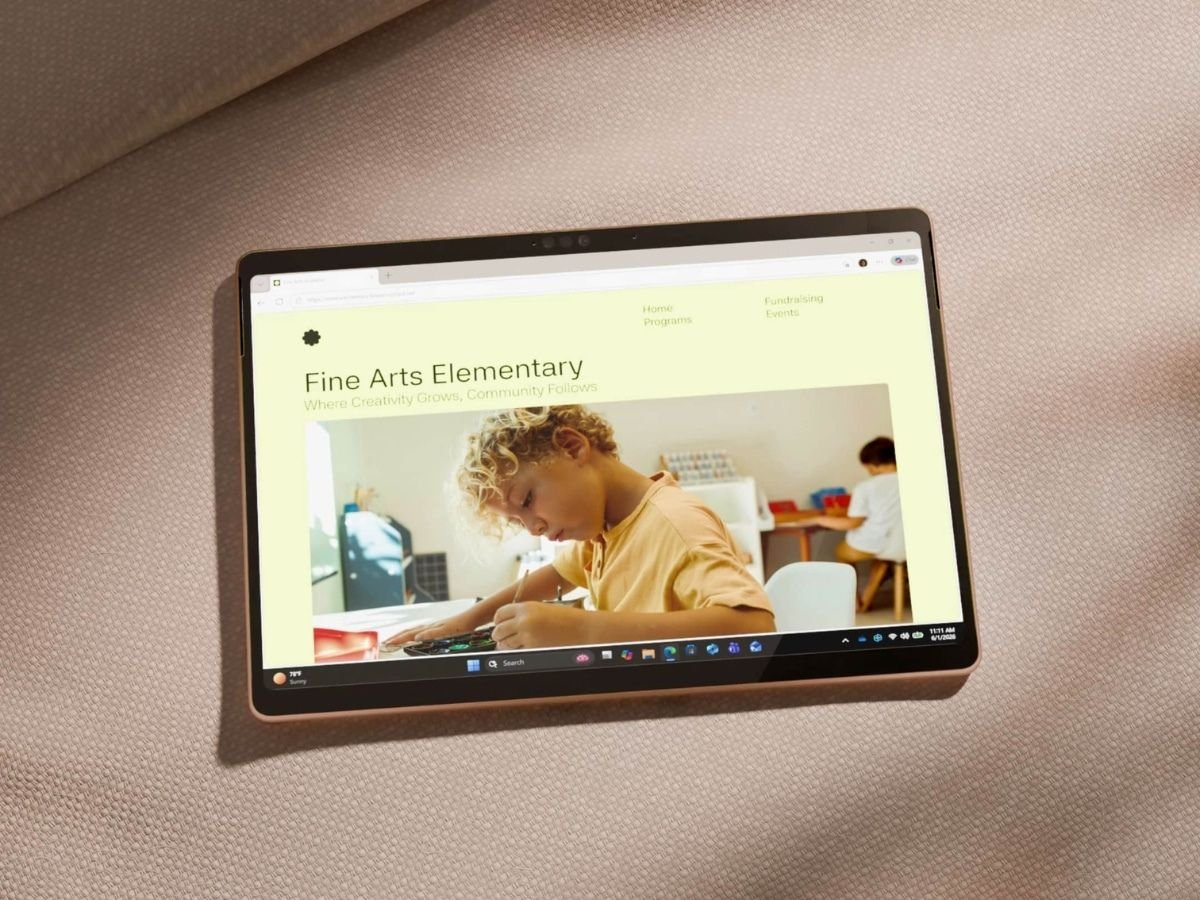
Mircrosoft Surface Pro
Mircrosoft Surface Pro | Image: Microsoft

The Surface Pro Sticks to What It Knows

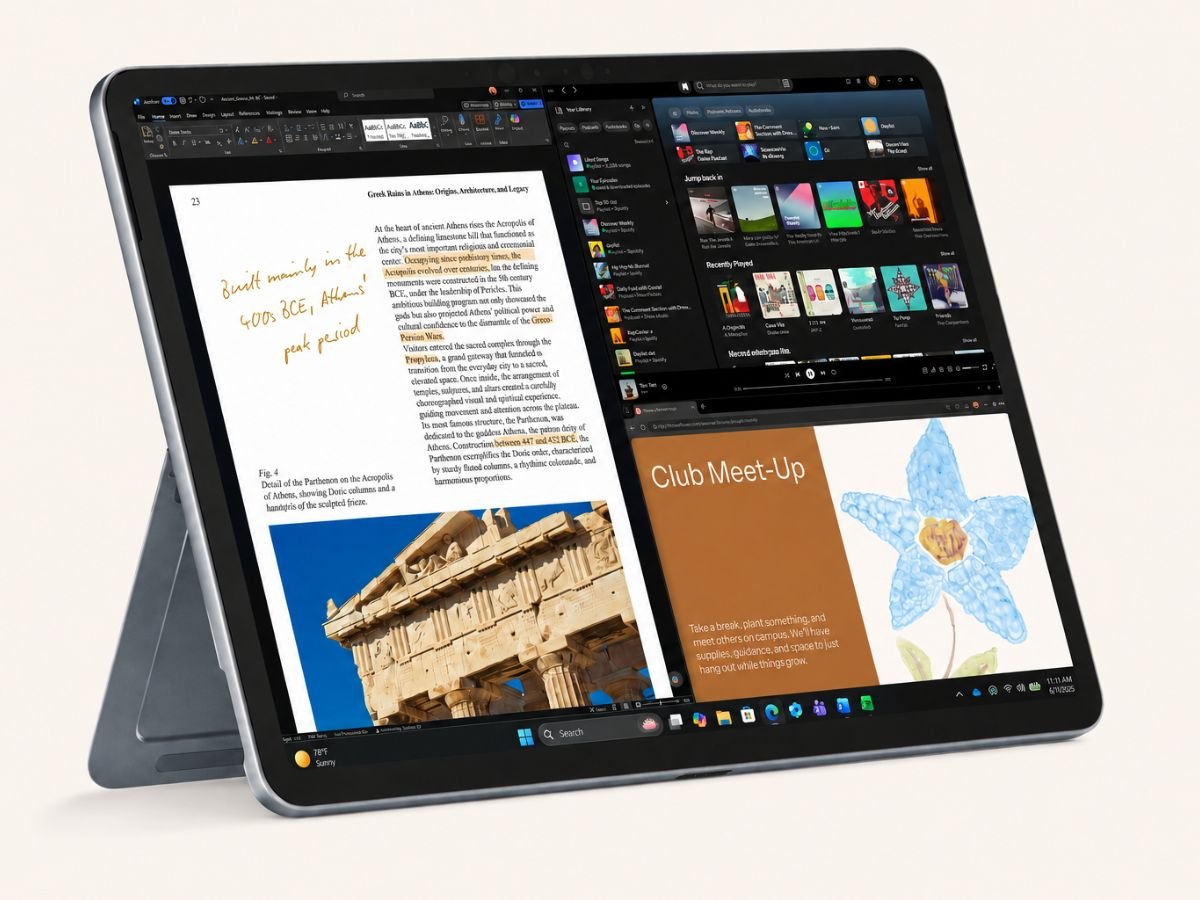
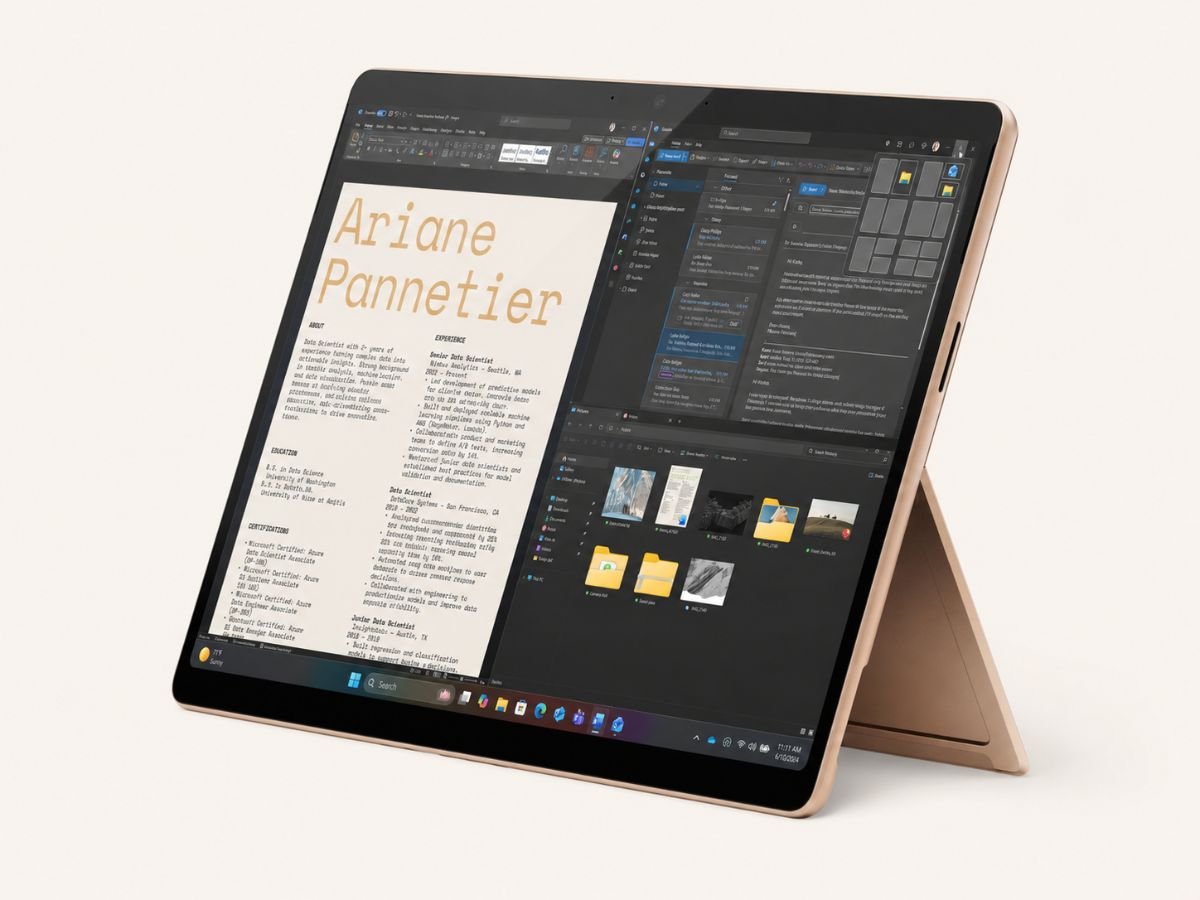
The new 13-inch Surface Pro keeps Microsoft’s familiar formula intact, combining a slim 1.97-pound (895-gram) Windows tablet with an adjustable kickstand, optional keyboard support and compatibility with the Surface Slim Pen.

It can be used as a touchscreen tablet, turned into something closer to a laptop or paired with the pen for sketching and handwritten notes. Its 13-inch PixelSense Flow touchscreen comes with either an LCD or optional OLED panel, both offering a 2880 × 1920 resolution, refresh rates of up to 120Hz and HDR support. Microsoft has also added a 1440p ultrawide front camera, while Wi-Fi 7, two USB-C/USB4 ports, up to 64GB of memory and a removable SSD with up to 1TB of storage round out the package.

Colour options include Platinum, Black and the new Dune finish, which is a nicer way of saying sparkling beige. More annoyingly, the USD$1,499 launch price still covers the tablet alone, so buyers wanting the complete laptop-style experience must pay another USD$169.99 for the standard Surface Pro Keyboard or USD$399.99 for the Flex Keyboard.

The Flex Keyboard and Slim Pen bundle costs USD$499.99, pushing a complete entry-level setup to USD$1,998.99 before any memory or storage upgrades. No wonder Microsoft still avoids putting “Laptop” in the name.
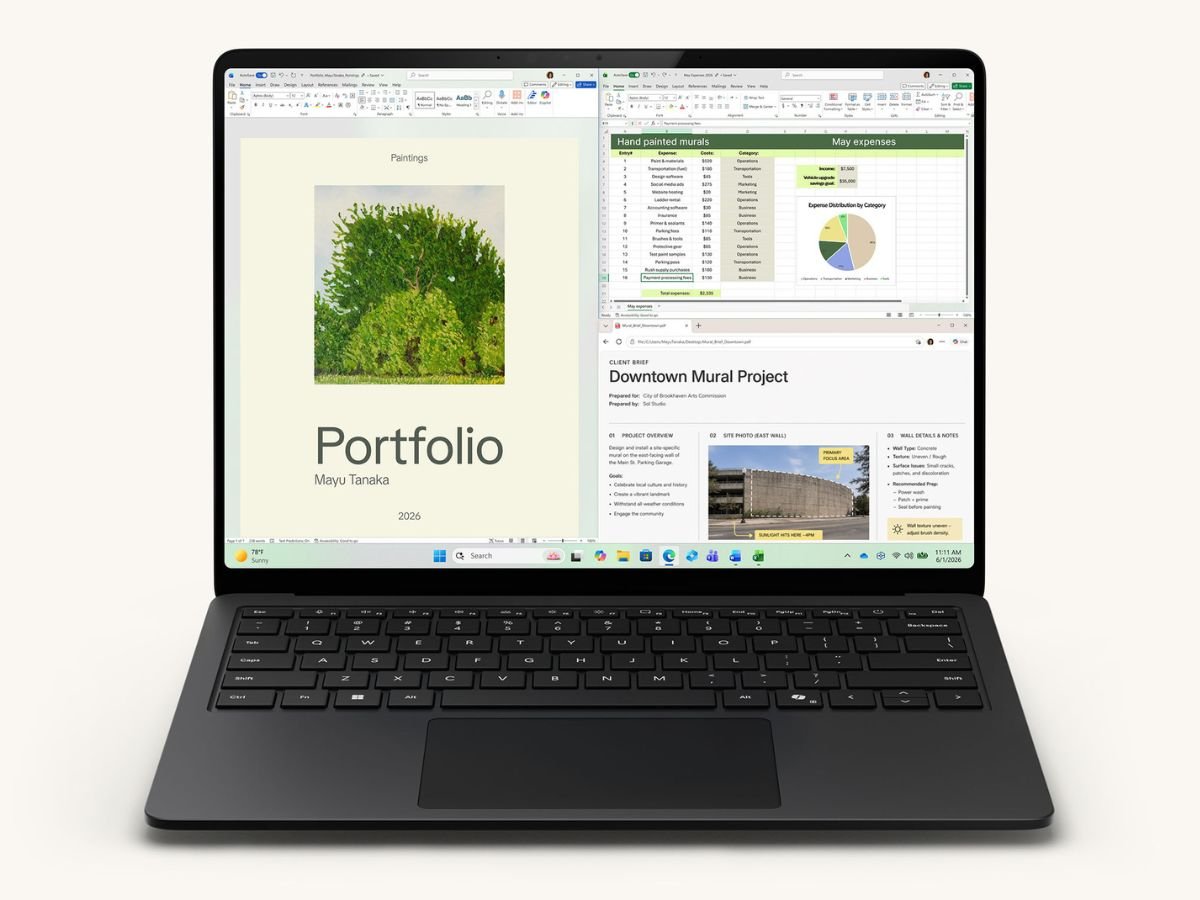
Surface Laptop 13.8-Inch
Surface Laptop 13.8-Inch | Image: Microsoft

Surface Laptop’s 15-Inch Display Gets a Serious Resolution Boost

Microsoft’s new Surface Laptop takes the more traditional route, combining a recycled aluminium enclosure with a physical keyboard, responsive touchscreen and the tall 3:2 display that has long distinguished the Surface family. The clean lines and rounded corners remain, meaning Microsoft has concentrated most of this generation’s meaningful changes inside the machine and behind the screen.

The 13.8-inch model features a 2304 × 1536 PixelSense HDR LCD touchscreen with a refresh rate of up to 120Hz, while the larger 15-inch version increases that resolution to 3270 × 2180. Microsoft has raised the pixel density of its biggest Surface Laptop from 201 to 262 pixels per inch, which should make text, photographs, spreadsheets and detailed creative projects appear noticeably crisper. Both screens also support Dolby Vision IQ and reach up to 600 nits of peak brightness.

The 15-inch screen is easily the star of this particular update.

The 13.8-inch Surface Laptop adds a new Jade finish alongside Platinum, Black and Dune, bringing some much-needed colour to a premium laptop market that often settles for silver, grey and more silver. Both sizes also receive Microsoft’s haptic touchpad and upgraded camera system, which Microsoft describes as the top-ranked laptop camera tested by DXOMARK at launch. Subtle haptic feedback can be felt when arranging windows, scrubbing through videos and completing other supported actions, adding a little more polish to an otherwise familiar laptop design.
Surface Pro
Surface Pro | Image: Microsoft

Are Microsoft’s New Surface Devices Worth the Higher Price?

Surface has never been Microsoft’s answer to the bargain aisle. The appeal has always been a cleaner design, strong cameras, high-quality displays and a more polished interpretation of the Windows experience, and this refresh stays firmly on that path. The Surface Pro remains the flexible option for anyone who will genuinely use its tablet mode, kickstand, detachable keyboard and Slim Pen, while the Surface Laptop is the easier choice for buyers wanting a conventional machine that opens, types and stays out of the way.

These are better Surface devices—but they are not cheap ones. Microsoft has made the hardware more capable and refined, but it is also asking buyers to pay handsomely for that extra polish.

Microsoft claims up to 53% faster graphics for the new Surface Pro and up to 58% for the Surface Laptop, alongside longer battery figures, Snapdragon X2 processing and a much sharper 15-inch display. However, with prices starting at USD$1,499 for the Pro before adding a keyboard and USD$1,599 for the Laptop, you need to want the latest Surface rather than simply a capable Windows computer. Previous-generation machines and Microsoft’s cheaper Snapdragon X Plus models remain compelling alternatives, making the new X2 devices stronger premium choices but far from essential upgrades.


Laptops
About the Author
Cars

2026 Porsche 911 GT3 (992.2) Review: Why Everyone Is Trying To Buy This Car?

Reading Time: 13 minutes

Our team of editors and experts thoughtfully chooses each product. If you decide to buy through one of our links, we may earn a commission. Learn more. Want to know how we test products? Click here for more details.

If you have spent enough time around car people, one thing is certain: a lot of people have mentioned Porsche, and everyone has a story to tell. Some of them had posters on their childhood bedroom wall, and some will talk about the first time they heard a flat-six scream past a redline. For many, the brand represented the purest form of expression of what a sports car should be—focused, engineered with intent, and built by people who care obsessively about the details.

You know how these talks go; once it shifts and someone brings up the Porsche 911 GT3, it’s pretty much in a league of its own. Seriously, these things are not easy to get your hands on. You cannot just waltz into a dealership, pick one out, and drive away. You’ve got applications going, waiting lists to check, some back-and-forth negotiating, and yeah, sometimes you just get a polite no. Yet despite all of that—or perhaps because of it—the GT3 remains one of the most hunted performance cars in the world.

Now that the updated Porsche 911 GT3 992.2 is finally here, demand for the GT3 has been higher than ever. Porsche hasn’t torn up the rulebook—and honestly, why would it? Many, including myself, come to this car with one purpose, and that is the fundamentals— a naturally aspirated engine you want to chase to redline, steering that feeds information straight into your palms, and real-deal track pedigree you can actually feel from the driver’s seat.

Here’s everything you need to know about the 2026 Porsche 911 GT3 992.2.

2026 Porsche 911 GT3 with Weissach Package 992.2 | Image: Porsche

Porsche 911 GT3 992.2 Powertrain

Let’s dive straight into Porsche’s 911 GT3 992.2’s powertrain, which is the main reason it remains everyone’s dream car, and I’m talking about the 4.0-litre flat-six-cylinder naturally aspirated engine. Oh yeah, that one. It hasn’t been easy, especially in a time when downsizing, turbocharging, and electrification are everywhere. Porsche had to stand firm and protect the engine that defined the model’s character. Even with tighter emissions standards that add more components to the exhaust, the engineers managed to keep the essential parts of the driving experience intact—like how it revs up, how quickly it responds, and that thrill you feel when you’re pushing it to the limit.

Once you accept that its engine is something special, your next dilemma is whether to choose the PDK or the manual. Porsche recognizes that GT3 buyers split into two groups. Some seek absolute speed and precise handling; others prefer the satisfaction of doing the work themselves. The dual-clutch is incredibly quick and easy to operate for daily driving, while some still want to handle all the work with the six-speed manual. Either choice is good, but your decision depends on what kind of stories you want to tell every time you hit the road.

Here’s where things get interesting when you look at the numbers, because Porsche chose balance over drama. The output remains the same at 375 kW (510 PS), torque sits at 450 Nm, and both gearboxes now benefit from a shorter final drive, making it more responsive and punchier when you’re actually driving it. The PDK launches at 100 km/h in just 3.4 seconds, while the manual takes 3.9 seconds. The top speed slightly favors the three-pedal car at 313 km/h versus 311 km/h… not much of a difference, but for those who do.

2026 Porsche 911 GT3 992.2 | Image: Porsche

Porsche 911 GT3 992.2 Interior

If we jump into the interior, you’ll notice that things feel familiar. That’s because Porsche hasn’t really tried to reinvent the area. The driving position, the views over the front fenders, the pedals, the way the steering meets your hands — it all lands exactly where you expect, even the rotary ignition switch remains the same. In my opinion, this is why I value Porsche: they keep the heritage as much as possible without changing much unless it’s absolutely necessary.

You’ll also find the traditional two-seat layout, and honestly, that matches the GT3’s personality. If you choose the Touring Package, rear seats can be added, making the car a bit more versatile for short trips, but let’s be real: nobody’s going to pretend it’s a family shuttle.

Speaking of seats, the bucket seats are amazing in their carbon-fibre shells, and they do belong to the pit lane. You’ll be surprised at how comfortable it is once you settle in. You can adjust the height electrically, slide them manually, and even add heating—all the features you’d expect are included. I’m even impressed by how Porsche considered helmet use, allowing part of the headrest padding to be removed so your seating position stays natural on track days.

2026 Porsche 911 GT3 992.2 Interior | Image: Porsche

If you ask me, which one would I pick? Definitely not the Touring Package. I would rather have it and keep a proper sports car, and maintain a classic feel. But aside from that, a steel roll cage can be installed along with a six-point harness and a fire extinguisher, which is why it sparks that urge of imagining that pit boards, again everyone sees it differently.

Tech-wise, it’s a modern Porsche. A curved digital cluster is positioned ahead of you, complemented by a central infotainment screen with smartphone mirroring and wireless charging. Yes, the old analogue tachometer is gone, and some will always miss it. Spend a little time with the display rotated so the 9,000 rpm redline sits at the top, and you begin to understand the compromise.

Considering the interior as a whole, it’s well-balanced and centered. Why do I say that? Well, some cars lean towards leather and luxury, while this one manages to fit into both categories. It features exposed carbon fibre and Race-Tex across the dashboard, so it’s hard to fully describe until you actually step inside and experience the vibe it gives. You’ll notice the essential elements, like temperatures, pressures, fuel, and shift timing. Pure sports cars, no drama.

2026 Porsche 911 GT3 992.2 | Image: Porsche

Porsche 911 GT3 992.2 Exterior

The 992.2 GT3 doesn’t try to look “new” in an obvious, shouty way. Porsche refined the front and rear with practical updates, beginning with revised aero components at the front. A redesigned front diffuser, a reworked spoiler lip, and modified underbody air guides are all designed to improve airflow and increase downforce, while the nose also benefits from Porsche’s updated lighting treatment. The Matrix LED headlights streamline lighting functions and tidy up the fascia, freeing up the design for better airflow where it matters.

At the back, it’s the same story of “small changes, big effect.” Porsche talks about a meaningful aero upgrade that combines the new front splitter/diffuser work with revised rear features to improve stability at high speeds. There are new rear wing endplates, and some of the front-axle aero elements, previously exclusive to the GT3 RS, indicate that Porsche is subtly infusing more RS-style elements into the standard GT3’s design. It still looks like a GT3 at a glance, but the airflow has been refined, and the car performs better than its styling suggests.

The Touring Package option is where the exterior shapes the conversation, because not only is it a “wing deleted” model, but Porsche has engineered it to function properly without a big fixed wing, using a different rear approach to maintain balance and keep that 911 intact. What does it mean for potential buyers? Well, buyers can choose between the extroverted GT3 look and the subtler Touring vibe, and either way, the 992.2’s exterior is less posing and more about Porsche doing what it always does best—making the shape earn its keep.

2026 Porsche 911 GT3 992.2 | Image: Porsche

How Does Porsche 911 GT3 992.2 Drive?

Now that we have covered pretty much every aspect of the car, let’s see how it drives. If you ask anyone who has driven the 992.2 hard, you’ll get the same story. The GT3 doesn’t just dominate the driver; it actually wants you to get involved behind the steering wheel, and it builds that momentum between you and the car. That’s why most who have driven it don’t often talk about the stats and numbers; they talk about how the connection really feels.

The steering plays a huge role in that reputation. While most modern performance cars rely on electronic power steering (EPAS), Porsche continues to deliver genuine feedback from the front axle. As brand ambassador Walter Röhrl explains, “Particularly on winding country roads, you can clearly feel that the steering is even better tuned than its predecessor. It instils even greater confidence in the car because it responds more calmly from the centre position without losing any of its directness. The shorter gear ratio also significantly enhances driving pleasure on country roads.” It’s high praise, and it aligns perfectly with what testers report after only a few bends.

It’s usually pretty surprising how fast the car just starts to make sense. Usually, drivers don’t mention that the GT3 seems to coach you through each twist and turn, lap after lap. It’s like it has a personal connection with you, especially once you touch the brakes and release the pedal, feed in the steering with more patience, and give you that edge feeling of reward from how clean and smooth the transition is. There’s a real, tangible sense of greater control that comes from these small adjustments. It’s a simple change, but it really makes a difference.

2026 Porsche 911 GT3 992.2 | Image: Porsche

As mentioned before, the performance still maintains 375 kW (510 PS), but the GT3 is capable of serious pace, yet it doesn’t give that feeling of being overpowered. Even with the emission hardware attached, the naturally aspirated flat-six still revs to the redline and produces a sound that pulls you deeper into the moment, even inside the cabin.

When you take the car out on the track, Porsche has carefully engineered its behaviour under heavy braking and over rough curves, providing drivers with a dependable platform. As Jörg Bergmeister explains, “On the track, the new 911 GT3 enables even better control because it holds even steadier and handles better on bumps and when driving over curbs thanks to the optimized damper tuning. The anti-dive system noticeably reduces pitching under braking. As a result, the balance of the car remains significantly more consistent under all conditions.”

Weight factor plays a crucial role in any sports car. That’s why Porsche offers options such as Weissach magnesium wheels and lightweight packages that remove about 9 kg. It might not seem like much, but those small changes make a huge difference. Also, the new 40 Ah lithium-ion battery reduces the car’s weight by another 4 kg, bringing it to around 1,420 kg. As it goes, less weight, better response, cleaner transition.

Another option Porsche offers is Porsche Ceramic Composite Brakes (PCCB), designed for those who plan to spend a lot of time on tracks or circuits. It reduces fade, is lighter, and provides repeatable stopping performance, which show just how deeply Porsche has engineered this car.

2026 Porsche 911 GT3 992.2 | Image: Porsche

Price & Availability

Now that all the specs and tech are out of the way, if we’re talking about the Porsche 911 GT3, you’d really be missing a big part of the story if you didn’t mention the sheer difficulty of just trying to get your hands on one. It’s a real challenge. Production is tightly controlled, allocations are limited, and dealers tend to prioritize longstanding clients, and even if you had the money ready, patience is still part of the purchase process.

The starting price for a new GT3 is around USD $235,000, while the Weissach Package adds another USD $20,490, and that’s barely the entry ticket. Once the potential buyer dives into the option catalogue, the total can climb quickly, and some options can push the specced car far beyond the quarter-million-dollar mark.

You can also customize your GT3 with a variety of extras that match your personality, such as building a focused, winged track car loaded with carbon parts, or opting for the Touring Pack for a more road-friendly setup. Packages like Weissach offer extensive lightweight solutions and visual flair, while features like magnesium wheels help lower unsprung weight. Many GT3 owners can’t resist adding these features.

Standard equipment is generous, but Porsche anticipates owners will personalise heavily. Front-axle lift systems, upgraded lighting, driver assistance features, and expanded interior trims are often chosen. The configurator can be an intimidating place if you’re unsure of what you want.

Compared to other 911 models, the GT3 stands above them all, and you’ll notice that gap once you dive deeper and make sense once you factor in the motorsport hardware, the engine programme, and the value for what you’re going to get and pay for.

The challenge lies in the choice you’re about to make, because you’ll select a car that honours all these years of heritage. Manual or PDK. Wing or Touring. Comfort or commitment. Both cars can leave the factory and still appear as twins, yet make you feel worlds apart.

Porsche
About the Author
arrow_drop_up