






HP x Scuderia Ferrari AI PC
Tech

HP x Scuderia Ferrari AI PC Brings Race-Day Performance to Your Desktop

Reading Time: 7 minutes

Share via

Our team of editors and experts thoughtfully chooses each product. If you decide to buy through one of our links, we may earn a commission. Learn more. Want to know how we test products? Click here for more details.

  • The HP x Scuderia Ferrari AI PC is a 14-inch limited-edition laptop developed through nearly two years of collaboration with the Ferrari Design Studio.
  • It combines an Intel Core Ultra X7 368H processor, Intel Arc B390 graphics, 64GB of memory and a 1TB SSD with a 3K OLED touchscreen.
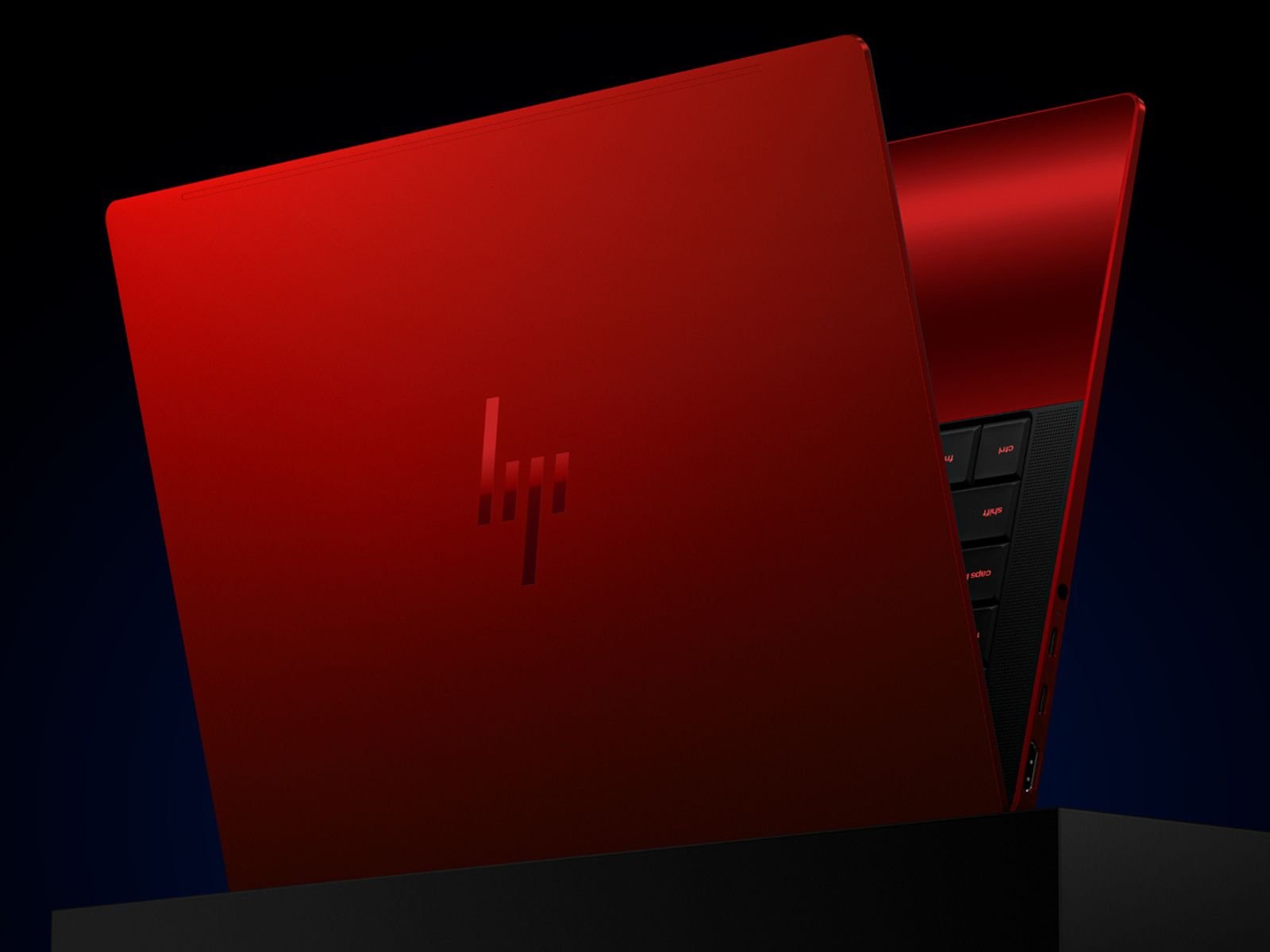
  • Ferrari-inspired details include a Rosso Magma aluminum chassis, carbon fibre, transparent Gorilla Glass, louvred cooling vents and a Poltrona Frau leather sleeve.
  • Only 4,999 individually numbered units will be produced, with US availability beginning on June 12, 2026, at USD 5,599.

HP has unveiled the Limited Edition Scuderia Ferrari AI PC, a 14-inch laptop that combines Ferrari-inspired materials and design with the latest generation of local AI performance.

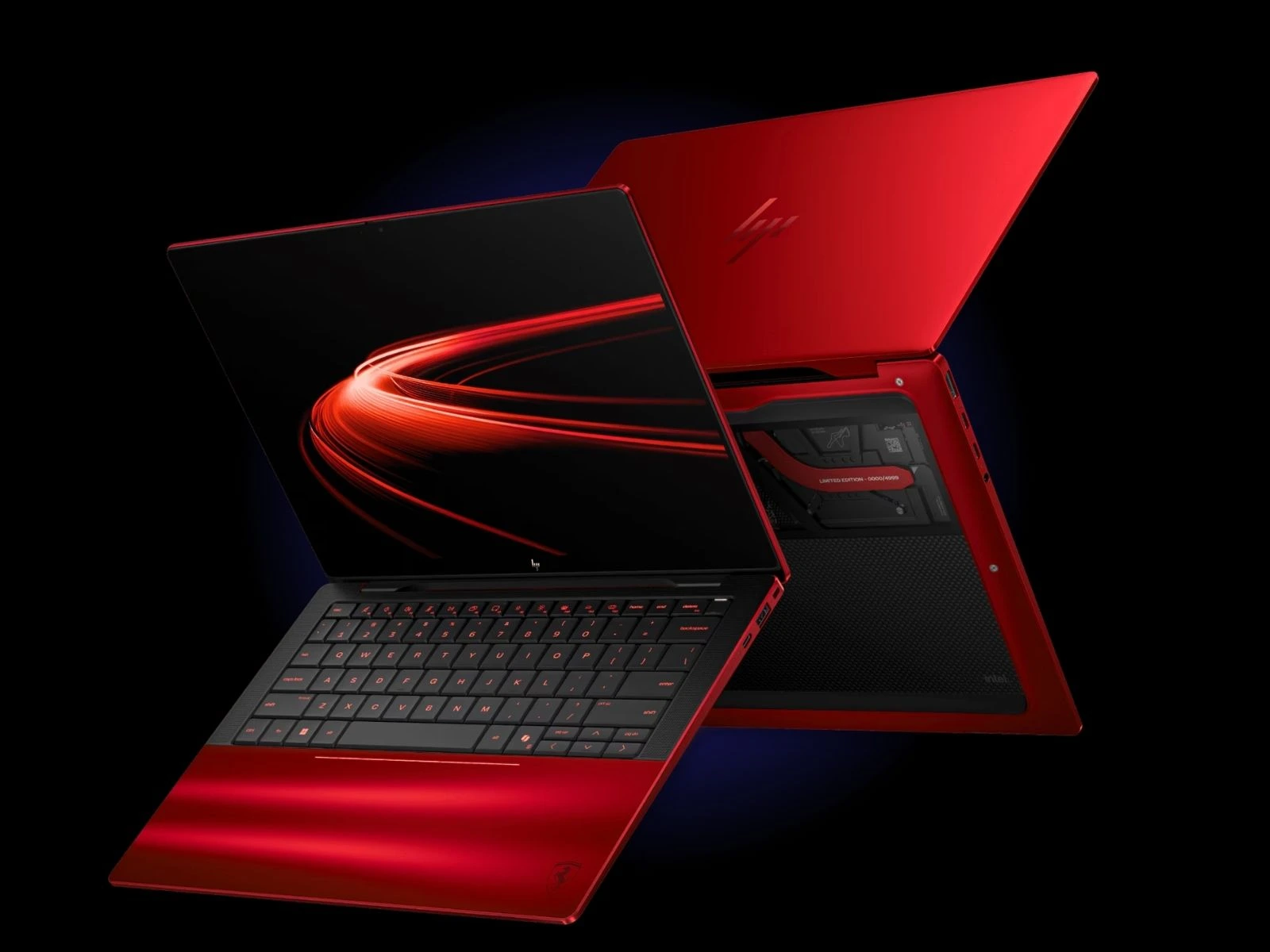
Created through nearly two years of collaboration between HP and the Ferrari Design Studio, the machine features a Rosso Magma aluminum chassis, carbon-fibre construction, transparent Gorilla Glass and a cooling system designed to resemble the exposed engine bay of a Ferrari. It is considerably more involved than placing a Prancing Horse badge on an existing laptop and increasing the price.

Inside, HP has fitted an Intel Core Ultra X7 processor, integrated Intel Arc graphics, 64GB of memory and a 1TB SSD, while the 14-inch 3K OLED touchscreen offers a 120Hz refresh rate. The laptop also includes individually illuminated keys, custom Ferrari graphics and a Poltrona Frau leather sleeve made using the same type of Italian leather found inside Ferrari cars.

Only 4,999 individually numbered units will be produced, with US pricing set at USD$5,599. That makes it considerably more expensive than most premium Windows laptops, although most premium Windows laptops do not arrive looking like they spent the weekend in Maranello.

HP x Scuderia Ferrari AI PC
HP x Scuderia Ferrari AI PC | Image: HP

HP x Scuderia Ferrari AI PC Specifications

Before we look at the carbon fibre, transparent glass and Ferrari-inspired cooling system, here is what the limited-edition laptop brings to the grid. HP has settled on one high-end configuration for the US, combining an Intel Core Ultra X7 processor with 64GB of memory, a 1TB SSD and a 14-inch OLED touchscreen.

Here are the specifications for HP x Scuderia Ferrari AI PC:

SpecificationDetails
ProcessorIntel® Core™ Ultra X7 368H
Operating SystemWindows 11 Pro
AI PerformanceIntegrated Intel Arc B390 GPU
Memory64 GB LPDDR5x-9600 MT/s
Storage1 TB PCIe® Gen4 NVMe™ M.2 SSD
Display14-inch diagonal, 3K (2880 x 1800), OLED, touch
GraphicsIntegrated Intel® Arc™ B390 GPU
Refresh Rate120 Hz
Brightness700 nits
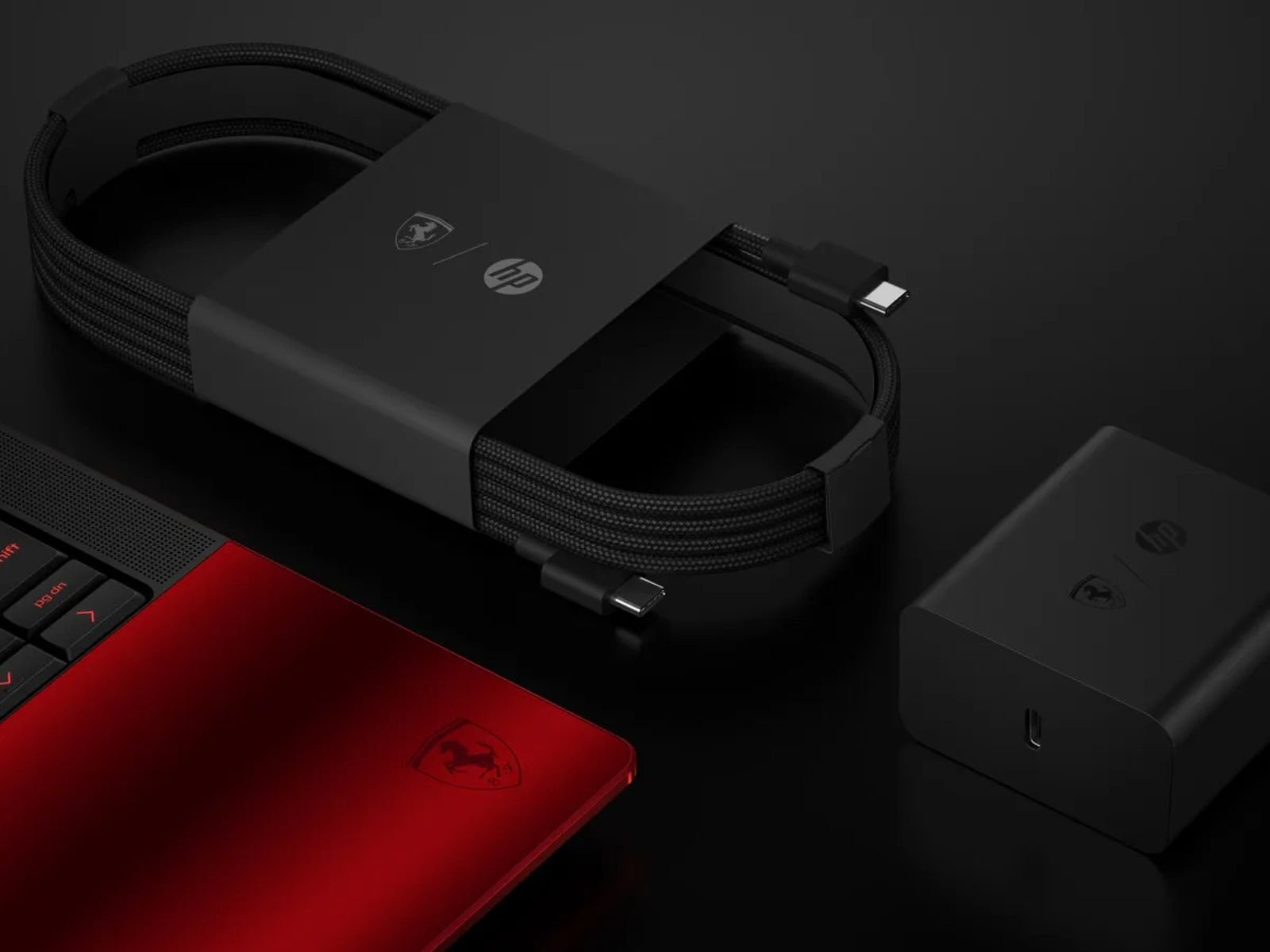
Battery & Power6-Cell 68 Wh polymer battery with a 100 W USB-C GaN adapter
ConnectivityWi-Fi 7 and Bluetooth 6.0
Ports2x Thunderbolt™ 4 (USB-C 40Gbps)
1x USB-C (10Gbps)
1x USB-A (5Gbps)
1x HDMI 2.1, headphone/mic jack
Dimensions & Weight12.31 x 8.54 x 0.33–0.52 inches
1.4 Kg – 3.04 lbs
Price & Availability USD $5,599 / Limited Edition 4,999 Pieces

The HP x Scuderia Ferrari AI PC is powered by an Intel Core Ultra X7 368H processor, paired with integrated Intel Arc B390 graphics, 64GB of LPDDR5x memory and a 1TB PCIe Gen4 SSD. HP says the complete system can deliver up to 180 TOPS of AI performance, giving it enough local processing power for supported Copilot+ features, creative applications and the increasingly long list of Windows tools now determined to include AI somewhere.

Its 14-inch 3K OLED touchscreen carries a 2880 × 1800 resolution, 120Hz refresh rate, 700-nit peak brightness and full coverage of the DCI-P3 colour space. That combination should provide sharp text, smooth movement and accurate colours for editing photos, working on design projects or admiring the exclusive Ferrari wallpapers that appear when the laptop starts.

Connectivity is similarly well covered, with Wi-Fi 7, Bluetooth 6.0, two Thunderbolt 4 ports, an additional USB-C connection, USB-A, HDMI 2.1 and a headphone jack. The laptop also includes a 68Wh battery, four Poly Studio speakers, a 100W USB-C GaN charger and HP Wolf Security for Business, all packed into a 3.04-pound body.
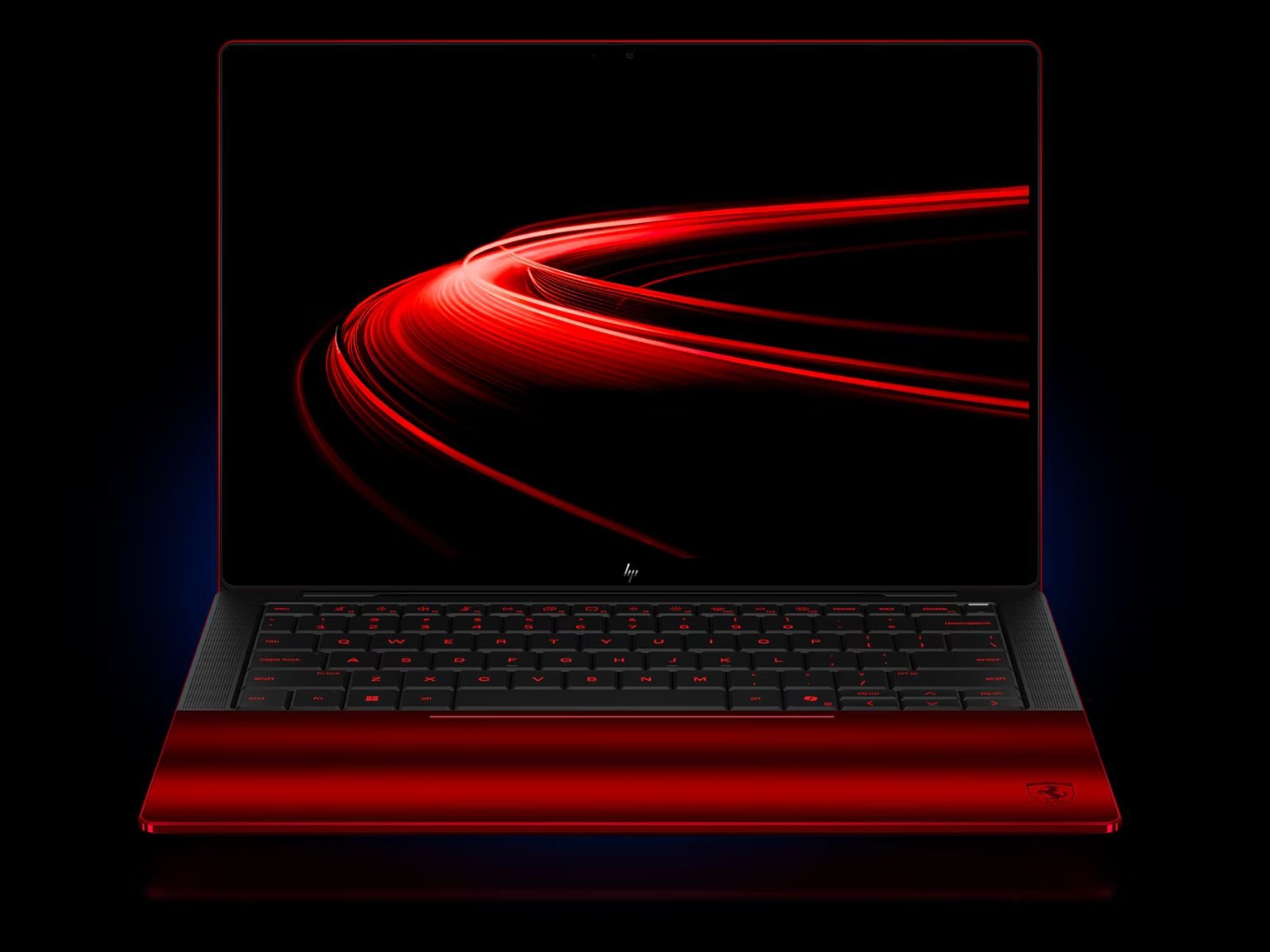
HP x Scuderia Ferrari AI PC
HP x Scuderia Ferrari AI PC | Image: HP

AI Performance Without a Dedicated GPU

As mentioned above, the HP x Scuderia Ferrari AI PC is powered by an Intel Core Ultra X7 368H processor with integrated Intel Arc B390 graphics, delivering up to 180 TOPS across the complete platform. TOPS stands for trillions—or tera operations—per second, an increasingly common measurement used to describe how quickly a computer can process AI workloads. Within that total, the dedicated Intel AI Boost NPU contributes up to 50 TOPS, while the CPU and GPU provide additional processing power when applications require it.

With this setup, the laptop can use Copilot+ features, Windows Studio Effects, automatic framing, background replacement, voice enhancement, and creative tools directly on the device. So, it does not have to rely only on the cloud. The Intel Arc B390 handles more than just demanding visual tasks, and the NPU manages AI features without putting too much strain on the main processor. Even without a dedicated graphics card, the system can spread AI tasks across its hardware to keep everything running smoothly.
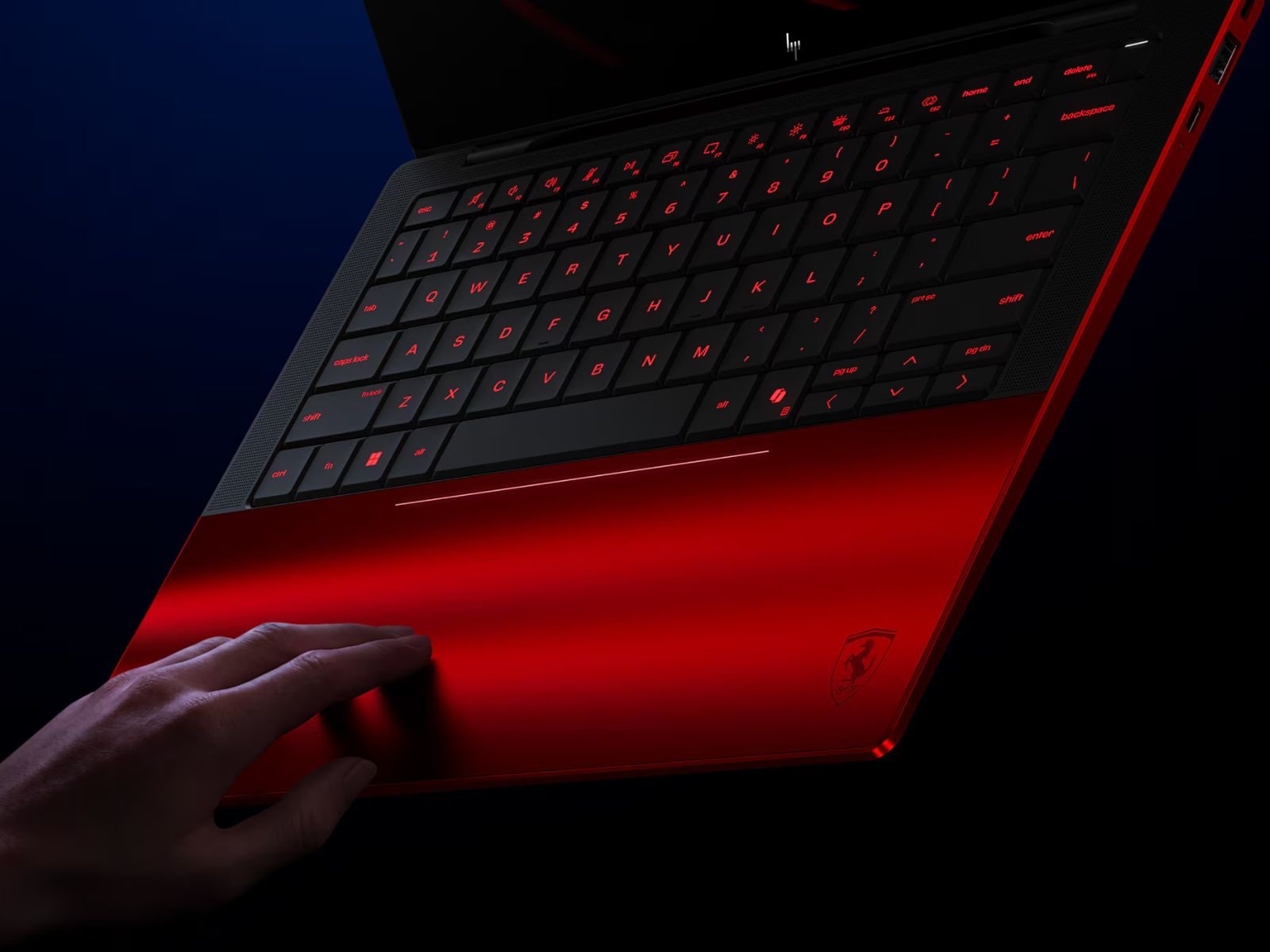
HP x Scuderia Ferrari AI PC
HP x Scuderia Ferrari AI PC | Image: HP

The Ferrari Influence Is More Than a Paint Job

The HP x Scuderia Ferrari AI PC is the result of nearly two years of collaboration between HP’s engineers and the Ferrari Design Studio, so the connection runs considerably deeper than a red finish and a Prancing Horse badge. Its aluminum chassis is precision-milled and finished in Rosso Magma, a metallic shade containing fine particles that create additional depth as light moves across the sculpted body.

Underneath, HP combines carbon fibre with transparent Corning Gorilla Glass, leaving parts of the laptop’s internal cooling architecture visible in a nod to Ferrari’s exposed engine bays. More than 2,000 calibrated micro-perforations are incorporated into the glass to help draw air toward the fans, while three-dimensional louvred vents manage heat and pressure using a design detail that has appeared across generations of Ferrari cars.

The theme continues across the full-glass palm rest and haptic touchpad, which illuminates around its boundary when touched. Every keyboard key also receives individual RGB backlighting, with four customizable lighting animations and a full selection of colours. Even the startup sequence includes exclusive Ferrari graphics, ensuring there is very little chance of anyone confusing it with the regular office HP.
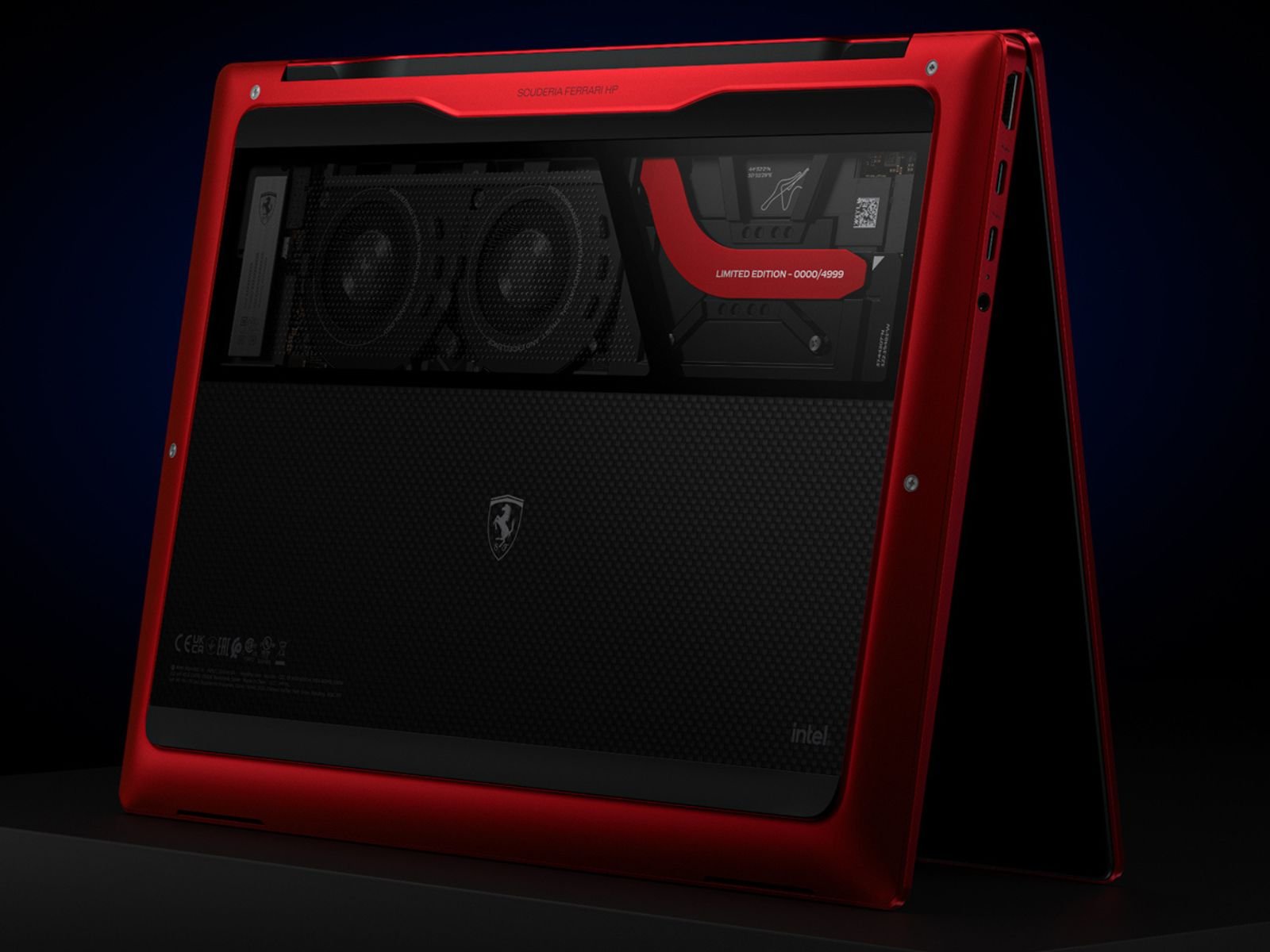
HP x Scuderia Ferrari AI PC
HP x Scuderia Ferrari AI PC | Image: HP
HP x Scuderia Ferrari AI PC
HP x Scuderia Ferrari AI PC | Image: HP

HP x Scuderia Ferrari AI PC Price & Availability

The HP x Scuderia Ferrari AI PC will be available in the United States via HP starting June 12, 2026, at a price of $5,599. The company also aims to release the laptop in Australia, France, Germany, Italy, Japan, Spain, Switzerland, and the United Kingdom, with prices differing by country. Canada will not be part of the initial launch.

HP will make just 4,999 of these laptops, and each one will have its own unique number and serial. This turns the device into more of a tech collectible than a typical HP product. Ferrari is known for creating exclusivity by producing fewer items than people want, which makes them more desirable.

Each laptop comes in special packaging that lifts the device up as you open the box. HP also adds a Poltrona Frau leather sleeve, made by the same Italian company that supplies leather for Ferrari cars. The whole experience is meant to feel more like receiving a luxury item than just picking up a new work laptop. However, you won’t find any keys, an engine start button, or a glass of champagne inside.
HP x Scuderia Ferrari AI PC
HP x Scuderia Ferrari AI PC | Image: HP
FerrariHPLaptops
About the Author

Related Articles

adidas Cooling Innovations for FIFA WORLD CUP 2026™
TechStyleSports

How adidas’ F1-Inspired CLIMACOOL SYSTEM Is Keeping Players Cool at the 2026 World Cup

Reading Time: 6 minutes

Our team of editors and experts thoughtfully chooses each product. If you decide to buy through one of our links, we may earn a commission. Learn more. Want to know how we test products? Click here for more details.

  • adidas’ CLIMACOOL SYSTEM includes a cooling vest, an insulating jacket, and a cooling overshoe.
  • The technology was originally developed for Mercedes-AMG Petronas F1 Team drivers before being adapted for football.
  • The system can reduce core body temperature by up to 0.5°C and foot temperature by 2°C within seven minutes.
  • All adidas partner federations competing at the 2026 FIFA World Cup will receive the CLIMACOOL SYSTEM.

Playing 90 minutes of football is hard enough. Doing it in the middle of a North American summer, with rising temperatures and humidity that make everything feel heavier, adds an entirely different challenge.

That’s something players have had to contend with at the 2026 FIFA World Cup, where heat has become another factor teams must manage alongside tactics, fitness, and recovery. While lighter kits and breathable fabrics can help, adidas has taken a more aggressive approach with its new CLIMACOOL SYSTEM—a three-piece cooling setup designed to help players lower their body temperature before and during matches.

The system combines a cooling vest, insulating jacket and cooling overshoes, giving players a way to actively cool different parts of the body while they’re off the pitch. Spain is among the national teams using it during the tournament, with the Spanish federation describing high temperatures as a major challenge for players at certain World Cup venues.

But perhaps the most interesting part of the setup is where the idea came from. Before adidas started putting frozen cooling vests on footballers, the technology had its roots in another sport where dealing with extreme heat is part of the job — Formula 1.

adidas CLIMACOOL SYSTEM
adidas CLIMACOOL SYSTEM | Image: adidas

From the F1 Cockpit to Football’s Biggest Stage

Formula 1 and football might seem like two different worlds apart, but when you pause for a second and think of what it takes to keep athletes performing in extreme conditions, there’s more crossover than you might expect. F1 drivers can spend an entire race strapped into incredibly hot cockpits while wearing layers of fire-resistant clothing and protective equipment, losing anywhere from 2-4 kgs per race.

That challenge helped inspire the technology behind adidas’ CLIMACOOL SYSTEM. The cooling concept was originally developed for motorsport before adidas adapted it for football, where the equipment needed to be easy to put on, quick to remove, and usable during the short windows players have before kick-off and at half-time.

Instead of trying to cool players while they’re running around the pitch, adidas is targeting the moments when they’re stationary. A player can use the equipment before kick-off, during a break or as part of their recovery routine, then remove everything before returning to action. It’s a simple idea, but one that makes much more sense when you consider how little time teams have to bring a player’s temperature back down during a match.

Motorsport has spent decades chasing tiny improvements through temperature management, materials and engineering. Here, some of that same thinking is being applied not to an engine, battery or set of tyres, but to the athlete himself.

adidas CLIMACOOL SYSTEM
adidas CLIMACOOL SYSTEM | Image: adidas
adidas CLIMACOOL SYSTEM
adidas CLIMACOOL SYSTEM | Image: adidas

How the adidas CLIMACOOL SYSTEM Actually Works

The system’s main focus is the cooling vest, worn over a player’s jersey and filled with a specialized gel frozen before use. Once the vest goes on, that gel gradually thaws and transfers its cooling effect across the upper body, particularly around the torso, abdomen and back. Spain’s football federation says the garments can reduce core body temperature by up to 0.5°C and skin temperature by up to 13°C.

Over the top goes the second part of the setup: an insulating jacket. Rather than generating the cooling itself, the jacket helps retain the effect of the frozen vest underneath. Think of it almost like wrapping insulation around something cold — the idea is to keep that cooling concentrated around the player’s body instead of allowing the surrounding heat to quickly undo the work.

Then come arguably the strangest-looking part of the system: the CLIMACOOL cooling overshoes. They slip directly over a player’s football boots and contain cooling gel designed to bring down the temperature around the feet. They may look oversized from the outside, but they’ve undergone proper testing. Researchers at Loughborough University put footballers through exercise sessions in climatic chambers simulating the peak heat expected during World Cup matches, then evaluated the overshoes during breaks.

The results are where things get interesting. Loughborough researchers found that the overshoes helped reduce foot temperature, gave players an overall cooling sensation and, importantly, reduced their perceived physical effort when they began exercising again compared with no cooling. That’s potentially valuable at half-time, when a player has only a short period to recover before heading back out for another 45 minutes.

Put all three pieces together, and you essentially have a head-to-toe cooling station a player can wear while the manager talks tactics. It’s not exactly subtle — particularly those boot covers — but if you’re trying to get every possible advantage during the biggest tournament in football, looking a little strange for 15 minutes probably isn’t much of a concern.

adidas CLIMACOOL SYSTEM
adidas CLIMACOOL SYSTEM | Image: adidas

Why Cooling Could Matter at the 2026 World Cup

Formula 1 and football might seem worlds apart, but both sports share one particularly difficult challenge — keeping athletes cool while performing at the highest level. F1 drivers can spend an entire race strapped inside brutally hot cockpits while wearing layers of fire-resistant clothing and protective equipment, which is where the thinking behind adidas’ cooling technology first took shape. The system was originally developed to help Mercedes-AMG Petronas Formula 1 drivers cope with those extreme conditions before adidas began adapting the idea for football.

That meant taking something designed around the demands of a racing cockpit and making it practical on the football pitch. Players needed equipment they could put on quickly before kick-off, during half-time or immediately after training — and remove just as easily when it was time to play.

adidas continued developing the football-specific system with input from players and medical staff at clubs including Manchester United, Arsenal and Juventus, eventually creating the CLIMACOOL setup being used at the 2026 World Cup. And that’s what makes the F1 connection so interesting: technology originally created to manage extreme heat in motorsport has found an entirely new purpose, helping footballers cool down during the short recovery windows that can matter so much over 90 minutes.

adidas CLIMACOOL SYSTEM
adidas CLIMACOOL SYSTEM | Image: adidas
adidas CLIMACOOL SYSTEM
adidas CLIMACOOL SYSTEM | Image: adidas
adidas CLIMACOOL SYSTEM
adidas CLIMACOOL SYSTEM | Image: adidas
adidas CLIMACOOL SYSTEM
adidas CLIMACOOL SYSTEM | Image: adidas

adidasFIFA
About the Author
arrow_drop_up