




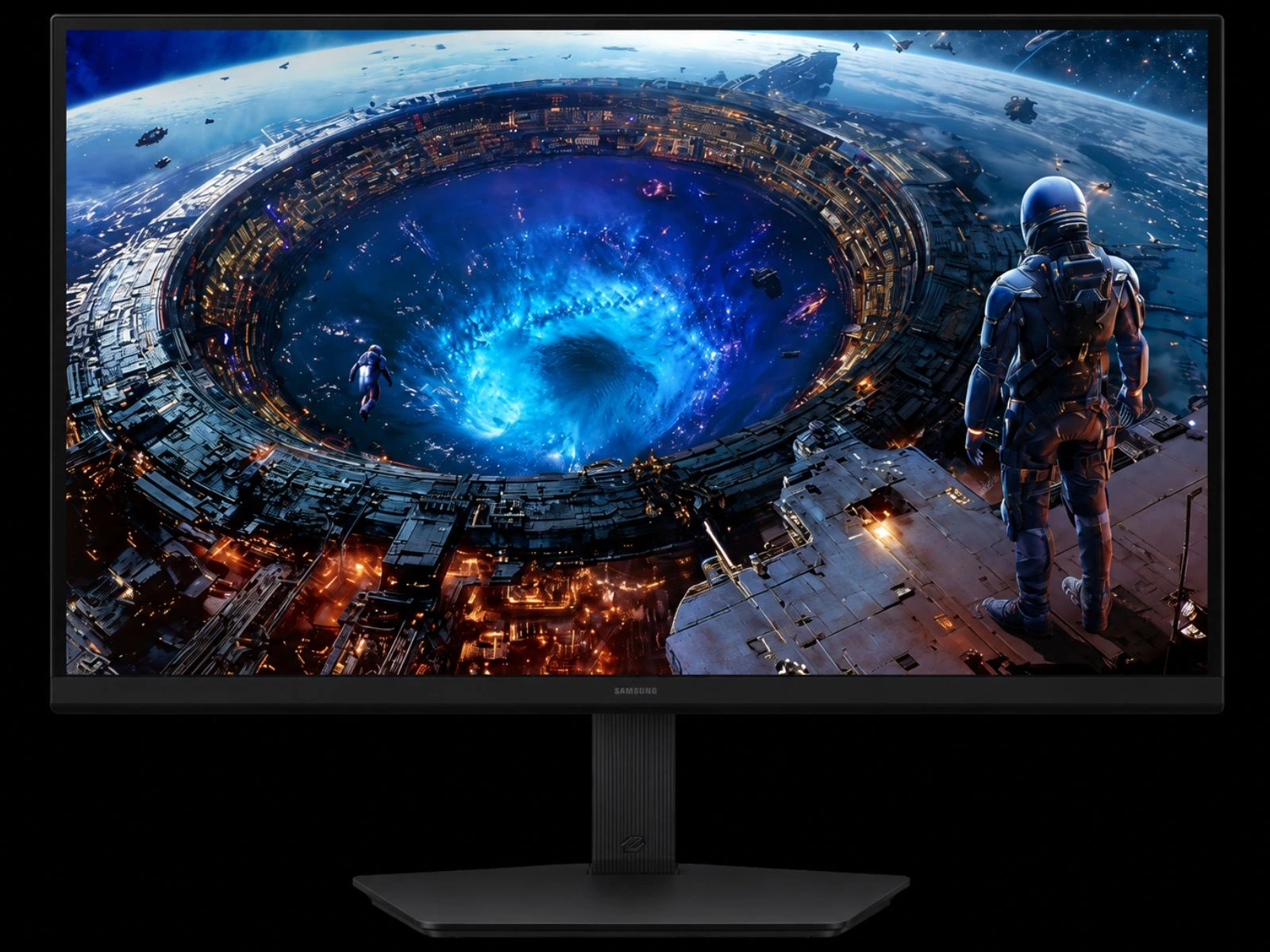
Samsung Odyssey G8
Tech

Samsung Unleashes the World’s First 6K Odyssey Gaming Monitor

Reading Time: 7 minutes

Share via

Our team of editors and experts thoughtfully chooses each product. If you decide to buy through one of our links, we may earn a commission.Learn more. Want to know how we test products? Click here for more details.

Samsung clearly isn’t interested in slowing down when it comes to gaming monitors. After recently digging into Samsung’s wider 2026 Odyssey gaming monitor lineup — where glasses-free 6K 3D and a frankly ridiculous 1,040Hz refresh rate stole most of the attention — Samsung is back with another display milestone worth looking at a little closer.

Leading the latest launch is the 32-inch Odyssey G8 G80HS, which Samsung calls the industry’s first 6K gaming monitor. But it isn’t arriving alone. Samsung has also launched a 27-inch 5K Odyssey G8, new 27- and 32-inch Odyssey OLED G8 models, and a 32-inch Odyssey OLED G7, giving gamers several very different ways into the company’s latest generation of high-end displays. The new models became available to order globally from May 20, 2026.
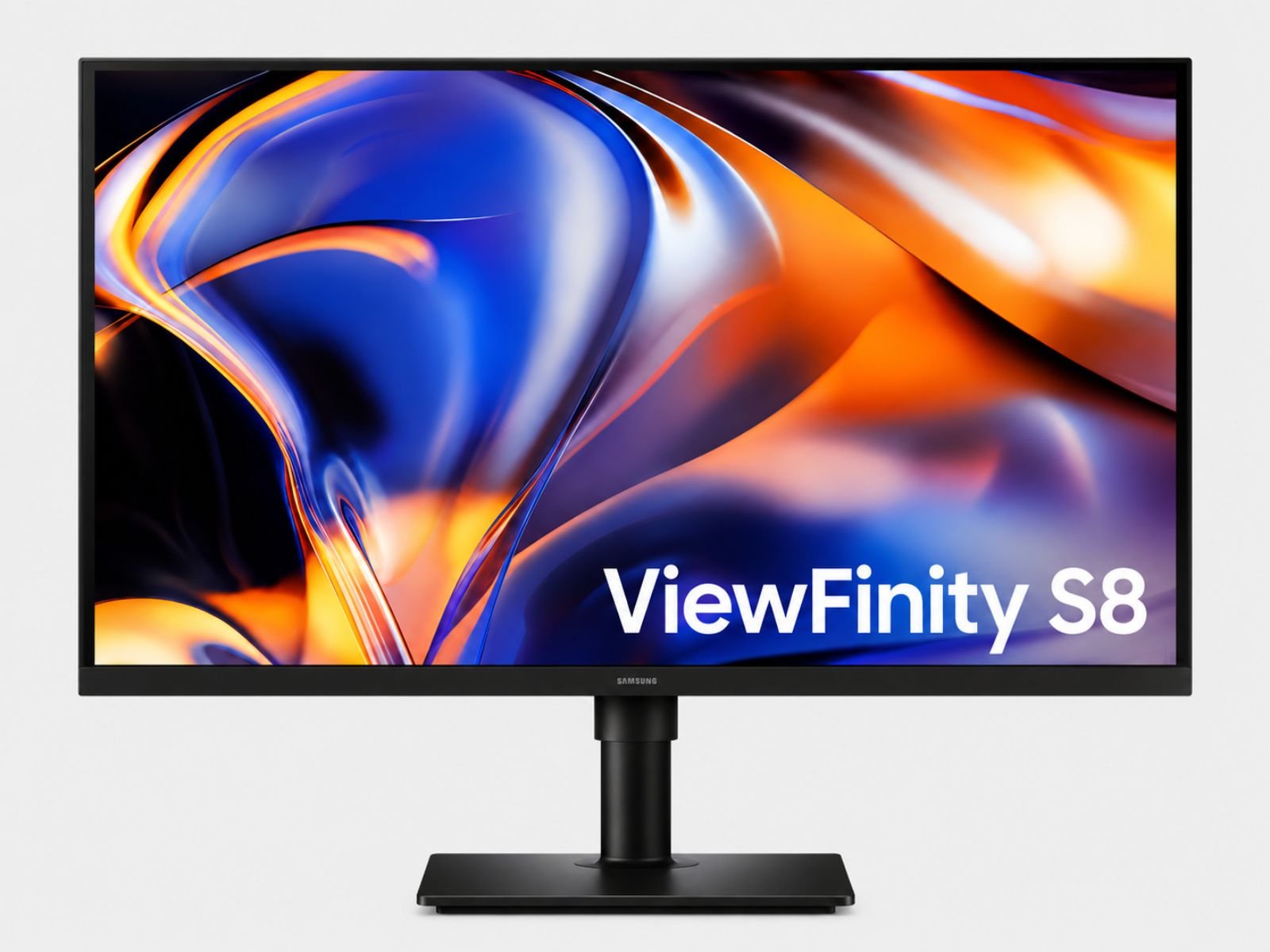
Samsung 27-Inch ViewFinity S8.jpg
Samsung 27-Inch ViewFinity S8 | Image: Samsung Newsroom

The headline attraction is undoubtedly the 32-inch Odyssey G8 G80HS. Samsung has pushed beyond the familiar 4K ceiling with a 6,144 × 3,456 resolution, giving the display far more pixels to work with and extra screen space that can be as useful for multitasking as it is for gaming. Samsung positions it as the industry’s first 6K gaming monitor, making this more than another incremental Odyssey refresh.

And Samsung hasn’t sacrificed refresh rate to get there. The G80HS can deliver its full 6K resolution at 165Hz, while Dual Mode lets you drop to 3K and double the refresh rate to 330Hz. That gives the monitor two distinct personalities: maximum detail when you want to disappear into a visually rich single-player game, or considerably more speed when responsiveness matters.

Of course, driving modern games at 6K and high frame rates will demand serious PC hardware. That’s where Dual Mode becomes particularly useful. Rather than forcing players to choose between a high-resolution monitor and a high-refresh-rate one, Samsung is trying to squeeze both experiences into the same display.

Not everyone needs to jump to 6K, and Samsung has another option just below it. The 27-inch Odyssey G8 G80HF runs at 5K resolution and 180Hz, giving you plenty of pixel density on a smaller panel while still maintaining a refresh rate well beyond the traditional 60Hz or 120Hz experience.
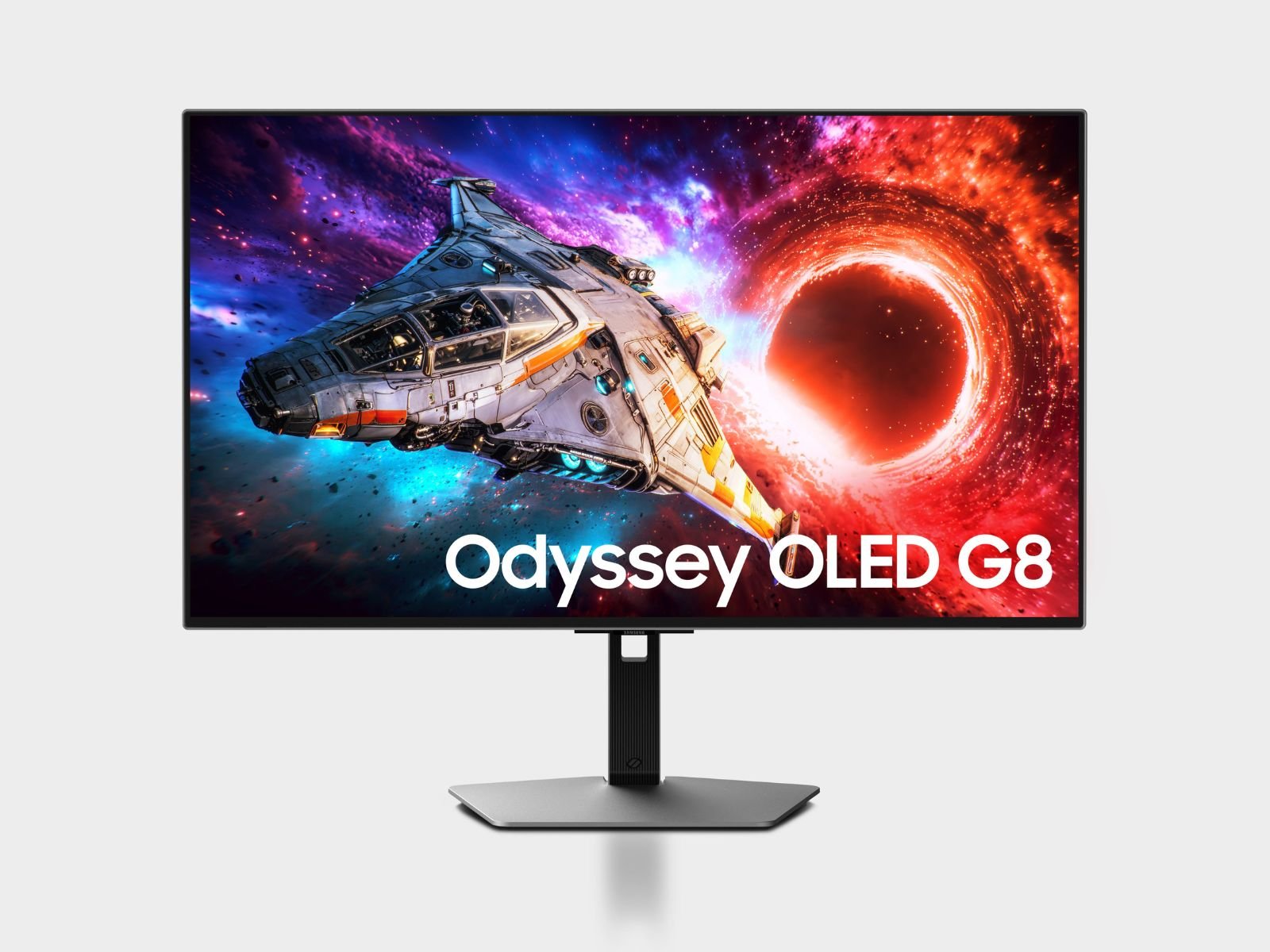
Samsung Odyssey OLED G8
Samsung Odyssey OLED G8 | Image: Samsung Newsroom

Once again, Dual Mode is where things get interesting. Switch the G80HF down to QHD, and the refresh rate doubles to 360Hz, making it a much more compelling option for players who bounce between cinematic games and competitive shooters.

It also gives Samsung a nice middle ground in the lineup. The 6K G80HS remains the showcase piece, while the smaller 5K model offers a slightly different balance of resolution, screen size, and speed without abandoning the new G8 family’s high-resolution focus.

If pure resolution doesn’t get you excited, Samsung is taking a different approach with the Odyssey OLED G8 G80SH. Available in 27-inch and 32-inch sizes, it keeps a familiar 4K resolution but pairs it with an OLED panel and a fast 240Hz refresh rate. For gamers who care more about deep blacks, punchy contrast and fast motion than jumping from 4K to 6K, this could actually be the more tempting G8.
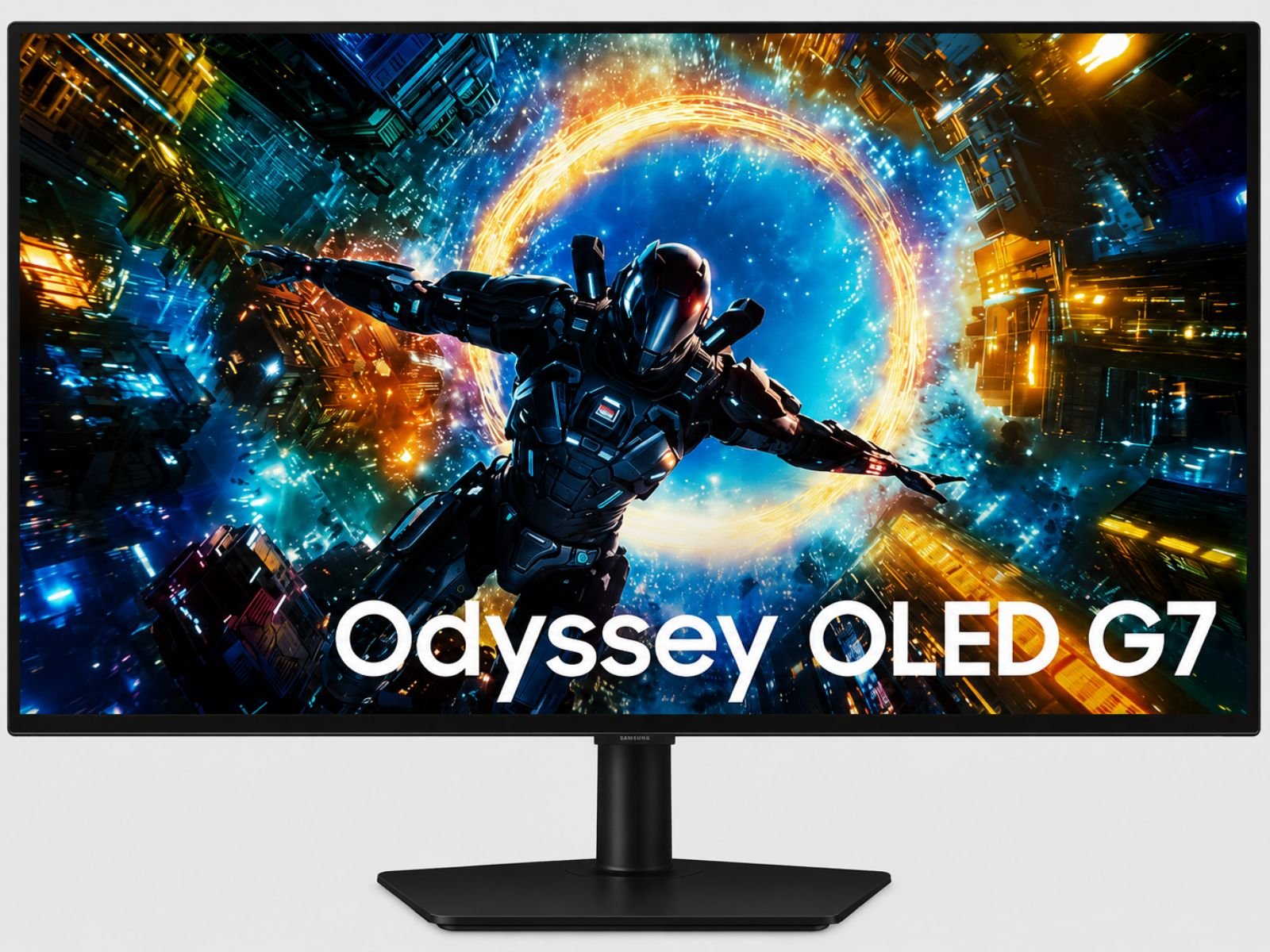
Samsung Odyssey OLED G7
Samsung Odyssey OLED G7 | Image: Samsung Newsroom

Samsung is also introducing its new QD-OLED Penta Tandem technology, which the company says improves brightness, efficiency and durability. Glare Free technology helps cut down reflections without sacrificing OLED picture quality, while USB-C can deliver up to 98W of charging — handy if you’re trying to keep a laptop-and-monitor setup relatively clean. The 32-inch model goes a step further with VESA DisplayHDR True Black 500 certification, promising the deep blacks and vibrant colours you’d expect from a premium OLED display.

Across the new Odyssey G8 lineup, Samsung includes DisplayPort 2.1, AMD FreeSync Premium, NVIDIA G-Sync Compatible and HDR10+ Gaming. HDR10+ Gaming dynamically optimizes brightness and contrast in real time, while FreeSync and G-Sync compatibility help keep gameplay smooth and minimize tearing when frame rates fluctuate.

Then there’s the 32-inch Odyssey OLED G7 G73SH, which brings some of that OLED goodness further down the Odyssey family. It combines 4K resolution with a 165Hz refresh rate, alongside a rapid 0.03ms response time. Samsung hasn’t forgotten Dual Mode here either: switch down to FHD and the monitor can push all the way to 330Hz, giving competitive players considerably more speed when they don’t need the full 4K experience.

That’s what makes these two OLED options interesting alongside the headline-grabbing 6K G8. Samsung isn’t betting everything on resolution. The OLED G8 delivers 4K at 240Hz with the more premium QD-OLED treatment, while the OLED G7 pairs 4K at 165Hz with the option of 330Hz at FHD. Throw the 6K and 5K G8 models into the equation, and Samsung’s new Odyssey range starts to look less like a simple upgrade and more like a lineup built around letting gamers decide exactly where they want to prioritize resolution, refresh rate, or OLED picture quality.
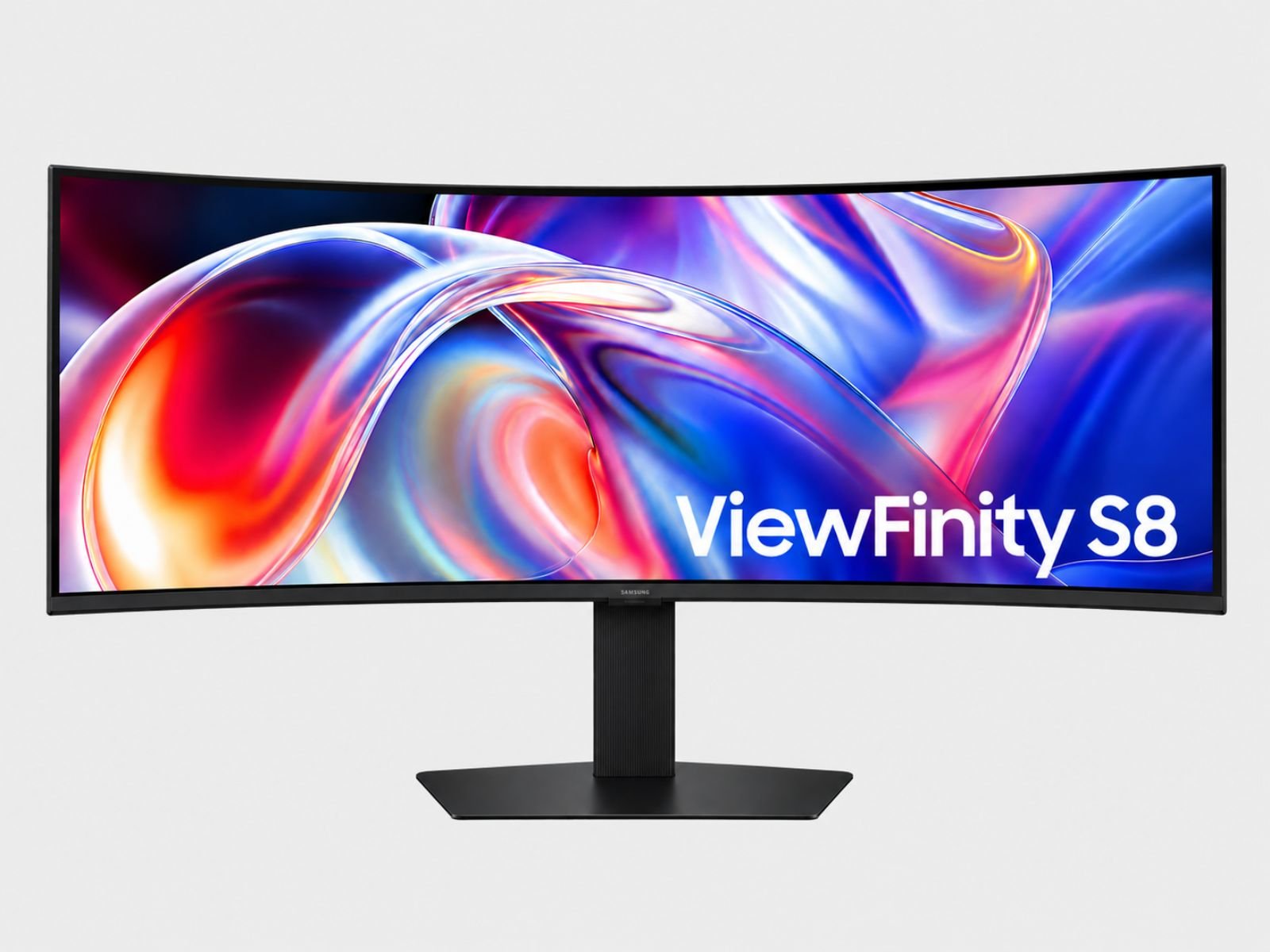
Samsung 40-Inch ViewFinity S8
Samsung 40-Inch ViewFinity S8 | Image Samsung Newsroom

The 6K G80HS is unquestionably the star, but Samsung’s latest Odyssey launch makes more sense when you look at the whole family. There’s the 32-inch G80HS delivering 6K at 165Hz or 3K at 330Hz, the 27-inch G80HF offering 5K at 180Hz or QHD at 360Hz, the 240Hz Odyssey OLED G8 in 27- and 32-inch sizes, and the 32-inch OLED G7 bringing 4K at 165Hz with the option to jump to 330Hz at FHD. Samsung also has plenty of reason to keep pushing — according to IDC figures the company cites, it holds an 18.9% revenue share of the global gaming monitor market and a 26% share of the OLED gaming monitor market.

The new Odyssey models became available to order in the U.S. on May 19, 2026, with the flagship 32-inch G80HS priced at USD $1,599.99. The 27-inch G80HF comes in at $949.99, while the 32-inch and 27-inch OLED G8 models are $1,299.99 and $1,099.99, respectively. The 32-inch OLED G7 is also $1,099.99. For most gamers, 4K certainly isn’t going anywhere, but Samsung’s new lineup gives us a good glimpse of what’s next — whether that’s 5K and 6K resolution, seriously fast OLED panels, or monitors that can switch between outright detail and outright speed.
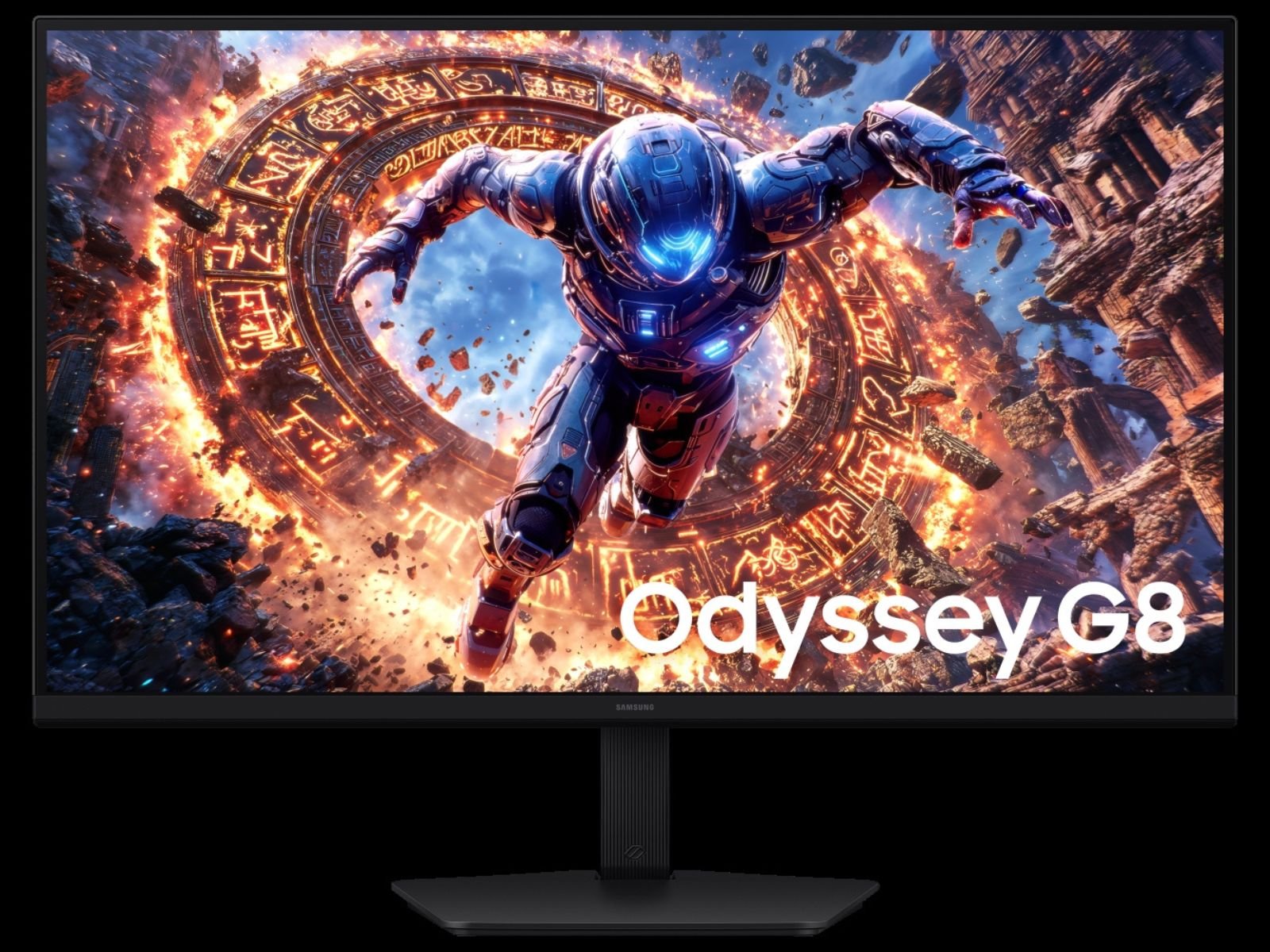
Samsung Odyssey G8
Samsung Odyssey G8 | Image: Samsung Newsroom

Samsung 2026 Odyssey Gaming Monitor Specs

Odyssey G8 (G80HS):

  • Size: 32-inch
  • Panel: IPS
  • Resolution: 6K
  • Pixel Density: 224 PPI
  • Refresh Rate: Up to 165Hz at 6K
  • Dual Mode: Up to 330Hz at 3K
  • Adaptive Sync: AMD FreeSync Premium, NVIDIA G-Sync Compatible
  • HDR: HDR10+ Gaming
  • Connectivity: DisplayPort 2.1
  • Price: USD $1,599.99

Odyssey G8 (G80HF):

  • Size: 27-inch
  • Panel: IPS
  • Resolution: 5K
  • Pixel Density: 218 PPI
  • Refresh Rate: Up to 180Hz at 5K
  • Dual Mode: Up to 360Hz at QHD
  • Adaptive Sync: AMD FreeSync Premium, NVIDIA G-Sync Compatible
  • HDR: HDR10+ Gaming
  • Connectivity: DisplayPort 2.1
  • Price: USD $949.99

Odyssey OLED G8 (G80SH):

  • Sizes: 27-inch / 32-inch
  • Panel: QD-OLED with Penta Tandem technology
  • Resolution: 4K
  • Refresh Rate: Up to 240Hz
  • Response Time: 0.03ms (GtG)
  • HDR: HDR10+ Gaming / VESA DisplayHDR True Black 500 (32-inch)
  • Adaptive Sync: AMD FreeSync Premium, NVIDIA G-Sync Compatible
  • Connectivity: DisplayPort 2.1, USB-C with up to 98W charging
  • Price: 27-inch — USD $1,099.99
  • Price: 32-inch — USD $1,299.99

Odyssey OLED G7 (G73SH):

  • Size: 32-inch
  • Panel: OLED
  • Resolution: 4K
  • Refresh Rate: Up to 165Hz at 4K
  • Dual Mode: Up to 330Hz at FHD
  • Response Time: 0.03ms
  • Price: USD $1,099.99

SamsungMonitors
About the Author

Related Articles

Advices

Making Friends as an Adult is Hard—Here’s How to Make It Easier

Reading Time: 10 minutes

Our team of editors and experts thoughtfully chooses each product. If you decide to buy through one of our links, we may earn a commission. Learn more. Want to know how we test products? Click here for more details.

Making friends as an adult can feel oddly complicated. As kids, all it took was a shared love of dinosaurs or trading snacks at lunch. Now? It’s calendar coordination, awkward small talk, and wondering if you’re being too eager or not enough. Add in work, family obligations, and the comfort of your own couch, and suddenly your social circle starts to shrink faster than your free time.

But here’s the thing—most people feel the same way. Adult life tends to place friendships on the back burner, even though meaningful connections remain just as important. The difference now is that making friends requires intention—and a little creativity.

This guide is here to help you navigate the maze. From turning acquaintances into genuine friends to finding people who understand you, we’re breaking down what truly works in forming adult friendships.

12 Ways To Make New Friends As Adult

Making friends as an adult might feel like a mystery, but it doesn’t have to be. You might want to expand your circle, build deeper connections, or just have someone to grab tacos with on a Tuesday night. These 12 practical (and doable) tips will help you build real friendships—without the awkwardness or overthinking. Let’s break it down.

1. Say Yes More Often

It’s tempting to decline that invite because you’re tired, not in the mood, or uncertain about who’ll be there. However, saying “yes” more often opens the door to unexpected connections. That casual work happy hour or trivia night at the bar could be where you meet someone who becomes part of your core crew.

No need to overcommit—just aim to show up occasionally. Making friends doesn’t happen when you’re always in your comfort zone (or your sweatpants). Growth and friendships often start with a simple “sure, I’ll come.”

2. Reconnect with Old Acquaintances

You don’t always have to start from scratch—sometimes, the next great friendship is someone already in your contact list. Reach out to that old classmate, former coworker, or gym buddy you haven’t spoken to. A simple message like “Hey, I was just thinking about that wild road trip we took back in college—how have you been?” can reignite a connection faster than expected. There’s already a layer of familiarity, and that shared past can make picking things up surprisingly easy.

3. Turn Hobbies Into Hangouts

Engaging in something you genuinely enjoy is already rewarding—but it becomes even better when it serves as a gateway to friendship. Whether it’s joining a local hiking group, participating in a weekend cooking class, or being part of a casual sports league, these shared-interest environments naturally foster conversation without the awkward pressure of small talk. You already have something in common, which makes it easy to connect. Plus, when you’re immersed in a hobby you love, you present your best self—and that’s the version of you that people want to discover.

4. Be a Regular Somewhere

Familiarity breeds connection. Becoming a “regular” at your local coffee shop, yoga class, or even your neighbourhood bar creates organic opportunities for small talk and fosters rapport with others who also frequent those places.

Over time, a simple “Hey, you again!” can turn into full conversations and eventually hangouts. It’s a subtle, low-pressure way to expand your social circle—no extra planning needed.

5. Host Something Low-Key

You don’t need to be the next great party planner to bring people together. Hosting something small—like a game night, movie screening, or potluck dinner—creates a space where connections can blossom naturally.

Even better? Invite people from different areas of your life. Sometimes, your old coworker and your gym buddy connect better than you expect. You might end the night with a stronger group of friends and leftover snacks.

6. Take the First Step

It might feel intimidating, but taking the initiative can be a game-changer. Ask a coworker if they want to grab lunch, message someone you had a great chat with at an event, or follow up with a “We should hang out sometime” that actually leads to plans. Most adults are just as hesitant as you are, but someone has to make the move—and chances are, they’ll be relieved you did. Friendships don’t just happen; they’re built one brave step at a time.

7. Use Apps and Online Communities

Yes, it might feel a little strange at first—but using apps to find friends is totally normal in today’s world. Platforms like Bumble BFF, Meetup, and even hobby-based Facebook groups are designed for exactly this purpose: helping like-minded people connect. You can filter by interests, location, and vibe, making it easier to find potential friends who actually fit your lifestyle.

Think of it as online dating—but for friendship, without the awkward “So… are we a thing now?” moment. It’s convenient, low-pressure, and a fantastic option if your offline world lacks opportunities to meet new people.

8. Be Curious and Ask Questions

A little curiosity goes a long way. When you ask genuine, thoughtful questions—beyond the usual “What do you do?”—you invite people to open up and feel seen. Try asking what they’re into lately, which book they just finished, or how they spend their weekends. These kinds of questions show that you’re not just making conversation—you’re making an effort.

Plus, when you focus on learning about the other person, it relieves the pressure on you. You don’t have to come up with witty one-liners or dominate the conversation. Just listen, react, and be present. Connection often starts with being genuinely interested.

9. Say Goodbye to the “Too Busy” Mindset

Everyone’s busy—jobs, errands, responsibilities—but if you keep waiting for the “perfect time” to connect, it might never come. The key is to treat friendship like any other priority. Even a quick coffee, a walk around the block, or a 15-minute check-in can make a significant difference. It’s not about finding loads of free time; it’s about being intentional with the time you have.

10. Be Consistent, Not Just Friendly

Making a great first impression is easy, but friendships aren’t built on one-off chats. If you only show up once and disappear, people won’t feel the connection has room to grow. Check in every so often, follow up on conversations, and make plans when you can. You don’t need to be in constant contact—just consistent enough that people know you’re genuinely interested. That steady presence is what turns casual acquaintances into actual friends.

11. Join a Class or Take a Course

Learning something new is one of the most natural ways to meet people. Whether it’s a cooking class, a language course, or a dance workshop, you’ll find yourself surrounded by others who are just as eager (or nervous) as you are. The shared experience creates an instant bond—plus, it gives you something to laugh about when the soufflé collapses or your salsa footwork goes sideways. It’s socializing with a side of skill-building.

12. Be Patient—But Keep Showing Up

Friendships don’t always spark instantly. Some take time, a few awkward hangouts, and a couple of “Are we friend-zoning each other?” moments before they find their rhythm. Don’t get discouraged if things don’t click right away. The key is to keep showing up—emotionally and physically. Continue to put yourself in spaces where connections can happen, stay open to different personalities, and trust that the right people will stick. Like anything meaningful in life, friendship takes time—and it’s worth the wait.

Why Don’t We Have Good Friends Anymore as We Get Older?

As we get older, the friendship landscape changes—sometimes without us even realizing it. In your 20s and 30s, life shifts into overdrive. Careers take off, people move for work or relationships, and schedules start filling up with meetings, errands, and commitments. The carefree hangouts that once felt effortless now require planning, coordinating, and occasionally, rescheduling three times before they actually happen.

Another big reason? Priorities change. When you’re balancing a full-time job, family life, or personal goals, friendships can unintentionally slip into the background. It’s not that the need for connection disappears—it’s just that adulting is time-consuming, and friendships start competing with a dozen other responsibilities.

There’s also the social side of things. Making friends as an adult can feel awkward, even intimidating. It’s hard to put yourself out there without feeling like you’re trying too hard—or worse, worrying if it’s “too late” to build new connections. And let’s be honest: when everyone seems like they’ve already got their crew, jumping in can feel like crashing a private party.

But here’s the reality: most adults feel the same way. A lot of people are craving deeper connections—they’re just unsure how to go about it. The good news? It’s never too late. Friendships in adulthood might take a little more intention, but they can be just as meaningful—if not more—than the ones we made back in school.

Why Does Making New Friends as an Adult Feel So Hard?

Making new friends as an adult isn’t just hard—it can feel downright weird. Gone are the days when friendships formed naturally in school hallways, on playgrounds, or during group projects. Back then, proximity and routine did the heavy lifting. These days, our lives are filled with structure, responsibilities, and tight schedules, leaving little room for spontaneous connection. And when you meet someone cool, there’s a strange dance of trying not to come off too strong—because adult friendships seem to come with invisible rules that no one really talks about.

There’s also the perception that everyone already has their circle. You might see people posting group photos or going on weekend getaways and assume they’ve got it all figured out socially. That feeling can make you second-guess putting yourself out there. But the truth is, many adults feel lonely or wish they had more close friends—they’re just not saying it out loud. Combine that silence with the pressure to appear “put together,” and it’s no wonder so many people quietly struggle to make new connections.

At the heart of it all, the desire for real friendship never fades—it just becomes harder to prioritize and act upon. But hard doesn’t mean impossible. It just means we have to be a little more intentional, a little more open, and a lot more accepting of the idea that it might take time. Once you realize that most people are in the same boat, reaching out feels a lot less intimidating—and a lot more worthwhile.

General FAQ’s

Why Is It So Hard To Make Friends After 30?

By the time you reach your 30s, most people are managing careers, relationships, families, and personal goals. Free time diminishes, routines become established, and individuals often invest their energy in existing relationships—resulting in fewer opportunities for new ones to develop organically.

How Do I Make Friends Without Feeling Awkward?

Start small. Focus on being curious, asking questions, and showing genuine interest. You don’t need to be the most charming person in the room—just be approachable and consistent. Most people appreciate the effort more than you realize.

Are Other Adults Struggling To Make Friends Too?

Absolutely. Many adults feel isolated or wish they had more meaningful friendships. You’re not alone in this, and chances are, the person you’re nervous to talk to is hoping for the same connection.

Where Can I Meet New People Outside Of Work?

Consider joining hobby-based groups, classes, community events, or volunteering. Apps like Bumble BFF and Meetup are also excellent options. Regular places such as gyms, dog parks, or cafés can become social hubs if you attend consistently.

How Long Does It Take To Build A Real Friendship?

There’s no fixed timeline. Some connections click instantly, while others may take weeks or even months of regular interaction to feel natural. The key is to show up consistently, be authentic, and allow the relationship to evolve without rushing it.

About the Author
arrow_drop_up