











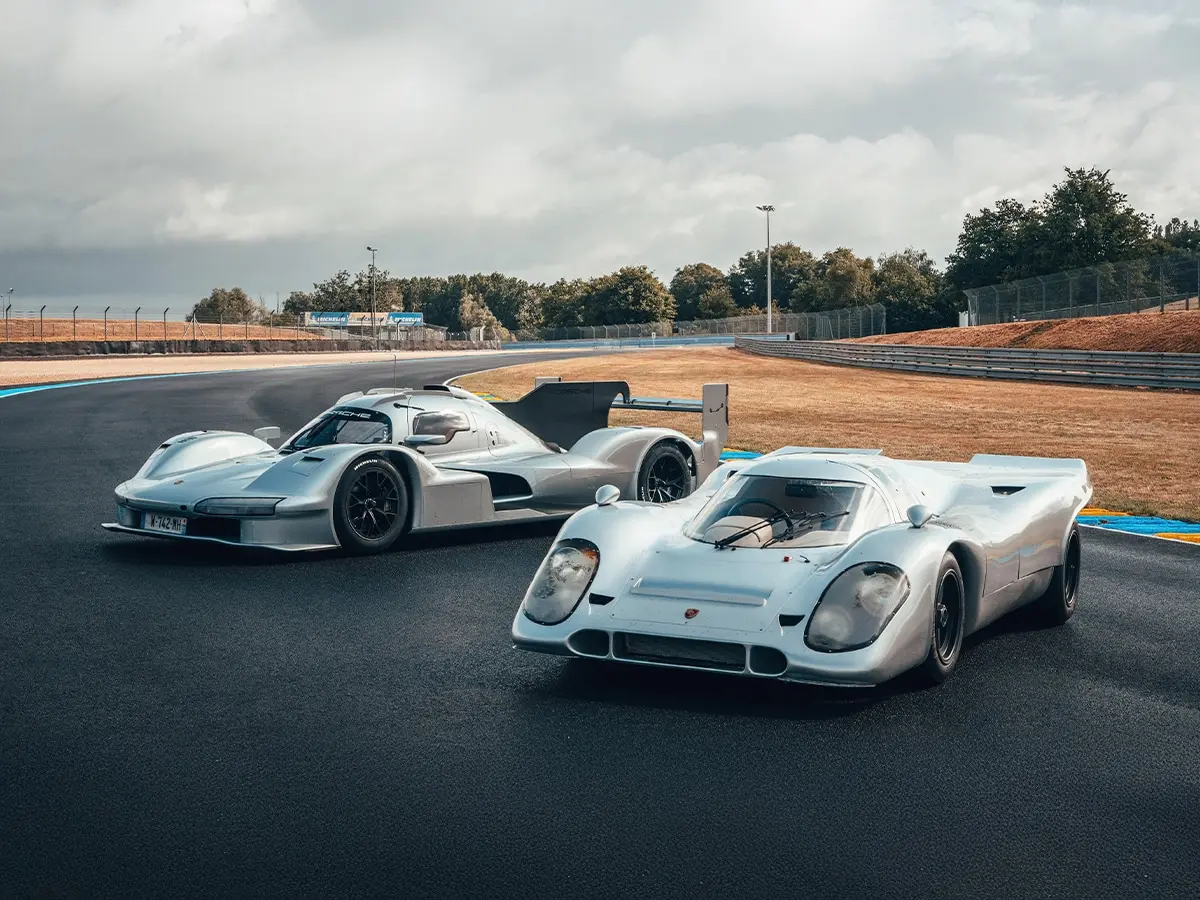

Porsche has never been shy about flexing its engineering muscles, but this time, they’ve created something that feels less like a car and more like a daring statement. In a bold move that has the motorsport world buzzing, the German brand unveiled a road-going interpretation of its ferocious 963 hybrid endurance racer. Built as a one-off for billionaire racing legend Roger Penske, the Porsche 963 RSP proves that sometimes the wildest ideas from racing garages can actually make it onto the street.
Highlights:
- The Porsche 963 RSP is a unique, road-legal version of its Le Mans-winning 963 race car, built exclusively for Roger Penske.
- Its design draws direct inspiration from the legendary 917, featuring a Martini Silver finish, enamel Porsche badge, and retro Michelin logos.
- A 4.6-litre twin-turbo V8 with hybrid technology generates 680 hp, providing acceleration nearly identical to that of the actual race car.
- Adjustable racing dampers, refined ECU mapping, and a tan leather interior provide the car with a comfortable balance.
- While Porsche hasn’t revealed the price, experts estimate it is in the multi-million-dollar range, making it one of the rarest and most expensive Porsches ever.

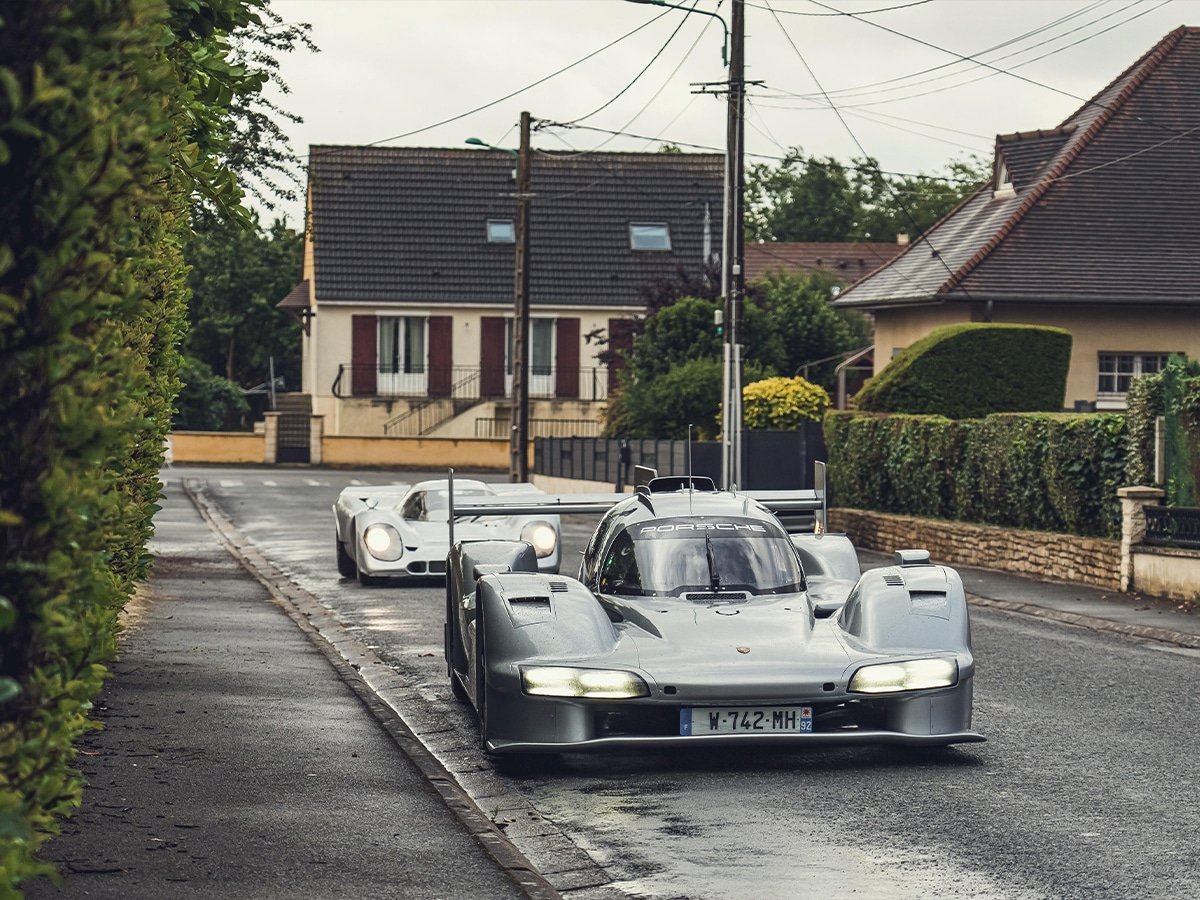
From the outside, the car looks like it rolled straight out of Le Mans and accidentally wandered into civilization. Yet behind its wild silhouette lies a story rooted in passion. “This really started out as a ‘what if?’ – a passion project by a small team of enthusiasts at Penske and Porsche who together imagined a version of the 963 that as closely as possible the spirit and appearance of the Count Rossi 917,” said Timo Resch, Porsche Cars North America president and CEO. “The 917 from the story was every inch a race car – albeit one driven on the road – and we took the same approach with the 963 RSP. It uses beautiful materials of the best quality available, but is still every bit a race car underneath.”
That reference to the 917 isn’t just marketing fluff. The legendary model is one of Porsche’s most iconic machines, remembered for its outrageous speed and dominance on the track. To create a spiritual successor, Porsche’s engineers needed to walk a fine line: stay true to racing DNA while adding just enough refinement for the road. The result? A machine that still feels like a prototype racer at heart, just with license plates.
Powering this monster is a 4.6-litre twin-turbocharged V8 derived from the RS Spyder race program. It’s not just a nod to Porsche’s past—it’s the same basic unit that later found its way, in naturally aspirated form, into the 918 Spyder hypercar. Here, though, it’s armed with turbochargers from Van der Lee and paired with a lithium-ion hybrid system, delivering a violent 680 horsepower. The acceleration is said to be so intense it borders on absurd, nearly matching the full-blown race car in sheer brutality.
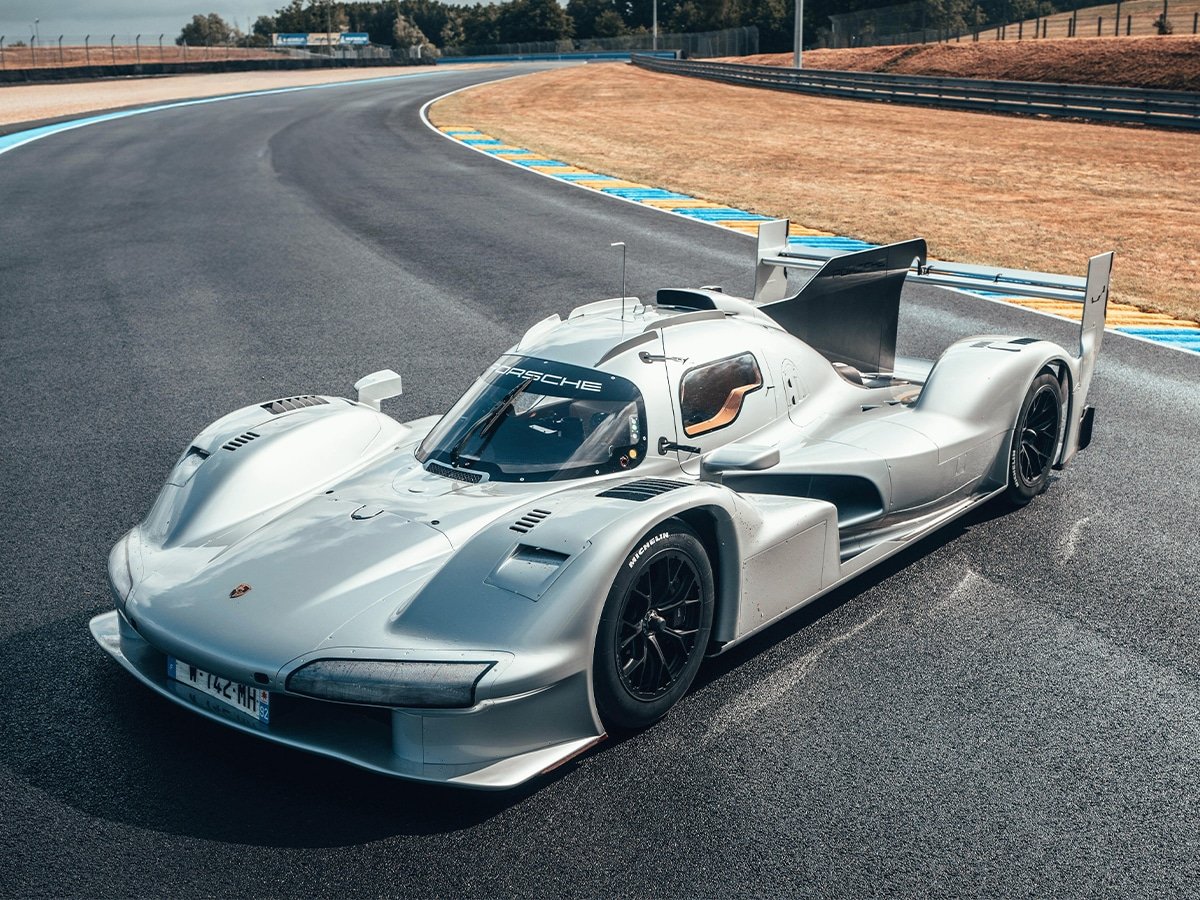
To make it survivable on real roads, Porsche did soften things ever so slightly. The ECU has been remapped to provide smoother power delivery, and adjustable Multimatic DSSV dampers—normally the preserve of racing prototypes—have been tuned to their gentlest settings. This means the 963 RSP won’t destroy your spine on a city commute, but don’t mistake it for comfort. This isn’t a Panamera in disguise. It’s still pure race-bred chaos with just enough civility to pass inspection.
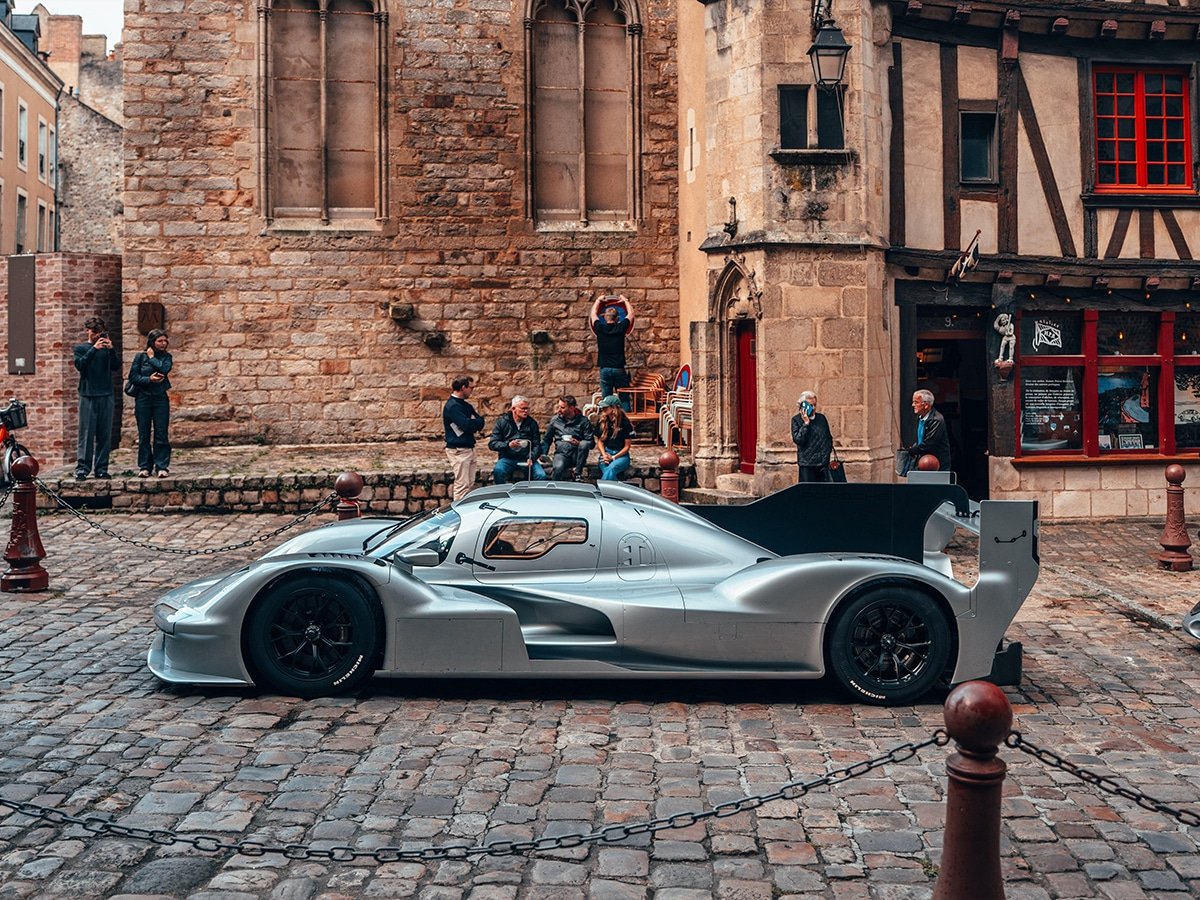
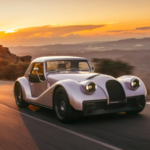
Visually, the homage to the 917 is crystal clear. The car features a “Martini Silver” finish, just like its spiritual predecessor, complemented by satin black trim and a subtle 3D-printed “963 RSP” badge on the rear. Compared to the standard 963, Porsche has made a few modifications to enhance its road presence: fender vents, carbon-fibre blanking plates within the rear wing, and enamel Porsche badging instead of simple decals. Even the tyres nod to the past, with retro 1970s-style Michelin logos wrapped around 18-inch wheels.
The single-piece carbon seat is trimmed in soft tan leather, the cabin materials are high-end, and, in a playful twist, there’s even a detachable 3D-printed cupholder. Sure, it won’t win any awards for practicality—luggage space is laughable—but this isn’t a car designed for grocery runs. It’s designed to thrill, impress, and maybe even terrify.
For Penske, the car is more than a vanity project—it’s a continuation of a decades-long partnership with Porsche. “We have enjoyed a terrific relationship with Porsche dating back to 1972. The Porsche 917/30 was one of the greatest eras in Team Penske history with numerous wins and championships, along with the closed-course speed record set by Mark Donohue in 1975,” said Roger Penske, chairman of the Penske Corporation.
“With such a remarkable partnership continuing to this day, we felt it was time to create the most exciting car we could imagine,” Penske continued. “Just like the 917, I wanted this car to be authentic to its origin and have as few changes to it as possible. When we got into the project, the differences in the two generations of race cars provided a great challenge. What emerged is a car that has lost none of its edge and is exciting whether on the track or on the road.”
Naturally, Porsche hasn’t revealed the price of this one-of-a-kind vehicle, but insiders indicate it could match the seven-figure sums commanded by the original 917. A custom, unique hypercar with this much heritage isn’t just costly—it’s priceless. For collectors, it embodies the ultimate goal: something unattainable elsewhere, built by one of the most renowned automakers in the world.
And perhaps that’s the true magic here. The 963 RSP isn’t about practicality or even logic. It’s about dreams. It’s about proving that a wild “what if?” can turn into an incredible reality. It’s about showing the world that Porsche still knows how to shock, delight, and inspire. Because at the end of the day, the only thing rarer than a race car for the road is a car that captures the imagination quite like this.