






















Our team of editors and experts thoughtfully chooses each product. If you decide to buy through one of our links, we may earn a commission. Learn more. Want to know how we test products? Click here for more details.
There’s nothing quite like the rush of bringing home a new timepiece. Whether it’s the reward for a milestone achieved, a carefully planned acquisition, or a spur-of-the-moment indulgence, every watch carries a story worth preserving. These aren’t just instruments of time—they’re works of art, feats of engineering, and lifelong companions. But as every collector knows, the journey doesn’t end once the watch is on your wrist—it begins with how you protect it.
That’s where WOLF comes in. For nearly two centuries, Simon Wolf and his family have perfected the art of safeguarding watches, creating winders, safes, and storage solutions that match the beauty and craftsmanship of the pieces they’re built to protect. A WOLF isn’t just a place to keep your watches; it’s a guardian that ensures they remain as flawless tomorrow as they are today.
WOLF EST 1834 | Image: Supplied
What makes WOLF truly special is its philosophy: protection should never compromise style. Each winder and safe is designed with the same meticulous attention to detail you’d expect from the world’s greatest watchmakers. Sleek finishes, precise engineering, and innovative technology combine to create storage that feels less like an accessory and more like an extension of your collection.
Because when you’ve invested in timepieces that represent centuries of horological mastery, trusting their care to anything less simply isn’t an option. With WOLF, you’re not just storing your watches—you’re preserving their legacy for the next generation, ensuring every story, every memory, and every tick lives on. Let’s take a closer look.
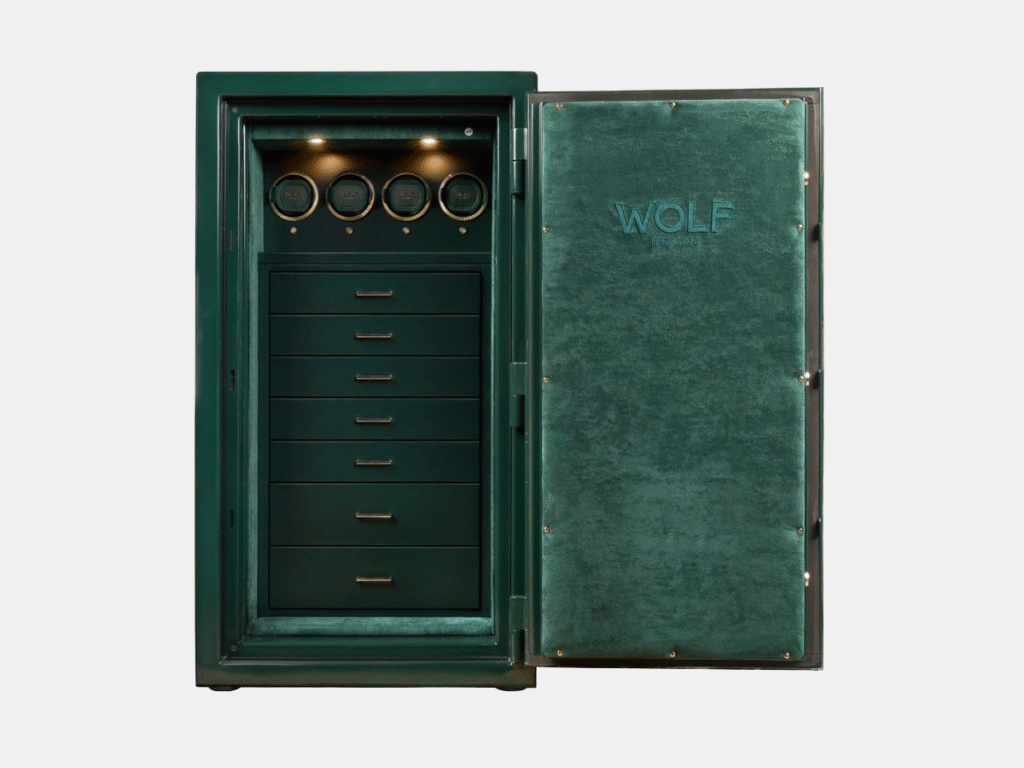
Atlas 4 Piece Winder Safe | Image: WOLF EST 1834
Atlas 4 Piece Winder Safe
The Atlas 4 Piece Winder Safe isn’t just a safe—it’s a fortress with style. Weighing 730 lbs (331 kg), it commands presence, yet its design remains as refined as the watches it protects. Available in a sleek Onyx or deep Green high-gloss finish, the exterior is complemented by WOLF’s signature 1834 LusterLoc™ ultrasuede interior, which is not only visually stunning but also engineered to preserve your timepieces, jewelry, and accessories. With seven pull-out drawers lined in LusterLoc™—three open, two for jewelry, and two for watches—this safe offers both ample storage space and a luxurious tactile experience.
Atlas features four patented WOLF winders, a system so precise it sets a new standard for watch care. Controlled via Bluetooth with an intuitive app, the winders enable you to set the exact Turns Per Day (TPD)—anywhere from 1 to 1,999. Unlike competitors who estimate rotations, WOLF guarantees each turn with patented technology, ensuring your watches are wound with perfect accuracy. Whether you prefer clockwise, counterclockwise, or bi-directional winding, the Atlas allows you to customize the winding cycle to suit each timepiece’s specific requirements.

Atlas 4 Piece Winder Safe | Image: WOLF EST. 1834
For collectors, flexibility is key, and the Atlas offers this with thoughtful features. A programmable start delay of up to 255 hours allows you to pause winding after wearing a piece, perfectly accommodating each watch’s power reserve. WOLF’s patented cuff and drum design also ensures watches of any size or strap style lock securely into place, holding each piece as safely as it deserves. It’s attention to detail like this that sets the Atlas apart from anything else on the market.
Of course, no luxury safe would be complete without peace of mind through protection. Independently UL certified, the Atlas is tested to withstand fires for up to 120 minutes at temperatures of 1,700°F (927°C), all while maintaining an interior temperature below 350°F—protecting delicate documents from damage. The Palusol® fire seal built into the door expands to eight times its size during extreme heat, sealing the safe completely. Additionally, the safe is designed to endure a 30-foot drop during testing, demonstrating resilience comparable to that of a Swiss bank vault.
Blending advanced engineering with distinctive elegance, the Atlas 4 Piece Winder Safe is more than just storage—it’s a protector of legacies. Available in Green with Gold accents, Onyx with Gunmetal, or Onyx with Chrome, it serves as both a statement piece and a secure safe. Priced at USD $29,925.00, it’s a worthy investment for the treasures it’s designed to guard.

British Racing Triple Watch Roll | Image: WOLF EST. 1834
British Racing Triple Watch Roll
If you’re travelling and looking for a solution that keeps your watches safe while still looking stylish, the British Racing Triple Watch Roll is perfect for you. Measuring 6.5″ (165mm), it securely holds up to three watches in a case wrapped in genuine pebble-grain leather, accented with gold hardware and subtle foiling details that reflect the spirit of classic British design. Inside, the soft suede lining gently cradles each timepiece, while two watch guards prevent movement or scratches.
What makes this roll even more versatile is the hidden jewelry capsule with three compartments, perfect for cufflinks, rings, or other small essentials you don’t want to leave behind. Paired with an adjustable enclosure to keep everything tight and secure, it’s a travel companion that’s as refined as the watches it protects. Whether tucked into your carry-on or displayed on your dresser, the British Racing Triple Watch Roll demonstrates that protection can be just as stylish as presentation—and it’s yours for USD $299.00.

British Racing Single Travel Watch Stand | Image: WOLF EST. 1834
British Racing Single Travel Watch Stand
Sometimes you just want a safe and stylish spot to rest your favourite daily watch—on a nightstand, a desk, or anywhere it’s easy to grab the next morning. That’s exactly what the British Racing Single Travel Watch Stand offers. Wrapped in genuine pebble-grain leather in the signature British Racing Green and lined with soft ultrasuede, it provides your watch with a secure resting place while protecting it from scratches or accidental knocks. Compact enough to slip into a bag, it’s the kind of piece that feels just as useful on the road as it does at home.
With its sturdy base, refined finish, and thoughtful WOLF craftsmanship, this stand makes caring for your watch effortless while still elevating the way you store it. Whether you’re travelling, working, or simply keeping your go-to piece on display, it combines practicality with understated elegance. Priced at USD $199.00, the British Racing Single Travel Watch Stand offers a simple yet luxurious way to keep your watch ready for wherever life takes you.
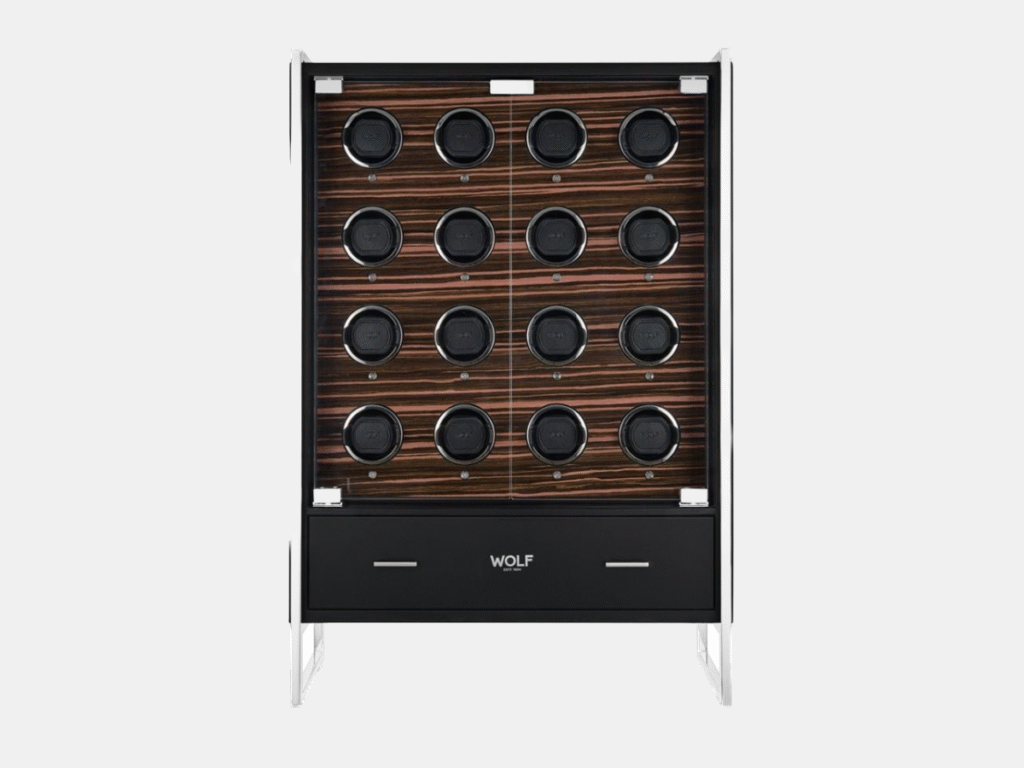
Roadster 16 Piece Watch Winder Cabinet | Image: WOLF EST. 1834
Roadster 16 Piece Watch Winder Cabinet
The Roadster 16. Piece Watch Winder Cabinet is designed for collectors who want their storage solution to be as eye-catching as their watches. Covered in pebble-grain vegan leather with Ebony Macassar wood panels and chrome accents, it exudes the sleek elegance of a classic British sports car, while the locking tempered glass doors turn it into a gallery-worthy display. Easily controlled through the WOLF1834 app, it offers Bluetooth connectivity that allows yours, customize settings, and even dim the LEDs at night for the ideal mood.
With the app, you can set Turns Per Day (TPD) anywhere from 1 to 1,999, select clockwise, counterclockwise, or bi-directional rotation, and even program a start delay of up to 255 hours to sync with your watch’s power reserve. Unlike other brands that estimate, WOLF’s patented technology guarantees precise TPD, while the lock-in cuff and drum system securely fit every strap and case size. A pull-out drawer offers storage for four extra watches and features a triple watch roll with a hidden jewelry capsule—proof that practicality and luxury go hand in hand.
For serious collectors, the Roadster is more than just storage — it offers peace of mind. It combines elegance with fortress-like security, cutting-edge innovation with refined design, and display-worthy presentation with thoughtful utility. Priced at USD $17,855.00, it serves as both protector and statement piece, ensuring every watch in your collection is safe, wound, and displayed in impeccable style.
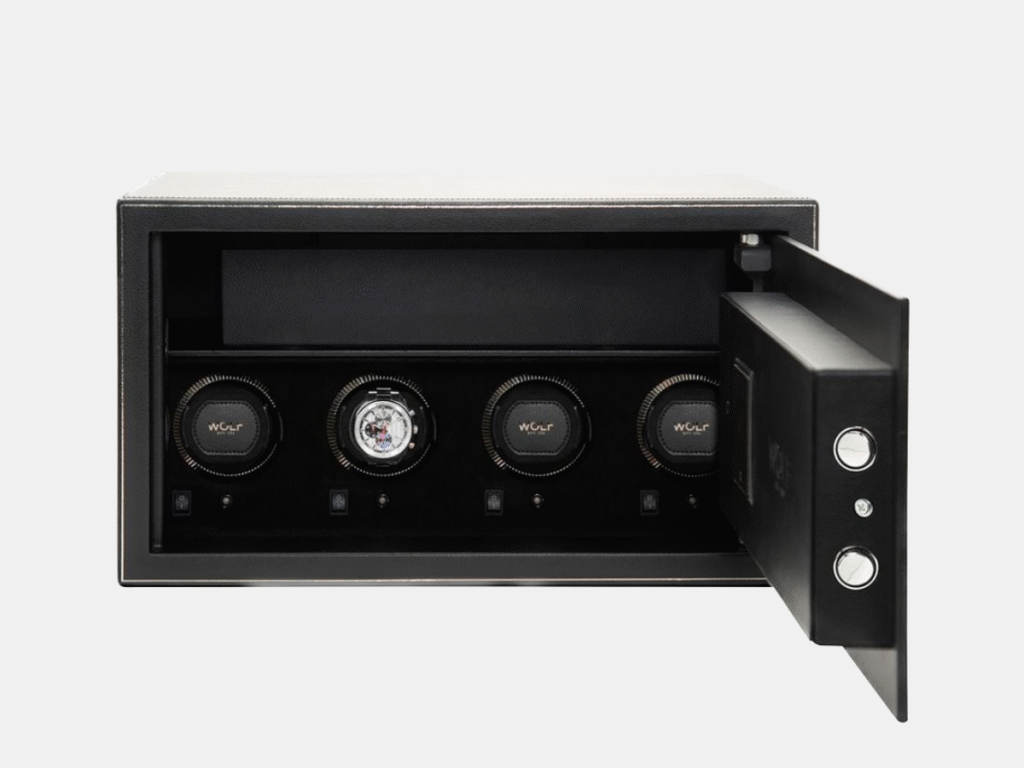
The Den 4 Piece Safe proves that compact can still mean uncompromising. Designed with collectors in mind, it combines refined aesthetics with the kind of engineering you’d expect from WOLF, offering both fortress-level security and meticulous watch care. Lined with a vault tray and a removable 3-piece watch tray, it doesn’t just store your collection— it elevates it, all while keeping your timepieces locked behind biometric or keycode access. With predrilled holes in the base and back, it anchors securely in place, making it as practical as it is sophisticated.
Inside, four patented WOLF winders provide precision. Unlike others that estimate, WOLF guarantees exact Turns Per Day with pre-programmed settings at 900 TPD, featuring intermittent rotation, pause, and sleep phases. Directional options include bi-directional winding, and a 10-second start delay suits recently worn watches. The patented lock-in cuff holds each watch securely, with low-density foam fitting all wrist sizes without damaging bracelets.
Each module can operate on AC power using the included universal adapter or on AA batteries—lithium options that last twice as long as alkaline—making it as versatile as it is secure. And with a price of USD $4,199.00, The Den 4 Piece Safe offers an accessible entry into WOLF’s world of high-security watch care, proving that true luxury lies in the details.
Elias Albay is the Founder and Director of Many Men Magazine, a Toronto-based digital publication dedicated to promoting modern masculinity through style, culture, and self-improvement. What started as a personal turning point became a purposeful platform. — born from Elias’ desire to create something meaningful after completing his studies and finding no career path that truly matched his ambitions. With a background in Civil Engineering from York University and experience in Commercial Flight Operations at CAE, he applied skills, and resilience from both fields to forge a new path.
Our team of editors and experts thoughtfully chooses each product. If you decide to buy through one of our links, we may earn a commission. Learn more. Want to know how we test products? Click here for more details
Protein is one of the three key macronutrients—along with carbohydrates and fats—that our bodies require for energy, growth, and overall well-being. Although carbohydrates and fats frequently take center stage in discussions about energy sources, protein plays an essential role in tissue construction and repair, as well as in the production of enzymes and hormones, and in supporting the immune system. Often referred to as “the building blocks of life,” proteins consist of amino acids and are present in muscles, organs, skin, and hair, underscoring their critical importance in sustaining a healthy body.
Whether you are an athlete striving for optimal performance, a busy professional juggling multiple tasks, or someone dedicated to enhancing their wellness, understanding your protein requirements is essential for effective nutrition. Protein plays a critical role in muscle recovery, boosting metabolism, and managing hunger. Your protein needs may vary based on factors such as age, gender, activity level, and specific health or fitness goals. For instance, athletes typically require a higher protein intake to support muscle repair and growth, whereas those with less active lifestyles may not need as much. Additionally, pregnant women and individuals recovering from illness may require more protein to promote optimal growth and recovery.
This guide explores the science behind daily protein requirements, details how to calculate your ideal intake, and presents strategies for increasing protein in your diet. By the conclusion, you will be equipped with insights and resources to tailor your nutrition for your health and fitness objectives. Are you prepared to fuel your body? Let’s discover how to fulfill your protein needs!
Arnold Schwarzenegger | Image: Supplied
Why Protein Is So Important?
Protein does more than just build muscles; it is vital for nearly every function of the body. It significantly contributes to the immune system’s strength, promotes healthy skin, hair, and nails, and helps regulate hormones and enzymes. The U.S. Department of Agriculture states, “Protein is involved in the production of hormones like insulin and thyroid hormones, which are crucial for metabolism and blood sugar control.” Without adequate protein, the body cannot function at its best. Beyond its physiological roles, protein is crucial for tissue repair and cell regeneration. “Protein is the cornerstone of cellular repair,” states nutritionist Jennifer Hines. “It’s vital for ensuring the body’s ability to recover, whether from exercise or everyday wear and tear.” This makes protein an essential nutrient, particularly for maintaining a healthy, well-functioning body.
Muscle Repair and Growth
Protein is essential for rebuilding and repairing muscle tissue. When you exercise, small tears occur in your muscle fibres. Protein aids in repairing these fibres, strengthening them and promoting muscle growth and recovery. That’s why consuming protein after workouts is important—your body requires these amino acids to initiate the repair process. Regularly consuming protein can also enhance muscle mass and strength, making it a crucial element of most fitness routines.
Enzyme and Hormone Production
Your body generates enzymes and hormones that manage digestion and metabolism, primarily derived from proteins. If protein intake is insufficient, the production of these vital substances is impaired. For instance, digestive enzymes are responsible for breaking down food, whereas hormones such as insulin regulate blood sugar levels. “Without sufficient protein, the synthesis of enzymes and hormones may be hindered, affecting digestion, metabolism, and overall bodily functions.” A lack of protein can lead to metabolic imbalances, which disrupt nutrient absorption, energy production, and general well-being.
Immune System Support
Proteins play a crucial role in creating antibodies that fight infections. Insufficient protein intake can compromise the immune system, increasing vulnerability to diseases. “Proteins form the basis of immune cells that detect and neutralize harmful bacteria and viruses” Consuming enough protein is essential for maintaining a strong immune system and protecting the body against illness.
Skin, Hair, and Nail Health
Protein is crucial for generating collagen and keratin, the key skin, hair, and nail elements. A lack of protein can compromise these tissues, resulting in brittle hair and nails and reducing skin elasticity. Collagen offers structural support to the skin, helping to retain its firmness and elasticity, whereas keratin fortifies hair and nails. “The body depends on protein to uphold the structural integrity of skin and hair, significantly affecting appearance and overall skin health” Adequate protein consumption keeps these tissues strong and healthy, promoting a vibrant and youthful look.
Optimum Nutrition Gold Standard 100% Whey | Image: Optimum Nutrition
What is Protein?
Protein is an essential macronutrient required for the growth, repair, and maintenance of body tissues. It is made up of amino acids, which are the building blocks for muscles, enzymes, hormones, and other critical biological elements. Inadequate protein intake can hinder your body’s ability to perform vital functions, including muscle recovery, immune support, and cell upkeep.
Proteins perform a variety of functions in the body, providing structural support and facilitating chemical reactions. “Proteins are involved in nearly every biological process and are crucial for maintaining cellular structures, growth, and repair. ” They play a role in almost every biological process, underscoring their importance to human health. Since the body cannot store protein like it does carbohydrates or fats, it is essential to intake protein through the diet to meet daily requirements consistently.
Beyond its structural and functional roles, protein plays a part in energy production as well. While carbohydrates and fats remain the primary energy sources for the body, protein can serve as fuel during periods of fasting, intense workouts, or when calorie intake is restricted. Additionally, having enough protein helps regulate appetite by increasing feelings of fullness, reducing cravings, and supporting weight management. Therefore, protein is a vital nutrient for muscle health and overall metabolic function, contributing to long-term well-being.
There are three primary types of proteins in the body, each serving distinct functions:
Fibrous Proteins: Offer structural support to cells and tissues. Notable examples are collagen, found in skin and connective tissues, and keratin, present in hair and nails. Generally insoluble in water, fibrous proteins play a crucial role in maintaining the body’s structural integrity.
Globular Proteins: Globular proteins are water-soluble and essential for biological functions. They include enzymes that catalyze reactions and hemoglobin for oxygen transport. Many hormones, such as insulin, are also globular proteins regulating bodily processes.
Membrane Proteins: Proteins in cell membranes are crucial for communication. They transport substances, act as receptors for signalling molecules, and regulate immune responses. Key examples include ion channels and receptor proteins, facilitating interactions and maintaining homeostasis.
Types Of Proteins | Image: EatingWell
Types Of Protein
Protein is an essential and versatile nutrient that performs a variety of functions in the body. Various types of protein offer unique benefits and different levels of essential amino acids. To achieve a balanced diet, including a range of protein sources is crucial. Particularly, animal protein stands out as one of the most common and effective choices.
Animal Proteins
Animal protein is valued for its genetic similarities to humans, providing a complete source of essential amino acids in ideal proportions. “Animal proteins are considered complete proteins because they contain all nine essential amino acids that the body cannot synthesize.” This characteristic supports digestion and is crucial for muscle fibre growth. Common foods high in animal protein include:
Red Meat
Eggs
Fish
Dairy
Animal protein plays a significant role in the health of muscles, tendons, and organs. However, it’s crucial to recognize that there are other effective methods to increase your protein intake.
What Is Plant Proteins & How Is It Used? | Image: The Spruce Eats
Plant Proteins
For those who wish to avoid meat or dairy, there are numerous plant-based options available to satisfy your protein requirements. Many plants and plant products are naturally rich in protein, including:
Seitan
Tofu
Lentils
Chickpeas
Green peas
Quinoa
Soybeans
Nuts
Plant-based options provide a great way to boost protein intake while avoiding animal products. In addition to protein, they are packed with vital nutrients like fibre, vitamins, and minerals, which contribute to a healthy, balanced diet. Whether you’re a vegetarian, vegan, or just trying to cut back on animal products, these alternatives help fulfill your protein requirements.
Protein Supplements | Image: 1mg
Protein Supplements
Incorporating protein supplements into your diet is another effective way to boost your daily protein intake. Protein powders make it easy to reach your protein goals quickly and efficiently, often with minimal effort. “Athletes and fitness enthusiasts commonly use protein supplements to enhance muscle recovery and support overall dietary needs.” Furthermore, many protein supplements are low in carbohydrates and calories, making them convenient for those monitoring their overall intake. Common types of protein supplements include:
Protein concentrates
Protein isolates
Protein hydroisolates
Here’s Why It’s Important To Stay Hydrated | Image: JEFIT
How Much Protein Should You Have?
Your daily protein needs vary based on age, gender, activity level, and health objectives. While general recommendations exist, it’s vital to customize your intake according to your unique situation. For example, someone looking to gain muscle requires more protein than someone whose goal is to preserve their current weight. Your protein intake should align with your lifestyle and support your health or fitness goals, whether that’s losing weight, building muscle, or maintaining overall wellness.
Recommended Daily Intake
The Recommended Dietary Allowance (RDA) for protein is set at 0.8 grams per kilogram of body weight for the average adult. For instance, a person weighing 70 kg (154 lbs) needs about 56 grams of protein each day. This amount is sufficient for most inactive adults to maintain essential bodily functions. However, the RDA is intended for an average individual; those with specific circumstances—like athletes or individuals recovering from an illness—might require more. It’s crucial to acknowledge that the RDA serves as a foundational guideline, and individual needs can vary based on one’s lifestyle and health conditions.
Adjusting Protein Based On Activity Level
Sedentary Individuals
If you have a mostly inactive lifestyle, the recommended daily allowance (RDA) for protein generally meets your health needs. Your body’s requirement for protein does not rise significantly in the absence of regular exercise. Nonetheless, even with minimal activity, sufficient protein intake is crucial for enhancing metabolism, preserving lean muscle mass, and ensuring proper bodily functions.
Active Individuals
Regular exercisers require more protein. The American College of Sports Medicine advises athletes to consume 1.2 to 2.0 grams of protein per kilogram of body weight, varying with training intensity. Those engaged in rigorous workouts or endurance activities should aim for the higher end of this spectrum to aid muscle repair and growth. Since regular exercise diminishes the body’s protein stores, it’s essential to replenish them through diet for optimal recovery and performance. For instance, a 75 kg (165 lbs) athlete may need between 90 and 150 grams of protein daily, depending on their activity level.
The organization recommends that individuals participating in regular activities like running, cycling, or swimming should intake 1.2 to 1.4 grams of protein per kilogram of body weight daily. For strength-trained athletes, including powerlifters, the requirement increases to about 1.6 to 1.7 grams per kilogram. Here is a straightforward summary of the suggested protein intake according to activity level:
Sedentary – Multiply by 0.5
Light activity – Multiply by 0.6
Moderate – Multiply by 0.7
Active – Multiply by 0.8
Very Active – Multiply by 0.9
Athlete – Multiply by 1.0
Older Adults
As we get older, our muscle mass decreases, and our bodies become less efficient at using protein. Older adults could benefit from raising their protein intake to about 1.0 to 1.2 grams per kilogram of body weight to combat this. This increase supports the preservation of both muscle mass and strength. Consuming more protein also helps maintain muscle health and enhances bone density, which are crucial as we age. Furthermore, a diet rich in protein can assist in recovery from illness or surgery, reducing muscle loss and promoting quicker healing.
Meal Prep Ultimate Guide | Image: Fit Meals 4U
Protein for Weight Loss
For weight loss, protein is essential for reshaping your body and losing excess weight. However, simply increasing protein intake won’t guarantee weight loss. Studies indicate that a higher protein consumption can enhance metabolism, leading to greater calorie burning. The U.S. Department of Agriculture states, “Increasing protein intake can raise your metabolic rate by about 80-100 calories per day, making it easier to maintain a calorie deficit and lose weight.” Nonetheless, the benefits of protein extend beyond merely boosting metabolism.
One of the most notable advantages of a protein-rich diet is its capacity to suppress hunger. Protein not only supports muscle mass but also helps you feel fuller for longer, meaning you’re less likely to overeat or snack between meals. “Protein is like a hunger suppressant in disguise,” says registered dietitian Emily Hines. “By providing lasting satiety, it helps prevent those late-night cravings and the mindless snacking that can add unnecessary calories.” According to a study published in PubMed Central, participants who increased their protein intake to 25% of their daily calories experienced a significant reduction in appetite and a 60% decrease in food cravings.
For those serious about losing weight, protein is a valuable tool. It’s not just about increasing your protein intake but also ensuring that you’re selecting nutrient-dense sources. Whether you’re following a specific diet plan, such as intermittent fasting or the ketogenic diet, protein plays a vital role. As Hines notes, “If you’re looking to lose weight, focus on a higher intake of protein. It helps curb your appetite while providing essential nutrients your body needs to stay strong.” In short, protein isn’t merely a food; it’s a powerful ally in any weight loss journey.
By incorporating more protein-rich foods into your diet, you will support muscle growth and gain better control over your calorie intake, making it easier to achieve your weight loss goals. When protein becomes a central part of your meals, weight loss shifts from being about restriction to focusing on nourishing your body with the right nutrients.
Common Protein Mistakes & Misconceptions | Image: Rolling Out
Common Protein Mistakes and Misconceptions
Protein is essential for muscle growth, metabolism, and general health. However, many individuals often make familiar errors while adding it to their diets. Miscalculating portion sizes, depending excessively on supplements, or ignoring concealed ingredients can hinder progress toward weight loss and fitness objectives.
Eating Too Much Protein – It’s a common misconception that consuming more protein guarantees better results; however, surplus protein can convert to fat if not utilized for energy. Rather than fixating exclusively on the amount, finding a balance between protein consumption and total calorie requirements is crucial for preventing unnecessary weight gain.
Ignoring Hidden Sugars in Protein Supplements – Many protein shakes and bars have added sugars and artificial ingredients that can hinder weight loss. Opting for low-sugar, high-quality protein sources supports maintaining a calorie deficit while still fulfilling nutritional needs.
Relying Too Much on Shakes – While protein shakes are convenient, they shouldn’t replace whole foods. Whole foods require more energy to digest, which can help enhance metabolism. Lean meats, eggs, fish, and legumes offer essential nutrients that protein powders often lack.
By steering clear of these common errors and making wiser protein selections, you can enhance your weight loss efforts while promoting muscle growth and overall health.
General FAQ’s
Can I Get Enough Protein From Plant-Based Foods?
Yes, Plant-based foods like lentils, beans, quinoa, tofu, and nuts are excellent sources of protein. By combining different plant foods, you can ensure you’re getting all nine essential amino acids.
Is There Such a Thing as Too Much Protein?
While protein is essential for health, consuming excessive amounts (typically above 2.0g/kg) can put a strain on your kidneys, especially if you have preexisting kidney issues. It’s best to stick to your individual protein needs.
How Do I Know If I’m Eating Enough Protein?
You can track your protein intake using apps like MyFitnessPal or consult with a dietitian. Look out for signs like muscle loss, fatigue, or frequent illness, which may indicate insufficient protein.
What Are the Best Protein Sources for Weight Loss?
Lean protein sources like chicken breast, turkey, tofu, and fish are excellent for weight loss because they are low in fat and calories but high in protein, which helps keep you feeling full longer.
Can Protein Help with Muscle Growth?
Yes, consuming enough protein is crucial for muscle repair and growth, particularly after strength training or vigorous physical activity. Try to eat protein within 30 minutes to an hour following your workout to enhance muscle recovery.
Citations
U.S. Department of Health and Human Services. (2020). Protein and Your Health. Retrieved from www.health.gov
American College of Sports Medicine. (2016). Protein Requirements for Athletes. Medicine & Science in Sports & Exercise, 48(4), 676-683.
National Institutes of Health. (2019). Dietary Protein and Its Role in Healthy Skin. Retrieved from www.nih.gov
Harrison, R., Smith, T., & Johnson, P. (2017). Protein’s Role in Cellular Function and Growth. BioChem Journal, 342(2), 311-319.
Schoenfeld, B. J., & Aragon, A. A. (2018). The Role of Protein in Weight Management and Health. Journal of the International Society of Sports Nutrition, 15(1), 1-12.
Harvard T.H. Chan School of Public Health. (2020). Animal vs. Plant Protein. Retrieved from www.hsph.harvard.edu
Zhao, X., Liu, L., & Wang, Z. (2018). Protein Supplementation for Enhancing Muscle Recovery. Sports Medicine, 48(1), 55-70.
American Dietetic Association. (2016). Protein Needs and Sources. Journal of the Academy of Nutrition and Dietetics, 116(6), 975-981.
Elias Albay is the Founder and Director of Many Men Magazine, a Toronto-based digital publication dedicated to promoting modern masculinity through style, culture, and self-improvement. What started as a personal turning point became a purposeful platform. — born from Elias’ desire to create something meaningful after completing his studies and finding no career path that truly matched his ambitions. With a background in Civil Engineering from York University and experience in Commercial Flight Operations at CAE, he applied skills, and resilience from both fields to forge a new path.