






















Some cars are parked in garages. These, however, reside in history books. With legendary racetrack triumphs and designs that transformed entire eras, the world’s most iconic cars have become more than machines — they are cultural artifacts with price tags that can compete with private islands.
On this list, only seven marques made the cut — and no surprise, Ferrari and Mercedes-Benz lead the charge, backed by their rich racing legacies and once-in-a-lifetime rarities. But tucked between them are some serious curveballs: think Aston Martins, Alfa Romeos, and even a few ultra-rare McLarens that demonstrate newer metal can still command big numbers. The all-time record? A 1955 Mercedes-Benz 300 SLR Uhlenhaut Coupé that shattered expectations with a sale price exceeding €135 million. And the runner-up? Sold recently in February 2025, it serves as a reminder that big finds are still out there.
This isn’t just a lineup of expensive cars — it’s a countdown of legends. So pour yourself something neat, sit back, and explore the 20 most iconic and expensive cars ever sold. Just don’t be surprised if you find yourself Googling “barn finds near me.”
- Record-Breaker: The 1955 Mercedes-Benz Uhlenhaut Coupé is the most expensive car ever sold at €135 million.
- Ferrari Heavyweight: Ferrari leads rankings with several 250 GTOs, 290 MMs, and other rare models exceeding $20 million each.
- British Icons: Aston Martin and Jaguar excel with Le Mans racers like the DBR1 and D-Type, both commanding eight-figure prices.
- Pre-War Legends: Alfa Romeo and Duesenberg showcase stunning pre-WWII craftsmanship with art-deco styling and racing pedigree.
- Modern Marvels: The McLaren F1 — standard and LM-Spec — embodies top analog performance and breaks records years after its debut.
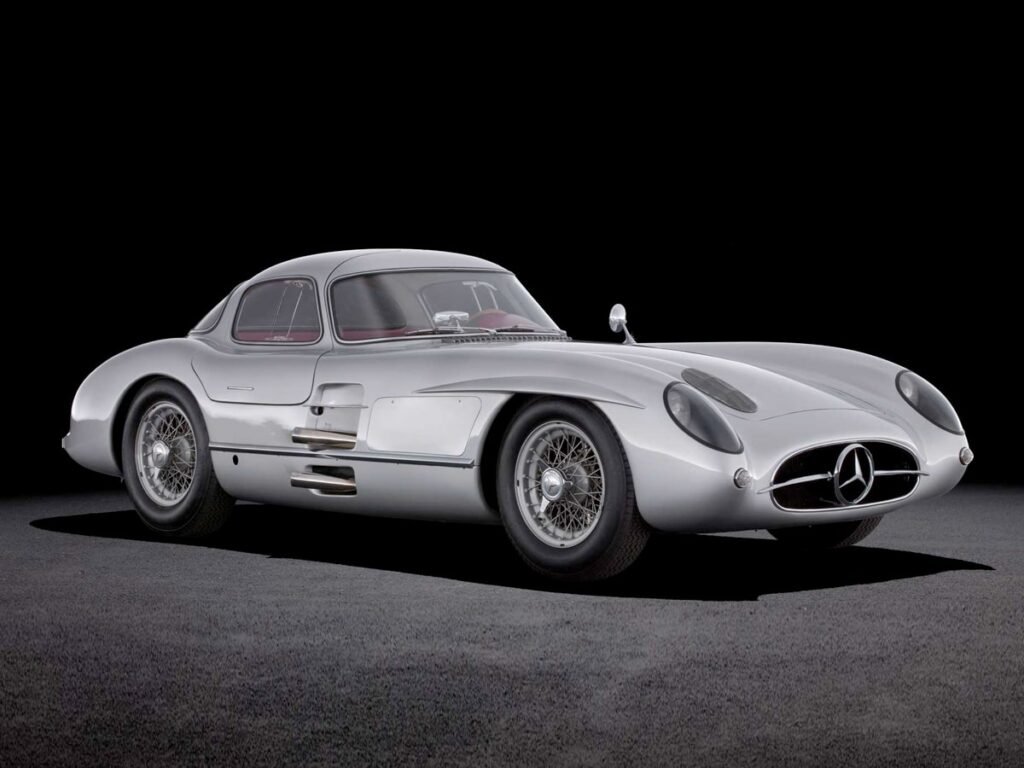
- Brand: Mercedes-Benz
- Model: 300 SLR Uhlenhaut Coupé
- Chassis Number: 196.110-00008/55
- Engine: 3.0L straight-eight
- Horsepower: 302 hp
- Top Speed: 180 mph – 290 km/h
- Notable Achievements:
- Most expensive car sold; one of two in existence; linked to Formula 1 and Mille Miglia heritage.
This 1955 Mercedes-Benz 300 SLR Uhlenhaut Coupé is more than just a car — it’s an icon born from the crucible of endurance racing, reshaped into the ultimate road-going prototype. Engineered by Rudolf Uhlenhaut himself, the car was essentially a racing skeleton featuring gull-wing doors, an uncompromised driving position, and an interior where mechanical function takes priority over luxury. Even the accelerator pedal is wrapped in leather — not for style, but to prevent your foot from slipping at 290 km/h.
Regarded as one of the most beautiful cars ever created, it was also the fastest road-legal car in the world at its launch, achieving speeds thought unattainable during the 1950s. It boasts a 3.0-litre front-mounted straight-eight engine paired with twin side-exit exhausts, enhancing both its visual and auditory appeal. This particular chassis was restoration in 1988 by racing expert Tony Merrick, and when it was auctioned in 2022, a notable detail emerged: it was the sole 300 SLR in private ownership. The rest? Safely locked away in the Mercedes-Benz collection.
It ultimately hammered for €135 million (~ USD $143 million) — a record-shattering figure that placed it a massive €83 million ahead of second place. This is not just a car; it’s a once-in-a-lifetime chance to own a rolling relic of motorsport innovation.
- Brand: Mercedes-Benz
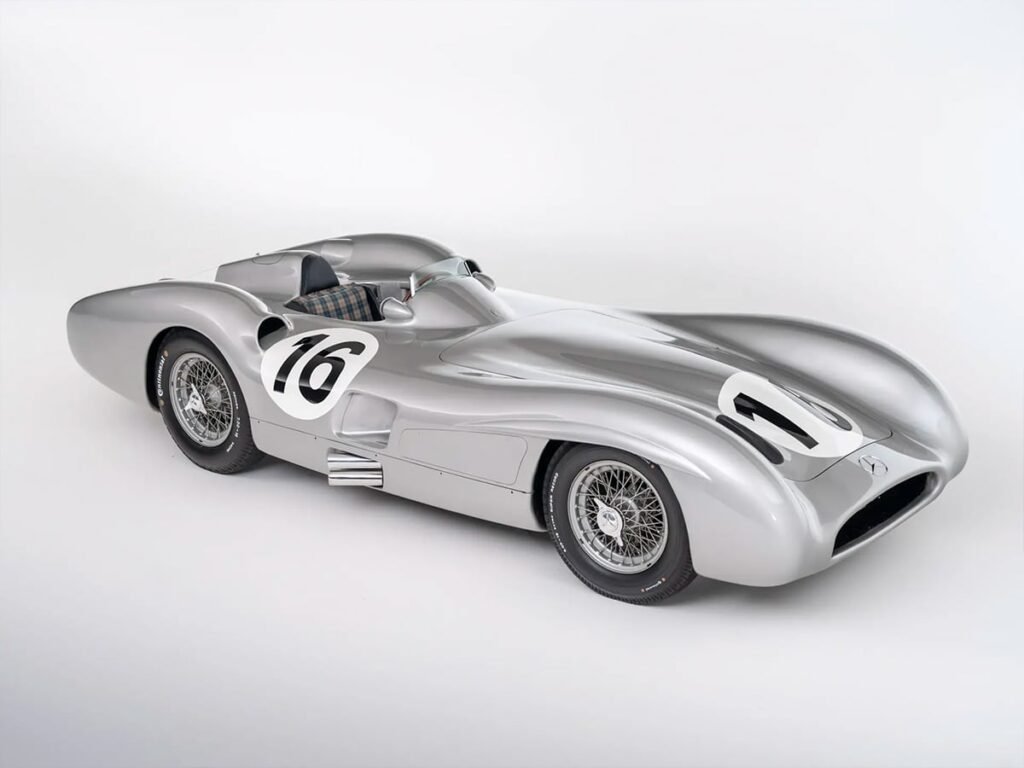
- Model: W 196 R Stromlinienwagen
- Chassis Number: 00006/54
- Engine: 2.5L straight-eight
- Horsepower: 290 hp
- Top Speed: 186 mph – 300 km/h
- Notable Achievements:
- Fastest lap: 1955 Italian Grand Prix (Stirling Moss)
- 1st place: 1955 Argentine Grand Prix (Juan Manuel Fangio, Stirling Moss)
- 1st, 2nd place: 1955 Belgian Grand Prix (Juan Manuel Fangio, Stirling Moss)
- 1st, 2nd place: 1955 Dutch Grand Prix (Juan Manuel Fangio, Stirling Moss)
The latest entrant to the elite tier of the world’s most expensive cars is yet another Uhlenhaut creation — the 1954 Mercedes-Benz W 196 R Stromlinienwagen, which sold for €51,155,000 at RM Sotheby’s in February 2025. Alongside the Uhlenhaut Coupé that holds first place, this Streamliner shares more than a badge. Both cars hail from the same golden era of motorsport and were developed under the brilliant eye of Rudolf Uhlenhaut. For years, it was always Ferrari dominating these lists — think 250 GTOs, 330 LMs, and 335 S Scagliettis. But now? It’s Mercedes that’s making billionaires reach for their cheque books.
This isn’t just a Grand Prix car — it’s a piece of racing sculpture. Re-bodied with a sleek, wind-cheating exterior made from Elektron magnesium alloy, the Streamliner weighed only 88 pounds (40 kg) in bodywork. It was purpose-built for speed, and no race demonstrated that more than the 1955 Italian Grand Prix at Monza, where Stirling Moss set a blistering fastest lap with an average speed of 215.7 km/h. Meanwhile, teammate Juan Manuel Fangio had already secured the 1954 Formula 1 championship, halting Ferrari’s shot at a three-peat before Moss joined Mercedes.
With only a few surviving and even fewer in private hands, this W 196 Streamliner didn’t just break records; it reaffirmed Mercedes-Benz’s dominance in motorsport history and redefined what collectors are willing to pay for a piece of Uhlenhaut genius.
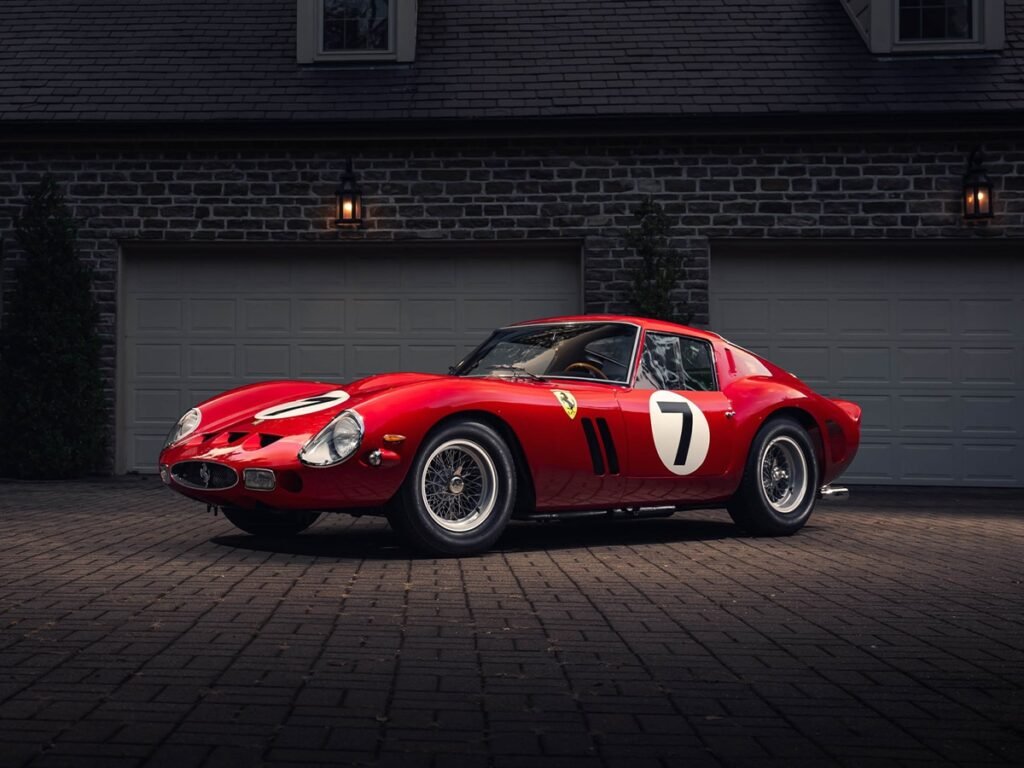
- Brand: Ferrari
- Model: 330 LM / 250 GTO by Scaglietti
- Chassis Number: 3765
- Engine: 4.0L V12
- Horsepower: 390 hp
- Top Speed: 174 mph – 280 km/h
- Notable Achievements:
- 1st place: 1965 Coppa FISA, Monza
- 2nd place: 1962 1000 km Nürburgring (Willy Mairesse/Mike Parkes)
- 3rd place: 1965 Mugello Grand Prix
- 4th place: 1965 Coppa Inter-Europa, Monza
- DNF: 1962 24 Hours of Le Mans (Mike Parkes/Lorenzo Bandini)
The 1962 Ferrari 330 LM / 250 GTO by Scaglietti, chassis 3765, became the most expensive Ferrari ever sold at auction when it hammered for USD $51.7 million at Sotheby’s in November 2023. This unique example is the only 250 GTO officially raced by Scuderia Ferrari and was factory-fitted with a 4.0-litre V12, which sets it apart from its 3.0L siblings. Although it participated in the 24 Hours of Le Mans and the Nürburgring 1000 KM, it never finished at Le Mans — a detail that may have left millions still on the table. Even so, its combination of rarity, factory racing pedigree, and exquisite Scaglietti bodywork makes it irresistible to collectors. With even more desirable GTOs still locked away in private collections, the next headline-breaking sale may be just a matter of time—if any owner is bold enough to let go.
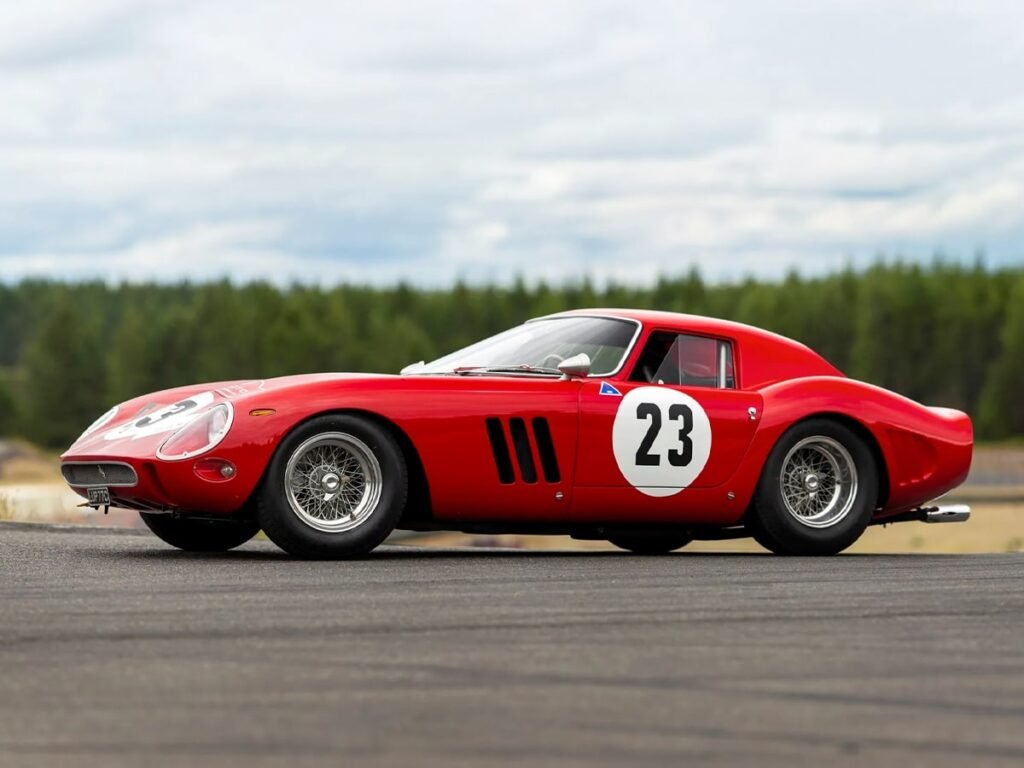
- Brand: Ferrari
- Model: 250 GTO by Scaglietti
- Chassis Number: 3413 GT
- Engine: 3.0L Colombo V12
- Horsepower: 300 hp
- Top Speed: 174 mph (280 km/h)
- Notable Achievements:
- Winner of the 1962 Italian GT Championship (Edoardo Lualdi-Gabardi)
- 1st in class in 1963 and 1964 Targa Florio
- Over 15 class and overall wins (1962–1965)
“Here’s another one that was sold for USD $48.4 million in 2018. This 1962 Ferrari 250 GTO, chassis 3413 GT, is a standout even among its ultra-rare peers. Regarded by Ferrari historians as one of the most original and mechanically correct examples, it’s powered by a 3.0L Colombo V12 in competizione specification, boasting six carburettors and uprated internals that gave it serious pace during its prime. With over 15 class and overall wins between 1962 and 1965, including a GT Championship victory in Italy, this wasn’t a garage queen — it was a proper race weapon.”
It’s also one of only four GTOs to receive Scaglietti’s Series II bodywork, recognized for its extended nose, lowered stance, and enhanced aerodynamics — the type of refinement that made a difference on the track. A total of only seven GTOs ever featured this evolution, which adds to its desirability. First raced by Edoardo Lualdi-Gabardi and later owned by Greg Whitten, a tech mogul from Microsoft, the car eventually found its way into the collection of Harry Yeaggy, who proudly exhibited it at the Pebble Beach Concours in 2022. With its blend of provenance, originality, and period-correct racing success, this GTO remains one of the purest expressions of Ferrari’s golden age.
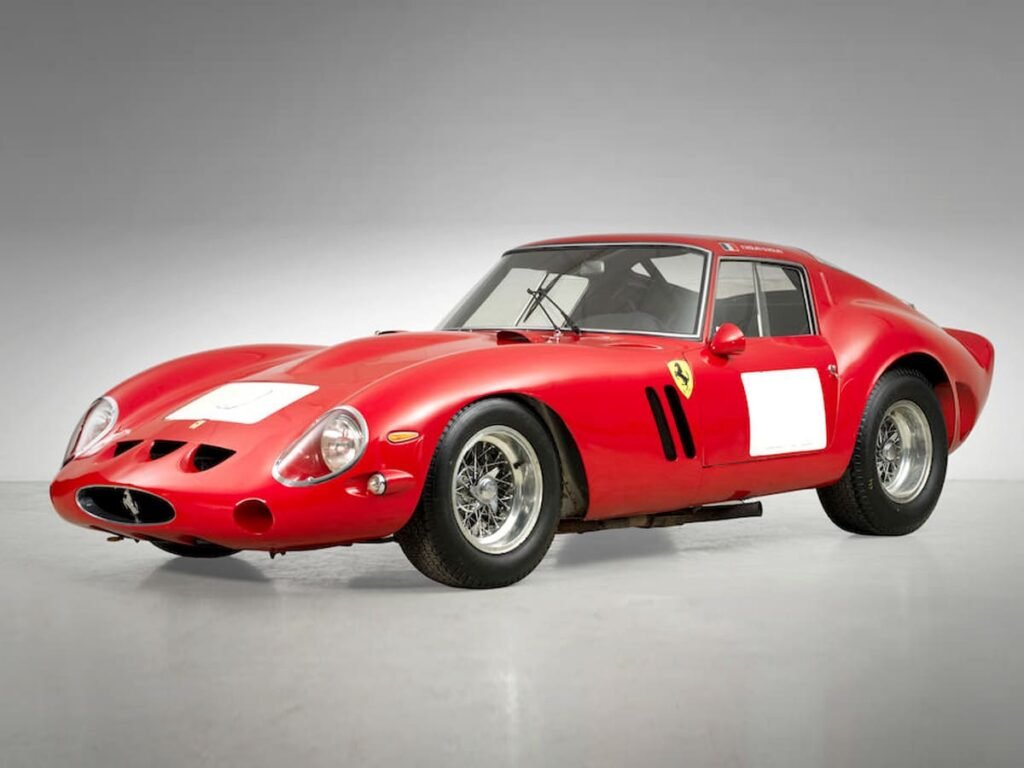
- Brand: Ferrari
- Model: 250 GTO
- Chassis Number: 3851 GT
- Engine: 3.0L Colombo V12
- Horsepower: 300 hp
- Top Speed: 174 mph – 280 km/h
- Notable Achievements:
- Raced in the 1962 Tour de France Automobile, finishing second overall
- Competed in various races during the 1962 and 1963 seasons
The Ferrari 250 GTO continues its domination of this list with yet another legendary chassis — 3851 GT, sold by Bonhams in 2014 for USD $38.1 million, setting a new world record at the time. Built in 1962 and originally finished in deep red, this example was raced extensively during its era, most notably finishing second overall in the 1962 Tour de France, a grueling endurance event that proved the GTO wasn’t just beautiful — it was built to win. Under the bonnet, it features the classic 3.0-litre Colombo V12, mated to a five-speed manual and paired with Ferrari’s hallmark balance of lightweight construction and aggressive handling.
Beyond its motorsport pedigree, what truly set this sale apart was the car’s exceptional provenance. It had spent nearly 50 years with a single owner, a private Italian collector who maintained the car in remarkably original condition. Of the 36 GTO’s ever built, few have surfaced with such a combination of race history, originality, and long-term care, which helped push the bidding into record-breaking territory. Though its auction record has since been surpassed, this GTO remains one of the purest examples ever to cross the block — a timeless reminder of why the name “250 GTO” still sends shivers down collectors’ spines.
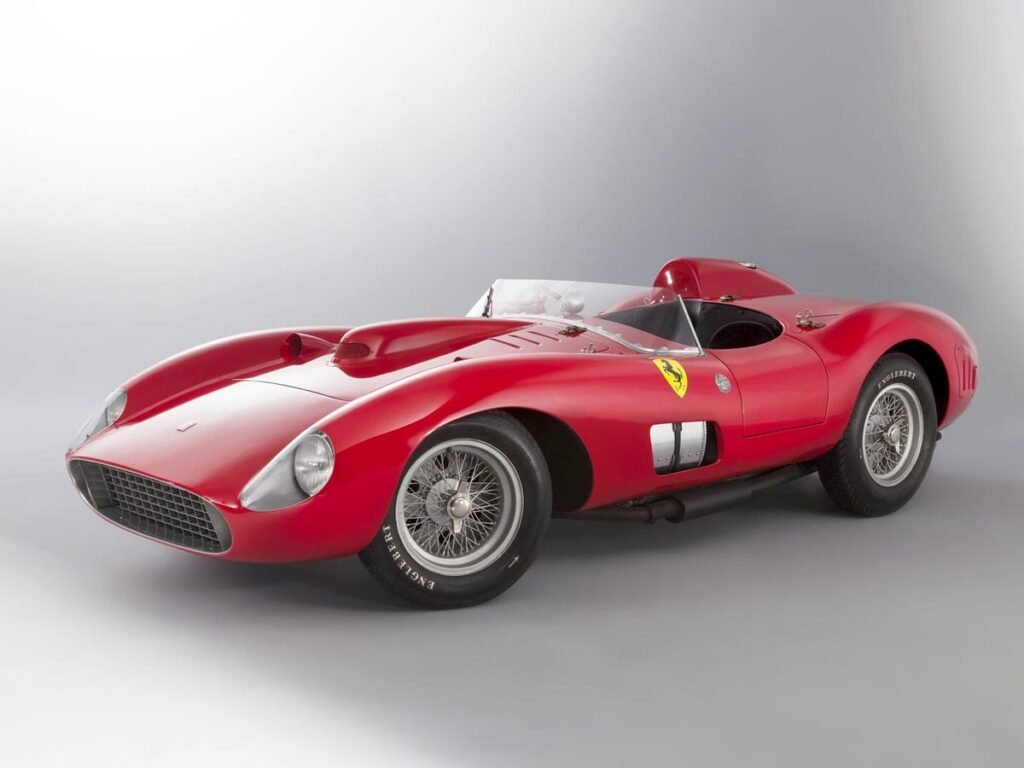
- Brand: Ferrari
- Model: 335 Sport Scaglietti
- Chassis Number: 0626, 0656 & 0674
- Engine: 4.1L V12
- Horsepower: 390 hp
- Top Speed: 190 mph (305 km/h)
- Notable Achievements:
- 1957 Sebring 12 Hours: Driven by Peter Collins and Maurice Trintignant to 6th overall
- 1957 Mille Miglia: Piloted by Wolfgang von Trips to secure 2nd place
- 1957 24 Hours of Le Mans: First lap with an average speed over 200 km/h
- 1958 Cuban Grand Prix: Claimed victory driven by Sir Stirling Moss
Sold for USD $35.7 million in 2016 at Artcurial’s Retromobile auction in Paris, this 1957 Ferrari 335 Sport Scaglietti, chassis 0674, embodies the definition of racing royalty. Originally a 3.8L car, it was later upgraded by the factory to a 4.1-litre V12, producing 390 hp and reaching over 190 mph — an outrageous figure for its era. With a resume that includes 2nd place at the Mille Miglia, entries at Le Mans and Sebring, and time spent in the hands of legends like Stirling Moss and Mike Hawthorn, this car has accomplished nearly every facet of motorsport greatness. It even helped Hawthorn score points toward becoming the first British Formula One World Champion. Wrapped in Scaglietti bodywork that appears to have been sculpted by the wind itself, and with only four ever built, this 335 S is less a car and more a time capsule from Ferrari’s golden age of endurance racing.
- Brand: Ferrari
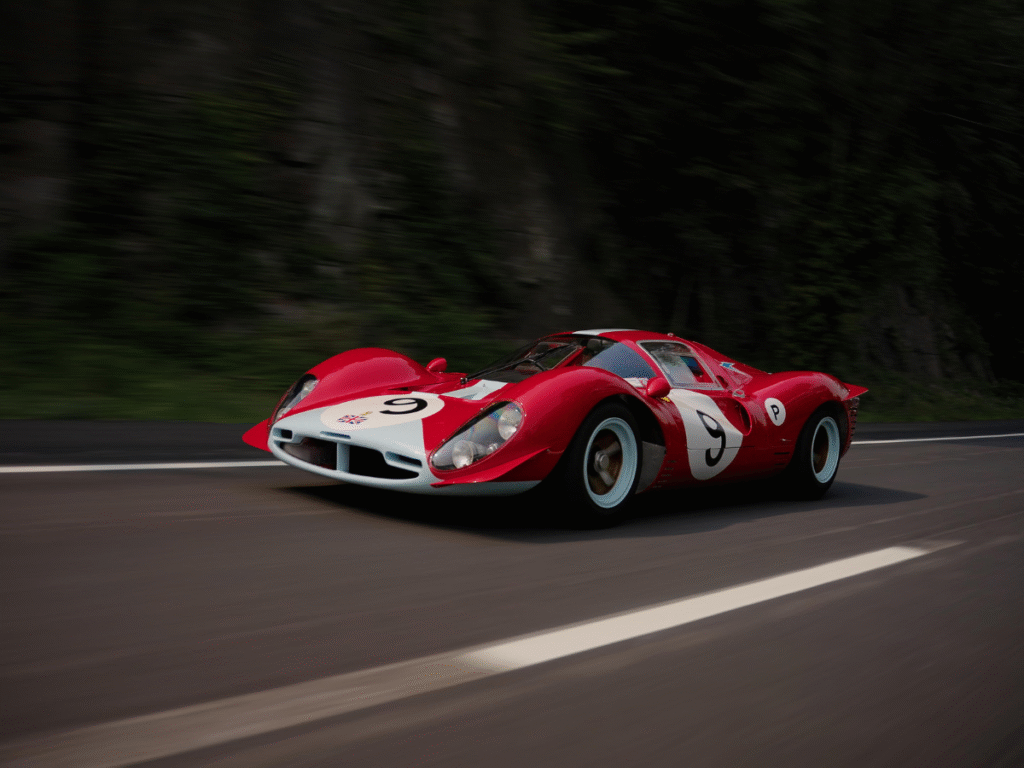
- Model: 412P Berlinetta
- Chassis Number: 0854
- Engine: 4.0L V12
- Horsepower: 420 hp
- Top Speed: 198 mph – 319 km/h
- Notable Achievements:
- 3rd place: 1967 1000 km Spa (Bianchi/Attwood)
- 7th place: 1967 BOAC 500, Brands Hatch (Piper/Attwood)
- 5th place: 1967 1000 km Paris, Montlhéry (Piper/Siffert)
- 1st place: 1968 200 Miles Norisring (Piper)
- 1st place: 1968 Solituderennen, Hockenheim (Piper)
With its spacecraft silhouette and howling 4.0-litre V12, this 1967 Ferrari 412P Berlinetta by Fantuzzi sold for USD $30.25 million in August 2023, instantly joining the upper echelon of Ferrari race cars ever sold. While it never secured a top-tier podium at events like Le Mans, it still built a respected racing résumé, competing at the 1967 24 Hours of Le Mans, the Paris 1000 KM, and the 6 Hours of Brands Hatch. What truly enhances its value isn’t just the racing pedigree, but its flawless restoration and legendary ownership chain, which includes the likes of Bruce McCaw, Anthony Bamford, and now Francois Perrodo.
According to Bonhams’ Global Head of Specialists, Rupert Banner, the car is a “collector’s dream,” praised for its eye-catching livery, flowing Fantuzzi bodywork, and raw motorsport purpose that defines Ferrari’s late-1960s prototype era. Even better? It’s road-registered, regularly exercised, and ready to steal the spotlight at shows or vintage tours — proof that this prancing horse wasn’t built to gather dust.
- Brand: Mercedes-Benz
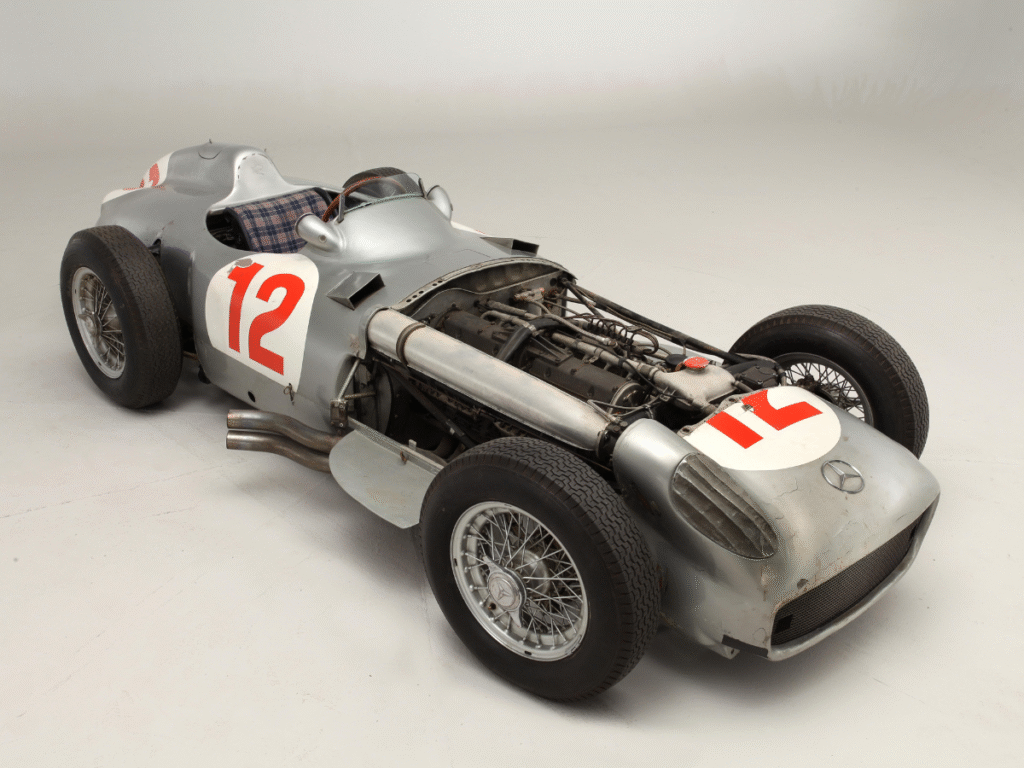
- Model: W196
- Chassis Number: 006/54
- Engine: 2.5L straight-eight
- Horsepower: 290 hp
- Top Speed: 186 mph – 300 km/h
- Notable Achievements:
- 1st place: 1954 German Grand Prix (Juan Manuel Fangio)
- 1st place: 1954 Swiss Grand Prix (Juan Manuel Fangio)
When it comes to motorsport icons, the 1954 Mercedes-Benz W196 holds a place few others can match. Sold for USD $29.6 million at Bonhams’ 2013 Goodwood Festival of Speed auction, this particular open-wheel version, chassis 006/54, was driven by none other than Juan Manuel Fangio to victory at the 1954 German and Swiss Grands Prix. It marked Mercedes-Benz’s return to Grand Prix racing after World War II — and they didn’t just show up; they dominated. With its 2.5L straight-eight, desmodromic valves, and fuel injection, the W196 wasn’t just ahead of the curve — it was redefining it.
What made this car even more unique was its survival in near-original condition and the fact that it remained outside of Mercedes-Benz’s collection — a rarity in itself. It became the first Grand Prix car driven by a World Champion to win a Formula One race ever sold at public auction, which sent collectors and historians into a frenzy. With its engineering brilliance, championship legacy, and direct connection to one of the sport’s greatest drivers, this W196 is a time machine from F1’s golden age — and every bit worth its price tag.
- Brand: Ferrari
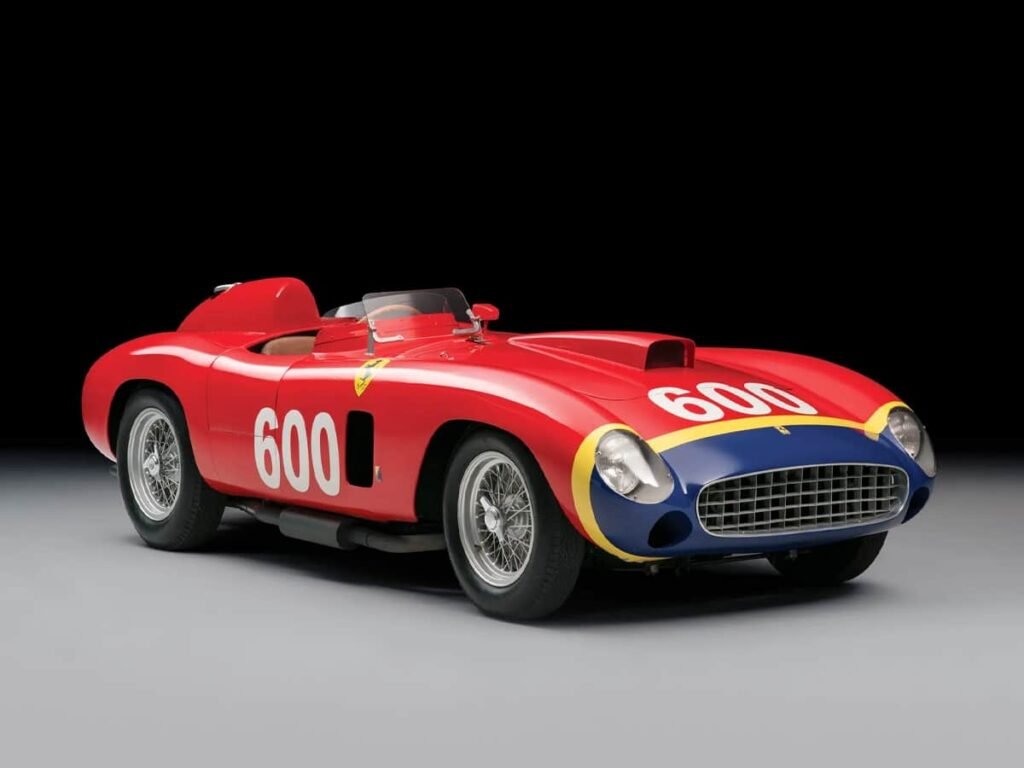
- Model: 290 MM
- Chassis Number: 0626
- Engine: 3.5L V12
- Horsepower: 320 hp
- Top Speed: 174 mph – 280 km/h
- Notable Achievements:
- 1st place: 1957 1000 km Buenos Aires (Gregory/Musso/Castellotti)
- 2nd place: 1957 Grand Prix of Portugal, Boavista (Masten Gregory)
- 2nd place: 1957 Grand Prix du R.A.C.B., Spa (Masten Gregory)
- 2nd place: 1956 Swedish Grand Prix, Kristianstad (von Trips/Collins)
- 4th place: 1956 Mille Miglia (Juan Manuel Fangio)
Built for none other than Juan Manuel Fangio, the 1956 Ferrari 290 MM is a heavyweight in Ferrari’s racing legacy. Sold for USD $28.05 million at RM Sotheby’s in 2015, this machine was one of only four ever built and competed in legendary races like the Mille Miglia, Targa Florio, and 1000 KM of Buenos Aires. Designed during the peak of Ferrari’s endurance racing ambitions, it was a purpose-built beast meant to face the fiercest competition of its era. While Fangio’s name already lends gravity, it’s the car’s combination of rarity, period-correct performance, and motorsport pedigree that makes it such a coveted prize. Later driven by a lineup of racing legends and kept in remarkable condition, it remains a visceral reminder of when Ferrari built race cars not for collectors, but for outright glory.
- Brand: Ferrari
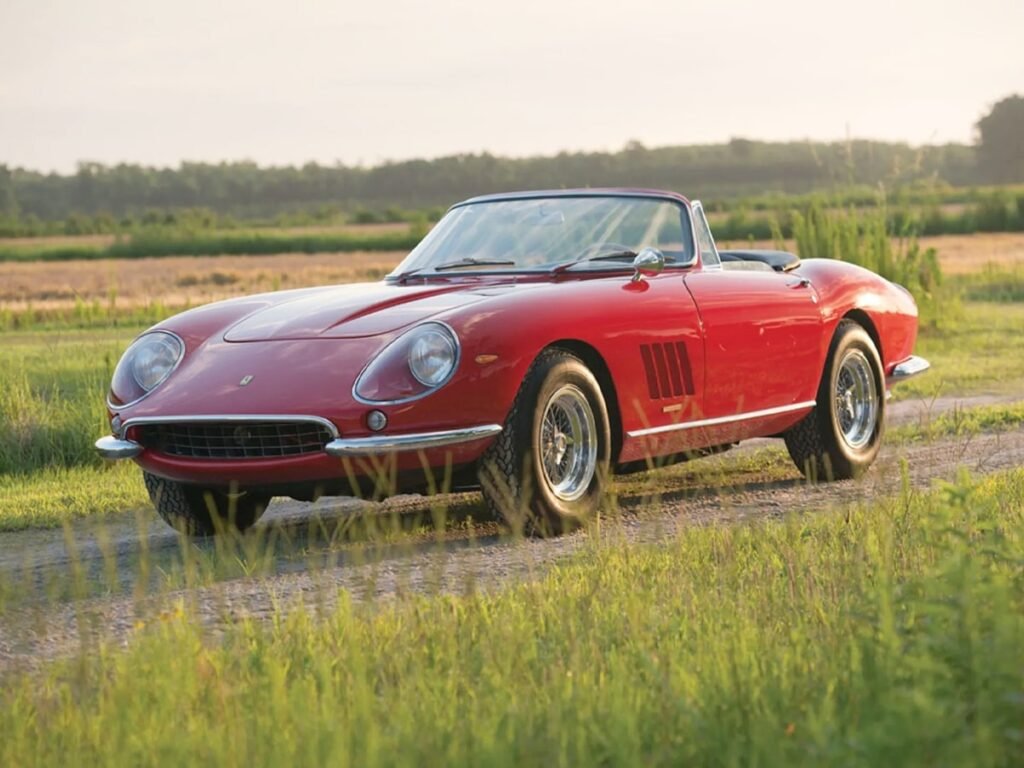
- Model: 275 GTB/4 S NART Spider
- Chassis Number: 10709
- Engine: 3.3L V12
- Horsepower: 300 hp
- Top Speed: 166 mph – 267 km/h
- Notable Achievements:
- One of only 10 N.A.R.T. Spiders ever built
- Single-owner from new, Eddie Smith Sr.
The 1967 Ferrari 275 GTB/4 S NART Spider is the kind of car collectors dream about — only 10 were ever built, making it one of Ferrari’s rarest open-top V12’s. Sold for USD $27.5 million in 2013, this example stood out for its one-owner provenance and the fact that all proceeds went to charity. Commissioned by Luigi Chinetti for the North American market, the NART Spider blended sleek Pininfarina styling with raw power and rarity. It’s not just a convertible — it’s a legend with a prancing horse on the hood and a backstory few can match.
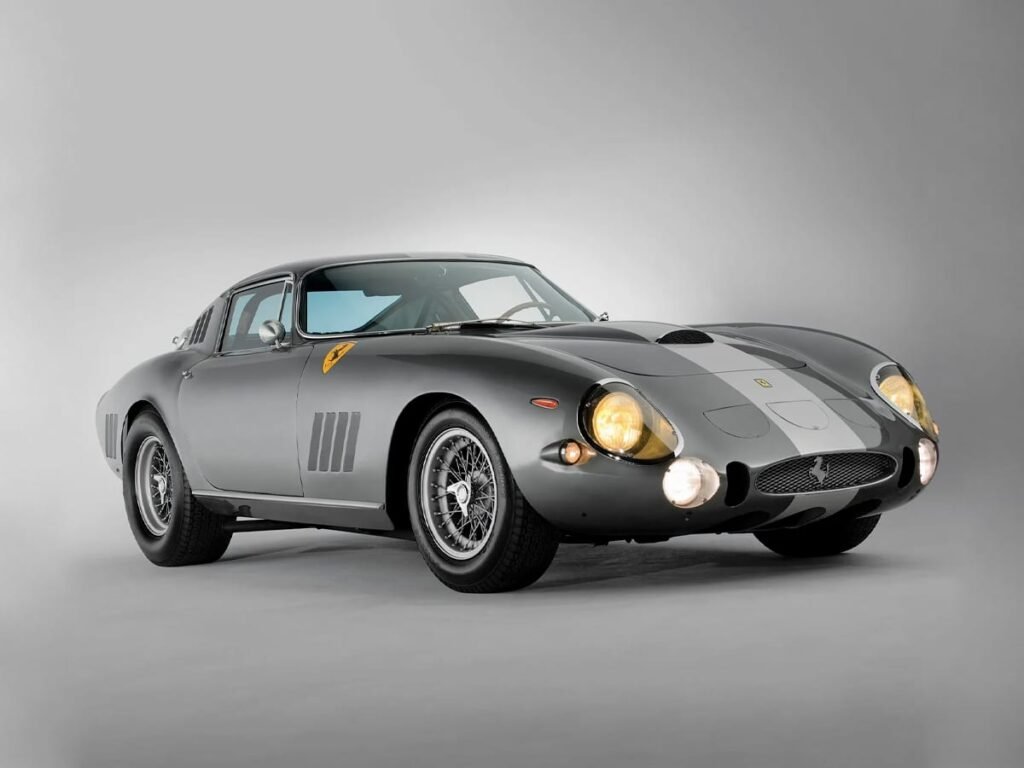
- Brand: Ferrari
- Model: 275 GTB/C Speciale
- Chassis Number: 06701
- Engine: 3.3L V12
- Horsepower: 320 hp
- Top Speed: 170 mph – 273 km/h
- Notable Achievements:
- One of three built; designed for Le Mans; Ferrari’s final dual-purpose GT racer
The 1964 Ferrari 275 GTB/C Speciale is one of those cars that makes even the mighty 250 GTO look like a mass-production model. Just three were ever built, and this one — chassis 06701 — holds the distinction of being the very first. Although it was designed as a factory-spec racing machine with lightweight bodywork and serious performance upgrades, it never saw competition. Instead, it was sold in 1965 to Pietro Ferraro, who kept it as a showpiece rather than a racing weapon. From there, it moved quietly through a handful of the world’s most respected collectors before landing with Leslie Wexner, who picked it up at RM Sotheby’s in 2014 for USD $26.4 million. For a car with this level of rarity and provenance, many believe he got a bargain.
And the other two? They’re not going anywhere. One lives with the late Preston Henn’s estate, a car he famously called the “crown jewel” of his collection and one that’s been whispered about as a potential $100 million unicorn — if it ever comes to market. The third remains buried in another private collection and hasn’t been seen publicly in decades. That leaves Wexner’s car as the only 275 GTB/C Speciale with any real sales history — and perhaps the only one we’ll ever see change hands again. With its stunning originality, zero racing wear, and links to Ferrari’s golden era of GT racing, this Speciale is, in every sense, a collector’s dream with the rarity to match.
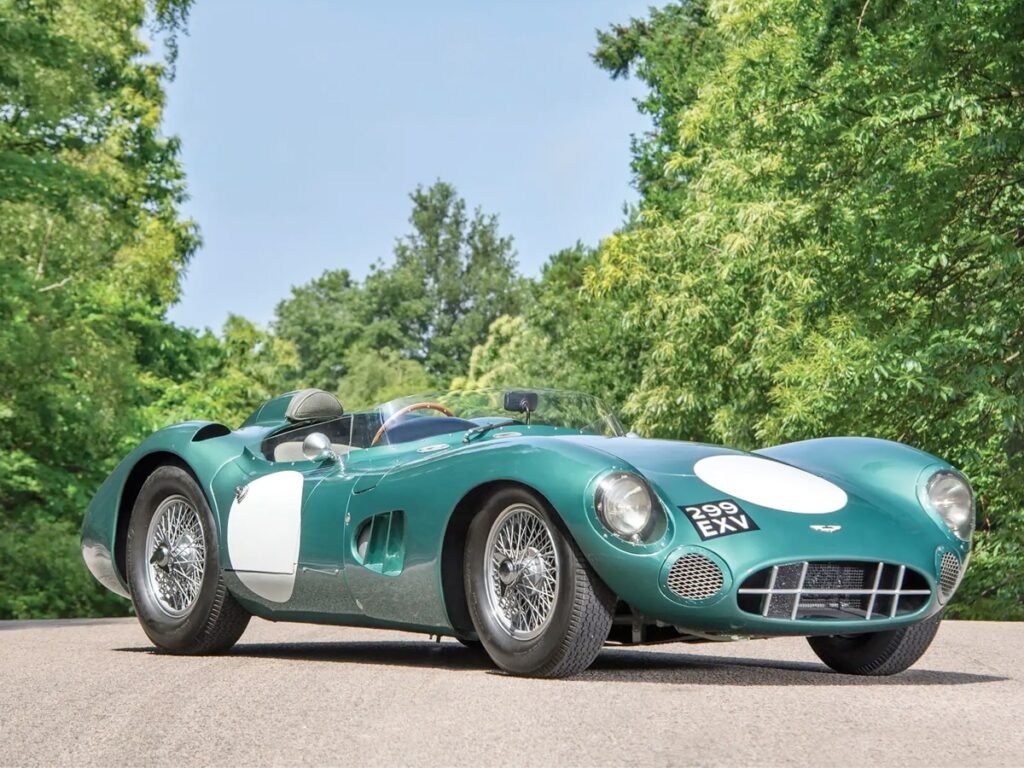
- Brand: Aston Martin
- Model: DBR1
- Chassis Number: DBR1/1
- Engine: 2.5L straight-six
- Horsepower: 250 hp
- Top Speed: 150 mph – 241 km/h
- Notable Achievements:
- 1st place: 1959 1000 km Nürburgring
- Sister car to 1959 Le Mans winner
he 1956 Aston Martin DBR1 is often described as the most important car ever produced by the British marque — and it’s not just hype. This is the same model that brought Aston Martin its only overall victory at Le Mans (in 1959), and while this exact car, chassis DBR1/1, didn’t win that race, it laid the foundation. As the first of only five DBR1s ever built, it competed at Le Mans, the 12 Hours of Sebring, and the 1000km of Nürburgring, piloted by legendary drivers like Carroll Shelby, Stirling Moss, and Roy Salvadori. It serves as a blueprint of mid-century British motorsport: sleek, raw, and absurdly quick for its time.
When it crossed the block at RM Sotheby’s in 2017, the DBR1 became the most expensive British car ever sold, fetching USD $22.55 million. However, beyond the price, what really elevates it is its racing pedigree and originality — it’s the sort of car you don’t just admire, but also study. With its aluminum body, low-slung profile, and a soundtrack that only a hand-tuned straight-six can deliver, this Aston isn’t just a milestone in racing history — it’s a rolling reminder of when Aston Martin went toe-to-toe with Ferrari and actually came out on top.
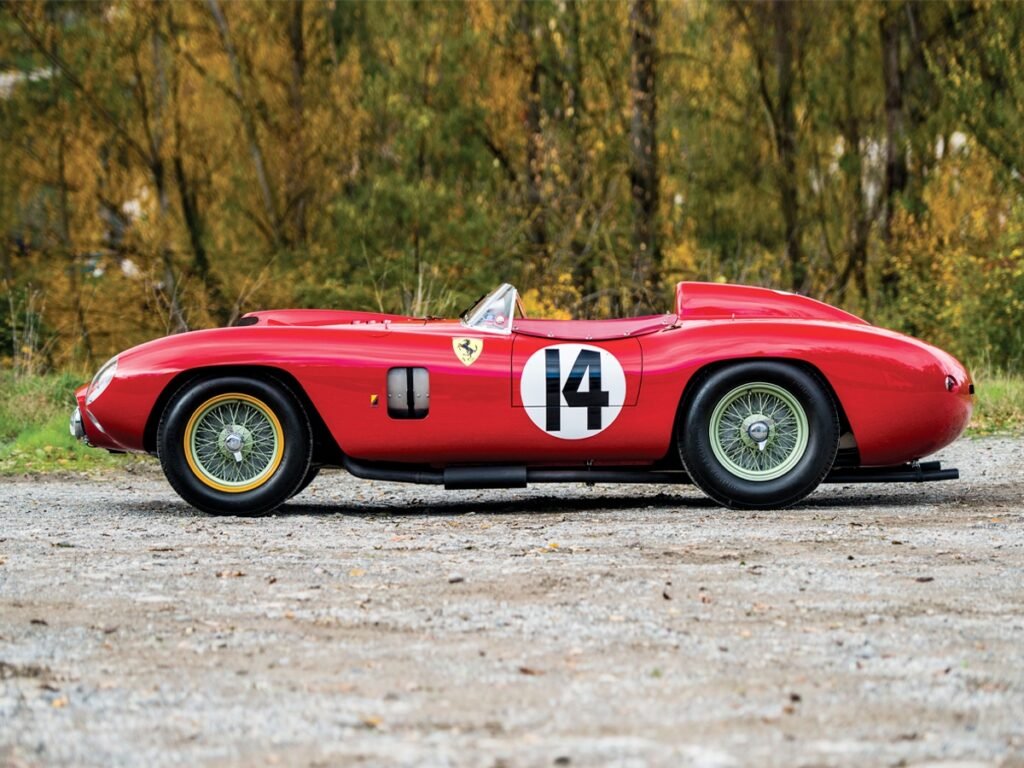
- Brand: Ferrari
- Model: 290 MM
- Chassis Number: 0628
- Engine: 3.5L V12
- Horsepower: 320 hp
- Top Speed: 174 mph – 280 km/h
- Notable Achievements:
- 2nd place: 1956 Mille Miglia (Peter Collins/Louis Klemantaski)
- 3rd place: 1956 Targa Florio (Hans Herrmann/Olivier Gendebien)
- 2nd place: 1956 Supercortemaggiore, Monza (Peter Collins/Mike Hawthorn)
- 1st place: 1957 Nassau Trophy Race (Stirling Moss)
- 1st place: 1957 Memorial Race, Nassau (Stirling Moss)
Raced as an official Scuderia Ferrari Works entry in 1956 and 1957, this Ferrari 290 MM was built for legends — and driven by them as well. With notable names like Fangio, Collins, and von Trips on the roster, it competed in some of the world’s toughest events, including the Mille Miglia, Targa Florio, and 1000 KM of Buenos Aires, earning podium finishes and prestige wherever it roared.
Only four examples were built, and only three survive, making chassis 0628 incredibly rare. It retains its original matching-numbers engine, gearbox, and body, carries Ferrari Classiche certification, and has been expertly restored. When it sold at RM Sotheby’s in 2018 for USD $22,005,000, it wasn’t just about the price — it was a tribute to Ferrari’s golden age of endurance racing.
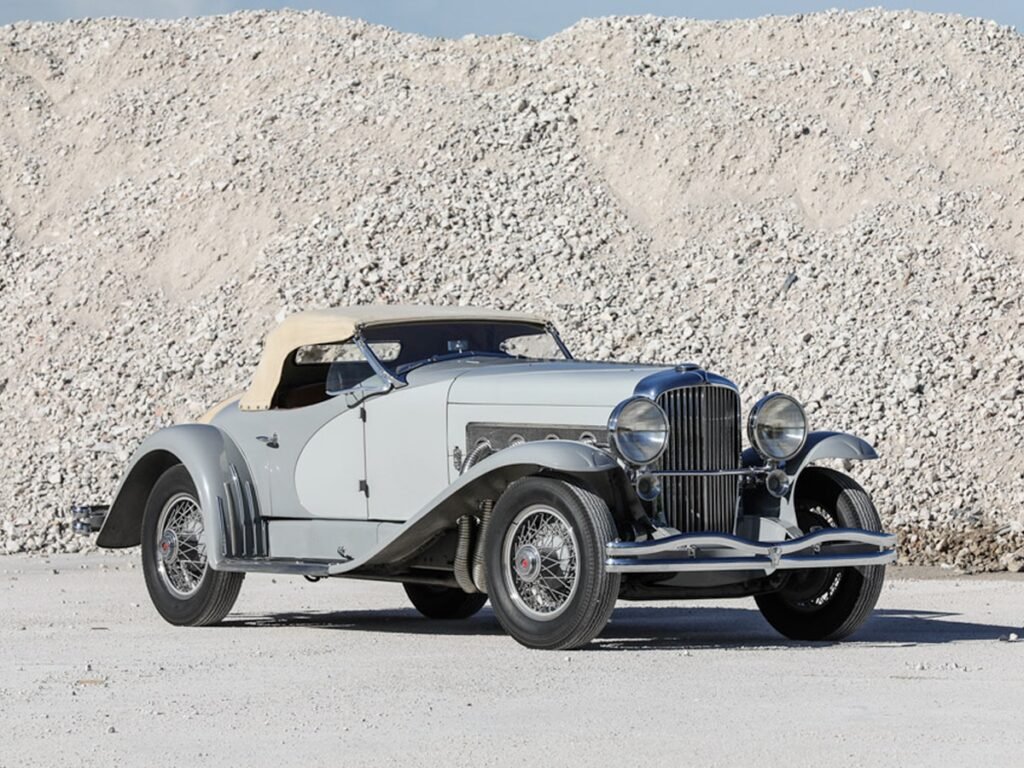
- Brand: Duesenberg
- Model: SSJ
- Chassis Number: 2594
- Engine: 6.9L straight-eight with supercharger
- Horsepower: 400 hp
- Top Speed: 140 mph – 225 km/h
- Notable Achievements:
- One of only two SSJs built
- Originally delivered to Hollywood legend Gary Cooper
The 1935 Duesenberg SSJ is the kind of car that doesn’t just command attention — it demands it. With only two ever produced, and this one originally delivered to Hollywood legend Gary Cooper, its rarity alone justifies the eye-watering USD $22 million price tag it fetched in 2018. Beneath its sleek proportions lies a supercharged 6.9L straight-eight engine delivering a jaw-dropping 400 horsepower, making it the fastest American car of its day — and arguably the boldest. The shortened wheelbase gave it a more aggressive stance than anything else Duesenberg ever built, combining brute power with elegant design in a way that only pre-war American engineering could achieve.
But what truly elevates this SSJ is its remarkable originality. The car retains its matching-numbers chassis, engine, and body, offering collectors a rare glimpse into an untouched era of motoring excellence. It’s a machine that wears its age like a badge of honour — no over-polishing, no recreations — just pure, unrestored history. With the only other SSJ locked away in another private collection, this sale wasn’t just about owning a car. It was about owning the last open door to one of the most exclusive American motoring legacies ever made.
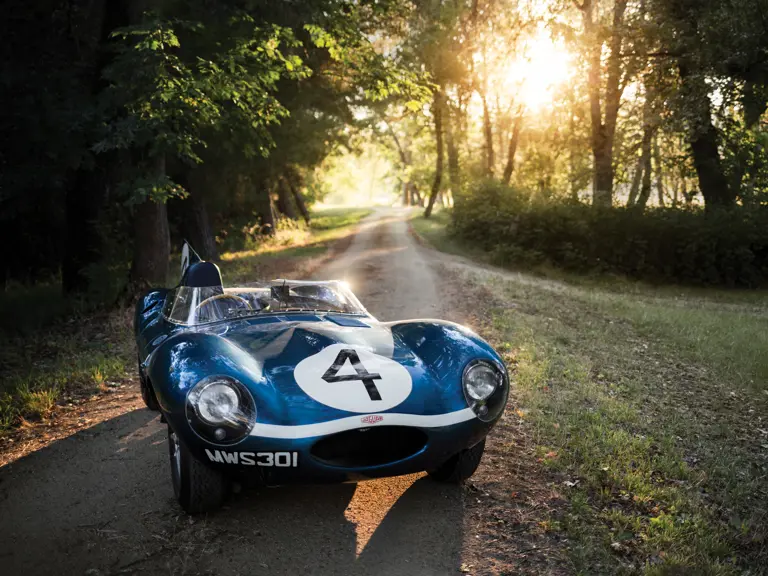
- Brand: Jaguar
- Model: D-Type
- Chassis Number: XKD 501
- Engine: 3.4L Inline-six
- Horsepower: 250 hp
- Top Speed: 170 mph – 273 km/h
- Notable Achievements:
- 1st place: 1956 24 Hours Of Le Mans (Ecurie Ecosse)
- 2nd place: 1955 Goodwood 9 Hours
The 1955 Jaguar D-Type, chassis XKD 501, isn’t just a motorsport legend — it’s the last of its kind. This very car won the 1956 24 Hours of Le Mans outright with Ecurie Ecosse, marking a high point in Jaguar’s racing legacy. What sets it apart isn’t just the victory, but the fact that it’s the only Le Mans-winning C- or D-Type that still exists in largely original condition. Such preservation is almost unheard of in vintage racing, which is why it commanded a staggering USD $21.78 million at auction.
From its innovative aerodynamic shape to its 3.4L straight-six engine, this D-Type was built to dominate — and it certainly did. The combination of raw performance and historical pedigree makes it one of the most sought-after Jaguars to ever hit the block. It’s more than just a collector’s item — it’s a time capsule from the golden age of endurance racing, still bearing the battle scars of a victory few cars can ever claim.
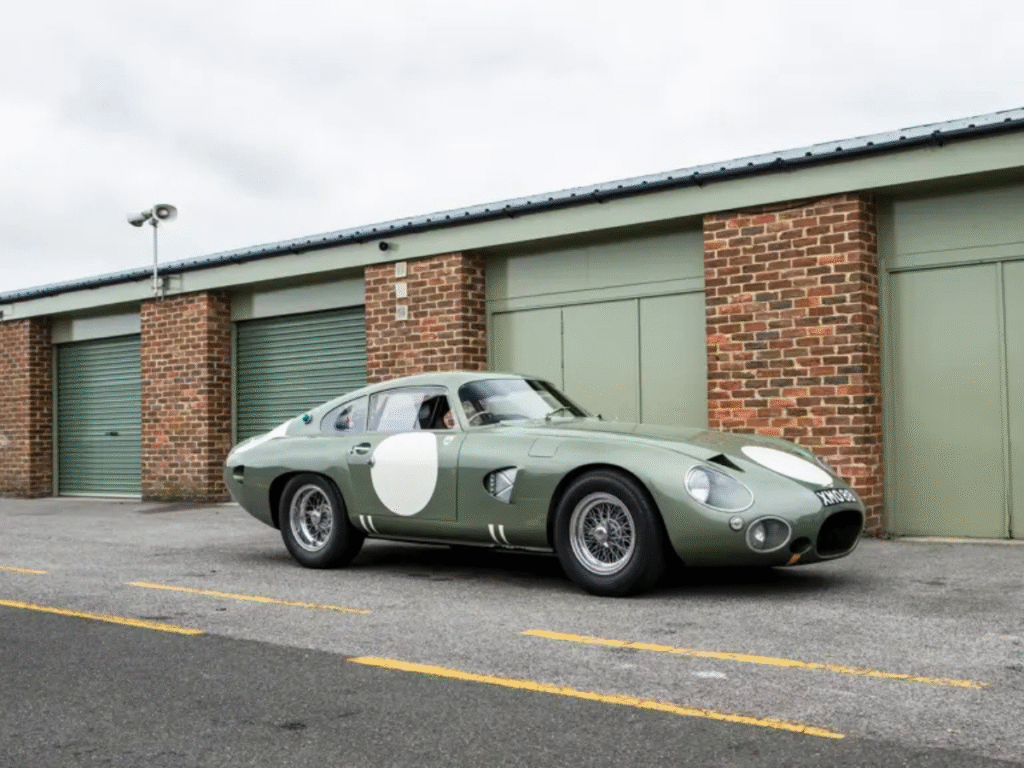
- Brand: Aston Martin
- Model: DP215 Grand Touring Competition Prototype
- Chassis Number: DP215
- Engine: 4.0L inline-six
- Horsepower: 323 hp
- Top Speed: 198 mph – 319 km/h
- Notable Achievements:
- Clocked at 198.6 mph on the Mulsanne Straight, 1963 24 Hours of Le Mans
The 1963 Aston Martin DP215 isn’t just rare — it’s one of the most important one-off Works cars the brand has ever built. Commissioned as Aston Martin’s final factory entry into Le Mans, this prototype pushed the limits of what the brand could achieve in design and performance. Fitted with a 4.0L inline-six, a correct-type five-speed gearbox, and clothed in a 1963 Works-built Hiduminium body, it was a technical marvel of its time. At Le Mans, the DP215 lived up to its reputation by hitting 198.6 mph on the Mulsanne Straight, making it the fastest car at the 1963 event — though mechanical failure cut its race short.
When It sold for USD $21,455,000 in 2018, making it the most expensive Aston Martin ever sold at auction, and for good reason. It’s the only DP215 ever made, retaining its original engine and key mechanical components, restored with meticulous care and involvement from the car’s original designer. This wasn’t just a restoration — it was a resurrection of a factory legend, engineered for speed and remembered as one of the boldest prototypes ever to wear the Aston Martin badge.
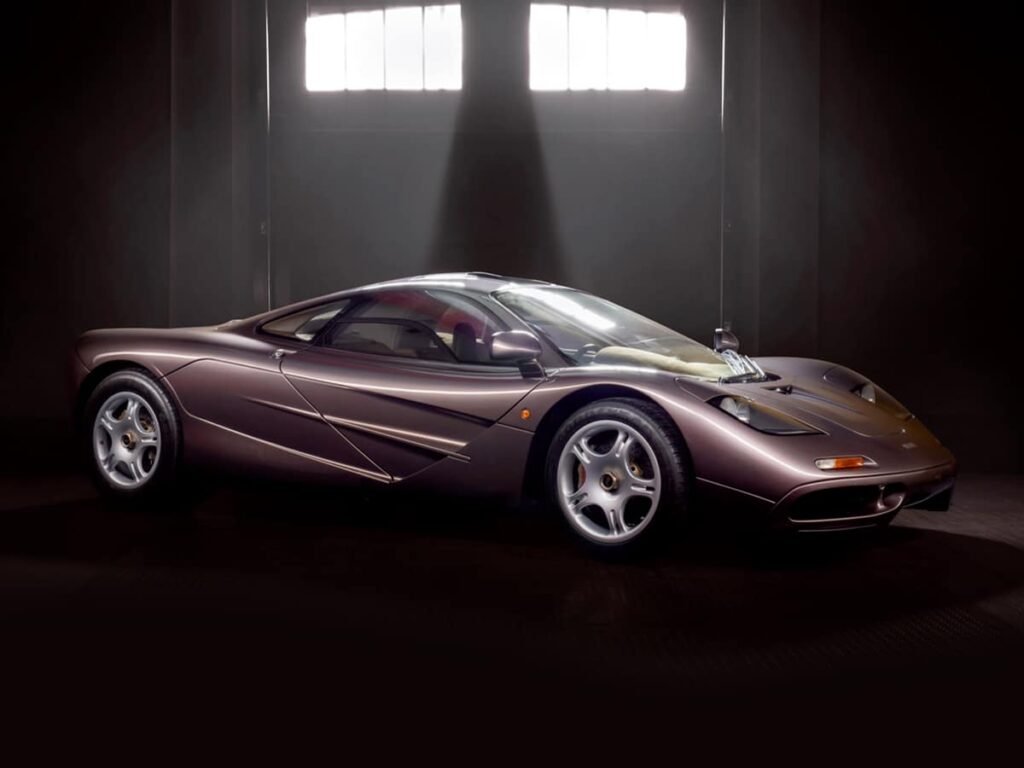
- Brand: McLaren
- Model: F1
- Chassis Number: 029
- Engine: 6.1L BMW S70/2 V12
- Horsepower: 618 hp
- Top Speed: 240 mph 386 km/h
- Notable Achievements:
- One of 64 road cars produced; delivery mileage; record price ever paid for a McLaren F1.
The 1995 McLaren F1, chassis 029, shattered expectations when it sold for USD $20,465,000, far exceeding its pre-auction estimate by a remarkable $5 million. This particular example is one of only 64 road cars ever produced and came with delivery mileage, making it an untouched time capsule from the golden era of analog hypercars. Finished in a stunning Creighton Brown over light tan and Brazilian brown leather, it’s a one-of-a-kind spec that looked as fresh in the auction hall as it did when leaving the Woking factory.
Mechanically, the F1 is every bit the legend it is known to be. Its 6.1L BMW S70/2 V12 produces 618 horsepower, paired with a 6-speed manual transaxle, ventilated Brembo disc brakes, and a lightweight chassis supported by an independent double-wishbone suspension. Built without compromise and engineered for purity, it was the fastest production car in the world for over a decade — and arguably still the greatest driver’s car ever made.
For collectors, this example wasn’t just about rarity; it was also about preservation and perfection. With its untouched condition, ultra-low mileage, and record-breaking price, chassis 029 proved that the McLaren F1 doesn’t just hold its value; it continuously rewrites the rulebook.
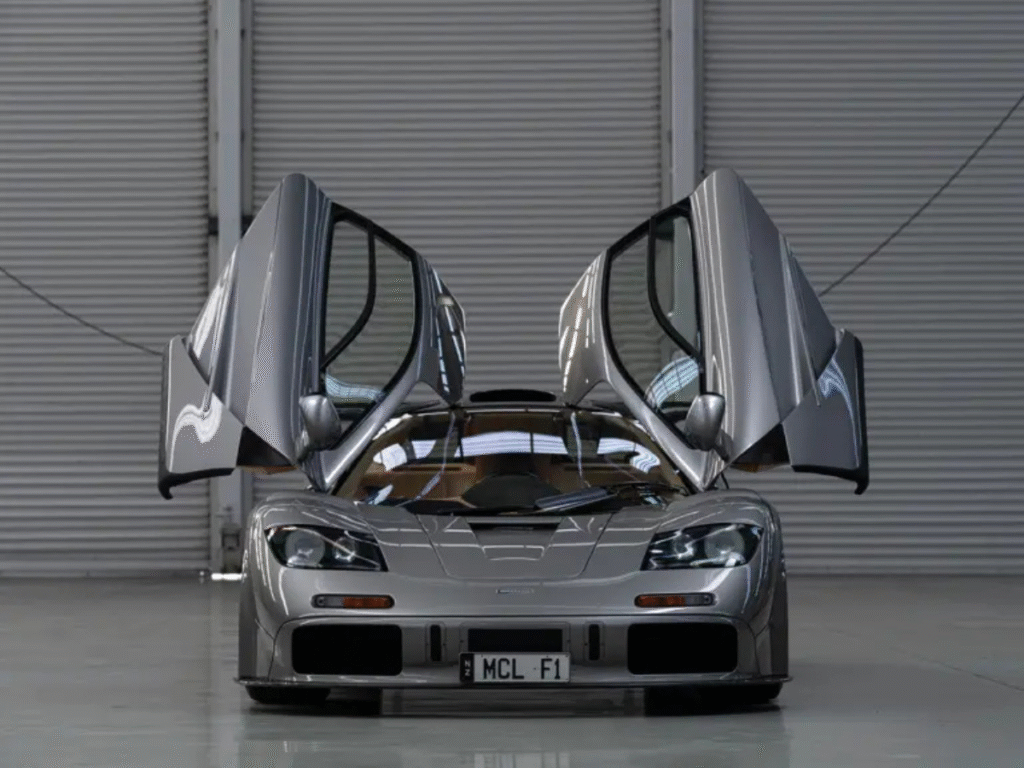
- Brand: McLaren
- Model: F1 ‘LM-Specification’
- Chassis Number: SA9AB5AC1R1048018
- Engine: 6.1L BMW S70/2 V12
- Horsepower: 680 hp
- Top Speed: 225 mph – 362 km/h
- Notable Achievements:
- One of two F1s upgraded by McLaren Special Operations to LM spec; includes GTR engine and aero.
The 1994 McLaren F1 ‘LM-Specification’ is a rare car in every sense. Originally delivered as a standard F1 road car, chassis 018 was later returned to McLaren Special Operations for the legendary LM treatment — a factory upgrade that included an unrestricted GTR racing engine, 680 hp, and an aggressive Extra-High Downforce Kit. Only two such LM-Spec F1s exist, making this an extremely rare fusion of road-legal usability and Le Mans-grade engineering.
When it sold for USD $19,805,000 in 2019, it wasn’t solely about rarity — it was about celebrating what many still regard as the greatest modern supercar ever built. The F1’s blend of timeless design, technical purity, and a world-class competition legacy has secured its place in history, and the LM-Spec only enhances this further. For collectors, this wasn’t merely a car — it was the pinnacle of analog performance, straight from the source.
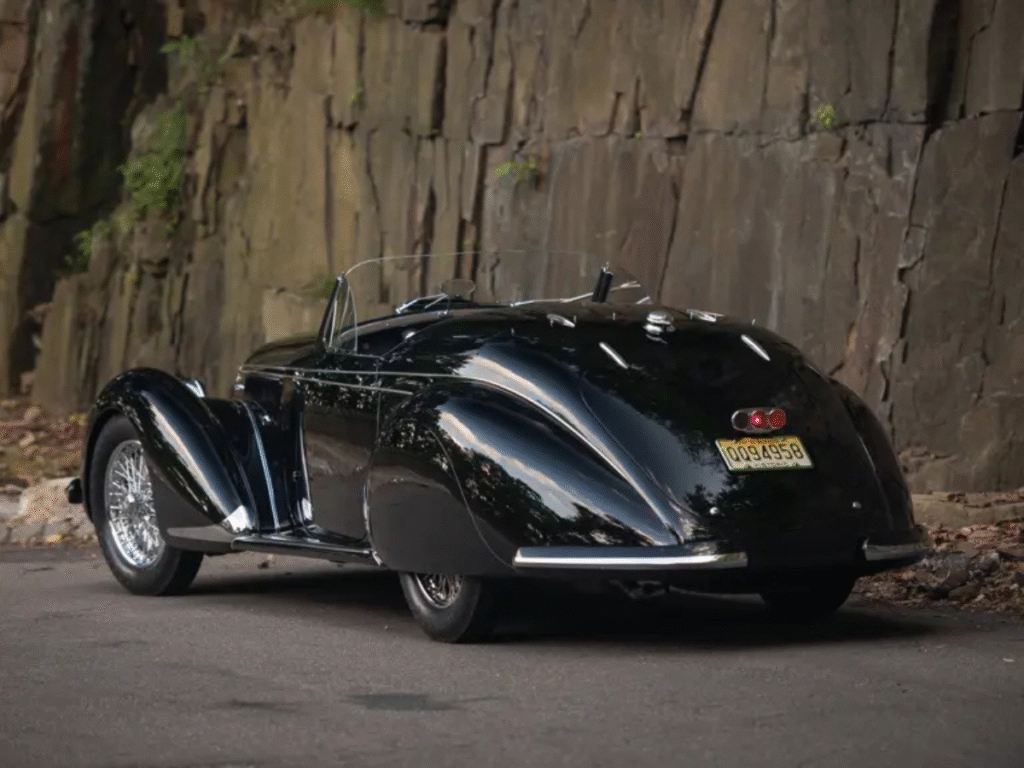
- Brand: Alfa Romeo
- Model: 8C 2900B Lungo Spider
- Chassis Number: 412041
- Engine: 2.9L inline-eight with twin superchargers
- Horsepower: 180 hp
- Top Speed: 110 mph – 177 km/h
- Notable Achievements:
- One of approximately 12 Touring Spiders extant
- Pebble Beach Concours d’Elegance award-winning restoration
Few cars define pre-war automotive excellence like the 1939 Alfa Romeo 8C 2900B Lungo Spider — a machine where racing DNA meets pure design artistry. With its twin-supercharged inline-eight, cutting-edge suspension, and Touring’s long-wheelbase spider coachwork, it is essentially a Le Mans contender in a gentleman’s driving suit. Only 12 Touring Spiders were ever made, and chassis 412041 stands out for its originality and concours-winning restoration, eventually commanding USD $19.8 million at RM Sotheby’s in 2016.
More than just a pretty face, the 8C 2900B blended race-proven engineering with coachbuilt sophistication — a car that could hold its own at over 100 mph and still turn heads on the Riviera. Often referred to as the ‘Ferrari before Ferrari,’ it represented Alfa Romeo’s golden era, combining speed, craftsmanship, and exclusivity. For collectors, owning one is the vintage equivalent of holding a winning lottery ticket — and this one was cashed in at the highest level.
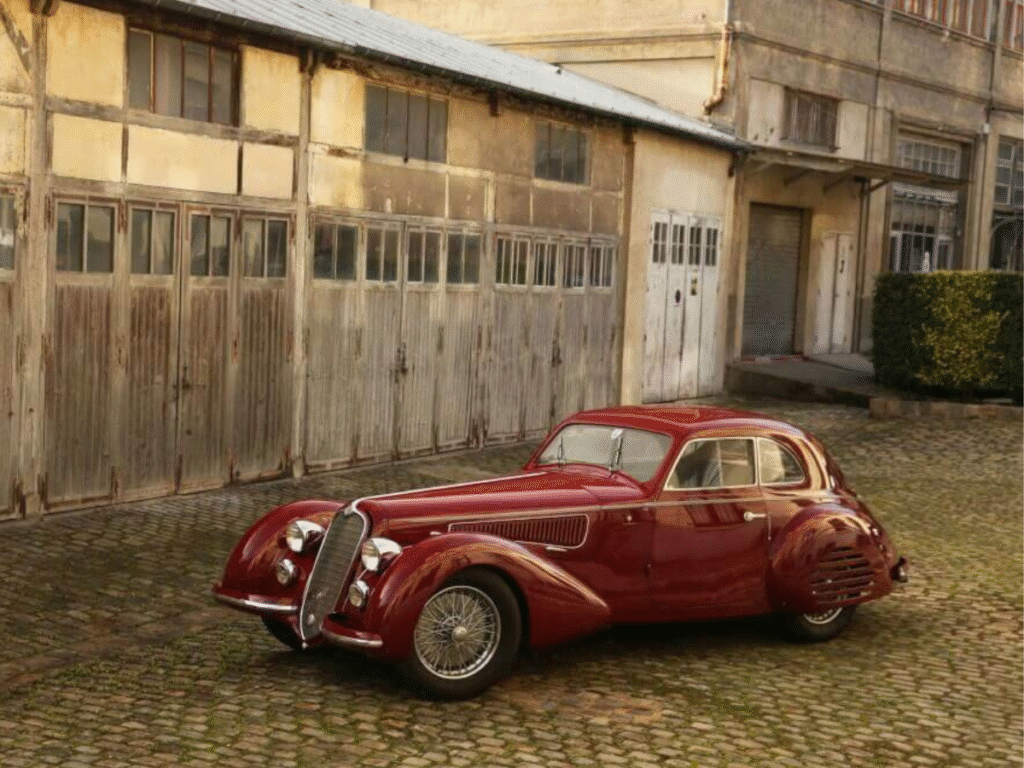
- Brand: Alfa Romeo
- Model: 8C 2900B Touring Berlinetta
- Chassis Number: 412020
- Engine: 2.9L inline-eight with twin superchargers
- Horsepower: 180 hp
- Top Speed: 110 mph – 177 km/h
- Notable Achievements:
- One of only five Touring Berlinettas built
- Pebble Beach Concours d’Elegance award winner
One of the most expensive. With fewer than 50 total 8C 2900Bs produced and only five crafted in this breathtaking Touring Berlinetta form, chassis 412020 sits at the summit of pre-war automotive royalty. In 2019, it sold for USD $18,997,883, just shy of $19 million, cementing its place among the most valuable cars of all time. Clad in flowing art deco curves and finished to concours perfection, this example also took home Best of Show at the Pebble Beach Concours d’Elegance, a rare honour for a closed car.
But this Alfa is more than just a beauty queen. Under the hood lies a twin-supercharged 2.9-litre inline-eight, delivering cutting-edge performance for its time and making it one of the fastest road cars of the 1930s. Unlike its Spider sibling, the Berlinetta adds a sense of sculpted presence and touring luxury, making it the grandest of grand tourers before the term even existed. With rarity, provenance, and timeless design working in perfect harmony, this is the kind of car that belongs not just in a garage, but in a museum — if the owner is ever willing to part with it again.
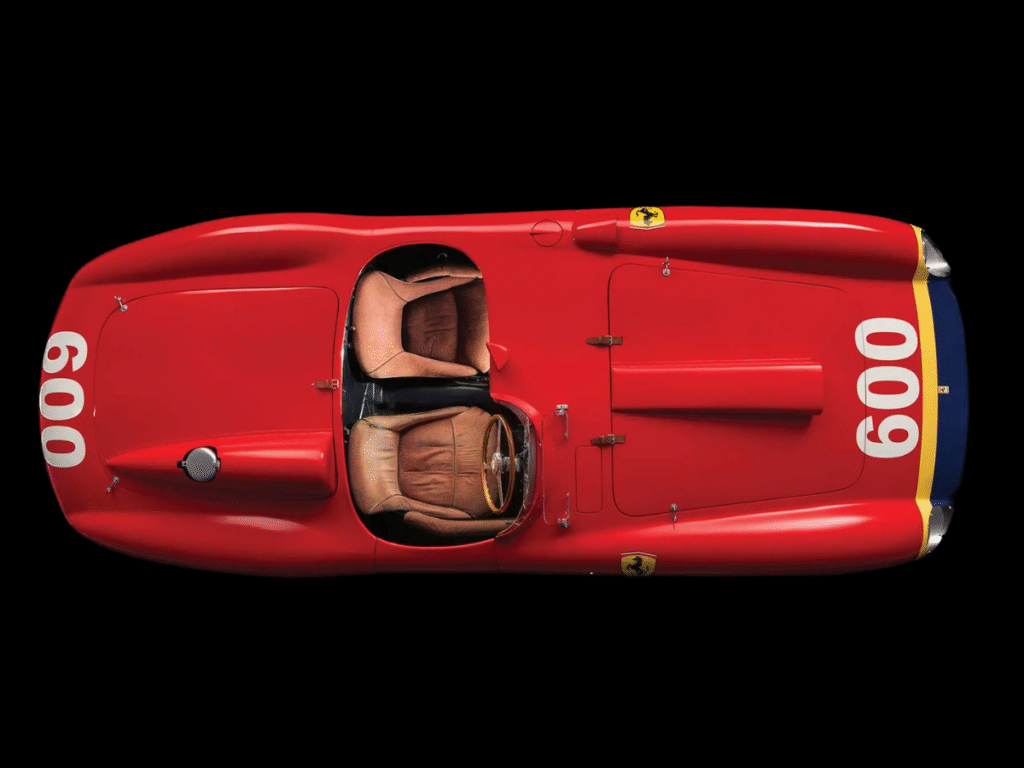
These cars command sky-high prices because they represent the pinnacle of automotive history—where rarity, craftsmanship, and cultural significance collide. Most are one-offs or part of ultra-limited runs, often built for racing legends or Hollywood icons. Their value is deeply tied to provenance, with original engines, matching chassis numbers, and well-documented ownership playing a major role. When a car has competed—and sometimes won—at events like Le Mans, Mille Miglia, or Formula 1, its historical weight becomes impossible to ignore.
Beyond performance and pedigree, these machines are also design masterpieces. Whether it’s the sculpted elegance of a Touring-bodied Alfa Romeo, the brutal beauty of a McLaren F1 LM, or the timeless proportions of a Ferrari 250 GTO, each car tells a story of innovation and artistry. When you factor in their preserved or expertly restored condition, you’re not just looking at a car — you’re looking at a rolling piece of art, a tangible slice of an era, and for many collectors, an irreplaceable trophy worth every cent.
What Is The Most Expensive Classic Car Ever Sold?
The most expensive classic car ever sold is the 1955 Mercedes-Benz 300 SLR Uhlenhaut Coupé, which was purchased in a private sale for €135 million ($143 million), setting a world record in 2022.
Why Are Rare Classic Cars So Valuable?
Rare classic cars hold significant value because of their limited production runs, rich motorsport history, celebrity or factory ownership, and original condition. These factors render them highly desirable to car collectors and investors.
Are Expensive Collector Cars Driven Or Displayed?
Most high-value collector cars are kept in private collections or museums, although some are occasionally driven during concours events, historic races, or vintage car tours.
Do Classic Cars Increase In Value Over Time?
Yes, especially models with a rich legacy, such as Ferraris, Aston Martins, and McLarens. These cars often increase in value, making them appealing to long-term collectors and investors.
How Can You Buy A Multi-Million Dollar Car At Auction?
To purchase a high-value classic car at auction, you typically need to pre-register, provide proof of funds, and often gain approval from the auction house. Major sales are held by names like RM Sotheby’s, Bonhams, and Gooding & Co.