























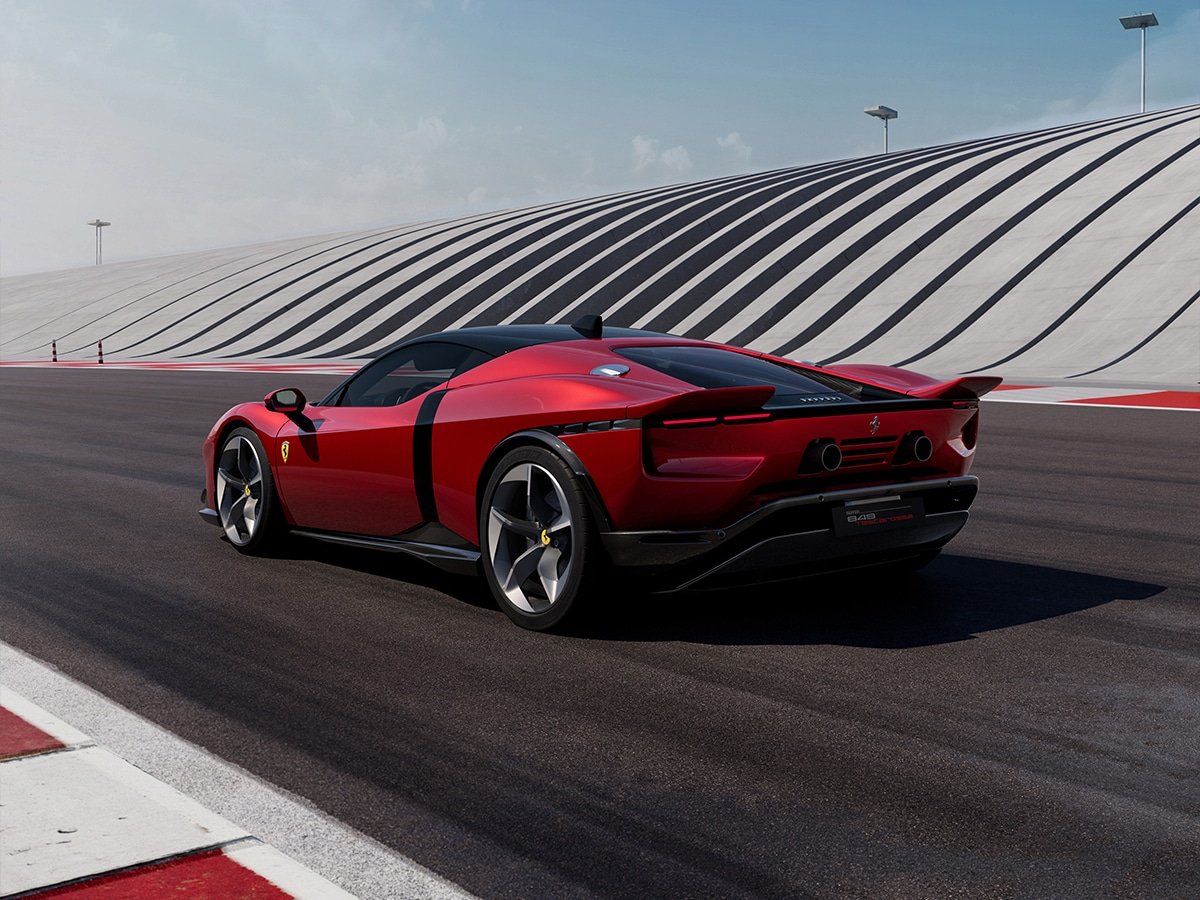

- The 849 Testarossa replaces the SF90 Stradale as Ferrari’s premier production supercar, bringing the brand’s road-car performance closer than ever to hypercar status.
- A 3.9-litre twin-turbo V8 paired with three electric motors produces a combined 1,050 CV, featuring e-AWD, torque vectoring, and F1-inspired hybrid technology.
- Starting at USD $540,000 and reaching approximately USD $650,000 for the Spider, the 849 Testarossa remains at the top of Ferrari’s current production lineup.
Ferrari has officially launched a new top-tier model with the 2026 Ferrari 849 Testarossa. Ferrari doesn’t often let the Prancing Horse slip, but when it does, you know something big is coming. It steps in as Ferrari’s new flagship production supercar, replacing the SF90 Stradale, and it doesn’t exactly do it quietly. You get the sense that Ferrari wasn’t aiming for minor improvements here but wanted to send a strong message about the future direction of its modern supercars.
What makes this model especially interesting is how Ferrari has transformed familiar ingredients into something far more extreme. With a 3,990 cc twin-turbo V8 that produces 830 CV at 7,500 rpm, and 842 Nm of torque at 6,500 rpm, and that’s before any electrification steps in the picture. Once the hybrid system joins, the total output rises to an astonishing 1,050 CV, which is 50 CV more than the SF90, enough to push the 849 Testarossa into the hypercar category. The rest of that headline figure comes from a trio of electric motors: two RAC-e motors mounted up front, enabling electric all-wheel drive and torque vectoring, while a third, F1-derived MGU-K motor sits at the rear behind the V8. We will talk about this later.
And yes, the price still sits right at the top end of Ferrari’s spectrum, so put away your wallet (unless you do have half a million dollars tucked away). Yep, the actual starting price for one of these bad boys is USD $540,000 – USD $650,000, depending on the trims and options, especially once you start looking at the Spider, but that’s almost beside the point. With the 849 Testarossa, Ferrari is making a flagship statement, letting everyone know the Prancing Horse is ready to run; very few can keep up. Now, let’s break down exactly what this new flagship brings to the table.
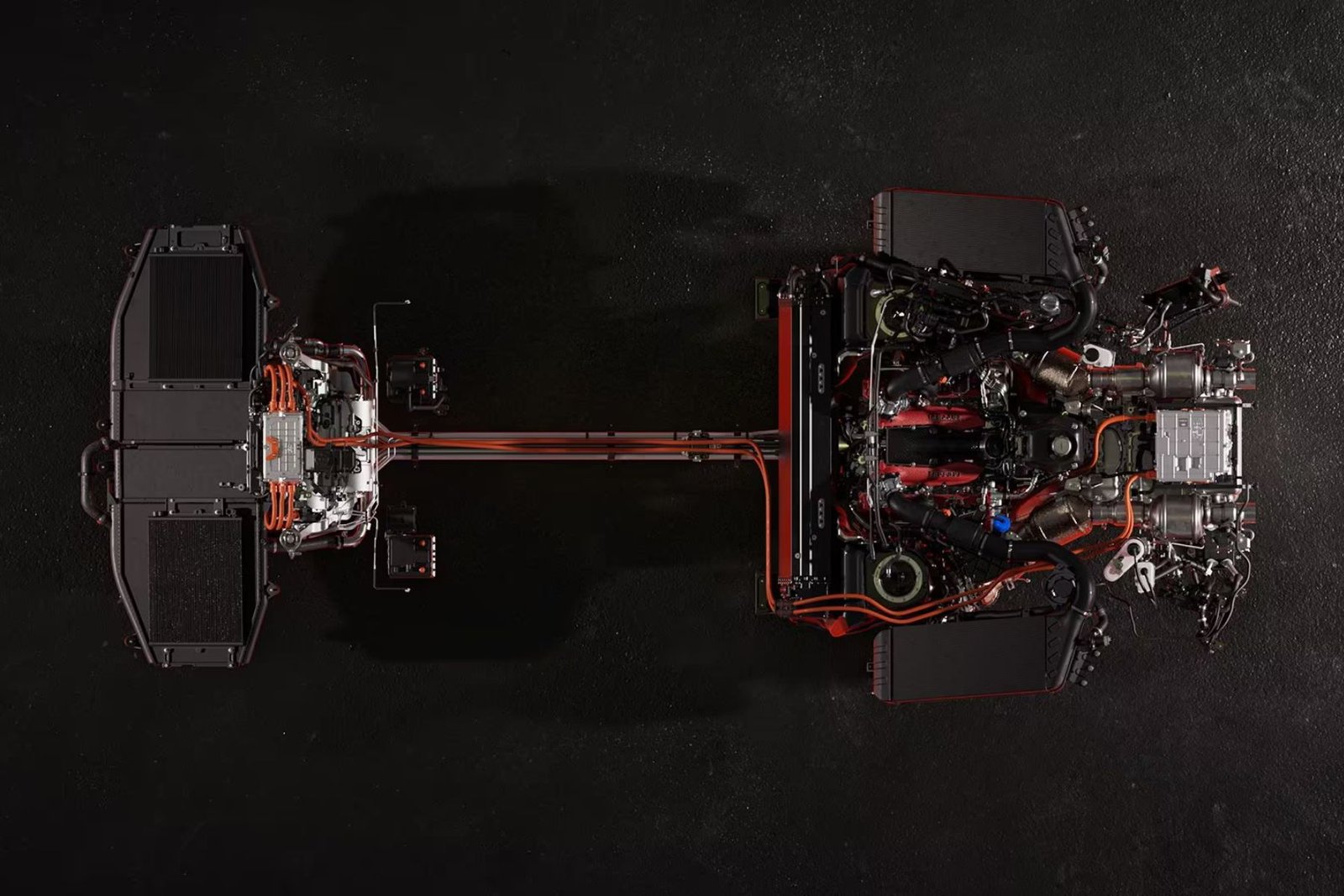
The 849Testarossa’s engine setup might seem familiar if you’ve looked at the SF90 Stradale before, but if you dig a bit deeper, you’ll see a lot of differences popping up quite fast. Despite having approximately the same dry weight as the previous model, about 1,570 kg now boasts the best power-to-weight ratio of any Ferrari road car you can buy today. That alone hints at just how much the engineering has advanced beneath the bodywork.
The internal-combustion part of the story centres on Ferrari’s F154FC twin-turbo V8, which has been extensively reworked. It now features the largest turbochargers ever installed in a Ferrari production vehicle, paired with low-friction bearings from the brand’s latest hypercar development work. Ferrari has also focused heavily on heat management and responsiveness, introducing an upgraded intercooler, lighter camshafts, titanium fasteners, and improved thermal shielding inspired by its GT racing programme. The result is an engine that responds more quickly, revs harder, and sounds more aggressive, all while remaining emissions compliant thanks to new particulate filters and ceramic matrix catalysts.
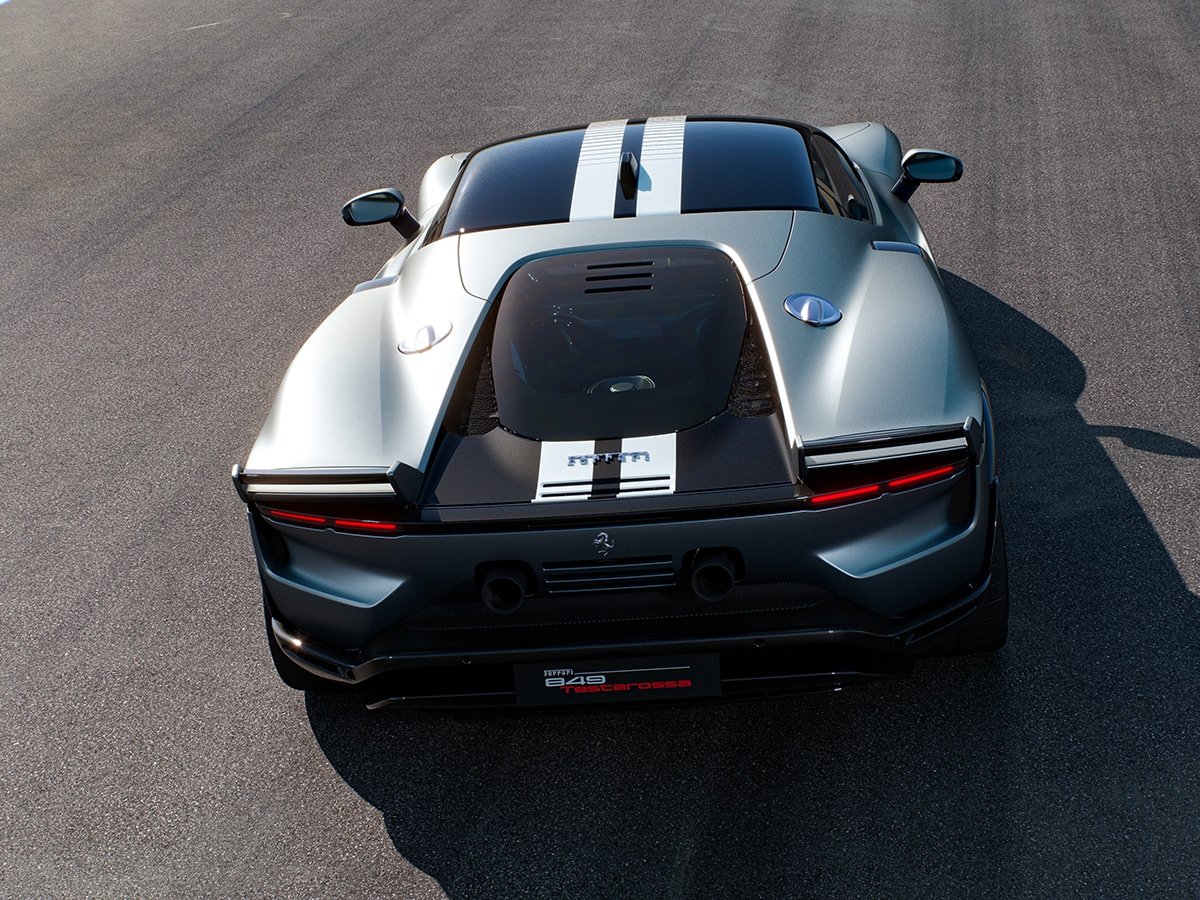
A major factor contributing to that sharper character is the new exhaust system, which plays a bigger role than you might expect. With a wider internal diameter, increased length, and joints designed to withstand extreme temperatures, the system improves gas flow while enhancing volume and tone. These changes help unlock additional power and give the V8 a louder, more visceral sound than the SF90. It’s not a small claim, especially given today’s emission restrictions.
As we start bringing the hybrid setup into it, the 849 Testarossa really shows what it’s all about, with a maximum 220 CV and 163 CV available in electric mode, and it has been refined to handle sustained high-performance use. Another key point worth mentioning: thermal efficiency has improved under heavy loads, transitions between electric and combustion power are smoother thanks to updated damping, and regenerative braking has been tuned to deliver a more natural, progressive pedal feel rather than the digital on-off sensation you’ll see nowadays.
All of this is managed through Ferrari’s familiar eManettino system, offering eDrive, Hybrid, Performance, and Qualify modes. In Qualify, everything is unleashed from this beast, allowing the 849 Testarossa to sprint from 0–100 km/h in just 2.3 seconds, hit 200 km/h in 6.35 seconds, and stop from 100 km/h in only 28.5 metres. At the Fiorano circuit, it recorded a lap time of 1:17.5, beating both the F80 and the Ferrari SF90 XX, which is quite impressive for a production road car, showing just how Ferrari engineered its powertrain with unmistakable motorsport intent.
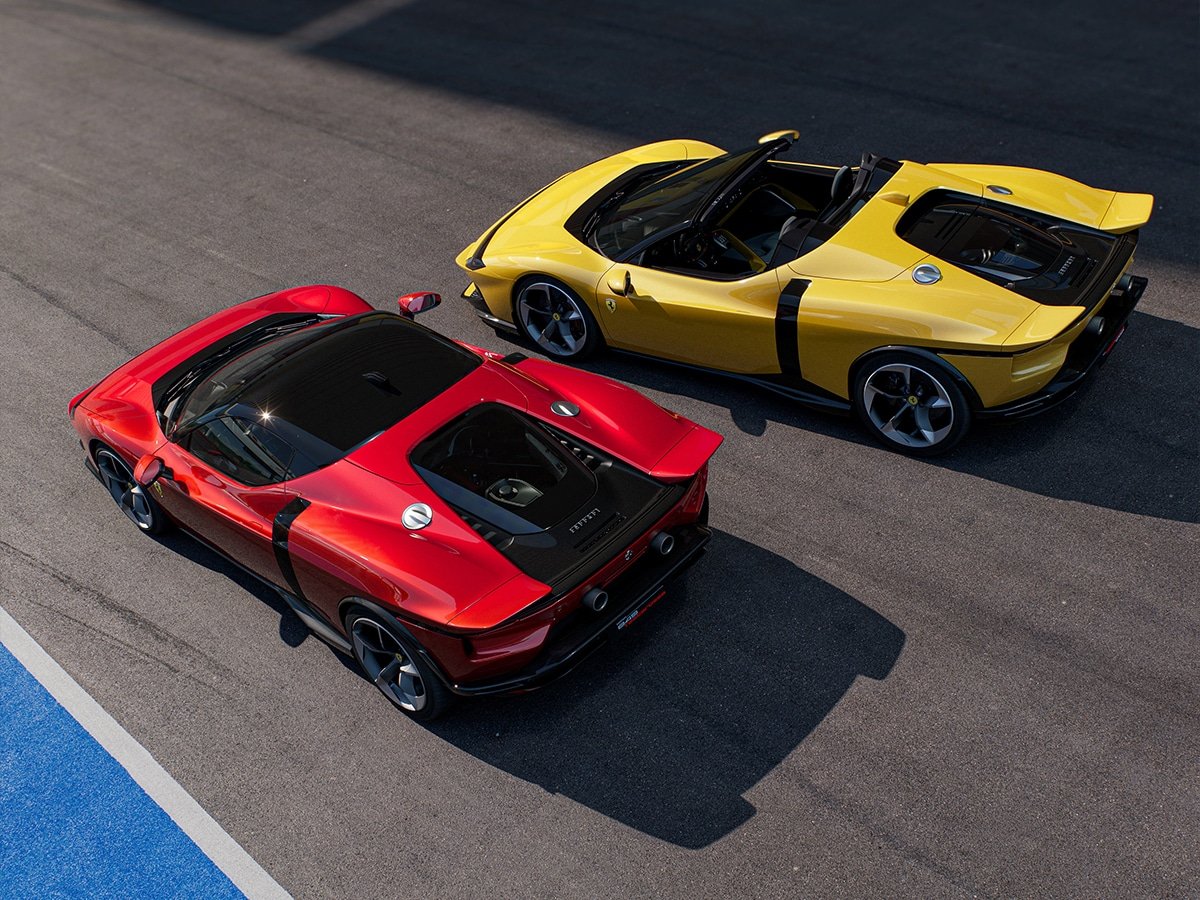
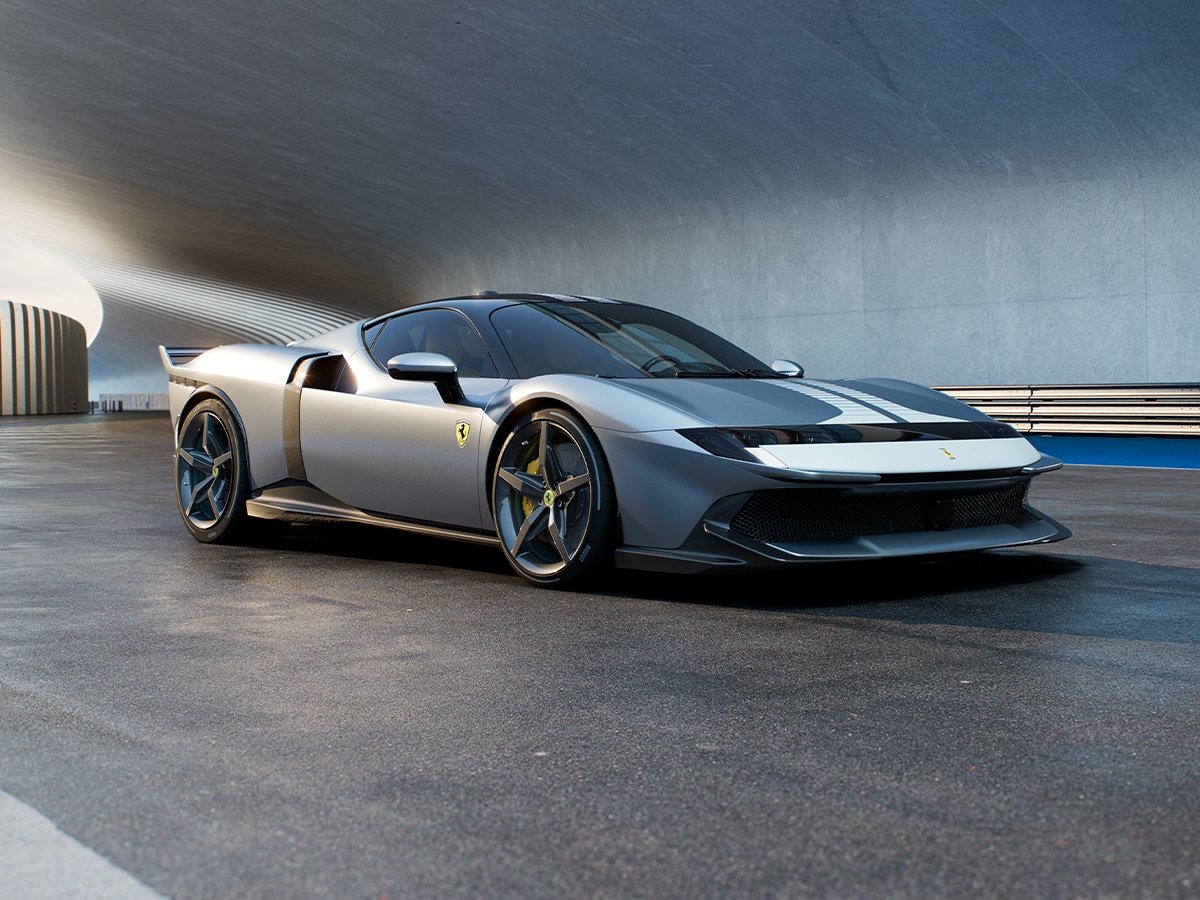
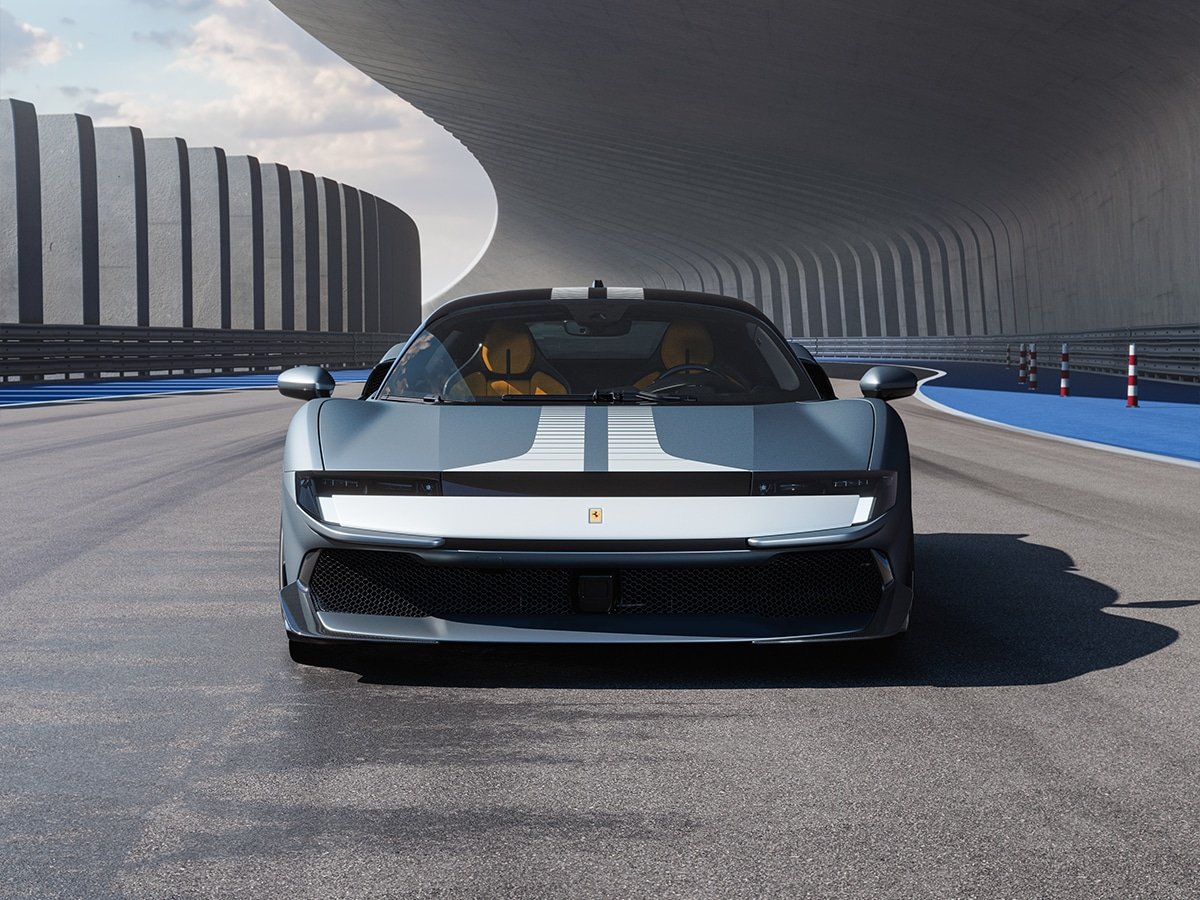
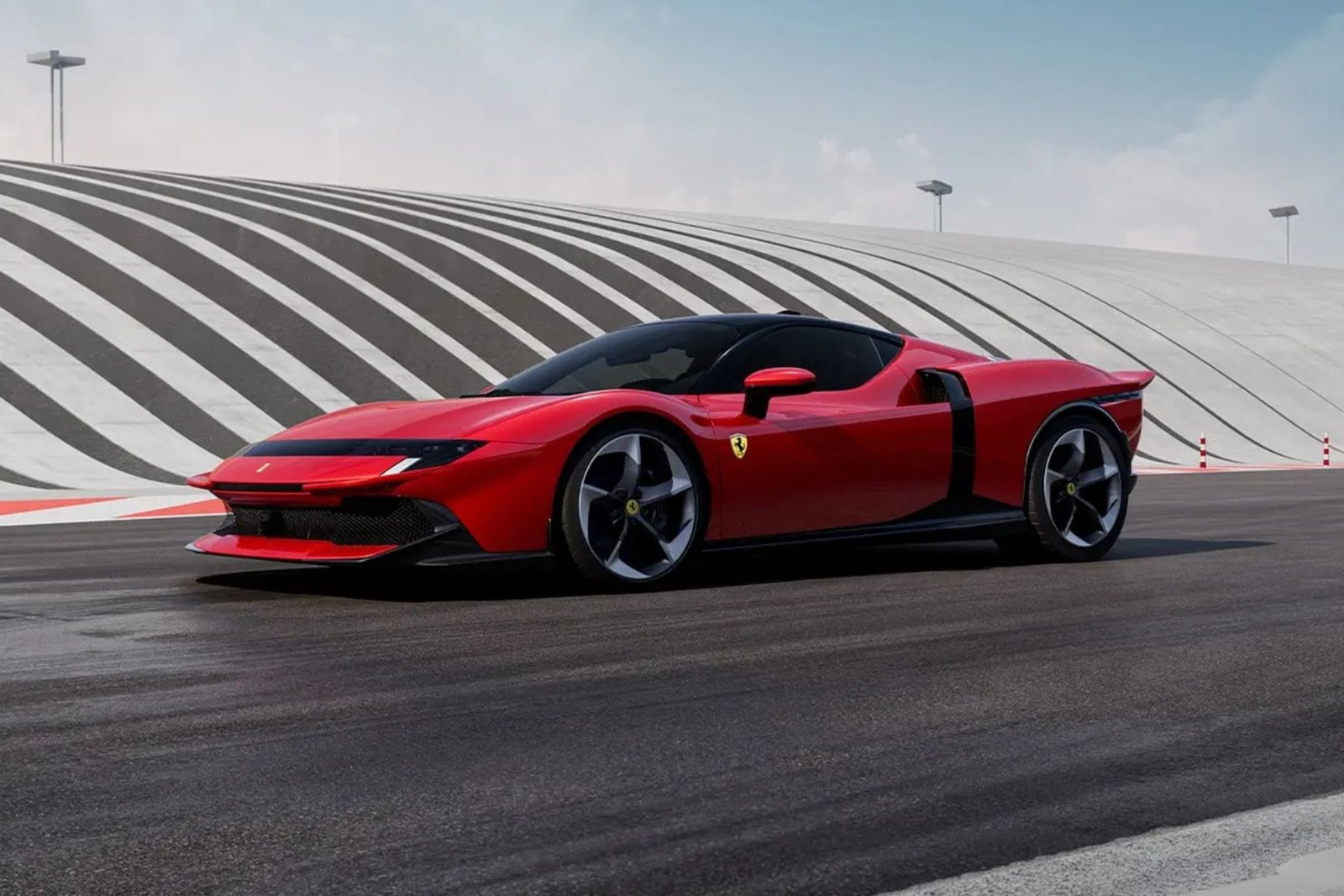
Before we go inside, it’s worth noting how bold Ferrari was with the 849 Testarossa’s exterior and how it managed airflow. Flavio Manzoni oversaw this car, which really leans into a future look by building strong vertical and horizontal lines that have definitely caught everyone’s attention, including mine. It really appears as if they planned every detail, drawing inspiration from Ferrari’s sports cars from the 70s and 80s to achieve that iconic shape.
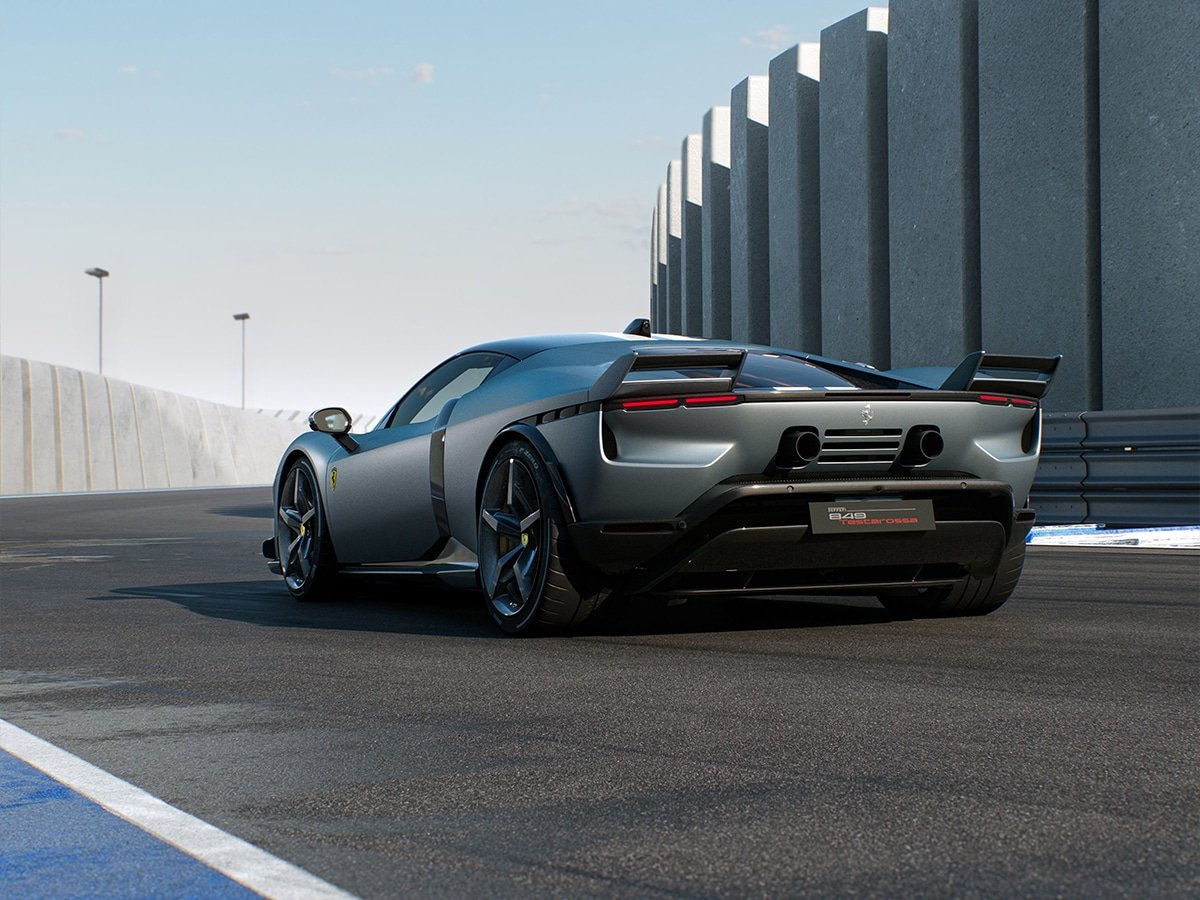
These historical nods really do show up in the details, from the structure’s front volumes to the flowing creases that lead into the distinctive twin-tail rear, inspired by the 512 S. Even the doors serve a dual purpose, functioning as aerodynamic channels rather than just simple body panels, while the black vertical intakes and auxiliary openings help manage airflow efficiently. Looking at the rear again, you’ll notice the twin-tail architecture integrated with an active wing through a patented solution, allowing Ferrari to generate downforce without relying on oversized parts hanging off around.
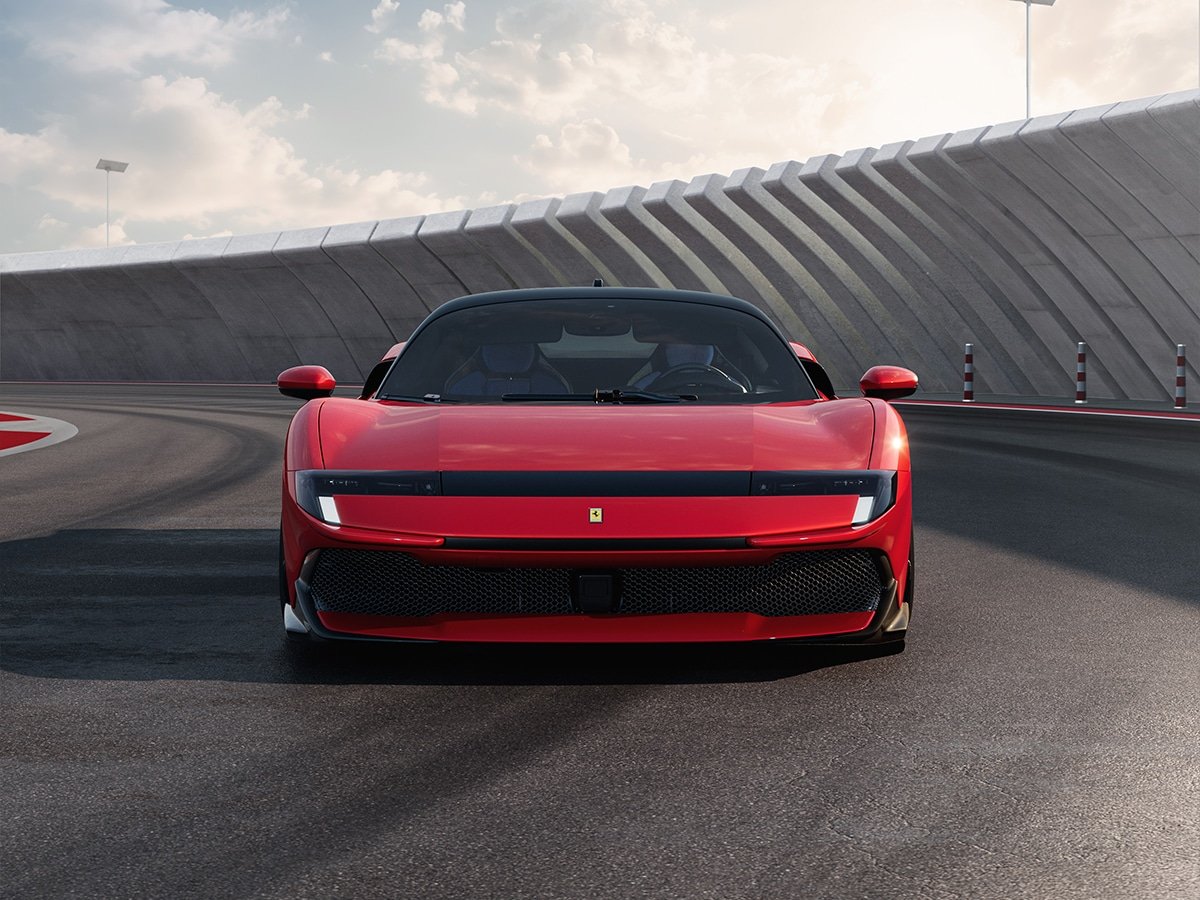
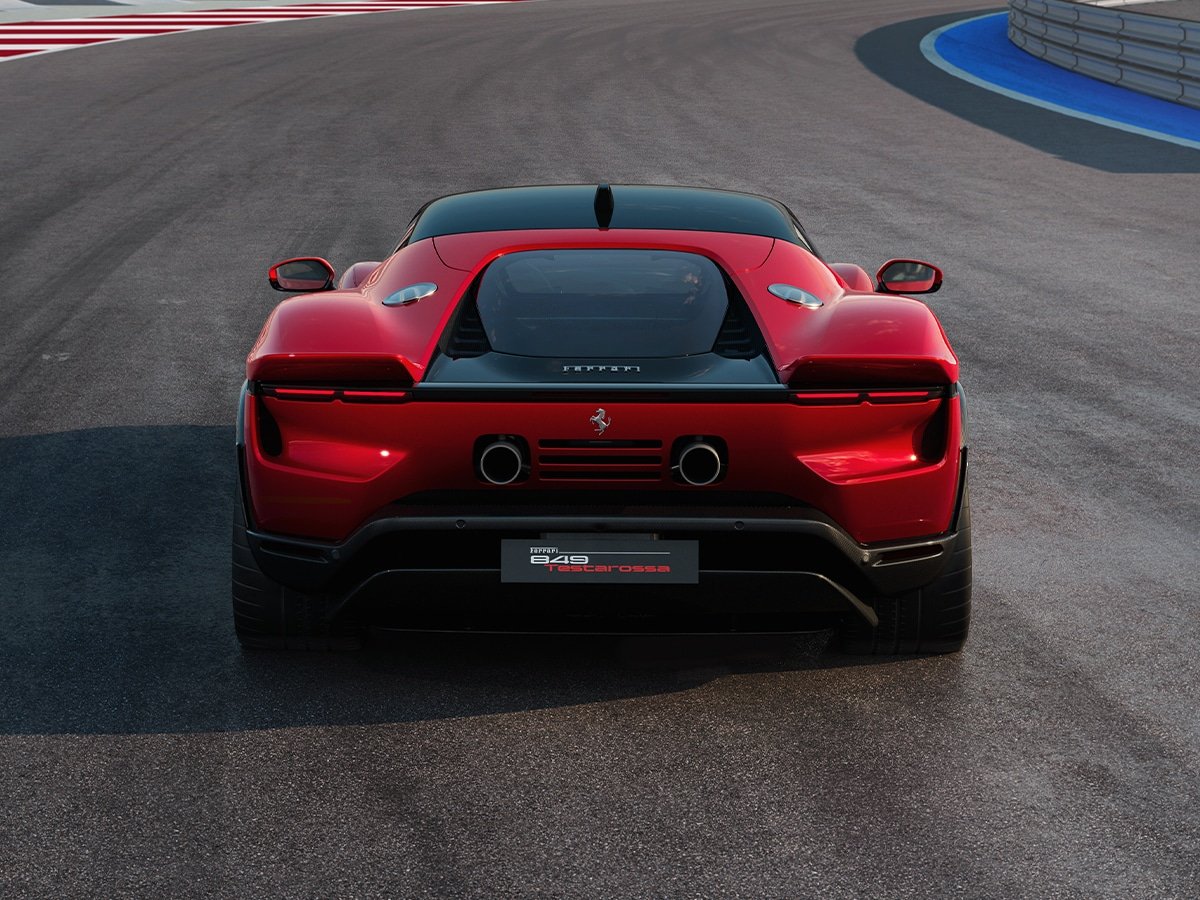
The Assetto Fiorano spec really focused on aerodynamics, making it the most extreme version of the 849 Testarossa by dropping 30 kg from the car because of the carbon-fibre wheels and lighter tubular seat, which is covered in black Alcantara. The real show of its aerodynamic performance comes from its large front splitter with an SF90 XX-style flick, which contributes roughly 10% more front downforce, while the twin-tail rear design adds a similar 10% increase at the rear for high-energy airflow. Also, beneath the car comes with the new cascading vortex generators that deliver a 20% increase in downforce compared to the SF90 Stradale, especially at high speeds.
Despite all that added grip, Ferrari has also improved aerodynamic efficiency. Purosangue-inspired rear wheel arches help evacuate high-pressure air, reducing drag, while a front intake that’s 18% larger improves cooling. The front brake intake is now integrated into the upper ducting, streamlining airflow across the nose. The result is a car that not only produces more downforce but does so more intelligently, reinforcing how closely design and aerodynamics have been developed together at Ferrari.
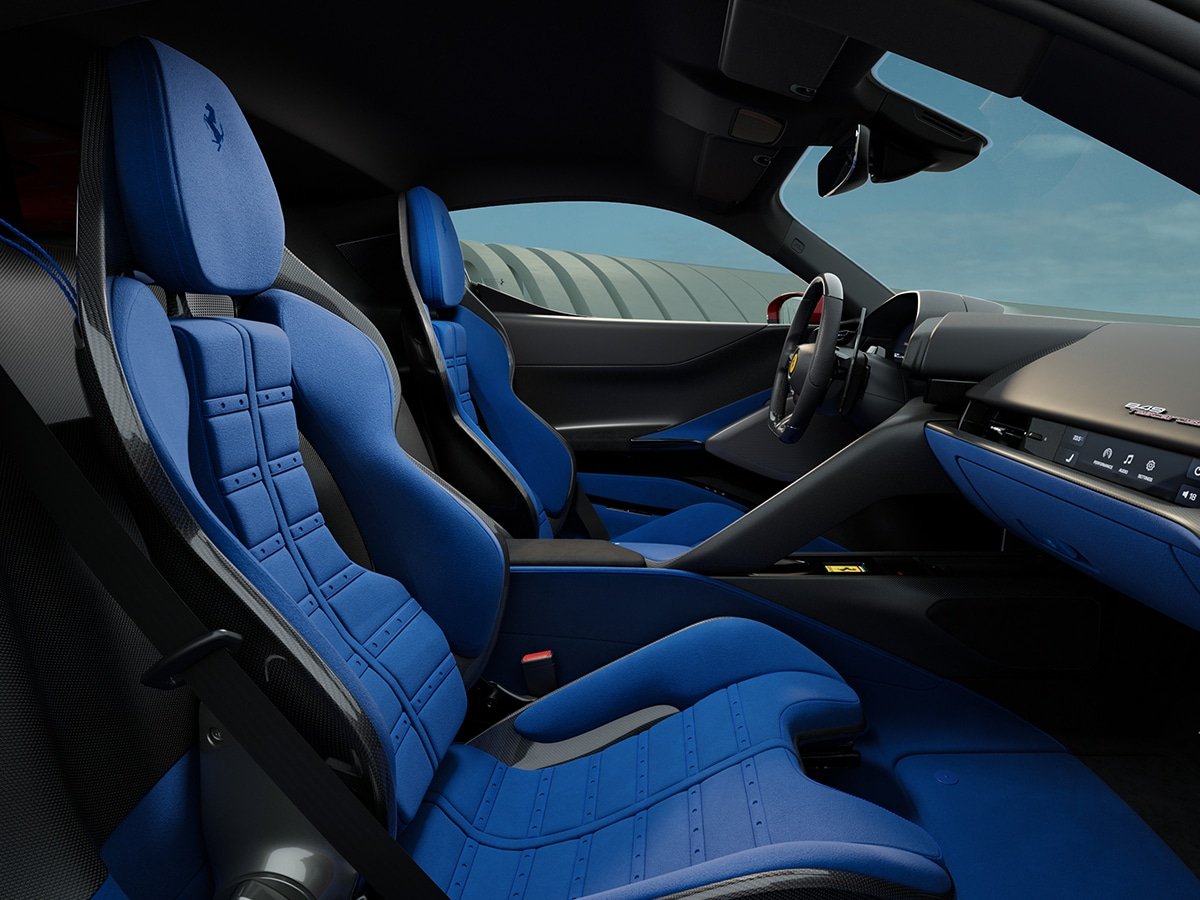
Ready for the interior? Well, inside the 849 Testarossa, Ferrari has truly raised the bar, and you can immediately notice it the moment you sit down. Compared to other models like the 296 GTB, Roma Spider, or even the 12Cilindri, this feels like a significant step forward, especially in the cabin area. Ferrari maintained a performance-first mindset but avoided turning it into a race car, striking a balance that feels fitting for Ferrari’s new flagship.
The overall layout is built around a reimagined horizontal Berlinetta-style dashboard, but here it draws the driver even deeper into the experience. The cabin feels more compact and cockpit-like, nearly single-seater in its design, with visual separation between driver and passenger created by twin sail elements running through the interior. One feature that stood out the most was the F80-inspired gated selector, which gives it a floating appearance from the driver’s side and has an exposed aluminum finish.
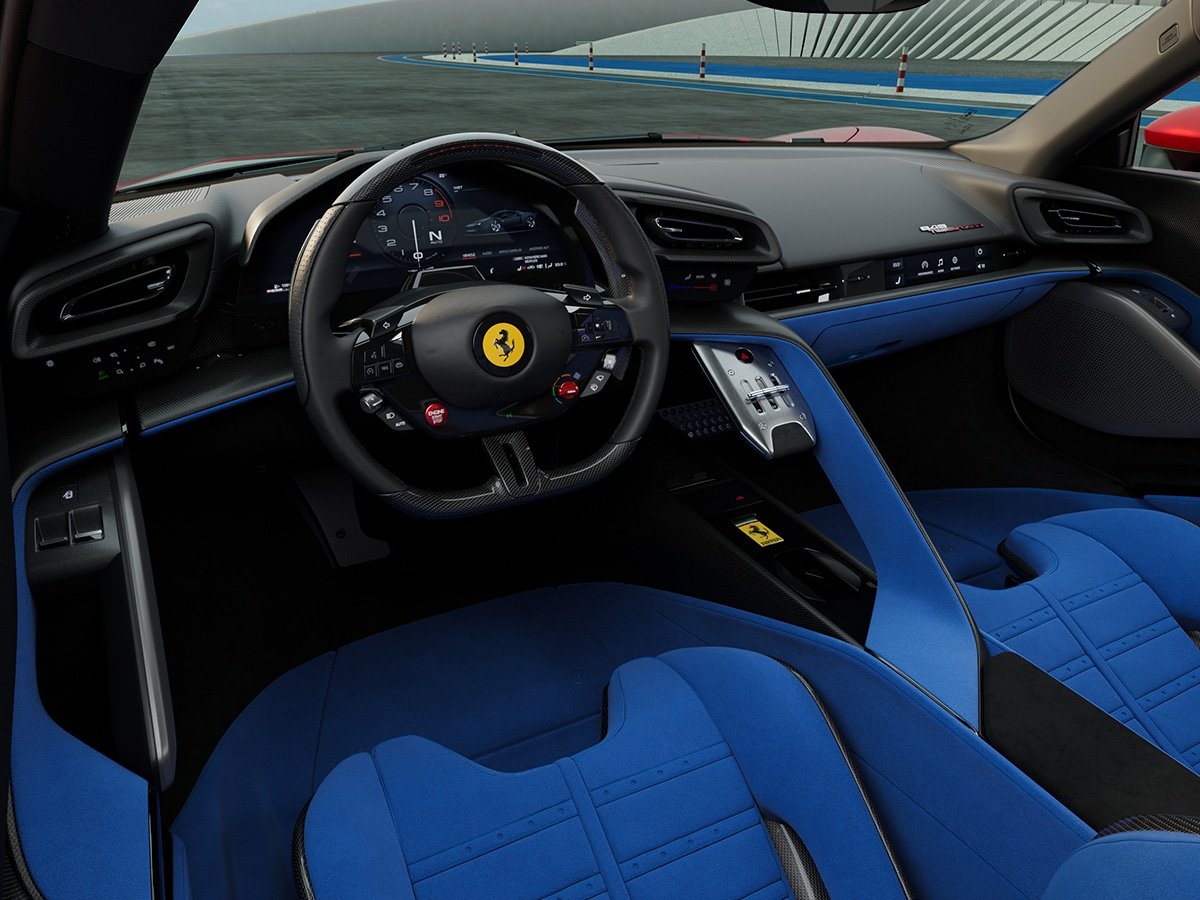
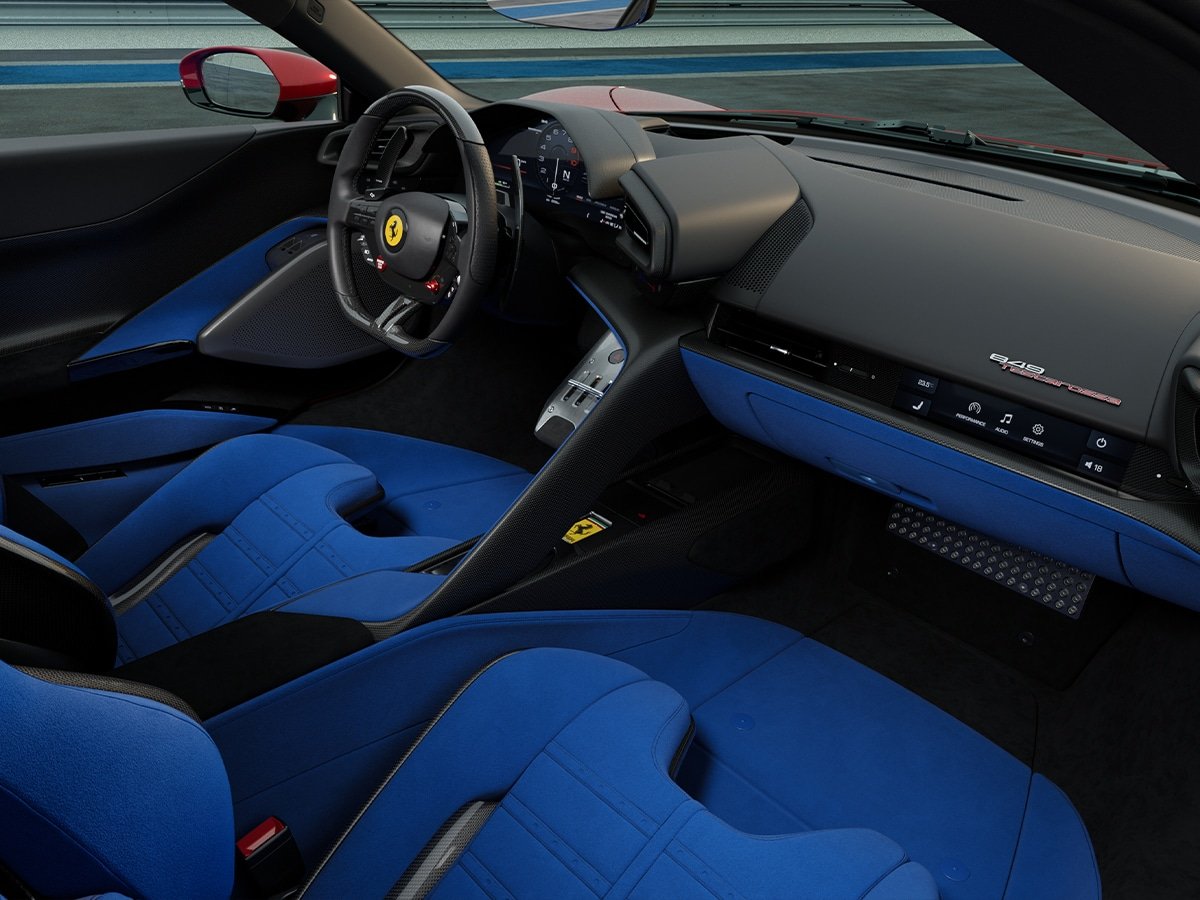
Like all Ferraris, specification plays a huge role in how the interior ultimately feels. For instance, the display leans heavily toward the track-focused end, wrapped in carbon fibre and Alcantara, including carbon-fibre racing seats that keep you securely in place. For owners planning to spend more time on the road than on the track, Ferrari also offers more sculpted comfort seats, allowing the cabin to switch from hardcore to grand touring with a few configuration choices.
And let’s not forget that the mounted touchscreen has become part of the cabin, similar to what you’ll find in other recent Ferraris, which might divide opinion, but key functions remain driver-focused. Apple CarPlay and Android Auto are accessible through the digital instrument cluster, wireless charging is neatly located in the centre tunnel, and the MyFerrari Connect app allows for remote vehicle monitoring. It’s a modern setup, but one that never forgets that the primary focus is on driving.
As I have mentioned above, the coupe is expected to start at around USD $540,000 before taxes, on-road costs, and customizations, placing it among the most expensive production Ferraris. Now, if you’re opting for the Testarossa Spider, the price will definitely go up. You’re looking at around $650,000 before you consider any specific additions or extras you might want.
Alongside the launch, Ferrari is introducing new exterior colours, including Rosso Fiammante—a metallic evolution of Rosso Corsa, and Giallo Ambra. But if you ask for our opinion? We will definitely tell you to go with Bianco Italia all the way. Ferrari expects to deliver its cars as early as 2027, with further details available through authorised dealers or the official Ferrari website.