
























Hotel & Resorts

5 Hotels In Japan You Should Visit At least once In A lifetime

Share via

Our team of editors and experts thoughtfully chooses each product. If you decide to buy through one of our links, we may earn a commission. Learn more. Want to know how we test products? Click here for more details.

Japan is a country that doesn’t just welcome travellers — it stays with them. Every visit feels like a blend of tradition and innovation, serenity and excitement, craftsmanship and modern luxury. But nowhere is that duality more beautifully experienced than in the country’s hotels. From peaceful ryokans tucked away in quiet neighbourhoods to sky-high urban sanctuaries with views that seem unreal, Japan’s best stays offer something far more meaningful than just a place to sleep. They create moments you carry with you long after the trip ends.

This list highlights five exceptional properties that exemplify Japanese hospitality in distinctly different ways. Whether you’re seeking to escape into nature, indulge in sophisticated city luxury, or immerse yourself in the serenity of traditional design, these hotels offer once-in-a-lifetime experiences worth planning your trip around. If you’re dreaming of Japan — or returning for your next adventure — these are the accommodations that should be at the very top of your list.
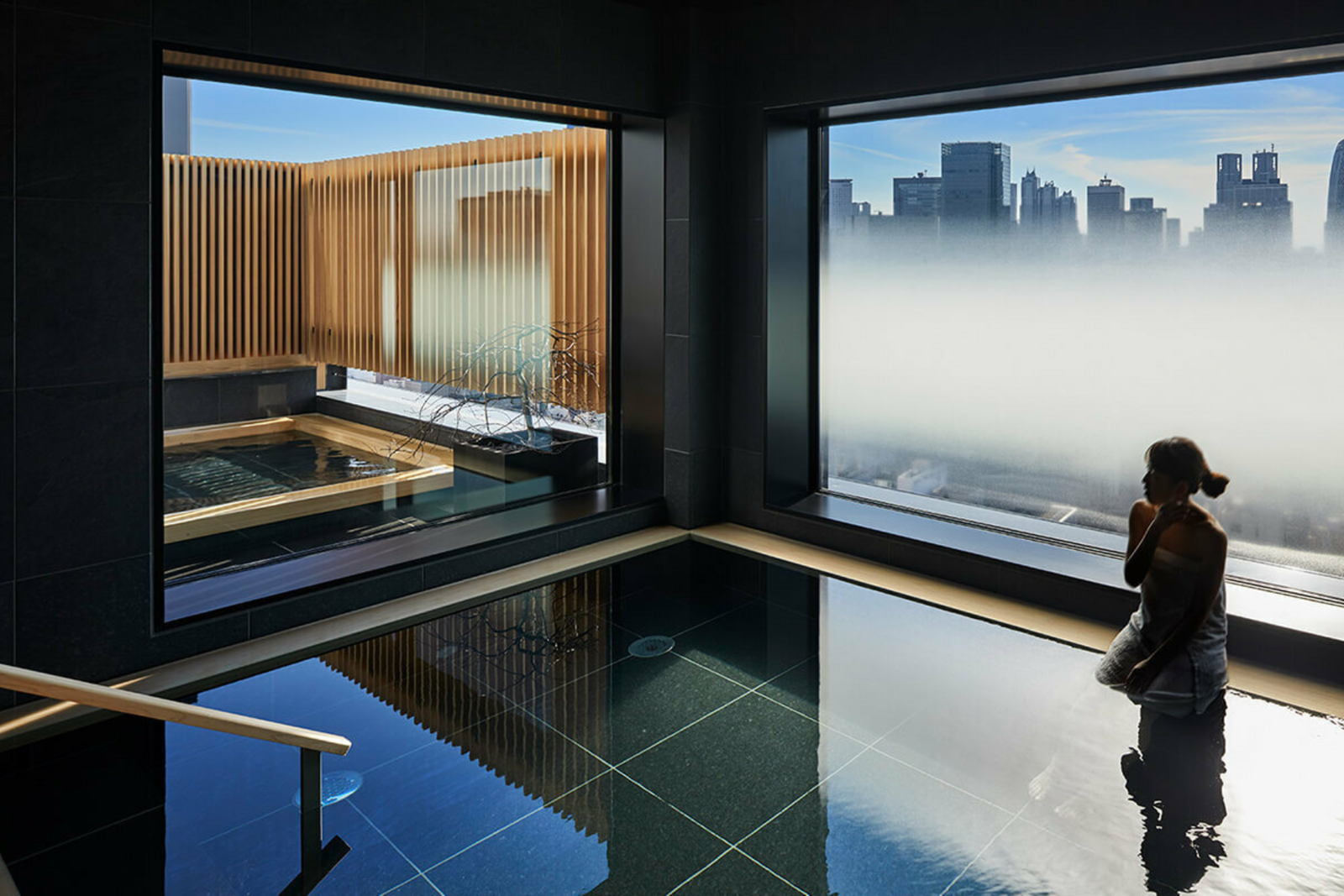
1. Onsen Ryokan Yuen Shinjuku – Tokyo

Few places capture the balance between tradition and modern living like Onsen Ryokan Yuen Shinjuku. Hidden in one of Tokyo’s busiest districts, this ryokan provides an escape that feels worlds apart from the surrounding skyscrapers. Inside, the design is minimalist and calming, with tatami textures, warm wood accents, and gentle lighting that immediately relaxing. Guests can experience genuine Japanese hospitality and peaceful hot-spring baths while enjoying tranquil rooftop views that make you forget you’re in the heart of the city. The open-air onsen is the highlight — a calming soak against the Tokyo skyline that feels almost surreal. Unsurprisingly, the ryokan is consistently fully booked, thanks to its intimate size and growing international reputation. For travellers seeking a traditional yet accessible introduction to Japanese wellness culture, this is the perfect place to start.

2. The Ritz-Carlton – Tokyo

Occupying the upper floors of Midtown Tower, The Ritz-Carlton, Tokyo offers some of the most stunning views in the city — a sweeping panorama that extends across Shinjuku’s skyline and reaches all the way to Mount Fuji on clear days. The hotel combines modern Tokyo luxury with subtle Japanese touches, from elegant washi-inspired interiors to deep-soaking marble bathtubs that overlook the city below. Service is exceptional, as expected, and every interaction feels polished, warm, and quietly attentive.

And if you’re looking to elevate your stay in Tokyo, this is the place that sets the standard. Dining options range from Michelin-starred tempura to expertly crafted cocktails served above the city’s glow, while the spa and lounge areas provide a calm, refined escape from the urban rush. Whether you’re relaxing with live jazz or simply taking in the skyline from your room, The Ritz-Carlton transforms your trip into something unforgettable — a luxurious, cinematic experience from start to finish.
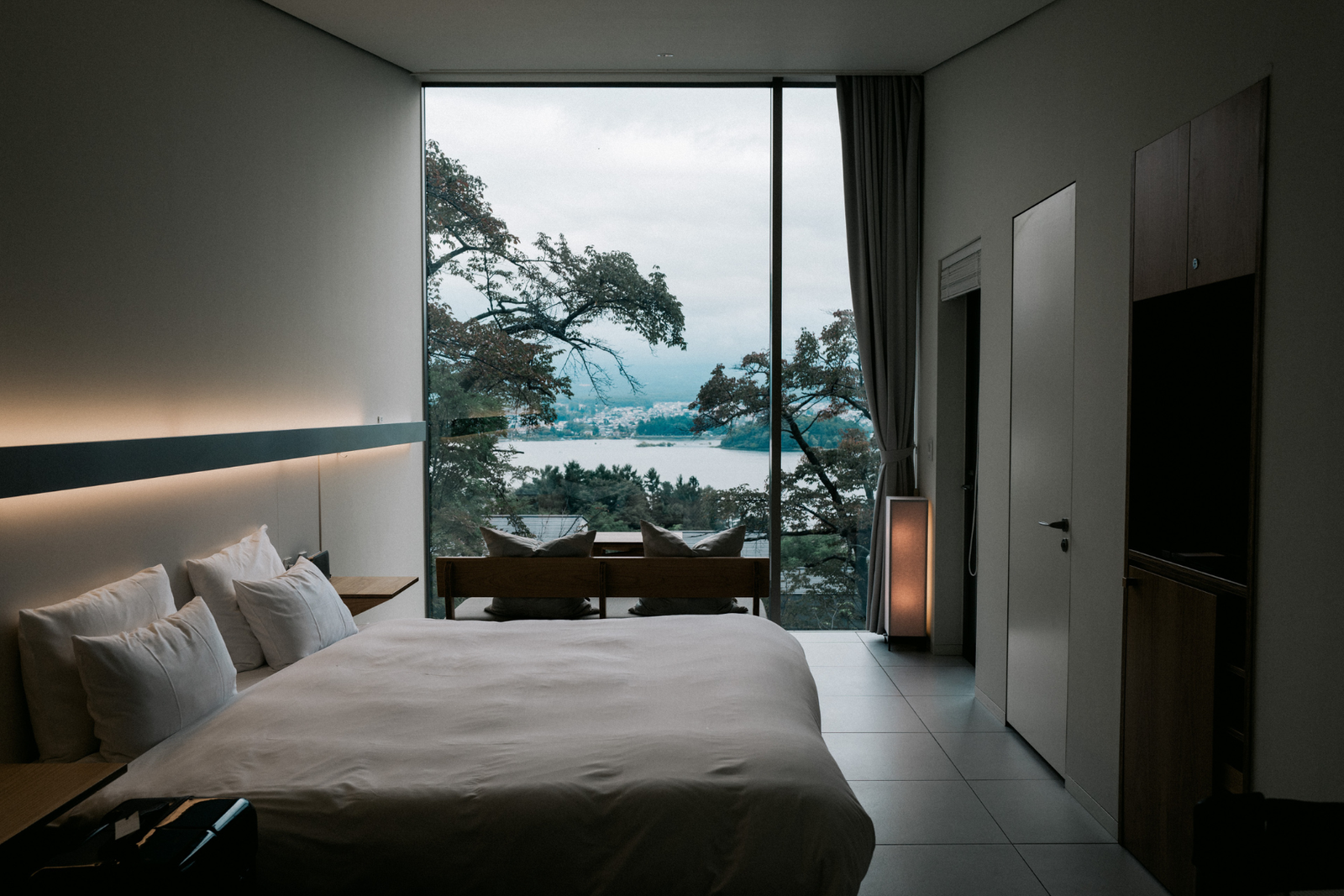
3. Hoshinoya – Fuji 

Hoshinoya Fuji redefines what a nature escape can be. Set deep within a peaceful forest overlooking Lake Kawaguchi, this luxury glamping resort offers front-row views of Mount Fuji from the moment you wake up. Each minimalist cabin opens onto a private terrace, perfect for slow mornings, quiet reading, and evenings spent under the stars. The architecture integrates seamlessly into the landscape, allowing the tranquillity of the forest to speak for itself.

If you want to escape city life and experience Japan’s natural landscape in its most peaceful form, this is the place to visit. Wood-fired meals, guided mountain adventures, and cozy communal spaces create a retreat that feels both adventurous and indulgent. It’s the rare kind of stay that slows you down in all the right ways — a breath of fresh air, literally and figuratively. Hoshinoya Fuji is a destination you visit once and carry with you long after you leave.

4. The Peninsula – Tokyo

Perched above Lake Kawaguchi with Mount Fuji looming in the distance, this luxury glamping retreat offers one of Japan’s most stunning nature escapes. Minimalist cabins open onto private terraces designed for relaxed mornings, quiet reading, and evenings beneath a blanket of stars. If you’re craving a break from city life and want to experience Japan’s natural landscape at its most tranquil, this is the ideal getaway. Wood-fired meals, guided mountain activities, and warm communal spaces create a stay that feels both adventurous and indulgent — a rare retreat that stays with you long after you leave.
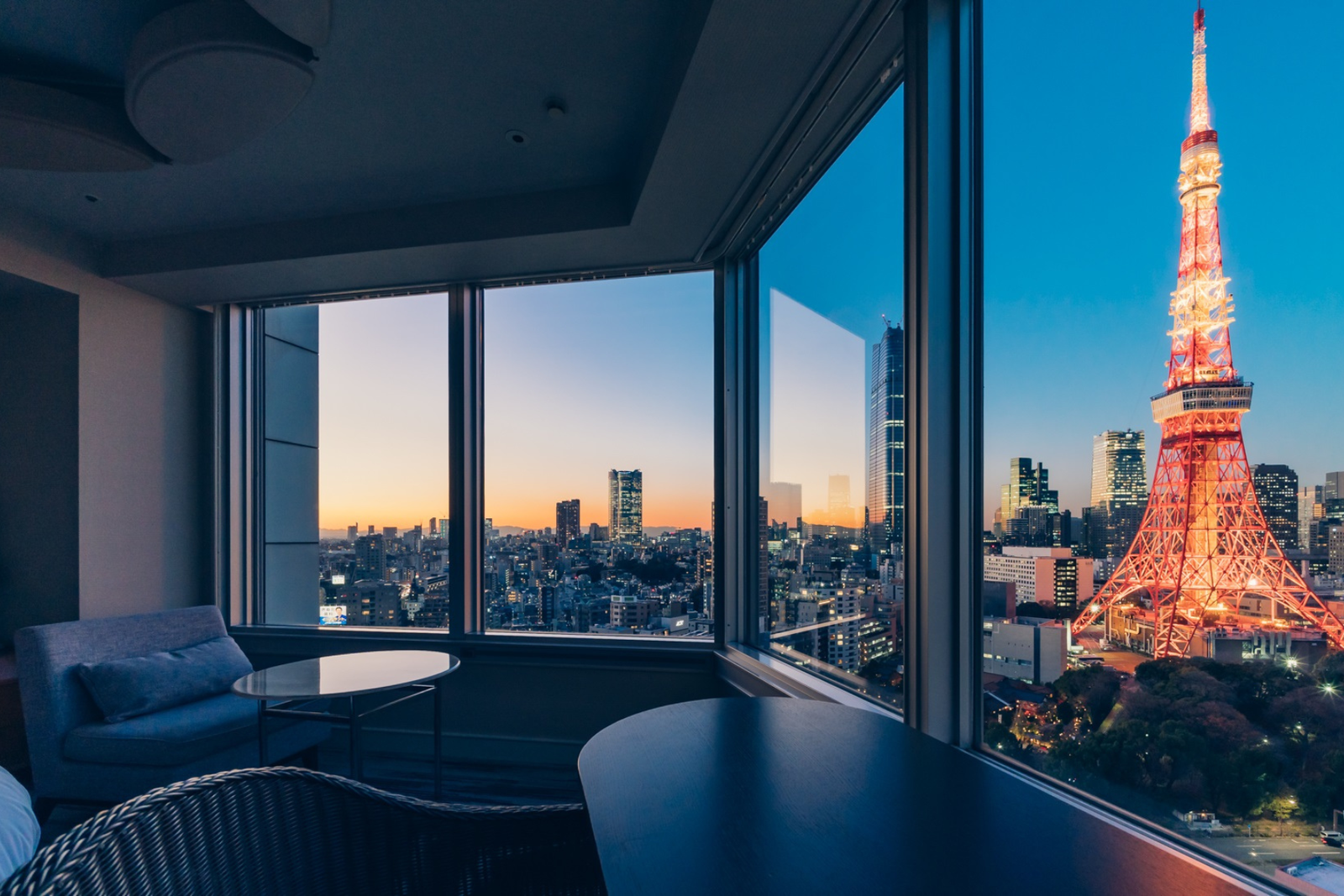
5. The Prince Park Tower – Tokyo

Set within the peaceful greenery of Shiba Park, this understated luxury hotel offers one of the most unique vantage points in the city — with many rooms framing Tokyo Tower so perfectly it feels like a living postcard. The atmosphere is calm and spacious, providing a refreshing sense of breathing space despite being minutes from Roppongi, Ginza, and other major districts. Featuring multiple dining options, elegant rooms, and one of Tokyo’s most impressive in-house onsen facilities, the hotel balances convenience with tranquility. If you’re looking for a stay that combines city access with peaceful surroundings — and a skyline view you’ll never forget — The Prince Park Tower Tokyo is an unbeatable choice.

Why Trust Our List?

These recommendations are based on thorough research, expert insight, and personal travel experience. I travel frequently and have come to understand what modern travellers truly value — from thoughtful design and attentive service to authenticity, comfort, and a sense of place. Each hotel on this list has been assessed not only for its reputation but also for the quality of experience it offers, whether that’s a peaceful retreat, a cultural immersion, or a luxury stay that feels genuinely meaningful. The aim is simple: to provide you with a curated selection of hotels in Japan that stand out for all the right reasons, helping you choose with confidence.


Japan
About the Author
Previous Post
15 Best Classic Fragrances for Men This Winter
Next Post
10 Ways Serge Gainsbourg Still Inspires the Way Men Dress Today

Related Articles

Why the Google Pixel 9a Might Be Google’s Most Important Phone This Year

Reading Time: 7 minutes

Our team of editors and experts thoughtfully chooses each product. If you decide to buy through one of our links, we may earn a commission. Learn more. Want to know how we test products? Click here for more details.

  • The Pixel 9a is scheduled to launch in April 2025, with the price confirmed at USD $499.
  • The phone introduces the Tensor G4 processor to the mid-range market, combining flagship-level hardware with useful daily features powered by Google.
  • It will be available in four finishes: Obsidian, Porcelain, Iris, & Peony—Google’s versions of black, white, purple, and pink.

Google has officially announced the Pixel 9a, with a confirmed release window set for April 2025 and a starting price of USD $499. It’s a clear signal that Google is once again prioritizing the mid-range market—especially when consumers value affordability over spectacle.

The arrival itself isn’t a surprise. The Pixel 9a has been widely anticipated for months, and Google’s hardware plans rarely stay secret for long, so this release wasn’t unexpected. The budget smartphone market has become crowded and genuinely competitive, with strong recent offerings from Apple and Nothing raising the standards for what a “budget” phone should deliver. The Pixel 9a enters this space with a familiar yet refined approach by tightening it with advanced features such as Gemini integration across the system, a brighter, more capable display, a larger battery for daily reliability, and Google’s most powerful in-house processor to date.

So, let’s take a closer look at what’s new with the Pixel 9a, how it fits into Google’s current lineup, and how it compares to the strongest alternatives in the mid-range market.

Google Pixel 9a | Image: Supplied

Google Pixel 9a Specs

Google Pixel 9aGoogle Pixel 8a
Operating SystemAndroid 15Android 14
Display– 6.3” Actua Display
– 2424 x 1080 resolution
– 120Hz refresh rate
– Gorilla Glass 3
– 6.1” Actua Display
– 2400 x 1080 resolution
– 120Hz refresh rate
– Gorilla Glass 3
Internals– Processor: Tensor G4
– RAM: 8GB
– Storage: 128GB, 256GB
– Processor: Tensor G3
– RAM: 8GB
– Storage: 128GB, 256GB
Networking– 5G
– Wi-Fi 6e
– Bluetooth 5.3
– NFC Capable
– 5G
– Wi-Fi 6e
– Bluetooth 5.3
– NFC Capable
CameraFront: 13MP
Rear: 48MP (wide), 13MP (ultra-wide)
Can record video at 4K@60fps
Can record slow motion at 1080p@240fps
Front: 13MP
Rear: 64MP (wide), 13MP (ultra-wide)
Can record video at 4K@60fps
Can record slow motion at 1080p@240fps
Battery5,100mAh4,492mAh
Features– Single USB 3.2 Type-C port
– IP68 dust and water resistant
– Fingerprint unlock & Face unlock
– Gemini AI
– Single USB 3.2 Type-C port
– IP67 dust and water resistant
– Fingerprint unlock
– Gemini AI
Price:USD $499USD $499
Google Pixel 9a | Image: Google

What’s New in Google’s Pixel 9a?

The most obvious change is the move to a 6.3-inch display, bringing Google’s most affordable Pixel into the same size category as its flagship models, like last year’s Pixel 8a, which this year focused more on reinvention and better alignment. It reflects a wider industry trend away from small phones, with most major brands now considering 6.3 inches the new standard. That won’t suit everyone—one-handed use becomes noticeably more difficult—but it does make the 9a feel more consistent with the rest of Google’s lineup.

The Pixel 9a uses the same Tensor chip as last year’s Pixel 9 and Pixel 9 Pro, reducing the performance gap between Google’s mid-range and flagship devices. While the Pixel 9 still has an advantage due to extra memory, the everyday experience on the 9a should be very similar—smooth navigation, quick app launches, and sufficient headroom for multitasking without issues. For most people, that difference will only become noticeable during heavier tasks like gaming or video editing, which put more stress on its processor.

Battery capacity has also increased, reinforcing the Pixel 9a’s focus on endurance rather than raw power. It’s a phone designed to get through a full day without attention, which matters more important now that upgrade cycles are stretching longer. Google has also introduced a new face unlock system, offering faster and more convenient authentication for the A-series for the first time—another example of flagship features quietly filtering down.

With its 13 MP Ultrawide camera, Pixel lets you fit more into a single frame. Perfect for everything from showcasing vast landscapes to adding an artistic vibe to everyday photos. | Image: Google

Google’s Pixel 9a Camera

The Pixel 9a’s camera setup doesn’t follow a simple “better than last year” story, which makes it one of the more interesting parts of the update. Up front, there’s a quiet but meaningful win with a 13MP wide-angle selfie camera, which actually has a higher resolution than the 10.5MP front camera on the Pixel 9. It’s an unexpected benefit for the more affordable model, especially for video calls and front-facing shots where clarity is more important than anything else.

Around the back, it features a dual-camera system—48MP main paired with a 13MP ultra-wide—that is understandably placed below the Pixel 9. However, it also seems to lag behind the Pixel 8a’s 64MP + 13MP setup on paper. This makes the change feel somewhat counterintuitive, especially for a generational update, and it’s one of the few areas where the numbers indicate restraint rather than progress.

That said, this is where Google is clearly relying on Gemini and its broader computational photography stack to handle the complex processing. Although the sensors themselves seem more conservative, the expectation is for better real-world results—improved HDR balance, more consistent colours, and stronger low-light performance—once again showing that, for Google, the final image is more important than what’s listed on the spec sheet.

The Pixel Camera’s innovative AI software can help fix exposure challenges, making it simple to capture beautiful shots in high-contrast situations. | Image: Supplied

Why Google Is Betting on the Pixel 9a

So, why could the Google Pixel 9a be the most significant phone this year? The Pixel 9a reflects current buying habits, as upgrade cycles lengthen, flagship prices rise, and fewer consumers want to pay extra for minor improvements. In this context, the mid-range market has become the key battleground—where Google stands to gain the most. It offers the core features that matter most to users: reliable cameras, streamlined software, and helpful AI capabilities, all at a realistic price point.

More than that, the Pixel 9a signals a shift in focus. By incorporating its newest processor, deeper Gemini integration, and long-term software support into a more affordable device, Google is betting on practicality rather than prestige. If the Pixel 9a succeeds, it won’t be because it attracts headlines—it’ll be because it becomes the phone people recommend without hesitation. And in today’s market, that kind of quiet relevance is exactly what makes it important.

What to Know About the Pixel 9a Launch

Google has announced that the Pixel 9a will be released in April 2025, although the specific date is still unknown. The device will be priced at USD $499, positioning it in the mid-range segment and highlighting Google’s emphasis on accessibility over a prolonged, hype-focused launch.

Google Pixel 9a | Image: Google
Google
About the Author

Related Articles

arrow_drop_up