







Jaeger-LeCoultre has clearly arrived at Watches and Wonders 2026 with precision on its mind. We have already seen that with the maison’s new Master Control Chronomètre collection, where a new High Precision Guarantee raised the standards for its everyday watches. But apparently, testing precision down here on Earth wasn’t quite enough, because Jaeger-LeCoultre is now pushing the Gyrotourbillon straight into the stratosphere.
Meet the Master Hybris Inventiva Gyrotourbillon à Stratosphère, the first watch in Jaeger-LeCoultre’s new Hybris Inventiva series and one of the most ambitious complications to leave the Vallée de Joux manufacture. At its centre is a new triple-axis tourbillon designed to explore 98% of all possible positions, helping to counter the effects of gravity on chronometric precision.
Advertisement · Continue Reading Below
And when we say triple-axis, Jaeger-LeCoultre really means it. The construction places a tourbillon inside another tourbillon, which itself sits inside a third, with three titanium cages rotating around the X, Y and Z axes at different speeds. Somehow, the entire 189-component mechanism weighs just 0.783 grams and occupies a volume only slightly larger than a pearl.
So yes, the Reverso will always be the Jaeger-LeCoultre watch most people recognize first, but the Gyrotourbillon à Stratosphère is a reminder of what this manufacture can do when its engineers are given room to get a little carried away. Here’s everything you need to know about the triple-axis tourbillon taking Jaeger-LeCoultre’s pursuit of precision to new heights.
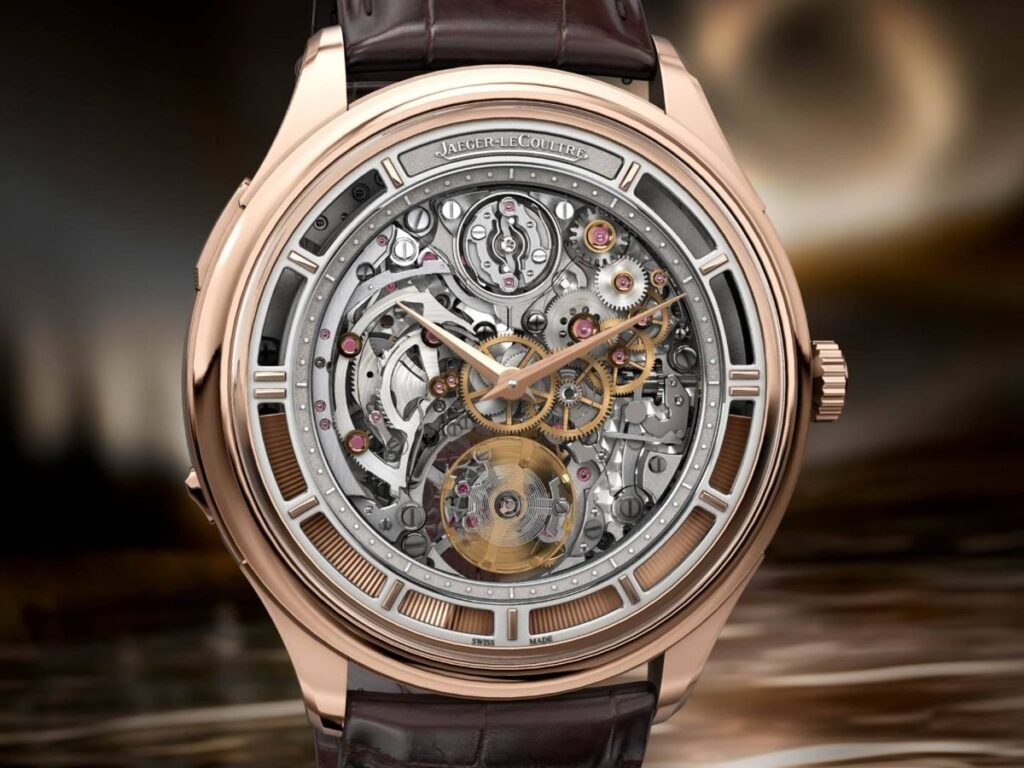
Before we head into the stratosphere, Jaeger-LeCoultre has another serious piece of watchmaking to show us. The Master Hybris Mechanica Ultra Thin Minute Repeater Tourbillon brings together a minute repeater and a one-minute flying tourbillon inside an 18K pink-gold case measuring 41.4mm across and only 8.25mm thick. Rather than hiding all that mechanical work beneath a traditional dial, the open construction puts the movement front and centre, giving you a clear look at what is happening inside.
With the automatic Calibre 362, the minute repeater is built directly into the movement rather than added as a separate module. The striking mechanism occupies roughly one-third of the calibre, while Jaeger-LeCoultre’s silent-timelapse reduction system and trebuchet hammers handle the chiming side of things. The flying tourbillon has also been designed with thinness in mind, removing the traditional upper bridge and using a patented S-shaped hairspring to keep the construction as compact as possible.
Advertisement · Continue Reading Below
Sapphire plays a major role in how the watch presents all this complexity, with transparent bridges that allow the mechanics to appear almost suspended within the case. As Lionel Favre, Jaeger-LeCoultre’s Product Design Director, puts it, “Calibre 362 is a technical tour-de-force utilising sapphire bridges as integral part of the movement to reveal the invisible.” The automatic winding system follows the same thinking, using a peripheral oscillating weight mounted on 36 ceramic ball bearings that travels around the edge of the movement without adding extra thickness or blocking the view.
The result is a watch that does an awful lot without looking weighed down by its own complications. A minute repeater, flying tourbillon and automatic winding system are all packed into an ultra-thin case, yet Jaeger-LeCoultre has made sure the mechanics remain part of the visual experience rather than something reserved for the caseback. Limited to 10 pieces, this is the kind of watch that reminds us why the Hybris Mechanica name carries so much weight in serious watchmaking.
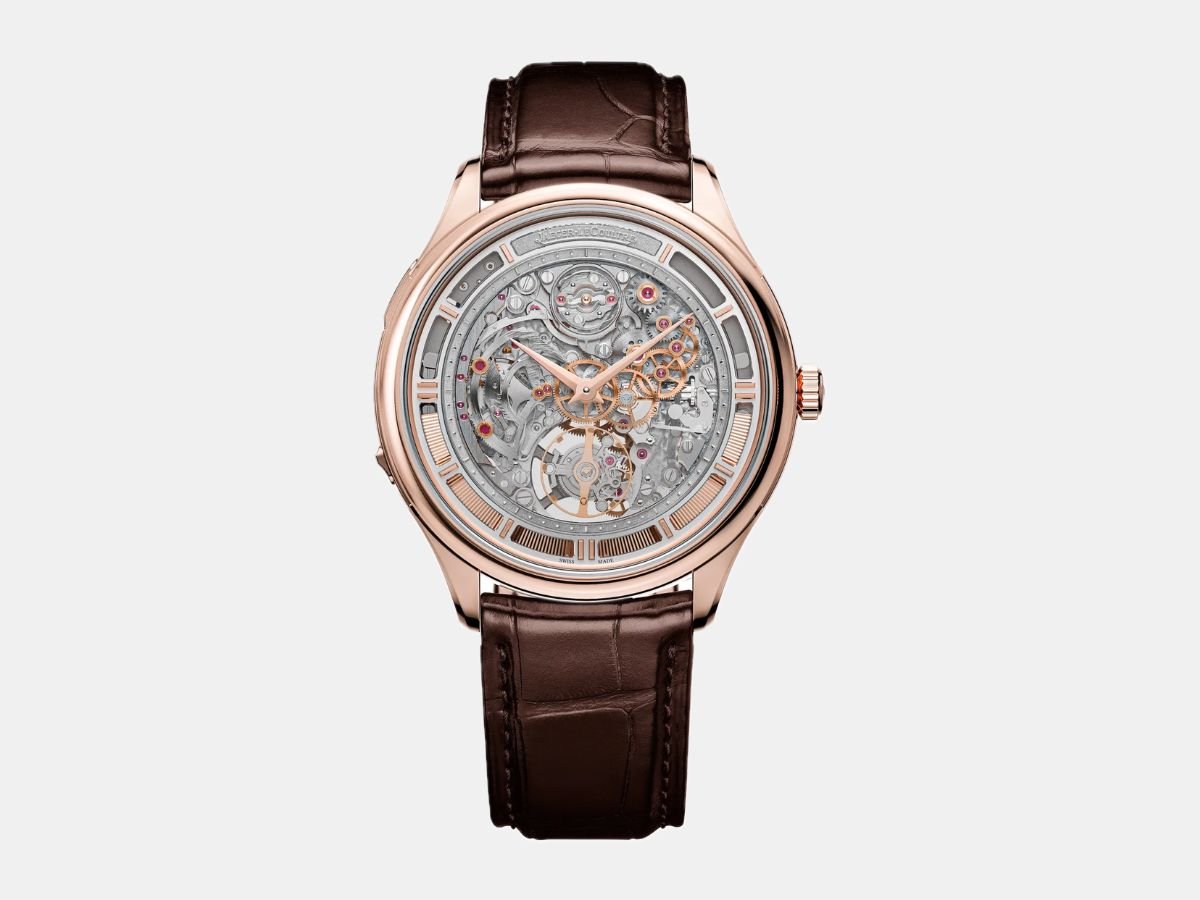
- Brand: Jaeger-LeCoultre
- Model: Master Hybris Mechanica Ultra Thin Minute Repeater Tourbillon
- Reference: Q13125S2
- Diameter: 42 mm
- Thickness: 12.5 mm
- Material: Pink gold 750/1000 (18 Carats)
- Dial: White Gold / Open-Worked
- Calibre: Automatic Jaeger-LeCoultre Calibre 362
- Power Reserve: 42 Hours
- Water-Resistance: 3 Bar (30 metres, 100 feet)
- Price: Upon Request (Limited Edition – 10 Pieces)

Long before Jaeger-LeCoultre introduced the Hybris Inventiva collection, the manufacture had already proven its ability to build exceptionally precise tourbillons. When the Calibre 978 debuted in 2009, it won the first modern-era chronometry competition thanks to its remarkable accuracy and reliability during everyday wear. Rather than leaving that achievement in the past, Jaeger-LeCoultre has brought the movement back for 2026 inside the Master Grande Tradition Tourbillon Jumping Date, pairing its proven chronometric performance with a more contemporary presentation. Housed in a 42mm case crafted from 18K pink gold, the watch combines polished, brushed and micro-blasted finishes that allow light to play across the case from every angle.
The star of the watch remains its beautifully engineered one-minute tourbillon, now made up of 64 individual components yet weighing less than 0.5 grams. It’s an extraordinary piece of engineering when you consider both its complexity and its size. Surrounding it is one of the collection’s most distinctive features — the jumping-date display. Rather than allowing the date hand to pass directly over the tourbillon, Jaeger-LeCoultre positions the 15th and 16th almost 90 degrees apart, allowing the hand to instantly jump across the opening at midnight and keep the tourbillon completely unobstructed. It’s a clever solution that is every bit as practical as it is enjoyable to watch in action.
Advertisement · Continue Reading Below
The watch also features an independently adjustable 24-hour disc, allowing it to operate either as a traditional day-and-night indicator or as a practical second time-zone display. Jaeger-LeCoultre has paid just as much attention to the finishing as the mechanics themselves. The tourbillon’s twin 18K white-gold upper bridges and the 24-hour disc are meticulously polished using the traditional berçage technique, in which a burnishing file is worked in a gentle rocking motion to create their perfectly rounded profiles. Turn the watch over, and the sapphire caseback reveals bridges decorated with Côtes de Genève soleillé, Jaeger-LeCoultre’s signature sunray interpretation of the famous Geneva stripes.
Powering everything is the automatic Calibre 978, comprising 305 components and delivering a 45-hour power reserve. More than 15 years after it first earned recognition for its chronometric performance, the movement continues to demonstrate why it remains one of Jaeger-LeCoultre’s most respected creations. Limited to 100 pieces, the Master Grande Tradition Tourbillon Jumping Date blends serious mechanical watchmaking with just enough playfulness to remind us that even the most complicated complications can still have a little personality.
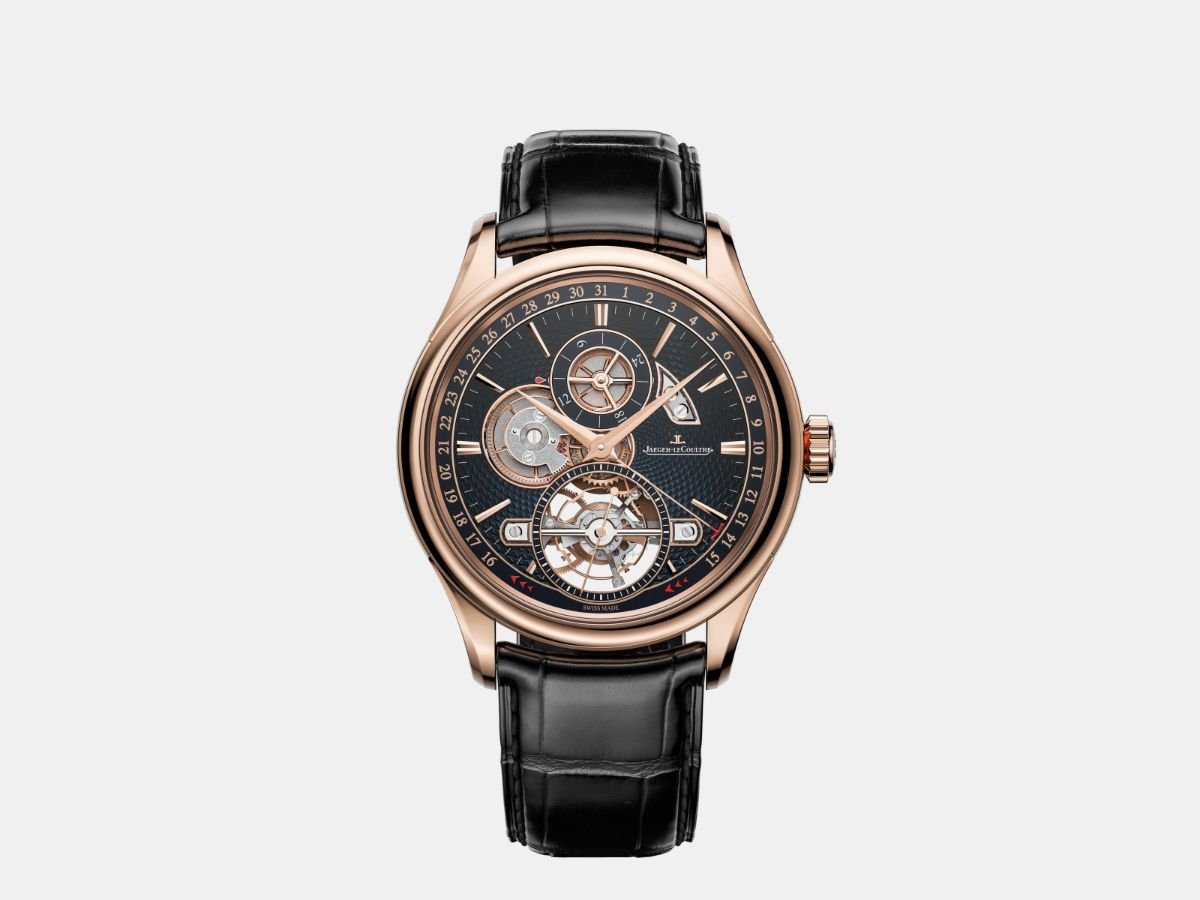
- Brand: Jaeger-LeCoultre
- Model: Master Grande Tradition Tourbillon Jumping Date
- Reference: Q4202480
- Diameter: 42 mm
- Thickness: 12.5 mm
- Material: Pink gold 750/1000 (18 Carats)
- Dial: Blue & Enamel
- Calibre: Automatic Jaeger-LeCoultre Calibre 978
- Power Reserve: 45 Hours
- Water-Resistance: 5 Bar (50 metres, 165 feet)
- Price: Upon Request (Limited Edition – 100 Pieces)
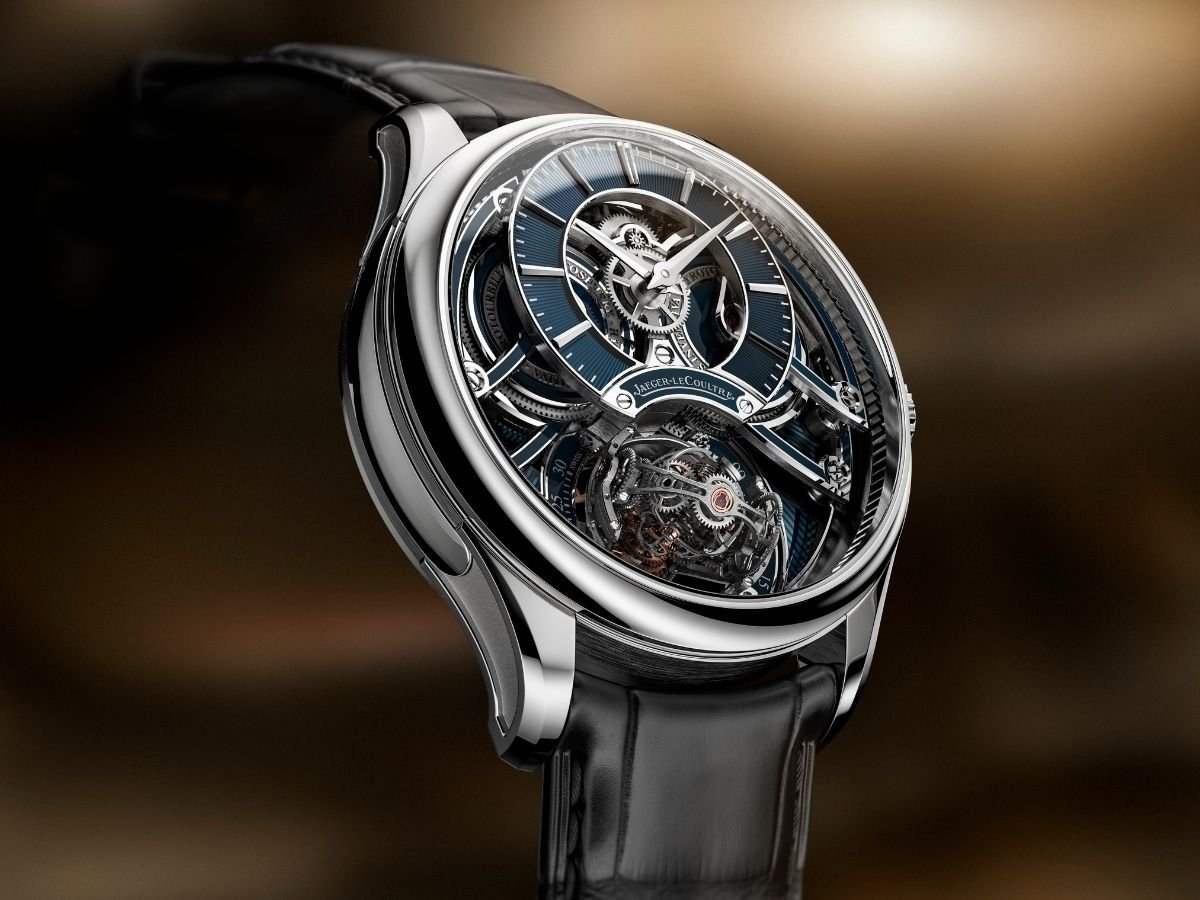
Finally, the last piece that we’ve been waiting for is the Master Hybris Inventiva Gyrotourbillon À Stratosphère. But we have to understand that over the past two decades, Jaeger-LeCoultre has been refining the Gyrotourbillon, and the Master Hybris Inventiva Gyrotourbillon À Stratosphère is the result of that journey. Introduced as the very first watch in the new Hybris Inventiva collection, it represents the next chapter in the manufacture’s pursuit of chronometric precision. Housed in a 42mm platinum case, the watch is powered by the manually wound Calibre 178 and builds on almost eight decades of accumulated tourbillon expertise.
At the centre of the watch sits a remarkable triple-axis tourbillon unlike anything else in Jaeger-LeCoultre’s current collection. Rather than relying on a single rotating cage, the Gyrotourbillon À Stratosphère places one tourbillon inside another, which itself sits inside a third, allowing the mechanism to compensate for the effects of gravity from almost every possible angle. Its three lightweight titanium cages rotate around the X, Y and Z axes every 20, 60 and 90 seconds, achieving an astonishing 98 percent coverage of all possible wrist positions. According to Jaeger-LeCoultre, no other 4 Hz tourbillon currently offers such a broad range of positional coverage.
What makes the engineering even more impressive is just how compact it all is. The entire regulating system consists of 189 components, yet it weighs only 0.783 grams and occupies a space barely larger than a pearl. To maximize precision, Jaeger-LeCoultre has paired the construction with a cylindrical hairspring, allowing the balance to breathe concentrically regardless of amplitude, wrist position or remaining power reserve. Ceramic ball bearings further reduce friction, helping the mechanism perform as consistently as possible.
Advertisement · Continue Reading Below
Of course, a movement like this deserves to be seen. The front of the watch is framed by a beautifully executed guilloché ring dial, finished with translucent blue enamel and layers of lacquer, creating a striking contrast against the exposed mechanics. Just when you think the artwork is done, the decorative finishing continues throughout the movement, blurring the line between traditional dial-making and movement decoration. As Lionel Favre, Product Design Director at Jaeger-LeCoultre, explains, “The Calibre 178 embodies Jaeger-LeCoultre’s excellence, where the decorative art of the dial extends to the movement’s components, forging a visual continuity that erases the usual boundary between the display and the mechanism.”
Turning the watch over reveals the full architecture of Calibre 178 beneath a sapphire caseback, with the movement’s support structure and hand-finished decoration on full display. The calibre beats at 28,800 vibrations per hour (4 Hz) and provides a generous 72-hour power reserve, with a discreet power-reserve indicator on the back of the movement rather than cluttering the dial. The platinum case itself combines polished, brushed and micro-blasted surfaces, creating a constantly shifting play of light that complements the complexity within.
Limited to just 20 pieces worldwide, the Master Hybris Inventiva Gyrotourbillon À Stratosphère feels less like a conventional wristwatch and more like a demonstration of what Jaeger-LeCoultre can achieve when precision is the sole priority. More than twenty years after introducing the original Gyrotourbillon, the manufacture has taken one of its greatest inventions and pushed it further than ever, creating a watch that truly lives up to its name.
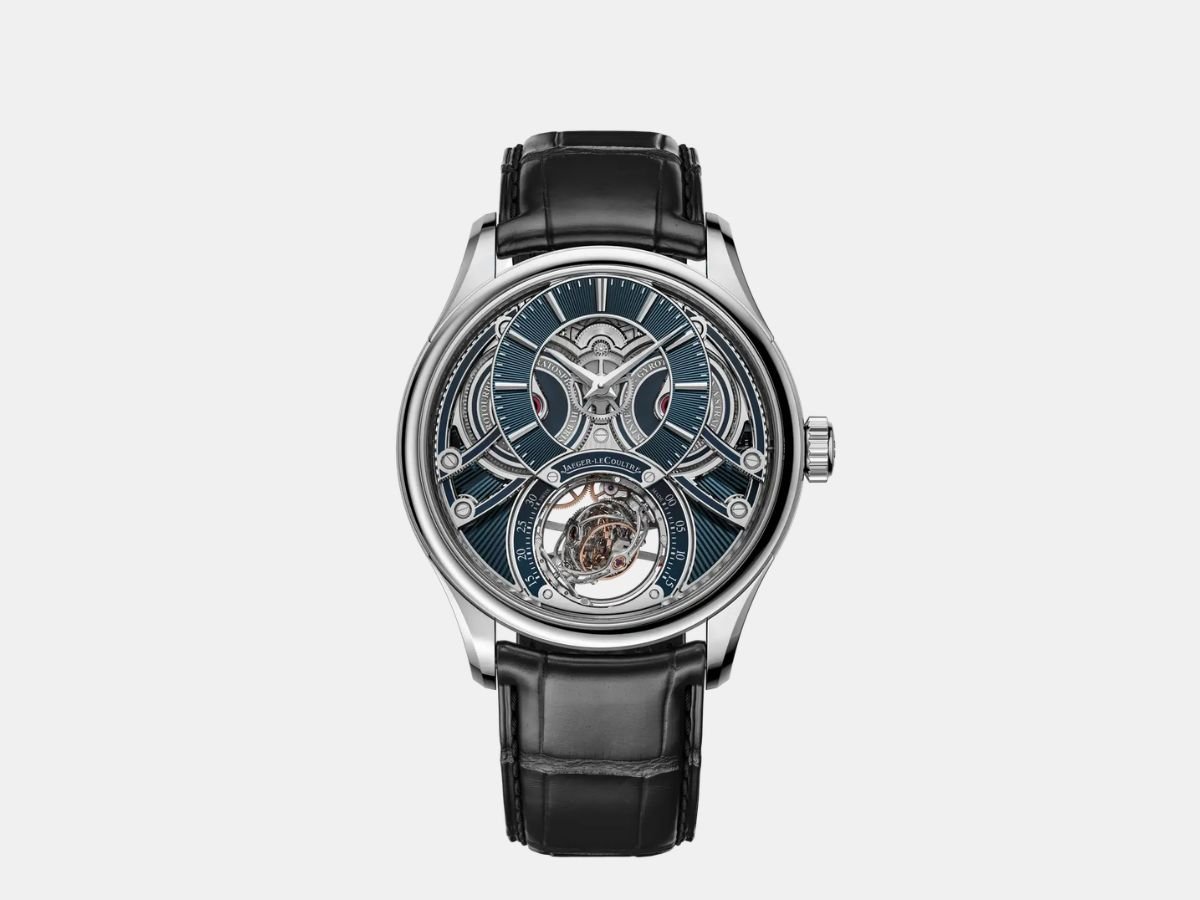
- Brand: Jaeger-LeCoultre
- Model: Master Hybris Inventiva Gyrotourbillon À Stratosphère
- Reference: Q5306480
- Diameter: 42 mm
- Thickness: 16.15 mm
- Material: Platinum
- Dial: Ring dial featuring guilloché and translucent blue enamel
- Calibre: Jaeger-LeCoultre Calibre 178 Manual Winding
- Power Reserve: 72 Hours
- Water-Resistance: 5 Bar (50 metres, 165 feet)
- Price: Upon Request (Limited Edition – 20 Pieces)
Advertisement · Continue Reading Below
There are watches that exist to tell the time, and then there are watches like these that remind us just how far mechanical watchmaking can be pushed. With the Master Hybris Mechanica Ultra Thin Minute Repeater Tourbillon, Master Grande Tradition Tourbillon Jumping Date and Master Hybris Inventiva Gyrotourbillon À Stratosphère, Jaeger-LeCoultre hasn’t simply introduced a collection of high complications—it has showcased three very different interpretations of precision, engineering and traditional craftsmanship. Each watch highlights a different chapter of the manufacture’s technical expertise, from ultra-thin chiming mechanisms to competition-winning tourbillons and an entirely new generation of triple-axis regulation.
What stands out most is that every feature feels useful rather than too much. The minute repeater focuses on creating impressive mechanical detail inside a very thin case; the Tourbillon Jumping Date shows that practical use and fine watchmaking can work well together, while the Gyrotourbillon À Stratosphère shows what happens when Jaeger-LeCoultre lets its engineers fully rethink precision from the start. Together, they show why the brand is still called the “Watchmaker of Watchmakers”—not because it adds complexity just for show, but because every new idea builds on almost two hundred years of watchmaking experience.