





















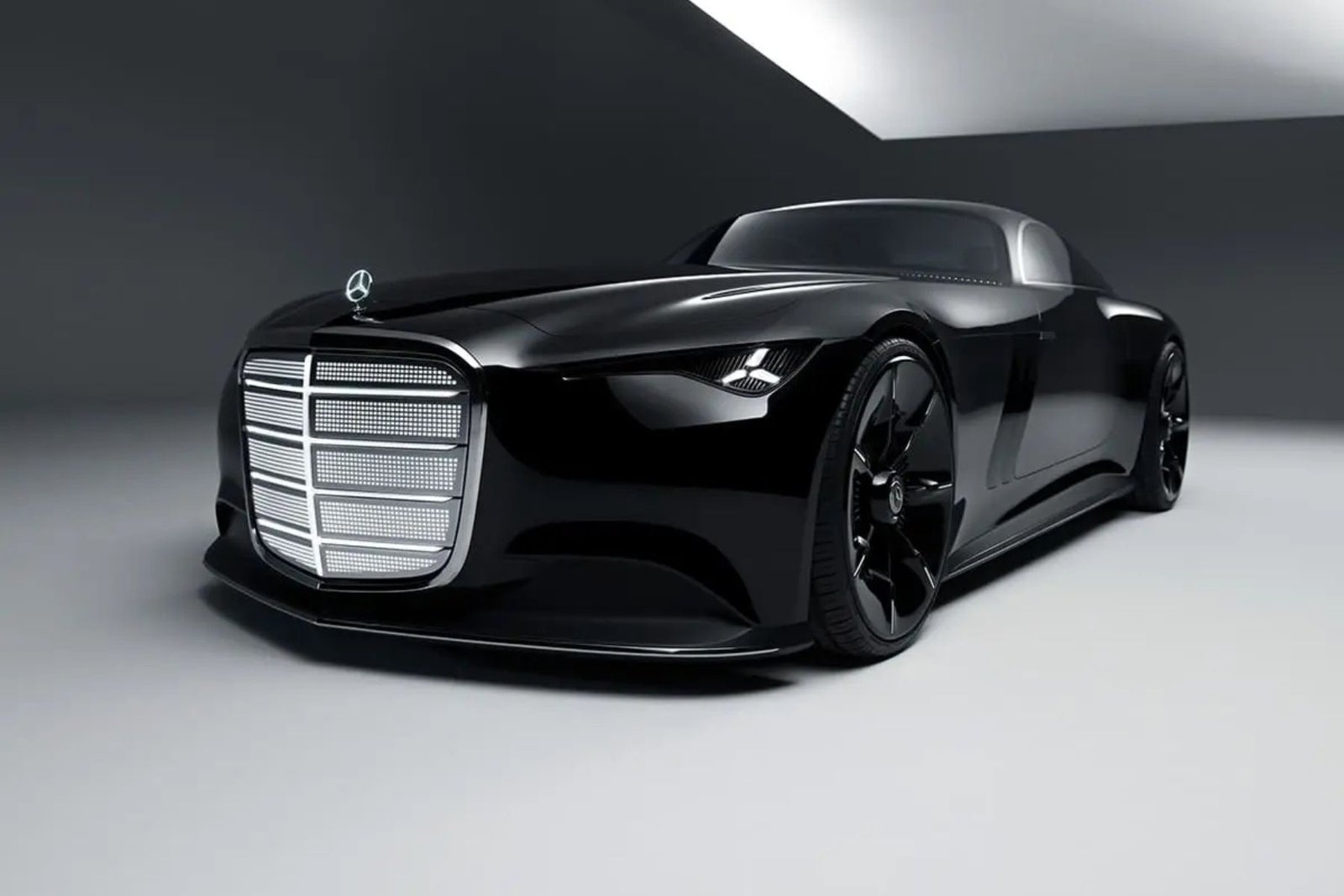

Ever wanted to arrive at a wedding in full gangster mode, dressed head to toe in a blacked-out tuxedo, sunglasses on, and hell of confidence dialled all the way up, and own the room? That’s exactly what you are looking at, even though this is a concept by Mercedes-Benz called the ‘Vision Iconic’. Even though it will almost certainly never see a production line, the Vision Iconic feels like it’s making a dramatic entrance, and yet it dangerously is aware of its surroundings.
Mercedes-Benz calls it the Vision Iconic, and while the name might be bold, the design supports it. In an era where many concept cars feel awkward or overdesigned, this one manages to look genuinely good, leaning into exaggerated luxury. It definitely takes inspiration from the 1930s and 1940s and grand concepts like the Cadillac 16, the Maybach Excelero, and even the Daimler Double-Six, all of which feature a modern cinematic edge.
The Vision Iconic isn’t about what will hit showrooms next year, but about reminding everyone of what the brand is capable of when it allows creativity to lead. As Markus Schäfer explains, “Vision Iconic embodies our vision for the future of mobility,” adding, “With groundbreaking innovations such as neuromorphic computing, steer-by-wire, solar paint, and Level 4 highly automated driving, along with state-of-the-art technology, we are setting new standards for the electric and digital age. This beautiful vehicle is a testament to our commitment to making the mobility of tomorrow a reality today.”
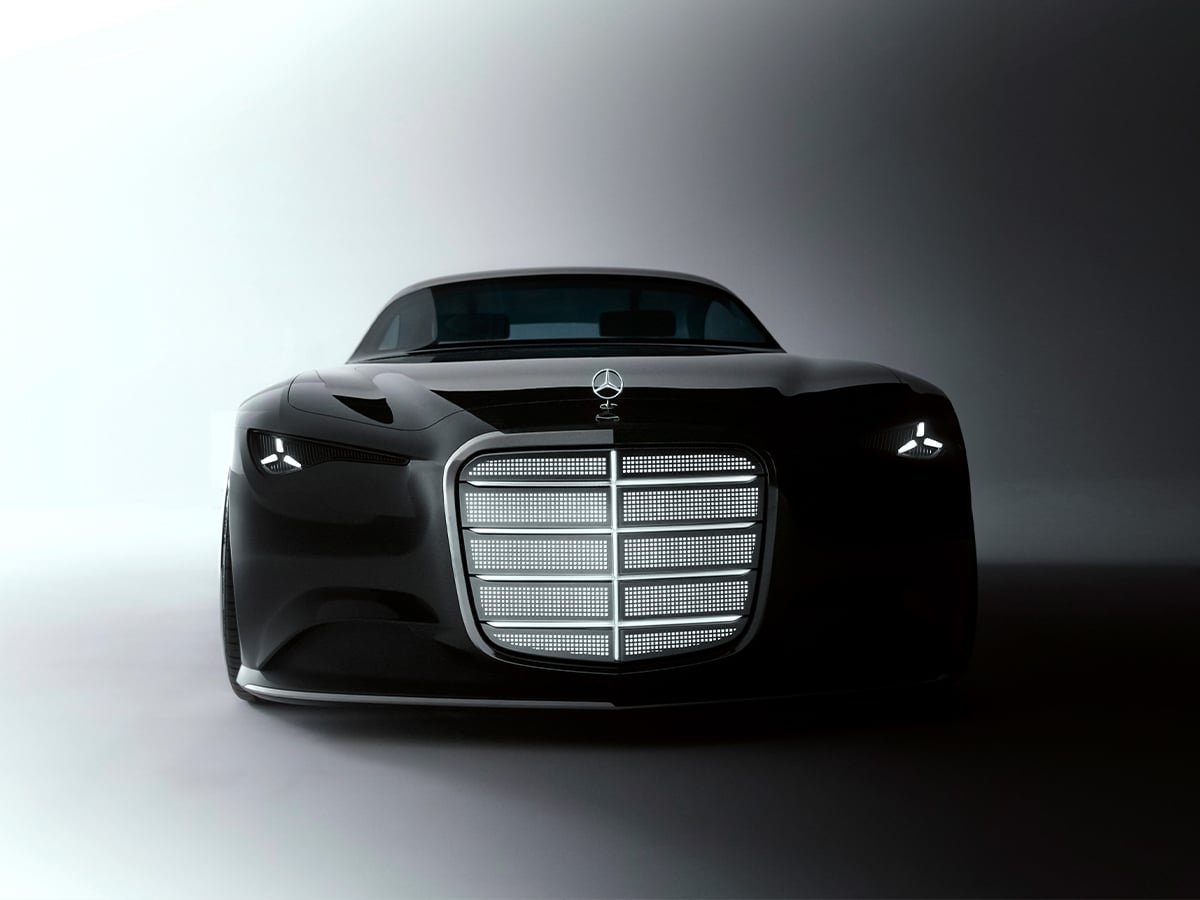
Let’s start with the front end, where the Vision Iconic immediately grabs everyone’s attention with its grille. Its upright stance is a nod to some of Mercedes-Benz’s most commanding luxury cars, including the 600 Pullman and the W108 and W111 sedans, but the execution feels completely modern. The wide chrome trim around the smoked-glass grille, along with the small lights tucked into the design, give the Vision Iconic its character. One thing is certain: that front grille isn’t just for show; it delivers that strong Mercedes-Benz presence, reasserting some of the authority and prestige many fans think has been lost in recent models.
Speaking about the headlights, they really nailed it, didn’t they? They’re thin, sharp, and they definitely complement the car’s overall look like little star lights. They’ve got all the latest lighting tech and don’t detract much from the overall design, and I think that hits the sweet spot, mixing old ways with modern lighting innovations and what Mercedes-Benz does best.
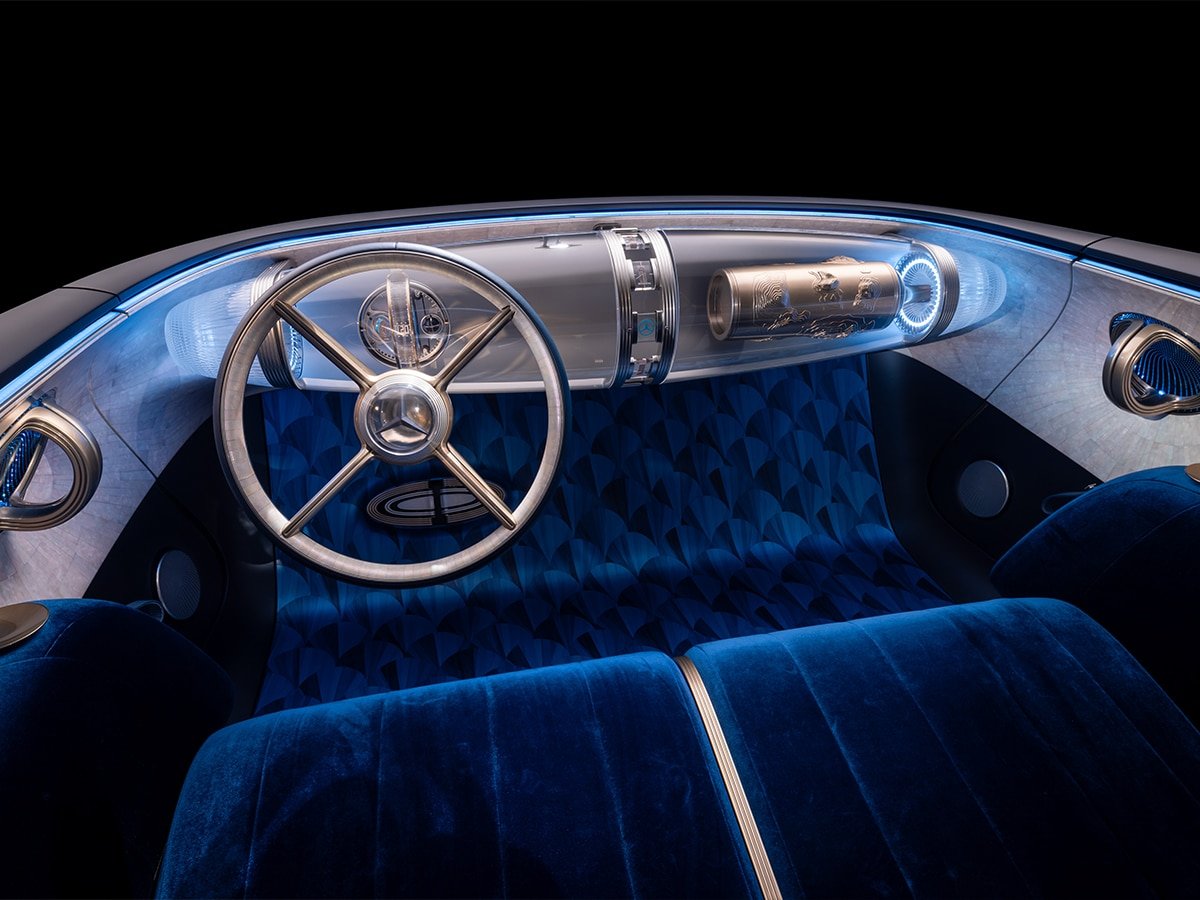
This is where things get interesting, especially once automation comes into play. Mercecedes uses the Vision Iconic to explore options beyond driving, and the end result feels more like a rolling lounge than a traditional cockpit. The entire dashboard feels like a floating, glass-like centerpiece inspired by the classic Zeppelin structure, giving it that old 30s and 40s vibe, and I gotta say, it definitely grabs our attention.
That’s not all from the floating centre structure; if you take a closer look, inside sits a decorative surface finished in mother-of-pearl marquetry, which continues onto the door panels and wraps around beautifully polished brass door handles. The rear seating area is framed by a glowing star pattern, while up front, the driver and passenger share an old-school bench seat trimmed in deep blue velvet. Add in a boat-style four-spoke steering wheel and a floor finished in straw marquetry, and the whole space feels more like an Art Deco salon than anything you’d expect from a modern concept car.
What’s interesting is how the technology is presented here because it doesn’t demand attention. When the door opens, the cabin activates with a fully analogue-style animation inspired by luxury chronograph watches—a small detail that feels surprisingly satisfying. One of the four clock-like displays is even shaped like the Mercedes star and functions as an AI companion. It’s a curious blend of traditional luxury and futuristic technology, and they seem to complement each other well. The real question is: how should we view this car?
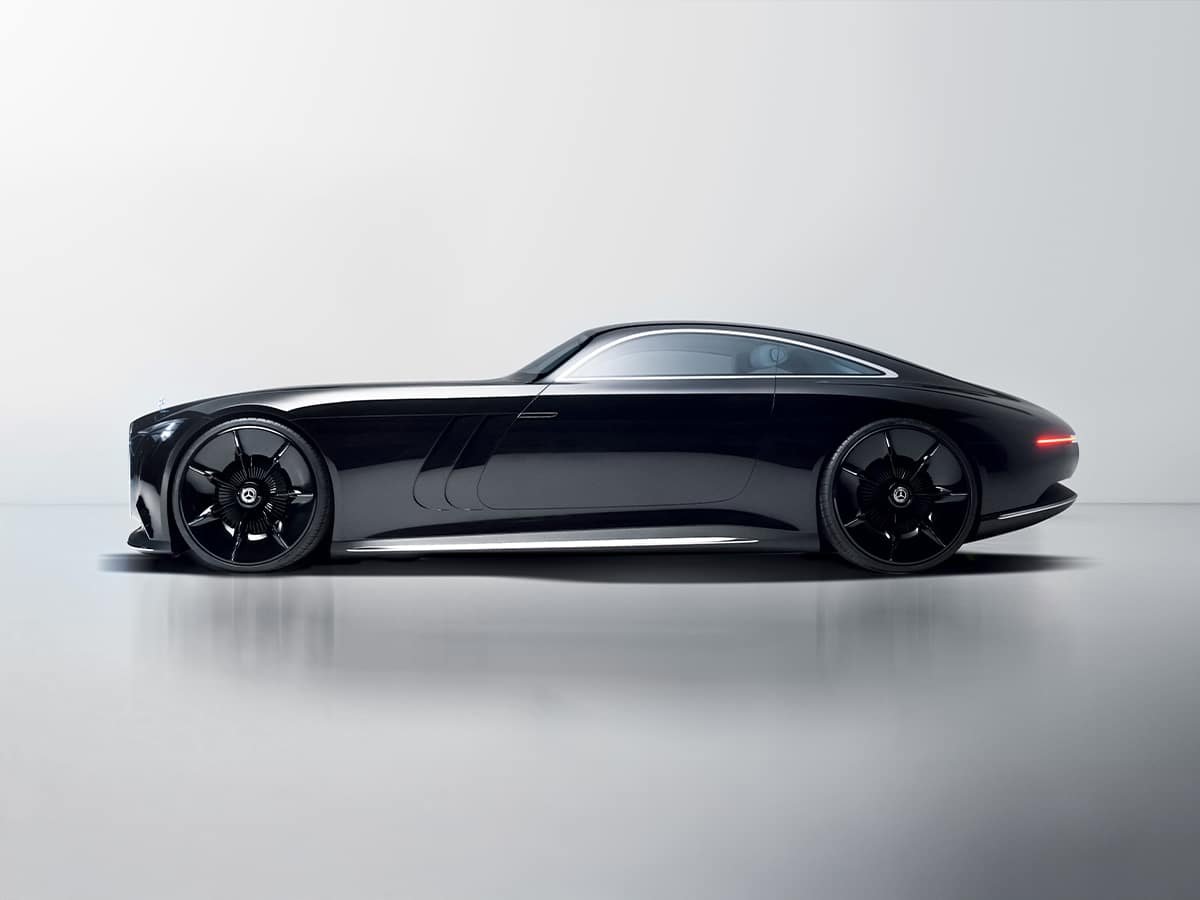
Interestingly, despite all the talk about automation, Mercedes-Benz hasn’t forgotten the moments when you actually want to drive. One of the more radical ideas shown here is the introduction of steer-by-wire technology, marking a first for the brand. There’s no mechanical link between the steering wheel and the front wheels, which initially sounds strange, but when combined with rear-axle steering, it aims to make a vehicle of this size feel much more manageable. In theory, it allows for quicker responses at low speeds and greater stability at higher speeds, giving drivers a sense of control even in something as long and imposing as the Vision Iconic.
With that said, the Vision Iconic leans toward the future, where driving becomes an optional feature, similar to a Tesla. The Vision Iconic envisions an advanced urban assistance system that manages point-to-point travel within city environments, operating at an improved Level 2 standard. On highways, it shifts to a Level 4 automated driving system that takes full control, and the cabin transforms entirely, allowing the driver and passenger to relax and enjoy browsing or listening to music. As the brand itself states, “the car becomes a luxurious lounge,” as the interior design begins to better reflect what’s happening.
Not much has been said about the powertrain technology yet, but Mercedes has been experimenting with concept cars, such as the Mercedes-AMG GT XX concept from last summer, to understand how it will sustain itself in the future. The brand has been exploring the idea of using ultra-thin solar coatings on the vehicle’s exterior, turning the bodywork into an energy-harvesting surface. Pretty impressive, right? This idea creates a photovoltaic layer that could generate enough power to cover up to 12,000 kilometres of driving per year for a mid-size SUV. It’s not a promise just yet, but it does show how luxury and technology are evolving.
The Vision Iconic launch extended beyond just the car, with the overall presentation resembling a scene from a Great Gatsby dream. Alongside the concept, Mercedes-Benz revealed a curated collection of bespoke outfits for both men and women, inspired by the glamour and excess of 1920s and 1930s luxury. Dark blue tones and silver-gold accents run throughout the collection showcased during Shanghai Fashion Week.
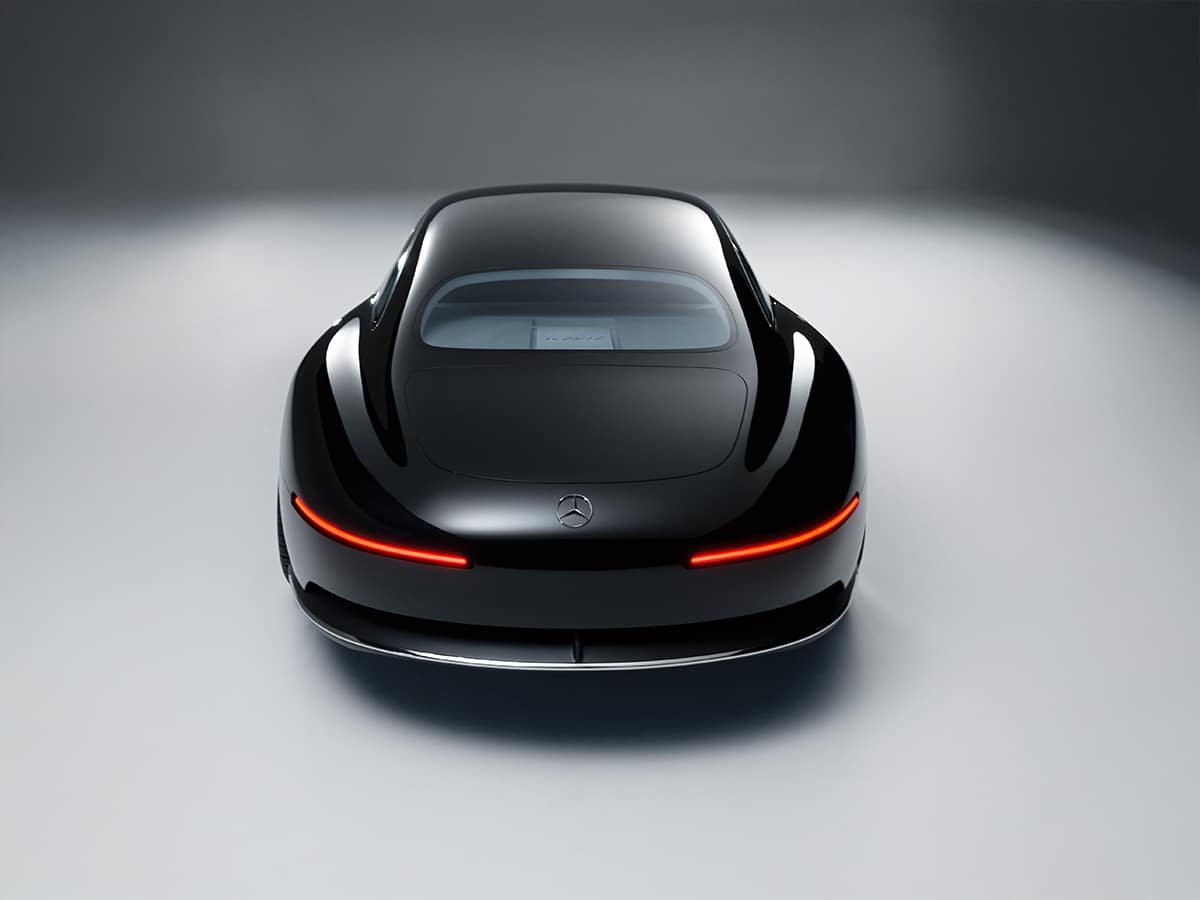
As Gorden Wagener puts it, “Inspired by the golden era of automotive design of the 1930s, this show car embodies the pure essence of Mercedes-Benz,” he says. “With its seemingly hood giving it a majestic presence, sculptural flowing lines, and a touch of Art Deco, it rises to become a true icon of automotive beauty. The interior with its continuous bench seat and the elegant rear, evoking memories of the legendary 300 SL. Our Vision Iconic is more than just an automobile – it is a sculpture in motion, a homage to timeless elegance, and a statement for the future. The symbiosis of traditional craftsmanship, state-of-the-art technology, and an unmistakable design language makes it the ultimate expression of value, prestige, and grace: the most beautiful, most prestigious kind of thing.”
Of course, this remains exactly that, a design concept. It’s highly unlikely that the Vision Iconic will ever go into production, but that’s not really the point. Its purpose is to spark conversation, challenge expectations, and show other brands what Mercedes-Benz looks like when it dreams without limits.