





Bvlgari Octo Finissimo Ultra Tourbillon Ref. 104313
Watches

Bvlgari Unveils the World’s Thinnest Tourbillon With the 1.85mm Octo Finissimo Ultra

Reading Time: 5 minutes

Share via

Our team of editors and experts thoughtfully chooses each product. If you decide to buy through one of our links, we may earn a commission. Learn more. Want to know how we test products? Click here for more details.

  • Unveiled at Watches and Wonders 2025, the Bvlgari Octo Finissimo Ultra Tourbillon will be produced in only 20 examples worldwide, each priced at USD $678,000.
  • The Octo Finissimo Ultra Tourbillon led to eight patents during its development, highlighting the extreme engineering behind its ultra-thin design.
  • At just 1.85 mm thick, it is the world’s thinnest tourbillon watch.
  • The hand-wound BVF 900 calibre beats at 4 Hz and provides a 42-hour power reserve, driving Bvlgari’s record-breaking ultra-thin tourbillon.

The race to build the world’s thinnest mechanical watch has become one of the most fascinating battles in modern watchmaking, and once again, Bvlgari has found a way to move the goalposts. Unveiled at Watches and Wonders 2025, the Octo Finissimo Ultra Tourbillon measures an astonishing 1.85mm thick, taking the title of the world’s thinnest tourbillon watch from Piaget’s 2mm Altiplano Ultimate Concept Tourbillon. Limited to just 20 pieces and priced at USD $678,000, it is another reminder of just how far Bvlgari is willing to push the Octo Finissimo collection.

This level of engineering did not happen overnight. Bvlgari has spent more than a decade chasing fractions of a millimetre, setting a string of ultra-thin watchmaking records along the way. The journey has included the world’s thinnest minute repeater in 2016, the Octo Finissimo Automatic in 2017 and the record-setting perpetual calendar in 2021. Each watch has played its part in developing the ideas and techniques that eventually led to the Octo Finissimo Ultra Tourbillon.

As Jean-Christophe Babin, CEO of Bvlgari, explained, “Each record has been a stepping stone. It’s not just about crossing barriers — it’s about completely redefining mechanical watchmaking.” That thinking is clear here. Adding a tourbillon to a watch measuring less than two millimetres thick sounds almost unreasonable, yet Bvlgari managed to do exactly that.

Bvlgari Octo Finissimo Ultra Tourbillon Ref. 104313
Bvlgari Octo Finissimo Ultra Tourbillon | Image: Bvlgari

Bvlgari Octo Finissimo Ultra Tourbillion

  • Brand: Bvlgari
  • Model: Octo Finissimo Ultra Tourbillion
  • Reference: 104313
  • Diameter: 40 mm
  • Material: Titanium
  • Dial Colour: Mechanical Skeleton
  • Calibre: BVL 900
  • Power Reserve:  42 Hours
  • Water Resistance:  3 Bar ( 30 metres / 100 feet)
  • Price:  USD $678,000 (Limited Edition – 20 Pieces)

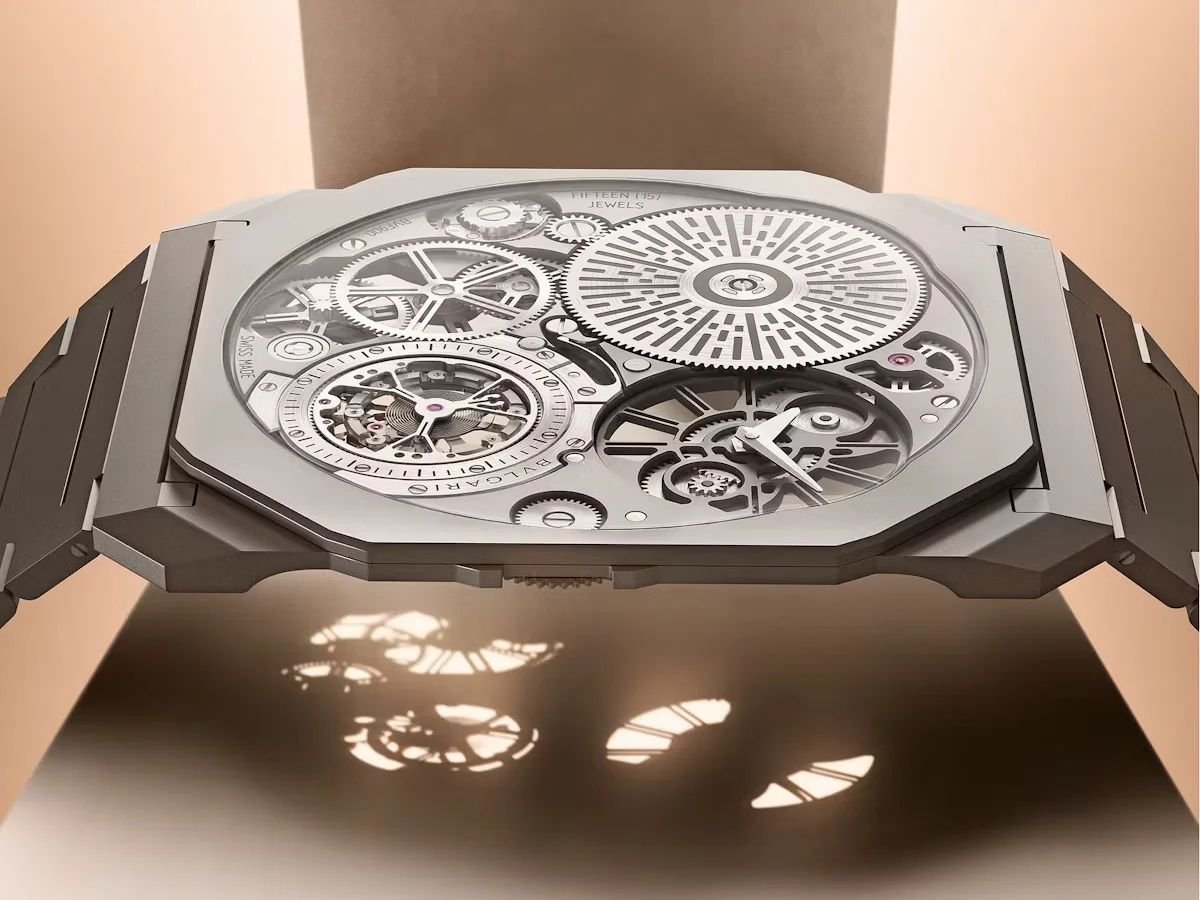
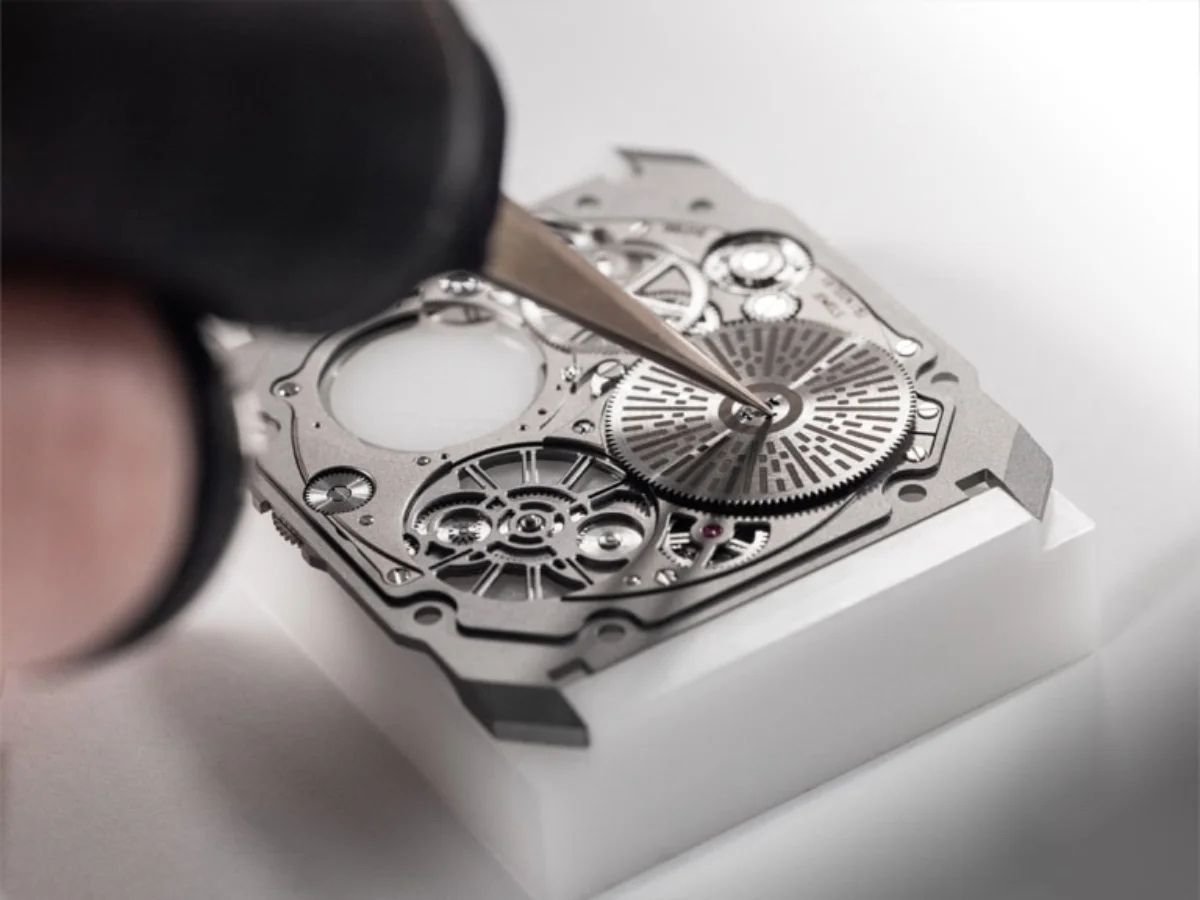
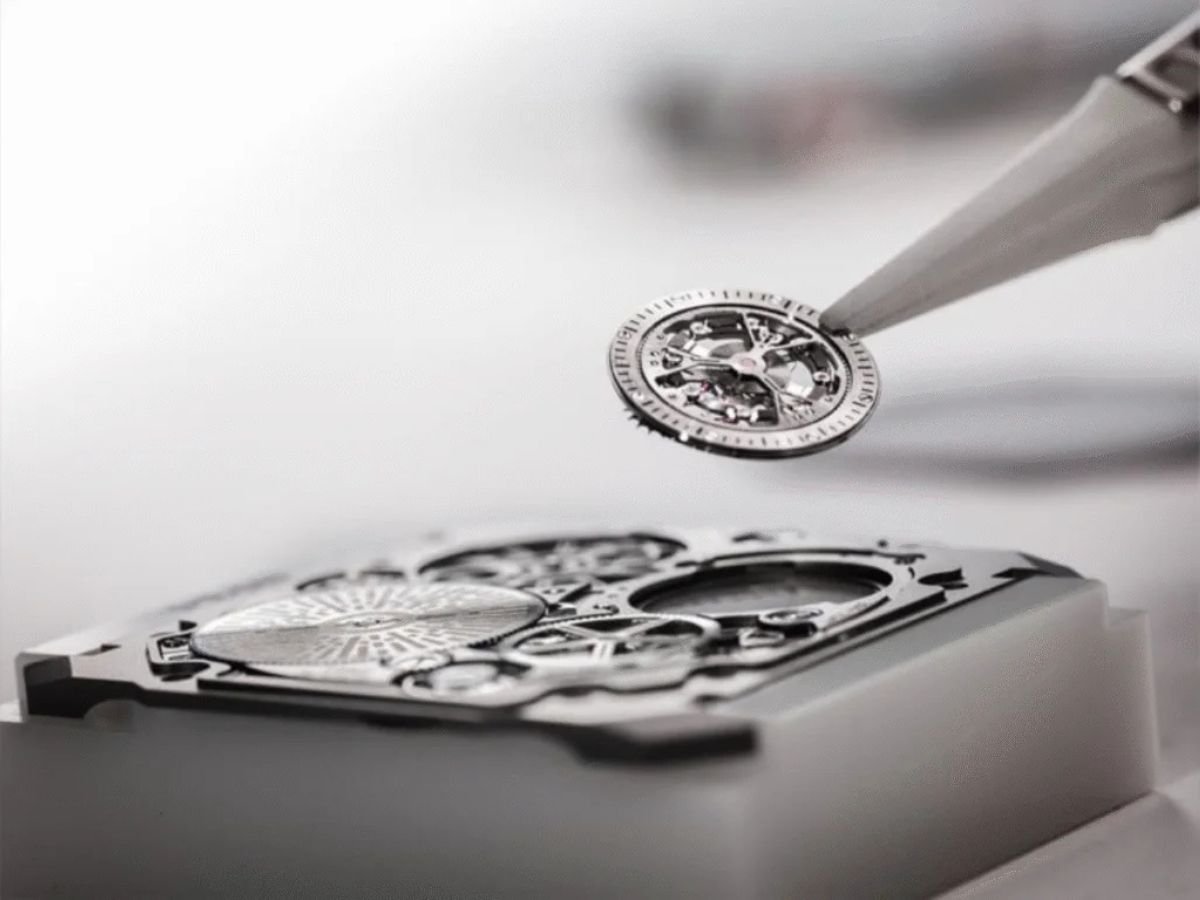
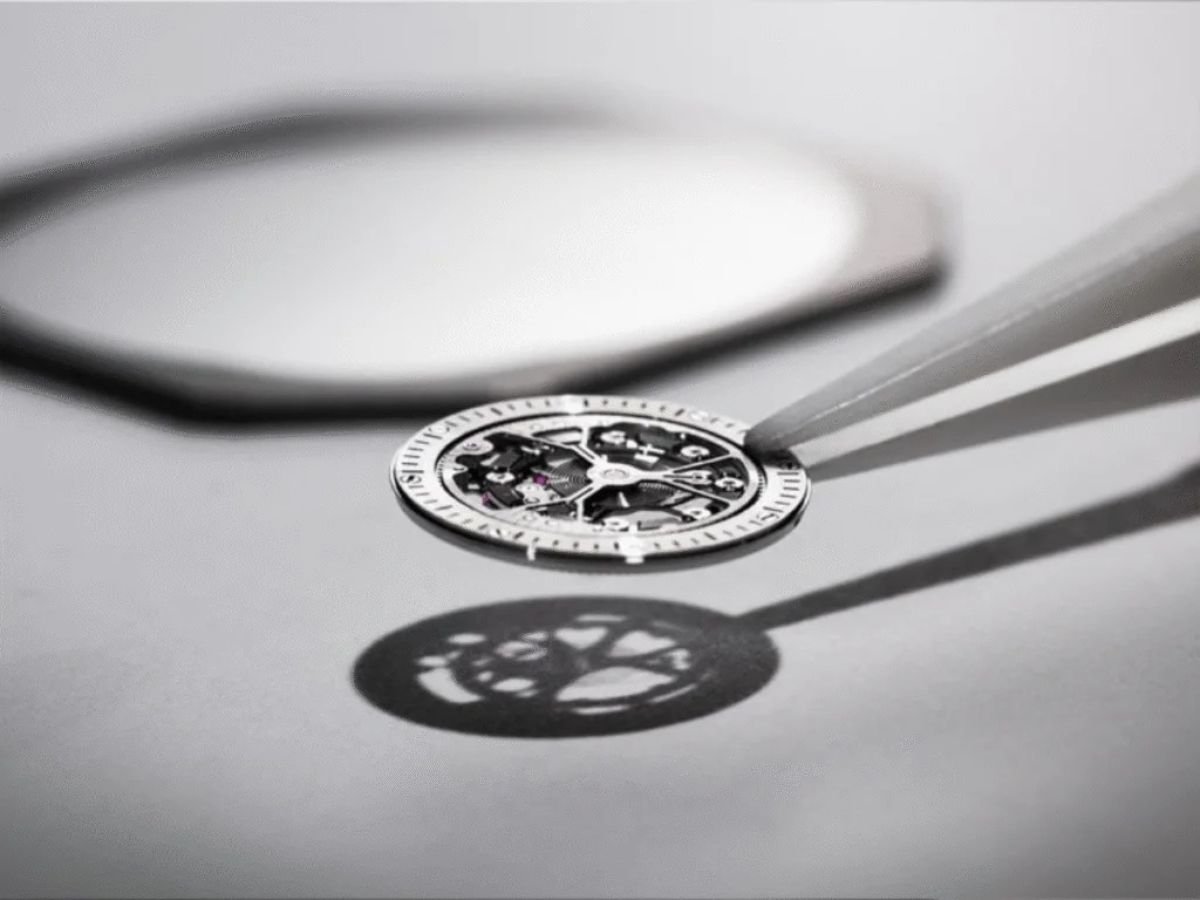
Measuring 40mm in diameter, the Octo Finissimo Ultra Tourbillon keeps the familiar geometric shape of the collection while stripping the watch down to its essentials. Rhodium-plated hour and minute hands sit against a sandblasted brass surface finished with a dark anthracite DLC coating, while the exposed architecture puts much of the movement on display. The integrated titanium bracelet has a microbead-frosted finish and measures only 1.5mm thick, helping the entire watch maintain its remarkably slim profile.

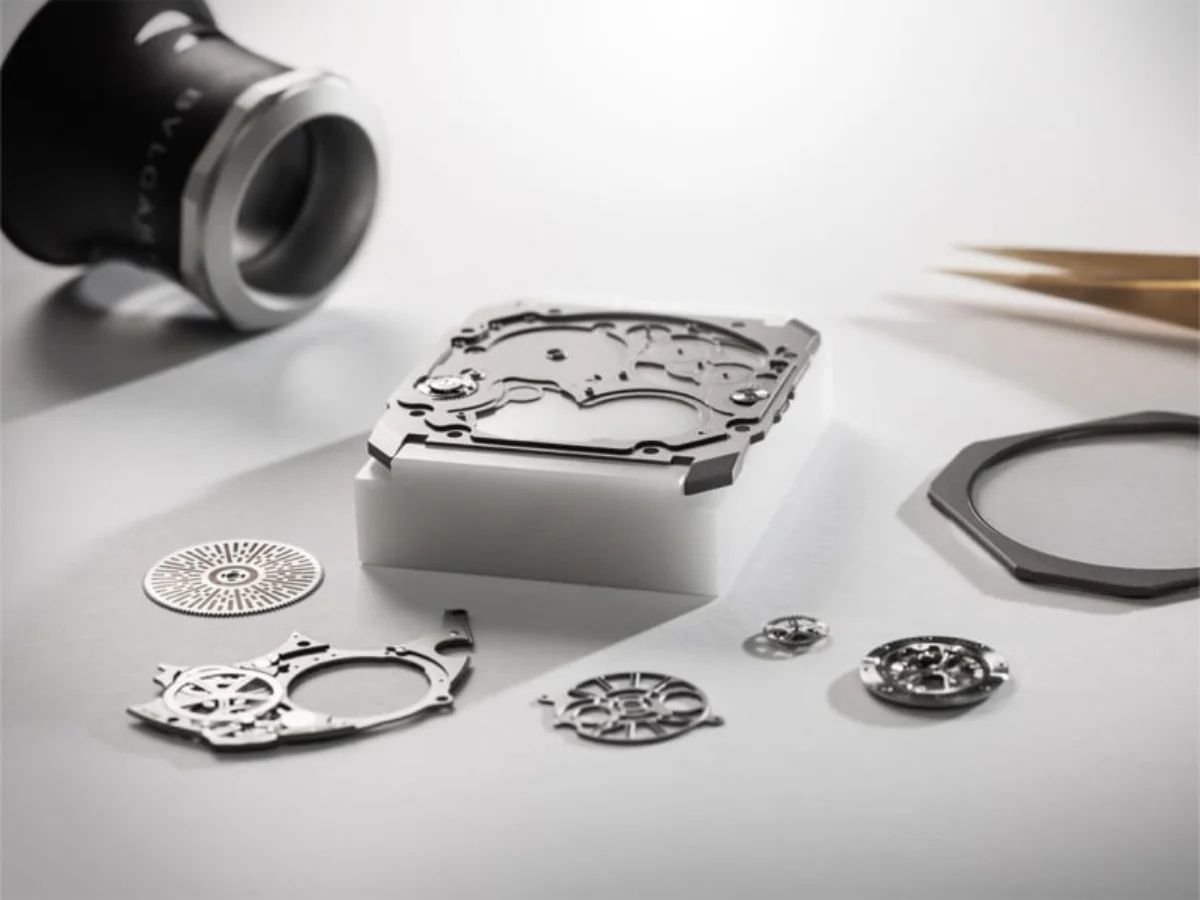
Achieving a thickness of just 1.85mm required Bvlgari to rethink almost every part of the watch. Eight patents were filed during its development, covering innovations including the differential display system, the mounting of the sapphire crystal and even elements of the bracelet construction.
Bvlgari Octo Finissimo Ultra Tourbillon Ref. 104313
Bvlgari Octo Finissimo Ultra Tourbillon | Image: Bvlgari
Bvlgari Octo Finissimo Ultra Tourbillon Ref. 104313
Bvlgari Octo Finissimo Ultra Tourbillon | Image: Bvlgari

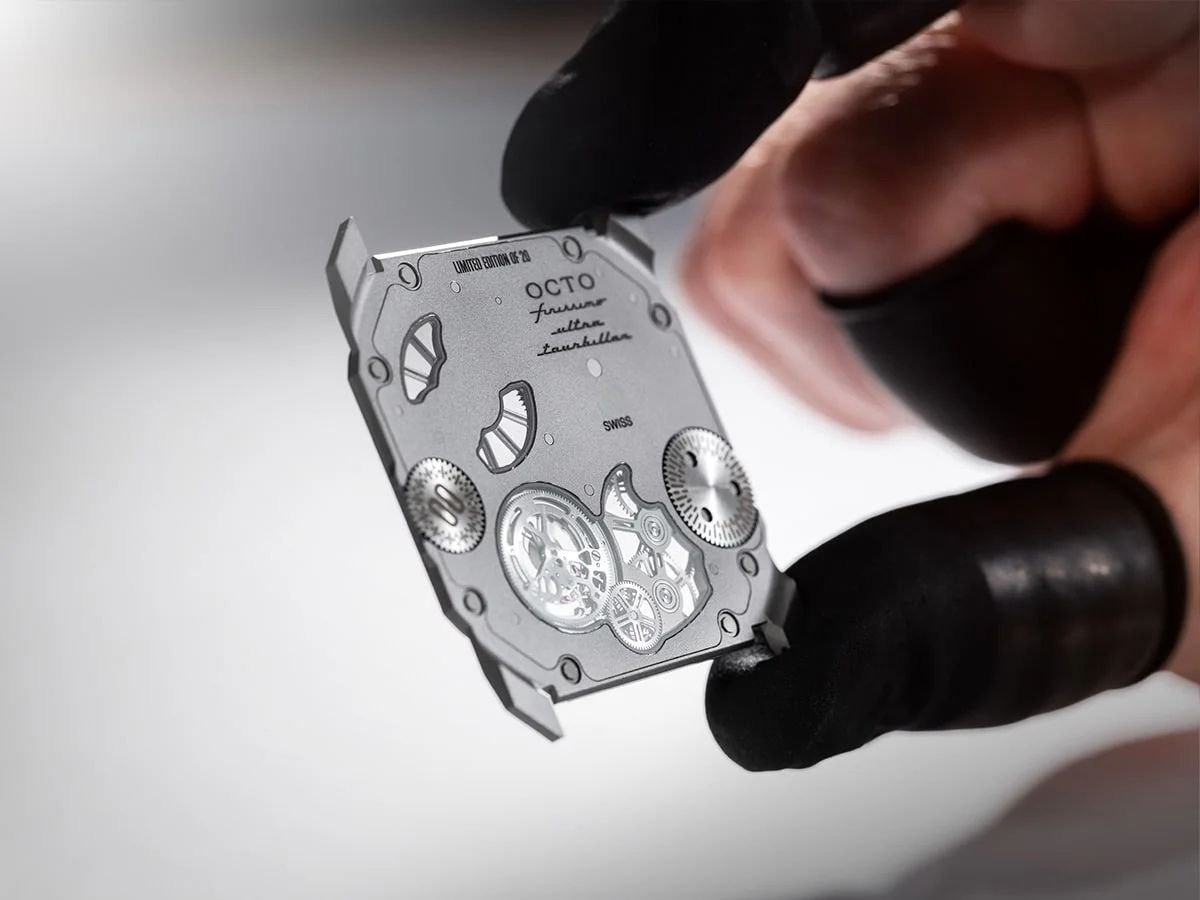
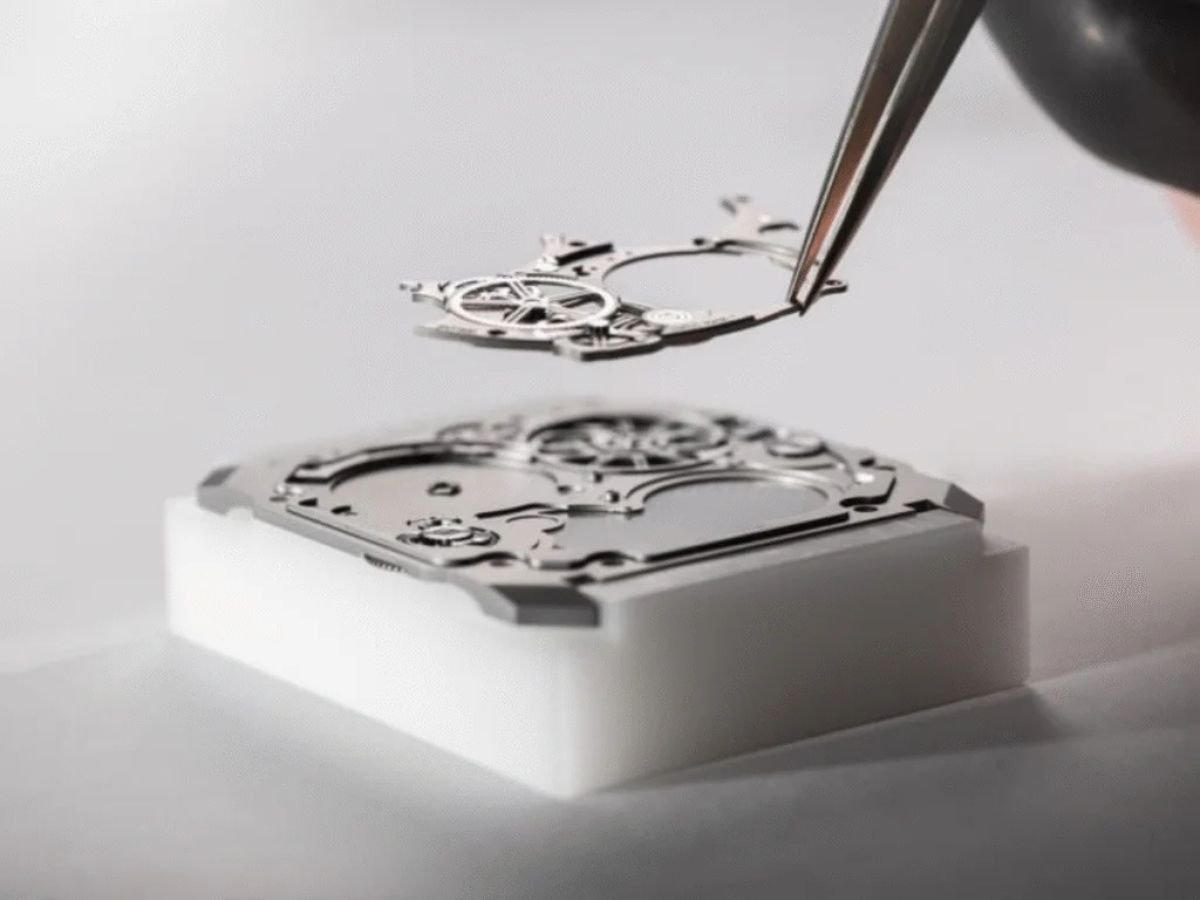
One of the most important decisions was to combine the case middle directly with the movement’s mainplate. Rather than placing a conventional movement inside a separate case, the structure of the watch itself becomes part of the calibre. This approach saves precious space while providing the watch with the rigidity needed to protect its thin mechanical construction.

At the centre of the watch is a tungsten carbide mainplate, chosen for its strength and resistance to deformation. Two flat stainless steel crowns are integrated into the architecture, with one positioned at 8 o’clock for winding and another at 3 o’clock for time setting. Their unusual placement feels almost like a pair of mechanical controls built directly into the movement’s side.

The closer you look, the more details begin to stand out: the bezel frames, the rhodium-plated tourbillon components that contrast the dark surfaces around them, and the geometric engravings across the ratchet add another layer of detail without detracting from the exposed mechanical layout.

As Fabrizio Buonamassa Stigliani, Bvlgari’s Product Creation Executive Director, explained, “The goal wasn’t just thinness — it was about achieving precise execution while honouring the distinctive aesthetic codes of the Octo Finissimo line.” That may be the most important point about this watch. Bvlgari could have created a technical experiment purely to chase another record, but the finished result is still immediately recognizable as an Octo Finissimo.
Bvlgari Octo Finissimo Ultra Tourbillon Ref. 104313

The collection’s octagonal design continues to draw inspiration from Roman architecture, including the coffered ceilings of the Basilica of Maxentius and Constantine. That architectural influence has long been part of the Octo Finissimo identity, and even with the extreme engineering involved here, Bvlgari has managed to preserve it.

Powering the watch is the hand-wound BVF 900 calibre, which operates at 28,800 vibrations per hour (4 Hz) and offers a 42-hour power reserve. Compared with the BVL 180 movement used in the previous Octo Finissimo Ultra COSC, the power reserve is slightly shorter, and it lacks COSC certification. The trade-off, however, is a full tourbillon mechanism in a watch that is only 0.15mm thicker.
Bvlgari Octo Finissimo Ultra Tourbillon Ref. 104313
Bvlgari Octo Finissimo Ultra Tourbillon | Image: Bvlgari

Sure, it might not match the previous Ultra COSC when it comes to power reserve, but let’s be fair — if you have the world’s thinnest tourbillon sitting on your wrist, you’re probably not spending much time complaining about a few missing hours. At that point, you’ve already won.

Thinking about adding one to the collection? You’ll need considerably more than deep pockets. Only 20 examples of the Bvlgari Octo Finissimo Ultra Tourbillon will be produced, and given the watch’s significance, getting hold of one may prove just as difficult as building it.

The good news is that Bvlgari also introduced the Octo Finissimo Skeleton 8 Days at Watches and Wonders 2025. It may not carry the same world-record headline, but the titanium skeletonized watch offers another impressive look at what Bvlgari continues to do with the Octo Finissimo collection.

Bvlgari Octo Finissimo Ultra Tourbillon Ref. 104313
Bvlgari Octo Finissimo Ultra Tourbillon | Image: Bvlgari
Watches & WondersBvlgari
About the Author

Related Articles

Google Earth Flight Simulator
TechTravel

Google Earth’s Flight Simulator Lets You Fly Around the World From Your Browser

Reading Time: 6 minutes

Our team of editors and experts thoughtfully chooses each product. If you decide to buy through one of our links, we may earn a commission. Learn more. Want to know how we test products? Click here for more details.

  • Google Earth’s experimental Flight Simulator is now available globally through the web, with no desktop application required.
  • Users can fly over almost anywhere on the planet using keyboard or mouse controls, with simplified physics designed for casual exploration.
  • Switching from Map to Satellite view adds high-resolution imagery, terrain and dynamically loaded 3D buildings.
  • Faster flying or a low-bandwidth connection may cause loading delays, while some low-altitude areas can experience visual clipping.
  • Crashing pauses the simulator and provides an instant restart, returning the aircraft to a safe altitude without any paperwork from air traffic control.

If you have ever opened Google Earth, found your house and then immediately started exploring places you have never visited, there is now another way to lose an afternoon. Google has brought its experimental flight simulator to the Google Earth Browser Version, allowing anyone with a computer and a web connection to fly around the planet without downloading the desktop app.

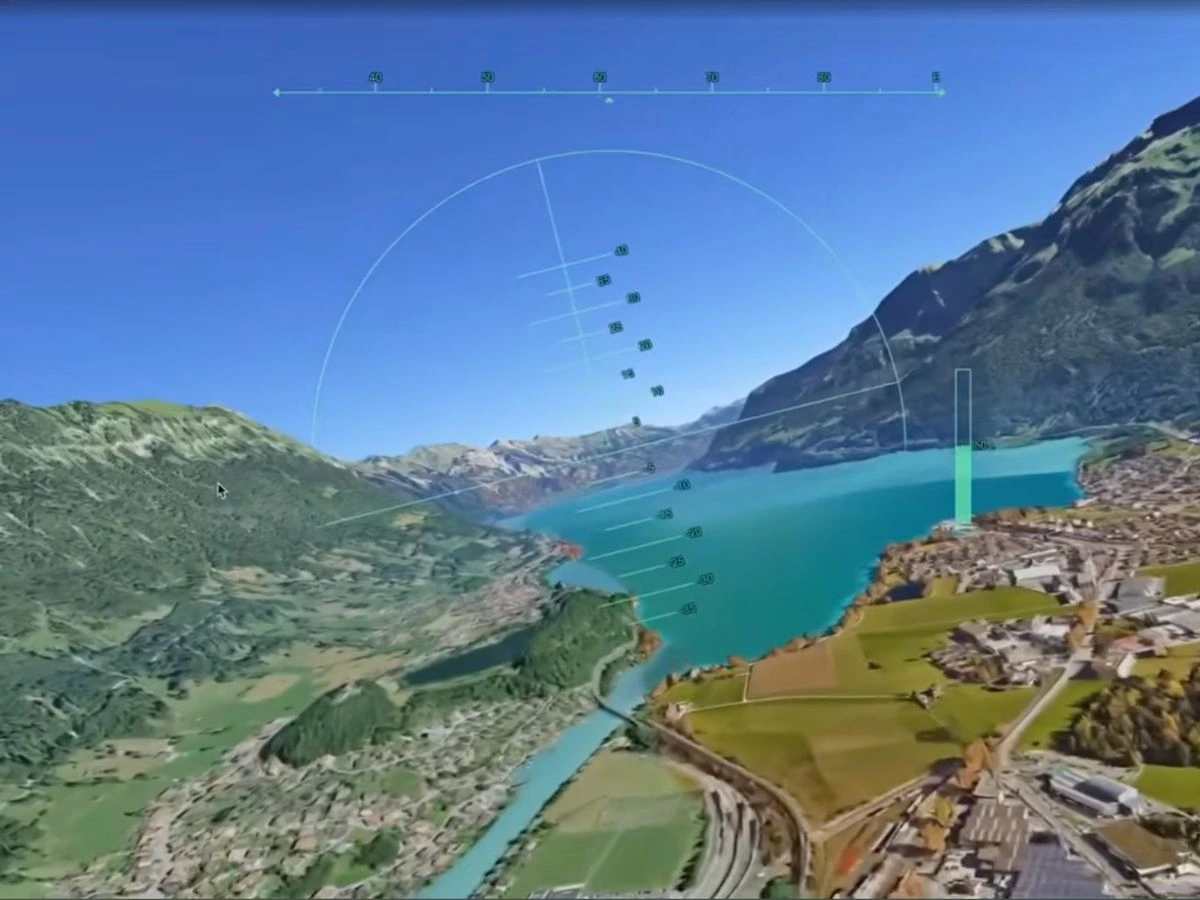
For readers who love planes, airlines or simply seeing familiar cities from a completely different angle, the feature offers a wonderfully low-commitment way to take to the virtual skies. You can skim above city skylines, follow coastlines or attempt to thread your aircraft through mountain valleys using Google Earth’s streaming 3D buildings and satellite imagery.

Just do not expect Microsoft Flight Simulator-level realism.

Google describes the experience as a casual exploration tool with simplified flight physics, so there are no detailed cockpits, airline schedules or hours of training required before take-off. All you need is a browser, a keyboard or mouse and a location worth flying over—although keeping the plane in the air may still take a little practice.

How to Use Google Earth’s Flight Simulator in Your Browser

Getting started is surprisingly easy. Open Google Earth on your computer and select Explore Earth from the home screen. Once the globe loads, choose the place you want to explore using the search bar, whether that is New York, the Canadian Rockies, the California coast or somewhere much closer to home. Google says the feature is now available globally on the web, giving users around the world access without paying for separate flight-simulation software.

Next, open the Tools menu along the top of the page and select Flight Simulator. Google Earth will move from its regular map interface into a simple flying experience that runs directly inside your browser, so there is no desktop application to download and no separate game installation standing between you and take-off.

Before flying, switch the basemap from Map to Satellite. Google Earth uses the abstract map by default, but Satellite view brings in the photorealistic imagery, terrain and 3D buildings that make flying over real places much more interesting. From there, your virtual travel list can include Sydney Harbour, the Grand Canyon, Tokyo, the Alps, your childhood neighbourhood or almost anywhere else you can locate on the globe.

Now comes the slightly trickier part — keeping the plane in the sky.

Use Page Up to increase thrust and Page Down to reduce it, while the arrow keys control pitch and banking. The up arrow makes the aircraft climb, the down arrow points it towards the ground, and the left and right arrows bank in their respective directions. You can also click inside the simulator to toggle mouse-based controls, although whether that improves your relationship with gravity is another matter entirely.

If you crash, the simulator pauses and gives you a Restart option, returning the aircraft to a safe altitude without making you repeat the entire setup. When you have finished flying, select the back arrow in the upper-left corner to return to the regular Google Earth map. Microsoft Flight Simulator already has detailed aircraft systems and precision aviation covered; Google’s free alternative is something you open for fun when you want to fly over places you know—or places you may never get to see in person.

What to Expect From Google Earth’s Browser Flight Simulator

Google is fairly upfront about what this flight simulator is—and what it is not. The feature uses simplified flight physics and is designed for casual exploration rather than high-fidelity aerodynamic training, so nobody is walking away from a ten-minute flyover of Manhattan ready to command an Airbus A350.

You will not find detailed airline procedures, interactive cockpit systems, an FMS to program or an ILS approach waiting at the end of a long-haul sector. Google Earth gives you a plane, a planet-sized map and just enough control to make you appreciate how much work goes into keeping a real bird straight and level.

Think of it as Google Earth with wings.

The scenery is the real attraction. As you fly, Google Earth dynamically streams 3D buildings and high-resolution imagery into the browser, meaning every trip changes depending on where you point the nose. City skylines, mountain ranges and coastlines make for the best virtual sectors, particularly after switching from the basic Map view to Satellite.

Your internet connection also becomes an unofficial member of the flight crew. Google warns that travelling at extreme speeds or flying with limited bandwidth can cause temporary loading delays as the platform attempts to render the world beneath you. You may achieve positive rate, but the city below could still be waiting for clearance to appear.

The feature remains labelled Experimental / pre-GA, so a few technical quirks are already on Google’s squawk list. Low-level flying in areas below sea level, including Badwater Basin in California, may produce flashing or terrain clipping, while standard Google Earth map shortcuts are disabled during a flight to prevent them from interfering with the aircraft controls.

The good news is that an unscheduled arrival into the terrain is not the end of your aviation career. When the aircraft hits the ground, the simulator pauses and displays a “You crashed! Restart” button, placing you back at a safe altitude and location. No Mayday call, accident report or awkward conversation with the chief pilot required.

Google Earth’s Flight Simulator is available globally through Google Earth on the web. Choose somewhere scenic, activate Satellite view and remember the first rule of casual browser aviation: keep the blue side up and the brown side down.

Google
About the Author
arrow_drop_up