
















StyleCars

The ‘Godfather of Streetwear’ Partners with Maserati on Custom MC20 Cielo Collection

Reading Time: 4 minutes

Share via

Our team of editors and experts carefully selects each product. If you choose to purchase through one of our links, we may earn a commission. Learn more. Do you want to know how we test products? Click here for more details.

When Italian automotive artistry meets Japanese streetwear cool, you know something special is about to hit the road. Maserati didn’t just dip a toe into the world of fashion—they went full throttle. Enter Hiroshi Fujiwara, the legendary founder of Fragment Design and the man widely credited with pioneering the global streetwear movement. With decades of high-profile collaborations under his belt—from Nike and Louis Vuitton to Moncler and beyond—Fujiwara is no stranger to rewriting the rules.

Now, he has partnered with Maserati to leave his unique mark on the MC20 Cielo, the brand’s open-top supercar. The result? A blend of minimalism, strength, and a modern edge that redefines what bespoke automotive design can be. This isn’t just a car—it’s a cultural crossover on wheels, created for those who desire rarity, rebellion, and astonishing speed.

Highlights:

  • Two Impeccable Finishes: Nero Vulcano in Matte Black or Bianco Audace in Matte White—Each Features Fragment’s Lightning Bolt Instead of the Maserati Trident.
  • 630-hp twin-turbo V6, 0–100 km/h in under 3 seconds, and a roof that disappears at the press of a button.
  • Sleek black leather, white stitching, Alcantara touches, and a custom collaboration plaque for a polished finish Flex.
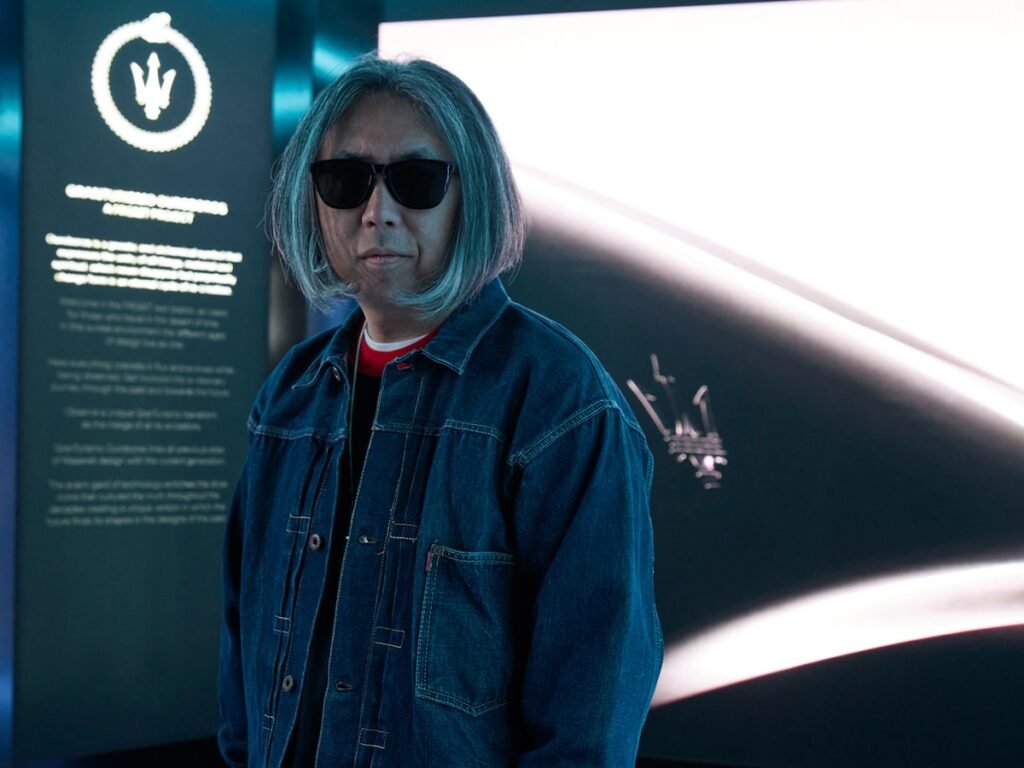
Hiroshi Fujiwara | Image: Maserati

Fujiwara’s name holds significant weight in fashion and streetwear circles. He has collaborated with everyone from neighborhood giants to haute couture houses, and now he brings that same quiet confidence to the MC20 Cielo through Maserati’s Fuoriserie customization program—which literally means “out of the ordinary.” That’s precisely what this is.

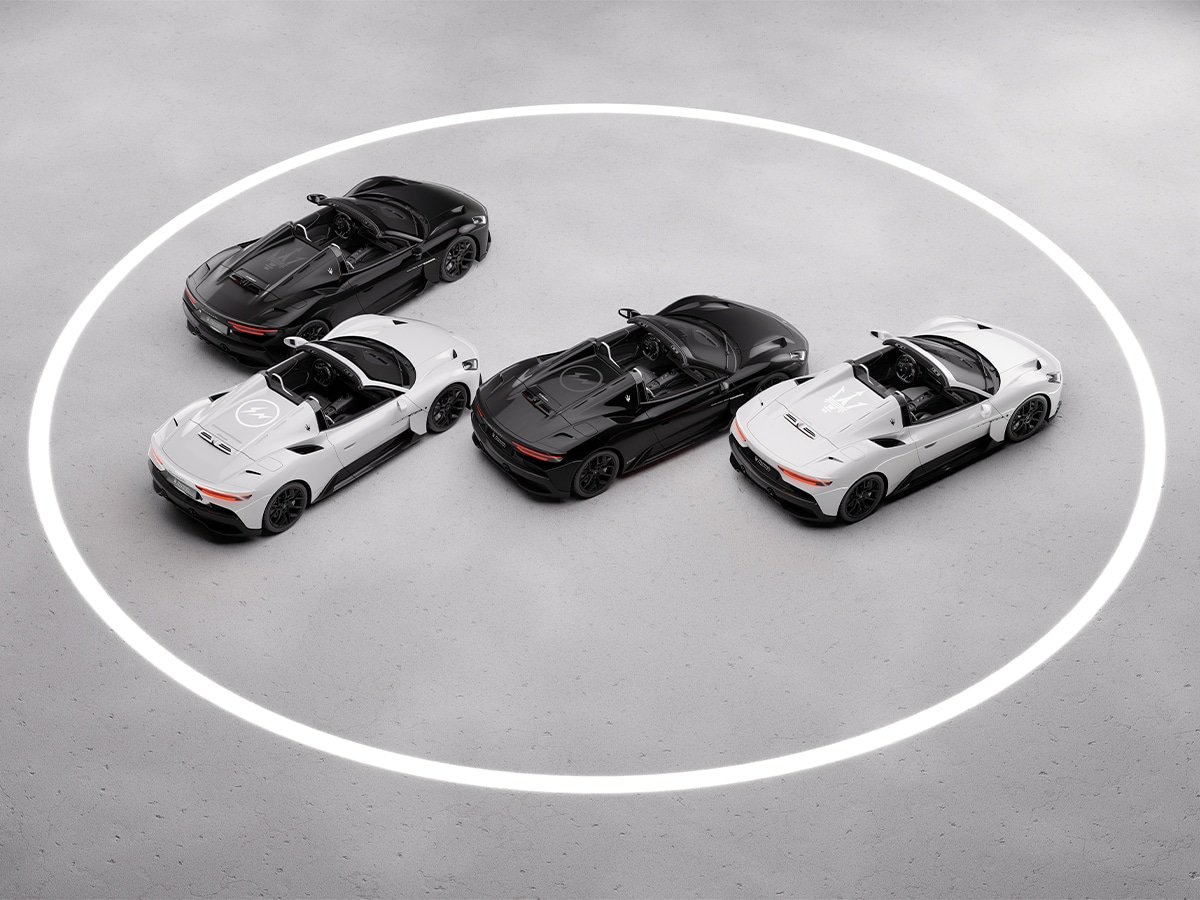
The collection showcases two exclusive MC20 Cielo builds. First up is Nero Vulcano—a stealthy matte black beauty adorned with Fragment’s lightning bolt emblem instead of Maserati’s classic Trident. Next is Bianco Audace, featuring a matte white finish and matching white badging. Both designs are clean, crisp, and crafted to turn heads effortlessly.

MC20 Cielo ‘Fuoriserie By’ Hiroshi Fujiwara | Image: Maserati

Step inside, and Fujiwara’s minimalist charm captivates. The cabin features black full-grain leather complemented by sharp white stitching. It includes 6-way power sport seats, an Alcantara-lined steering wheel, and the recognizable Trident embroidered on the headrests. Between those headrests lies a stylish brushed metal plaque, designating this as a unique collaboration.

But don’t let all that quiet cool fool you—the performance is still pure Maserati madness. Under the hood sits a 3.0-liter twin-turbo V6 Nettuno engine, the same beast that powers the standard MC20. It churns out 630 horsepower and 730 Nm of torque, launching from 0 to 100 km/h in under three seconds. Just like the original, the Cielo version features a retractable electrochromic glass roof—clear one second, opaque the next. It’s equal parts sci-fi and supercar.

MC20 Cielo ‘Fuoriserie By’ Hiroshi Fujiwara | Image: Maserati

“Fuoriserie means ‘out of the ordinary’ in Italian, and our Trident’s customization program is conceived to create extraordinary experiences for our clients.  Our wish here is for them to express their personality and passion by creating their very own Maserati. Just like Hiroshi, everyone can choose from a wide range of personalization features from our Fuoriserie collections or take more individual journeys to design true one-of-a-kind rolling sculptures,” said Klaus Busse, Head of Design of Maserati.

Thinking about making one of these rare MC20 Cielos your own? Both Fuoriserie by Hiroshi Fujiwara editions are available upon request—simply contact your local Maserati dealer to discuss specifications, availability, and when you can take one for a spin.
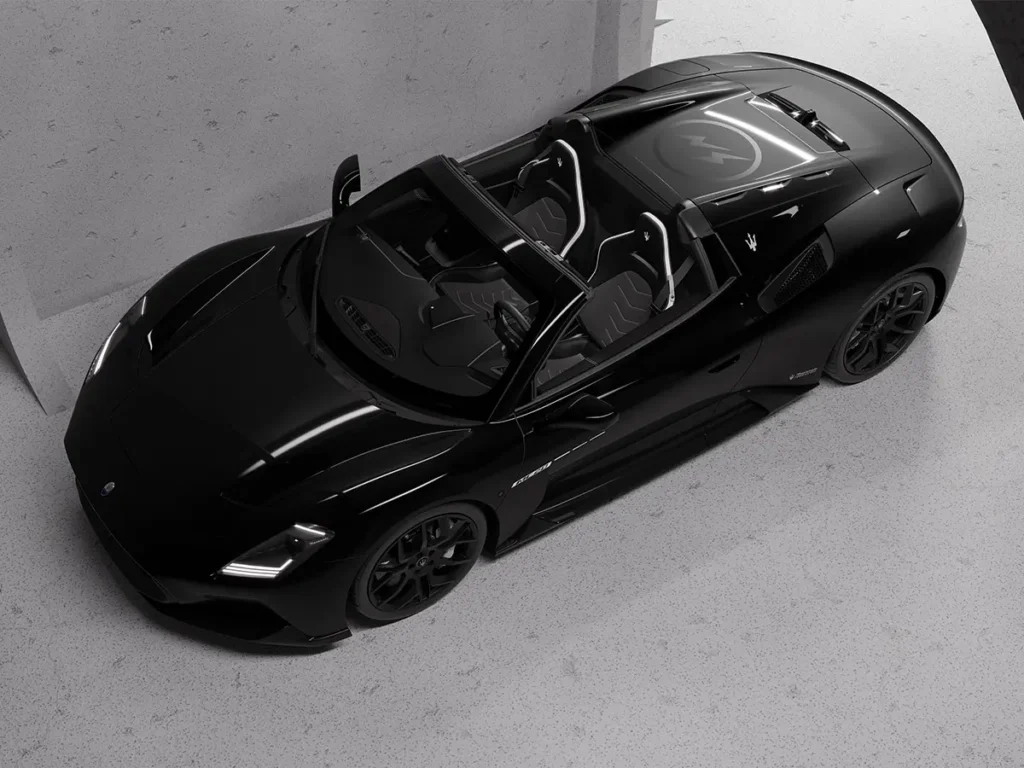
MC20 Cielo ‘Fuoriserie By’ Hiroshi Fujiwara | Image: Maserati
About the Author
Previous Post
12 Best Sneakers for Men to Rock at the Office
Next Post
Lewis Hamilton Wants to Ditch the Tech and Bring Back the Raw Thrill of Driving—with a Manual F40-Inspired Supercar

Related Articles

Australia’s 2026 DEEPAL E07 Multitruck Review: Is it an SUV, a Pickup, or Both?

Reading Time: 12 minutes

Our team of editors and experts thoughtfully chooses each product. If you decide to buy through one of our links, we may earn a commission. Learn more. Want to know how we test products? Click here for more details.

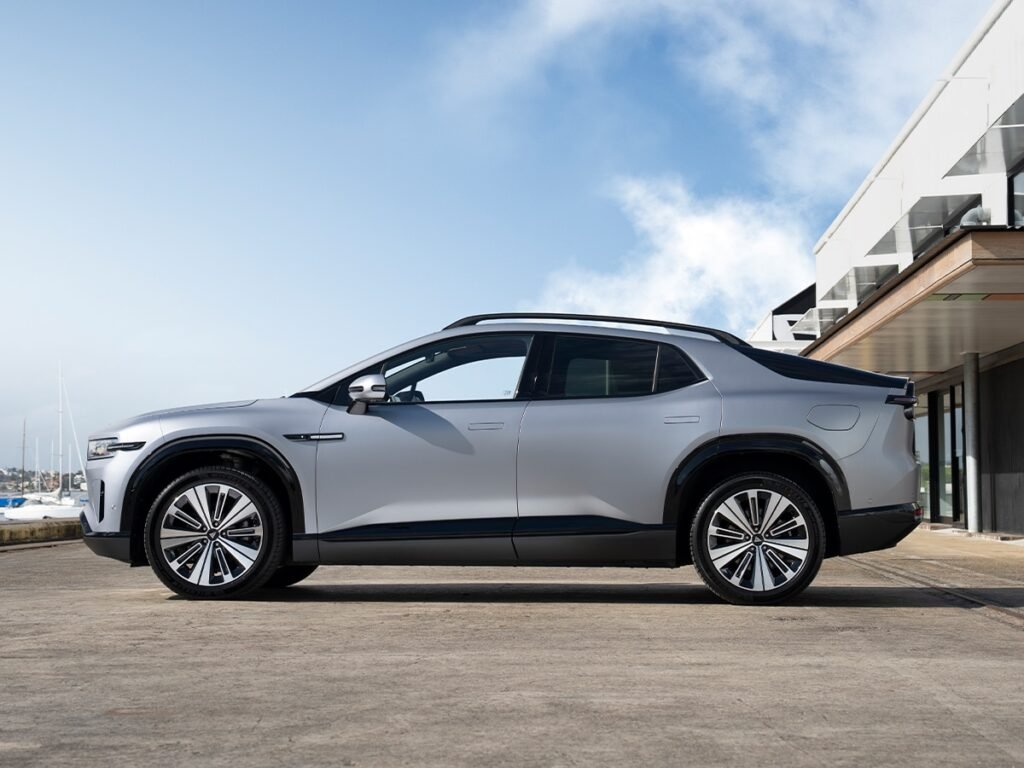
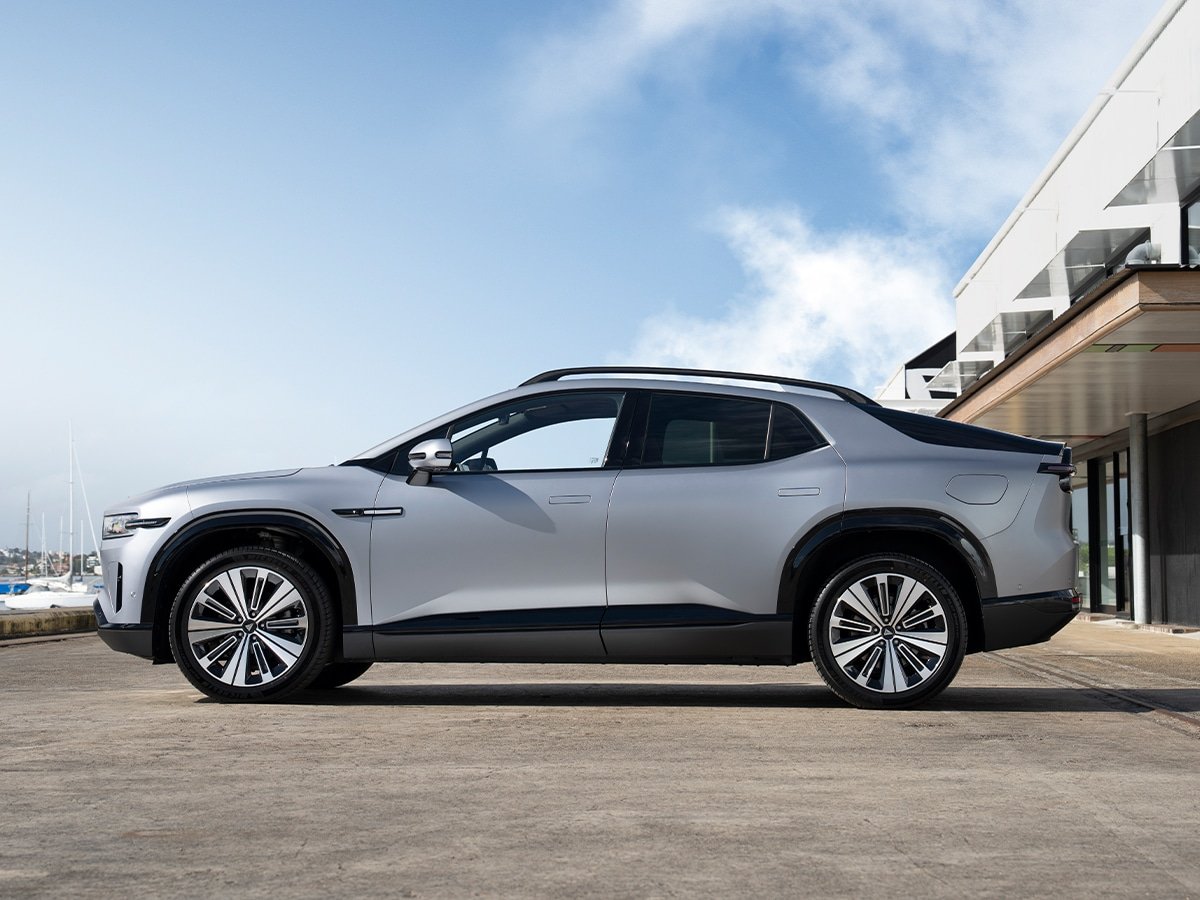
The DEEPAL E07 openly acknowledges its influences, and that honesty works in its favour. Sitting somewhere between an SUV and a pickup, the E07 leans into the reality that many modern buyers want flexibility without committing to a single vehicle type. The shape and concept will feel familiar to anyone who’s been following recent EV trends, but DEEPAL’s approach is less about shock value and more about building something practical, versatile, and accessible for everyday use.

It’s worth noting upfront that the DEEPAL E07 isn’t currently available in North America. For some background, DEEPAL is a Chinese brand under the Changan Automobile umbrella, one of the country’s largest and most established manufacturers. In its home market, this vehicle is called the Changan Nevo E07, but in global markets it uses the simpler DEEPAL E07 name. The idea is to offer something that feels more at home outside China while still carrying the same core technology and ambitions.

Yeah, comparing it to the Tesla Cybertruck is an obvious observation, but the E07 presents the idea in a more restrained, road-friendly way. However, when we look at the numbers on the chart, they are quite impressive, with performance figures that indicate serious speed, a competitive driving range depending on the configuration, and fast-charging capabilities that keep it relevant in the modern EV scene. What makes the E07 interesting, though, isn’t just the spec sheet; it’s the way it attempts to blur categories entirely, positioning itself as a true multitruck rather than a novelty or niche experiment.

So while you won’t see one in North American showrooms just yet, the DEEPAL E07 is still worth paying attention to. Let’s take a closer look at what this SUV–pickup hybrid brings to the table.

DEEPAL E07 Multitruck | Image: DEEPAL

DEEPAL E07 Interior Design

  • A minimalist, screen-first cabin design with nearly all functions managed via a large central touchscreen.
  • A tilting high-resolution display & wireless Apple CarPlay/Android.
  • Modular seating allows the cabin to convert into a flat sleeping platform suitable for camping & road trips.
  • “Zero-gravity” front seats offer extensive adjustment, heating, ventilation, massage, & memory functions.

If minimalism is your style, then you’ll likely appreciate the DEEPAL E07’s cabin, which heavily leans toward that aesthetic. Physical buttons are kept to an absolute minimum, with most functions controlled via a large central touchscreen that dominates the dashboard. The screen itself is sizeable and sharp, featuring a clever tilting function that allows it to angle slightly toward the driver or passenger, emphasizing that this cabin is designed around digital control rather than traditional switches.

That touchscreen is powered by a modern processor, which helps keep animations smooth and responses quick, but the trade-off is increased complexity. While everyday tasks like navigation and music are easy enough—especially when using wireless Apple CarPlay or Android Auto—deeper vehicle settings are nested behind multiple menu layers. Adjusting features like seat position, steering wheel settings, ambient lighting, or climate controls takes a bit of patience, and it’s clearly best to handle these when the vehicle is stationary rather than on the move.

DEEPAL E07 Multitruck Interior | Image: DEEPAL

Features such as an integrated dashcam, interior camera, and vehicle monitoring functions add security and utility that suit the multitruck concept, making the E07 feel more like smart technology and flexibility. Audio is managed by a high-speaker-count sound system that delivers solid clarity, while a powerful, ventilated wireless charging pad at the front keeps devices topped up without the ever of needing wire chords. Interestingly, one of the few physical controls in the cabin is the front trunk release, which feels a bit out of place with the otherwise screen-centric approach.

With the headrests removed, the front seats can fold back to meet the rear cushions, creating a flat sleeping surface large enough to fit a full-sized mattress. This feature that speaks directly to campers, road-trippers, and anyone who sees their vehicle as more than just a way to get from point A to B. Comfort is also taken seriously up upfront, with multi-adjustable “zero-gravity” seats that offer heating, ventilation, massage, and memory functions. While the leather-trimmed upholstery looks stylish, it leans more towards a modern, synthetic feel than old-school luxury—very much in line with the E07’s tech-focused character.

DEEPAL E07 Multitruck | Image: DEEPAL

Deepal E07 Exterior Design

  • Large, road-commanding proportions give the E07 a more commanding presence than many full-size SUVs.
  • Coupe-SUV styling blends smoothly into a pickup-style rear, creating a distinctive multitruck silhouette.
  • The electric glass canopy changes the rear from a closed cargo area into an open utility bed.
  • Full-width LED lighting & active aero components enhance its contemporary EV-first design.

Let’s make this clear and keep it on the side, once you see DEEPAL E07 in person, you’ll notice right away that it’s not a small vehicle. Measuring 5,045 mm long, 1,996 mm wide, and 1,680 mm tall, with a generous 3,120 mm wheelbase, the E07 has a strong road presence and clearly belongs to full-size vehicles. These proportions help explain why it feels more substantial than many SUVs on the market, while also providing the footprint needed to support its multitruck identity without appearing awkward or compromised.

Visually, the E07 adopts a sleek coupe-SUV profile that smoothly transitions into a squared-off rear, blending passenger-car refinement with utility-focused design. Modern EV styling cues are evident everywhere, from the streamlined body panels to the full-width LED light bar spanning the rear and wrapping neatly into the quarter panels. In the front, subtly active aero elements help manage airflow and cooling, underscoring that this design isn’t just about aesthetics but also efficiency.

DEEPAL E07 Multitruck Exterior | Image: DEEPAL

Here’s where the fun side conversation begins with the seats at the back. The E07’s electric glass canopy slides forward by about 400 mm before the tailgate drops, effectively turning the vehicle into a pickup-style ute at the push of a button. From there, the rear seats can either stay upright to seal the cabin or fold completely flat, creating a space that works just as well for camping, transporting bulky gear, or handling everyday items like prams or boards. It’s a clever setup, although the rear ute section itself is rated to around 300 kg, with a total payload capacity of 610 kg, which is a fairly typical size compared to other vehicles.

The rear load area is finished with durable, easy-to-clean materials and features a 3.5 kW / 220 V power outlet, making it practical for tools, appliances, or outdoor accessories. And yes, the E07 can be driven with the rear window and tailgate open, adding extra flexibility that aligns well with its do-it-all brief.

DEEPAL E07 Multitruck | Image: DEEPAL

DEEPAL E07 Performance, Range & Charging

This is the moment everyone has been waiting for. Don’t worry, we’ve got you covered. The DEEPAL E07 Multitruck features an 89.98 kWh, liquid-cooled NMC (ternary lithium) battery pack in both variants. An 800-volt architecture is also standard, enabling ultra-fast DC charging at up to 240 kW (30–80 per cent in approximately 15 minutes). However, AC charging is slow at 7 kW, meaning 0–100 per cent in about 13 hours at home or at your office. V2L (vehicle-to-load) is rated at up to 6.6 kW using the 220-volt interior socket or adaptor.

Where things begin to diverge is in performance and range. The rear-wheel-drive version focuses on efficiency, offering up to 550 km of driving range while generating 252 kW and 365 Nm, enough to get from 0 to 100 km/h in 6.7 seconds. Upgrading to the all-wheel-drive model, the character shifts noticeably, with a combined output of 440 kW and 645 Nm, reducing the sprint time to just 3.96 seconds, while range decreases slightly to around 510 km. Both configurations feel well balanced for a vehicle of this size, offering strong performance along with the range and charging capabilities suited for everyday driving.

DEEPAL E07 Multitruck | Image: DEEPAL

Deepal E07 Prices & Specs

As expected from a new Chinese entrant, the DEEPAL E07 comes with pricing that seems deliberately competitive for what’s available. The entry-level rear-wheel-drive Multitruck starts at AUD$64,900 / USD $44,800 before on-road costs, featuring a single-motor setup with outputs of 252 kW and 365 Nm, and a 0–100 km/h time of 6.7 seconds. It’s the version that leans into value, offering strong performance and the longest driving range in the lineup, making it the smarter choice for buyers who don’t plan to venture off-road often.

However, if you choose to upgrade to the all-wheel-drive version, the price increases to AUD$73,900 / USD $51,100 before on-road costs, but the performance makes a noticeable leap. With 440 kW and 645 Nm available, the AWD Multitruck accelerates from 0–100 km/h in just 3.96 seconds, offering acceleration figures you’d expect in a high-performance electric SUV. Besides the extra motor and power, the differences between the two trims are fairly minor, making the RWD variant especially appealing if outright speed isn’t a top priority.

Below is a full side-by-side comparison of the DEEPAL E07 RWD and AWD variants, highlighting how both models compare in terms of performance, battery technology, charging capabilities, and suspension hardware:

SpecificationsDEEPAL E07 RWDDEEPAL E07 AWD Performance
Electric MotorPermanent Magnet SynchronousPermanent Magnet Synchronous
Maximum Power252 kW440 kW
Maximum Torque365 Nm645 Nm
Acceleration (0 – 100 km)6.7 Seconds3.96 Seconds
Estimated WLTP Driving Range2550 km510 km
Battery Capacity89.98 kWh89.98 kWh
Battery TypeTernary LithiumTernary Lithium
Charging Connector TypeAC (Type 2)/DC (CCS2)AC (Type 2)/DC (CCS2)
Maximum AC Charge Rate7 kW7 kW
AC Charge Time (0-100%)13 Hours13 Hours
Maximum DC Charge Rate240 kW240 kW
DC Charge Time (30-80%)15 Minutes15 Minutes
Maximum Discharge Rate6.6 kW6.6 kW
Maximum Voltage220 V220 V
Front SuspensionDouble WishboneDouble Wishbone
Rear SuspensionMulti-Link IndependentMulti-Link Independent
Standard Tyres (width, profile, size, load index & speed rating)265/45R21 108W265/45R21 108W
Wheel Dimensions21x9J21x9J
Prices AUD/USDAUD$64,900 / USD $44,800AUD$73,900 / USD $51,100

Differences in specifications mainly concern drivetrain performance and range, not equipment or tech features. Both models share an 89.98 kWh battery, an 800-volt charging system, 240 kW DC fast-charging capability, and similar suspension designs. This highlights that the choice between RWD and AWD depends on performance preference rather than daily practicality. Backed by a seven-year / 160,000 km vehicle warranty and an eight-year / 240,000 km battery warranty, the E07 makes a strong case as a flexible, long-term EV ownership option.

How Does Deepal E07 Compare to Others?

In a market that’s quickly filling up with electric trucks and large SUV-style EVs, the DEEPAL E07 manages to carve out its own space instead of simply copying what’s already available. While clear comparisons will be made with bold designs like the Tesla Cybertruck or even more traditional electric utes, the E07 positions itself somewhere between those categories — blending SUV comfort with a flexible cargo area that feels more practical for daily use. Where some competitors focus heavily on off-road capability or striking styling, the E07 leans into versatility, offering buyers a vehicle that feels equally suitable for family trips, daily driving, and weekend gear hauling.

From a specs and usability perspective, the E07’s range, charging capability, and payload figures are competitive with other electric SUVs and multitrucks in its class. It might not lead in every category — such as hardcore off-road hardware or towing capacity for certain segment benchmarks — but its balance of performance, modular interior space, and creature comforts makes it an attractive choice for anyone seeking the practicality of an SUV with added utility. In other words, if you’re looking for a one-vehicle solution in the growing EV market, the DEEPAL E07 more than holds its own against the competitors.

About the Author

Related Articles

arrow_drop_up