


















Our team of editors and experts thoughtfully chooses each product. If you decide to buy through one of our links, we may earn a commission. Learn more. Want to know how we test products? Click here for more details.
So, you’ve just watched Brad Pitt race through the track in F1 the Movie, and now you’re craving more. Or maybe you’ve already binge-watched every season of Formula 1 Drive to Survive and still can’t get enough of that speed. Either way, you’ve come to the right place. The world of racing on screen is broader than you might think, packed with documentaries, dramas, and biopics that reveal the sport’s most iconic moments.
What we’ve put together here isn’t just a watchlist — it’s a journey through the history, heartbreak, and heroics of motorsport. From tales about iconic teams and drivers to cinematic recreations of racing’s greatest rivalries, these films provide the perfect way to keep your adrenaline flowing long after the checkered flag drops.
Let’s get into it. Here are the 10 Best Racing Films to Watch.
1. Senna
Release Date: October 7, 2010
Genre: Documentary, Sport
Director: Asif Kapadia
IDMb: 8.5
This documentary pulls you straight into the life of Ayrton Senna, the Brazilian Formula 1 icon whose blend of brilliance and vulnerability made him unforgettable. Through rare archival footage and honest interviews, it follows his meteoric rise, the intense rivalry with Alain Prost, and the political battles that influenced his career both on and off the track.
More than just a highlight reel of races, it reveals the man behind the wheel — deeply spiritual, unapologetically passionate, and willing to risk everything for the sport he loved. From his electrifying victories to his heartbreaking final race, every moment feels raw and unfiltered.
By the end, you’re left with a film that’s as emotional as it is thrilling, a moving tribute that explains why Senna remains a legend well beyond the world of motorsport.
2. Ford v Ferrari
Release Date: November 15, 2019
Genre: Drama, Sport, Biography
Director: James Mangold
IMDb: 8.1
Starring Matt Damon as Carroll Shelby and Christian Bale as Ken Miles, this compelling drama recounts the true story of how Ford aimed to challenge Ferrari’s dominance at the 1966 24 Hours of Le Mans. The film combines intense corporate politics with raw human ambition, illustrating how two men defied the odds to create a car that could change history.
The racing sequences are thrilling, but it’s the bond between Shelby and Miles that truly defines the story — that makes the film unforgettable. Blending adrenaline and emotion, Ford v Ferrari is as much a story of friendship and integrity as it is about speed, leaving audiences with a racing film that feels both epic and deeply personal.
3. Rush
Release Date: September 20, 2013
Genre: Drama, Biography, Sport
Director: Ron Howard
IMDb: 8.1
The 1970s were a golden age for Formula 1, and Rush immerses you right into it with the unforgettable rivalry between James Hunt and Niki Lauda. Chris Hemsworth captures the flamboyant, hard-living Hunt, while Daniel Brühl delivers a spot-on portrayal of Lauda, the disciplined perfectionist. Their personalities couldn’t be more different, but on the track, they pushed each other to heights neither could have reached alone.
The racing scenes are stunning, packed with screeching tyres, roaring engines, and the ever-present danger associated with Formula 1 during that time. However, the film doesn’t just depend on visual spectacle — it explores the psychology of competition, illustrating how Hunt and Lauda’s personal decisions, sacrifices, and imperfections influenced their fates as much as their driving skills.
What makes Rush so compelling is how it balances rivalry with respect. Beneath the fierce competition lies a story of mutual admiration and the unique bond only two drivers risking everything against each other could ever understand. It’s equal parts thrilling, emotional, and inspiring — one of the finest racing films ever put to screen.
4. Truth in 24
Release Date: March 20, 2009 (U.S. television premiere)
Genre: Documentary, Sport
Directors: Keith Cossrow, Bennett Viseltear
IMDb: 8.1
Narrated by Jason Statham, Truth in 24 immerses you in the heart of one of the toughest events in motorsport: the 24 Hours of Le Mans. The documentary follows Audi’s quest for victory as they compete against Peugeot and face the relentless challenges of endurance racing. Each lap presents new obstacles — from unpredictable weather to mechanical issues — and the film captures the intense pressure of racing on the world’s most demanding track.
The storytelling weaves technical accuracy with the human challenge behind the wheel and in the pit lane. Engineers push their designs beyond the limit, drivers battle fatigue in the dead of night, and entire teams hold their breath as seconds vanish. It’s a race of survival as much as speed, a true test of resilience and teamwork.
By the time the final flag waves, you develop a newfound respect for endurance racing and the sheer determination it demands. Truth in 24 doesn’t just document a race — it immerses you in the intensity of every decision, risk, and heartbeat leading to victory.
5. The 24 Hour War
Release Date: November 20, 2016
Genre: Documentary, Sport, History
Directors: Adam Carolla, Nate Adams
IMDb: 7.2
If Ford v Ferrari gave you the Hollywood version of the legendary battle between Ford and Ferrari at Le Mans, The 24 Hour War delivers the true story with all the grit and detail only a documentary can provide. With rare archival footage and interviews from those who lived through it, the film takes you back to the 1960s when Henry Ford II made it his mission to dethrone Enzo Ferrari on the world’s greatest racing stage.
The documentary explores the rivalry — from Ford’s failed attempt to buy Ferrari to the pride of the corporation, national identity, and pure ambition that fueled an all-out war on the track. Engineers, drivers, and executives share firsthand accounts of the strategy, innovation, and politics that turned this feud into one of the most defining moments in motorsport history.
It becomes clear what was truly at stake: more than just victory at Le Mans, but the legacy of two automotive giants. For those captivated by Ford v Ferrari’s intense story, this documentary offers an honest look at the showdown that reshaped racing history.
6. Winning: The Racing Life of Paul Newman
Release Date: May 22, 2015
Genre: Documentary, Sport, Biography
Directors: Adam Carolla, Nate Adams
IMDb: 7.6
This documentary shares the surprising story of Paul Newman — not just as one of Hollywood’s most respected actors, but as a man whose true passion was racing. While many knew him for his Academy Award–winning performances, Newman discovered motorsport later in life and pursued it with the same dedication and discipline he applied to his craft. The film traces his journey from starring in the 1969 movie ‘Winning,’ which first introduced him to racing, to becoming a professional driver and eventually co-owning a highly successful racing team.
Through interviews with family, friends, and racing legends, you get a portrait of a man who balanced fame with humility, channelling his competitive spirit into a sport where he earned genuine respect. The documentary doesn’t just celebrate Newman’s victories; it highlights the dedication, sacrifices, and lifelong love affair he had with racing.
7. Williams
Release Date: August 4, 2017
Genre: Documentary, Sport, Biography
Director: Morgan Matthews
IMDb: 7.6
The film details the remarkable journey of Sir Frank Williams and his Formula 1 team, tracing its rise from humble beginnings to one of the most successful teams in the sport. It highlights not only the championship victories but also the fierce rivalries and behind-the-scenes pressures that shaped the Williams legacy.
At the same time, it’s a profoundly human story. After a devastating car crash left Frank Williams in a wheelchair, he continued to lead his team with unwavering resolve. Through honest interviews with his family, drivers, and colleagues, Williams highlights the resilience and determination that pushed him forward, reminding us that some of the greatest victories in motorsport occur well beyond the racetrack.
8. Weekend of a Champion
Release Date: Originally 1972, re-released with new footage in 2013
Genre: Documentary, Sport
Director: Frank Simon (produced by Roman Polanski)
IMDb: 7.5
Filmed during the 1971 Monaco Grand Prix, this documentary provides a rare and intimate look at Formula 1 legend Jackie Stewart at the height of his career. Roman Polanski, a close friend of Stewart, produced the film, which follows the driver over one weekend — from practice laps and strategy sessions to quiet moments away from the track. The result is a fascinating snapshot of both the glamour of Monaco and the grit of racing during one of F1’s most dangerous eras.
Decades later, Polanski and Stewart reconnect to reflect on that pivotal weekend, discussing not only the race itself but also the evolution of Formula 1, from safety improvements to the sport’s shifting culture. The blend of archival footage and modern reflection gives the film a unique sense of time and legacy, making it a must-watch for anyone interested in the history and humanity of racing.
9. McLaren
Release Date: May 25, 2017
Genre: Documentary, Sport, Biography
Director: Roger Donaldson
IMDb: 7.3
Bruce McLaren’s story is one of vision, resilience, and relentless pursuit of speed. Born in New Zealand, far from the traditional centres of motorsport, he defied expectations to become not only a talented driver but also a brilliant engineer and innovator. This documentary traces his journey from humble beginnings to founding McLaren Racing, a team that would go on to define excellence in Formula 1 and beyond.
The film combines archival footage, dramatic reenactments, and interviews with friends, colleagues, and racing legends to bring McLaren’s character to life. It highlights the challenges he faced competing against established European giants, the risks he took on the track, and the drive that pushed him to build a legacy from the ground up. His leadership and creativity didn’t just produce fast cars; they fostered a culture of innovation that continues to inspire the team today.
It honours a man whose optimism and determination motivated those around him, even as the risks of racing in the 1960s were significant. Although his life was tragically cut short, his influence endures every time a McLaren car lines up on the grid. For fans of Formula 1, it’s a reminder that the sport’s greatest achievements often start with one person’s unwavering dream.
10. Hunt vs. Lauda: F1’s Greatest Racing Rivals
Release Date: July 14, 2013
Genre: Documentary, Sport, Biography
Director: Matthew Whiteman
IMDb: 7.8
Few rivalries in sport have ever matched the intensity of James Hunt versus Niki Lauda. This documentary revisits the legendary 1976 Formula 1 season, when the flamboyant British playboy and the methodical Austrian champion clashed in a battle that went far beyond the racetrack. Their story is one of contrasts — charisma versus discipline, instinct versus calculation — yet together they created one of the most unforgettable duels in motorsport history.
You see Hunt’s raw race footage, interviews, and behind-the-scenes accounts that bring the rivalry to life with a remarkable depth of determination, Lauda’s calculated brilliance, the respect that gradually developed between them, and the harrowing near-death experience that defined Lauda’s comeback. It’s not just about who crosses the finish line first, but about two men who pushed each other to their limits and, in doing so, transformed Formula 1 forever.
For fans of Rush, this documentary is the perfect companion — a genuine look at the drama and danger that inspired Ron Howard’s acclaimed film. It’s a thrilling reminder that some of the greatest stories in motorsport aren’t scripted; they’re lived at 200 miles per hour.
11. Ferrari: Race to Immortality
Release Date: November 3, 2017
Genre: Documentary, Sport, History
Director: Daryl Goodrich
IMDb: 6.9
Set in the glamorous yet dangerous world of 1950s Formula 1, this documentary chronicles Ferrari’s rise during one of the riskiest decades in motorsport. It highlights the drivers who risked everything for speed and glory, competing in an era when safety was an afterthought and each race could be their last. With archival footage and rare interviews, the film captures both the allure and the tragedy that surrounded Enzo Ferrari’s team at the time.
The documentary highlights the courage and charisma of drivers like Mike Hawthorn and Peter Collins, who raced not just for trophies but out of pure love for the sport, despite the constant shadow of danger. Their achievements on the track and the friendships they built beyond it highlight the human side of a team that was creating its legend amidst ongoing loss.
12. 1: Life on the Limit
Release Date: October 1, 2013
Genre: Documentary, Sport, History
Director: Paul Crowder
IMDb: 7.9
Narrated by Michael Fassbender, 1: Life on the Limit takes viewers deep into Formula 1’s most dangerous decades, when drivers were revered as modern-day gladiators racing at incredible speeds with little regard for safety. The documentary paints a vivid picture of an era when victory was addictive, but each lap carried the potential for tragedy, making survival itself a remarkable achievement.
Through interviews with legendary drivers, rare archival footage, and compelling storytelling, the film demonstrates how Formula 1 gradually transformed from a dangerous obsession into a sport that began to focus more on safety. The rivalries, triumphs, and heartbreaking losses all come together to highlight the high cost of progress.
By blending the excitement of competition with the stark reality of risk, 1: Life on the Limit provides an unforgettable portrait of motorsport. For fans of F1 the Movie, it’s the perfect way to understand how the sport’s past has shaped the adrenaline-fuelled spectacle we see today.
13. Steve McQueen: The Man & Le Mans
Release Date: November 20, 2015
Genre: Documentary, Sport, Biography
Directors: Gabriel Clarke, John McKenna
IMDb: 6.8
This documentary takes you behind the scenes of Steve McQueen’s obsession with racing and the making of his 1971 passion project, Le Mans. More than a film about motorsport, it’s a portrait of a Hollywood icon who was willing to risk his career, reputation, and personal relationships to bring his racing dreams to the big screen. Archival footage, candid recordings, and interviews with those closest to him reveal just how far McQueen went to capture the raw authenticity of racing.
The story shows not only the glamour but also the struggles — the chaotic process of making Le Mans, the conflicts with studios, and McQueen’s relentless drive for authenticity that pushed everyone around him to their limits. At its core, it’s about a man seeking perfection, blurring the line between actor and racer, and paying the price for it.
14. Truth in 24 II: Every Second Counts
Release Date: 2012 (TV Documentary)
Genre: Documentary, Sport
Directors: Rob Gehring, Bob Daly
IMDb: 7.5
Narrated once again by Jason Statham, this sequel returns to the legendary 24 Hours of Le Mans, focusing on Audi’s 2011 campaign against fierce rival Peugeot. If the first Truth in 24 captured the grit of endurance racing, the follow-up dials the tension even higher, showing how every pit stop, every strategy call, and every second can decide the difference between victory and heartbreak.
The film puts you right in the thick of the action, following the drivers as they fight through exhaustion, unpredictable weather, and mechanical challenges over the course of a relentless day and night. It highlights not only the physical and mental endurance of the drivers but also the precision teamwork in the garage, where a single mistake could cost the race.
For those who loved the first documentary, this sequel offers the same adrenaline rush with an even sharper edge and reminds viewers why Le Mans is more than just a test of speed — it’s the ultimate battle of resilience, strategy, and human determination.
Elias Albay is the Founder and Director of Many Men Magazine, a Toronto-based digital publication dedicated to promoting modern masculinity through style, culture, and self-improvement. What started as a personal turning point became a purposeful platform. — born from Elias’ desire to create something meaningful after completing his studies and finding no career path that truly matched his ambitions. With a background in Civil Engineering from York University and experience in Commercial Flight Operations at CAE, he applied skills, and resilience from both fields to forge a new path.
Our team of editors and experts thoughtfully chooses each product. If you decide to buy through one of our links, we may earn a commission. Learn more. Want to know how we test products? Click here for more details.
The best coffee machines aren’t just about convenience — they’re for people who genuinely care about what ends up in the cup. While a serious setup can feel like an investment upfront, it often replaces daily café runs and makes coffee something you actually look forward to making at home. More than that, it becomes a ritual and, for many, a hobby in its own right. From familiar Breville favourites found on department store shelves to specialist machines built for true enthusiasts by brands like La Marzocco, and even capsule options for those who value speed over tinkering, this list covers every style of coffee drinker. No matter how hands-on you want to be, there’s a machine here that earns its place in your routine.
Best For: Home baristas who care about both performance & aesthetics
Price: USD $1,900
Smeg’s Collezione Minipro is like confidently stepping into serious espresso territory while maintaining its design identity. Made and designed in Italy, it has a presence that immediately sets it apart from more utilitarian machines, but it’s far from just a countertop statement. The solid build, noticeable weight, and clean industrial lines make it feel purposeful rather than decorative, and it’s clear this machine is intended for daily use rather than just to be looked at from a distance.
From day to day, there are two preset options for single and double espresso, making quick coffees simple. The lever allows you to take control manually when you want to slow things down, maintaining a good balance between ease and control. As the shot pulls, the LCD screen displays the extraction time in seconds, while the integrated pressure gauge provides a clear visual read on how the espresso is developing. That feedback feels genuinely useful, especially if you enjoy refining your technique rather than pressing a single button and walking away.
Internally, the Minipro operates on a triple Thermoblock system, allowing it to reach operating temperature in just a few minutes and keep steam ready at all times. One Thermoblock is dedicated to coffee, another to steam, while the group head remains actively heated to ensure temperature stability during extraction. Paired with a 15-bar pump, this delivers consistent pressure and minimal downtime between pulling a shot and steaming milk.
Through the display, you can fine-tune pre-infusion time, brewing temperature, and steam intensity to suit your preferences. It’s also designed and made entirely in Italy, with a clear focus on delivering authentic Italian espresso at home. Smeg includes a full set of practical accessories to match: filters for single and double shots in both single-wall and double-wall options, a stainless steel milk carafe, a 58 mm stainless steel tamper, plus essentials like a water hardness strip, cleaning disc, brushes, and a cleaning needle. It all adds up to a complete, thoughtful setup that rewards anyone who enjoys the process as much as the coffee itself.
Design: Italian-made with stainless steel body and wood accents
Colour Options: Polished Stainless Steel, White, & black
Best For: Enthusiasts who want complete control over espresso extraction
Price: USD $2,999
The Bianca V3 feels like a machine designed for people who already know what they’re doing — or those eager to learn properly. Its polished stainless steel body, combined with walnut wood knobs, paddle, and feet, offers a sophisticated look without appearing showy. Despite its upscale finish, the design remains practical and grounded, with a layout that emphasises workflow over flash. It’s substantial on the bench, both in weight and intent, clearly aimed at serious home use.
After switching it on, the machine takes just under 24 minutes to fully heat up. Once at temperature, it maintains a steady, predictable rhythm suitable for daily use. Both steam and coffee temperatures can be adjusted to your preferences, and if milk-based drinks aren’t part of your routine, the steam boiler can be turned off completely. It’s a practical choice that keeps the machine focused on what you need, rather than offering unnecessary features.
Lelit Bianca V3 | Image: Supplied – Lelit
Control is where the Bianca V3 begins to set itself apart over time, especially as you learn how small tweaks influence the final cup. Low-flow and pre-infusion times can be adjusted, brew temperature offsets can be personalised, and everything is accessed through a clear OLED display that avoids feeling cluttered or overwhelming. You can switch between Celsius and Fahrenheit, set stand-by durations, and let the machine step back when it’s not in use, making ownership feel steady rather than overwhelming.
During extraction, the paddle system promotes a more engaged approach, allowing you to adjust water flow as the shot progresses rather than relying solely on presets. Pressure gauges offer continuous visual feedback without becoming distracting, giving insight into what’s happening inside the machine while still enabling you to stay focused on the process itself. Over time, those cues become instinctive, helping you refine your technique naturally.
From a design perspective, the Bianca V3 maintains a restrained and purposeful look, combining polished stainless steel surfaces with walnut wood accents on the knobs, lever, and paddle. The option of black or white finishes offers a more contemporary feel, while details like the redesigned drip tray and anti-burn steam wand enhance everyday usability. Much like the Smeg before it, this is a machine that doesn’t try to impress immediately, instead rewarding patience, familiarity, and consistency the longer you use it.
Breville The Barista Express | Image: Supplied – Breville
3. Breville The Barista Express
Brand: Breville
Model: The Barista Express
Dimensions (DxWxH): 350x318x404 mm
Type: All-in-one espresso machine with integrated grinder
Design: Stainless steel with a compact, countertop-friendly footprint
Colour Options: Brushed stainless steel & Black Sesame
Best For: Home users who want café-style espresso without the complexity
Price: $699
For many people, this is the machine that makes proper espresso at home feel attainable rather than just a dream. Built on the idea that freshness is key, The Barista Express grinds beans right before extraction and quickly goes from bean to cup, helping to lock in flavour without dragging out the process. Everything about the workflow feels familiar and comforting, especially if you want better coffee without needing a more complicated setup.
Grinding and dosing are handled internally, keeping things simple without feeling restrictive. The built-in conical burr grinder, with 16 grind settings, dispenses coffee directly into the portafilter with a single touch, ensuring the dose while still allowing experimentation. Paired with a 54 mm stainless steel portafilter and both single- and dual-wall baskets, the machine is designed around an 18g dose, producing espresso with body and balance rather than a thin or rushed shot.
Breville The Barista Express | Image: Supplied – Breville
A low-pressure pre-infusion gently prepares the puck before moving into a 9-bar extraction, driven by a 15-bar Italian pump operating quietly in the background during Extraction, following a steady and well-considered rhythm. Temperature is controlled by a Thermocoil heating system with PID, supplying water at approximately 200°F for consistency between shots. Volumetric controls enable single or double shots, while manual options remain available for those seeking more control.
At $699, The Barista Express offers one of the best price-to-performance ratios among home espresso machines. Its built-in grinder provides a level of control over consistency and flavour that usually requires a separate purchase, and this accessibility is part of why it’s often recommended as an entry-level machine. At the same time, it’s not something you outgrow quickly — it remains a reliable, crowd-pleasing choice for coffee lovers at nearly any experience level.
4. De’Longhi La Specialista Touch Espresso Machine
Brand: De’Longhi
Model: La Specialista Touch
Dimensions (DxWxH): 365x285x404
Type: Semi-automatic espresso machine with integrated grinder
Design: Modern stainless steel with touchscreen interface
Colour Options: Stainless steel
Best For: Users who want guidance and consistency without losing hands-on involvement
Price: USD $999
Designed for people who enjoy café-style drinks but don’t want to learn everything through trial and error, the La Specialista Touch emphasizes personalization without taking you out of the process. With four user profiles, six saved bean profiles, and ten preset drink recipes, it’s built to suit different tastes and routines within the same household. From espresso and flat whites to iced lattes and even espresso martinis, the machine supports experimentation while keeping everything organized and easy to access.
That flexibility is provided by a bright, integrated 3.5-inch touchscreen, which guides you step by step without feeling intrusive. The interface helps manage details like pre-infusion temperature, brew preferences, and drink selection, offering just enough guidance to build confidence. It’s no surprise the machine received both the 2025 Red Dot and iF Design Awards, as the balance between Italian design and intuitive usability is one of its strongest qualities.
Grinding and dosing are managed by an Italian-made conical burr grinder with 15 grind settings, providing fresh coffee for single or double espresso as well as cold brew-style drinks. The included barista kit features a precision tamper capable of handling doses up to 20 g, offering immediate feedback and a more streamlined workflow. Rather than feeling like extra accessories, these tools help reinforce the machine’s focus on consistency and repeatability.
Milk preparation follows the same guided approach as the automatic steam wand adjusts across five froth levels and four temperature settings, adapting to dairy or plant-based milk depending on your choice. Everything operates quietly in the background, allowing you to focus on the result rather than the mechanics. Overall, the La Specialista Touch feels like a machine designed to grow with you — approachable at first, but flexible enough to stay interesting once you’ve found your rhythm.
Breville The Bambina Plus | Image: Supplied – Breville
5. Breville The Bambina Plus
Brand: Breville
Model: The Bambina Plus
Dimensions (DxWxH): 320x195x310 mm
Type: Compact espresso machine
Design: Minimal stainless steel body with a slim footprint
Colour Options: Brushed stainless steel, Black Truffle, Sea Salt, Damson Blue, Black Stainless Steel, Almond Nougat, Olive Tapenade, Red Velvet Cake, & Aboriginal Culinary Journey
Best For: Small kitchens and users who want fast, fuss-free espresso
Price: USD $499
Designed to deliver proper café-style coffee without taking over your kitchen, The Bambina Plus focuses on getting the fundamentals right and doing them quickly. Despite its compact size, it follows Breville’s “four keys” approach — using the right dose, precise temperature control, optimal pressure, and well-textured milk — to produce third-wave-style espresso at home. A 54 mm stainless steel portafilter built around an 18 g dose helps deliver fuller flavour and balance. At the same time, the ThermoJet® heating system brings the machine to temperature in just 3 seconds, eliminating the usual waiting time.
Breville The Bambina Plus | Image: Supplied – Breville
Extraction follows a familiar professional rhythm, starting with low-pressure pre-infusion before progressing to a 9-bar extraction, powered by a 15-bar Italian pump. Temperature stability stays consistent enough for back-to-back shots, and the machine’s efficiency means it consumes less energy than traditional Thermoblock systems. Everything feels straightforward and reliable, especially if you’re making coffee early in the morning or working with limited time.
The hands-free automatic steam wand creates smooth micro-foam ideal for latte art, with three milk temperatures and three texture levels available. At the same time, manual steaming is also an option for those who prefer more control. If the standard stainless steel finish feels too plain, Breville offers the Bambina Plus in various colour options, making it easier to choose something that complements your space rather than settling for a purely functional look.
Best For Serious home users who want café-level performance in a smaller footprint
Price: USD $4,500
Built to the same high industrial standards as La Marzocco’s commercial machines, the Linea Micra prioritizes consistency, speed, and durability over novelty. It visually echoes icons like the Linea Mini or the Linea Classic S, but is scaled down for home use while keeping a professional appearance. Despite its compact size, it feels solid and purposeful, fitting effortlessly in a café or on a kitchen counter.
A dual-boiler system operates alongside an integrated group head, rotary pump, and dual PID temperature controls to maintain steady brewing and steaming temperatures, even when making drinks consecutively. Heat-up time is notably quick for a machine of this quality, averaging around 5 minutes, and the steam boiler preheats the brew boiler’s water, enhancing both speed and consistency once you’re ready to go. This makes the machine deliberately narrow in terms of daily use.
La Marzocco Linea Micra | Image: Supplied – La Marzocco
Many of the detailed adjustments, such as temperature controls and scheduled on/off times, are managed via La Marzocco’s companion app, ensuring the physical interface remains sleek and uncluttered. Instead of fostering constant tweaks, the setup is meant to stay calibrated, so you can concentrate on grind, dose, and extraction without worrying about temperature fluctuations or recovery periods. The control system is straightforward, avoiding complexity.
A 2-litre water reservoir keeps things simple for home use, while the 58 mm convertible portafilter lets you switch between single-spout, double-spout, or bottomless configurations based on your preference. By removing anything unnecessary and focusing on performance, the Linea Micra offers one of the most authentic home experiences comparable to what you would find behind the counter of a good coffee shop, all at a price of USD $4,500.
Best For: Espresso purists who value durability and control over convenience
Price: USD $999
Rancilio has been making the Silvia for more than twenty years, and that alone tells you a lot about the kind of machine it is. Very little has changed during that time, not because it’s been forgotten, but because it hasn’t needed fixing. Built with the same philosophy as the brand’s commercial equipment, the Silvia feels solid, reliable, and notably straightforward. The stainless steel body is sturdy without being flashy, and its relatively compact size allows it to fit comfortably into smaller kitchens without feeling like a compromise.
The single brass boiler handles both brewing and steaming, which requires a bit of patience when switching between the two, but it also contributes to the machine’s consistency. Once it’s warmed up and dialled in, it pulls shot after shot with the same steady confidence. Everything feels predictable in the best possible way, especially if you enjoy adjusting grind size, dose, and timing yourself rather than relying on automated shortcuts.
A proper three-way solenoid releases pressure after extraction, keeping things clean and making back-flushing part of regular maintenance rather than a chore. There are no touchscreens, no presets, and no attempts to make espresso feel effortless. Instead, the Silvia offers something more enduring — a stable, well-built platform that rewards attention and improves with familiarity, which is exactly why it has remained relevant for so long.
Design: Compact stainless steel body with classic E61 group
Colour Options: Stainless steel
Best For: Home users seeking café-style performance without constant temperature management.
Price: USD $1,699
At first glance, the MaraX looks like a traditional E61 heat-exchange machine, but it behaves quite differently once you start using it. Built around Lelit’s L58E group with mechanical pre-infusion, it feels familiar in the hand while quietly improving the experience behind the scenes. The group is compatible with LELIT58 barista tools, and the overall build feels sturdy and purposeful, with brushed stainless steel panels, a cup-warming rack on top, and a drip tray finished with a wire grate that keeps things tidy during busy mornings.
Lelit’s double-probe HX system, combined with thermosyphon circulation, maintains stable brew temperatures without requiring constant flushing routines. A simple temperature button allows you to select between Warm, Hot, and Extra Hot, depending on the coffee you’re using, while the Xmode switch lets you prioritise either coffee or steam. It’s a considerate approach that reduces much of the guesswork typically associated with heat-exchange machines.
The pump operates quietly in the background, with pressure clearly shown on the dual manometer. The machine indicates when it’s warming up or ready through subtle LED indicators. It also features a stand-by function, an active reserve mode if water runs low, and clear alerts when the tank requires attention. None of these demand focus, but all help create a smoother, more predictable workflow.
Steam performance remains strong and adaptable, featuring spring-loaded professional taps, a steam boost for extra power, and anti-burn multidirectional wands that make milk texturing comfortable rather than rushed. The machine is also mug-friendly, making it easy to accommodate different cup sizes. Overall, the MaraX feels like a machine designed to be enjoyed rather than constantly fiddled with — a rare blend of traditional espresso hardware and modern restraint that makes it especially appealing for home use.
Type: Capsule coffee machine with integrated milk system
Design: Compact, modern build with automatic milk frothing
Colour Options: Matte Black & Matte White
Best For: Users Who Want Consistent Coffee & Milk Drinks with Minimal Effort
Price: USD $529
Focused on convenience first, the Vertuo Lattissima is built around a simple concept: quick, quality coffee with minimal effort. It remains firmly in the capsule category but adds a touch of refinement with an integrated milk system that automatically handles everything from cappuccinos to lattes. The machine appears compact and tidy on the bench, with an overall experience prioritizing speed and consistency over manual control.
The Vertuo system reads each capsule and automatically adjusts brewing settings, managing temperature, water volume, and extraction time without any input needed, and it couldn’t be much easier than that. Different cup sizes are supported, from short espresso-style pours to larger mugs, with consistent results each time. There’s no dialing in, no learning curve, and little chance for error — which is exactly the point.
The built-in milk container froths and heats milk automatically based on the drink you select, delivering smooth foam directly into the cup with minimal cleanup afterward. It isn’t trying to duplicate a café workflow or offer creative freedom, but for anyone who wants dependable coffee and milk drinks with zero mess and nearly no effort, the Vertuo Lattissima does exactly what it promises for USD$529.
Best For: Espresso purists who want a traditional machine with upgrade potential
Price: USD $499
The Gaggia Classic has long been a benchmark in home espresso, and the E24 version stays true to that reputation. Made in Italy and encased in a durable steel body, it feels sturdy and purposeful rather than ornamental, with a design that hasn’t changed much because it hasn’t needed to. There’s a reassuring simplicity to it, the kind you get from something built to do one job well and keep doing it for years.
As a single-boiler machine, it requires you to manage brewing and steaming separately, but once it’s warmed up and dialled in, it consistently delivers 9-bar espresso extraction that feels reliable and repeatable. The 58 mm stainless steel commercial portafilter provides shots with a familiar café weight, while the three-way solenoid valve releases pressure cleanly after extraction, keeping things tidy and making maintenance like back-flushing part of normal ownership rather than a hassle.
The commercial-style steam wand is powerful and direct, producing excellent microfoam once you master its timing, but it doesn’t attempt to automate the process or ease the learning curve. That honesty is what keeps the Classic relevant. It doesn’t promise speed or convenience — instead, it offers a stable, well-constructed platform that rewards patience, practice, and familiarity, making it a rewarding long-term partner for anyone who wants to understand espresso rather than cut corners.
The La Marzocco GS3 | Image: Supplied – La Marzocco GS3
11. The La Marzocco GS3
Brand: La Marzocco
Model: GS3
Dimensions (DxWxH): 534x406x356 mm
Type: Dual-boiler espresso machine
Design: Commercial-grade build adapted for home use
Colour Options: Stainless steel with optional custom panels
Best For: Advanced home users who want uncompromising café performance
Price: USD $8,400
The GS3 exists because La Marzocco aimed to bring its most advanced commercial technology straight into a home setting without watering anything down. Heavily inspired by the Strada platform, the machine is equipped with a fully saturated group, a dual-boiler system, and an advanced thermal stability architecture that includes pre-heated water entering the brew boiler. The result is an espresso machine that feels less like a scaled-up home appliance and more like a café machine that happens to fit on a kitchen counter.
Separate boilers handle brewing and steaming independently, each controlled by its own digital PID controller, allowing precise electronic temperature regulation for both coffee and steam once the GS3 warms up. The boilers are insulated to boost efficiency and stability, while ruby flow restrictors prevent scale buildup over time. An internal pump keeps operation quiet and makes the machine suitable for home use, while the integrated 3.5-litre water reservoir means plumbing is optional rather than necessary.
The La Marzocco GS3 | Image: Supplied – La Marzocco GS3
Control is where the GS3 truly shows its depth. Available in both automatic (AV) and mechanical paddle (MP) variants, the paddle version features a conical valve system that allows for gradual control of water flow and pressure during extraction. This setup enables you to manually manage pre-infusion before full pressure is applied, reducing channeling and helping to produce a more balanced shot. It’s a system designed for those who already understand extraction and want the machine to respond directly to their input rather than make decisions for them.
A digital display shows temperature, shot timers, and flow data while keeping programming intuitive. Stainless steel portafilters and precision baskets support consistency in the cup, while cool-touch performance steam wands make milk preparation powerful yet controlled. Even details like the hot water economizer, which allows you to fine-tune water temperature at the spout, reinforce the sense that nothing here is accidental. For anyone who wants the closest possible experience to running a professional espresso setup at home, the GS3 isn’t about convenience — it’s about capability.
Design: Compact, modern build with full-touch display
Colour Options: Black, White, Beige, Grey & Green
Best For: Everyday coffee drinkers who want variety with minimal effort
Price: USD $1,499
The Revelia by De’Longhi fully embraces convenience without making coffee feel ordinary. Designed for people who like to switch things up, it features the Bean Switch System, which includes two interchangeable 250 g hoppers, allowing you to move between different beans without committing to just one. Switching is straightforward — activate Switch mode, and the machine clears the grinder by either pulling one last coffee or grinding away the remaining beans, leaving you ready for a completely different flavour profile.
Interaction is managed via a 3.5-inch full-touch colour display, and it features one of the most refined interfaces you’ll find on a fully automatic machine. The screen is clear, responsive, and supported by smooth animations that guide you through drink selection and customization without feeling gimmicky. Everything from espresso to milk-based drinks is displayed neatly, and the process remains quick and intuitive even if you’re half-awake and rushing out the door.
De’Longhi Revelia | Image: Supplied – De’Longhi
The machine quietly learns your habits and adjusts the menu throughout the day, highlighting the drinks you’re most likely to want at different times. You can still customize strength, milk texture, and volume whenever you like, but the experience gradually feels more tailored than programmed. It’s not aiming for café-style control, but for households that value flexibility, speed, and consistency, the Revelia makes everyday coffee feel effortless without becoming dull.
Design: Compact stainless steel build with PID control
Colour Options Stainless steel
Best For Home users who want precision and simplicity without stepping up to a large machine
Price: USD $1,199
The Profitec GO is designed for people who want quality espresso without added complexity. It’s a single-boiler machine featuring a ring brew group and a compact stainless steel body that fits well into smaller kitchens. Inside, a 0.3-litre brass boiler with copper heating and insulation ensures efficiency, while a quick heat-up time of about five to seven minutes means you don’t have to wait long before your first shot of the day.
The built-in PID controller maintains consistent brewing temperatures, with programmable settings that allow you to adjust them for different beans. A shot timer shown in seconds helps you stay consistent, while the pump pressure gauge and adjustable expansion valve provide visibility and control over extraction pressure. Everything is clearly arranged with a simple button panel, ensuring a clean and predictable workflow.
The 2.8-litre water tank offers plenty of capacity for home use and is easy to access thanks to its removable lid. A vibration pump keeps operation simple, while steam is controlled via a rotary valve, allowing for smooth, controlled milk texturing when needed. Features like a programmable ECO mode help manage energy consumption when the machine is idle, reinforcing the idea that the Profitec GO is meant to be used, not babysat. It’s a straightforward, well-made machine that rewards careful use without demanding more than it needs — a suitable way to complete the list.
Best For Espresso obsessives who want total control and statement-level design
Price: USD $19,300
Hand-built by Kees van der Westen, it resembles more an industrial sculpture than a traditional espresso machine. Polished stainless steel and aluminium panels, exposed mechanical parts, and bold Art Deco lines give it a commanding presence. This machine is designed to be as much a display piece as a functional device, with custom colour options that make each one feel unique rather than mass-produced.
With a dual-boiler system featuring independent PID control for both coffee and steam, it keeps temperatures remarkably stable regardless of workload. The saturated stainless steel brew group, paired with a POM diffuser, maintains consistent heat at the puck while also making cleaning easier than you might expect from a machine of this complexity.
Kees Van Der Westen Speedster | Image: Supplied – Kees Van Der Westen
A gear-driven lever enables smooth switching between manual and automatic infusion, providing a refined tactile control. This feature distinguishes the Speedster in its management of water flow. During pre-infusion, a gradual pressure system softly wets the puck before applying full pressure, helping to minimize channelling and enhance flavour balance in the cup.
For those looking to push things further, the optional Idrocompresso system offers adjustable pressure profiling during pre-infusion, allowing you to vary pressure between 3 and 9 bar. It’s especially effective for lighter roasts and more complex coffees, providing deeper saturation and clearer flavors without forcing you into a rigid workflow.
An external rotary pump maintains quiet operation and supports both tank use and direct plumbing, while thoughtful features like a shot timer, pressure gauge, adjustable drip tray, and dual-temperature hot water tap make daily use practical. It’s large, unapologetically serious, and commands attention — but for those who see espresso as a craft worth mastering, the Speedster offers one of the most expressive and capable home setups money can buy.
If none of the machines on this list seem like the right fit, it doesn’t mean you’re out of options. Coffee machines vary significantly in size, workflow, and level of involvement, and sometimes a slightly different format is better suited to your space or routine. Whether that means opting for something simpler, moving toward a more automated setup, or choosing a machine that emphasizes milk drinks or speed, there are plenty of strong alternatives worth considering, depending on how you typically enjoy your coffee day to day.
Type: Dual-boiler espresso machine with automatic features
Design: Premium stainless steel build with intuitive controls
Colour Options: Brushed Stainless Steel
Best For: Home baristas who want café-level performance with less fuss
Price: USD $2,999
The Oracle Dual Boiler represents Breville at its finest, designed for those who want top-quality espresso at home without the process feeling intimidating. Powered by a quad-core CPU, it features a highly responsive 5.7-inch touchscreen that lets you switch effortlessly between Auto and Manual modes depending on your level of involvement. Behind that interface is a triple heating system with stainless steel dual boilers and PID temperature control, enabling you to extract espresso and steam milk simultaneously while keeping precise, adjustable brewing temperatures. Everything operates quickly, confidently, and feels reliably stable from the first shot of the day.
The Auto Dial-In system tracks each extraction and automatically fine-tunes settings to enhance the next shot, while the Auto Puck system manages grinding, dosing, and tamping using integrated Baratza European precision burrs with 45 grind settings. Milk is also given careful attention, with Auto MilQ™ producing silky microfoam hands-free, calibrated for dairy as well as soy, almond, and oat. You can even pre-heat the machine remotely via the Breville+ Coffee App, making the Oracle feel less like a machine you control and more like one that quietly collaborates with you. It’s a setup that reduces friction without limiting your choices — your coffee, very much your way.
La Pavoni PSW-16 Stradivari Lever Espresso Machine | Image: Supplied – La Pavoni
La Pavoni PSW-16 Stradivari Lever Espresso Machine
Brand: La Pavoni
Model: PSW-16 Stradivari
Dimensions (DxWxH): 390x200x500 mm
Type: Manual lever espresso machine
Design: Classic European craftsmanship with polished brass and stainless accents
Colour Options: Brass and Stainless finishes
Best For: Traditionalists who enjoy the rhythm of manual espresso making
Price: USD $1,300
Designed to mark La Pavoni’s 100th anniversary, the Stradivari draws its name and flowing silhouette from the curves of a Stradivarius violin, and it proudly wears that inspiration. Made in Italy with premium materials, it features a 38-ounce solid brass boiler, triple-plated in chrome, combined with durable steel construction and beautifully finished wood handles and knobs. It’s a machine that feels as much like a sculptural object as a functional one, bringing a sense of ceremony to every espresso it makes.
The traditional piston lever mechanism gives you direct control over each extraction, letting you manage pressure and flow by feel rather than automation, which makes it a deliberately hands-on experience. The ample boiler capacity provides enough pressure to brew up to 16 espresso shots per fill, making it practical for daily use and entertaining guests, while the dual milk frothing system allows you to texture milk to suit cappuccinos, lattes, or macchiatos. It’s not about speed or convenience — it’s about involvement, rhythm, and the satisfaction that comes from making espresso the classical way.
Best For: People who enjoy a traditional espresso workflow with hands-on control
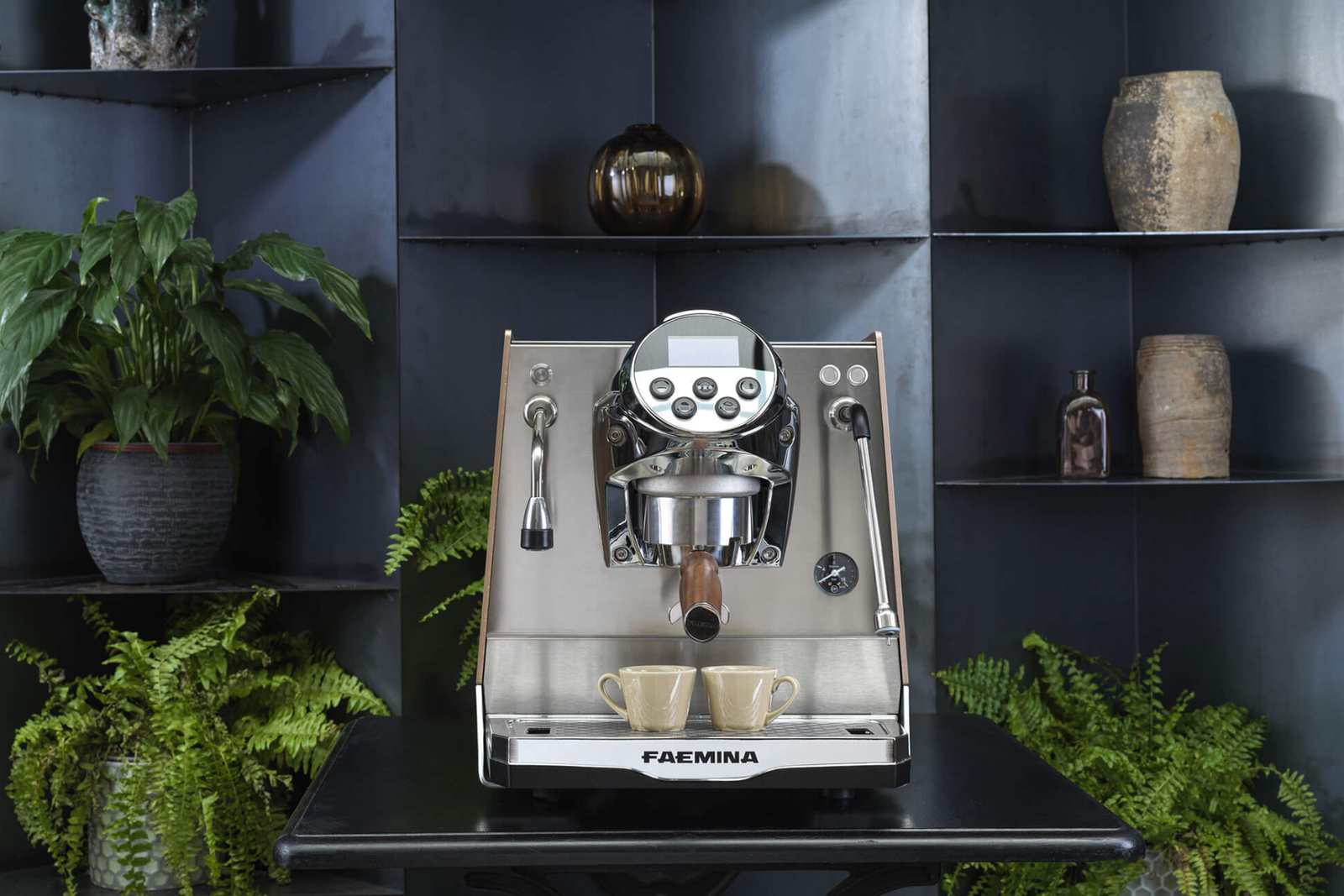
Price: USD $5,450
The Faemina Professional offers a thoughtful mix of traditional espresso qualities and modern comfort. Featuring a true dual-boiler system, it separately manages coffee brewing and steaming, helping maintain steady temperatures and consistent milk performance. Setup is straightforward thanks to Faema’s Plug&Play approach, with a front-loading water tank that makes daily refills simple. Inside, insulated boilers help cut energy loss, and the machine heats up quickly, reaching coffee-ready in about five minutes before automatically entering standby mode when left idle.
You can choose between automatic milk frothing for one-touch cappuccinos or take full manual control for a more hands-on barista experience, where it truly feels versatile in how it handles drinks and milk. The drink menu extends beyond espresso to include filter-style coffee, cappuccino, tea, and infusions, making it well suited to households with different tastes. A height-adjustable drip tray with Faema’s patented Up&Down system easily adapts to everything from espresso cups to taller glasses.
The machine features an integrated softener filter, with a second refill included, helping to prevent limescale buildup and ensure consistent water quality over time, making long-term usability a clear priority. Through the Be Faema app, you can fine-tune settings, access support, and explore extras like recipes and guided sensory experiences. Practical accessories such as dual filter holders, a tamper, cleaning brush, and silicone mat are included, creating a package that feels well thought out rather than excessive. It’s a machine designed to make great coffee accessible without compromising the satisfaction of making it properly.
Design: Slim stainless steel profile with intuitive controls
Colour Options: Stainless Steel
Best For: Espresso lovers who want solid performance in a small footprint
Price: USD $499
Designed to provide a simple, authentic brewing experience, the Dedica Maestro Plus remains compact without feeling restrictive. Its slim stainless steel body easily fits into almost any kitchen, while features like 15-bar professional pressure and active temperature control ensure consistent extraction. The machine supports both single and double-wall filter baskets, with doses of up to 20 grams, offering flexibility whether you’re using pre-ground coffee or freshly ground beans.
What truly sets the Maestro Plus apart is the Auto LatteArt steam wand, which automates milk frothing while still providing a hands-on experience during espresso extraction. It creates smooth, well-textured milk without requiring advanced technique, making it easy to switch between straight espresso and milk-based beverages. Practical accessories such as a stainless steel tamper and milk jug are included, completing a setup that feels thoughtfully designed. For those with limited counter space but who refuse to compromise on quality, the Dedica Maestro Plus offers a confident balance of simplicity and performance.
Faemina Professional Espresso Machine | Image: Supplied – Faemina
What should you look for in a Coffee Machine?
Choosing a coffee machine isn’t a one-size-fits-all decision, and that’s what makes the process both exciting and confusing. There’s a wide variety of machines on the market, each designed around a different method of making coffee, a different level of effort required, and a different idea of what “good coffee” actually means. Before narrowing down your options, it’s valuable to understand the landscape as a whole — how the different types of machines vary, what kind of experience they aim to provide, and why some setups attract certain coffee drinkers more than others. Once you grasp that context, finding the right machine becomes much less overwhelming and far more personal.
Types of Coffee Machines:
Before choosing a coffee machine, it’s helpful to understand the main categories they fall into. Each type is designed with a different balance of involvement, convenience, and control, and knowing their positioning helps you find what best fits your daily routine. The most common coffee machine types can be divided into the following groups:
Automatic Coffee Machines: Designed to manage most of the process for you, these machines emphasise convenience and consistency, making them ideal for everyday coffee with minimal effort.
Manual Coffee Machines: Designed for those who like to be involved in every step, manual machines give you control and make the coffee-making process more intentional and hands-on.
Espresso Machines: Focused on producing rich, concentrated coffee, espresso machines vary from beginner-friendly models to advanced systems designed to replicate café-style results at home.
Pod Machines: Prioritizing speed and simplicity, pod machines provide a quick, tidy way to make coffee with minimal preparation or cleanup.
Features to consider:
Before comparing machines side by side, it helps to understand the core features that influence how a coffee machine performs and feels to use. These elements affect consistency, control, and the amount of room you have to grow with the machine over time. You don’t need every feature on day one, but knowing what they do makes it easier to decide what’s worth prioritizing.
Dual Boilers: Machines with dual boilers use separate heating systems for brewing espresso and producing steam. This allows both processes to happen at the same time without temperature fluctuations, making them especially useful for milk-based drinks and back-to-back shots.
PID Temperature Control: A PID system actively monitors and adjusts brewing temperature, helping keep heat stable throughout extraction. This consistency can improve flavour clarity and makes it easier to dial in different coffees.
Portafilter Diameter: The size of the portafilter affects how the coffee bed forms and how water flows through it evenly. Larger diameters, like 58 mm, are common on premium machines and can produce a richer, more balanced flavour compared to smaller sizes used on entry-level models. They also provide better compatibility with professional baskets, tampers, and accessories, making upgrades simpler over time.
Overpressure Valve (OPV): Espresso is usually brewed best at around nine bars of pressure, but not every machine is perfectly calibrated out of the box. Some machines are set higher, which can result in harsh or unbalanced shots if not checked. An overpressure valve helps regulate this by releasing excess pressure during extraction, maintaining the ideal range and enabling the coffee to extract more evenly and consistently.
Unpressurised Baskets: These baskets rely on grind quality and technique rather than artificial pressure, offering greater control over flavour and texture. They’re ideal for anyone using a quality grinder and looking to get the most out of fresh beans.
Steamer Holes: The number and layout of holes in a steam wand tip affect milk texture and steaming speed. Fewer holes offer more control for beginners, while multiple holes can produce faster, more powerful steaming once technique improves.
Why trust our list?
We love coffee — and we don’t start a day without one. With so many machines on the market, choosing the right one can feel overwhelming, which is why we took the time to research the best options currently available. Our picks are based not only on specifications but also on how these machines are actually received by the people who use them daily, from home enthusiasts to seasoned coffee drinkers. Some of these machines aren’t cheap, but investing in a good coffee setup pays off over time, in terms of quality and enjoyment. We focused on build quality, performance, usability, and long-term value to ensure every machine on this list is one worth living with for years to come.
Elias Albay is the Founder and Director of Many Men Magazine, a Toronto-based digital publication dedicated to promoting modern masculinity through style, culture, and self-improvement. What started as a personal turning point became a purposeful platform. — born from Elias’ desire to create something meaningful after completing his studies and finding no career path that truly matched his ambitions. With a background in Civil Engineering from York University and experience in Commercial Flight Operations at CAE, he applied skills, and resilience from both fields to forge a new path.