






SportsCameras

The Sony Tech Behind the Super Bowl — What 100 Million Viewers Don’t See

Share via

Our team of editors and experts thoughtfully chooses each product. If you decide to buy through one of our links, we may earn a commission. Learn more. Want to know how we test products? Click here for more details.

Most people watch the Super Bowl for the touchdowns, the halftime show, and commercials. What they don’t see is the enormous amount of technology required to deliver every tackle, replay, celebration, and slow-motion shot to more than 100 million viewers worldwide.

Behind every camera angle and crystal-clear broadcast is a small army of engineers, producers, camera operators, and technicians working together to make sure football’s biggest game reaches your screen without a hitch.For Super Bowl LX, Sony once again played a major role in making that happen. From professional broadcast cameras and lenses to advanced replay systems and tracking technology, the company supplied much of the equipment used to capture the action inside Levi’s Stadium.

Here’s a closer look at the Sony gear, systems, and behind-the-scenes innovations helping bring the biggest sporting event in America to life.

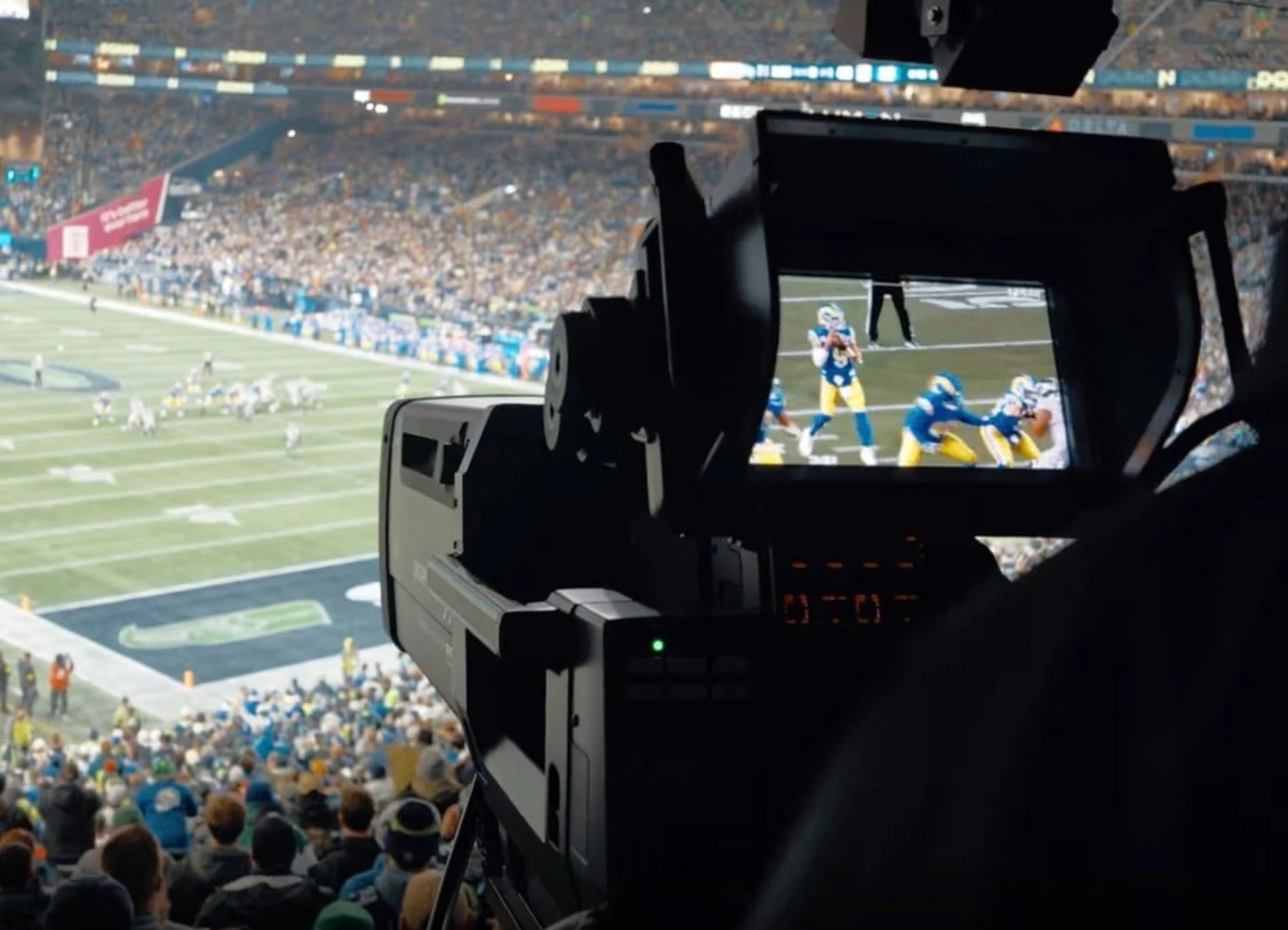
Patriots’ quarterback Drake Maye featured in Sony’s High-Frame-Rate (HFR) footage | Image: Sony

The Biggest Broadcast in Sports

Calling the Super Bowl a football game almost feels like underselling it. Every year, it becomes one of the most-watched television broadcasts on the planet, attracting more than 100 million viewers in the United States alone, with millions more tuning in from around the world. For a few hours, the game becomes the centre of the sporting universe, bringing together die-hard NFL fans, casual viewers, advertisers, celebrities, and even people who couldn’t tell you the difference between a touchdown and a field goal.

That level of attention comes with enormous pressure behind the scenes. Unlike a regular-season game, there are no second chances when you’re broadcasting the Super Bowl. Every camera angle, replay, graphic, player introduction, halftime performance, and post-game celebration needs to be captured flawlessly in real time. It’s one of the most complex live productions in sports, requiring hundreds of cameras, miles of cabling, dozens of production teams, and enough technology to rival a Hollywood film set. When more than 100 million people are watching at once, “good enough” simply isn’t good enough.

Sony Alpha 1 Mirrorless Cameras | Image: Sony

Why the NFL Turned to Sony

Producing the biggest television broadcast in America leaves almost no room for error. Each replay must be clear; every slow-motion shot should show details viewers might miss; and every important decision must be backed by reliable technology. That’s one of the main reasons the NFL officially partnered with Sony, naming the company its official technology partner and using its products and services across many aspects of the game.

Sony’s Hawk-Eye technology supports NFL officiating by providing advanced optical tracking and replay systems that assist with game-critical decisions. The company is also working with the league to develop next-generation line-to-gain measurement systems, helping officials make more accurate calls during some of the most important moments of a game. On the sidelines, Sony technology powers new coach communication systems, while its Beyond Sports division helps transform player-tracking data into interactive visual experiences designed to engage a new generation of football fans.

Perhaps what’s most impressive from Sony is how deeply it has embedded itself throughout the NFL ecosystem. Its cameras have been trusted by broadcast partners including CBS, FOX, NBC, and ESPN for decades now, while The Associated Press has relied exclusively on Sony imaging equipment for NFL coverage since 2020.

According to Neal Manowitz, President and CEO of Sony Electronics North America, the company’s goal extends well beyond simply supplying equipment. “We are committed to creating the future of sports with technology, and constantly driving innovation to positively impact the world of athletics for players, coaches and fans alike,” he said. It’s a vision that closely aligns with the NFL’s push to modernize everything from officiating and coaching communication to fan engagement.

Manowitz also said that Sony is now involved in professional photography, broadcast production, advanced line-to-gain tracking, and better in-stadium experiences. “This partnership stems from years of integration into the NFL across these many different areas, and we are excited to officially join forces and pursue our passions together with one of the largest sports organizations in the world.” When viewers watch the Super Bowl, they are seeing not just a football game but one of the most advanced live productions in sports.

NFL Coach Matt LaFleur is using Sony’s league-issued headset on game day | Image: Sony

The Sony Technology Behind the Super Bowl

Sony’s role at Super Bowl LX extends far beyond supplying a few cameras around the stadium. In what the company describes as its most advanced Super Bowl presence to date, Sony’s technology will touch almost every aspect of the game, from coach communication and officiating to player tracking, photography, and the live broadcast itself.

One of the biggest highlights this year is the first time Sony’s NFL Coach’s Headsets will be used at the Super Bowl. These headsets, introduced across the league at the start of the 2025 season, are based on Sony’s 1000X headphone series and have been redesigned to meet the NFL’s requirements. They provide clear communication even in noisy stadiums, helping coaches and staff stay connected during important moments, regardless of noise or weather.

Sony is also making a big impact with its cameras. Over 175 Sony cameras will be set up around Levi’s Stadium on game day, including top broadcast cameras, high-speed systems, Alpha 1 II and Alpha 9 III models, and G Master lenses. NBC Sports, the Associated Press, NFL photographers, and production crews will use these cameras to capture everything from touchdowns to the emotional moments that define the Super Bowl.

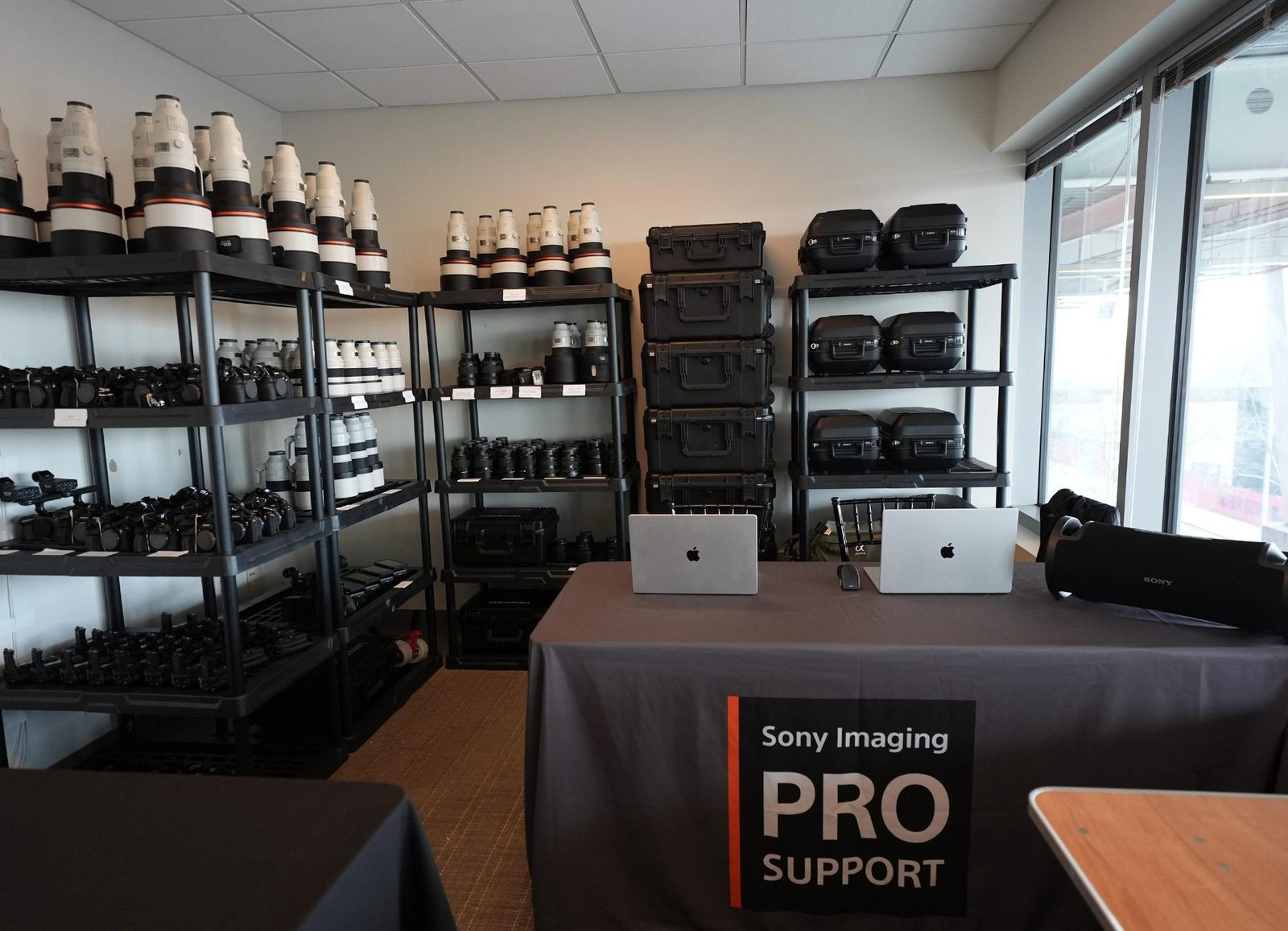
Sony Imaging Pro Support Room | Image: Sony

Sony’s Hawk-Eye technology will be used at the Super Bowl for the first time as part of the NFL’s new Virtual Measurement system, helping officials make faster and more accurate first-down calls. Sony is also providing replay and video review tools, along with its advanced SkeleTRACK system. This system tracks 29 points on each player and works with ball-tracking technology to create one of the most advanced player-monitoring setups ever seen in pro football.


“Our partnership with the NFL is built on a shared commitment to innovation,” said Theresa Alesso, President of Imaging Products and Solutions Americas at Sony Electronics. “This year’s Super Bowl reflects how Sony technologies work together through data, communication, and imaging to support every moment of the game, from the field to the broadcast to the fan experience.”

Broadcasters who bring the game to fans everywhere share this confidence. “As the biggest game and the most-watched show of the year, the Super Bowl production requires tools we can trust,” said Ken Goss, NBC Sports EVP of Studio and Remote Operations. “Working with Sony allows us to flawlessly deliver every angle, replay and on-field moment to viewers watching around the world.” For millions of viewers at home, everything looks seamless. For the teams behind the scenes, it is the result of years of innovation coming together on one Sunday night.
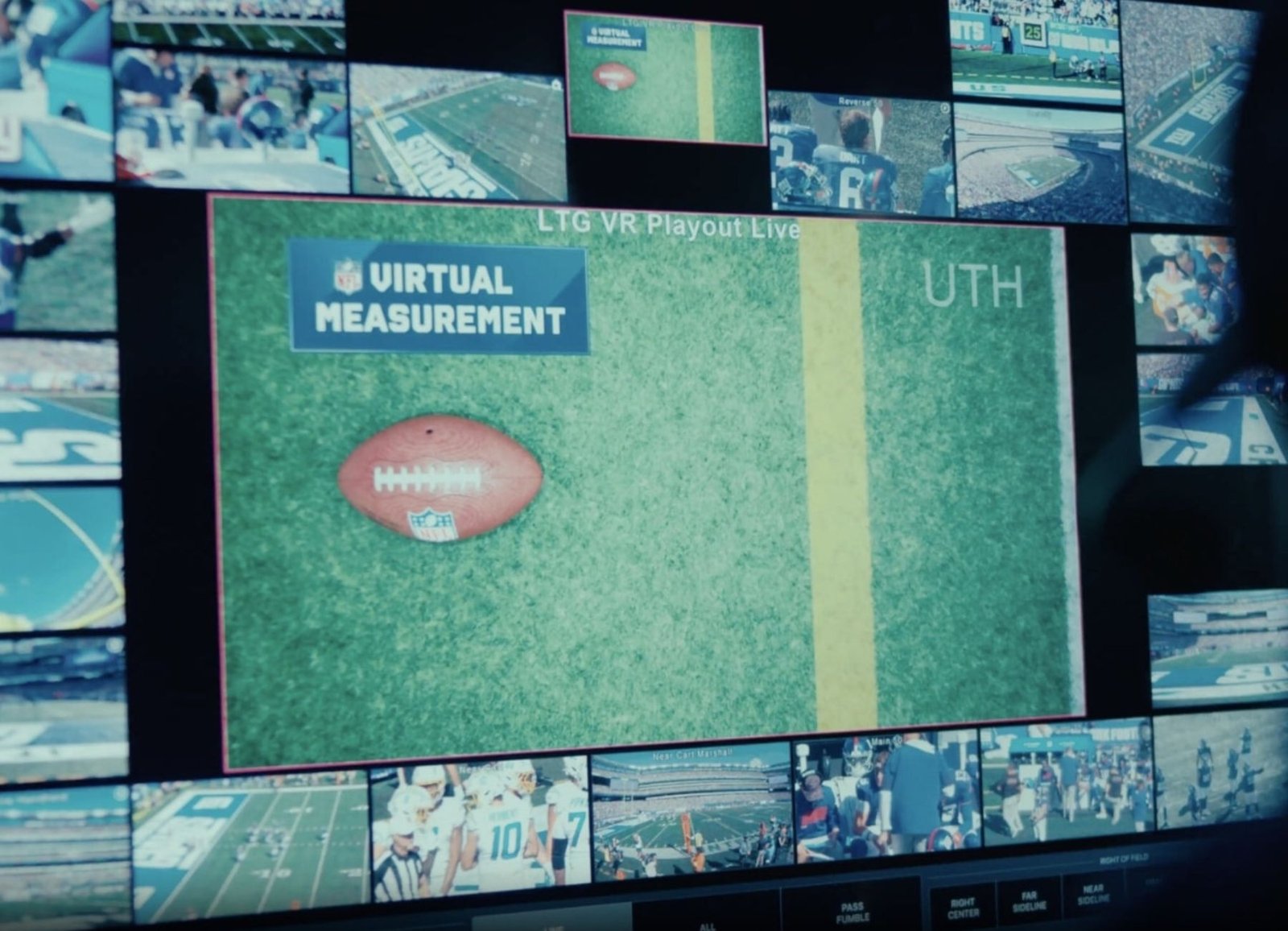
Hawk-Eye’s SkeleTRACK System | Image: Sony

Inside Hawk-Eye’s SkeleTRACK System

While cameras capture what fans can see, Sony’s Hawk-Eye SkeleTRACK system focuses on everything they can’t. Making its Super Bowl debut this year, the technology creates a detailed digital model of the action on the field by tracking 29 points on every player, along with real-time 3D tracking of the football itself. The result is a remarkably accurate view of player movement, positioning, speed, and ball location throughout every snap.

The system works alongside Zebra Technologies’ RFID tracking technology to provide the NFL with one of its most advanced player-tracking environments to date. Beyond helping broadcasters tell a better story, the technology gives the league deeper insights into how plays develop, how players move through space, and how key moments unfold in real time. It also supports officiating and game analysis by providing another layer of precision when split-second decisions matter most.

Most of this technology works quietly in the background for people watching at home. Still, whether it’s creating new graphics, improving player stats, helping with replay analysis, or showing how a big play happened, SkeleTRACK is always working behind the scenes. It shows that today’s Super Bowl uses much more than cameras and commentators to bring fans closer to the game.

Sony Imaging Pro Support Room | Image: Sony

How Sony Captures Every Moment

Filming the Super Bowl takes much more than just aiming a camera and hitting record. Each touchdown celebration, hard tackle, coach’s reaction, and crucial replay must be caught from several angles at once. To pull this off, Sony has set up a wide range of imaging technology across Levi’s Stadium, building a network that can capture every moment of the game.

This setup goes well beyond regular broadcast cameras. Sony’s technology helps NBC Sports, the Associated Press, NFL photographers, in-stadium crews, and even the halftime show. From ultra-slow-motion replays and dramatic player introductions to sideline photos and aerial views, almost every angle you see on game day comes from Sony’s imaging system.

Here’s Full List of Sony Tech and Products used during the Super Bowl LX:

NBC Sports Broadcast Coverage:

  • 35x Sony HDC-5500 system cameras
  • 2x Sony HDC-4300 system cameras
  • 6x Sony HDC-P50A POV cameras (including 4K units)
  • 11x Sony HDC-P50 POV cameras
  • 1x Sony HDC-P31 POV camera
  • 3x Sony PXW-FX9 cinema cameras
  • 2x Sony PMW-F55 cinema cameras
  • 1x Sony ILME-FR7 PTZ camera
  • 1x Sony BRC-AM7 PTZ camera
  • 2x Sony ILX-LR1 aerial cameras
  • 1x Sony HDC-P50 specialty camera

Halftime Show Production:

  • 11x Sony VENICE 2 digital cinema cameras
  • 3x Sony BURANO digital cinema cameras
  • 1x Sony FR7 Cinema Line PTZ camera

Levi’s Stadium In-Venue Production:

  • Sony HDC-3500 UHD cameras
  • Sony HDC-5500 high-frame-rate cameras
  • Sony HDC-3500 RF wireless cameras
  • Sony ILME-FX3A shallow depth-of-field cameras
  • Sony E-mount lenses

Photography & Sideline Coverage:

  • Associated Press:
    • 55 Sony camera bodies
    • 80 lenses, 15 PDT-FP1 portable data transmitters
  • 10 Sony UHD cameras:
    • HDC-3500 (hard positions)
    • HDC-5500 (HFR), HDC-3500 (RF wireless)
    • ILME-FX3A (RF shallow depth of field) with Sony’s E-mount lenses sideline & photography Support
  • NFL Focus Photography Team:
    • 8 Sony cameras
    • 20 lenses
  • Sony Imaging PRO Support:
    • 45 Sony full frame mirrorless cameras
    • 90 E-mount lenses
    • 12 PDT-FP1 Portable data transmitters
    • PXW-Z200 camcorders
San Francisco Levi Stadium Super Bowl 50 L on February 7, 2016 | Image: Getty Images

What 100 Million Viewers Never See

While fans focus on the touchdowns, the halftime show, and dramatic moments, an enormous operation is underway behind the scenes. These operations are months in the making before the kickoff, with hundreds of engineers, producers, camera operators, photographers, replay technicians, and broadcast specialists already at work preparing the technology that will bring every moment of the game to screens around the world. Testing, tracking systems, and camera positions all need to manage live data feeds and instant replays; every detail needs to work flawlessly when the game begins.

Over 175 cameras, Hawk-Eye tracking technology, coach communication systems, photographers, and broadcast crews all work together in real time to create an experience that seems effortless for viewers at home. Most fans never think about the technology behind a replay of a game-winning touchdown or a perfectly timed slow-motion shot, and that’s the goal. When everything runs smoothly, the focus stays on the game, and the technology quietly supports it in the background.

By the time confetti falls and a new champion lifts the Lombardi Trophy, the cameras, tracking systems, and broadcast crews have quietly done their job—capturing the moments fans will remember for years. While it’s tempting to focus on the big plays and celebrations, none of it would be possible without the behind-the-scenes dedication and precision.
Sony Imaging Pro Support Room | Image: Sony
Sony
About the Author
Gaming

Bungie’s ‘Marathon’— Everything You Need to Know: Characters, Release Date, & More

Reading Time: 11 minutes

Our team of editors and experts thoughtfully chooses each product. If you decide to buy through one of our links, we may earn a commission. Learn more. Want to know how we test products? Click here for more details.

For years, Bungie has been one of the biggest names in sci-fi shooters, creating iconic franchises like Halo and Destiny. Now, the studio is taking a new direction with ‘Marathon’, a multiplayer extraction shooter focused on survival, risk, and intense combat. Although the game’s first reveal earlier this year didn’t impress many fans, it has since made a strong comeback. Bungie is now showing off more of the world, gameplay features, and action-packed battles set on Tau Ceti IV.

Bungie has confirmed that ‘Marathon’ is aiming to release in March 2026, though the exact date has not yet been set. The newest videos show that the extra time has made a difference. The game feels more focused now, with a clear style centred on extraction gameplay where staying alive is more important than just getting kills. Players take on the role of cybernetic mercenaries called Runners, who enter dangerous areas to gather loot, fight other teams, and try to escape without losing what they have.

The studio has also confirmed that ‘Marathon’ will be a paid game instead of free-to-play, with Bungie aiming for a $40 price and free updates during the first year. Bungie is avoiding some of the annoying seasonal systems found in many modern multiplayer games, keeping reward passes available all the time rather than making them vanish after short events. Thanks to Bungie’s reputation for great gunplay, the game’s eye-catching art style, and the rising popularity of extraction shooters, ‘Marathon’ is already one of the most talked-about upcoming multiplayer games.

What Is Bungie’s ‘Marathon’?

Long before Halo made Bungie one of the biggest names in gaming, the studio first built its sci-fi reputation through the original Marathon trilogy back in the 1990s. This new version returns to that universe years later, placing players inside a dangerous future shaped by missing colonies, mysterious factions, and a giant interstellar ship hanging silently above a ruined planet.

The game takes place on Tau Ceti IV, a colony where everyone disappeared under unknown circumstances. Players take on the role of Runners, mercenaries who have left their human bodies behind and now use artificial bodies designed for fighting and survival. Working for secret, powerful groups, Runners are sent into dangerous areas to find weapons, upgrades, supplies, and clues about what happened on the planet and on the huge Marathon ship orbiting above.

Marathon is based on PvPvE extraction gameplay, meaning players fight both enemy creatures and other human teams in each match. Players can play alone or team up while exploring different maps across Tau Ceti IV. The further players go into risky areas, the better the rewards, but staying alive long enough to get away is more important than just getting kills. Losing a fight can mean losing valuable gear, loot, and progress gained during the run.

Bungie also seems to focus a lot on long-term progress, letting players improve their Runner, try out different setups, and unlock better gear over time. Along with the game’s clear sci-fi look, intense survival action, and Bungie’s well-known skill with shooting mechanics, Marathon already feels very different from most multiplayer shooters out there.

‘Marathon’ (2026) | Image: Bungie

How Does ‘Marathon’ Play?

‘Marathon’ is based on extraction-style gameplay where staying alive is more important than just getting kills. Players enter large maps on Tau Ceti IV alone or with teammates, looking for weapons, implants, supplies, and valuable items while facing hostile enemies and rival teams at the same time. After gathering enough gear, players must reach an extraction point and escape safely before losing everything. This pressure is present in every match, especially when other teams head toward the same goals and extraction areas.

The shooting in ‘Marathon’ keeps the fast, smooth style Bungie is known for, but the game feels more tense and strategic than Destiny. Winning isn’t just about fighting; positioning, teamwork, movement, and knowing when to leave weigh just as much. Bungie is building the game for long-term progress, so you can customize your Runner, try different gear, and unlock better equipment as you play. Based on what’s been shown so far, ‘Marathon’ is less about constant action and more about those stressful moments when one mistake can end your run.

‘Marathon’ (2026) | Image: Bungie

What Are the Classes and Factions in ‘Marathon’?

One of the most important choices in ‘Marathon’ is picking which Runner Shell to use in a match. Each Shell is designed for a different way of fighting and surviving, so the class you pick can completely change how a run goes. Some are built for tough fights, while others focus more on sneaking, moving quickly, helping teammates, or grabbing valuable gear and escaping unseen.

Here are the Runner Shells Bungie has revealed so far:

Destroyer: A heavy combat Shell equipped with a riot shield and shoulder-mounted rocket launchers.

Thief: A fast Shell focused on grabbing loot, using grappling hooks and remote-controlled drones.

Blackbird: A recon-focused Shell designed for scouting and revealing enemy positions.

Glitch: A highly mobile Shell built around speed and flanking enemies.

Void: A stealth-focused Shell capable of turning invisible and using smoke to escape danger.

Lifeline: A medic-style Shell focused on healing and supporting teammates during runs.

Rook: A prototype Shell that appears more disposable, allowing players to attempt loot runs without risking valuable equipment.

Besides the Shell itself, players can also customize weapons, implants, and gear setups depending on how they want to play each match. Some players will likely chase enemy teams across the map, while others may focus entirely on sneaking through dangerous areas to collect loot and leave before trouble starts. Bungie also confirmed that Shells can be customized with skins, unlocks, and upgrades, but the system seems more focused on different setups and playstyles than on creating a fully custom character like in Destiny.

The world of ‘Marathon’ is also shaped by powerful groups operating behind the scenes across Tau Ceti IV. So far, Bungie has introduced Traxus, a dangerous big company, Arachne, a combat-focused cult; and MIDA, a name longtime Bungie fans will likely recognize right away. Players will likely be able to work with these groups over time, unlocking support, upgrades, and equipment based on the loyalty earned during a season.

What makes the system interesting is the freedom it seems to offer players. Bungie does not appear interested in forcing everyone into a single role or a single style of gameplay. Instead, ‘Marathon’ seems built around experimenting with different Shells, weapons, and strategies, depending on how players want to survive each run.

‘Marathon’ (2026) | Image: Bungie

The Maps of ‘Marathon’

Players take on the role of Runners, but Bungie has said that Tau Ceti IV is really at the heart of ‘Marathon’. In each match, you explore big shared maps, searching for weapons, valuables, resources, and hidden clues before making your escape. Since every team is after the same things, even calm moments can suddenly turn into tense battles over loot or escape routes.

Every run feels tense because of the risks involved. If you die during a mission, you lose all the gear and valuables you were carrying. Bungie says you can come back with a different character, but anything you lost stays on the map for other teams to grab. The more often you escape, the better your gear and resources will be for your next runs.

Each map changes the difficulty and rewards. Some areas are safer, giving you a chance to recover after a tough loss, while others are much more dangerous but offer better loot.

Here are the maps that have been revealed so far:

Perimeter: This is an unfinished expansion zone linked to the Tau Ceti IV colony. Bungie says it’s a lower-level map with less danger and smaller rewards, so it’s a good spot for new players or for rebuilding after losing gear.

Dire Marsh: This flooded marshland has strange sci-fi touches like glowing ground, floating cargo containers, and overlapping structures that often push squads into fights. Bungie confirmed that up to 18 players can be on this map at once, so teams clash often as they compete for resources.

Outpost: This is a heavily guarded UESC facility packed with hostile security bots and tight vertical spaces. Bungie says it’s one of the most dangerous maps, with computer-controlled enemies and rival players fighting in the same spots. Still, it offers some of the best loot in the game.

Cryo Archive: This map is on the massive Marathon ship orbiting Tau Ceti IV. Cryo Archive is designed as an endgame area for well-equipped players. Bungie says its difficulty is similar to high-level activities in Destiny, and there are several vaults with better rewards the deeper you go.

Each map stands out because it handles player interaction, difficulty, and survival pressure in its own way. Some places let you explore and rebuild at your own pace, while others almost always lead to fights as soon as squads cross paths. With the shifting risks, the chance of losing your gear, and the mystery of Tau Ceti IV, the maps already look like a big reason why ‘Marathon’ could stand out from other multiplayer shooters.

The number of players changes from map to map. Bungie has confirmed that Dire Marsh can have up to 18 players at once, so several squads are fighting over the same loot, escape points, and resources. Other maps might have fewer players, and some could get even more chaotic based on their size and difficulty. This variety should make each location feel unique instead of just repeating the same formula.

If you survive a run and escape, you get to keep all the loot, weapons, and resources you found, which you can use in future matches or for upgrades. The more you risk, the more you can win, but there’s always the chance of losing everything. That pressure is at the heart of ‘Marathon’, especially as you learn escape routes, high-value spots, and which fights are worth it.

‘Marathon’ (2026) | Image: Bungie

Why Everyone Is Talking About ‘Marathon’?

A big reason people are paying so much attention to ‘Marathon’ is the studio behind it. Bungie helped shape modern shooters with games like Halo and Destiny, so the idea of Bungie entering the extraction shooter genre immediately caught players’ interest. Once the gameplay started showing up, the talk only got louder because of the game’s clear sci-fi art style, unusual world design, and the constant tension in every run.

The extraction shooter genre has become much more crowded in the last few years, but very few games have really become popular with a wide audience. That is part of why ‘Marathon’ feels different right now. Bungie is clearly aiming for something more tense and deliberate, rather than just nonstop action. Surviving, escaping with loot, managing risk, and knowing when to avoid fights all seem just as important as shooting. With the mystery around Tau Ceti IV, the different Runner Shells, and Bungie’s reputation for smooth gunplay, ‘Marathon’ has quickly become one of the multiplayer games people can’t stop talking about.

‘Marathon’ (2026) | Image: Bungie

‘Marathon’ Release Date

Bungie has confirmed that ‘Marathon’ is planned for release in March 2026, though the exact date remains unconfirmed. Unlike many modern multiplayer shooters, the game will be sold for $40 rather than being free-to-play, with free updates during the first year. The studio also said that reward passes will always be available and won’t disappear after short seasons, so players won’t have to rush to complete content before it’s gone. With growing interest in extraction shooters and Bungie’s long experience with multiplayer games, Marathon is already one of the most anticipated shooters for 2026.

About the Author
arrow_drop_up