Our team of editors and experts thoughtfully chooses each product. If you decide to buy through one of our links, we may earn a commission. Learn more. Want to know how we test products? Click here for more details.
The Riviera has always occupied a special place in Baume & Mercier’s history. When it debuted in 1973, it became one of the first luxury sports watches crafted in stainless steel, introducing a distinctive twelve-sided bezel and a design language that has remained instantly recognisable for more than five decades. Rather than simply looking back on that legacy, the Swiss watchmaker has decided to celebrate it in the best possible way.
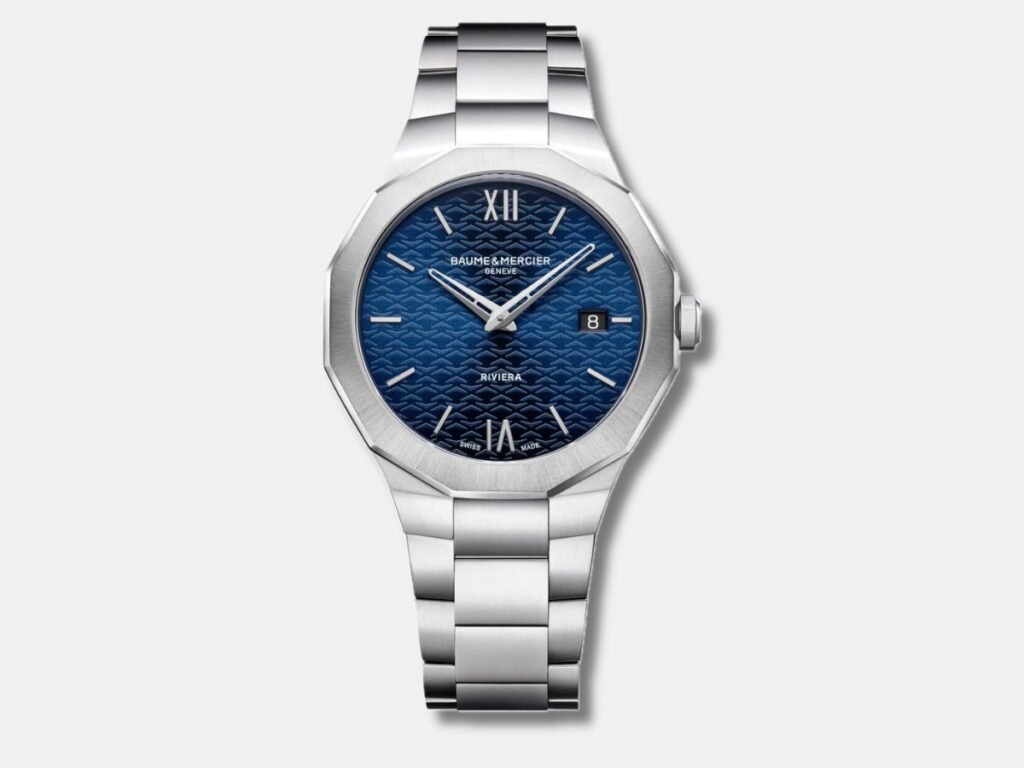
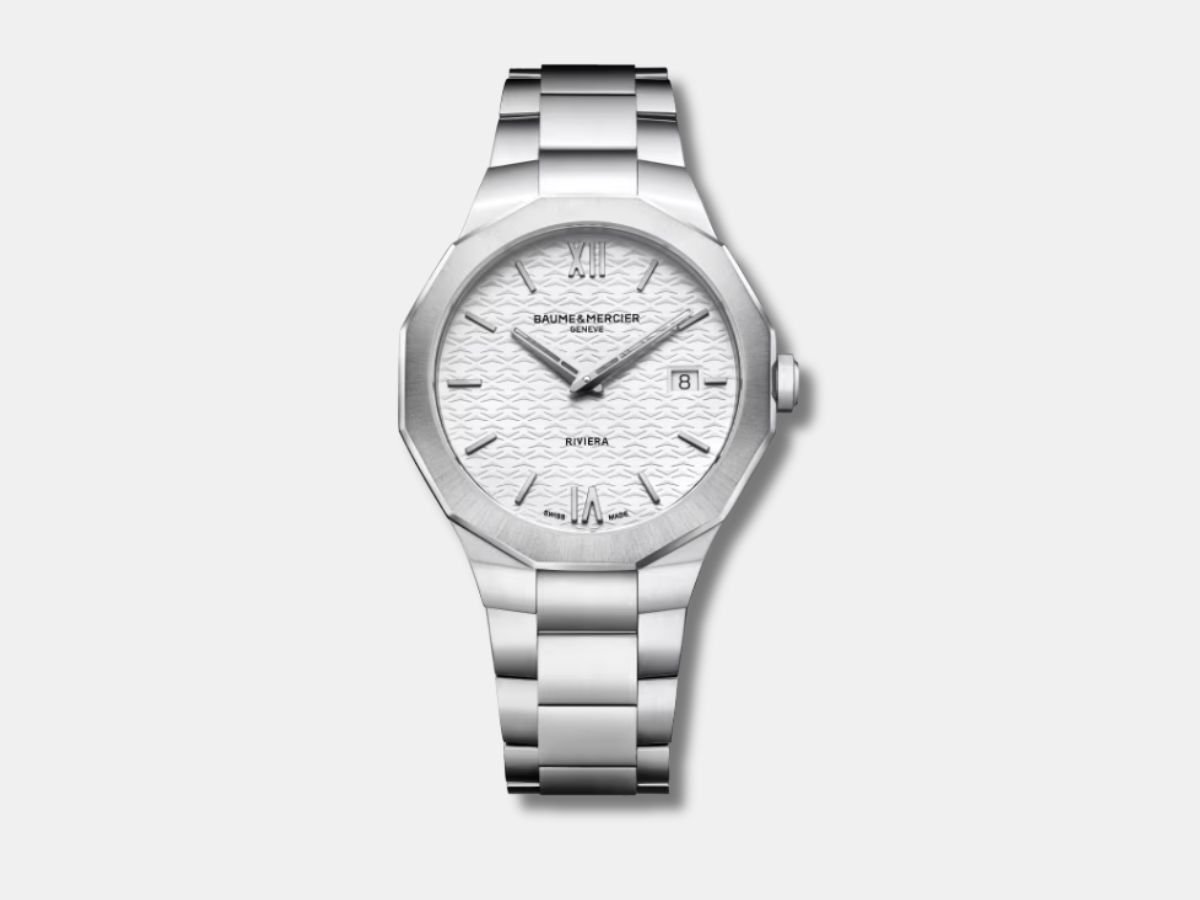
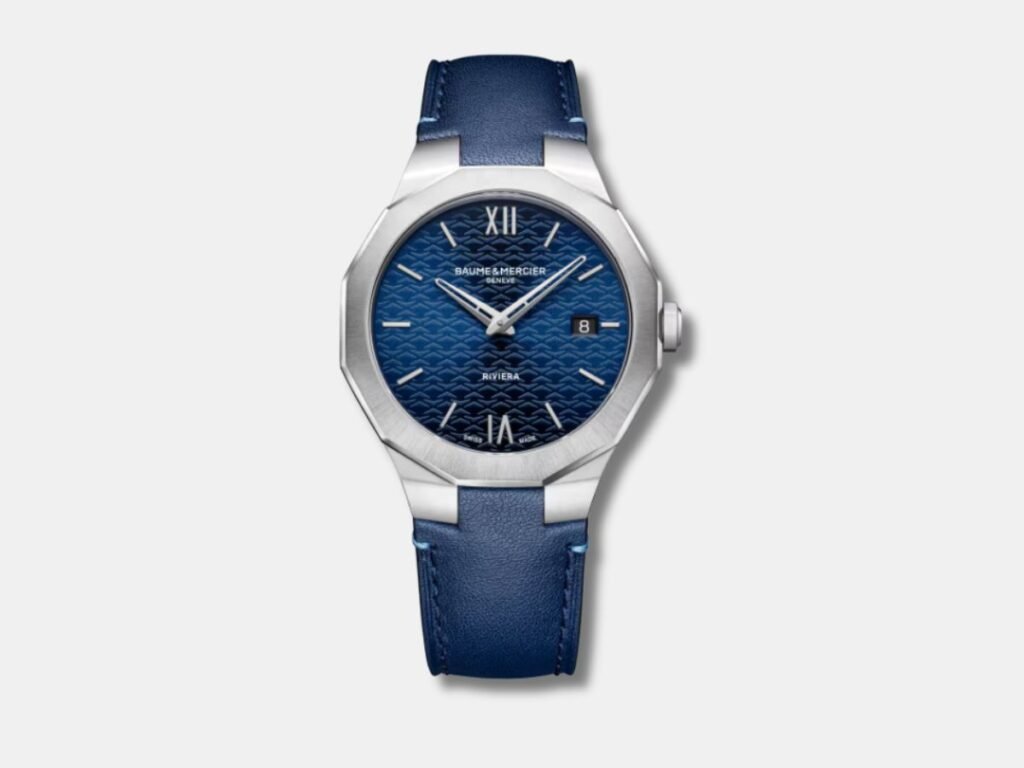
Enter the new Riviera 73 collection. Inspired by the original model that started it all, Baume & Mercier has introduced three new 39mm watches that bring back the cleaner proportions, understated elegance and everyday versatility that defined the first Riviera. While the design clearly pays tribute to 1973, these aren’t museum pieces—they’ve been refined for modern wrists while staying remarkably faithful to their roots.
Perhaps the biggest surprise is what sits inside. At a time when much of the luxury watch industry continues to focus on increasingly complicated mechanical movements, Baume & Mercier has confidently returned to quartz, just as the original Riviera did. It’s a decision that feels true to the collection’s heritage and reinforces the idea that practicality has always been part of the Riviera’s appeal.
Three new watches, one iconic design and a journey back to where the Riviera story first began. Let’s take a closer look at how Baume & Mercier has brought 1973 back to life.
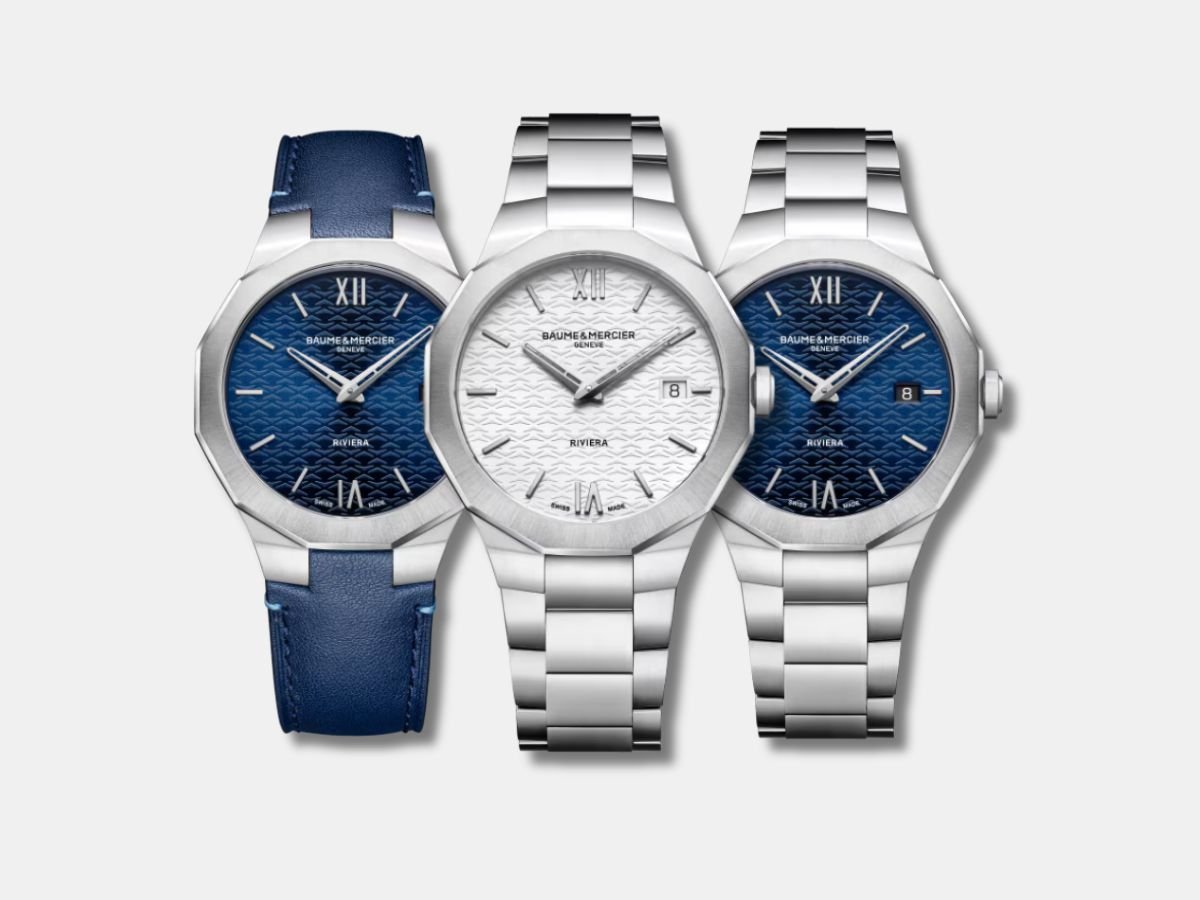
Baume et Mercier Riviera 73 Series | Image: Supplied / Baume et Mercier
The Riviera 73
The new Riviera 73 collection is Baume & Mercier’s way of revisiting the watch that started it all. Rather than recreating the original piece detail for detail, the maison has carefully reinterpreted its defining characteristics for today’s collector. The result is a trio of elegant 39mm stainless steel watches that stay remarkably close to the spirit of the 1973 original while benefiting from modern materials, improved finishing and everyday practicality.
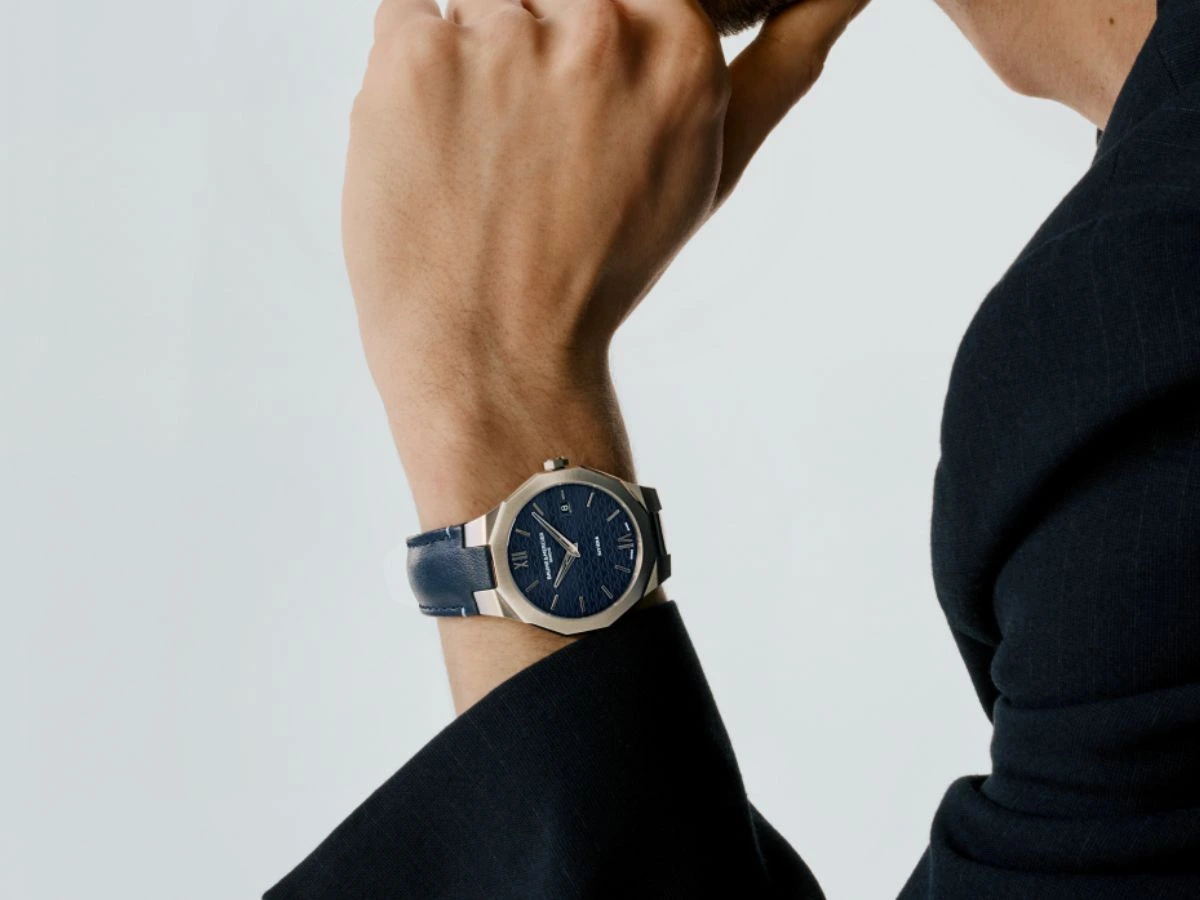
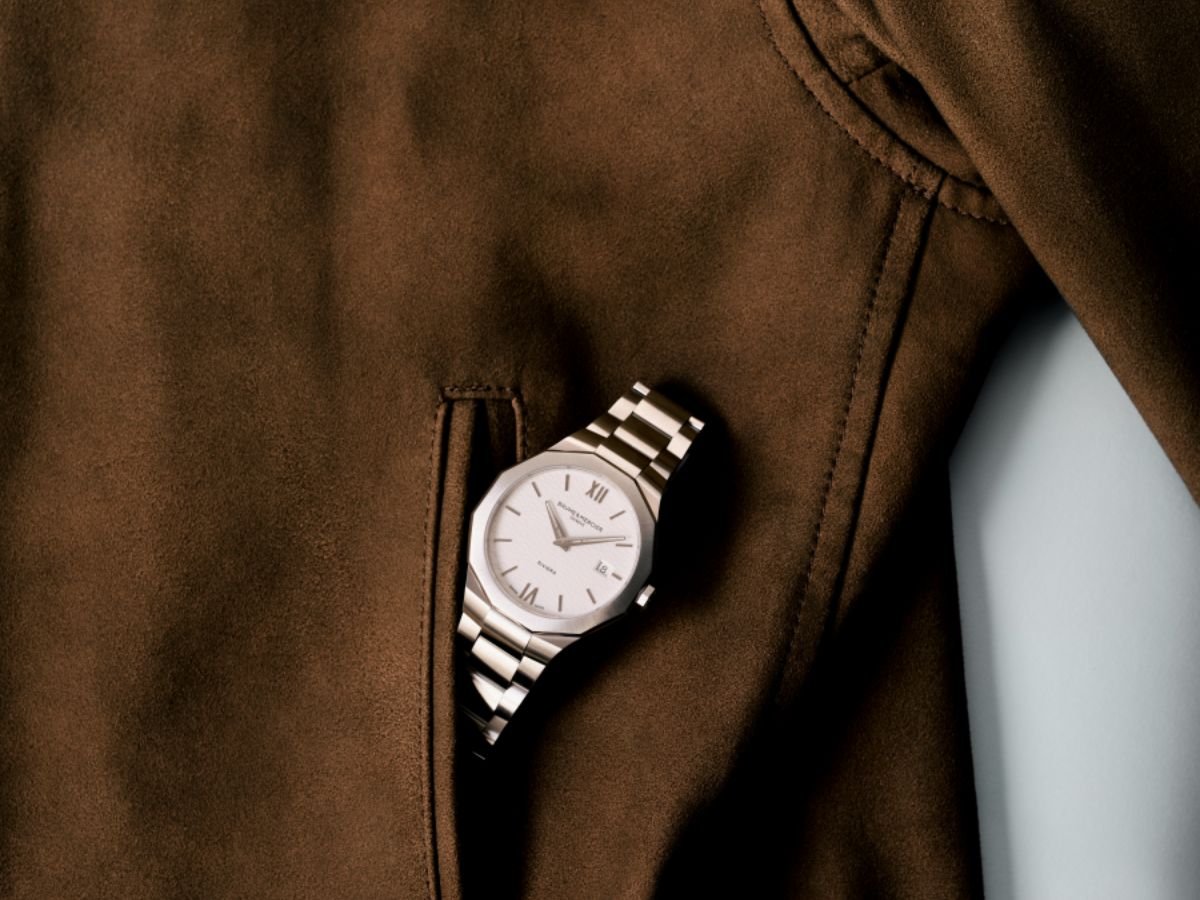
Across all three references, the Riviera’s unmistakable character is still front and centre. The familiar 12-sided bezel returns without visible screws, just as it did on the original 1973 model, while the slim 39mm case and 7.7mm profile give the collection a refined, comfortable fit on the wrist. Each version offers its own personality. There’s a crisp white opaline dial on a stainless-steel bracelet, a classic blue sun-satin dial paired with steel, and a third option that swaps the bracelet for a matching blue calfskin leather strap if you’re after a slightly more relaxed, vintage-inspired look.
From the inside, Baume & Mercier has chosen the dependable ETA F06.115 quartz movement, offering hours, minutes, a date display and approximately five years of battery life. Some collectors will instinctively lean towards a mechanical calibre, but the quartz feels like home, welcoming here. After all, the original Riviera did arrive with a quartz movement back in 1973 before automatic versions showed up, making this one of the collection’s most authentic tributes to its own history.
Taken together, the three watches capture everything that has made the Riviera endure for more than five decades. They’re slim, understated and easy to wear, with just enough vintage influence to remind you where they came from without feeling trapped in the past. Rather than chasing trends or adding unnecessary complications, Baume & Mercier has focused on refining a design that has already stood the test of time.
Back to ’73
The Riviera 73 doesn’t just pay tribute to its origins from the front—it continues the story on the back as well. Turn the watch over, and you’ll find a large “73” engraving, with typography inspired by the 1970s and surrounded by vertical lines that echo the wooden deck of a yacht. It’s a subtle reference to the French Riviera, whose coastal lifestyle has inspired the collection since the very beginning, and one that gives each watch a little more personality without shouting about it.
Sometimes the best tribute is knowing what not to change. Baume & Mercier has resisted the temptation to overcomplicate the Riviera 73, instead focusing on the proportions, details and personality that made the original memorable. More than fifty years after the first Riviera arrived, this new trio proves that good design rarely goes out of style.
Elias Albay is the Founder and Director of Many Men Magazine, a Toronto-based digital publication dedicated to promoting modern masculinity through style, culture, and self-improvement. What started as a personal turning point became a purposeful platform. — born from Elias’ desire to create something meaningful after completing his studies and finding no career path that truly matched his ambitions. With a background in Civil Engineering from York University and experience in Commercial Flight Operations at CAE, he applied skills, and resilience from both fields to forge a new path.
Our team of editors and experts thoughtfully chooses each product. If you decide to buy through one of our links, we may earn a commission. Learn more. Want to know how we test products? Click here for more details.
If you’ve ever tried to walk into a boutique and ask for a Submariner, Daytona, or even a simple Datejust, you’ll know the answer isn’t as straightforward as pulling out your card. For years now, the Swiss watchmaker has been at the centre of what many call the Rolex shortage—scarcity driving demand, demand driving prices, and prices fuelling an entire ecosystem of resellers and collectors who see these timepieces as both status symbols and investments.
The truth is, Rolex doesn’t need to create hype—it’s already part of the brand. Long waitlists, regional allocations, and a thriving secondary market have made buying a stainless steel Rolex at retail feel almost like winning the lottery. With this ongoing pressure on supply, the Swiss watchmaker has once again adjusted its prices for 2025. After all, when demand is this high, the Crown knows exactly what it’s worth.
This year’s increases don’t just reflect inflation—they emphasize Rolex’s ability to stay untouchable in the luxury market. As the world’s most recognized watchmaker, every move they make creates waves throughout the industry. So what do the new figures mean for collectors, casual buyers, and those still holding out for retail purchases?
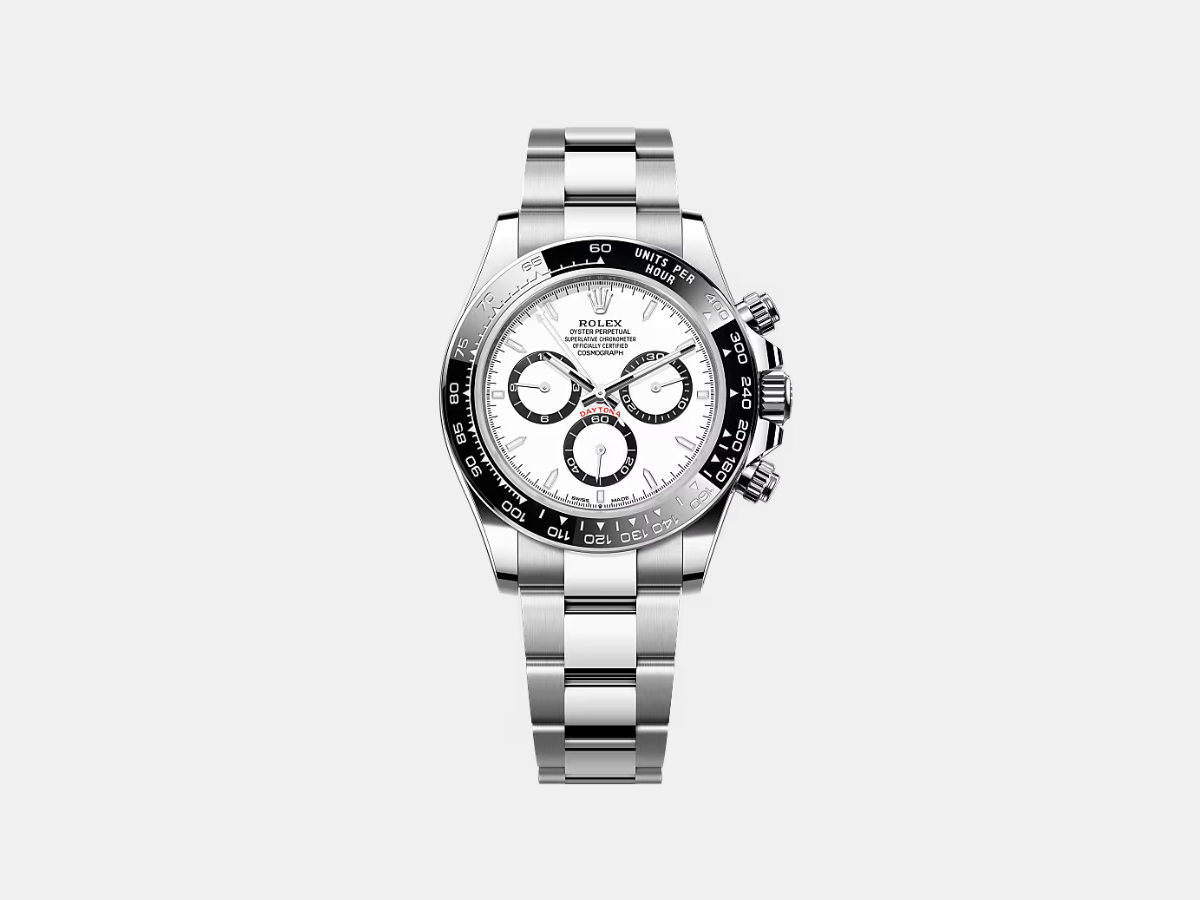
Few watches captivate collectors quite like the Rolex Cosmograph Daytona ‘Panda’. Its eye-catching white dial with black sub-dials has become a contemporary symbol of status, rarity, and speed. Powered by the sturdy Calibre 4131, this chronograph not only looks the part—it’s designed for accuracy and built for durability, perfectly representing the harmony of style and function that characterizes Rolex.
The Swiss watchmaker has increased the retail price from approximately $15,100 to $15,600; that’s a 2.6% difference. On paper, that increase appears modest, but the real story is in the secondary market, where this model often sells for twice—or even three times—its boutique price.
For anyone fortunate enough to receive a call from their authorized dealer, the extra $500 feels less like a setback and more like a small toll for access to one of the most exclusive clubs in watchmaking. And if you’re after something even bolder, the Yellow-gold Daytona Ref. 126508 staggers at a whopping price of USD $48,400, showing that the Crown’s golden touch remains very much alive.
Rolex Submariner Date Ref. 126610LN | Image: Supplied
Rolex Submariner Date
Brand: Rolex
Model: Submariner Date
Reference: 126610LN
Diameter: 41 mm
Thickness: 12.3 mm
Material: Oystersteel
Dial Colour: Black Dial
Calibre: 3235
Power Reserve: 70 Hours
Water Resistance: 30 Bar (300 metres, 1000 feet)
The Submariner Date is often considered the sweet spot for anyone starting their Rolex journey. More than just a steel sports watch, it holds the title of being the world’s first true diver’s watch, setting the blueprint for every modern dive watch that followed. Its timeless black dial and Rolex’s Cerachrom Bezel keep it versatile—you’ll see it on the wrists of divers, executives, and collectors alike. And while some frown at the idea of pairing a dive watch with a suit, the Submariner Date pulls it off effortlessly, proving that its design works just as well at a board meeting as it does at 300 meters below the surface.
The submariner has experienced a slight increase, rising from $10,250 to $10,500. It’s a modest change, and since the model is Rolex’s primary entry-level watch, it’s understandable why the brand prefers to keep the price hikes gradual rather than steep. Of course, if you’re after something with more flair, the Rolex Submariner Ref. 126613LN in steel and yellow gold now costs USD $17,600, offering similar performance with an added touch of luxury.
Rolex GMT-Master II ‘Batman’ Jubilee Ref.126710BLNR | Image: Supplied
Rolex GMT-Master II ‘Batman’ Jubilee
Brand: Rolex
Model: GMT-Master II
Reference: 126710BLNR
Diameter: 40 mm
Thickness: 12.3 mm
Material: Oystersteel
Dial Colour: Black Dial
Calibre: 3285
Power Reserve: 70 Hours
Water Resistance: 10 Bar (100 metres, 330 feet)
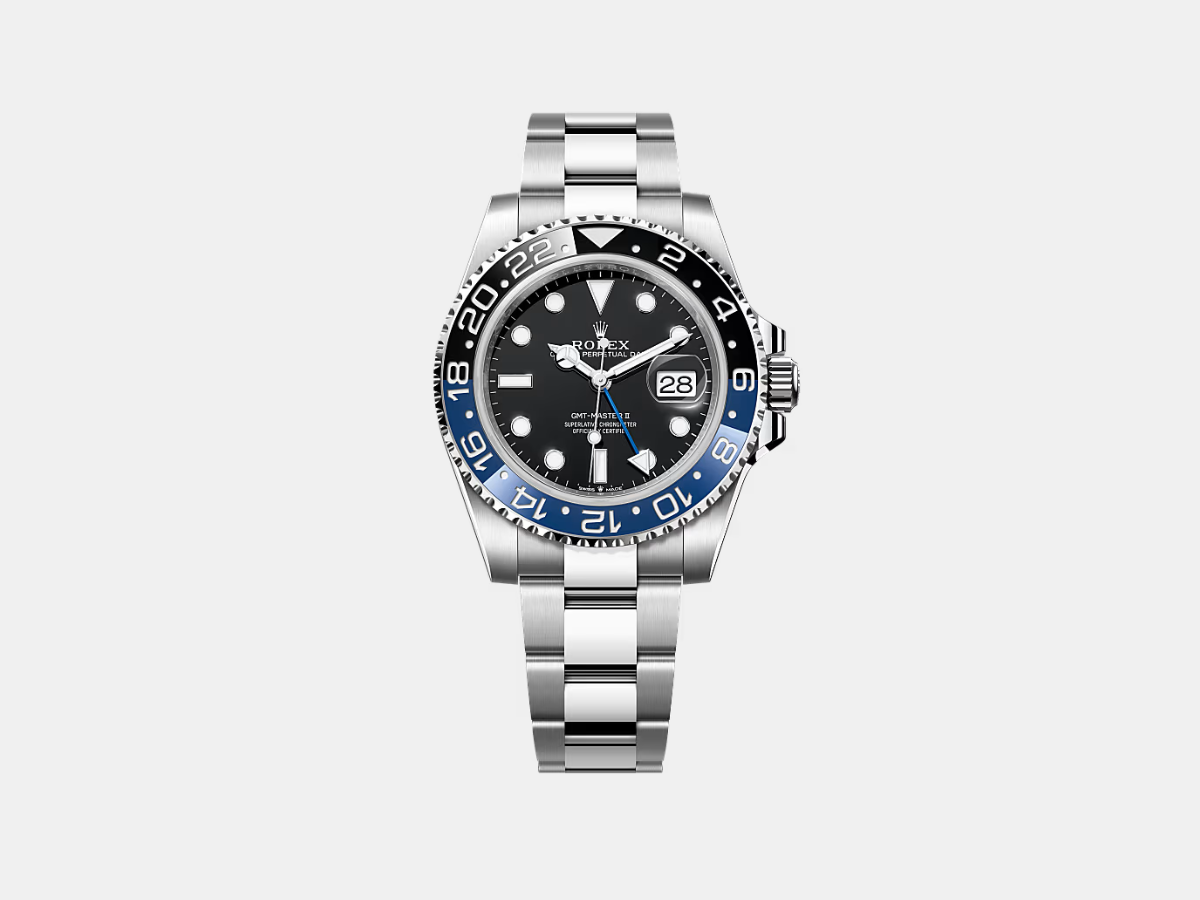
The GMT-Master II ‘Batman’ has become the “first big step” for many Rolex enthusiasts, providing an extra layer of functionality with its dual-timezone complication. Its blue-and-black Cerachrom bezel is instantly recognizable, and the Jubilee bracelet adds a refined touch that distinguishes it from its sportier sibling, the Submariner.
With retail now at $11,300, it’s priced above the Submariner but justifiably so—thanks to the Calibre 3285 movement inside, delivering 70 hours of power reserve and reliable precision. It’s a serious Rolex for those ready to move beyond the basics, and its enduring popularity ensures it remains one of the brand’s most collectible modern steel sports watches.
Water Resistance: 120 Bar (1220 metres, 4000 feet)
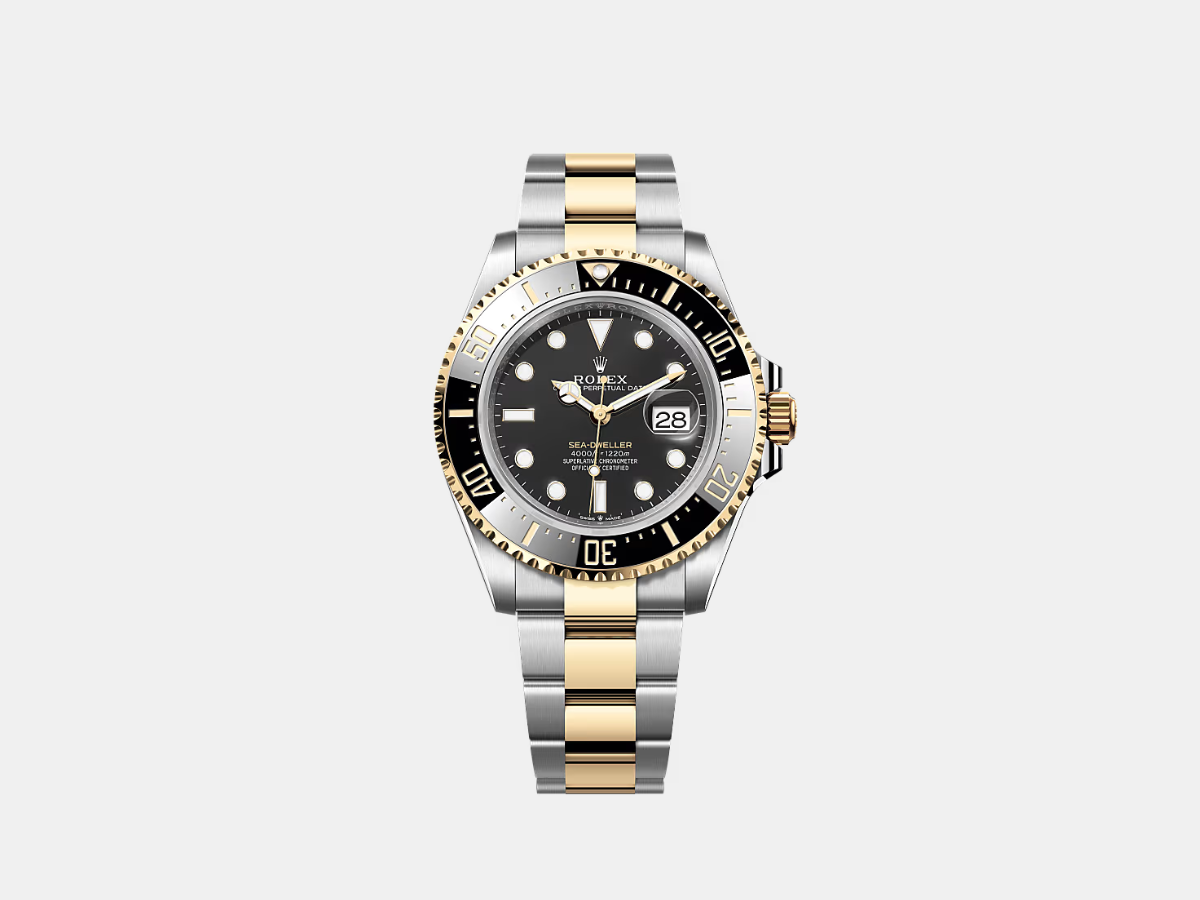
Launched in 1967, the Sea-Dweller was created for professional divers who needed a watch capable of going deeper than the Submariner. Equipped with a helium escape valve and a durable 43mm case, it was built to endure the crushing pressures of saturation diving. This maintains that extreme spirit with an impressive 1,220 metres (4,000 feet) of water resistance, while adding a touch of luxury through its two-tone Rolesor construction of Oystersteel and yellow gold.
Now with an 8% increase to $20,300, up from last year’s $18,700, the Sea-Dweller 126603 combines tool functionality with a bold statement piece, offering serious diving credentials wrapped in a striking aesthetic. For those who prefer a more subtle option without gold, the Oystersteel-only Ref. 126600 for USD $13,750 provides the same technical performance in a cleaner, more discreet package. Either way, the Sea-Dweller remains one of Rolex’s most capable and historic professional watches—built for the depths but admired everywhere.
Rolex Explorer II ‘Polar’ Ref. 2266570-0001 | Image: Supplied
Rolex Explorer II ‘Polar’
Brand: Rolex
Model: Explorer II ‘Polar’
Reference: 226570-0001
Diameter: 42 mm
Thickness: 12.2 mm
Material: Oystersteel
Dial Colour: White Dial
Calibre: 3285
Power Reserve: 70 Hours
Water Resistance: 10 Bar (100 metres, 330 feet)
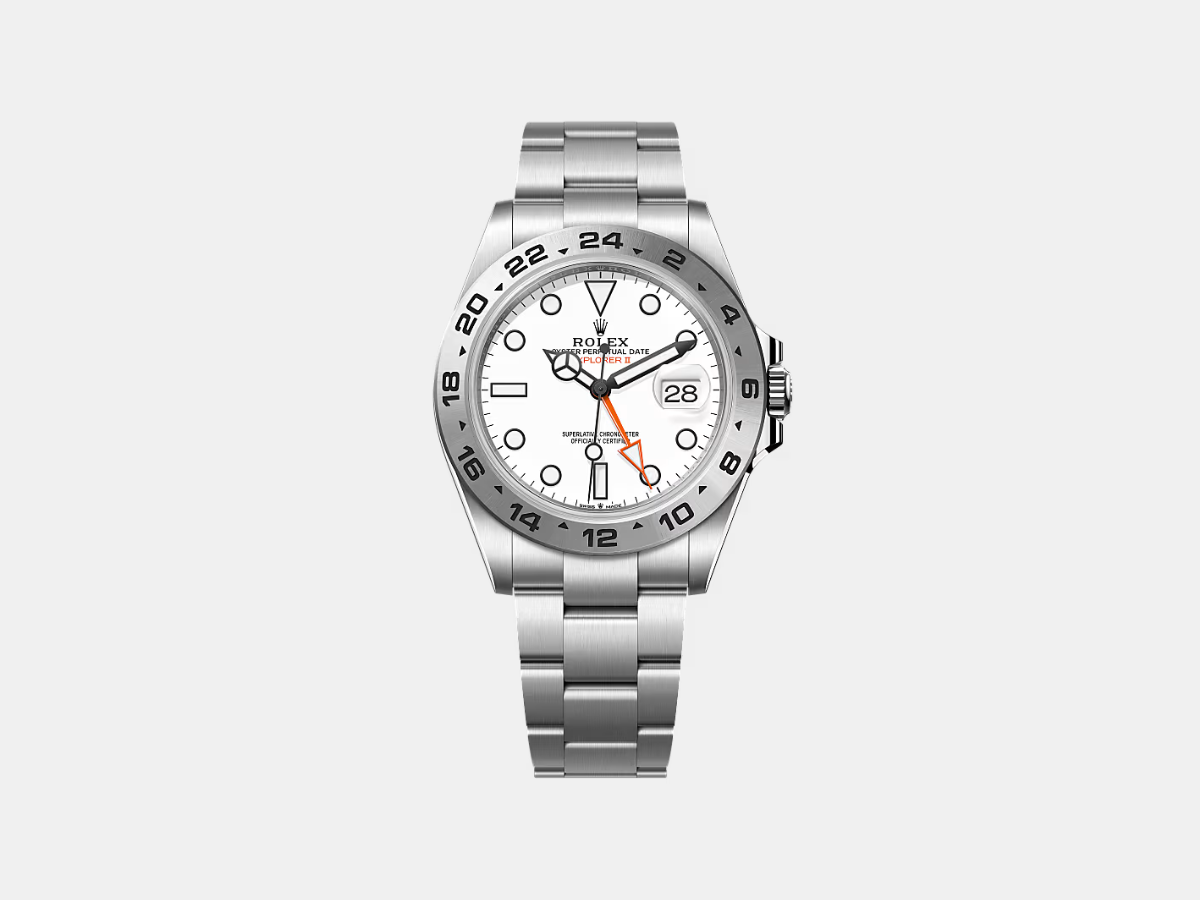
The Explorer II ‘Polar’ is one of Rolex’s true sleeper models, often overlooked next to the Submariner or GMT-Master II, yet it offers standout looks and impressive functionality. Its clean white dial with bold black markers and bright orange GMT hand provides sharp readability, while the 24-hour display uses the orange hand and engraved bezel to track day and night or a second time zone. Priced at $9,900, it remains one of the most practical steel sports watches in the catalogue, powered by the Calibre 3285 with a 70-hour reserve and Superlative Chronometer certification ensuring precision of -2/+2 seconds per day after casing. Quietly capable and endlessly reliable, it’s the Rolex for those who value substance over hype.
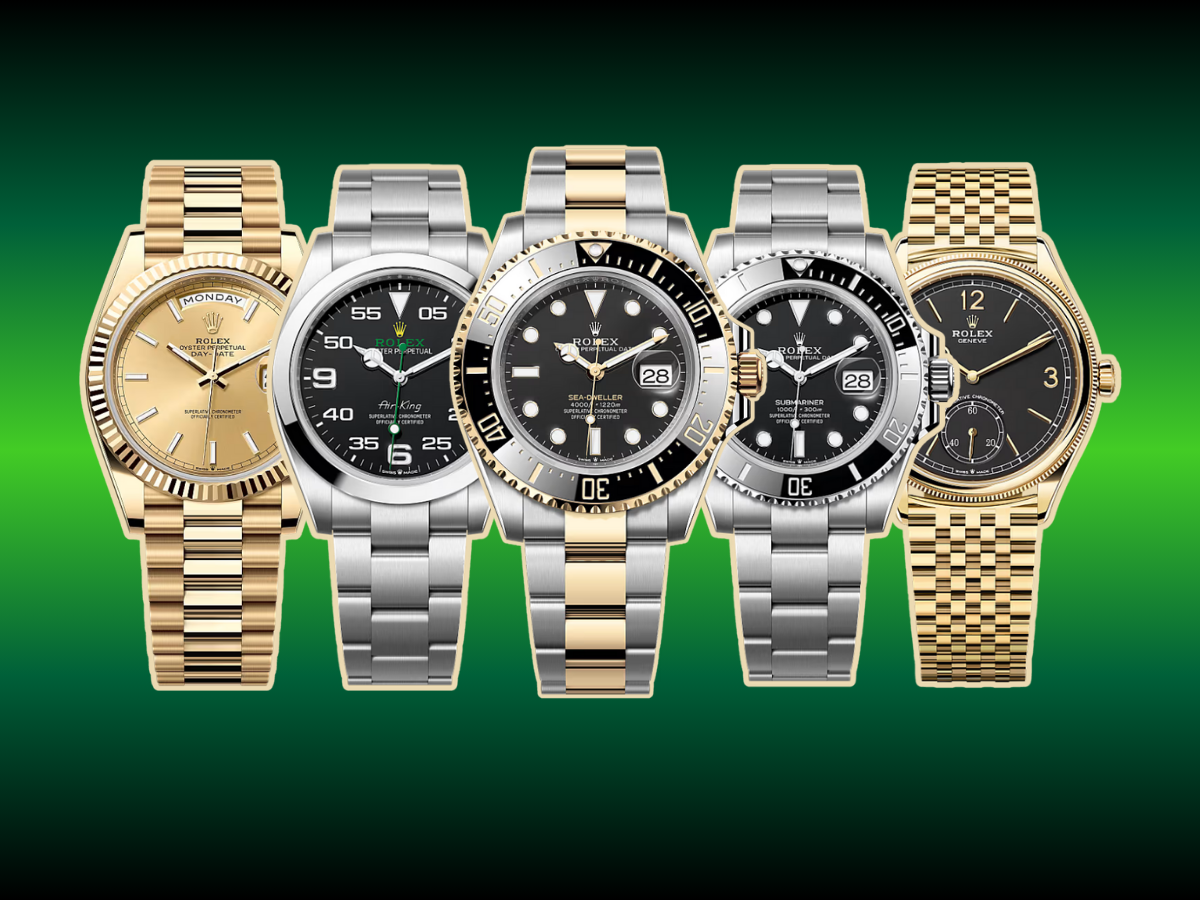
The Yacht-Master 40 in Everose gold stands out in Rolex’s collection as the first model to feature the Oyster-flex bracelet, which combines the durability of a high-tech elastomer with the hidden strength of a metal core. Its matte black Cerachrom bezel and Everose case give it a contemporary feel, making it a watch that looks just as good on a yacht’s deck, by the coast, at a pool lounge, or even at a stylish pool party. It does come at a coughing price of $51,000, powered by the Calibre 3235 with 70 hours of reserve and certified precision of -2/+2 seconds per day after casing, proving that style and performance can coexist. More exclusive than the Submariner, the Yacht-Master offers luxury with a relaxed, playful twist—perfect for those who want their watch to make an appearance including one of our favourites the Oystersteel & platinum Ref.126622 and Everose gold Ref.268655.
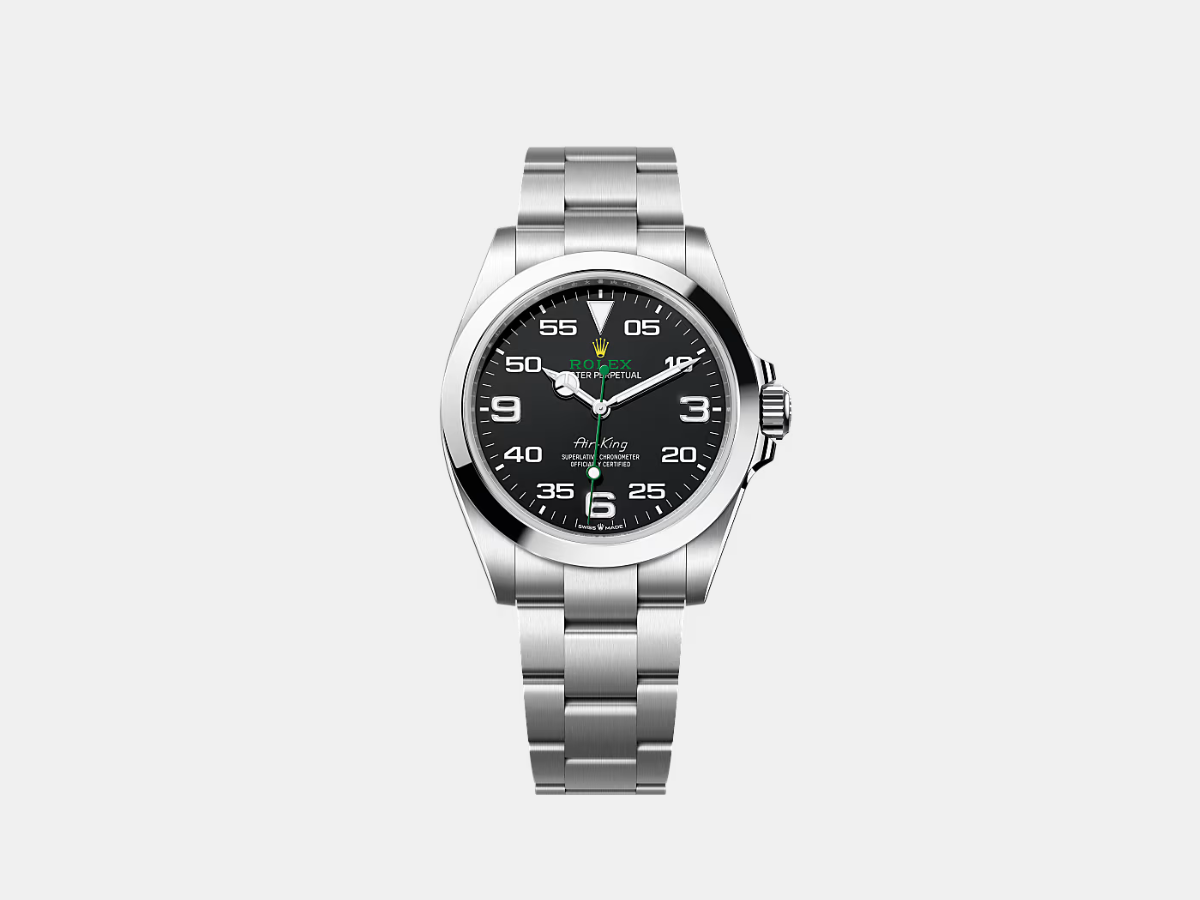
First introduced in 1945, the Air-King was Rolex’s tribute to the golden age of aviation, honouring the pilots of the 1930s and 1940s who helped shape the modern era of flight. For decades, it stood as one of the brand’s most understated models—a simple, durable timepiece built with legibility and reliability in mind. While its quiet presence kept it in the shadows of models like the Submariner and Datejust, the Air-King has always represented Rolex’s pioneering spirit in the skies.
The large 3, 6, and 9 numerals on a glossy black dial, paired with the bright green seconds hand and yellow Rolex crown, give today’s Air-King a look that’s instantly recognizable. Once overlooked, the latest 40mm version with an updated case profile and crown guard has given the Air-King a fresh edge, making it a true conversation piece among steel sports watches.
It did not increase much, but a USD $300 won’t make a difference in our opinion; it’s still worth the investment when you think about it. It continues to keep the Air-King firmly in Rolex’s more accessible category, although it’s clear demand has been growing for this model in recent years. Collectors who once dismissed it as the “quirky cousin” of the lineup now value it for its uniqueness and securing one feels more rewarding than ever.
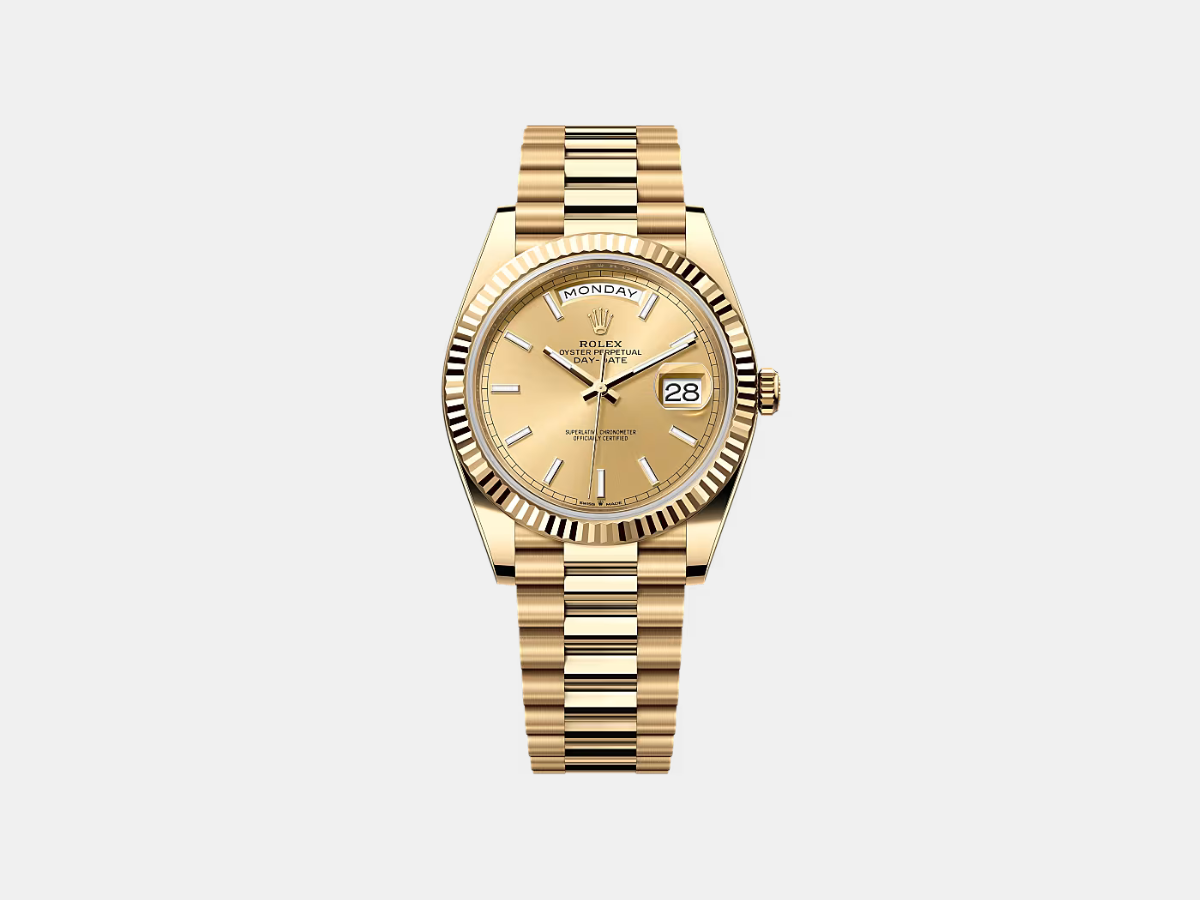
The Day-Date 40 in yellow gold has long symbolized leadership, famously worn by U.S. Presidents and global figures who appreciate the significance of a Rolex. The nickname “President” isn’t just marketing—it’s part of history. Its all-gold design, fluted bezel, and day-date feature come together to produce a watch that exudes authority while honouring Rolex’s heritage.
The price increase to $40,900 reflects more than just Rolex’s yearly adjustments—it mirrors the movement of the gold market, which continues to rise each year. Solid-gold Rolex models are generally more affected by these changes, and the Day-Date 40 is no different. Still, this watch isn’t about speculating on the market—it’s about enduring prestige.
On the secondary market, values can fluctuate depending on age, dial configuration, and rarity, but the Day-Date remains one of the most reliable symbols of status in watchmaking. Enhancing that prestige is the technical core—the Calibre 3255, which offers a precision of -2/+2 seconds per day after casing, ensuring performance that lives up to its reputation.
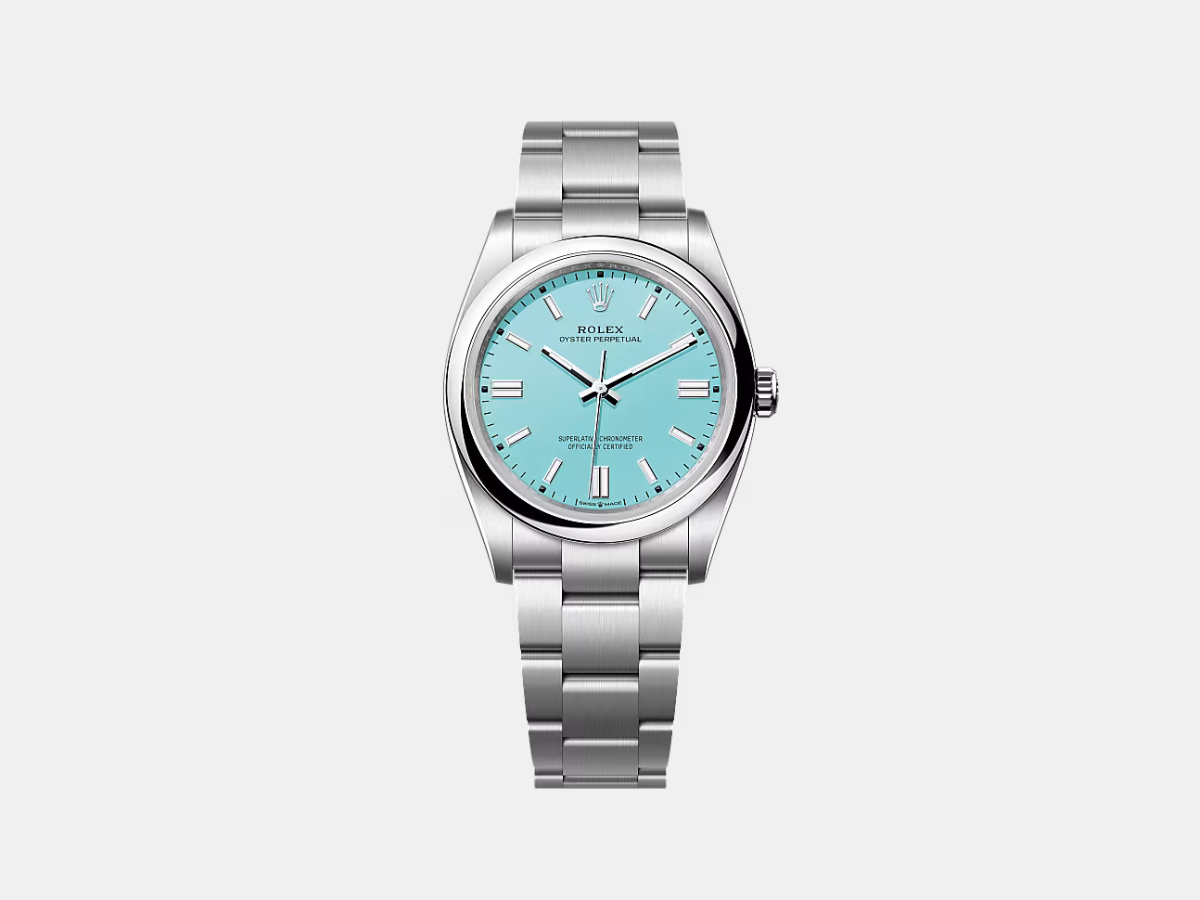
The Oyster Perpetual 36 with its turquoise blue dial—nicknamed the “Tiffany”—has become one of the most talked-about Rolex models of recent years. What started as a playful pop of colour in the entry-level line has now exploded into cult status, with resale prices skyrocketing far beyond retail thanks to its rarity and resemblance to the Patek Philippe Nautilus in Tiffany blue. At $6,350, which is nearly a 1.6% increase, it’s not only one of the most affordable entry points into a Rolex collection, but also one of the most talked about. Powered by the Calibre 3230 with 70 hours of reserve and a precision of -2/+2 seconds per day after casing, this model demonstrates that even the brand’s simplest watches can attract global attention. A true sleeper turned sensation, the OP “Tiffany” shows that sometimes colour alone is enough to make history.
Rolex Showroom Boutique in Michigan, United States. | Image: Supplied
Why Does Rolex Keep Raising The Prices?
Every January (and increasingly around the start of the year), Rolex announces its new “list” or retail prices — and each time the increase causes a ripple through the collector community. At first glance, the reasons seem straightforward — costs rise, inflation takes hold, materials become more expensive — but for Rolex, it’s a more complex mix of factors. Rolex has confirmed that the 2025 increases reflect “rising production costs, precious-material inflation and currency effects” (for example, a 33% jump in gold prices in 2024). Meanwhile, demand remains so high and supply is kept tightly controlled that small price hikes don’t diminish desirability — they reinforce it.
But it’s not just about what goes into the watch — it’s about what surrounds it. Rolex understands that part of the brand’s value comes from scarcity, prestige, and a list price that’s just above what the market is willing to pay. According to watch industry analysis, steel models saw only about 1-2% increases, while gold and precious-metal models rose by approximately 10-14% in 2025. What Rolex is doing is combining undeniable technical quality (movements with -2/+2 sec/day accuracy, in-house manufacturing) with premium pricing. This way, the “new retail price” becomes an anchor for the secondary market — reinforcing that if you pay retail today, you’re ahead of many who’ll pay more tomorrow.
Finally, broader external factors contribute as well. One key factor is the cost of raw materials — the significant increase in gold prices towards the end of 2024 was explicitly cited as a driver. Additionally, the ripple effects of global tariffs, currency fluctuations, and changing allocations across regions play a role. For example: new Swiss import tariffs could raise costs in the U.S., which then influences global pricing strategies. Business Insider For collectors and first-time buyers, this means: the listed price you see today may seem high, but it’s part of a calculated strategy by Rolex to protect value, regulate demand, and sustain the crown’s ripple effect in both retail and resale.
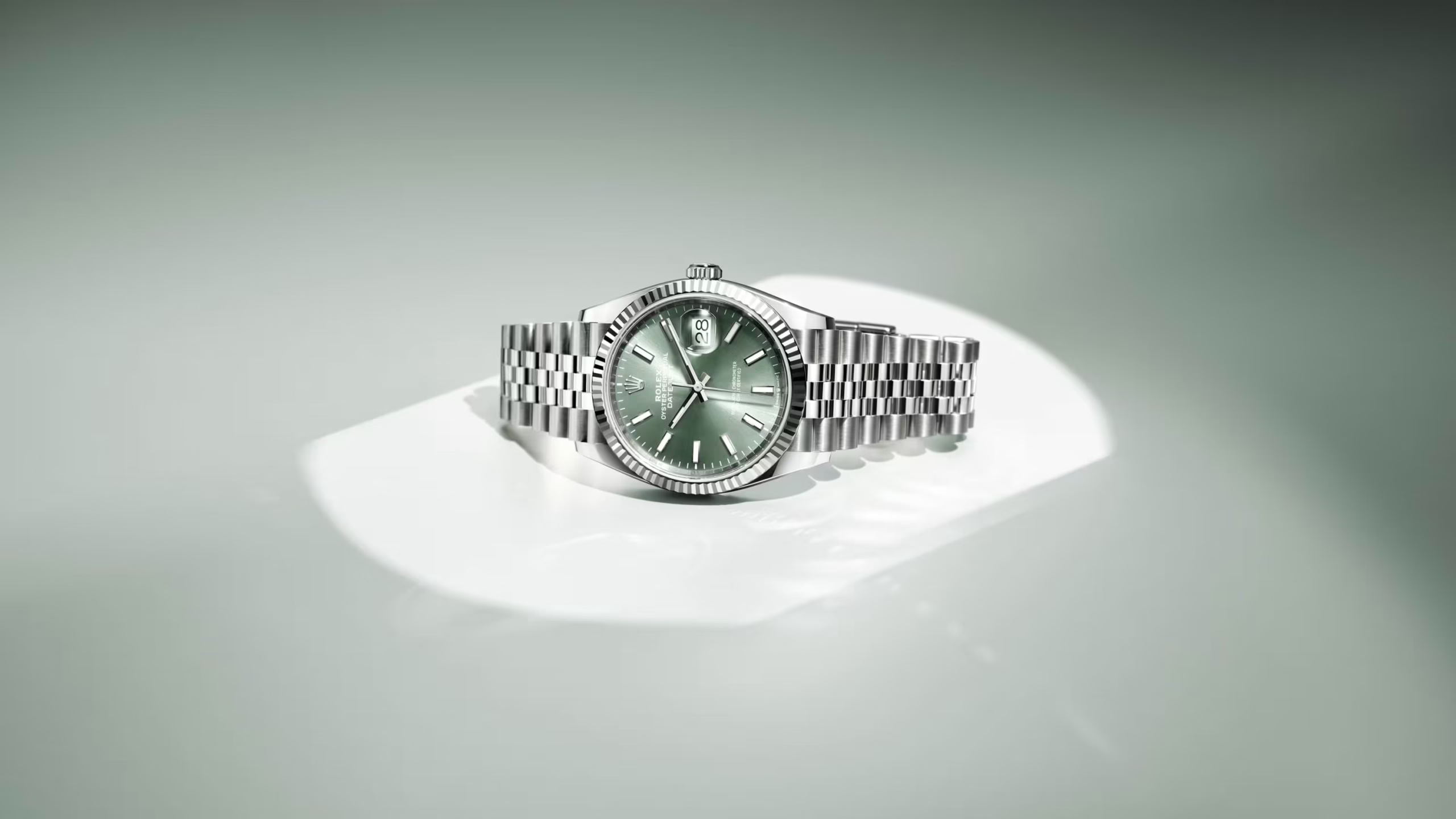
Rolex Datejust 36 with White Gold & Diamonds Ref.126284RBR | Image: Supplied
What Do Rolex Price Increases Mean For The Resale Market?
When Rolex raises its retail list prices, the effect extends beyond the boutique counter — it ripples through the secondary market and influences how collectors and resellers behave. According to one analysis, the brand’s 2025 increases reflect “rising production costs, precious-material inflation and currency effects.” As retail prices increase, they set a new benchmark for what buyers expect to pay — often pushing resale values higher, especially for steel sports models where demand remains strong.
Data supports this connection: For instance, resale-market tracking indicates that since 2010, many Rolex models have appreciated by several hundred percent. In a detailed analysis of over 50,000 transactions, one watch-market report noted that Rolex models like the ‘Datejust’ showed stronger value growth over a 15-year period, and highlighted that “Rolexes are tangible assets you can wear, insure for a fraction of their value, and pass down. Unlike stocks, they don’t disappear at market close.”
But you should also be cautious broader; despite the retail increases, resale values have softened in recent years — one analysis noted prices for pre-owned Rolexes dipped further in consecutive quarters. “It seems unlikely that secondary prices will stabilize in the near future,” said Morgan Stanley analyst Edouard Aubin of the situation.
What this means for buyers and owners is twofold. On one hand, a higher retail price makes securing a watch from an authorised dealer more of an achievement — and if you do, the gap to resale still gives you a potential edge. On the other hand, rising retail prices set expectations in the secondary market, but they do not guarantee equivalent resale gains.
Or as we like to say, retail price does not equal resale price. A 10% increase in retail price doesn’t guarantee a 10% rise in resale value. Ultimately, each price increase reinforces Rolex’s premium status and validates the secondary market’s premium over retail — but it also serves as a reminder that collectors should stay discerning, focusing on the model, condition, and timing rather than assuming any Rolex will automatically appreciate.
Elias Albay is the Founder and Director of Many Men Magazine, a Toronto-based digital publication dedicated to promoting modern masculinity through style, culture, and self-improvement. What started as a personal turning point became a purposeful platform. — born from Elias’ desire to create something meaningful after completing his studies and finding no career path that truly matched his ambitions. With a background in Civil Engineering from York University and experience in Commercial Flight Operations at CAE, he applied skills, and resilience from both fields to forge a new path.