







Training like The Rock isn’t a casual choice — it’s a way of life you must fully commit to. Long before he ruled the box office, Dwayne Johnson was developing that work ethic as a college athlete and later as a WWE superstar. That foundation grew into a routine based on early mornings, tough workouts, strict nutrition, and an almost stubborn level of consistency. His physique isn’t luck or just genetics; it’s the result of showing up every single day and pushing himself well beyond where most people stop.
What makes his approach even more interesting is the balance between discipline and those legendary cheat days. One minute he’s pushing through intense cardio and heavy lifts, and the next he’s clearing entire platters of sushi or taking down stacks of pancakes that could feed a family. It’s a reminder that he earns those moments through consistent effort the rest of the week. And while following his plan is definitely possible, it requires dedication, time, and a grocery budget ready for its own workout.
This formula is what’s kept him shredded through Baywatch, Fast Five, Hercules, and pretty much every movie where his sleeves didn’t stand a chance — so the real question is, are you ready to take this on? Let’s dive in and see what you’re made of.
if there’s one thing people should know about The Rock’s eating habits, it’s that subtlety is not part of the routine. He approaches food the same way he approaches training — full throttle. When he was preparing for Black Adam, his entire nutrition plan went into overdrive. This wasn’t just eating for size; it was eating for superhero-level definition. His meals were stacked with lean protein, complex carbs, and vegetables, divided across the day in portions big enough to make most people tap out. It was intense, calculated, and completely dialled in.
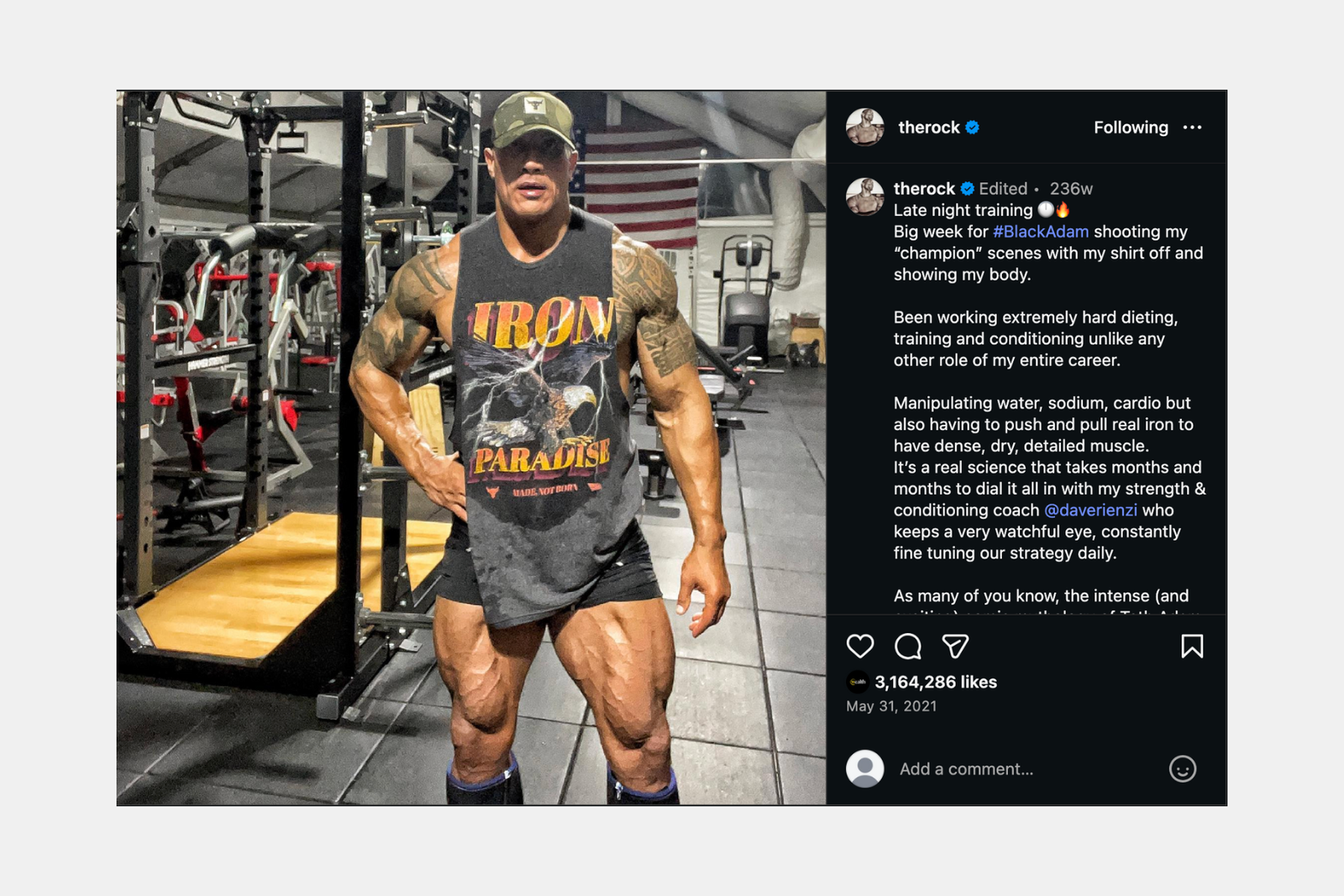
His nutrition took on a whole new spotlight during his prep for Black Adam, when he revealed just how much science and discipline went into getting camera-ready. He explained that this role demanded more from him than anything he’d done before, and you could see it in every update he posted. “Been working extremely hard dieting, training and conditioning unlike any other role of my entire career” he wrote.
He talked about adjusting everything from water and sodium intake to cardio and heavy lifting, all under the watchful eye of his longtime coach Dave Rienzi, who fine-tuned every detail along the way. It wasn’t just about dieting — it was a comprehensive transformation plan. Even outside of movie prep, The Rock continues to eat on a scale that feels larger than life. He typically has five structured meals a day, built around steak, fish, eggs, oats, rice, and greens — the essentials, but in quantities only he can make look normal.
And then come the cheat meals, the ones that take over the internet. Towering pancake stacks, sushi spreads that look like they’re feeding a party of twelve, cookies that could double as serving plates — they’re legendary for a reason. He earns them through days upon days of strict discipline. So yes, The Rock eats big — but every bite has intention behind it. That’s the real backbone of the physique you see on-screen: massive effort, massive appetite, and a mindset that never does anything halfway.
When he’s not packing on muscle for a particular role, The Rock sticks to a consistent five-meal routine that keeps him fuelled, lean, and prepared for whatever the day has in store. It’s not as intense as his Black Adam preparation, but it’s still a substantial amount of food, centred around high-quality protein, slow-digesting carbs, and plenty of greens. This is his “everyday engine” — the foundation that sustains his size without pushing him into superhero territory.
On a typical day, The Rock’s go-to meals look something like this:
Meal #1
- 10 oz Steak
- 2 Cups Oatmeal
- 3 Egg Whites & 1 Whole Egg
- 1 Glass Fruit Juice
Meal #2
- 2 Servings Chicken
- 2 Bell Peppers
- 3 Cups Mushrooms
- 3 Cups Broccoli
- 1 Protein Shake
Meal #3
- 8 oz Salmon
- 8 Asparagus Tips
- 2 Whole Eggs
- 2 Cups Rice Medley
- 3 Cups Broccoli
Meal #4
- 10 oz Steak
- 3 Baked Potatoes
- 8 Asparagus Tips
- 1 Glass Orange Juice
Meal #5
- 20 grams Casein Protein
- 10 Egg Whites
When The Rock gears up for a major role, his diet shifts from intense to nearly unbelievable. That’s when he switches to his seven-meal plan — a full-scale fueling system designed to build muscle and keep his energy sky-high through brutal training sessions.
In these phases, both the meals and the portions go way up. Here’s what his seven-meal days usually look like:
Meal #1
- 10 oz cod
- 2 whole eggs
- 2 cups of oatmeal
Meal #2
- 8 oz cod
- 12 oz sweet potato
- 1 cup veggies
Meal #3
- 8 oz chicken
- 2 cups white rice
- 1 cup veggies
Meal #4
- 8 oz cod
- 2 cups rice
- 1 cup veggies
- 1 tbsp fish oil—122
Meal #5
- 8 oz steak
- 12 oz baked potato
- spinach salad
Meal #6
- 10 oz cod
- 2 cups rice
- salad
Meal #7
- 30 grams casein protein
- 10 egg-white omelet
- 1 cup veggies (onions, peppers, mushrooms)
- 1 tbsp omega-3 fish oil
Ready to channel your inner Baywatch hero and train like The Rock? Brace yourself — his workout plan isn’t meant for casual lifters. This routine hits harder than a lifeguard chasing down a runaway jet ski. If you’re expecting something light and breezy, think again. The Rock trains with the intensity of someone preparing to save the world before breakfast, and if you stick with it, you’ll feel like you’ve stepped right into your own action-movie montage.
While his exact routine shifts depending on the role he’s working on, one thing never changes: the workload is intense. He begins his mornings with 30 to 50 minutes of cardio on the elliptical—no shortcuts, no excuses. Breakfast follows, usually a protein-packed meal designed to fuel what comes next. Then he heads to the gym for what he famously calls “clangin’ and bangin’,” which means heavy lifting and high volume. He trains six days a week, focusing on a different muscle group each session, often with his signature playlist blaring through his headphones. Day seven? That’s reserved for rest, recovery, and outrageously large cheat meals, often including ice cream the way nature intended.
But here’s the important reality check — The Rock is 6’5″, genetically gifted, and built like industrial machinery. You don’t need (and probably shouldn’t try) to copy every move he makes. Train smart, build gradually, and adjust the intensity to suit your body. The goal is progress, not a pulled hamstring.
So, what can you expect from a Rock-inspired routine? Kettlebells, barbells, dumbbells, sweat, pain, and the kind of muscle burn that reminds you you’re doing something right. Sore legs, heavy arms, and a sense of victory with every rep. It’s tough, but the payoff? Absolutely worth it. Alright — let’s jump in.
Day 1 – Legs
- Run on Treadmill: 30-50 minutes
- Barbell Walking Lunge: 4 sets – 25 reps
- Leg Press: 4 sets – 25 reps
- Leg Extensions: 3 sets – 20 reps
- Barbell Squat: 4 sets – 12 reps
- Hack Squat: 4 sets – 12 reps
- Single Leg Hack Squat: 4 sets – 12 reps
- Romanian Deadlift: 4 sets – 10 reps
- Seated Leg Curl: 3 sets – 20 reps
- Thigh Abductor: 4 sets – 12 reps
Day 2 – Back
- Run on Treadmill: 30-50 minutes
- Wide-Grip Lat Pulldown: 4 sets – 12 reps
- Bent Over Barbell Row: 4 sets – 12 reps
- One-Arm Dumbbell Row: 4 sets – 12 reps
- Barbell Deadlift: 3 sets – 10 reps
- Pull-ups: 3 sets, to failure
- Dumbbell Shrug: 4 sets – 12 reps
- Inverted Row: 3 sets, to failure
- Hyperextensions: 4 sets – 12 reps
Day 3 – Shoulders
- Run on Treadmill: 30-50 minutes
- Dumbbell Shoulder Press: 4 sets – 12 reps
- Standing Military Press: 4 sets – 12 reps
- Front Dumbbell Raise: 4 sets – 12 reps
- Side Lateral Raise: 4 sets – 12 reps
- Reverse Machine Flyes: 4 Sets – 15 Reps
- Dumbbell Shrug: 4 sets – 12 reps
- Inverted Row: 3 sets, to failure
- Seated Bent-Over Rear Delt Raise: 4 sets – 12 reps
Day 4 – Arms/ABS
- Run on Treadmill: 30-50 minutes
- Dumbbell Bicep Curl: 4 sets – 15 reps
- Hammer Curls: 4 sets – 15 reps
- Spider Curls : 4 sets, To Failure
- Triceps Pushdown: 4 sets – 15 reps
- Overhead Triceps: 3 Sets – 15 Reps
- Hanging Leg Raise: 4 sets – 20 reps
- Rope Crunch: 4 sets – 20 reps
- Russian Twist: 4 sets – 20 reps
Day 5 – Legs
- Run on Treadmill: 30-50 minutes
- Barbell Walking Lunge: 4 sets – 25 reps
- Leg Press: 4 sets – 25 reps
- Leg Extensions: 3 sets – 20 reps
- Barbell Squat: 4 sets – 12 reps
- Hack Squat: 4 sets – 12 reps
- Single Leg Hack Squat: 4 sets – 12 reps
- Romanian Deadlift: 4 sets – 10 reps
- Seated Leg Curl: 3 sets – 20 reps
- Thigh Abductor: 4 sets – 12 reps
Day 6 – Chest
- Run on Treadmill: 30-50 minutes
- Barbell Bench Press: 4 sets – 12 reps
- Incline Dumbbell Press: 4 sets – 12 reps
- Dumbbell Bench Press: 4 sets – 12 reps
- Flat Bench Cable Flyes: 4 sets, to failure
- Incline Hammer Curls: 4 sets – 12 reps
- Dips – Chest Version: 4 sets, to failure
Day 7 – Rest