








Entertainment

10 Of The Most Expensive Materials On Earth

Share via

Our team of editors and experts thoughtfully chooses each product. If you decide to buy through one of our links, we may earn a commission. Learn more. Want to know how we test products? Click here for more details.

From the hidden depths of the Earth to the laboratories where science expands the boundaries of imagination, some materials are worth far more than gold. Their prices soar not just because they’re rare, but because of the incredible power, beauty, or potential they possess. Diamonds and platinum have long been associated with wealth and prestige, while futuristic wonders like antimatter and californium sit at the forefront of discovery, promising to change how we think about energy and space travel.

These aren’t just commodities — they’re the world’s most sought-after treasures. Some shine brighter than any jewel, others can fuel spacecraft or transform entire industries. So, buckle up as we explore the 10 most expensive materials on Earth and discover what makes them so remarkably valuable.

AntiMatter | Image: Supplied

1. AntiMatter – $62.5 Trillion Per Gram

When it comes to value, nothing on Earth—or in the universe, for that matter—can match antimatter. This mysterious substance is essentially the mirror opposite of normal matter, and when the two meet, they annihilate each other in a burst of pure energy. That makes antimatter not only rare but also incredibly powerful. Scientists believe it could one day be the ultimate fuel source, capable of powering spacecraft at unimaginable speeds or even revolutionizing energy production here on Earth.

The catch? Producing it is incredibly challenging. Currently, antimatter can only be generated in highly advanced particle accelerators, and even then, we’re dealing with fractions of a gram at astronomical costs. With a single gram valued at an astonishing $62.5 trillion, antimatter is the most expensive material in existence — and perhaps the most futuristic.

Californium | Image: Supplied

2. Californium $27 Million Per Gram

First synthesized in the 1950s, californium is one of the rarest and most valuable man-made elements on Earth. It doesn’t occur naturally in usable quantities and must be painstakingly produced in nuclear reactors, a process that explains its astronomical price of $27 million per gram. Despite the cost, californium has life-saving applications in cancer treatments, plays a crucial role in starting nuclear reactors, and is even used in devices that detect valuable resources like gold and oil, making it a material as powerful as it is scarce.

Diamonds | Image: Supplied

3. Diamond – $55,000 Per Gram

Long celebrated as symbols of wealth, beauty, and power, diamonds are among the most sought-after gemstones in history. Formed under intense pressure deep within the Earth over billions of years, these sparkling crystals are admired not only for their brilliance but also for their durability — making them essential in both luxury jewellery and high-precision industrial tools. With a value of approximately $55,000 per gram, diamonds continue to rank as one of the most expensive natural materials on Earth, blending timeless appeal with practical strength.

Tritium | Image: Supplied

4. Tritium – $30,000 Per Gram

Tritium is a rare radioactive isotope of hydrogen that’s unlike anything you’ll find in a glass of water. What makes it special is its ability to glow when combined with phosphors, which is why it’s often used in self-powered lighting for items like wristwatches, emergency exit signs, and even aircraft instruments. That soft glow doesn’t require an external power source, making it invaluable in situations where reliability is essential.

But its true potential lies in the future. Scientists see tritium as a possible game-changer for nuclear fusion — the clean energy solution that could one day replace fossil fuels. Since tritium doesn’t occur in large quantities naturally, it must be painstakingly produced in nuclear reactors, pushing its value to around $30,000 per gram. Rare, functional, and potentially revolutionary, tritium sits at the crossroads of science and industry.

Taaffeite | Image: Supplied

5. Taaffeite – $20,000 Per Gram

First identified in 1945 by gemologist Richard Taaffe, taaffeite is one of the rarest gemstones on Earth, often mistaken for spinel due to its similar appearance. Found only in small deposits in Sri Lanka, Tanzania, and Myanmar, this gem shines in delicate shades of violet, pink, and red, with optical qualities that make it stand out even among prized stones. Valued at around $20,000 per gram, taaffeite’s scarcity makes it more exclusive than most diamonds, turning every fragment into a collector’s treasure.
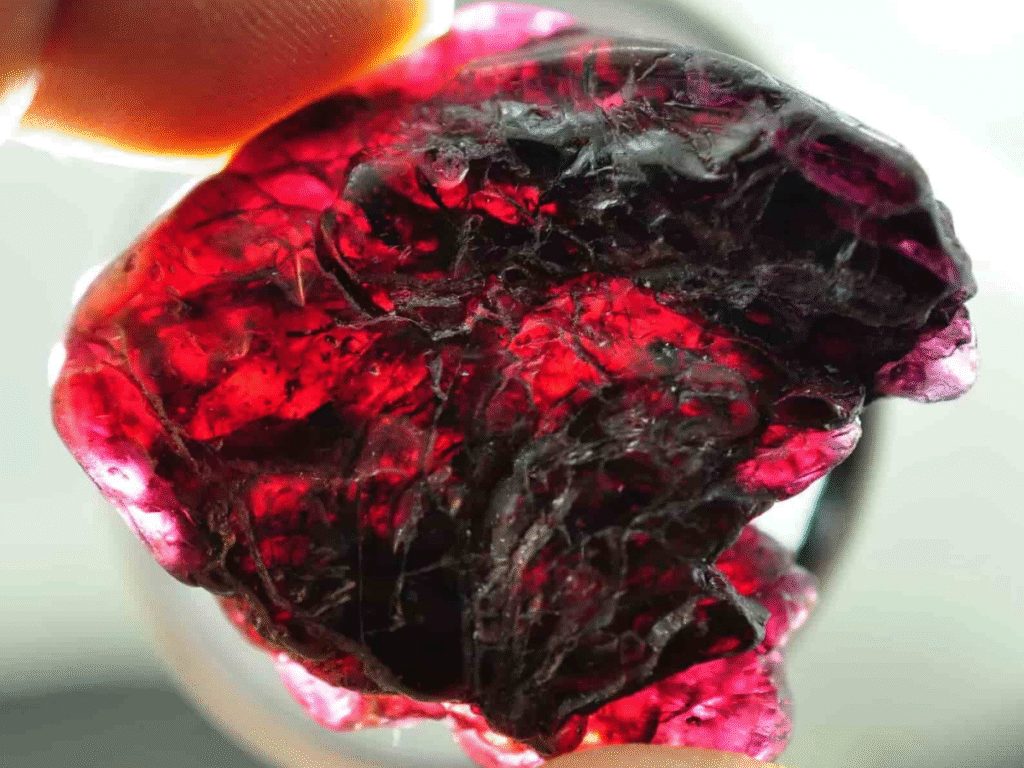
Painite | Image: Supplied

6. Painite – $9,000 Per Gram

Once thought to be the rarest mineral in the world, painite is a deep brownish-red gemstone that puzzled scientists when it was first found in Myanmar in the 1950s. For many years, only a few crystals existed, making it practically priceless. Although more deposits have since been discovered, painite remains extremely rare, and its vibrant colours and unique crystal structure continue to attract collectors. With a value of around $9,000 per gram, this gem remains one of the most sought-after minerals for both scientists and jewellery lovers.
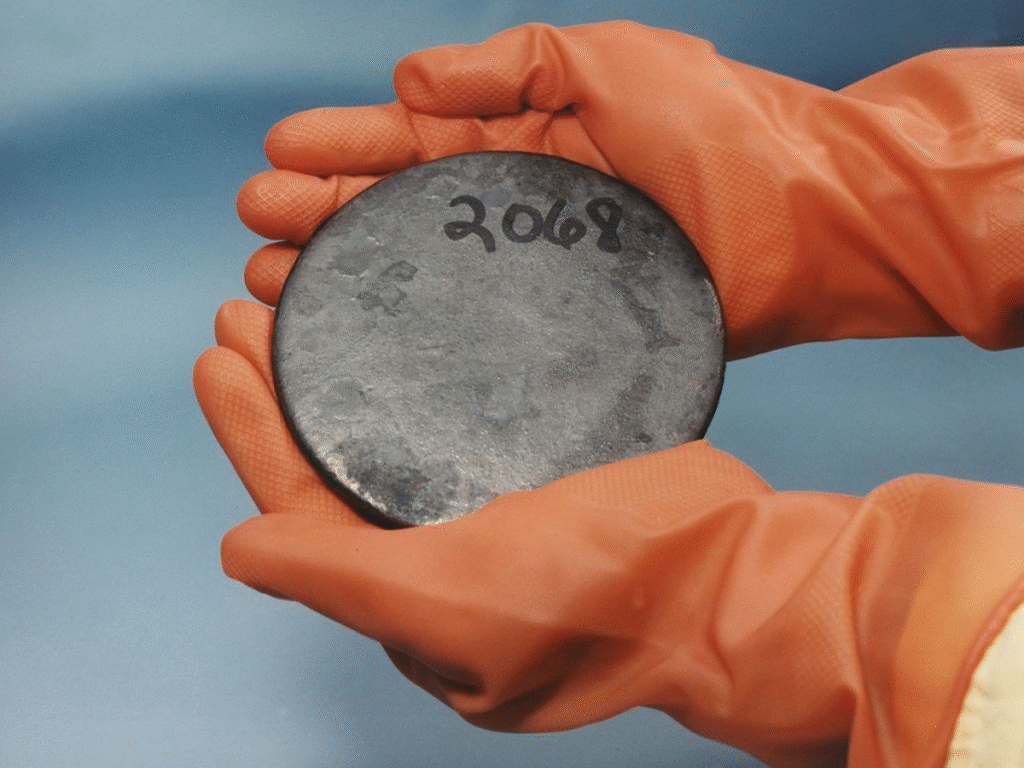
Plutonium |Image: Supplied

7. Plutonium – $4,000 Per Gram

Plutonium is one of the most notorious substances on Earth, often associated with nuclear weapons and the Cold War period. Silvery in appearance but highly radioactive, it was first produced in the 1940s and rapidly became central to military arsenals and nuclear energy initiatives. Its capacity to release enormous amounts of energy makes it one of the most powerful and debated materials ever created.

But plutonium isn’t just about destruction; it also powers spacecraft through radioisotope thermoelectric generators, enabling missions that go far beyond the reach of solar energy. Since its production is heavily restricted and handling requires extreme precautions, every gram is extremely costly. Valued at about $4,000 per gram, plutonium’s price reflects both its rarity and the significant effort needed to produce, contain, and safely utilise it.

Rhino Horn | Image: Supplied

8. Rhino Horn- $110 Per Gram

Rhino horn is one of the most controversial and tragic entries on this list, valued at around $110 per gram. Unlike gemstones or metals, it isn’t a mineral at all but is made of keratin — the same protein found in human hair and nails. Its high price comes from black market demand, driven by myths in traditional medicine and its use as a status symbol in some cultures. Sadly, this demand has fuelled rampant poaching, pushing several rhino species to the brink of extinction. While conservation efforts and strict international bans are fighting to curb the trade, the staggering value of rhino horn continues to make it one of the most costly — and heartbreaking — materials in the world.

Platinum | Image: Supplied

9. Platinum – $60 Per Gram

This lustrous white metal has a reputation for being as tough as it is beautiful. Highly resistant to corrosion and tarnish, platinum has become a staple in industries that require strength, from catalytic converters in vehicles to precise medical instruments. At the same time, it remains a symbol of status in jewellery and luxury watches, often regarded as more exclusive than gold. With a value of around $60 per gram, platinum successfully combines luxury with technology, proving to be both practical and prestigious.

Rhodium | Image: Supplied

10. Rhodium – $58 Per Gram

Shiny, silvery, and exceptionally rare, rhodium is one of the least abundant precious metals on Earth, which explains its high price of around $58 per gram. It’s highly resistant to corrosion and has a reflective brilliance that makes it ideal for use in jewellery, often as a finishing layer on white gold and platinum pieces. Beyond luxury, rhodium is vital in automotive catalytic converters, where it helps reduce harmful emissions. Its combination of scarcity, beauty, and industrial importance makes rhodium one of the most valuable metals in the modern world.

What Makes These Materials So Expensive?

The world’s most expensive materials share three common traits: rarity, demand, and the difficulty of obtaining or producing them. Some, like diamonds and taaffeite, are formed over millions of years under extraordinary geological conditions, making each carat extremely rare. Others, like californium or antimatter, do not occur naturally in usable quantities at all — they must be synthesised in nuclear reactors or particle accelerators, which demand enormous amounts of energy, time, and resources. When supply is scarce and production is nearly impossible, the price naturally skyrockets.

On top of scarcity, demand plays a significant role. Platinum and rhodium are essential in modern industries like automotive manufacturing and medicine, while tritium and plutonium are crucial for energy and technology. Even rhino horn, despite being made of keratin, skyrockets in value because of illegal markets driven by cultural beliefs and status symbols. The more society needs or desires a material, the higher its value climbs, especially when alternatives are scarce.

Will We Ever Find or Create Materials Even More Valuable?

It’s very likely. As science and technology continue to progress, new discoveries could push the boundaries of what we consider valuable today. Just as antimatter and californium arose from cutting-edge research rather than natural deposits, future breakthroughs in quantum computing, nanotechnology, or space exploration may introduce materials with properties we can barely imagine — and price tags to match. Whether mined from distant asteroids or manufactured in labs, the next “most expensive material” might not even exist yet, waiting for us to find it.

General FAQ’s

Have more questions you’d like to ask? Don’t worry, we’ve got you covered.

Which Material Is The Most Expensive In The World Right Now?

Antimatter ranks at the top by a significant margin, with an estimated cost of $62.5 trillion per gram. It’s so scarce and hard to produce that only small amounts have ever been created in labs, but its potential as a future energy source makes it invaluable in scientific terms.

Are All Expensive Materials Used In Luxury Products?

Not at all. While diamonds, platinum, and taaffeite dominate the world of jewellery and prestige, many of the most expensive materials serve scientific or industrial purposes. Tritium, californium, and plutonium, for example, are linked to energy, medicine, and research rather than luxury.

Could Prices Drop If More Of These Materials Are Discovered Or Produced?

Yes. History has shown that rarity often boosts price — painite was once nearly impossible to find, but as more deposits were discovered, its cost became a bit more accessible. Similarly, advances in technology could make producing or synthesizing some of these materials cheaper in the future, which would lower their market value.


Finances
About the Author
Previous Post
Kendrick Lamar’s $1,200 Super Bowl Jeans Deserve Their Own Halftime Show
Next Post
Oscars Red Carpet 2025: From Tuxedos to Bold Suits, Every Menswear Look From Hollywood’s Biggest Night

Related Articles

18 Best Beard Oils For Men: Whisker Wisdom Guide

Reading Time: 17 minutes

Our team of editors and experts thoughtfully chooses each product. If you decide to buy through one of our links, we may earn a commission. Learn more. Want to know how we test products? Click here for more details.

So, you’ve grown a beard. Congrats — that’s step one. But if you think you can just let it run wild and unruly, think again. Just like the hair on your head (or what’s left of it), your beard deserves some proper TLC. That’s where beard oil comes in — the not-so-secret weapon behind a beard that looks sharp, smells great, and feels softer than your favourite hoodie. It’s not just for show either; beard oil hydrates the skin underneath, keeps beard dandruff (yes, that’s a thing) at bay, and makes your face fur look like it belongs in a Viking ad campaign — in the best way possible.

Whether you’re growing your first beard or you’ve had one long before it was trendy, the right oil can transform your look from patchy to impressive quickly. In this whisker wisdom guide, we’re looking at the best beard oils for men — from those that tame the wildest beards to formulas that add significant shine. Whether you’re dealing with a wiry mess, dry skin underneath, or just want to boost your grooming routine, we’ve got you covered. Let’s oil up, gents.

Best Beard Oils Overview:

1. Pura d’Or Beard Oil

  • Scent: Earthy with a fresh citrus twist
  • Ingredients: Argan oil, jojoba oil, sunflower seed oil, sweet almond oil
  • Price: USD $17

There’s a moment in every man’s grooming journey when the beard begins acting up—itchy, patchy, dry. Enter Pura d’Or Beard Oil, the quiet hero your face didn’t know it needed. With a blend of nutrient-rich oils like argan and jojoba, this bottle offers serious conditioning power. The scent is subtle yet fresh—like nature had a good day—and the feel? Lightweight, never greasy. It blends into your routine as easily as it does into your beard, softening bristles and soothing the skin underneath. If you’re after that perfect balance between rugged and refined, this could be your go-to bottle of beard wisdom.

2. Horace Lemon & Mint Beard Oil

  • Scent: Zesty Lemon & Fresh Mint
  • Ingredients: Sunflower Seed Oil, Castor Oil, Jojoba Oil
  • Price: USD $15

If your beard’s been acting like a rebellious teenager—dry, unruly, and just not listening—Horace’s Lemon & Mint Beard Oil might be the refreshing wake-up call it needs. Bursting with a clean, citrusy-mint scent that feels like splashing cold water on your face after a long night, this oil hydrates, softens, and tames your facial hair without leaving it greasy. The natural blend of nourishing oils penetrates deeply to soothe the skin underneath, while the invigorating fragrance gives your grooming routine a fresh twist. It’s the kind of beard oil that says, “I take care of myself,” without trying too hard.

3. Blind Barber Beard Oil

  • Scent: Sweet-spicy Tonka Bean with hints of vanilla and almond
  • Ingredients: Jojoba oil, Avocado oil, & Botanical Extracts
  • Price: USD $20

Blind Barber’s Beard & Face Replenishment Oil brings the barbershop vibe home—moisturizing, softening, and fresh in a single drop. The lightweight formula hydrates both your beard and the skin underneath without leaving a greasy film, while that comforting Tonka Bean scent gives your routine a little swagger. Packed with nourishing oils like jojoba and shea butter, it calms beardruff, smooths flyaways, and leaves your facial fur feeling well-mannered—no barbershop appointment required.

4. Fulton & Roark Formula 5 Beard Oil

  • Scent: A refined blend of forest air, lavender, and bright lemon rind
  • Ingredients: Shea butter, argan oil, macadamia oil, meadowfoam seed oil, and a host of other hydrating and nourishing oils
  • Price: USD $55

Think of Ramble as a walk through an enchanted forest for your face—without accidentally stepping in anything gross. It’s a grooming powerhouse that works as hair oil, shave enhancer, scalp moisturiser, and dry skin saviour. The lightweight, non-greasy formula absorbs easily, smoothing flyaways and softening both your beard and the skin underneath. Plus, it smells like a fresh breeze drifting through pine needles, citrus groves, and lavender fields—luxury in a bottle.

5. American Crew Beard Serum

  • Scent: Discreet, neutral aroma with a touch of classic barbershop freshness
  • Main Ingredients: Argan Oil, Cyperus Esculentus (Tiger Nut) Root Oil, Cyclopentasiloxane + Dimethiconol
  • Price: USD $13

Think of this as a sleek, straightforward upgrade for your beard grooming routine. American Crew’s Beard Serum is all about delivering that smoother, well-conditioned appearance without leaving a greasy residue. With argan oil offering deep hydration, tiger nut oil enhancing shine, and silicone-based agents ensuring a silky feel, it’s the perfect way to tame flyaways and make grooming effortless. Lightweight, quick-absorbing, and polished, this serum is designed for the guy who wants a great-looking beard—without the fuss.

6. Aesop Shine Hair & Beard Oil

  • Scent: Crisp green notes with a whisper of citrus and floral freshness
  • Ingredients: Borage seed oil, jojoba seed oil, petitgrain oil
  • Price: USD $37

If your grooming routine had an upgrade track record, this bottle would be at the top. Aesop’s Shine Hair & Beard Oil is the luxury choice for guys who want hydration and shine without the greasy aftermath. It’s a featherlight, silicone-free formula that absorbs quickly, leaving coarse or frizzy facial hair feeling softer and smoother — not weighed down. The scent is as understated and sophisticated as the brand itself, and by the time your day’s underway, you’ll barely notice it’s there. It’s the gold-standard stealth boost for your beard and hair.

7. Tobacco Vanille Conditioning Beard Oil

Tom Ford Tobacco Vanille Conditioning Beard Oil

  • Scent: mix of tobacco leaf, vanilla, ginger, and warm spice tones
  • Ingredients: Almond oil, jojoba oil, grapeseed oil, and Vitamin E
  • Price: USD $65

Treat yourself to Tom Ford’s Beard Oil, the kind of luxe item that feels less like grooming and more like a ritual. This lightweight blend absorbs effortlessly, softening coarse hairs while nourishing the skin beneath. And that scent? Think opulent, smoky elegance—like freshly curated privileges in a bottle—without overpowering. Whether you’re buttoning up for a big night or just want your beard to smell like success, this oil delivers subtle sophistication with zero greasy residue.

8. Marlowe No. 143 Beard Oil

  • Scent: Fragrance-free
  • Main Ingredients: Sunflower seed oil, safflower seed oil, corn oil, soybean oil
  • Price: USD $16

This unscented gem is the low-key hero for men who want to nurture their beard without any flash or fuss. Marlowe No. 143 keeps it simple—but effective—with a blend of plant-based oils that hydrate skin, soften coarse hairs, and banish beardruff. GQ even named it the Best Fragrance-Free Beard Oil — a rare honour in a sea of perfumed products. Ideal for sensitive or scent-averse skin, this product is all about effortless grooming without any drama.

9. BeardBrand Beard Oil – Temple Smoke

  • Scent: Smoky-sweet blend of Palo Santo, Vanilla, Frankincense, and Patchouli—earthy, resinous, and addictive
  • Ingredients: Abyssinian, Jojoba, Babassu, and Castor oils, plus a dash of fragrance, grapefruit seed extract, and glycerin
  • Price: USD $29

If your beard needs something more thoughtful than just “clean,” Temple Smoke is the right choice. This product features a lightweight, non-greasy blend of nourishing carrier oils that hydrate your hair and soothe the skin underneath. The scent is far from ordinary—imagine a walk through a temple filled with incense and smoke, with a richness you can’t help but enjoy. It softens, tames, and adds shine without looking oily, making it a standout in your grooming routine.

10. Caldera + Lab – The Beard Conditioning Oil

  • Scent: Subtle essence of lavender with citrus undertones—natural and refined
  • Ingredients: Apricot Kernel Oil, Amla (Indian Gooseberry), Babassu Seed Oil, Red Raspberry Extract, Moringa Seed Oil
  • Price: USD $59

This oil is like giving your beard a peaceful wilderness retreat without leaving your bathroom. It’s packed with rainforest-harvested botanicals and contains no harsh chemicals—earning praise from eco-conscious reviewers for its transparent and clean skincare approach. Lightweight but deeply nourishing, it smooths coarse hairs, calms the skin beneath your beard, and leaves only a gentle hint of freshness—like you’re on a casual forest walk whenever someone leans in close.

11. Baxter Of California Beard Oil

  • Scent: Warm sandalwood with hints of jasmine and cedarwood
  • Ingredients: Squalane, avocado oil, vitamin E
  • Price: USD $29

If your beard’s been unmanaged, this oil offers the grooming equivalent of a spa day for your face. Baxter of California incorporates deeply hydrating ingredients—squalane and avocado oil—to tame coarse facial hair and soothe the skin beneath. The vitamin E team helps reduce irritation and encourages healthier growth, while that signature sandalwood-jasmine-cedar scent elevates your grooming routine without going overboard. Think of it as part ritual, part upgrade.

12. STMNT Grooming Goods Beard Oil

  • Scent: Bright citrus top notes with incense and woody undertones
  • Ingredients: A rich blend of natural oils—argan, sunflower, sweet almond, jojoba, apricot kernel, avocado, grapeseed, macadamia, hemp seed,
  • Price: USD $22

Flyaways ruining your beard game? STMNT Beard Oil comes with a thicker, conditioner-like texture that helps tame unruly strands without the mess. Packed with clean, nourishing ingredients like sweet almond and avocado oils, it hydrates while adding subtle shine. The citrus-meets-woody scent is fresh but not overpowering, and the mess-free pump bottle means zero spillage and every drop used right. It’s beard grooming, simplified and smart.

13. Zeus Natural Beard Oil — Italian Cypress

  • Scent: A crisp blend of spicy mint, sweet citrus, and earthy basil — like a breath of fresh forest air
  • Main Ingredients: Safflower Seed Oil, Argan Oil, Grape Seed Oil, Vitamin E
  • Price: USD $26

If your beard could use a summer refresh, this limited-edition scent from Zeus is just the thing. It features a cool mint complemented by citrus and basil, creating a scent that’s subtle yet impactful. The oil offers excellent hydration thanks to a blend of soothing, skin-friendly ingredients: safflower for itch relief, argan for added shine, and grape seed for their anti-inflammatory properties. Enhanced with vitamin E to improve circulation and reduce flakes, this bottle strikes a perfect balance between ruggedness and sophistication—ideal for daily grooming.

14. Bevel Beard Oil

  • Scent: Warm, Woodsy, Clean
  • Main Ingredients: Grapeseed Oil, Macadamia Seed Oil, Olive Oil, Castor Oil, Sweet Almond Oil
  • Price: USD $15

Smooth, nourished, and polished — that’s what you can expect when Bevel Beard Oil becomes part of your grooming routine. Designed with textured hair in mind, this lightweight blend aims to soften coarse beards without leaving a greasy residue. It absorbs quickly, addresses dryness at the roots, and helps prevent irritation using skin-friendly oils that work behind the scenes. Plus, its subtle scent won’t clash with your cologne, making it a quiet achiever that delivers impressive results.

15. Le Labo Beard Oil

  • Scent: A breezy blend of bergamot and lavender softened with violet and tonka bean
  • Ingredients: Sunflower oil, grapeseed oil, jojoba oil — the plant trio your beard needs for protection, softness, and nourishment
  • Price: USD $73

Le Labo’s Beard Oil is the subtle luxury upgrade your facial hair didn’t realise it needed. The lightweight, scent-rich formula softens coarse beard hairs and hydrates the skin underneath without appearing greasy. With protective sunflower oil, silky grapeseed, and nourishing jojoba, it’s all about understated elegance. The scent? Clean and refined — reminiscent of an upscale grooming ritual that elevates your bathroom into something more Barbershop than Brosman. For a beard that feels intentionally crafted (not just maintained), this bottle deserves a spot on your shelf.

16. Hawkins & Brimble Beard Oil

  • Scent: Gentle, warm notes of elemi and ginseng
  • Ingredients: Sweet almond oil, argan oil, olive oil, castor seed oil, and shea butter
  • Price: USD $15

If your beard needs that “just groomed” polish without seeming to try too hard, this is your go-to. The formula smooths coarse bristles and softens the skin underneath without feeling oily, while the harmonious blend of elemi and ginseng adds a subtle, sophisticated aroma. Made with 98% naturally derived ingredients and free from animal testing, it’s the kind of everyday luxury that speaks softly but leaves a strong impression.

17. Jack Black Beard Oil

  • Scent: Light botanical freshness
  • Ingredients: Fast-absorbing Kalahari Melon Oil and Marula Oil, antioxidant-rich Brown Algae and Carrot Extract, Plum Oil for extra shine, and Vitamin E
  • Price: USD $28

Jack Black Beard Oil is the top choice for anyone dealing with dry, brittle, or flaky facial hair. Its lightweight formula absorbs quickly, softening coarse bristles and smoothing the skin underneath—without leaving any greasy residue. Packed with powerful antioxidants and hydrating oils, it relieves itchiness and gives a healthy glow. Plus, its clean, subtle scent blends well if you have a signature cologne in rotation. Grooming has never been this easy.

18. SheaMoisture Beard Conditioning Oil

  • Scent: Maracuja & Shea Butter
  • Ingredients: Maracuja oil, shea butter, grape seed oil, castor oil, coconut oil, argan oil, jojoba oil, olive fruit oil
  • Price: USD $11

When your beard feels like a desert and looks like it’s been through a sandstorm, this is your rescue in a bottle. The SheaMoisture Beard Conditioning Oil combines nature’s best—maracuja (passion fruit) oil and shea butter—with a selection of nourishing plant-based oils to keep your facial hair hydrated, soft, and looking fresh. It tames the rough patches, moisturizes dry skin underneath, and leaves a lightweight finish that won’t clog pores or feel greasy.

What Is Beard Oil?

To put it as briefly as possible, beard oil is a lightweight, nourishing formula designed to enhance the health and look of your beard — and the skin beneath it. Easy to absorb and usually packed with high-quality natural ingredients, a proper beard oil offers the following benefits:

  • It hydrates both facial hair and the skin beneath
  • It prevents dryness, itching, dandruff, coarseness, and breakage
  • It helps maintain your beard’s volume, shape, and overall texture
  • It supports healthy beard growth by keeping the follicles nourished
  • It often provides a subtle, masculine scent that doubles as a light cologne

As you’ll quickly find, beard oils come in a variety of blends, scents, and price ranges — and no two are identical. That said, the best ones absorb swiftly without leaving a greasy residue, making them perfect for daily use.

Here’s a quick tip: avoid anything marketed as “beard growth oil.” While it may seem appealing, there’s no magic formula that will grow a full beard overnight. Instead, good beard oil supports natural growth by fostering a healthy environment for your follicles to flourish.

And just because you’ve added beard oil to your routine doesn’t mean the job’s finished. Like the hair on your head, your beard still requires regular grooming — trimming, brushing, and styling — to look its best. Beard oil is just the starting point. The rest? That’s where your grooming routine really comes into play.

When Should You Oil Up?

The best time to apply beard oil is immediately after a warm shower, when your pores are open and your beard is clean and slightly damp. This allows the oil to absorb more effectively into both your facial hair and the skin underneath. If your beard feels dry, itchy, or a bit unruly during the day — a few drops won’t hurt. The key is to be consistent. A little daily TLC can go a long way in keeping your beard looking fresh, healthy, and sharp.

How to Apply Beard Oil

Applying beard oil isn’t complicated, but doing it correctly can make all the difference in how your beard looks and feels. Here’s how to get the most out of your bottle, one step at a time:

  • Start with a freshly washed, slightly damp beard — not dripping — to help oil absorb better into hair and skin.
  • Squeeze 2–3 drops for short beards, 4–6 for longer ones into your palm. Don’t overdo it — your beard should shine, not glisten.
  • Rub the oil between your hands and work it through your beard from root to tip, massaging into the skin to hydrate.
  • Finish by combing or brushing your beard to tame stray hairs and distribute oil evenly. Bonus: it trains your beard to grow correctly.

Done right, this takes less than a minute — but the reward is a softer, healthier, better‑looking beard all day long.

General FAQ’s

Can I use beard oil every day?

Yes — and you should. Daily use helps keep your beard soft, your skin hydrated, and the itchiness at bay. Just apply it once a day after your shower or whenever your beard feels dry. Consistency is key.

Will beard oil make my beard grow faster?

Not directly — beard oil won’t magically accelerate growth, but it helps your beard grow better. By maintaining healthy skin and soft, nourished hair, it prevents breakage, dryness, and patchiness, giving your beard a better chance to grow in fuller and more evenly.

Can I use beard oil if I only have stubble?

Absolutely. In fact, it’s a smart move. Beard oil helps soothe the itch and dryness that often comes with early growth. Plus, it keeps your skin moisturised and smelling great — even with short scruff.

About the Author

Related Articles

arrow_drop_up