



















Movies & Tv Shows

Could a Zero-Day Catastrophe Become A Reality? Here’s What Experts Say

Share via

Our team of editors and experts thoughtfully chooses each product. If you decide to buy through one of our links, we may earn a commission. Learn more. Want to know how we test products? Click here for more details.

If you’ve found yourself captivated by the political thriller Zero Day and are curious about the plausibility of its dramatic events, you’re not alone.

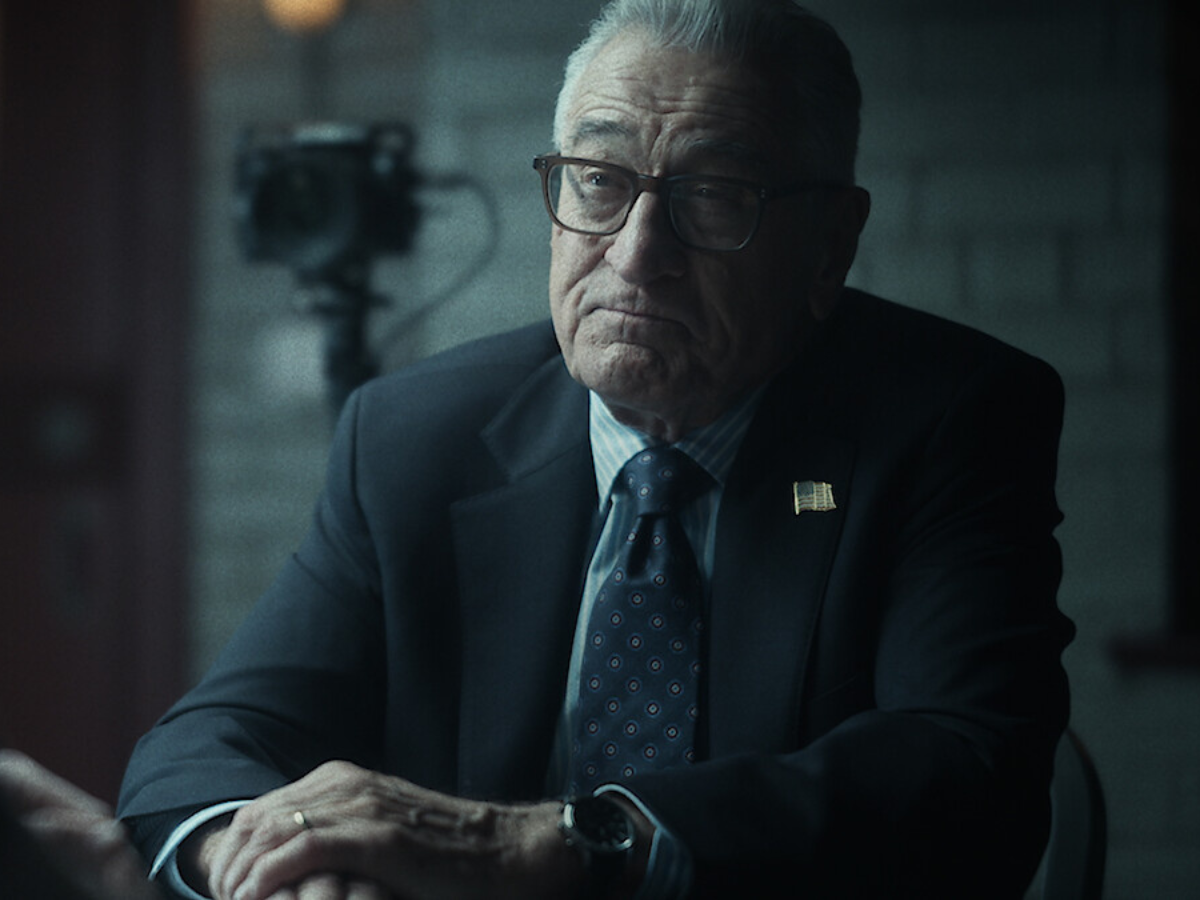
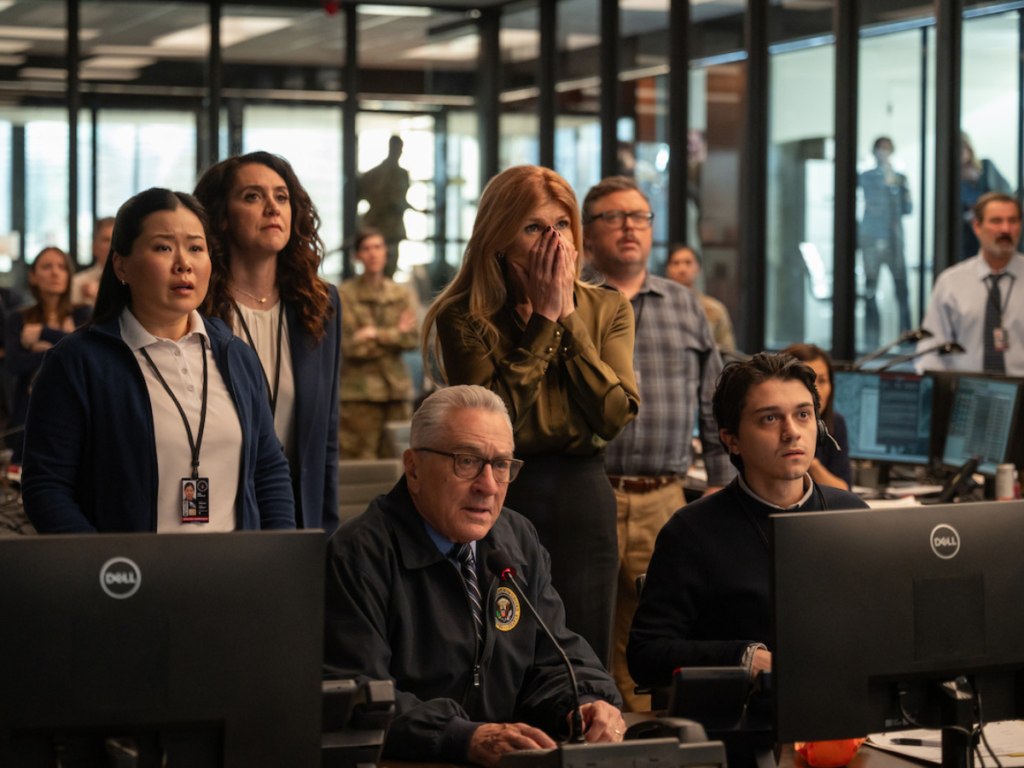
The limited series kicks off with a devastating cyberattack, prompting former US President George Mullen (portrayed by Robert De Niro, who also serves as executive producer) to come out of retirement. His objective is to find those responsible for an attack that caused thousands of deaths and threw the nation into chaos. Created by Eric Newman and Noah Oppenheim, Zero Day—currently streaming on Netflix—depicts a race against time. Mullen must sift through a flood of disinformation that has split the country to uncover the truth, all while political, technological, and financial power brokers vie for control. Meanwhile, Mullen grapples with his personal demons.

The series also features a star-studded cast including Angela Bassett, Jesse Plemons, Lizzy Caplan, Connie Britton, Joan Allen, Matthew Modine, Bill Camp, Dan Stevens, McKinley Belcher III, Gaby Hoffmann, and Clark Gregg.
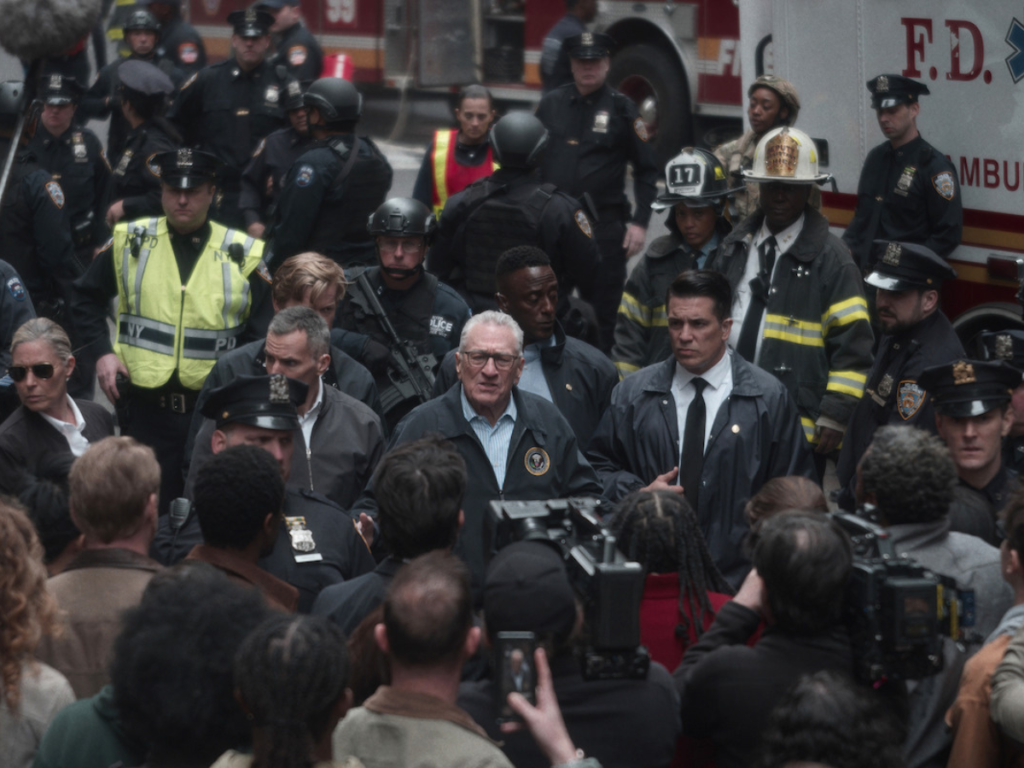
Zero-Day | Image: Netflix

What Does Zero Day Mean?

But here’s the question that remains long after the credits roll: what exactly is a “zero-day” attack, and could the nightmare depicted in the show ever happen in real life?

The phrase “zero day” in cybersecurity refers to a critical period of vulnerability. It’s when software is released without any protective patches, leaving it unprotected. Hackers take advantage of this window to attack, often before anyone even notices the weakness.

As co-creator Eric Newman explains, “A zero-day attack happens when a piece of malware is injected or invades a piece of software at a time when it’s defenseless against that attack.” Once a patch is developed, the specific vulnerability is fixed — but by then, the damage may already have occurred. And as quickly as one patch is released, another vulnerability often emerges, creating a relentless game of cat and mouse between hackers and developers.

This endless cycle sets the scene for Zero Day. The show uses the concept not just as a plot device but as a reminder of the invisible battles happening every day behind our screens.
Zero-Day | Image: Netflix

How Close to Reality Is the Show?

One of the most captivating aspects of Zero Day is how quickly the government reacts after the attack. Within days, Congress creates the “Zero Day Commission” and appoints George Mullen to lead it. A month later, he’s giving testimony before lawmakers. For anyone used to the notoriously slow pace of Washington, this may seem unbelievable.

However, political consultants say the show isn’t too far off. When the stakes are extremely high, governments can, in fact, act quickly. Emergency funding can be approved, commissions can be set up overnight, and leaders can bypass typical bureaucracy when urgency calls for it. “As slow as the federal government can be at times, given the bureaucracy, there are moments where we can be fast and swift,” one consultant noted.

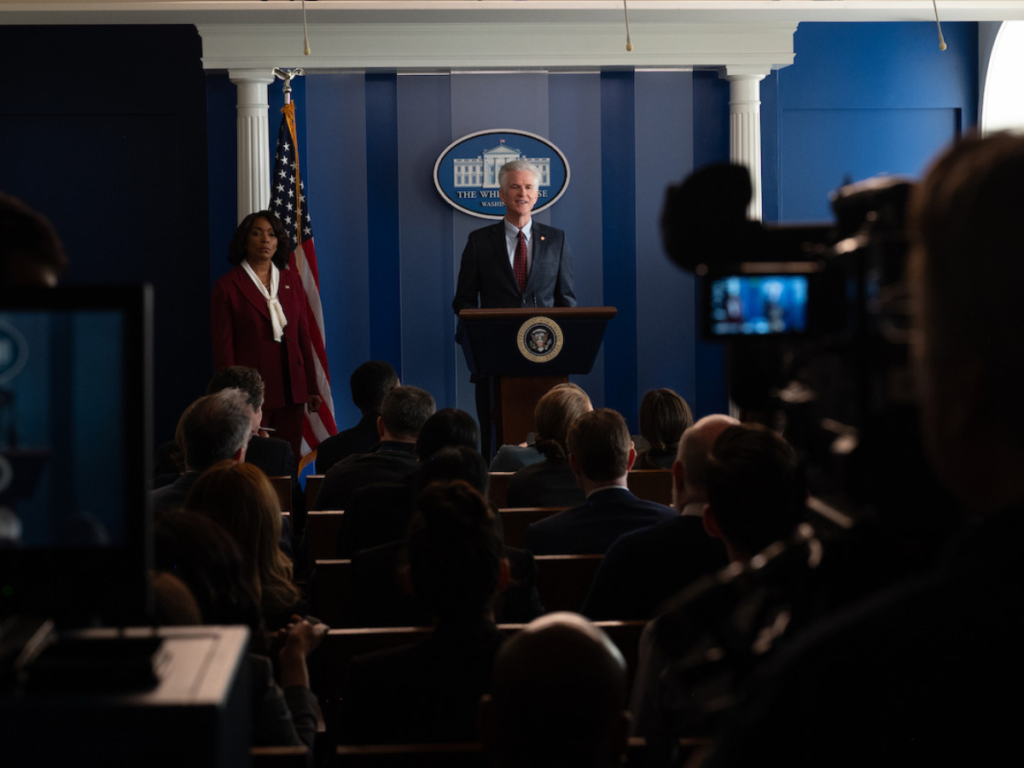
The authenticity extends beyond just the timeline. The production team collaborated with experts to ensure the show’s political details feel genuine — from the hustle of the House Chamber to the accuracy of Oval Office replicas. Even small details, like how the sergeant-at-arms announces officials amidst a crowd of chatter, were recreated with care. It’s the kind of meticulous attention to detail that helps ground a fictional thriller in reality.
Zero-Day | Image: Netflix

Could a Zero-Day Attack Happen in Real Life?

Here’s where things become unsettling. Cybersecurity experts agree that a catastrophic cyberattack on the scale depicted in Zero Day is unlikely — but not impossible.

As expert Clint Watts explains, it’s not just about machines failing or malware spreading by accident. “It’s not just that somebody typed a one instead of a zero; it’s a lot of people organising to execute this in a way that would be devastating. … It’s not just a bunch of machines doing the cyberattack, it’s a bunch of people using machines to do the cyberattack to create this effect.” In other words, the human coordination required makes such an attack more complex — but also more dangerous if it ever did succeed.

Pulitzer Prize-winning journalist Michael S. Schmidt, one of the series’ co-creators, notes that the threat isn’t new. For over a decade, U.S. officials have warned about the potential of a “cyber 9/11” or “cyber Pearl Harbor.” While we’ve seen major hacks that caused significant harm — from attacks on pipelines to breaches of sensitive government data — the truly catastrophic event, the kind that shuts down entire systems and costs countless lives, has yet to occur.

And yet, the warnings continue. “The threat is real, dangerous, and urgent,” political consultant Schultz warns. “It is up to the government, in collaboration with partners in national security, the private sector, and the tech industry, to stay alert because those threats are not going away anytime soon — or at all.”

Zero-DayY Official Trailer | Video: YouTube | Netflix

So, could a zero-day disaster become reality? Unfortunately, yes. While the dire scenario depicted in Zero Day might be dramatized for TV, the vulnerabilities it exposes are very real. Our world is more connected than ever, and as technology advances, so do the risks. Every new innovation presents opportunity — but also new opportunities for those who want to exploit it.

The good news? Governments, cybersecurity experts, and tech companies are constantly working to stay ahead. The bad news? It’s a never-ending battle, and the stakes have never been higher.

Zero Day may be fictional, but its message is clear: the line between digital threats and real-world chaos is thinner than we like to think.


Netflix
About the Author
Previous Post
$725 Balenciaga x Puma Speedcat Collaboration Strips Back a Cult Classic
Next Post
Lewis Hamilton is the New Face of lululemon: Because Even F1 Champs Need Stretchy Pants

Related Articles

Blancpain Revives a Diving Icon with the Fifty Fathoms Automatique 42mm in Stainless Steel

Reading Time: 5 minutes

Our team of editors and experts thoughtfully chooses each product. If you decide to buy through one of our links, we may earn a commission. Learn more. Want to know how we test products? Click here for more details.

When you think of diving legends, few names carry the same weight as Blancpain’s Fifty Fathoms. Born in 1953, it was the watch that defined the modern dive category, trusted by explorers and elite naval units who pushed the limits beneath the waves. More than just a tool, it became a symbol of adventure and precision—a watch built to thrive in the depths while capturing the imagination of those on land.

Now, Blancpain is reviving that legacy with a new chapter: the Fifty Fathoms Automatique 42mm in stainless steel. It’s a return to classic proportions that enthusiasts have been waiting for, blending heritage craftsmanship with a modern, versatile design. Classic in spirit yet contemporary in execution, this watch isn’t just a reissue — it’s proof that true icons never fade; they simply resurface, stronger than ever.

Highlights:

  • Blancpain reintroduces the Fifty Fathoms Automatique 42mm in stainless steel, paying homage to its legendary diving heritage.
  • A sleek case design with a sunburst-finished dial and luminous markers ensures that elegance combines with underwater readability.
  • Powered by the Calibre 1315 automatic movement, providing a solid 120-hour power reserve.
  • Price ranges from USD $15,500 to $18,000, with strap options including sailcloth, NATO, or steel bracelet.
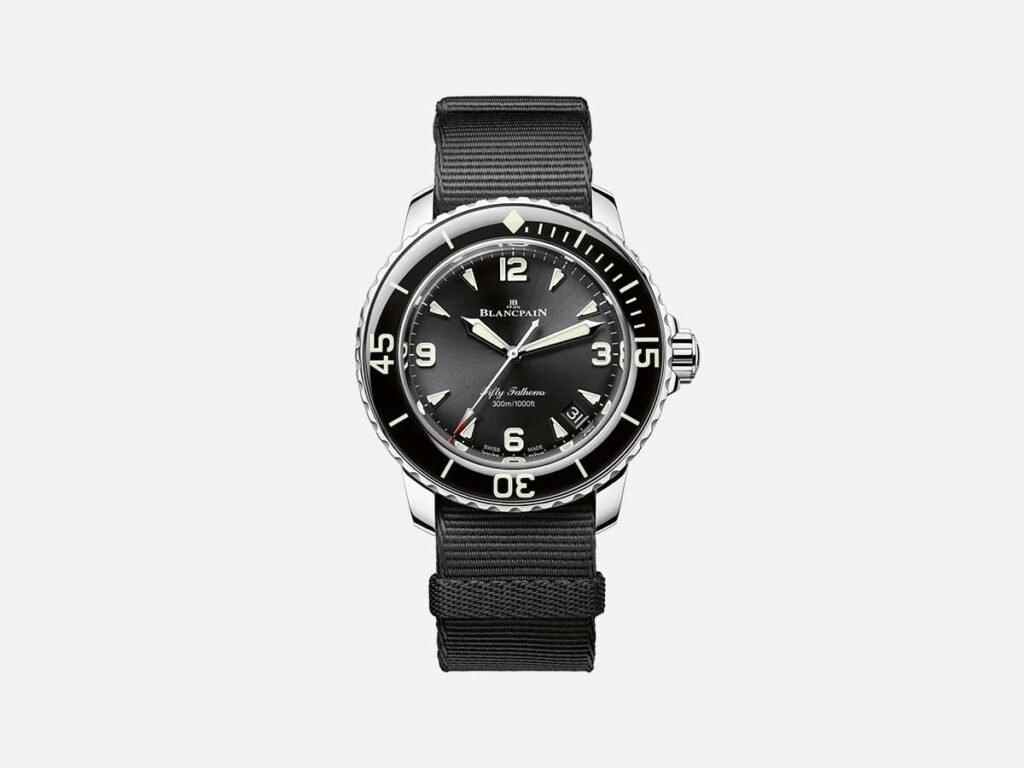
Blancpain Fifty Fathoms Automatique 42mm | Image: Blancpain

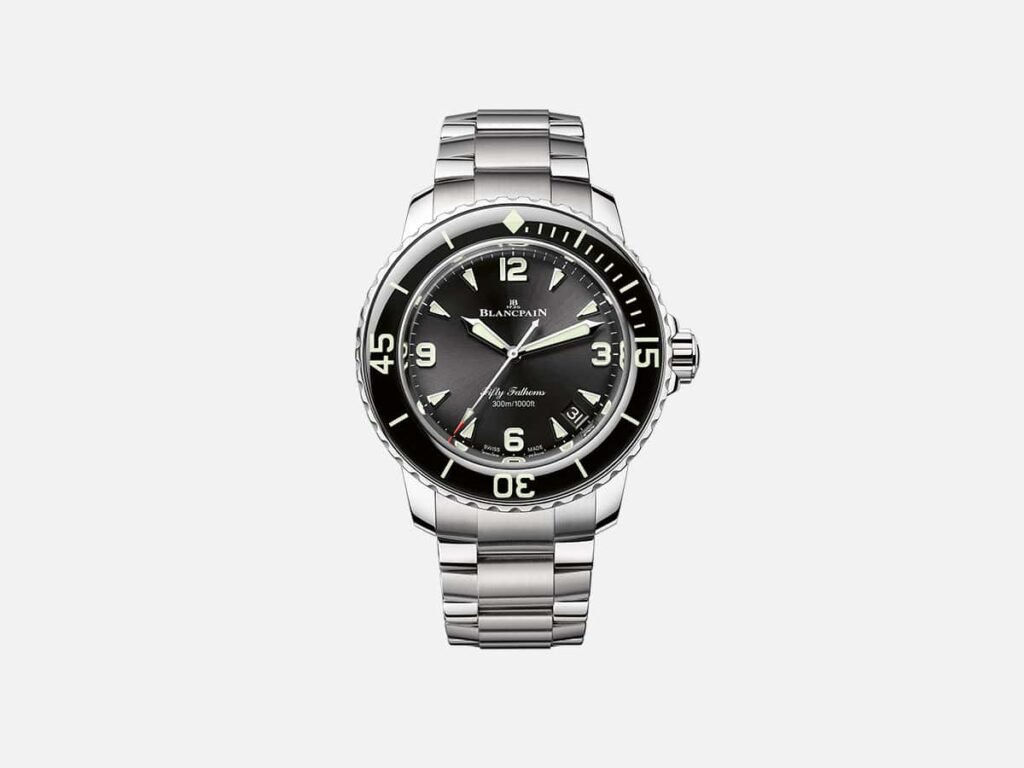
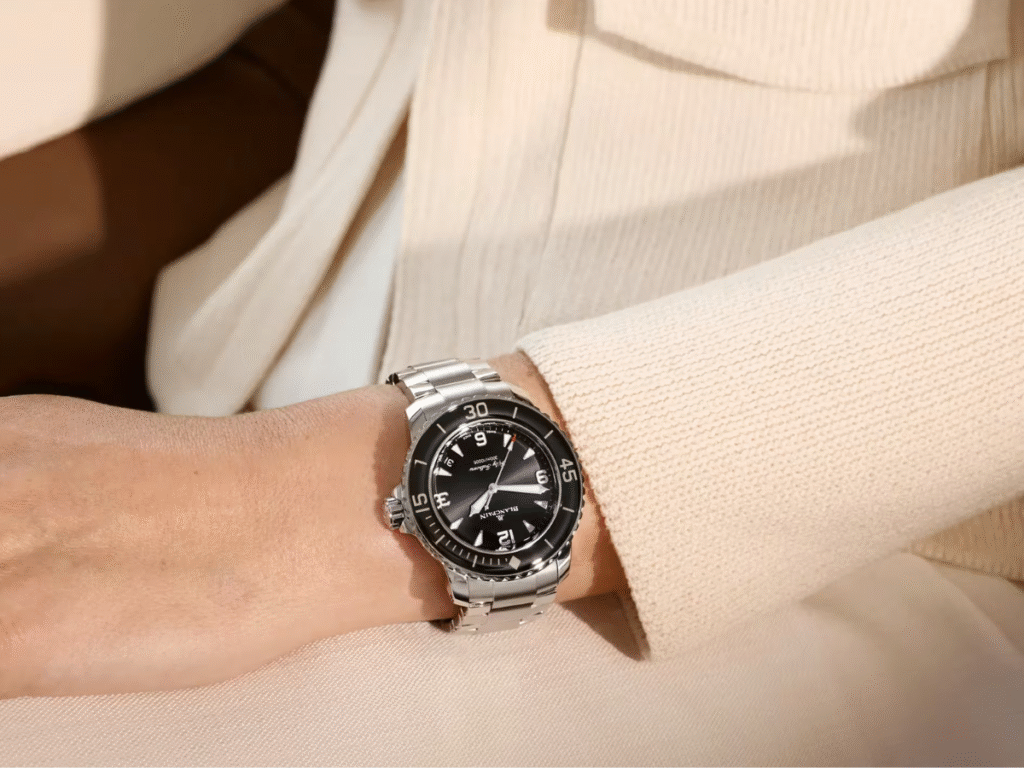
Blancpain’s new Fifty Fathoms Automatique 42mm demonstrates that strength and elegance can coexist. The stainless steel case strikes the right balance—robust enough to meet the demands of deep-sea diving, yet refined enough to complement a crisp shirt or tailored jacket. At 42mm, the proportions are versatile, providing the watch with presence on the wrist without appearing bulky. The combination of brushed and polished surfaces adds subtle depth, catching the light in ways that remind you this is as much a luxury timepiece as it is a professional tool.

The bezel, a signature feature of the Fifty Fathoms, commands its own respect. Unidirectional and capped with a luminous insert, it’s both practical and iconic. It accurately tracks dive times and also shapes the watch’s instantly recognizable silhouette — a look that has symbolized diving heritage since the 1950s.

Then comes the dial, a canvas of clarity and boldness. Oversized hour markers filled with Super-LumiNova ensure maximum legibility, even in low-light conditions that divers are all too familiar with. The hands are purposefully proportioned, and the typography feels both crisp and timeless. There’s no clutter, no compromise—just a straightforward design that highlights Blancpain’s ability to blend functionality with understated sophistication.

5010 1130 71S Steel Bracelet | Image: Blancpain
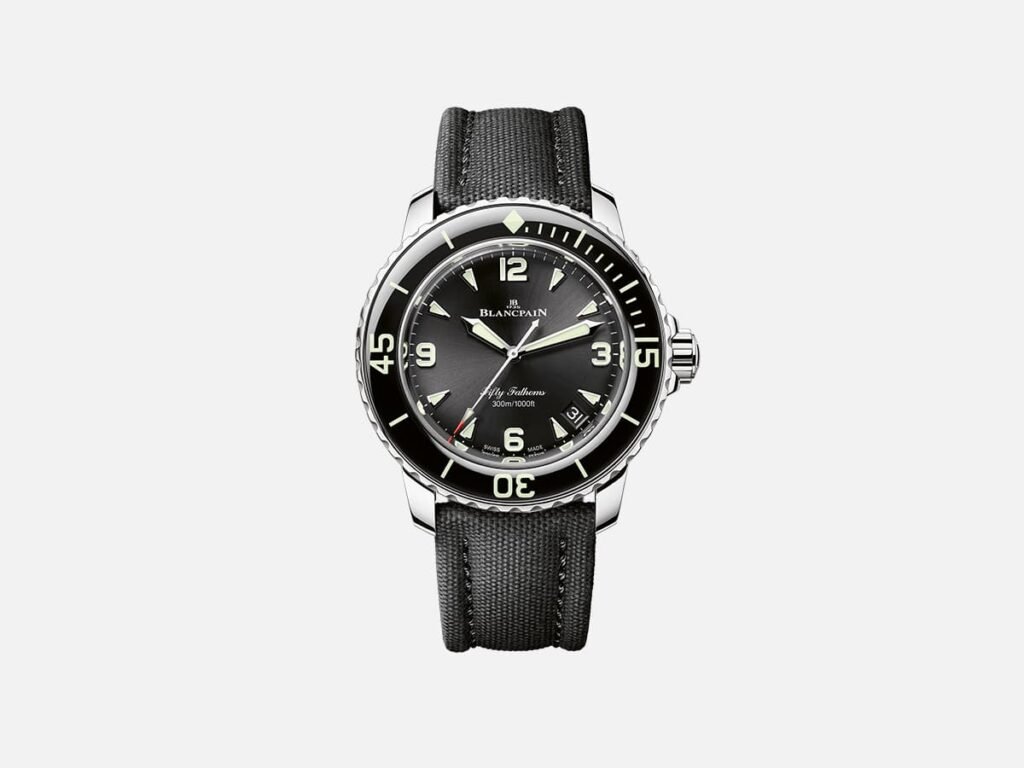
5010 1130 B52B Sail Cloth On Folding Buckle | Image: Blancpain
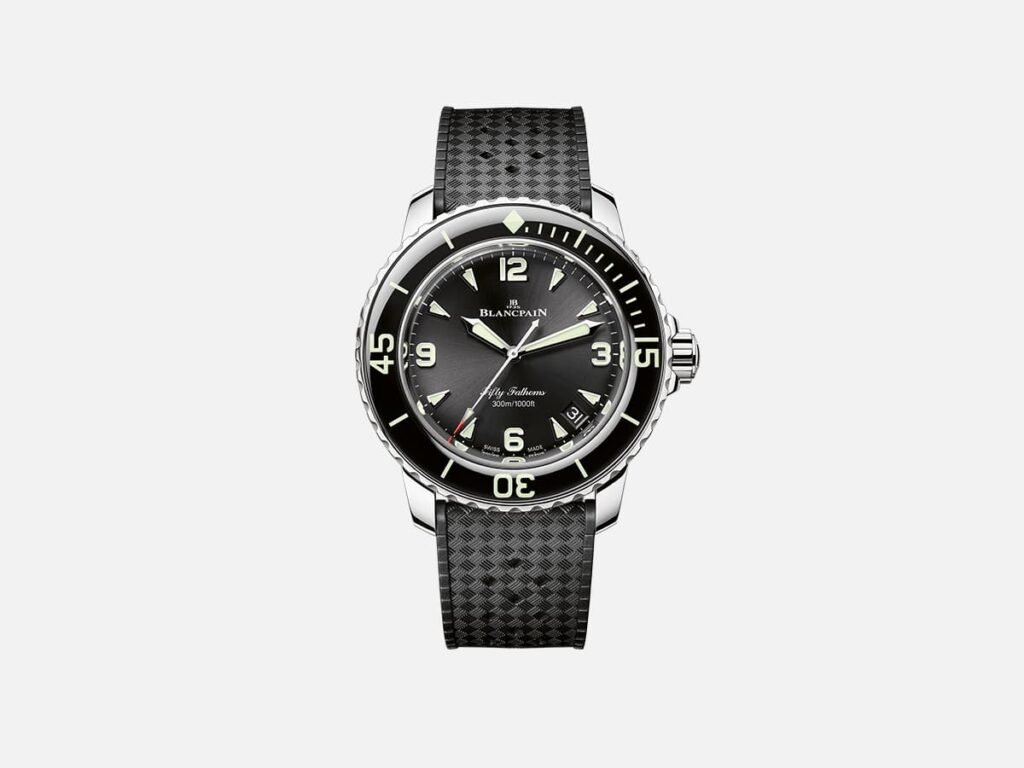
5010 1130 B64B Tropic Rubber on Folding Buckle | Image: Blancpain
5010 1130 NABA NATO Strap on Pin Buckle | Image: Blancpain
  • Brand: Blancpain
  • Model: Fifty Fathoms Automatique
  • Reference: 5010 1130 71S, 5010 1130 B52B, 5010 1130 B64B, & 5010 1130 NABA
  • Diameter: 42 mm
  • Thickness: 14.30 mm
  • Material: Stainless Steel
  • Dial Color: Sunburst Black
  • Calibre: 1315
  • Power Reserve: 120 Hours
  • Water Resistance: 30 Bar ( 300 metres, 1000 feet )
  • Price: USD $18,000 (Steel bracelet), $16,800 (Tropic rubber or sail cloth, $15,500 with pin buckle), $15,500 (NATO)

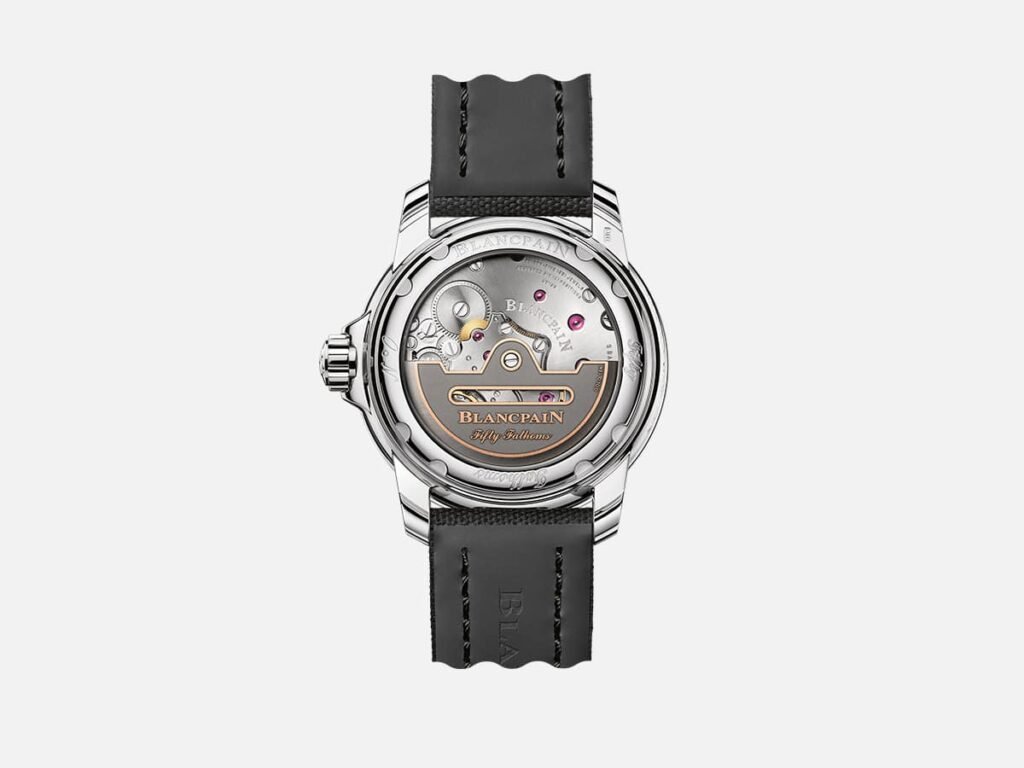
Inside the Fifty Fathoms Automatique 42mm, the Blancpain Calibre 1315, a movement that has built a reputation for both reliability and refinement. Made in-house, it provides a strong 120 hours of power reserve thanks to its three-barrel system, making sure the watch keeps running well beyond being set aside. For a professional dive watch, that kind of endurance isn’t just handy—it’s essential.

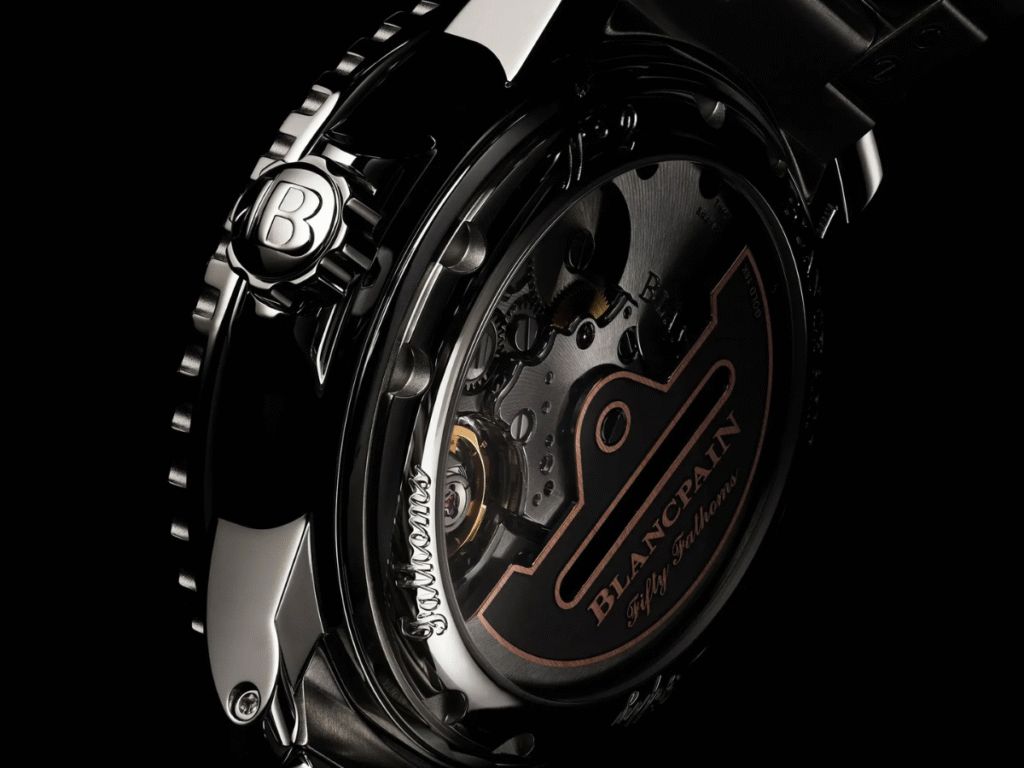
Beyond endurance, the calibre demonstrates Blancpain’s commitment to precision and craftsmanship. The silicon balance spring resists magnetism, while the careful finishing—visible through the sapphire caseback—reminds you this is more than a tool; it’s art. Each bridge and rotor has been decorated with care, balancing rugged functionality and watchmaking elegance. It’s the type of movement that quietly underscores why Blancpain has long been a pioneer in the dive watch world.

Blancpain Fifty Fathoms Automatique 42mm Caseback | Image: Blancpain

As a true diver’s tool, the Fifty Fathoms Automatique 42mm offers an impressive 300 metres of water resistance, a reminder that this watch is built to perform under pressure. Combine that with its unidirectional rotating bezel and luminous markers, and you have a timepiece more than ready to accompany you into the depths. Whether exploring coral reefs or just taking a plunge in the pool, it carries the spirit of exploration that has defined the Fifty Fathoms since its very first mission in 1953.

The Blancpain Fifty Fathoms Automatique 42mm in stainless steel is priced between USD $15,500 to $18,000, depending on the strap or bracelet configuration you choose. From refined sailcloth and NATO options to the sturdy steel bracelet, each strap not only alters the look of the watch but also affects its price.

Blancpain Fifty Fathoms Automatique 42mm | Image: Blancpain

Blancpain
About the Author

Related Articles

arrow_drop_up