







Some collaborations make you pause and marvel: why did it take so long for this to happen? Enter Fender and Godzilla. One pulses at the core of rock and roll, the other has thundered through pop culture for seventy years. On paper, they seem worlds apart. But the instant you lay eyes on a Godzilla guitar, it feels as if the universe is in on a secret joke. Two legends from different realms, now sharing the spotlight, and somehow, it feels like fate cranked up to eleven.
This release marks Godzilla’s 70th anniversary, and Fender doesn’t hold back. These guitars don’t just tip their hat to the monster—they channel his raw energy and unmistakable presence in every curve and detail. There’s a thrill in holding that larger-than-life spirit in your hands, ready to unleash it through an amp. It’s more than a tribute; it’s a bold invitation for a legend to roar in a whole new arena, and against all odds, it absolutely works.
Long before a guitar ever roared with Godzilla’s spirit, the story began in post-war Japan. In 1954, Toho Co., Ltd. unleashed a monster—not just a movie villain, but a walking, roaring metaphor for what a shaken nation felt. Godzilla wasn’t just a big lizard stomping on buildings; it was fear, hope, and fortitude, all rolled into one radioactive package. Over the years, Godzilla reinvented itself—sometimes a villain, sometimes a hero, always a legend. No matter the form, that distinct presence remained, rooted deep in the world’s imagination.
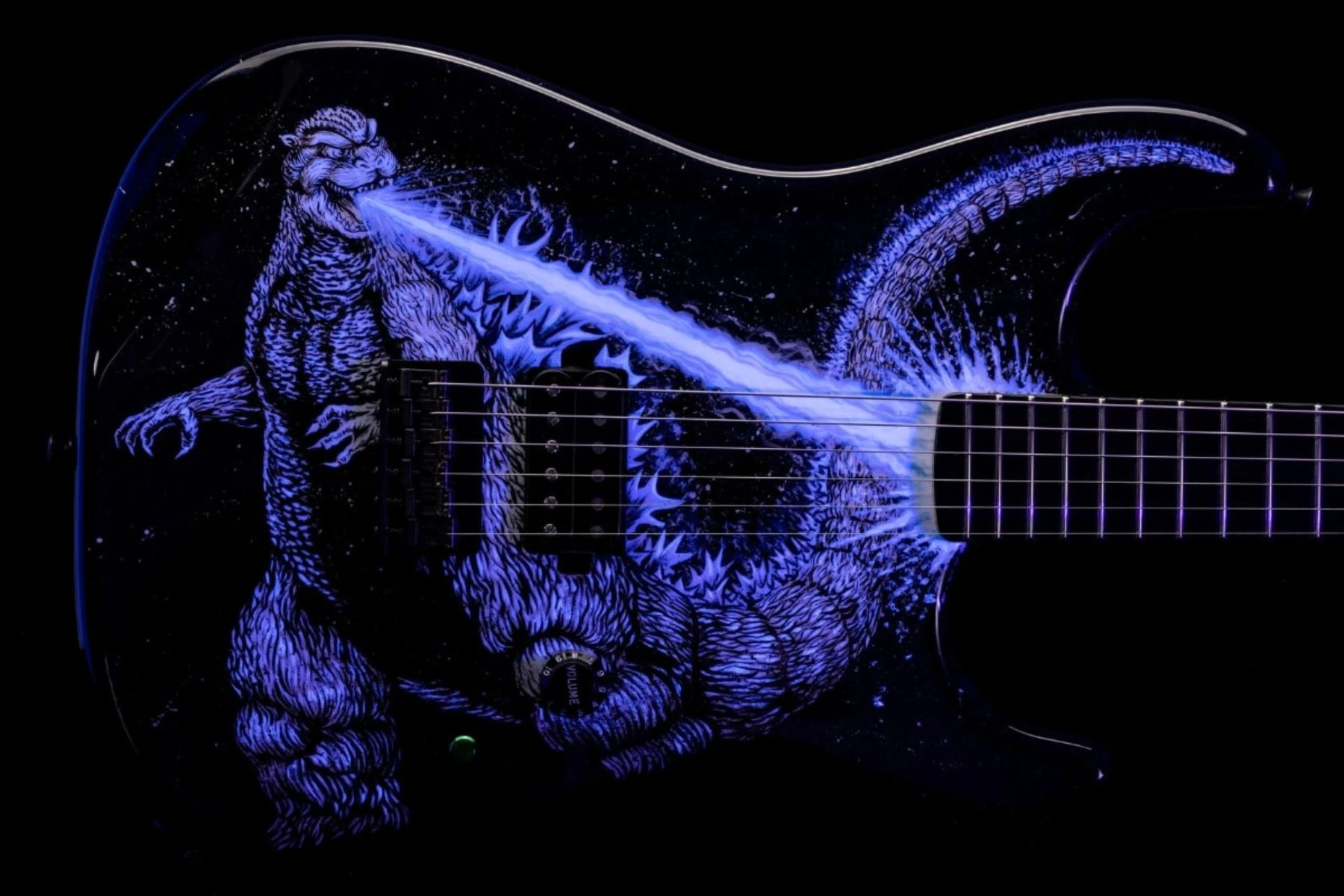
Seventy years later, that legacy is still stomping around—and now it’s got a Fender badge. Fender doesn’t just dip a toe in Godzilla’s waters; it dives headfirst, translating the legend into six strings and pure attitude. The Limited Edition Masterbuilt Godzilla Stratocaster—dreamed up by master builder Andy Hicks and artist Tom Neely—bottles up all that scale, drama, and energy, then lets you plug it straight into your amp. It’s the kind of tribute that feels less like a product and more like a backstage pass to the legend itself.
The guitar itself? Classic Fender—meticulous woods, flawless build, and that unmistakable feel in your hands. But here’s where it gets fun: the artwork isn’t just slapped on; it’s woven into the wood, as if Godzilla has become part of the grain. It pulls you in without screaming for attention, yet there’s no mistaking the atomic energy humming beneath the surface.
And just when you think it’s all about the looks, the guitar has a party trick: a custom circuit that lets you summon Godzilla’s legendary roar through your amp. Hit the lights, and the artwork glows under black light, as if the guitar is ready for its own blockbuster entrance. It’s bold, a little over-the-top, and exactly what you’d expect from a tribute to a legend that’s never been quiet a day in its life.
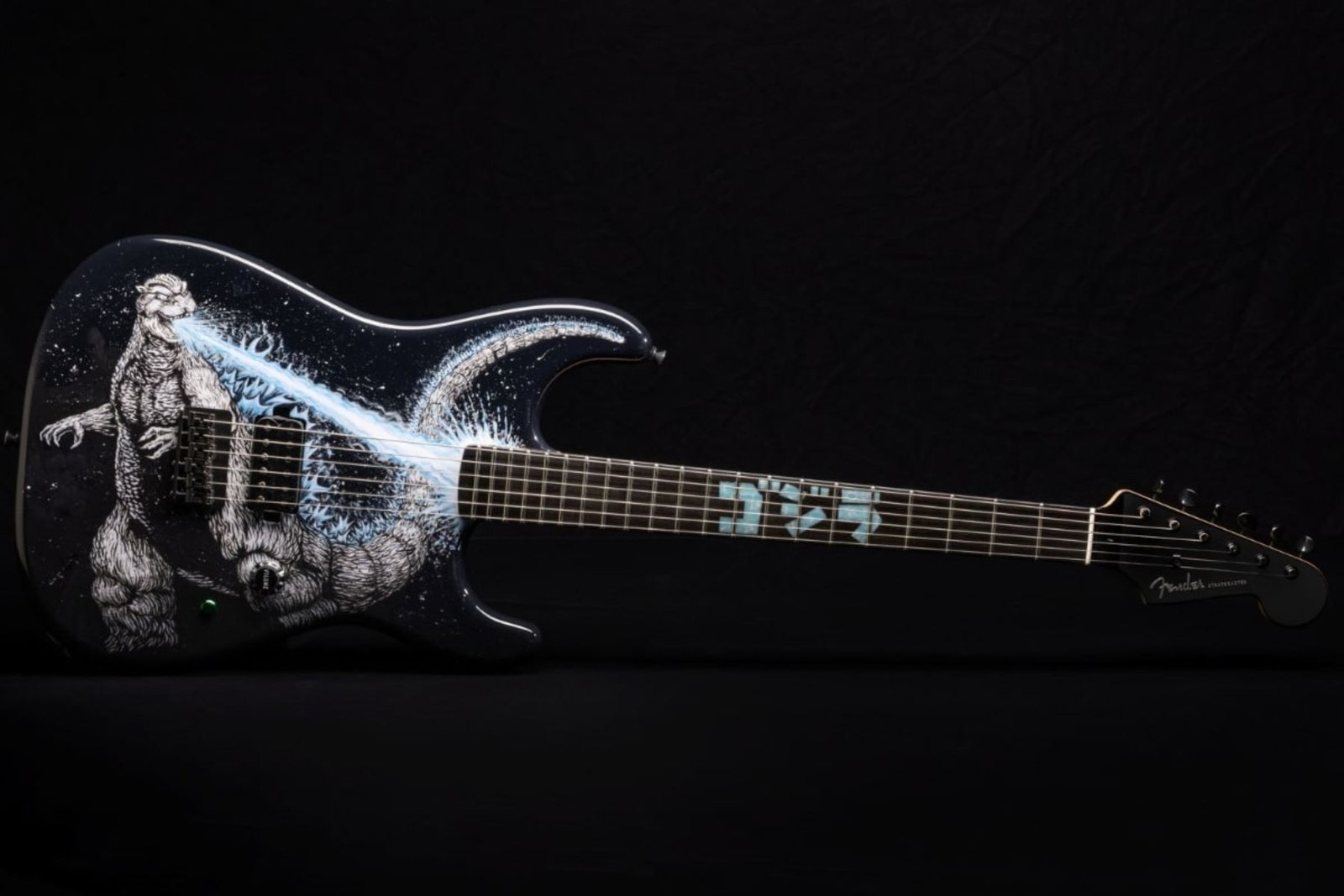
“This guitar really brings together the two things I care about most—Godzilla and the guitar,” explains Andy Hicks, who was on-site at Fender’s Tokyo flagship to present the piece.
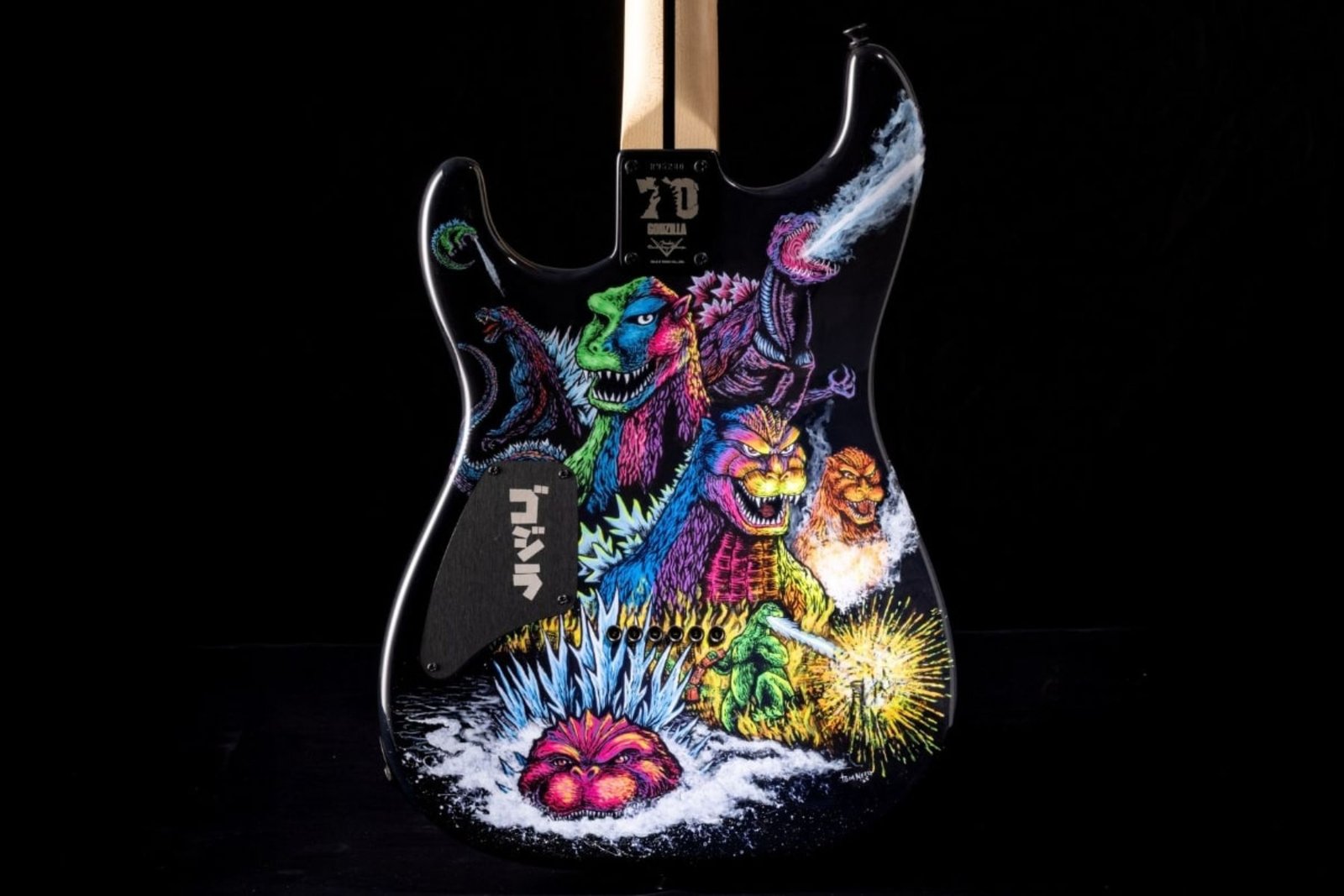
“On the front, we went with a monochrome take on the Heisei-era Godzilla as a nod to its roots, while the back tells a broader story, showing how the character has evolved over time—from the Shōwa era through Heisei, Millennium, Shin Godzilla, and beyond.”
For Tom Neely, also present at the Tokyo event, the connection runs deeper than just the artwork. He’s been a fan as long as he can remember, and you can feel that history in how he approaches the design, not just as an artist but as someone who understands what the character represents across generations.
“I first discovered Godzilla as a kid watching late-night TV, and I’ve been hooked ever since. For the front of the guitar, we focused on a black-and-white version of Godzilla, with a blue blast effect that ties in with the neck inlay, capturing the feel of the Heisei-era films.”
“To mark Godzilla’s 70th anniversary, we brought together seven different versions of the character—from the original 1954 design all the way through to Godzilla Minus One—and used neon elements that glow under black light to give it a more dynamic presence. As someone who’s always loved music, Godzilla, and Japanese culture, being able to work on my first custom-painted guitar for something like this means a lot.”
“Each version of Godzilla included here means something to me, and I hope that comes through in the final piece. My favourite detail has to be the custom mechanism—press a button, and you get that unmistakable roar coming through the amp. It really feels like bringing together the King of Monsters and the ‘King of Guitars’.”
That roar might be a playful touch, but it’s the kind of detail that makes this one-of-one Stratocaster stand out. It brings the concept to life in a way that feels bold, intentional, and true to the spirit of the project. The two Made-in-Japan models complete the core of this 70th-anniversary collection.
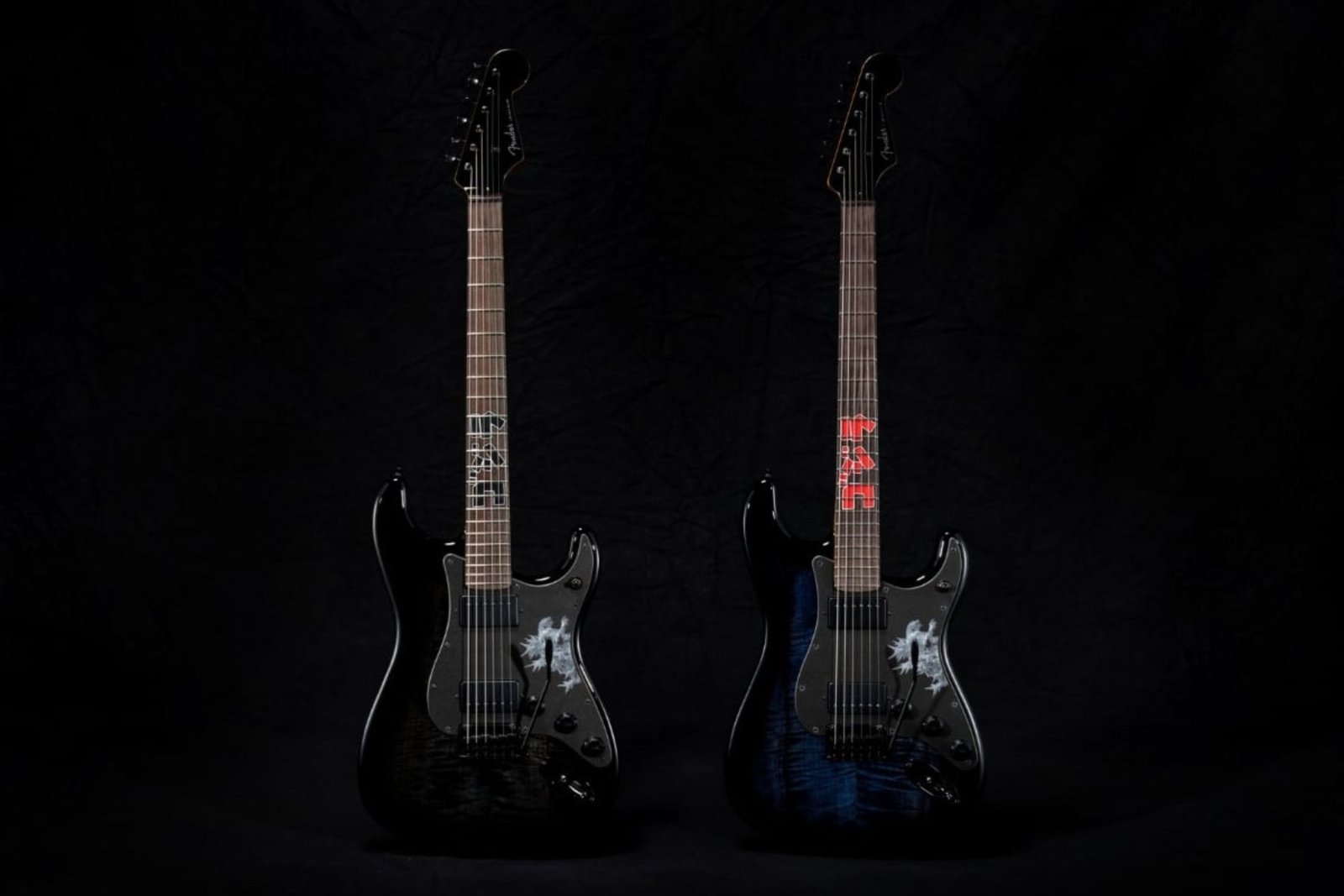
These Stratocasters are thoughtfully designed, each with its own version of the Godzilla theme. You can get them in blue or black. Both models make the concept more approachable while keeping the unique style that sets this collection apart.
The blue model immediately catches your eye. Its deep, glossy finish pairs an alder body with a myrtlewood top, giving it a layered look that shifts in different lighting. The bright red Godzilla logo at the 12th fret is one of the first details you notice. It stands out against the dark colours but doesn’t feel overdone.
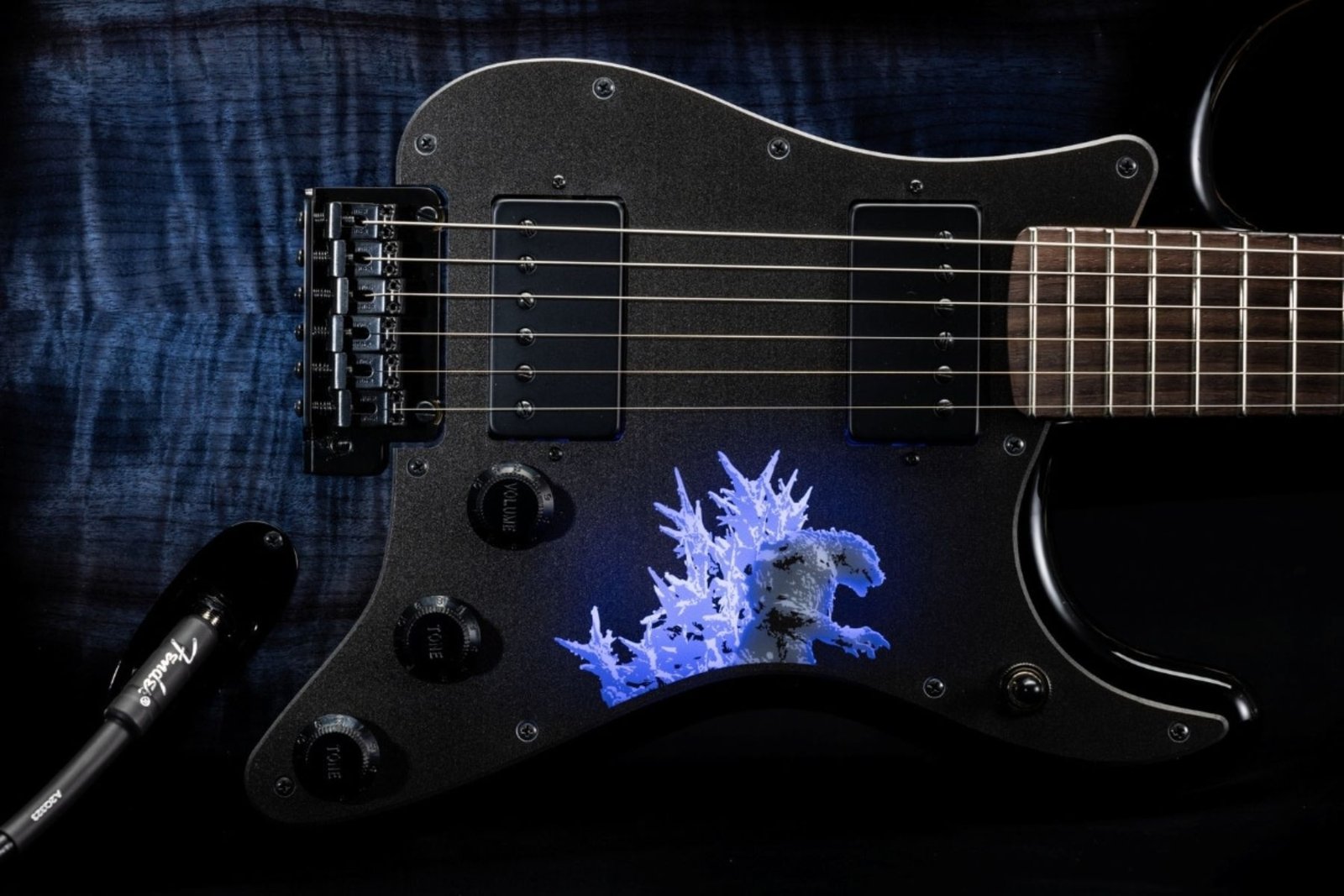
The standout feature is on the scratch plate. Fender introduced a new GLO (Gain-Linked Optics) system that makes the artwork interactive. When you turn the Tone 2 knob to activate the onboard distortion, the dorsal-fin design lights up, and the brightness shifts with the gain. This clever detail mimics Godzilla’s atomic breath and matches the sound as you play. It’s a playful touch that still fits the overall look.
Of course, none of these features would matter if the guitar didn’t sound great—but it does. It’s equipped with special Custom Godzilla humbuckers that deliver a heavier tone and strong presence, just as you’d hope. With its dedicated neck plate, certificate of authenticity, and custom hard case, this guitar is clearly more than just good looks. It’s a complete package for anyone who loves both music and the Godzilla story.
The black version brings a different vibe. It shares all the same technical features as the blue model but has a more understated look, inspired by the classic black-and-white Godzilla films. At first, it feels more subtle, but after a while, you realize it has just as much presence—just in a quieter, more refined way.
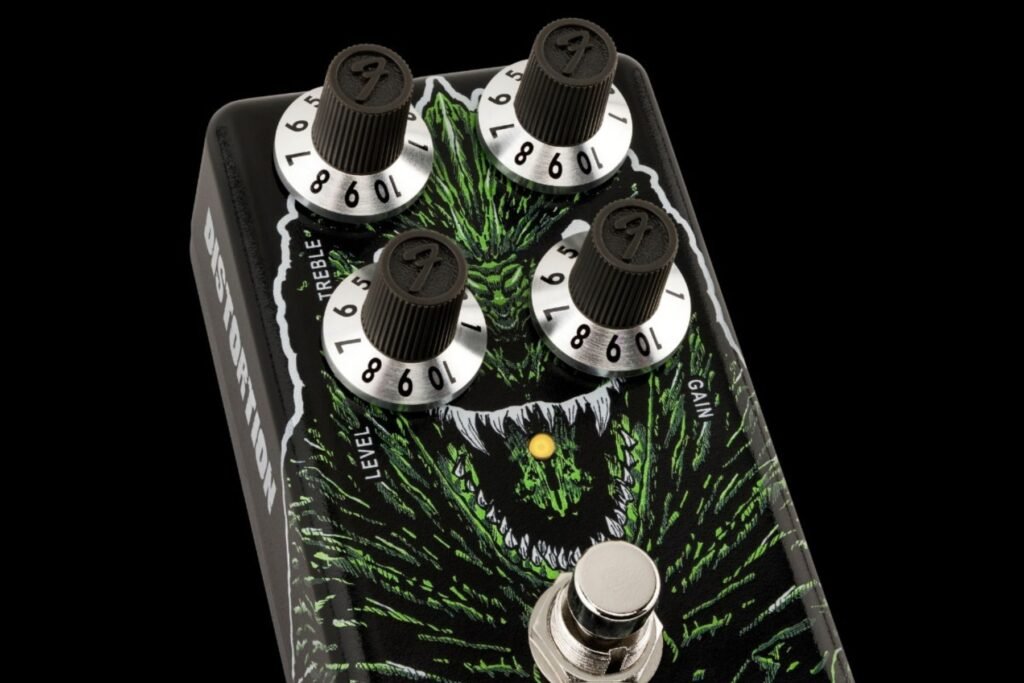
Fender wasn’t content to just make guitars—after all, when you’re riffing with Godzilla, you go all in. Enter the Godzilla distortion pedal, priced at $165. This thing isn’t just loud; it’s got attitude, shifting from wall-shaking rhythm to razor-sharp lead with a twist of a knob. It’s as unapologetically bold as the monster that inspired it, and it’s ready to make any setup roar.
If you love to tweak your sound, the pedal’s got you covered: active treble and bass knobs let you shape your tone, and that distortion control? Take it from a subtle growl to a full-on Godzilla meltdown. With its wild artwork, this isn’t just another pedal—it’s a little piece of the story, ready to stomp across your pedalboard.
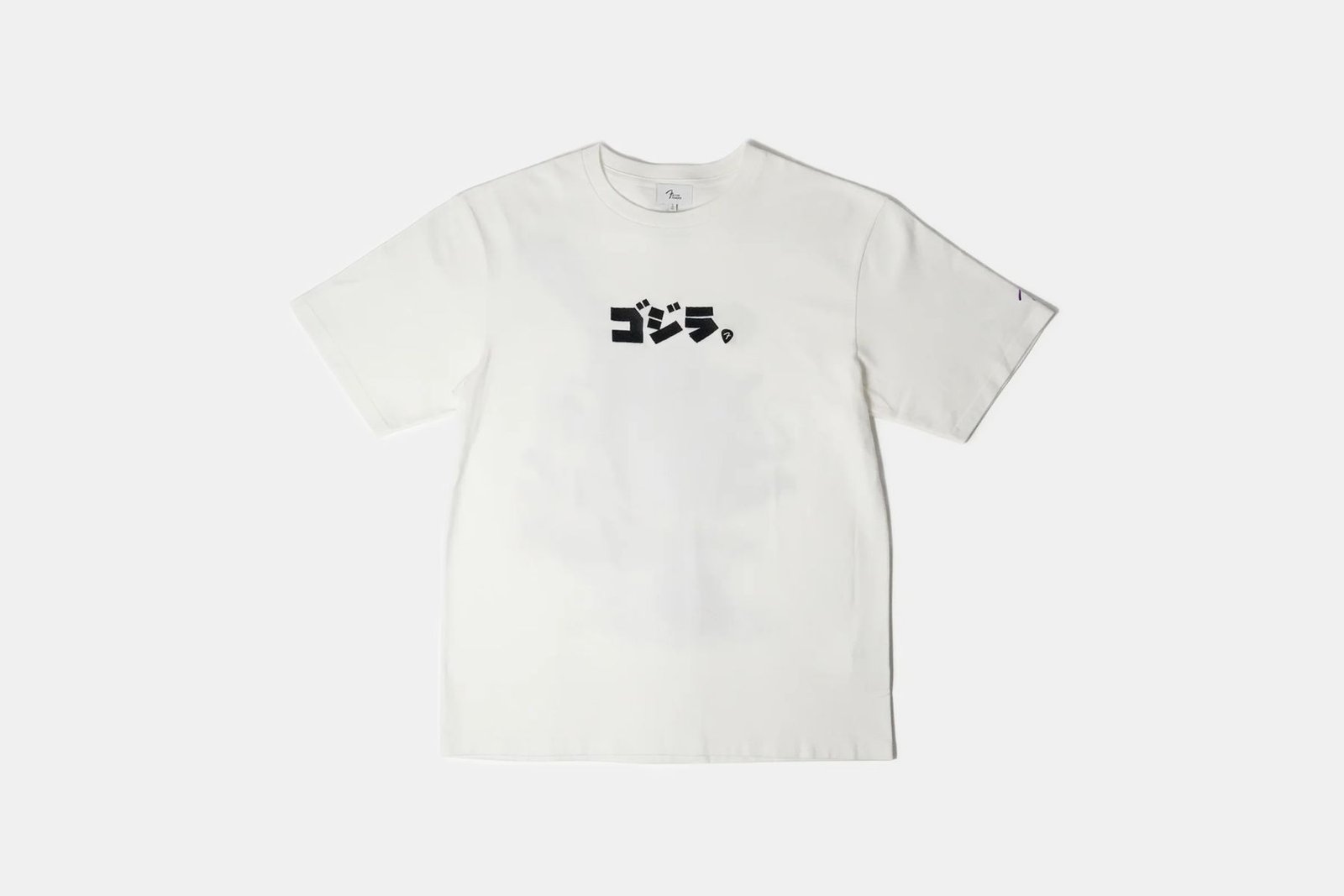
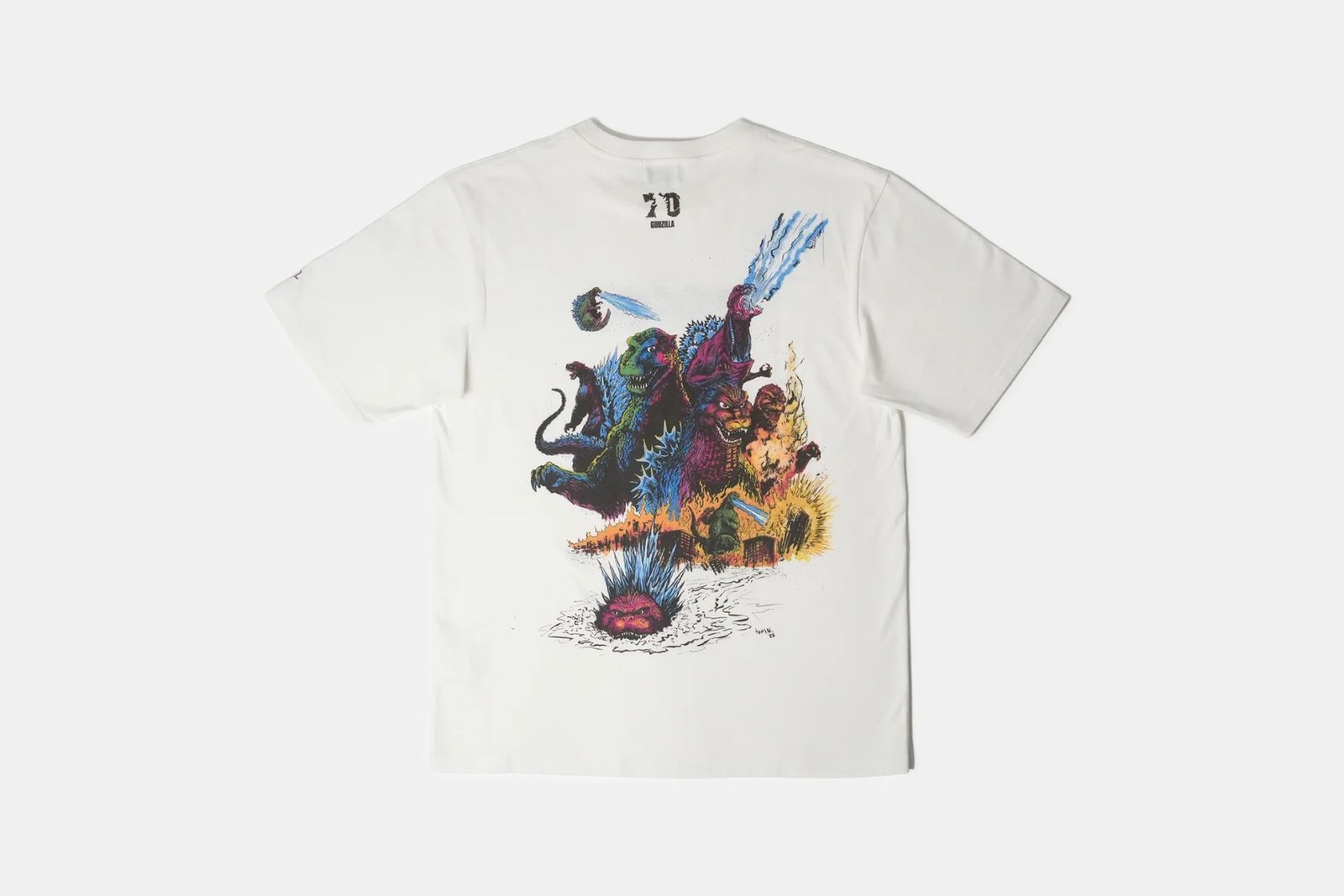
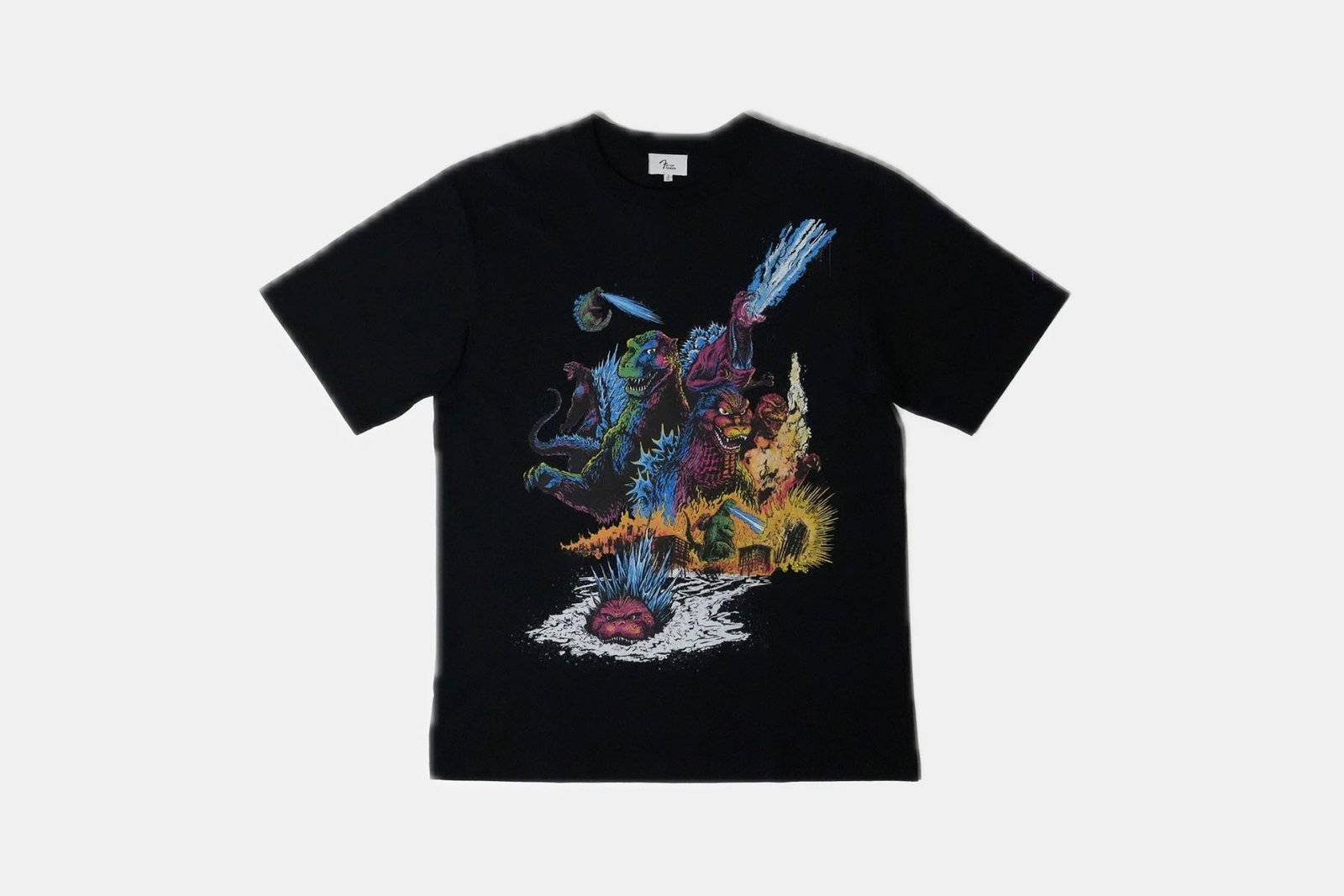
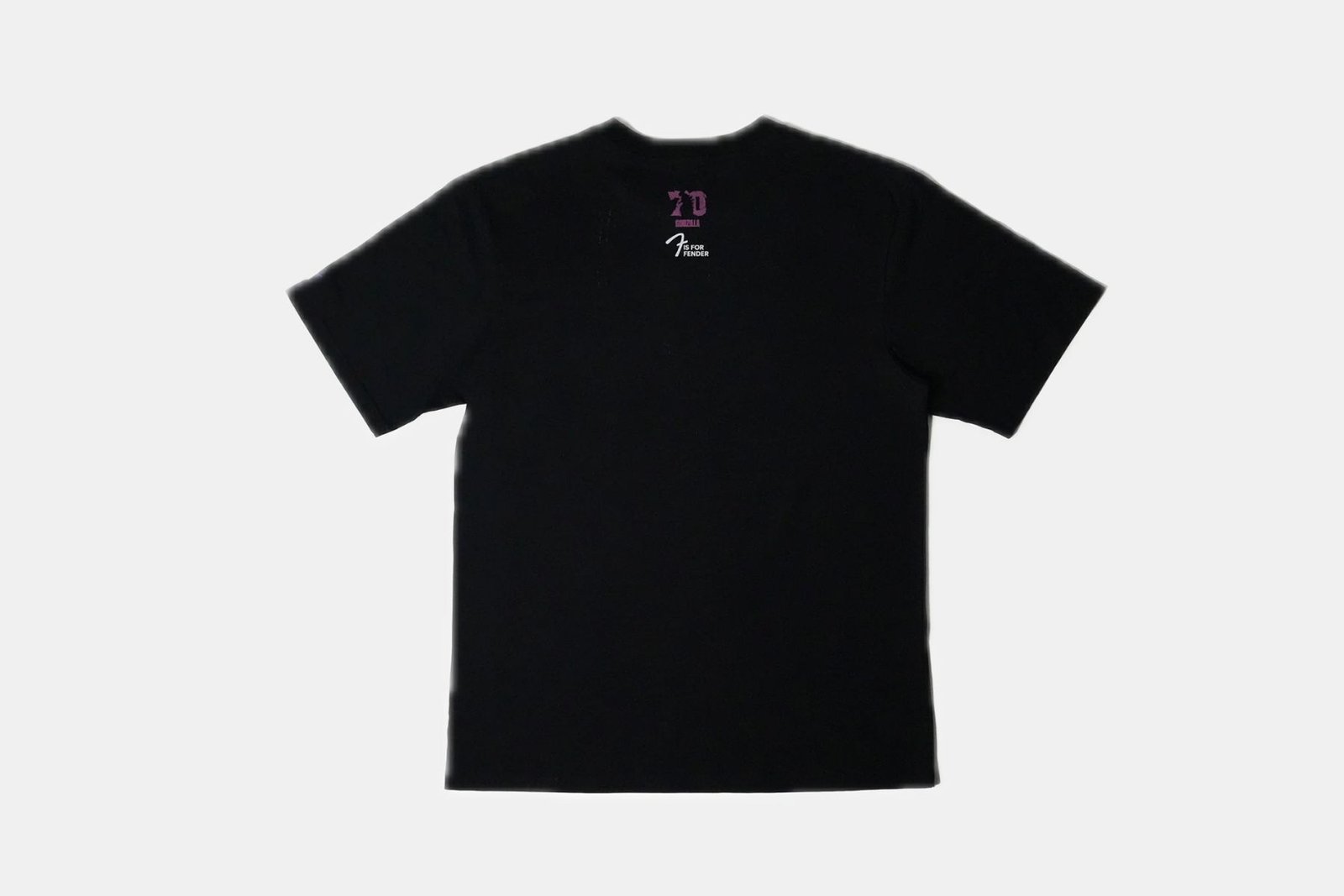
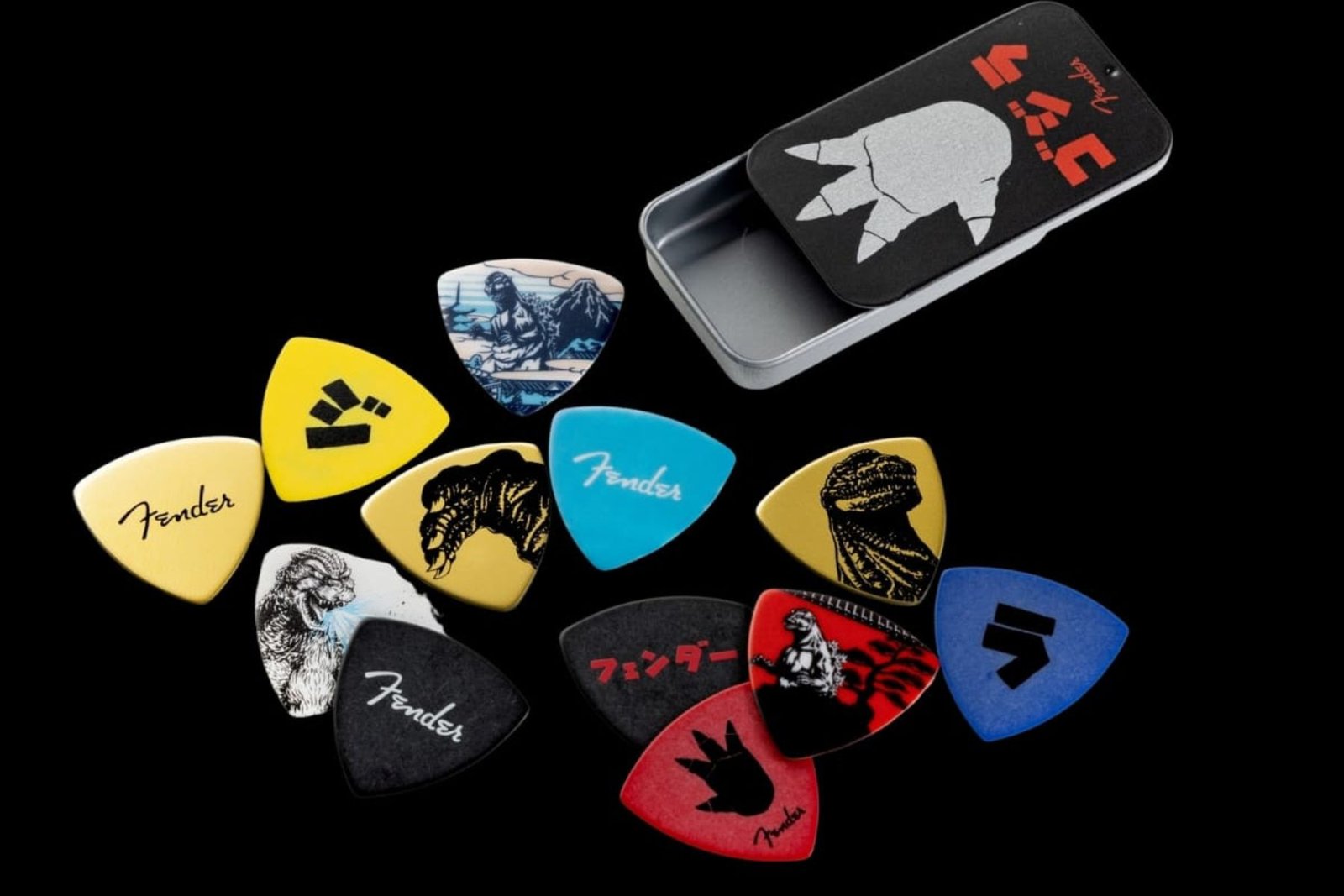
But why stop at sound? The collection spills over into the little things—like Godzilla picks JPY ¥3,300 – USD $22 for those monster chords, and limited-edition shirts and a cap from Fender’s F IS FOR FENDER line. Produced in small batches in Japan, these aren’t just extras—they’re wearable souvenirs for anyone wanting to carry a bit of Godzilla’s swagger with them.
And just when you think they’ve thought of everything, Fender Flagship Tokyo adds a twist: for a few weeks in October 2025, visitors could sip on a Godzilla Charcoal Latte at the Fender Cafe JPY ¥980 – USD $7. Inspired by the King of the Monsters’ brooding silhouette, this unexpected treat turns the collaboration into more than a collection—it’s an experience you can see, hear, wear, and even taste. That’s how you turn a legacy into a living, breathing adventure.