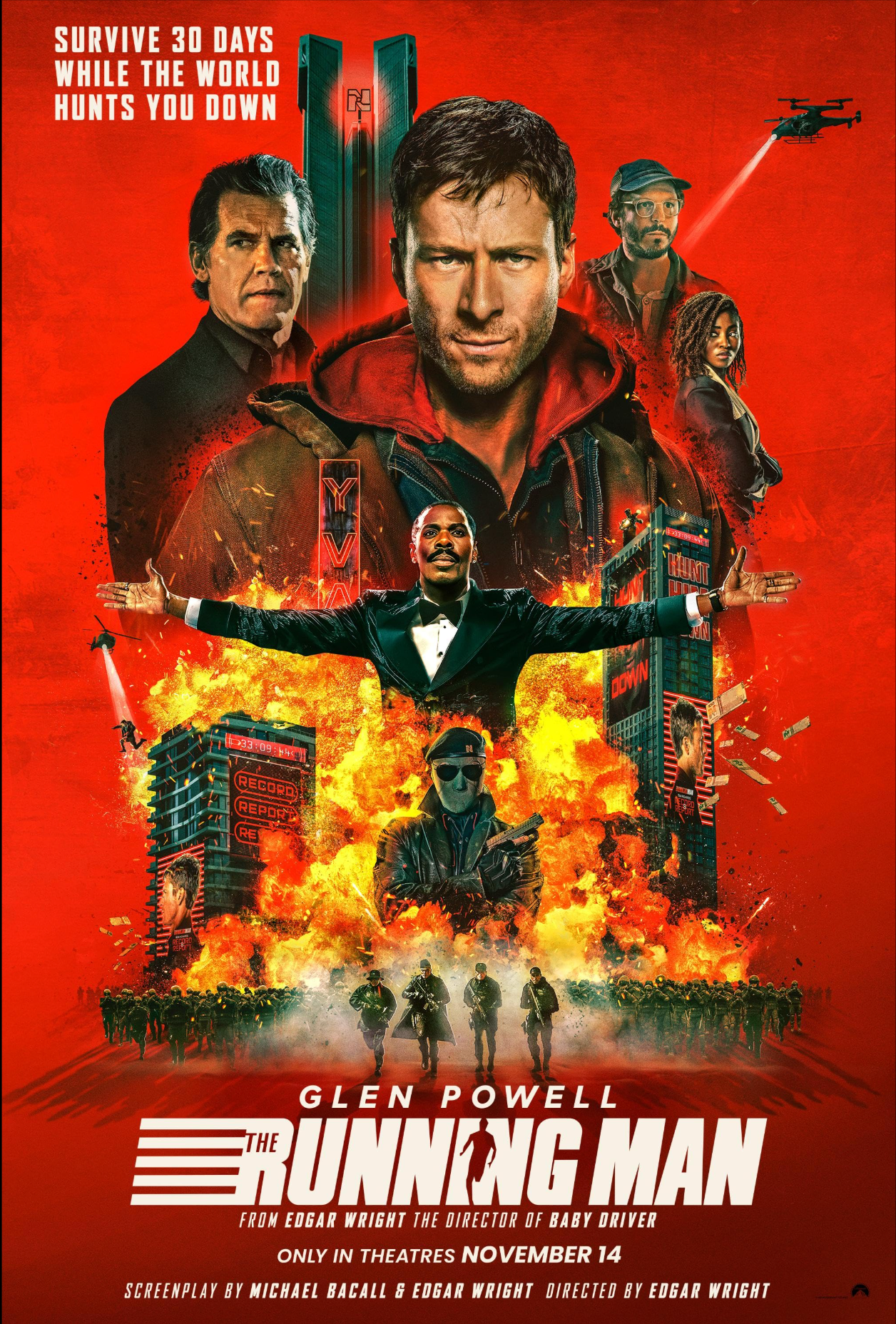







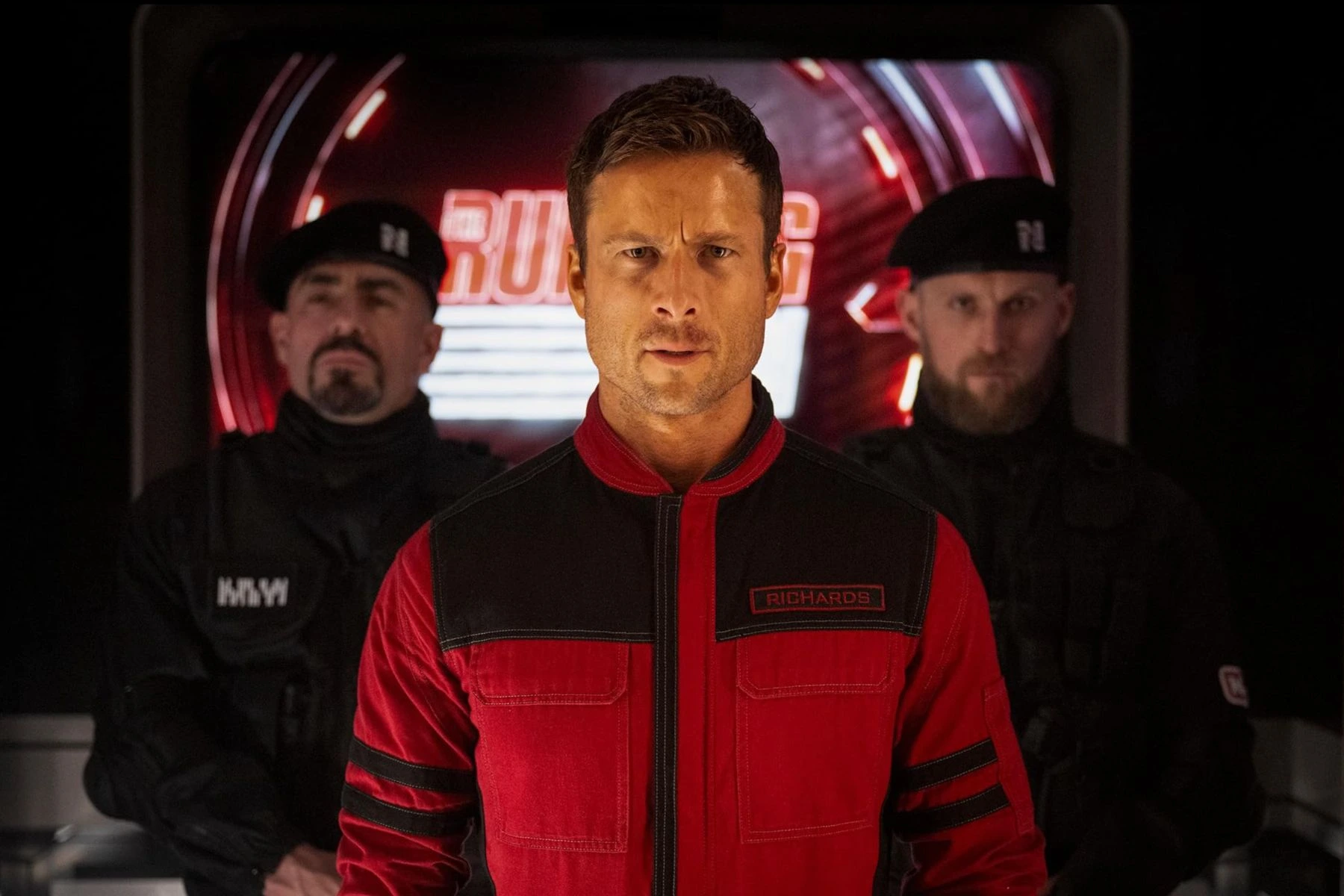

Long before reality TV made chaos into entertainment, Stephen King imagined a future focused on public obsession, media control, and suffering shown on TV in ‘The Running Man’. Written very quickly under his Richard Bachman pen name, the novel showed an America struggling with economic collapse, distrust, and violence fueled by entertainment that still feels relevant today. Now, director Edgar Wright brings that world back to the screen with ‘The Running Man’, starring Glen Powell in the lead role.
Instead of just copying the cult-classic 1987 movie starring Arnold Schwarzenegger, Wright takes a clearly different approach, focusing more on the darker mood and stronger social message of King’s original story. The extreme action and dark humour are still there, but this version feels more connected to the disturbing idea of a society totally hooked on spectacle. And honestly, with so many Stephen King adaptations already popular in 2025—from ‘The Monkey’ and ‘The Long Walk’ to ‘The Life of Chuck’—’ The Running Man’ comes with a lot of energy behind it.
Advertisement · Continue Reading Below
Now arriving in theatres on November 14, 2025, as the fourth major Stephen King adaptation to hit the big screen this year, ‘The Running Man’ certainly isn’t lacking attention. The bigger question is whether Edgar Wright’s version does enough to stand out on its own—or if audiences are simply watching another stylish sprint through familiar dystopian territory.
Glen Powell plays Ben Richards, a poor working-class father trying hard to get medicine for his daughter in a country that seems to be falling apart. His desperation leads him to the Network, a huge entertainment company that controls everything from news to violent game shows made just to keep people watching. Richards first joins one of the Network’s smaller, supposedly safer shows, hoping to earn quick money, but things quickly get out of control when he ends up on ‘The Running Man’ instead.
The show is simple in the worst possible way. Contestants are set loose in a countrywide live hunt where people get rewards for telling where they are while armed killers chase them on live TV. At the end, there is a crazy $1 billion “new dollars” prize, but the movie keeps reminding us that no one has ever lived long enough to win it.


Unlike the flashy 1987 version with Arnold Schwarzenegger, this version feels much more real, which makes some parts harder to watch. The Network fills its schedule with strange shows like Swim the Crocodiles and How Hot Can You Take It?, and none of it feels very different from where entertainment seems to be going. The movie works best not when it tries to shock with action, but when it quietly shows how easy it is for people to turn pain into entertainment as long as there is a screen.
Dystopian action stories have been common for years, so The Running Man doesn’t bring a totally new idea. Still, the movie moves quickly, stays exciting, and benefits greatly from Powell’s acting, which gives the film more personality than most survival thrillers have.
Advertisement · Continue Reading Below
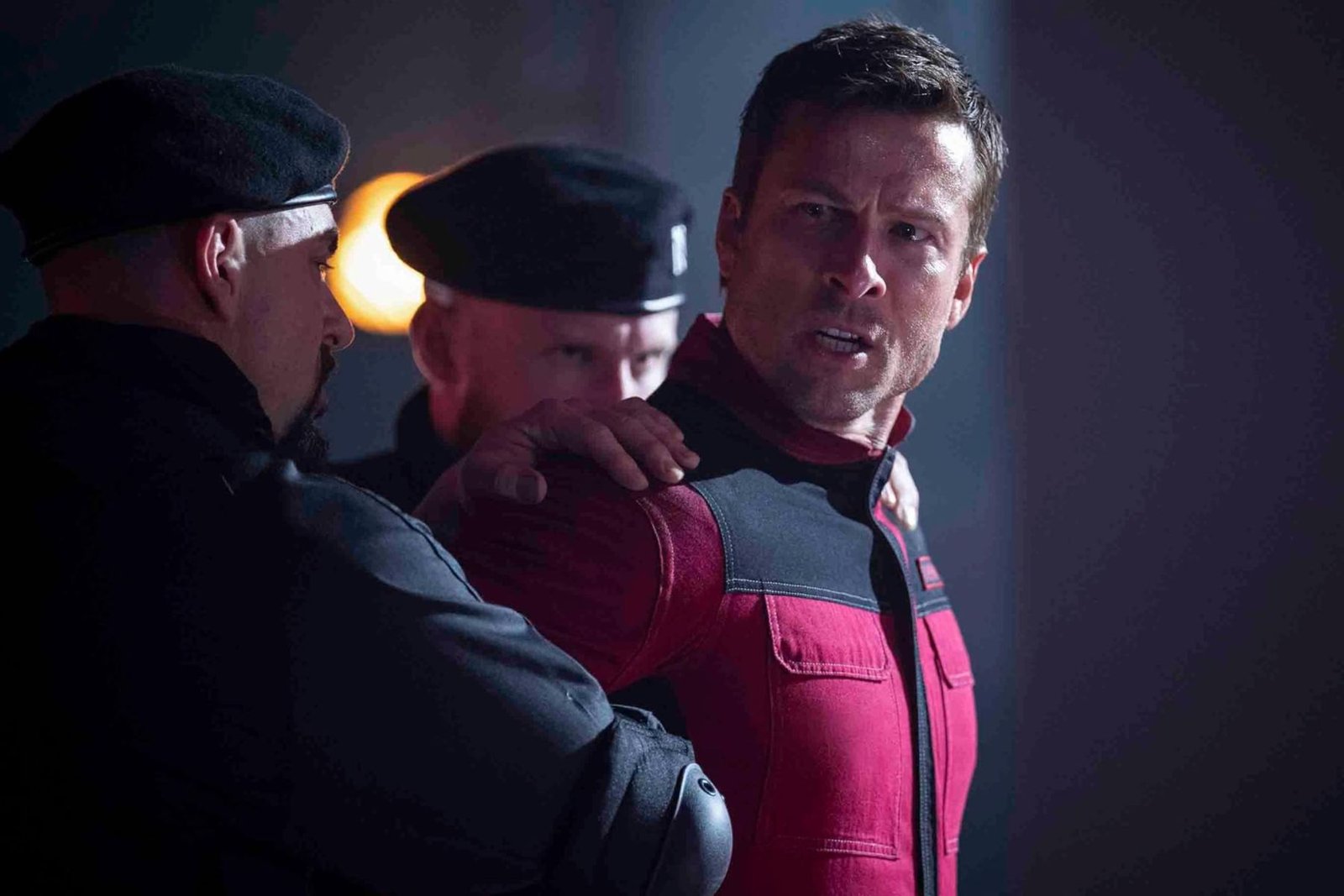
No matter how loud or wild ‘The Running Man’ gets, Glen Powell always keeps the movie feeling real. Instead of treating Ben Richards as an unstoppable action hero, Powell shows his frustration, panic, and desperation, making it easier to care about him once the game really starts. Even when the movie gets a bit silly, he keeps it believable enough so it doesn’t feel like a cartoon.
And to be fair, the film fully accepts its silly side at times. Richards spends most of the movie being thrown through walls, chased across the country, and put into more and more ridiculous situations while millions watch live. At one point, after barely surviving another attack while standing waist-deep in sewage, Richards shouts, “I’m still here, ya shit eaters!” Somehow, this becomes one of the funniest and most memorable moments, rather than feeling too much.
The movie is also strongest when it focuses on the Network itself and how easily it controls the public. News reports are edited, live shows are edited to promote certain stories, and the people watching the film accept whatever version of the truth they are given. Wright keeps these ideas simple, which actually helps. The film trusts viewers to see how much of this already feels real.
That’s probably why some parts of ‘The Running Man’ stay with you more than the action scenes. Under all the explosions and chases, there’s an uneasy idea that people stop questioning what they see as long as it’s entertaining. The film keeps returning to this idea without feeling like a lecture, and that is where the remake feels strongest.
The ending, however, doesn’t hit as strongly as what comes before it. After most of the film builds tension and pushes Richards to his limit, the story ends in a much safer, more hopeful way than it began. It’s not bad, but it feels like the movie avoids taking a bigger risk at the last moment.
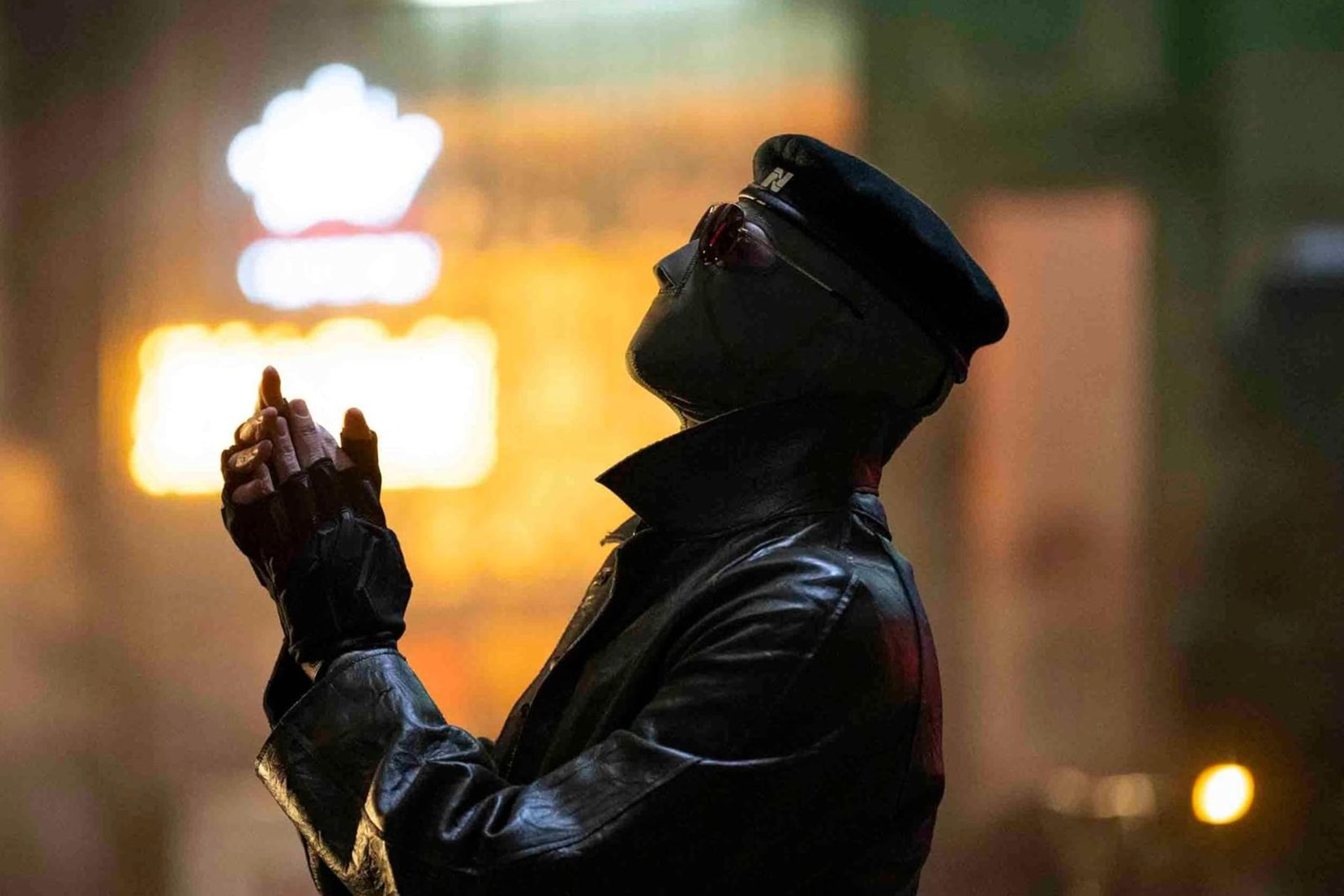
For all its big ideas about media, power, and public obsession, ‘The Running Man’ never quite shakes the feeling that we’ve seen similar worlds before. Stories about companies controlling what people think and audiences treating violence like entertainment aren’t that unusual now, so the movie doesn’t always have the impact it probably aims for. Still, Edgar Wright keeps the pace fast enough that the film rarely feels slow, especially once the chase scenes really get going.
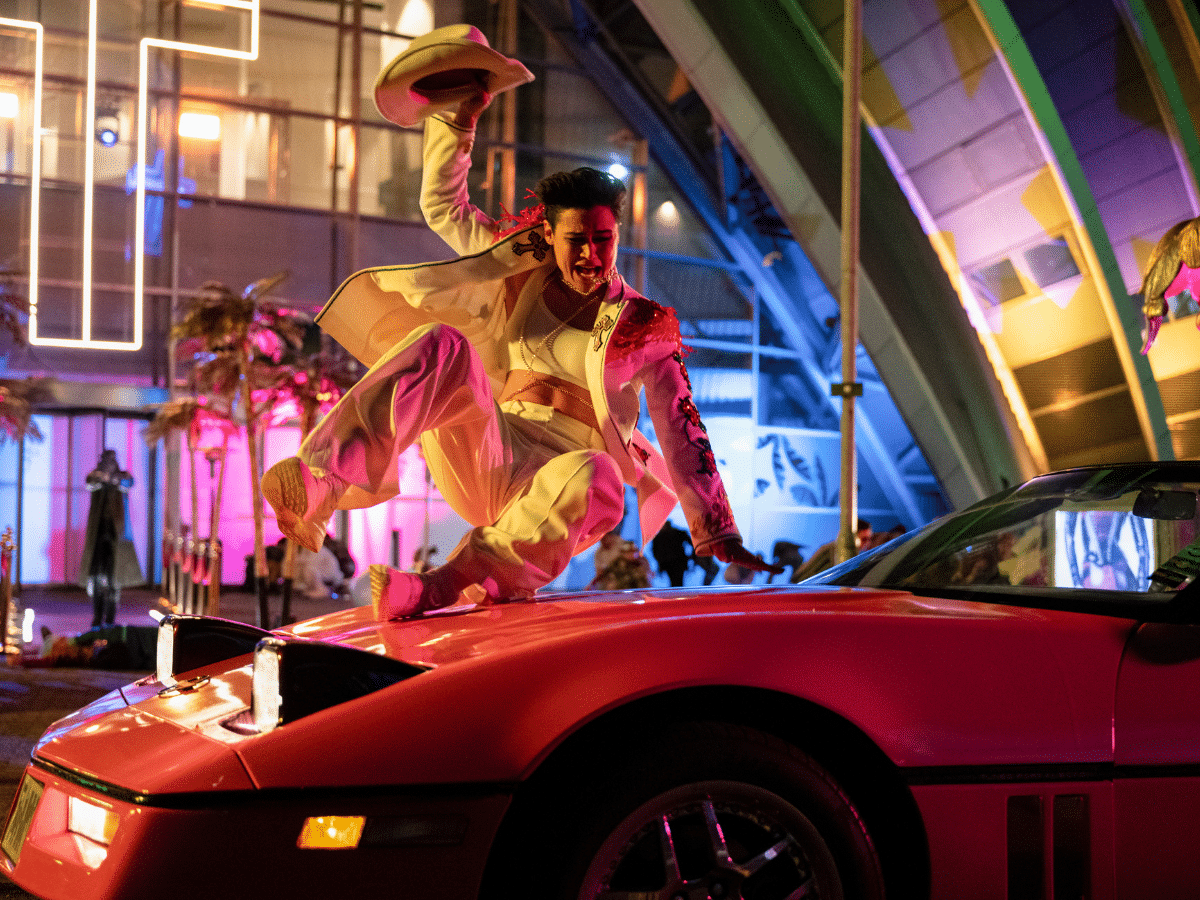
The middle part of the movie is clearly the best. Watching Ben Richards go from one disaster to the next, with the whole country following him, keeps the tension high, and the film balances suspense and dark humour well. Michael Cera also appears with one of the movie’s most fun supporting roles, bringing a nervous unpredictability that fits perfectly with the chaos around him. Wright even includes a small nod to Arnold Schwarzenegger and the 1987 film without making it a big deal, which actually makes the reference work better.
By the time the credits finish, The Running Man turns out to be a solid return to dystopian action, even if it doesn’t totally change the genre. More than anything, the film shows that Glen Powell has become a truly dependable lead actor. The movie might not make a huge impact on sci-fi films, but it’s entertaining, exciting, and self-aware enough to make the whole experience worth watching.
IMDb: 6.4 | Tomatometer: 61% | Popcornmeter: 77% | Average: 67.3
★★★☆☆
Advertisement · Continue Reading Below