




Sports

What Is LIV Golf? Inside Golf’s Most Controversial League

Reading Time: 19 minutes

Share via

Our team of editors and experts thoughtfully chooses each product. If you decide to buy through one of our links, we may earn a commission. Learn more. Want to know how we test products? Click here for more details.

Professional golf is undergoing a slow but unmistakable reinvention, and few forces have changed it as dramatically as LIV Golf. Launched in 2022 as the LIV Golf Invitational Series, it developed into a full team-based league the following year. Former world No. 1 and two-time major winner Greg Norman served as its original chief executive and public face, promising to modernize the sport through shotgun starts, no-cut tournaments, franchise teams and a global schedule. Norman led LIV through its turbulent early years before Scott O’Neil took over as chief executive in 2025.

Saudi Arabia’s Public Investment Fund backs the league, giving LIV Golf the money to offer guaranteed contracts, signing bonuses, and big prize purses. Well-known players such as Phil Mickelson, Dustin Johnson, Bryson DeChambeau, Brooks Koepka, Cameron Smith, and Jon Rahm joined LIV. The PGA Tour suspended these players, which led to legal fights and a split in professional golf. In 2023, there was an agreement to bring the tours and the PIF together, but it did not reunite the sport as planned.

Supporters believe LIV Golf has made tournaments more competitive, rewarding, and exciting. Critics argue that its large spending has changed the sport and helped Saudi Arabia’s image, even though there are human rights concerns. The league is changing again, planning to hold 72-hole events in 2026. However, with players leaving and the PIF ending its support after this season, the future is unclear.

After several seasons, what is LIV Golf, how does it work, and why does it still spark strong opinions?

Phil Mickelson tees off on the 12th hole during the opening round of the 2025 Masters at Augusta National Golf Club. | Image: Mike Blake/Reuters

What is the LIV Golf Tournament?

LIV Golf was created as an alternative to the traditional PGA Tour model, borrowing heavily from arena-style sport. Shotgun starts, permanent team identities, music and live entertainment give its events a faster, festival-like atmosphere. Although tournaments expanded to 72 holes over four days in 2026, LIV retained its no-cut format.

LIV Golf also stands out for how it handles money. Unlike the PGA Tour, which usually does not pay players just for showing up, many LIV players signed contracts that guarantee money and big signing bonuses. In 2026, regular events offer a $20 million prize for individuals and $10 million for teams, and every player who finishes the tournament wins some prize money.

Former LIV Golf CEO Greg Norman argued that the league was designed to coexist with the established tours. “Our model is 100 percent built around the golf ecosystem from the ground up,” Norman told Tucker Carlson in 2022. “We are not trying to destroy the PGA Tour or the European Tour. We are there to work within the ecosystem to show that it’s a big enough space. It’s a multibillion-dollar industry.”

Several seasons later, LIV Golf is no longer simply a challenger concept. It has established teams, international events and major broadcast partners, placing it firmly within the professional golf calendar. The divide remains, but LIV has grown into an established—and still fiercely debated—part of the sport.

Talor Gooch, Dustin Johnson, Paul Casey and Pat Perez celebrate 4Aces GC’s team victory following the final round of the LIV Golf tournament at The International.
Talor Gooch, Dustin Johnson, Paul Casey and Pat Perez celebrate 4Aces GC’s team victory following the final round of the LIV Golf tournament at The International. | Image: Getty Images

LIV Format

LIV Golf’s competitive structure has changed significantly since its launch. Beginning with the 2026 season, regular events grew from 54 to 72 holes and are now played over four rounds, making them more like the format used by traditional golf tours. The original 54-hole format was so important that the league’s name, LIV, stands for 54 in Roman numerals.

Several of its signature features remain. Shotgun starts send groups out from different holes simultaneously, while the no-cut format keeps every golfer in the competition until the final round. The field now consists of 57 players, including 13 four-player teams and five Wild Card entrants.

The scale of that growth becomes clearer when looking back at LIV Golf’s original plans. “There will be a seven-event regular season where players will compete as individuals and teams for both points and prize money,” LIV Golf explained during its launch phase. “At the end of those seven events, an Individual Champion will be crowned based on points accumulated throughout the season. The eighth and final event will be our season-ending Team Championship match play event.”

The starting season of 2022, comprised of eight tournaments, consisted of seven regular tournaments and finished up with the Team Championship. The early plans announced that the final round would include the fourth match-play knockout at Trump National Doral in Miami.

Today, the individual and team competitions continue to run alongside one another at every regular-season event. The golfer with the lowest score after 72 holes wins the individual title, while all four scores from each team count towards its combined total. Players and teams also earn points throughout the first 13 events, leading to an Individual Champion and a standalone Team Championship at the end of the 14-event season.

The modern Team Championship combines two styles of play. Quarterfinal and semifinal matches feature two individual contests and one alternate-shot foursomes contest before the surviving teams switch to stroke play for the final round. LIV’s move to 72 holes shows how far it has travelled from its experimental beginnings, even as its shotgun starts, team element and no-cut structure keep it noticeably different from a conventional professional tour.

Prize Money

One of the biggest differences between LIV Golf and traditional tours is the money involved. In 2026, each regular-season event offers a total purse of US$30 million, with US$20 million for individual players and US$10 million for the 13-team competition.

The winner of the individual competition gets US$4 million, while second place earns US$2.25 million and third place takes home US$1.5 million. Since there is no halfway cut, all 57 golfers receive prize money. Even those at the bottom of the leaderboard usually get at least US$50,000. These prizes are in addition to any private contracts or signing bonuses players may have with LIV Golf or its teams.

Team prize money also reaches well beyond the podium in 2026. The winning team earns US$3 million, second place receives US$1.5 million, and third place collects US$900,000, with the payout gradually falling to US$200,000 for the team finishing 13th. LIV has also introduced a separate US$2.3 million performance pool for players on the top three teams. Including regular events, season-long bonuses and the Team Championship, the league is set to distribute a staggering US$470 million during the 2026 season.

Dustin Johnson takes a tee shot at Sentosa Golf Club during LIV Golf Singapore, with palm trees and Singapore’s skyline in the background.
Dustin Johnson drives from the fifth tee during LIV Golf Singapore at Sentosa Golf Club, with the Singapore skyline stretching beyond the Serapong Course. | Image: Getty Images

LIV Golf Players

LIV Golf’s group of players has grown a lot since its first season. The 2026 lineup has 57 golfers, with 52 players on 13 teams and five full-season Wild Cards. Famous players like major champions, former world No. 1s, and Ryder Cup regulars now compete in its global events.

Jon Rahm, Bryson DeChambeau, Dustin Johnson, Cameron Smith, Sergio García and Joaquín Niemann remain among the league’s biggest names. They are joined by Talor Gooch, Thomas Pieters, Martin Kaymer and Louis Oosthuizen, while David Puig, Josele Ballester, Caleb Surratt, Tom McKibbin and Elvis Smylie represent a younger generation. Some of LIV’s original signings have moved on, but the arrival of emerging talent shows that the league is looking beyond the veterans who defined its launch.

Yet one player remains inseparable from LIV Golf’s controversial beginnings.

Phil Mickelson became the face of LIV’s first major signing wave when he joined in June 2022. Months earlier, biographer Alan Shipnuck had published remarks Mickelson made criticizing the PGA Tour and discussing LIV’s Saudi backers. His arrival for the inaugural London event immediately raised the league’s profile, with his contract widely reported to be worth approximately US$200 million, although that figure has never been officially confirmed.

LIV’s financing by Saudi Arabia’s Public Investment Fund led to accusations that the country was using sport to improve its international reputation, despite concerns about its human rights record. Particular attention focused on the 2018 killing of Washington Post journalist Jamal Khashoggi. A declassified US intelligence assessment concluded that Crown Prince Mohammed bin Salman approved an operation to capture or kill Khashoggi, a finding the Saudi government rejected as false and unacceptable.

“I understand that many people have very strong opinions and many disagree with my decision, and I can empathise, but at this time, this is an opportunity that gives me a chance to have the most balance in my life going forward, and I think this is going to do a lot of good for the game,” Mickelson said at the time.

Several seasons later, LIV Golf’s roster continues to change, but Mickelson’s arrival remains the moment when its debates over money, player freedom, Saudi investment and the future of professional golf fully entered the spotlight.

LIV Golf CEO Greg Norman plays occasional, and social golf
LIV Golf CEO Greg Norman | Image: Reuters

The LIV Golf Tournament Controversy

The debate about LIV Golf has been shaped as much by who pays for it as by how it affects the sport. The league is backed by Saudi Arabia’s Public Investment Fund, the country’s main government investment fund, which has caused human rights groups and critics to call it an example of “sportswashing.” These groups say the big money put into golf is part of a larger plan to improve Saudi Arabia’s image worldwide. On the other hand, supporters of LIV say the league should be judged by the chances, competition, and money it has brought to golf.

The controversy intensified in June 2022 when a group representing nearly 2,500 relatives and survivors of the September 11 attacks issued an open letter to PGA Tour players who declined to join LIV. The letter expressed gratitude for their stance, stating: “Thank you for standing up for decency. Thank you for standing up for the 9/11 Families. Thank you for resisting the Kingdom of Saudi Arabia’s efforts to cleanse its reputation by buying off professional athletes… To those of you who have chosen what is right over blood money from a corrupt, destructive sports entity and its Saudi backers, please continue to stand strong.”

These concerns stem from long-standing allegations of Saudi involvement in the September 11 attacks. Fifteen of the nineteen hijackers were Saudi nationals, and victims’ families have pursued civil claims asserting that Saudi-linked individuals assisted some of the perpetrators. Nevertheless, the 9/11 Commission found no evidence that the Saudi government as an institution, or senior officials individually, funded al-Qaeda, and Saudi Arabia has consistently denied any involvement. Scrutiny intensified after the 2018 killing of Washington Post journalist Jamal Khashoggi. A declassified United States intelligence assessment concluded that Crown Prince Mohammed bin Salman approved an operation to capture or kill Khashoggi, a conclusion the Saudi government has rejected as false and unacceptable.

In golf, the arrival of LIV caused suspensions, fines, lawsuits, and long-lasting conflicts between players and tours. A 2023 agreement between the PGA Tour, DP World Tour, and the Public Investment Fund settled their immediate legal fights but did not bring the professional game together. Although LIV got some limited world-ranking points in 2026, questions remain about its closed player list, no-cut format, and how players can compete. Recent news that the Public Investment Fund might stop funding the league after 2026 has raised doubts about LIV’s ability to keep its large prize money and worldwide schedule with other investors.
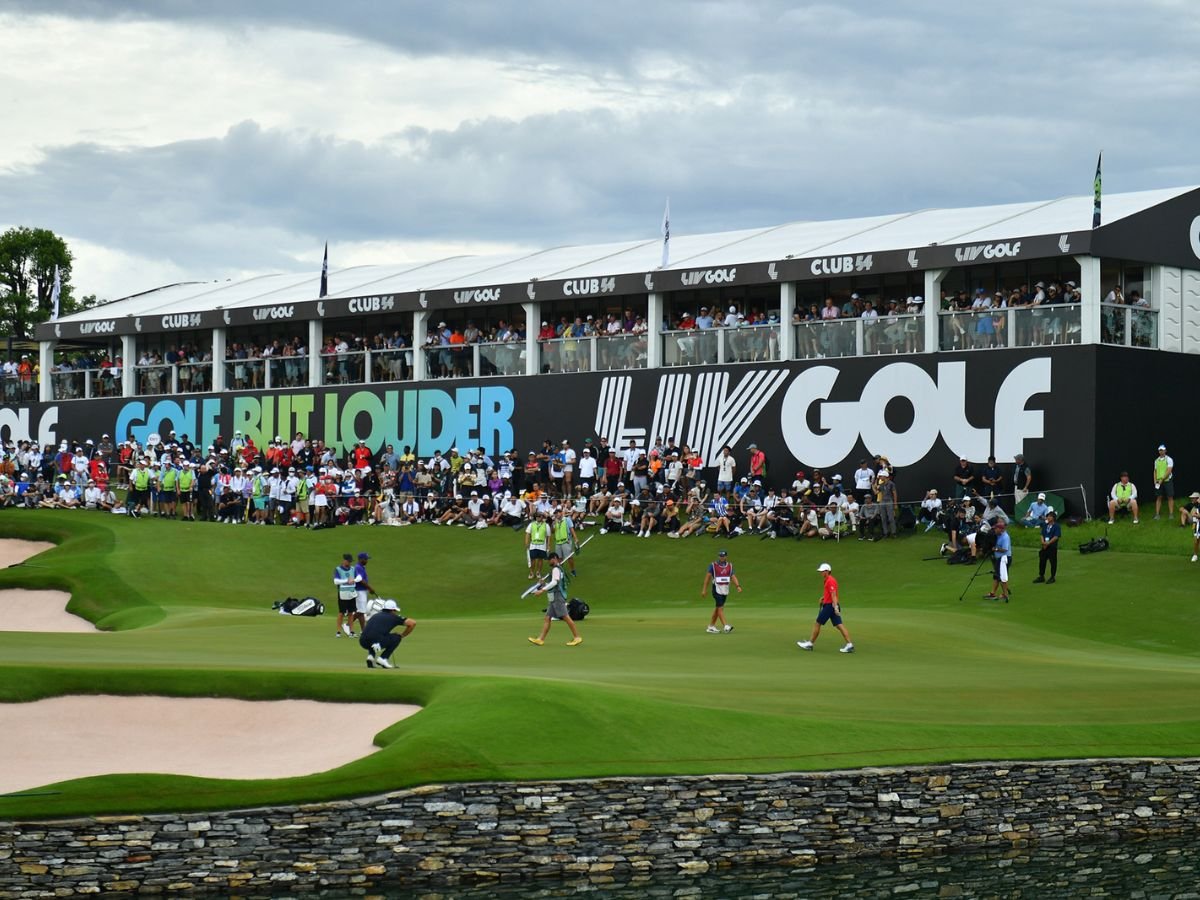
LIV Golf Tournament | Image: Reuters

LIV Golf vs PGA Tour

Greg Norman, who became LIV Golf’s first CEO in October 2021, said the league was created as an alternative to the PGA Tour, not a direct replacement. He explained that its original format was based on careful research about what fans wanted from professional golf, such as shorter broadcasts, shotgun starts, and more team play. LIV’s early schedule was also planned to avoid the four majors and big international team events. Norman was replaced as CEO by Scott O’Neil in 2025, but many of those original ideas are still important to the league.

Tournament

“We decided to take a step back, analyse,” Norman told Tucker Carlson. “We knew our model was where it was. We knew that it was there, it wasn’t going anywhere. The money was in the bank, so we made an adjustment, and we worked around every obstacle that’s been thrown in our path, so we came up with the invitational series.”

The PGA Tour saw LIV as a serious rival. In June 2022, it suspended 17 players who took part in the first London event without permission to play in a tournament that conflicted with PGA Tour events. Players who had already left were also banned from PGA Tour events and the Presidents Cup, and future LIV players were warned they would face the same penalties. LIV called the decision “vindictive,” saying golfers should be free to choose where they play. The conflict also affected business deals, with RBC ending its support of Dustin Johnson and Rocket Mortgage stopping its sponsorship of Bryson DeChambeau.

By 2026, the PGA Tour has a longer FedExCup season with bigger player groups, regular tee times, cuts halfway through, and more ways to qualify based on how players perform. LIV has a shorter global schedule with 57 players, shotgun starts, no cuts, guaranteed team contracts, and both individual and team competitions happening at the same time.

Based on a 2023 agreement that ended the legal fight between the PGA Tour, DP World Tour, and PIF but did not fully bring the sport back together. LIV’s limited world-ranking status means only its top 10 finishers and ties earn points. The majors stay independent, allowing players from both leagues to compete against each other.

Norman was equally critical of sponsors that ended their relationships with players after they joined the Saudi-backed league. He told Fox News that it “blows my mind” that professional golfers were being singled out while major corporations continued conducting business in Saudi Arabia. His argument reflected LIV’s broader position that players were independent contractors and that the PGA Tour was using its commercial influence to prevent a genuine competitor from gaining ground.

“The PGA Tour, I think, has about 27 sponsors who do 40-plus billion dollars worth of annual business on an annual basis in Saudi Arabia,” Norman said. “Why doesn’t the PGA Tour call the CEOs of these businesses, saying that we can’t do business with you because you are doing business with Saudi Arabia? Why are they picking on the professional golfers? The male professional golfers. It is a monopoly. They just want to shut us down in whatever way they can, so they will use whatever leverage point they can.”

His point raises a fair question about the consistency of corporate criticism, but it does not entirely answer the concerns surrounding LIV. A company conducting business in Saudi Arabia is not necessarily comparable to a sporting league financed directly by the country’s sovereign wealth fund. Even so, the attention surrounding LIV suggests that many fans were open to new formats, team golf and greater competition for the PGA Tour. The strongest resistance was often directed at the source of its funding rather than the tournament experience itself.

Norman appeared largely unmoved by the criticism, instead pointing towards a wider vision involving women’s golf, college players, younger generations and community programmes. “I really don’t care. I just love the game so much, and I want to grow the game of golf, and we at LIV see that opportunity not just for the men but for the women,” Norman said. “We at LIV see it for the NCAA and younger generations. We at LIV see it as a pathway to opportunities for the kids to experience a new out there. LIV is the future of golf…because you don’t see what we see in the future. CSR programs, education programs, all the stuff that’s out there that we want to get involved with for golf and growing the game of golf.”

Tiger Woods plays from the par-three 12th tee in the final round of the 2019 Masters, on his way to a fifth green jacket and his first major title since 2008. | Image: Getty Images

Tiger Woods LIV Golf Offer

Signing Tiger Woods would have transformed LIV Golf overnight, and the league was prepared to pay accordingly. Greg Norman initially described the proposed deal as “mind-blowingly enormous” before confirming that Woods was approached prior to Norman becoming CEO in October 2021. “That number was out there before I became CEO,” Norman said. “So, that number’s been out there, yes. Look, Tiger’s a needle mover, right? So, of course you are going to look at the best of the best. So they had originally approached Tiger before I became CEO. So, yes, that number is somewhere in that neighborhood.” The offer was reportedly worth between US$700 million and US$800 million, although its exact terms were never released publicly.

Woods rejected the approach and made it clear that his decision was about more than money. “I disagree with it. I think that what they’ve done is they’ve turned their back on what has allowed them to get to this position,” Woods told ESPN. “I know what the PGA Tour stands for and what we have done and what the tour has given us, the ability to chase after our careers and to earn what we get and the trophies we have been able to play for and the history that has been a part of this game.”

His concerns also extended to LIV’s guaranteed contracts, no-cut tournaments and their possible effect on competitive motivation. Rejecting such an enormous offer became a major symbolic victory for the PGA Tour and showed that LIV’s spending power still had limits. Woods later joined the PGA Tour Policy Board and became involved in discussions with Saudi Arabia’s Public Investment Fund, placing him at the centre of attempts to shape the future of the divided professional game.
LIV Golf Lugo
LIV Golf | Image: LIV Golf

What Happens to LIV Golf After 2026?

LIV Golf’s future after 2026 depends on attracting outside investment, as Saudi Arabia’s Public Investment Fund will stop its financial support after this season, ending a commitment of over US$5 billion since 2022. LIV is looking for US$250 million to US$350 million in new funding and is showing investors a new “LIV 2.0” plan. This plan might cut the number of international events from 14 to 10 and give players a share in the league.

In response, the league has formed an independent board led by chairman Gene Davis. The new leadership is focused on securing long-term financial partners and guiding LIV toward a sustainable commercial model. LIV states that 10 of its 13 teams are on track to become profitable and highlights increased sponsorship interest as a positive sign, though replacing the resources previously provided by the PIF remains a major challenge. The period after 2026 will determine whether LIV Golf can operate as a self-sustaining global tour or will need to scale back its tournament purses, international schedule, and ambitions.

LIV Golf Tour FAQ’s

Still have questions about how LIV Golf works? Don’t worry, we have you covered.

What Is LIV Golf?

LIV Golf is a professional golf league launched in 2022 as an alternative to traditional tours such as the PGA Tour. It combines individual competition with a season-long team format and features many of the sport’s biggest names.

Why Are People Upset About LIV Golf?

Most criticism centres on the league’s financing by Saudi Arabia’s Public Investment Fund, with human rights groups accusing the country of using sport to enhance its international reputation. LIV’s enormous player contracts and the disruption of the traditional golf structure have also divided fans and professionals.

How Does LIV Golf Work in 2026?

LIV Golf events are played over four rounds and 72 holes, using shotgun starts and a no-cut format. The field includes 57 golfers, consisting of 13 four-player teams and five Wild Card competitors, who compete for individual and team prizes simultaneously.

Will LIV Golf Continue After 2026?

LIV Golf has not announced plans to close, but its future remains uncertain as the Public Investment Fund ends its financial backing after the 2026 season. The league is seeking private investment and considering a smaller schedule to secure its future.


Golf
About the Author

Related Articles

StyleLuggage & Essentials

27 Best Luxury Luggage Brands That You Should Know About

Reading Time: 22 minutes

Our team of editors and experts thoughtfully chooses each product. If you decide to buy through one of our links, we may earn a commission. Learn more. Want to know how we test products? Click here for more details.

When you’re travelling, the last thing you want is luggage that can’t handle the journey. That’s why luxury luggage isn’t just about style — it’s about durability, craftsmanship, and smart design that won’t let you down when you need it most. Investing in a top-tier suitcase or carry-on provides peace of mind, knowing your gear will withstand everything from cobblestone streets to overhead bins without issue.

Of course, it also doesn’t hurt that luxury luggage makes a statement. Whether you’re walking through the airport lounge or leaving a hotel lobby, the right bag subtly shows taste and sophistication. From heritage brands making timeless leather trunks to modern innovators creating sleek, minimalist designs, these are the brands that turn travel gear into status symbols.

Here are the 27 best luxury luggage brands you should know about.

Globe-Trotter | Image: Globe-Trotter

1. Globe-Trotter

  • Founder: David Nelken
  • Founded: 1897
  • Origin: England
  • Collections: Centenary, Safari, Original, Metropolis, Leather Crafted, Cotswolds, Pop Colour, Cruise, Caviar, Orient, Centenary 125

If luggage could tell stories, Globe-Trotter’s would now fill libraries. Since 1897, the British brand has been crafting cases by hand, using techniques that have hardly changed in over a century. These aren’t just bags — they’re companions that have travelled with figures like Winston Churchill and Queen Elizabeth II, carrying an undeniable air of history and prestige.

The secret lies in their signature vulcanised fibreboard: lightweight, durable, and unlike anything else on the market. Paired with leather corners and brass fittings, a Globe-Trotter case feels more like a piece of heritage you roll alongside than a modern accessory. It’s classic, understated, and built to turn heads for all the right reasons.

Bric’s | Image: Bric’s

2. Bric’s

  • Founder: Mario Briccola
  • Founded: 1952
  • Origin: Como, Italy
  • Collections: Bellagio, Capri, Firenze, Amalfi, Life, Positano, Porsche Design, Gondola, Riccione

Founded in Como in 1952, Bric’s has become a symbol of understated Italian elegance. Known for combining durable materials with Tuscan leather accents, the brand creates luggage that feels refined without being ostentatious. Collections like the Bellagio blend vintage-inspired style with modern practicality, while Capri and Firenze showcase sleek hard-shells and soft leather options. With its balance of style and function, Bric’s offers travelers a touch of Italian charm that can stand alongside the biggest luxury names.

Rimowa | Image: Rimowa

3. Rimowa

  • Founder: Paul Morszeck
  • Founded: 1898
  • Origin: Cologne, Germany
  • Collections: Original, Classic, Essential, Hybrid, Distinct, Signature, Pilot, Personal

Few luggage brands have achieved icon status quite like Rimowa. Founded in Cologne in 1898, the German house became world-famous for its grooved aluminium suitcases, which remain a symbol of modern travel to this day. The design is instantly recognizable — sleek, strong, and engineered to survive just about anything — making Rimowa a favourite for everyone from business travellers to fashion insiders.

What distinguishes Rimowa is its combination of engineering precision and classic style. Collections like the Original and Classic showcase the brand’s heritage with aluminum exteriors that develop character over time, while the Essential line offers lightweight polycarbonate for frequent travellers seeking durability without extra weight. From collaborative releases with Dior and Off-White to its popular Pilot Case, Rimowa keeps evolving while remaining true to its roots of craftsmanship and innovation.

Montblanc | Image: Montblanc

4. Montblanc

  • Founders: Claus-Johannes Voss, Alfred Nehemias, August Eberstein
  • Founded: 1906
  • Origin: Hamburg, Germany
  • Collections: #MY4810, Extreme 3.0, Sartorial, Meisterstück Soft Grain

Montblanc is best known for its fountain pens and leather goods, but it also has a presence in luxury travel, offering luggage that combines German craftsmanship with modern features. Collections like #MY4810 feature sleek polycarbonate shells with leather trims for a stylish, contemporary look. The Extreme 3.0 and Sartorial lines showcase Montblanc’s expertise in leather with sophisticated travel bags. Montblanc luggage appeals to those who prefer subtle luxury, making it ideal for airport lounges or business trips.

Victorinox | Image: Victorinox

5. Victorinox

  • Founder: Karl Elsener
  • Founded: 1884
  • Origin: Ibach, Switzerland
  • Collections: Spectra, Lexicon, Werks Traveler, Airox, Crosslight

Best known for inventing the Swiss Army Knife, Victorinox carries that same spirit of innovation and reliability to its luggage. Founded in 1884 in Ibach, Switzerland, the brand has established a reputation for precision and durability, with collections like Spectra and Lexicon offering sleek hardshells, while lighter lines such as Airox focus on portability without sacrificing strength. The luggage doesn’t shout luxury, but it feels like it — clean design, clever interiors, and quality materials that withstand trip after trip, making Victorinox a trusted companion for travellers who value Swiss-engineered practicality wrapped in understated style.

FPM – Fabbrica Pelletterie Milano | Image: Fabbrica Pelletterie Milano

6. FPM – Fabbrica Pelletterie Milano

  • Founder: Franco Moschino (revived under Matteo Lorio & Emanuele Magenta)
  • Founded: 1946
  • Origin: Milan, Italy
  • Collections: Bank, Bank Light, Spinner, Bank Zip Deluxe

Founded in 1946 and rethought for modern travellers, FPM Milano is where Italian craftsmanship meets industrial design. Best known for its aluminium Bank collection — featuring bold corners, heavy-duty locks, and a vault-like presence — the brand combines rugged security with sophisticated style. For lighter options, the Bank Light and Bank Zip Deluxe offer the same distinctive look in polycarbonate and leather-trimmed versions, making FPM Milano a top choice for those who want their luggage to feel both durable and unmistakably Italian.

TUMI | Image: TUMI

7. TUMI

  • Founder: Charlie Clifford
  • Founded: 1975
  • Origin: United States
  • Collections: Alpha Bravo, Alpha 3, Harrison, Arrivé, Tegra-Lite, Voyageur

TUMI has established its reputation as the premier brand for business travelers, blending rugged durability with subtle design. Founded in 1975 by Charlie Clifford, the American brand quickly gained favor among frequent flyers through its smart functionality and straightforward aesthetic. From ballistic nylon softside cases in the Alpha collections to the sleek hardshells of Tegra-Lite, each piece is designed to endure the rigours of constant travel.

Beyond durability, TUMI excels at practical innovation. Thoughtful touches like Add-a-Bag systems, built-in garment compartments, and tracking technology make their luggage as functional as it is stylish. Whether it’s the professional polish of Arrivé or the versatile appeal of Voyageur, TUMI consistently delivers gear for travellers who seek reliability and modern sophistication alike.

Samsonite | Image: Samsonite

8. Samsonite

  • Founder: Jesse Shwayder
  • Founded: 1910
  • Origin: Denver, Colorado, United States
  • Collections: Black Label, Proxis, S’Cure, Cosmolite, Evoa, Lite-Box

This brand has over a century of experience in designing luggage that balances durability, function, and accessibility. Founded in 1910 in Denver, Samsonite has grown into one of the most recognised names in global travel, earning trust from generations of travellers. Its premium collections like Black Label, Proxis, and Cosmolite demonstrate how the brand has evolved from a sturdy suitcase manufacturer into a player in the luxury market, offering sleek materials and refined finishes alongside its reliable core.

What makes Samsonite stand out is its versatility. Whether it’s tough hardshell spinners built to withstand long-haul flights or lightweight options like the Lite-Box, the brand caters to every type of traveller. While it might not have the heritage glamour of some European fashion houses, Samsonite has earned its reputation through something equally valuable: reliability. For those seeking refined practicality backed by a century of innovation, it remains one of the safest choices in the luggage world.

Smythson | Image: Smythson

9. Smythson

  • Founder: Frank Smythson
  • Founded: 1887
  • Origin: London, England
  • Collections: Panama, Ludlow, Burlington, Portobello

Renowned for its iconic notebooks and exquisite leather craftsmanship, Smythson extends the same understated elegance to its travel collections. With lines like Panama and Ludlow, the brand emphasizes timeless design, supple leathers, and subtle details that exude sophistication. Founded in 1887 on London’s Bond Street, Smythson luggage prioritizes quiet refinement over flashy statements, crafted to age gracefully and accompany you on a lifetime of travels.

Mulberry | Image: Mulberry

10. Mulberry

  • Founder: Roger Saul
  • Founded: 1971
  • Origin: Somerset, England
  • Collections: Bayswater, Clipper, Belgrave, Antony, City

Mulberry has always been about blending classic British heritage with a modern edge, and its luggage carries that same spirit. Founded in 1971 in Somerset, the brand established its reputation on timeless leather craftsmanship, offering pieces that balance durability and elegance equally. Collections like the Bayswater and Clipper showcase Mulberry’s iconic design language, while newer lines such as Belgrave and City introduce a contemporary twist to travel essentials. For travellers seeking luxury with a distinctly British flair, Mulberry provides bags that are both practical and effortlessly stylish.

Bottega Venta | Image: Bottega Venta

11. Bottega Veneta

  • Founders: Michele Taddei and Renzo Zengiaro
  • Founded: 1966
  • Origin: Vicenza, Italy
  • Collections: Intrecciato, Cassette, Andiamo, Arco, Sardine

Famous for its signature Intrecciato woven leather, this Italian brand has built a reputation on craftsmanship that prioritizes subtlety over logos. Since 1966, Bottega Veneta has embodied the concept of “quiet luxury,” crafting travel pieces that stand out through artisanal details and timeless design, rather than loud branding. Collections like Andiamo and Arco are perfect examples, offering refined carry-ons and travel bags that feel both modern and enduring. For travellers who prefer elegance that whispers rather than shouts, Bottega Veneta remains a flawless choice.

Briggs & Riley | Image: Briggs & Riley

12. Briggs & Riley

  • Founder: Richard Krulik
  • Founded: 1993
  • Origin: United States
  • Collections: Baseline, Sympatico, Torq, Rhapsody, ZDX, Domestic Carry-On

Briggs & Riley has gained a loyal following for one simple reason: their luggage simply doesn’t quit. Since launching in 1993, the American brand has concentrated on creating travel gear that’s durable, practical, and designed with the frequent flyer in mind. Their greatest bragging right is the “Simple as That” lifetime guarantee, which even covers airline damage — a promise most other brands won’t offer. For anyone who travels often, that peace of mind is invaluable.

The lineup includes the expandable Baseline series and the sleek hardshell Sympatico, along with softside favourites like Rhapsody and the durable Torq. Each piece features small details that make a big difference, such as easy-access compartments, smooth wheels, or clever expansion systems. Briggs & Riley might lack the flash of some European brands, but for reliability and smart design, it’s a brand travellers trust repeatedly.

Gucci | Image: Gucci

13. Gucci

  • Founder: Guccio Gucci
  • Founded: 1921
  • Origin: Florence, Italy
  • Collections: Savoy, GG Supreme, Ophidia, Off the Grid, Valigeria

When it comes to making a statement, few brands do it quite like Gucci. Founded in Florence in 1921, the Italian fashion house has long been associated with bold design and unmistakable luxury — and its luggage is no exception. From the heritage-inspired Savoy line to the eco-conscious Off the Grid collection, Gucci travel gear combines fashion with function in a way that stands out wherever you go.

Signature details like the iconic GG monogram canvas, Web stripes, and leather trims give Gucci luggage an instantly recognizable edge. Whether it’s a carry-on, duffel, or sleek trolley, these pieces aren’t just about utility — they’re about making a statement. For travellers who see the airport as their runway, Gucci offers the perfect balance of luxury and personality.

Prada | Image: Prada

14. Prada

  • Founder: Mario Prada
  • Founded: 1913
  • Origin: Milan, Italy
  • Collections: Tessuto, Saffiano, Re-Nylon, America’s Cup Travel, Galleria

Prada has long been a leader in Italian fashion, and its travel pieces embody the same mix of innovation and luxury that characterizes the brand. Founded in Milan in 1913, Prada built its reputation on fine leather craftsmanship before adopting more modern materials like Tessuto nylon, which has become one of its most recognizable signatures. Today, that lightweight and durable nylon continues to influence collections like Re-Nylon, blending practicality with the brand’s trendsetting style.

From the minimalist elegance of Saffiano leather trolleys to bold collaborations, such as the America’s Cup-inspired travel line, Prada’s luggage is crafted for those who want their gear to feel as fashion-forward as the clothes in their suitcase. It’s luxury with a modern edge — sleek, functional, and instantly recognizable.

Thom Browne | Image: Thom Browne

15. Thom Browne

  • Founder: Thom Browne
  • Founded: 2001
  • Origin: New York, United States
  • Collections: Four-Bar Travel, Pebble-Grain Leather Trolleys, Hector Bags, Stripe-Detail Duffels

Thom Browne brings his signature avant-garde tailoring and playful design language into the world of travel, offering luggage that’s as bold as it is luxurious. Known for clean lines, meticulous craftsmanship, and his iconic four-bar stripe motif, the brand’s travel pieces range from pebble-grain leather trolleys to stripe-detail duffels and even the whimsical Hector dog-shaped bags. Each item strikes a balance between functionality and unmistakable style, ensuring you stand out in an airport crowd. For fashion-conscious travellers who view luggage as an extension of their wardrobe, Thom Browne offers pieces that make every trip feel like a runway.

Hartmann | Image: Hartmann

16. Hartmann

  • Founder: Joseph S. Hartmann
  • Founded: 1877
  • Origin: Milwaukee, Wisconsin, United States
  • Collections: Tweed Legend, Metropolitan 2, Ratio Classic Deluxe, Innovaire, 7R Master

With roots dating back to 1877, this American heritage brand has long been associated with refined travel. Hartmann earned its reputation through distinctive designs, such as the iconic Tweed collection, which became a signature look for generations of travellers who sought durability with style. Today, lines such as Metropolitan 2 and 7R Master carry that legacy forward with updated materials and modern functionality.

What makes Hartmann stand out is its ability to blend old-world charm with modern practicality. Every piece feels like it comes from a long tradition of classic travel, yet it’s designed to meet the needs of today’s jet-setters. For those who value tradition without sacrificing modern convenience, Hartmann offers a timeless take on luxury luggage.

Brunello Cucinelli | Image: Brunello Cucinelli

17. Brunello Cucinelli

  • Founder: Brunello Cucinelli
  • Founded: 1978
  • Origin: Solomeo, Italy
  • Collections: Leather Trolleys, Canvas & Leather Duffels, Weekenders, Backpacks

Known as the “King of Cashmere,” Brunello Cucinelli extends his philosophy of quiet luxury into travel with luggage and bags that embody the same craftsmanship and elegance as the brand’s clothing. The travel line features leather trolleys, weekenders, and canvas-and-leather duffels, all crafted with earthy tones and subtle finishes that mirror the brand’s refined aesthetic. Instead of loud logos, these pieces emphasize artisanal detail and timeless appeal, making them ideal for travellers who want every journey to feel like an extension of la dolce vita.

Saint Laurent | Image: Saint Laurent

18. Saint Laurent

  • Founder: Yves Saint Laurent & Pierre Bergé
  • Founded: 1961
  • Origin: Paris, France
  • Collections: Rive Droite, Monogram Luggage, Duffels, City Backpacks

Saint Laurent has always embodied sharp style and effortless cool, and its travel line is no different. Known for its clean silhouettes, rich leather, and signature monogram, the brand’s luggage and bags reflect the same rock ’n’ roll edge that defines its fashion. From sleek duffels to minimalist trolleys and city backpacks, each piece feels like an extension of Saint Laurent’s bold, Parisian vibe. This isn’t luggage meant to blend in — it’s for travellers who see the airport as an extension of the runway.

Valextra | Image: Valextra

19. Valextra

  • Founder: Giovanni Fontana
  • Founded: 1937
  • Origin: Milan, Italy
  • Collection Models: Avietta, Boston Bag, Tric Trac, Passport Cases, Travel Trolleys

Often called the “Hermès of Italy,” Valextra has been creating minimalist leather goods since 1937, with travel pieces that emphasize sleek lines, flawless detailing, and understated luxury. From the structured Avietta briefcase to Boston bags and refined leather trolleys, each item avoids loud logos in favour of precise craftsmanship and high-quality materials. Subtle, timeless, and quietly elegant, Valextra is made for travellers who believe that true luxury is all in the details.

Mark Cross | Image: Mark Cross

20. Mark Cross

  • Founder: Henry W. Cross
  • Founded: 1845
  • Origin: Boston, United States
  • Collection Models: Grace Box, Madeline, Benchley, Backpacks, Duffels

As one of America’s oldest luxury leather houses, Mark Cross has been creating travel goods since 1845, blending heritage with timeless elegance. The brand gained global recognition when Grace Kelly carried the Grace Box Bag in Hitchcock’s Rear Window, and that same finesse continues today in its travel collection. With lines like Madeline and Benchley, along with sleek backpacks and duffels, Mark Cross luggage combines practicality with sophisticated design. Each item is rooted in American heritage yet finished with a cosmopolitan touch, making it perfect for travellers who seek history, craftsmanship, and understated luxury all in one.

Ermenegildo Zegna | Image: Ermenegildo Zegna

21. Ermenegildo Zegna

  • Founder: Ermenegildo Zegna
  • Founded: 1910
  • Origin: Trivero, Italy
  • Collection Models: Pelle Tessuta, Triple Stitch, Leather Trolleys, Weekenders, Backpacks

Best known for its world-class tailoring and fine fabrics, Ermenegildo Zegna extends the same craftsmanship to its travel line. Since 1910, the Italian house has been refining the art of understated luxury, with luggage and bags that combine masculine elegance with practical design. The brand’s signature Pelle Tessuta — a handwoven leather technique — transforms weekenders and trolleys into works of art, while sleek leather duffels and minimalist backpacks complete the collection. Designed for modern gentlemen who want luggage as refined as their wardrobe, Zegna’s travel pieces embody quiet confidence and timeless style.

Arlo Skye | Image: Arlo Skye

22. Arlo Skye

  • Founders: Mayur Bhatnagar & Mina Yoo
  • Founded: 2016
  • Origin: New York, United States
  • Collections: The Frame, The Zipper, The Carry-On, The Check-In

Minimalist design combines with modern travel innovation in this young New York label, founded in 2016 by Mayur Bhatnagar and former TUMI executive Mina Yoo. Instead of relying on heritage, the brand has built its reputation on clean, understated cases like the aluminum Frame and polycarbonate Zipper, which have already attracted a loyal following among travellers who value sleek style and solid durability.

What truly makes the brand stand out are its thoughtful extras: built-in USB charging ports, antimicrobial linings, and whisper-quiet wheels that enhance every trip. Designed for the traveller who values subtle design combined with smart functionality, Arlo Skye has established itself as a fresh alternative to the bigger legacy names in luxury luggage.

Monos | Image: Monos

23. Monos

  • Founders: Victor Tam, Hubert Chan, Daniel Shin, and Robin Yuen
  • Founded: 2018
  • Origin: Vancouver, Canada
  • Collections: Carry-On, Check-In, Hybrid, Metro Duffel, Metro Backpack

Simplicity and quality are at Monos’s core, a Canadian brand that has rapidly become a favourite among modern travellers since its launch in 2018. Featuring clean lines, muted colour palettes, and a focus on sustainability, Monos has established a reputation as the minimalist’s choice for luxury luggage. Its Carry-On and Check-In suitcases are crafted from aerospace-grade polycarbonate, while the Hybrid line combines aluminium frames with poly shells for added durability.

Beyond durability, Monos emphasizes thoughtful details that enhance the travel experience. Interior compartments are smartly designed, the wheels roll quietly, and the finishes feel premium without being flashy. Add accessories like the Metro Duffel and Metro Backpack, and Monos provides a complete ecosystem for travellers seeking luggage that combines function, style, and conscience. It’s a young brand, but one already redefining what luxury luggage means for a new generation.

Ghurka | Image: Ghurka

24. Ghurka

  • Founder: Marley Hodgson
  • Founded: 1975
  • Origin: Norwalk, Connecticut, United States
  • Collection Models: Cavalier, Traveller No. 315, Examiner, Leather Trolleys, Marley Hodgson Originals

Since 1975, Ghurka has been making timeless travel bags inspired by vintage military gear, combining rugged practicality with refined leather craftsmanship. Known for rich, full-grain leathers and artisanal details, the brand’s signature pieces like the Cavalier duffel and Examiner carry-on are designed to age gracefully, gaining character with every trip. Built to last decades rather than seasons, Ghurka’s luggage embodies understated Canadian luxury for travellers who want pieces that tell a story and stand the test of time.

25. Steamline Luggage

  • Founder: Sara Banks
  • Founded: 2005
  • Origin: Dublin, Ireland
  • Collection Models: The Entrepreneur, The Diplomat, The Architect, The Starlet, The Editor, The Correspondent, The Botanist

SteamLine Luggage was created to bring back the romance of travel, with cases that look like they came straight from a classic film but are designed for modern use. The brand’s collections range from the bold and playful Starlet to the sleek and practical Architect, each crafted with hand-finished touches, leather accents, and vintage charm. More than just bags, they feel like stylish companions that make the journey as exciting as the destination.

Louis Vuitton | Image: Louis Vuitton

26. Louis Vuitton

  • Founder: Louis Vuitton
  • Founded: 1854
  • Origin: Paris, France
  • Collection Models: Horizon, Keepall, Pegase, Bisten, Alzer, Steamer

Few names are as closely linked to the story of luxury travel as Louis Vuitton. Founded in Paris in 1854, the house started with handcrafted trunks and set the standard for elegance and practicality in luggage. From its earliest days outfitting travellers for steamships and train journeys, the brand has stayed at the heart of how we think about stylish, durable travel gear.

Its lineup today demonstrates why the name still holds such significance. The Keepall has become a must-have for travellers seeking a versatile duffel, while heritage trunks like the Bisten and Alzer remain highly sought after by collectors. Even the contemporary Horizon trolleys, designed by Marc Newson, continue the tradition of innovation and craftsmanship. With the instantly recognizable monogram canvas and premium finishes, Louis Vuitton luggage remains more than just functional — it’s a symbol of style, heritage, and travel itself.

Sterling Pacific | Image: Sterling Pacific

27. Sterling Pacific

  • Founder: Ryan Roark
  • Founded: 2018
  • Origin: Reno, Nevada, USA
  • Collection Models: Cabin Travel Case 35L, Check-In Travel Case 80L

Sterling Pacific is all about rugged durability combined with refined style, making luggage from full aluminum shells accented by Italian leather handles and riveted corners designed to last a lifetime. Designed for serious travellers who appreciate strength and presence, these cases blend aviation-grade construction with a bold, industrial look that feels both contemporary and timeless.

Beyond looks, the brand’s philosophy is centered on creating heirloom-quality pieces—luggage designed to withstand countless journeys and still retain character after years of travel. It’s this blend of utility and heritage that makes Sterling Pacific a growing favourite among those who view their luggage as more than just storage, but as a lifelong companion on the road.

General FAQ’s

What Makes Luxury Luggage Worth the Price?

Luxury luggage is known for its craftsmanship, materials, and design. Brands use premium leathers, durable aluminium, or high-quality polycarbonate, ensuring the bags last for years. You’re also paying for the brand’s legacy, attention to detail, and the kind of status symbol that turns heads in any airport lounge.

Which Luxury Luggage Brand Is Best for Frequent Flyers?

For those constantly on the move, TUMI and Rimowa are top choices. TUMI offers functionality with its tech-forward designs and durability, while Rimowa’s iconic grooved aluminium cases are lightweight, durable, and built to endure heavy travel. Both blend practicality with elegance, making them trusted companions for frequent flyers.

Are There Luxury Luggage Options Beyond the Usual Designer Brands?

Absolutely. While Louis Vuitton, Gucci, and Prada receive much of the spotlight, niche brands like Globe-Trotter, Arlo Skye, and Sterling Pacific offer unique designs with rich stories. These labels often focus on heritage craftsmanship or bold, modern aesthetics, providing travellers with something truly distinctive.

About the Author
arrow_drop_up