




Tashi Duncan, played by Zendaya, and Patrick Zweig, played by Josh O'Connor, in 'Challengers'
Movies & TV Shows

Zendaya Gets Caught in a Heated Love Triangle in Challengers Trailer

Reading Time: 5 minutes

Share via
Our team of editors and experts thoughtfully chooses each product. If you decide to buy through one of our links, we may earn a commission. Learn more. Want to know how we test products? Click here for more details.

Tennis has never looked this messy. The first trailer for ‘Challengers’ has officially arrived, and it already looks like one of the most emotionally charged movies of the year. Starring Zendaya alongside Mike Faist and Josh O’Connor, the film throws together professional tennis, romance, jealousy, and years of unresolved tension into a very heated love triangle. The trailer wastes no time showing off the chemistry among the three leads, mixing intense match sequences with awkward encounters, flirtation, and plenty of emotional chaos off the court.

‘Behind the movie is Luca Guadagnino, the director known for films like ‘Call Me by Your Name’, who appears to be bringing that same stylish and intimate energy into the sports drama world. The script is by first-time screenwriter Justin Kuritzkes, while MGM surprised fans by releasing the trailer earlier than many expected. From the footage alone, ‘Challengers’ already appears less like a traditional tennis film and more like a relationship drama in which every match becomes personal.

‘Challengers’ Official Trailer

From its opening moments, the first trailer for Challengers signals that this is no ordinary sport film. Under the direction of Luca Guadagnino, the preview pulses with obsession, desire, rivalry and the intricate mesh of emotional games played by its three leads. With Rihanna’s “S&M” thumping in the background, the trailer ricochets between electrifying tennis showdowns, shadowy midnight talks and scenes so charged with stress you can almost feel them crackle.

Zendaya brings Tashi Duncan to life, a teenage tennis prodigy who captivates everyone around her. Early in the trailer, a character predicts, “Tashi Duncan, she’s gonna turn her whole family into millionaires, she’ll have a fashion line, a foundation,” as scenes show Tashi dominating the tennis court and stealing the spotlight at glamorous parties. Her natural talent and confidence make her impossible to ignore.

The tangled bond between Art and Patrick, played by Mike Faist and Josh O’Connor, quickly acts as the emotional heartbeat of the trailer. In one scene, Art approaches Tashi after a match, awestruck: “You were incredible today. I mean, it was not even like tennis. It was an entirely different game.” Soon, the mood turns to fun flirtation and uneasy laughter as Patrick teases Tashi to join them, and she fires back, “Do you want me to come tuck you in?’’ The trio’s chemistry is volatile and unpredictable, hinting that a disaster is just around the corner.

The trailer then hints at a darker twist: Tashi’s promising career is derailed by a devastating leg injury. Years pass, and she is now married to Art, mentoring him as his coach, when Patrick suddenly resurfaces before an important tournament. The once close friendship between the men has unravelled, leaving Tashi caught in the crossfire. As the trailer closes, she muses, “You know what tennis is? It’s a relationship,” a line that seems to capture the very soul of the film.

Tashi Duncan, played by Zendaya, and Patrick Zweig, played by Josh O'Connor, in 'Challengers'
Tashi Duncan, played by Zendaya, and Patrick Zweig, played by Josh O’Connor, in ‘Challengers’ | Image: Amazon MGM Studios

‘Challengers’ Cast

Much of the early excitement surrounding ‘Challengers’ stems from its cast. Zendaya steps into the movie after huge successes with Dune and Euphoria, while Josh O’Connor and Mike Faist continue building momentum as two of Hollywood’s rising stars. Even before the trailer dropped, the movie already had people talking online. What really makes the casting work, though, is how natural the chemistry feels between all three leads as the relationships become more competitive, emotional, and messy.

At the center of the story is Tashi Duncan, played by Zendaya, a former tennis prodigy whose life becomes closely tied to two best friends competing both on and off the court. Mike Faist plays Art Donaldson, while Josh O’Connor takes on the role of Patrick Zweig. According to the movie’s official description, the story follows “three players who knew each other when they were teenagers as they compete in a tennis tournament to be the world-famous grand slam winner and reignite old rivalries on and off the court.” That complicated relationship among the three characters quickly becomes the emotional center of the movie as jealousy, ambition, attraction, and old history begin to collide.

The confirmed cast currently includes:

  • Tashi Duncan — played by Zendaya
  • Art Donaldson — played by Mike Faist
  • Patrick Zweig — played by Josh O’Connor
  • Tashi’s Mother — played by Nada Despotovich
  • Tashi’s Father — played by Naheem Garcia
  • Helen — played by A.J. Lister
  • Lily Donaldson — played by Hailey Gates

As mentioned earlier, the movie is directed by Luca Guadagnino, the filmmaker behind ‘Call Me by Your Name’, whose emotionally intimate style seems to fit the story perfectly. The screenplay is by first-time writer Justin Kuritzkes, while the soundtrack is by Trent Reznor and Atticus Ross. Early footage already suggests that Challengers cares far more about

Tashi Duncan, played by Zendaya, and Patrick Zweig, played by Josh O'Connor, in 'Challengers'
Tashi Duncan, played by Zendaya, and Patrick Zweig, played by Josh O’Connor, in ‘Challengers’ | Image: Amazon MGM Studios

‘Challengers’ Release Date

‘Challengers’ will come out in theatres on April 26, 2024, after getting a lot of online speculation from its first trailers and the strong connection between its three main actors. With Zendaya’s star appeal, the film’s cool style, and the buzz about its love triangle story, the movie quickly became one of the most talked-about releases this spring.

This release marked another big step in Zendaya’s rising film career, following her roles in Dune: Part Two and Spider-Man: No Way Home. With Luca Guadagnino’s creative direction and an exciting soundtrack by Trent Reznor and Atticus Ross, Challengers arrived with much more attention than a typical sports drama.

'Challengers' Film Poster
‘Challengers’ | Image: Amazon MGM Studios
Trailers
About the Author

Related Articles

Smartphones

How Apple Created The Thinnest ‘iPhone Air’ In Its Lineup

Reading Time: 7 minutes

Our team of editors and experts thoughtfully chooses each product. If you decide to buy through one of our links, we may earn a commission. Learn more. Want to know how we test products? Click here for more details.

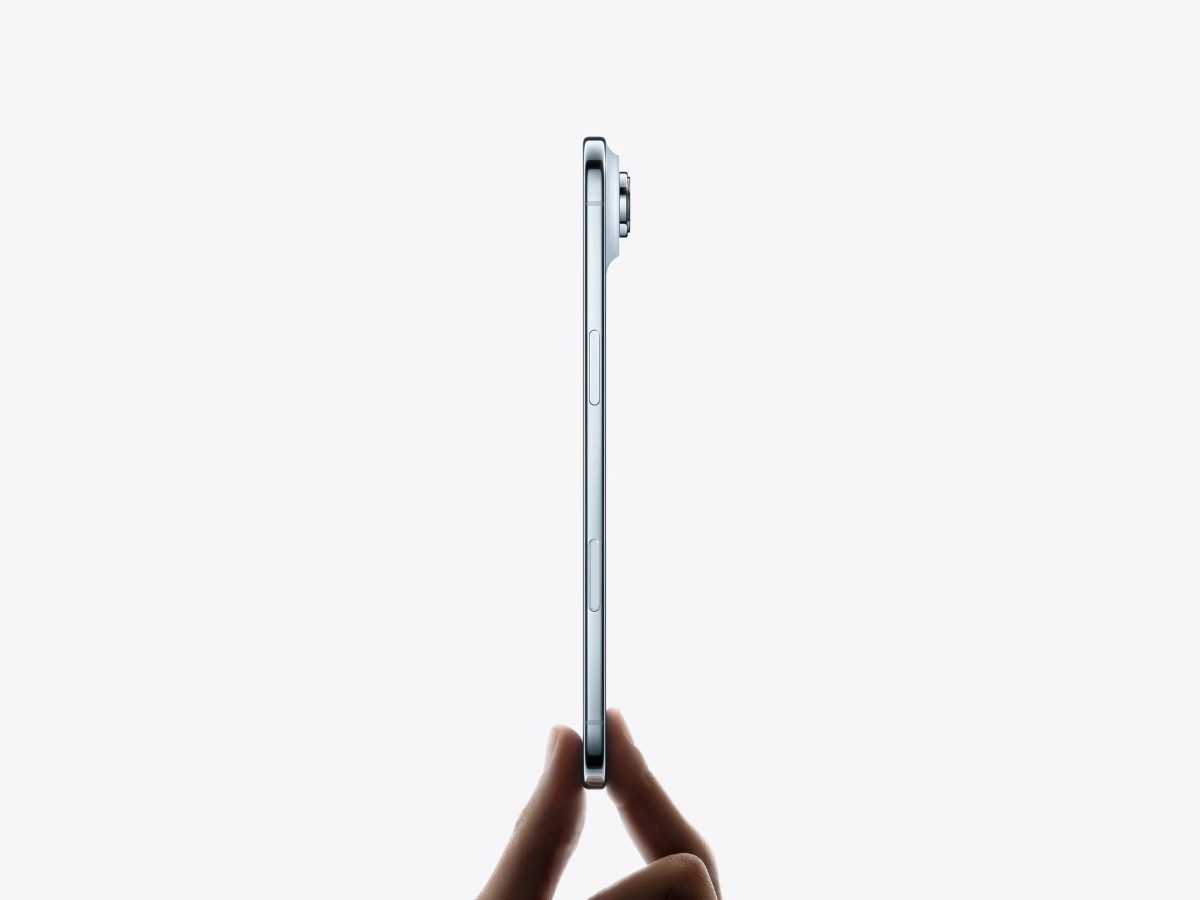
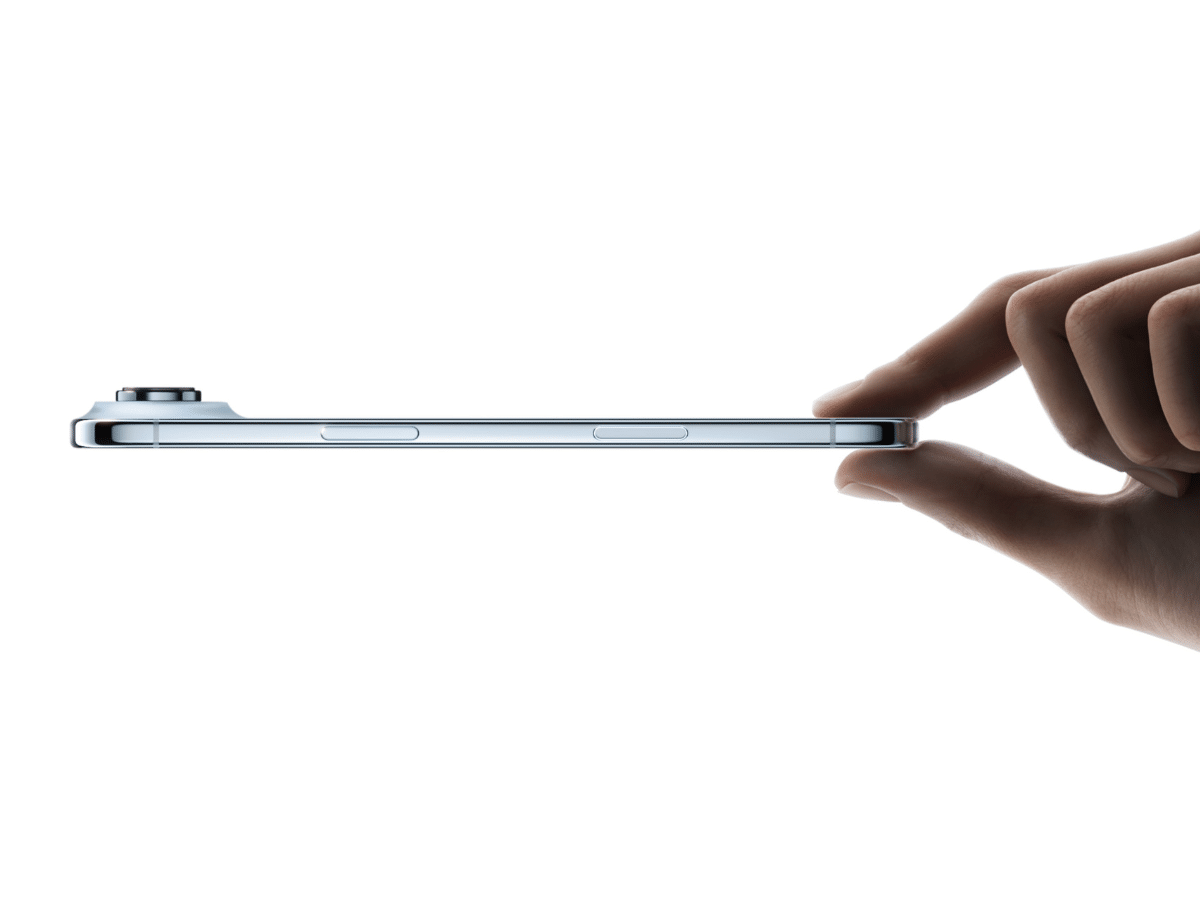
Apple has been flirting with ultra-thin iPhones for years, but the iPhone Air is the first time the company has truly delivered on that promise in a meaningful way. At just 5.6mm thick, powered by the new A19 Pro chip, and positioned between the iPhone 17 and 17 Pro, the Air feels less like a mere variant and more like Apple creating a whole new segment in the lineup. It’s light, sleek, and very deliberate in how it sets itself apart from the rest of the family.

Of course, comparisons didn’t take long to surface. Some people immediately wondered if the Air was now the thinnest phone in the world — and the answer is still no. That record still belongs to Huawei’s tri-fold Mate XT Ultimate, which achieves an almost unbelievable 3.6mm thickness when fully unfolded. However, that device benefits from spreading components across multiple panels. Apple had to design within the constraints of a single, rigid slab of glass and metal.

That challenge is what makes the iPhone Air intriguing. To hit this thinness without sacrificing performance, Apple had to rethink parts of the internal layout that haven’t changed in years. Components were reshaped, shifted, or merged; material choices became more strategic; and some long-standing design beliefs were completely reevaluated.

Naturally, the world reacted as it always does — half calling it a bold glimpse at where smartphones are headed, the other half insisting they made the right choice by sticking with Samsung this time. No surprise there.

What’s worth exploring is how Apple actually engineered this. Building a 5.6mm flagship isn’t just a matter of ‘shrinking it and shipping it.’ There’s real engineering behind this silhouette — and a few clever sacrifices that made it possible.

Here’s what went into creating the thinnest iPhone Apple has ever released.

iPhone Air | Image: Apple

The All-New Redesigned iPhone

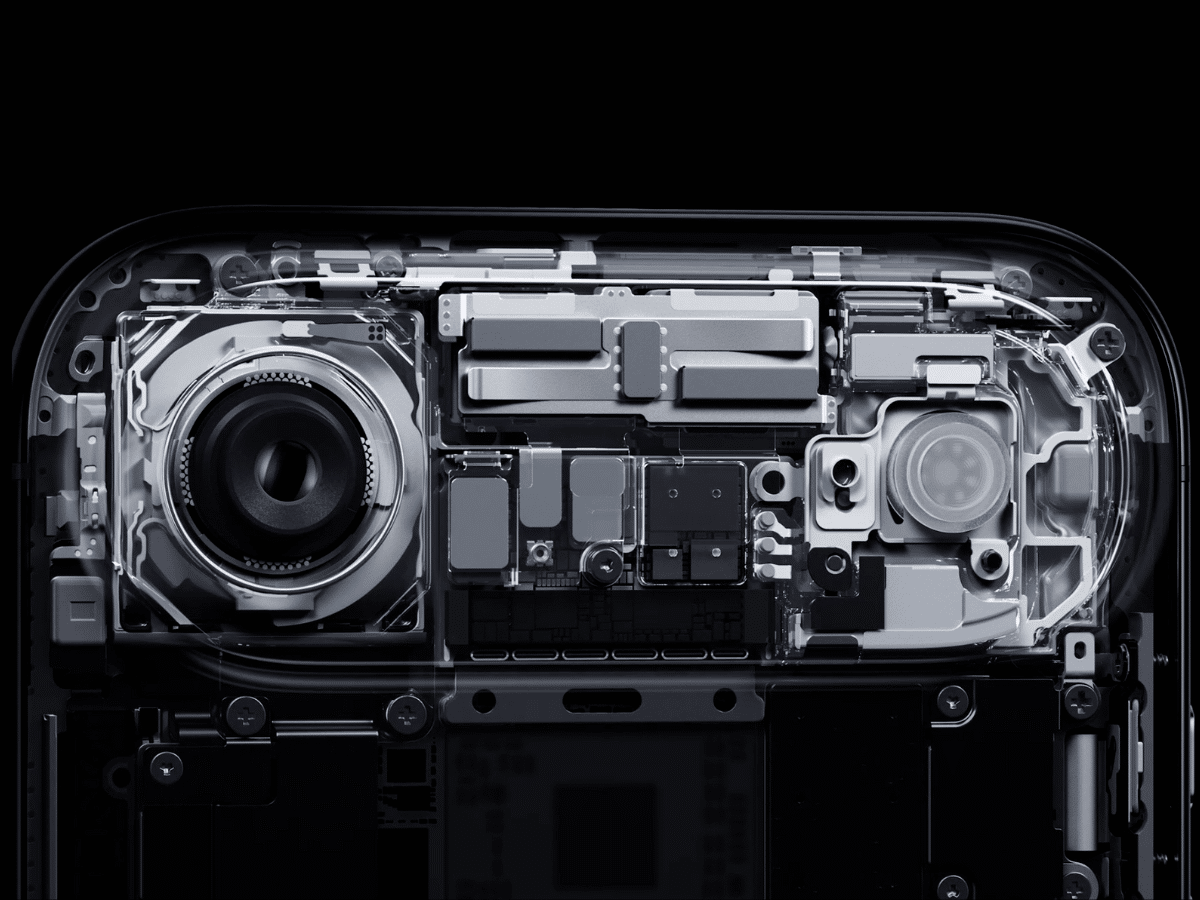
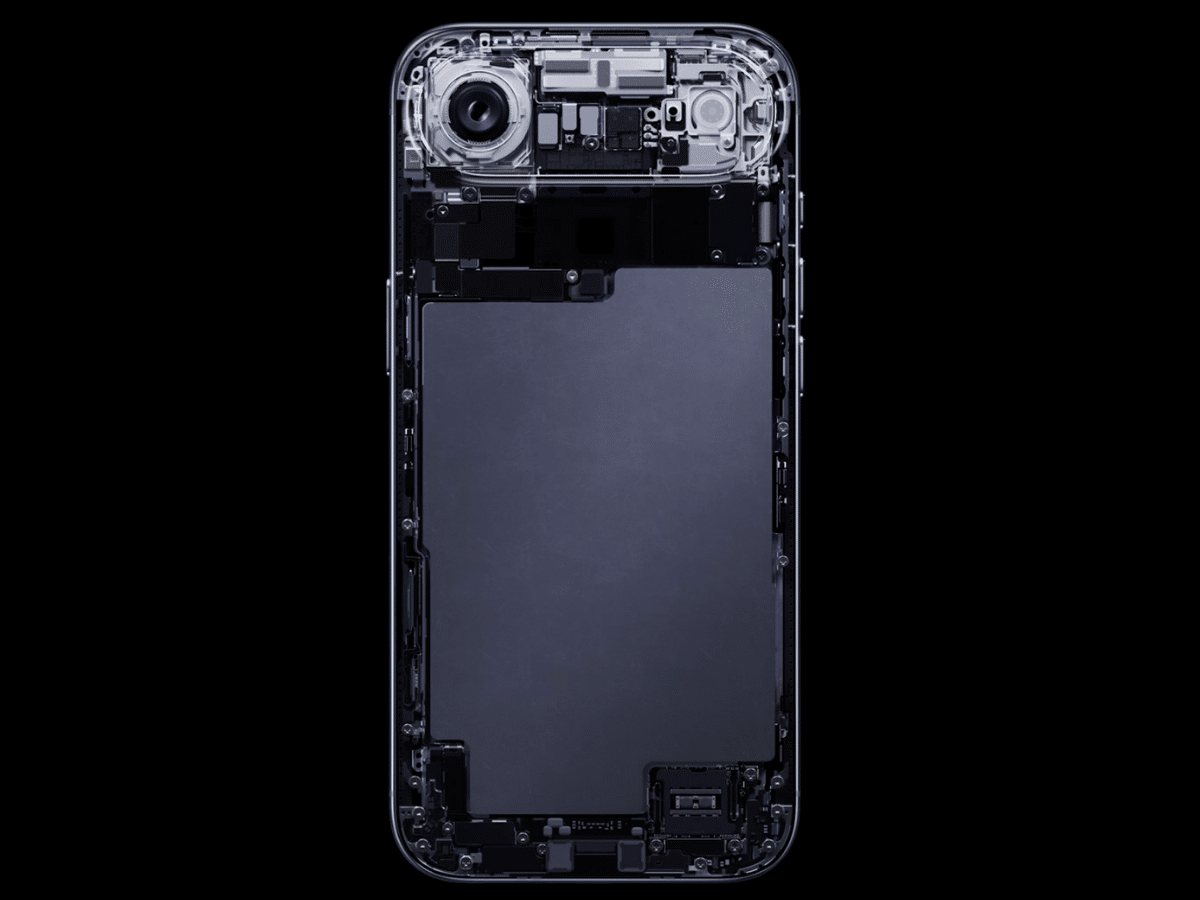
The first thing you might notice on the iPhone Air is the camera bump — or “camera plateau,” as Apple likes to call it. Typically, I’m not a fan of these protruding islands. They’ve always felt like engineering compromises disguised as design choices. On a Pro device, that’s okay. On a phone designed for daily use? The bumps often get in the way more than they help. But the iPhone Air is a rare exception where the bump truly justifies itself, because it’s not merely housing a lens — it’s housing the phone’s essential hardware.

Instead of spreading components evenly across the entire chassis like most smartphones, Apple concentrated much of the iPhone Air’s internal components into the camera bump. The goal was to free up as much space as possible inside the main body so the Air could remain ultra-thin while still leaving room for a functional battery.

It’s the same thought when Apple used when shrinking down the MacBook’s internals to create the original MacBook Air back in 2008 — take the essential components, miniaturise them, and arrange them efficiently. This redesign also explains why the Air currently comes with just a single camera for now. Fitting a second lens would require shrinking the internals even further, something Apple might try in a future model.

The iPhone Air’s plate is sculpted to fit the custom cameras, speaker, and Apple silicon, dedicating more space to the battery.| Image: Apple

Inside, you’ll find the compact structure that lives on the new silicon. The A19 Pro powers the iPhone Air — a slightly simplified version of the chip in the 17 Pro models — along with Apple’s updated C1X modem and the all-new N1 networking chip. The C1X is an evolution of Apple’s first in-house modem, which debuted in the iPhone 16e, with Apple claiming significant improvements in efficiency and speed. The bigger upgrade is the N1, which introduces Bluetooth 6, Wi-Fi 7, and Thread support, making the Air more future-proof and more power-efficient for everyday use.

But as an iPhone user myself, I can’t help but think about its thermal performance, considering it will be packed into this hardware with such a thin frame, and it makes me wonder how it will hold up with heat during heavy workloads. But until I get a hold of one and see it in real-world conditions, I’ll let the iPhone do the talking.

Iphone Air’s Battery | Image: Apple

iPhone Air’s Battery

Now, this is where things become interesting, and everyone is curious about the iPhone Air’s battery. The iPhone Air features a 3,149mAh battery, which is notably small compared to the rest of Apple’s lineup. For perspective, the 6.1-inch iPhone 16e has a 4,005mAh cell, and the standard iPhone 17 comes with a 3,692mAh battery. On paper, the Air appears underpowered — a battery of this size in such a slim phone doesn’t initially inspire confidence.

But the Air’s secret isn’t battery size; it’s efficiency. Thanks to the combined work of the A19 Pro chip, the new C1X modem, and the N1 networking chip, the phone manages to stretch its smaller battery surprisingly far. Apple claims the Air can reach 27 hours of video playback, which actually exceeds the 16e despite the Air having a significantly smaller battery. That’s a pretty bold statement for a device built around extreme thinness.

Here’s the good news: if you want even more battery life, Apple has its usual solution—the iPhone Air MagSafe Battery that snaps onto the back of the phone. With that added, the Air jumps to 40 hours of video playback, surpassing even the 17 Pro Max and its massive 5,088mAh battery. You’ll need to pay extra for the accessory, but the option is available for users seeking multi-day stamina at USD $99.

Most people look for battery improvements when upgrading their phone, and in a roundabout way, Apple has delivered them here. The raw capacity might not impress, but the gains from the C1X and N1 chips suggest a bigger trend — the kind of smart power management that could benefit every model in the iPhone 18 lineup. If Apple can bring these efficiencies to its larger, more capable devices, we could see serious battery advancements next year.

iPhone Air is locked to eSim | Image: Apple

No SIM Card Tray?

When aiming for extreme thickness, obviously, there’s going to be something missing for sure, and one of them is the complete removal of the physical SIM card tray. The iPhone Air is the first in the lineup to operate exclusively on eSIM, with no fallback option. Apple states that removing the tray was necessary to free up space inside the 5.6mm frame — and on a device this thin, every tiny component matters.

The change sounds simple on paper, but it’s a real challenge for anyone using an older device that still relies on a physical SIM. Not all carriers worldwide support eSIM, and even in areas where it’s offered, the traditional method of removing your SIM and inserting it into a new phone remains the fastest way to get started. Anyone who frequently switches devices knows how easy that used to be, especially for those who travel quite often.

With eSIM, the process becomes a bit more complex. Transferring to a new phone requires an internet connection, carrier approval, and a few extra setup steps. It works, and it’s improving with each generation, but it’s not as instant or widespread as the physical card we’ve used for years.

I believe that, in the long run, this will be the future for all smartphones, with Apple potentially leading the industry towards a time when physical SIMs no longer exist — the iPhone Air could very well be the turning point — but for now, it feels a bit like when Apple removed the headphone jack. The move makes sense from an engineering perspective, yet it still hurts for users who appreciated the simplicity of swapping cards in seconds.

AppleiPhone
About the Author
arrow_drop_up