




Our team of editors and experts thoughtfully chooses each product. If you decide to buy through one of our links, we may earn a commission. Learn more. Want to know how we test products? Click here for more details.
For decades, the Parisian Maison has looked beyond traditional hands and hour markers, turning to planets, constellations, the Sun and the Moon for inspiration. That fascination with the night sky stretches deep into its history, including a moon-phase pocket watch created in 1929, and in 2026, Van Cleef & Arpels is once again looking upwards with a collection devoted to what it beautifully describes as the “poetry of the heavens.”
At the centre of that celestial story are two very different Midnight creations. The Midnight Jour Nuit Phase de Lune transforms the movement of the Sun and Moon into a miniature spectacle on the wrist, while the Midnight Heure d’ici & Heure d’ailleurs turns the practical idea of following two time zones into something considerably more romantic. While some watchmakers simply measure time, Van Cleef & Arpels prefers to tell stories with it — giving you another reason to look down at your wrist and, strangely enough, find yourself thinking about the sky.
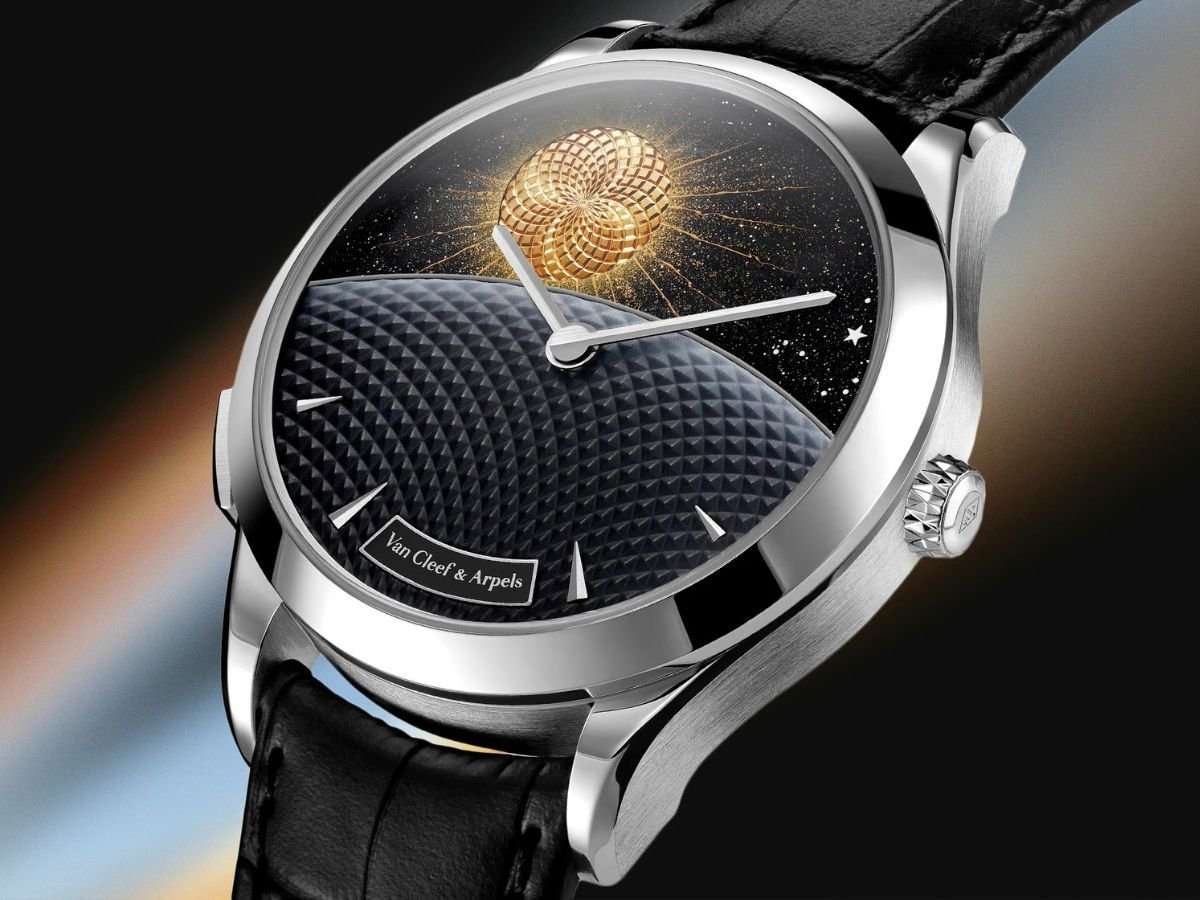
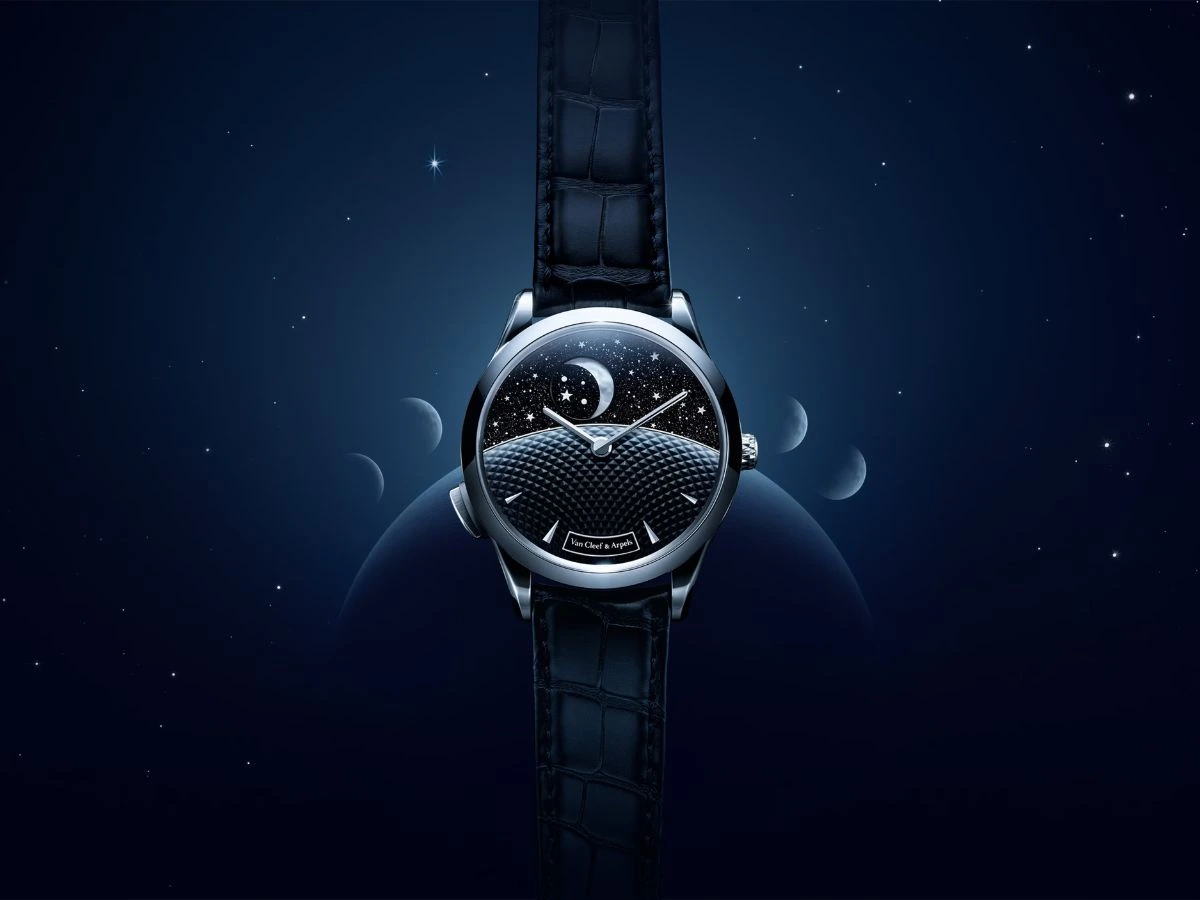
Midnight Jour Nuit Phase de Lune Ref. VCARPESA00 | Image: Supplied / Van Cleef & Arpels
Midnight Jour Nuit Phase de Lune
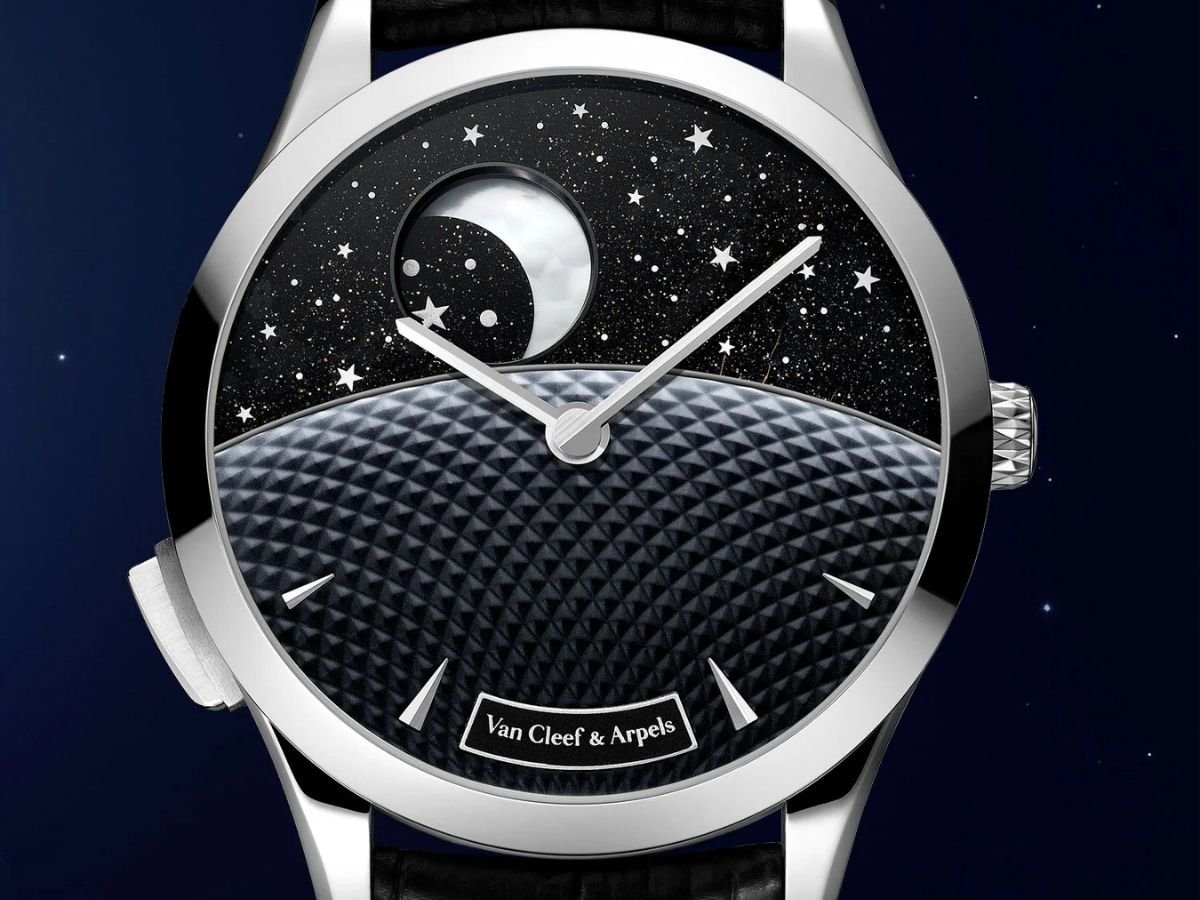
Van Cleef & Arpels has been looking to the Moon for inspiration for almost a century, having created a moon-phase pocket watch as far back as 1929. The new Midnight Jour Nuit Phase de Lune brings that fascination into the Maison’s Poetic Complications collection with a 42mm white-gold watch that combines its signature Jour/Nuit display with an astronomical moon phase. Across the deep black Murano aventurine glass dial, a guilloché yellow-gold Sun pursues a white mother-of-pearl Moon through a glittering night sky, turning something as ordinary as checking the time into a miniature celestial scene.
The beauty of the dial is that it is constantly changing, with two overlapping rotating discs moving at different speeds — the first completes its journey every 24 hours, carrying the Sun through the day/night display, while the second rotates once every 24 hours, 16 minutes and 27 seconds. Working together, they reproduce the Moon’s changing appearance throughout its lunar cycle, so what you see on the wrist reflects the phase of the Moon above rather than serving as decoration alone.
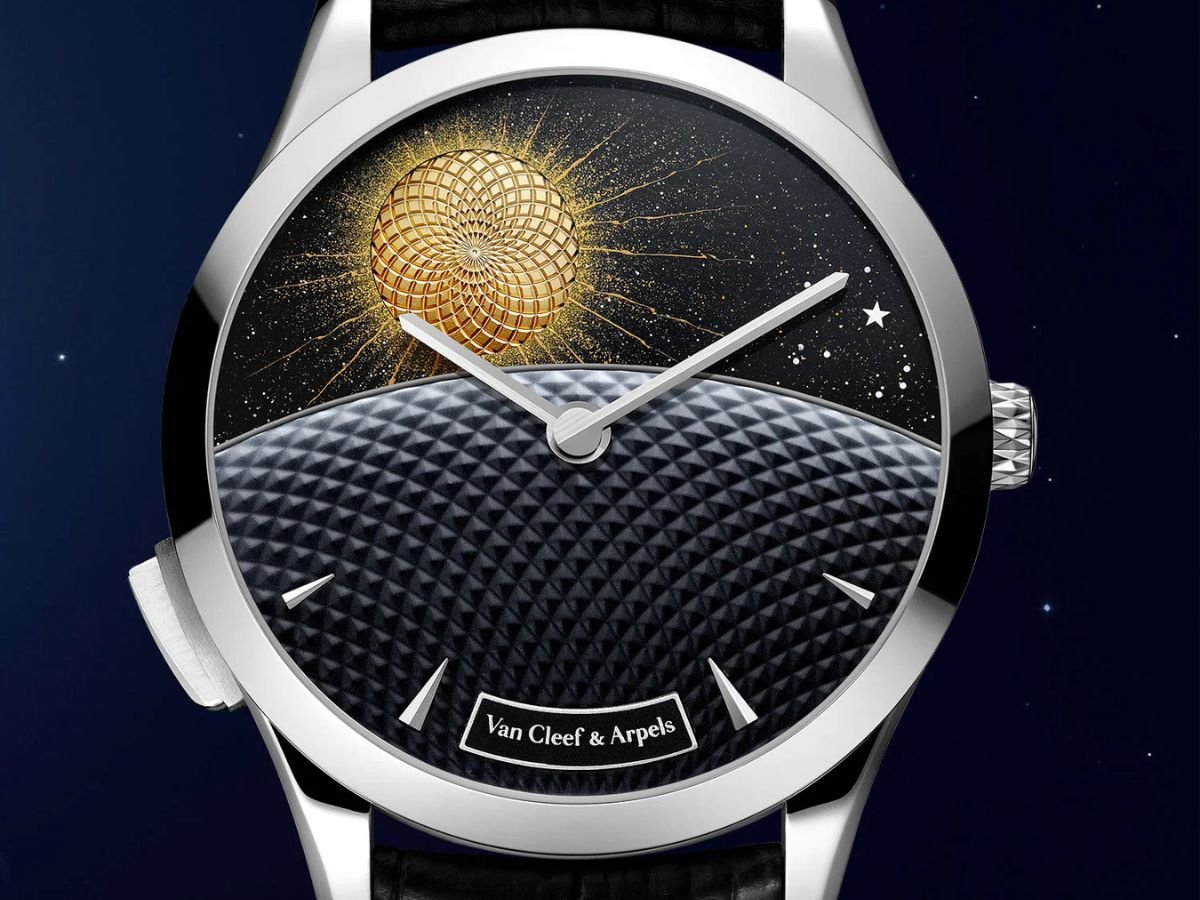
Midnight Jour Nuit Phase de Lune Ref. VCARPESA00 | Image: Supplied / Van Cleef & Arpels
There is also a little theatre hidden inside. Pressing the pusher on the case activates an on-demand animation, allowing the Moon to emerge and reveal its current phase even when it would normally be hidden during the daytime display. Making all of this work was no small exercise either: Van Cleef & Arpels says the astronomical movement was developed entirely by its watchmaking workshops in Geneva and required four years of development.
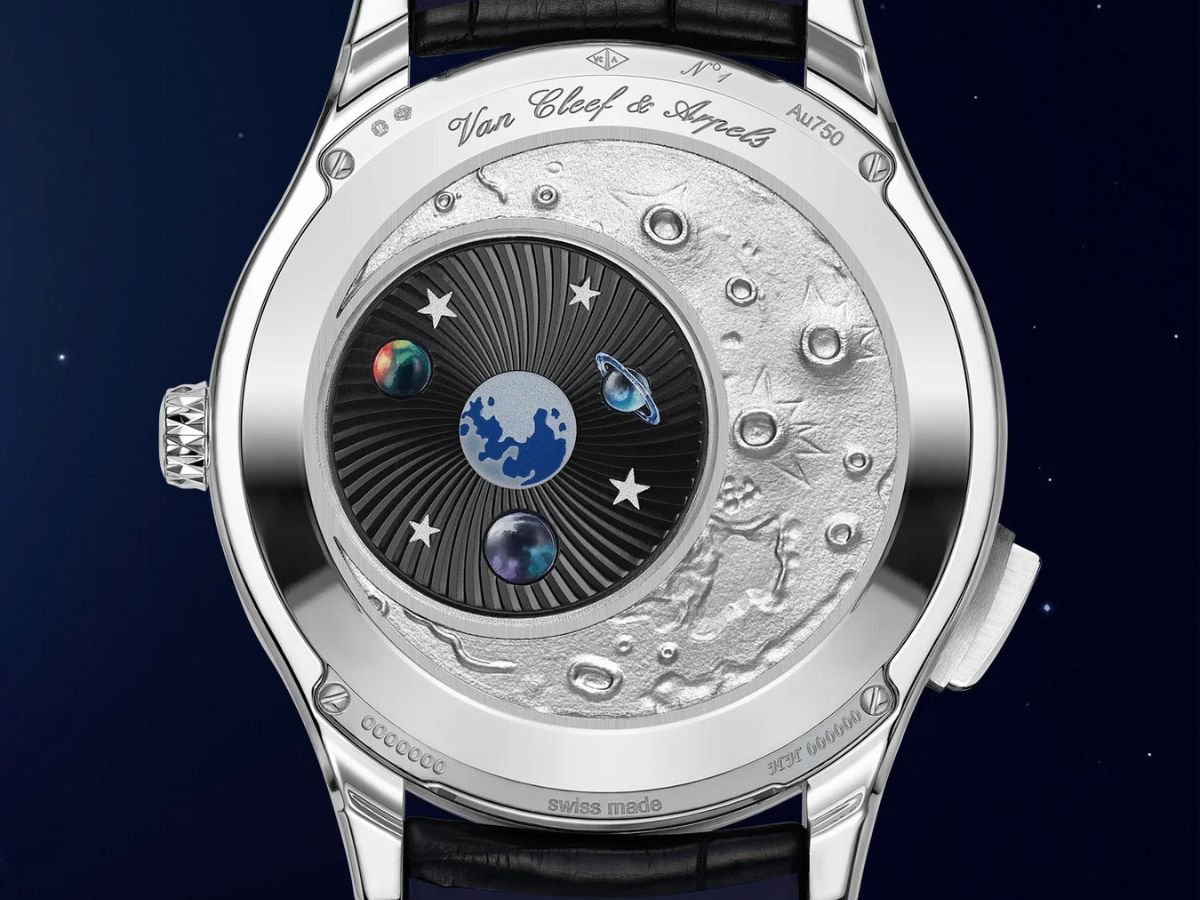
Turn the watch over, and the story changes perspective through the caseback, which depicts a stylized lunar landscape, while an enamel Earth appears through the sapphire crystal above the automatic movement, creating the impression of looking back towards our planet from the surface of the Moon. It’s a beautiful finishing touch, and perhaps the best explanation of what Van Cleef & Arpels means by Poetry of the Heavens: this is serious mechanical watchmaking, but the mechanics are there to tell a story rather than become the story themselves.
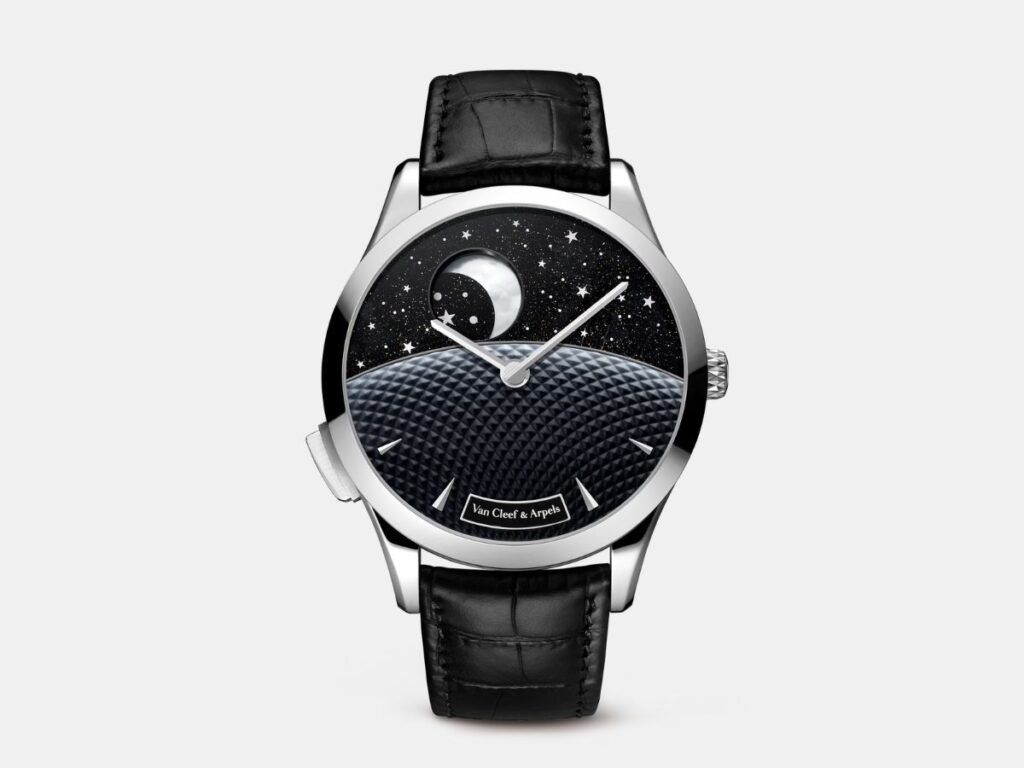
Midnight Jour Nuit Phase de Lune Ref. VCARPESA00 | Image: Supplied / Van Cleef & Arpels
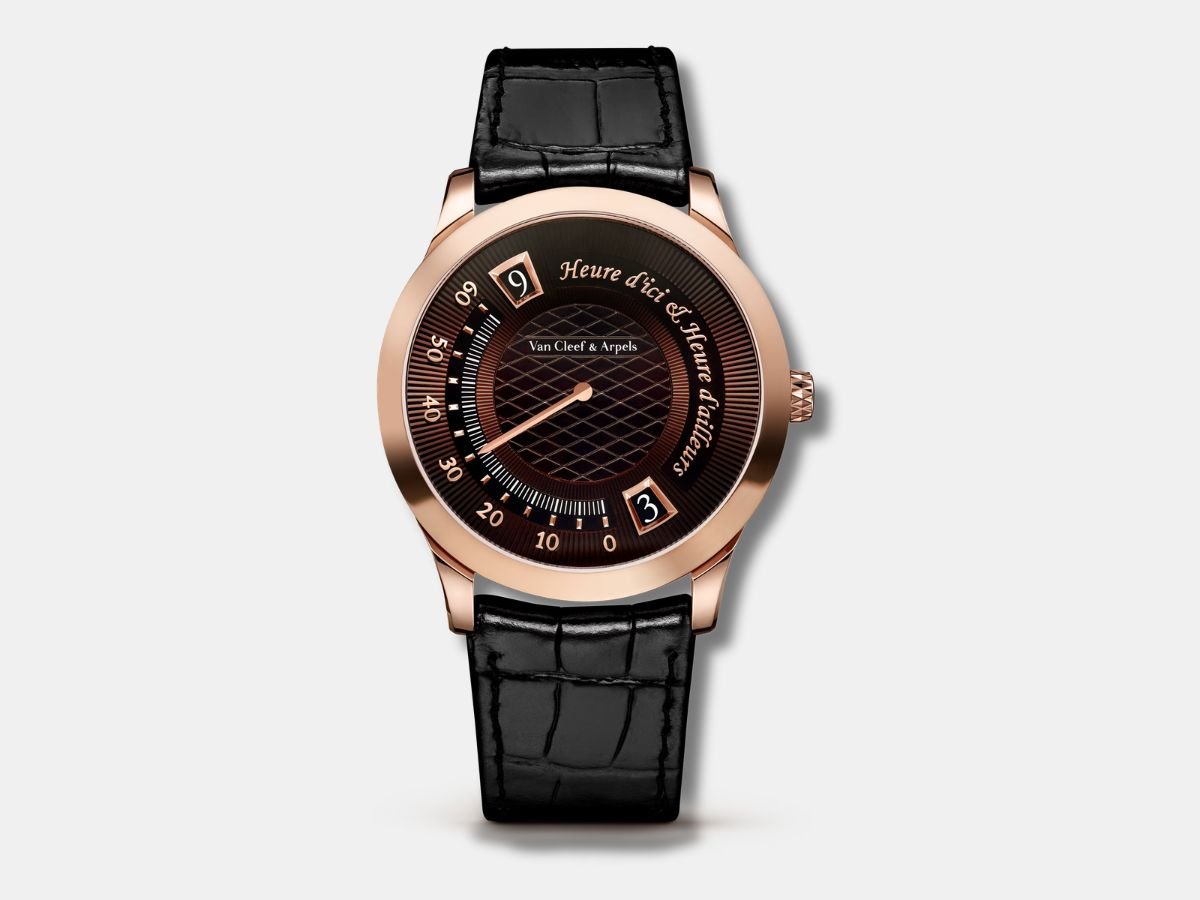
The Midnight Heure d’ici & Heure d’ailleurs may be the quieter of Van Cleef & Arpels’ two new Midnight creations, but there’s something particularly elegant about the way it approaches a travel watch. Housed in a more compact 38mm rose-gold case, it displays two time zones through separate apertures: Heure d’ici — “time here” — appears at the top of the dial, while Heure d’ailleurs — “time elsewhere” — sits below. Rather than relying on the familiar GMT hand, the watch uses synchronized jumping-hour displays and a retrograde minute hand, allowing both locations to be read in a clean and surprisingly unconventional way.
The dial is where Van Cleef & Arpels brings some of its jewellery-making character into the equation. Embossed brown enamel changes between warmer and cooler tones depending on the light, while a radiating guilloché-style pattern grows outward from a central piqué motif inspired by the Maison’s hallmark. Polished and satin-finished rose gold provides the contrast, and even the asymmetric placement of the displays and flowing script feels deliberate. It’s considerably less theatrical than the celestial display of the Phase de Lune, but that restraint suits a watch intended to make travelling between two parts of the world feel a little more romantic.
There’s one final celestial touch waiting on the back, where Van Cleef & Arpels has engraved a Moon illuminated by a guilloché Sun, tying the travel-focused watch back into the wider Poetry of the Heavens theme. And we rather like the contrast between these two Midnight releases: the Phase de Lune asks you to look towards the sky, while the Heure d’ici & Heure d’ailleurs looks across the world instead. It’s a simpler proposition mechanically, but for someone who regularly travels between time zones, it may actually be the more practical watch of the pair.
What Do We Think of the Poetry of the Heavens Collection?
For us, these two watches show exactly why Van Cleef & Arpels deserves to be taken seriously as a watchmaker, not simply a jewellery house that also makes watches. There are plenty of complicated watches that impress you with numbers, but the Midnight Jour Nuit Phase de Lune does something harder — it makes the complication feel emotional. Watching the Sun chase the Moon across that aventurine sky, knowing there is a four-year-developed astronomical mechanism underneath it all, is the sort of detail that makes you want to stop and actually look at your watch rather than simply check the time.
If we had to choose one, the Phase de Lune would be our pick without much hesitation. The Midnight Heure d’ici & Heure d’ailleurs is arguably the more wearable and useful of the two, especially for frequent travellers, and we love the way it makes a dual-time complication look genuinely elegant rather than overly technical. But the Phase de Lune is the watch we would remember. It feels less like another luxury timepiece and more like a tiny piece of the night sky sitting on your wrist, which is probably the best compliment we can give a collection built around the Poetry of the Heavens.
Elias Albay is the Founder and Director of Many Men Magazine, a Toronto-based digital publication dedicated to promoting modern masculinity through style, culture, and self-improvement. What started as a personal turning point became a purposeful platform. — born from Elias’ desire to create something meaningful after completing his studies and finding no career path that truly matched his ambitions. With a background in Civil Engineering from York University and experience in Commercial Flight Operations at CAE, he applied skills, and resilience from both fields to forge a new path.
Our team of editors and experts thoughtfully chooses each product. If you decide to buy through one of our links, we may earn a commission. Learn more. Want to know how we test products? Click here for more details.
There’s something timeless about the pull of a great beach—the kind of place where the world slows down, the horizon stretches endlessly, and life feels a little lighter with every step on the sand. For 2025, we’ve revealed the 10 best beaches in the world that deserve a spot on your travel list, from hidden island escapes to iconic shores that have defined wanderlust for decades. You might be chasing quiet seclusion, turquoise waters that look painted by hand, or a scene buzzing with energy, but one thing’s for sure—these beaches will make you forget about emails, deadlines, and even that gym membership you swore you’d use.
So, if you’re already sketching out your next travel plan or building the ultimate bucket list, this lineup is where you’ll want to start. From destinations that feel like a private paradise to sandy stretches so famous they’ve become legends, these are the places where 2025 is best spent barefoot, sun-kissed, and happily off the grid.
1. Cala Goloritzé – Sardinia, Italy
Location: Sardinia, Italy
Cala Goloritzé is one of those rare places where the journey becomes part of the reward. Tucked into Sardinia’s rugged east coast, this UNESCO-protected cove reveals itself only after a scenic hike through wild Mediterranean cliffs or a boat ride across sapphire waters. When you finally arrive, you’re greeted by a scene that feels almost otherworldly—dazzling white pebbled sand, water so clear it glows turquoise, and the towering limestone pinnacle of Aguglia rising like a sentinel above the bay. There are no beach bars, no loungers, no crowds—just nature at its most striking, a pocket of paradise where time seems to stand still.
Located on Sardinia’s east coast within a UNESCO World Heritage Site.
Famous for its turquoise waters, white pebbly sand, and the Aguglia limestone pinnacle.
Accessible only by boat or a strenuous hike over cliffs and Mediterranean scrub.
No beach bars or amenities — just pure untouched paradise.
Entalula Beach is the kind of tropical getaway that seems perfect for postcards. Hidden among the stunning waters of El Nido, Palawan, it’s framed by towering limestone cliffs that rise dramatically behind stretches of silky white sand. The beach feels like a secret sanctuary where you can escape from everything and simply relax as the turquoise waters and swaying palms do all the talking.
The calm waters are ideal for snorkelling among vibrant coral reefs, while its secluded location gives it the feel of a private island. Arriving by boat only enhances the adventure, making the moment you step onto its sands feel like discovering a piece of paradise that the Philippines has been reserving just for you.
Located in El Nido, Palawan, often regarded as the most scenic region in the Philippines.
Famous for its dramatic limestone cliffs and pristine white sand.
Waters are calm, clear, and ideal for snorkeling among vibrant marine life.
Accessible by boat, often included in El Nido island-hopping tours.
Secluded atmosphere makes it feel like a private island escape.
On the tranquil island of Koh Kood, Bang Bao Beach stretches out like a scene from a dream—soft white sand, swaying palms, and water so clear it looks like glass. Unlike Thailand’s more famous hotspots, this corner of paradise has remained blissfully off the radar, offering visitors a rare chance to experience the country’s natural beauty without the crowds. It’s a beach that encourages you to slow down, where mornings are spent drifting in calm lagoons, afternoons under the shade of coconut trees, and evenings watching fiery sunsets melt into the horizon. Every moment here feels unhurried, as if the island itself is reminding you to breathe.
Instead of neon lights and busy beach clubs, you’ll find rustic bungalows and family-owned restaurants serving fresh seafood steps from the shore. The waters are ideal for snorkelling, showing off colourful marine life just a short swim from the sand, while the peaceful vibe makes it easy to lose track of time in a hammock tied between palms. It’s Thailand in its purest form—untouched, welcoming, and endlessly relaxing—a beach that makes you want to stay much longer than planned.
Located on Koh Kood, one of Thailand’s least developed islands.
Famous for its powdery white sand and palm-fringed shoreline.
Calm, clear waters perfect for swimming and snorkelling.
Relaxed vibe with small resorts and beachfront eateries.
Ideal for travellers looking for peace away from Thailand’s busy hotspots.
Hidden away on the island of Kefalonia, Fteri Beach feels like discovering a secret paradise that Greece has been keeping to itself. Towering white cliffs rise dramatically above the shoreline, while the sand and pebbles shimmer under the sun as if polished by the Ionian Sea itself. The water is so clear and blue it almost looks surreal, and the only way to get there is by boat or tough hike—making every arrival feel like a true adventure worth sharing. With no bars, no loungers, and no crowds, it’s just you, the sound of the waves, and a horizon that seems to go on forever; the kind of place that reminds you why beaches like this should be at the very top of your 2025 travel list.
Located on the island of Kefalonia in the Ionian Sea
Known for its dramatic cliffs, turquoise waters, and sparkling shoreline
Accessible only by boat or via a challenging hike through rugged paths
No bars, restaurants, or built-up facilities — just pristine natural beauty
Ideal for those seeking solitude and a truly unspoiled Greek beach experience
Location: Rangiroa, Tuamotu Islands, French Polynesia
PK 9 Beach feels like a hidden corner of paradise that the world forgot to tell you about. Located on the atoll of Rangiroa, it’s a stretch of soft white sand and glowing turquoise water so pure it looks almost surreal, reached by biking past coconut groves and quiet island villages until the shoreline suddenly opens up in front of you. The palm trees here grow so low you can sit on them, creating the effortless photo-op that makes for the perfect Instagram moment if you want to impress your friends. With no resorts, no shops, and no background noise, PK 9 offers nothing but solitude, crystal-clear waters, and the feeling of having the South Pacific entirely to yourself.
Located on Rangiroa, the largest atoll in the Tuamotu Islands of French Polynesia.
Famous for its endless stretch of soft white sand and glassy turquoise waters.
Palm trees so low you can sit on them — perfect for Instagram-worthy photos.
Accessible by bike or car, with a secluded and untouched atmosphere.
Canto De La Playa is one of those rare beaches that feels like stepping into a Caribbean postcard that hasn’t been touched by time. Tucked away on Saona Island, it’s all powdery white sand, swaying palms, and water so blue it looks like it was painted by hand. Because it’s far from the island’s busier tourist spots, the beach has a wonderfully untouched feel—you won’t find crowds, shops, or noisy beach bars here, just long stretches of sand, shallow waters perfect for swimming, and palms so perfectly placed they look like they were designed for your next Instagram post. Accessible only by boat, it’s the kind of hidden paradise that makes you feel like you’ve discovered a secret corner of the Dominican Republic.
Take a boat ride from Bayahibe for the most scenic approach
Snorkel the shallow reefs where tropical fish dart through the coral
Walk the long stretch of powdery white sand that feels like it’s yours alone
The palm tree groves create perfect shaded picnic spots and photo backdrops
Best enjoyed in the morning before the day tours arrive, when the beach is truly serene
Few beaches in the world are as instantly recognizable as Anse Source d’Argent. Tucked away on the island of La Digue, it’s a place where the dramatic granite boulders rise like giant sculptures from the sand, creating a backdrop so striking it feels otherworldly. Add in powdery white sand and shallow waters that shimmer between emerald and turquoise, and it’s easy to see why this spot is considered one of the most photographed beaches on the planet.
But Anse Source d’Argent isn’t just about looks—it’s an experience. The water here is calm and shallow, perfect for swimming, wading, or even a lazy float while the boulders frame the view around you like natural cathedrals. The palms lean in just right, casting broad patches of shade that invite you to settle in, nap, or simply watch the light shift across the water. It’s the kind of place where time feels irrelevant, where every moment lingers a little longer than the last.
Getting there is part of the adventure. You’ll walk or bike through L’Union Estate Park, passing vanilla plantations and coconut palms before the path suddenly opens up to the iconic shoreline. Stay for snorkelling along the reefs, take a walk down the curved stretch of sand, or arrive at sunrise or sunset for that golden glow that makes the rocks look like they’re lit from within. It’s not just a beach—it’s Seychelles at its most magical.
Walk or bike through L’Union Estate Park to reach the entrance.
Famous for its massive granite boulders, a dream destination for photographers.
Calm lagoon waters perfect for swimming and floating.
Snorkelling near the shore reveals vibrant fish and coral.
Best visited early in the morning or at sunset for stunning light and fewer crowds.
Here’s another beach on the African continent, and it feels like nature is showing off. Nosy Iranja consists of two small islands connected by a two-kilometre sandbar that appears at low tide, creating a surreal walkway of powdery white sand with turquoise waters shimmering on either side. It’s the kind of view that stops you in your tracks—a natural wonder that looks like it was made just for postcards. One island hosts a small fishing village, where life moves at a gentle pace, while the other remains completely untouched, offering nothing but palms, sand, and endless ocean.
The magic of Nosy Iranja lies in how it combines authenticity with seclusion. You can swim or snorkel in crystal-clear waters, stroll the sandbar barefoot when the tide is out, or hike up to the lighthouse for sweeping views of the islands and the shimmering ocean around them. Remote, unspoiled, and unforgettable, it’s the kind of place that stays in your memory long after you’ve gone, reminding you that Africa boasts some of the most stunning beaches in the world.
Known for its sandbar that links two islands at low tide.
Perfect for swimming, snorkelling, and discovering coral reefs.
Provides a blend of culture and solitude: one island with a fishing village, the other remaining untouched.
The lighthouse viewpoint provides panoramic views of the sandbar and the surrounding ocean.
Here’s one of our favourite beaches at Many Men Magazine—and it’s not your typical beach destination. Ofu Beach in American Samoa looks like a scene straight out of Moana. Hidden within the National Park of American Samoa, this stunning stretch of coastline is the epitome of untouched paradise. Famous for its powdery white sand and crystal-clear turquoise waters, Ofu also hosts one of the healthiest coral reef systems in the entire South Pacific. For ocean enthusiasts, snorkeling here is truly unforgettable, with vibrant coral gardens and curious sea turtles gliding past as if you’ve entered their secret world.
The backdrop is just as breathtaking as the water. Majestic volcanic cliffs rise dramatically behind the shoreline, cloaked in lush greenery that makes the whole place feel like nature’s private masterpiece. Because Ofu is so remote and untouched by development, you won’t find noisy crowds or overbuilt resorts here—just peace, beauty, and that rare feeling of being completely connected with nature in its purest form. It’s the kind of destination that makes you want to put the phone away (after a few Moana-worthy Instagram shots, of course) and simply breathe it all in.
Almost three miles of pristine sand and turquoise waters.
Incredible snorkelling among colourful coral reefs and sea turtles.
Surrounded by lush cliffs and tropical greenery.
Quiet and serene, with hardly any visitors.
Famous for its fiery sunsets over the South Pacific.
If there’s one beach that could easily steal the spotlight on your 2025 travel plans, it’s Grace Bay in Turks & Caicos. This piece of paradise has earned its reputation repeatedly as one of the best beaches in the world, and the moment your toes touch its soft, powdery white sand, you’ll understand why. The turquoise water is so clear it almost feels surreal—like nature turned up the saturation just for you. It’s calm, warm, and shallow, making it ideal for swimming, paddleboarding, or simply floating away the stress of everyday life.
Beyond the shoreline, Grace Bay is part of a protected marine reserve, home to vibrant coral reefs and abundant marine life just waiting to be explored. You can join a snorkeling or diving tour and find yourself swimming alongside tropical fish, eagle rays, and perhaps even a friendly dolphin. When the sun starts to set, the entire beach transforms into a postcard-perfect scene, with golden hues reflecting on the water. Whether you’re seeking adventure or simply want to add a touch of luxury to your bucket list, Grace Bay is the kind of destination that makes you never want to pack up and leave.
Renowned for its powdery white sand and tranquil turquoise waters
Part of the Princess Alexandra National Park, bustling with marine life.
Perfect for swimming, snorkelling, paddle-boarding, and diving.
Turquoise Bay – Australia: Sitting on the Coral Coast of Western Australia, Turquoise Bay lives up to its name with waters so clear and blue they almost look unreal. Just a quick swim from shore, you’ll find yourself drifting over Ningaloo Reef, home to manta rays, turtles, and countless fish species. It’s the kind of place where a snorkel session feels like swimming in an aquarium.
Boulders Beach – South Africa: This South African treasure, just outside Cape Town, is well known for its delightful colony of African penguins. The protected coves and massive granite boulders form a distinctive setting where you can relax on soft sand or swim alongside these charming tuxedoed residents. It’s a beach day with a touch of wildlife magic you won’t find anywhere else.
Pink Beach – Indonesia: Located on Komodo Island, Pink Beach features blush-coloured sand from a mix of crushed red coral and pristine white sand. The result is a dreamy shoreline that looks straight out of a fantasy. Beyond its beauty, the waters are teeming with marine life, making it one of the top snorkelling and diving spots in Indonesia.
Shoal Bay East – Anguilla: A Caribbean classic, Shoal Bay East features a two-mile stretch of soft, white sand bordered by calm, turquoise waters. It strikes the perfect balance between relaxation and activity, with beach bars and restaurants just steps away, offering fresh seafood and tropical cocktails. Ideal for swimming, sunbathing, or simply soaking up island vibes.
Detwah Lagoon – Yemen: On the remote island of Socotra, Detwah Lagoon remains so untouched it feels like another planet. Its vivid blue waters, shifting sandbanks, and surreal landscapes make it a haven for adventurers seeking something beyond the usual tourist spots. The lagoon is teeming with unique marine life, and the surrounding cliffs offer postcard-worthy views at every turn.
Elias Albay is the Founder and Director of Many Men Magazine, a Toronto-based digital publication dedicated to promoting modern masculinity through style, culture, and self-improvement. What started as a personal turning point became a purposeful platform. — born from Elias’ desire to create something meaningful after completing his studies and finding no career path that truly matched his ambitions. With a background in Civil Engineering from York University and experience in Commercial Flight Operations at CAE, he applied skills, and resilience from both fields to forge a new path.