





Lifestyle

Meet the New Generation Of Dyson Air Purifiers With Their Newest Lineup For Home Air Quality

Share via

Our team of editors and experts carefully selects each product. If you choose to purchase through one of our links, we may earn a commission. Learn more. Do you want to know how we test products? Click here for more details.

When it comes to clean air, Dyson doesn’t just follow trends — they set them. With their newest lineup of multi-functional air purifiers, they’re raising the bar once again. Whether you’re battling dust, allergens, pet dander, or simply want to breathe a little easier, Dyson’s latest appliances promise to do much more than just clean the air — they’re designed to transform your living space.

Designed to be admired as much as to function, this new generation of purifiers combines sleek design, advanced sensors, precise airflow, and innovative tech features like heating and cooling options. Dyson demonstrates once again that clean air doesn’t have to compromise great design or intelligent functionality.

In a world where indoor air can often be more polluted than the air outside, investing in the right purifier isn’t just a luxury — it’s quickly becoming essential. Thankfully, Dyson’s newest lineup makes it easier (and much more stylish) to transform your home into a personal fresh-air sanctuary. Let’s dive in and take a closer look at Dyson’s latest innovations — and discover which purifier best fits your lifestyle and comfort.

Dyson Purifier Cool Formaldehyde | Image: Dyson

Dyson Purifier Cool Formaldehyde

If you thought air purifiers were just for dust and pollen, think again. The Dyson Purifier Cool Formaldehyde elevates clean air by targeting one of the most neglected indoor pollutants — formaldehyde. Found in common household items such as furniture, paints, and carpets, formaldehyde can quietly affect your home’s air quality over time. Dyson’s solution? A purifier that captures it and breaks it down at a molecular level. This model offers expected Dyson features, including advanced HEPA H13 filtration that captures 99.95% of microscopic particles, allergens, and bacteria. It also acts as a powerful cooling fan, making it ideal for cleaner air or a breeze year-round. Sleek and quiet, the Purifier Cool Formaldehyde features real-time air quality monitoring and control via the Dyson Link app, making it ideal for those wanting more than just cleaner air — it’s about breathing intelligently.
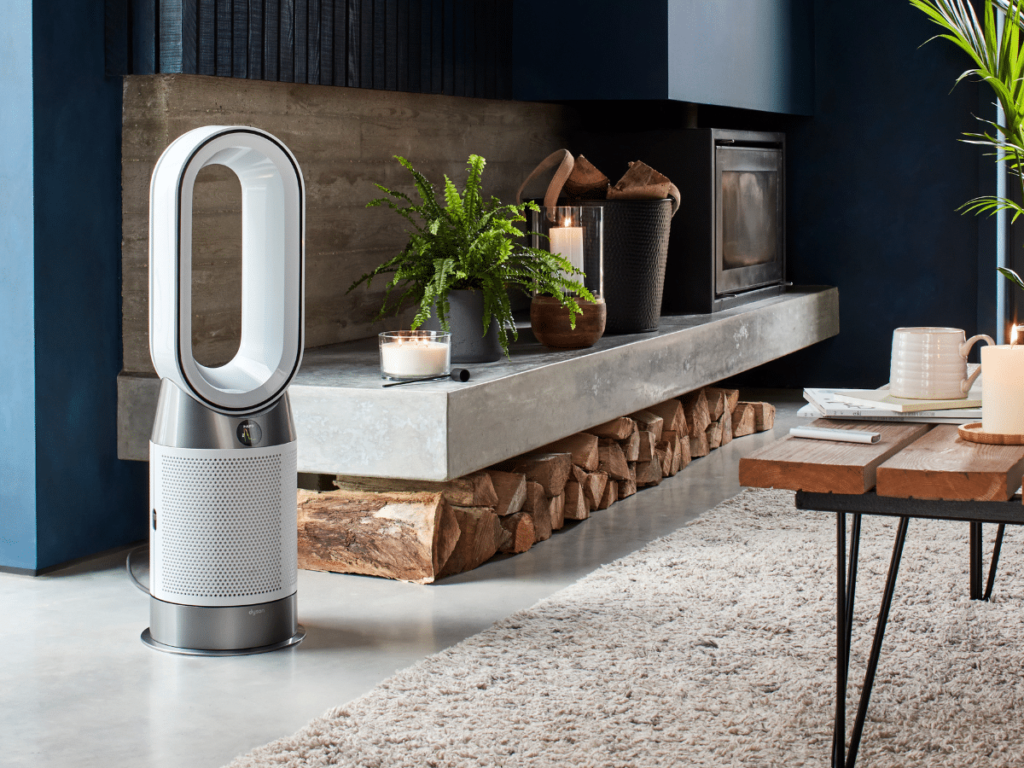
Dyson Purifier Hot+Cool Gen1 | Image: Dyson

Dyson Purifier Hot+Cool Gen1

Sometimes you just need a machine that simplifies everything — and that’s exactly what the Dyson Purifier Hot+Cool Gen1 offers. Combining air purification, heating, and cooling into one sleek device, this model is engineered to keep your space comfortable and your air clean throughout the year. It’s everything you expect from Dyson, packaged in a simple, elegant design.

The Hot+Cool Gen1 combines minimalist design with advanced engineering. Its HEPA filtration captures 99.95% of pollutants, allergens, and particles as small as 0.1 microns. Adapting to pollen, dust, or dry air, it ensures comfort year-round. This purifier blends practicality with style, delivering Dyson’s performance in a design that supports clean air.

Dyson Purifier Hot+Cool HP2 De-NOx | Image: Dyson

Dyson Purifier Hot+Cool HP2 De-NOx

Searching for a purifier that cleans and adapts? Meet the Dyson Purifier Hot+Cool HP2 De-NOx — your all-in-one solution. This model purifies, heats, and cools your home while targeting nitrogen dioxide (NO₂), a common urban pollutant from vehicle emissions and gas stoves. With Dyson’s advanced filtration, it captures dust, allergens, and gases, actively reducing NO₂ and promoting a healthier living space.

Thanks to its precise heating and cooling capabilities, the HP2 De-NOx works as hard to maintain your home’s comfort as it does to improve your air quality. Available in two stylish color options — Nickel/Gold and White/Gold — it blends effortlessly into any room. Additionally, with smart features like real-time air quality monitoring, auto-sensing technology, and full app control, it is designed to make clean living effortless. Whether it’s a scorching summer day or a chilly winter evening, the Dyson Purifier Hot+Cool HP2 De-NOx is ready to adapt to whatever your home — and the weather — throws at it.

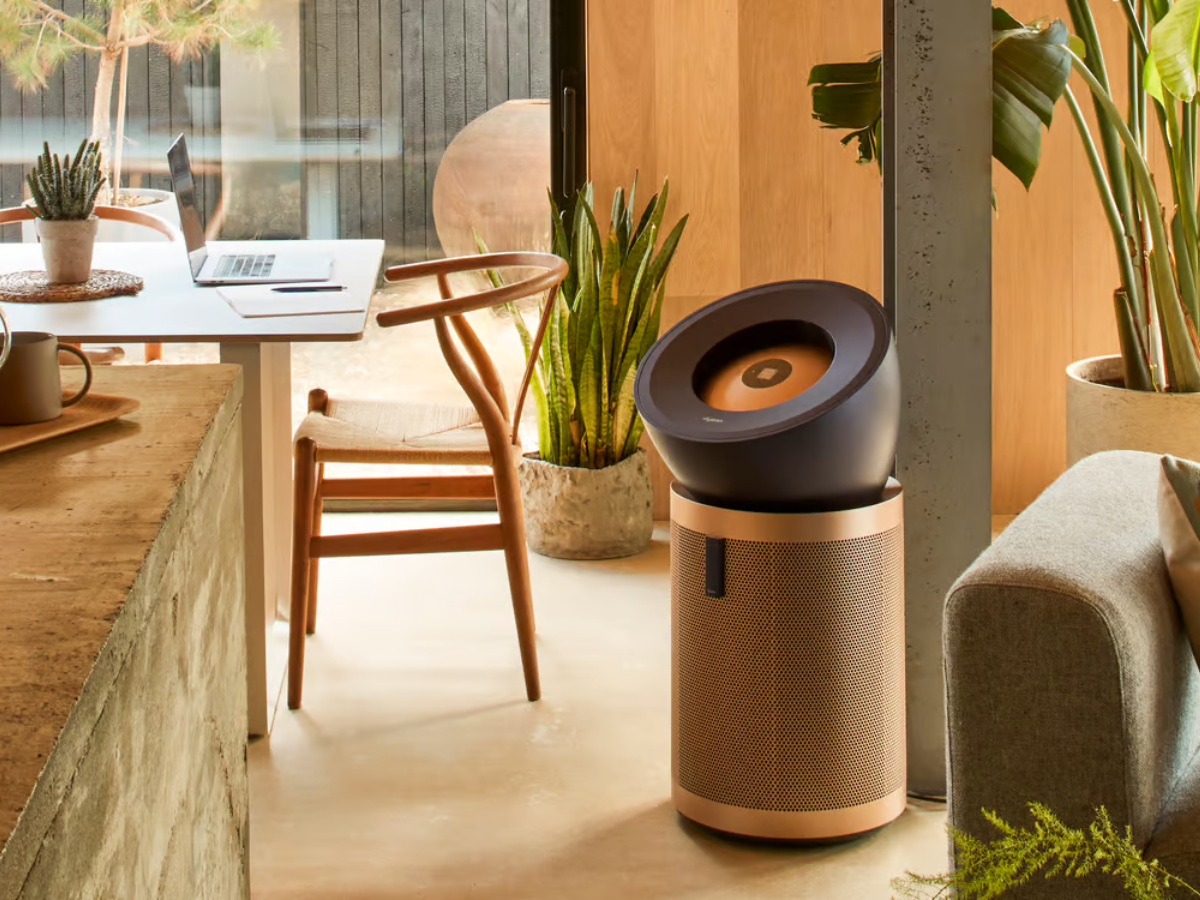
Dyson Purifier Big+Quiet Formaldehyde | Image: Dyson

Dyson Purifier Big+Quiet Formaldehyde

Suppose you’re working in a larger space and need something that can provide profound air purification without increasing the noise. In that case, the Dyson Purifier Big+Quiet Formaldehyde might be precisely what you want. Designed explicitly for open-plan homes, lofts, or larger living areas, this model delivers powerful airflow while remaining whisper-quiet, allowing it to clean the air without disrupting your day.

As the name suggests, it goes after more than just everyday pollutants. Featuring advanced HEPA filtration and a solid-state formaldehyde sensor, the BP04 not only captures harmful gases but also continuously destroys formaldehyde molecules, supporting long-term air quality. With its large, precision-engineered airflow system, the Big+Quiet efficiently moves substantial volumes of purified air across expansive spaces. It demonstrates that you don’t have to compromise on silence for serious performance — or style — when it comes to Dyson.
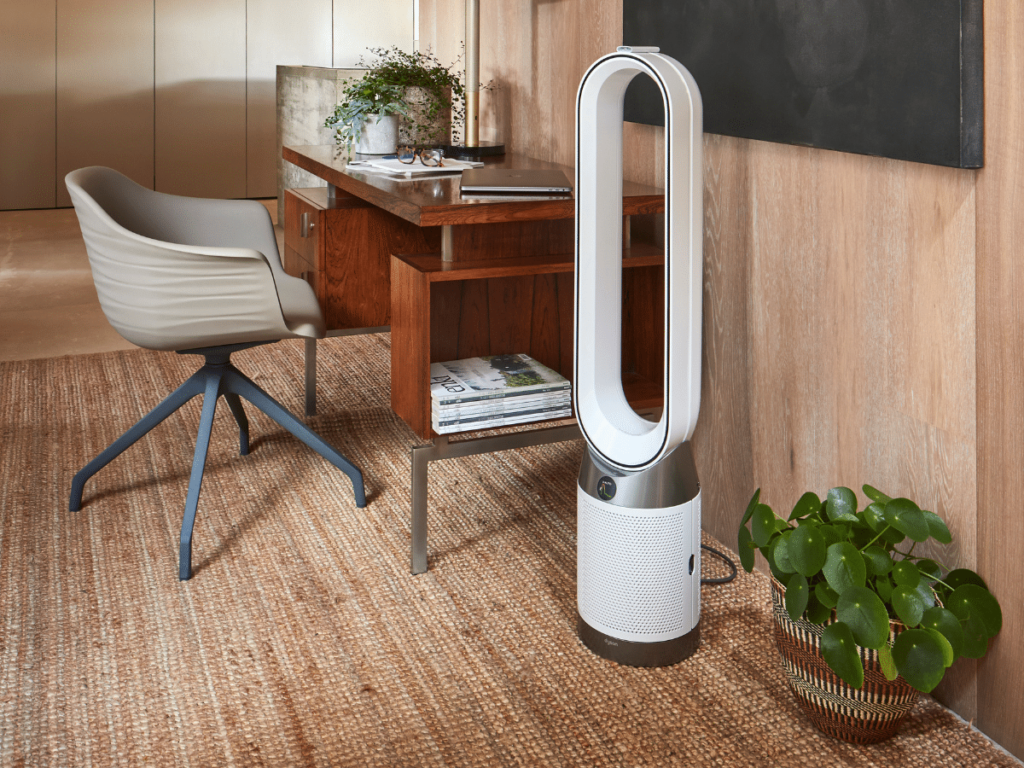
Dyson Purifier Cool Gen 1 | Image: Dyson

Dyson Purifier Cool Gen 1

If you’re looking for Dyson performance without all the extra bells and whistles, the Dyson Purifier Cool Gen 1 may be the ideal choice. It’s designed to provide the core essentials — powerful HEPA filtration, real-time air quality monitoring, and efficient cooling — all presented in Dyson’s signature sleek design. Perfect for small spaces or Dyson newbies, the Cool Gen 1 provides effective purification without complex features. It captures 99.95% of particles as small as 0.1 microns, including allergens and dust, while keeping you cool. Simple, efficient, and unmistakably Dyson, this model is great for enhancing your home’s air quality.
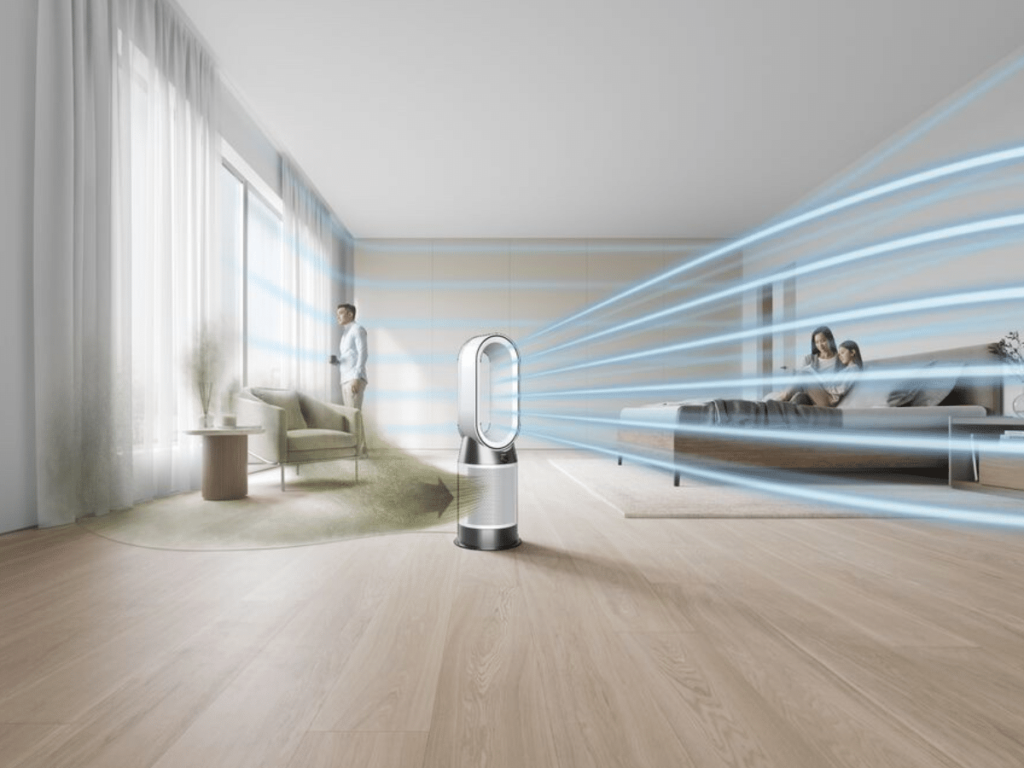
Dyson Purifier Hot+Cool Gen1 | Image: Dyson

How Dyson Air Purifiers Keep Your Air Clean

Dyson air purifiers not only circulate air but also clean it effectively. Each features an advanced HEPA H13 filtration system that captures 99.95% of particles as small as 0.1 microns, including dust, allergens, pollen, mould spores, bacteria, and some viruses in your home’s air. Dyson targets both unseen particles and harmful gases. Their latest models, like the Formaldehyde and De-NOx versions, eliminate gases like formaldehyde from furniture and nitrogen dioxide from pollution or gas stoves. Instead of trapping these threats, Dyson purifiers neutralize them through advanced chemical processes, ensuring fresher and safer air.

What truly sets Dyson apart is their intelligent air movement. The Air Multiplier™ technology projects purified air throughout the entire room, ensuring even circulation without cold drafts or dead zones. Many models are also equipped with smart sensors that monitor air quality in real time, automatically adjusting the purifier’s settings to match changing conditions — so you’re always breathing the cleanest air possible without lifting a finger.

Which Dyson Air Purifier Should You Choose?

Choosing the right Dyson air purifier depends on matching the machine to your needs — and the good news is that there’s a perfect fit for almost every space and lifestyle. If you require something powerful and whisper-quiet for a large, open area, the Dyson Purifier Big+Quiet Formaldehyde BP04 is a top choice. For an all-in-one unit that purifies, heats, cools, and addresses urban pollutants, the Dyson Purifier Hot+Cool HP2 De-NOx covers all bases. If formaldehyde is your primary concern, the Dyson Purifier Cool Formaldehyde provides targeted protection while ensuring your comfort. For smaller spaces or a more straightforward setup, the Dyson Purifier Cool Gen 1 and Dyson Purifier Hot+Cool Gen 1 deliver excellent performance without unnecessary complexity. Regardless of which model you choose, every Dyson air purifier combines cutting-edge filtration, sleek design, and smart features crafted to enhance not only your air quality but your overall living experience.

General FAQ’s

Are Dyson Air Purifiers Good For Allergies?

Yes, Dyson air purifiers are very effective for allergies. Their HEPA H13 filters capture 99.95% of allergens and airborne particles, including pollen, dust mites, and pet dander, thus contributing to a cleaner and healthier environment.

Can Dyson Air Purifiers Remove Formaldehyde?

Certain models, such as the Dyson Purifier Cool Formaldehyde and Big+Quiet Formaldehyde BP04, are specifically designed to target and eliminate formaldehyde at a molecular level, offering long-term protection against this common indoor pollutant.

Do Dyson Air Purifiers Also Cool Or Heat The Room?

Yes, many Dyson air purifiers, particularly from the Hot+Cool range, are multi-functional. They not only purify the air but also provide cooling airflow or heating, according to your needs and the season.

How Often Should I Replace The Filter In A Dyson Air Purifier?

On average, Dyson recommends replacing the filter every 12 months, depending on usage. The machine will notify you when it’s time for a replacement, ensuring optimal performance throughout the year.

Are Dyson Air Purifiers Easy to Maintain?

Absolutely. Dyson air purifiers are designed for low maintenance. Regularly wiping the exterior and replacing the filter as needed is typically all that’s required to keep the unit running smoothly.


About the Author
Previous Post
Everything You Need to Know About the 2025 Mercedes-AMG CLE 53 4MATIC+ Coupé
Next Post
7 Best Nintendo Switch Docks You Can Buy Right Now

Related Articles

Making Friends as an Adult is Hard—Here’s How to Make It Easier

Reading Time: 12 minutes

Our team of editors and experts thoughtfully chooses each product. If you decide to buy through one of our links, we may earn a commission. Learn more. Want to know how we test products? Click here for more details.

Making friends as an adult can feel oddly complicated. As kids, all it took was a shared love of dinosaurs or trading snacks at lunch. Now? It’s calendar coordination, awkward small talk, and wondering if you’re being too eager or not enough. Add in work, family obligations, and the comfort of your own couch, and suddenly your social circle starts to shrink faster than your free time.

But here’s the thing—most people feel the same way. Adult life tends to place friendships on the back burner, even though meaningful connections remain just as important. The difference now is that making friends requires intention—and a little creativity.

This guide is here to help you navigate the maze. From turning acquaintances into genuine friends to finding people who understand you, we’re breaking down what truly works in forming adult friendships.

12 Ways To Make New Friends As Adult

Making friends as an adult might feel like a mystery, but it doesn’t have to be. You might want to expand your circle, build deeper connections, or just have someone to grab tacos with on a Tuesday night. These 12 practical (and doable) tips will help you build real friendships—without the awkwardness or overthinking. Let’s break it down.

1. Say Yes More Often

It’s tempting to decline that invite because you’re tired, not in the mood, or uncertain about who’ll be there. However, saying “yes” more often opens the door to unexpected connections. That casual work happy hour or trivia night at the bar could be where you meet someone who becomes part of your core crew.

No need to overcommit—just aim to show up occasionally. Making friends doesn’t happen when you’re always in your comfort zone (or your sweatpants). Growth and friendships often start with a simple “sure, I’ll come.”

2. Reconnect with Old Acquaintances

You don’t always have to start from scratch—sometimes, the next great friendship is someone already in your contact list. Reach out to that old classmate, former coworker, or gym buddy you haven’t spoken to. A simple message like “Hey, I was just thinking about that wild road trip we took back in college—how have you been?” can reignite a connection faster than expected. There’s already a layer of familiarity, and that shared past can make picking things up surprisingly easy.

3. Turn Hobbies Into Hangouts

Engaging in something you genuinely enjoy is already rewarding—but it becomes even better when it serves as a gateway to friendship. Whether it’s joining a local hiking group, participating in a weekend cooking class, or being part of a casual sports league, these shared-interest environments naturally foster conversation without the awkward pressure of small talk. You already have something in common, which makes it easy to connect. Plus, when you’re immersed in a hobby you love, you present your best self—and that’s the version of you that people want to discover.

4. Be a Regular Somewhere

Familiarity breeds connection. Becoming a “regular” at your local coffee shop, yoga class, or even your neighbourhood bar creates organic opportunities for small talk and fosters rapport with others who also frequent those places.

Over time, a simple “Hey, you again!” can turn into full conversations and eventually hangouts. It’s a subtle, low-pressure way to expand your social circle—no extra planning needed.

5. Host Something Low-Key

You don’t need to be the next great party planner to bring people together. Hosting something small—like a game night, movie screening, or potluck dinner—creates a space where connections can blossom naturally.

Even better? Invite people from different areas of your life. Sometimes, your old coworker and your gym buddy connect better than you expect. You might end the night with a stronger group of friends and leftover snacks.

6. Take the First Step

It might feel intimidating, but taking the initiative can be a game-changer. Ask a coworker if they want to grab lunch, message someone you had a great chat with at an event, or follow up with a “We should hang out sometime” that actually leads to plans. Most adults are just as hesitant as you are, but someone has to make the move—and chances are, they’ll be relieved you did. Friendships don’t just happen; they’re built one brave step at a time.

7. Use Apps and Online Communities

Yes, it might feel a little strange at first—but using apps to find friends is totally normal in today’s world. Platforms like Bumble BFF, Meetup, and even hobby-based Facebook groups are designed for exactly this purpose: helping like-minded people connect. You can filter by interests, location, and vibe, making it easier to find potential friends who actually fit your lifestyle.

Think of it as online dating—but for friendship, without the awkward “So… are we a thing now?” moment. It’s convenient, low-pressure, and a fantastic option if your offline world lacks opportunities to meet new people.

8. Be Curious and Ask Questions

A little curiosity goes a long way. When you ask genuine, thoughtful questions—beyond the usual “What do you do?”—you invite people to open up and feel seen. Try asking what they’re into lately, which book they just finished, or how they spend their weekends. These kinds of questions show that you’re not just making conversation—you’re making an effort.

Plus, when you focus on learning about the other person, it relieves the pressure on you. You don’t have to come up with witty one-liners or dominate the conversation. Just listen, react, and be present. Connection often starts with being genuinely interested.

9. Say Goodbye to the “Too Busy” Mindset

Everyone’s busy—jobs, errands, responsibilities—but if you keep waiting for the “perfect time” to connect, it might never come. The key is to treat friendship like any other priority. Even a quick coffee, a walk around the block, or a 15-minute check-in can make a significant difference. It’s not about finding loads of free time; it’s about being intentional with the time you have.

10. Be Consistent, Not Just Friendly

Making a great first impression is easy, but friendships aren’t built on one-off chats. If you only show up once and disappear, people won’t feel the connection has room to grow. Check in every so often, follow up on conversations, and make plans when you can. You don’t need to be in constant contact—just consistent enough that people know you’re genuinely interested. That steady presence is what turns casual acquaintances into actual friends.

11. Join a Class or Take a Course

Learning something new is one of the most natural ways to meet people. Whether it’s a cooking class, a language course, or a dance workshop, you’ll find yourself surrounded by others who are just as eager (or nervous) as you are. The shared experience creates an instant bond—plus, it gives you something to laugh about when the soufflé collapses or your salsa footwork goes sideways. It’s socializing with a side of skill-building.

12. Be Patient—But Keep Showing Up

Friendships don’t always spark instantly. Some take time, a few awkward hangouts, and a couple of “Are we friend-zoning each other?” moments before they find their rhythm. Don’t get discouraged if things don’t click right away. The key is to keep showing up—emotionally and physically. Continue to put yourself in spaces where connections can happen, stay open to different personalities, and trust that the right people will stick. Like anything meaningful in life, friendship takes time—and it’s worth the wait.

Why Don’t We Have Good Friends Anymore as We Get Older?

As we get older, the friendship landscape changes—sometimes without us even realizing it. In your 20s and 30s, life shifts into overdrive. Careers take off, people move for work or relationships, and schedules start filling up with meetings, errands, and commitments. The carefree hangouts that once felt effortless now require planning, coordinating, and occasionally, rescheduling three times before they actually happen.

Another big reason? Priorities change. When you’re balancing a full-time job, family life, or personal goals, friendships can unintentionally slip into the background. It’s not that the need for connection disappears—it’s just that adulting is time-consuming, and friendships start competing with a dozen other responsibilities.

There’s also the social side of things. Making friends as an adult can feel awkward, even intimidating. It’s hard to put yourself out there without feeling like you’re trying too hard—or worse, worrying if it’s “too late” to build new connections. And let’s be honest: when everyone seems like they’ve already got their crew, jumping in can feel like crashing a private party.

But here’s the reality: most adults feel the same way. A lot of people are craving deeper connections—they’re just unsure how to go about it. The good news? It’s never too late. Friendships in adulthood might take a little more intention, but they can be just as meaningful—if not more—than the ones we made back in school.

Why Does Making New Friends as an Adult Feel So Hard?

Making new friends as an adult isn’t just hard—it can feel downright weird. Gone are the days when friendships formed naturally in school hallways, on playgrounds, or during group projects. Back then, proximity and routine did the heavy lifting. These days, our lives are filled with structure, responsibilities, and tight schedules, leaving little room for spontaneous connection. And when you meet someone cool, there’s a strange dance of trying not to come off too strong—because adult friendships seem to come with invisible rules that no one really talks about.

There’s also the perception that everyone already has their circle. You might see people posting group photos or going on weekend getaways and assume they’ve got it all figured out socially. That feeling can make you second-guess putting yourself out there. But the truth is, many adults feel lonely or wish they had more close friends—they’re just not saying it out loud. Combine that silence with the pressure to appear “put together,” and it’s no wonder so many people quietly struggle to make new connections.

At the heart of it all, the desire for real friendship never fades—it just becomes harder to prioritize and act upon. But hard doesn’t mean impossible. It just means we have to be a little more intentional, a little more open, and a lot more accepting of the idea that it might take time. Once you realize that most people are in the same boat, reaching out feels a lot less intimidating—and a lot more worthwhile.

General FAQ’s

Why Is It So Hard To Make Friends After 30?

By the time you reach your 30s, most people are managing careers, relationships, families, and personal goals. Free time diminishes, routines become established, and individuals often invest their energy in existing relationships—resulting in fewer opportunities for new ones to develop organically.

How Do I Make Friends Without Feeling Awkward?

Start small. Focus on being curious, asking questions, and showing genuine interest. You don’t need to be the most charming person in the room—just be approachable and consistent. Most people appreciate the effort more than you realize.

Are Other Adults Struggling To Make Friends Too?

Absolutely. Many adults feel isolated or wish they had more meaningful friendships. You’re not alone in this, and chances are, the person you’re nervous to talk to is hoping for the same connection.

Where Can I Meet New People Outside Of Work?

Consider joining hobby-based groups, classes, community events, or volunteering. Apps like Bumble BFF and Meetup are also excellent options. Regular places such as gyms, dog parks, or cafés can become social hubs if you attend consistently.

How Long Does It Take To Build A Real Friendship?

There’s no fixed timeline. Some connections click instantly, while others may take weeks or even months of regular interaction to feel natural. The key is to show up consistently, be authentic, and allow the relationship to evolve without rushing it.

About the Author

Related Articles

arrow_drop_up