Our team of editors and experts thoughtfully chooses each product. If you decide to buy through one of our links, we may earn a commission. Learn more. Want to know how we test products? Click here for more details.
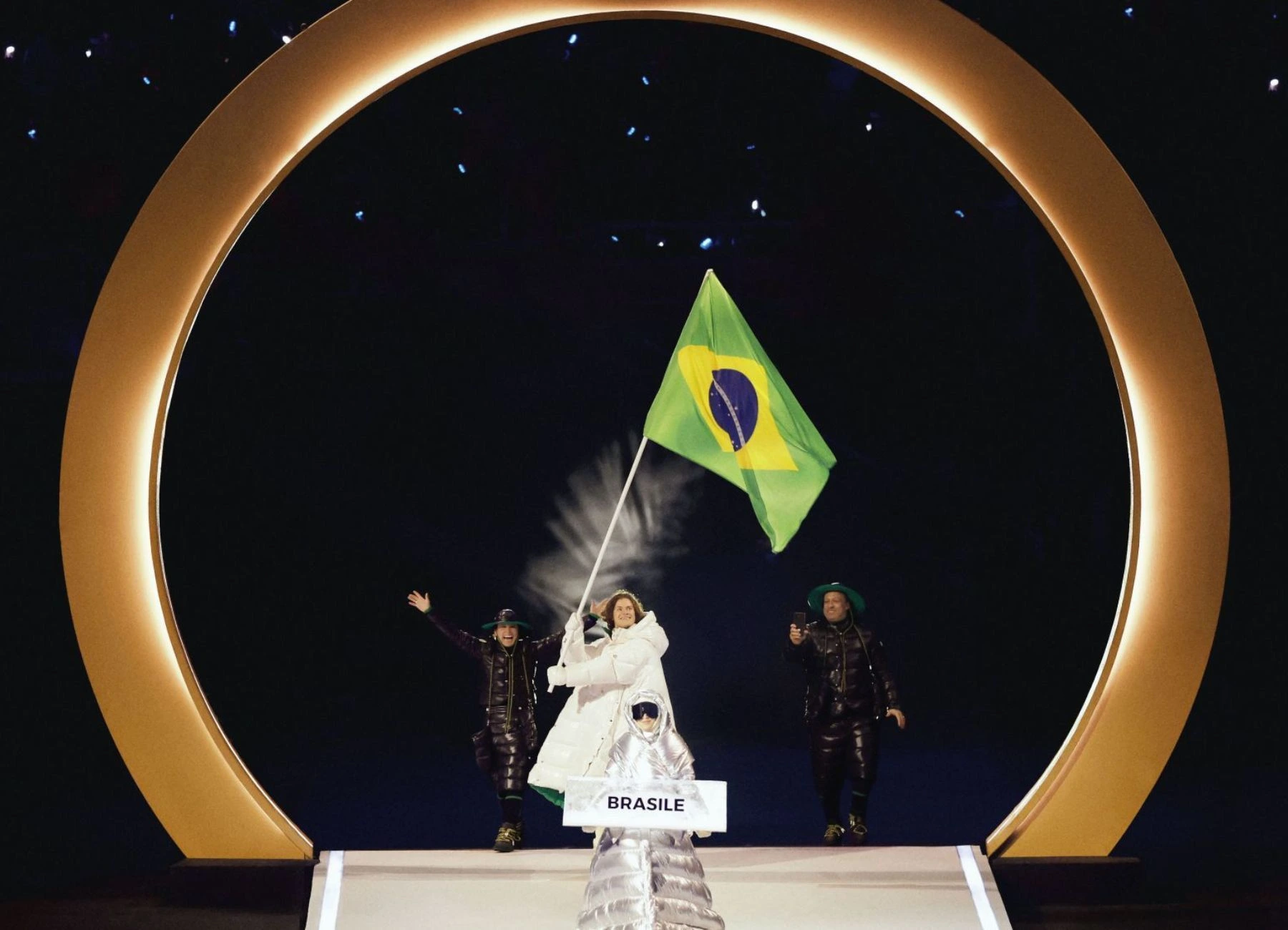
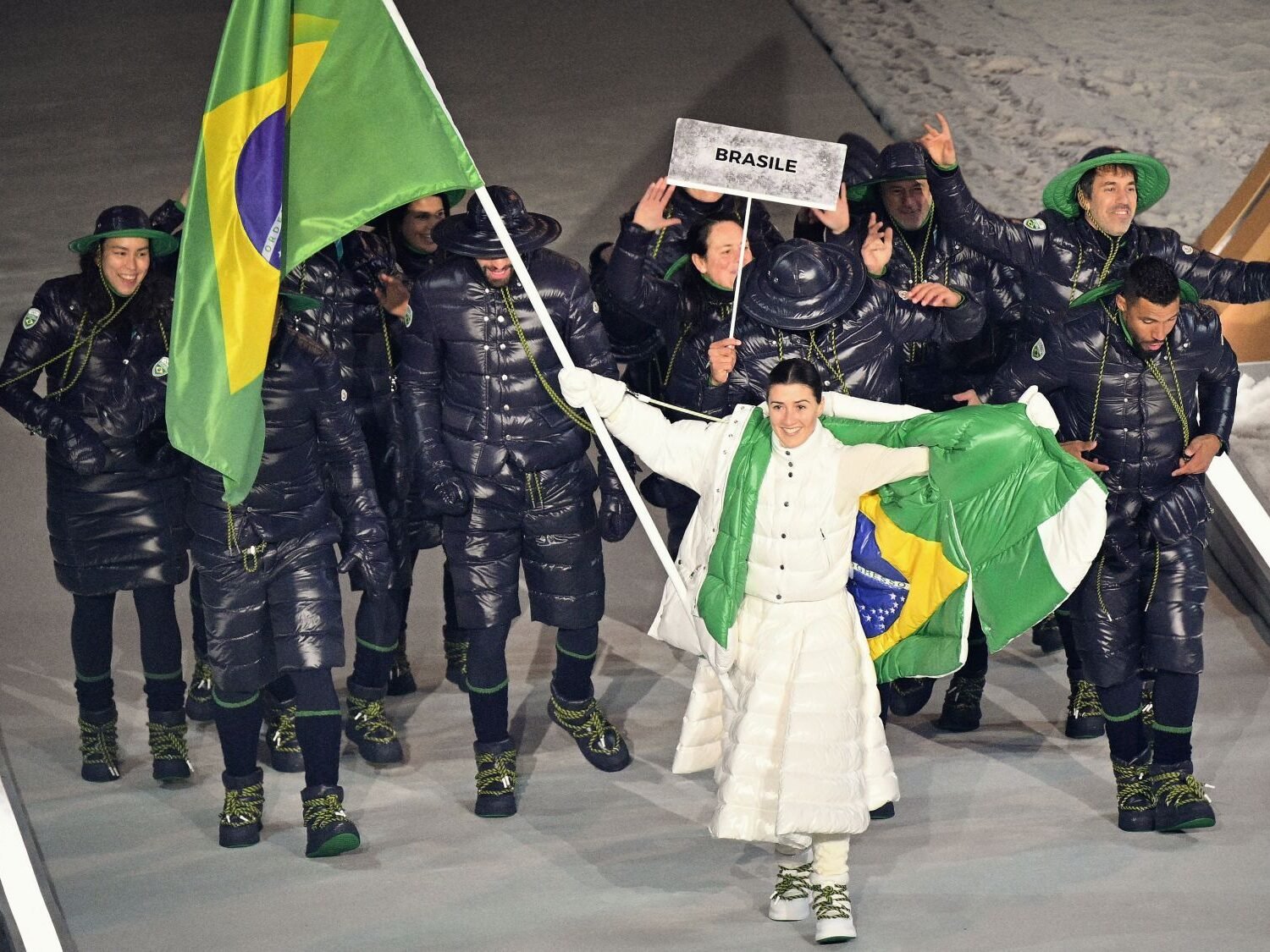
When you think of Brazil, the first sports that probably come to mind are football, Brazilian jiu-jitsu, or volleyball—not alpine skiing or the Winter Olympics. Yet the South American nation arrived at Milano Cortina 2026 with its largest-ever Winter Olympic delegation, sending a record 14 athletes to compete. Few expected Brazil to steal the spotlight at San Siro Stadium before the competition even began, but by the time its athletes completed the Opening Ceremony parade, they had delivered one of the evening’s most memorable fashion moments.
The collection was the result of a collaboration between Moncler and celebrated Brazilian designer Oskar Metsavaht, brought to life by flag bearer Lucas Pinheiro Braathen. Rather than relying on bold colours or obvious national symbols, the uniforms embraced sculptural silhouettes, refined tailoring, and thoughtful details inspired by both Brazil’s identity and Moncler’s alpine roots. It was a confident approach that felt perfectly at home in one of the world’s fashion capitals and quickly earned its place at the Opening Ceremony.
Team Brazil x Moncler at Milano Cortina 2026 Opening Ceremony parade | Image: Supplied / Moncler
This collaboration owes a lot to Lucas Pinheiro Braathen. As a Moncler Grenoble ambassador, he is now one of alpine skiing’s biggest stars, but his journey goes far beyond the sport itself. Braathen was born in Norway and later chose to represent Brazil, his mother’s homeland. He has already made history by winning Brazil’s first Alpine Ski World Cup. Looking ahead to Milano Cortina 2026, he is not only bringing the Brazilian flag into the stadium but also carrying the hopes of becoming the first South American athlete to win a Winter Olympics medal.
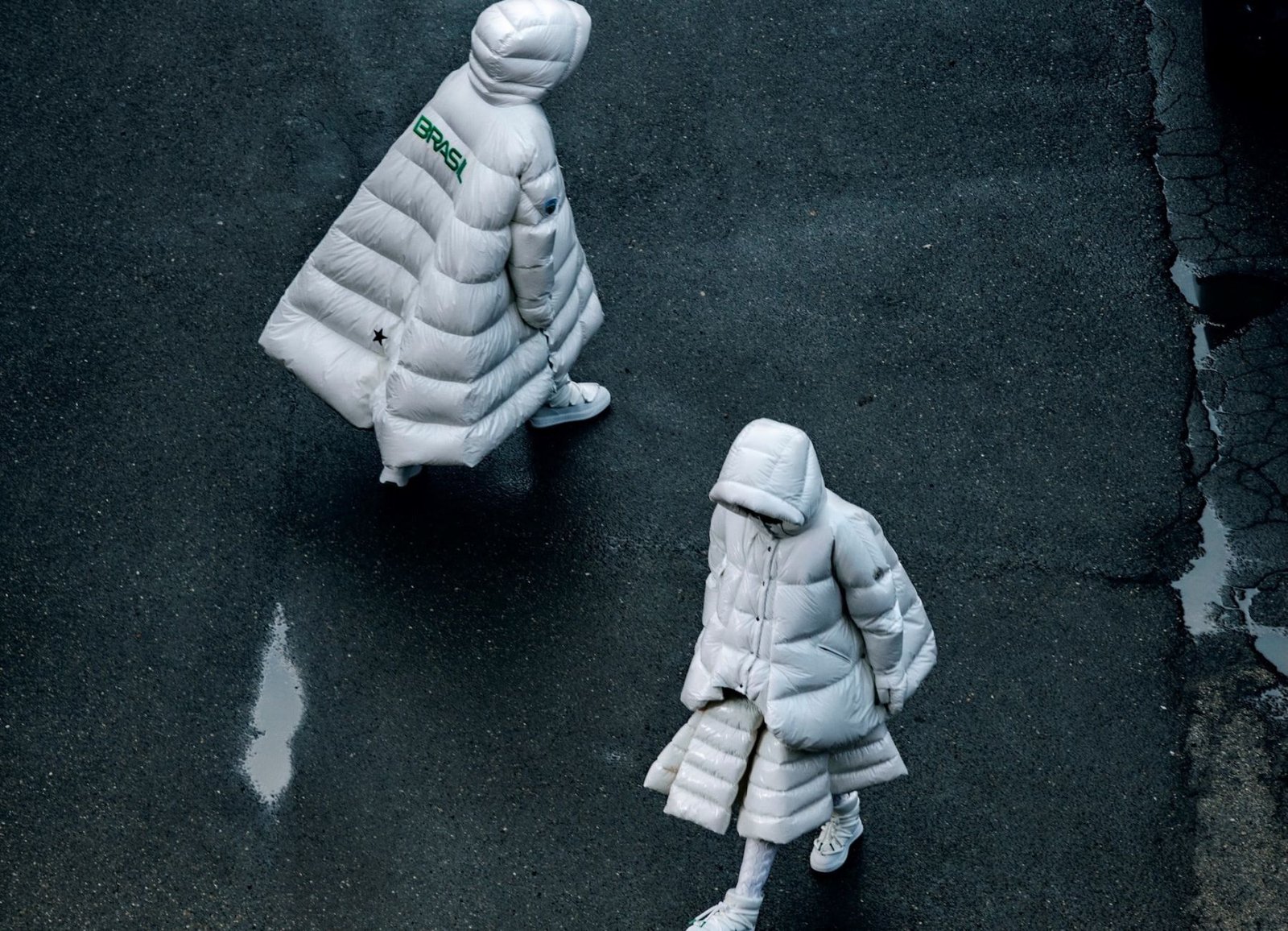
Instead of dressing Brazil, it’s tropical carnival colours, Moncler and Metsavaht took a far more understated approach. White became the foundation of the collection, a nod to the snow-covered backdrop of the Winter Games, while Brazil’s signature green, yellow, and blue appeared in small sections in a more elegant, rather than obvious, way, allowing the country’s identity to reveal itself naturally.
As Metsavaht explained: “My personal history is deeply connected to technical clothing. My genesis as a designer was not tropical luxury—which I later became known for—but performance wear for extreme environments.”
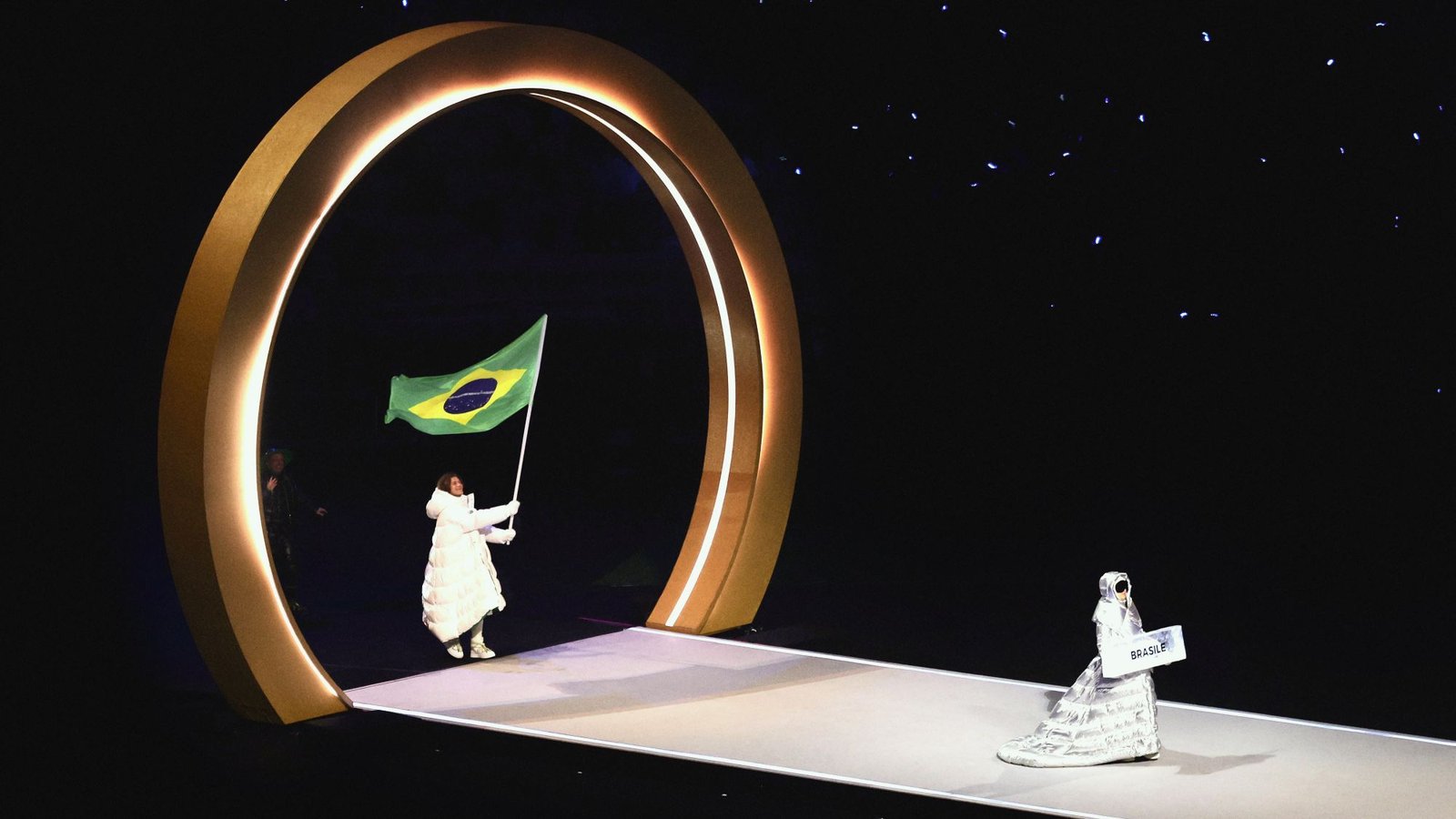
Nothing captured that philosophy better than the ceremonial cape. Drawing inspiration from Moncler’s legendary Karakorum jacket—first created for the Italian expedition that conquered K2 in 1954—the flowing white design quickly became one of the defining images of the Opening Ceremony. From the outside, the cape appeared almost entirely white, but with every step, the Brazilian flag emerged from within the lining.
“The central piece is the white cape for the flag bearers. It’s a sculptural garment that represents snow—the essential element of the Winter Olympics—and carries a sense of ceremony and majesty. From the outside, it’s completely white, almost monastic. Inside, the Brazilian flag appears in intarsia, revealed only through movement.”
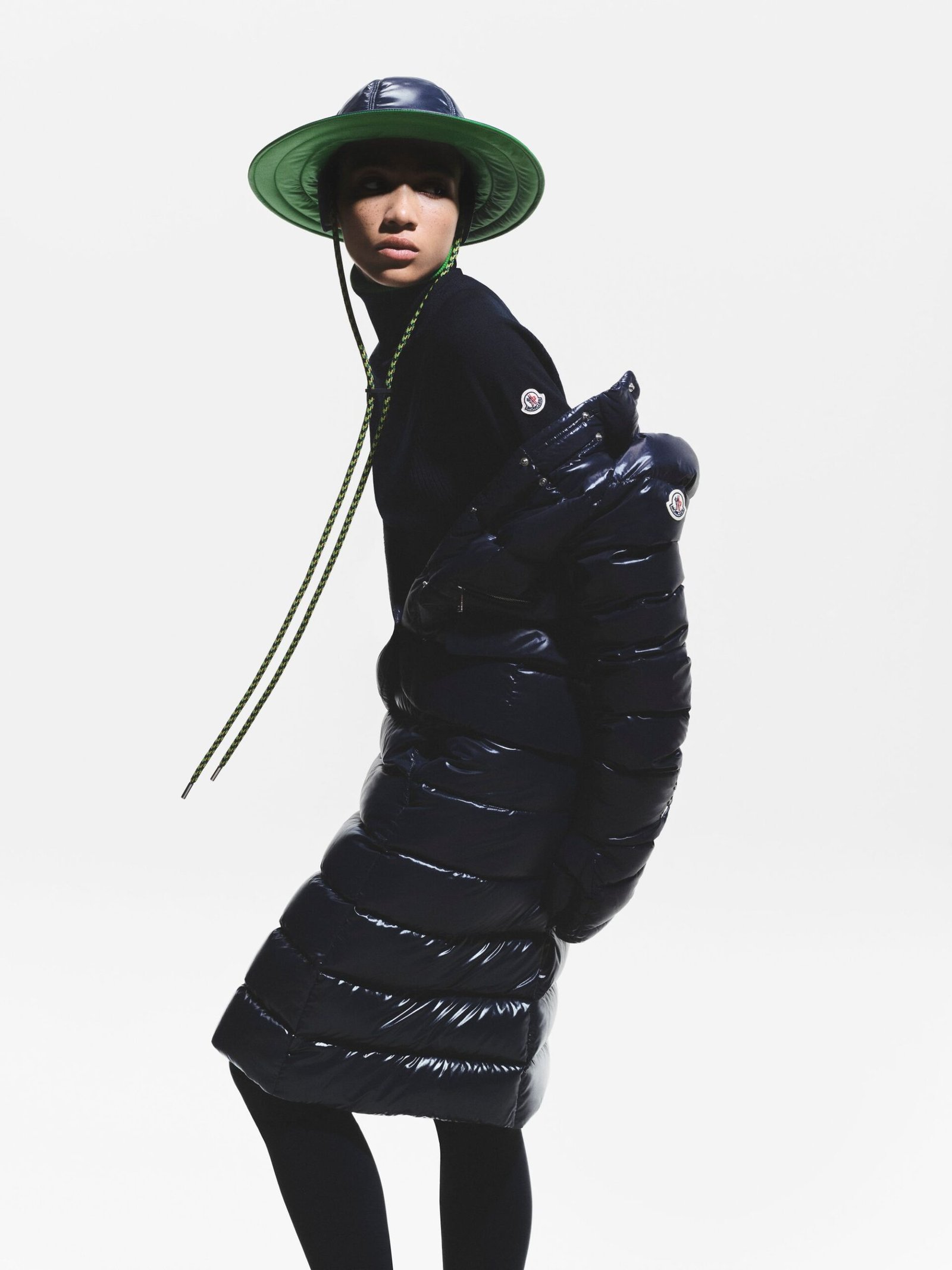
Team Brazil x Moncler | Image: Supplied / Moncler
Team Brazil x Moncler | Image: Supplied / Moncler
For Metsavaht, the project brought together two worlds he has lived in for decades. Before establishing Osklen as one of Brazil’s leading fashion labels, he worked as a sports medicine doctor and designed technical clothing for his own snowboard trips and high-mountain expeditions. Those early experiences made the partnership with Moncler feel like a natural fit, combining his passion for performance apparel with the brand’s long-standing mountain heritage.
Reflecting on his approach to design, he said, “My personal work has always lived in this space of contrasts, between art and science, fashion and medicine, city and nature, performance and lifestyle.”
Team Brazil x Moncler | Image: Supplied / Moncler
Team Brazil x Moncler | Image: Supplied / Moncler
Moncler CEO Remo Ruffini found it easy to choose Oskar Metsavaht for the project. Metsavaht is one of Brazil’s most respected designers, and Ruffini felt he truly understood both the creative and technical aspects in a way that set him apart.
As Moncler CEO Remo Ruffini puts it, “Oskar is widely recognized as one of the leading references in design and art in Brazil. Beyond his creative vision, Oskar brings a deep understanding of life in the mountains and the demands of performance, learned from his own experience as a snowboarder. The natural connection between Oskar and Lucas made the difference. It’s how a project becomes authentic.”
Every garment feels purposeful, balancing Moncler’s alpine heritage with Brazil’s identity without either overshadowing the other, giving the collection a sense of authenticity woven throughout. It never feels like two brands sharing the spotlight—it feels like one story told from two different perspectives.
This collaboration was also a big moment for Moncler. Almost sixty years after the brand last appeared at the Winter Olympics in Grenoble in 1968, Milano Cortina 2026 gave Moncler the chance to return to the world’s biggest winter sports event.
Team Brazil x Moncler at Milano Cortina 2026 Opening Ceremony parade | Image: Supplied / Moncler
“The Olympics carry a powerful symbolic meaning for our brand. We have always been deeply connected to sport and to the mountains. This return with Lucas and Team Brazil, nearly 60 years after the Grenoble Games in 1968, is not about doing something obvious. It is a deliberate choice—one that feels right, distinctive, and fully aligned with who we are.”
The best Olympic uniforms are remembered long after the Closing Ceremony. Team Brazil’s Moncler collection seems likely to be one of those. Years from now, people might forget the results from Milano Cortina 2026, but they will remember the sweeping white capes, the hidden Brazilian flag, and the confidence Brazil showed on one of sport’s biggest stages. For Moncler, it was a welcome return to the Olympic Games. For Team Brazil, it showed that sometimes the most unforgettable moment comes before the competition even starts.
Elias Albay is the Founder and Director of Many Men Magazine, a Toronto-based digital publication dedicated to promoting modern masculinity through style, culture, and self-improvement. What started as a personal turning point became a purposeful platform. — born from Elias’ desire to create something meaningful after completing his studies and finding no career path that truly matched his ambitions. With a background in Civil Engineering from York University and experience in Commercial Flight Operations at CAE, he applied skills, and resilience from both fields to forge a new path.
Our team of editors and experts thoughtfully chooses each product. If you decide to buy through one of our links, we may earn a commission. Learn more. Want to know how we test products? Click here for more details.
Jaeger-LeCoultre doesn’t need to chase trends. When you’ve spent nearly a century refining one of the most recognizable silhouettes in watchmaking, the Reverso speaks for itself. At Watches & Wonders 2025, while many brands embraced bold and experimental, Jaeger-LeCoultre confidently stayed in its lane — and that’s precisely why their new releases feel so grounded and assured.
This year, the Maison unveiled 15 new Reverso models, each showcasing a distinct aspect of the collection’s enduring appeal. From intricate complications like the Gyrotourbillon in the Reverso Hybris Artistica Calibre 179 to artistic expressions in the Reverso Tribute Enamel “Shahnameh,” the lineup offers a harmonious blend of technical mastery and aesthetic refinement.
There is no need for theatrics here. Just thoughtful watchmaking with a clear sense of purpose—a quiet reminder of why the Reverso remains one of the greats.
Let’s take a closer look at what Jaeger-LeCoultre has brought to the table this year.
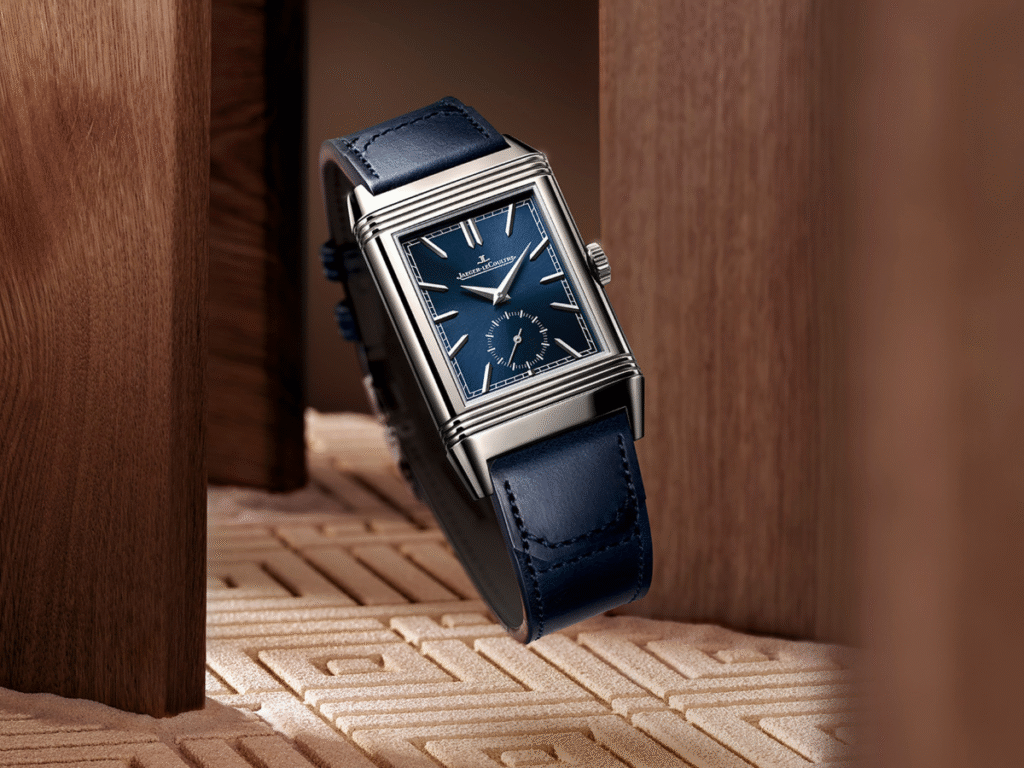
The first item on our list is the Reverso Tribute Duoface Small Seconds, which beautifully sets the tone for what Jaeger-LeCoultre brought to Watches & Wonders this year. This watch doesn’t aim to be loud or flashy. Instead, it emphasizes what the Reverso does best: timeless design, quiet innovation, and a sense of elegance that doesn’t need to be explained.
It starts with the dial — or rather, the first one. A rich, sunray-lacquered blue that shifts in the light, framed by a clean railroad minute track and accented with sharp Dauphine hands. The trapezoidal markers and the small seconds at 6 o’clock feel as though they were lifted straight from the 1930s, but there’s nothing outdated about how it all comes together. It’s refined and grounded, like the Reverso itself.
Flip the case, and you are introduced to a second personality. The reverse side features a silver sunrayed dial, complete with a second time zone and a Day & Night indicator — perfect for travelers or anyone juggling time across continents. Adjusting it is simple, thanks to the discreet slider on the side of the steel case. It is clever but never showy.
And because Jaeger-LeCoultre knows that the little things matter, the watch comes with two straps made by Casa Fagliano — one in smooth blue leather and the other in a rugged leather-canvas combo. It’s a thoughtful touch that adds versatility without fuss. Altogether, this Reverso isn’t just a tribute to tradition — it’s a reminder of why some designs never go out of style.
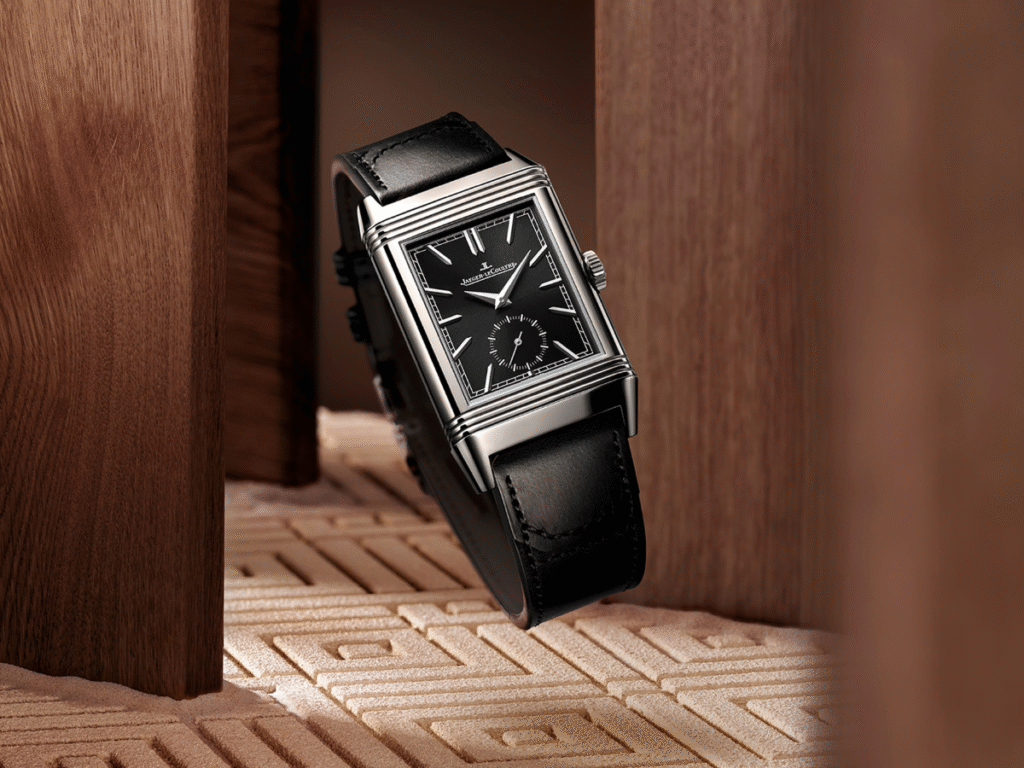
Much like its sibling above, this model offers the same thoughtful architecture and dual-time functionality but emphasizes a more understated, formal aesthetic. The deep black sunray dial provides a slightly sharper edge — perfect for someone who prefers a more low-key style. The familiar details are all present: the railroad minute track, faceted markers, Dauphine hands, and the small seconds at 6 o’clock, all arranged with a sense of balance that never gets old.
Flip the case, and the silver sunray reverse dial reveals a second time zone and a clean Night & Day display at 6 o’clock — ideal for business travel or simply keeping tabs on another city. It’s powered by the same manually-wound Calibre 854 and comes with two Casa Fagliano straps in black — one leather and one canvas-leather blend. Altogether, it’s the kind of piece that would effortlessly slide into any well-considered dress watch collection. Quietly confident and always appropriate.
Jaeger-LeCoultre Reverso Tribute Monoface Small Seconds | Image: Jaeger-LeCoultre
Reverso Tribute Monoface Small Seconds
Brand: Jaeger-LeCoultre
Model: Reverso Tribute Duoface Small Seconds
Reference: Q398847J
Diameter (L x W ): 45.6 x 27.4 mm
Thickness: 7.56 mm
Material: Pink Gold – 18 CT
Dial Colour: Golden 4N Grained
Calibre: Calibre 822
Power Reserve: 42 Hours
Water Resistance: 3 Bar ( 30 metres, 100 feet )
Price: USD $41,300
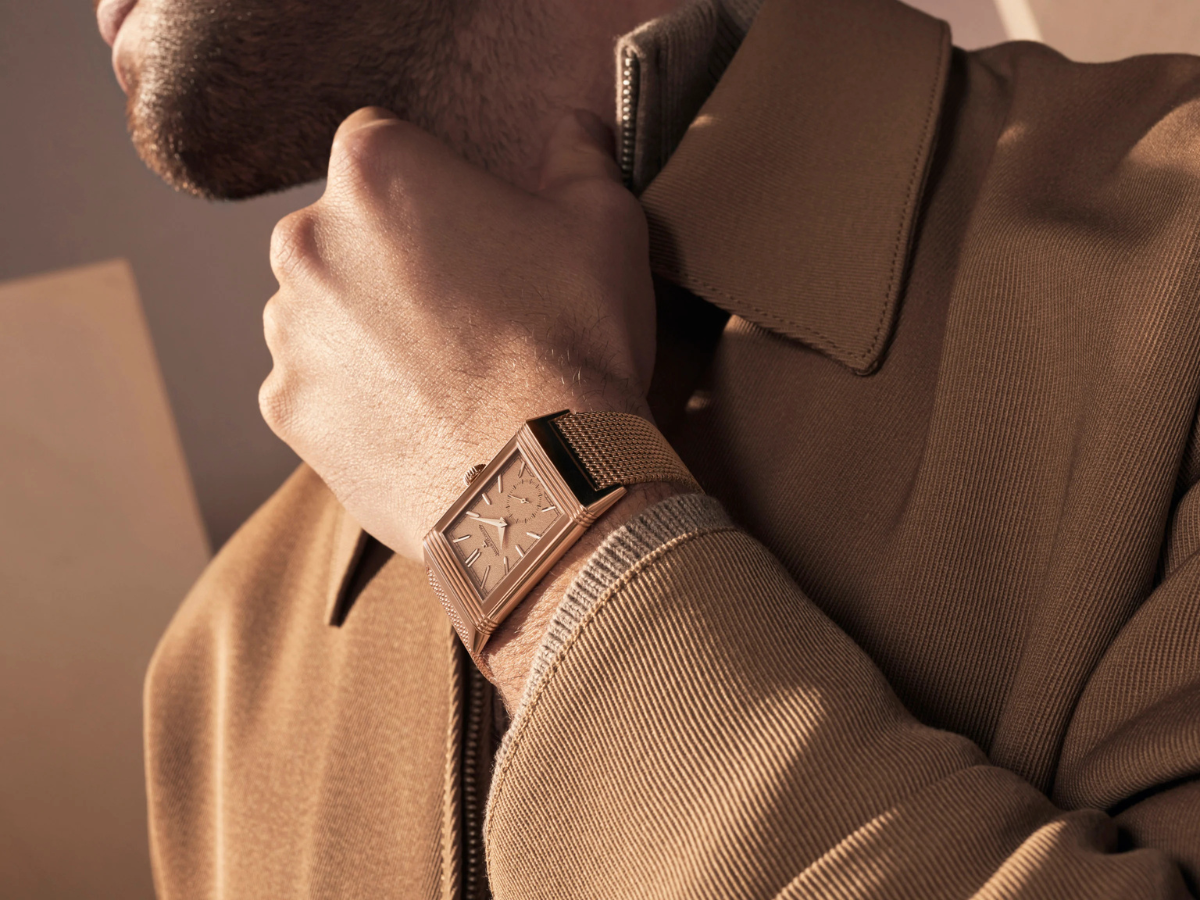
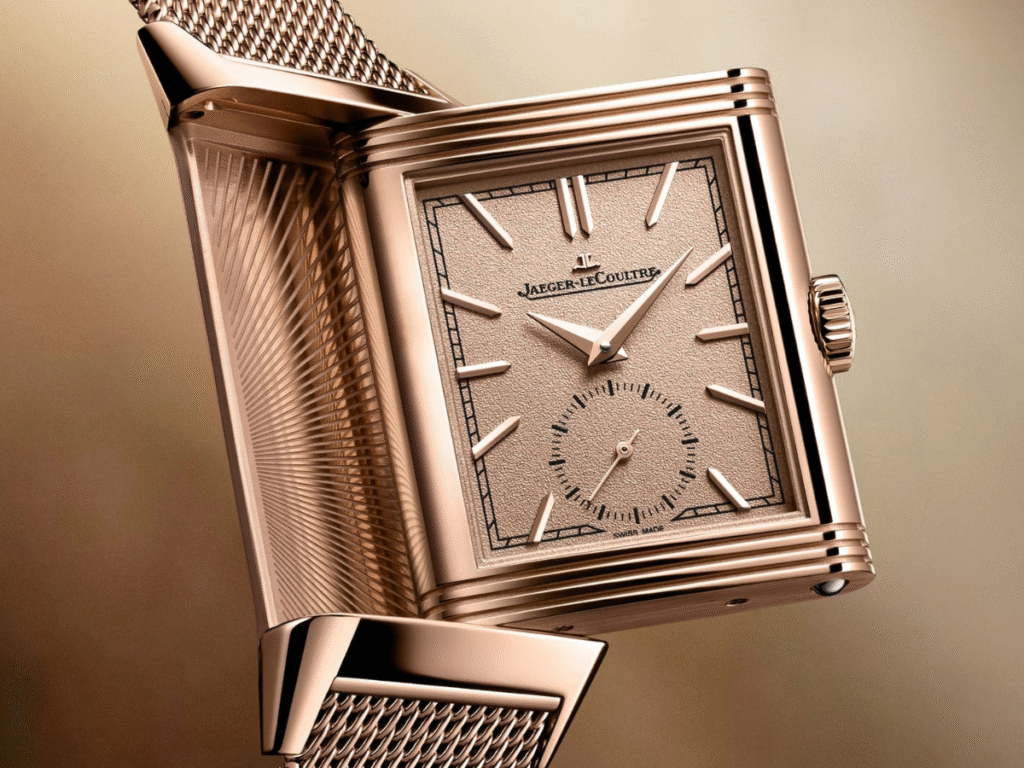
The next on our list is the Reverso Tribute Monoface Small Seconds, and this is the one everyone has been talking about. Among all of Jaeger-LeCoultre’s 2025 releases, this piece stands out — not for being loud or complicated, but for how effortlessly elegant it is. It strips things back to the essence of the Reverso, and the result is nothing short of captivating.
Housed in an 18-carat pink gold case, the watch features a grained golden dial that beautifully interacts with light — soft, warm, and rich in texture. The layout is clean: appliquéd hour markers, Dauphine hands, and a small seconds subdial at 6 o’clock maintain visual balance without clutter. Flip the case, and you won’t find a second dial — just a solid pink gold back, ideal for engraving or simply appreciating its minimalism. It measures 45.6mm by 27.4mm, with a slim 7.56mm profile that feels dream-like on the wrist.
But what truly elevates this piece is the bracelet: a Milanese mesh strap made entirely of Pink Gold 750/1000 (18 carats), designed to match the warmth and character of the case. It’s fluid, flexible, and sits comfortably on the wrist. Inside, the manually wound Calibre 822 delivers a 42-hour power reserve in a movement just under 3mm thick. If you’re building a refined dress watch collection or simply have a soft spot for gold watches, this Reverso hits all the right notes.
This is the showstopper of the collection — the kind of watch that draws a quiet pause the moment you see it. Limited to just 10 pieces worldwide, this release is Jaeger-LeCoultre pushing the Reverso into rarefied air. Crafted in 18-carat white gold, the case measures 51.1mm by 31mm, with a slightly thicker profile at 13.63mm to house what is inside — and what is inside is nothing short of breathtaking.
The front dial is a work of art: deep blue lacquer intricately decorated with geometric guilloché patterns that play with light as you move your wrist. At 6 o’clock, the Gyrotourbillon takes center stage — spinning on multiple axes in a hypnotic dance that highlights both technical complexity and visual drama. Flip the case, and the reverse dial strips away the dial plate to reveal the skeletonized movement beneath, still framed in blue lacquer and offering a second time zone with a 24-hour indicator.
Inside, the hand-wound Calibre 179 consists of 382 components, including the 123 parts of the Gyrotourbillon alone. It offers a 40-hour power reserve and operates with precision and theatre. The watch is paired with a blue alligator leather strap that perfectly complements the dial, giving it a regal finish.
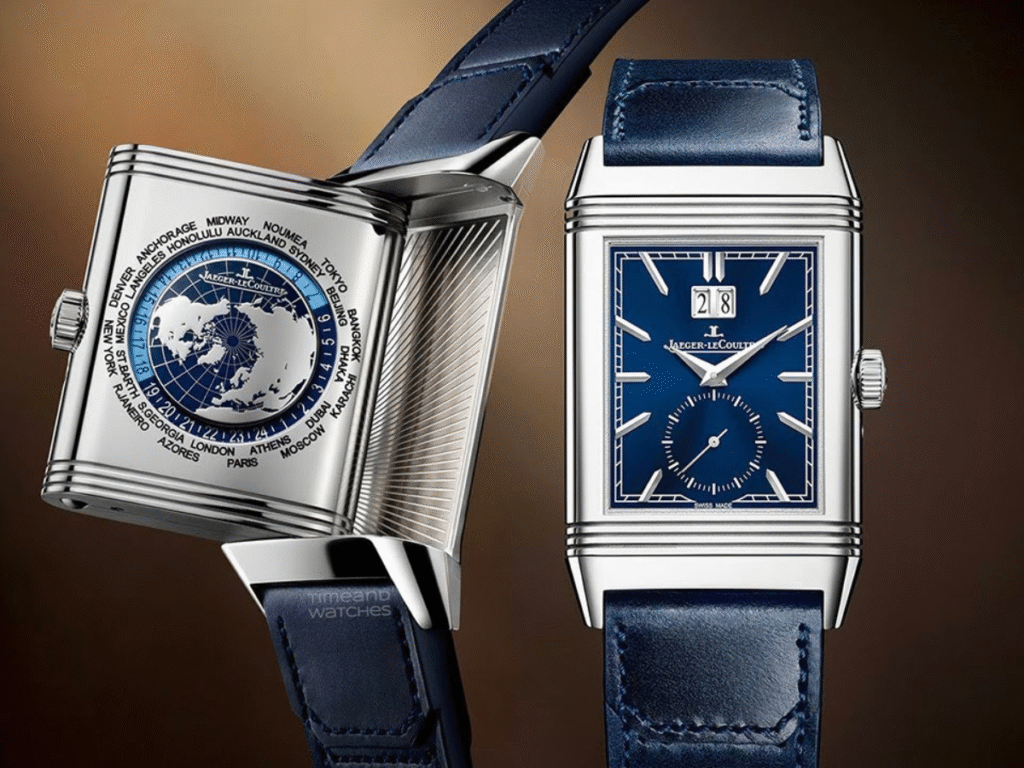
This next piece is perfect for frequent travelers or even those who just dream of traveling — this could be the ultimate Reverso. At first glance, you are welcomed by classic charm: a sunray blue dial, a small seconds sub-dial positioned at 6 o’clock, and the kind of understated elegance that has characterized the Reverso since the 1930s. The proportions are perfect, the details are polished, and the overall aesthetic is distinctly Jaeger-LeCoultre.
But flip the case, and everything changes. Instead of a cluttered world time complication, you’re met with a beautifully balanced layout that’s both artistic and intuitive. Static city names are laser-engraved in place around a rotating 24-hour ring that jumps in one-hour increments—no bezel turning, no guesswork. At the center, a world map rendered in steel is brought to life with hand-lacquered finishing and laser engraving, turning a functional display into something genuinely captivating.
Inside, the manually wound Calibre 834 powers it all with a 42-hour reserve — enough to get you through a few days of hopping between time zones. It may not be the most compact Reverso available, but it wears comfortably and feels like something you’d be happy to keep on your wrist day in and day out. The Tribute Geographic blends utility and elegance in a manner few worldtimers ever manage, and it does so while staying true to what makes the Reverso so iconic — just try not to flip it back and forth all day.
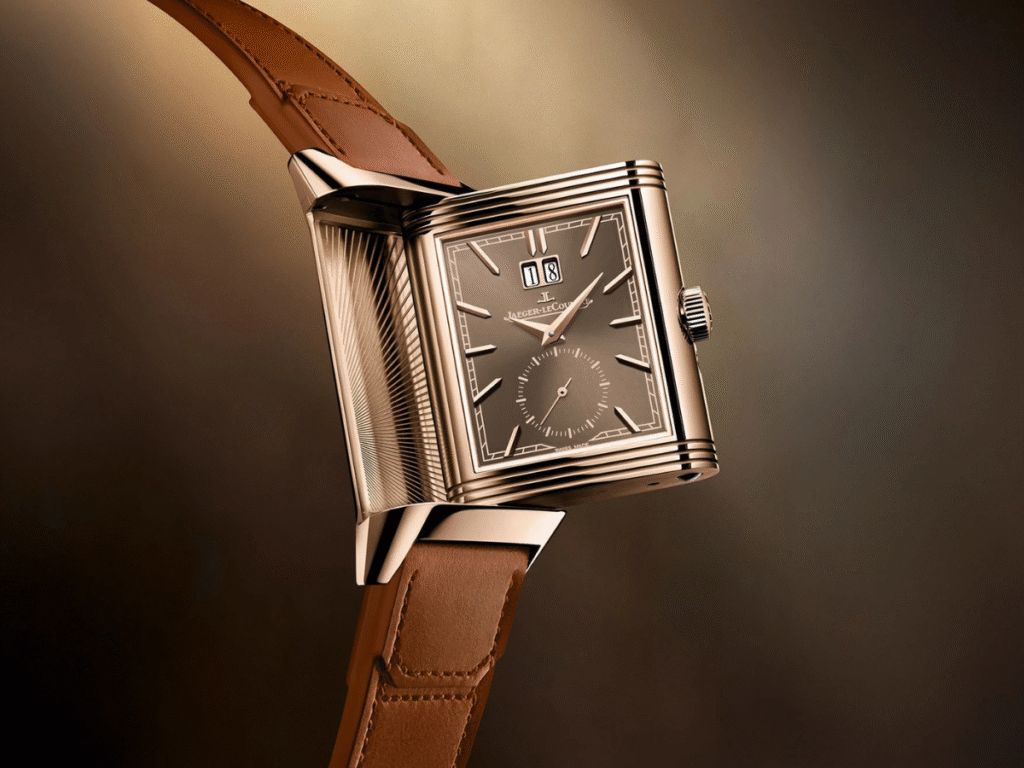
Wrapped in warm pink gold, this version of the Reverso Tribute Geographic presents a more refined, luxurious tone to one of Jaeger-LeCoultre’s most travel-savvy designs. The case catches the light with a soft glow that plays beautifully against the deep blue dial, providing the entire piece with a richer, more elevated feel. It remains every bit the intuitive, globe-trotting Reverso — just dressed for a different kind of occasion. To suit its versatile character, it includes two straps: a classic black alligator for formal settings, and a light brown calfskin that leans more casual without losing an ounce of style.
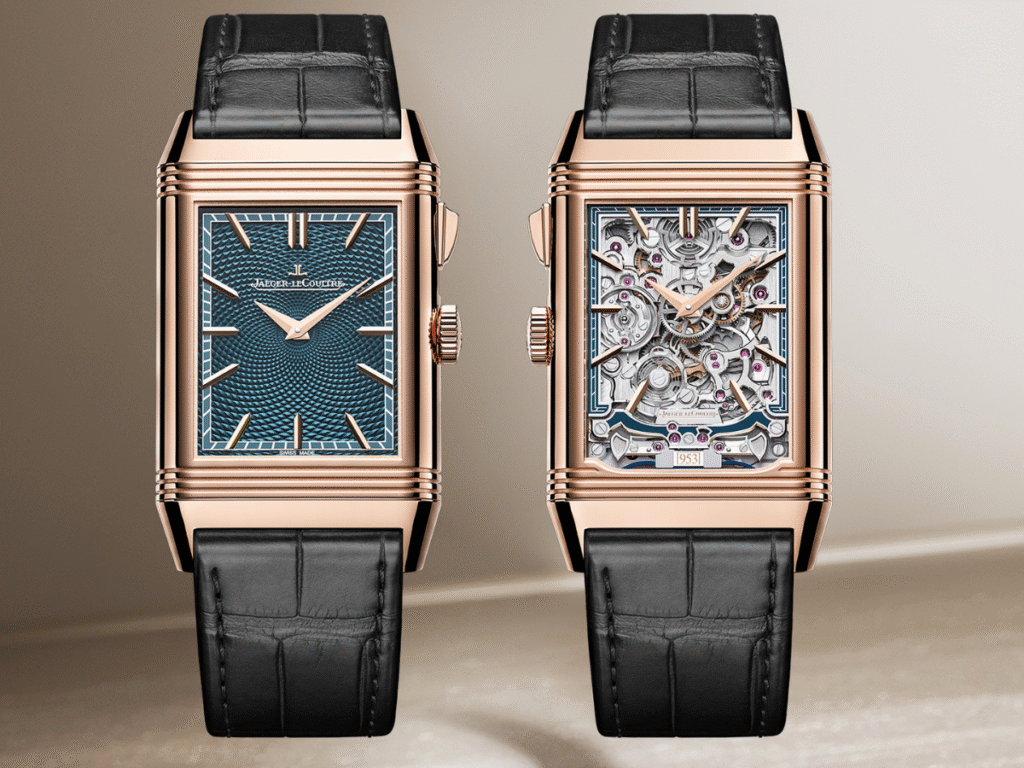
Few watches at Watches & Wonders 2025 turned heads like the Reverso Tribute Minute Repeater. Limited to just 30 pieces, this release introduces a rare complication to the Reverso format — and does so with flair. The front dial is striking, showcasing a rich teal Grand Feu enamel over a hand-guilloché barleycorn texture. It’s one of those dials you gaze at — the depth, the colour, the way it reflects the light. It’s refined yet never dull.
Then comes the reveal. Flip the case, and you’re treated to a full view of the movement — skeletonized, beautifully decorated, and designed to chime on demand. The new Calibre 953 powers it all, complete with a few clever tricks: crystal gongs for extra clarity, trébuchet hammers for efficiency, and no awkward pauses between tones. It’s a technical feat that sounds as remarkable as it looks.
Dial Colour: Grey sunrayed front dial, deep blue enamelled guilloché reverse dial
Calibre: Calibre 826
Power Reserve: 42 Hours
Water Resistance: 3 Bar ( 30 metres, 100 feet )
Price: USD $74,000 (Limited Edition – 90 Pieces)
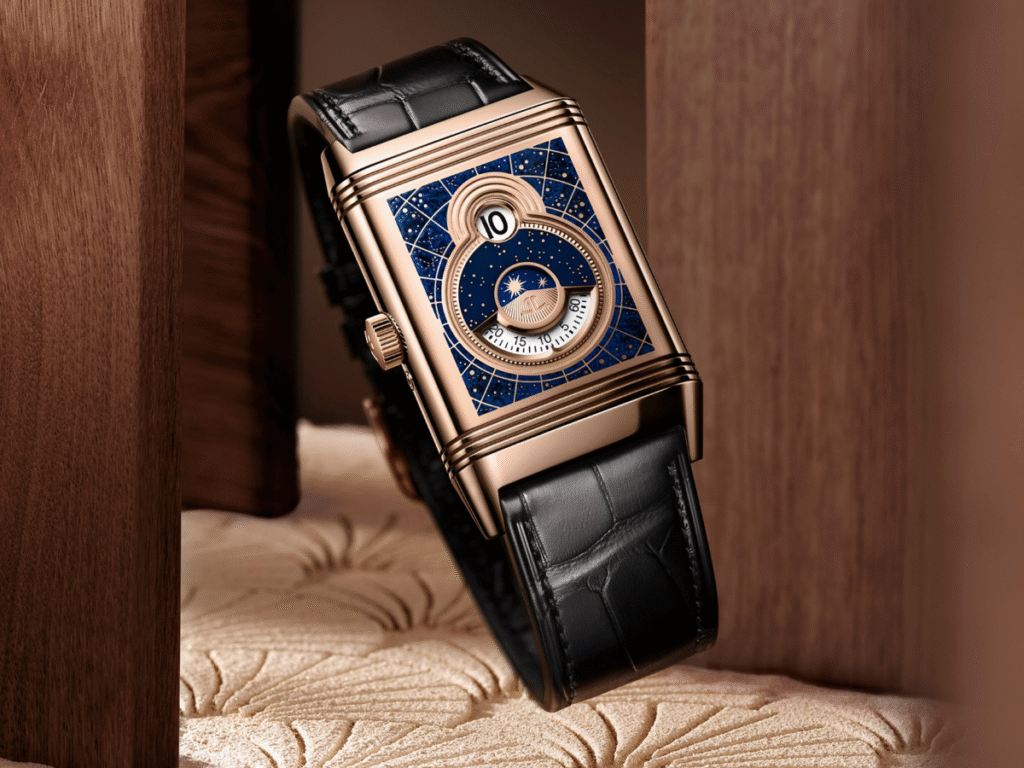
The Reverso Tribute Nonantième ‘Enamel’ celebrates Jaeger-LeCoultre’s craftsmanship and engineering excellence, available in a limited edition of only 90 pieces. Housed in 18-carat pink gold, this watch presents a dual facet of timekeeping. The front dial features a grey sunray finish, displaying a Grande Date at 12 o’clock, a moon phase, and small seconds at 6 o’clock, all accented by applied hour markers and Dauphine hands.
Flipping the case reveals a captivating reverse dial adorned with midnight blue enamel, sprinkled with 70 pink gold stars and engraved with celestial motifs. This side displays a semi-jumping digital hour, minutes on a rotating disc, and a day/night indicator, all powered by the in-house manual-winding Calibre 826 movement, which comprises 243 components and offers a 42-hour power reserve.
This includes a matching black alligator leather strap that enhances its elegant design. This watch exemplifies Jaeger-LeCoultre’s dedication to merging traditional craftsmanship with modern watchmaking.
Jaeger-LeCoultre’s Reverso Tribute Enamel Shahnameh Series | Image: Jaeger-LeCoultre
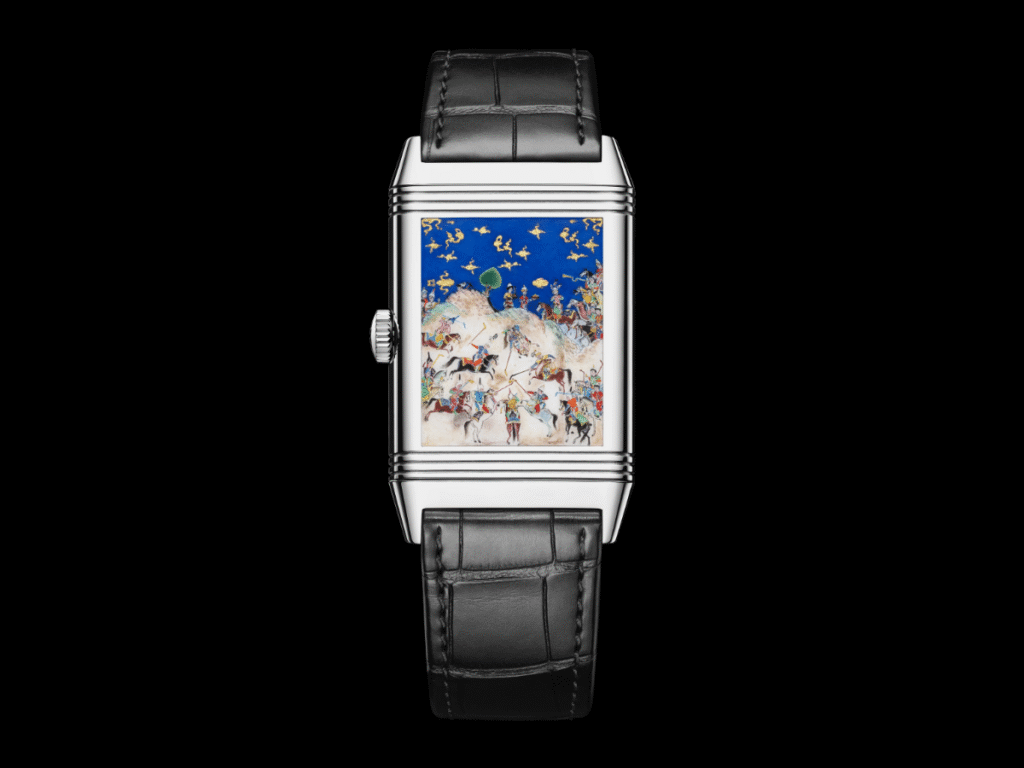
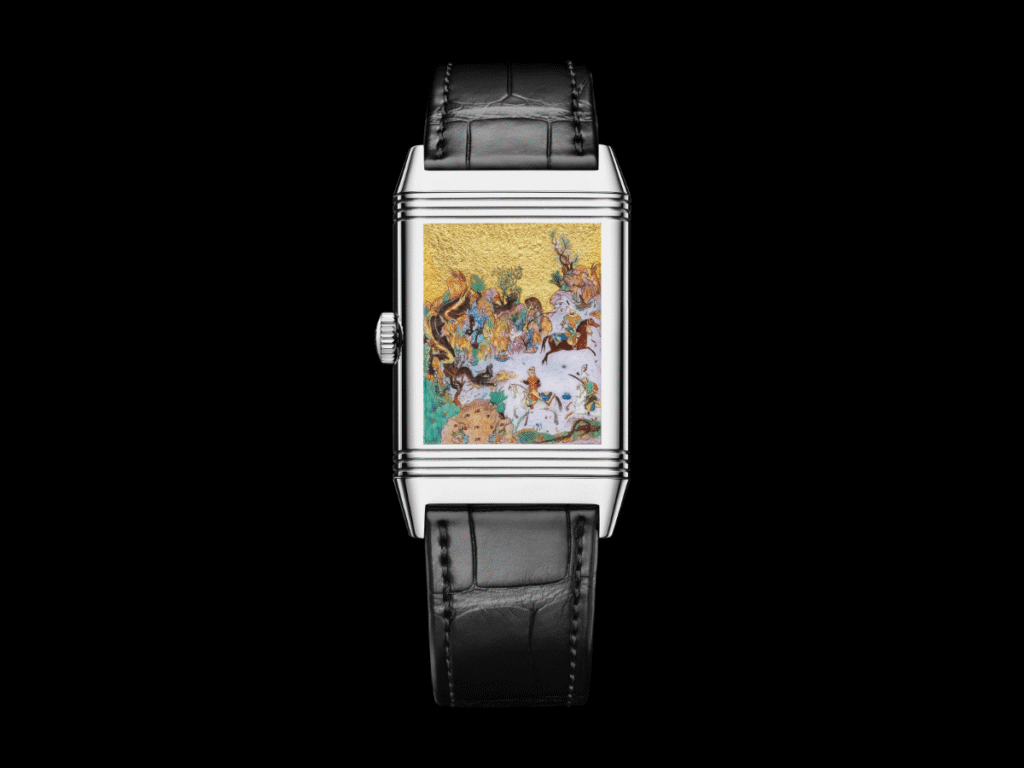
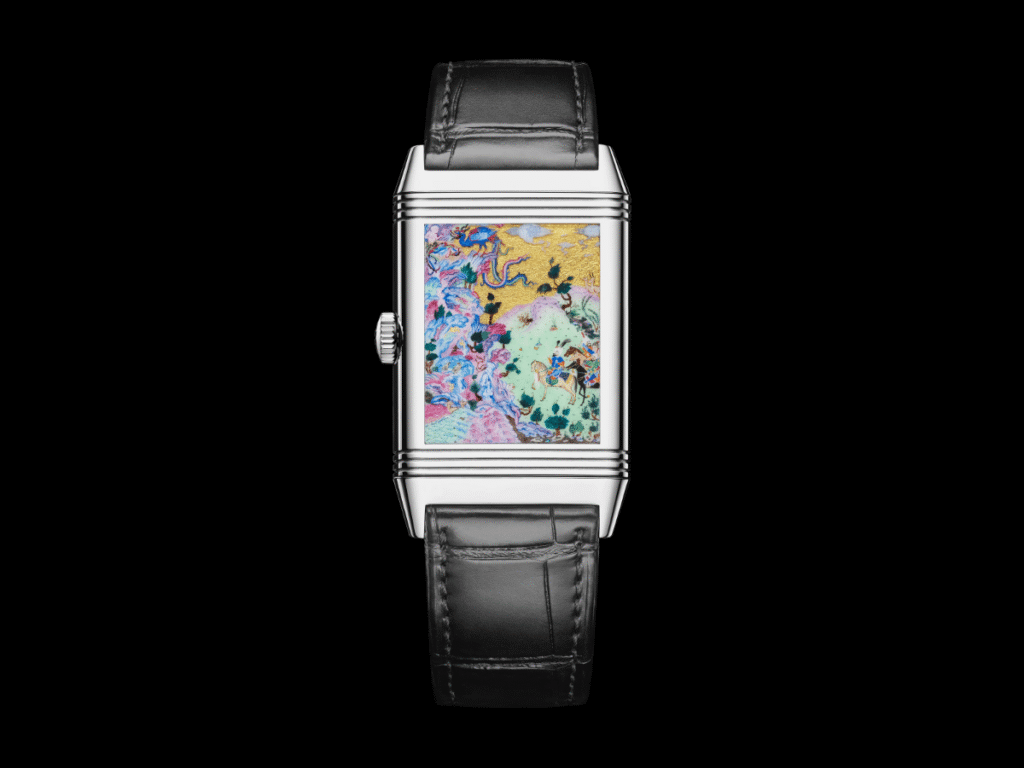
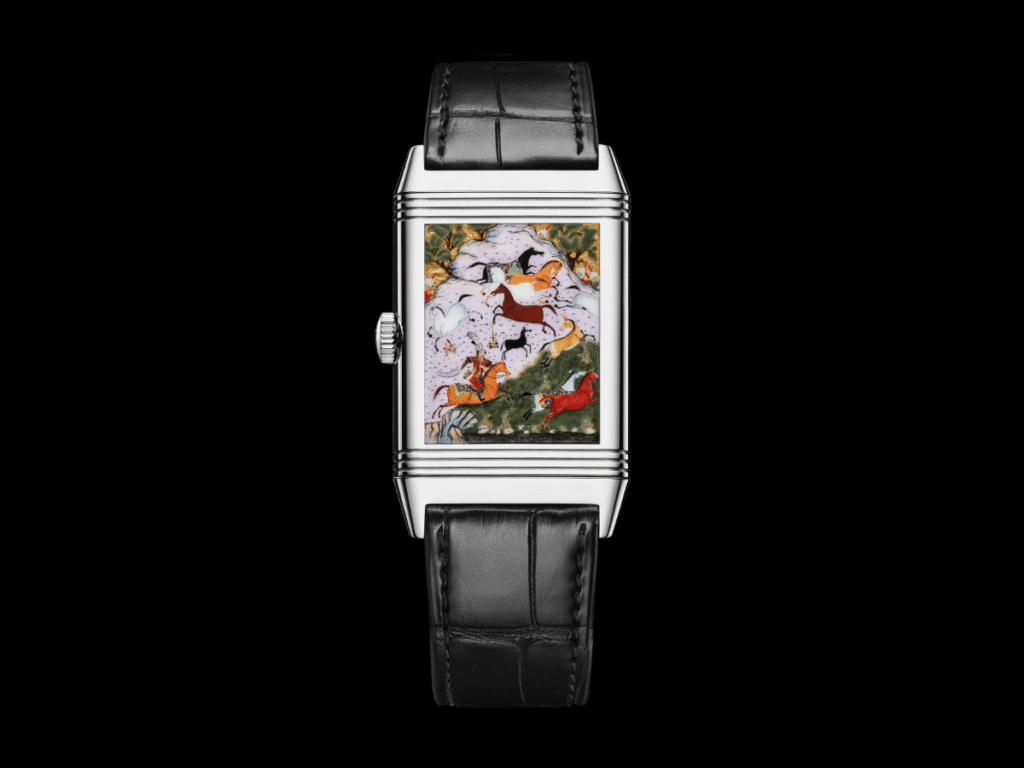
Jaeger-LeCoultre’s Reverso Tribute Enamel ‘Shahnameh’ collection elegantly blends storytelling, artistry, and heritage. This series of four timepieces—Siyavush Plays Polo, Faridun Tests His Sons, Saam Comes to Alburz, and Rustam Pursues Akvan—draws its inspiration from the renowned Persian epic Shahnameh, skillfully reinterpreting these enduring stories through the technique of hand-painted enamel. Each watch is strictly limited to only 10 pieces, making them as exclusive as the legends they depict.
On the front, each watch showcases a refined dial adorned with intricate guilloché patterns, protected by a smooth layer of Grand Feu enamel in subtle, elegant tones. Flip the Reverso over, and the caseback transforms into a canvas: a vivid, miniature enamel painting crafted entirely by hand. These artworks demand over 100 hours to complete and require an extraordinary level of precision to bring the characters and settings of Persian mythology to life.
Each piece is housed in an 18-carat white gold case and powered by Jaeger-LeCoultre’s manual-winding Calibre 822. While the mechanical side holds its own, the true magic lies in the artistic expression—a celebration of culture through timekeeping. These aren’t just watches for collectors; they’re heirlooms that transcend centuries.
Jaeger-LeCoultre Reverso Tribute Siyavush Plays Polo | Image: Jaeger-LeCoultre
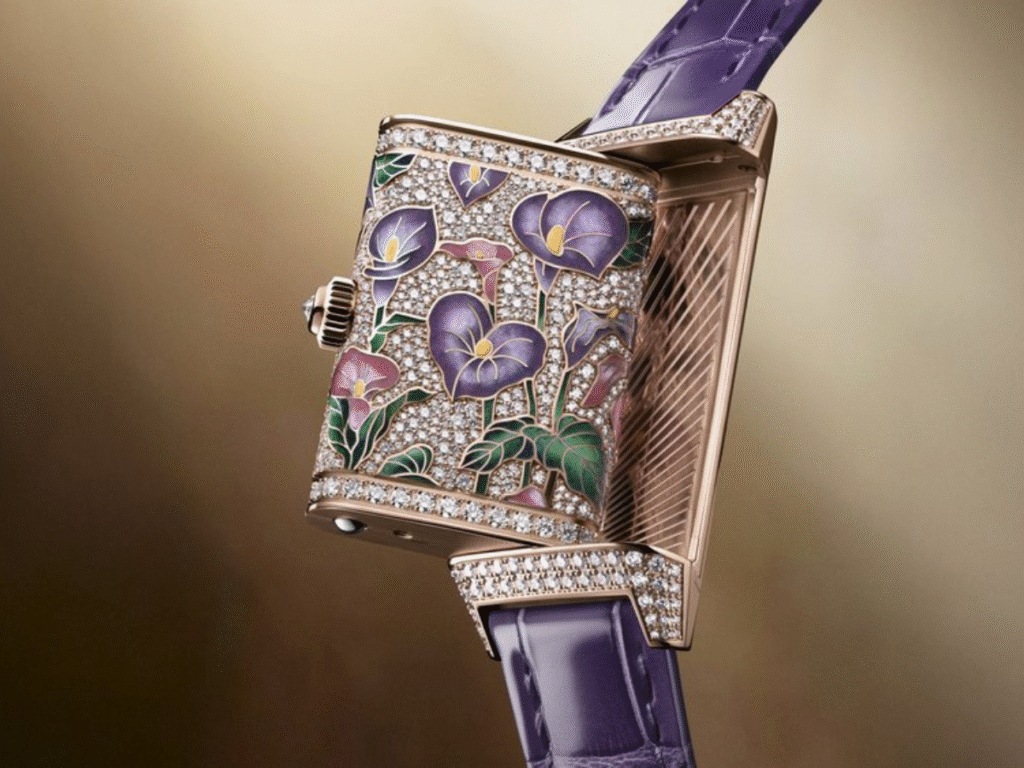
Jaeger-LeCoultre Reverso One Precious Flowers | Image: Jaeger-LeCoultre
Reverso One Precious Flowers – Purple
Brand: Jaeger-LeCoultre
Model: Reverso One Precious Flowers
Reference: Q3292435
Diameter (L x W ): 40 x 20 mm
Thickness: 9.09 mm
Material: Pink Gold 750/1000 18-CT
Dial Colour: Black transferred floral numerals, White, Mother-of-pearl
Calibre: Calibre 846
Power Reserve: 50 Hours
Water Resistance: 3 Bar ( 30 metres, 100 feet )
Price: Upon Request (Limited Edition – 10 Pieces)
This is where fine watchmaking and high jewelry come together in a dazzling display of artistry. Limited to just 10 pieces, this timepiece features a delicate white mother-of-pearl dial framed in 18-carat pink gold, with floral numerals and grain-set diamonds flowing seamlessly across the gadroons and lugs. The reverse-set diamond in the crown adds a final touch of elegance, all grounded by the warmth of the pink gold case.
But it’s the reverse side that steals the show — a breathtaking portrait of purple arums brought to life through the Grand Feu champlevé enamelling technique. Each flower is hand-carved and filled with enamel, requiring multiple firings to achieve its vivid depth and richness. This artistic flourish transforms the caseback into a miniature work of art.
Surrounding the enamel scene features 637 brilliant-cut diamonds, set using a mix of grain and snow-setting techniques that shimmer and shift with every movement. Paired with a shiny purple alligator strap and powered by the Calibre 846 manual movement, this Reverso isn’t just a timepiece — it’s a statement of beauty, craftsmanship, and floral elegance on the wrist.
Jaeger-LeCoultre Reverso One Precious Flowers | Image: Jaeger-LeCoultre
Reverso One Precious Flowers – Green
Brand: Jaeger-LeCoultre
Model: Reverso One Precious Flowers
Reference: Q3292434
Diameter (L x W ): 40 x 20 mm
Thickness: 9.09 mm
Material: Pink Gold 750/1000 18-CT
Dial Colour: Black transferred floral numerals, White, Mother-of-pearl
Calibre: Calibre 846
Power Reserve: 50 Hours
Water Resistance: 3 Bar ( 30 metres, 100 feet )
Price: Upon Request (Limited Edition – 10 Pieces)
Jaeger-LeCoultre’s poetic tribute to botanical beauty, this time adorned with a striking green alligator strap. Crafted in pink gold, the watch features a white mother-of-pearl dial with 12 Arabic numerals framed by the signature Art Deco angles of the collection. It is a delicate blend of jewelry and watchmaking, brought to life by the Maison’s expert artisans.
The reverse showcases a vibrant bouquet of green arums, created using the Grand Feu champlevé enamel technique—a five-step process involving multiple firings at 800°C. The flowers are set against a dazzling background of 409 snow-set diamonds, a setting that alone takes 45 hours to complete. To finish the composition, black lacquered accents are applied by hand, adding depth and contrast to an already mesmerizing floral scene.
Jaeger-LeCoultre Reverso One Precious Flowers | Image: Jaeger-LeCoultre
Reverso One Precious Flowers – White
Brand: Jaeger-LeCoultre
Model: Reverso One Precious Flowers
Reference: Q3293433
Diameter (L x W ): 40 x 20 mm
Thickness: 9.09 mm
Material: Pink Gold 750/1000 18-CT
Dial Colour: Black transferred floral numerals, White, Mother-of-pearl
Calibre: Calibre 846
Power Reserve: 50 Hours
Water Resistance: 3 Bar ( 30 metres, 100 feet )
Price: Upon Request (Limited Edition – 10 Pieces)
The final timepiece in Jaeger-LeCoultre’s 2025 Reverso collection showcases luminous elegance. Made from pink gold and complemented by a sleek white alligator strap, this watch exemplifies feminine sophistication and Métiers Rares™ artistry. The front dial features white mother-of-pearl, accented by black Arabic numerals and adorned with diamonds that gracefully follow the gadroons — all hallmarks of the Reverso One design.
On the reverse side, white arum flowers gently flourish, contrasting beautifully with 409 snow-set diamonds. The intricate Grand Feu champlevé enamel technique employed to craft the floral design involves multiple firings at 800°C, enhancing both vibrancy and detail with each layer. Additionally, the hand-applied black lacquer introduces contrast and depth, imparting a sculptural essence to the entire composition. This serves as a poetic conclusion to a collection characterized by elegance, artistry, and sheer visual pleasure.
Elias Albay is the Founder and Director of Many Men Magazine, a Toronto-based digital publication dedicated to promoting modern masculinity through style, culture, and self-improvement. What started as a personal turning point became a purposeful platform. — born from Elias’ desire to create something meaningful after completing his studies and finding no career path that truly matched his ambitions. With a background in Civil Engineering from York University and experience in Commercial Flight Operations at CAE, he applied skills, and resilience from both fields to forge a new path.