





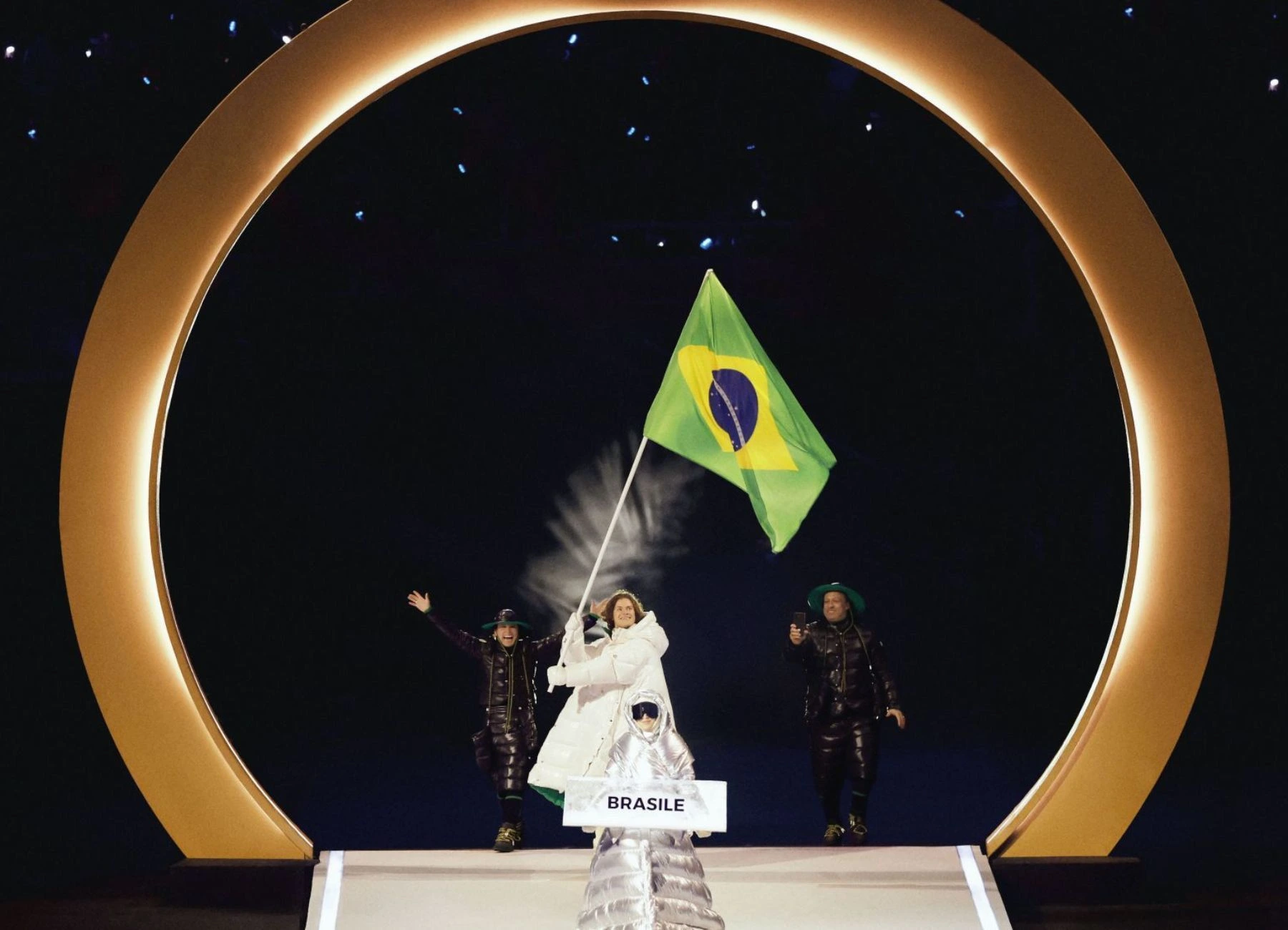

When you think of Brazil, the first sports that probably come to mind are football, Brazilian jiu-jitsu, or volleyball—not alpine skiing or the Winter Olympics. Yet the South American nation arrived at Milano Cortina 2026 with its largest-ever Winter Olympic delegation, sending a record 14 athletes to compete. Few expected Brazil to steal the spotlight at San Siro Stadium before the competition even began, but by the time its athletes completed the Opening Ceremony parade, they had delivered one of the evening’s most memorable fashion moments.
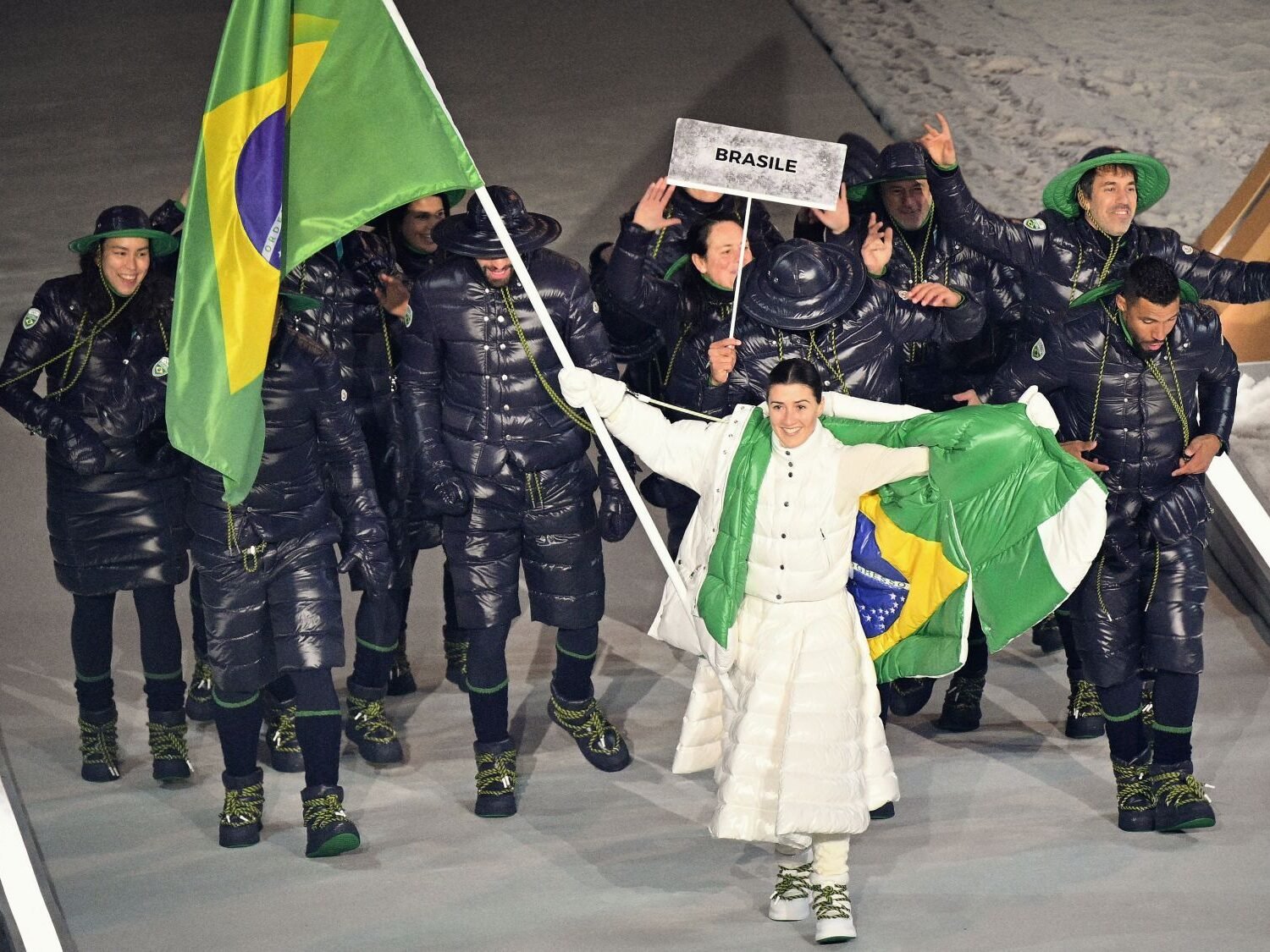
The collection was the result of a collaboration between Moncler and celebrated Brazilian designer Oskar Metsavaht, brought to life by flag bearer Lucas Pinheiro Braathen. Rather than relying on bold colours or obvious national symbols, the uniforms embraced sculptural silhouettes, refined tailoring, and thoughtful details inspired by both Brazil’s identity and Moncler’s alpine roots. It was a confident approach that felt perfectly at home in one of the world’s fashion capitals and quickly earned its place at the Opening Ceremony.

This collaboration owes a lot to Lucas Pinheiro Braathen. As a Moncler Grenoble ambassador, he is now one of alpine skiing’s biggest stars, but his journey goes far beyond the sport itself. Braathen was born in Norway and later chose to represent Brazil, his mother’s homeland. He has already made history by winning Brazil’s first Alpine Ski World Cup. Looking ahead to Milano Cortina 2026, he is not only bringing the Brazilian flag into the stadium but also carrying the hopes of becoming the first South American athlete to win a Winter Olympics medal.
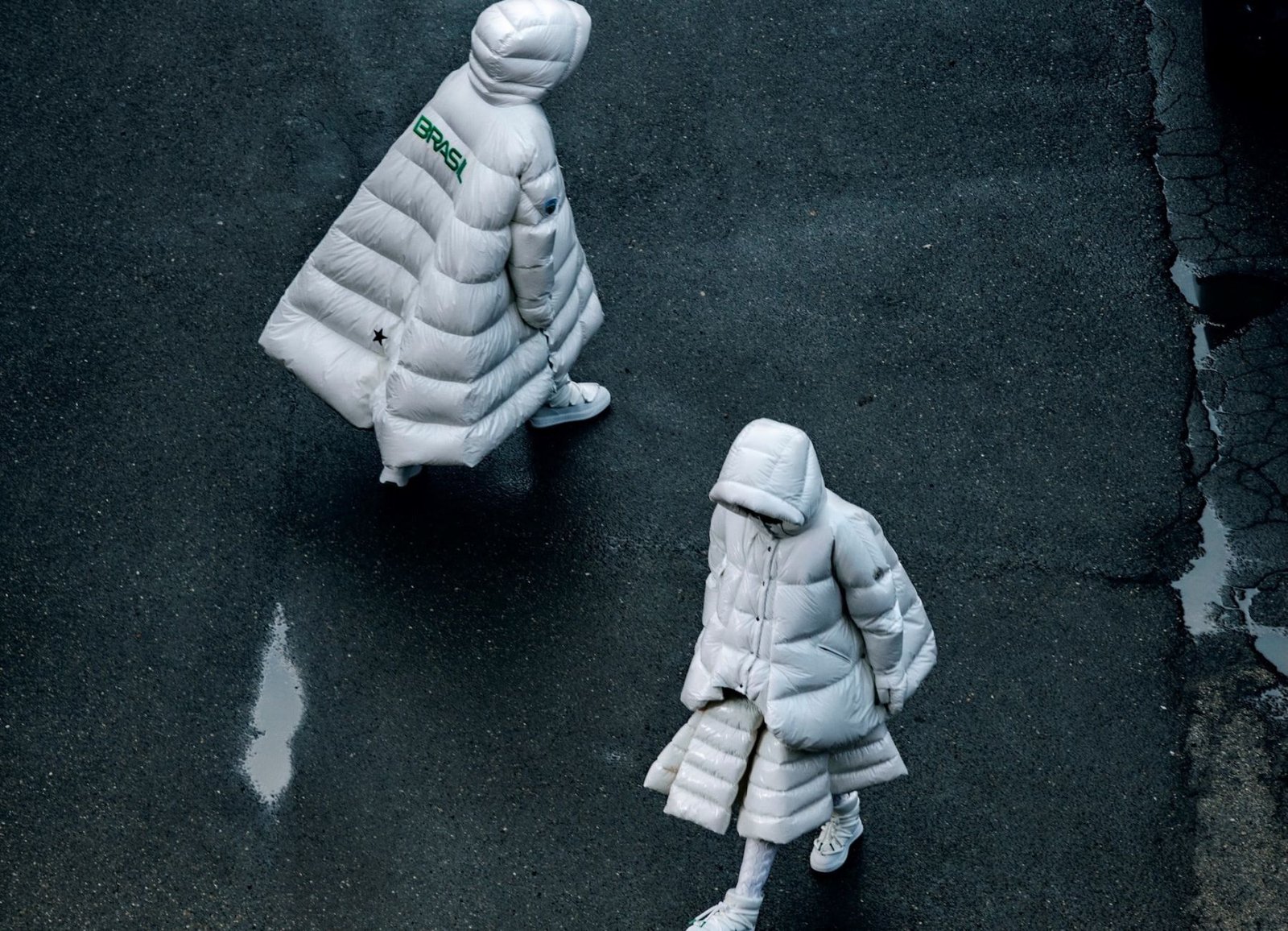
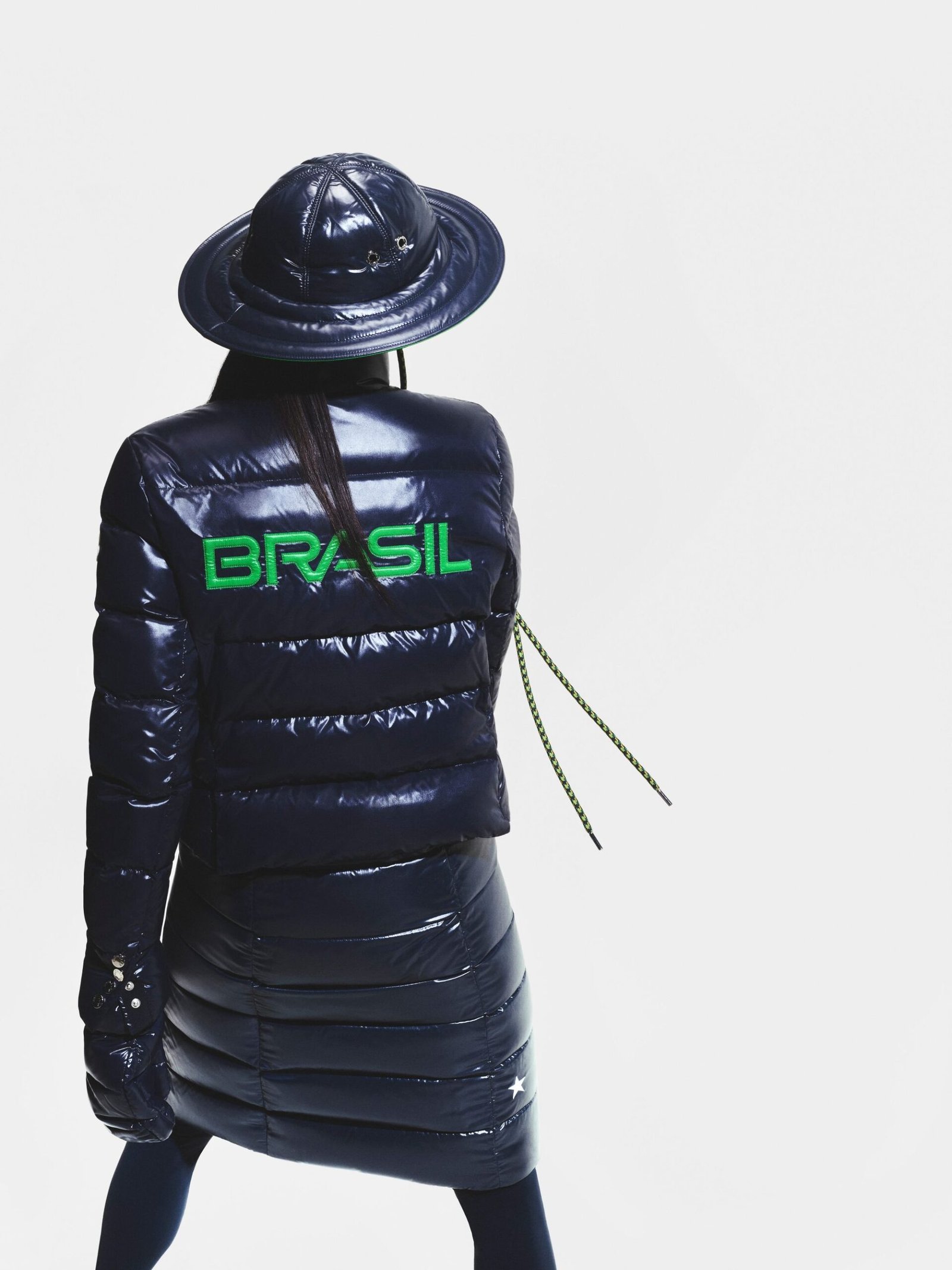
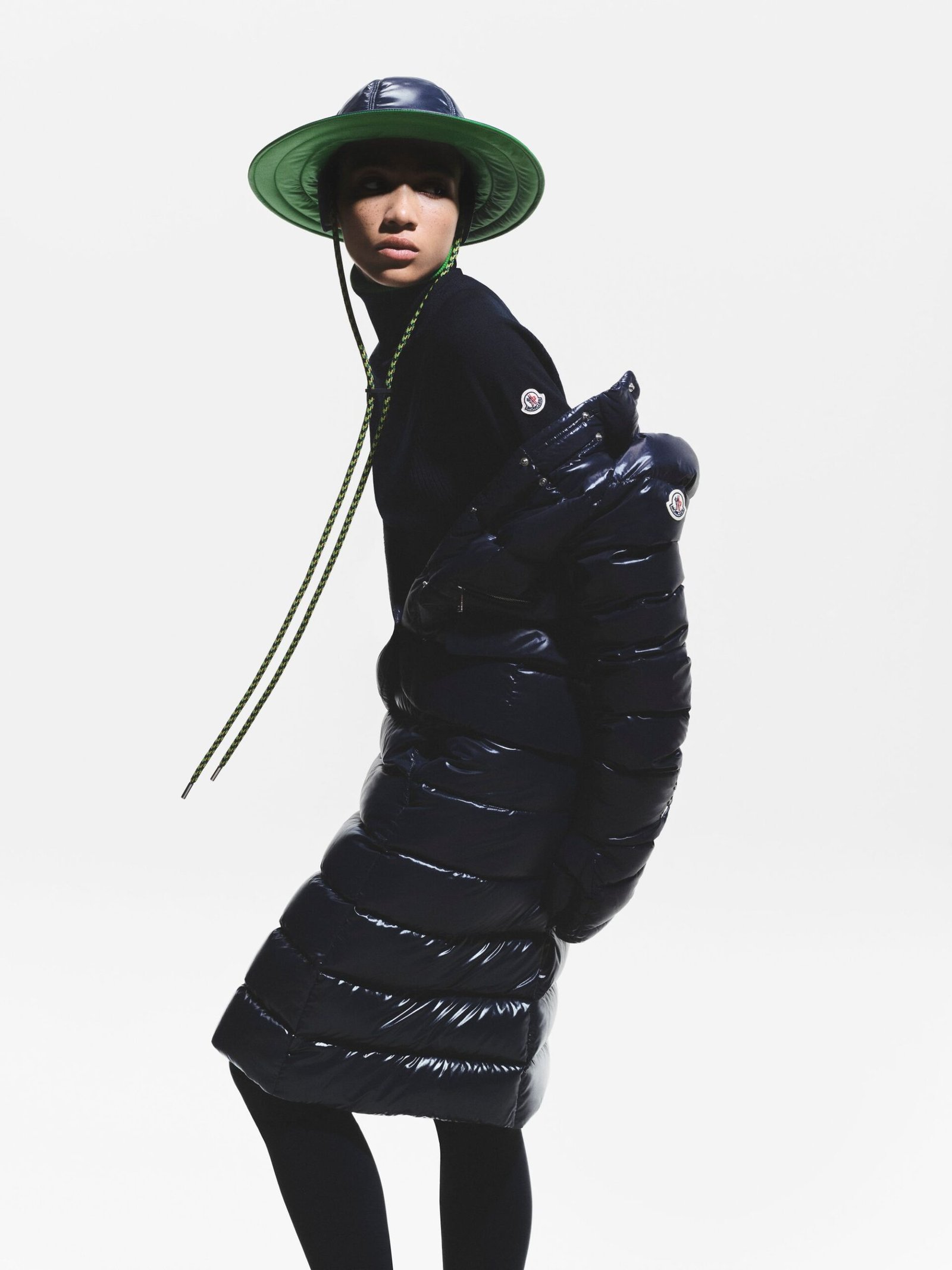
Instead of dressing Brazil, it’s tropical carnival colours, Moncler and Metsavaht took a far more understated approach. White became the foundation of the collection, a nod to the snow-covered backdrop of the Winter Games, while Brazil’s signature green, yellow, and blue appeared in small sections in a more elegant, rather than obvious, way, allowing the country’s identity to reveal itself naturally.
Advertisement · Continue Reading Below
As Metsavaht explained: “My personal history is deeply connected to technical clothing. My genesis as a designer was not tropical luxury—which I later became known for—but performance wear for extreme environments.”
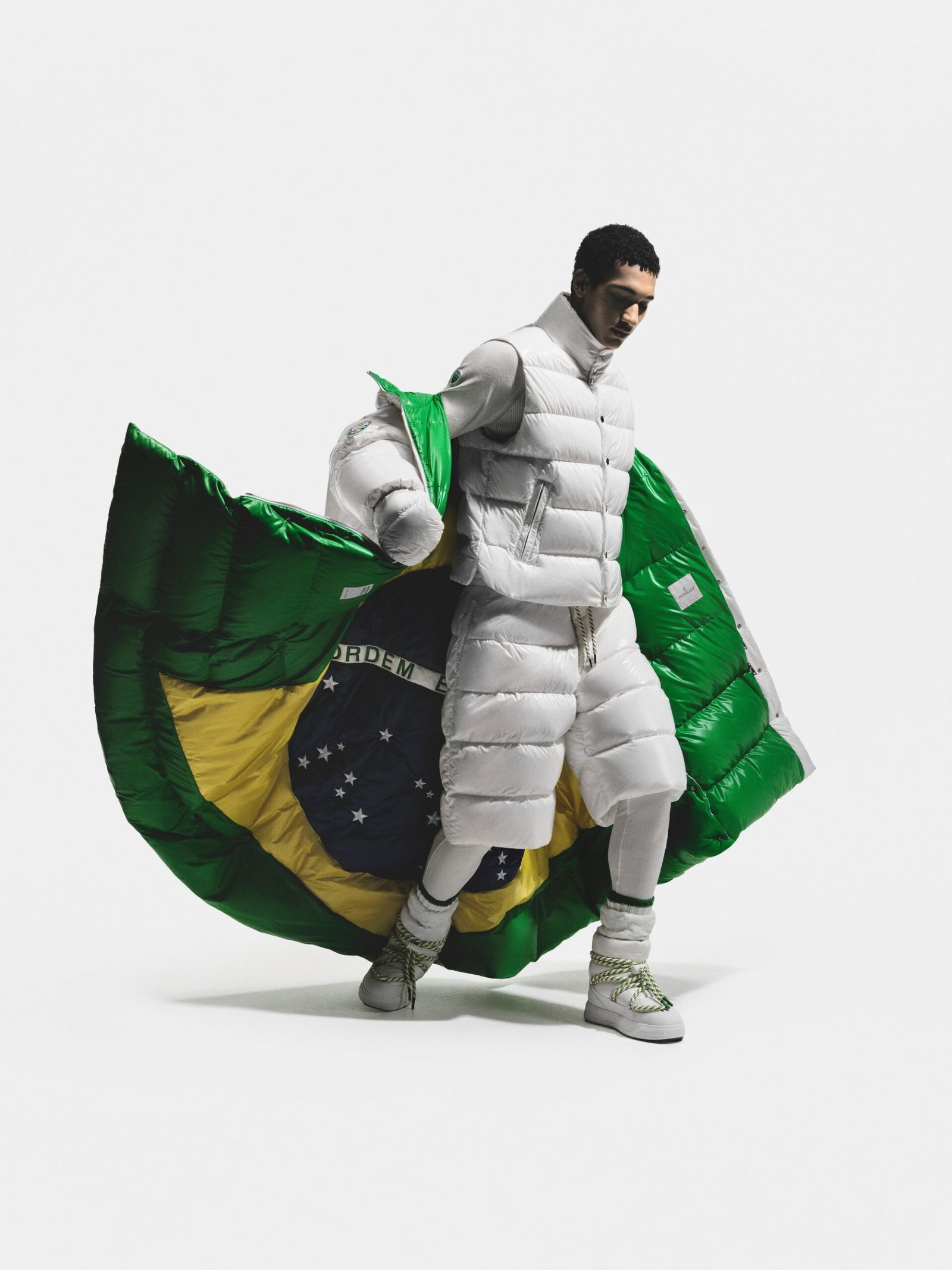
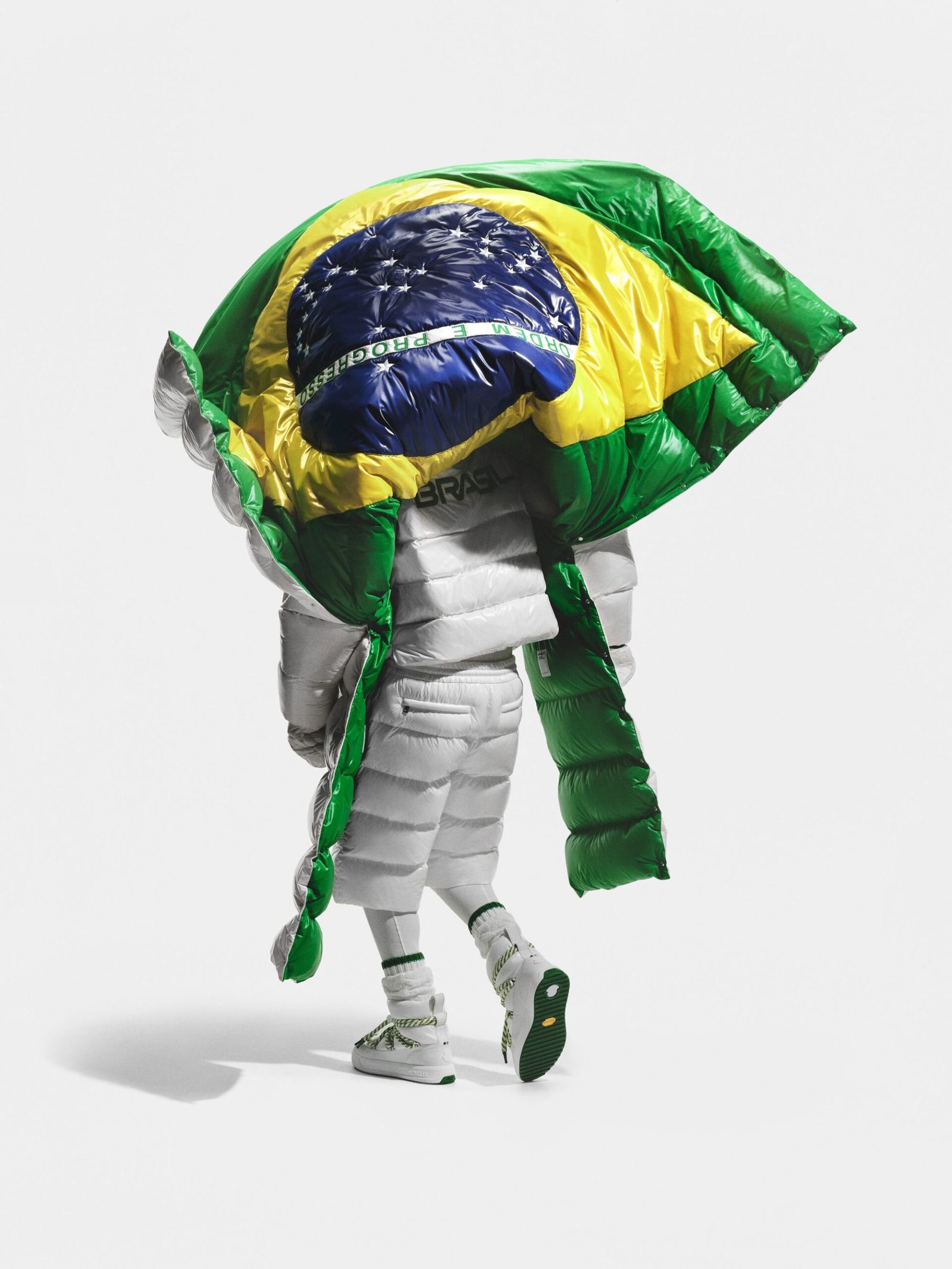
Nothing captured that philosophy better than the ceremonial cape. Drawing inspiration from Moncler’s legendary Karakorum jacket—first created for the Italian expedition that conquered K2 in 1954—the flowing white design quickly became one of the defining images of the Opening Ceremony. From the outside, the cape appeared almost entirely white, but with every step, the Brazilian flag emerged from within the lining.
“The central piece is the white cape for the flag bearers. It’s a sculptural garment that represents snow—the essential element of the Winter Olympics—and carries a sense of ceremony and majesty. From the outside, it’s completely white, almost monastic. Inside, the Brazilian flag appears in intarsia, revealed only through movement.”
For Metsavaht, the project brought together two worlds he has lived in for decades. Before establishing Osklen as one of Brazil’s leading fashion labels, he worked as a sports medicine doctor and designed technical clothing for his own snowboard trips and high-mountain expeditions. Those early experiences made the partnership with Moncler feel like a natural fit, combining his passion for performance apparel with the brand’s long-standing mountain heritage.
Reflecting on his approach to design, he said, “My personal work has always lived in this space of contrasts, between art and science, fashion and medicine, city and nature, performance and lifestyle.”
Moncler CEO Remo Ruffini found it easy to choose Oskar Metsavaht for the project. Metsavaht is one of Brazil’s most respected designers, and Ruffini felt he truly understood both the creative and technical aspects in a way that set him apart.
As Moncler CEO Remo Ruffini puts it, “Oskar is widely recognized as one of the leading references in design and art in Brazil. Beyond his creative vision, Oskar brings a deep understanding of life in the mountains and the demands of performance, learned from his own experience as a snowboarder. The natural connection between Oskar and Lucas made the difference. It’s how a project becomes authentic.”
Advertisement · Continue Reading Below
Every garment feels purposeful, balancing Moncler’s alpine heritage with Brazil’s identity without either overshadowing the other, giving the collection a sense of authenticity woven throughout. It never feels like two brands sharing the spotlight—it feels like one story told from two different perspectives.
This collaboration was also a big moment for Moncler. Almost sixty years after the brand last appeared at the Winter Olympics in Grenoble in 1968, Milano Cortina 2026 gave Moncler the chance to return to the world’s biggest winter sports event.
“The Olympics carry a powerful symbolic meaning for our brand. We have always been deeply connected to sport and to the mountains. This return with Lucas and Team Brazil, nearly 60 years after the Grenoble Games in 1968, is not about doing something obvious. It is a deliberate choice—one that feels right, distinctive, and fully aligned with who we are.”
The best Olympic uniforms are remembered long after the Closing Ceremony. Team Brazil’s Moncler collection seems likely to be one of those. Years from now, people might forget the results from Milano Cortina 2026, but they will remember the sweeping white capes, the hidden Brazilian flag, and the confidence Brazil showed on one of sport’s biggest stages. For Moncler, it was a welcome return to the Olympic Games. For Team Brazil, it showed that sometimes the most unforgettable moment comes before the competition even starts.