





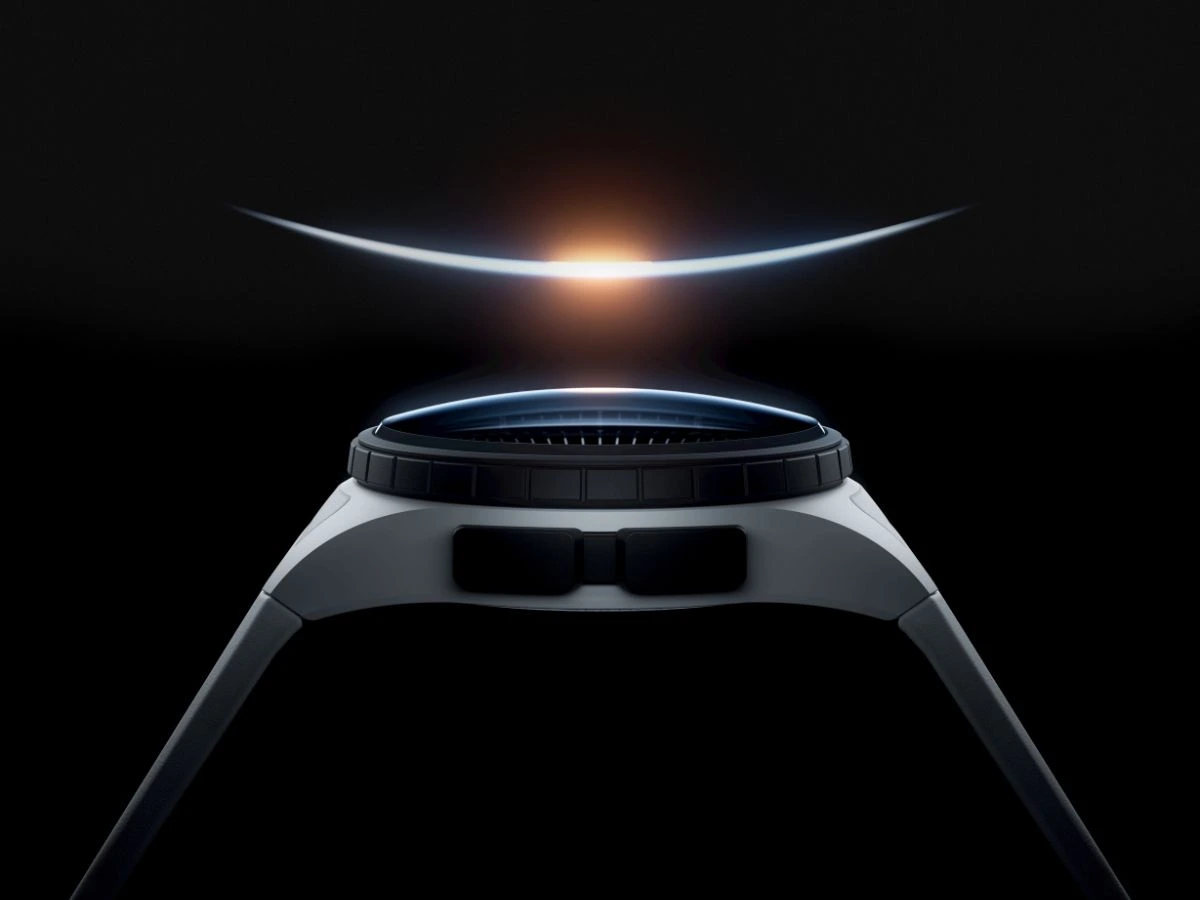

- The first IWC mechanical watch engineered and certified for human spaceflight aboard Haven-1.
- The patent-pending Vertical Drive system replaces the traditional crown with a rotating bezel and rocker switch.
- White zirconium oxide ceramic, Ceratanium®, and an FKM rubber strap designed to withstand the harsh conditions of orbit.
- A dedicated 24-hour mission time display and independently adjustable home time keep astronauts on schedule during up to 16 sunrises a day.
- The IWC Pilot’s Venturer Vertical Drive is priced at USD $28,200.
For nearly a century, IWC Schaffhausen has built Pilot’s Watches with one destination in mind: the sky. From military cockpits to commercial airliners, the collection has earned its reputation as a dependable tool watch built for professionals who rely on precision. But as space exploration enters a new era—one once dominated by NASA and now increasingly shared with commercial missions—IWC has decided it’s time to look beyond the atmosphere.
Enter the Pilot’s Venturer Vertical Drive—the first IWC watch designed, engineered and certified specifically for human spaceflight. Developed in partnership with aerospace company Vast, the watch wasn’t adapted from an existing Pilot’s model. Instead, it was created from a blank sheet of paper to meet the unique demands of life in orbit, where astronauts need to operate their equipment while wearing pressurized gloves and where every piece of gear is expected to perform under extreme conditions.
Advertisement · Continue Reading Below
That fresh approach is obvious the moment you see it. There is no traditional crown. Instead, every function is controlled through an innovative, patent-pending rotating bezel system paired with a rocker switch on the side of the case, allowing astronauts to wind the movement or adjust home and mission time without removing their gloves. Built from white zirconium oxide ceramic and Ceratanium®, the watch has also been qualified by Vast for flight aboard Haven-1, the world’s first planned commercial space station.
It’s a bold step for IWC Schaffhausen and a natural evolution of the Pilot’s Watch. If these watches once helped aviators navigate the skies, the Venturer Vertical Drive suggests the next frontier isn’t the cockpit at all—it’s space.
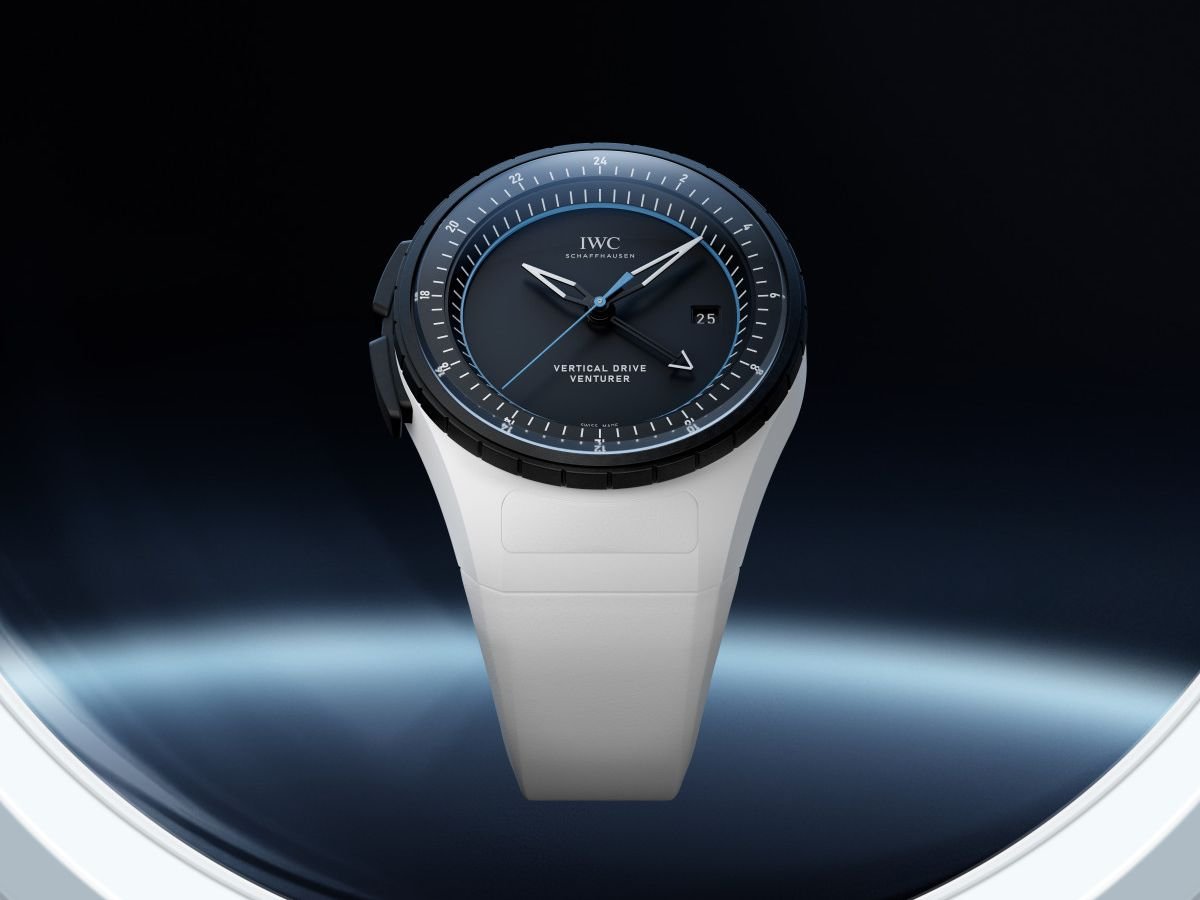
The first thing you’ll notice about the Pilot’s Venturer Vertical Drive isn’t what it has—it’s what it doesn’t. There is no traditional crown anywhere on the case. For a mechanical watch, that’s a bold decision, but IWC wasn’t chasing a futuristic design for its own sake. Anyone who’s tried to manipulate small controls while wearing thick gloves can imagine the challenge. Now picture doing it in a pressurized EVA suit during a spacewalk. A conventional crown simply isn’t practical in that environment, so IWC went back to the drawing board.
This is what IWC calls ‘Vertical Drive’—a patent-pending system that replaces the crown with a rotating Ceratanium® bezel and a prominent rocker switch on the left side of the case. Inside, a clutch mechanism transfers the bezel’s rotation directly to the winding stem, allowing the watch to perform functions that would normally require a crown. Using the rocker switch, the wearer can quickly switch between winding the movement, setting home time, or adjusting mission time, all while wearing astronaut gloves.
Even winding the watch has been considered. Once winding mode is selected, simply rotating the Ceratanium® bezel counter-clockwise manually charges the movement, while the automatic rotor continues to wind the watch during normal wear. It’s a completely different way of interacting with a mechanical watch, but one that makes perfect sense once you understand who it was designed for. Rather than adapting an existing Pilot’s Watch for space, IWC has rethought one of the most familiar parts of watchmaking and created a system that feels purpose-built for life beyond Earth.
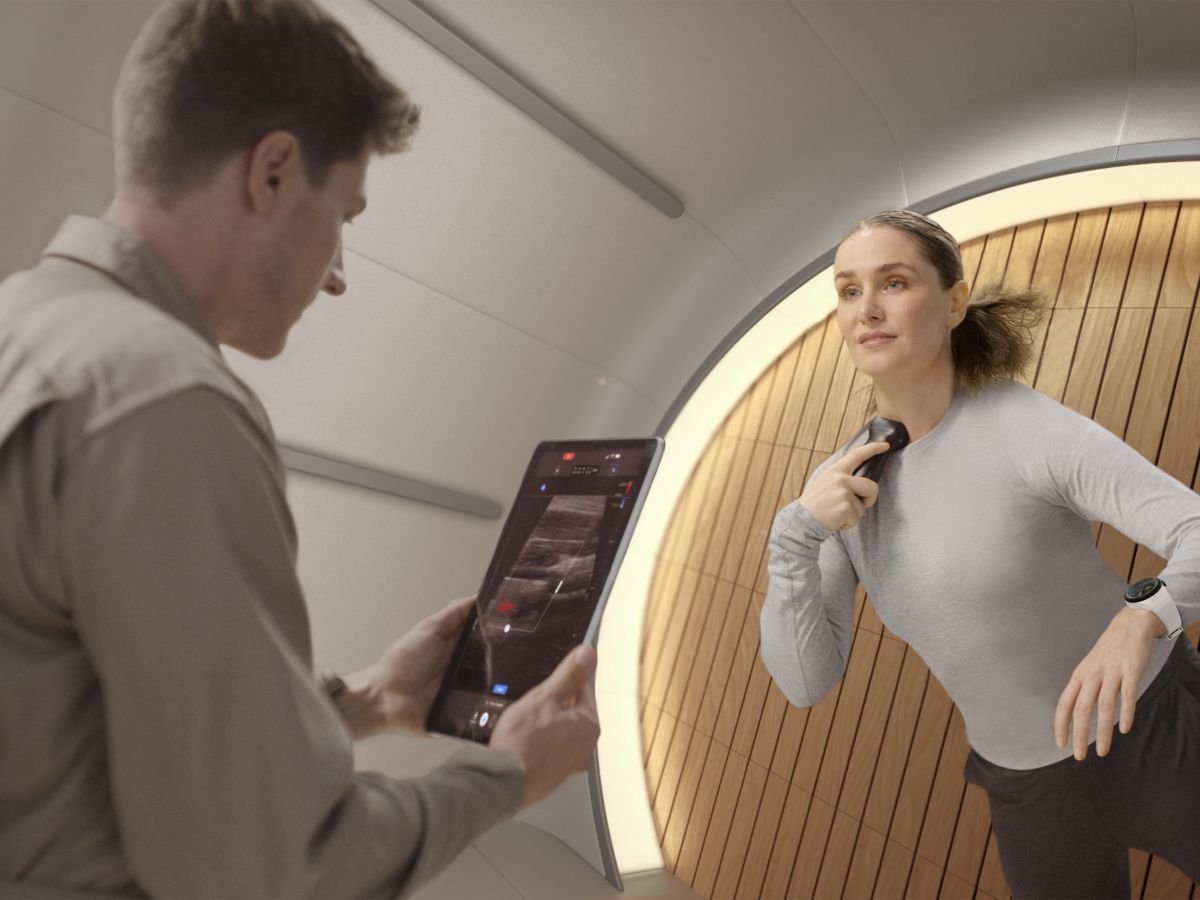
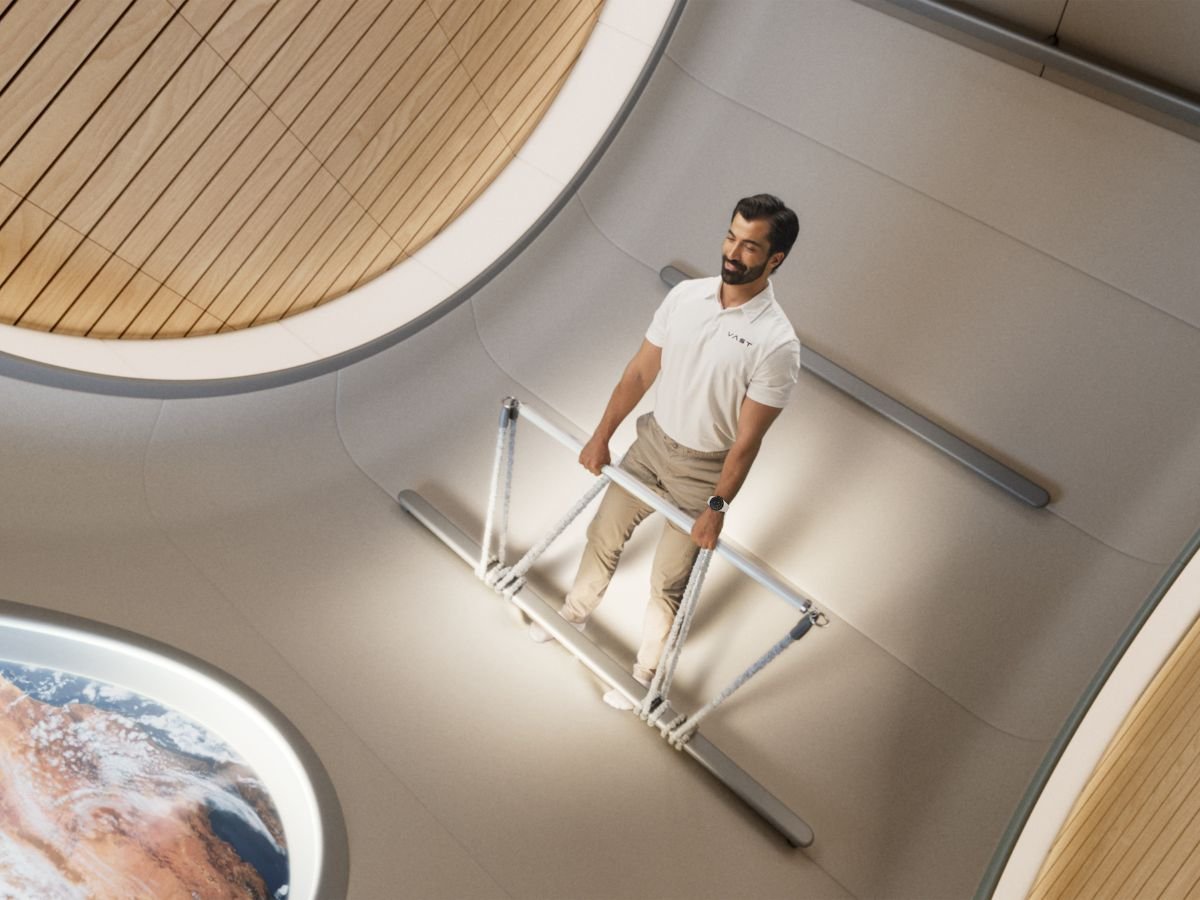
Building a watch for space isn’t simply a matter of making it tougher. Before it even reaches orbit, it has to withstand the violent forces of a rocket launch, in which intense vibration and acceleration place enormous stress on every component. Once in space, the challenges only increase. Vacuum conditions, powerful ultraviolet radiation and dramatic temperature swings—from more than 100°C in direct sunlight to around -150°C in the shade—create an environment unlike anything a watch will ever experience on Earth.
To get the Pilot’s Venturer Vertical Drive ready for space, IWC worked with Vast, the company building Haven-1, the first planned commercial space station. At Vast’s headquarters in Long Beach, California, engineers put the watch through tough vibration and pressure tests, including simulations with forces up to 10g, which is much higher than what typically occurs during launch. After each test, they checked the watch to make sure it still worked perfectly. Only then did it earn official approval to fly on Haven-1. As Vast CEO Max Haot said, “IWC’s dedication to engineering excellence, delivering uncompromising accuracy, reliability, and astronaut-focused design, aligns perfectly with Vast’s human-centric approach to developing Haven-1.”
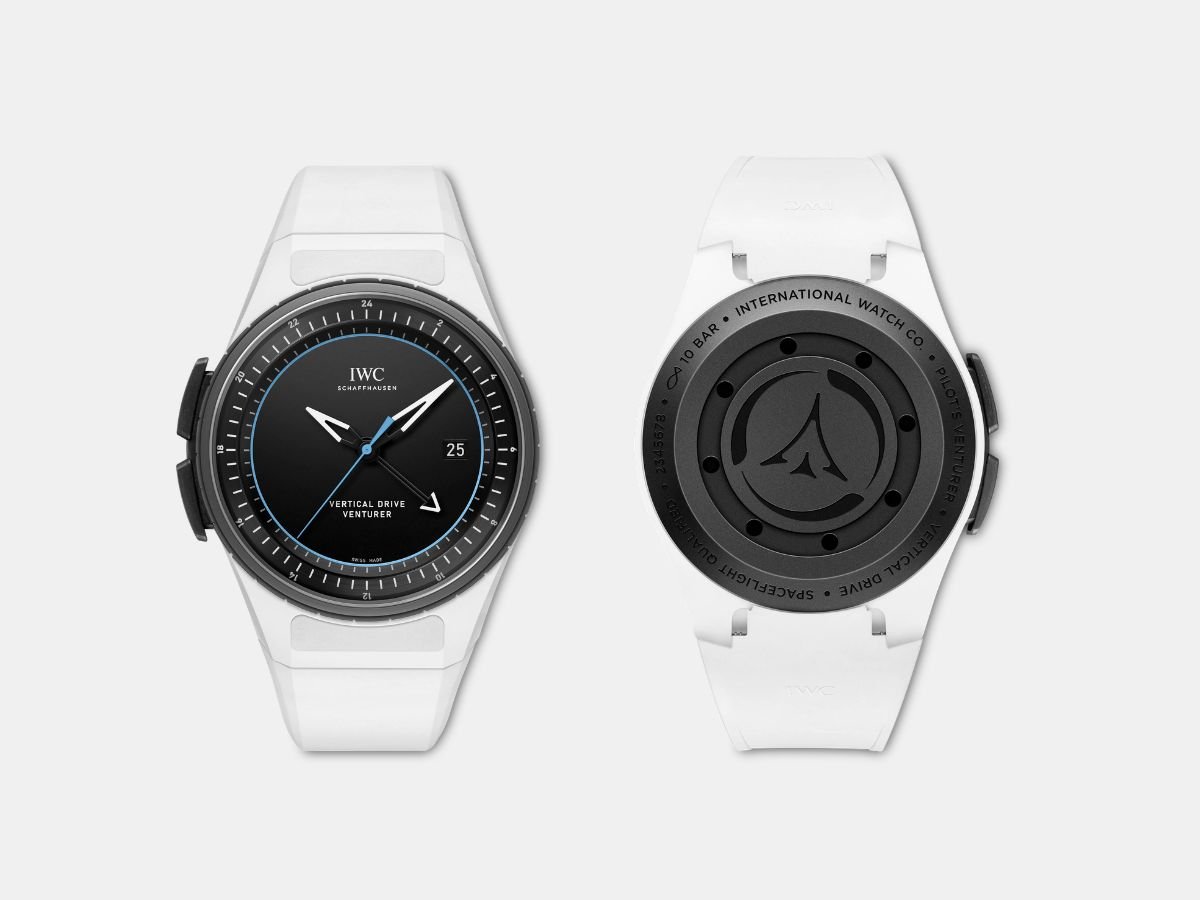
The watch itself has been built around materials chosen specifically for these conditions. Its 44.3 mm case is designed from white zirconium oxide ceramic, one of the hardest materials used in modern watchmaking, while the bezel and caseback are made from Ceratanium®, IWC’s proprietary material that combines the lightness of titanium with the scratch resistance of ceramic. The engraved caseback even features a stylized spacecraft, a subtle nod to the mission this watch was created for.
Even the strap has been designed with space in mind. Made from integrated white FKM rubber, it offers excellent thermal insulation while resisting ultraviolet radiation and extreme temperature changes that would quickly degrade conventional materials. Even the strap reflects that same thought. Made from integrated white FKM rubber, it’s built to handle harsh UV exposure and extreme temperature changes without losing its shape or durability. For a watch created for life beyond Earth, every material in this design had a job to do.
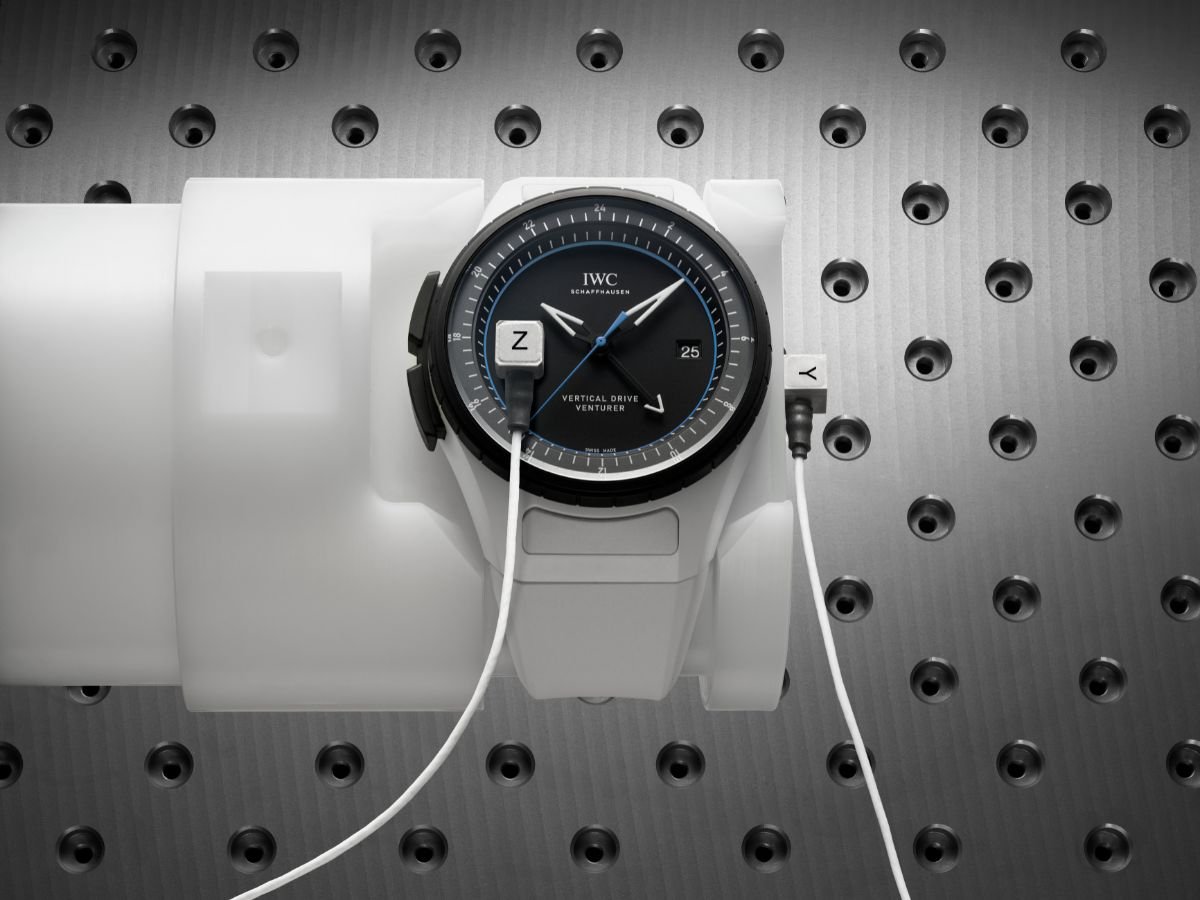
Time works very differently once you leave Earth behind. A spacecraft or space station completes an orbit roughly every 90 minutes, meaning astronauts can experience as many as 16 sunrises and 16 sunsets in a single day. At that point, the familiar rhythm of morning and night becomes meaningless, so crews rely on UTC (Coordinated Universal Time) or GMT to keep a consistent schedule for work, sleep and mission operations. That’s exactly the environment the Pilot’s Venturer Vertical Drive was designed for.
To reflect that reality, IWC has kept the dial clean and highly legible. The matte black, reflection-free dial displays the mission’s reference time using the central hour and minute hands, while a dedicated outer hand points to a 24-hour scale running around the edge of the dial. If astronauts want to keep track of home, the central hour hand can be adjusted independently in one-hour increments, making it easy to display a second time zone without interrupting mission time. It’s a practical solution that works just as well for frequent travellers back on Earth.
The finer details bring the whole display to life with the black triangular hour and minute hands filled with green Super-LumiNova, while the arrow-tipped 24-hour hand glows blue, matching the blue seconds hand and inner chapter ring—a subtle reference to the thin blue horizon astronauts see when looking back at Earth from orbit. Powering it all is IWC’s newly developed Calibre 32722, an automatic movement with a 120-hour power reserve, an integrated GMT module, and a date display at 3 o’clock, ensuring the watch is every bit as mechanically capable as it is visually.

For decades, IWC’s Pilot’s Watches have been built around a simple idea: create instruments that are easy to read, dependable under pressure and intuitive to use. The Pilot’s Venturer Vertical Drive stays true to that philosophy, but instead of being designed for life in the cockpit, it has been reimagined for a very different kind of flight. The same principles that once guided pilots through the skies have now been adapted for astronauts heading into orbit.
Instead of relying on a traditional crown, IWC introduced the Vertical Drive system, redesigned the display around mission time and selected materials capable of handling the unforgiving conditions of space. Nothing has been added for show—every feature has a clear purpose.
Advertisement · Continue Reading Below
As Christian Knoop, Creative Director at IWC Schaffhausen, explains, “These emerging players operate much like brands, deliberately harnessing the power of design to inspire people and spark enthusiasm for their bold visions. With its rounded edges and black and white colour scheme, it embodies our vision of a modern space watch and carries IWC’s tool watch legacy into the 21st century.”
Most of us will never need a mechanical watch that’s qualified for human spaceflight, and that’s perfectly fine. What makes the Pilot’s Venturer Vertical Drive so fascinating isn’t simply where it can go—it’s the engineering mindset behind it. Designing for one of the harshest environments imaginable forced IWC to rethink almost every aspect of a traditional tool watch, resulting in one of the most original releases we’ve seen in years. At USD $28,200, it’s certainly not an everyday purchase, but it’s a compelling reminder that some of the best innovations happen when watchmakers stop refining the familiar and start solving entirely new problems.
- Brand: IWC Schaffhausen
- Model: Pilot’s Venturer Vertical Drive
- Reference: IW328601
- Diameter: 44.4 mm
- Thickness: 16.7 mm
- Material: White zirconium oxide ceramic
- Dial: Black
- Calibre: Automatic, Self-Winding 32722
- Power Reserve: 120 Hours / 5 Days
- Water-Resistance: 10 Bar (100 metres, 330 feet)
- Price: USD $28,200