Lewis Hamilton wants to design a Ferrari road car called the F44, inspired by the legendary F40.
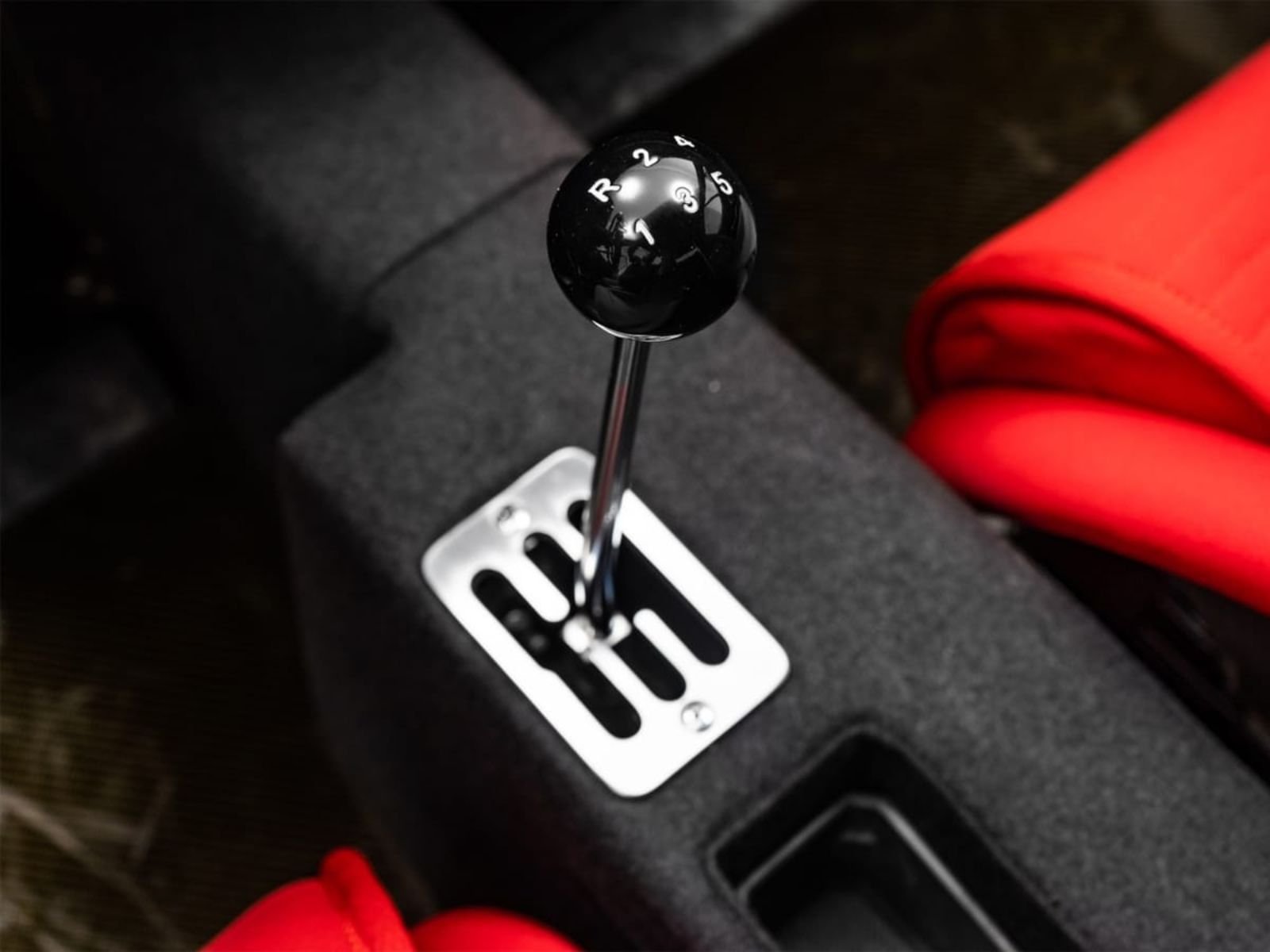
Hamilton wants the F44 to feature a proper manual stick shift, bringing back a more old-school driving experience.
The F44 name combines the F40 inspiration with Hamilton’s famous racing number 44.
Ferrari has not officially confirmed the F44 for production, so for now it remains Hamilton’s dream project
After more than a decade with Mercedes, seeing Lewis Hamilton in Ferrari red head to toe took some getting used to. The seven-time world champion joined Ferrari for the 2025 season, closing the door on an incredibly successful 12-year run with Mercedes and finally getting the chance to drive for the team he’d dreamed about since he was a kid
But Hamilton has never been interested in keeping his world confined to the racetrack. Away from Formula 1, he has become almost as recognizable for fashion and design, including becoming a Lululemon ambassador in 2025, a partnership that sees him working with the brand across training, recovery, lifestyle and future product development. Now, it seems Hamilton wants to bring some of that creative thinking directly to Ferrari.
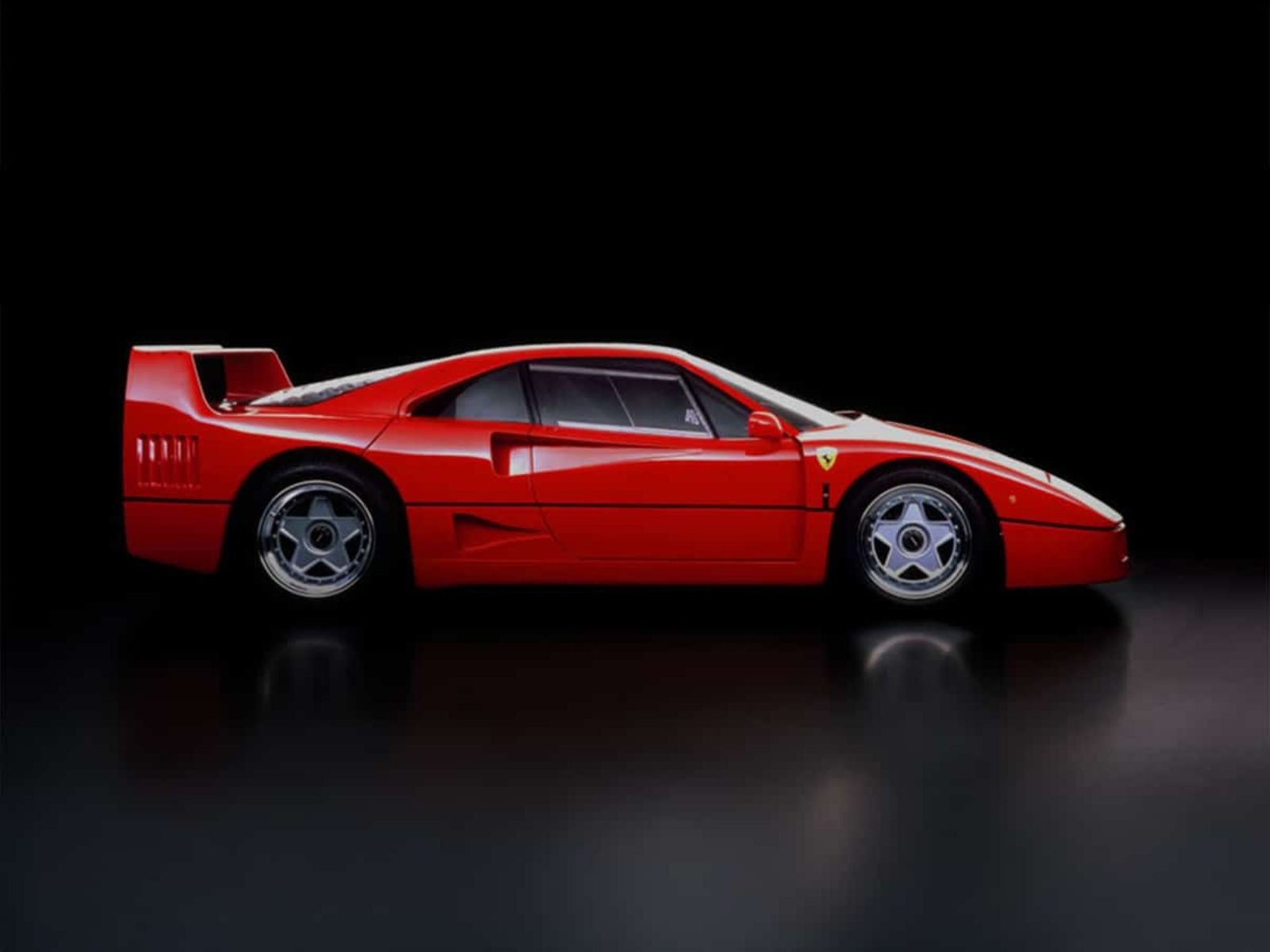
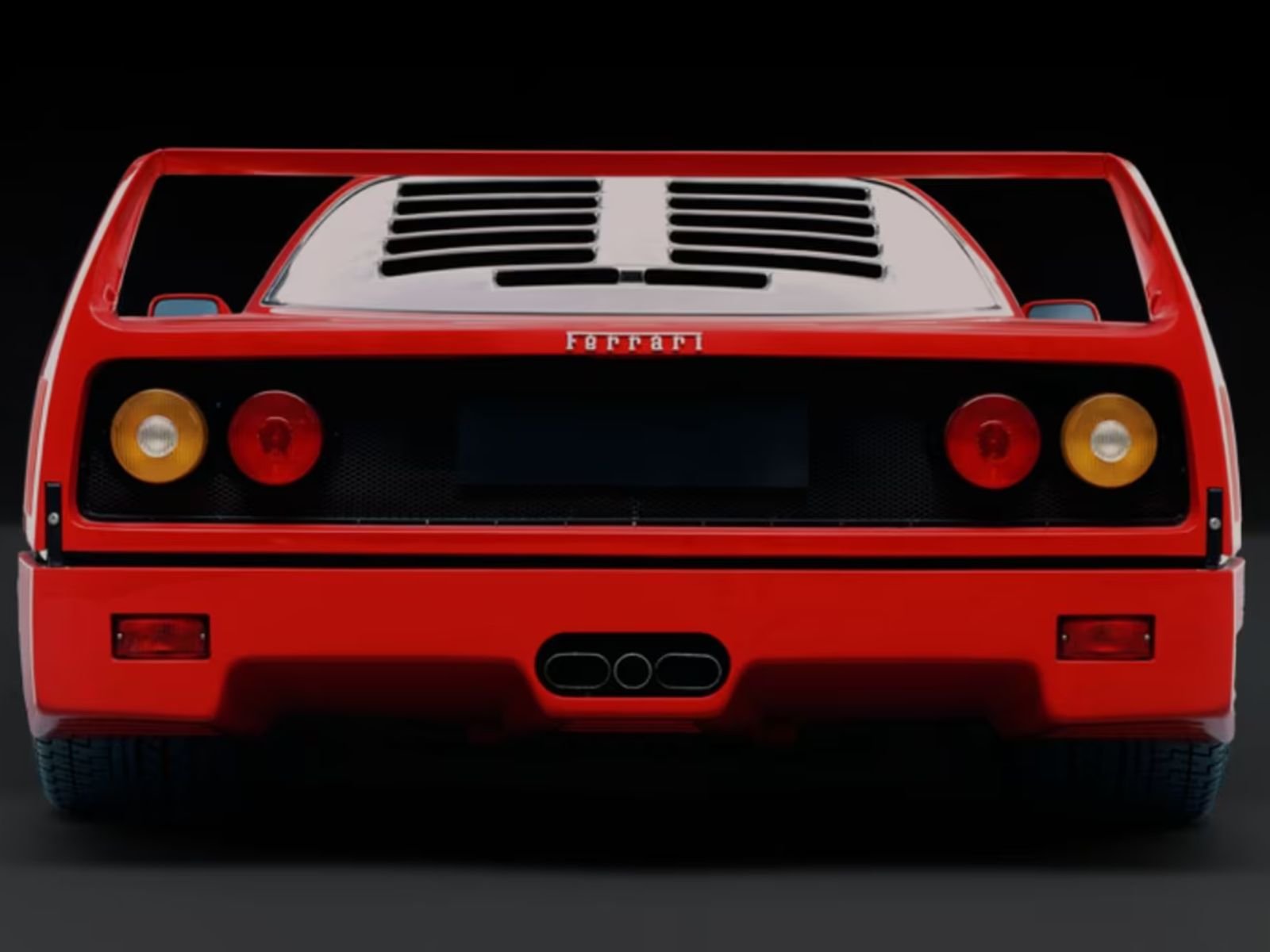
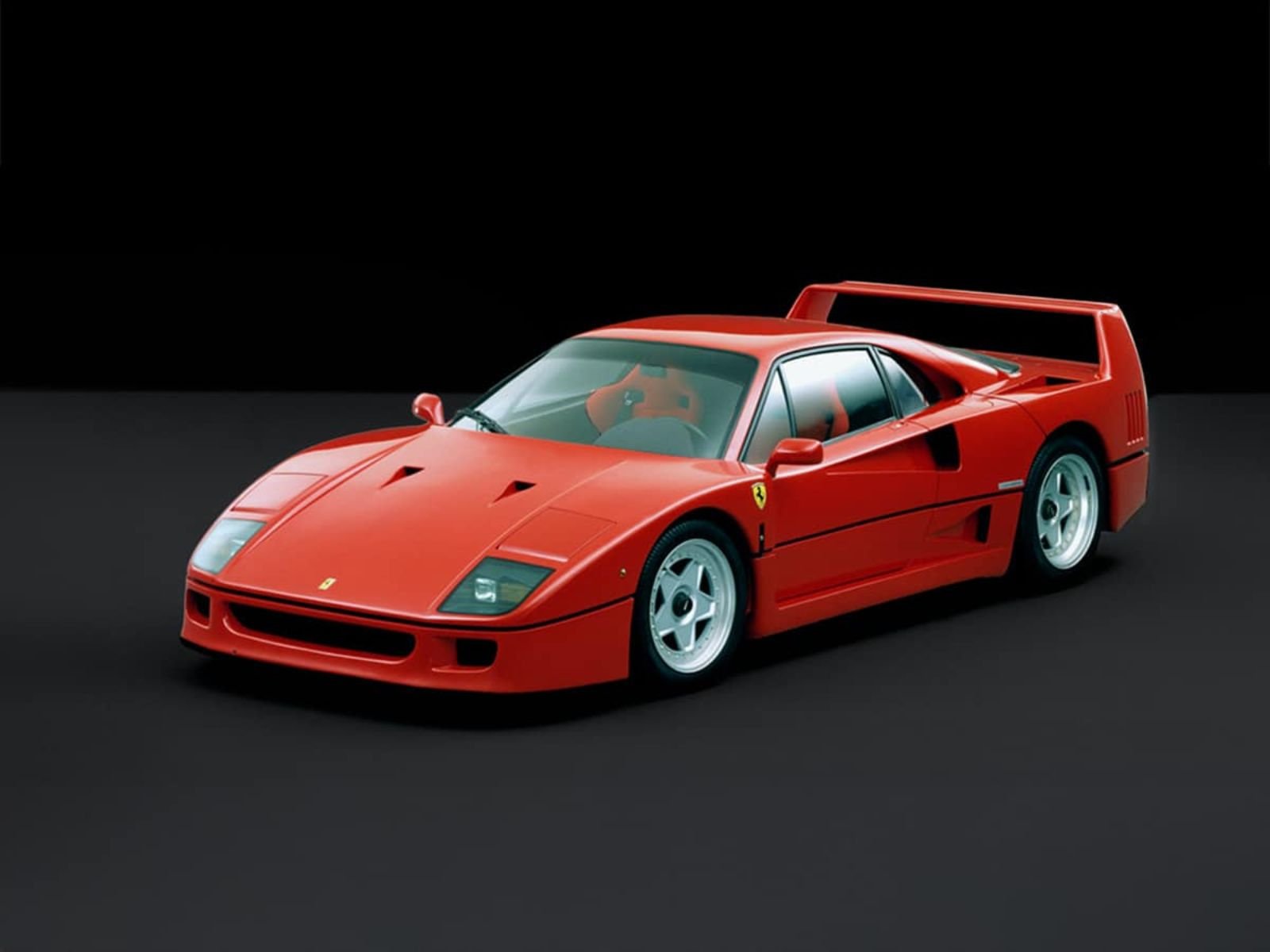
Ferrari F40 | Image: Ferrari / Supplied
Now, he has another idea in mind — and this one could be considerably more exciting for anyone who misses the days of raw, old-school supercars. Hamilton wants to create his own Ferrari road car, and instead of dreaming up another outrageously powerful, technology-packed hypercar, he’s looking back for inspiration. His vision is based around the legendary Ferrari F40, complete with something you don’t see coming out of Maranello anymore: a proper manual gearbox.
He’s even got the name figured out — F44. Hamilton revealed the idea during the 2025 Australian Grand Prix weekend, where he was asked about what he’d like to accomplish with Ferrari beyond Formula 1. His answer made it pretty clear that simply racing for the Scuderia isn’t the only thing on his mind.
Speaking to Motorsport.com, Hamilton said, “I want to do an F44.” He went on to describe an F40 as the baseline, specifically mentioning a proper stick shift, and said he wanted to work on it over the following few years.
The name makes plenty of sense too. 44 has followed Hamilton throughout his Formula 1 career, while the F40 inspired the car itself. And Hamilton’s affection for Ferrari’s legendary supercar isn’t exactly a secret. One of the defining images from his first official day at Maranello showed him standing alongside a red F40 outside Enzo Ferrari’s former home. Knowing what he wants to create now makes that photograph feel even more fitting.
Ferrari F40 Gearbox | Image: Ferrari / Supplied
If you’re going to pick a Ferrari as the starting point for something raw and mechanical, the F40 is difficult to beat. Introduced in 1987 to celebrate Ferrari’s 40th anniversary, it paired a 2.9-litre twin-turbocharged V8 with a five-speed manual gearbox and wrapped everything in a remarkably lightweight package. It was fast, loud and famously uncompromising — the kind of supercar that demanded something from the person sitting behind the wheel rather than trying to make everything easy.
That philosophy couldn’t be much further removed from the direction modern hypercars have taken. Ferrari’s latest flagship, the F80, uses a 3.0-litre twin-turbo V6 alongside a sophisticated hybrid system and electric motors. It’s an extraordinary piece of engineering, but Hamilton’s F44 idea seems to be chasing something different. Not necessarily more speed or a bigger horsepower figure, but more involvement.
And the manual gearbox is arguably the most exciting part of the entire proposal. Ferrari hasn’t offered a manual transmission on one of its regular production cars for well over a decade. Paddle-operated gearboxes have taken over as Ferrari has chased quicker shifts and outright performance, which makes the thought of a modern Prancing Horse with three pedals and a gear lever between the seats feel almost rebellious. Interestingly, Ferrari has reportedly considered whether a manual could return for special models, even if bringing one back to its regular production range remains unlikely.
Ferrari F40 | Image: Ferrari / Supplied
Ferrari F40 | Image: Ferrari / Supplied
Hamilton’s idea also fits surprisingly well with his interest in design away from racing. His lululemon partnership, for example, has him contributing feedback to future athletic and lifestyle products rather than simply appearing in advertising campaigns. The F44 would obviously be on an entirely different scale, but there’s a similar theme here: Hamilton clearly likes getting involved in what things look like, feel like and how people interact with them. The big question, of course, is whether Ferrari will actually let him build the thing.
For now, Ferrari has not announced the F44 as an official production model. Hamilton was talking about something he personally wants to create, rather than unveiling a secret Ferrari project already heading towards showrooms. That’s an important distinction, especially when the idea sounds good enough that it’s easy to imagine one sitting alongside Ferrari’s other limited-production machines.
Still, it is hard not to love the thought. Modern supercars are already ridiculously fast. We’re at a point where another 100 horsepower or another fraction shaved from a 0–100km/h time doesn’t necessarily make a car more memorable. Something lightweight, dramatic and deliberately mechanical could stand out far more than another machine built purely to chase numbers.
Ferrari F40 | Image: Ferrari / Supplied
So maybe Hamilton doesn’t need to reinvent the F40. Give the F44 some of its attitude, keep the weight down, put something appropriately dramatic behind the driver and, most importantly, leave a manual gear lever between the seats.
Whether Maranello ever gives him the green light remains to be seen. But a modern Ferrari inspired by the F40, carrying Hamilton’s famous 44 and forcing its driver to change gears the old-fashioned way? Yeah, we’d quite like to see that happen.
Elias Albay is the Founder and Director of Many Men Magazine, a Toronto-based digital publication dedicated to promoting modern masculinity through style, culture, and self-improvement. What started as a personal turning point became a purposeful platform. — born from Elias’ desire to create something meaningful after completing his studies and finding no career path that truly matched his ambitions. With a background in Civil Engineering from York University and experience in Commercial Flight Operations at CAE, he applied skills, and resilience from both fields to forge a new path.
Our team of editors and experts thoughtfully chooses each product. If you decide to buy through one of our links, we may earn a commission. Learn more. Want to know how we test products? Click here for more details.
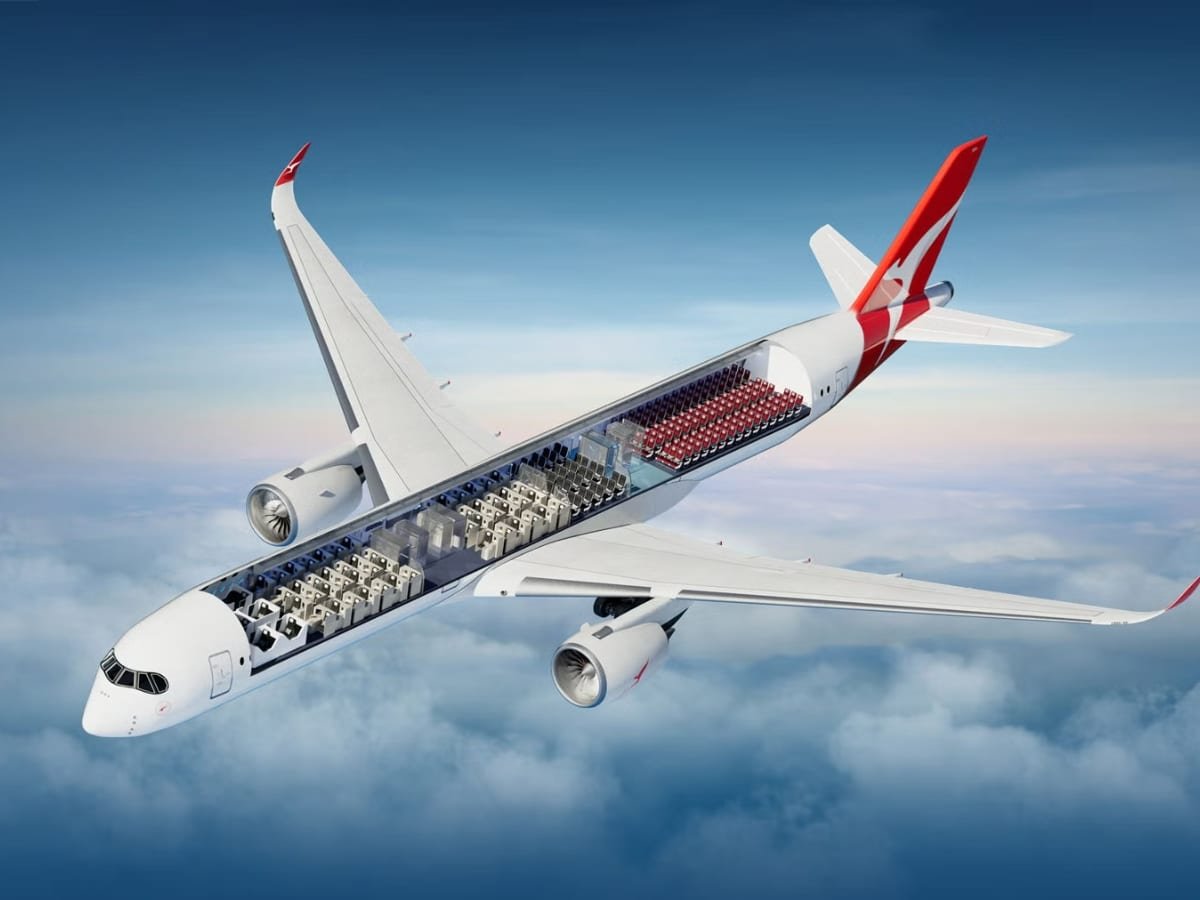
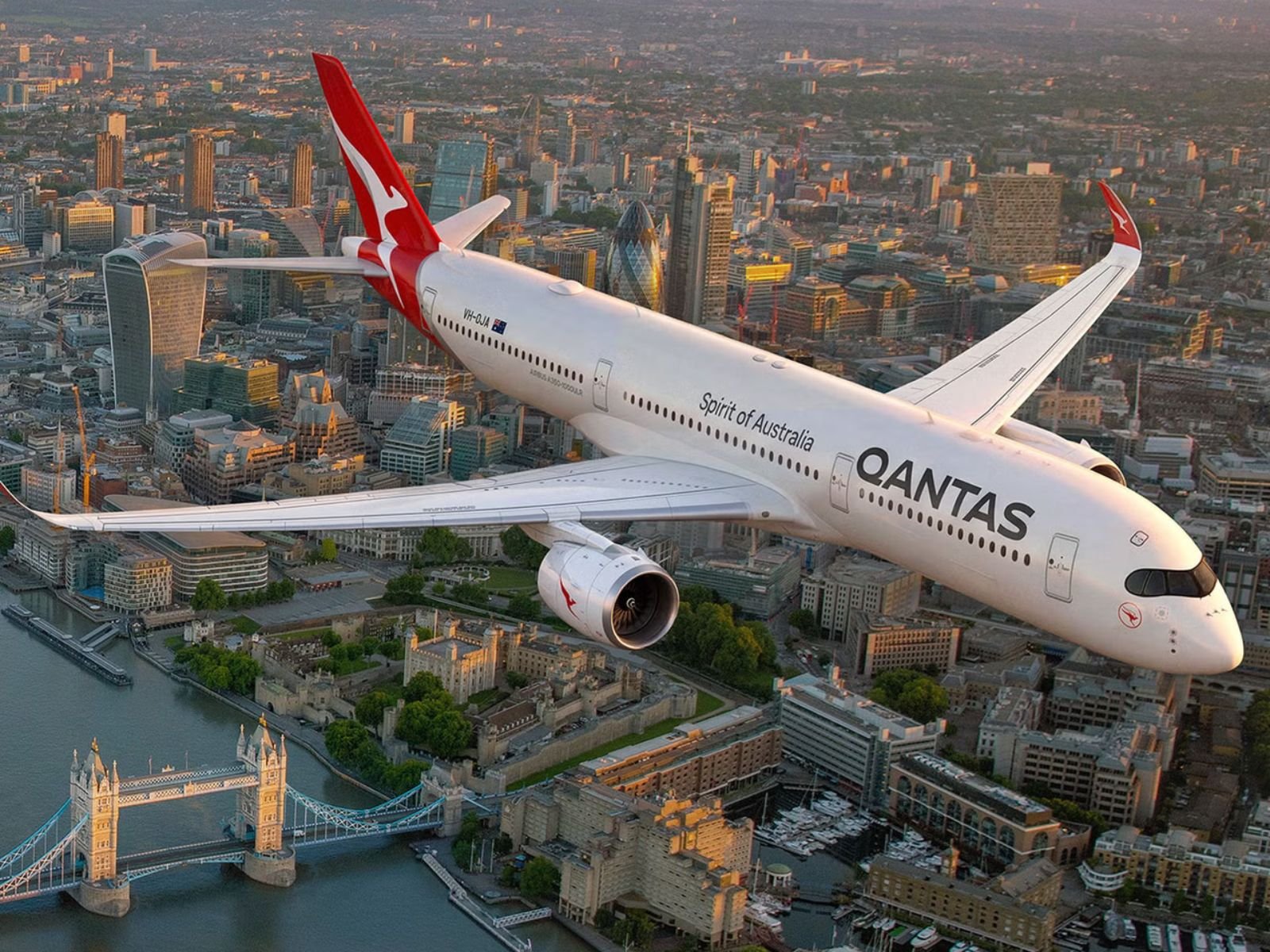
When a flight stretches towards 22 hours, calling the cabin a place to sit feels almost misleading. It becomes your bedroom, dining room, cinema and occasional walking space, all sealed inside a metal tube crossing half the planet. Qantas appears to understand the assignment with Project Sunrise, developing a specially configured Airbus A350-1000ULR for its upcoming nonstop Sydney-to-London service, which is scheduled to begin in October 2027.
Instead of filling the aircraft with as many passengers as possible, Qantas has limited the A350-1000ULR to just 238 seats—the lowest-density configuration of any A350 in the world. More than 40% of those seats will be spread across First, Business and Premium Economy, giving the airline plenty of room to rethink what ultra-long-haul comfort should look like.
Qantas worked with Caon Design, chef Neil Perry and researchers from the University of Sydney’s Charles Perkins Centre to develop an experience shaped around sleep, movement, dining and the body’s internal clock. That research can be seen throughout the aircraft, from 12 scientifically developed lighting scenes designed to support passengers’ circadian rhythms to an entertainment system that maps out meal services and rest periods across the journey. The real headline, however, is the cabin itself: enclosed First suites, Business Class seats with sliding doors, more spacious Premium Economy and Economy seating, and the world’s first purpose-built inflight Wellbeing Zone.
Qantas is not pretending that spending almost an entire day in the sky will be easy, but it is doing everything possible to make the world’s longest flight feel less like an endurance test and more like a carefully planned retreat. So, with that in mind, let’s step onboard and take a closer look at each of the Project Sunrise cabins.
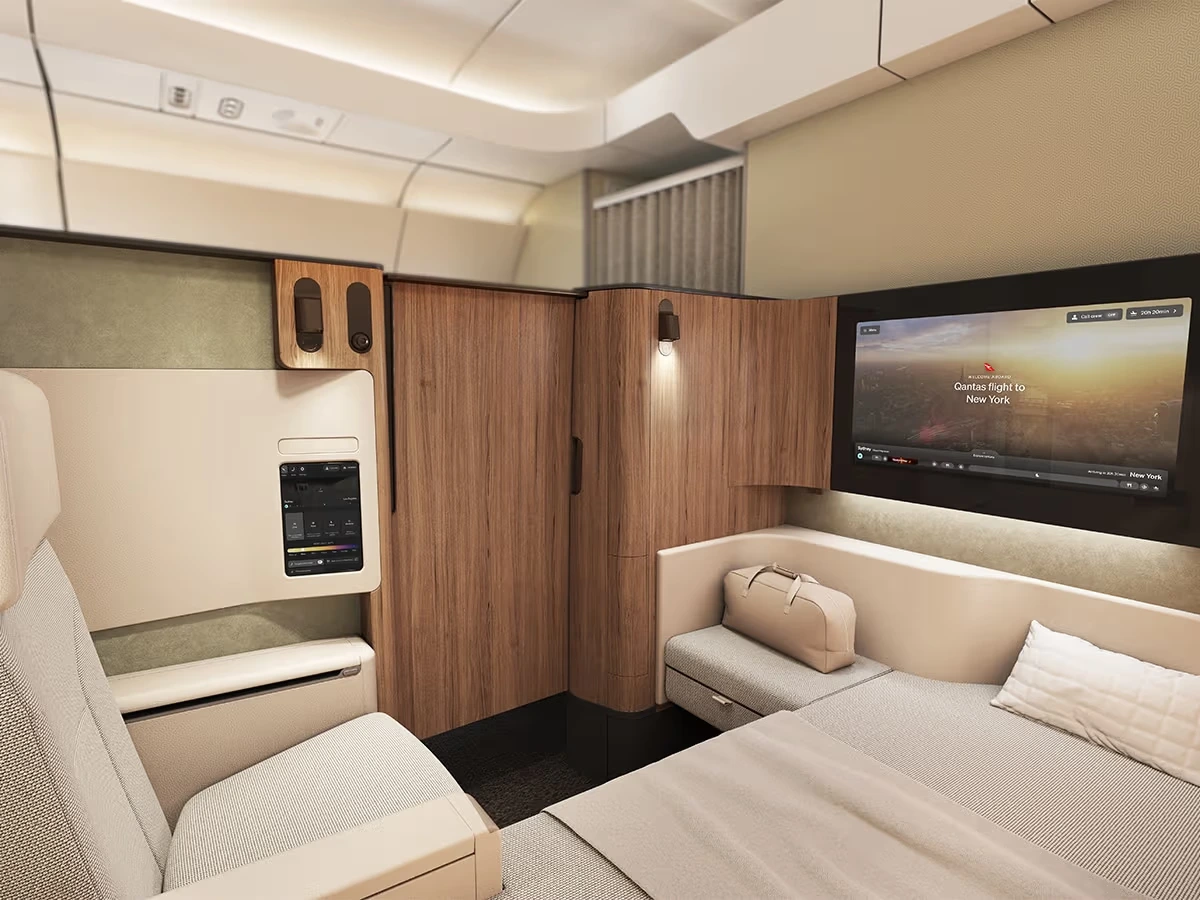
Qantas A350-1000ULR Project Sunrise First Class | Image: Qantas
Qantas Project Sunrise First Class Enclosed Suites
First Class specification
Dimensions & Details
Total suites & layout
6 enclosed suites in a 1-1-1 configuration
Suite space
50% more space than Qantas’ A380 First suites
suite enclosure
57-inch-high walls with a sliding door
Bed & seating
80-inch flat bed & separate 22-inch reclining armchair
Entertainment
32-inch touchscreen with Bluetooth audio
Suite controls
Touchscreen suite controller & Customizable LED lighting
Storage
Full-length wardrobe & multiple personal storage areas
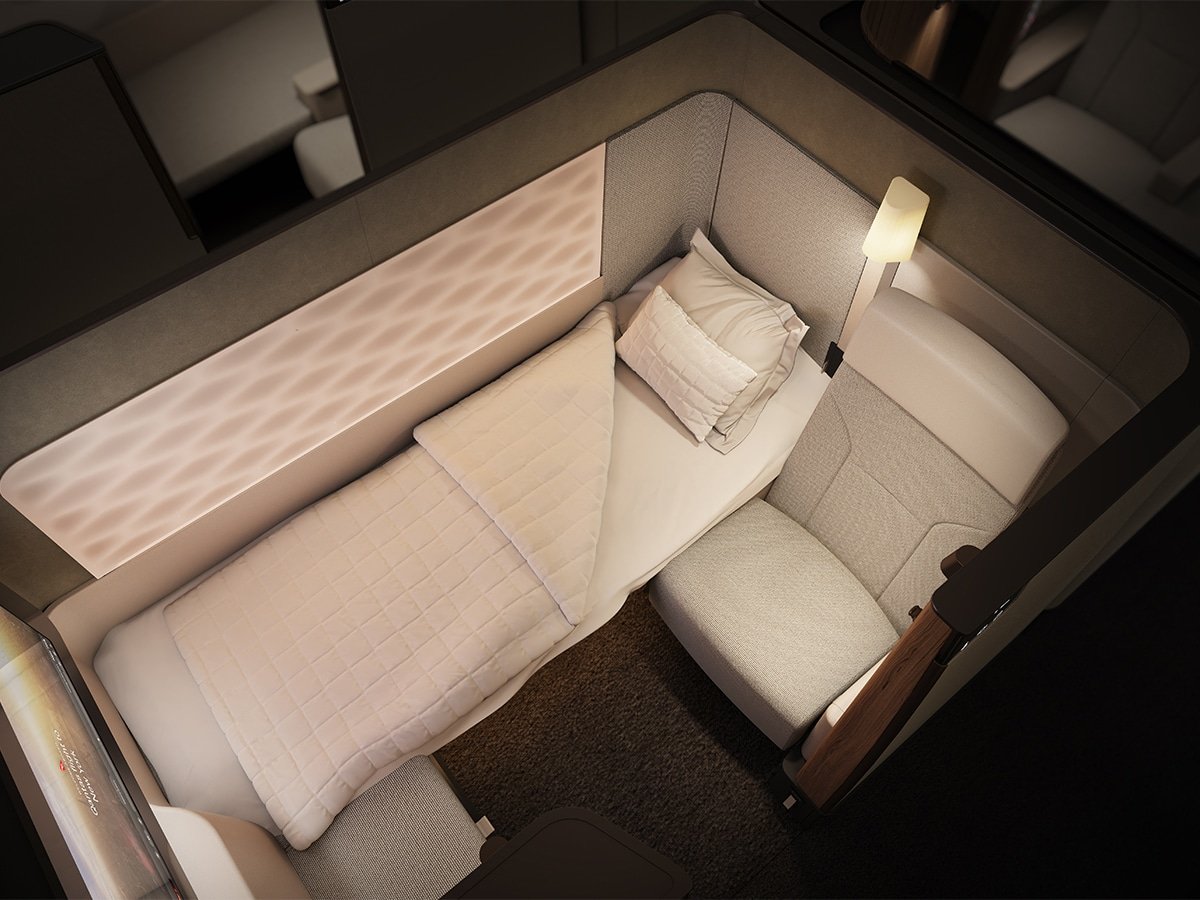
Sitting at the top of the Project Sunrise experience is a First Class cabin that offers 50% more suite space than Qantas’ current A380 First suites. There will be just six suites aboard the A350-1000ULR, arranged in an ultra-private 1-1-1 configuration with direct aisle access for every passenger. Each suite is enclosed by 57-inch-high walls and a sliding door, creating the closest thing this aircraft has to a private room.
Inside, Qantas has separated sitting from sleeping altogether. Passengers receive a 22-inch-wide reclining armchair alongside a permanent 80-inch flat bed, meaning there is no need to fold away the seat whenever it is time to rest. The bed includes an adjustable backrest for breakfast in bed and a multi-layer memory-foam mattress developed after months of pressure-point testing. A full-length wardrobe, several personal storage areas and enough dining and workspace for two complete the setup.
The technology is equally generous, led by a 32-inch entertainment touchscreen that is 14 inches larger than the one currently fitted in Qantas’ A380 First Class. Bluetooth audio, USB-A and USB-C connections, AC power and wireless charging are all included, while a separate touchscreen controller manages the suite and its customizable LED lighting. Qantas has even fitted a discreet digital panel outside each suite, allowing passengers to communicate with the crew without sacrificing the privacy that makes the space feel so special.
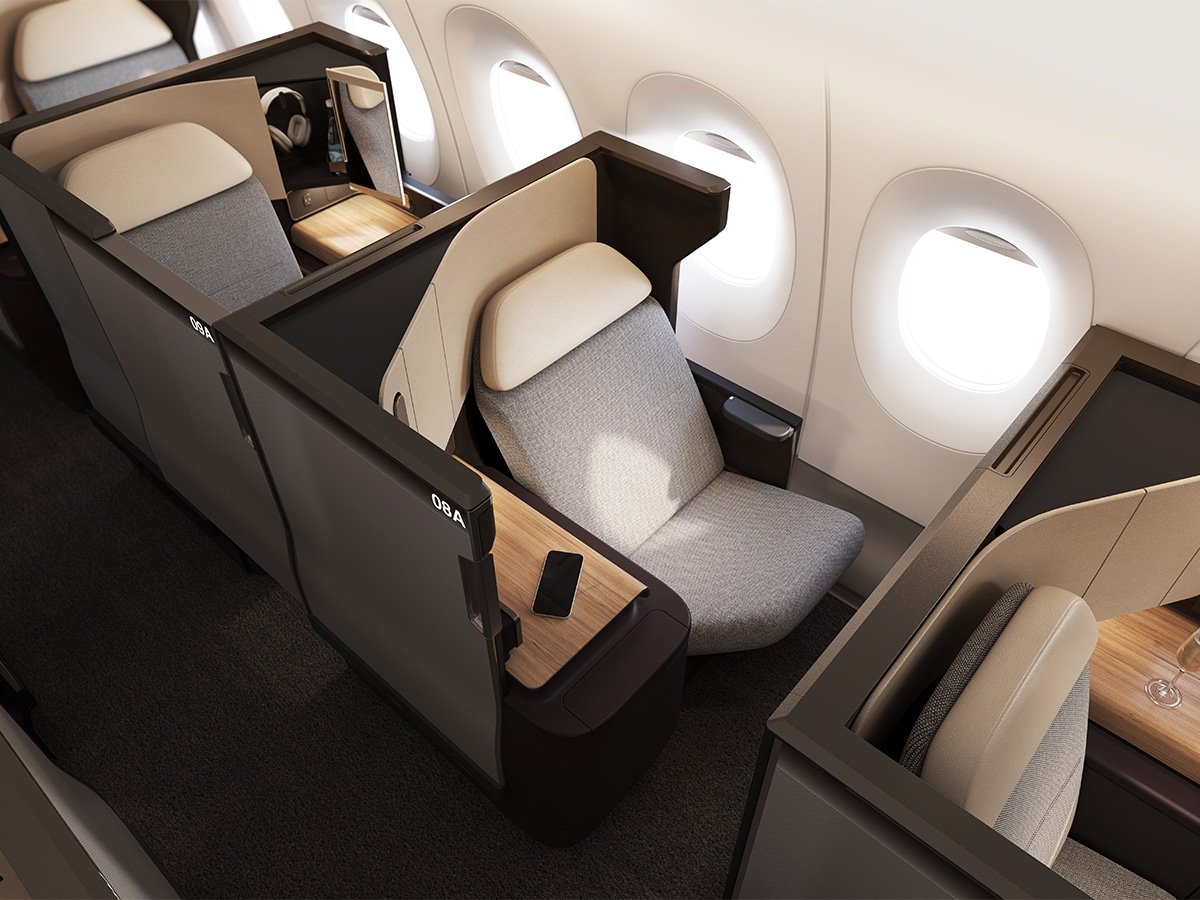
Qantas A350-1000ULR Project Sunrise Business Class | Image: Qantas
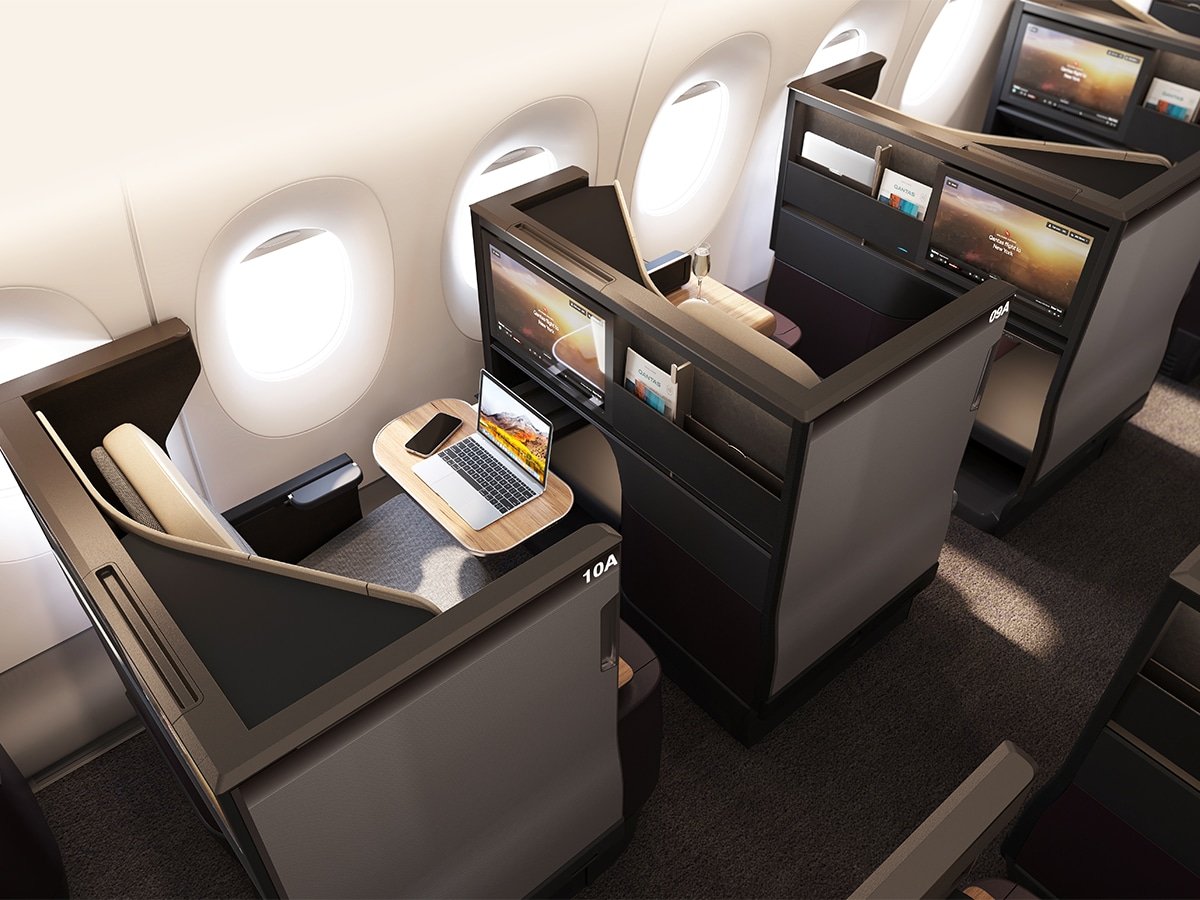
Qantas A350-1000ULR Project Sunrise Business Class | Image: Qantas
Qantas Project Sunrise Business Class
Business Class specification
Dimensions & Details
Total suites & layout
52 suites in a 1-2-1 configuration
Suite space
42-inch-wide suite with 47-inch-high privacy walls
suite enclosure
Sliding door & adjustable divider between alternating centre suites
Bed & seating
25-inch-wide seat with lumbar support & 80-inch-long, 25-inch-wide flat bed
Entertainment
18-inch touchscreen with Bluetooth audio
Suite controls
Touchscreen suite controller & architectural feature lighting
First Class may grab the headlines, but Business Class is where most premium passengers will experience the full Project Sunrise concept. The cabin contains 52 suites in a 1-2-1 configuration, giving every passenger direct aisle access. It is also the first Qantas Business Class product to feature sliding doors, bringing a welcome level of privacy to a journey that could last more than 20 hours.
Each suite measures 42 inches across and is surrounded by 47-inch-high privacy walls. When it is time to sleep, the 25-inch-wide seat converts into an 80-inch-long, 25-inch-wide flat bed—one inch longer than the bed in Qantas’ current A380 First Class suite. Passengers travelling together in the centre seats can use an adjustable divider, while solo travellers can close it for some much-needed personal space.
Qantas has also made good use of the space surrounding the seat. There is a cushioned leather ottoman with storage underneath, a mirrored personal compartment, an upholstered glove box and additional surfaces for drinks, dining or working. Those details may sound small on paper, but on a flight lasting nearly an entire day, having somewhere sensible to keep your laptop, headphones, and loose cables should make the suite feel far more liveable.
Entertainment comes through an 18-inch touchscreen with Bluetooth audio, supported by USB-A, USB-C and AC power outlets, as well as wireless charging. A separate touchscreen controls the suite and its architectural lighting, while Qantas plans to coordinate flexible dining and gradual lighting changes around scientifically selected sleep windows. In other words, this is not simply a Business Class seat designed to look impressive—it has been built around the practical reality of spending up to 22 hours onboard.
Multi-use seatback table & extra personal-device shelf
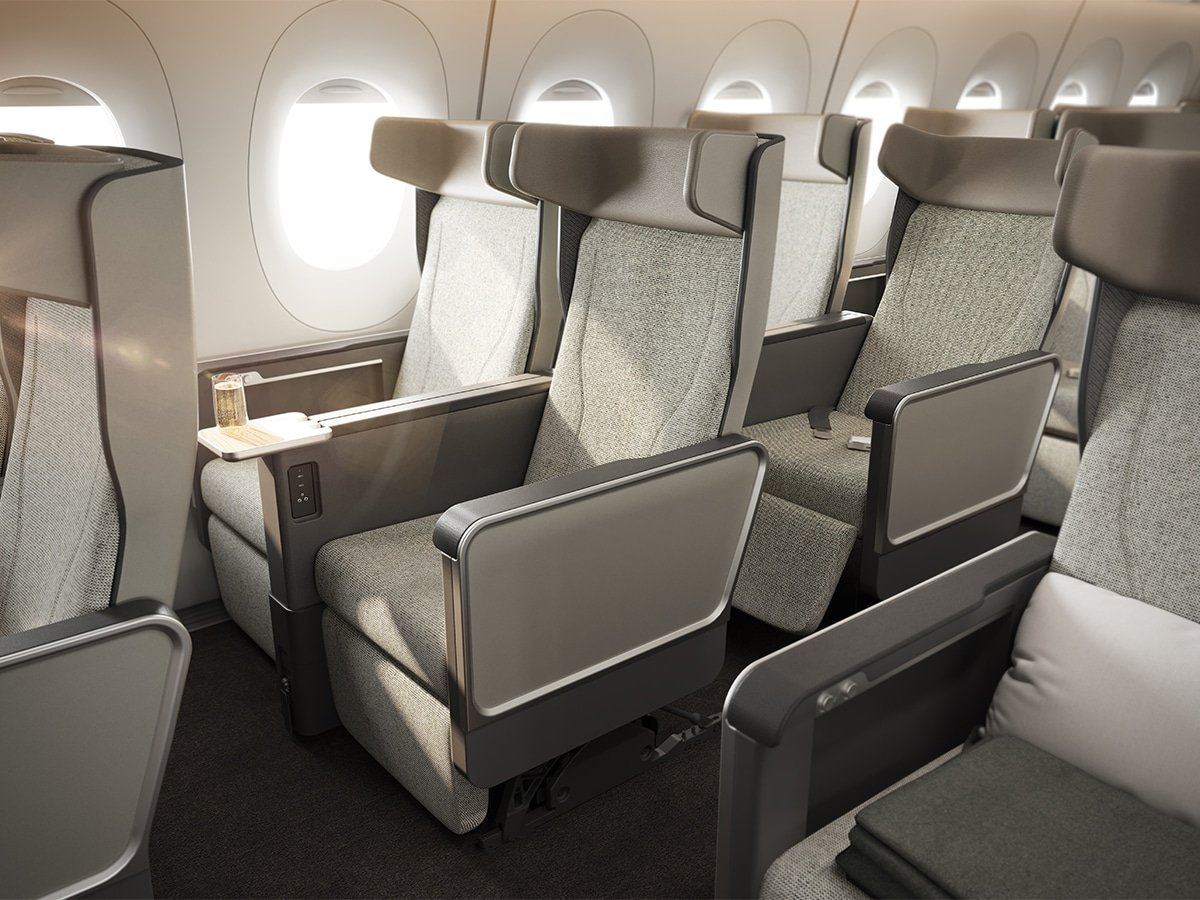
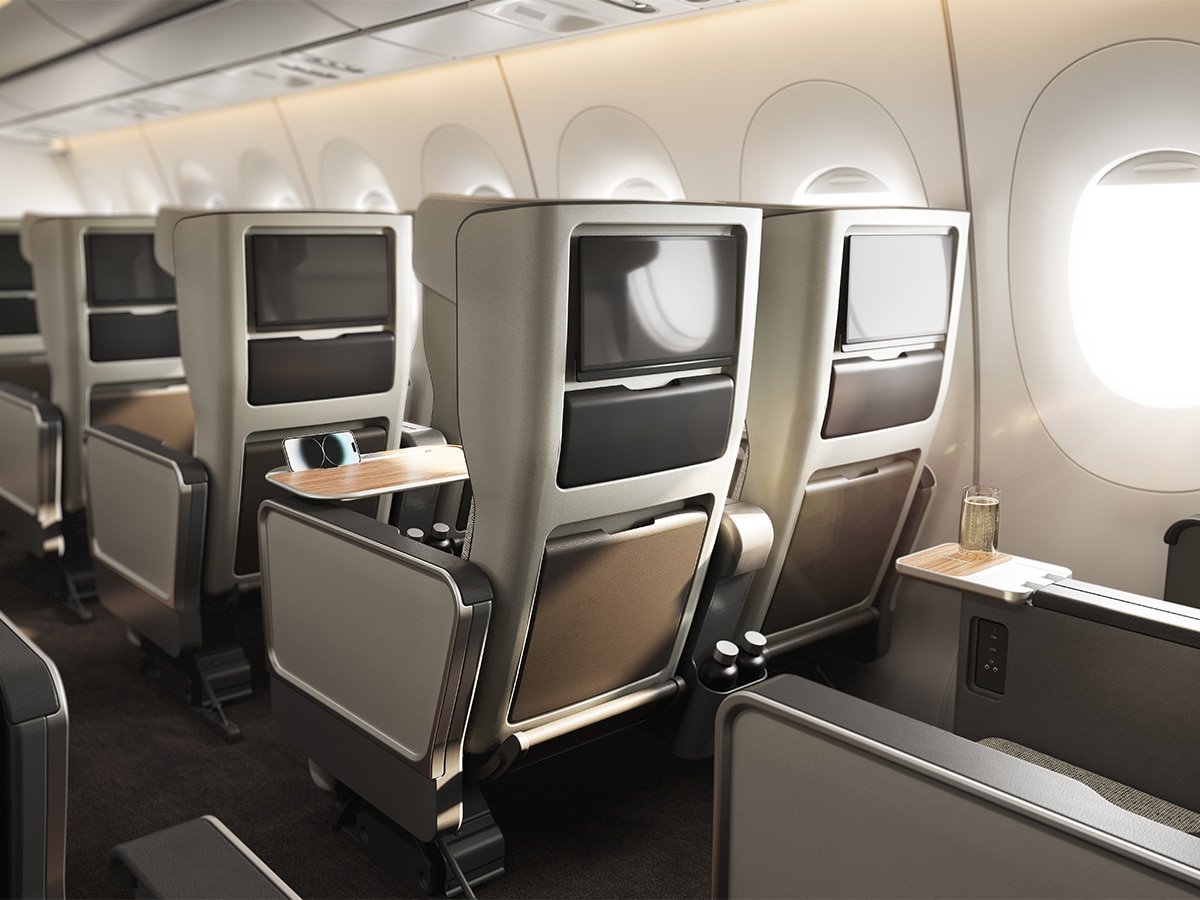
For the 40-seat Premium Economy cabin, arranged in a 2-4-2 configuration, Qantas has designed an entirely new seat with a generous 40-inch pitch—the most spacious Premium Economy setup the airline has offered so far. A custom multi-layer memory foam system has also been developed specifically for the cabin, following ergonomic modelling, lumbar support testing, and pressure mapping.
Every Premium Economy seat features an ergonomic calf rest that provides full-leg support, alongside an eight-inch winged privacy headrest that offers additional support without completely shutting passengers off from their travelling companions. Each passenger also receives three dedicated amenity and personal storage pockets, two fast-charging USB-C outlets, and a 13.3-inch entertainment touchscreen with Bluetooth audio connectivity.
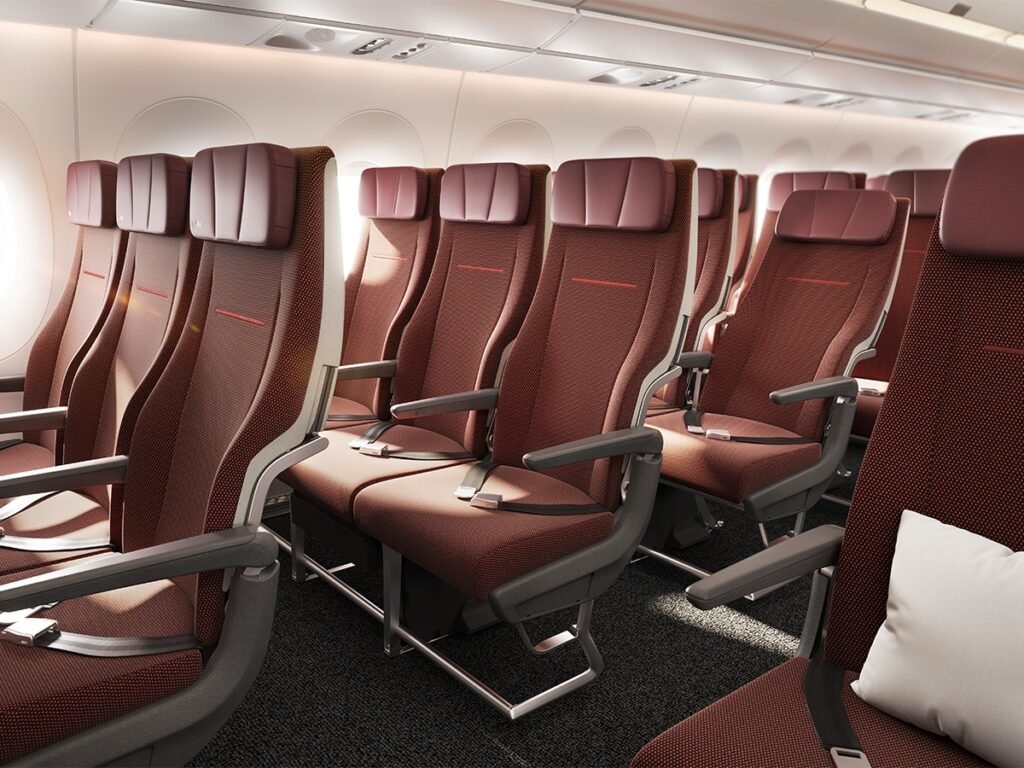
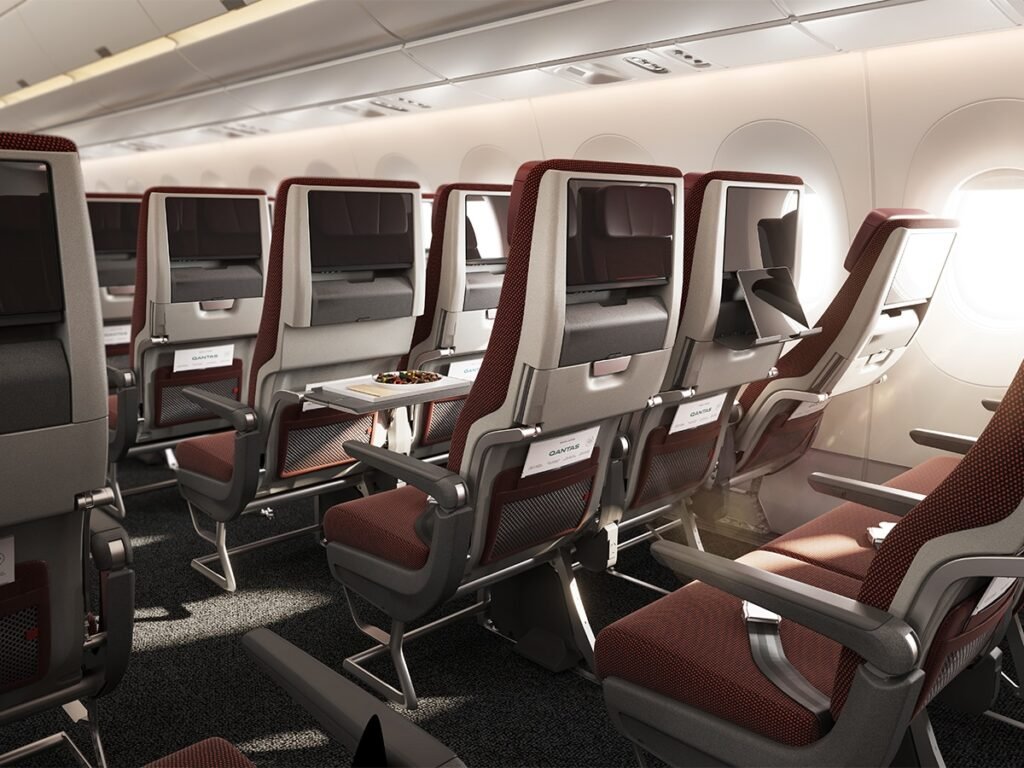
Further back, the comparatively roomy 140-seat Economy cabin is arranged in a 3-3-3 configuration, with a competitive 33-inch pitch across most rows. The seats feature custom multi-layer memory foam cushioning, six-way adjustable headrests, calf support and breathable woven wool upholstery finished in an earthy shade Qantas calls “Pilbara Red.”
Passengers in Economy still benefit from the aircraft’s major technology upgrades, including a 13.3-inch entertainment touchscreen with Bluetooth audio, two fast-charging USB-C outlets, a multi-use seatback table and an additional shelf for personal devices. The cabin also contains 42 Economy Plus seats with a 34-inch pitch, priority boarding and priority access to overhead lockers—only an extra inch of legroom, but every little bit counts when you are flying nonstop for up to 22 hours.
Qantas A350-1000ULR Project Sunrise Wellbeing Zone | Image: Qantas
Qantas Project Sunrise Wellbeing Zone
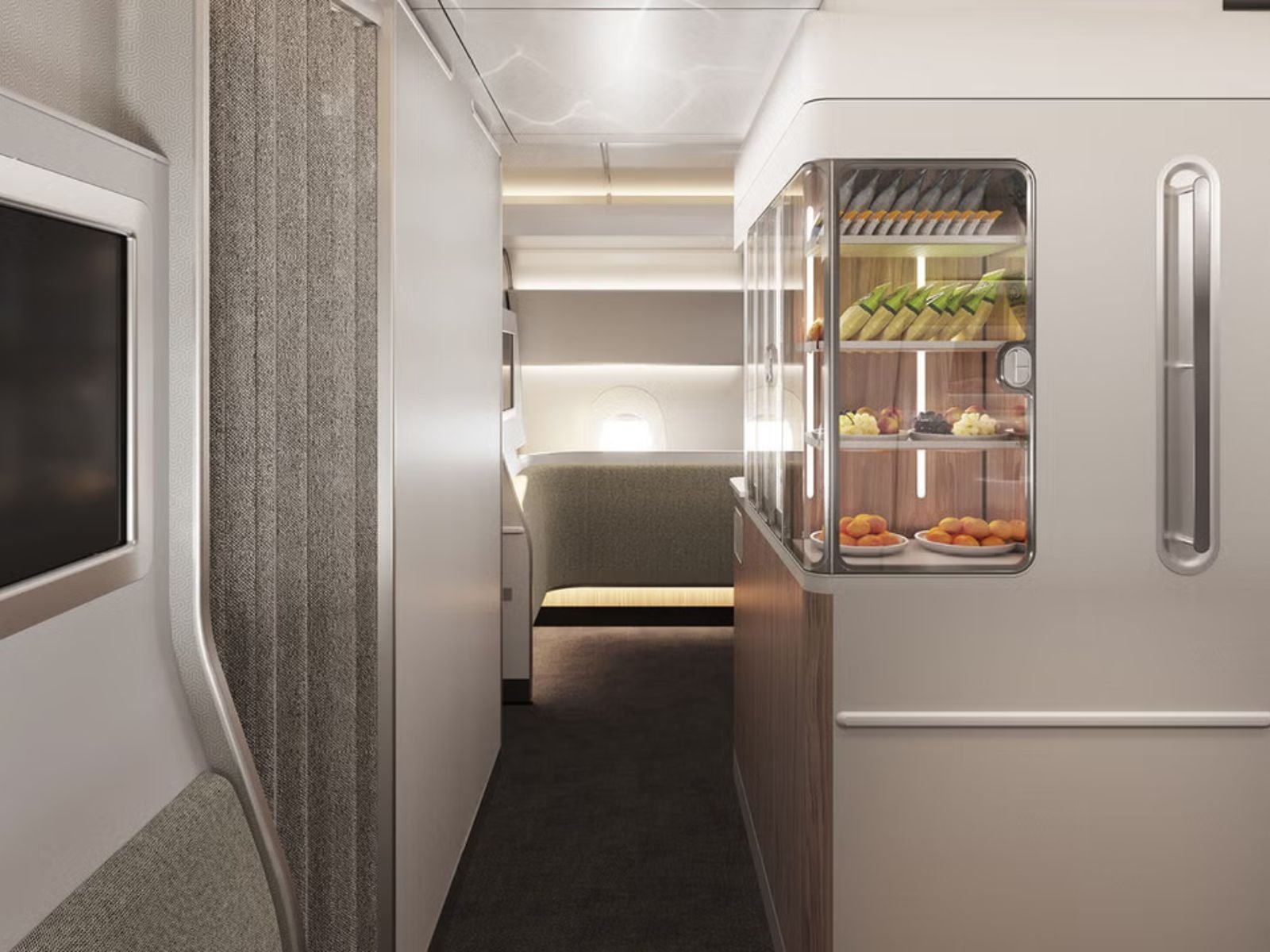
One of the most interesting additions to the A350-1000ULR is the world’s first purpose-built inflight Wellbeing Zone, positioned between the Premium Economy and Economy cabins and available to passengers in every class. Designed by Caon Design, the dedicated space features sculpted wall panels with integrated stretching handles, guided movement exercises displayed on a screen, a hydration station and a selection of premium refreshments. It is not quite an onboard gym, but it gives passengers somewhere to stand, stretch and move without awkwardly pacing up and down the aisle.
The zone also forms part of Qantas’ broader attempt to reduce the physical toll of spending up to 22 hours in the air. Its lighting will change throughout the journey, moving from blue-enriched daytime scenes with slow-moving clouds to softer moonlight-inspired settings during the cabin’s scheduled rest periods. Developed with guidance from the University of Sydney’s Charles Perkins Centre, the idea is to encourage movement, hydration and better adjustment to the destination time zone—although we suspect simply having somewhere other than your seat to spend a few minutes will be the feature passengers appreciate most.
Qantas is introducing its most significant inflight entertainment upgrade in more than a decade for the A350-1000ULR. The new system includes an onscreen journey planner that synchronizes with cabin lighting, meal service and scheduled rest periods, allowing passengers to see what is coming next and plan their sleep or entertainment accordingly. It will be available in 15 languages, remember individual viewing history and include a “Watch Together” feature for synchronizing a movie with up to three other passengers.
Fast and free Wi-Fi will be available throughout every cabin, while Bluetooth connectivity allows passengers to pair their own wireless headphones directly with the seatback display. The aircraft will also feature 12 scientifically developed lighting scenes, including “Sunrise,” “Sunset” and “Awake,” which adjust the cabin atmosphere throughout the journey and help passengers begin adapting to their destination time zone before landing.
Dining has received similar attention, with passengers across all four cabins able to pre-select their meals before departure. Business Class travellers will also have greater flexibility over when they eat, with service planned around scientifically selected windows intended to support the body’s circadian rhythm. None of these features will make a 22-hour flight disappear, but together they should give passengers more control over how they eat, sleep and entertain themselves along the way.
What Do We Think of the Qantas Project Sunrise Cabins?
Qantas appears to have understood that a 22-hour flight cannot simply rely on a comfortable seat and a larger entertainment screen. Reducing the A350-1000ULR to just 238 passengers, introducing enclosed First and Business suites, giving Premium Economy a 40-inch pitch and creating a dedicated Wellbeing Zone all suggest that passenger comfort has taken priority over squeezing in as many seats as possible. The First Class suite naturally steals the show, but the more generous 3-3-3 Economy layout may be the decision that makes the greatest difference to the largest number of passengers.
Whether circadian lighting, planned meal times and guided stretching can genuinely make the world’s longest flight feel refreshing remains to be seen. Still, Project Sunrise looks less like an endurance test dressed up with luxury branding and more like a serious attempt to rethink ultra-long-haul travel. The cabins remain indicative and are still undergoing passenger trials, but if the finished aircraft delivers on what Qantas has revealed, this could become one of the most important new onboard experiences in modern commercial aviation
Elias Albay is the Founder and Director of Many Men Magazine, a Toronto-based digital publication dedicated to promoting modern masculinity through style, culture, and self-improvement. What started as a personal turning point became a purposeful platform. — born from Elias’ desire to create something meaningful after completing his studies and finding no career path that truly matched his ambitions. With a background in Civil Engineering from York University and experience in Commercial Flight Operations at CAE, he applied skills, and resilience from both fields to forge a new path.