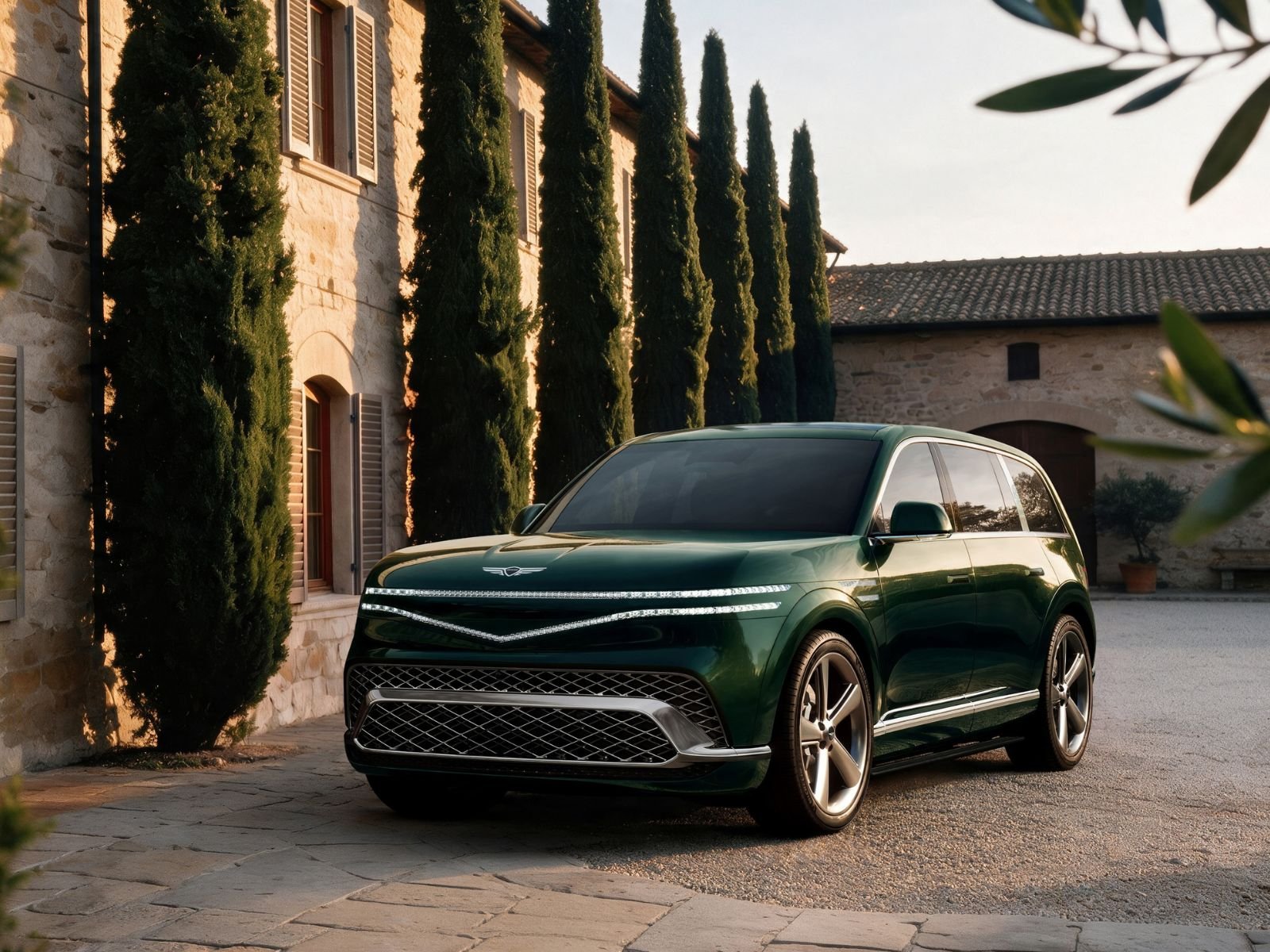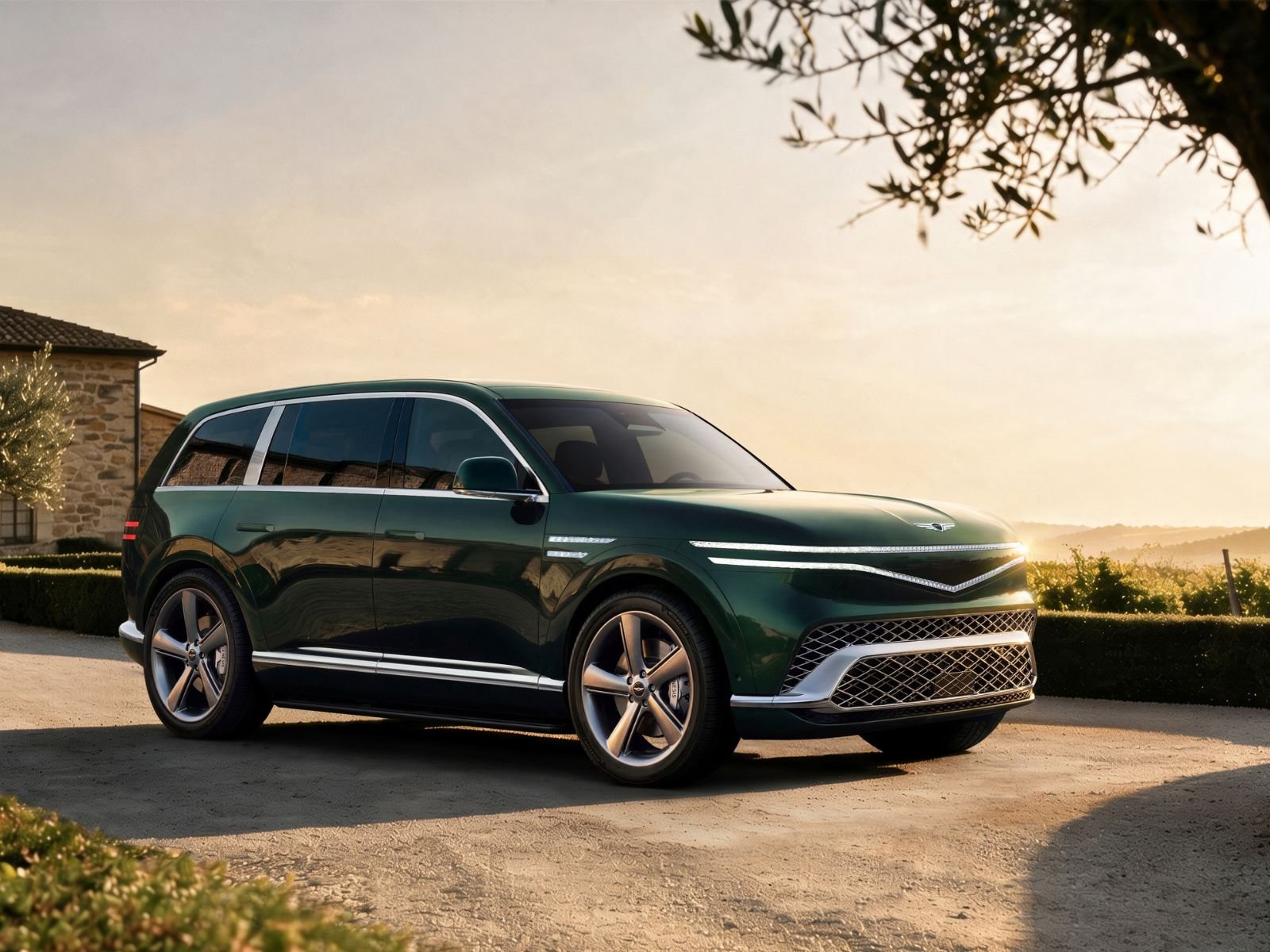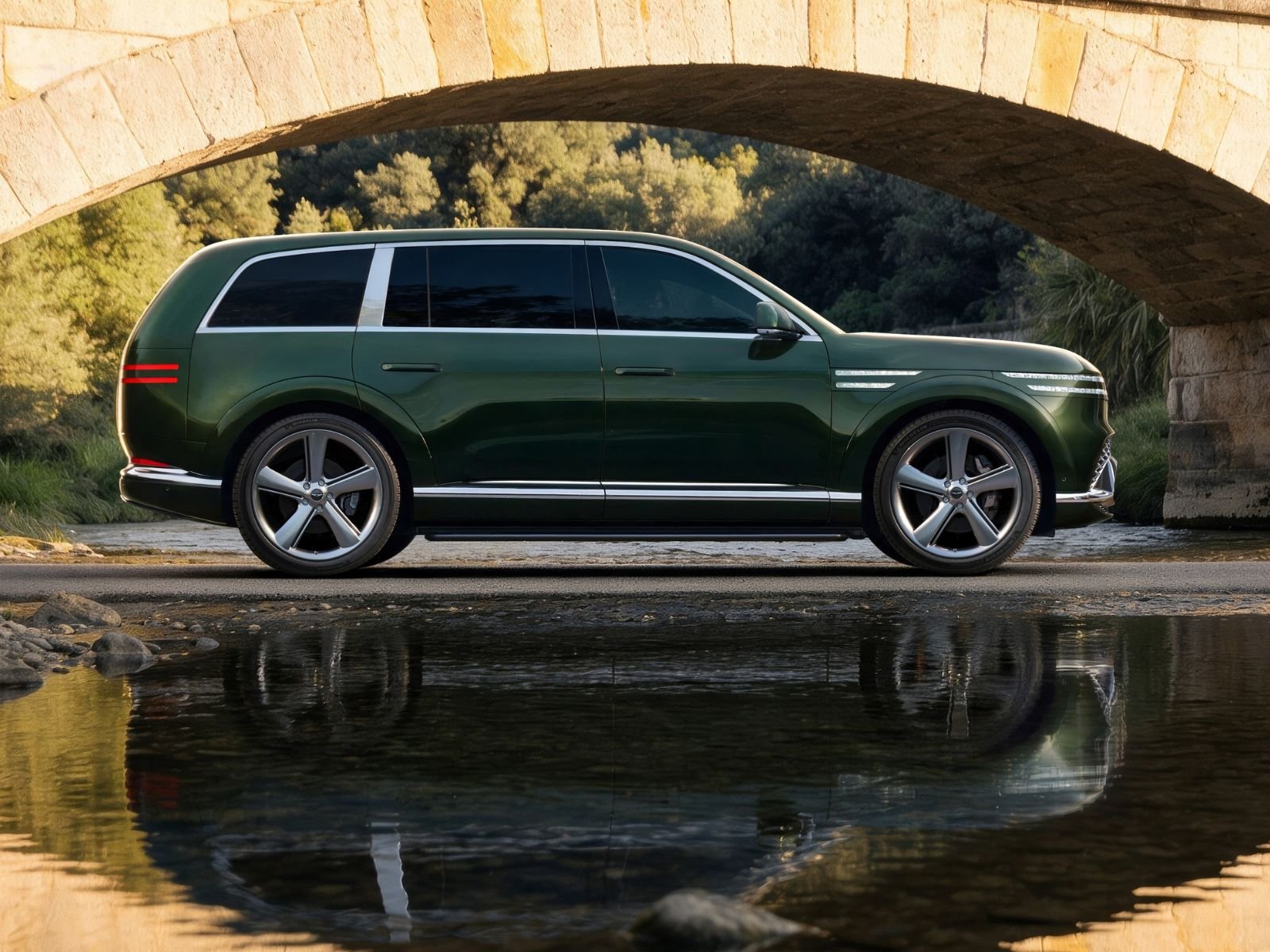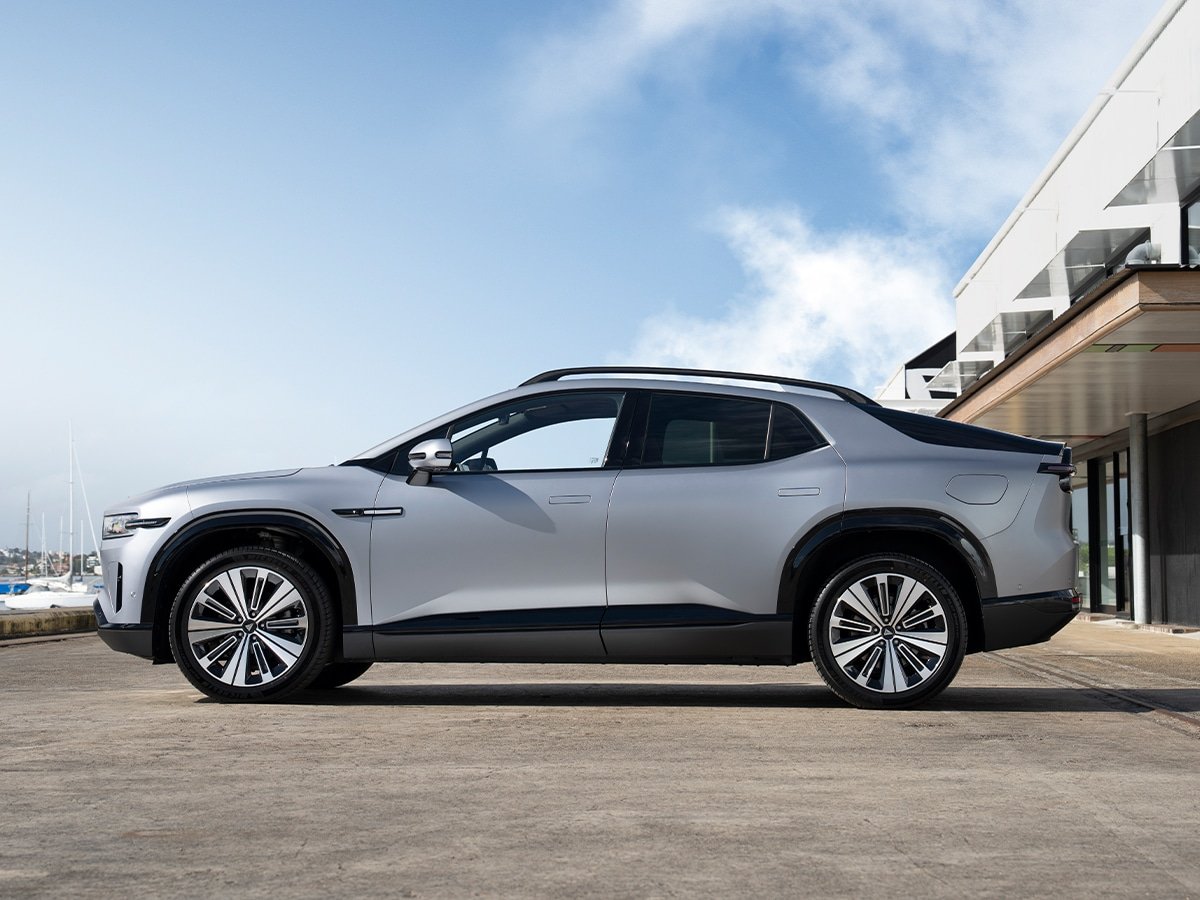








Genesis has spent the better part of a decade proving it can build luxury cars that make established players nervous. Now, the Korean marque is making perhaps its biggest move yet with the arrival of the GV90, its first full-size flagship SUV.
Unveiled at the Palace of Fine Arts in San Francisco, the all-electric Genesis GV90 sits at the very top of the Genesis range and arrives in two forms: the standard GV90 and the considerably more extravagant GV90 Neolun. The latter is where things get especially interesting, bringing coach doors, a lounge-like rear cabin, swivelling seats and the kind of technology normally reserved for concept cars.
“Today marks a landmark arrival for Genesis and for the future of luxury mobility. GV90 opens a new chapter for Genesis, building on our track record of bold innovation, elevated customer experiences, and an unwavering commitment to excellence,” said José Muñoz, president and CEO of Hyundai Motor Company.
Advertisement · Continue Reading Below
Muñoz also pointed out that Genesis became the fastest luxury brand to reach one million sales in less than eight years. Now, the GV90 is being positioned as a showcase for where the company wants to go next, blending new technology with the distinctly Korean ideas of hospitality and craftsmanship that Genesis says have helped shape the brand.
Genesis hasn’t announced official U.S. pricing just yet, but early estimates suggest the GV90 could start at around US$100,000, with higher-end configurations climbing considerably from there. At the very top, the fully loaded coach-door Executive Suite is expected to reach as much as US$250,000 — putting Genesis into some seriously expensive company.
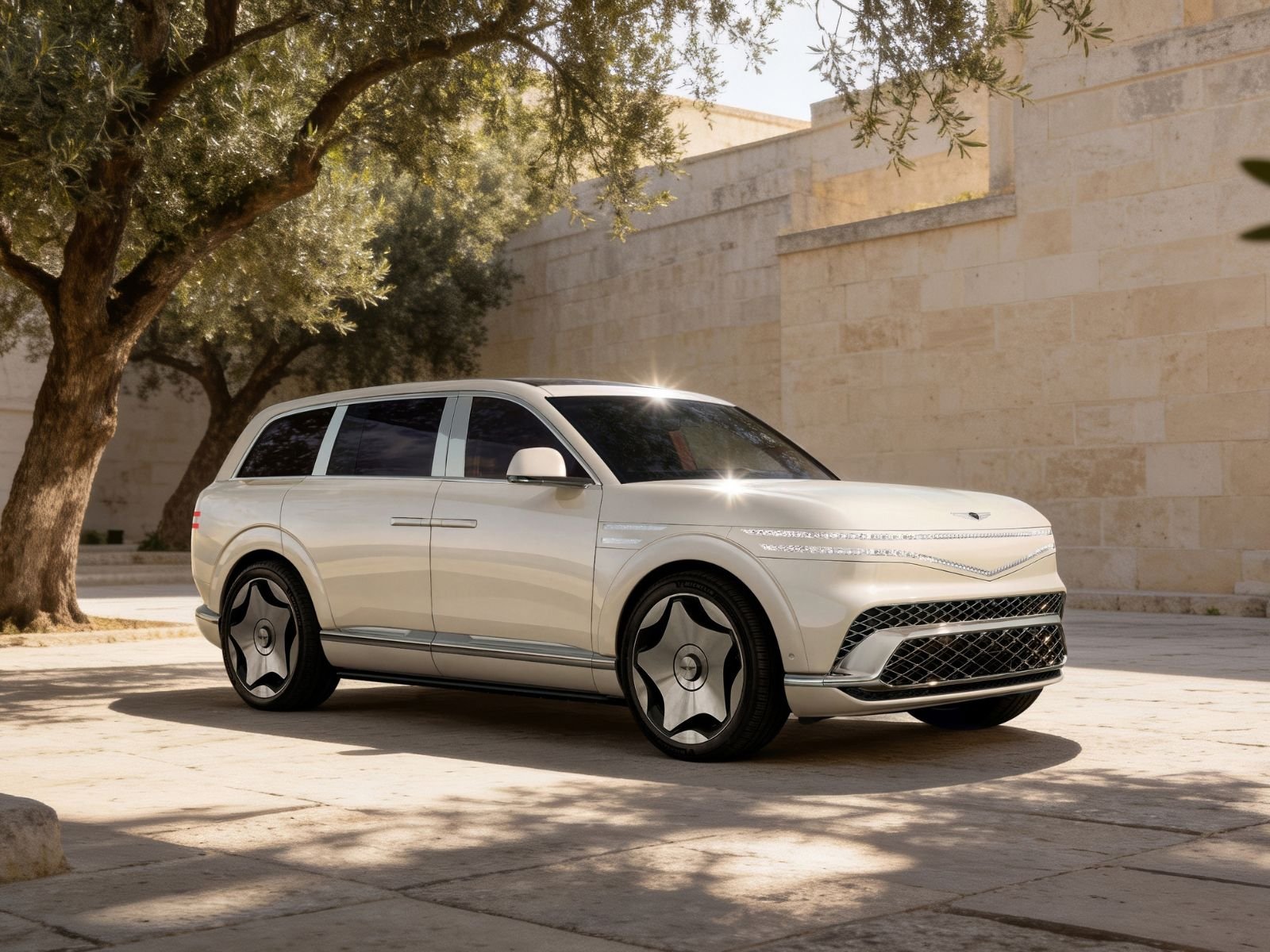
Think of the GV90 as Genesis taking everything it has learned about luxury and turning the dial all the way up. Sitting above the GV80, it’s the brand’s first full-size flagship SUV and has been developed from the ground up as an electric vehicle on Genesis’ new eMP platform. The regular GV90 is available in six- and seven-seat configurations, while the more extravagant GV90 Neolun takes inspiration from the Neolun Concept revealed in 2024 and adds a four-seat Executive Suite aimed squarely at VIP passengers.
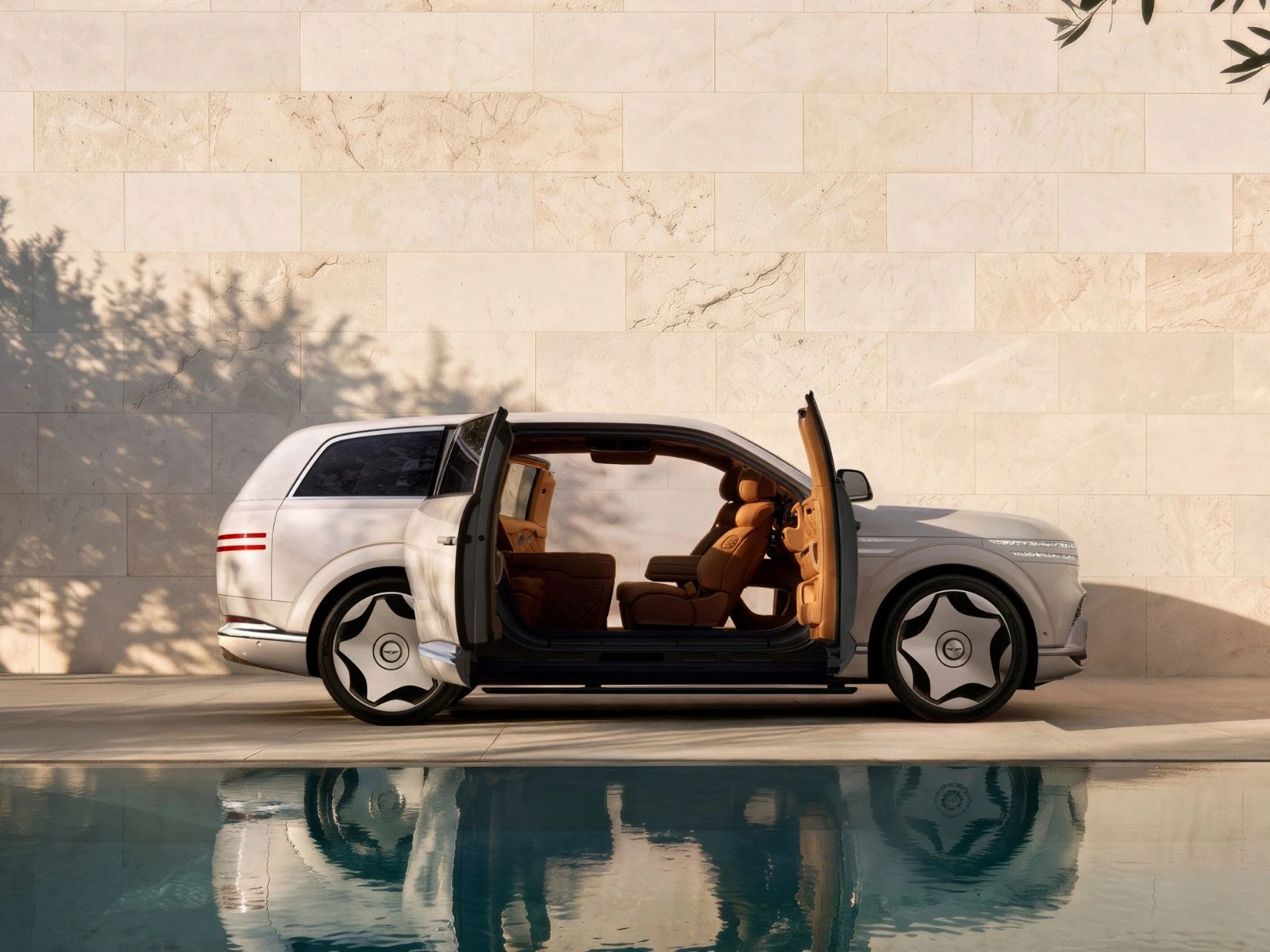
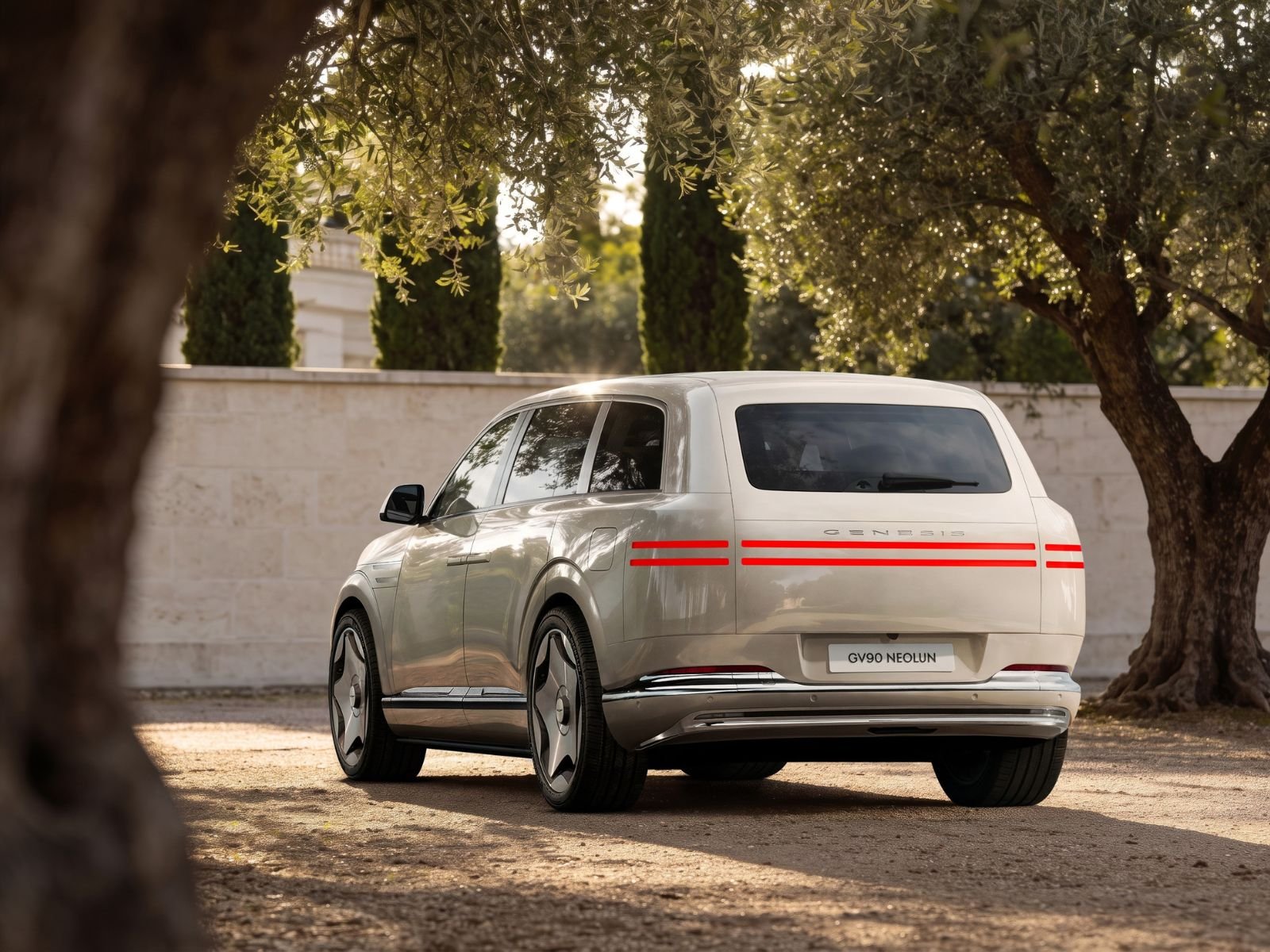
The Neolun also brings one of the concept’s wildest ideas into production. Dubbed the Neolun Arch Gate, its opposing coach doors eliminate the conventional fixed B-pillar between the front and rear doors, creating a huge, uninterrupted opening into the cabin. Genesis calls it the world’s first independently opening and closing hidden B-pillar coach-door system, with the rear doors moving slightly outward before swinging open so they can operate independently of the fronts.
Of course, removing something as structurally important as a B-pillar isn’t as simple as fitting a fancy hinge. Genesis has reinforced the doors with high-strength dual steel beams and strengthened the passenger compartment to maintain rigidity and occupant protection. The result is undeniably theatrical, but there’s a practical side to it as well — that enormous opening makes getting into the rear considerably easier — particularly fitting for an ultra-luxury SUV where the best seat in the house might not be behind the wheel.
For now, the answer is simple — the GV90 is electric only. Every GV90 uses a dual-motor all-wheel-drive powertrain fed by a huge 123.5kWh battery. Combined output sits at 490kW (657hp) and 800Nm, which is more than enough to move something this large with authority.
Genesis is targeting about 500km (310 miles) of driving range, while its 800-volt electrical architecture lets it charge from 10% to 80% in around 22 minutes on a 350kW DC fast charger.
There’s plenty happening underneath the body, too. A multi-chamber air suspension balances comfort with body control, while rear-wheel steering can turn the back wheels up to five degrees to make the enormous SUV more manoeuvrable at lower speeds. Genesis has also developed a Dual E-LSD system to manage torque distribution across the driven wheels.
Advertisement · Continue Reading Below
- Powertrain: Dual-motor electric AWD
- Battery: 123.5kWh
- Power: 490kW (657hp)
- Torque: 800Nm
- Range: 500km / 310 miles
- DC Fast Charging: 10–80% in 22 minutes
- Maximum DC Charging: 350kW
- Suspension: Multi-chamber air suspension
- Rear-Wheel Steering: Up to 5 degrees
- Length: 5,285mm
- Width: 2,030mm
- Wheelbase: 3,245mm
- Wheels: Up to 24 inches
- Seating: Up to seven, depending on configuration
But here’s where things get interesting for petrolheads. Genesis might be pushing the GV90 as an EV-only flagship, but the company hasn’t completely forgotten what a proper combustion engine sounds like.
At Genesis Magma Racing, its GMR-001 endurance racer runs on a 3.2-litre twin-turbo V8, developed using technology from Hyundai Motorsport’s WRC programme. It’s a very different machine built for a very different purpose, of course, and Genesis has given no indication that the engine is destined for the GV90.
Would a thundering V8-powered GV90 be ridiculous? Probably. Would we like to see Genesis build one anyway? Absolutely. But for now, though, anyone shopping for the brand’s biggest and most luxurious SUV will be plugging it in.
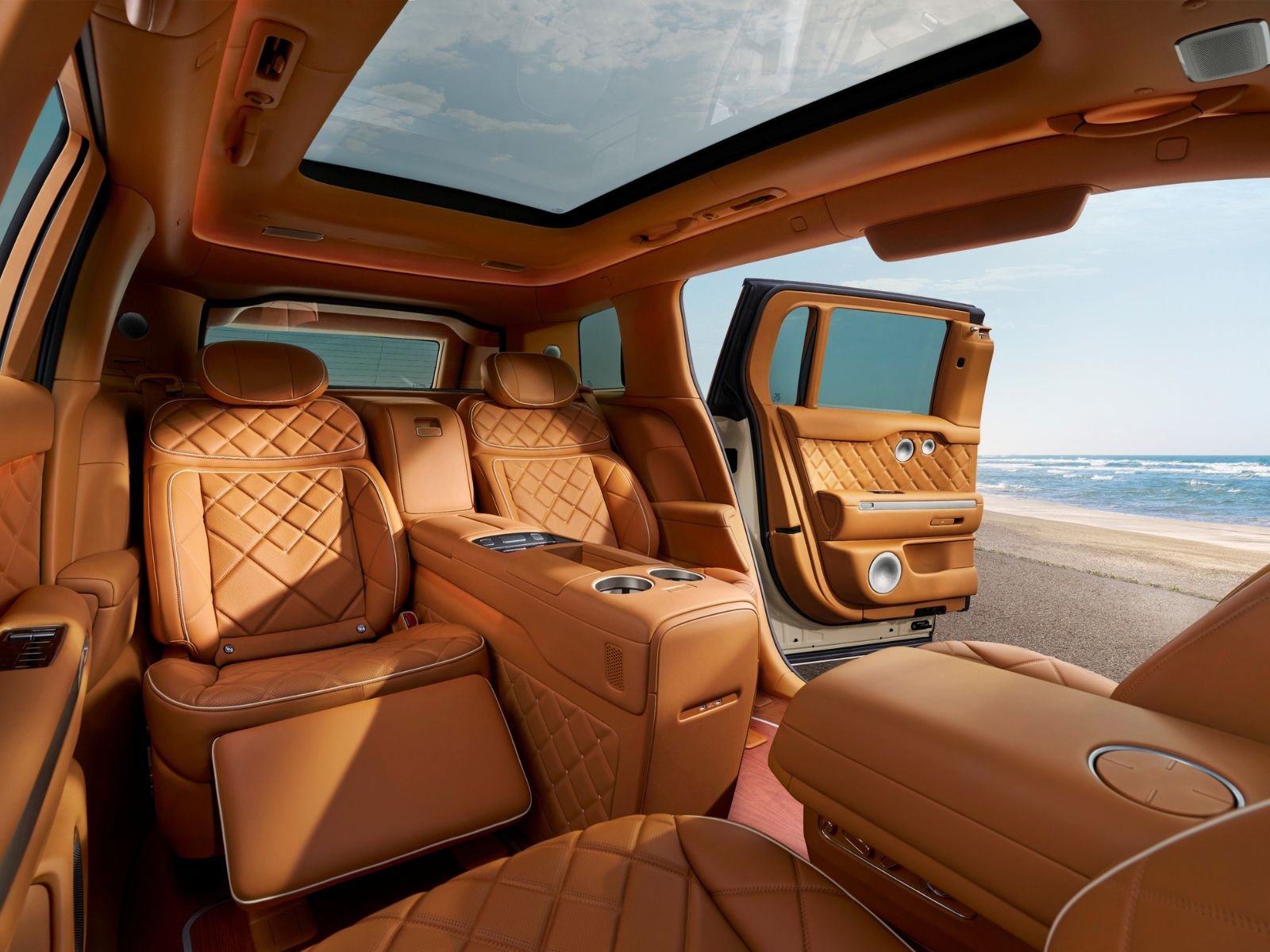
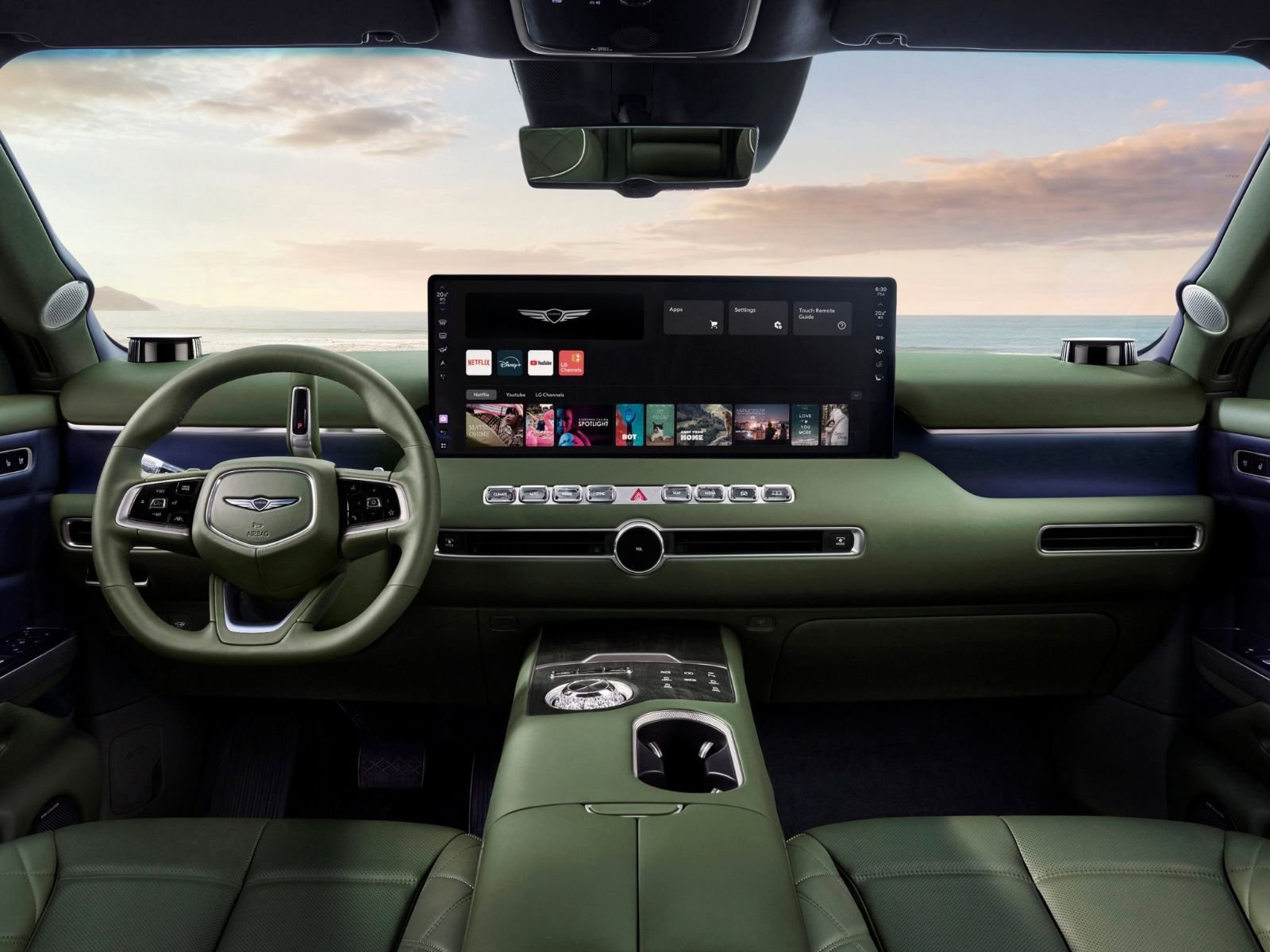
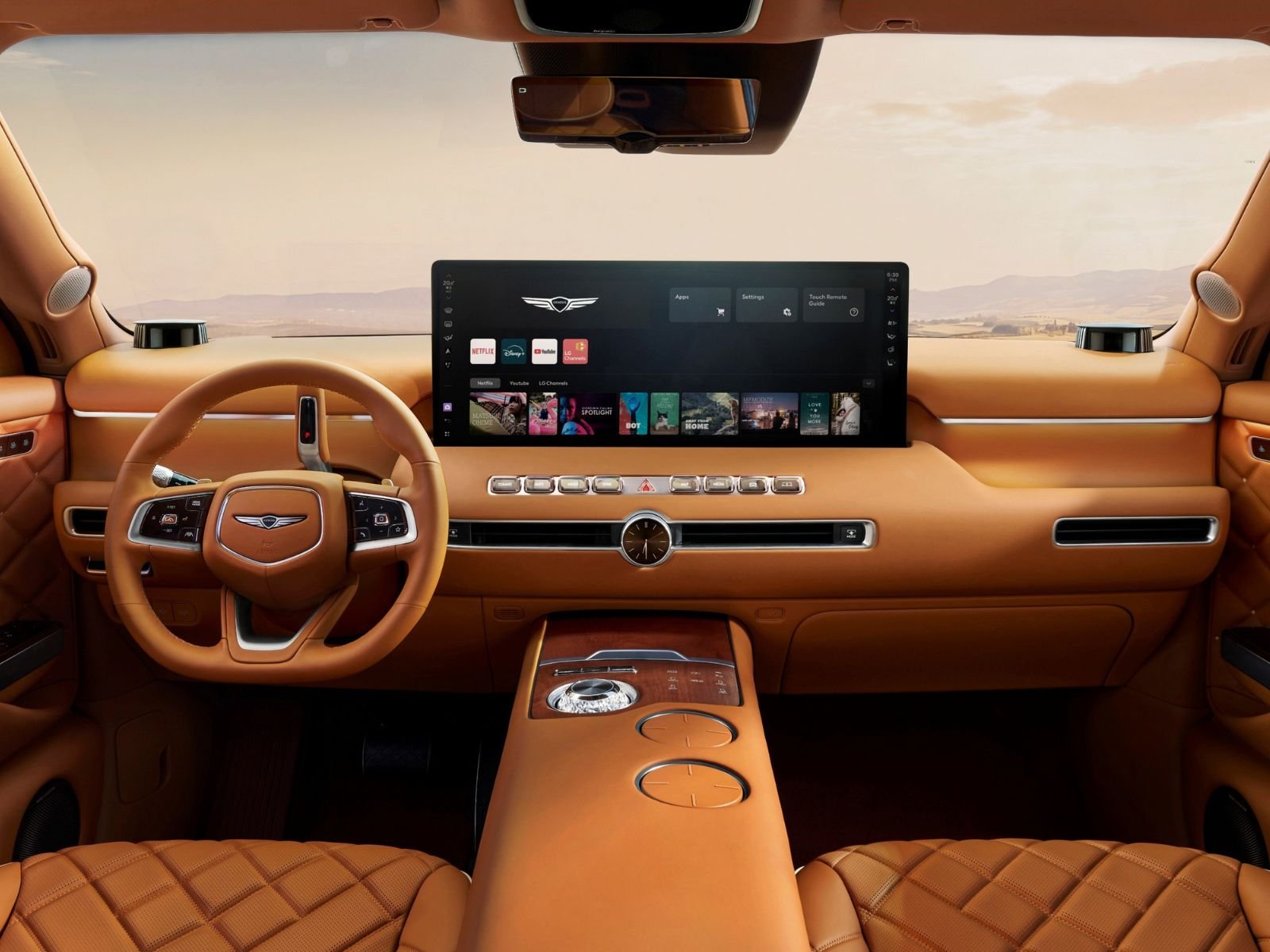
If the GV90’s coach doors weren’t enough to get your attention, the cabin should do the trick. Taking centre stage is a 23.6-inch OLED Cinematic Display that rises into view when needed, transforming the dashboard into something closer to a private screening room. It’s paired with Genesis’ latest Pleos Connect infotainment system, while a 25-speaker Bang & Olufsen Premier 3D sound system with Dolby Atmos handles the audio.
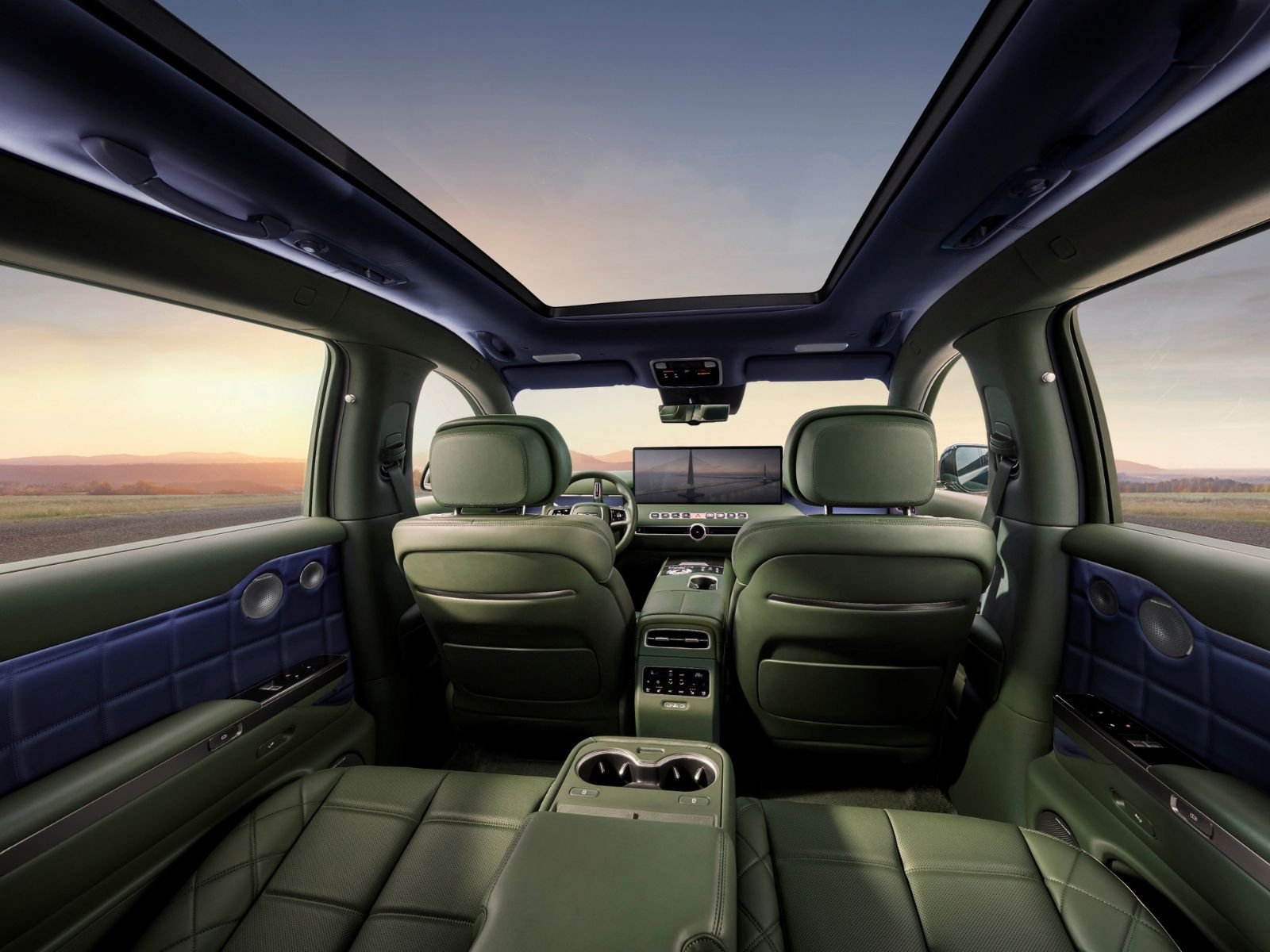
Things get even more extravagant inside the GV90 Neolun. When the vehicle is stationary, the front seats can swivel 180 degrees to face rear passengers, turning the cabin into a lounge-like space where everyone can sit face-to-face. Go for the four-seat Executive Suite and the experience becomes even more VIP-focused, with folding tables, extensive seat adjustment, massage functions and an available refrigerator adding to the private-jet feel.
The cabin features real wood and an available radiant heating system inspired by ondol, Korea’s traditional underfloor heating method, while Ambient Glow lighting and the Smart Vision Roof help set the mood overhead. It’s an unusual mix of old-school hospitality and seriously modern technology — and exactly the sort of extravagance you’d expect from a flagship SUV potentially knocking on the door of $250,000.
newsletter-block]
Of course, removing a conventional B-pillar to enable those dramatic coach doors creates a serious engineering challenge. Genesis says the GV90 Neolun gets high-strength dual steel beams integrated into the doors, along with a reinforced passenger structure designed to maintain rigidity and protect occupants. The GV90 also packs 12 airbags, including what Genesis calls the world’s first Roof Airbag, which deploys across the panoramic roof during a severe rollover to provide additional passenger protection.
Genesis has paid similar attention to the massive battery sitting underneath the cabin. The GV90 uses Thermal Runaway Protection technology designed to help prevent heat from spreading between battery cells, alongside a cloud-based battery management system that can detect potential abnormalities. Throw in the latest driver-assistance and parking technology, and it’s clear Genesis hasn’t allowed all those swivelling seats, giant screens and luxury touches to overshadow the less glamorous — but arguably more important — side of building a flagship SUV.
Genesis hasn’t announced official U.S. pricing for the GV90 just yet, but early estimates suggest the range could start at around US$100,000, with the more luxurious Neolun commanding considerably more. At the very top, reports suggest a fully loaded four-seat Executive Suite could stretch towards US$250,000, putting the GV90 in a very different league from anything Genesis has offered before.
At that price, Genesis isn’t simply trying to undercut the traditional luxury establishment anymore. It’s asking buyers to consider the GV90 alongside some of the most prestigious luxury SUVs on the road.
Whether buyers are ready to spend $250,000 on a Genesis remains to be seen, but the GV90 certainly makes a convincing case for how far the brand has come. With its pillarless coach doors, swivelling lounge seats, pop-up cinema, 25-speaker Bang & Olufsen system and distinctly Korean approach to luxury, this feels less like Genesis trying to catch up with its rivals and more like the brand showing us exactly where it intends to go next.