Our team of editors and experts thoughtfully chooses each product. If you decide to buy through one of our links, we may earn a commission. Learn more. Want to know how we test products? Click here for more details.
Erling Haaland has spent years making two things look ridiculously easy — scoring goals and somehow pulling off long blonde Viking hair while doing it. Now, one of those trademarks is officially gone.
The Manchester City striker has chopped off the long blonde locks and replaced them with a full-on buzz cut ahead of the new Premier League season. Haaland documented the transformation in a YouTube video titled New Season, New Hair!!, taking us along for the haircut before revealing his new look to some of the people closest to him.
And apparently, this wasn’t some spontaneous decision made after walking past a barber.
“This beautiful blonde hair, time to let it go,” Haaland said before the chop, explaining that he’d actually considered doing it immediately after the World Cup but simply never found the time. With another season about to begin, he decided it was finally time for what he called a “fresh start.”
Haaland revealed that Zlatan Ibrahimović — another man who knows a thing or two about making long hair part of your footballing identity — had previously warned him: “Never cut your hair because your strength is in your hair.” Haaland ignored the advice, put his faith in the Clippers, and emerged looking almost like a different person.
His partner Isabel Haugseng Johansen was a fan, telling him, “I think you look really tough!” But once Haaland started FaceTiming his mates to show off the finished product, the reactions became considerably less reassuring.
Former Manchester City boss Pep Guardiola couldn’t quite believe what he was seeing. “No way,” he said before joking that Haaland should consider himself lucky to have enough hair to chop off in the first place. “I would love to have that hair.” Oasis frontman and lifelong City supporter Noel Gallagher was a little more encouraging. His verdict was that “change is good,” although he couldn’t resist pointing out that the freshly shaven Haaland suddenly looked about 17.
Then came Jack Grealish — “You look about 10 years old!” the former City teammate joked, before admitting he couldn’t stop staring at the front of Haaland’s head. His final verdict? “I love it.”
But everyone knew one reaction really mattered. Haaland eventually called Ibrahimović, the very man who had warned him against touching those famous blonde locks. Zlatan took one look at the new Haaland and immediately asked whether he’d “lost a bet,” before jokingly telling him to block his number. He then wondered whether there might at least be a performance benefit to sacrificing all that hair: “You’re going to be faster now, or what?”
Unfortunately, the aerodynamic theory didn’t exactly get off to the perfect start.
Erling Haaland Buzz Cut | Image: Supplied
Haaland debuted the buzz cut as Manchester City opened their Premier League campaign against Bournemouth at the Etihad Stadium. City eventually walked away with a 2–1 victory, but Haaland wasn’t among the goalscorers despite getting opportunities in front of goal. So, for now at least, Zlatan’s Samson-like theory about the source of Haaland’s powers remains amusingly unresolved. Still, forget the football for a second because Haaland might have accidentally given the rest of us something to think about.
The buzz cut keeps coming back for a reason. It’s simple, masculine, incredibly low-maintenance and virtually eliminates the morning battle with your hair. No styling products, no careful arranging before leaving the house, and far less concern about what wind, rain, or a bad night’s sleep has done to your head.
That doesn’t mean everyone should immediately grab a pair of clippers. A buzz cut puts your face and head shape completely on display, and there’s nowhere for your hair to hide things anymore. If you’ve spent years with longer hair, going this short can also be a pretty dramatic change — as Haaland’s FaceTime calls made abundantly clear. But maybe that’s part of the appeal. Sometimes you just want to chop everything off and start again. Haaland waited until the beginning of a new season to do exactly that, and despite the abuse from his mates, he seems pretty happy with the result. His verdict after seeing himself with the finished cut was simple: “No regrets, never.”
So, are we all about to start looking like Norwegian footballers? Probably not. But if you’ve been standing in front of the mirror wondering whether it’s finally time to buzz it all off, Haaland might have just given you the excuse you were looking for.
Elias Albay is the Founder and Director of Many Men Magazine, a Toronto-based digital publication dedicated to promoting modern masculinity through style, culture, and self-improvement. What started as a personal turning point became a purposeful platform. — born from Elias’ desire to create something meaningful after completing his studies and finding no career path that truly matched his ambitions. With a background in Civil Engineering from York University and experience in Commercial Flight Operations at CAE, he applied skills, and resilience from both fields to forge a new path.
Our team of editors and experts thoughtfully chooses each product. If you decide to buy through one of our links, we may earn a commission. Learn more. Want to know how we test products? Click here for more details.
Few names in luxury watchmaking carry the same sense of prestige as Cartier. For nearly 180 years, the French Maison has blended innovation, craftsmanship and timeless elegance to create some of the world’s most recognizable timepieces. From pioneering shaped watches to pushing the boundaries of jewellery watchmaking, Cartier has built a legacy where technical expertise and artistic design exist in perfect harmony—a philosophy that continues to define the brand today.
At Watches and Wonders 2026, Cartier once again showed why it is one of the most important watchmakers in the industry. This year’s new releases include the bold Cartier Privé Tenth Opus collection, fresh takes on the Santos-Dumont, and the much-anticipated return of the Roadster. Instead of just bringing back old favourites for nostalgia, Cartier has thoughtfully updated them with new materials, improved mechanisms and the Maison’s unique design style.
Each new release has its own story, but all of them show the careful attention to detail and creativity that have defined Cartier for generations. Let’s take a closer look at the standout watch collections Cartier presented at Watches and Wonders 2026, and see why the brand continues to set the standard for creative luxury and lasting style.
Cartier Releases at Watches & Wonders 2026 Overview:
Before we dive into every new timepiece, we had to choose a few standouts. Cartier’s 2026 collection was packed with iconic revivals, refined classics, and beautifully executed craftsmanship, making it one of the strongest lineups at this year’s Watches and Wonders. These are the releases that impressed us most at Many Men Magazine—whether for their design, heritage, or the way they surprised us.
Cartier Privé Tenth Opus | Image: Cartier / Supplied
Cartier Privé Tenth Opus
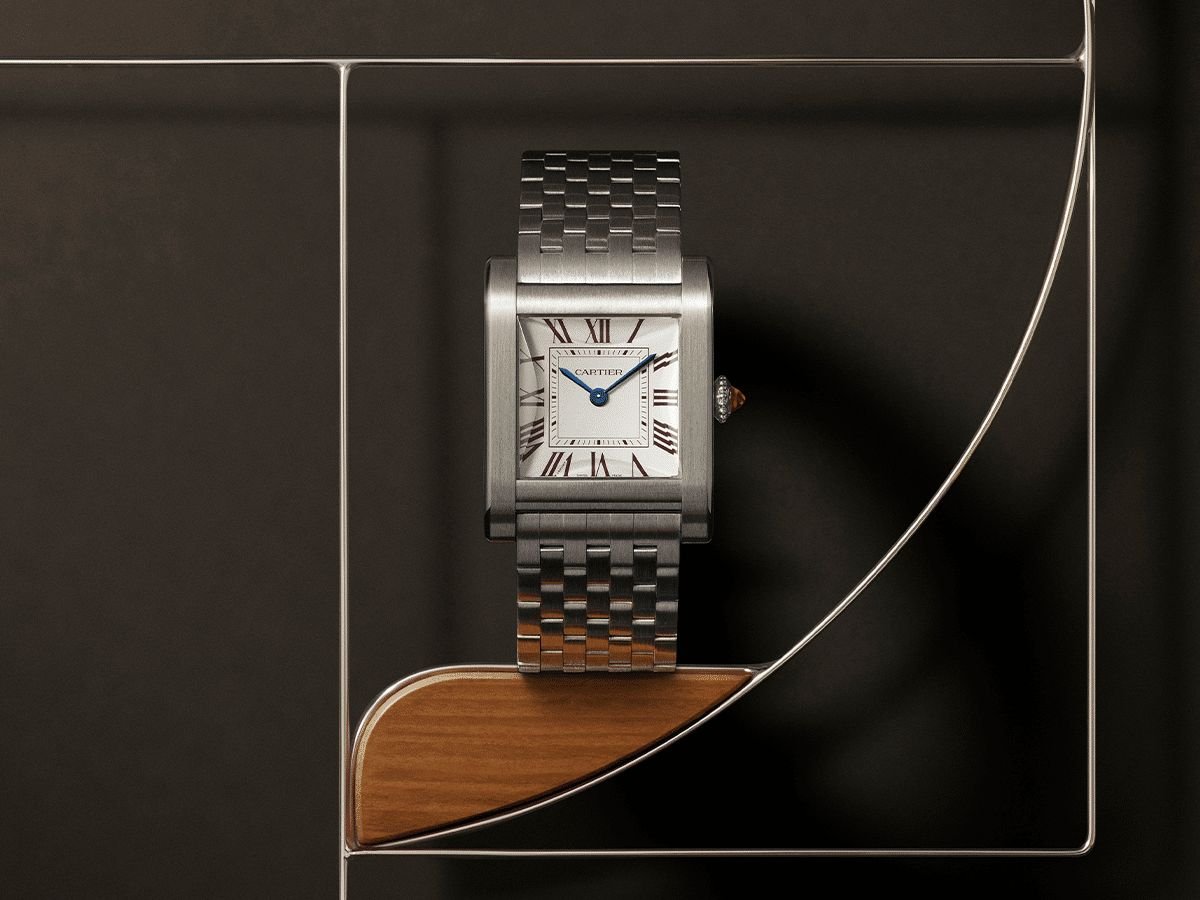
Every year, the Cartier Privé collection offers collectors something to look forward to, but the Tenth Opus feels especially significant. Since the collection was revived in 2015, Cartier Privé has revisited some of the Maison’s most celebrated watch designs through a contemporary lens. To mark its tenth chapter, Cartier brings together three of its most iconic creations—the Tank Normale, Tortue Monopusher Chronograph, and Crash Skeleton—each representing a different era of the Maison’s remarkable design history.
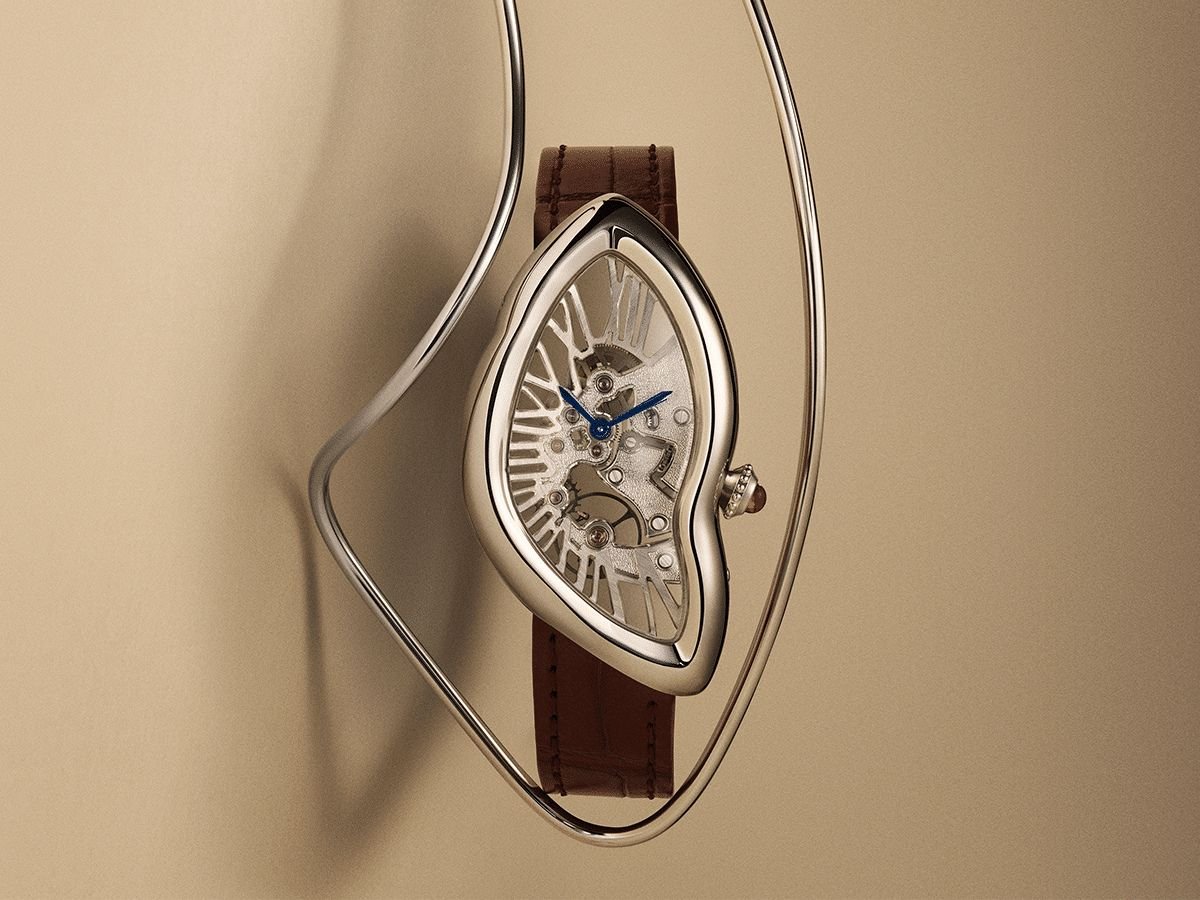
Each watch has its own story to tell. The Tortue Monopusher Chronograph draws inspiration from the highly regarded 1998 Collection Privée Cartier Paris (CPCP) model, bringing the distinctive tonneau-shaped case and monopusher chronograph back into the spotlight. The Crash Skeleton revisits one of Cartier’s most daring creations, first introduced during London’s cultural revolution in 1967, while showcasing a skeletonized movement developed specifically for its unconventional case. Completing the trio is the Tank Normale, whose seven-row platinum bracelet, manually wound movement and balanced proportions pay tribute to an elegant 1934 reference that remains one of Cartier’s defining designs.
Speaking about the Maison’s skeleton watchmaking philosophy, Pierre Rainero, Director of Image, Style and Heritage, explains, “The first Cartier skeleton watches appeared in the 1920s as pocket watches. A true marvel of elegance and technical sophistication, their design made it possible to render complications visible. In 2009, Cartier unveiled the Santos 100 Skeleton watch with the patented Calibre 9611 MC Manufacture movement. This watch is immediately recognisable by its bridges sculpted in the shape of Roman numerals. This approach reflects the Cartier watchmaking spirit, where technique is at the service of aesthetic.”
Although each watch has its own personality, Cartier has tied the collection together with a consistent design language. Every model is crafted in platinum, a metal long associated with the Maison’s most exclusive creations, while rich burgundy accents appear throughout the collection. The Tank Normale is paired with its striking platinum bracelet, whereas both the Tortue Monopusher Chronograph and Crash Skeleton are fitted with matching burgundy leather straps. Combined with silvered opaline dials, blued steel hands and Cartier’s signature ruby cabochon crown, the result is a colour palette that feels understated, elegant and unmistakably Cartier.
Rather than simply recreating watches from the archive, the Cartier Privé Tenth Opus shows how enduring great design can be. Each model stays faithful to the spirit of its predecessor while benefiting from modern movements, refined finishing, and the level of craftsmanship collectors have come to expect from Cartier. It’s a fitting celebration of the Privé collection’s tenth chapter and another reminder that few watchmakers understand the art of reinterpreting their own history as well as Cartier.
Cartier Tank Normale | Image: Cartier / Supplied
Tank Normale
Brand: Cartier
Model: Tank Normale
Reference: CRWGTA0111
Dimensions: 32.6 mm x 25.7 mm
Thickness: 6.85 mm
Material: Platinum 950/1000
Bracelet/Strap: Platinum with white gold folding buckle
Dial: Silvered opaline dial with burgundy Roman numeral hour markers
Calibre: 1967 MC – Mechanical Manual Winding Movement
Power Reserve: 38 Hours
Water-Resistance: 3 Bar (30 metres, 100 feet)
Limited Edition: 150 Pieces
Cartier Privé – La Collection | Image: Supplied / Cartier
Cartier Privé – La Collection
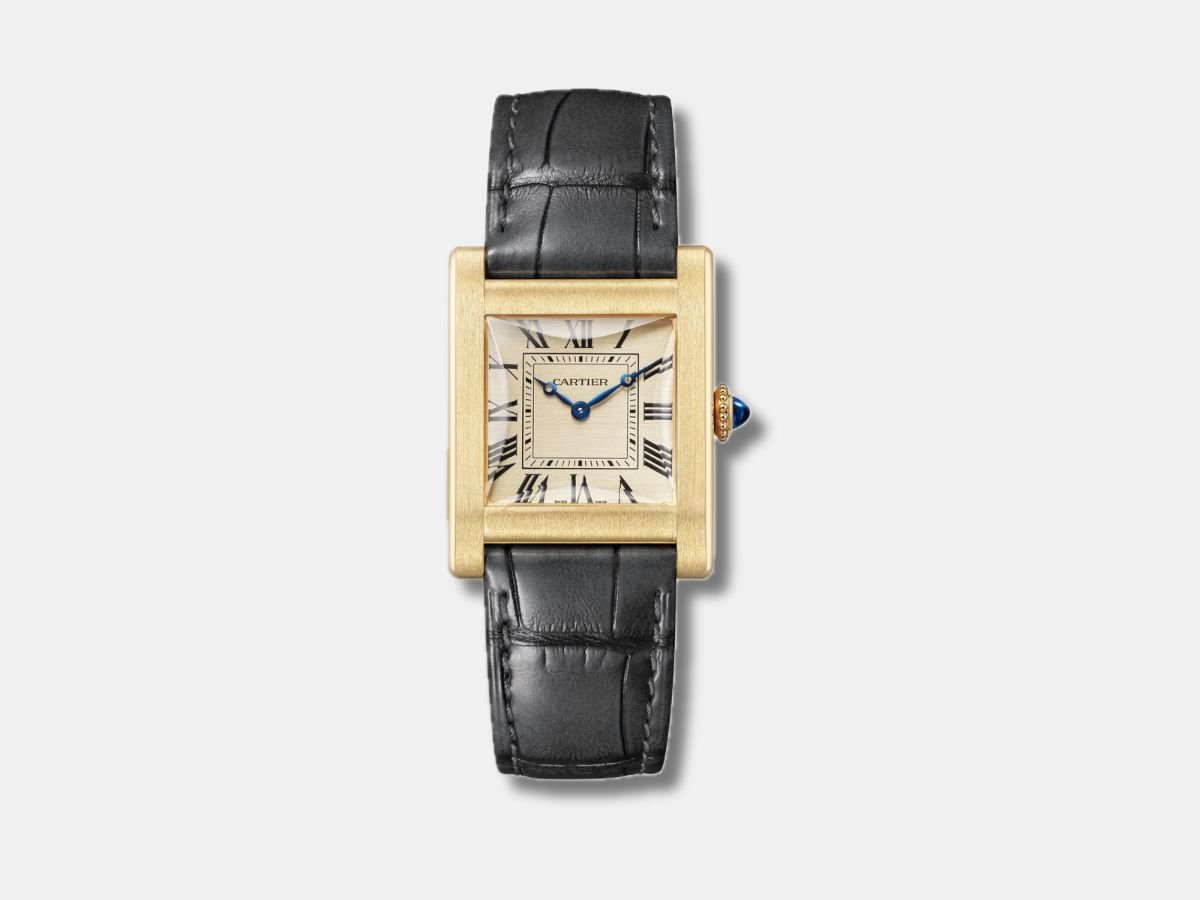
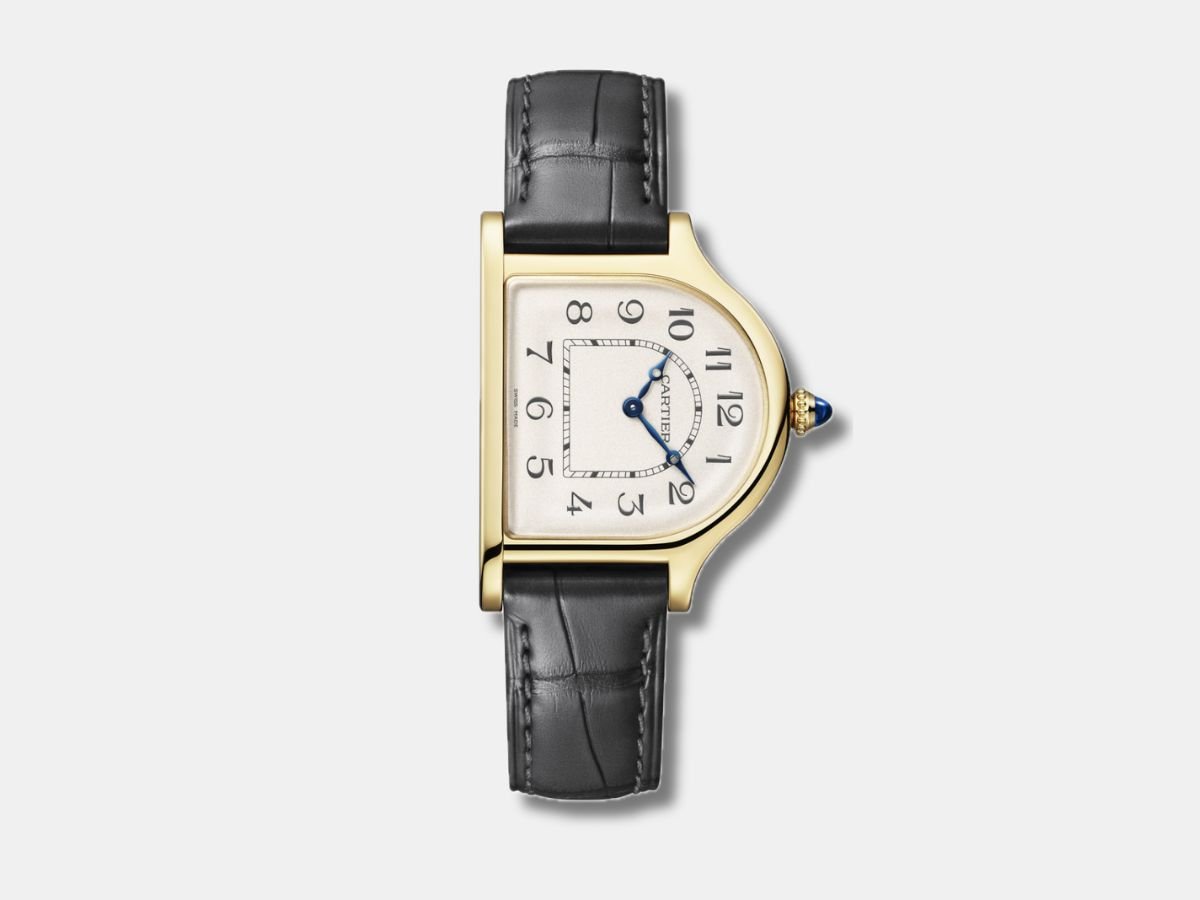
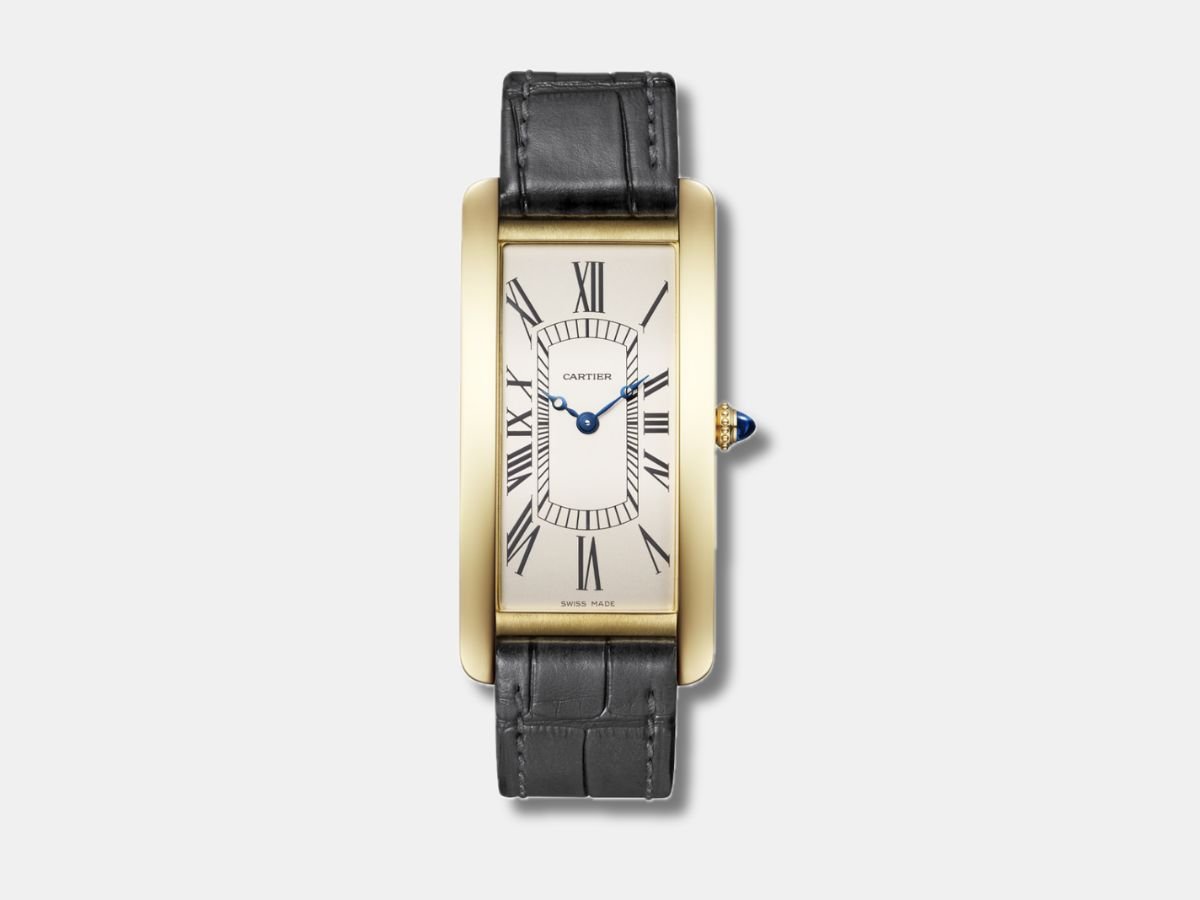
To celebrate the tenth chapter of Cartier Privé, the Maison has also unveiled Cartier Privé – La Collection, a series created exclusively for its clients and collectors. While the Tenth Opus explores three historic designs in platinum, La Collection shifts the focus to three enduring Cartier icons—the Tank Normale, Tank Cintrée and Cloche de Cartier. Rather than reinventing these classics, Cartier presents them with the same proportions and character that have defined each model for decades, allowing their timeless appeal to speak for itself.
The three watches share a common design language. Each is crafted in 18-carat yellow gold and paired with a golden satin-finished dial, blued-steel apple-shaped hands and a dark grey alligator leather strap that creates an elegant contrast against the warm gold case. However, each model is powered by a manual-winding mechanical movement, reinforcing the collection’s traditional character. Cartier has also engraved the caseback of each watch with the silhouette of the model it represents, adding a subtle tribute to the shape hidden beneath — a quiet approach that feels perfectly in keeping with the Maison’s spirit.
Cartier Tank Normale Ref. CRWHTA0031 | Image: Supplied / Cartier
Tank Normale
Model: Tank Normale
Reference: CRWHTA0031
Dimensions: 32.6 x 25.7 mm
Thickness: 6.85 mm
Material: Yellow Gold 750/1000
Bracelet/Strap: Dark grey semi-matte alligator leather strap
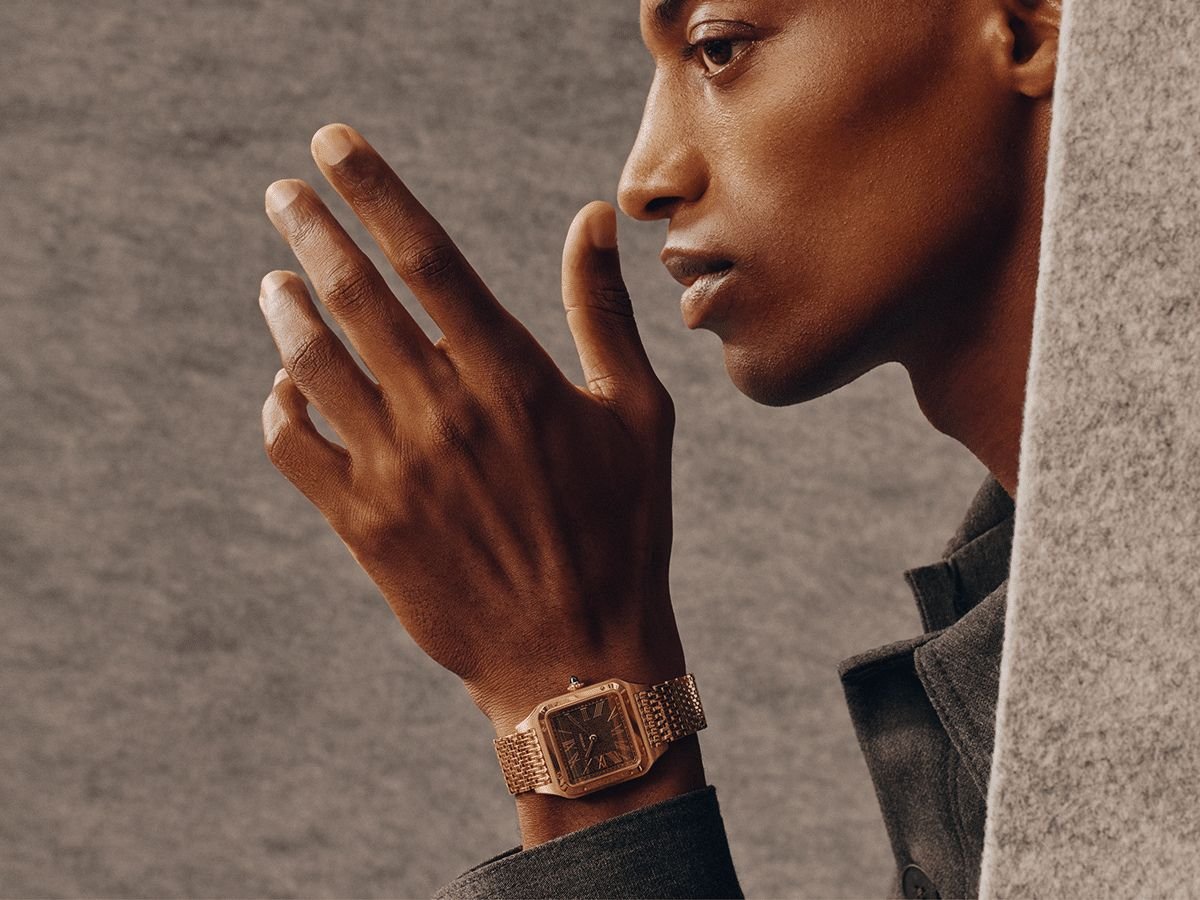
There are beautiful watches, and then there are watches that make you stop and stare. The new Cartier Santos-Dumont collection clearly belongs in the second group. From the very soft metal bracelet to the eye-catching stone and sunray dials, every detail has been carefully planned. The result is a watch that feels both classic and timeless, showing the easy elegance that has always made the Santos-Dumont one of Cartier’s most famous designs.
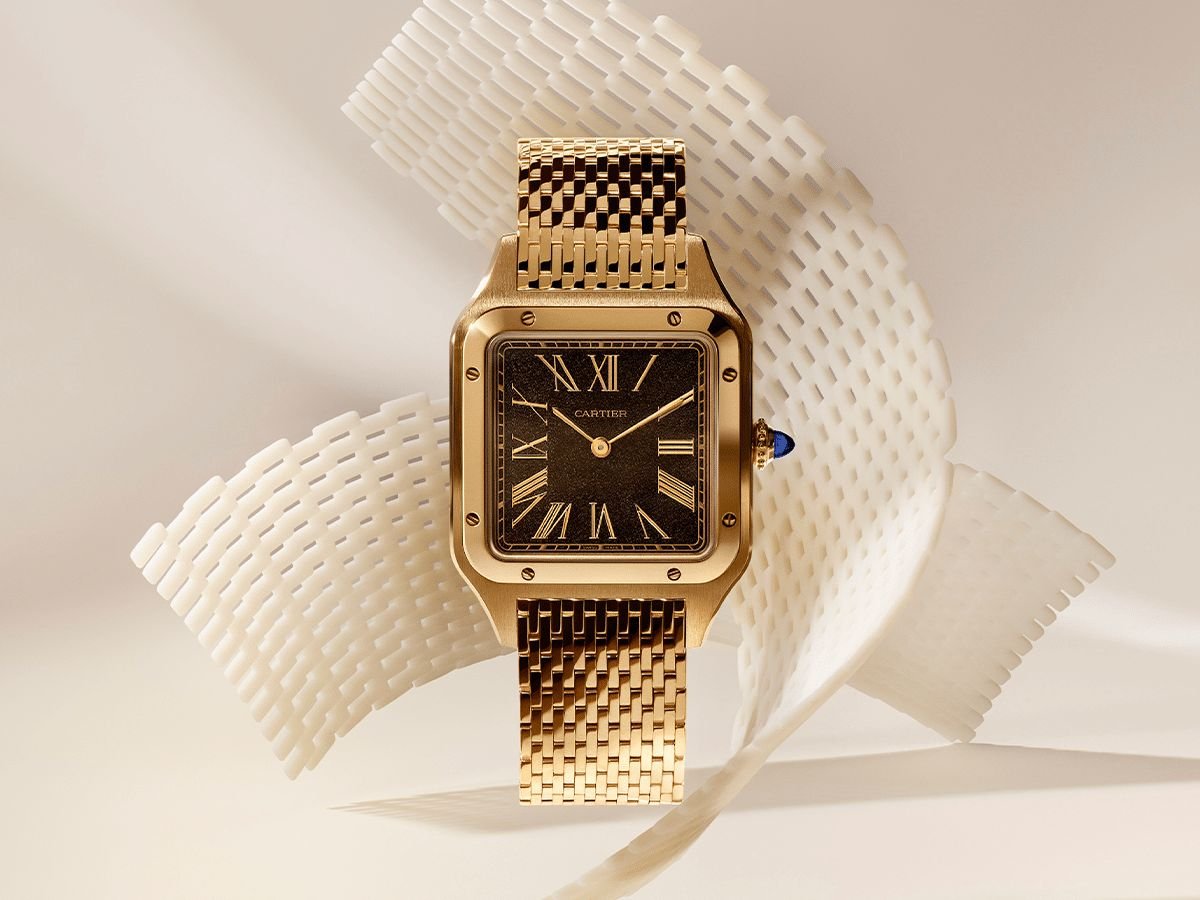
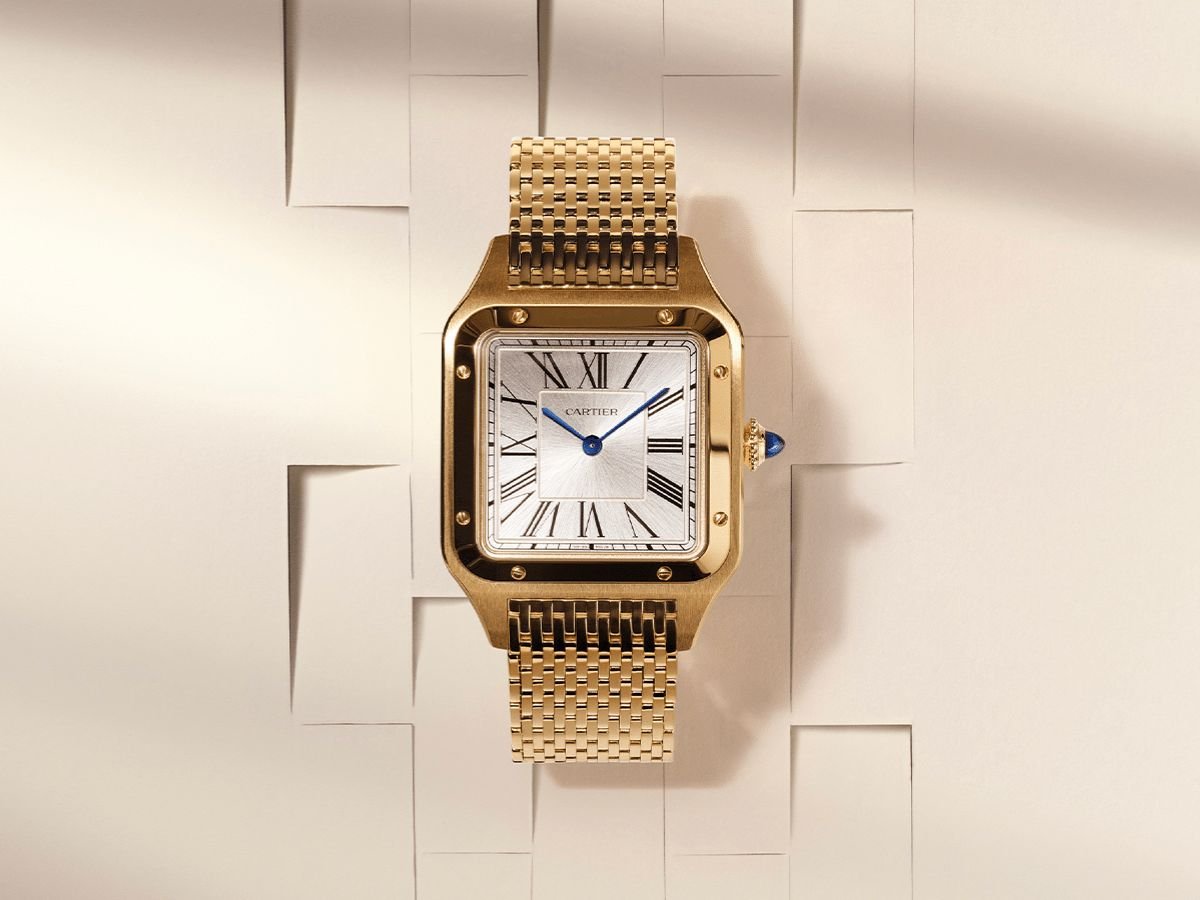
Originally created in 1904 for Brazilian aviation pioneer Alberto Santos-Dumont, this was one of the first watches designed to be worn on the wrist. More than 120 years later, the design still feels as relevant as ever. The new Large Model (LM) references retain everything collectors love about the Santos-Dumont, including its Roman numerals, exposed screws, beaded crown topped with a blue cabochon and slim square case. Inside, all three models are powered by Cartier’s hand-wound 430 MC manufacture movement, a fitting choice for a watch built around refinement rather than excess.
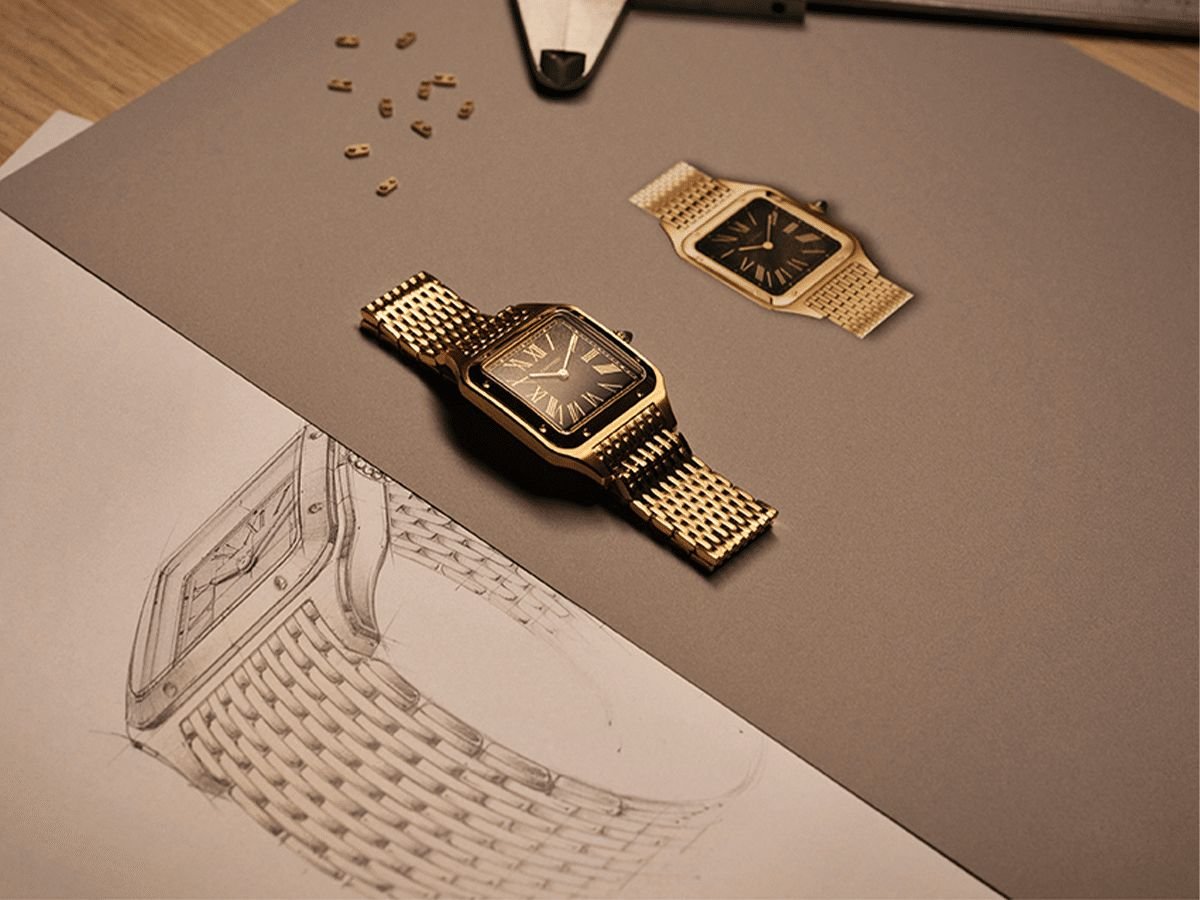
One of the biggest talking points is the new mesh bracelet — inspired by Cartier’s made-to-measure bracelets from the 1920s. It is crafted from 394 individual links arranged in 15 rows, each just 1.15 mm thick. Every piece is machined, finished and assembled at the Manufacture before being fitted to the case and clasp. Once it’s on the wrist, the bracelet moves with surprising fluidity, giving the watch a level of comfort that’s difficult to appreciate until you wear it.
The dials deserve just as much attention. Two references feature silvered satin-finish dials with a subtle sunray effect, while the standout yellow-gold model is fitted with a gilded obsidian dial crafted from volcanic stone sourced in Mexico. The stone is cut to an astonishing 0.3 mm before being polished, allowing tiny air bubbles trapped inside to catch the light and create delicate iridescent reflections. Since no two pieces of obsidian are exactly alike, every watch has its own character, making each example a little different from the next.
Instead of changing what made the Santos-Dumont special, Cartier has focused on improving it. The new bracelet changes how the watch feels on the wrist, while the obsidian dial introduces a natural material that adds depth to the design. Every update feels thoughtful, and every detail remains true to the spirit of one of Cartier’s most enduring icons.
Cartier Santos de Cartier Chronograph | Image: Supplied / Cartier
Santos de Cartier Chronograph
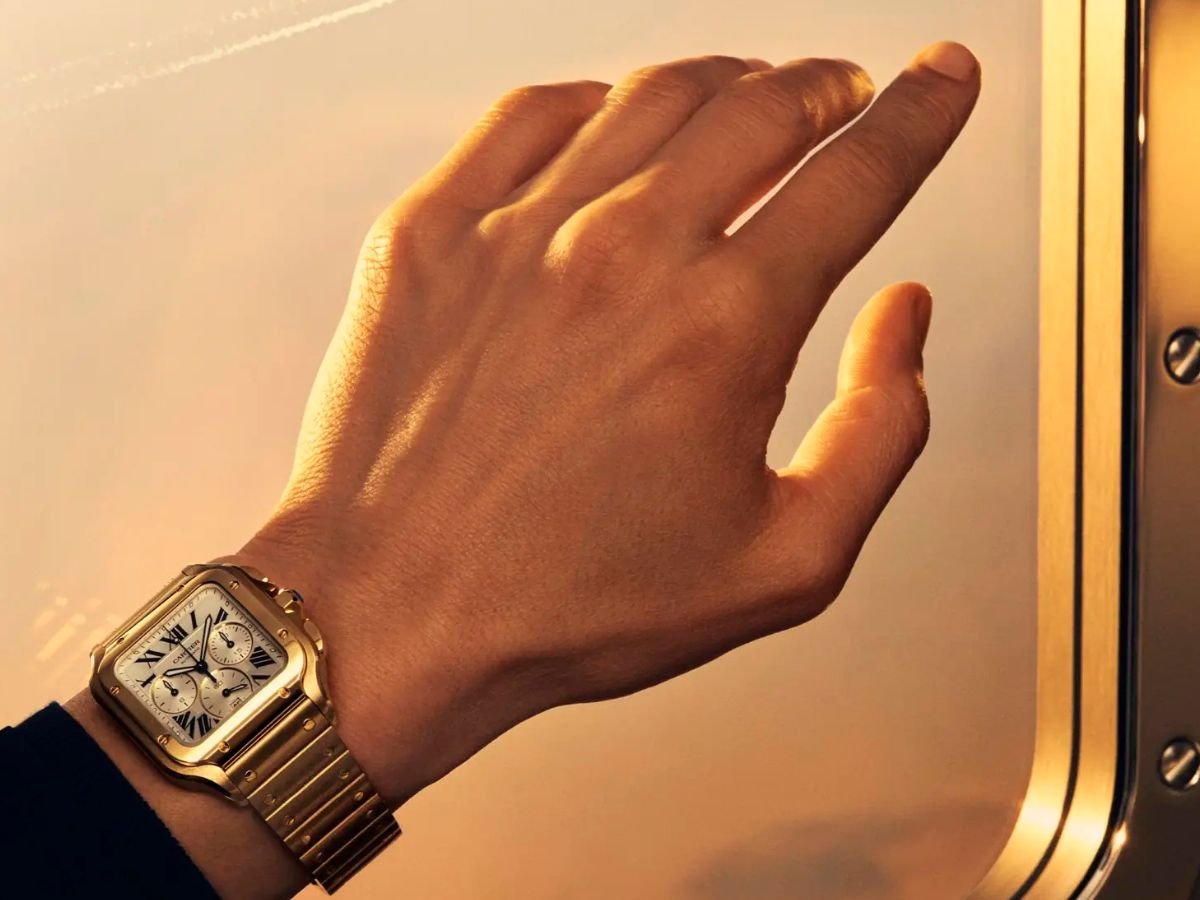
It is not just the Santos-Dumont that defines Santos’s legacy. At Watches and Wonders 2026, Cartier introduced the Santos de Cartier Chronograph, which takes cues from Alberto Santos-Dumont’s innovation but offers improved functionality. It is a chronograph that was first introduced in 2020 and is now available in new sizes and dials, with three variations in stainless steel, steel and yellow gold, and 18K yellow gold.
At first look, it still looks just like a Santos. The square bezel with visible screws, connected bracelet, and gently curved case are all still there, and that is the main idea. Cartier has worked on the smaller details instead. Measuring 47.5 × 39.8 mm, the new Large Model feels more balanced on the wrist, while the dial now mixes satin-finished and sunray-brushed surfaces that catch the light nicely. The chronograph dials fit well within the design, so nothing feels awkward or out of place.
Cartier Santos de Cartier Chronograph | Image: Supplied / Cartier
Inside is the Cartier Manufacture Calibre 1904-CH MC, an automatic chronograph movement made especially for the Santos collection. With a column wheel and vertical clutch, it offers smooth chronograph operation, a 47-hour power reserve, and water resistance to 100 metres. Cartier also keeps its handy QuickSwitch system, which makes it easy to change between the bracelet and strap, while the SmartLink system lets you resize the bracelet without any tools. These small features make a big difference in daily wear.
Regardless of which one you choose – the steel variant, the two-toned version, or the 18K yellow gold model – every one of them has its unique style but at the same time maintains the Santos’ style. The steel watch offers flexibility for daily wear, while the two-toned version adds an ideal touch of warmth, and the yellow gold one seems more luxurious. The brand did not make attempts to rework the entire Santos style.
Bracelet/Strap: Steel & Second strap in black rubber with an interchangeable folding buckle: Yellow gold and steel & Second strap in black rubber with an interchangeable folding buckle
Dial: Silvered satin-finish in the centre and sunray effect on the perimeter, Super-LumiNova in flange
Calibre: Cartier Manufacture Calibre 1904-CH MC
Power Reserve: 47 Hours
Water-Resistance: 10 bar (100 metres – 330 feet)
Santos de Cartier Chronograph (Steel) | Image: Supplied / Cartier
Santos de Cartier Chronograph (Steel)
Model: Santos de Cartier Chronograph
Reference: CRWSSA0083
Dimensions: 47.5 × 39.8 mm
Thickness: 11.6 mm
Material: Steel
Bracelet/Strap: Steel & Second strap in black rubber with an interchangeable folding buckle
Dial: Silvered satin-finish in the centre and sunray effect on the perimeter, Super-LumiNova in flange
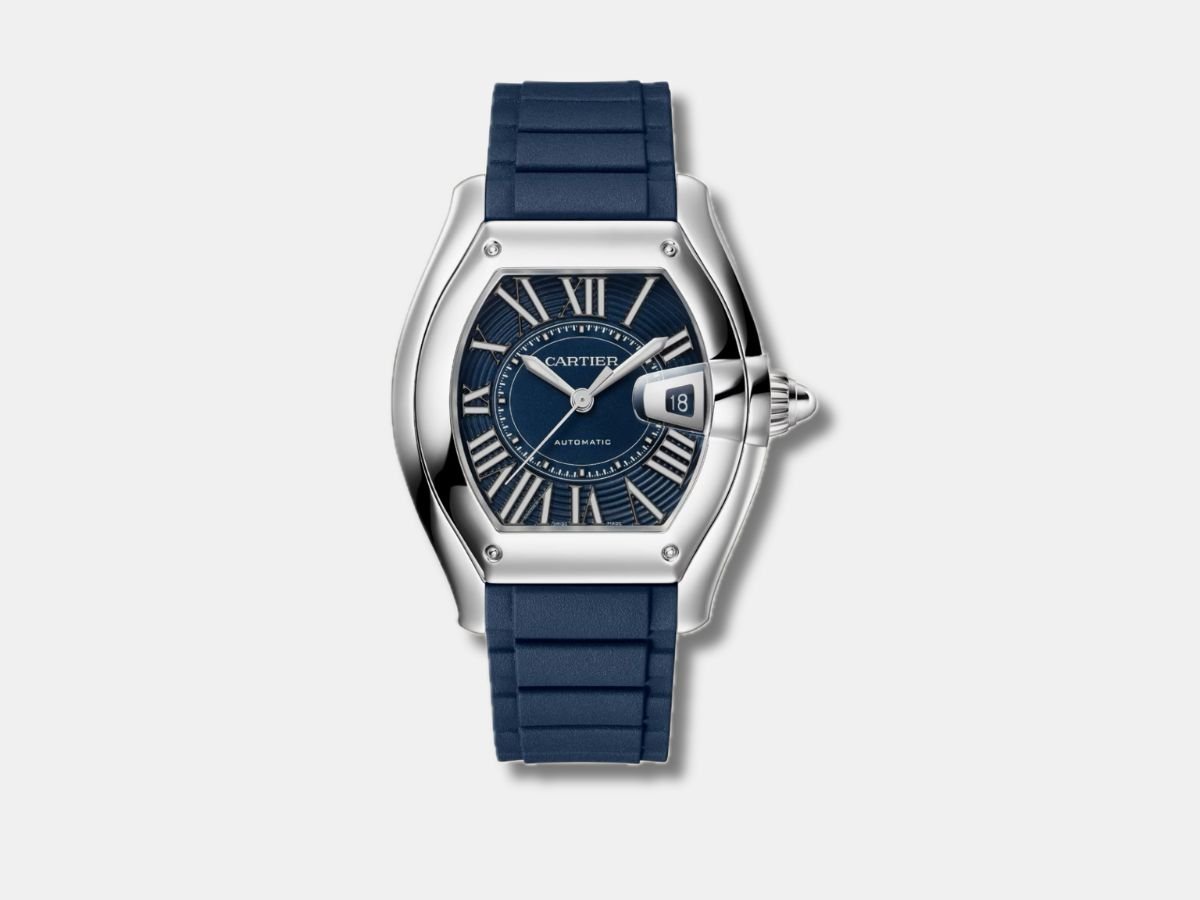
Some watches never really disappear, and the Cartier Roadster is one of them. Ever since it left the catalogue more than a decade ago, collectors have continued searching for well-kept examples, turning it into something of a cult favourite. Now, almost 25 years after its original debut, Cartier has brought the Roadster back with seven new references available in Medium and Large sizes. The Roadster returns with the same unmistakable identity, only sharper, more comfortable and better suited to today’s collector.
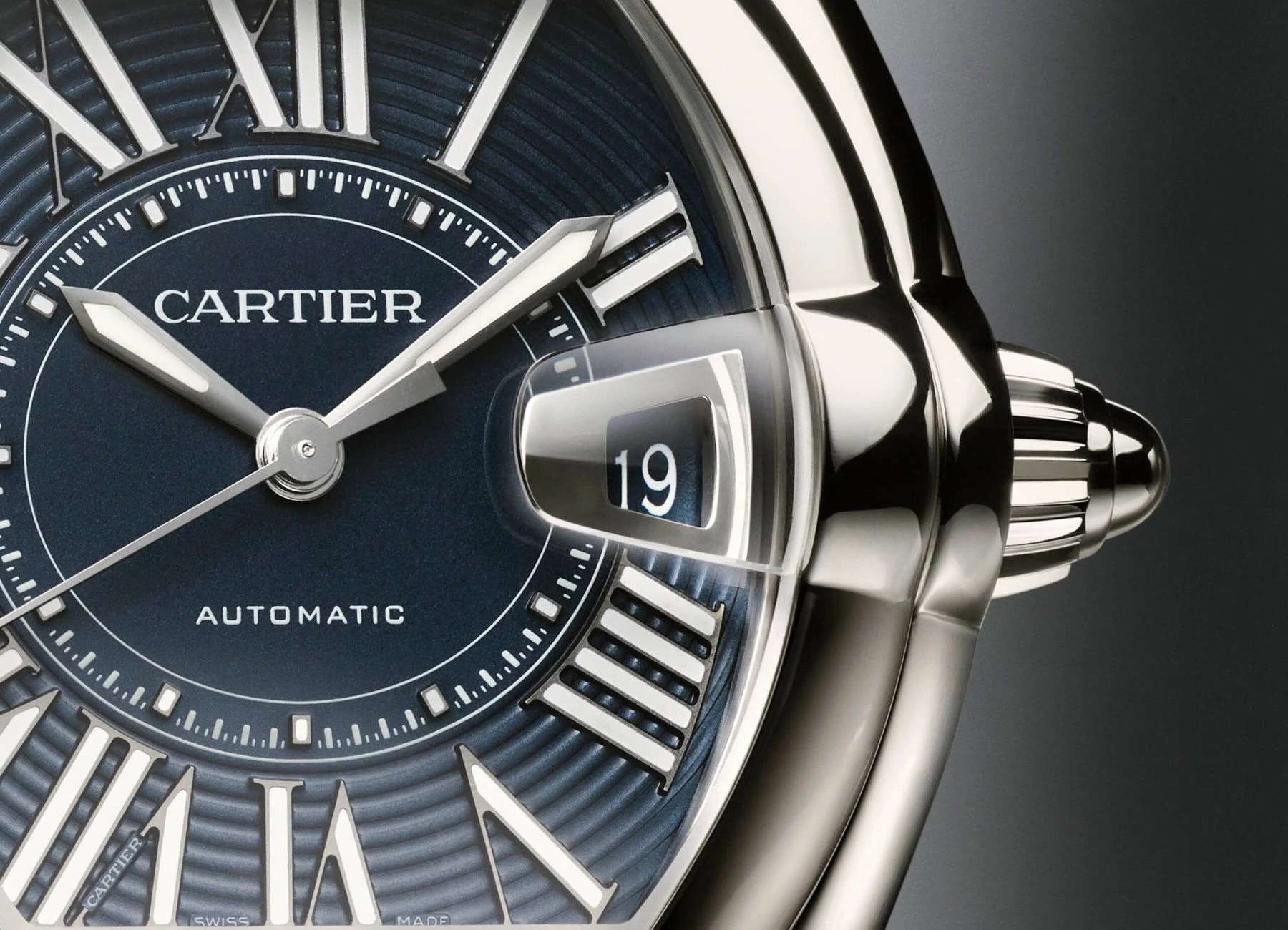
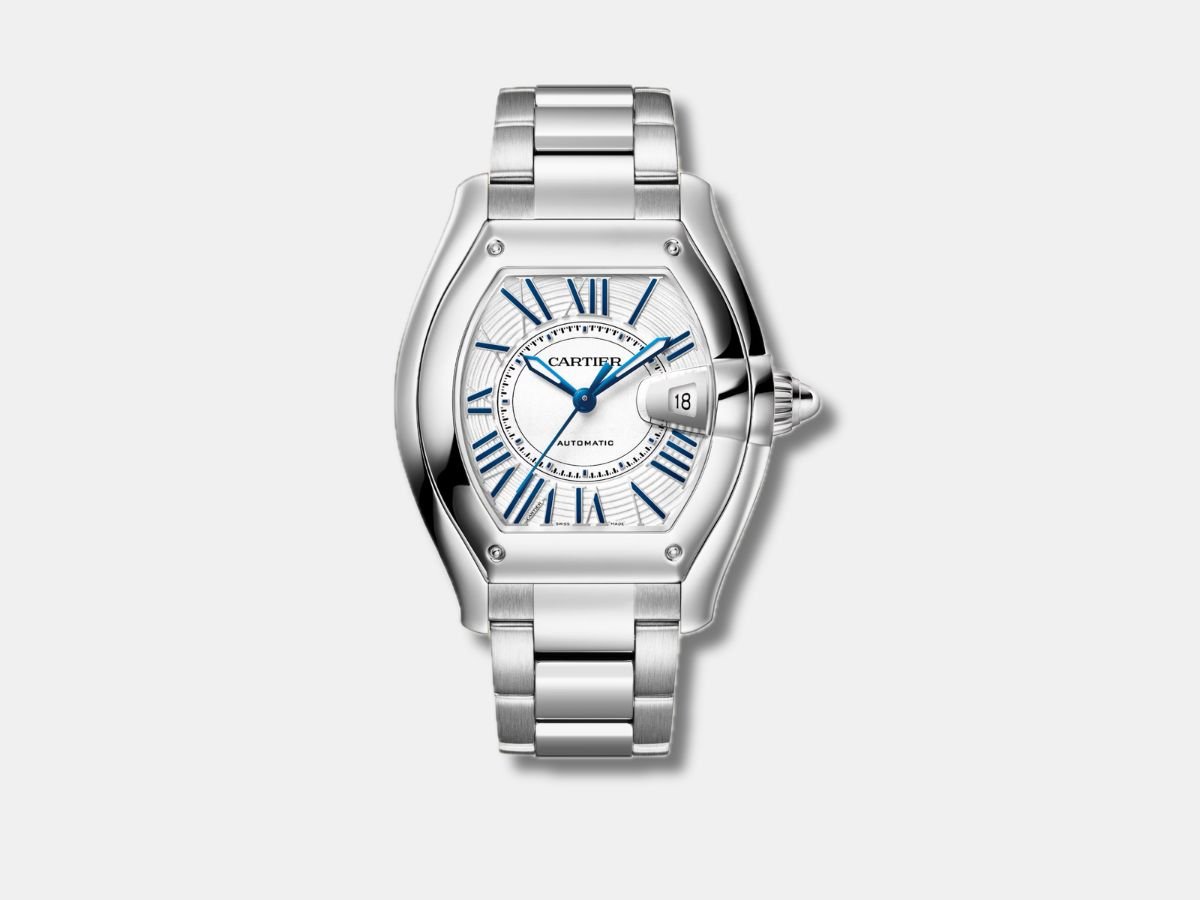
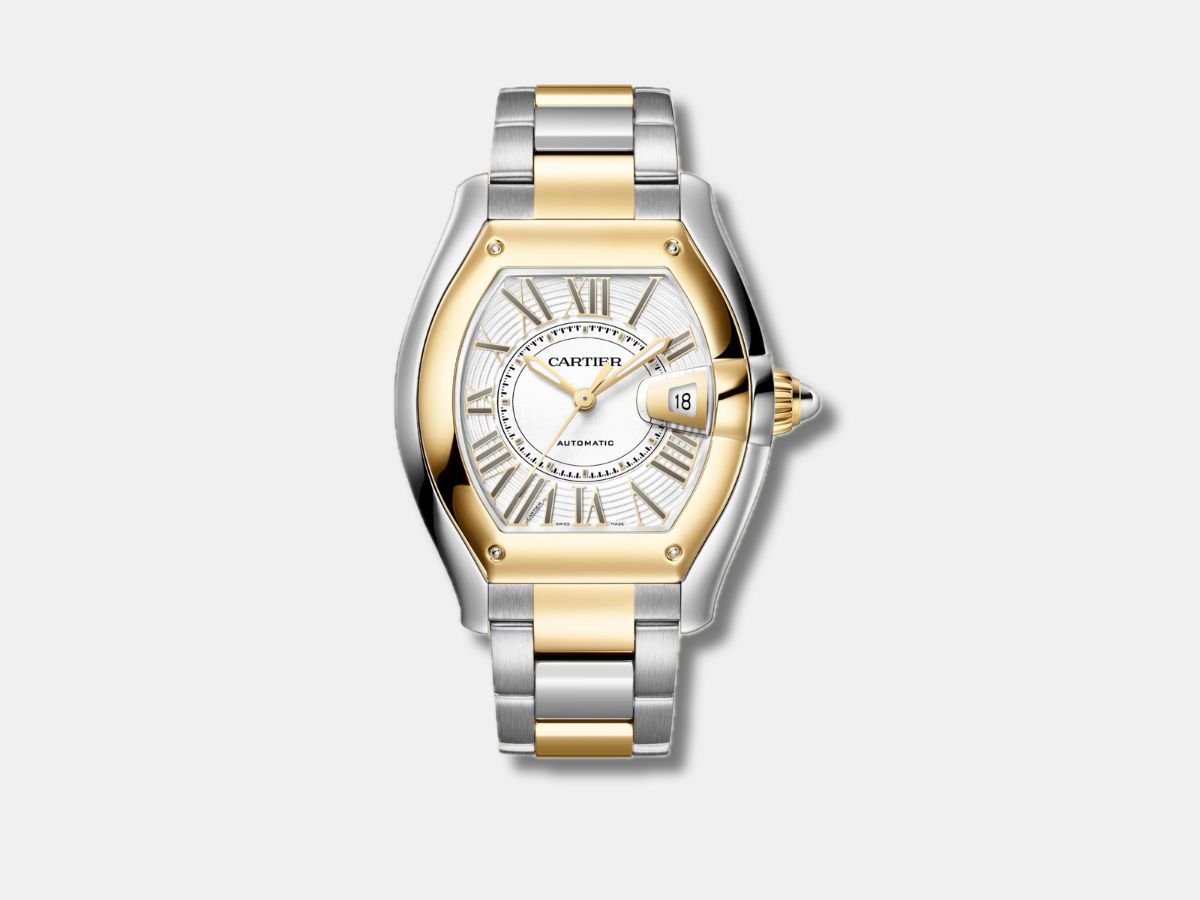
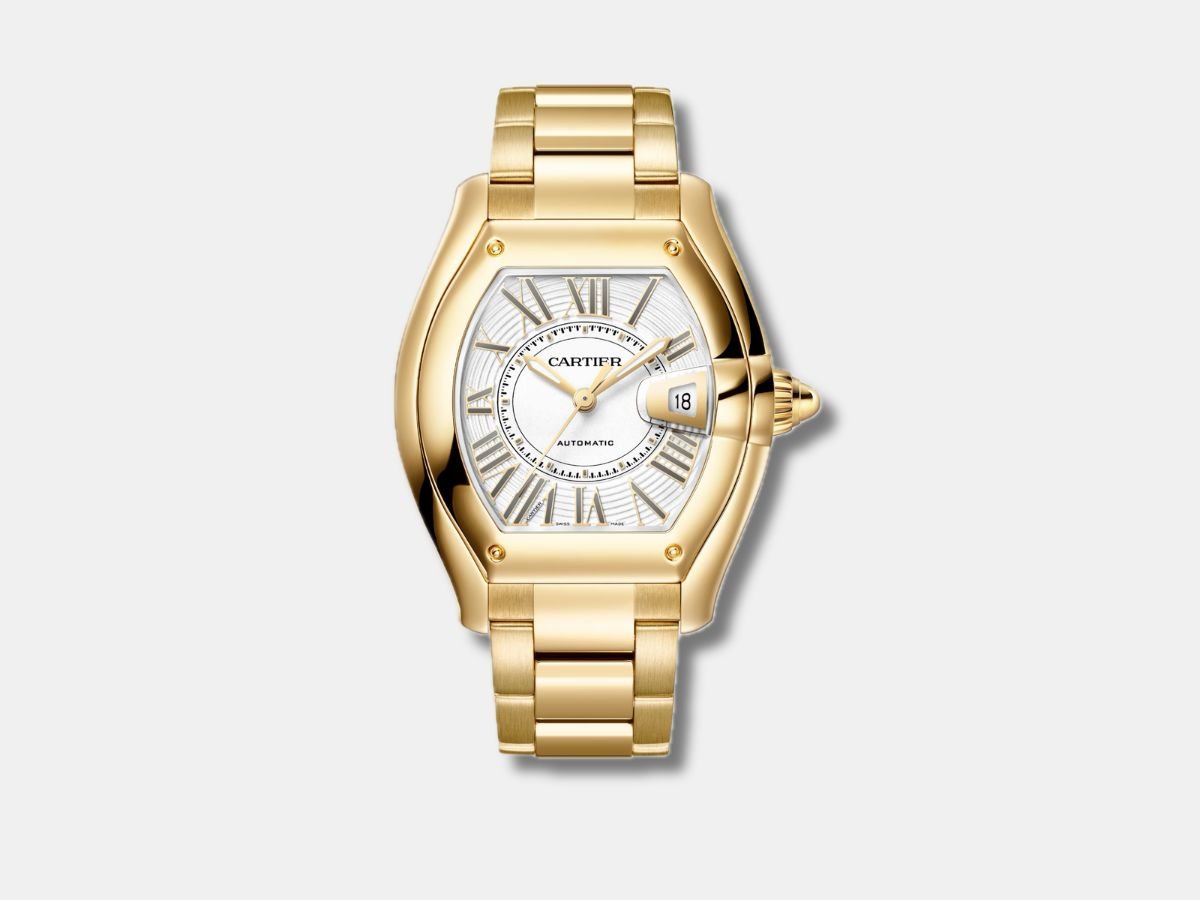
Its connection to the automotive world remains just as strong as it was back in 2002. The flowing tonneau-shaped case, speedometer-inspired dial, conical crown and the signature headlight-shaped date magnifier all make an immediate return. Even after all these years, the way the crown and magnifier blend into the case still feels unlike anything else in watchmaking. Cartier has also introduced four rivets on the bezel, a subtle detail that strengthens the Roadster’s sporting character without changing the personality that made the original so distinctive.
Although the Roadster looks familiar, almost every part of it has been reconsidered. Cartier enlisted more than 100 artisans to refine the watch, carefully adjusting the proportions, sharpening the case profile and improving the ergonomics while respecting the original silhouette. The bracelet has also been redesigned with shorter links that wrap around the wrist more naturally, while the latest QuickSwitch system makes changing between the bracelet, leather or rubber strap effortless. These are the kind of improvements you’ll notice while wearing the watch rather than simply looking at it.
The dial still feels unmistakably Roadster. Concentric circular striations, a railway-minute track, and oversized Roman numerals continue to reference classic automotive gauges, while a subtle appliqué treatment adds more depth than before. On the steel models, blue or anthracite sword-shaped hands filled with Super-LumiNova make it easy to read the time long after the sun goes down, adding a welcome touch of everyday practicality.
Inside, Cartier has fitted the collection with two of its in-house automatic movements. The Large models receive the Calibre 1847 MC, while the Medium versions are powered by the slimmer Calibre 1899 MC. Together with 100 metres of water resistance, the Roadster remains one of the Maison’s most versatile watches, equally comfortable with a bracelet in the office or a rubber strap on the weekend.
Bracelet/Strap: Yellow gold and steel equipped with the QuickSwitch system & second semi-matte grey alligator-skin strap with steel interchangeable folding buckle
Dial: White with Super-LumiNova
Calibre: Cartier Manufacture Calibre 1847 MC
Power Reserve: 40 Hours
Water-Resistance: 10 bar (100 metres – 330 feet)
Roadster (White/Yellow Gold and Steel – Medium)
Model: Roadster
Reference: CRW2RD0009
Dimensions: 42.5 mm x 34.9 mm
Thickness: 9.7 mm
Material: Yellow Gold & Steel
Bracelet/Strap: Yellow gold and steel equipped with the QuickSwitch system & second semi-matte grey alligator-skin strap with steel interchangeable folding buckle
Bracelet/Strap: Yellow gold equipped with the QuickSwitch® system & second semi-matte dark grey alligator-skin strap with yellow gold interchangeable folding buckle
Dial: White with Super-LumiNova
Calibre: Cartier Manufacture Calibre 1847 MC
Power Reserve: 40 Hours
Water-Resistance: 10 bar (100 metres – 330 feet)
Roadster (White/Yellow Gold – medium)
Model: Roadster
Reference: CRWGRD0008
Dimensions: 42.5 mm x 34.9 mm
Thickness: 9.7 mm
Material: Yellow Gold
Bracelet/Strap: Yellow gold equipped with the QuickSwitch® system & second semi-matte dark grey alligator-skin strap with yellow gold interchangeable folding buckle
Cartier arrived at Watches and Wonders 2026 with one of its most complete collections in recent memory, proving that great watchmaking isn’t always about creating something entirely new. Instead, the Maison refined the icons that have shaped its legacy, from the collector-focused Cartier Privé Tenth Opus and La Collection to the long-awaited Roadster return, the beautifully executed Santos-Dumont, and the refreshed Santos de Cartier Chronograph. If we had to choose one standout, it would be the Santos de Cartier Chronograph. Its balanced proportions, cleaner dial, and practical everyday features make it a watch that feels equally at home in the boardroom or on the weekend, all while preserving the unmistakable character that has defined the Santos for more than a century. Cartier has once again shown that thoughtful evolution can be just as compelling as bold reinvention, making this one of our favourite collections from Watches and Wonders 2026.
Elias Albay is the Founder and Director of Many Men Magazine, a Toronto-based digital publication dedicated to promoting modern masculinity through style, culture, and self-improvement. What started as a personal turning point became a purposeful platform. — born from Elias’ desire to create something meaningful after completing his studies and finding no career path that truly matched his ambitions. With a background in Civil Engineering from York University and experience in Commercial Flight Operations at CAE, he applied skills, and resilience from both fields to forge a new path.