





Bugatti Destrier
Cars

Bugatti Destrier Turns the Extreme Bolide Into a One-Off Sculpture of Speed

Share via

Our team of editors and experts thoughtfully chooses each product. If you decide to buy through one of our links, we may earn a commission. Learn more. Want to know how we test products? Click here for more details.

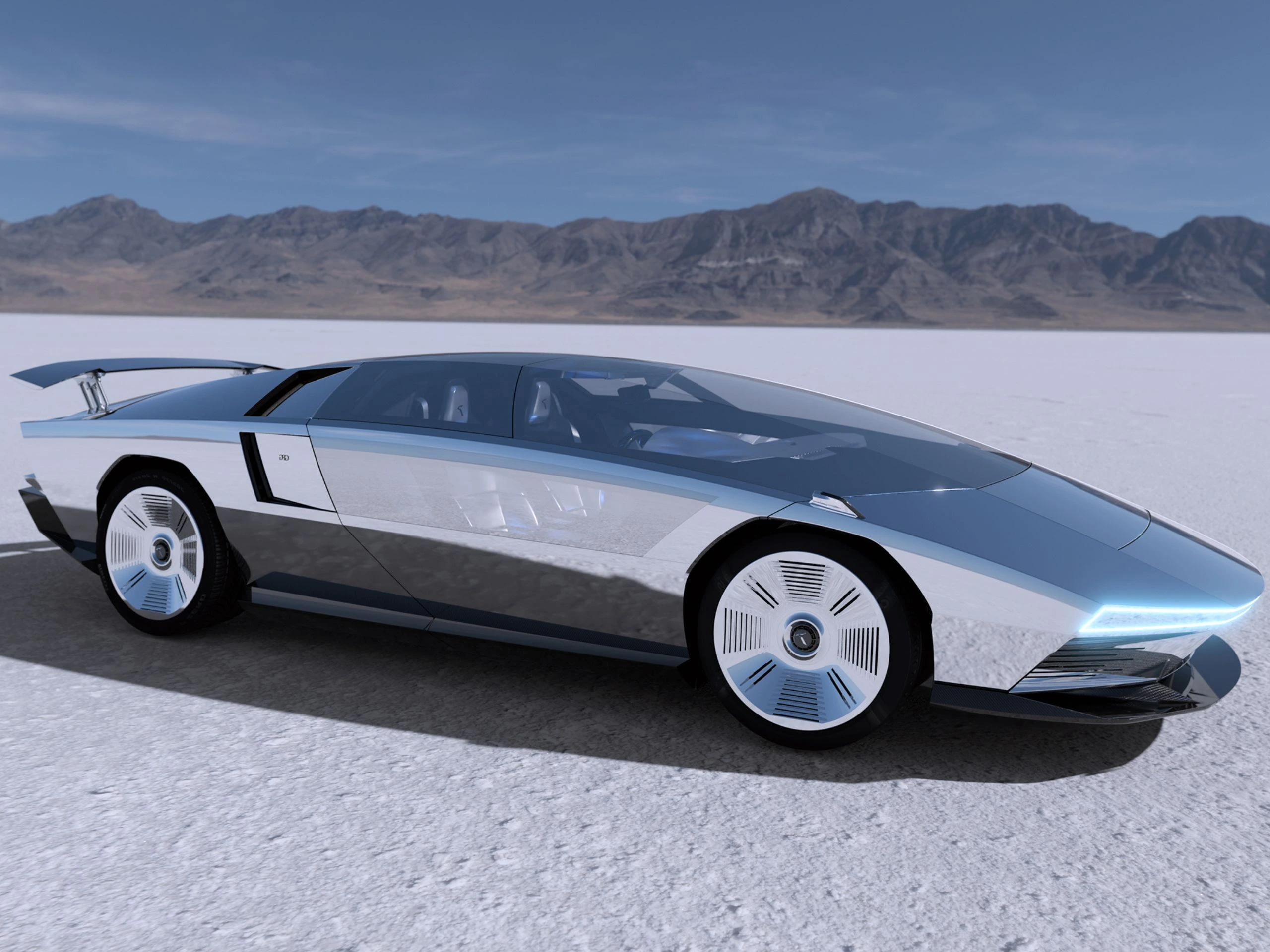
Bugatti has taken one of the most extreme cars it has ever created and done something unexpected with it. Instead of chasing more downforce, quicker lap times, or another headline-grabbing performance figure, the French marque has stripped the Bolide back to its extraordinary proportions and used them as the foundation for a one-off creation: the Bugatti Destrier.

The Destrier is the third one-of-one creation to emerge from Bugatti’s Programme Solitaire, following the Brouillard and F.K.P. Hommage. But unlike those commissions, shaped by emotive stories and Bugatti’s history, the Destrier began with a more instinctive design question: what would happen if the Bolide’s extraordinary engineering package were freed from the wings, vents, and aerodynamic additions demanded by the racetrack?

The result is a car standing just one metre tall, making it the lowest-silhouetted Bugatti ever created. Its name is equally deliberate. A “destrier” was the finest and strongest type of horse associated with medieval knights, an idea Bugatti has carried through the car’s stance, materials and some of its smallest details.

Bugatti Destrier
Bugatti Destrier | Image: Bugatti

From the Bolide to Something Completely Different

Underneath that completely reimagined body sits some very familiar—and very serious—hardware. The Destrier is built around the Bolide’s carbon-fibre monocoque, while behind the cabin sits the complete Bolide W16 powertrain — Bugatti’s quad-turbocharged 8.0-litre engine producing 1,600 PS.

Yet that’s almost a footnote in this particular story. Bugatti isn’t presenting the Destrier as another exercise in outright speed. Instead, the company has taken one of its most extreme engineering foundations and let proportion, craftsmanship, and design become the headline.

The difference becomes particularly obvious in its stance. The Destrier rides on 20-inch front and 21-inch rear wheels, up from the Bolide’s 18-inch setup. Combined with that metre-high silhouette, the wheels appear enormous while the cabin crouches between the front wings, creating what Bugatti likens to the posture of a powerful horse ready to pounce.

Bugatti Destrier Specifications

  • Engine: 8.0-litre quad-turbocharged W16
  • Power: 1,600 PS
  • Chassis: Bolide carbon-fibre monocoque
  • Height: 1 metre
  • Front Wheels: 20-inch
  • Rear Wheels: 21-inch
  • Exterior Colour: Sapphire Celeste
  • Exterior Carbon: Blue-tinted carbon fibre on front splitter and rear diffuser
  • Interior: Ambre Voyageur leather and nubuck with 3D-knitted textile
  • Interior Detailing: Copper yarn, contrasting stitching and hammered brightwork
  • Production: One-off (1/1)
  • Programme: Bugatti Programme Solitaire

The concept also has a historical precedent. Bugatti’s Type 57 chassis once underpinned both the streamlined Type 57G and Type 57C “Tank” racers—which won Le Mans outright in 1937 and 1939—and the Type 57SC Atlantic. Competition car and rolling sculpture emerged from the same fundamental platform. Bugatti sees the Bolide and Destrier as a modern continuation of that philosophy — one chassis, two completely different expressions.

The connection has even been permanently incorporated into the car. Above the windscreen sits a hand-laser-engraved dedication plate depicting both the Type 57G Tank and Type 57SC Atlantic—a small reminder that transforming racing engineering into something beautiful isn’t an entirely new idea at Bugatti.
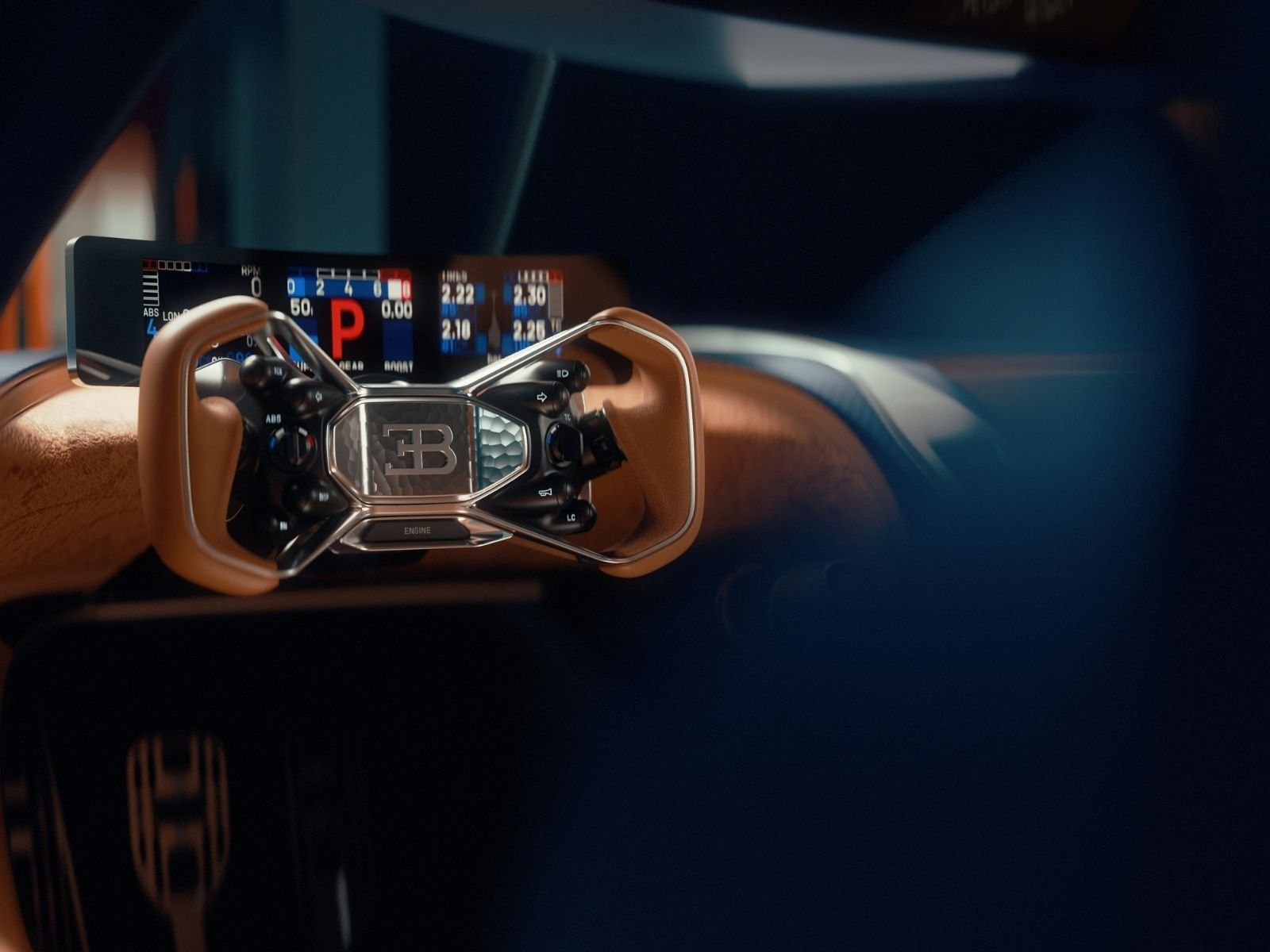
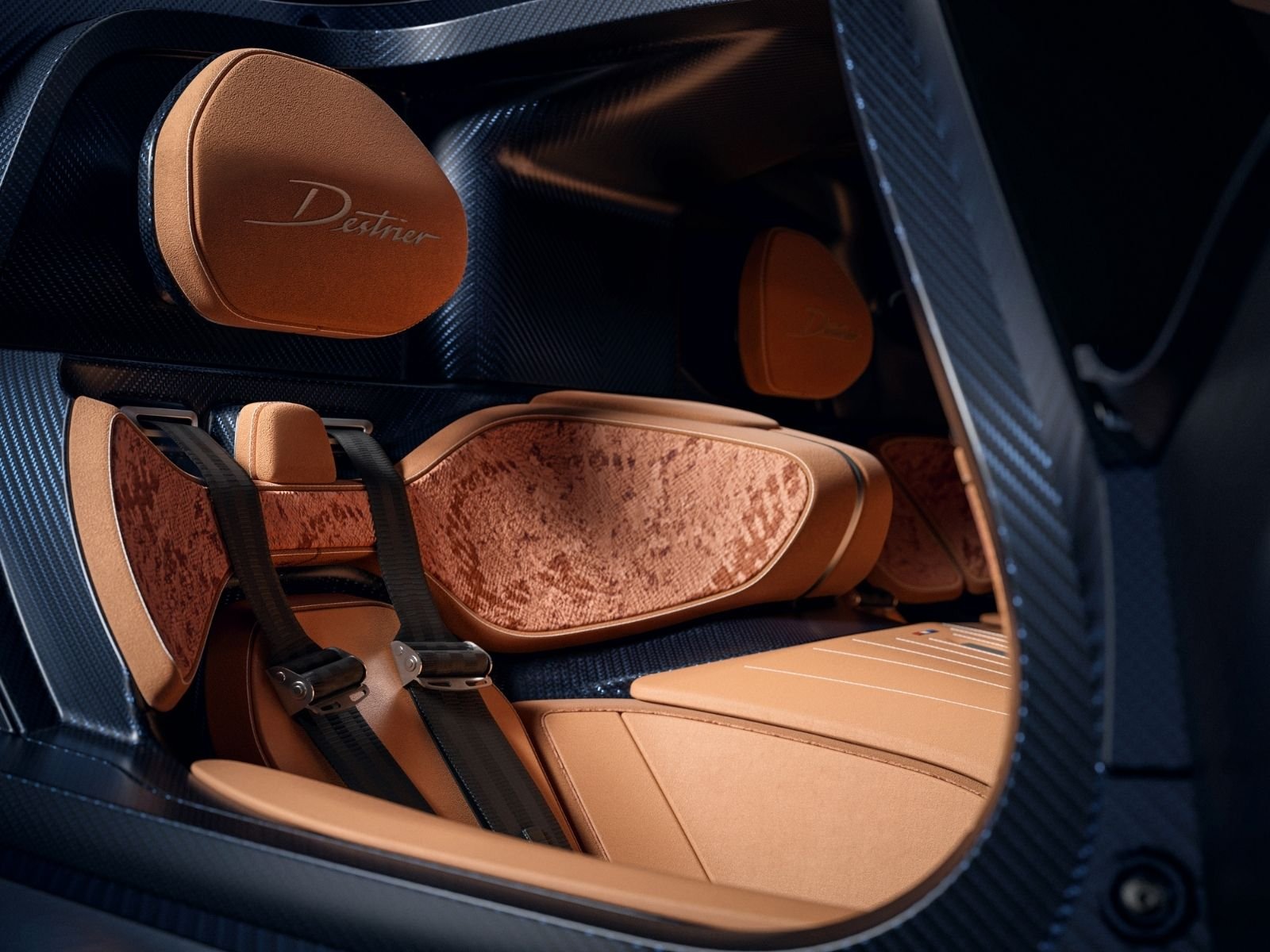
Bugatti Destrier | Image: Bugatti

Bugatti Lets the Destrier’s Proportions Do the Talking

Rather than simply dressing a Bolide in different bodywork, Bugatti has developed a fresh design language around the Destrier. The marque’s familiar C-line has been altered to pause just before the front wheel arch, briefly exposing the bodywork before continuing towards the horseshoe grille. That grille itself is wider than the Bolide’s, creating a front end defined more by restraint than outright aggression.

Things become more dramatic towards the rear. The body pinches sharply inward behind the doors, forming an unusually narrow waist before swelling back out over the rear wheels. Instead of the Bolide’s enormous aerodynamic hardware, an elegant blended rear wing takes inspiration from the one-off Chiron Profilée.

As Bugatti Director of Design Frank Heyl says, “Destrier is not a car you understand with your head, it is a car you feel with your heart. The Bolide gave us the most extreme proportions we have ever created, and by freeing them from the Bolide’s relentless pursuit of downforce, we let them speak as pure sculpture.”

Heyl goes on to draw a direct parallel with the Type 57, describing the Bolide and Destrier as two different masterpieces born from one platform. He believes the Destrier could still be appearing on concours lawns 50 years from now.

The exterior colour plays an important role in that transformation. Called Sapphire Celeste, the bespoke multi-layer finish was created exclusively for this car and its owner. Diamond-inspired sparkle within the paint adds depth to the body, while polished aluminum brightwork provides contrast against the blue. Even the limited exposed carbon fibre—found on the front splitter and rear diffuser—has been tinted specifically to complement Sapphire Celeste. The colour also has a subtle piece of Bugatti history.

Type 57SC Atlantic chassis 57591, better known as the “Pope” Atlantic, originally wore blue before its current owner repainted it black.
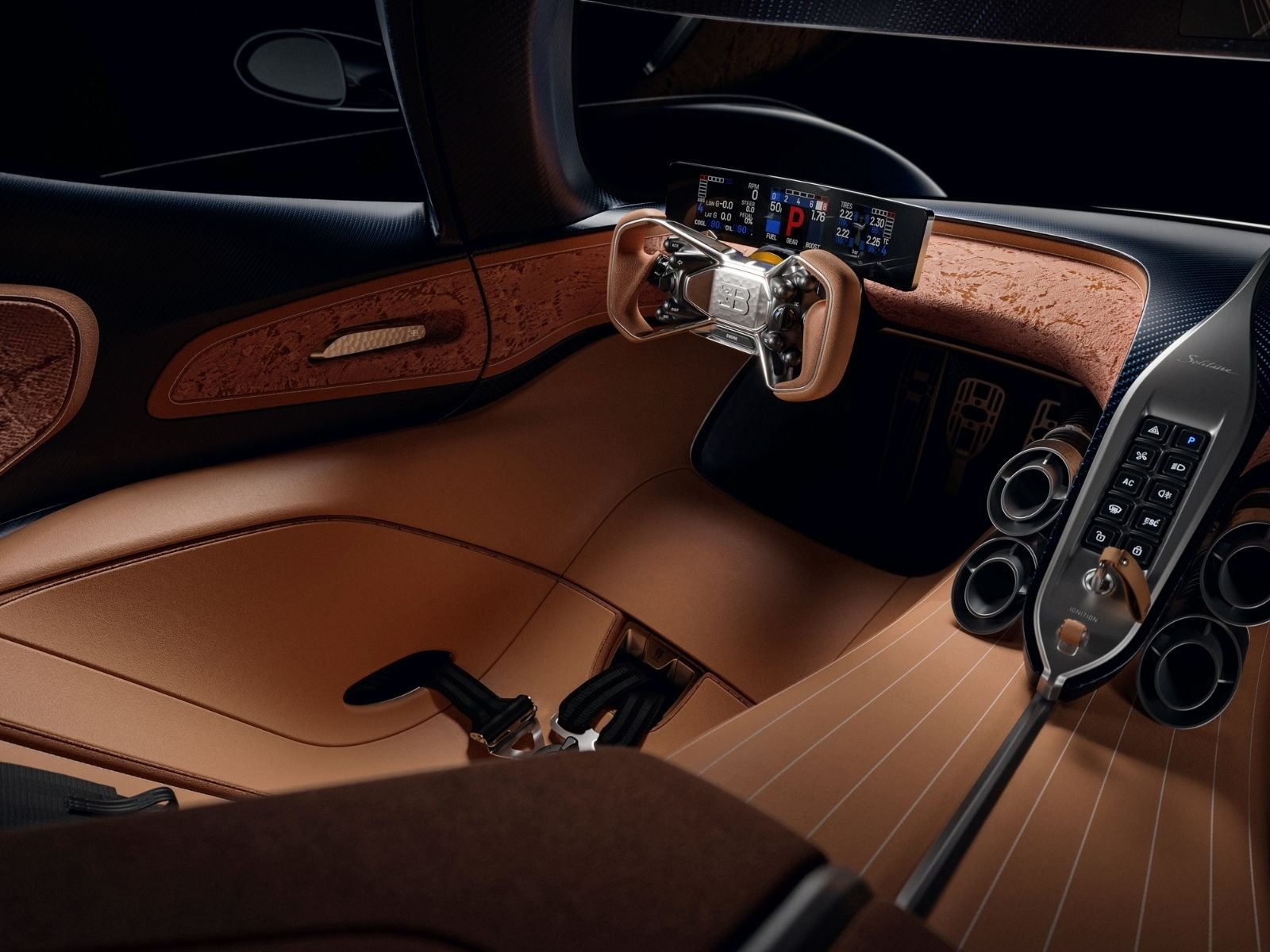
Bugatti Destrier | Image: Bugatti

A Tailor’s Atelier on Four Wheels

If the exterior moves away from the Bolide’s aerodynamic obsession, the interior takes an even bigger step away from motorsport. Rather than retaining the stripped-back atmosphere of the track car, Bugatti has transformed the Destrier’s cabin into something inspired by the quiet warmth of a tailor’s atelier, with every material individually selected and every surface created around its single owner.

Three principal materials shape the cabin — leather and nubuck finished in the warm Ambre Voyageur brown, alongside an advanced 3D-knitted textile inspired by techniques used in haute couture and performance sportswear. Fine copper yarns run through the knitted material to create subtle highlights, forming a circular “halo-line” around the cabin, while contrasting stitching follows the geometry of individual components and continues through the headrests and centre console.

Sabine Consolini, Bugatti’s Head of Colour and Trim, explains, “Every material in Destrier was chosen the way a tailor selects cloth. ‘Ambre Voyageur’ leather and nubuck bring a warm, human counterpoint to the depth of ‘Sapphire Celeste’, while the 3D-knitted textile – threaded with fine copper yarns – wraps the cabin in a single, seamless halo. Nothing shouts. Every surface is measured, tactile, and made for one person alone.”

That attention continues into the smaller details. Hammered brightwork appears across the door opener, air vents, steering-wheel hub and entry plate, echoing the finish found in the engine bay and subtly referencing the hand-beaten armour of medieval knights. A small French flag acknowledges Bugatti’s origins, while modern parametric patterns appear in the head- and taillights. Even the oil filler cap carries the Destrier emblem alongside its most important designation — “1/1.”
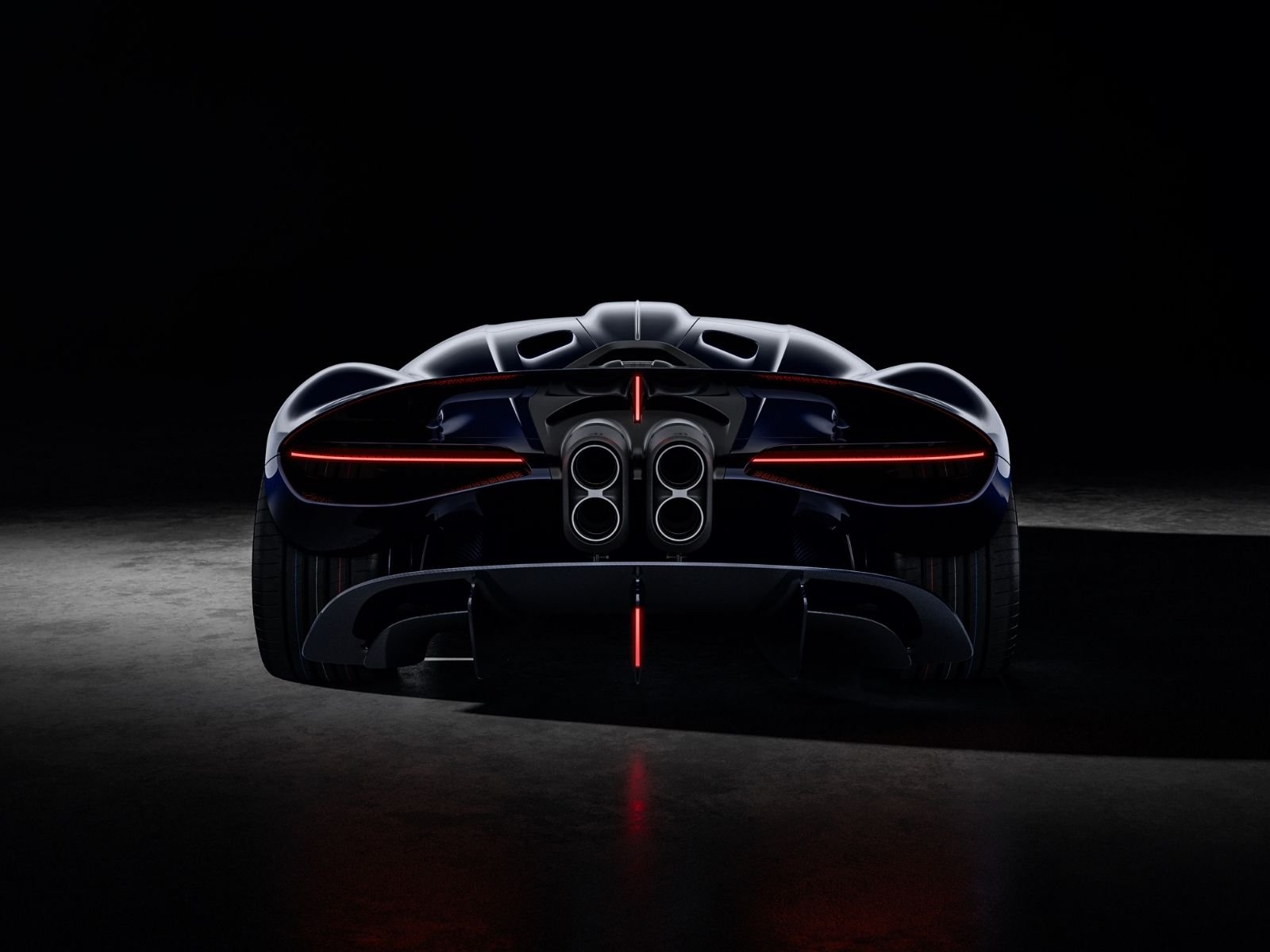
Bugatti Destrier
Bugatti Destrier | Image: Bugatti

There Will Only Ever Be One

Look closely at the Destrier’s oil filler cap, and you’ll find the detail that matters most: alongside its unique emblem sits the designation “1/1.” That’s the essence of Bugatti’s Programme Solitaire. The Destrier isn’t the beginning of another limited-production Bolide derivative, but a singular creation shaped around one owner, from its Sapphire Celeste exterior to the bespoke materials and detailing inside.

Beneath all that craftsmanship remains the Bolide’s complete 1,600 PS, quad-turbocharged 8.0-litre W16 powertrain, yet Bugatti deliberately treats that extraordinary figure almost as a secondary detail. The Bolide showed what this engineering could achieve when aerodynamics and outright performance came first; the Destrier shows what happens when proportion, craftsmanship and individuality take priority. There will inevitably be faster and newer Bugattis, but with its one-off body and 1/1 designation, no future model can replicate one thing: there will only ever be one Destrier.

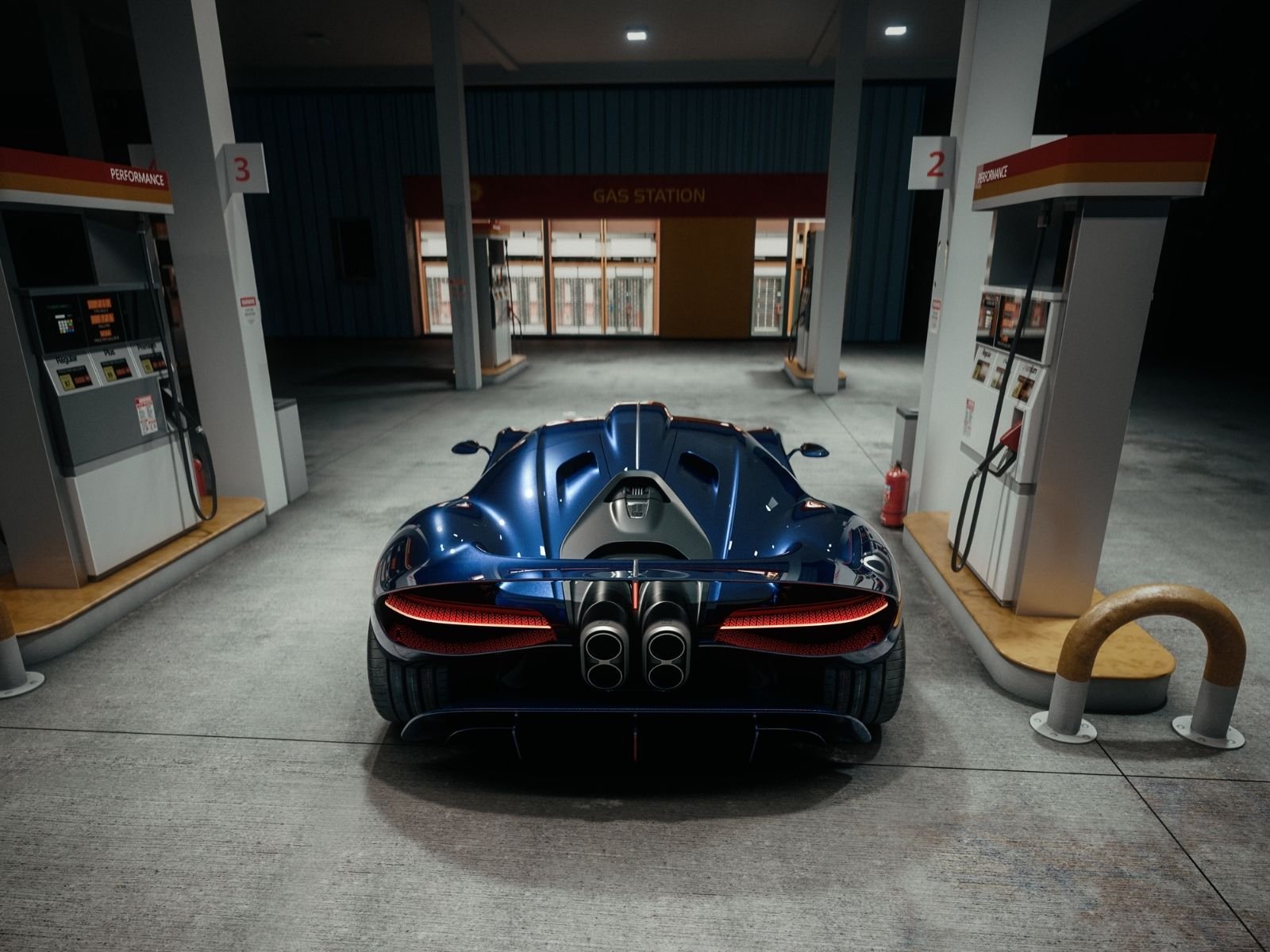
Bugatti Destrier
Bugatti Destrier | Image: Bugatti
Bugatti Destrier
Bugatti Destrier | Image: Bugatti
SupercarsBugatti
About the Author

Related Articles

Fashion

Dior Men’s Winter Collection 2025–2026 Might Be the Best Fashion Show of the Year So Far

Reading Time: 6 minutes

Our team of editors and experts thoughtfully chooses each product. If you decide to buy through one of our links, we may earn a commission. Learn more. Want to know how we test products? Click here for more details.

  • Dior Men’s Winter Collection 2025–2026 was presented at Paris Fashion Week under Kim Jones’s direction.
  • The show was held at the École Militaire in Paris and showcased a mix of men’s couture and ready-to-wear designs.
  • The collection is based on Christian Dior’s Ligne H silhouette first launched in Autumn–Winter 1954.
  • Archive references are reinterpreted with precise tailoring, balanced volume, and a distinctly modern menswear perspective.

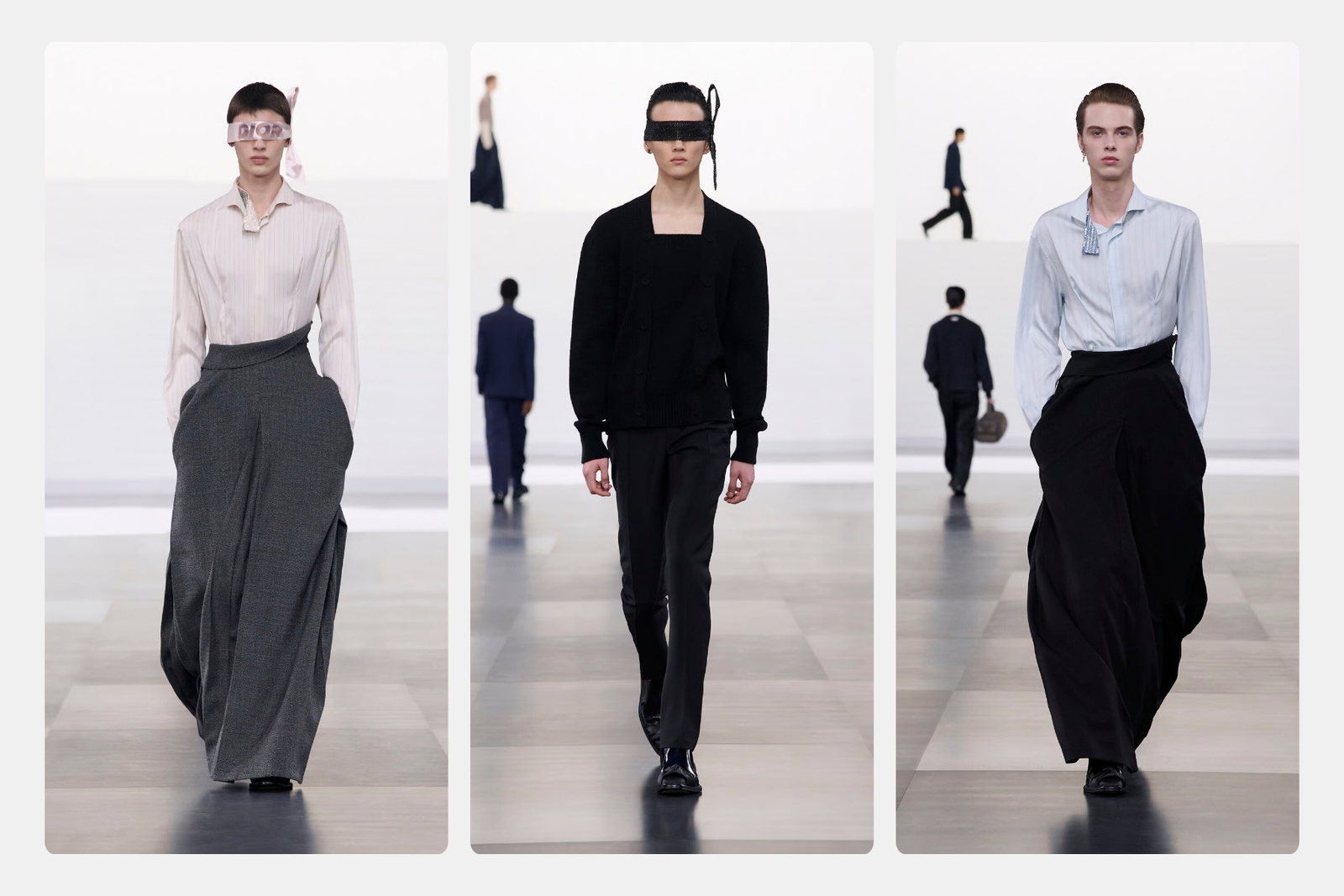
Paris Fashion Week has always shown a strong personality, but this season brought a different type of energy. Instead of pushing harder for novelty, the mood shifted towards reflection, restraint, and a renewed respect for the foundations of fashion. After years of constant experimentation and visual noise, the industry seemed ready to slow down — and that change was felt most clearly at Dior. For Kim Jones, the answer wasn’t reinvention for its own sake, but refinement: a controlled palette, a disciplined silhouette, and a clear dialogue with the past.

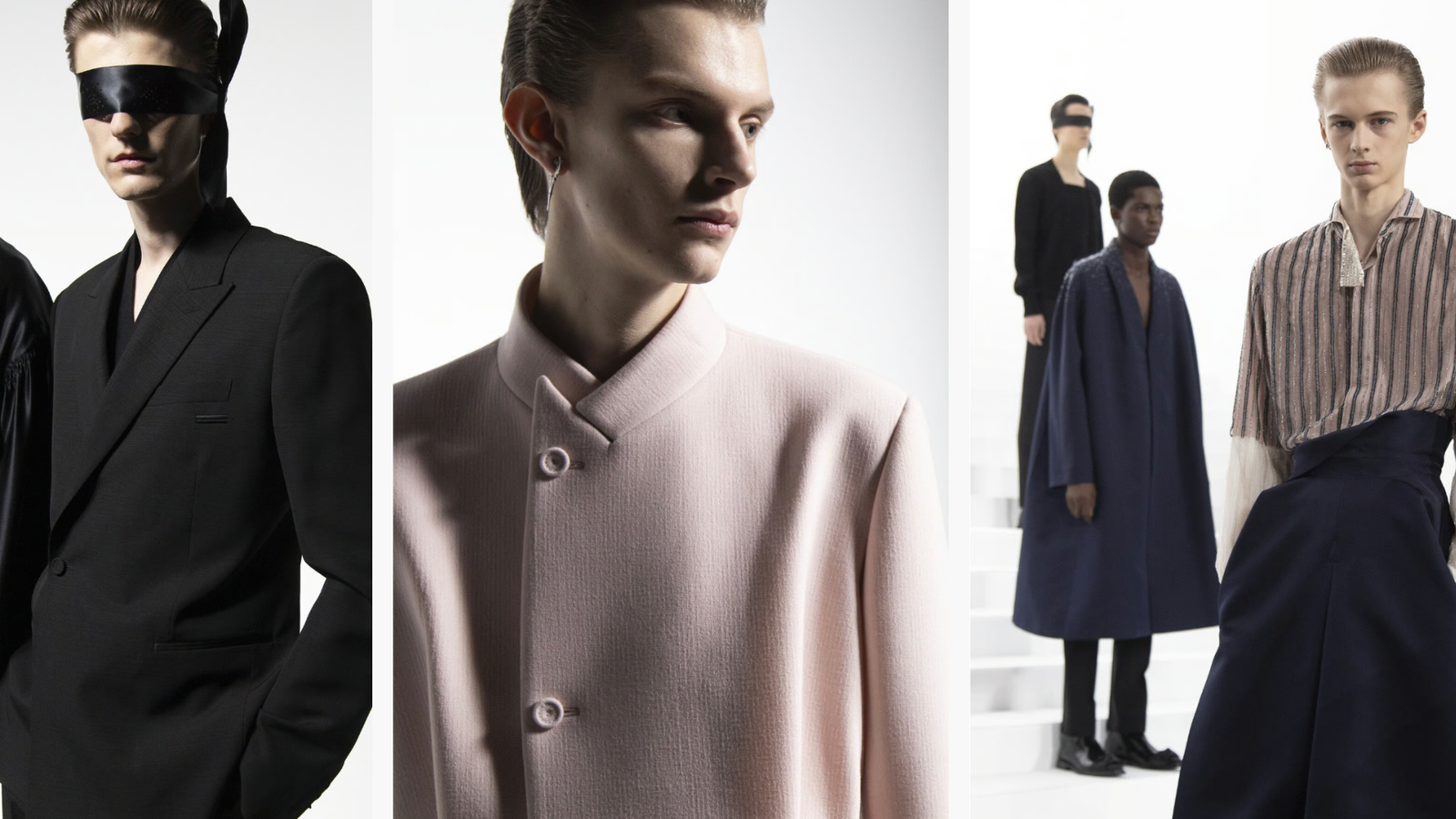
Unveiled at the École Militaire in Paris, Dior Men’s Winter 2025–2026 collection draws inspiration from Christian Dior’s Ligne H from Autumn–Winter 1954 as its starting point. Jones captures the bold, architectural style of that period and interprets it into a distinctly masculine form, moving away from ambiguity and towards structure, clarity, and purpose. Instead of embracing gender fluidity or theatrical flair, the collection exudes confidence in its direction, demonstrating that revisiting the past — when done intentionally — can be one of the most contemporary strategies fashion can adopt.

The idea of metamorphosis quietly weaves through the collection, influencing how Dior approaches menswear across generations rather than tying it to a single moment in time. Ligne H becomes the natural reference point for that discussion, offering a way to trace how structure and masculinity have changed while maintaining their core discipline. For Jones, the archive isn’t something to imitate, but something to reflect on — a framework that allows the past to inform the present with clarity.

As he put it, “Mr Dior’s Ligne H was in our heads even before going into the archive this season. It has elements that are graphic and angular, which felt eminently transferrable into the men’s world.” Those qualities influenced the direction of a collection focused on restraint and purpose.

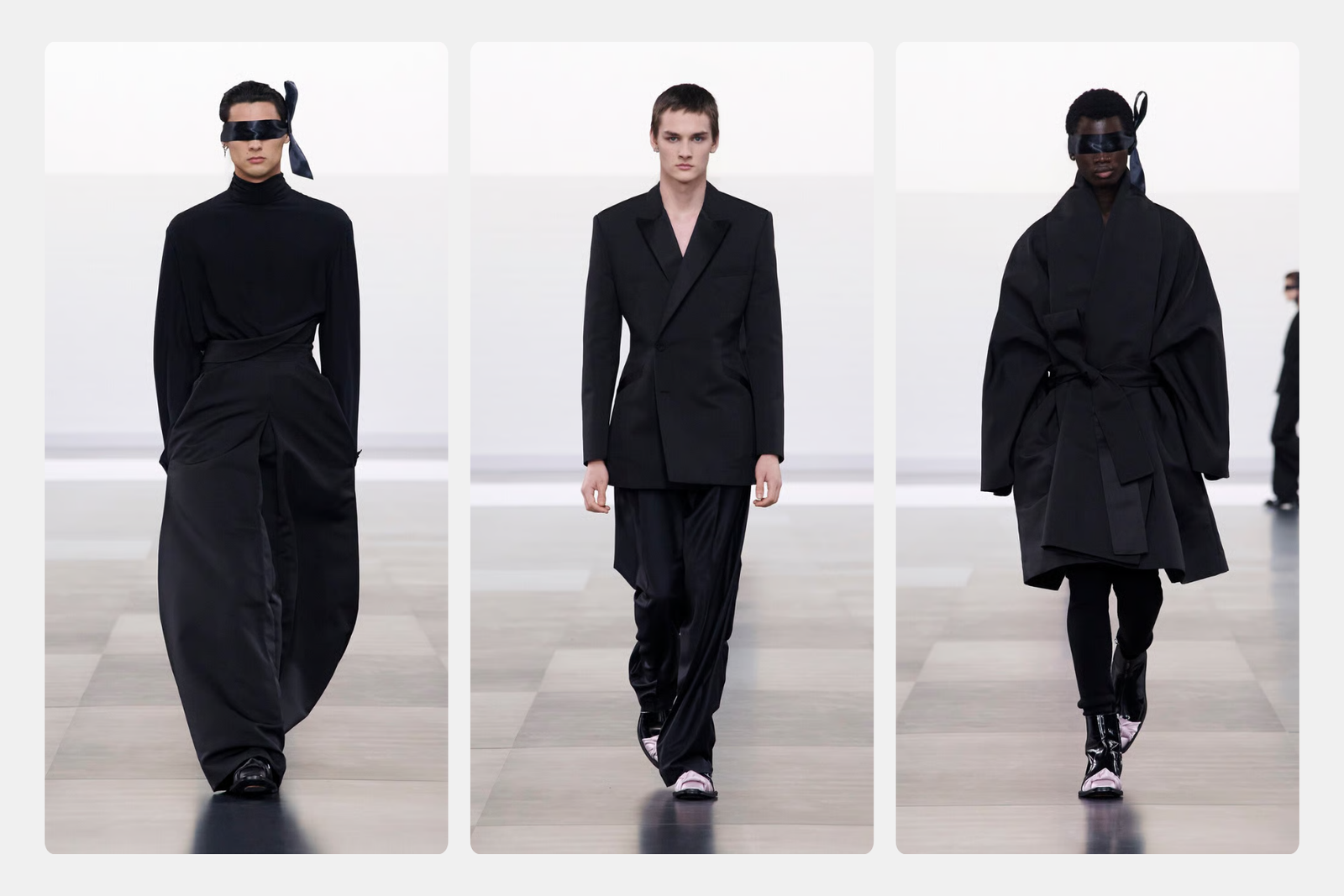
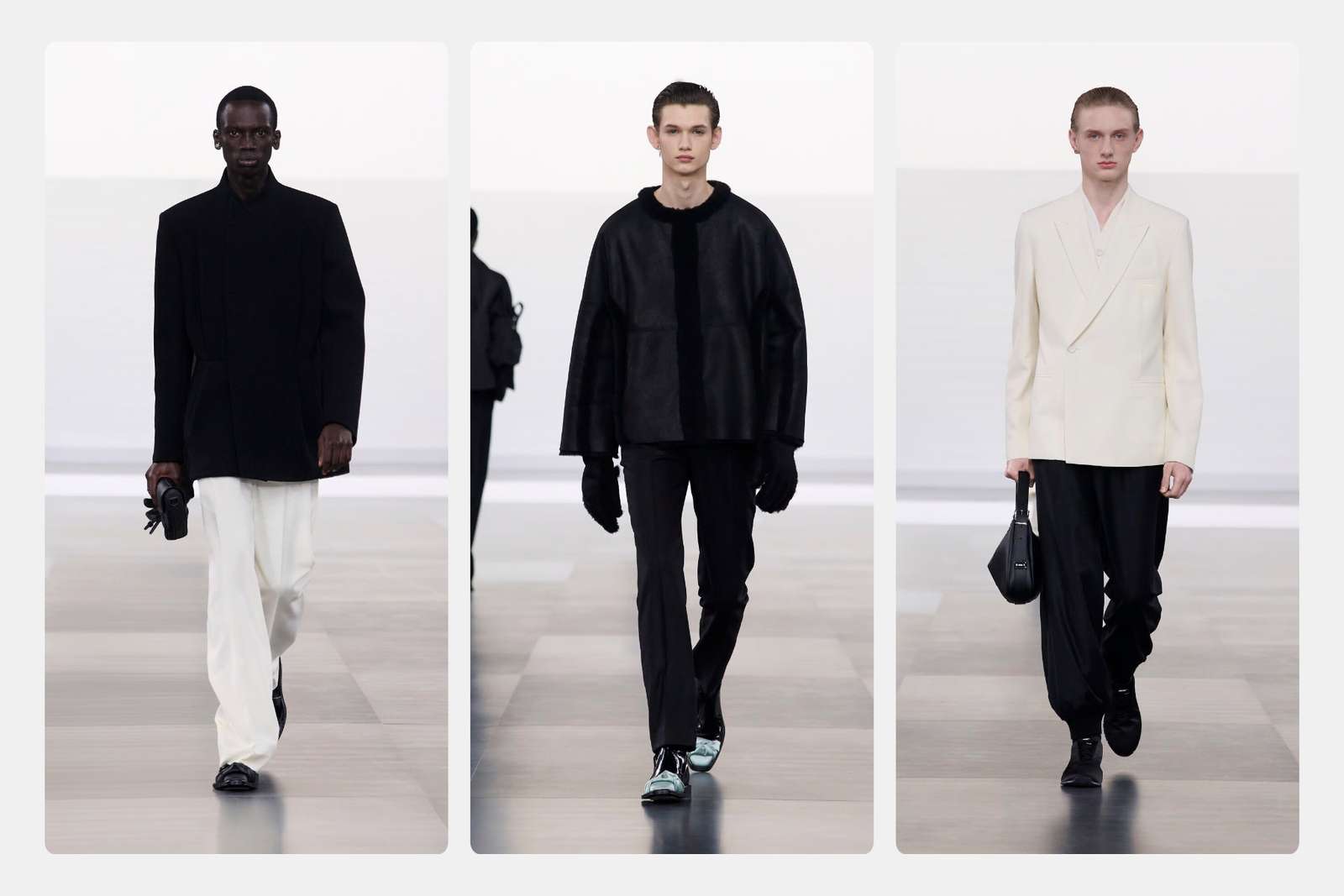
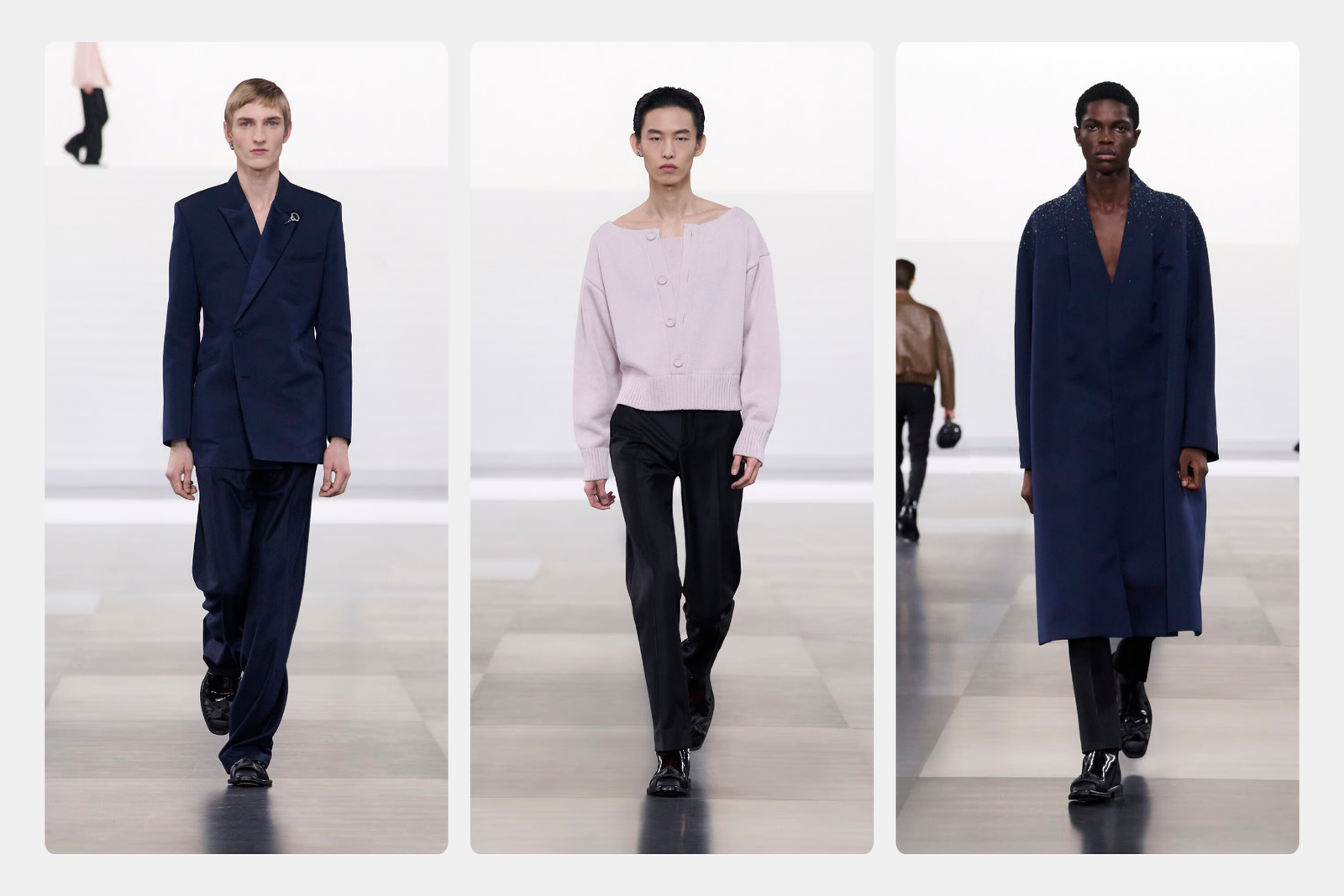
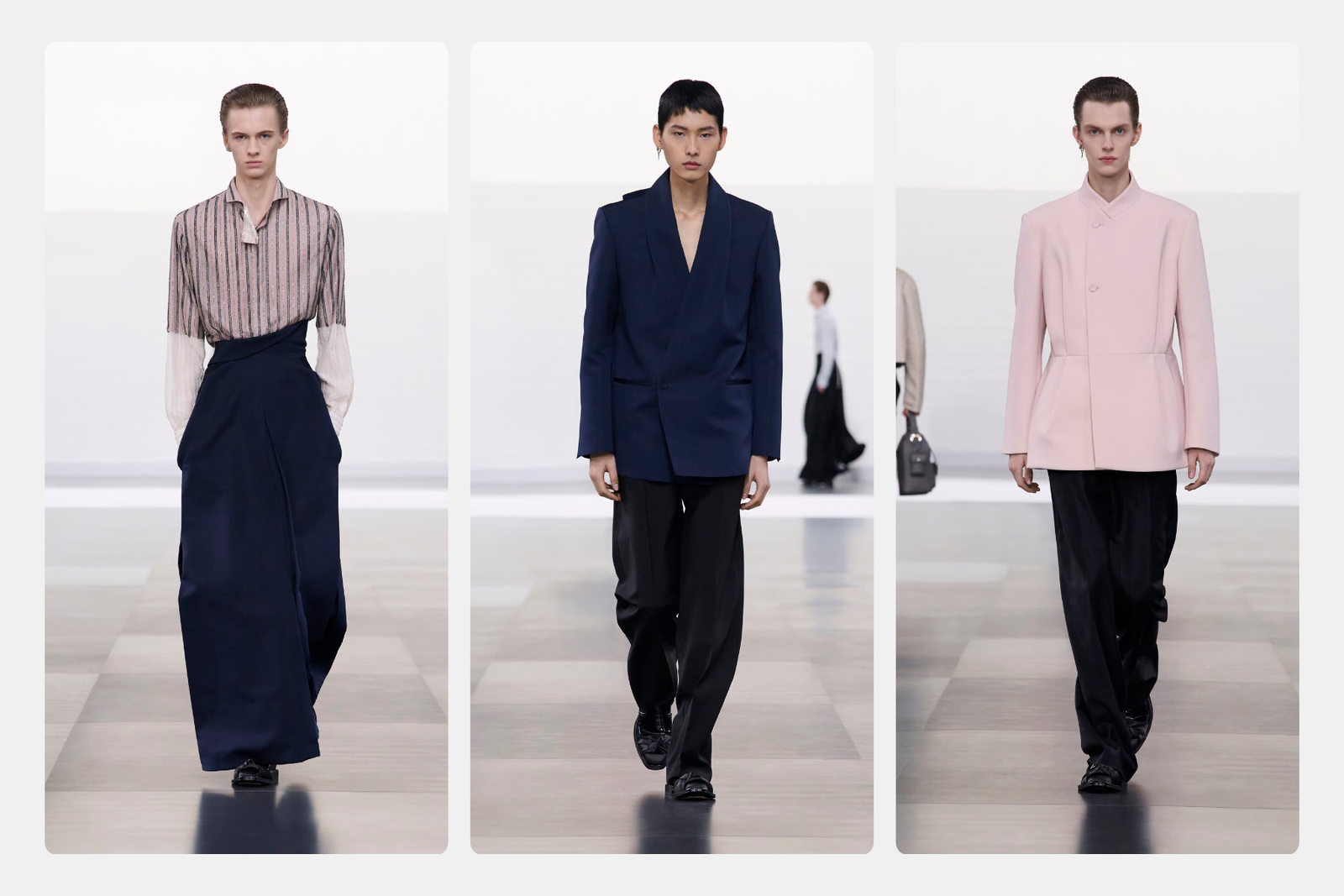
That same sense of continuity carries through to the way the collection is presented on the runway, where men’s couture and ready-to-wear exist side by side without hierarchy or separation. The distinction between the two seems almost unnecessary, as craftsmanship and everyday dressing are treated as part of the same conversation. Traditional overcoats emerge as key pieces, especially those in pinstripe and herringbone, with their rigid silhouettes projecting a controlled, confident masculinity. There’s a quiet certainty in that stiffness, one that prefers form and precision over excess.

Jones’ long-standing dialogue with Dior’s womenswear archive continues here, but always with restraint. The belted, full-shaped Opera coat — from the post-war Ligne H womenswear collection — is subtly reworked, maintaining its volume while naturally fitting into the male wardrobe. Instead of feeling like a gesture or provocation, the transformation appears measured and thoughtful, highlighting that heritage can be modernised without spectacle. By keeping things pared back, Dior lets the strength of the silhouette speak for itself.

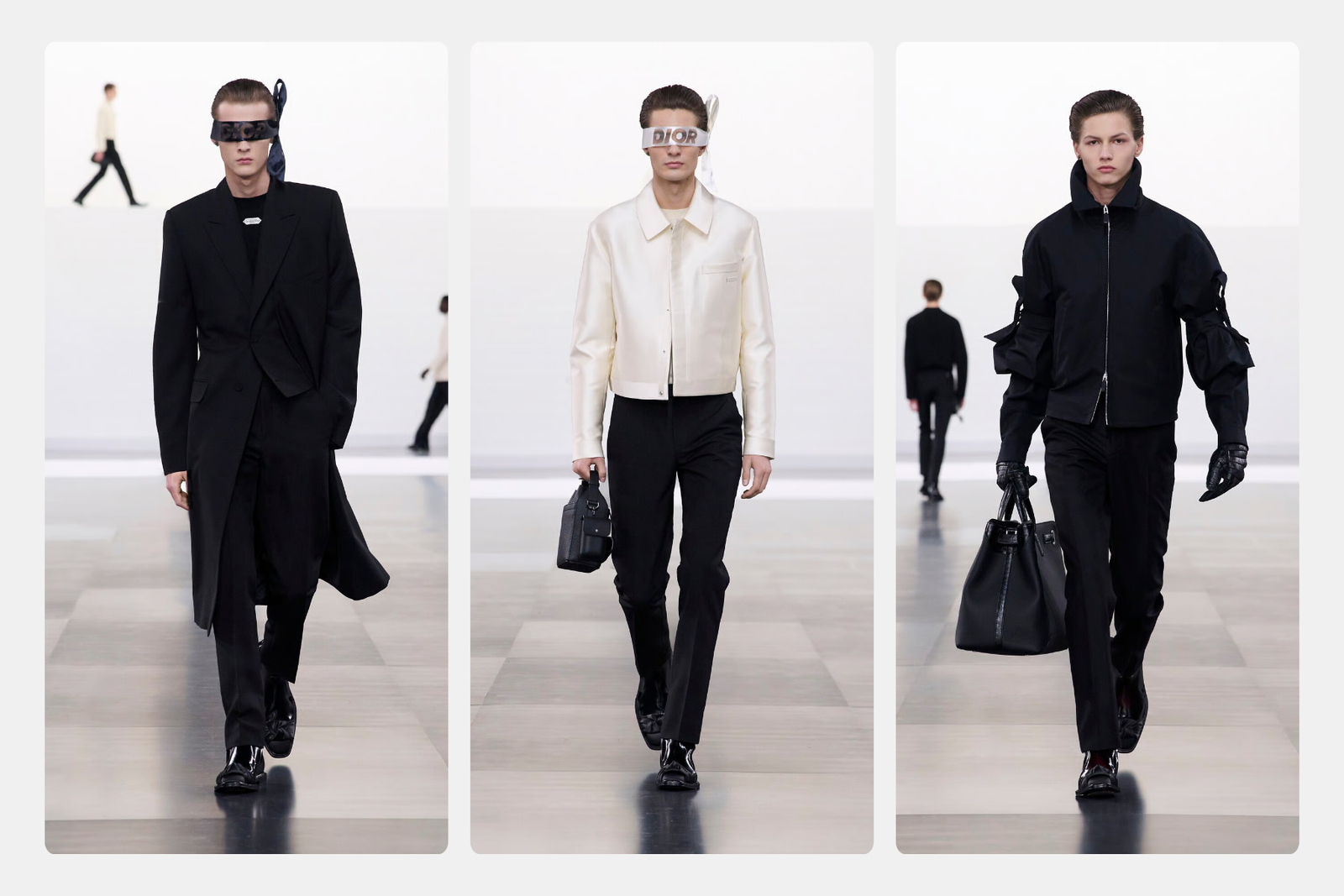
Dior Men’s Winter 2025-2026 Collection | Image: Dior

In many ways, the Winter 2025–2026 collection feels like a deliberate pause — a moment when Dior steps back from superficial reinvention and instead examines the foundations of menswear. The references span across centuries, tracing the gradual shift from the ornate excess of the eighteenth century to the cleaner, more utilitarian forms that define modern dress. Rather than leaning into nostalgia, the collection uses history as a framework to better understand where menswear stands today.

Kim Jones articulates that intent clearly. “We believed it was time to focus on Mr Dior again. We wanted to go back to the roots and concentrate on the quintessence of the house,” he continued. “There is a sense of fashion history, particularly the history of menswear, running through this collection. The shift from something quite ornate and extravagant in the eighteenth century to something more linear and utilitarian in the nineteenth, with the beginnings of modern menswear. Yet, while a lot refers to the history of fashion, this is not historical fashion. Ultimately, in this collection, we wanted to say something about now.”

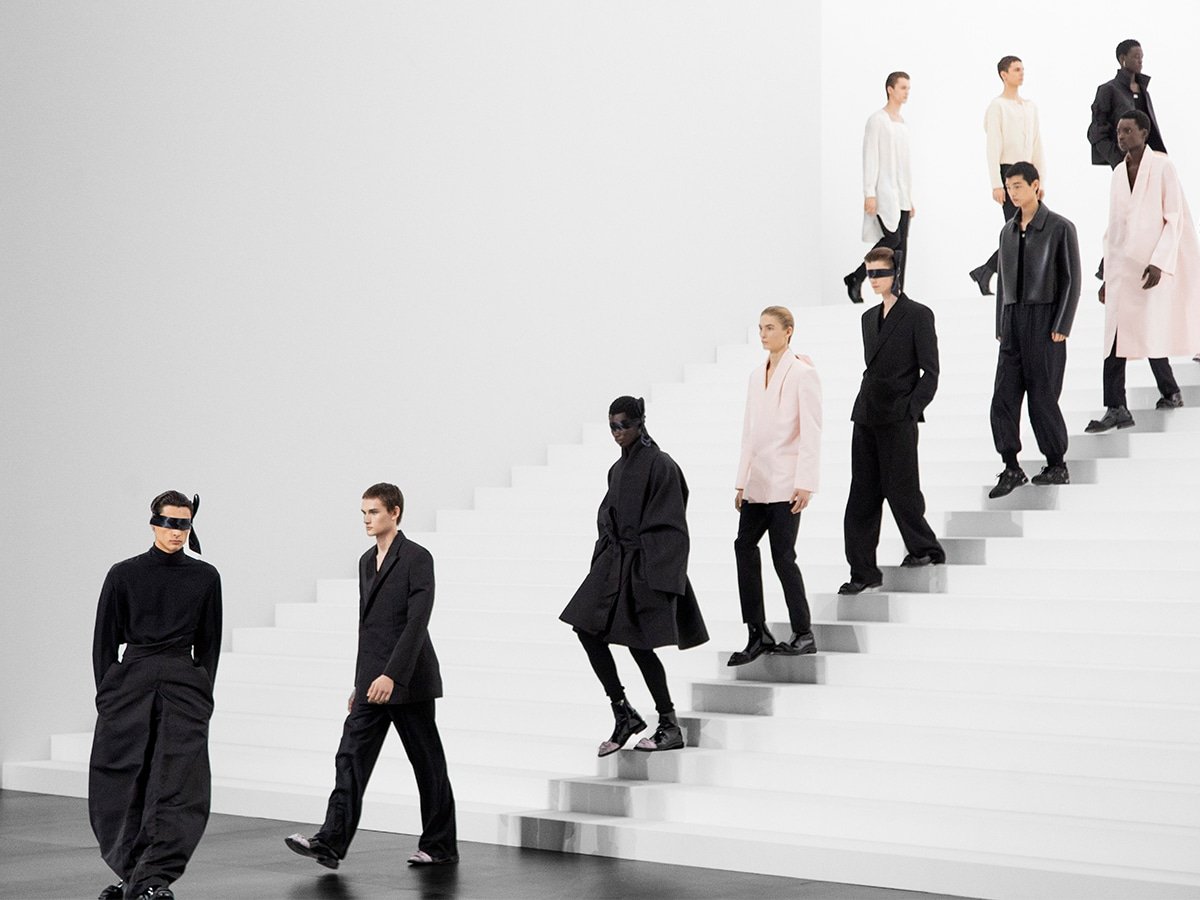
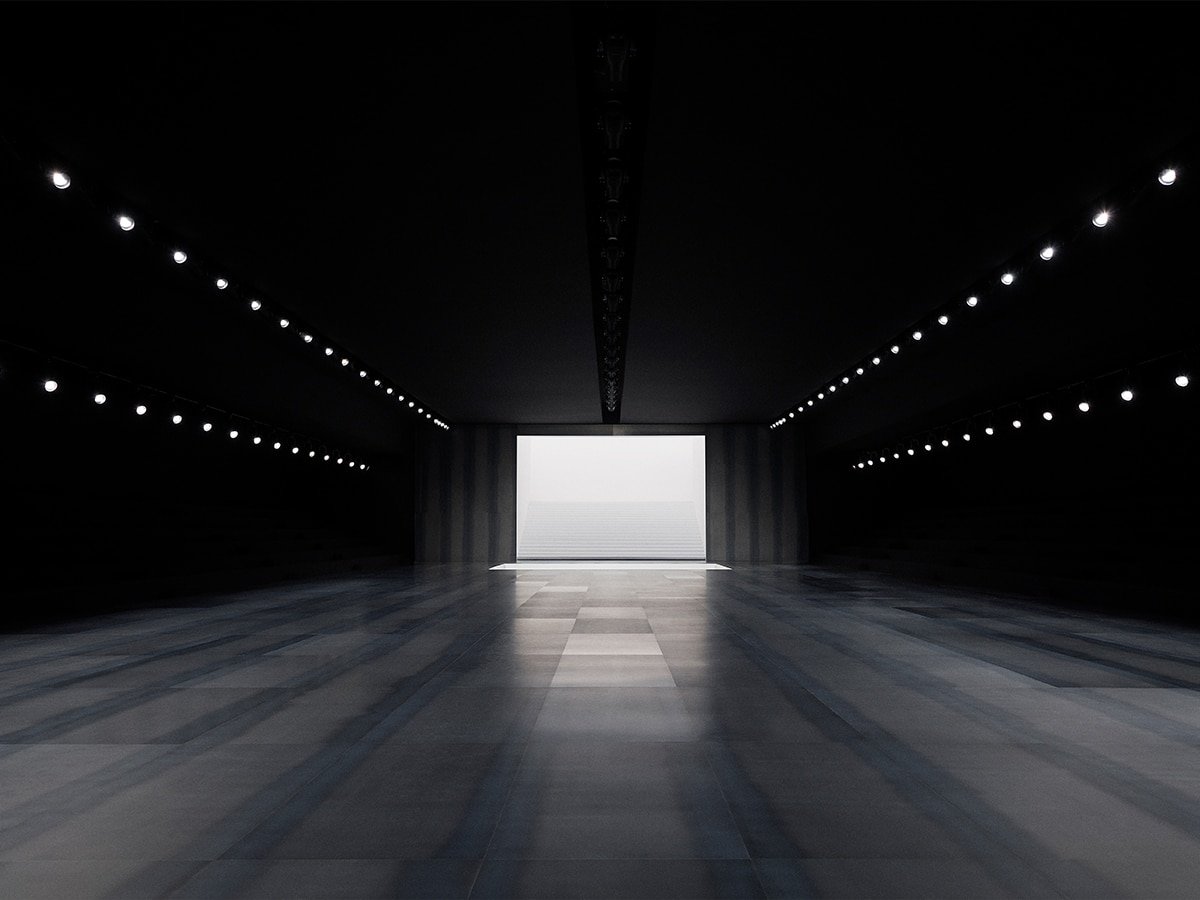
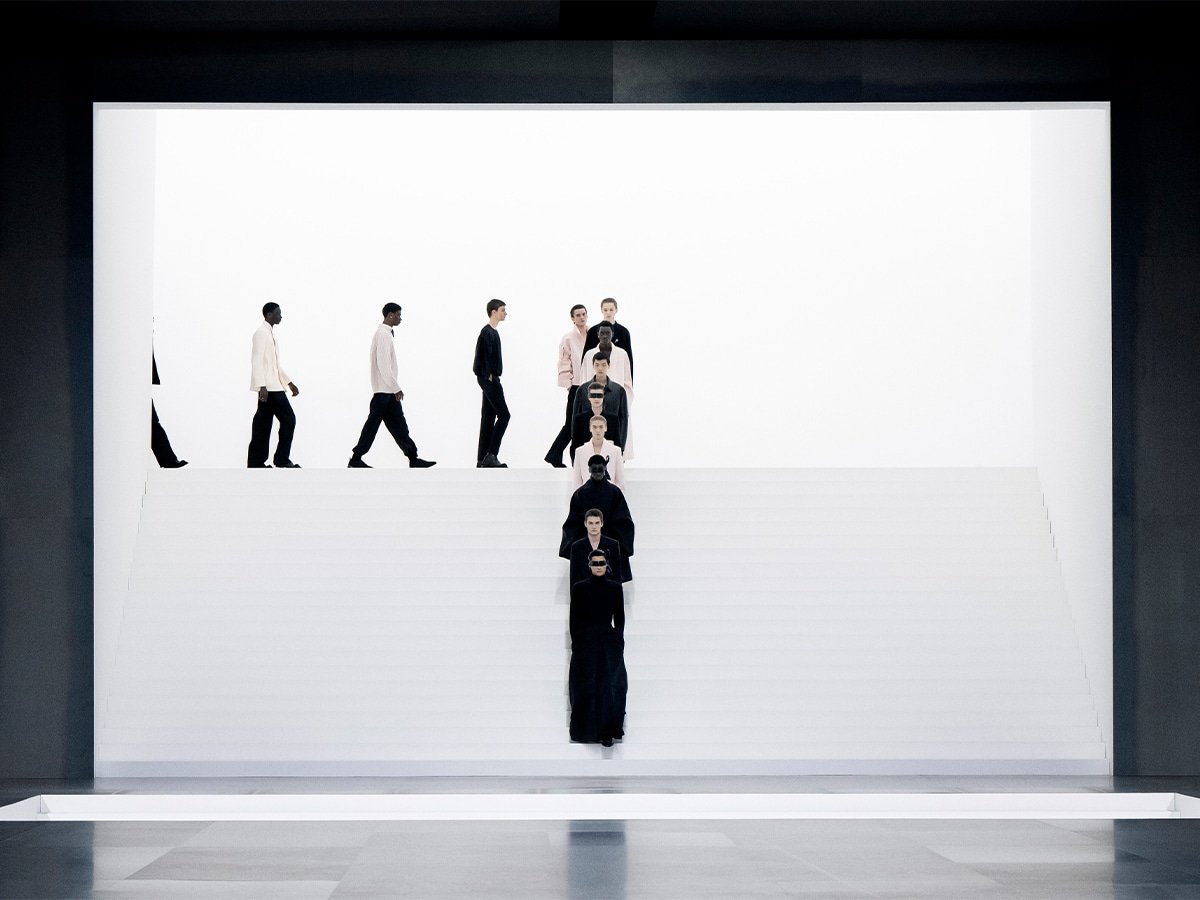
That balance between past and present shapes the collection’s view of modern masculinity. Throughout the runway show, the setting itself echoed that duality: a glowing white staircase descending onto a stark, minimalist black floor. The figure of Casanova hovered as a quiet reference point, embodying a fusion of masculine and feminine influences. Instead of excess or performance, it suggested confidence, elegance, and self-awareness — a modern ‘ladies’ man’ informed equally by women’s haute couture and men’s ready-to-wear.

Dior Men’s Winter 2025-2026 Collection | Image: Adrien Dirand

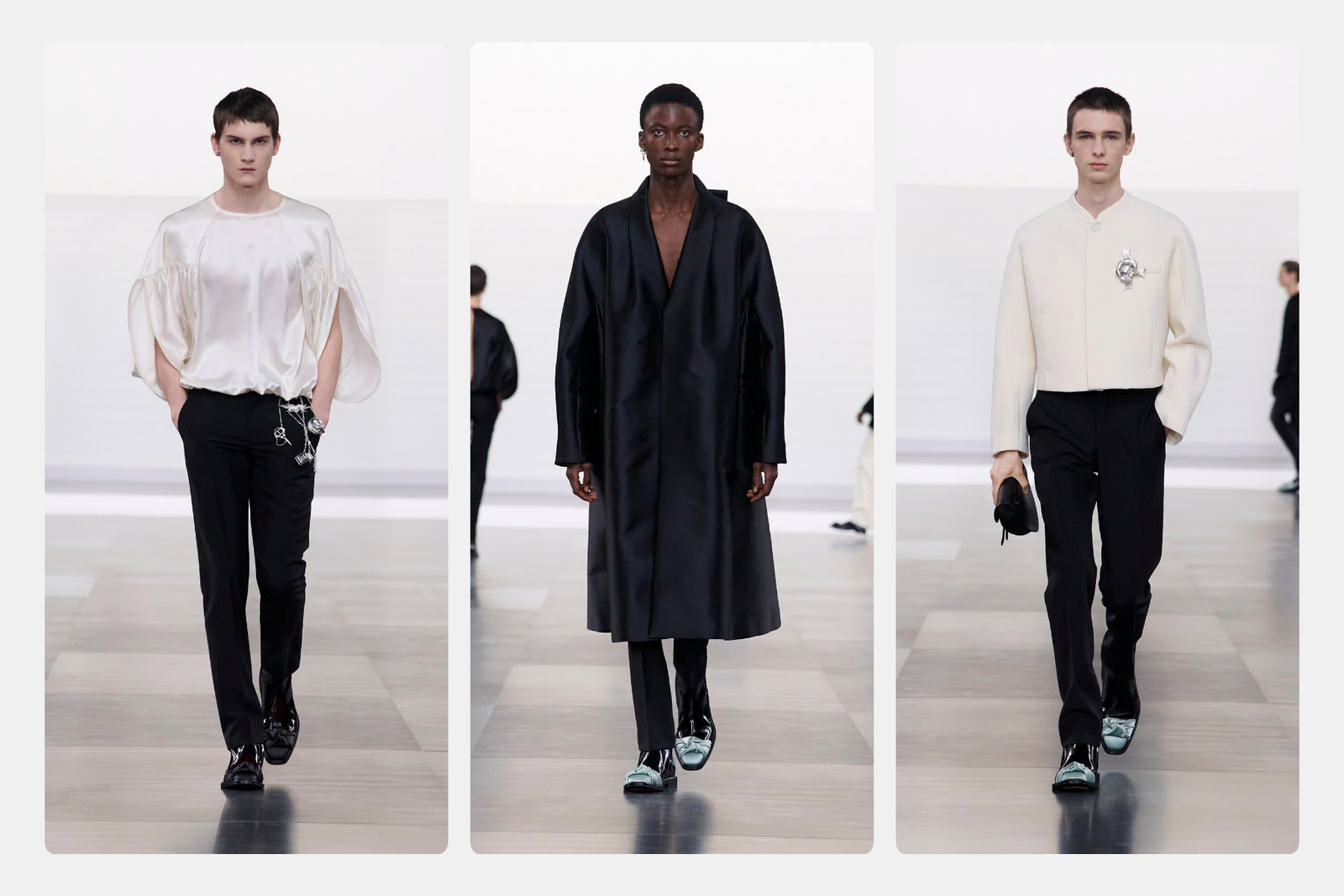
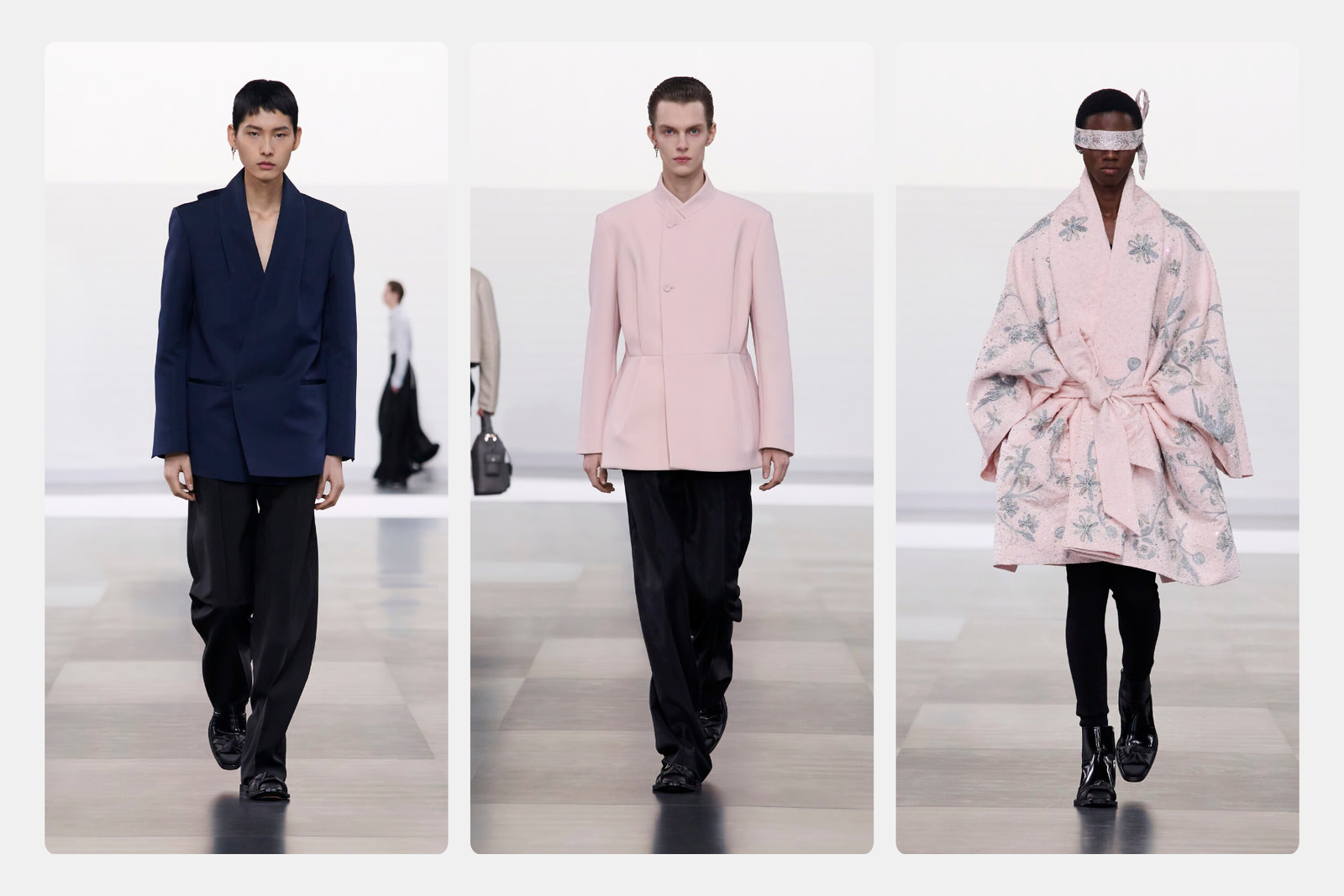
Softer details are essential in balancing the collection’s sharper lines. Satin bows recur throughout, softening the overall tailoring, while detailed glass-bead embroidery—originally inspired by Monsieur Dior’s Spring–Summer 1948 Pondichéry haute couture look—adds lightness and texture. This embroidery reappears on the pink robe that concludes the show, serving as a subtle focal point rather than an embellishment, with its influence also evident in the jewelry, where craftsmanship reflects the same delicate precision.

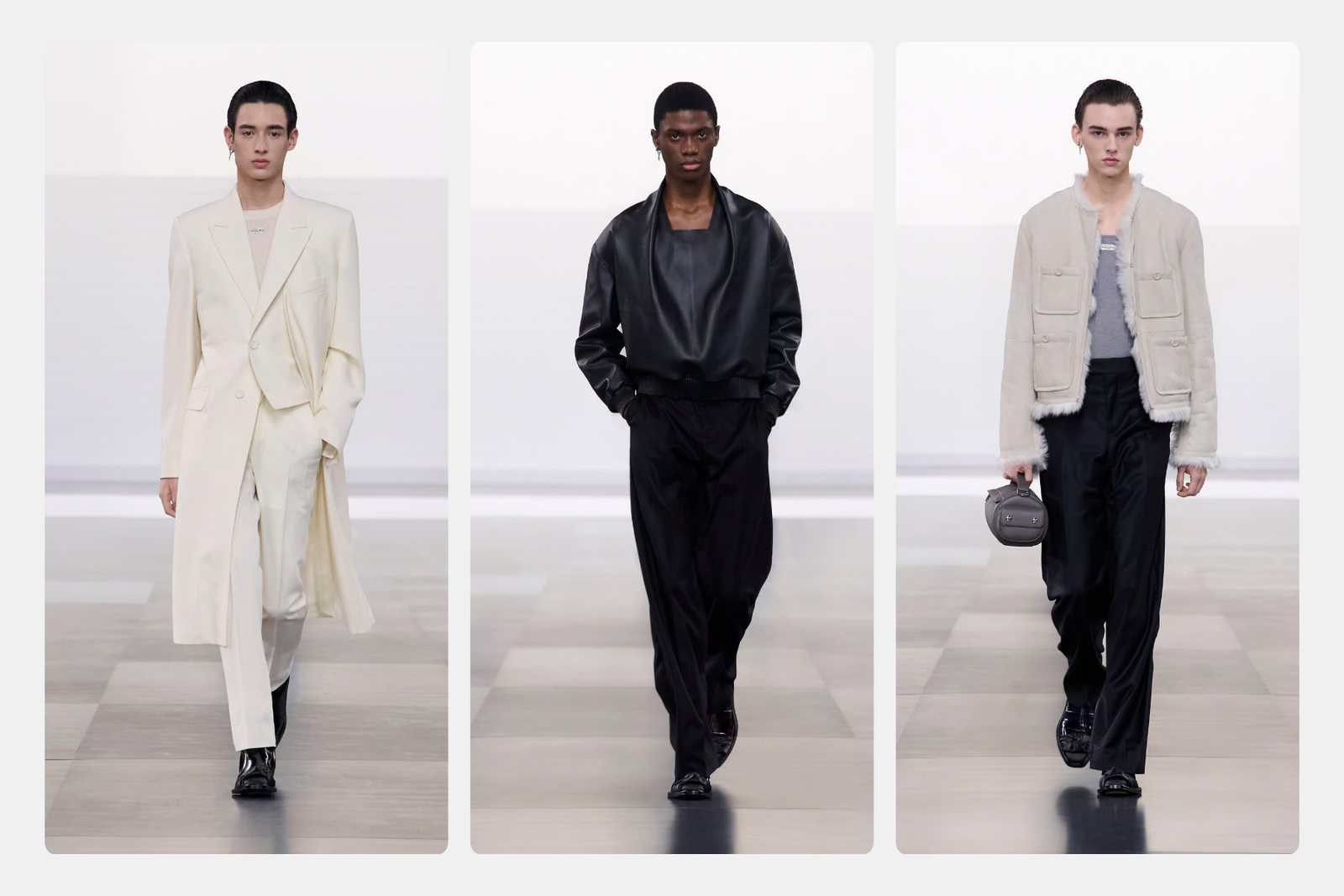
Accessories and footwear continue that dialogue between structure and refinement. Leather goods arrive with purposeful, masculine hardware, paired with classic men’s dress shoes and the highly polished Dior Palmarés boots. The footwear offering concludes with a special-order hybrid trainer, hand-stitched and finished with archival shoe embroidery from 1961—a small but telling detail. Taken as a whole, the collection reinforces a simple truth: when it comes to reinterpreting the past with care and restraint, Kim Jones’s eye for detail remains unmatched. While this season’s approach feels more focused than recent outings, the spirit of cross-pollination — between eras, disciplines, and identities — is still very much intact.

Dior Men’s Winter 2025-2026 Collection | Image: Dior
Dior Men’s Winter 2025-2026 Collection | Dior
Dior Men’s Winter 2025-2026 Collection | Image: Dior
Dior Men’s Winter 2025-2026 Collection | Dior
Dior Men’s Winter 2025-2026 Collection | Image: Dior
Dior Men’s Winter 2025-2026 Collection | Dior
Dior Men’s Winter 2025-2026 Collection | Image: Dior
Dior Men’s Winter 2025-2026 Collection | Dior
Dior Men’s Winter 2025-2026 Collection | Image: Dior
Dior Men’s Winter 2025-2026 Collection | Dior
Dior
About the Author
arrow_drop_up