






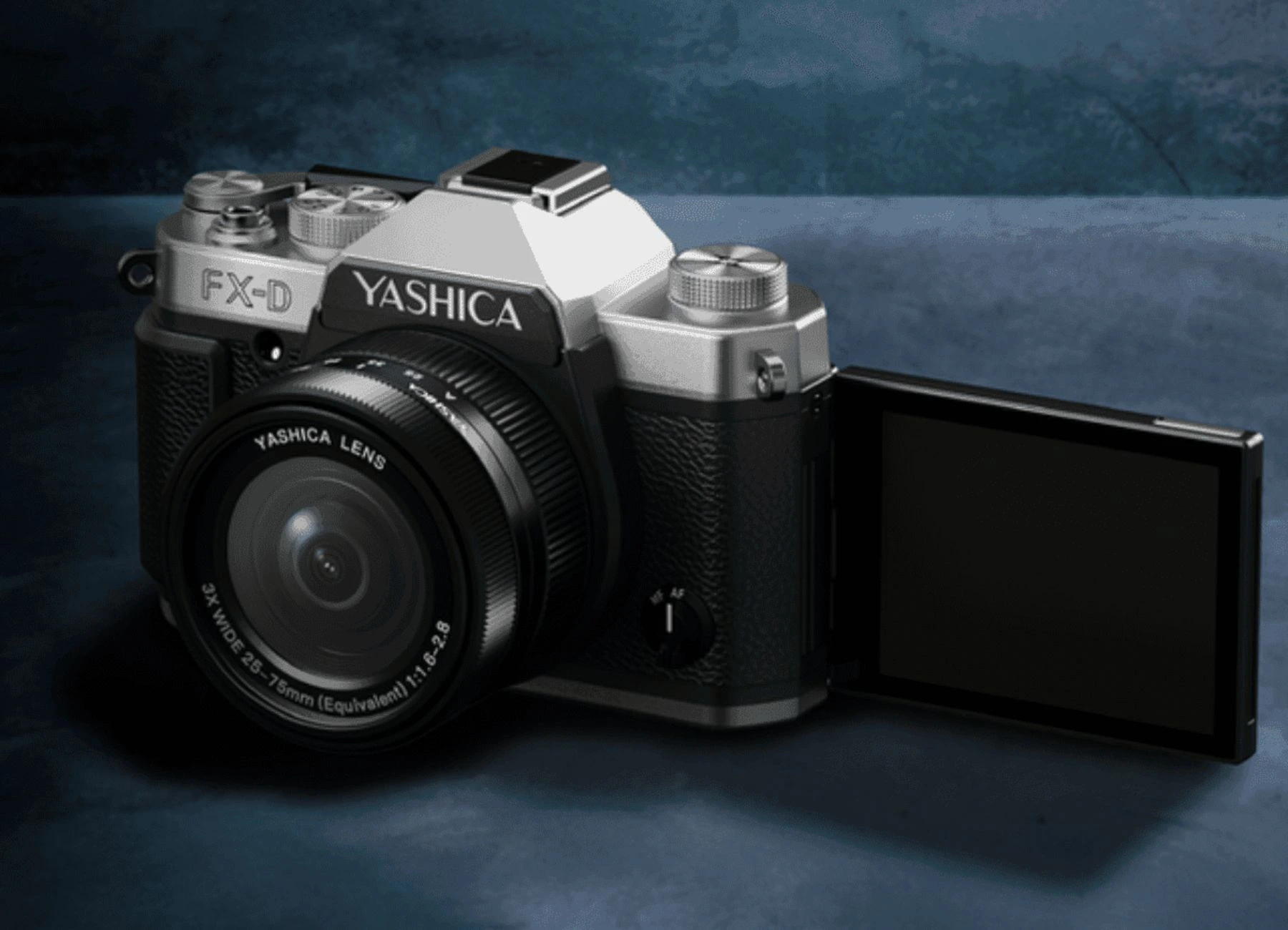

Yashica is back with another attempt to win over photographers, and this time it’s arriving with an entire lineup of retro-inspired cameras. The Japanese brand may have ceased production in 2005, but it found a second life when it was revived under new ownership several years later. Since then, Yashica has slowly worked its way back into the conversation, most notably with the Y35 DigiFilm camera in 2017. Combining digital technology with an analog-inspired shooting experience, the camera struck a chord with photographers and raised more than $1.2 million on Kickstarter.
That success arrived at a time when photographers were beginning to look for more than just megapixels and autofocus speeds. Cameras with character, tactile controls, and film-inspired aesthetics have become increasingly popular, with Fujifilm leading the charge through its hugely successful X Series. As demand for retro-inspired cameras continues to grow, Yashica hopes its new FX-D Series can tap into that enthusiasm.
Advertisement · Continue Reading Below
Currently flying past its Kickstarter funding goals, the FX-D range leans heavily into everything people love about modern retro cameras. While digital at its core, the lineup allows users to recreate the look of classic film stocks through a variety of built-in simulation modes, while still offering a traditional digital shooting experience whenever needed.
For photographers who love the idea of film but prefer the convenience of digital, that combination is likely to be the biggest draw. With three cameras in the lineup and a growing community already backing the project, Yashica is making a serious play for a corner of the market that Fujifilm has dominated for years. Whether it can pull it off remains to be seen, but it’s certainly one of the more interesting camera launches we’ve seen this year.
Rather than launching a single camera, Yashica is introducing an entire family of models through the FX-D Series. Made up of the FX-D 100, FX-D 300, and FX-D S300 series, a lineup that brings the look and feel of film photography into the digital age. Each camera offers a range of film simulation modes inspired by classic film stocks, allowing photographers to experiment with different looks straight out of the camera. Combined with retro-inspired styling and modern digital features, the FX-D Series is clearly aimed at photographers who love the character of film but aren’t quite ready to give up the convenience of digital.
Let’s take a closer look at Yashica’s FX-D series.
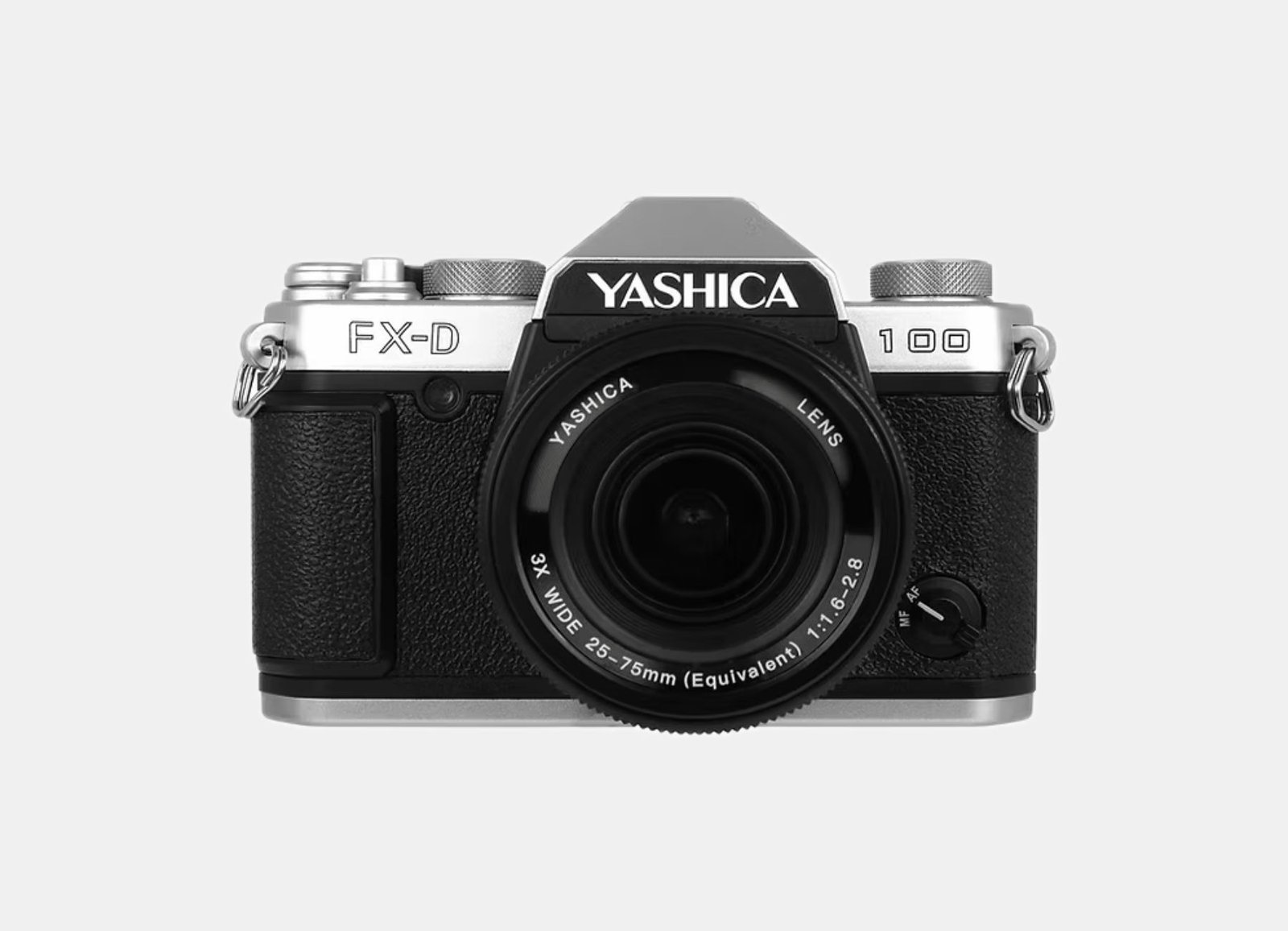
Specifications:
- Brand: Yashica
- Model: FX-D 100 Digital Film Simulation Camera
- SKU: YAS-FXD100
- Display: 2.8-inch LCD Flip Screen
- Sensor: 13MP Image Sensor
- Lens: 3x Optical Zoom Lens
- Video: Up to 4K at 30fps
- 4K(3840×2160),30fps
- 2.7K(2688×1512),60fps/30fps
- 1080P(1920×1080), 120fps/60fps(Default)/30fps
- 720P(1980×720), 120fps/60fps/30fps
- Film Simulation Modes: Multiple Built-In Film Simulation Profiles
- Storage: SD / SDHC / SDXC (Up to 512GB)
- Price: USD $342
The FX-D 100 serves as the entry point into Yashica’s new camera lineup, but that doesn’t mean it’s short on features. Built around a 13MP image sensor and a 3x optical zoom lens, the camera is designed for photographers who want something simple, portable, and fun to shoot with. The lens covers a 25mm to 76mm full-frame-equivalent focal range, while dedicated focal lengths of 25mm, 35mm, 50mm, and 75mm make it easy to switch between some of photography’s most popular perspectives. A 2.8-inch flip screen that rotates up to 180 degrees also makes the FX-D 100 a practical option for travel, everyday photography, and content creation.
Despite its affordable price tag, Yashica hasn’t ignored video shooters. The FX-D 100 can record in 4K at 30 fps and features Full HD video that can be stretched to 120 fps for smooth slow-motion footage. Add in the built-in film simulation modes, support for SD cards up to 512GB, and a bright f/1.6–2.8 aperture range, and you start to understand the camera’s appeal at USD $342.
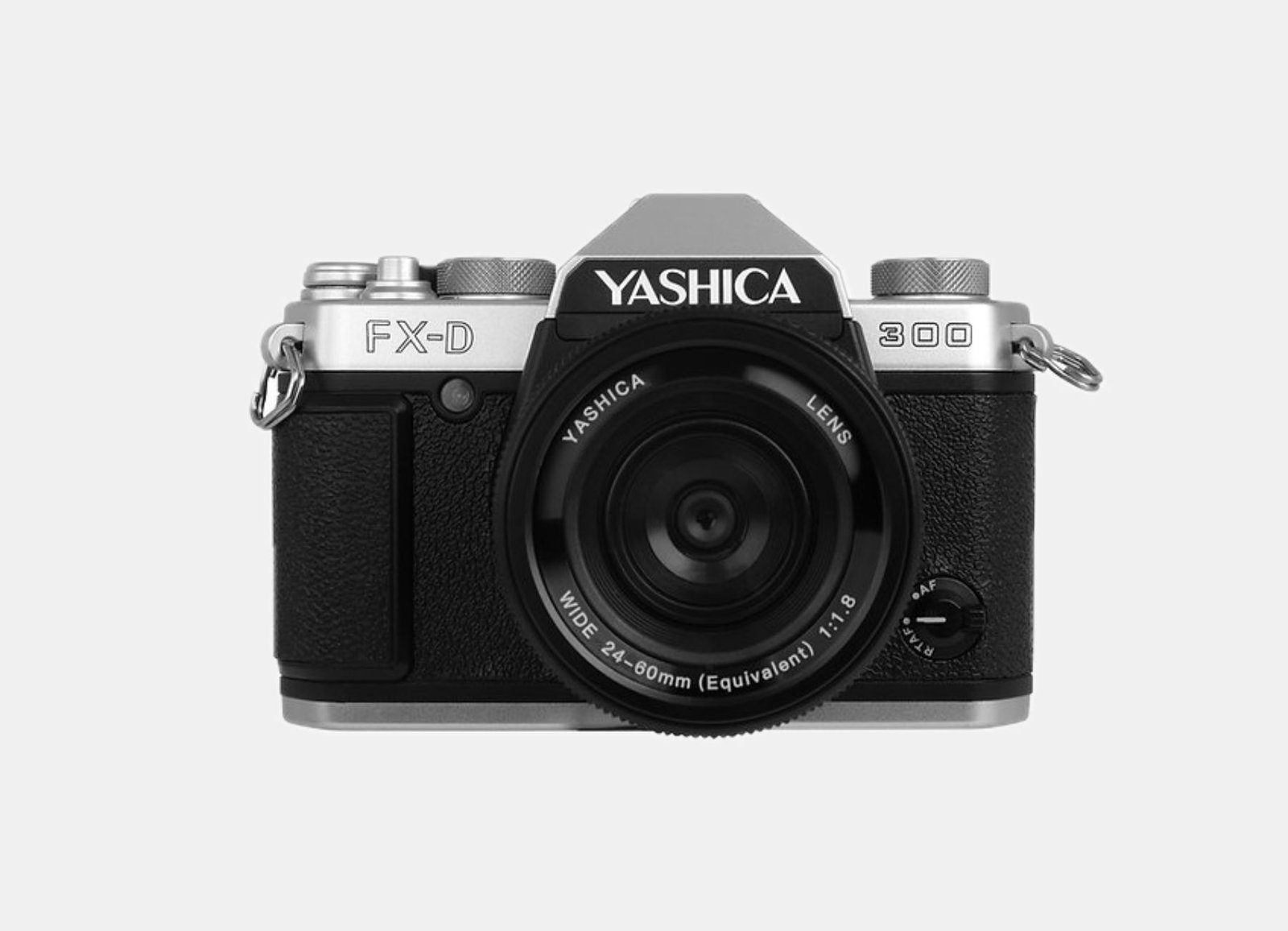
Specifications:
- Brand: Yashica
- Model: FX-D 300 Digital Film Simulation Camera
- SKU: YAS-FXD300
- Display: 2.8-inch LCD Flip Screen
- Sensor: 50MP CMOS Sensor (1/1.56″)
- Lens: 24mm Equivalent f/1.8 Lens
- Video:
- 4K (3840 × 2160) at 30fps
- 2.7K (2688 × 1512) at 60fps / 30fps
- 1080p (1920 × 1080) at 120fps / 60fps / 30fps
- 720p (1280 × 720) at 120fps / 60fps / 30fps
- Film Simulation Modes: Multiple Built-In Film Simulation Profiles
- Storage: SD / SDHC / SDXC (Up to 512GB)
- Price: USD $444
If the FX-D 100 is the starting point, the FX-D 300 takes things up a notch. It uses a 50MP CMOS sensor and a bright f/1.8 lens, which means you get better image quality along with new features like autofocus, optical image stabilization, and DAG HDR. Instead of a zoom lens, Yashica chose a fixed 24mm full-frame equivalent lens, but you can use digital crop modes to mimic 35mm, 50mm, and 65mm focal lengths. This gives photographers more creative options without making the camera heavier, for just USD $444, and it’s the best value in the lineup, offering higher resolution, better low-light performance, and a more photography-focused feel.
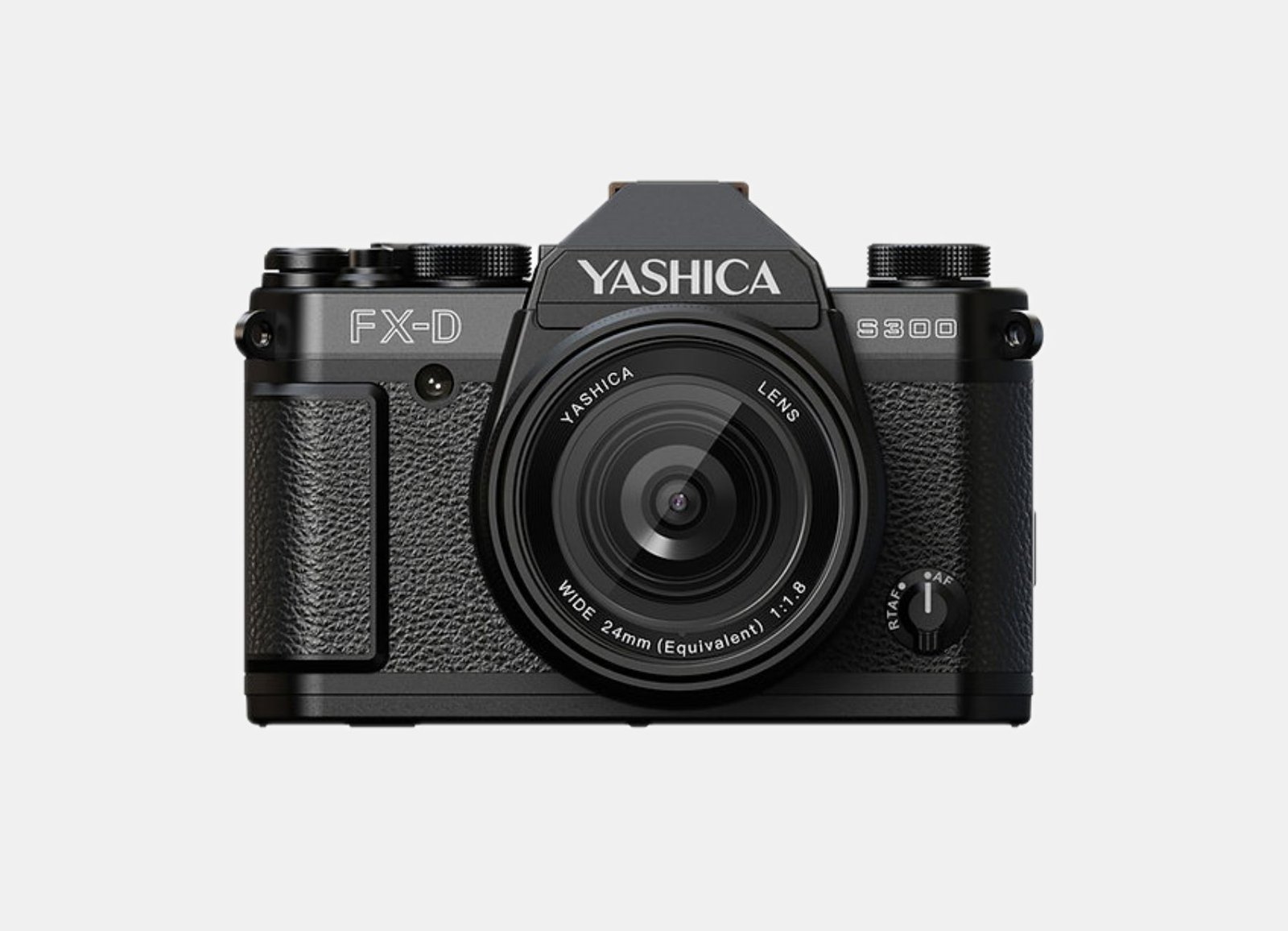
Specifications:
- Brand: Yashica
- Model: FX-D S300 Digital Film Simulation Camera
- SKU: YAS-FXDS300
- Display: 2.8-inch LCD Flip Screen + 0.32-inch OLED Electronic Viewfinder
- Sensor: 50MP CMOS Sensor (1/1.56″)
- Lens: 24mm Equivalent f/1.8 Lens
- Video:
- 4K at 30fps
- 2.7K at 60fps / 30fps
- 1080p at 120fps / 60fps / 30fps
- 720p at 120fps / 60fps / 30fps
- Film Simulation Modes:
- Ruby 60s
- Sapphire 70s
- Yashica 400
- Golden 80s
- Mono 400
- B&W 400
- Storage: SD / SDHC / SDXC (Up to 512GB)
- Connectivity: Wi-Fi (iOS & Android App Support)
- Price: USD $559
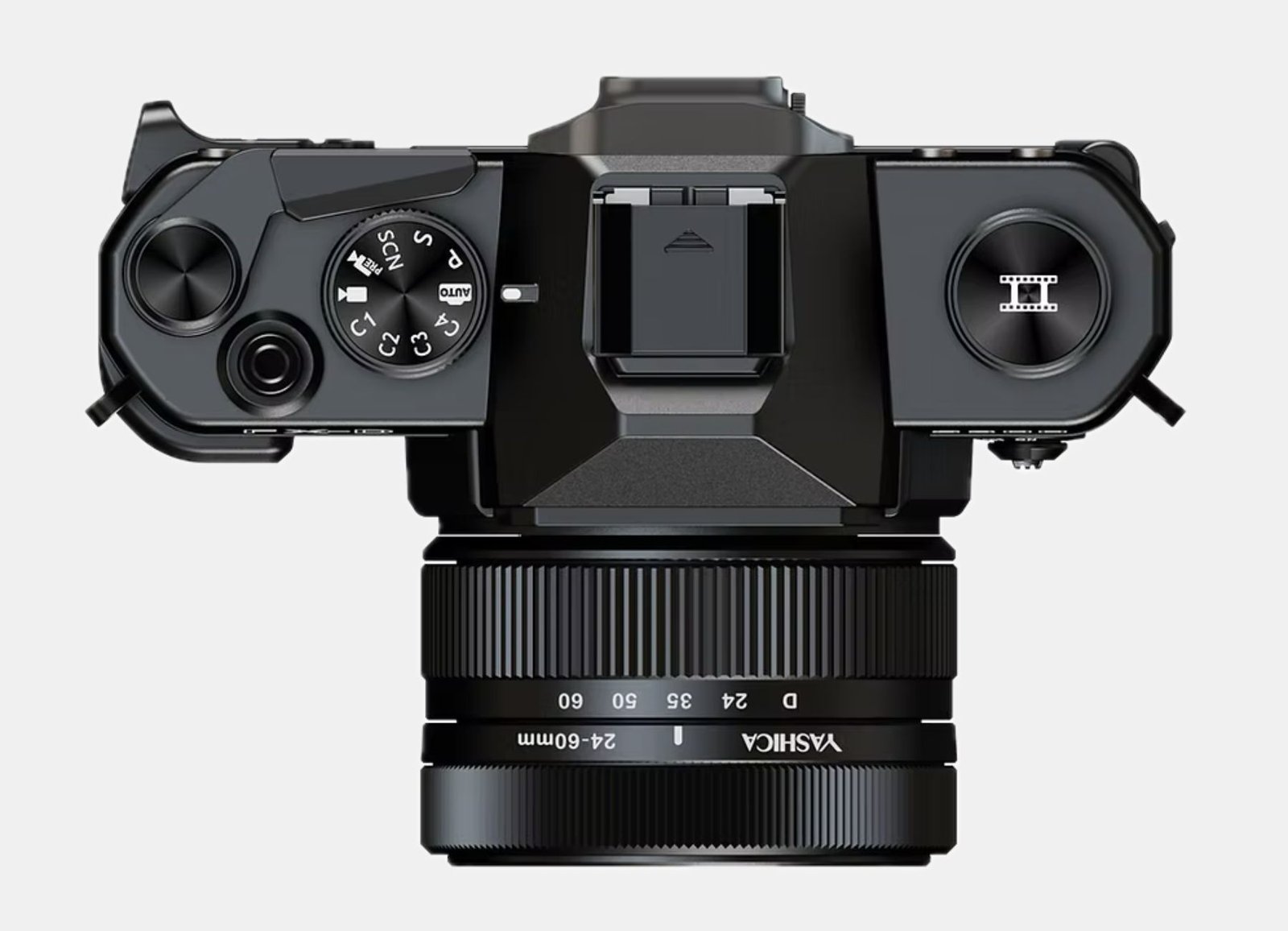
Sitting at the top of the range, the FX-D S300 is Yashica’s most feature-packed camera and the one that feels closest to the enthusiast-focused models that have made Fujifilm so popular. It shares the same 50MP sensor and bright f/1.8 lens as the FX-D 300, but adds a long list of upgrades, including a built-in electronic viewfinder, 3-axis in-body image stabilization, face-detection autofocus, real-time autofocus tracking, Wi-Fi connectivity, and RAW (DNG) image capture. Photographers also gain greater creative control through manual exposure settings, shutter speeds from 1/8000 sec to 7 seconds, custom shooting modes, and six dedicated film simulations, including Ruby 60s, Sapphire 70s, Yashica 400, and Golden 80s.
Video shooters haven’t been forgotten either, with 4K recording joined by slow-motion, time-lapse, loop recording, and pre-recording. Combined with the camera’s retro-inspired design, OLED electronic viewfinder, and extensive customization options, the FX-D S300 feels like the most complete expression of Yashica’s goals for the FX-D Series.
Combined with the camera’s retro-inspired design, OLED electronic viewfinder, and extensive customization options, the FX-D S300 feels like the most complete expression of Yashica’s goals for the FX-D Series. At USD $559, it’s the camera that brings everything together, offering a feature set serious enthusiasts will appreciate without sacrificing the simplicity that makes the range so appealing.
Advertisement · Continue Reading Below
- Yashica FX-D 100 — USD $346
- Yashica FX-D 300 — USD $444
- Yashica FX-D S300 — USD $559
At the time of writing, the Yashica FX-D Series is funded on Kickstarter, and the project has already surpassed its original funding goal. The three-camera lineup offers different price options depending on what you need, from the beginner-friendly FX-D 100 to the feature-rich FX-D S300. If the cameras live up to the promise of their specs and film-simulation features, the FX-D Series could be one of the more exciting photography releases of the year. As with all crowdfunding campaigns, we’ll be keeping a close eye on production updates closely and look forward to seeing how the cameras perform once they start reaching photographers.
Choosing between the three cameras depends on how you like to take photos. The FX-D 100 is the cheapest option and a great choice for casual photographers, travellers, and content creators who want an easy way to try Yashica’s film simulation. The FX-D 300 offers significant improvements in picture quality, autofocus, image stabilization, and creative options, making it a good middle choice for hobbyists who want more without spending too much. At the top, the FX-D S300 is designed for photographers who want more control over their photos, with features such as RAW shooting, an electronic viewfinder, improved autofocus, Wi-Fi, and additional shooting modes. We haven’t fully tested the FX-D Series yet, but the early details look promising, and we are excited to see how these cameras perform in real life once we land a pair for ourselves.
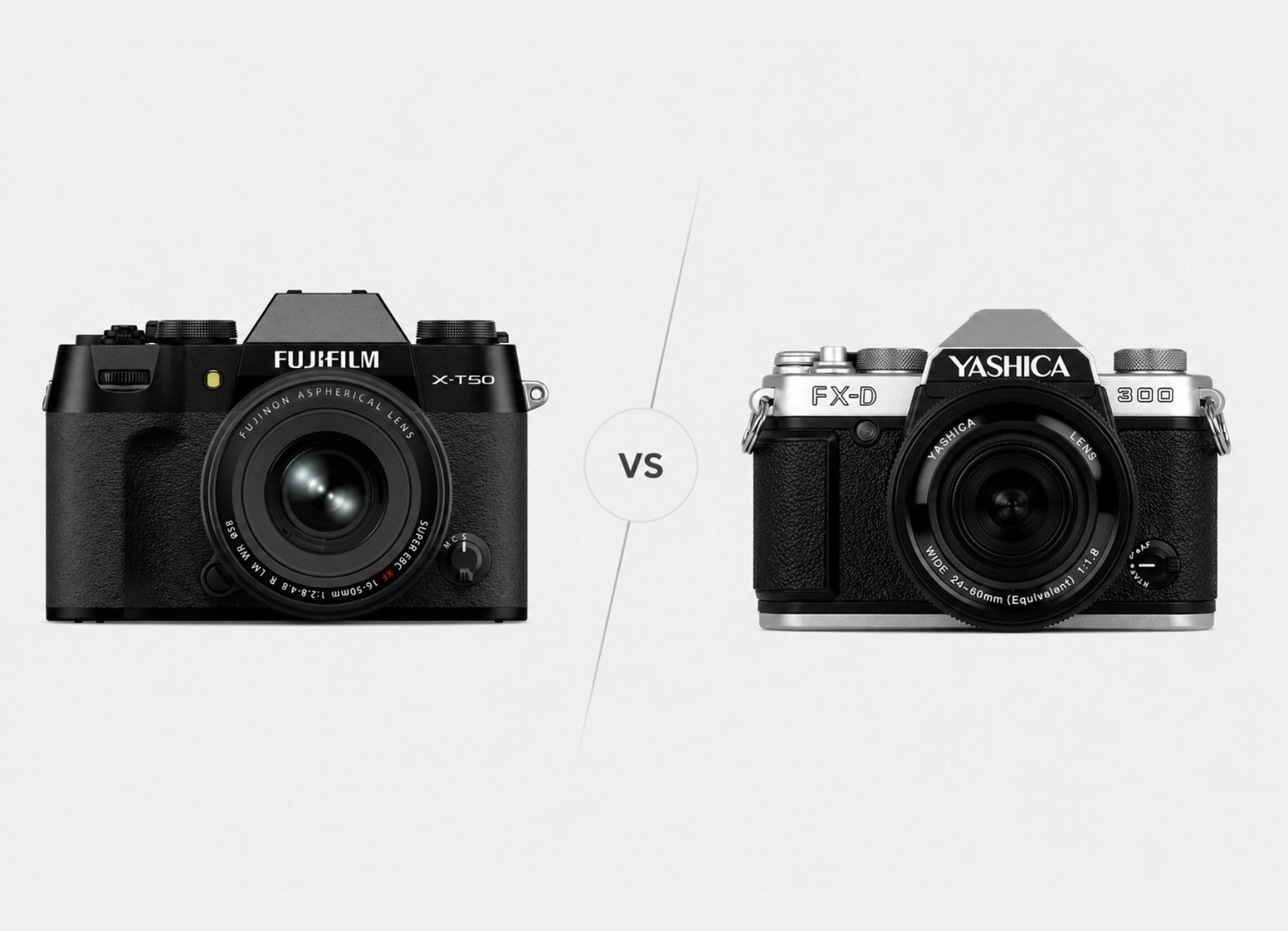
It’s easy to see why people compare the FX-D Series to Fujifilm. Over the last ten years, Fujifilm has gained a loyal fan base by blending modern digital features with the classic style of film cameras. Its film simulation modes have become a key part of the brand’s identity. The FX-D lineup follows a similar path, offering retro designs and built-in film simulations that try to capture the colours, tones, and feel of traditional film photography. The cameras even share some design details with popular models like the X-T50, which many photography fans appreciate.
The similarities stand out even more when you compare their specs and prices. Fujifilm’s X-T50 has a 40.2MP APS-C sensor, lets you swap lenses, and uses a more advanced imaging system, making it a favourite for enthusiasts. The FX-D 300, on the other hand, comes with a 50MP sensor, film simulation modes, optical image stabilization, and 4K video recording, all at a much lower price. These cameras are aimed at different users and offer unique shooting experiences, but both appeal to people who want digital cameras with the look and feel of film. That’s why it’s so common to compare them.
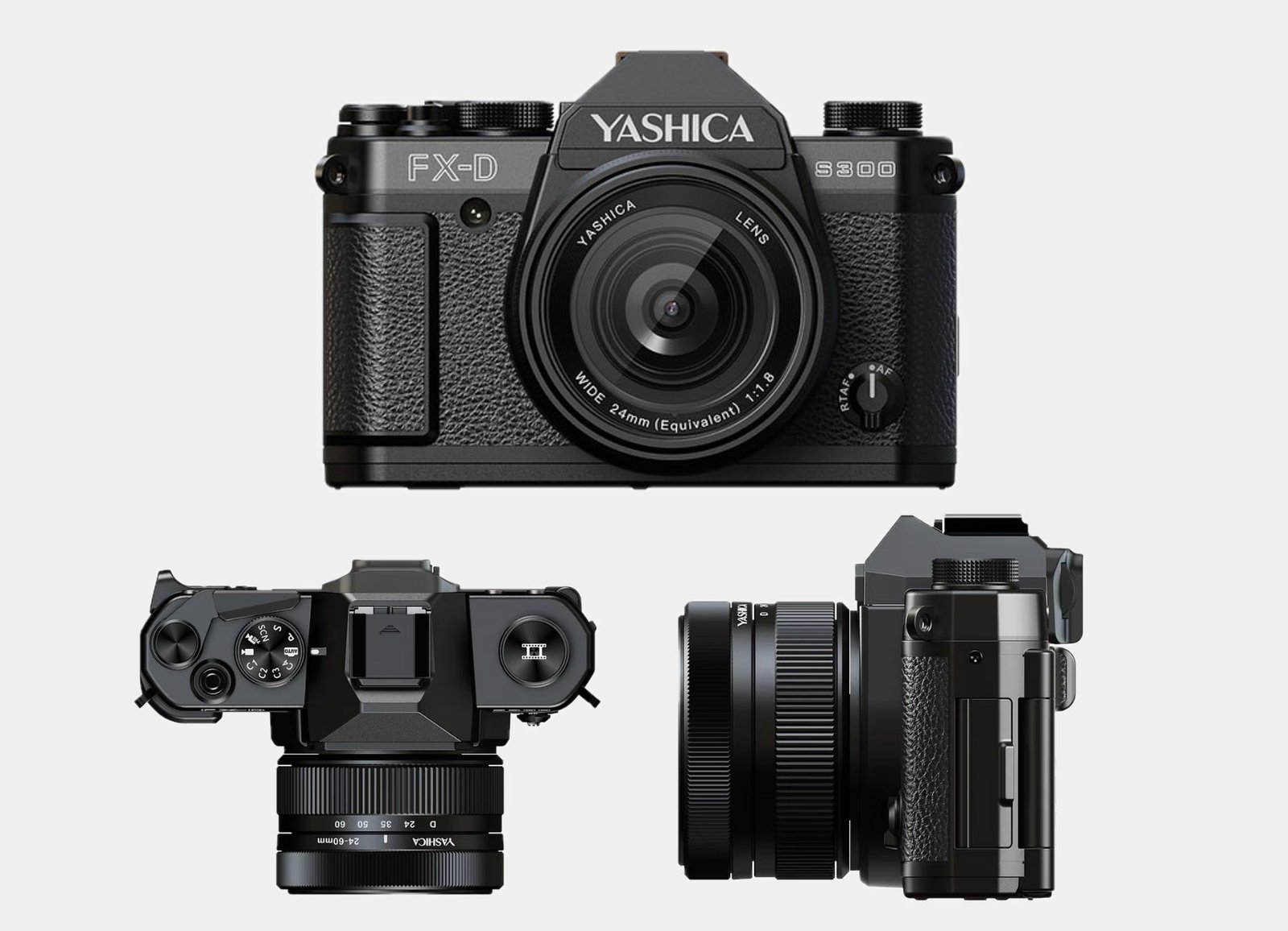
It’s still too early to make any firm judgments, particularly as we haven’t had the chance to spend time with the FX-D Series ourselves. What is clear, however, is that Yashica has recognized a growing interest in cameras that combine classic styling, film-inspired shooting modes, and a more hands-on photography experience. The FX-D lineup arrives with an appealing mix of features, familiar design cues, and pricing that sits well below that of many enthusiast-focused cameras on the market. Ultimately, the real test will come once photographers begin putting these cameras through their paces, but based on what we’ve seen so far, Yashica’s latest return to the photography world is certainly an interesting one.