







Bad Bunny turned the Super Bowl LX halftime show into something much more than just a string of hit songs for football’s biggest event. In a 13-minute set, the Puerto Rican superstar delivered a show filled with cultural references, political statements, personal tributes, and a nod to the communities that have shaped him throughout his career. While many viewers were busy singing along, others saw a deeper story being told behind every song, in the visuals, and in the surprise moments.
From the opening sugarcane fields that paid tribute to Puerto Rico’s history to recreations of neighbourhood barber shops, domino tables, piragua vendors, and symbols of Nuyorican culture, the performance celebrated the people, traditions, and everyday experiences that we don’t often see. At the same time, Bunny used the occasion to address broader issues affecting Puerto Rico and Latino communities, weaving messages of resilience, identity, and belonging throughout the show.
Advertisement · Continue Reading Below
There were also plenty of moments that sparked conversation long after the final song ended. A young boy receiving a Grammy on stage, a real wedding taking place during the performance, references to El Apagón, along with a closing message that read “Together, We Are America,” all added extra layers to a show that felt thoughtfully constructed from beginning to end. Already being talked about as one of the most-watched halftime performances in Super Bowl history, the show delivered an impact that stretched far beyond entertainment and well beyond the final whistle.
If you found yourself wondering about the symbolism behind certain scenes, the meaning of the number 64, the appearance of the Ford pickup truck, or some of the cultural references hidden throughout the performance, you’re not alone.
Here’s everything you might have missed during Bad Bunny’s Super Bowl halftime show.
One of the first messages viewers saw during the halftime show came before Bad Bunny had even taken centre stage. Opening the performance was an Afro-Latino guitarist wearing a traditional pava hat, who proudly declared, “Qué rico es ser latino” (“How wonderful it is to be Latino”). It was a simple moment, but one that immediately told viewers what this performance was about. Rather than opening with fireworks or one of his biggest hits, Bad Bunny chose to begin with a celebration of Latino identity in front of one of the largest audiences on the planet.
The musician was Dominican singer Alexander Mercedes, who paid tribute to bachata legend Anthony Santos with the song ‘Hoy Se Bebe’. The scene was filmed in a sugarcane field in the Dominican Republic, adding another touch of Caribbean culture to the show’s opening. Fans of Bad Bunny might have recognized the melody right away, since it introduces ‘Tití Me Preguntó’, one of the biggest songs from ‘Un Verano Sin Ti.’ The reference, produced by MAG, who has both Dominican and Puerto Rican descent, felt intentional. It was not a hit song, but a way to honour the different cultures, sounds, and communities that have shaped Bad Bunny’s music from the start.
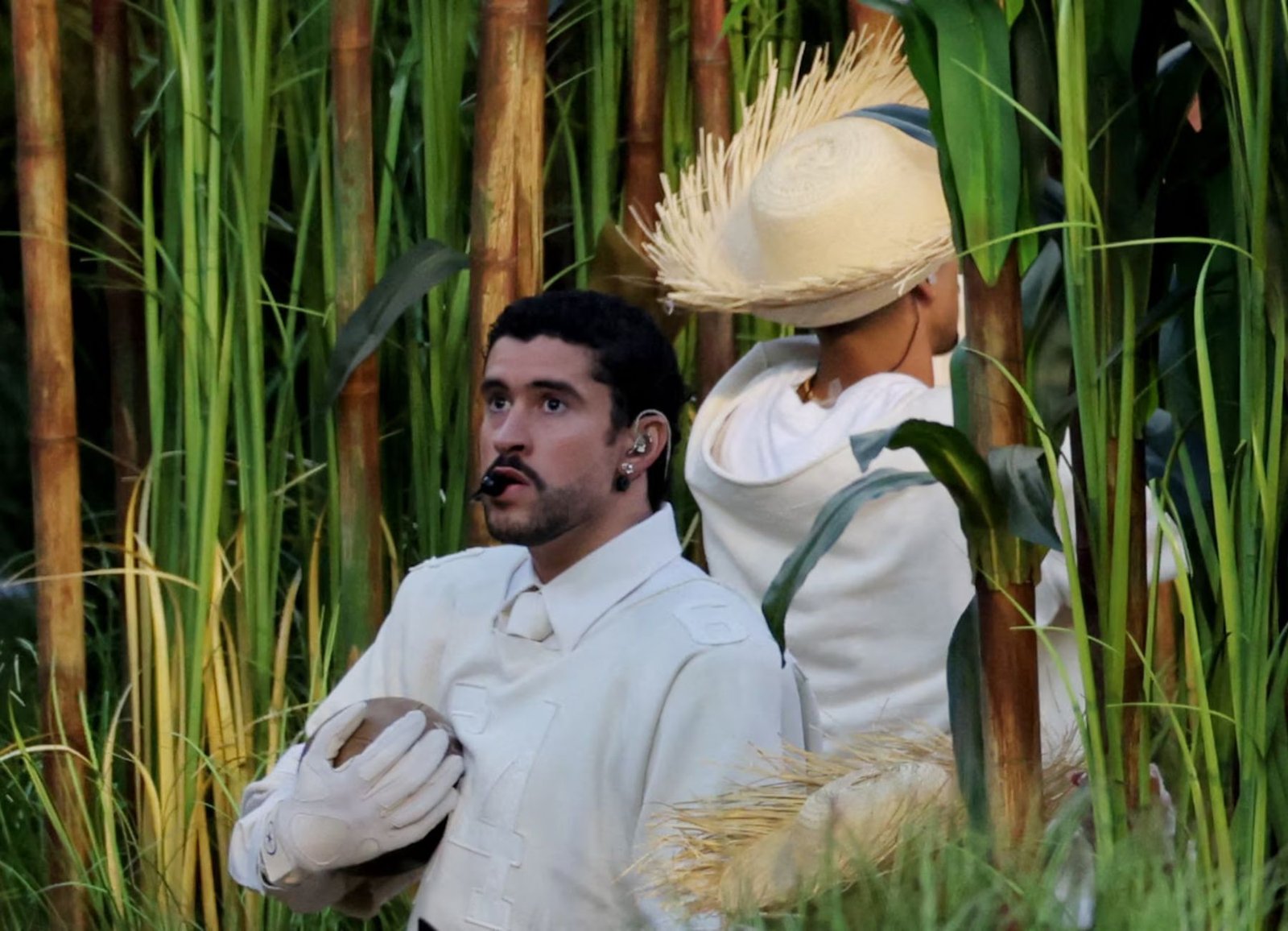
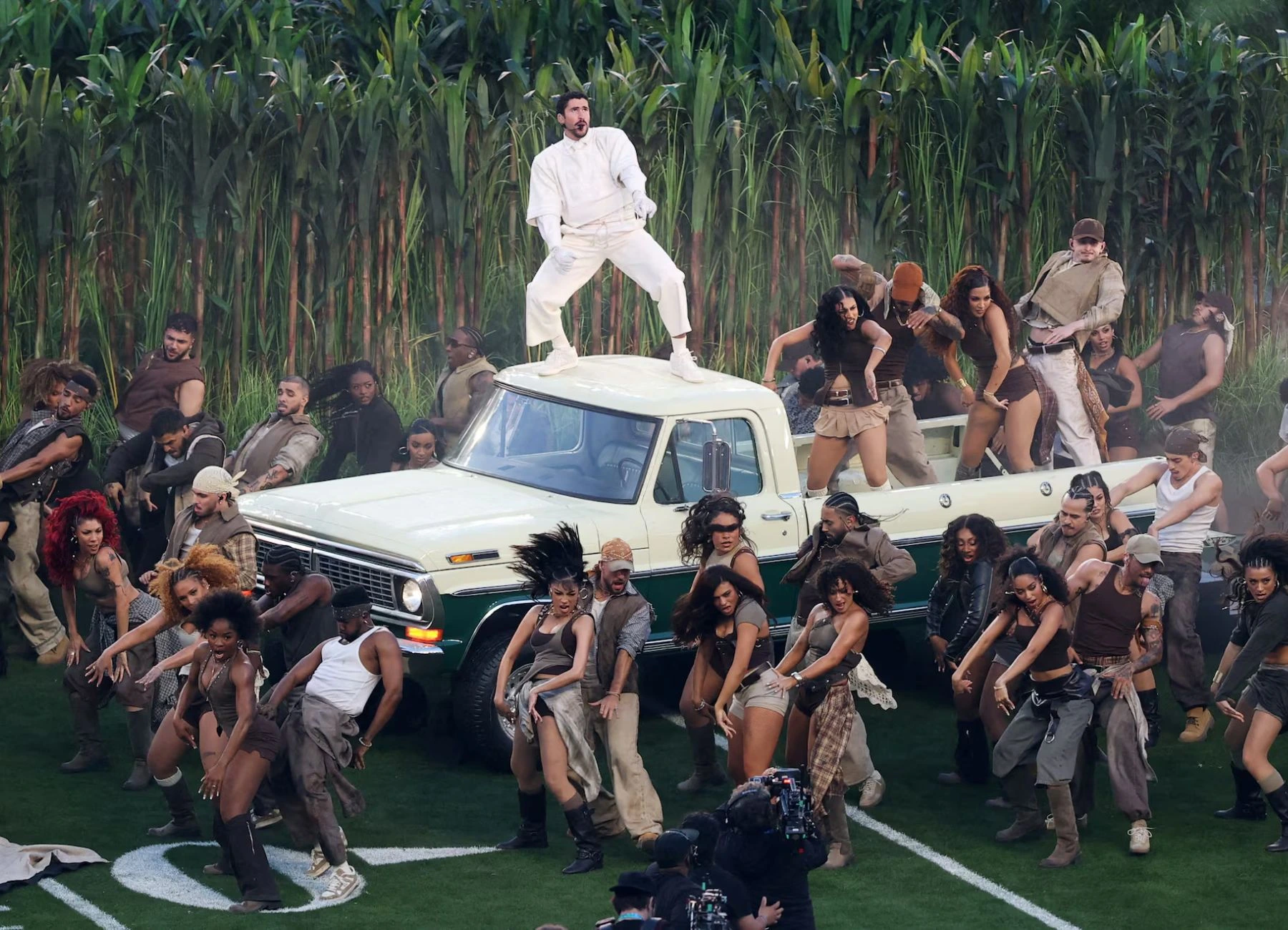
As Tití Me Preguntó played at Levi’s Stadium, viewers saw wide sugarcane fields and workers cutting stalks by hand. It was more than just a strong image. Sugar has been part of Puerto Rico’s history for hundreds of years, going back to colonial times when the island’s Indigenous Taíno people were forced to work the land under Spanish rule. After the Taíno population was reduced by disease and harsh treatment, enslaved Africans were brought to the island to work the plantations. For many generations, sugar has been one of Puerto Rico’s most important industries, shaping communities, jobs, and much of the island’s culture we see today.
Placing these fields at the centre of the performance, Bad Bunny honoured the people whose hard work had helped build the Puerto Rico nation by celebrating in the show. And since this was still a halftime show, there was a clever surprise in plain sight. Some of the “grass” moving in the fields was not grass at all, but hundreds of performers dressed as sugarcane stalks, creating one of the night’s most creative visual effects while adhering to the NFL’s strict field-production rules.
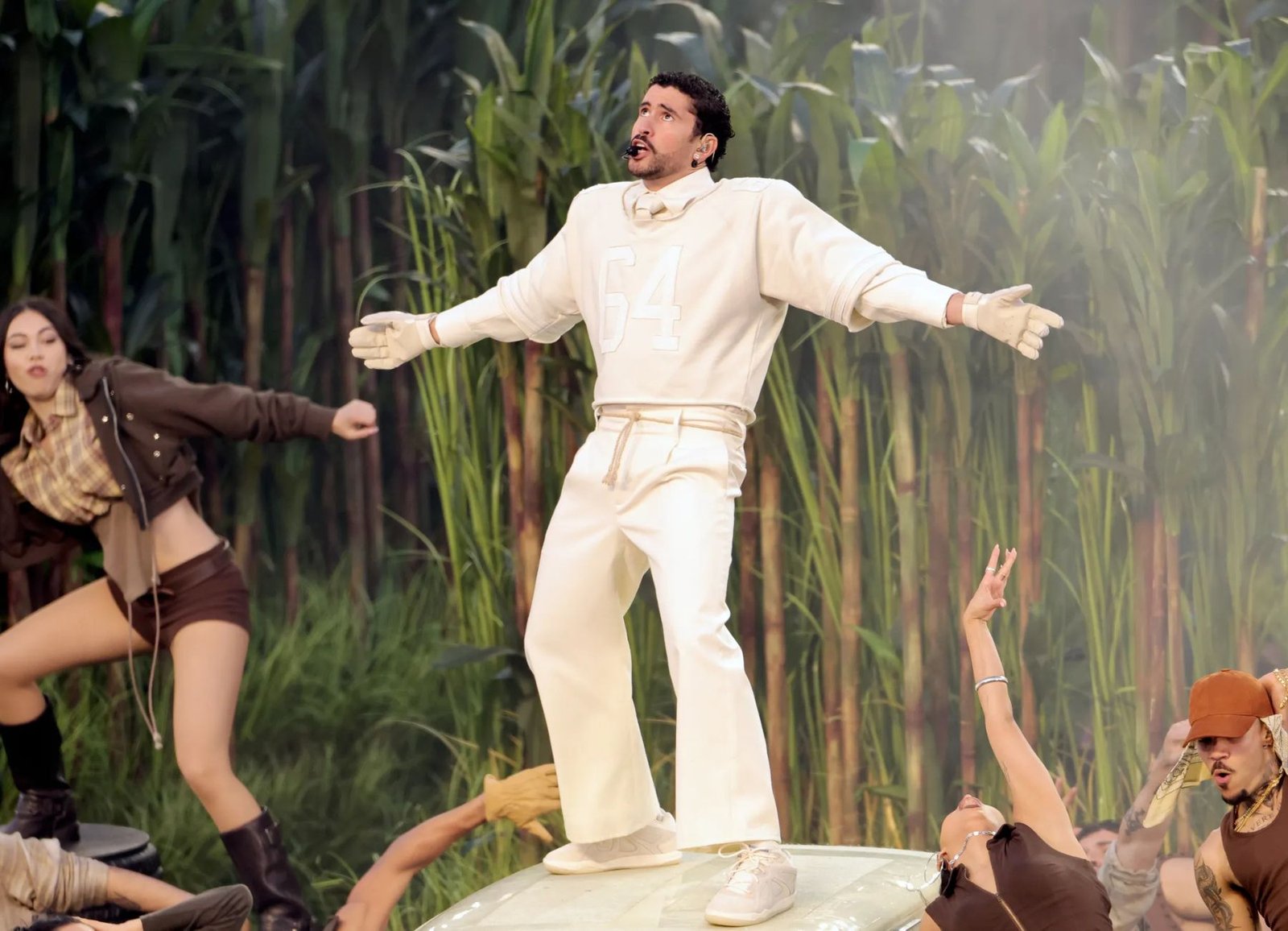
One of the biggest talking points before the halftime show wasn’t the setlist or surprise guests—it was what Bad Bunny would wear. Instead of stepping onto the field in his signature pava hat, the Puerto Rican superstar appeared in a cream-white jersey with “Ocasio” on the back and the number 64, leaving fans to figure out the meaning behind it.
As it turns out, the number had nothing to do with football statistics or a hidden reference buried in his music. The jersey was a tribute to his late uncle, Cutito Ocasio, who was born in 1964 and played a major role in introducing a young Bad Bunny to the NFL. In a statement shared with Rolling Stone, the singer explained that many of his earliest football memories came from watching games alongside his uncle during visits to Puerto Rico. A devoted San Francisco 49ers fan, Cutito moved to the United States at 17 for work but returned to visit family, often during the NFL playoffs.
Advertisement · Continue Reading Below
“1964 is the year my uncle Cutito was born, my mother’s brother,” Bad Bunny said. “The little I know about the NFL is thanks to him.” He went on to explain that his uncle passed away two years ago, shortly after the 49ers lost Super Bowl LVIII to the Kansas City Chiefs. “I always dreamed of taking my uncle to a Super Bowl, and I couldn’t,” he said. By wearing the Ocasio name and the number 64 during one of the biggest performances of his life, Bad Bunny found a way to bring him along anyway. What many assumed was a fashion choice turned out to be one of the most personal moments of the entire show.
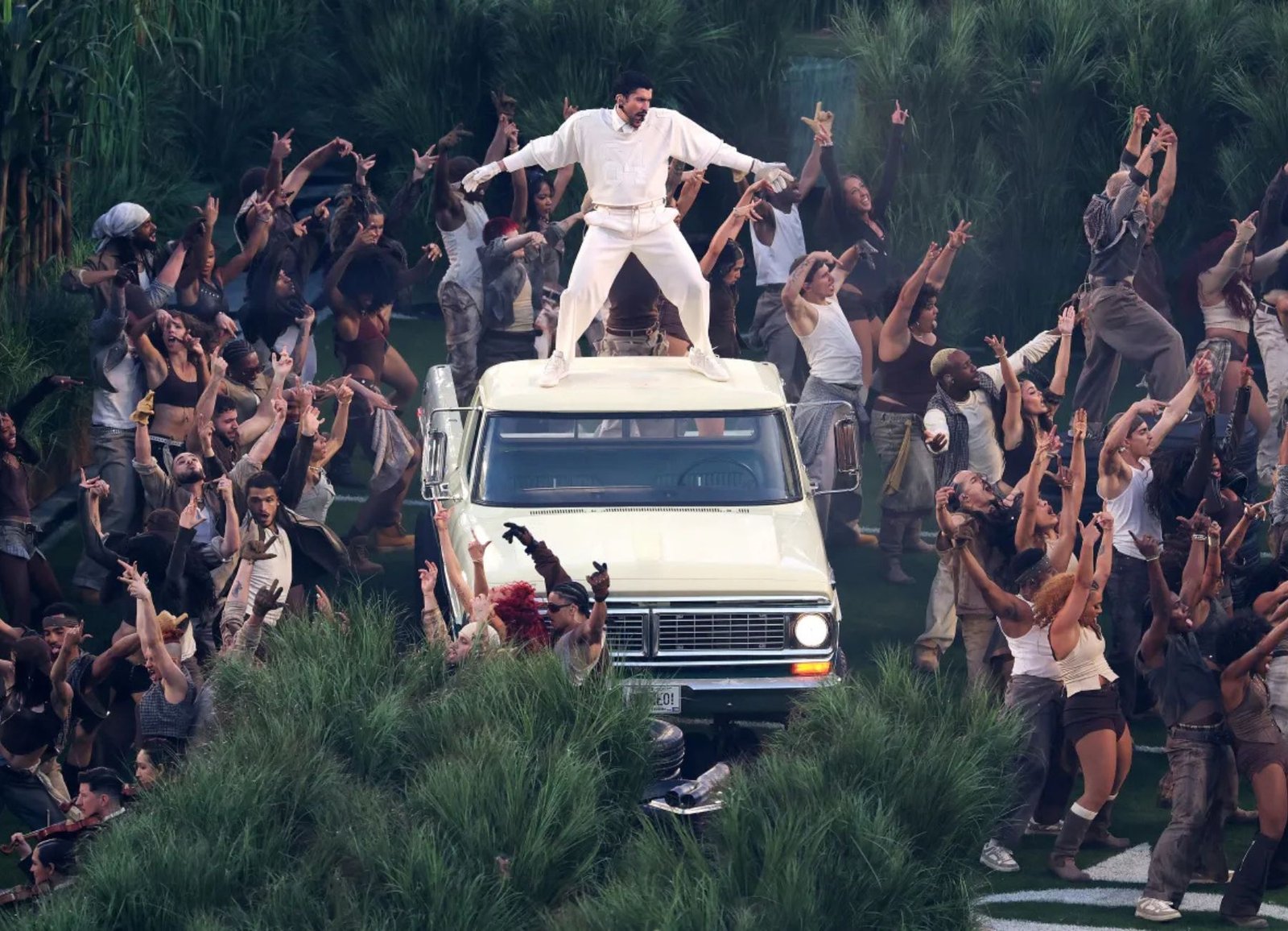
At one scene of the show, Benito stood atop a vintage 1968 Ford F-250 that appeared during the performance. While Benito never explicitly explained its meaning, many fans speculated that it was a nod to Classic American Culture as an iconic piece of U.S. history, and that it was a show that celebrated Puerto Rican and Latino identity.
It also placed him alongside halftime list performers who have used cars to help tell a story on football’s biggest stage. We had The Weeknd, who brought out a modified Mercedes-Benz SLK 32 AMG, while Dr. Dre and Snoop Dogg rolled out classic Chevrolet Impala lowriders in 2022, and most recently Kendrick Lamar brought his father’s 1987 Buick GNX.
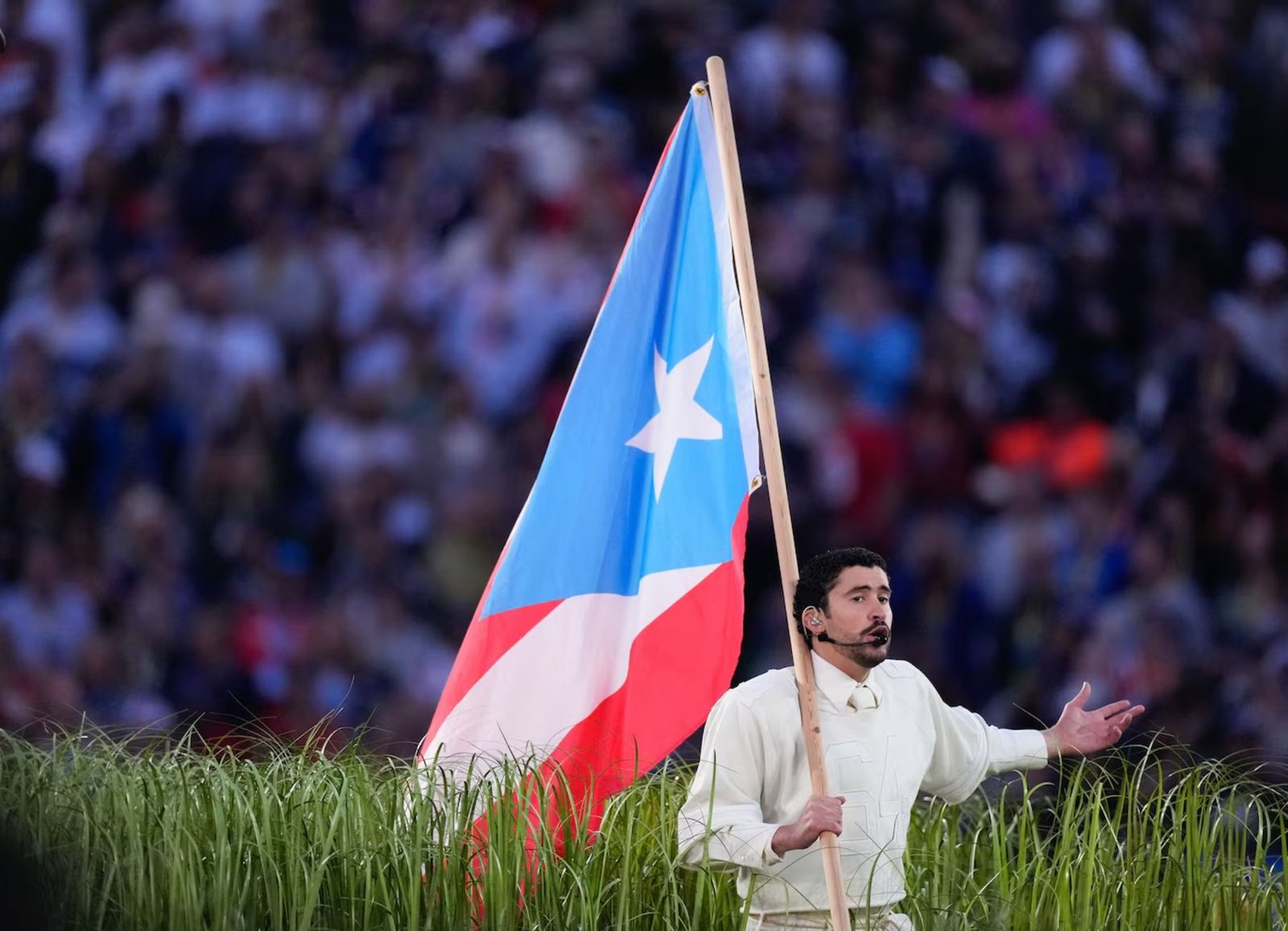
Many of the most meaningful moments in Benito’s halftime show came from the small details woven into the performance. Scenes of neighbourhood gathering spots, family traditions, local food, music, and daily island life made the show feel like a love letter to Puerto Rico and its people. Some references may have gone unnoticed by international viewers, but Puerto Ricans around the world likely recognized these familiar scenes right away.
Some of the cultural references featured throughout the performance were:
- Coco Frío
- Abuelos & Dominoes
- Nail Salon
- Rebuild
- Piraguas
- Villa’s Tacos
- Boxing
- Gold & Silver
On their own, these references might have seemed like minor background details. But when put together, they created a personal and authentic picture of Puerto Rico. Instead of focusing only on big statements or political messages, Benito chose to highlight the people, traditions, businesses, and daily experiences that make up life on the island. For many viewers, this was a reminder that some of the most meaningful moments in the performance were not on centre stage but in the small details scattered throughout.
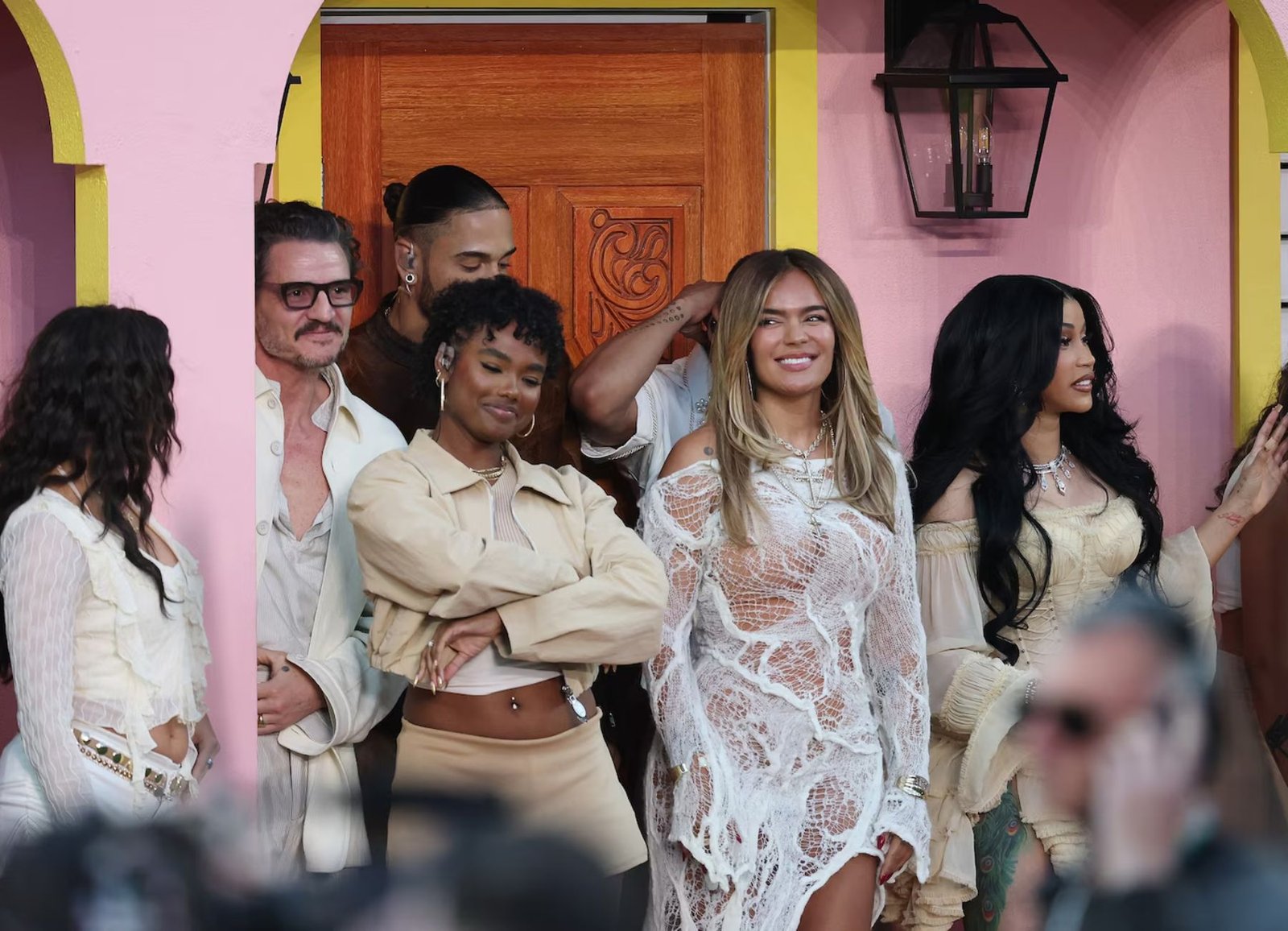
A Super Bowl halftime show just isn’t the same without some surprise guests, and Benito delivered plenty for fans to enjoy. The centrepiece was La Casita, his portable version of a traditional Puerto Rican home, which has become a signature symbol in this phase of his career. La Casita wasn’t just a backdrop—it celebrated Puerto Rican culture, architecture, and community, bringing a feeling of home to one of the world’s biggest stages.
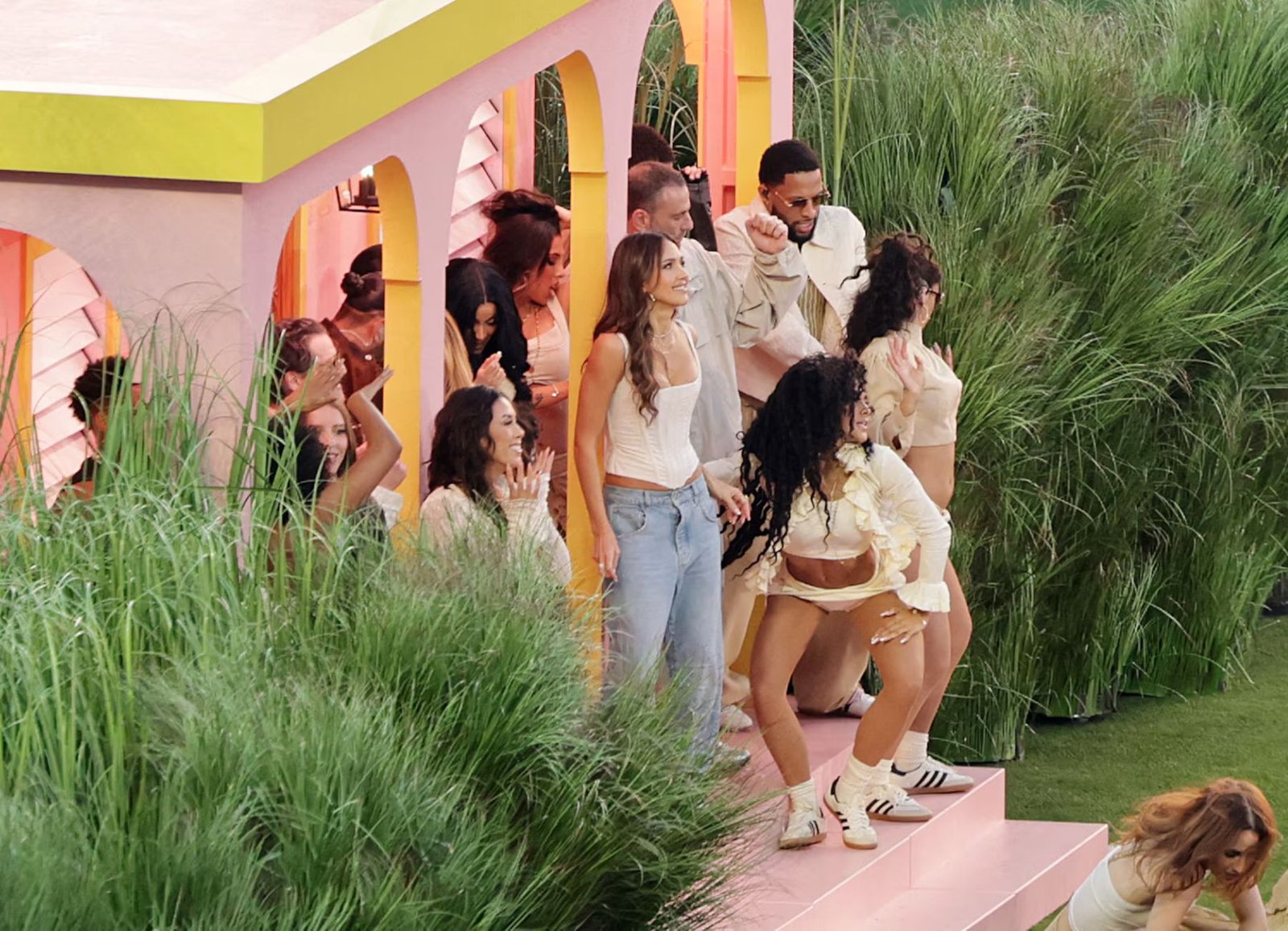
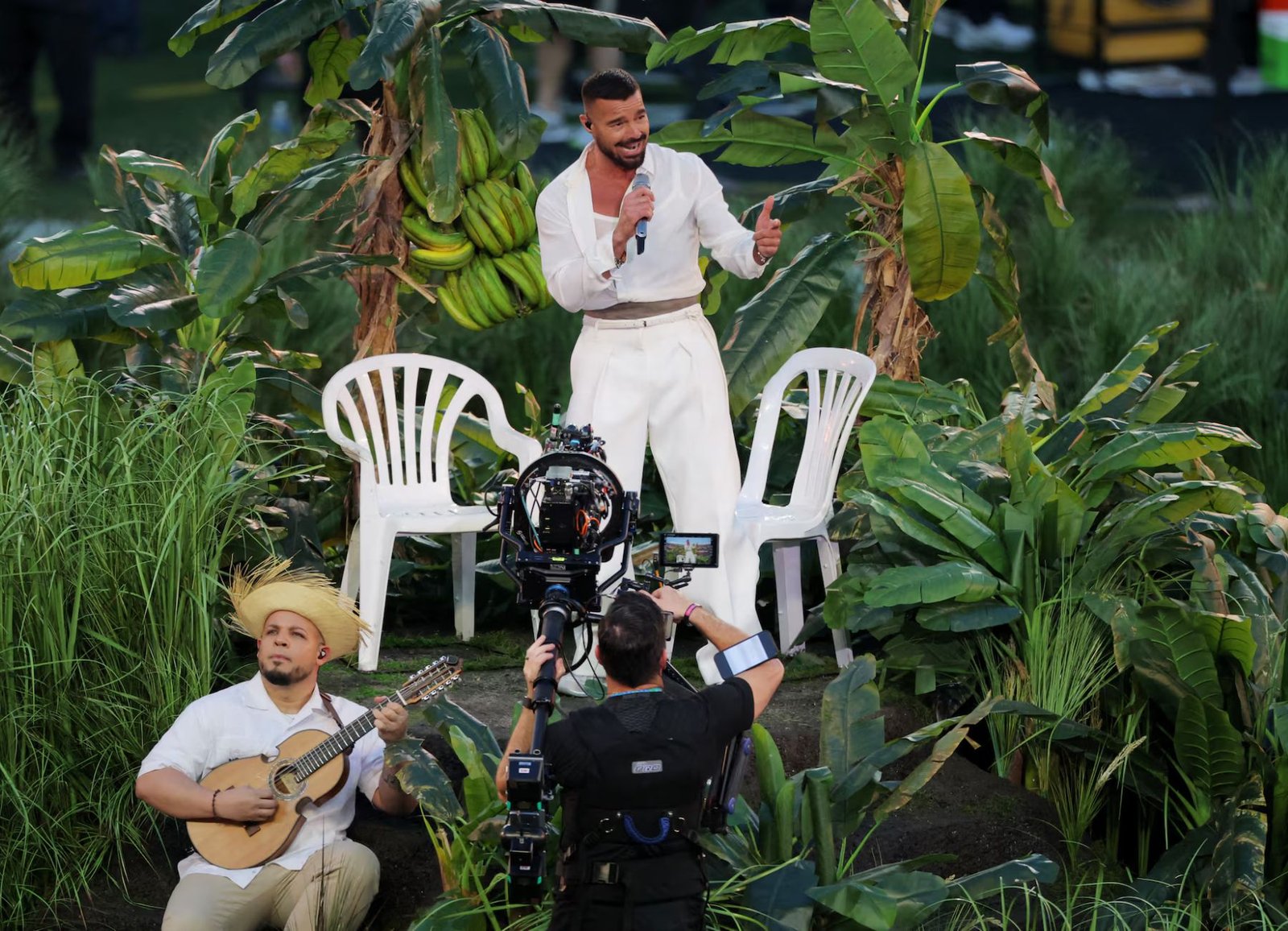
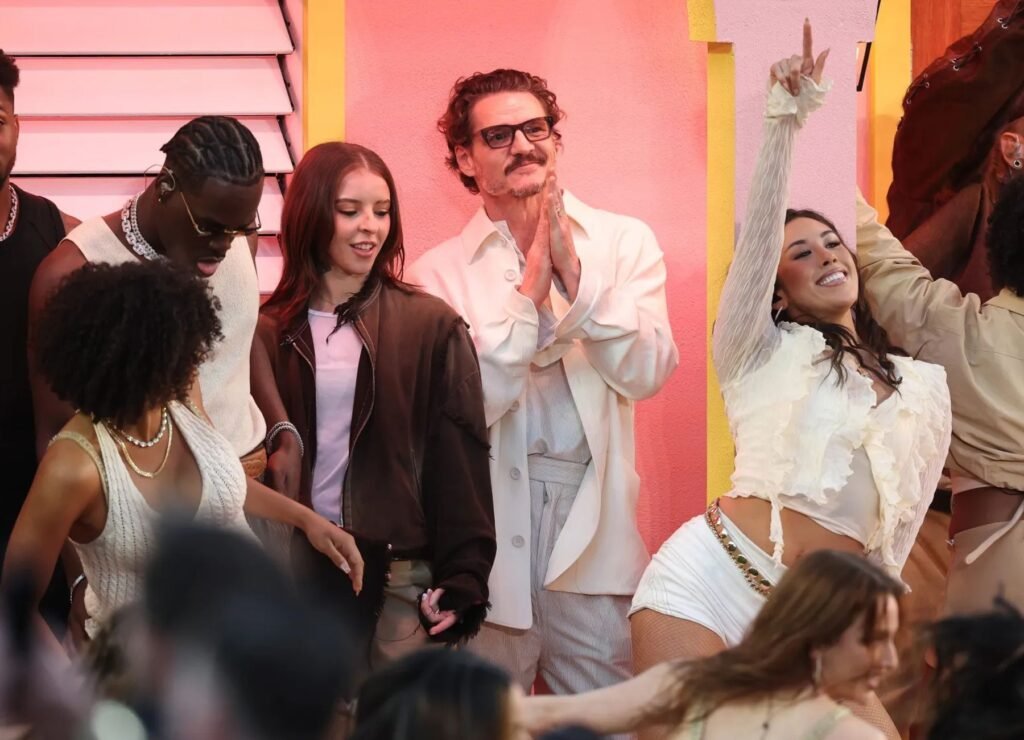
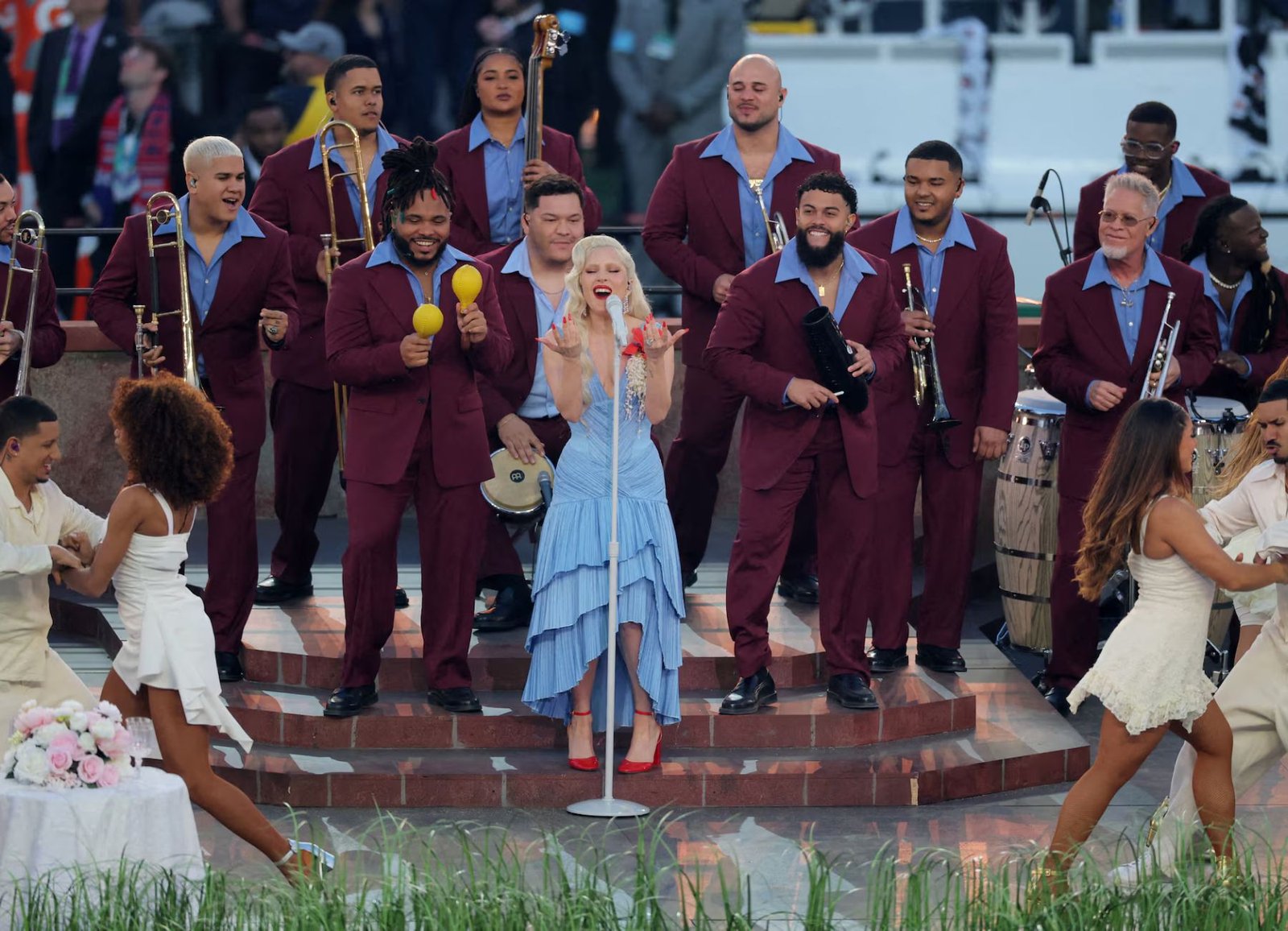
La Casita also became the hottest VIP spot in the stadium. Fans spotted stars including Cardi B, Karol G, Young Miko, Pedro Pascal, and Jessica Alba in the crowd, but the biggest surprises were Lady Gaga and Ricky Martin. Lady Gaga joined Benito for a salsa-style version of ‘Die With a Smile,’ giving the hit a Latin flair. Later, Ricky Martin drew one of the loudest cheers of the night when he performed ‘LO QUE LE PASÓ A HAWAii,’ a song with a strong political message that resonated with fans.
For many, seeing two Puerto Rican icons share the Super Bowl stage was a major moment for Latin representation, and Martin’s appearance was especially significant for the LGBTQ+ community. These guest stars made the halftime show even more memorable while keeping the focus on Benito’s message.
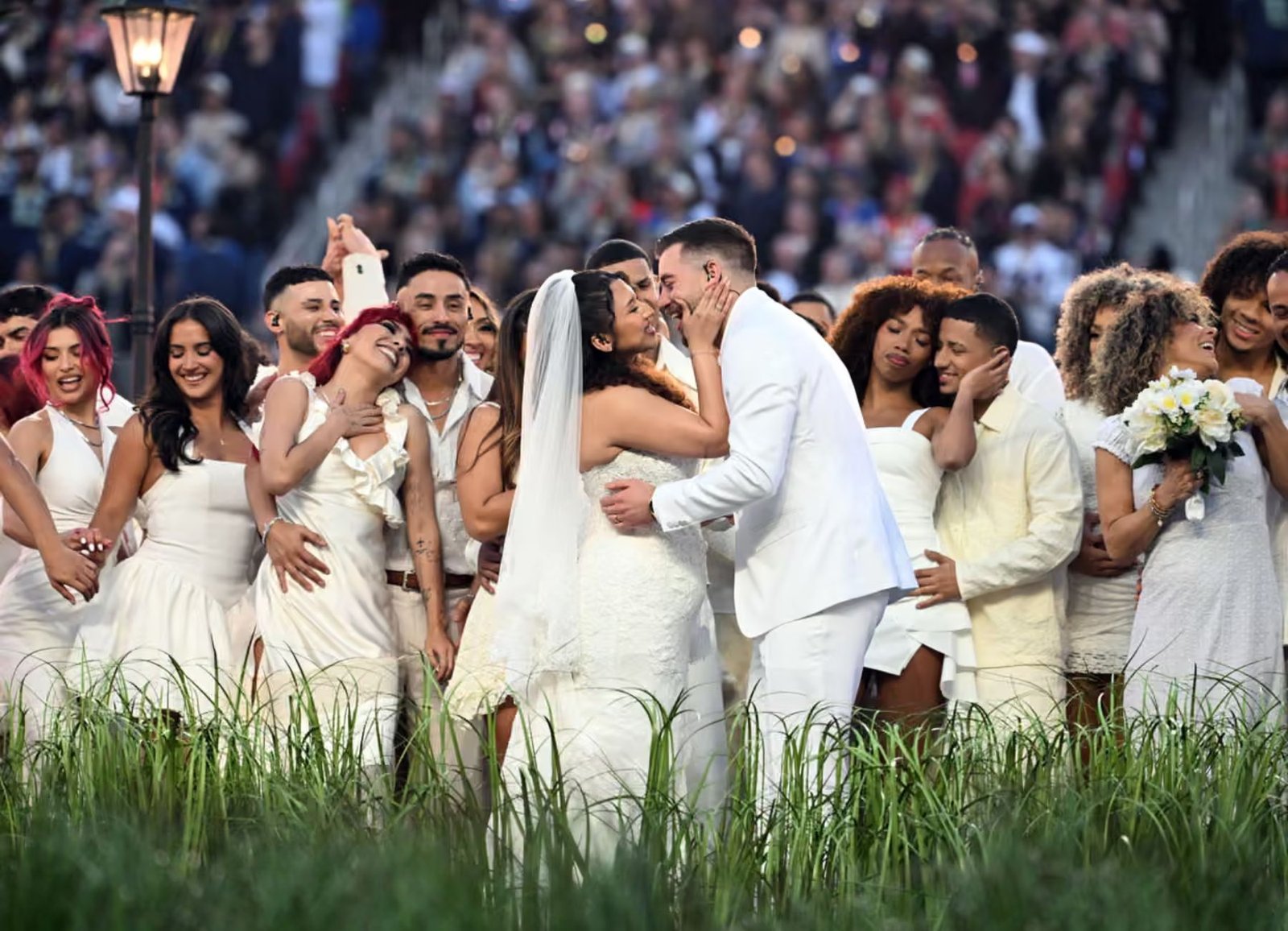
One of the most talked-about moments of the night occurred when a couple seemed to get married during the performance, prompting viewers to question whether the ceremony was real or just part of the show. It turns out the wedding was completely real. According to ESPN, the couple, Eleisa “Elli” Aparicio and Thomas “Tommy” Wolter, were legally married live during the halftime show. They first got engaged earlier in the performance when Benito gave them a gold ring during the “Gold & Silver” segment.
Advertisement · Continue Reading Below
The story gets even better when you find out how it all came together. Elli and Tommy had invited Benito to their wedding, but instead, he invited them onto the Super Bowl stage to exchange vows in front of millions of viewers. With dancers, music, and the energy of Levi’s Stadium all around them, the couple got married while Benito acted as their official witness. This turned an already memorable halftime show into a once-in-a-lifetime wedding ceremony.
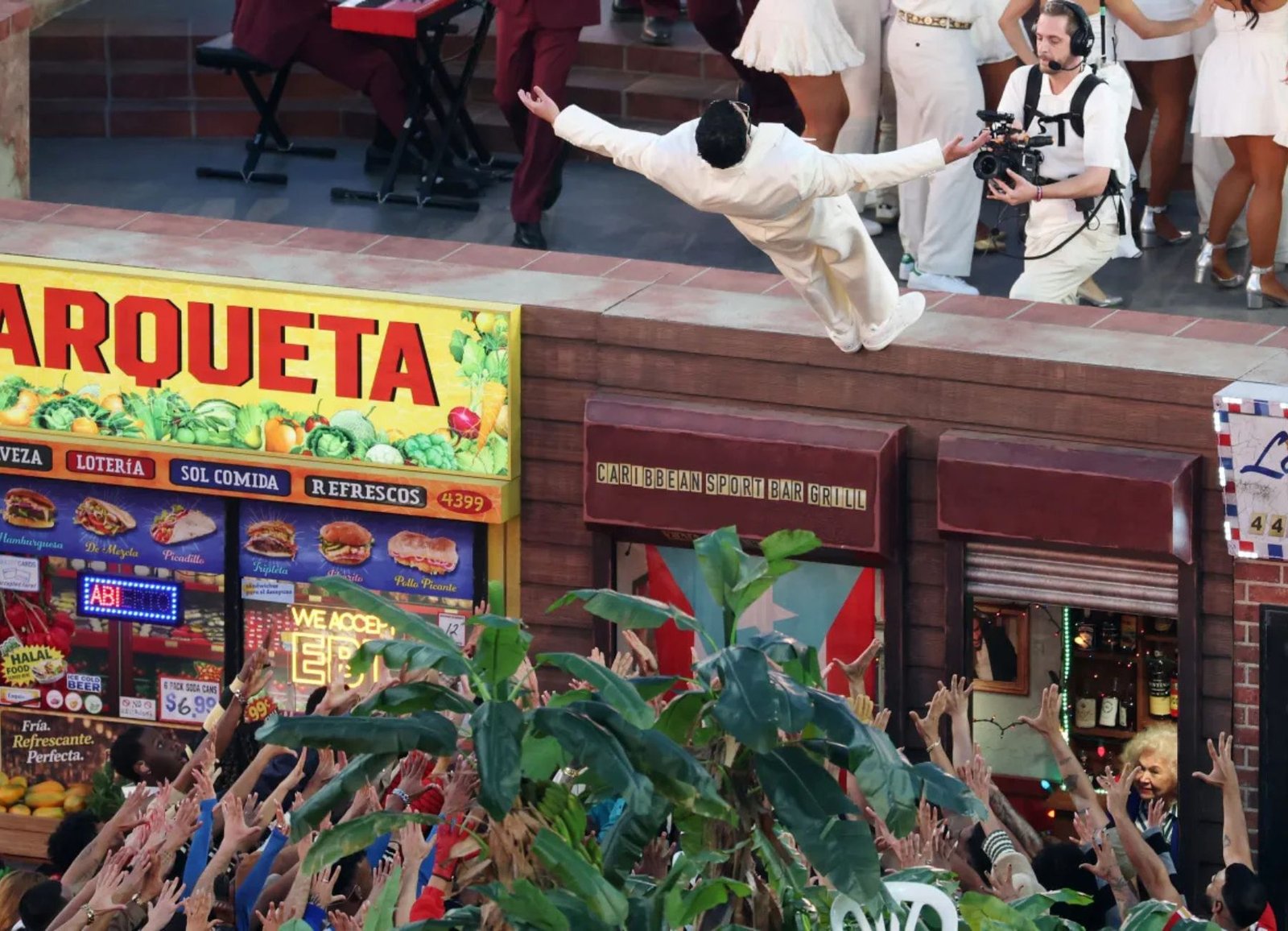
After the wedding ceremony and Lady Gaga’s appearance, Benito shifted gears with NuevaYol, his tribute to Nuyorican culture. The stage turned into a New York barbershop and La Marqueta, showcasing the sights and spirit of Puerto Rican life in the city. As he sang, “Un shot de cañita en casa de Toñita y PR se siente cerquita,” viewers saw a cameo from Toñita, the well-loved owner of Brooklyn’s Caribbean Social Club, who appeared behind the bar serving him a drink.
Often called one of the last Puerto Rican social clubs in New York, the Caribbean Social Club has been a community meeting place and a symbol of cultural pride. Her appearance was more than a fun cameo—it honoured the generations of Puerto Ricans who made their lives in New York while maintaining their connection to the island.
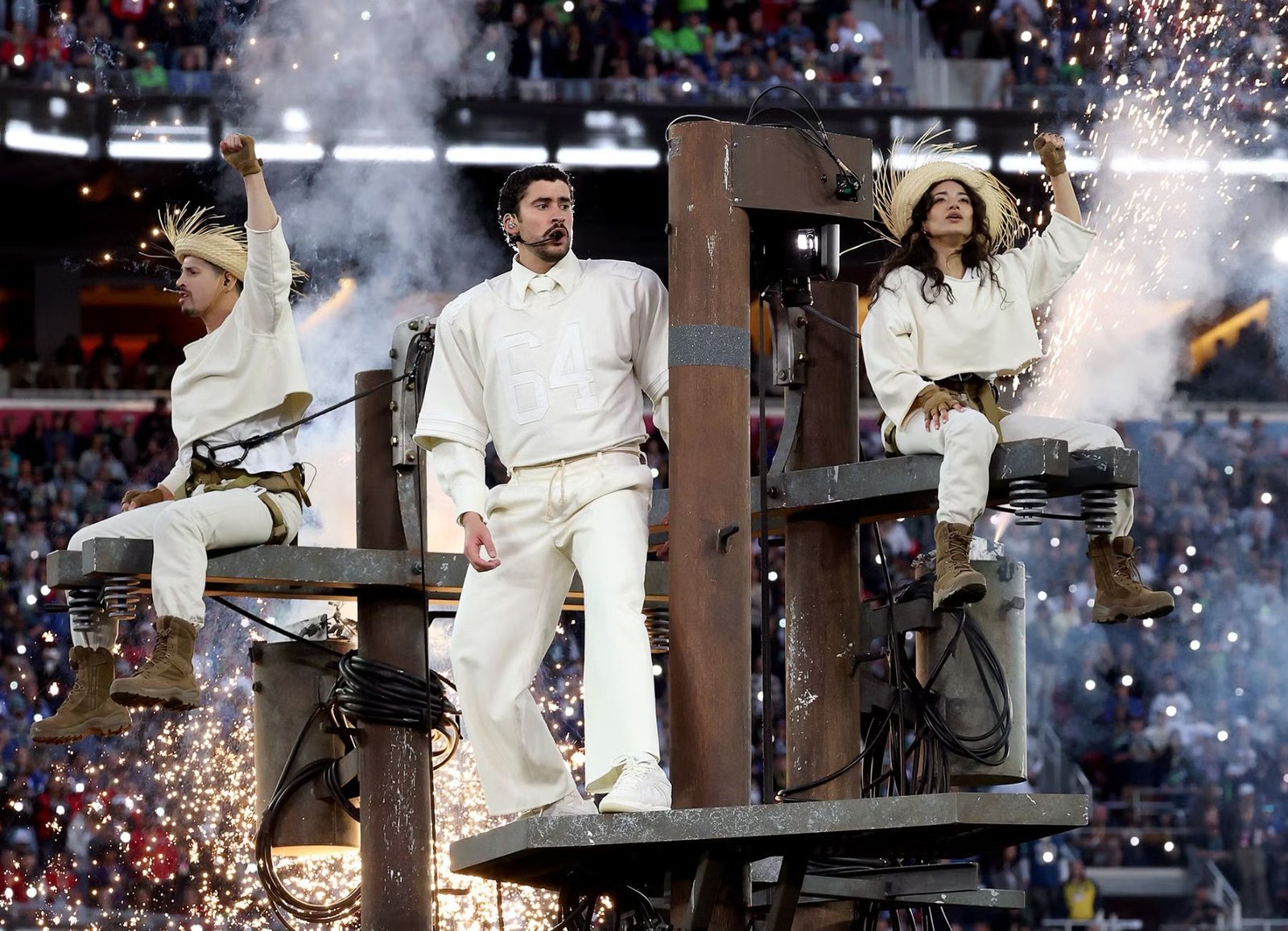
One of the most powerful moments of the halftime show happened during El Apagón (“The Blackout”), a song tied to Puerto Rico’s struggles with its energy system and the difficulties many communities face. As the music changed, dancers climbed utility poles that sparked while lights flickered around the stadium, expressing the uncertainty many Puerto Ricans feel during frequent power outages, bringing the main message to life.
El Apagón also points to bigger issues in Puerto Rico, such as the privatization of the power grid, the lasting impact of Hurricane Maria, and the rising cost of living, which has forced many people to leave their homes. By choosing this song for such a big stage, Benito drew attention to the problems occurring, making his lively performance one of the most meaningful parts of the night.
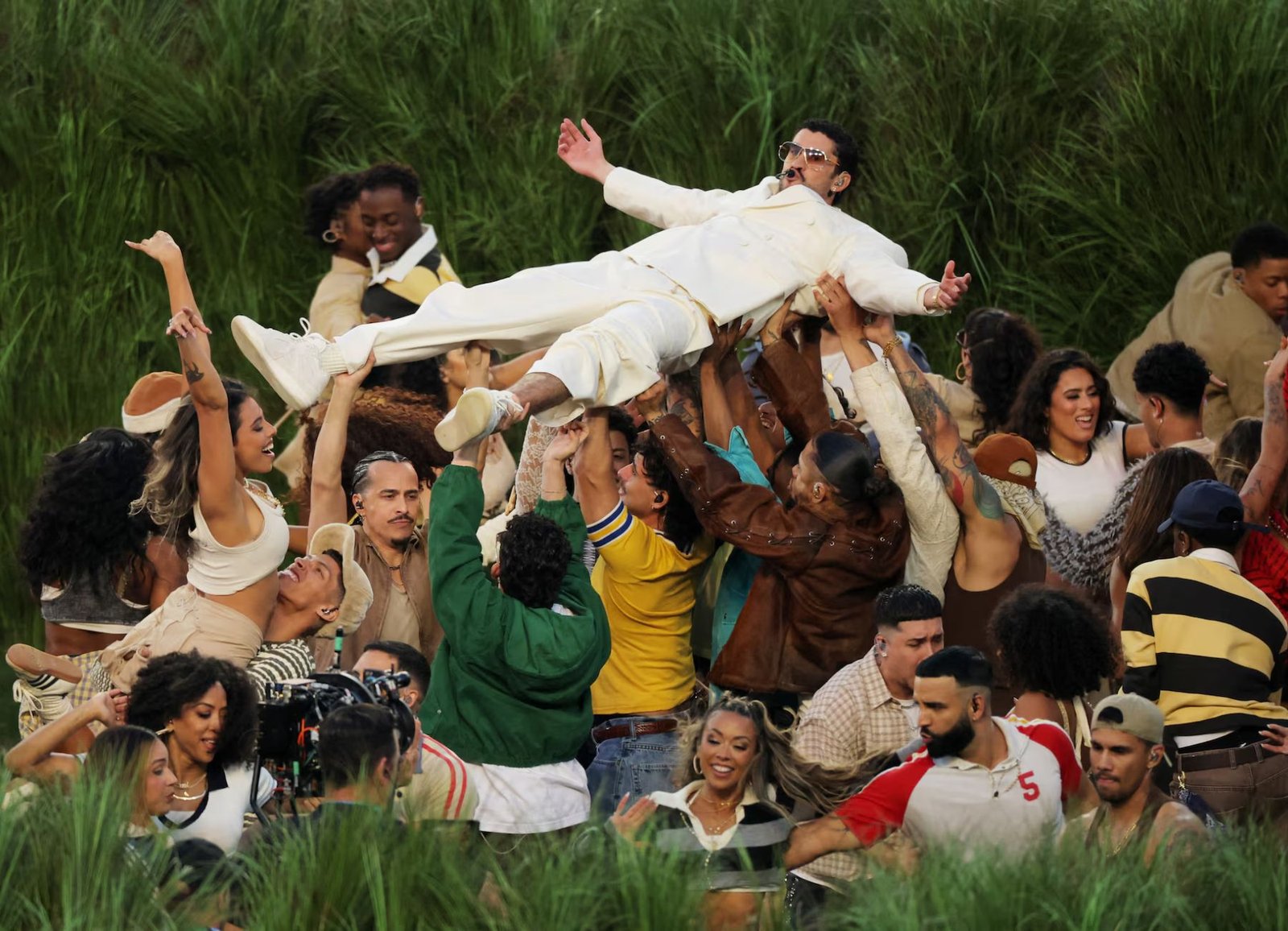
While the halftime show was packed with cultural references, political symbolism, and surprise appearances, it was still a celebration of the music that turned Benito into one of the biggest artists worldwide. Over the course of 13 minutes, he worked through a setlist that blended fan favourites, chart-topping hits, and songs carrying deeper personal and cultural meaning.
Bad Bunny’s set list went through several of his hits, including:
- ‘Tití Me Preguntó’
- ‘Yo Perreo Sola’
- ‘Safaera’
- ‘EoO’
- ‘Die With a Smile’ — With Lady Gaga
- ‘BAILE INoLVIDABLE’
- ‘NUEVAYoL’
- ‘LO QUE LE PASÓ A HAWAii’ — Ricky Martin
- ‘El Apagón’
- ‘CAFé CON RON’
- ‘DeBÍ TiRAR MáS FOToS’
Instead of just playing his biggest hits one after another, the setlist told a story throughout the show. Each song marked a different part of the performance, from celebrating Puerto Rican culture to depicting life in the diaspora to raising awareness of issues facing the island today. When El Apagón closed the show with an emotional high point, it was clear that every song had a purpose.
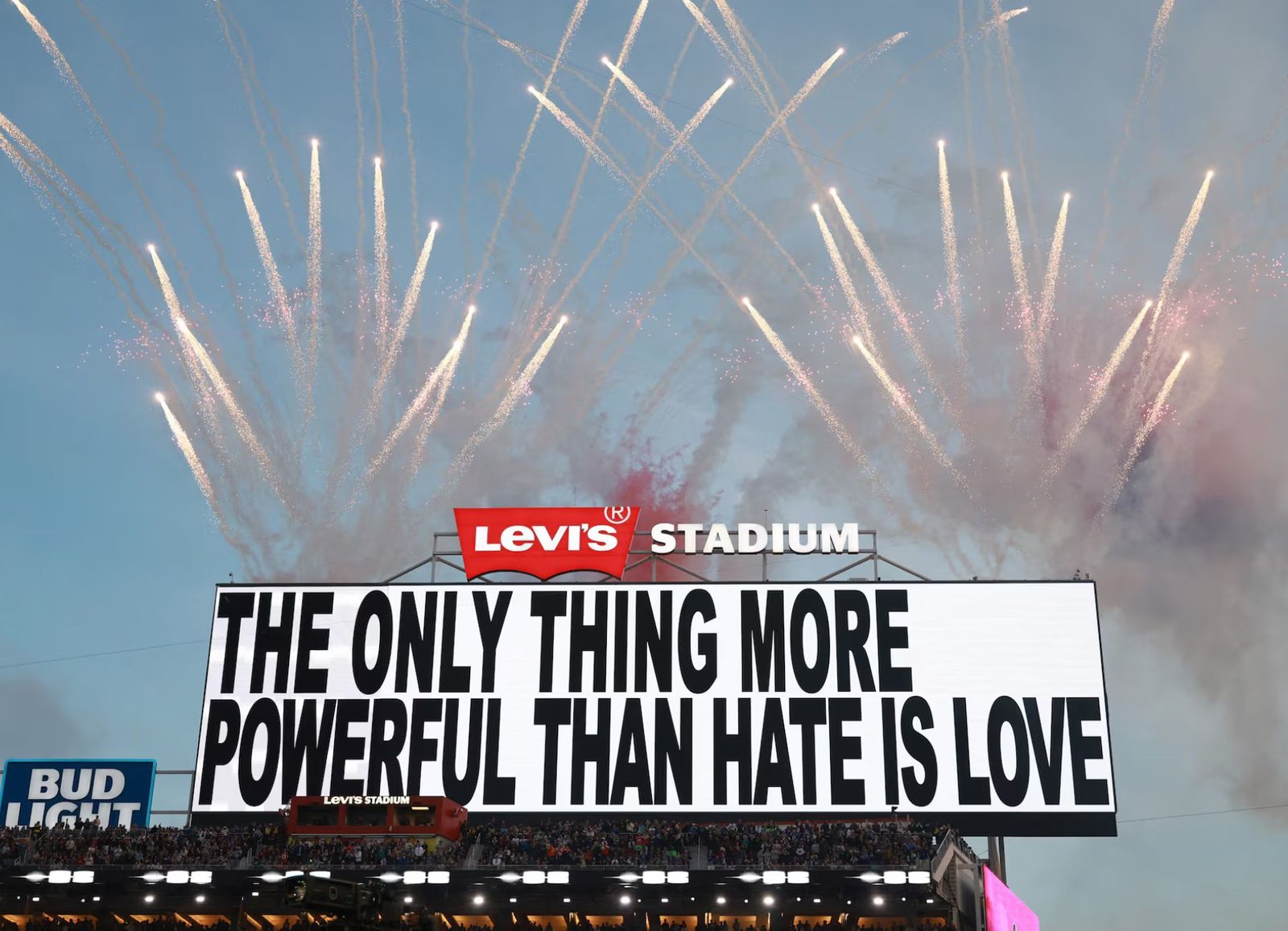
Some of the most memorable moments from the halftime show were inspired by Benito’s Grammy Awards speech just a week before. During his performance, a billboard displayed the message, “The only thing more powerful than hate is love.” This echoed what he said after winning Best Música Urbana Album and highlighted the show’s main themes.
When Benito accepted his award on February 1, he spoke about the rising tensions around immigration and identity. He told the audience: “We’re not savages, we’re not animals, we are not aliens, we are humans and we are Americans.” He went on: “I know it’s tough not to hate on these days and I was thinking sometime we get contaminated. The hate gets more powerful with more hate. The only thing that is more powerful than hate is love. So please, we need to be different. If we fight, we have to do it with love. We don’t hate them. We love our people, we love our family, and that’s the way to do it. We love. That’s the way to do it.” By sharing this same message during the Super Bowl, Benito linked two major entertainment events and made the halftime show feel much more personal.
Advertisement · Continue Reading Below
The message of hope was carried into one of the show’s most touching scenes. Moments before receiving a Grammy trophy on stage, viewers saw a young boy watching a vintage television with his parents, dressed in a striped collared shirt and khaki shorts reminiscent of Benito as a boy. Played by five-year-old actor Lincoln Fox, the child later received the award from Benito in a symbolic passing-of-the-torch moment. Lincoln later reflected on the experience on Instagram, writing, “I’ll remember this day forever! @badbunnypr – it was my truest honour.” While the scene lasted only a few seconds, it carried a powerful message: anyone can achieve their dreams.
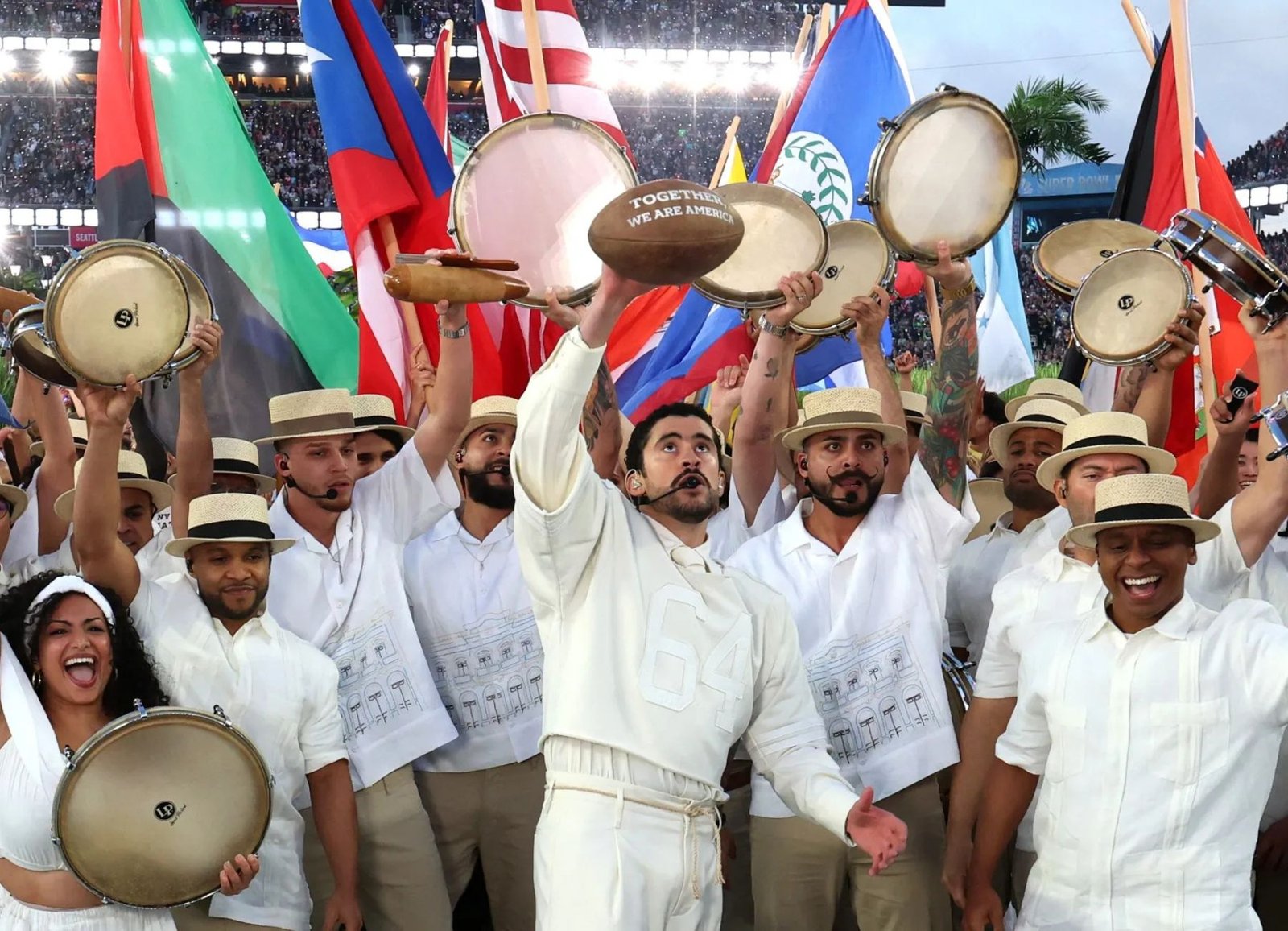
At the end of the halftime show, Benito shared a final message that tied his whole performance together. He stood in front of flags from countries all over the Americas and spoke to the crowd: “God bless America… sea Chile, Argentina, Uruguay, Paraguay, Bolivia, Perú, Ecuador, Brazil, Colombia, Venezuela, Guyana, Panama, Costa Rica, Nicaragua, Honduras, El Salvador, Guatemala, Mexico, Cuba, República Dominicana, Jamaica… United States, Canada, and my motherland, mi barrio, Puerto Rico, seguimos aquí.” This moment broadened the idea of America by honouring the cultures, communities, and people from across the continent.
To finish, Benito threw a football into the end zone, with the words “Together, We Are America” written on it. Soon after, another message appeared on the big screen: “The only thing more powerful than hate is love.” The halftime show explored themes such as identity, heritage, immigration, community, and resilience, so the ending felt more like a statement than a mere performance. Regardless of how viewers felt about the message, Benito ensured his final words were memorable.